
The Nashville Food Project’s Blog




The Seed is in the Ground
Good morning, friends!
Those of you who have spent some time at The Nashville Food Project know there are a lot of moving parts to our programs. Navigating the year-over-year growth of our organization and the day-to-day operations takes both planning and improvisation.
I was recently introduced to an internal food project document maintained by our indomitable meals team - The Meals Worksheet. This is a planning spreadsheet shared between six people with columns for rescued food coming in, menus going out, hiccups during volunteer meal prep, last minute ingredient switches, and the like. Here is a snapshot of what this document looks like in action:

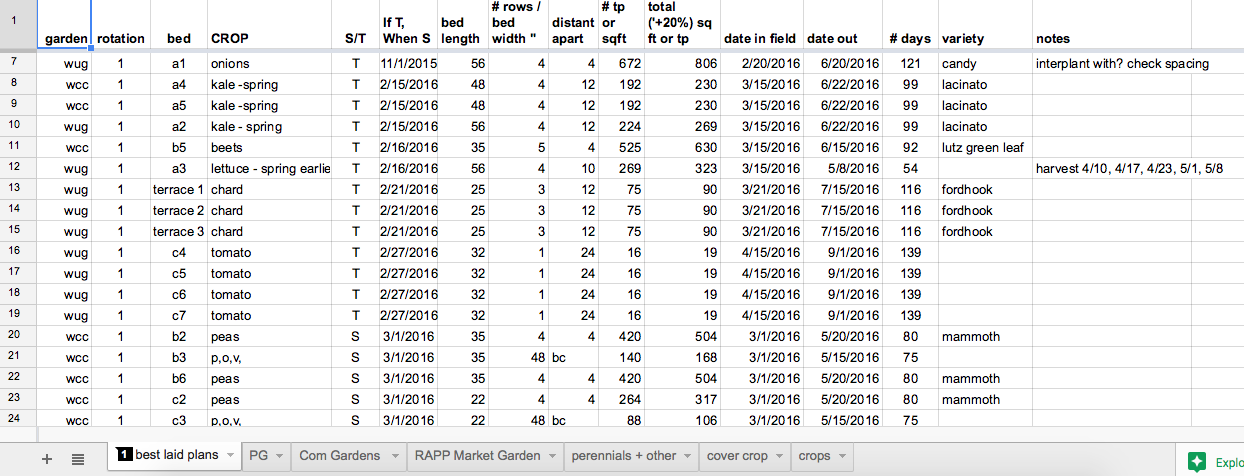
Likewise, our garden team keeps a massive spreadsheet of plans for the various gardens we steward across the city, with columns for seed variety, greenhouse start dates for succession planting, row feet per crop, numbers related to yield, and more. Our garden team manages to this document with an impressive level of geeked-out detail. Here's a look:

These are just a couple of the tools we use daily to help us plan, communicate, and document the many changes that affect our work flow, our programming, and the good food going out into the community.
When you're growing, cooking, and sharing food for and with the masses, it's essential to make plans. Of course, our growing edge is not learning how to plan better, it's how to let go of the plan when a Pyrex measuring cup shatters into the tomato sauce 20 minutes before meal service or a group of volunteers pulls the strawberry plants from a garden bed instead of pulling the weeds. It seems like life’s best lessons are usually learned when things don’t go as planned.
I'm in awe of our devoted staff who keep well-managed plans and yet stay flexible to the inevitable curve ball, whether it's a bushel of fresh quince to be incorporated into a meal or a hailstorm in March. This work reminds us that we can usher our plans only so far before we must let go of the reins. Or as the poet Wendell Berry, who is so-often quoted in my columns, reminds us:
“The seed is in the ground.
Now may we rest in hope,
while darkness does its work.”
Grace and peace,

A February Snapshot of Our Gardens
It’s starting to look like spring, a favorite time of year for all of us on the garden team. This is a time of year when all of our planning over the winter can finally start taking shape. Here’s a look at what we’re up to in the TNFP gardens this month written by our Garden Manager Christina...

“We are here to awaken from the illusion of our separateness.”
It’s starting to look like spring, a favorite time of year for all of us on the garden team. This is a time of year when all of our planning over the winter can finally start taking shape. Here’s a look at what we’re up to in the TNFP gardens this month written by our Garden Manager Christina...
In February in The Nashville Food Project gardens we try to remember that it is still winter. Our garden crop plan for the year has hopefully been made and checked twice. Seeds have been ordered. Machines and tools are clean and tuned. Winter cover crops are growing slowly in the field along with beds of overwintering greens like kale and spinach. Potting soil and other garden supplies are stockpiled waiting for the signal to start planting. We do the essential February tasks of pruning fruit trees and brambles, direct seeding flowers that require cold weather to germinate (poppies and bachelor buttons), check on the bees’ honey stores and, if necessary, feed them. Spring is surely close at hand but we try to remember that we risk doing more damage than good by trying to work soils that are still cold and wet.

We anxiously await the end of the month, when we can start our first seeds in the greenhouse and begin preparing a few beds for our earliest vegetable plantings in March. The first crop we plant outdoors is the onion transplants that we’ve started in our greenhouse the previous November. Onions are soon followed by peas, lettuce and other leafy greens, and root crops that love the cool weather of early spring. By the end of the month, the greenhouse is full of crops that we begin indoors to get a head-start on the growing season - leafy crops like kale and chard and fruiting crops like tomatoes and peppers.
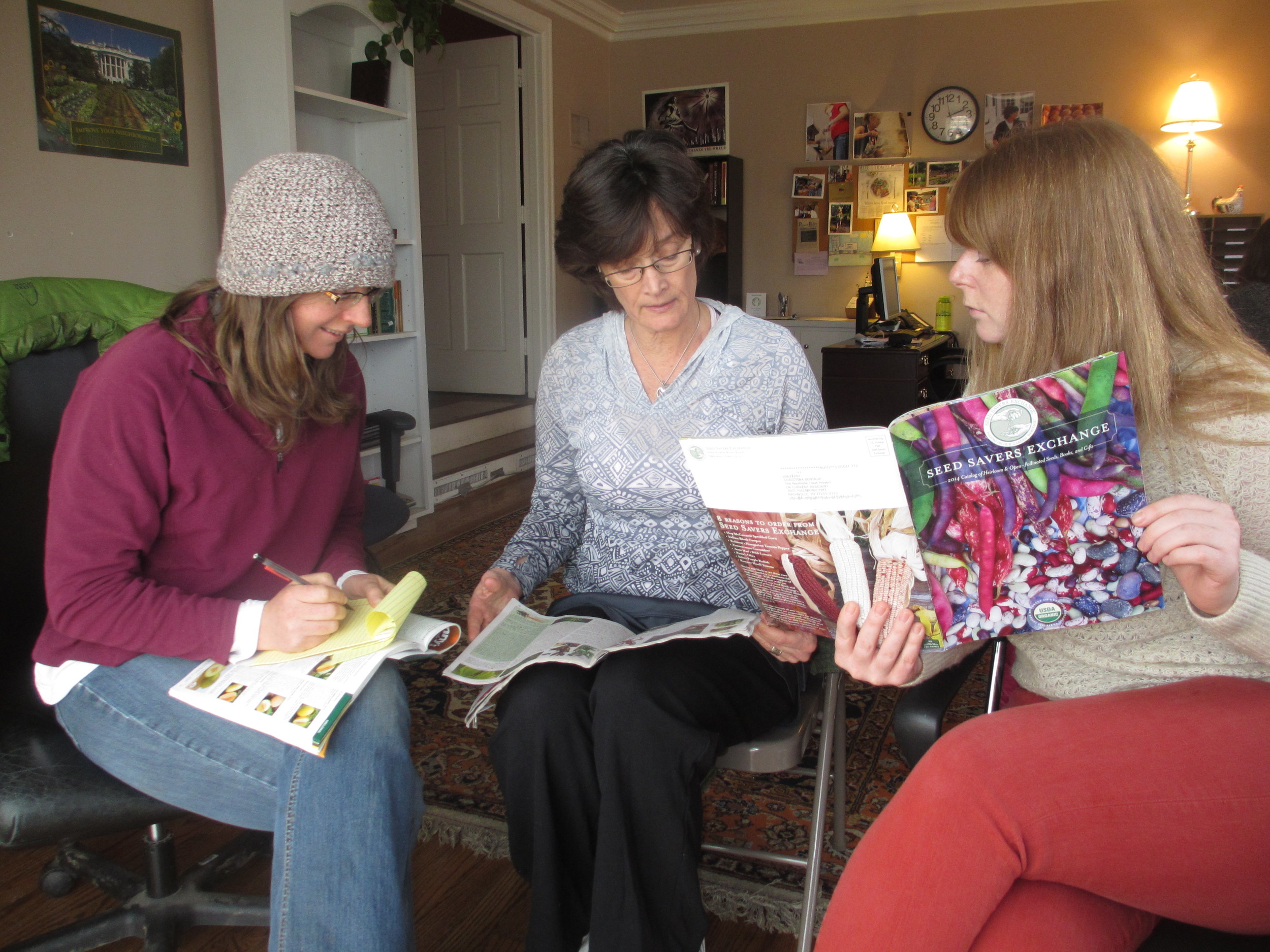
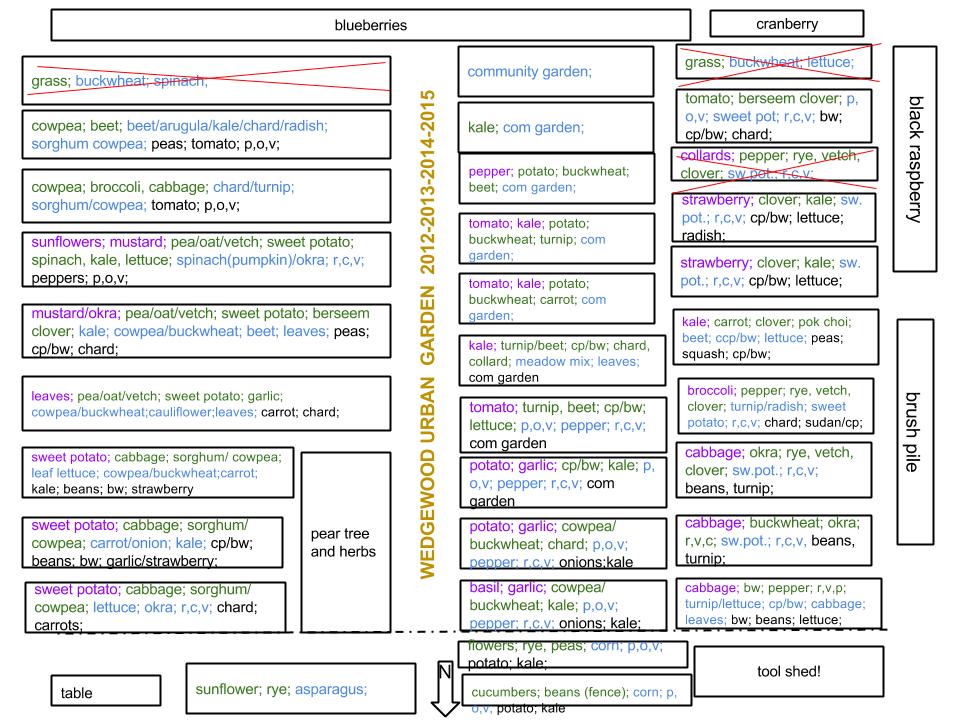
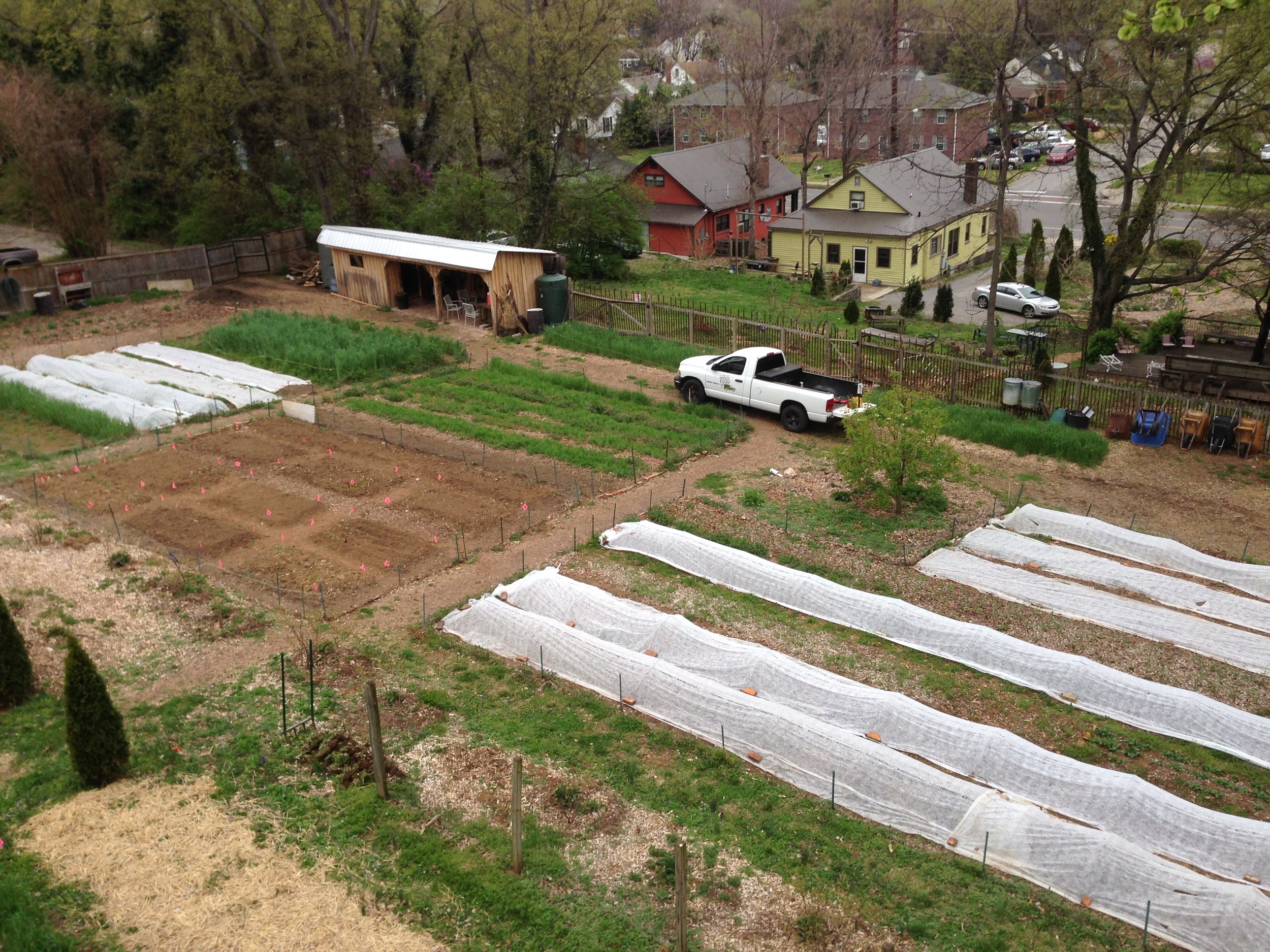
We try hard to follow the garden plan that we made over the winter. We start this garden plan begins with a list of crops that we are excited to grow for our meals program with a rough idea of how many beds should be planted in each. We map out where each crop should go in our permanent bed system and ask whether another crop can be planted in the same space before or after the main crop during our long growing season. We aim to have at least one-fourth of the garden resting at all times in cover crops so that we can maintain productive and healthy soils for many years to come.
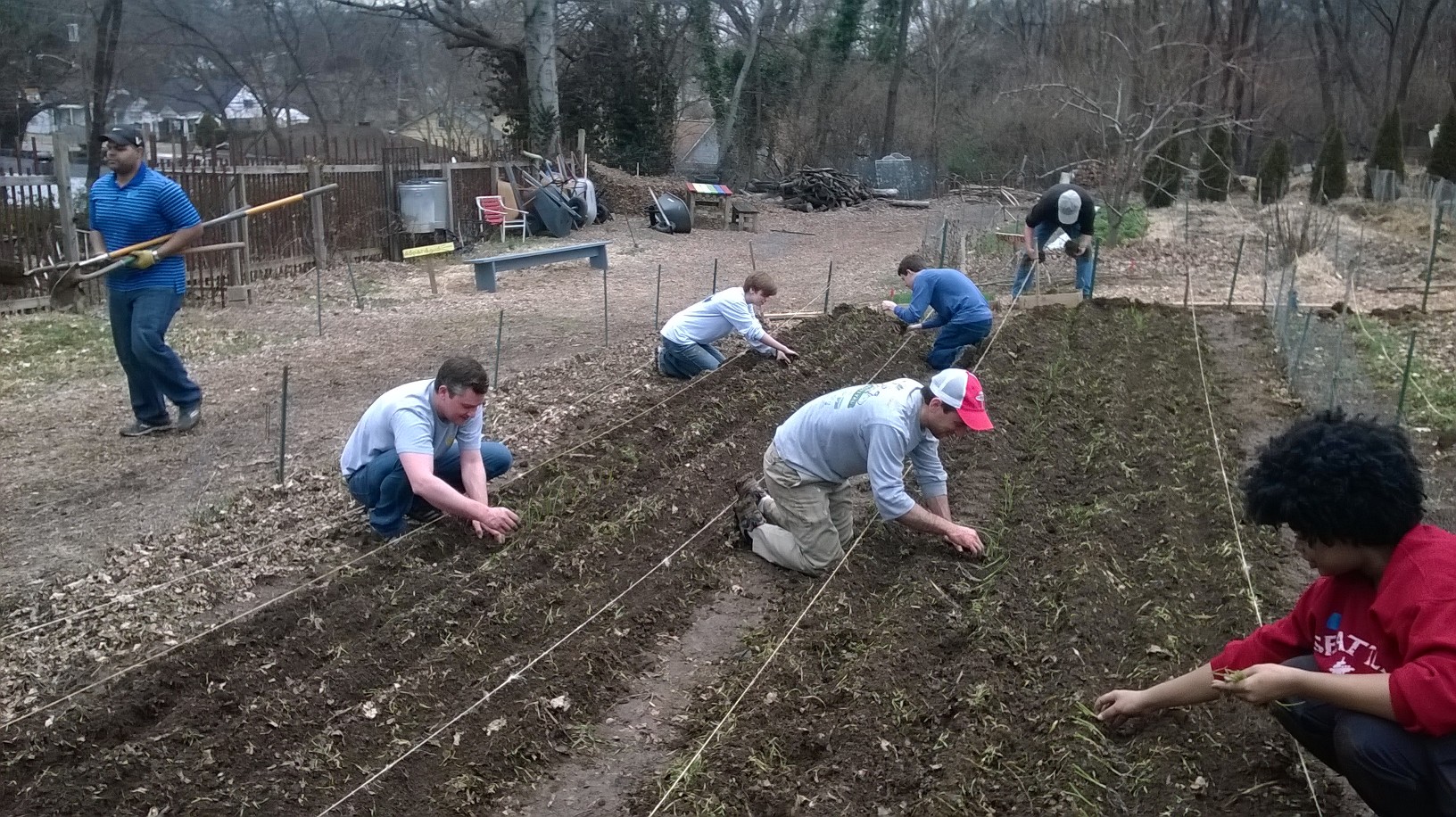
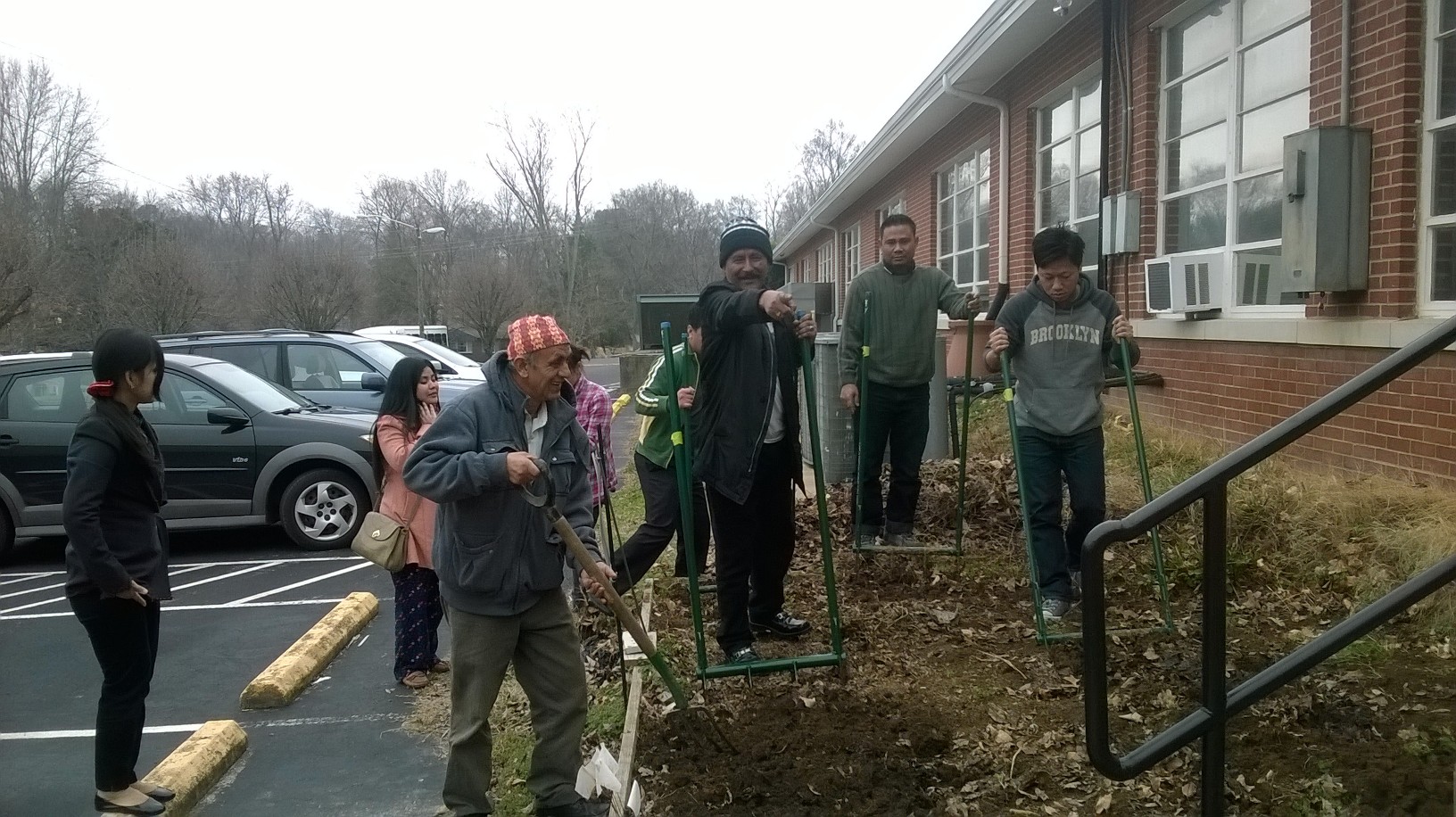
This time of year, we love the broadfork - a garden tool that lifts and aerates the soil while maintaining good soil structure. Where we can, we begin to broadfork the beds that will grow our earliest crops - the lifting and aeration action warms up the cold winter soils and allows them to breathe out excess moisture. Volunteers love the aerobic work-out of it, too.
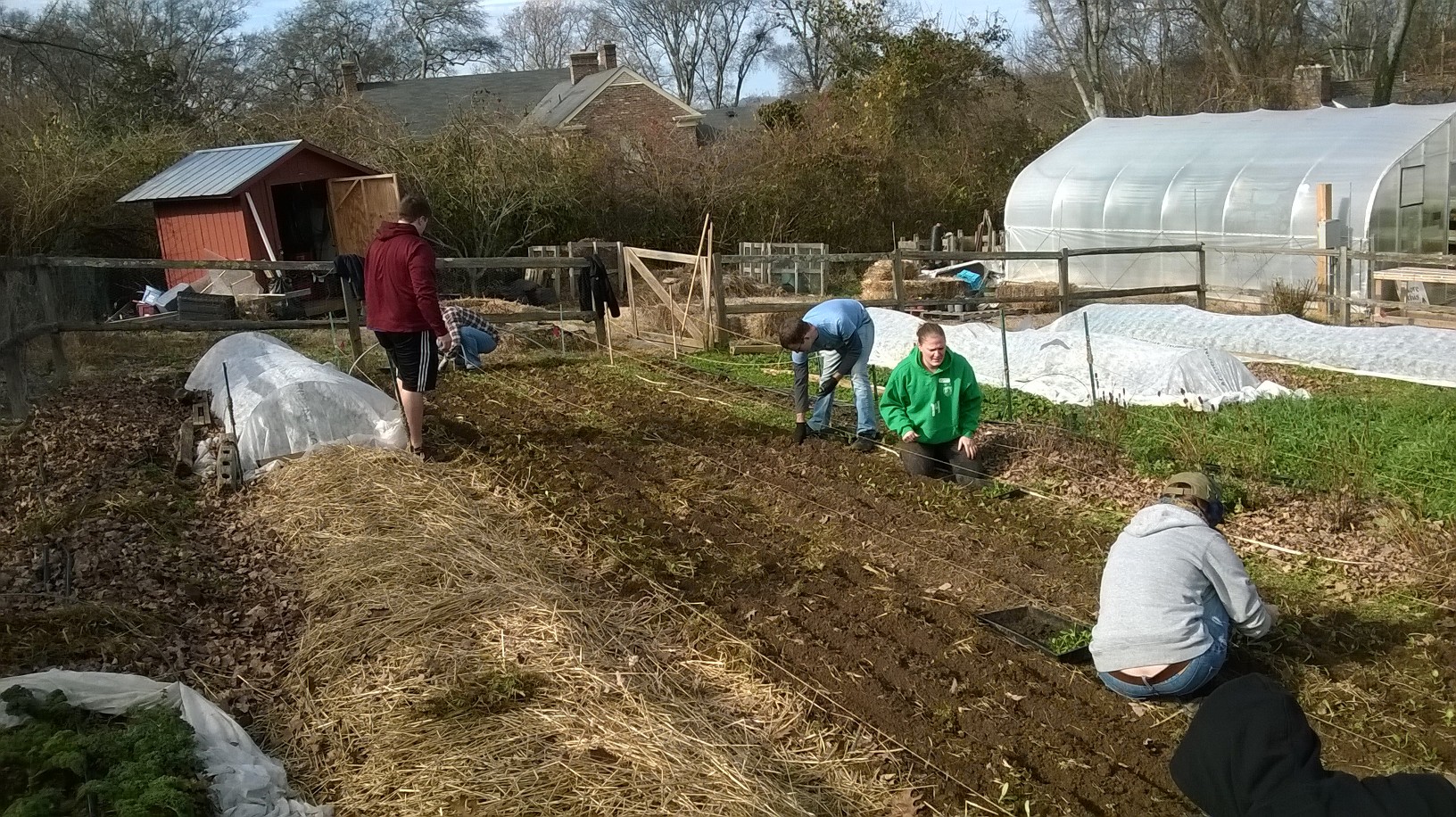
Another exciting thing happening this month is the start of a new year with all of the community members growing in our gardens! This month we’ve begun meeting with participants in the Middle TN Refugee Agriculture Partnership Program, a group of farmers from Burma and Bhutan, with whom we share our best practices for growing production-focused urban gardens in Nashville. We help them with creating their own garden production plans for growing and selling their vegetable crops to restaurants and at local farmers markets. We’re also recruiting other community members for our neighborhood-based community gardens in North and South Nashville.
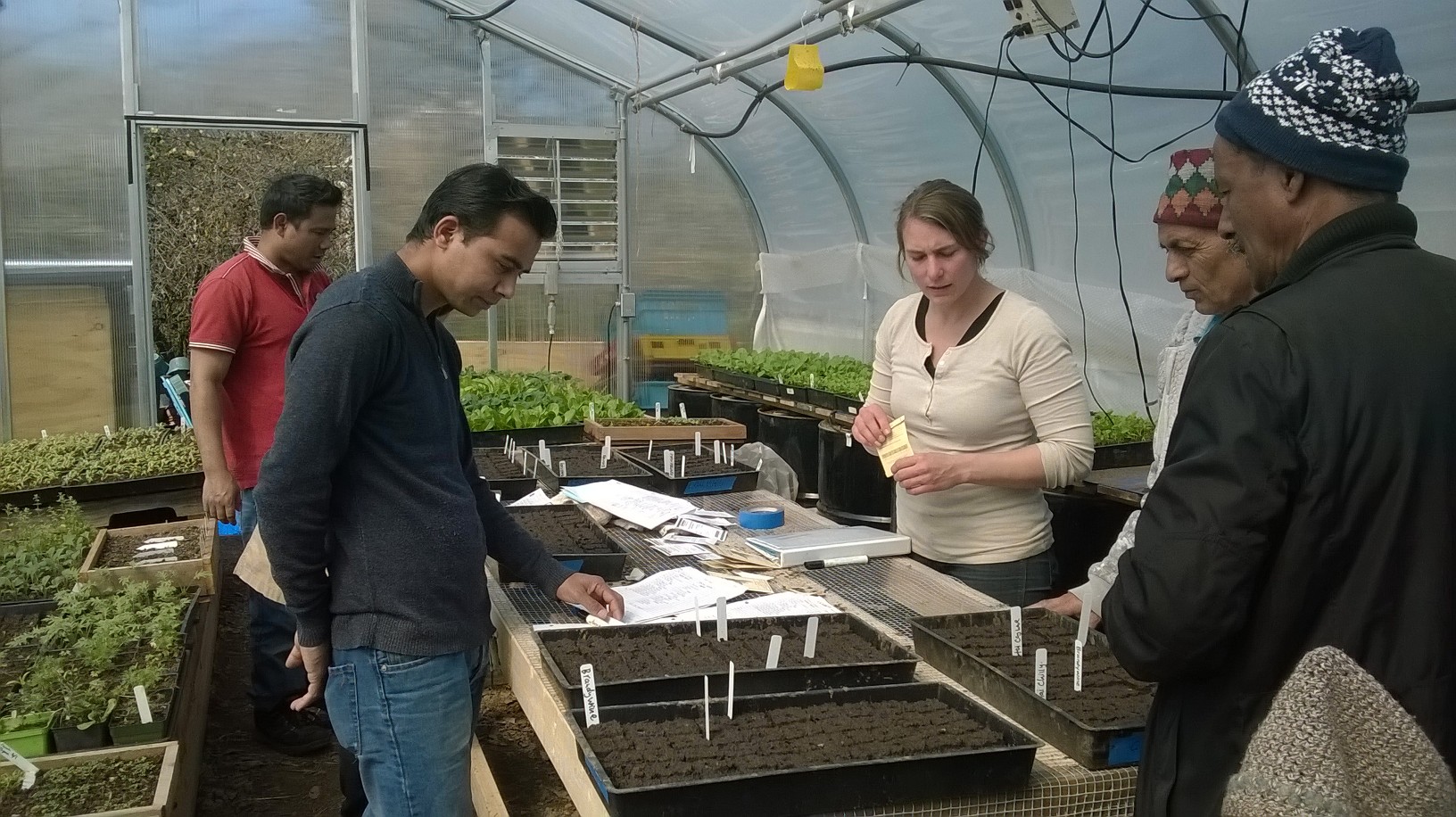
And don’t forget about Project Grow! We’ve started planting for our annual subscription vegetable plant sale. Sales will open soon so be on the lookout for emails from us!

This truly is one of our favorite times of the year, a time when we breathe with anticipation, because the busy time is almost upon us.
Check out some of our favorite resources for specific information about growing vegetables in the South:
- Ira Wallace’s excellent Vegetable Gardening in the Southeast with month-by-month checklists of garden activity
- Pam Dawling’s spreadsheet-heavy but full of years of hard-won details book: Sustainable Market Farming, from her experience growing in our same zone in VA.