
The Nashville Food Project’s Blog




Celebrating the Summer Harvest
This season’s event at McGruder celebrated more than just a successful summer growing season. The United Way Family Resource Center welcomed a new lead agency and several new nonprofit partners to better serve its North Nashville community…

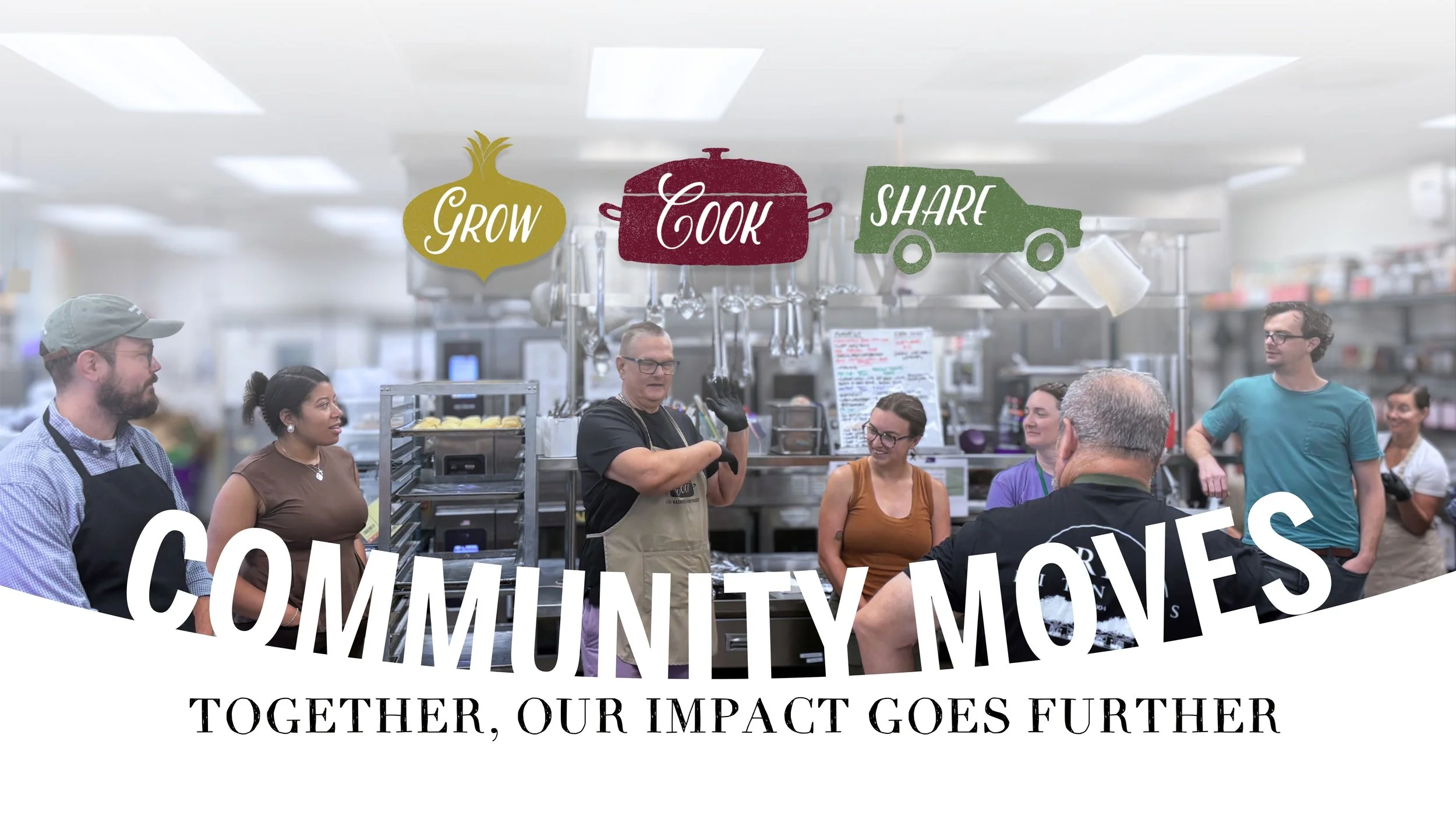
On a recent Saturday the Wedgewood Neighbors Community garden teamed up with the McGruder Green Thumbers Community garden for their Summer Harvest Potluck Celebration. These celebrations are held at the end of each season (spring, summer, and fall) as a way to toast the previous season, share accomplishments, and show other gardeners how they prepare their harvest.

This season’s event at McGruder celebrated more than just a successful summer growing season. The United Way Family Resource Center welcomed a new lead agency and several new nonprofit partners to better serve its North Nashville community. We opened up the celebration and invited The Nashville Food Project staff, the entire staff at the McGruder Family Resource Center, as well as The Little Pantry that Could participants.
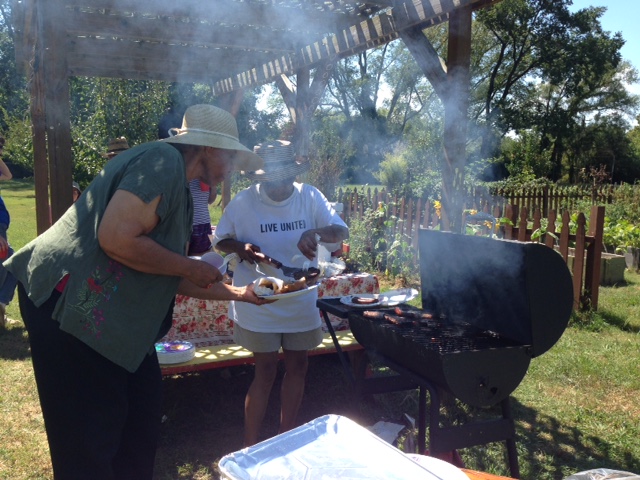
It was a great way for our community gardeners to welcome the new organizations in the building while also showing off their amazing garden. The grill was hot, the food was flowing, and there were plenty of laughs to go around as people shared picnic tables and stories of either their gardening adventures or humorous attempts

A February Snapshot of Our Gardens
It’s starting to look like spring, a favorite time of year for all of us on the garden team. This is a time of year when all of our planning over the winter can finally start taking shape. Here’s a look at what we’re up to in the TNFP gardens this month written by our Garden Manager Christina...

“We are here to awaken from the illusion of our separateness.”
It’s starting to look like spring, a favorite time of year for all of us on the garden team. This is a time of year when all of our planning over the winter can finally start taking shape. Here’s a look at what we’re up to in the TNFP gardens this month written by our Garden Manager Christina...
In February in The Nashville Food Project gardens we try to remember that it is still winter. Our garden crop plan for the year has hopefully been made and checked twice. Seeds have been ordered. Machines and tools are clean and tuned. Winter cover crops are growing slowly in the field along with beds of overwintering greens like kale and spinach. Potting soil and other garden supplies are stockpiled waiting for the signal to start planting. We do the essential February tasks of pruning fruit trees and brambles, direct seeding flowers that require cold weather to germinate (poppies and bachelor buttons), check on the bees’ honey stores and, if necessary, feed them. Spring is surely close at hand but we try to remember that we risk doing more damage than good by trying to work soils that are still cold and wet.

We anxiously await the end of the month, when we can start our first seeds in the greenhouse and begin preparing a few beds for our earliest vegetable plantings in March. The first crop we plant outdoors is the onion transplants that we’ve started in our greenhouse the previous November. Onions are soon followed by peas, lettuce and other leafy greens, and root crops that love the cool weather of early spring. By the end of the month, the greenhouse is full of crops that we begin indoors to get a head-start on the growing season - leafy crops like kale and chard and fruiting crops like tomatoes and peppers.
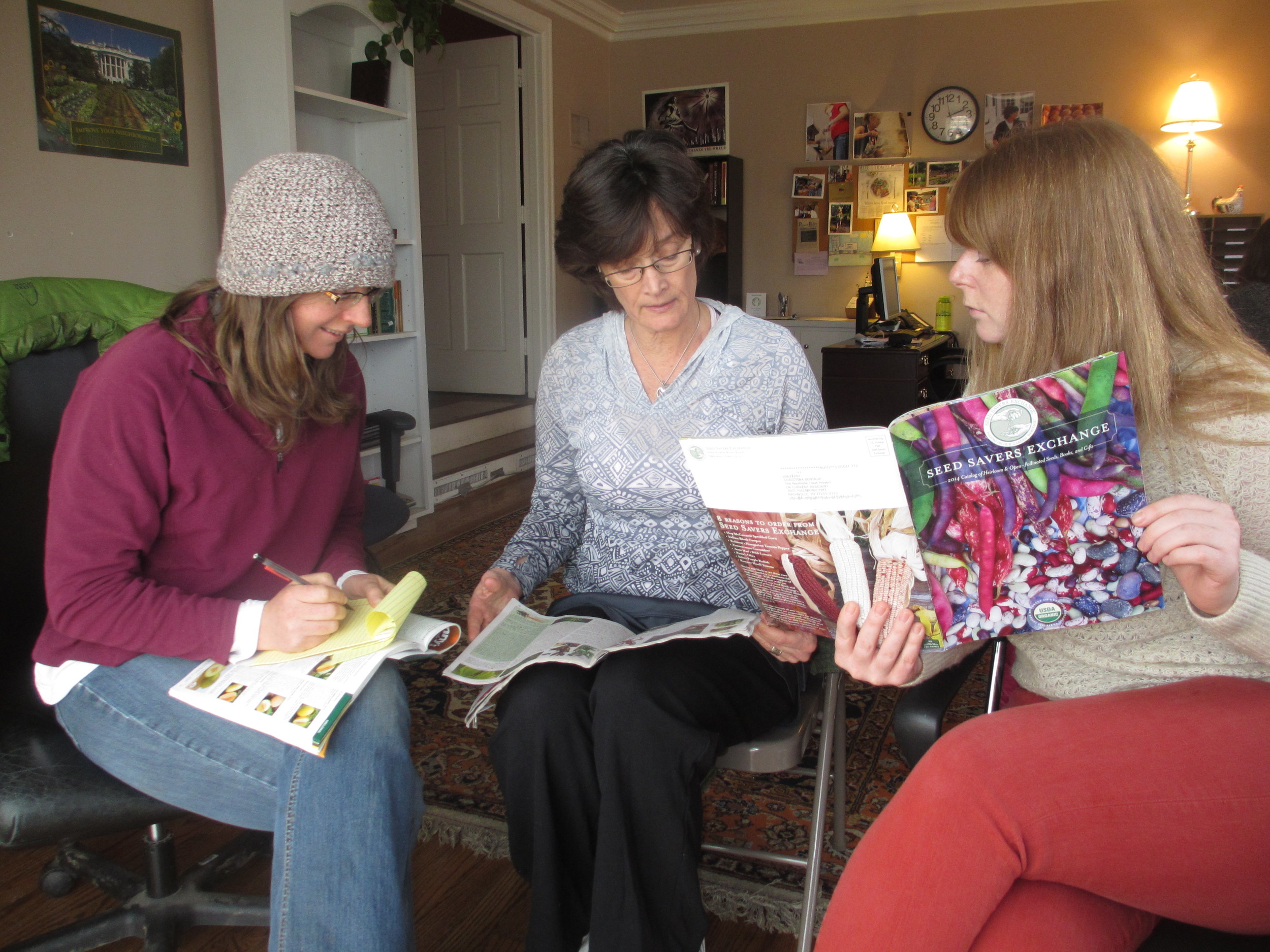
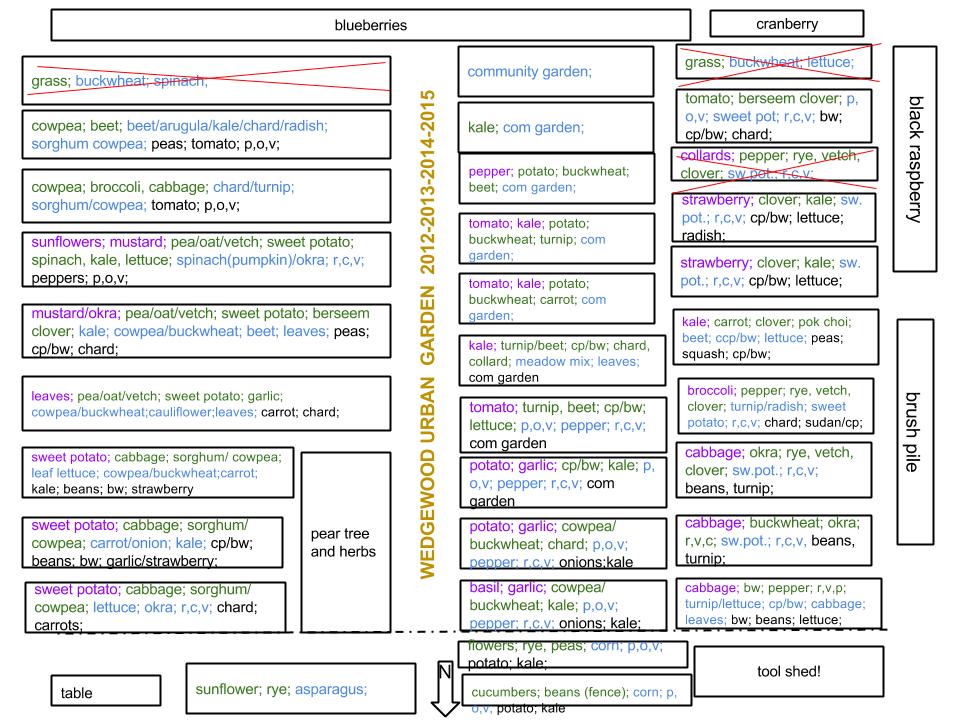
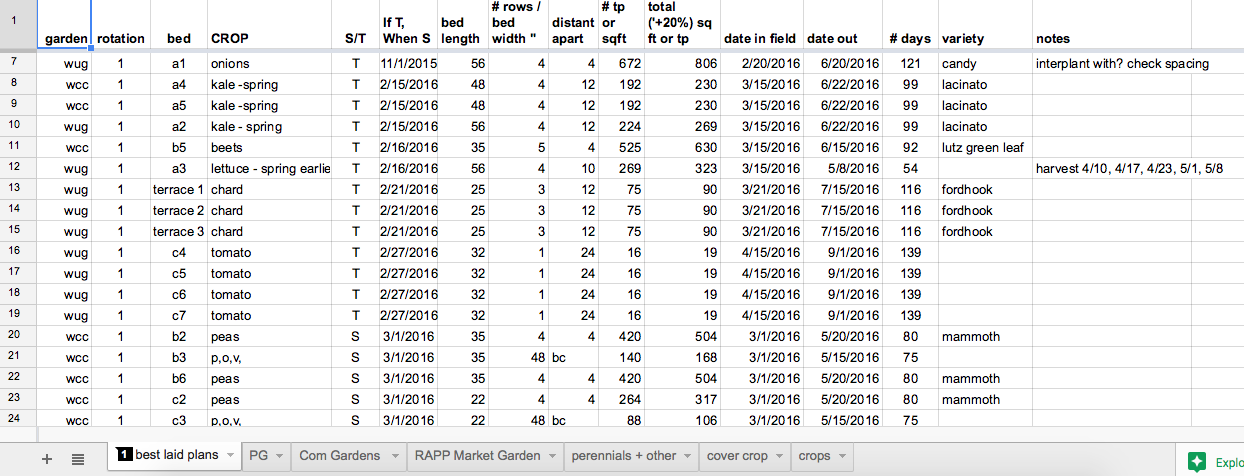
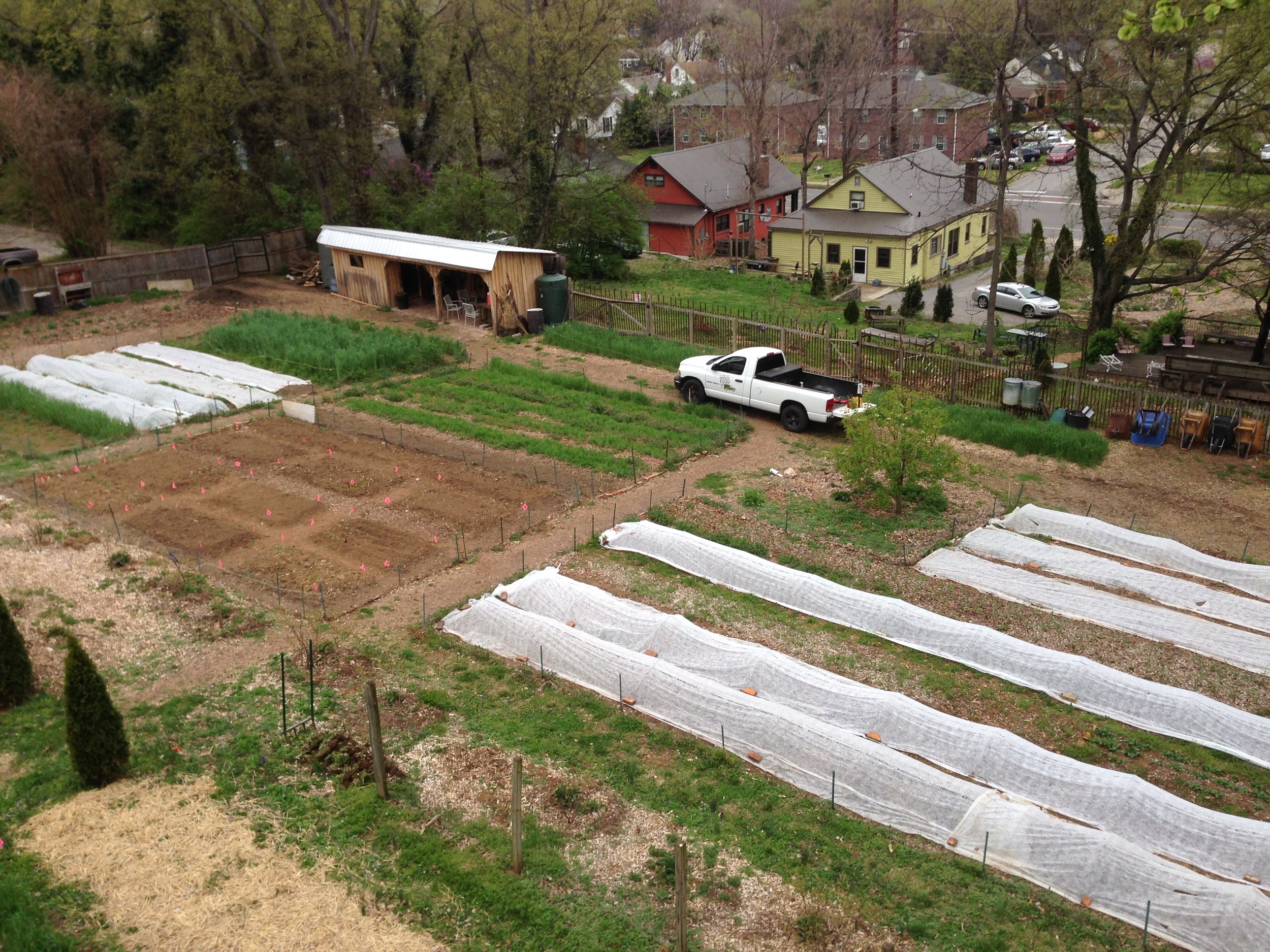
We try hard to follow the garden plan that we made over the winter. We start this garden plan begins with a list of crops that we are excited to grow for our meals program with a rough idea of how many beds should be planted in each. We map out where each crop should go in our permanent bed system and ask whether another crop can be planted in the same space before or after the main crop during our long growing season. We aim to have at least one-fourth of the garden resting at all times in cover crops so that we can maintain productive and healthy soils for many years to come.
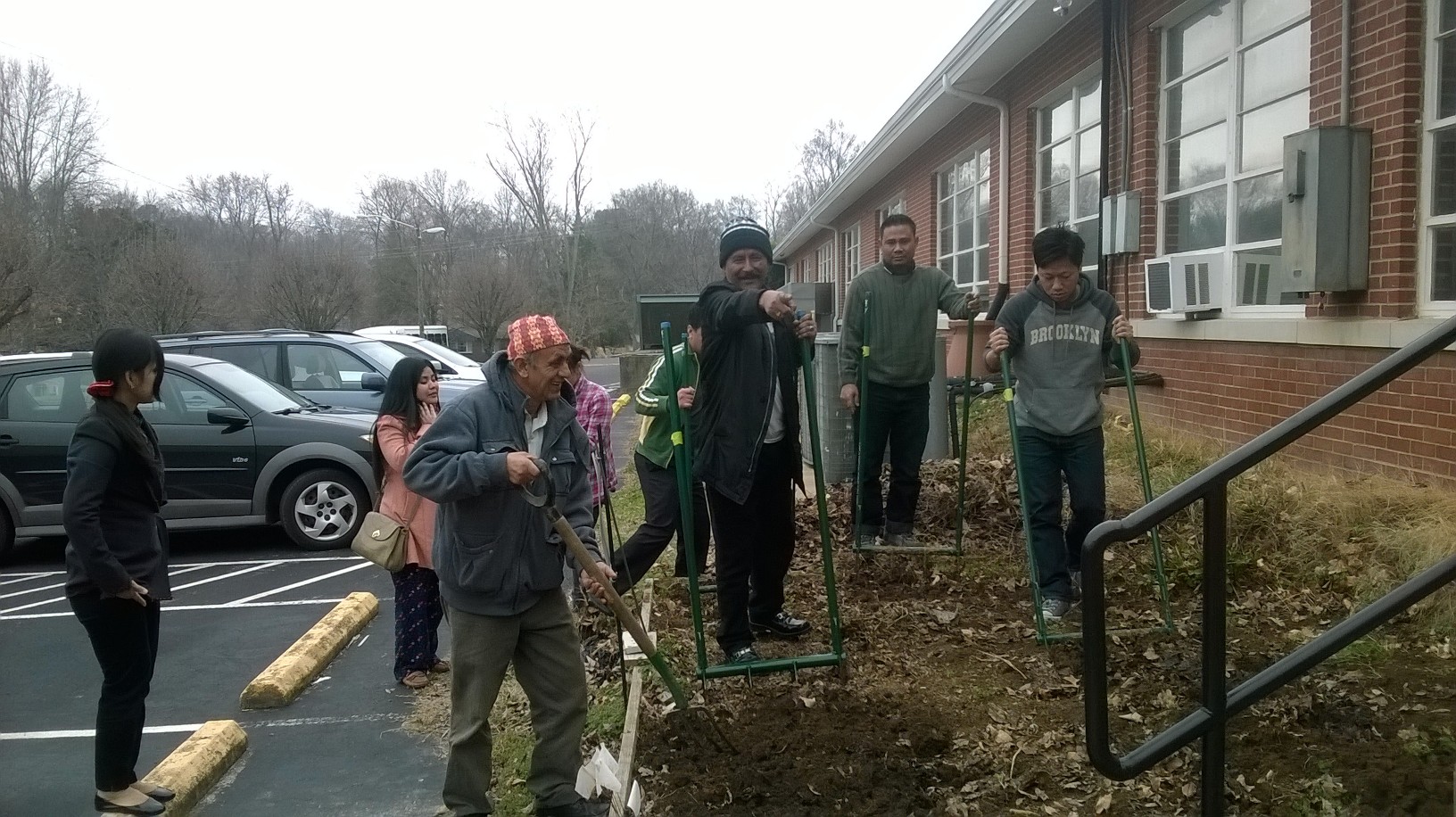
This time of year, we love the broadfork - a garden tool that lifts and aerates the soil while maintaining good soil structure. Where we can, we begin to broadfork the beds that will grow our earliest crops - the lifting and aeration action warms up the cold winter soils and allows them to breathe out excess moisture. Volunteers love the aerobic work-out of it, too.
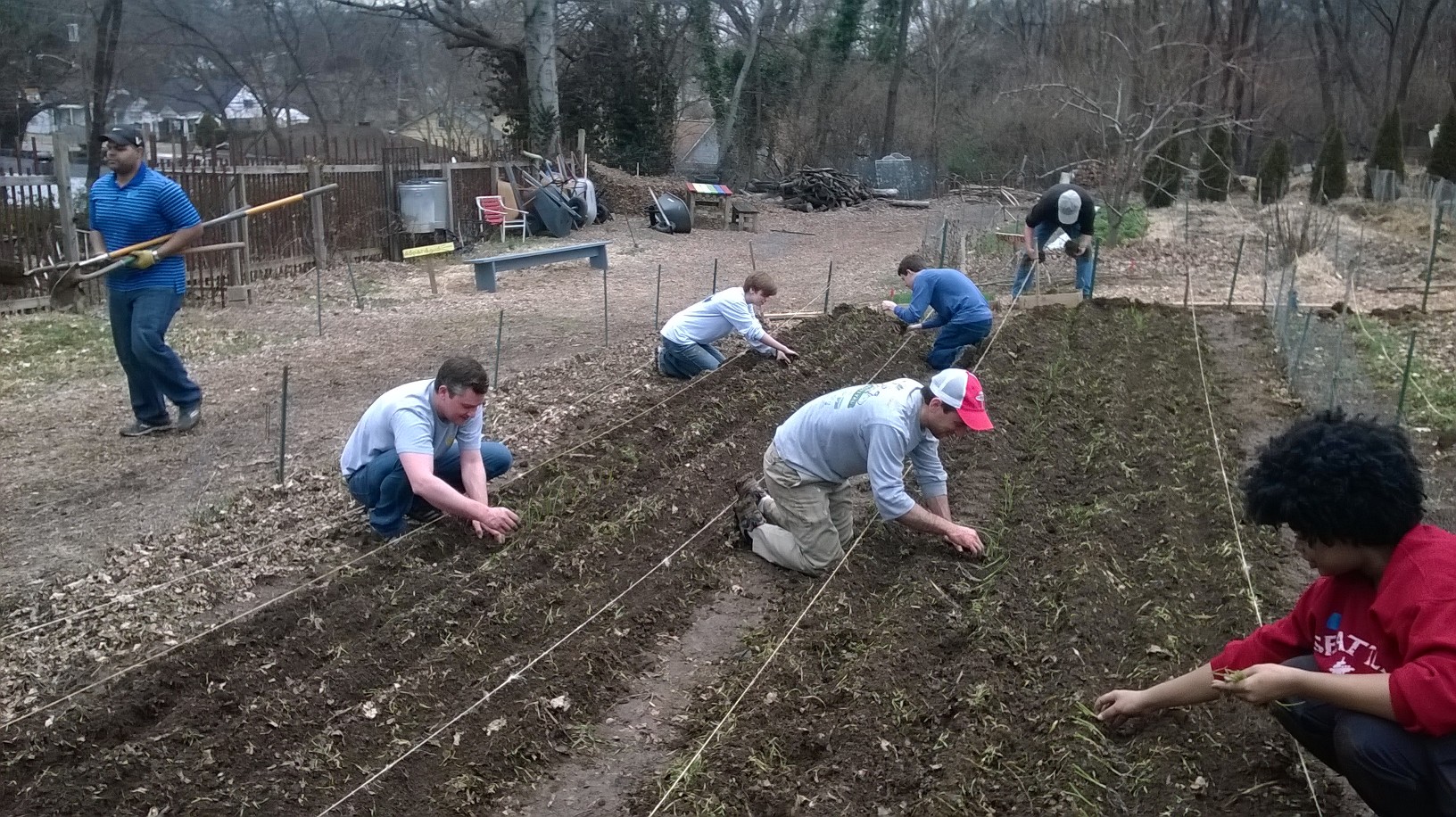
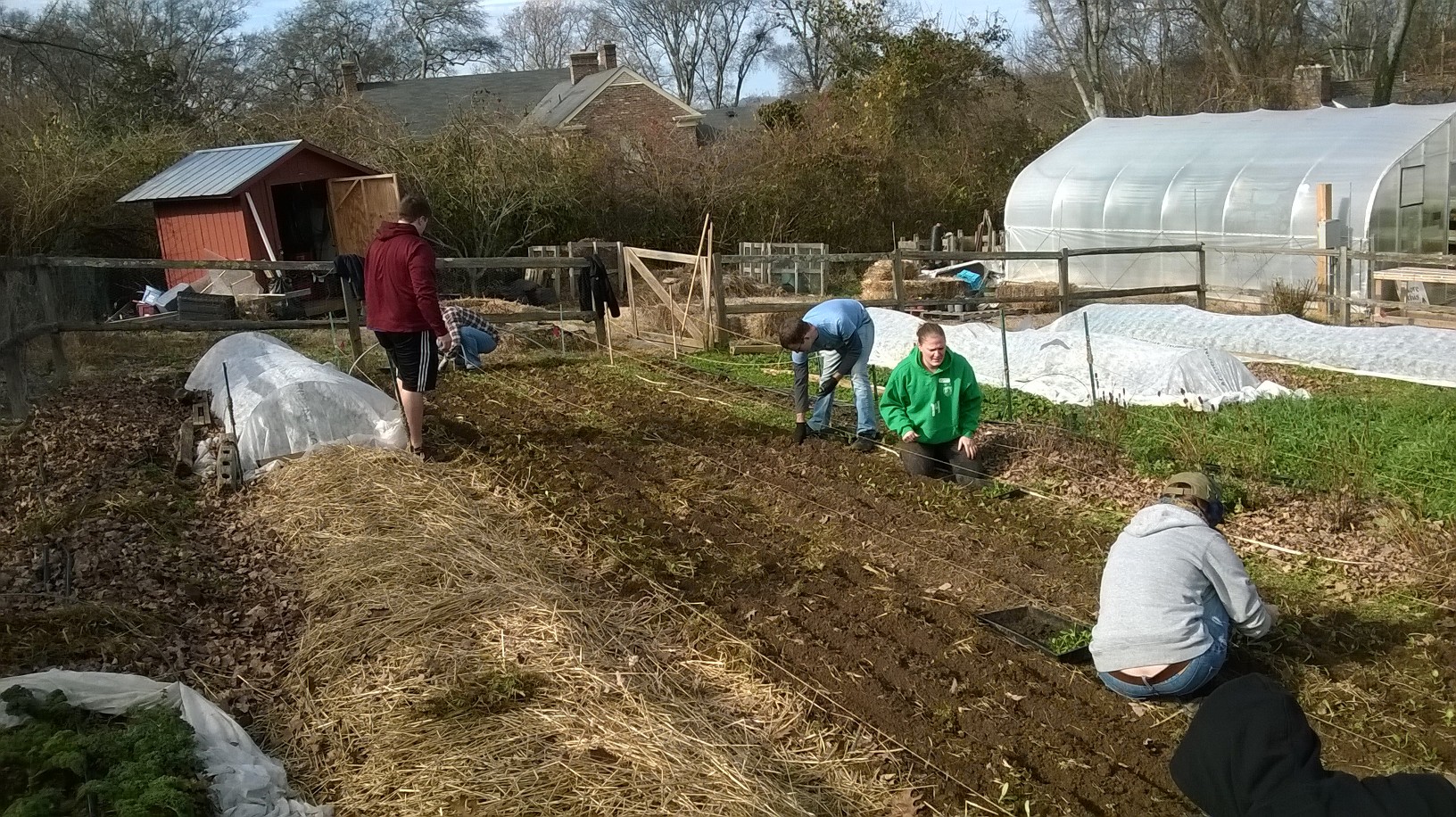
Another exciting thing happening this month is the start of a new year with all of the community members growing in our gardens! This month we’ve begun meeting with participants in the Middle TN Refugee Agriculture Partnership Program, a group of farmers from Burma and Bhutan, with whom we share our best practices for growing production-focused urban gardens in Nashville. We help them with creating their own garden production plans for growing and selling their vegetable crops to restaurants and at local farmers markets. We’re also recruiting other community members for our neighborhood-based community gardens in North and South Nashville.
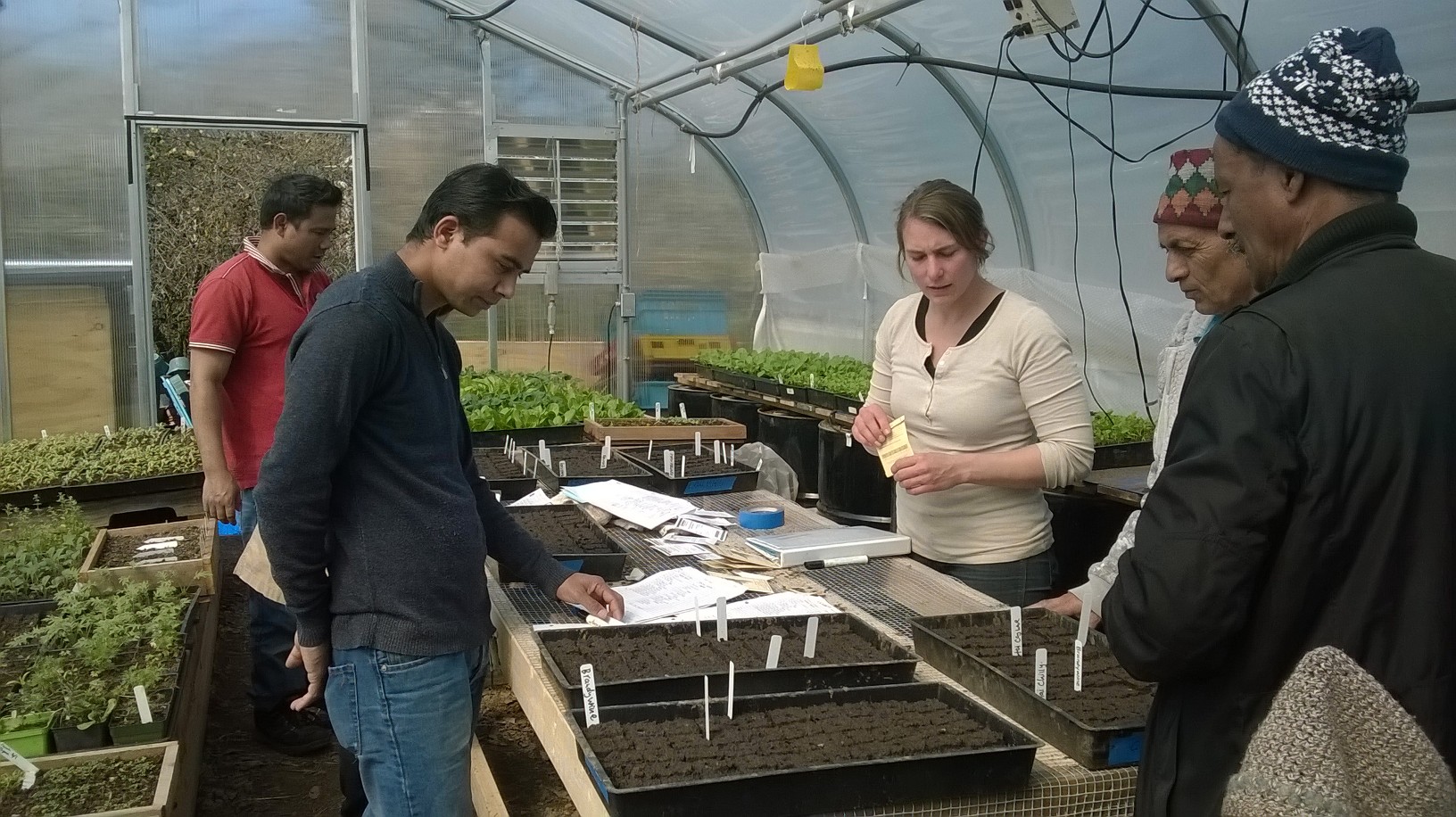
And don’t forget about Project Grow! We’ve started planting for our annual subscription vegetable plant sale. Sales will open soon so be on the lookout for emails from us!

This truly is one of our favorite times of the year, a time when we breathe with anticipation, because the busy time is almost upon us.
Check out some of our favorite resources for specific information about growing vegetables in the South:
- Ira Wallace’s excellent Vegetable Gardening in the Southeast with month-by-month checklists of garden activity
- Pam Dawling’s spreadsheet-heavy but full of years of hard-won details book: Sustainable Market Farming, from her experience growing in our same zone in VA.
Planting Seeds of Change
As we reflect on 2015 and look forward to 2016, we’ve been talking and thinking about “hope.” Rather than feeling discouraged about the problems of poverty and food waste, we’re focusing on the small changes we can make in the community…

Garden Coordinator Kia writes garden inspiration on a chalkboard.
As we reflect on 2015 and look forward to 2016, we’ve been talking and thinking about “hope.” Rather than feeling discouraged about the problems of poverty and food waste, we’re focusing on the small changes we can make in the community.
In the garden specifically, here are a few ways we’re planting small seeds of change:
1.) Educating students at veggie tastings.
We might not be able to solve all the issues related to farm-to-school, but we can introduce children to great-tasting vegetables.
Students from Fall-Hamilton Elementary School visit the McGruder Community Garden on occasion for activities that range from observation journals to lessons on seeds and compost to planting vegetables. We also donate food and cooking time to the school in twice-per-semester “veggie tastings,” where students sample colorful roasted root vegetables, kale salads, or sweet potato fries. "The idea is to introduce kids to vegetables they might not opt for at home or have access to at all," says Garden Manager Christina Bentrup.

Students from Fall-Hamilton help out in the Wedgewood Urban Garden.
2.) Making good use of land.
Through our gardens, we’re using land that might otherwise be overlooked to increase access to healthy food. We’ve harvested 4,250 pounds of produce this year for 50,100 meals.
3.) Teaching others about growing food.
Through our community garden plots, education and volunteer sessions, we’re hoping to empower those in the community to grow their own food in our gardens or at their homes.

Volunteers from Whole Food Market help out at the Wedgewood Urban Garden.
4.) Sharing land to create spaces for others.
With the community garden plots and the Refugee Agriculture Program, we want growers to feel as if they have a place of their own.

Tika Adikhari, a Bhutanese gardener at the Wedgewood Urban Garden, proudly shows off his plot.

Siddi Rimal interprets during a training session with refugee gardeners.
5.) Keeping bees and chickens.
Beyond the plants, we’re keeping bees and chickens at our gardens, which provide vital functions in an ecosystem. They also serve as educational tools for students and volunteers.
Through small steps forward, we can maintain hope. Hope is contagious. We hope you’ll continue to help us spread it in 2016.

Garden Spotlight: McGruder Community Garden
When Garden Coordinator Kia Brown arrived at the McGruder Community Garden on a recent morning, it didn’t take long for her to spot a couple new raspberries hanging from a vine near the garden’s front gate…
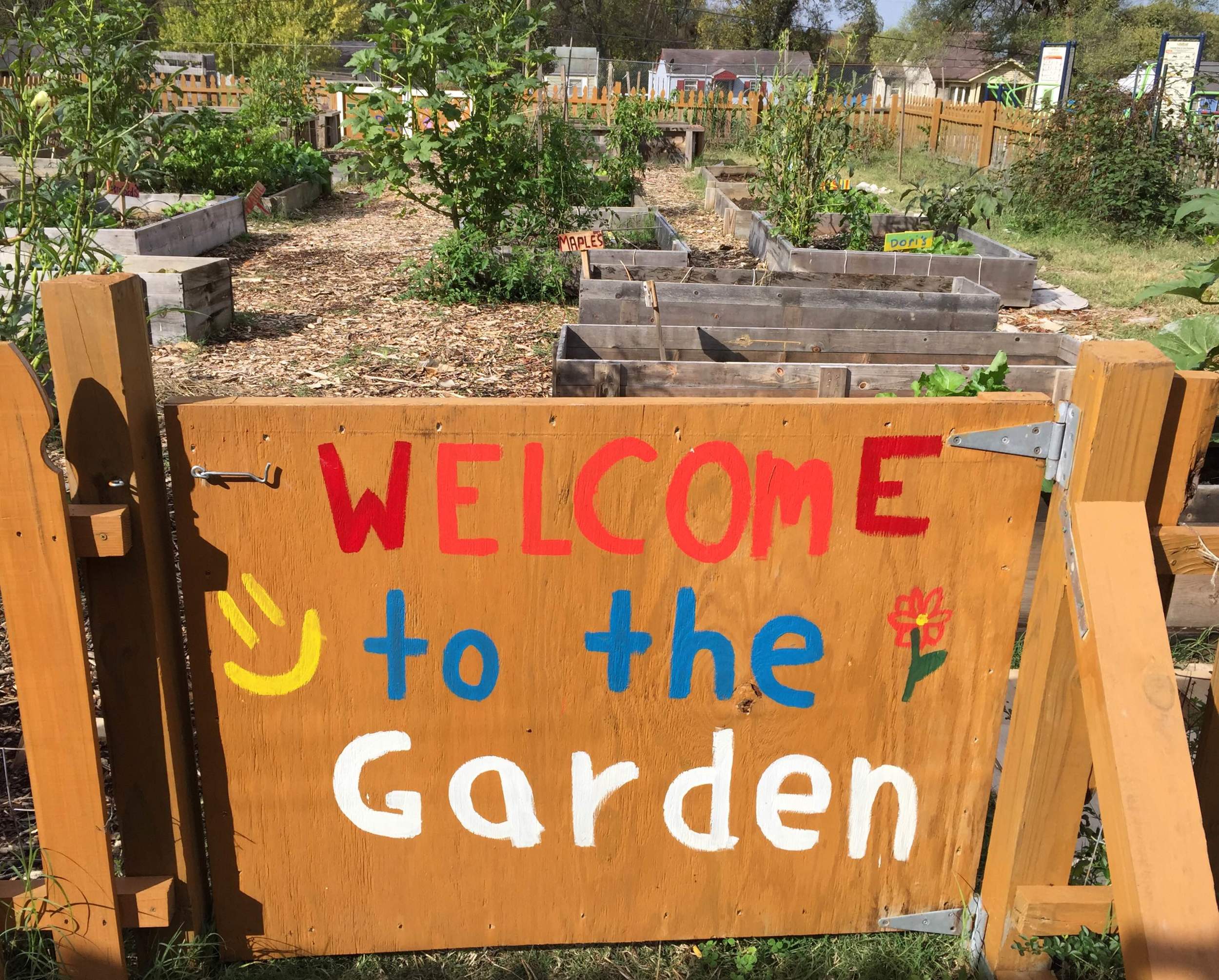
When Garden Coordinator Kia Brown arrived at the McGruder Community Garden on a recent morning, it didn’t take long for her to spot a couple new raspberries hanging from a vine near the garden’s front gate.
“That’s so exciting,” she said, taking a closer look. “I come in here and learn something new every day.”

Kia has been overseeing the McGruder garden located in North Nashville since June. She checks on the 24 plots for individuals and groups and holds monthly garden trainings to teach growers about proper harvesting, planting for the time of year and soil care.
“I need to let Ms. Gloria know,” she said, pointing out another new development -- a green pepper that would soon need to be picked.
While McGruder Garden doesn’t act as a production garden for The Nashville Food Project, it certainly fits with TNFP mission to bring people together to grow and share nourishing food. The garden helps cultivate community and provides access to healthy produce.
In addition to trainings, Kia hosts garden work days and helps an after school program through the 14th Avenue Missionary Baptist Church care for a community raised beds planted for any passersby who have a need for fresh produce.
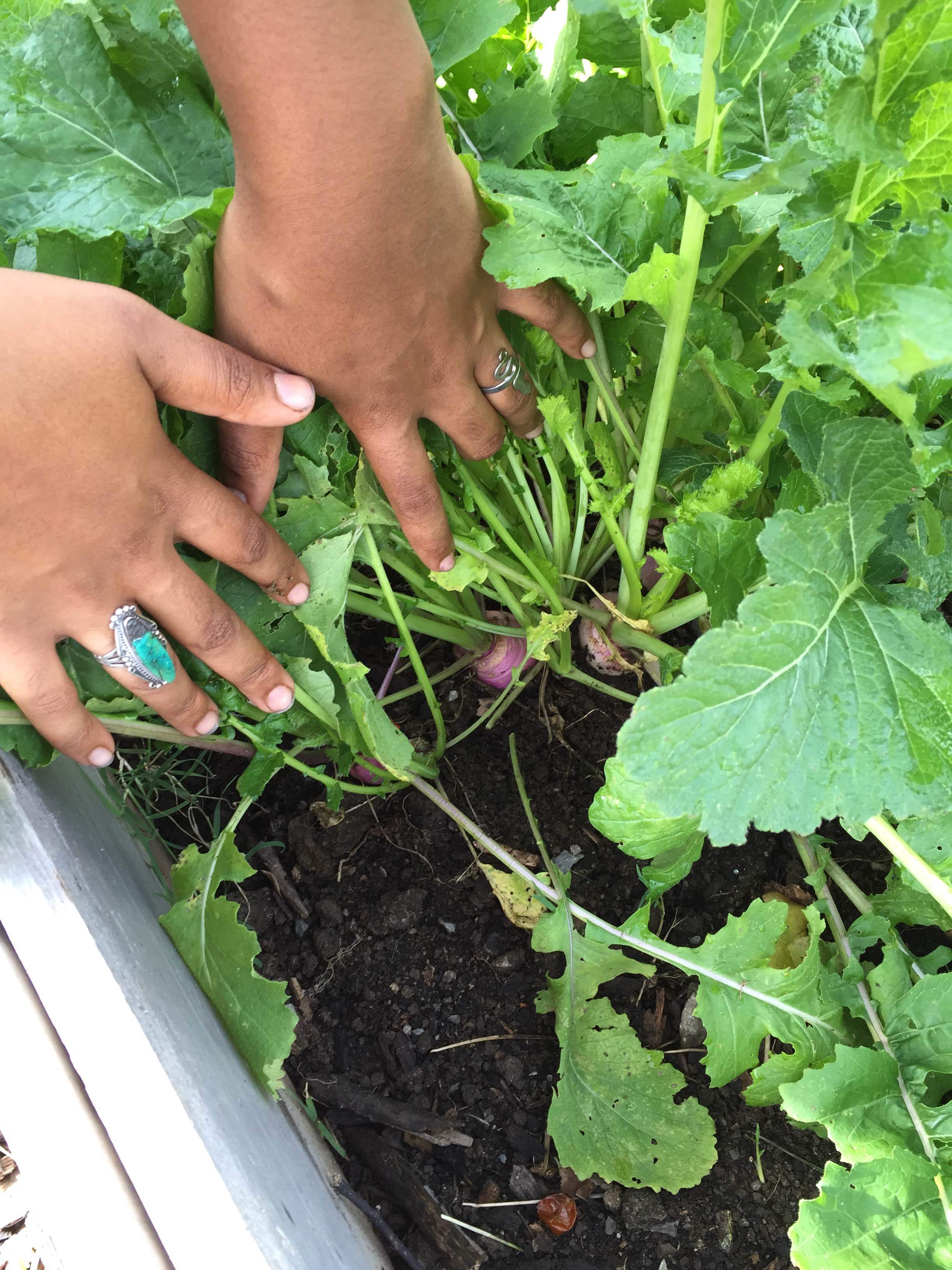

Next year she plans to implement a recruiting effort that will go to neighborhood churches and community centers to bring in new plot holders. She’s helping maintain an orchard of pear and nectarine trees next to the garden plots, and she looks after the community herb garden (which is flowering this time as year) as well as compost and leaf collection bins.


Plot holders have been collecting the last of their cherry tomatoes and peppers. Next up they will have lettuces and roots such as turnips, carrots, kale, radishes and collards.

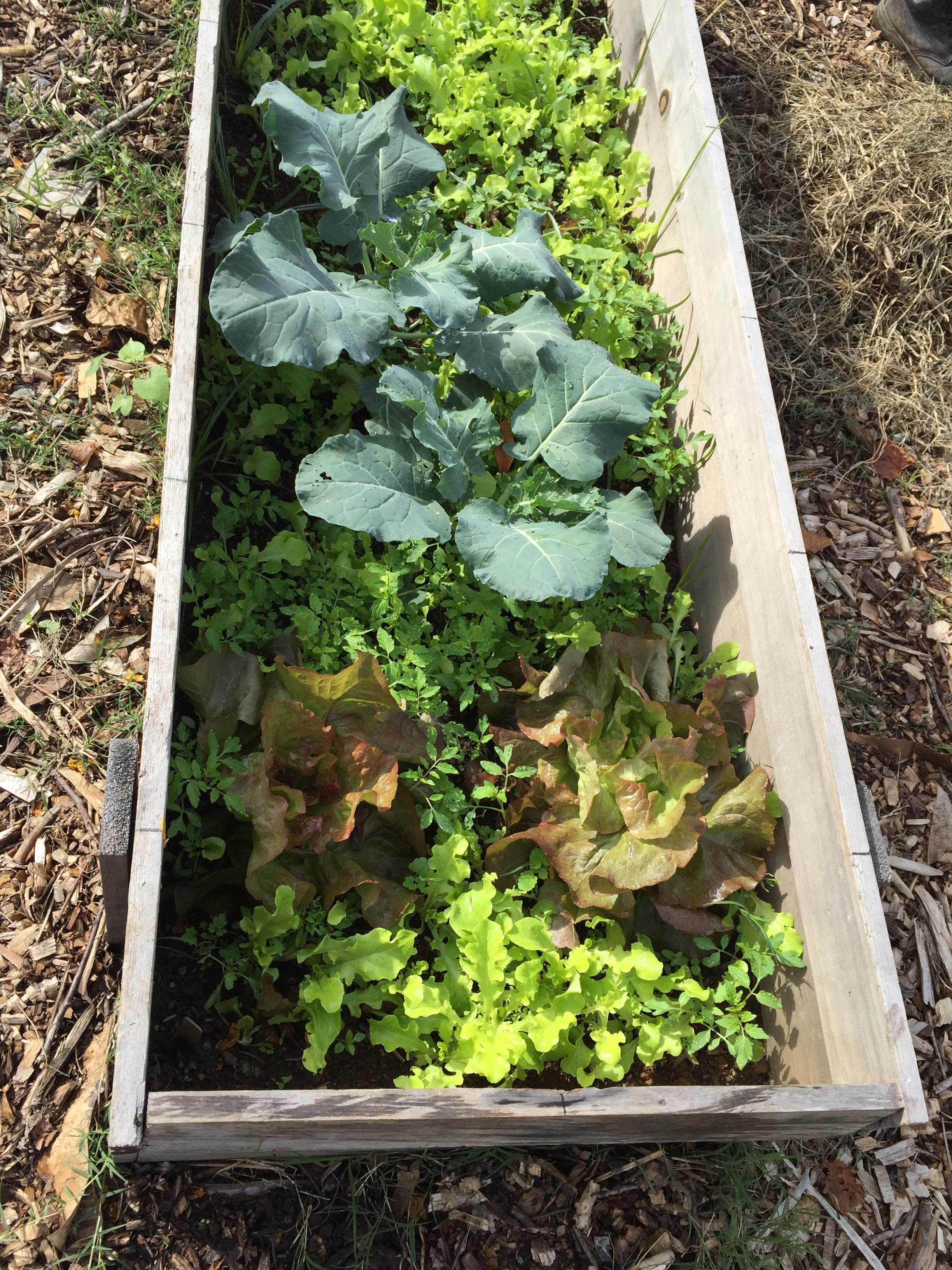
Kia helps maintain the garden through a grant from United Way, and she says her main focus is to help prepare those who grow here to work these plots independently.
"We want to share," she says, "as much information and knowledge about growing food as possible."
TNFP Welcomes Darrius Hall as Meals Assistant
Nashville native Darrius Hall is an entrepreneur who doesn't mind getting his hands dirty. Joining The Nashville Food Project as Meals Assistant, he gleans food on local farms and works in the kitchen to keep track of donations and meal prep for delivery.
Darrius also put his business degree to good use by founding his company Creative Curren$y. He works to provide essential living needs and empowerment to those in his community near the McGruder garden.
"I have dedicated my time, business, and it's resources, to nurturing melanin-based communities and those similar to it," he said. "When I do find time to myself, I like to indulge in books, painting, music and gardening."