
The Nashville Food Project’s Blog




Partner Spotlight: Legacy Mission Village
As a people of fierce hope that believe in intersectionality and interdependence, we’ve also seen generous creativity implemented to help neighbors care for each other. We found this type of resistant and persistent care in the work and community fostered by Legacy Mission Village.
by Elizabeth Langgle-Martin, Community Engagement Manager
The introduction of COVID-19 to our world and our city has created devastation for so many. And while COVID-19 did not break our systems, it has exposed and deepened our country’s existing inequalities, gaps in care, and further alienated some of our most vulnerable members.
As a people of fierce hope who believe in intersectionality and interdependence, we’ve also seen generous creativity implemented to help neighbors care for each other. We found this type of resistant and persistent care in the work and community fostered by Legacy Mission Village.
Legacy Mission Village (LMV), as explained by their Director of Operations, Tim Mwizerwa, “was founded by refugees to serve refugees in Middle Tennessee.”
“Traditionally, we are an educational organization that works towards workforce stability and economic stability for families,” he says. LMV typically provides English learning, financial literacy, digital literacy, citizenship test preparation, and children’s education support. Tim notes that their goal is to support every member of the family “from cradle to grave.” He explains that seemingly standard programming, such as after-school support for teens, can be drastically different for refugee families. Often a teen or child may be the only person fluent in English within a household, leaving them to navigate complex situations like insurance claims, tax documents, and other elements that lead LMV’s team to provide intensive support that spans beyond traditional homework help.
With the risk of COVID-19 continually looming, LMV’s community is unable to meet in any kind of classroom setting so their team has been challenged to imagine how to support the families they serve in relevant ways that span beyond their core programming.
Earlier in the summer, LMV began to purchase pantry goods in bulk to help their participants experiencing food access struggles. Staff soon wondered how they could offer their clients a more balanced COVID-19 relief box beyond the non-perishable items they had secured.

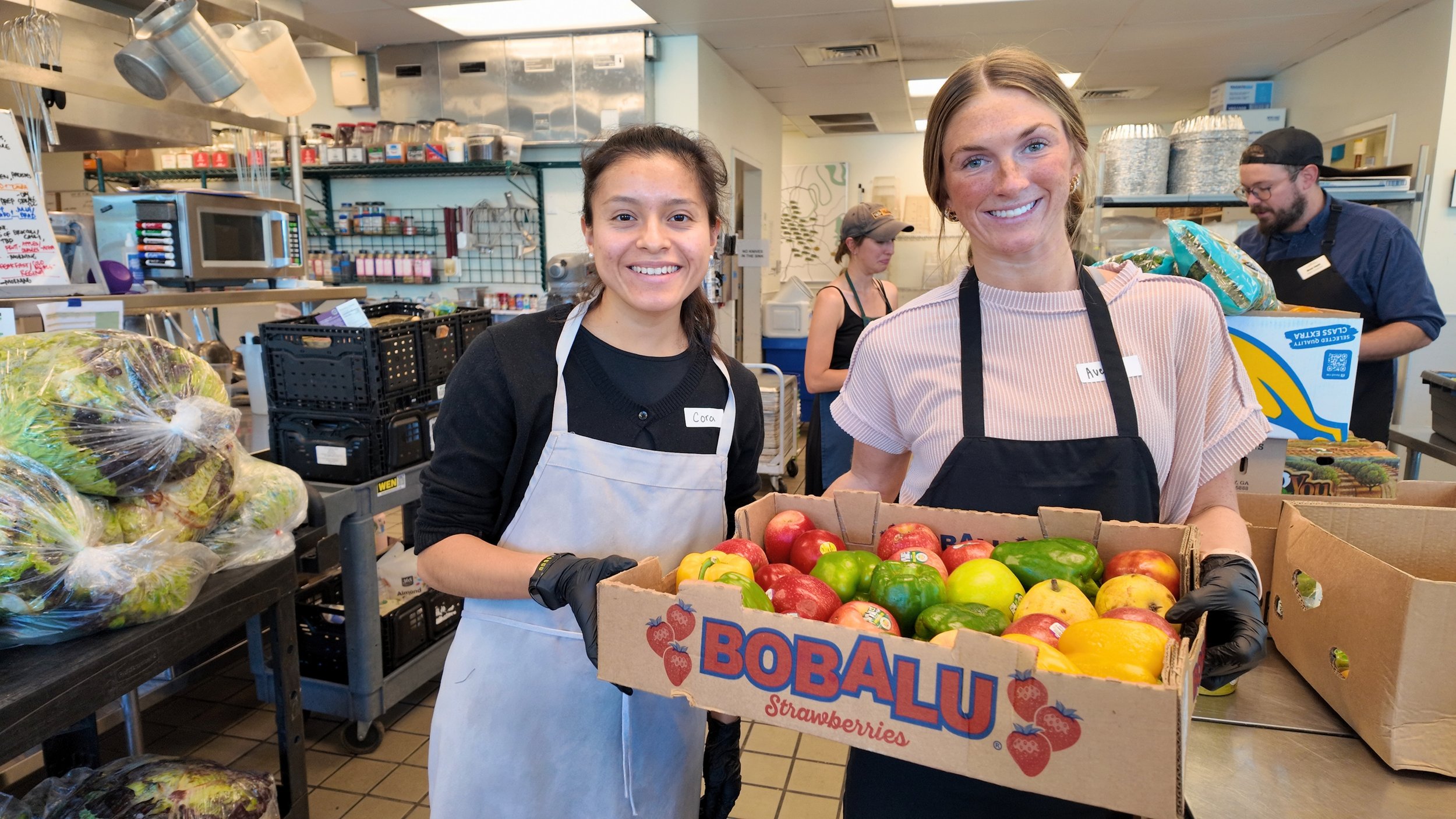
The Nashville Food Project was able to support LMV’s existing efforts by sourcing local, fresh foods to enhance the dry food items that LMV was offering the families they serve. Each week TNFP was able to leverage our resources and relationships to source locally raised proteins from TN Grassfed, eggs through KLD Farms, milk from Hatcher Family Dairy, and robust quantities of fresh produce from our Growing Together farmers, Sweeter Days Farm, West Glow Farms, Green Door Gourmet, and others. Throughout the summer approximately 80 families had access to fresh, local, high-quality food through this vibrant collaboration. In addition, through TNFP’s relationship with Henley Nashville, which acted as a satellite TNFP kitchen during the early days of COVID-19 shutdowns, LMV was able to receive culturally appropriate family-sized, scratch-made meals. Over the course of a month and a half, through Henley, TNFP, and LMV, a total of 1,360 servings of from-scratch goodness was shared with families alongside the bulk groceries provided.


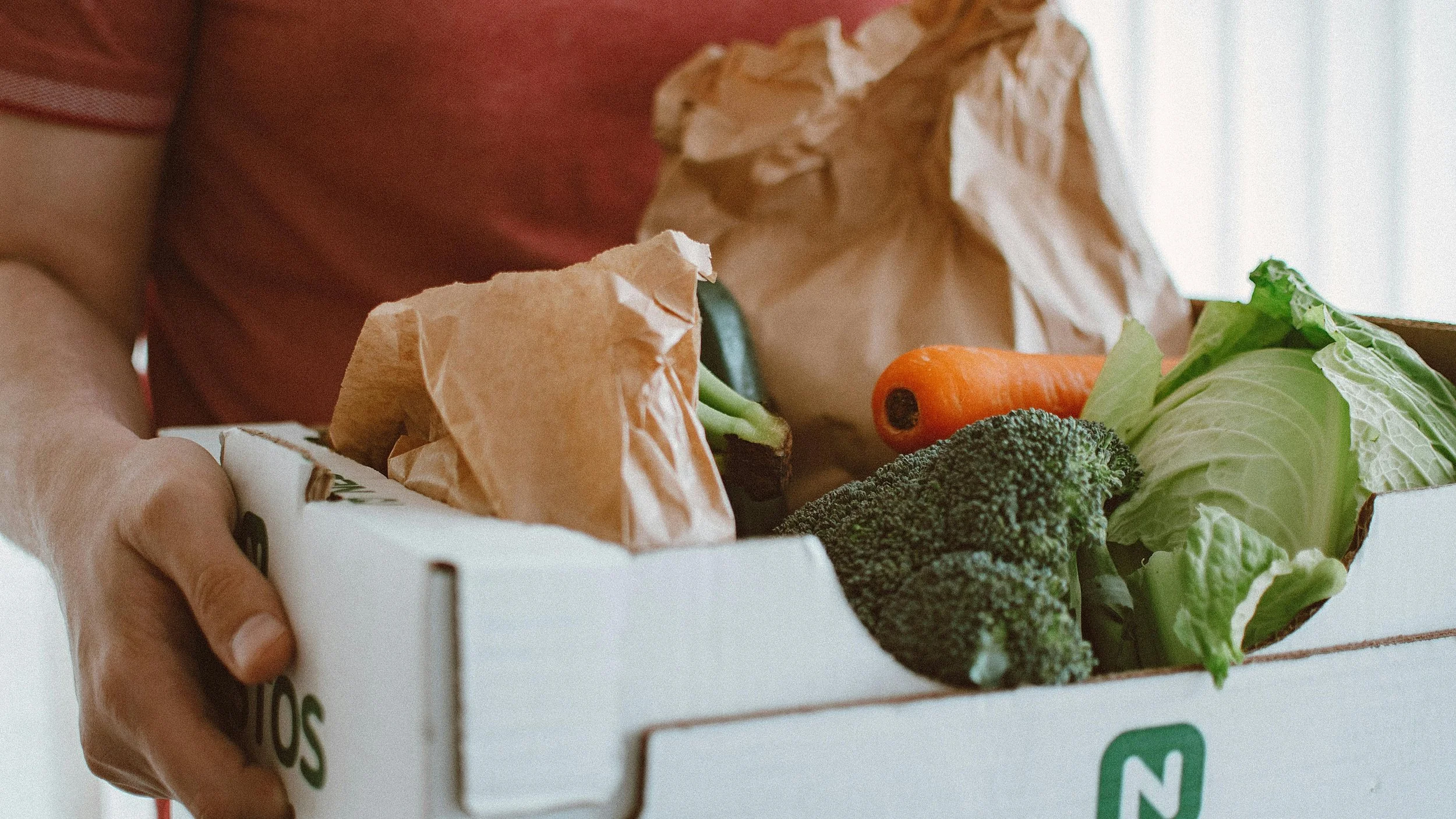
As we move into fall, LMV is pivoting once again, to support the families they work with as they navigate the complexities of online learning. While making this shift they’ve heard from about 40 families that fresh food support is still a critical need for their households. This opened an opportunity for TNFP to continue to provide support in a new, specialized way. TNFP will provide weekly produce boxes of culturally-appropriate produce, grown by and purchased from the farmers in our Growing Together program. Many of the families that LMV works with share a Burmese heritage with several of the Growing Together farmers. We love that the vibrant, organically-grown produce that Growing Together yields can be leveraged to nourish the needs of that same community.

During a recent conversation, Tim shared that the silver lining through current struggles is that this time has allowed for the fostering of new community partnerships. For LMV, he says that has allowed them to step up and provide new types of care for the families and continue to adapt and serve in more substantial ways. Our relationship with LMV has allowed us to leverage our resources to share high-quality food in new ways that are meeting expressed community needs while simultaneously allowing us to invest in Growing Together farmers and other local farms who have long been generous and supportive of our work.
Tim shared some notes that the Legacy Mission Village crew has received in response to the food assistance they have been able to provide:
“We are good. You take care [of] our family.”
“I'm good and my family too, thank you for everything you helped me and my family [with].”
For the millionth time, we are reminded that we belong to each other, and we are grateful to be a small part of the collaborative work happening in Nashville. In a time when we are socially distant, this type of connection feels more delicious than ever.
What it Means to Nourish Community
Nourishment, after all, is about so much more than feeding and eating. To nourish another centers on the emotional tie—the care, regard, and concern—you have for another. It is about maintaining a relationship by prioritizing and cherishing another, not imposing what you think you know, but rather about listening. And it is this relationship that informs what makes another person or a community healthy and strong.

by Johnisha Levi, Development Manager
Since its inception, The Nashville Food Project has operated in a foodscape saturated with inequity. Our mission is to ensure that people are getting the food they need and want, with “want” being as vital to us as “need.” And now, after a series of life altering events, including tornadoes, a pandemic, fatal police shootings and mass protest, we are in a moment that is utterly destabilizing. But this is not necessarily a negative. Although it is admittedly easy for each of us to vocalize what we fear and dislike about 2020, this year also presents a rare opportunity to reset. When we emerge from this crucible, what new shape will we assume? Who and what will we be—as a nation, and as a people?
Now is the time to re-imagine, re-create, take response-ability, and re-assess. There is so much that has been and is broken about our government, our country, and our world. Stressors have better exposed these breaks, giving us a clearer picture of our failings, so the question is what do we do to improve and innovate, to move beyond and above? These are challenges for us as individuals, but also as organizations. Currently, The Nashville Food Project may not be able to carry out the part of our mission that “brings people together” physically—whether in our kitchens or for charitable fundraisers like Nourish—but that doesn’t stop up from querying how we can continue to sustain and nourish our community in new and even better ways.

Nourishment, after all, is about so much more than feeding and eating. To nourish another centers on the emotional tie—the care, regard, and concern—you have for another. It is about maintaining a relationship by prioritizing and cherishing another, not imposing what you think you know, but rather about listening. And it is this relationship that informs what makes another person or a community healthy and strong. What comes to mind is the phrase “community of feeling,” which appears in letters that Sigmund Freud and Albert Einstein exchanged on the question of war. What I think it means to nourish a community is to nurture “a community of feeling,” and this is at the heart of TNFP’s vision for a just and sustainable food system. As Tim Mwizerwa, program director at one of our emergency partners Legacy Mission Village explains, “ T[he Nashville Food Project was] willing to provide fresh produce to a lot of our families that were also culturally competent. You can gather a lot of goods but if families don’t recognize how to cook that produce, it goes to waste. We really appreciate your partnership and support and just knowing that we are not sending [our client families] filler foods, we are sending them nourishment on top of that.”

Although many things remain uncertain in the coming months, one essential truth, as stated in a recent New Yorker piece, emerges: “civic connection is the only way to survive” in a time when physical contact can present such danger to so many in our community. And it is this civic connection that is at the heart of our community food model at TNFP. Typically, mutual aid efforts and charitable organizations take different approaches. The former tend to be more grass roots and shaped by volunteers and the needs of recipients and services, while the latter tend to be more hierarchical and governed by boards and donors. What is beautiful about The Nashville Food Project model is that it is more a hybrid—a charitable organization that operates like a mutual aid project in seeking to empower, involve and amplify the needs of those it serves. For example, when a Burmese community leader and former Growing Together farmer approached TNFP about the particular need in her hard-hit community for fresh produce, we were able to use unrestricted funding to pay our Growing Together families to supply these vegetables. Thus, families affected by COVID outbreaks at their workplaces were able to enjoy the labors of what their farming neighbors produced, while the farmers could continue to earn income from their agricultural efforts. This is a community of feeling and of nourishing—of listening, responding, and creatively meeting a need.

When reading the news can be so grim, it is inspiring to see the impact that spontaneous mutual aid networks and charitable organizations are making to help ameliorate suffering during this pandemic. While TNFP will seek to carry forward some of the lessons we learn in crisis to keep nourishing our community, we must never lose sight of the underlying reality that these unmet needs should never have existed within our systems in the first place. And we must continue to strive to make our own work obsolete one day. As Martin Luther King Jr. said, “Philanthropy is commendable but it must not cause the philanthropist to overlook the circumstances of economic injustice which make philanthropy necessary.”
Sowing Seeds of Justice
It is past time to sow seeds that yield justice and a more equitable future. The profound impact of racism on life and death demands a full response from every single part of American society. At The Nashville Food Project we know we do not have all the answers, but we believe we can be part of the solution. We have learned and continue to learn that anti-racism work cannot be treated as side work, but it is the work of community food justice.

Greetings from my small corner of this city I love.
Emergency and urgency are all around us. Institutional violence, spiking unemployment, food insecurity, low-wage work without adequate protection, crippling debt, insufficient healthcare—all of these emergencies amplified by the weight of a global pandemic. The roots of these and other disparities are the result of legacies of white supremacy and systemic racism that have for centuries shaped policing, housing, food and land access, criminal justice, education, and healthcare.
So the turned up patches of dark, fertile soil in our gardens seem more urgent than ever. As we consider what we plant and how we plant, we’re mindful that we can’t expect a just yield without centering the work of equity and racial justice. The luminous Toni Morrison, in her novel The Bluest Eye, has me thinking about what soil can nurture and yield when she wrote, "the land of the entire country was hostile to marigolds that year. The soil is bad for certain kinds of flowers. Certain seeds it will not nurture, certain fruit, it will not bear, and when the land kills of its own volition, we acquiesce and say the victim had no right to live. We are wrong, of course, but it doesn't matter. It's too late."
It is past time to sow seeds that yield justice and a more equitable future. The profound impact of racism on life and death demands a full response from every single part of American society. At The Nashville Food Project we know we do not have all the answers, but we believe we can be part of the solution. We have learned and continue to learn that anti-racism work cannot be treated as side work, but it is the work of community food justice. The crucial nature of our mission to grow, cook, and share nutritious food must be paired with an active commitment to learn and unlearn, to listen, to deepen empathy, to name injustice, and to leverage every resource available to us—money, relationships, time, effort, ideas and more—to address and undo the systemic racism that permeates every aspect of American life.
In full transparency, in this time of COVID emergency and all the ensuing change, so much of what we at The Nashville Food Project want for our community has been relegated to the back burner. We are guilty of pausing our momentum towards fulfillment of our current equity goals, and we have work to do to re-center anti-racism as a crucial part of our daily work and identity. I want to share with you The Nashville Food Project’s Equity and Inclusion Plan, a true work in progress that we have been pulling together over the last few years. It is not perfect but neither is this work, and if these recommendations can amplify your own organization’s commitment to anti-racism, please feel free to lean on them and borrow freely! Our staff and board recommit to educating ourselves, amplifying voices of Black and brown leaders and communities, sharing resources and moving many of our equity and inclusion goals into actionable next steps. We recommit to making room for this work and funding our capacity to grow it. We will also be using our blog and social platforms to listen, share, respond, lead.
To the Black members of our community and other affected people of color—we mourn your pain, celebrate your joy, lift up your contributions, honor your experiences. We see you and are with you.
To the white members of our community, this work is lifelong. Start where you are and attend to it daily. Skip no days. Get in the conversation, do the work, listen deeply, make mistakes and own them, stay with it, and be transformed. Galvanize what you learn by turning your learning into action. It is our responsibility to bring our personal privileges into public life in support of real and lasting change.
Grace and peace,
Tallu Schuyler Quinn
Click here to read The Nashville Food Project’s Statement of Anti-Racism, as well as our other core organizational values that ground us to this work to which we are called and by which we are challenged.
I really appreciate this post by the brilliant nonprofit leader Vu Le about doing the daily work of flossing out racism.