
The Nashville Food Project’s Blog




Starting a Community Garden
Over the years, we’ve witnessed the benefits of community gardens firsthand. Participants tell us they experience improved physical and mental health as well as a stronger sense of belonging.
But in addition to participants in our own programs, we also hear from folks who want to start community gardens of their own. If you’re interested in assembling a group and inspiring change, as we are, then here are a few good places to start:
by Lauren Bailey, Director of Garden Programs
Over the years, we’ve witnessed the benefits of community gardens firsthand. Participants tell us they experience improved physical and mental health as well as a stronger sense of belonging. One of nearly 70 community garden participants in our programs last year told us this: “To know that I have the power to grow my own food if I want to is definitely life-changing.”
But in addition to participants in our own programs, we also hear from folks who want to start community gardens of their own. If you’re interested in assembling a group and inspiring change, as we are, then here are a few good places to start:
1) Get started by measuring interest and bringing people together. If you’re working to organize a new community garden, gathering folks together to understand common goals and motivations could be a great place to start. Much like gardening, there are different approaches and strategies that folks use. What has been helpful for our planning and implementation is to have an understanding of why we believe community gardens are important. After years of stewarding a few different community gardens, we’ve seen themes emerge as our “why”. Since the work involves stewardship of land and organizing people, we’ve found that in addition to knowing why you want to garden, having realistic expectations of what it takes to maintain the community garden is key to success.
2) Identifying land. Maybe you have your eye on a slice of land behind your church or school, or maybe you want to grow on government or private property? You’ll first want to assess the land and make sure it is suitable for growing (more about that later). Then you’ll want to learn the types of gardening allowed on the land by zoning codes. You can find more information about zoning in this guide: A Guide for Growing Food in Nashville- Nashvitality. This will determine whether (and what type of) permit is needed. If you don’t own the land, you’ll also want to draw up an agreement with the land owner that specifies what you’re allowed to do and for what duration. Examples of agreements can be found on this website: American Community Garden Association.
Having trouble identifying land for your garden? In Nashville, the Ag Extension is working closely with several other Metro Departments to help residents of Davidson County utilize some of the flood buy-back properties to start up community gardens, but know that gardening on these properties presents some challenges. Aside from the risk of flooding, there are restrictions on building structures on these properties. Contact the Ag Extension to learn more about what properties may be available.
3) Invest time up front in designing and planning your garden. While gardening can be as simple as starting a seed in the ground, the task can become more nuanced when you are sharing space, resources or have a collaborative effort to grow food.
Brene’ Brown says, “Clear is kind. Unclear is unkind.” Sometimes the planning process can be messy and ever-evolving. And the commitment to getting “clear” requires transparency and trust.

Here are some questions we encourage people to consider while planning a community garden:
Who will be involved? Who will lead?
Defining who is involved in this garden is key!
Who will be taking care of the garden? Do you have a committed individual or group of individuals who will take on the primary responsibility of gardening?
What tasks will be shared? Who will be responsible?
We recommend having a detailed list of responsibilities: watering, harvesting, and weeding being the main tasks involved.
How do you want to involve people in the work? What resources, events or education do you want to connect people to?
Do you want to have allotment style plots where folks grow on their own space? Or more of a communal effort where people contribute to one garden?
Where is the produce going?
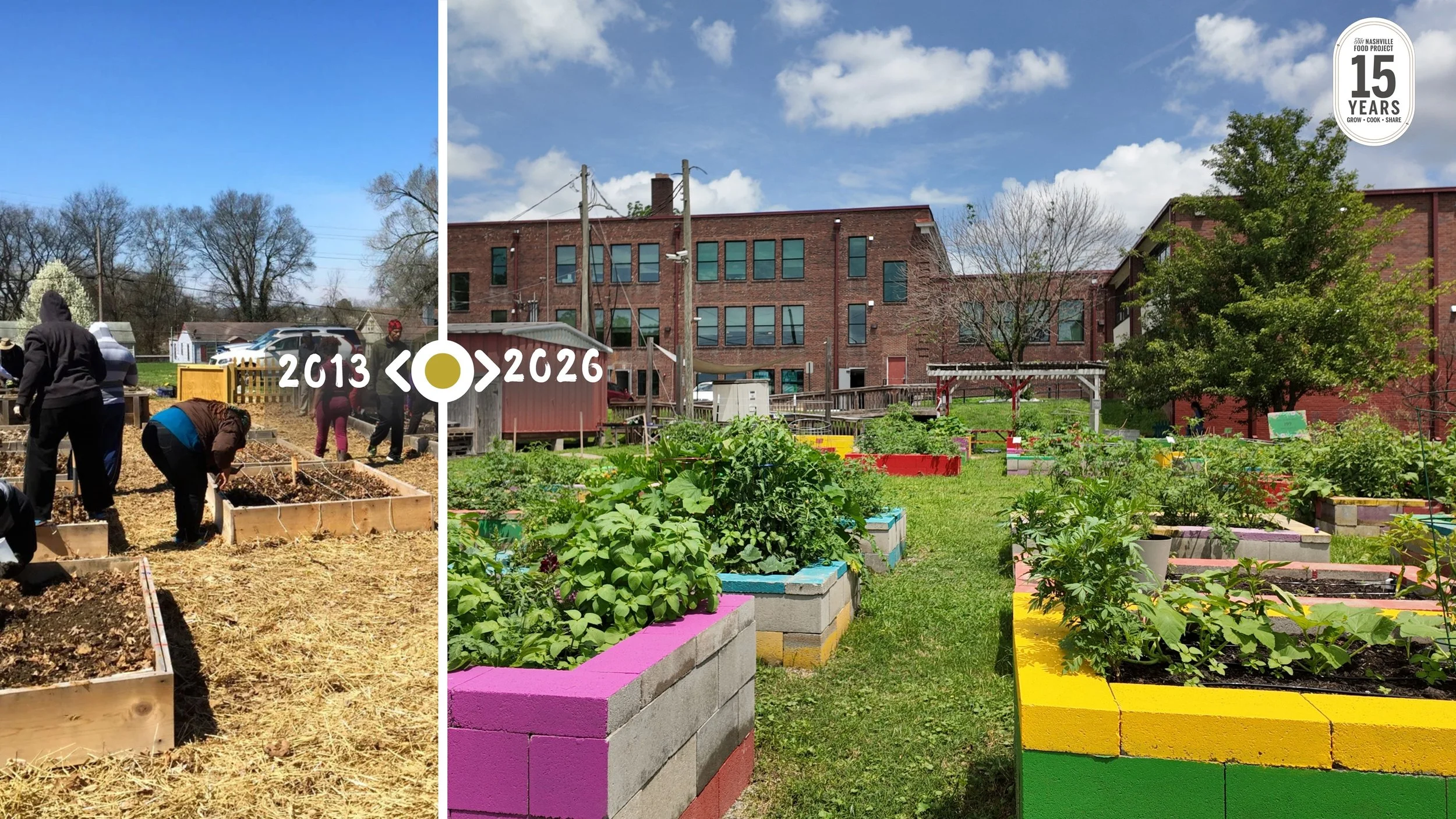
We’d encourage you to create a plan for the produce. In our gardens, community gardeners take home the vegetables from their plots. At our McGruder Community Garden, we have a free stand where folks can share their excess produce.
How do you stay motivated?
We see a lot of excitement at the beginning of the season and then weeds and heat and pests happen. What is your plan to keep people excited? How do you stay motivated?
Determine how the garden will be funded. Will you apply for grants? Will it be underwritten by a company or individual? Will gardeners cover costs collectively, and if so, how will payment be collected?
4) Know your soil and land. Before even breaking ground, starting with an understanding of your soil and the health of it is important.
What is your land like? And who owns the land? Answering this ranges from the physical space that you have available to understanding the expectations for how the space needs to be kept.
Have you tested the soil? Make a plan for how to keep your soil healthy.
Do you want to do raised bed gardens or grow in the ground?
Do you have a water source available?
How much space do you want to start with?

5) Get Started! Sometimes the hardest part is getting started. Start small, rather than not starting at all. Maybe your vision or plan isn’t fully formed. Maybe you need more time to build raised beds or prepare the soil. If that’s the case, start with what you have where you have it. And keep up the momentum!
Here are some other resources and organizations that we’d recommend you check out:
American Community Garden Association is an invaluable resource!
The Denver Urban Gardens Club provides a Best Practices Handbook which can be downloaded here.
Nashville Foodscapes is an option if you are able to pay for the installation of beds designed to support edible landscaping and their team is seasoned at designing, installing, and maintaining edible plots.
For technical gardening education, you may be able to reach out to the Master Gardeners of Davidson County who maintain 5 demonstration gardens which may be a valuable learning tool!
A variety of seeds can be found through Nashville Public Library’s Seed Exchange and is accessible to any person with a library card!
Keep your eye out for local Seed and Plant Swaps. Richland Park Library is hosting a seed and plant swap on Saturday, April 18th, 10:30-11:30 am.
The Timber Press Guide to Vegetable Gardening in the Southeast by Ira Wallace

One of the best ways to learn about community gardens is to get your hands dirty. Sign up to volunteer in our gardens and learn first hand about growing in the community!
A February Snapshot of Our Gardens
It’s starting to look like spring, a favorite time of year for all of us on the garden team. This is a time of year when all of our planning over the winter can finally start taking shape. Here’s a look at what we’re up to in the TNFP gardens this month written by our Garden Manager Christina...

“We are here to awaken from the illusion of our separateness.”
It’s starting to look like spring, a favorite time of year for all of us on the garden team. This is a time of year when all of our planning over the winter can finally start taking shape. Here’s a look at what we’re up to in the TNFP gardens this month written by our Garden Manager Christina...
In February in The Nashville Food Project gardens we try to remember that it is still winter. Our garden crop plan for the year has hopefully been made and checked twice. Seeds have been ordered. Machines and tools are clean and tuned. Winter cover crops are growing slowly in the field along with beds of overwintering greens like kale and spinach. Potting soil and other garden supplies are stockpiled waiting for the signal to start planting. We do the essential February tasks of pruning fruit trees and brambles, direct seeding flowers that require cold weather to germinate (poppies and bachelor buttons), check on the bees’ honey stores and, if necessary, feed them. Spring is surely close at hand but we try to remember that we risk doing more damage than good by trying to work soils that are still cold and wet.

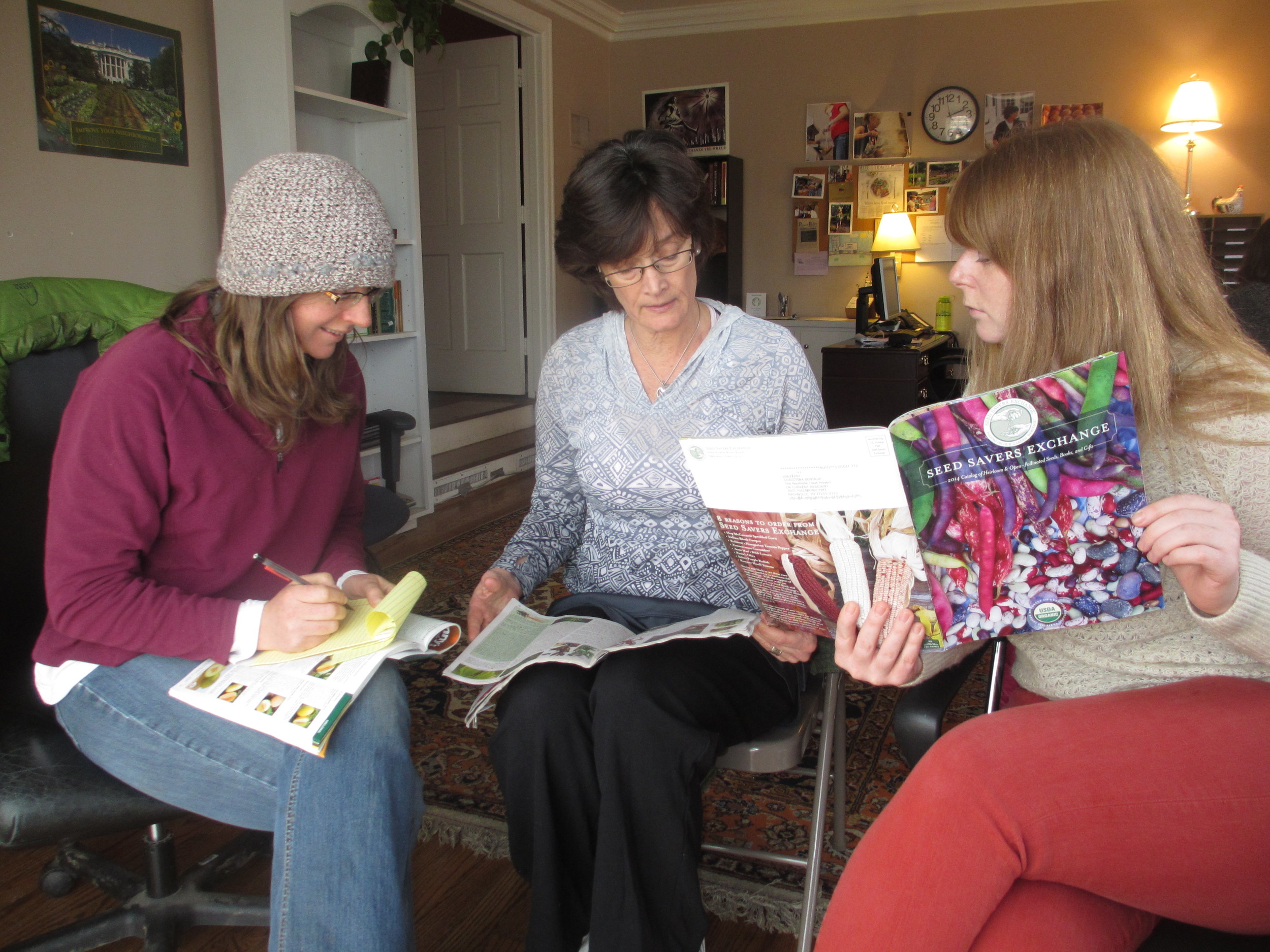
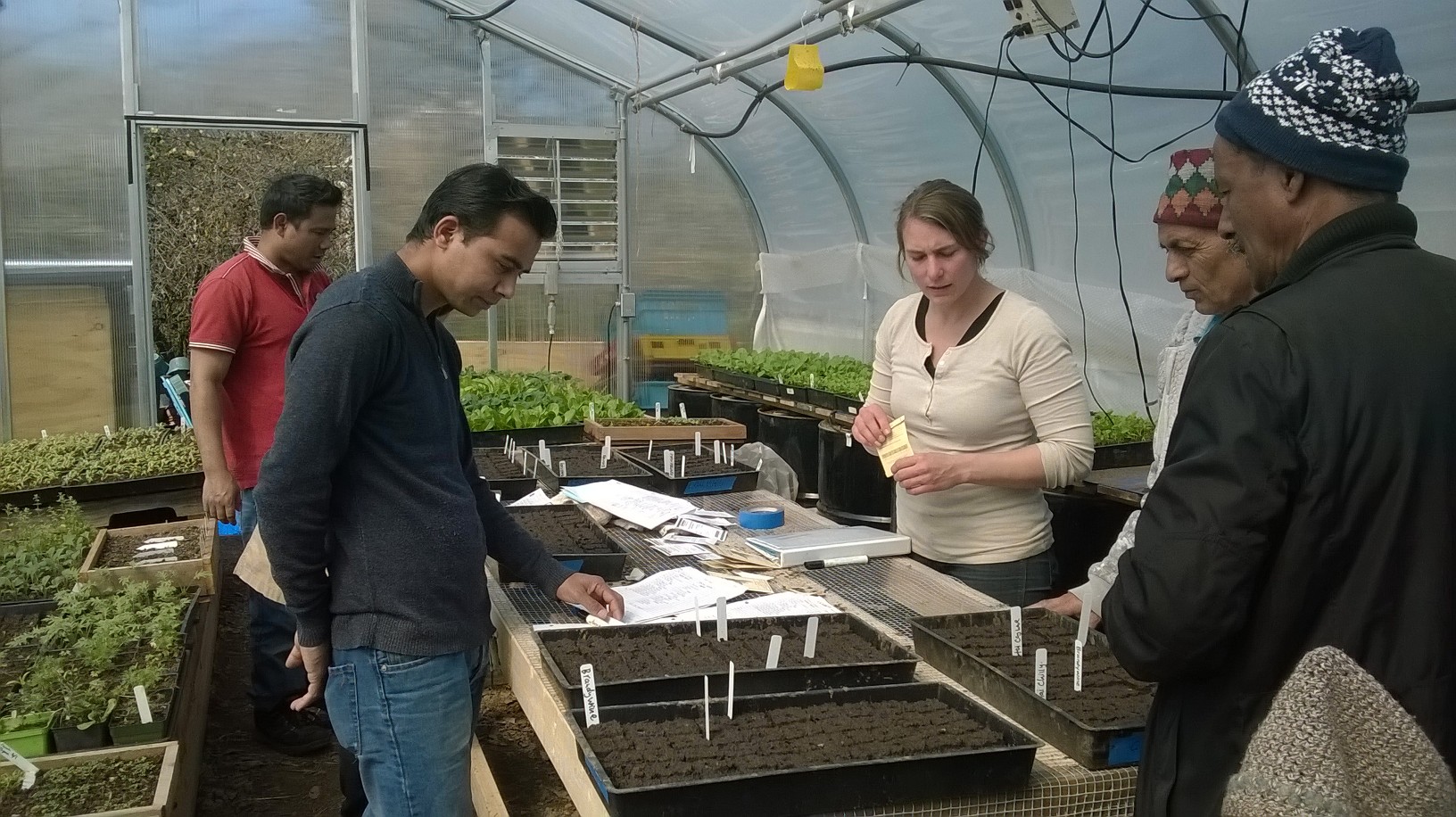
We anxiously await the end of the month, when we can start our first seeds in the greenhouse and begin preparing a few beds for our earliest vegetable plantings in March. The first crop we plant outdoors is the onion transplants that we’ve started in our greenhouse the previous November. Onions are soon followed by peas, lettuce and other leafy greens, and root crops that love the cool weather of early spring. By the end of the month, the greenhouse is full of crops that we begin indoors to get a head-start on the growing season - leafy crops like kale and chard and fruiting crops like tomatoes and peppers.
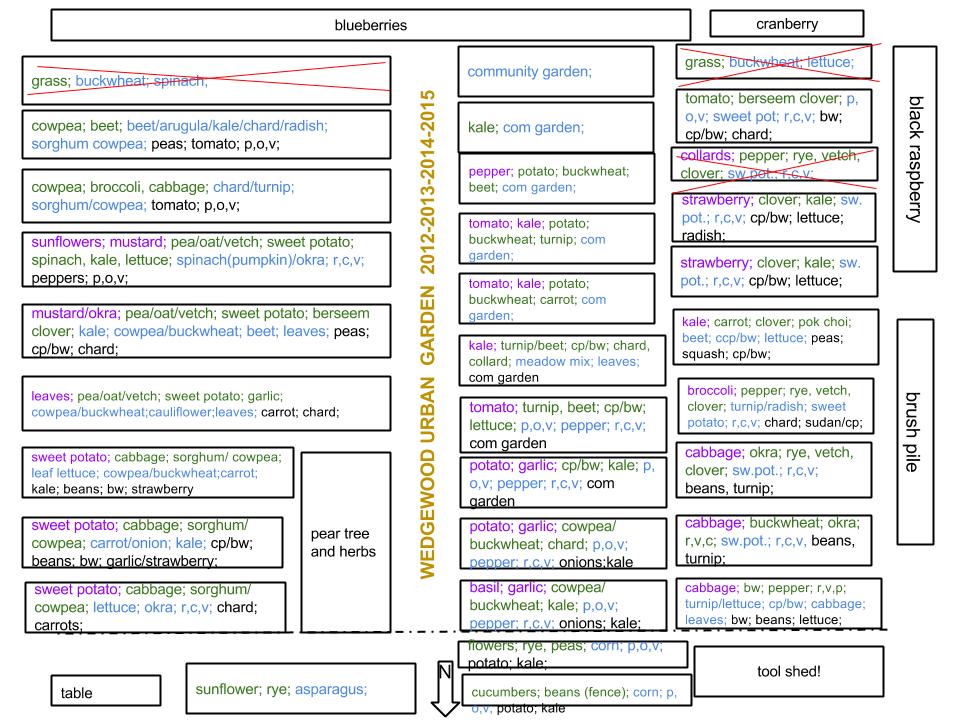
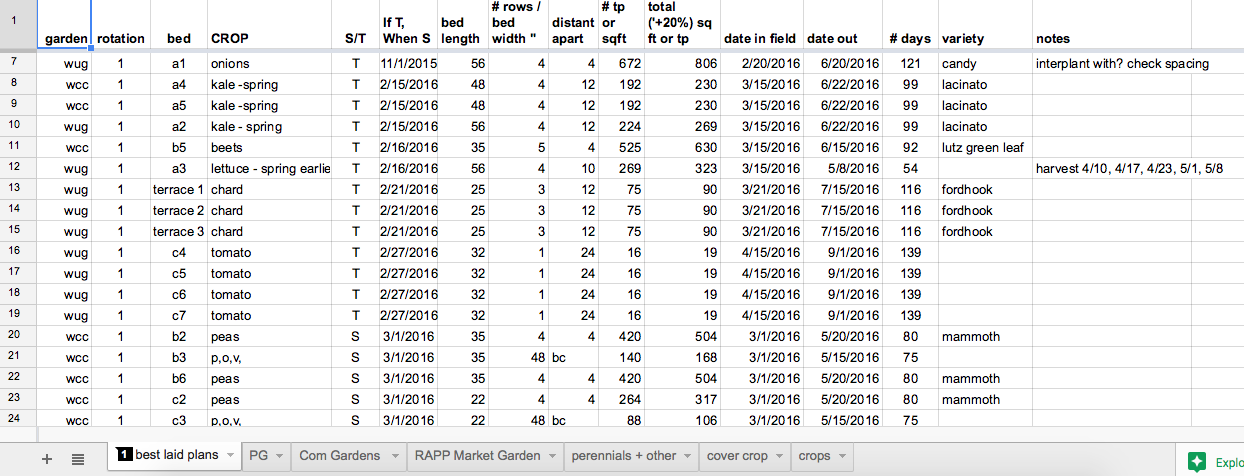
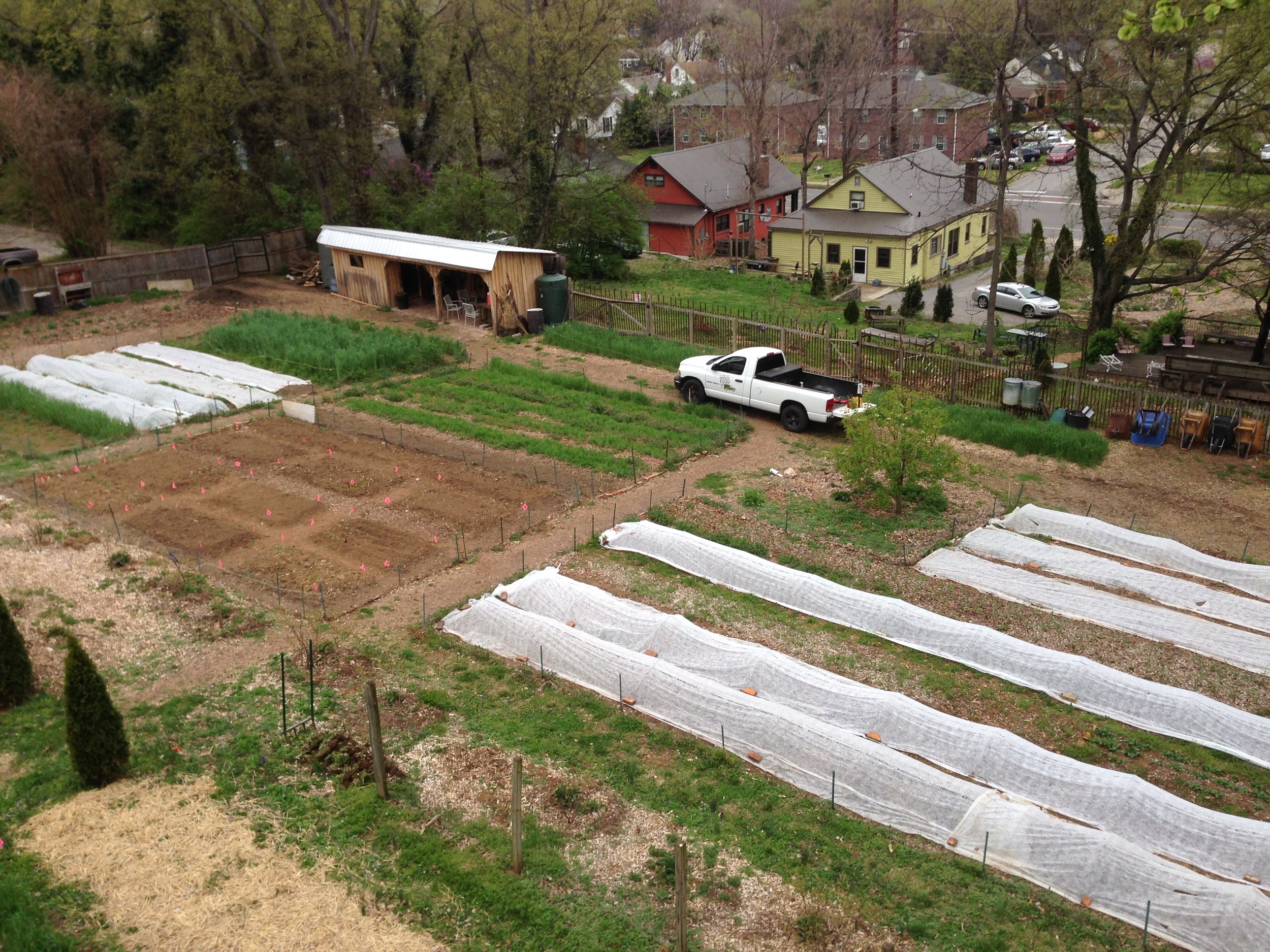
We try hard to follow the garden plan that we made over the winter. We start this garden plan begins with a list of crops that we are excited to grow for our meals program with a rough idea of how many beds should be planted in each. We map out where each crop should go in our permanent bed system and ask whether another crop can be planted in the same space before or after the main crop during our long growing season. We aim to have at least one-fourth of the garden resting at all times in cover crops so that we can maintain productive and healthy soils for many years to come.
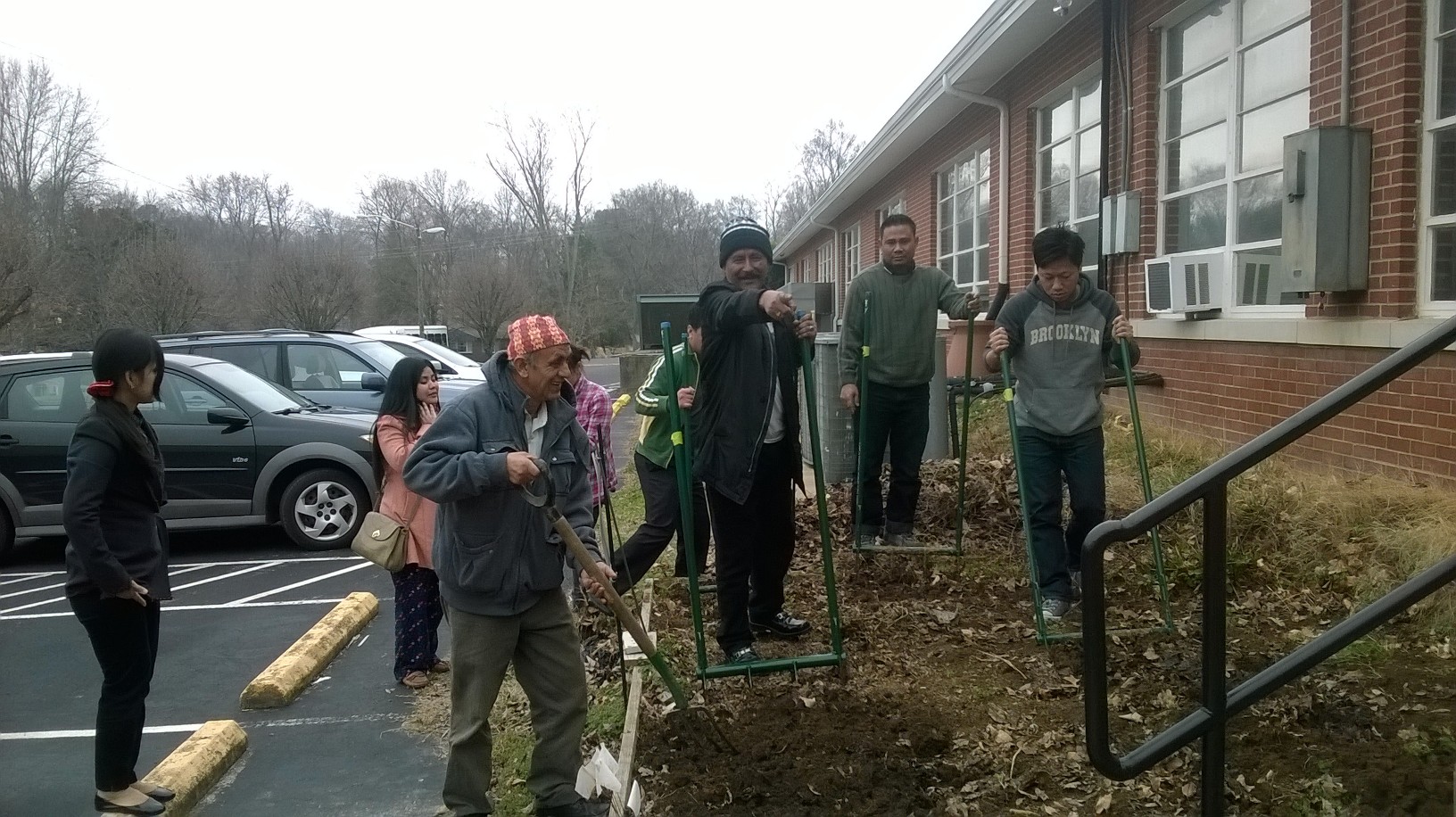
This time of year, we love the broadfork - a garden tool that lifts and aerates the soil while maintaining good soil structure. Where we can, we begin to broadfork the beds that will grow our earliest crops - the lifting and aeration action warms up the cold winter soils and allows them to breathe out excess moisture. Volunteers love the aerobic work-out of it, too.
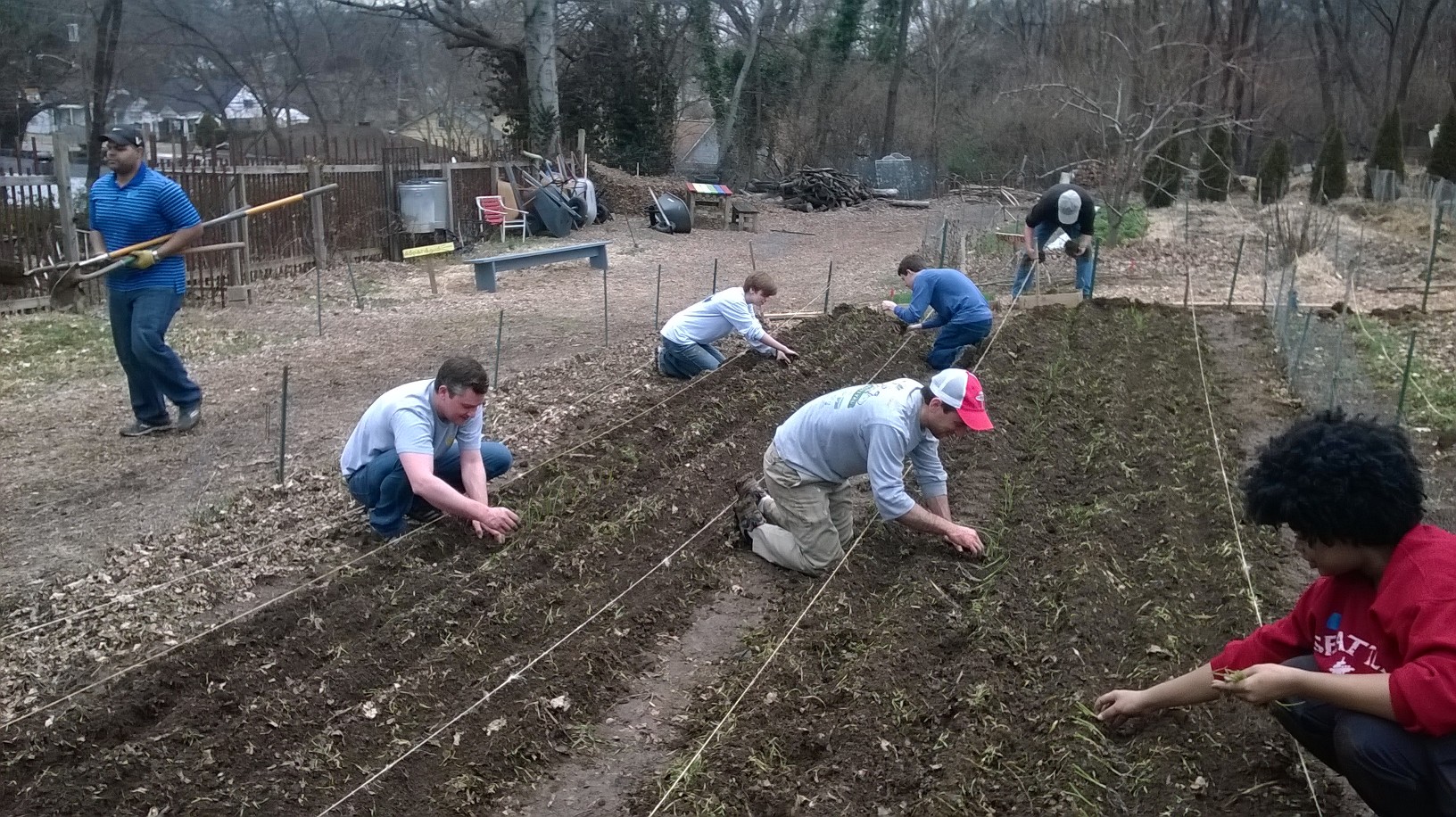
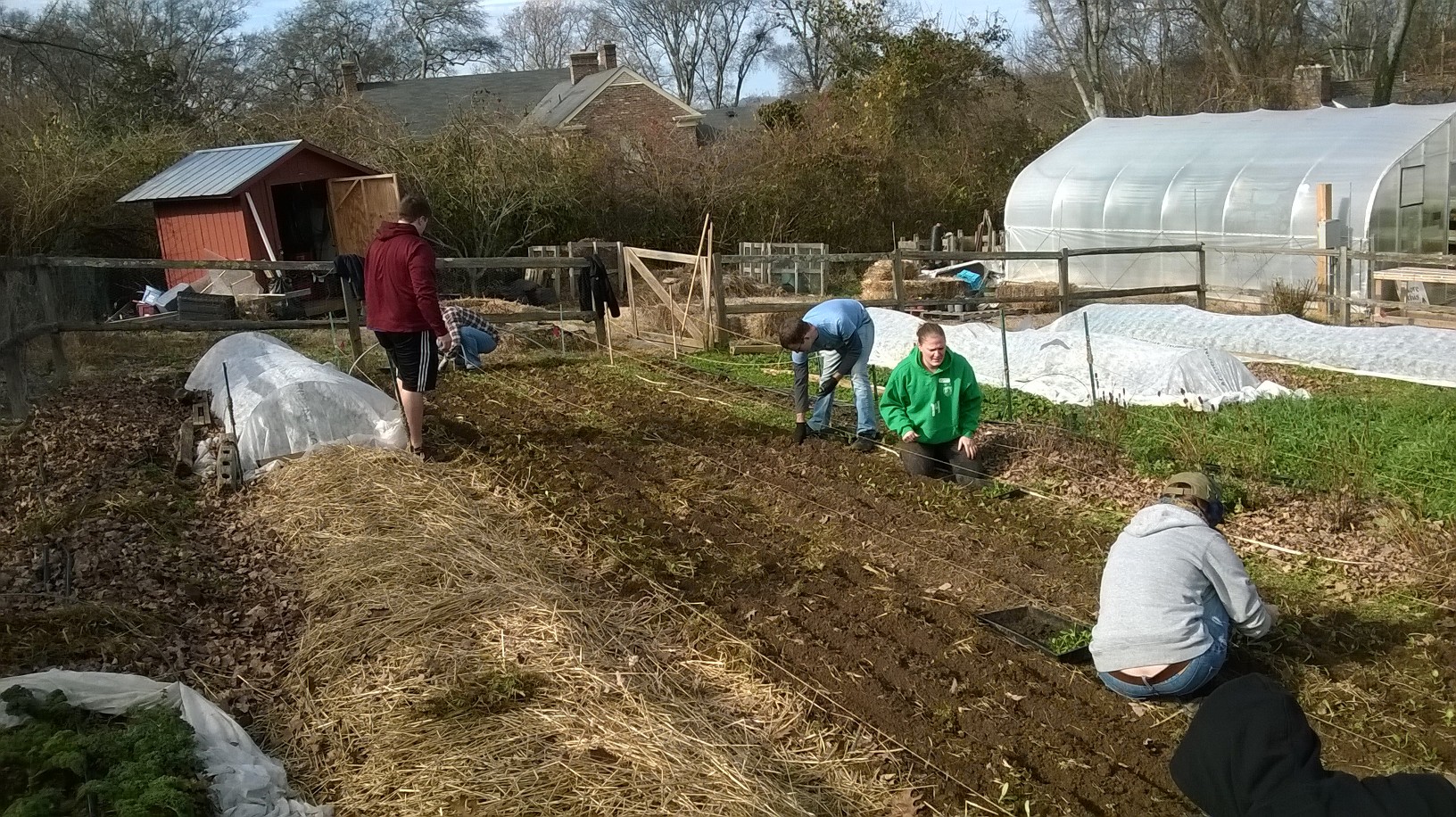
Another exciting thing happening this month is the start of a new year with all of the community members growing in our gardens! This month we’ve begun meeting with participants in the Middle TN Refugee Agriculture Partnership Program, a group of farmers from Burma and Bhutan, with whom we share our best practices for growing production-focused urban gardens in Nashville. We help them with creating their own garden production plans for growing and selling their vegetable crops to restaurants and at local farmers markets. We’re also recruiting other community members for our neighborhood-based community gardens in North and South Nashville.
And don’t forget about Project Grow! We’ve started planting for our annual subscription vegetable plant sale. Sales will open soon so be on the lookout for emails from us!

This truly is one of our favorite times of the year, a time when we breathe with anticipation, because the busy time is almost upon us.
Check out some of our favorite resources for specific information about growing vegetables in the South:
- Ira Wallace’s excellent Vegetable Gardening in the Southeast with month-by-month checklists of garden activity
- Pam Dawling’s spreadsheet-heavy but full of years of hard-won details book: Sustainable Market Farming, from her experience growing in our same zone in VA.
TNFP Welcomes Kia Brown as Garden Coordinator
Kia Brown, a New York transplant, has lived in Nashville for 11 years. She's had lots of adventures along the way including school at the University of Memphis where she earned her B.S. in Geography and a year serving in AmeriCorps…

Kia Brown, a New York transplant, has lived in Nashville for 11 years. She's had lots of adventures along the way including school at the University of Memphis where she earned her B.S. in Geography and a year serving in AmeriCorps. While traveling the country during her service year, she spent a couple of months in Seattle and discovered her love for growing both food and community.
Kia loves to travel and explore, which led to a summer interning at the Nashville Zoo and an interest in new hobbies such as metalsmithing. You might encounter Kia leading groups in any of our gardens, but she works closely with the Green Thumbers in the McGruder community garden .