
The Nashville Food Project’s Blog




Learning as a Collaborative Community
Though the days are short and the winter air is cold, TNFP garden participants are busy planning and training for the season ahead. Regular garden trainings with our Community Garden and Growing Together programs provides space for learning and knowledge-sharing.

Though the days are short and the winter air is cold, gardeners are planning and training for the growing season ahead.
Wednesday morning we arrived at Hillcrest United Methodist Church and followed the signs to the room where Growing Together winter trainings take place. Esther was the first farmer to arrive -- true to her punctual nature. Esther and her husband Thomas have been in the program since its inception in 2013. Both arrived to the US as refugees from Burma and found a new home in Nashville. Thomas has a background in farming and agriculture from his roots in Burma. Over their time in Nashville he’s shared his knowledge with Esther and she too is now a highly skilled farmer and Growing Together veteran. As each farmer walks through the doors the room becomes a space for learning, sharing, and building.
We are At-Once Both Students and Teachers

At TNFP we believe that every person has wisdom to share and lessons to learn. We can learn from the experiences of others if given the opportunity to listen. This value is foundational to the design of both TNFP’s community garden program and market garden program, Growing Together. Beyond simply providing access to land, these programs facilitate space for knowledge-sharing through regular trainings. From the moment the gardens close in October, TNFP program staff are planning the trainings for Growing Together farmers and community gardeners. These trainings officially began in January for the Growing Together program and the New American community gardens.
Both programs work with community members who originally came to the US as refugees from Burma and Bhutan and who have agrarian backgrounds of varying degrees. For some, they began farming in childhood growing the vegetables that were used in family meals. For others, they grew crops in the hopes of selling them in the markets and to make a living.
Growing Together: Sharing Knowledge for Collective Success

The Nashville Food Project's agriculture training program Growing Together is designed to expand access and opportunity to people from agrarian backgrounds. Through our program, farmers gain access to land, inputs, seeds and training, and continue to build upon their farming skills and earn supplemental income though the sale of their produce.
You may be wondering -- if the farmers and gardeners have such a deep founded knowledge of farming, why do they need trainings? These trainings aren’t about one “expert” conveying knowledge to a group. Instead, these programs create a multi-generational space for community building and knowledge sharing. Our Growing Together Program Manager, Sally Rausch, shares, “This is a collective project, and part of the training is how people work collectively using the same resources. The trainings offer both opportunities and relationship building so they can be a successful collective.”

Through end-of-season interviews the farmers expressed that they wanted more marketing outlets and to improve their sales. This feedback has been heavily incorporated into this year’s trainings. The trainings will cover topics like marketing outlets, customer preferences, and planning crops so that they will be at peak harvest quality for customers looking for their unique crops. At the most recent training, farmers were asked to share what sold the best at the Richland Farmers’ Market and what items didn’t sell as well. Then they planned out what crops they wanted to sell through the farmers market, Nashville Grown, and through a new CSA program that the farmers are piloting this year. By working together and sharing feedback, farmers are learning how to best plan and sell their crops through individual outlets as well as through their collective outlets as a group.
During the training sessions, the lines of student and teacher are blurred. Each gardener and farmer has a plethora of knowledge to share. After three training sessions Sally mentions “Gosh... I’ve already learned so much from the farmers. It’s my goal to have the trainings be an interactive experiential classroom where we are all learning from each other. I want to get to know the farmers and learn about their perspective and experience because they know how to grow really high quality produce… I think about my job as, ‘How can we integrate that valuable experience into the trainings to go even deeper and support the farmers in being more successful?’”
Community Gardens: Building a Foundation through Past Experiences

TNFP's community garden program facilitates three community garden sites across Nashville, providing access to land, supplies, and ongoing training. There are two New American community gardens, with these spaces held for Bhutanese and Burmese community members of any skill level. These sites begin trainings in January with the growing season kicking off in March. There are two neighborhood community gardens in North Nashville and Wedgewood Houston. These sites start trainings during the growing season with plots open to neighbors.
The New American community garden training is more comprehensive covering topics that all gardeners should know to succeed like what crops grow best in Nashville and when they should be planted. The purpose of these trainings are to make sure everyone is on the same page.
Similarly to the Growing Together program the topics are chosen based on gardner feedback during end of season evaluations and challenges in the previous seasons. Our Community Garden Manager, Kia Brown, explains, “In the past there has been a difficulty in understanding the irrigation system that we use. This year as a planning stage we are going in depth on how the system works, how to fix it, and how to plan crops so that they work best with it.” In this scenario Kia observed that the gardeners’ traditional farming methods did not work with the irrigation system offered last year. To overcome a problem that so many struggled with she has planned an in-depth training on irrigation.

In all TNFP programs there is an opportunity for everyone involved to be both teachers and learners and create a flow of knowledge sharing. Kia shares that she wants to explore the three sisters planting method. In this method each plant has a purpose - corn is used as a trellis for pole beans and squash is planted at the base to reduce weeds. Kia says, “it uses a comprehensive system where everything grows and dies at the right time all while something else is taking place. It’s something I’ve learned from the gardeners and that I am still learning about.”
TNFP garden training programs allow gardeners to expand on the skills they already have and learn from the trial-and-error of others while also gaining the opportunity to be introduced to new farming methods and tools that may bring them success. Garden trainings are a space created for all involved to learn and grow from one another embodying our value of learning. For more information about our garden programs please visit our website.
Nothing Wasted: Summer Gardens
Every fall, when we start to feel that first nip in the air, it signals that it’s time to close our summer gardens. It’s a time we look forward to around here, a time when we get our creative juices flowing to come with new ways to save and use what’s left in our gardens.
Every fall, when we start to feel that first nip in the air, it signals that it’s time to close our summer gardens. While we’re still planting heartier winter crops during these colder months, we do have to harvest all those spring and summer crops still left at the end of the season. It’s a time we look forward to around here, a time when we get our creative juices flowing to come with new ways to save and use what’s left in our gardens.

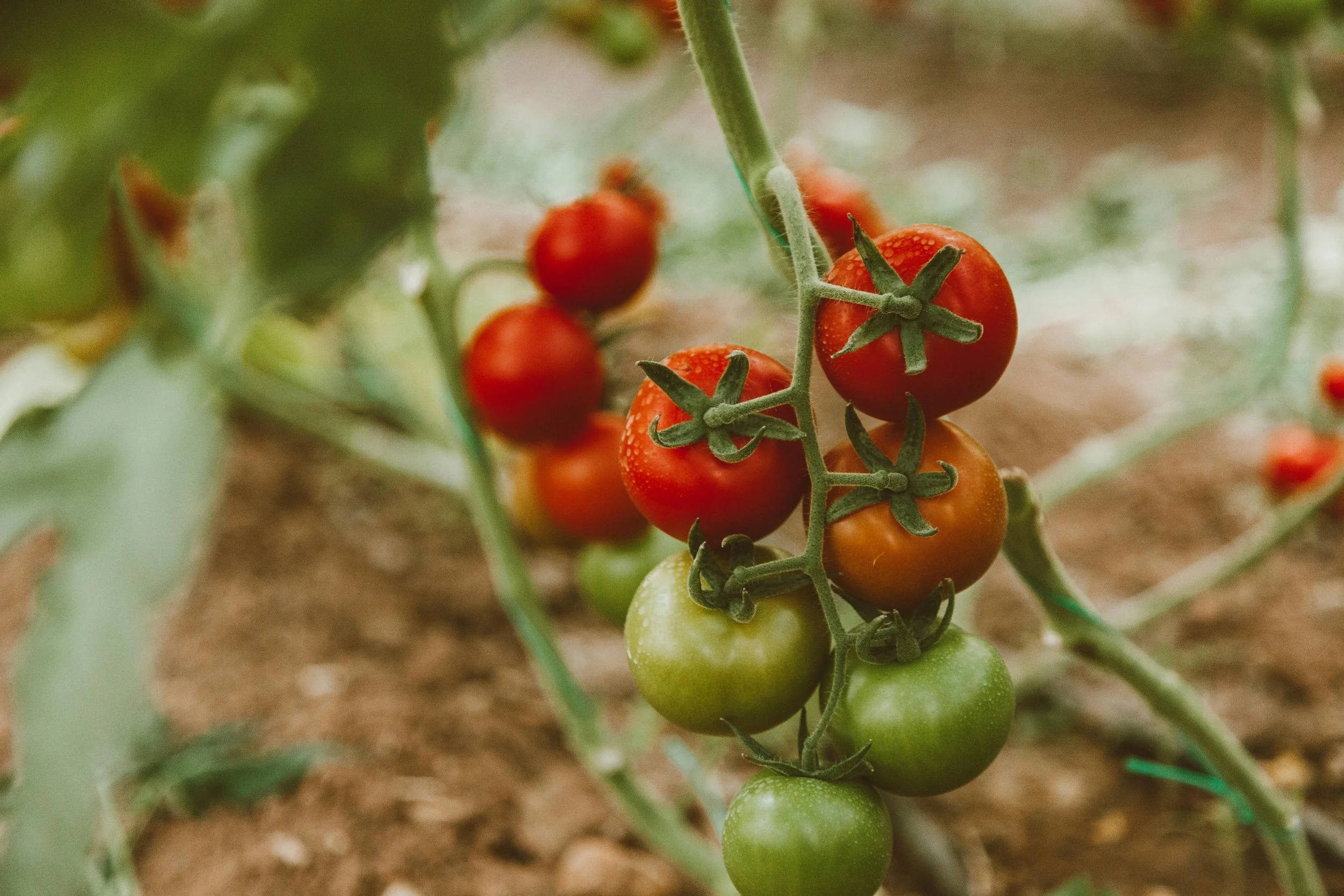
This time of year, the most common things left in our gardens are herbs, peppers, eggplant and green tomatoes. For the peppers, we like to dry them with ristras, and use the dried peppers in all sorts of different recipes. To use up the other veggies, we love making eggplant parmesan, salsa verde and stuffed peppers. Most of these freeze well so you can enjoy them long into the winter.


The herbs, though, let us get really creative! We like to dry them in our dehydrator and use them in tons of handmade products that we sell around the holidays at our now annual event Scratch Made. We make a number of teas, herb-blended salts, simple syrups and more.
Here are some of our favorites and things you can expect to see at this year’s Scratch Made:

Herbal tea blends: We love a good tea around here! Some of our favorite tea-making herbs are stinging nettle, peppermint and lemon balm. At this year’s Scratch Made, you’ll find tea blends for women’s health, relaxation, general health and a yummy one just to brighten your day.

Herbed salt blends: These are always a crowd pleaser. This year, we’re bringing back favorites like dill salt, gomasio and our Italian blend with rosemary, parsley, thyme, tarragon and oregano. New this year, you can buy hand-made za’atar and a zesty lime salt.

Simple syrups: Flavor-infused imple syrups are great for adding to coffees and cocktails. This year we’ll offer ginger, rosemary, jalepeno, turmeric and lavender simple syrups.

Salve and lip balm: Don’t forget the bees! We always love making products that make use of beeswax from our bee hives. This year we’ll have the popular comfrey wound salve and an all-natural lip balm.
This year we’ve added a new product: fermented hot sauce. We used lots of hot peppers grown by the Growing Together farmers to make this delicious sauce that we’re excited to share with you. If you want to make your own, here’s our recipe:

Ingredients
1 cup hot peppers, washed and stemmed (about 6 medium-sized peppers), we used jalapeno, serrano and cayenne peppers
1-1/2 tsp salt
1-1/2 tsp sugar, optional
1 tbsp whey
Water
White vinegar to taste
Directions
Place hot pepper, whey, salt, sugar and enough water to cover in a jar, and seal. Place har in a warm place (around 70 degrees is optimal). Over the next 3-5 days, gently agitate the jar 1-2 times a day. You’ll notice the brine will become cloudy.
Blitz the peppers and seeds in a blender or food processor. Be careful not to splash. A well-ventilated area is best for this. Pour the puree into a jar. Add white vinegar to taste. Store in the refrigerator. This will keep for several months.