What Took Root at McGruder
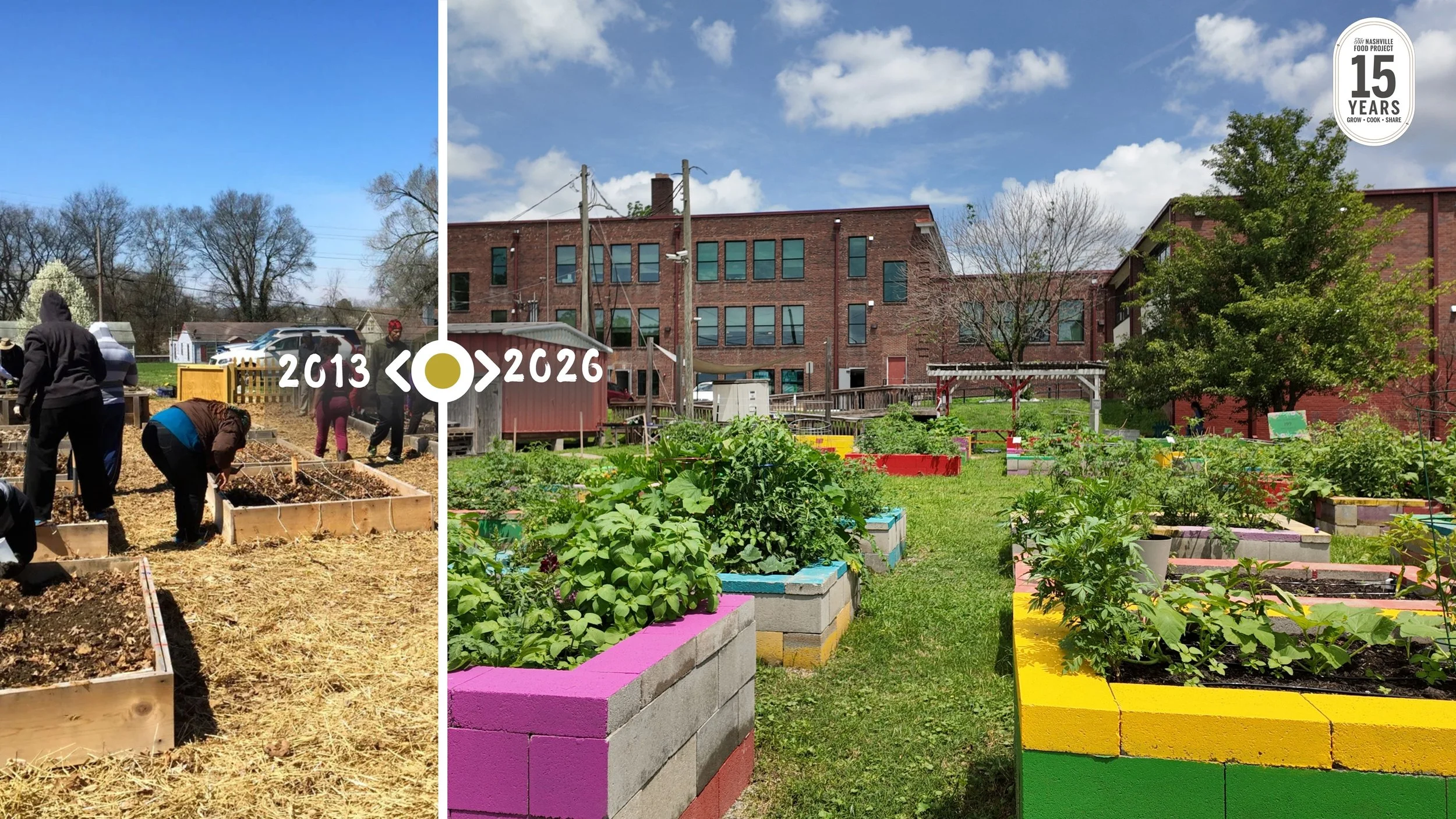
In the spring of 2013, every garden bed was claimed. What grew next would help shape The Nashville Food Project’s understanding of community agriculture.
In the spring of 2013, after a winter of waiting, neighbors gathered at McGruder Community Garden for opening day. The garden occupied a modest patch of North Nashville and contained 17 raised beds. By the time the season began, every one of them had been claimed.
The gardeners called themselves the Green Thumbers. They were families with children, older couples who had lived in the neighborhood for years, participants in a local wellness program, and people who arrived knowing no one. They came carrying different experiences and expectations, but all of them came prepared to grow something.
The usual rituals of a community garden followed. Plots were assigned. Seeds and tools were discussed. Wooden signs were set out for gardeners to paint with their names. Yet when the paintbrushes appeared, no one hurried forward.
The hesitation was not shyness. No one wanted to claim more than they needed.
Some gardeners offered to share their plots so that space would remain for neighbors who might arrive later. Others explained that they intended to grow food for people around them and would keep only what no one else wanted. Reverend John Beach, who had cultivated every bed the previous year, declined a plot of his own. Surprised by the number of people who had come, he chose instead to share a bed with his wife.
It was a small act of hospitality, expressed in square feet.
Community gardens are often described through what they produce: tomatoes, peppers, greens, herbs, pounds harvested. The measurements are useful, but they rarely capture the whole purpose of the place. A garden may be shared without becoming communal. People can work in neighboring plots and remain strangers.
McGruder was different from its first spring. Before there was anything to harvest, the gardeners had begun making room for one another.
The Nashville Food Project’s garden coordinator observed that the most meaningful gardens contain “layers of community,” a fabric of relationships extending beyond the fact that people happen to grow vegetables beside one another. Gardening skills could be taught through workshops. Seeds could be planted at the correct depth. Weeds could be identified and removed. But no lesson plan could manufacture the generosity the Green Thumbers brought with them.
That had to come from the gardeners themselves.
More than a decade later, the work of community agriculture has grown considerably. Today, The Nashville Food Project’s Community Agriculture Network connects farms and gardens across the city through shared tools, infrastructure, education, volunteer support, and relationships. More than 100 neighborhood growers participate across the network, bringing their own knowledge, traditions, and reasons for cultivating food.
The scale is larger, but the central idea is familiar.
A garden is not simply a place where food is produced. It is a place where knowledge moves between generations, where someone lends a tool without keeping track of the favor, and where a harvest can travel beyond the person who planted it. It is a place where people practice the quiet work of belonging to one another.
McGruder offered an early picture of what this could look like. Seventeen beds were enough to reveal that abundance is not only a question of how much space, food, or money is available. It is also a question of how people choose to use what they have.
The Green Thumbers chose to share.
As The Nashville Food Project marks 15 years of growing, cooking, and sharing nourishing food, we are looking back at the places and people who helped form this work. Much has changed since that first spring at McGruder. The network has expanded. New growers have arrived. New farms, gardens, markets, and orchards have taken root.
Still, the lesson remains: community begins when someone decides there is room for another person.
Sometimes, it begins with a garden bed.