
The Nashville Food Project’s Blog





Joining Forces for Free Community Health Days
In late 2021, thanks to generous funding from Welcoming America’s Resilient Rapid Response Fund, the TNFP team had the opportunity to lean into a new form of community health and care. We leveraged our resources and community connections to increase opportunities for New American communities to access COVID-19 vaccines and health information with intentional language support alongside access to fresh, local produce distribution and other essential services.
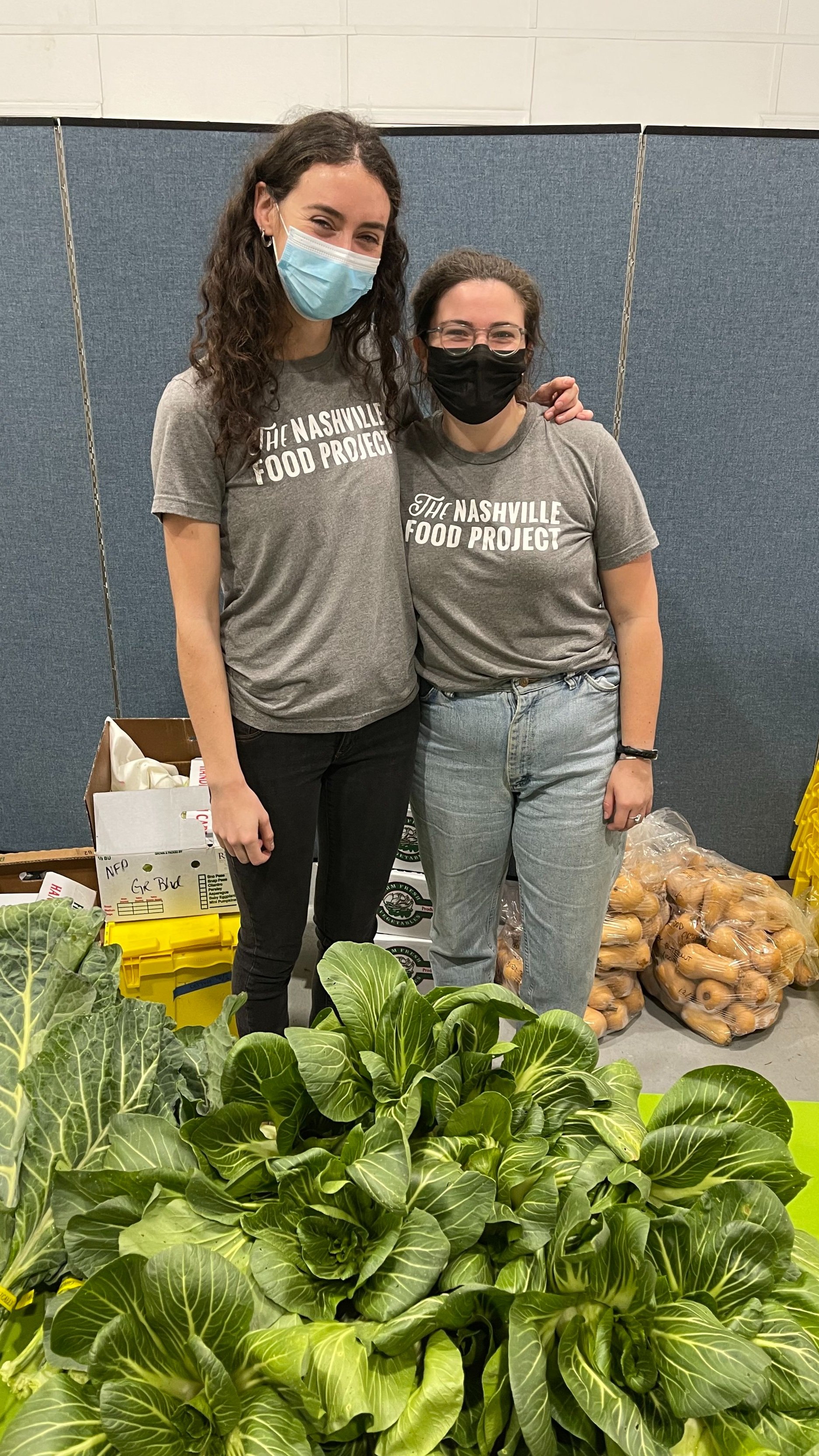
Lilah and Annie get ready to share some bok choy, collards and other produce.
by Elizabeth Langgle-Martin, Community Engagement Manager
The Nashville Food Project’s work has long been that of sharing high-quality, fresh food alongside powerful and essential programming in our city to enhance the poverty-interrupting work of nonprofit partners, community organizers, grassroots movements, and others.
In late 2021, thanks to generous funding from Welcoming America’s Resilient Rapid Response Fund, the TNFP team had the opportunity to lean into a new form of community health and care. We leveraged our resources and community connections to increase opportunities for New American communities to access COVID-19 vaccines and health information with intentional language support alongside access to fresh, local produce distribution and other essential services.
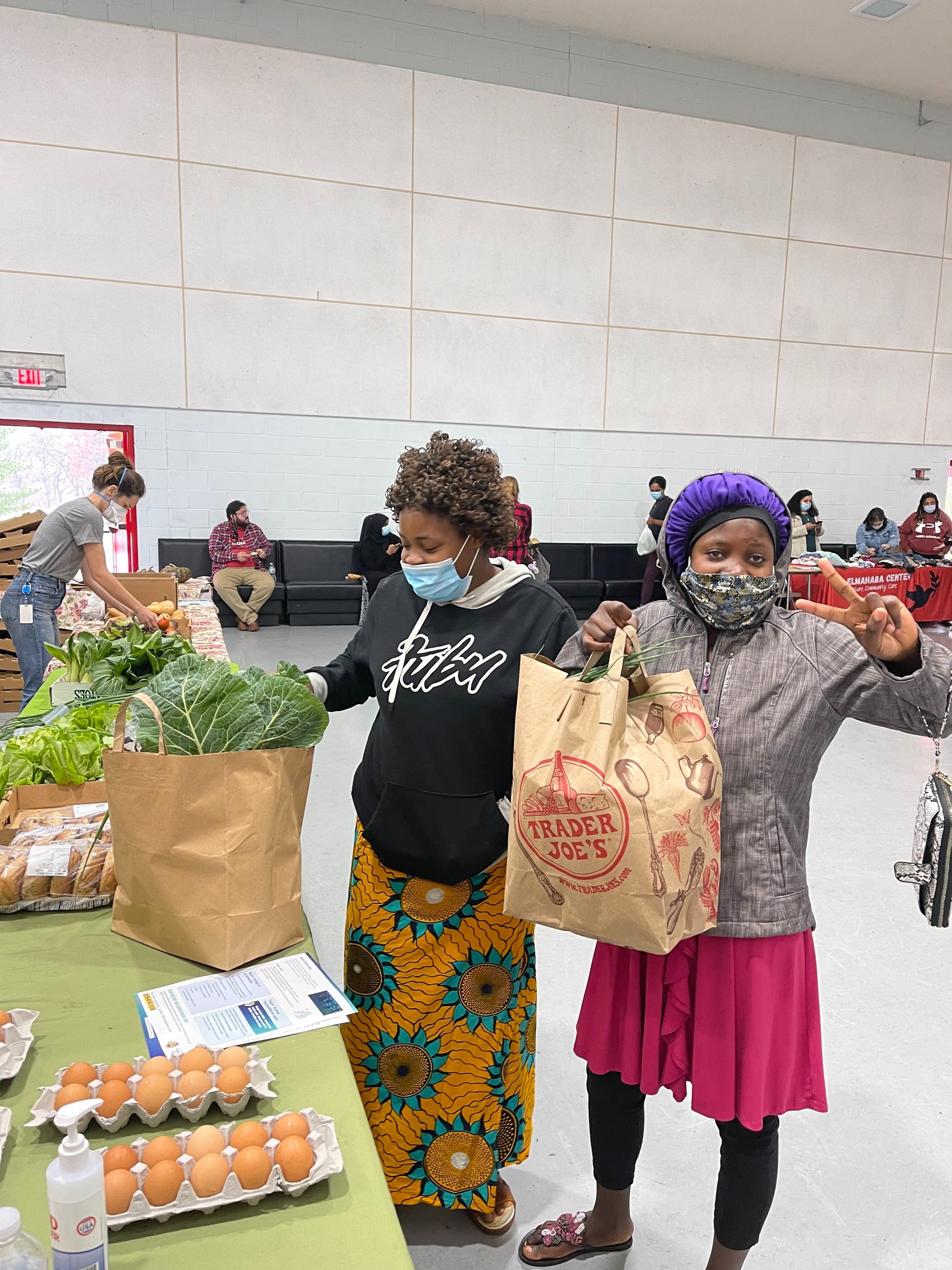
Event participants — shared with permission.
Inspired by our long time partnership with Christ Lutheran Church (the site of our Growing Together farm) and its sister congregations, alongside the vibrant community work of Elmahaba Center, we held three community health and COVID-19 vaccine events in South Nashville with deep support from a network of language workers and a number of other service providers. Metro Health’s COVID Vaccine Strike Teams, under the leadership of Tameika Evans and Ebony Harris, provided combinations of testing and vaccine services. Throughout the course of planning and feedback from the represented communities, offerings grew to include diaper support through Nashville Diaper Connection, paper goods through Community Resource Center, children’s items through Elmahaba, and resource and health information through Tennessee Justice Center, Siloam Health’s Community Health Workers, NICE’s Trusted Messengers and so many more.
At the close of our early December event, our team celebrated the 96 vaccines administered throughout these three events. We also shared pounds and pounds of locally grown produce such as thick bundles of collard greens, carrots with leafy tops, a rainbow of peppers, potatoes and beets as well as other herbs and vegetables alongside flats of eggs. Guests to these events represented more than six language groups, with folks sharing greetings and information in Arabic, Swahili, Burmese, Nepali, Spanish, and English. Our favorite moments included neighbors sharing the varied uses of different produce heaped on folding tables and comparing preparation ideas or snagging extra eggs for a neighbor and herbs for their aunt. We also loved the cheers when someone received their first vaccine dose and watching small children race their matchbox cars from Elmahaba Center across the gymnasium floor.
We are excited to continue this work in the new year through an invitation to collaborate with Tennessee Immigrant & Refugee Rights Coalition (TIRRC), Conexion Americas, NICE, PENCIL, Hispanic Family Foundation, Metro Health and others for another rendition at the TIRRC headquarters on Jan. 8! Make sure to follow along with our partners in this vital and timely work!


Partners with the Tennessee Justice Center were on hand to help with questions about SNAP and TennCare.
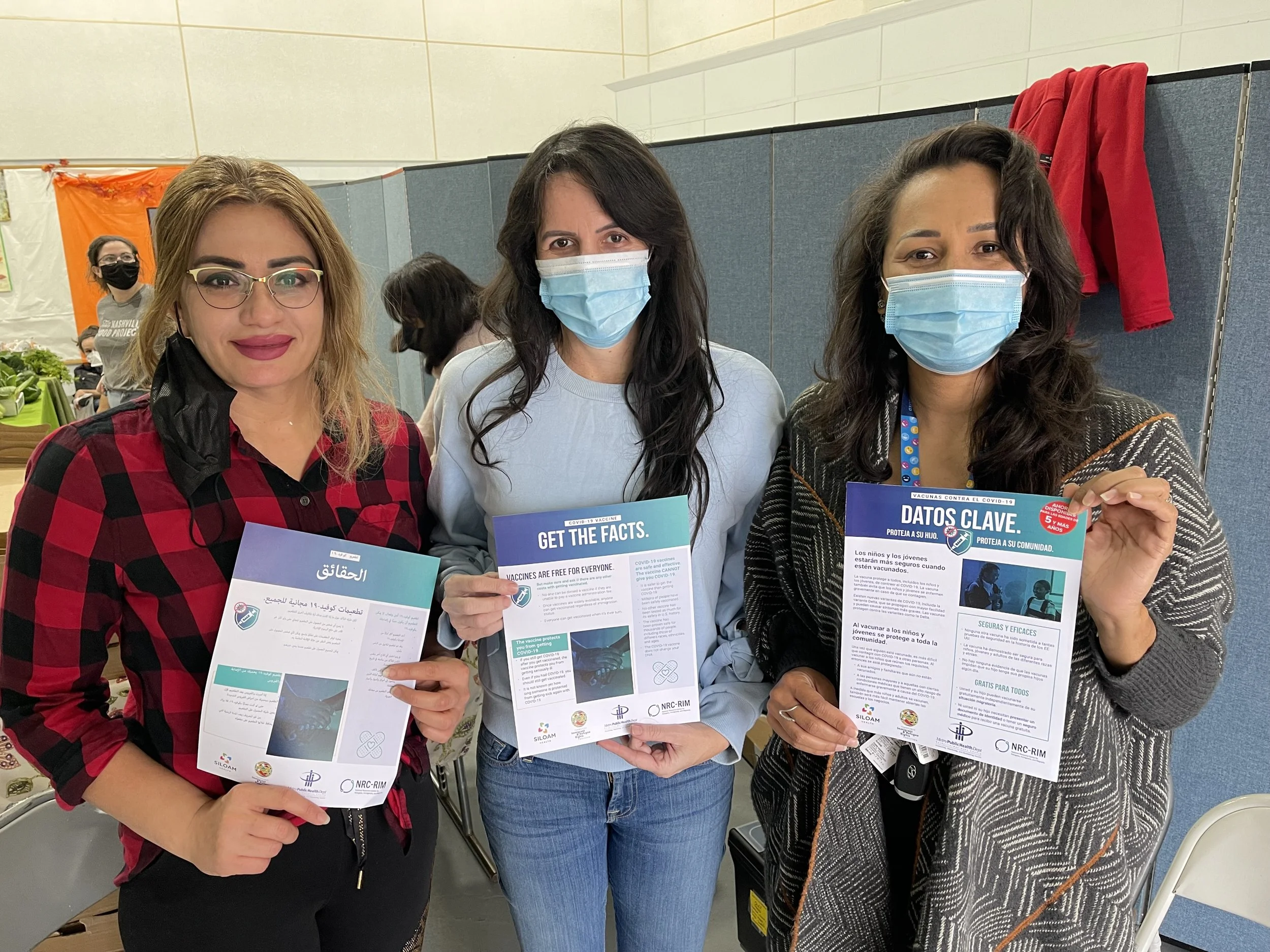
Partners with NICE and Siloam Health.

Two of our co-hosts at Christ Lutheran Church, Pastor Esther Godfrey and President of Church Council Mark Miller.
Fighting for Tennessee’s Food Security Safety Net: Pandemic EBT and Food Assistance in the Age of Coronavirus
We know how important free and reduced-price meals are for Tennessee families—over 663,000 Tennessee kids rely on free lunch and breakfast during a typical school year. As the pandemic shutters businesses and causes unprecedented layoffs, families are more vulnerable to food insecurity than ever before. While support from incredible locally-run organizations like The Nashville Food Project, this does not replace the need for food assistance legislation from state governments—especially in times of crisis.

Image from @tnjustice
guest post by Lauryn Cravens
Passionate about nutrition, food policy, and food justice, I have had the incredible privilege this summer of splitting my time working between The Nashville Food Project and the Tennessee Justice Center’s Nutrition Team. This has afforded me the opportunity to work with this concept of “food” with my hands in the Food Project’s Growing Together garden, and at the federal policy level with the Justice Center, all as the coronavirus pandemic has put a greater strain on our food system than ever before.
No one on the Tennessee Justice Center’s Nutrition Team expected our summer to be consumed by Pandemic EBT, but it has. What is Pandemic EBT? Pandemic EBT provides financial benefits for families of children in grades K-12 who receive free or reduced-price school meals or attend a Community Eligibility Provision school (a school where meals are free for all students) to help families that missed school meals during March, April, and May when children were not in school due to COVID-19. The only requirement is a child must be eligible for free or reduced-price school meals; P-EBT is for all students regardless of citizenship or immigration status.
The state of Tennessee boarded the P-EBT boat later than other states and was not approved for the program until mid-May. Since approval, Tennessee has failed to implement the program quickly, and several obstacles remain in place, making it hard for too many families to access food. Due to significant administrative barriers, a lack of sufficient marketing and outreach to inform the public of the expanded benefits and a short application window for families, thousands of Tennessee families are still without their desperately needed benefits.
We know how important free and reduced-price meals are for Tennessee families—over 663,000 Tennessee kids rely on free lunch and breakfast during a typical school year. As the pandemic shutters businesses and causes unprecedented layoffs, families are more vulnerable to food insecurity than ever before. While support from incredible locally-run organizations like The Nashville Food Project, this does not replace the need for food assistance legislation from state governments—especially in times of crisis.
For example, one way to help keep Tennessee students and their families afloat would be eliminating the P-EBT application altogether, allowing every family who qualifies to automatically participate. And although the state is responsible for publicizing P-EBT, everyday Tennesseans can also do their part to spread the word and advocate for this food assistance program, whether that be via word of mouth, social media, or by contacting local representatives.
Furthermore, as those who work with The Nashville Food Project and the Growing Together program know all too well, not all Tennessee families are fluent in English. Translation of the P-EBT application into Spanish, Kurdish and other languages would make the program more accessible for the many immigrants and refugees who call this state home. These actions and more can help ensure that all eligible Tennessee families receive the benefits they need and deserve during this critical time.
Stay updated with Tennessee Justice Center’s nutrition advocacy efforts, and see what you can do to help here: https://www.tnjustice.org/child-nutrition.

Image from @tnjustice
Food as a Lens
On a recent Thursday, more than 45 people filed into The Nashville Food Project’s community dining room, shaking umbrellas and shedding coats to join us for a hot cup of scratch-made sweet potato chili, a panel, and community conversation on the complexities of food injustice and how hunger intersects with other systemic inequities.
By Elizabeth Langgle-Martin, Community Engagement Manager

On a recent Thursday, more than 45 people filed into The Nashville Food Project’s community dining room. Guests entered shaking umbrellas and shedding coats to join us for a hot cup of scratch-made sweet potato chili, a panel, and community conversation on the complexities of food injustice and how hunger intersects with other systemic inequities.
Panelists (featured below) sat perched on tall, colorful stools as moderator and the Nashville Food Project’s CEO, Tallu Schuyler Quinn, set intentions for the evening.
The conversation, like the reality of food inequity, was messy. Mentions of racial tensions, top-down versus bottom-up change, the stigma that inhibits folks from accessing lifesaving safety-nets, and institutions that have long held up inequity speckled across panelist contributions. Through our Q and A time, it was evident that guests were also struggling with how to reconcile the picture of what a just food system could look like with the reality of the amount of brokenness we see splintering across so many people’s access to elements that should be basic human rights. It’s an uncomfortable and necessary conversation. It’s a discussion that requires both fierce hope and space to feel the deep brokenness of our existing system.
Here are some snapshots of the many contributions from each of the folks who leveraged their time to discuss how food can be a lens for other pressing justice issues.

“ We have a federal government actively working to dismantle SNAP… One of the changes that recently came out was a proposal on time limits. Individuals between the age of 18-49 are only allowed to be on SNAP for three months unless you meet certain requirements or are working… If you are struggling to find a job, why is taking food away going to help you find a job? There is no research that exists that shows that that is the case. Another one that happened this past Friday, is a proposal that is attacking the school system and the nutrition standard. So, when you have a government that is going through not normal channels to dismantle these programs, that’s going to impact all of our communities.”
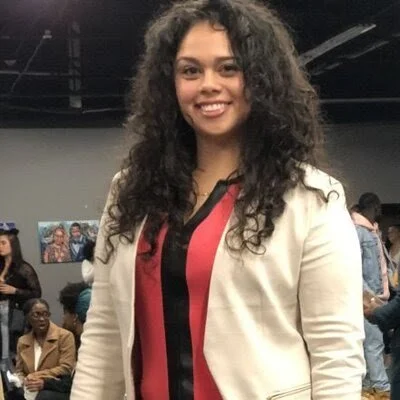
“We need shared ownership and shared equity… We need grocery stores that are cooperatives… For-profit entities where people actually get to own and buy from the same place… We need to figure out neighborhood connectivity. I’m thinking of neighborhood ownership, farmlands, grocery stores. I’m thinking large scale so that way we could actually sustain a city.”

“People’s access to housing affects where people live. Where people live affects the schools their children go to and where they can get food… these issues are so interconnected. In Nashville for instance, our housing costs have almost doubled in the last 10 years, from around $700 or 750 to around $1400... that’s double. When our housing costs go up people have less money spent on healthy food and have to start cutting corners. In the United States, we have dug a very deep hole… We have divested from the lives of poor, indigenous, black, and brown folks. That hole has been dug by slavery, redlining, not having a living wage, not supporting the rights of workers who need to organize… we have the gutting of the federal funding of housing... same thing with cutting food stamps. This hole is man-made, women-made, made by the people in power, and this hole is deep.”

“ Many [older people] have never been at a place in their lives [until now] where they need help accessing food. When you become older, you can be invisible and you can look like you are okay… But I’ve seen people who were emaciated from malnutrition. I see hunger manifested through isolation. It is hard for [aging adults] emotionally to be at a place in their lives where they have to seek food [assistance].”

“When we talk about equality, we are talking about sameness. When we talk about equity, that is when we move into the realm of justice and fairness. That is where we need to be in a systematic approach in everything that we do in our country and in our city. Nashville operates in a silo tendency. We look at everything in its own specialized department. We want to talk about housing today, so let’s open the housing drawer. We want to open about transportation, let’s open the transportation door and close this [housing] drawer. All of this is a systematic, circular framework that we need to put equity at the top. ”
Tallu closed by paraphrasing a past professor who noted that we have to absorb enough of the world’s brokenness not to paralyze but to galvanize us, moving us to action.
Signe noted “People often feel intimidated by being advocates but it can be as simple as saying ‘This is what I believe and this is what I see and I think others should see this.’ Find stories, share stories, learn more…”
Inspired to act? Here are a few ideas!
Click here to find council person by your home address.
To receive nutrition policy updates, click here to follow Tennessee Justice Center and sign up for email updates.
To learn more about OTN’s work around homelessness, and to join them in advocacy and action, visit their website.
To volunteer for Fifty Forwards Meals on Wheels Program, contact: sloik@fiftyforward.org
To learn about My Brother’s Keepers Network visit their Facebook.
Missed the conversation? Click here to check out our recording of Food as a Lens.
Scaling Back Nashville's Free School Lunch Program
Last month, Nashville schools announced a scale back of a program which for the past 4 years has provided free lunch to all Metro school students, regardless of income. We reached out the The Tennessee Justice Center to help us understand the changes and what is at stake.
Note: Find information on 2018 Nashville summer meal program sites and times here. In addition to these sites, there will be a lunch served at McGruder Family Resource Center (2013 25th Ave N) Monday-Friday from 11:30 am - 12:30 am through July 27th 2018. No registration is required - any child under 18 can come and have lunch for free. A tent is set up in the parking lot behind the center.
By TNFP's Office Manager, Elizabeth Langgle-Martin
I vividly remember the day in kindergarten when I opened my lunch, removed my sandwich from its plastic baggie and bit into it, only to discover it was two slices of plain bread. It’s a story that’s gone down in our family’s folklore. My sweet, young, probably exhausted, mom, in the morning rush and commute, forgot to put peanut butter, cheese, or anything that would constitute a sandwich between the slices of wheat bread. It’s funny, because I had a mother that carefully packed me lunches every day of my elementary school career. Veggie sticks, tuna sandwiches, raisins and apples. Granola bars, cucumber slices and thermoses of milk. My stomach was full and I could focus on the perils of learning cursive, fractions, and trading Beanie Baby cards.

I know that my lunch experience is not universal. In Tennessee, one in seven families doesn’t know where their next meal is coming from. Most of us can agree that a child who is hungry isn’t able to listen, learn, befriend their peers, and engage in a holistic school experience. When I read the news headlines that students’ access to free and reduced lunches was changing, I reached out to Madison Wall (Children Nutrition Advocate) and Keith Barnes (Director of Nutrition) at The Tennessee Justice Center to help me understand all the elements and what is at stake.
Please note, this is my personal interpretation of an hour-long interview. I’m new to this conversation and maybe you are too! Hopefully, my slightly bumpy explanation will encourage you to dive a little deeper into the way policy affects food accessibility in Metro Nashville schools.
Federally funded free school meal programs in the U.S. date back to the 1940s. (Check out this handy factsheet). In 2013/4, the Nashville community became an early adopter of the Community Eligibility Provision (or CEP) – a program that allows school districts to serve free meals to ALL students, regardless of income. This meant that MNPS schools no longer had to enroll and closely track individual student eligibility. Among students, it reduced the stigma of receiving meal assistance and -- perhaps most importantly -- made sure no child needing access to nutrition was falling through the gaps.
But recently, it was determined that Nashville’s school system no longer meets the benchmark to fall under the blanket of this program. Barnes suggests that this can be attributed to a combination of things such as: the gentrification of urban neighborhoods, a tense time in immigration policy which discourages families without documentation to provide personal information, and even some economic improvements.
So what next? Metro Schools has announced that half of the city’s lowest income schools will continue to provide lunch to all children at no cost to the student. However, the remaining half of the city’s schools will return to assessing the students’ individual eligibility to determine who does or doesn’t receive free meals. Advocates are concerned that this abrupt change may result in students who have been relying on the free lunch program struggling to meet their nutritional needs during the school day.
The Tennessee Justice Center is asking for MNPS to continue offering a lunch to all the children enrolled at no cost to the student and their families, which they believe can be supported by a number of creative, sustainable funding solutions. In particular, they are advocating for school district leaders to implement an strategy to help all eligible families within the MNPS system to enroll in SNAP, which can both help schools receive additional federal reimbursement, and ensure that more eligible families have food in their pantries at home.
Program quality is constantly on TJC’s radar as well. For instance, Madison notes that the existing free breakfast program is hard to access for some students. For instance, if a free breakfast is offered until 7:45 am but the last bus doesn’t arrive at the campus until 7:50 am, that group of students is unable to partake. Madison works with schools to look at alternative ways to make sure that all students can access the meals that the school is paying for and preparing each day.
So, the big question… How can the average Nashville resident (like me!) advocate for students to continue to have access to meals at no cost to the child during their school day?
1. Ask the mayor’s office to make an immediate investment of 7 to 8 million dollars to our school district to ensure that all students continue to receive uninterrupted access to lunch during their school day. You can email Mayor Briley directly at mayor@nashville.gov.
2. Sign up for email updates from The Tennessee Justice Center to learn more and receive prompts for accessible action items. You can also learn more and get involved in specific campaigns through their website, including signing up to be a Breakfast Champion. Supporting this proposed in-class meal model (Breakfast After the Bell!) would allow more students to eat the available free breakfast.
At The Nashville Food Project, we're working toward a vision in which everyone in Nashville has access to the food they want and need through a just and sustainable food system. We recognize that this cannot occur without the intentional and detailed work of advocacy and policy change, and we are thankful for the work of The Tennessee Justice Center and other similar groups as they seek to help increase access to nutritious food in our community.