
The Nashville Food Project’s Blog


The Nashville Food Project Care Package for Uncertain Times (Part 1)
We collected our inspirations, recommendations, motivations—all salve for the loneliness and fears this virus and social distancing can produce. These recommendations aren’t necessarily heavy or directly related to the pandemic or our work. Rather it's a collection intended to nourish and accompany our community as we all stay home together.
Cultivating community lies at the heart of our mission at The Nashville Food Project, but at this time of social distancing, we’re learning how community means much more than physical proximity.
We’re seeing inspiration for community everywhere — from living room concerts and “cloud clubbing” (for the ravers among us) to movie discussion groups and online home cooking forums. In David Byrne’s magazine “Reason to be Cheerful,” Nick Green, creator of the Social Distancing Festival, says this:.
“As long as we are sharing a space in which we can be present, provoke, inspire, promote kindness and compassion, and share ideas, then we are all together in one space, even if it’s in different places at different times.”
Along those lines, we recently found encouragement from On Being’s Care Package for Uncertain Times, a collection of interviews and poetry on topics ranging from grief to hope. It inspired us to make our own version for our friends and for each other. We collected our inspirations, recommendations, motivations—all salve for the loneliness and fears this virus and social distancing can produce. These recommendations aren’t necessarily heavy or directly related to the pandemic or our work. Rather it's a collection intended to nourish and accompany our community as we all stay home together.
We’ll be sharing our care package in small digestible bites—five staffer reflections at a time. Please find Part 1 below with Part 2 coming soon!
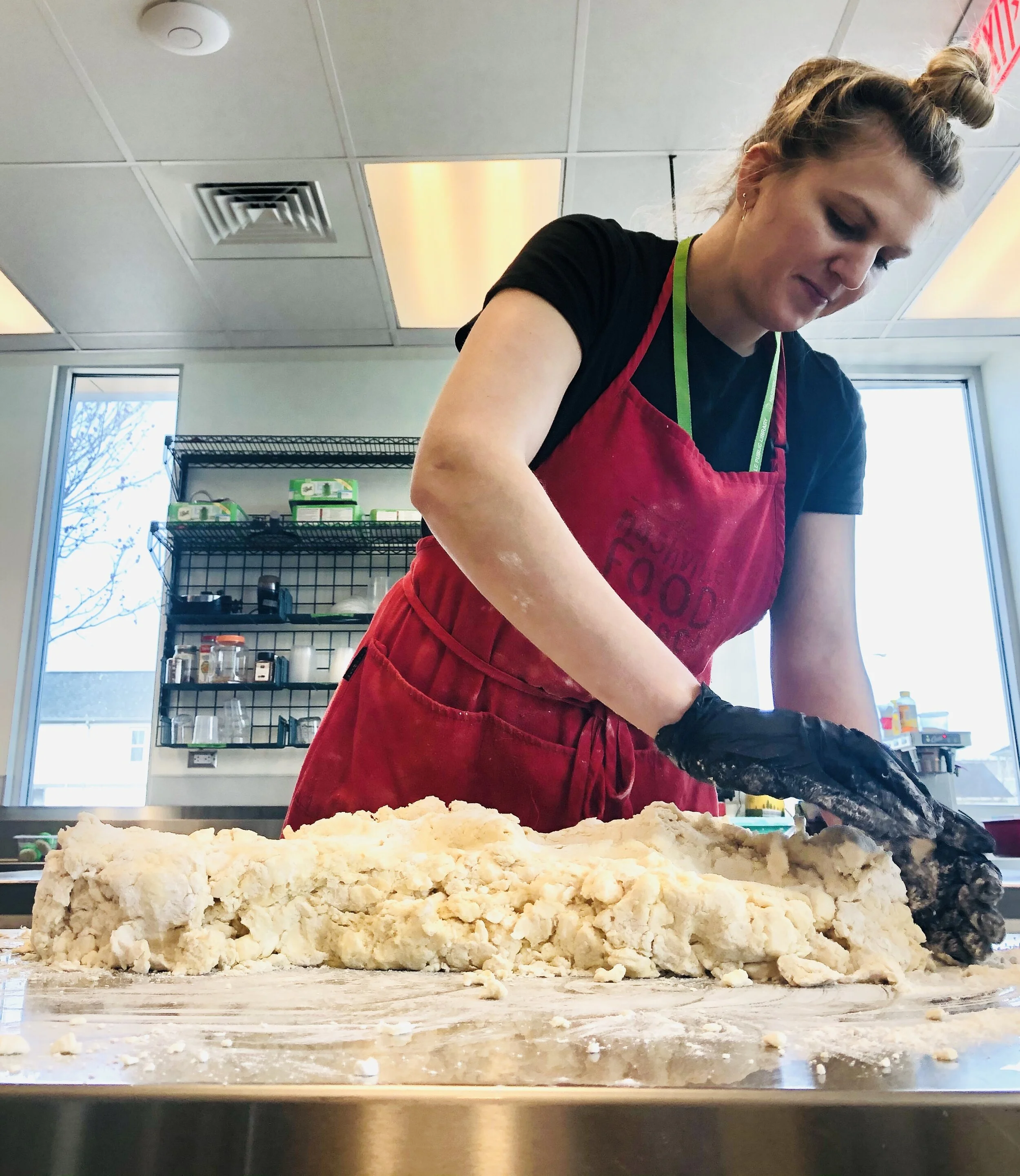
Meg Schmalandt, Sous Coordinator - California Kitchen
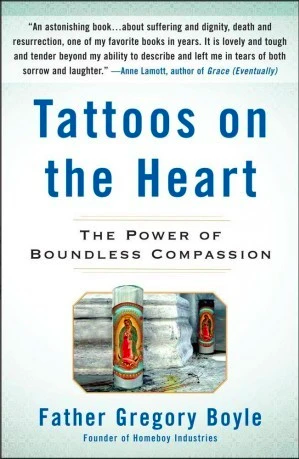
Book: Tattoos on the Heart by Fr. Greg Boyle. It’s kind of related to our work but also very related to being a human, trauma, healing, and spirituality.
Podcast: Dolly Parton's America. I'm. Obsessed. With. Her
Movie: JoJo Rabbit. It'll make you laugh and make you cry. A lot about what it means to grow up and joy as a state of being.
Article: TIME magazine’s 100 Women of the Year
TV: Honestly, Cheer on Netflix was so good.
Ways I'm Coping with COVID-19: Dance parties with my roommates, funny movies, going on walks, working out, and cooking soups + stews. Dreaming about the spring. Planning my wedding flowers :)

Sally Rausch, Growing Together Market Manager
Podcast: This American Life's episode called The Show of Delights made me chuckle out loud so many times, exactly what I've needed the past few weeks-to be reminded that we can find delight in the simplest things and also that someone else sharing their delight can in and of itself be delightful!

Book: Part of that podcast episode highlights poet Ross Gay and his recent book of "essayettes" about finding delight. It's called The Book of Delights: Essays. I've been trying to read one or two before bed instead of scrolling. He is so real and talks about real issues—racism, being black in America, grief—not escapist but about finding delight in our lives as they are. I'm finding it nourishing in the most grounded way.

Bianca Morton, Chef Director
Music: 90’s R&B. It takes me back to a simpler time—high school years when the biggest problem was schoolwork, graduation and fitting in. On Tuesday I let loose some steam and danced to Whitney Houston's Greatest Hits. I danced, sang and cooked. And just for a moment didn't have a care in the world. Just joy!

Tallahassee May, Growing Together Education Manager
Books: I am currently re-reading Gabriel Garcia Marquez's 100 Years of Solitude and Love in the Time of Cholera. Both seem so fitting and are perfect escape-reads in the age of quarantine.
Audio Book: Anne Patchett's The Dutch House. First, you are supporting a local author and small business heroine. And second, you’re supporting a coronavirus survivor, Tom Hanks, who reads it on audio and does an amazing job.

Podcast: Poetry Unbound, an offshoot of On Being with short poetry readings by Padraig O' Tuama.
Music: Nothing beats Beyonce's Homecoming, Live at Coachella! Amazing live music, festival vibe (for when you need to remember what it was like to share intimate space with thousands of people) complete with the best HBCU Marching Band! And when you are feeling quiet and introspective (and alone), Keith Jarrett's solo piano concert masterpiece The Kohl Concert.
Movie: The new movie adaption of Emma was recently released and since its time in theaters was cut short, it is now available for streaming! It’s a fun, gorgeous adaptation. The director, Autumn DeWilde, and I were hippy kids together on The Farm commune in L.A. in the early 70s, and I have loved watching her career blossom and evolve over the years.

Teri Sloan, Development Director
Podcast: I'm a big fan of the Armchair Expert Podcast with actor Dax Shepard and his friend Monica Padman. They do at least two episodes each week having long, deep-dive conversations with different folks from the entertainment industry as well as "experts" like writers, scientists, psychologists, etc. No matter who is being interviewed it always turns out some interesting conversations that make you laugh and make you think about something a little differently.
Article: Not that there's anyone in our city who hasn't read it yet, but Margaret Renkl's "What it Means to be #NashvilleStrong" article moved me to tears recently.

TV: I've been eagerly anticipating the release of Little Fires Everywhere on Hulu. It's Reese Witherspoon's and Kerry Washington's television adaptation of Celeste Ng's popular book of the same name. The first three episodes dropped last week, and I'm already hooked. I've also been taking the time at home to start binging some of the TV shows everyone else has been talking about over the years that I never watched: Schitt's Creek, The Wire, etc.
Other ways of coping through COVID-19: I've been cooking, and I've got a batch of homemade limoncello steeping in the cabinet. My next big idea is teaching myself the longtime TNFP pastime of knitting. Anyone got any good YouTube videos to check out?
The Heroes Among Us
National Volunteer Week, April 15th - April 21st, is a time to honor the volunteers that work by our side every day. This week we will celebrate each individual who has impacted our mission of bringing people together to grow, cook and share nourishing food!
National Volunteer Week, April 15th - April 21st, is a time to honor the volunteers that work by our side every day. This week we will celebrate each individual who has impacted our mission of bringing people together to grow, cook and share nourishing food, with the goals of cultivating community and alleviating hunger in our city.

South Hall Kitchen Volunteer, Rita Pirkl
What does it mean to be a hero? The first thing that comes to mind may be a cape and super powers. You may think of an extraordinary act of selflessness like carrying a person out of a burning building. Its true that this is an act of heroism, however, there are heroes among us that make just as strong of an impact but stay hidden in the bustle of everyday life. At TNFP, those heroes are our volunteers- those people that are the backbone of our organization and the foundation of every program. Their superpowers are weed wrangling, cooking, driving, and simply taking the time to support our community!
In 2017, we were able to grow 59,075 pounds of fresh fruits and vegetables in our gardens and create 152,514 meals from scratch in our kitchen to serve community members through over 30 partners. Those impacts could have never been made without the support of 3,758 volunteers who served over 10,375 hours last year.
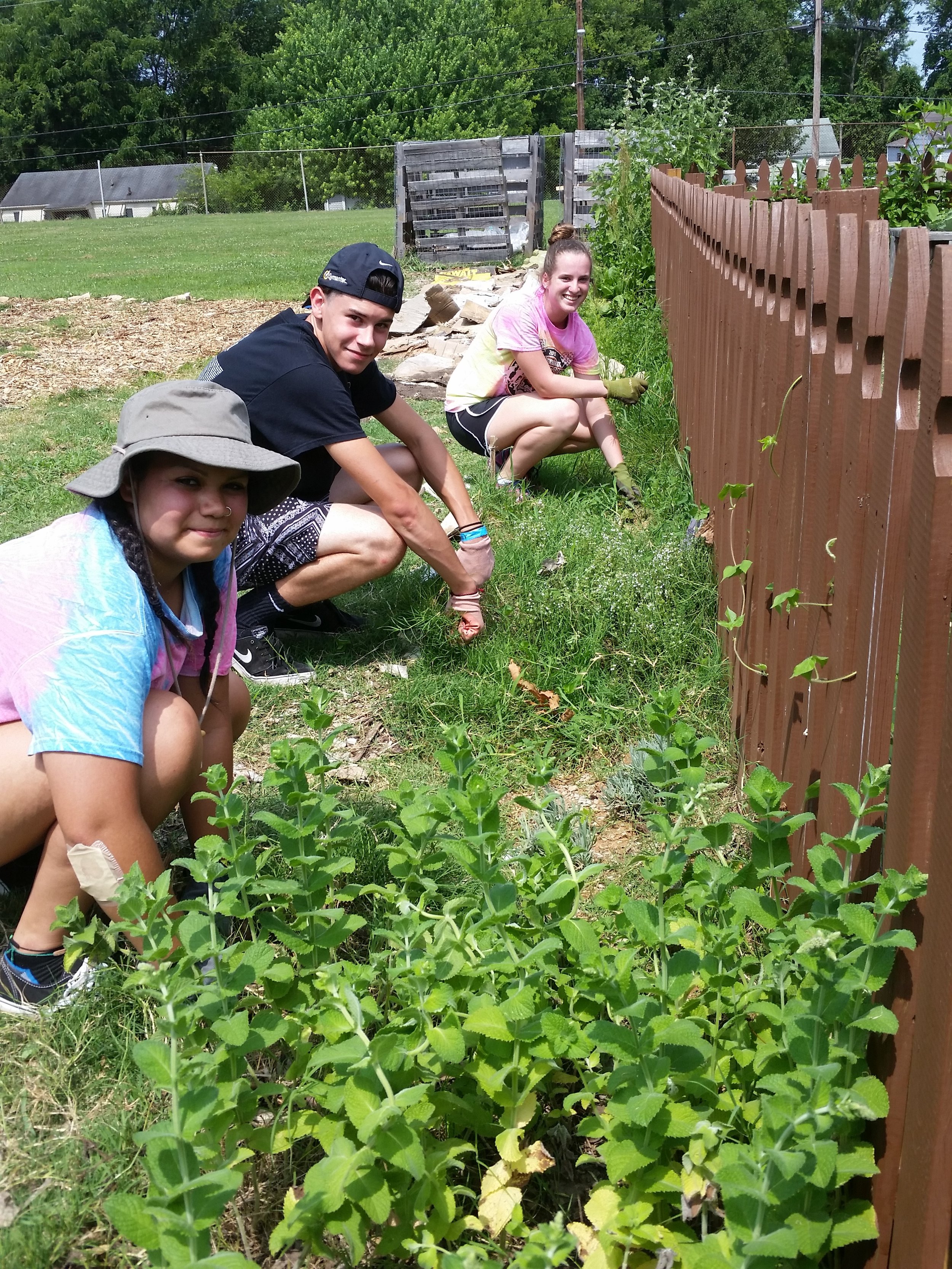
Volunteers at McGruder Garden
Each volunteer contributes to our mission. Garden volunteers help our produce thrive by maintaining the soil through tilling, broadforking, and weeding. They also ensure that the gardens are in their best condition for community gardeners by helping to maintain tools and garden infrastructure. Volunteers in our kitchens provide the tedious but necessary (and fun!) work of washing, chopping and preparing each element that goes into our meals, as well as cooking and serving meals to feed and empower thousands of community members. We are incredibly grateful to all of our volunteers from individuals who have spent one afternoon in the gardens to dozens of regular, ongoing volunteers in our kitchens and food recovery. Thank you to the heroes among us!
If you are interested in being a TNFP hero please sign up to volunteer at thenashvillefoodproject.org/givetime.
Wedgewood Towers Grows Community
Our newest meal partnership uses a nourishing meal as a space to build community between two unlikely groups: senior residents of Wedgewood Towers and students from the University School of Nashville.
The Nashville Food Project’s newest meal site is right around the corner from one of our Gardens at the Wedgewood Towers community, located in the Wedgewood-Houston neighborhood. This apartment complex has 121 units and is managed by First Cumberland Properties specifically serving low-income disabled and seniors over the age of 62.

Senior residents of Wedgewood Towers and students from University School of Nashville working on a craft together.
As long time residents of Nashville can attest, this is an area that has changed a lot in the last 10 years, and those changes have had lasting impacts on the Wedgewood Towers community.

A recent craft: paper rainbows and pots of gold in honor of St. Patrick's Day!
When Kita Davis was recently assigned as a social worker for this building, she polled the residents to better understand their needs. At the top of the list was access to food, healthy or otherwise. The last, walkable grocery store, a save-a-lot, was torn down for condos not too long ago. Most residents of Wedgewood Towers do not have access to regular transportation and have a hard time getting out. With no grocery stores within walking distance, it’s no wonder that access to healthy food is at the top of the list.
As a result, Kita reached out to The Nashville Food Project. Now, every Tuesday at lunch and Friday at dinner, residents of Wedgewood Towers gather together around activities and a hearty, made from scratch meal.
On Tuesdays before lunch the residents are joined by students from the University School of Nashville. Each week a different class comes and leads an activity for the community. One week it was a game, the next a computer lesson. Last week, in preparation for St. Patrick’s Day, the kids led a craft, making paper rainbows and pots of gold for the residents to decorate their doors with.

Lunch is served!
After the craft it was time to eat. Residents blessed the meal with words of gratitude before digging in. On the menu was barbeque chicken, roasted sweet potatoes, a kale salad & fruit. Similarly, on Fridays volunteers join the residents for a “lively game of bingo” while they eat.
Before this meal and these activities, Kita said that there weren’t many community wide activities at Wedgewood Towers. It’s taken a little while for the programs to grow but every week she has more residents coming back to join in and receive a meal.
Her goal with these meals and community times are simple, to promote wellness, build morale, and strengthen relationships between residents and staff, fostering a friendly atmosphere and a strong sense of community. And really, isn’t that what a shared meal is all about? Every week, Kita says, the community grows.
At The Nashville Food Project we embrace a vision of vibrant community food security in which everyone has access to the food they want and need through a just and sustainable food system. As the sweet potatoes from a local farm, the greens from our garden around the corner, fruit salad prepared by volunteers, and chicken donated from a local restaurant filled up these plates it all came together, a meal Nashville can be proud of.
Oh, the Places You'll Go
A simple ingredient - tomato, lettuce, carrots - can touch thousands of lives once it comes through the doors of TNFP. Today, we’re following the journey of one ingredient in our meals last week: big, beautiful, leafy kale.
A simple ingredient - tomato, lettuce, carrots - can touch thousands of lives once it comes through the doors of TNFP. With every crop that we grow, and every meal that we make our ultimate goals are to alleviate hunger and build community. With such lofty goals it’s no wonder that hundreds of people are needed to make this a possibility, and, in return, thousands more are touched by the respect and love shared within their meal. In this blog we will follow the journey of one ingredient in our meals last week: big, beautiful, leafy kale.

Photo courtesy of Sweeter Days Farm
With every meal, our goal is to support the community through a multifaceted approach. For this reason we love to grow produce in our gardens. But when that is not possible, our next favorite option is to buy local, naturally-grown foods from other community members. Our meals team is working on a new program to purchase "2nds" from farmers in the hopes of decreasing the waste from our city's food stream by diverting into our meals. This week, we purchased three bins of kale from Sweeter Days Farm to use for the entire week in our South Hall Kitchen. The kale was pulled to make room for new crops and would have otherwise been thrown away.

Our meals team works hard to come up with a plan to use every bit of food that comes our way, and that requires a lot of help. TNFP Intern Kate helped wash and cut the kale for a salad. Kate is a part of Lipscomb University’s IDEAL Program which is a two-year certificate program designed to support students with intellectual or developmental disability. Students in this program take classes, participate in internships, and enjoy the college experience. At TNFP Kate provides assistance in the South Hall kitchen. “I wash fruit, cut up fruit for salad, help prep cookies, vegetables, and snacks.” Kate does much more than help with meal prep. She brings a level of energy and enthusiasm that is passed to everyone working alongside her which helps make the finished product like kale salad that much more incredible.

Although a kale salad always hits the spot, we like to get creative with our meals and use the ingredients that are available. TNFP volunteer cook Shellye and her team prepared a strata with the kale, other veggies, and ham. Almost every meal that comes from the South Hall kitchen is prepared by volunteer cook teams. Shellye explains why she committed to volunteering at TNFP as a regular cook. “I’ve been volunteering here for five years, and I really enjoy the camaraderie of cooking with others and meeting a need to feed healthy food to people who really need it.”
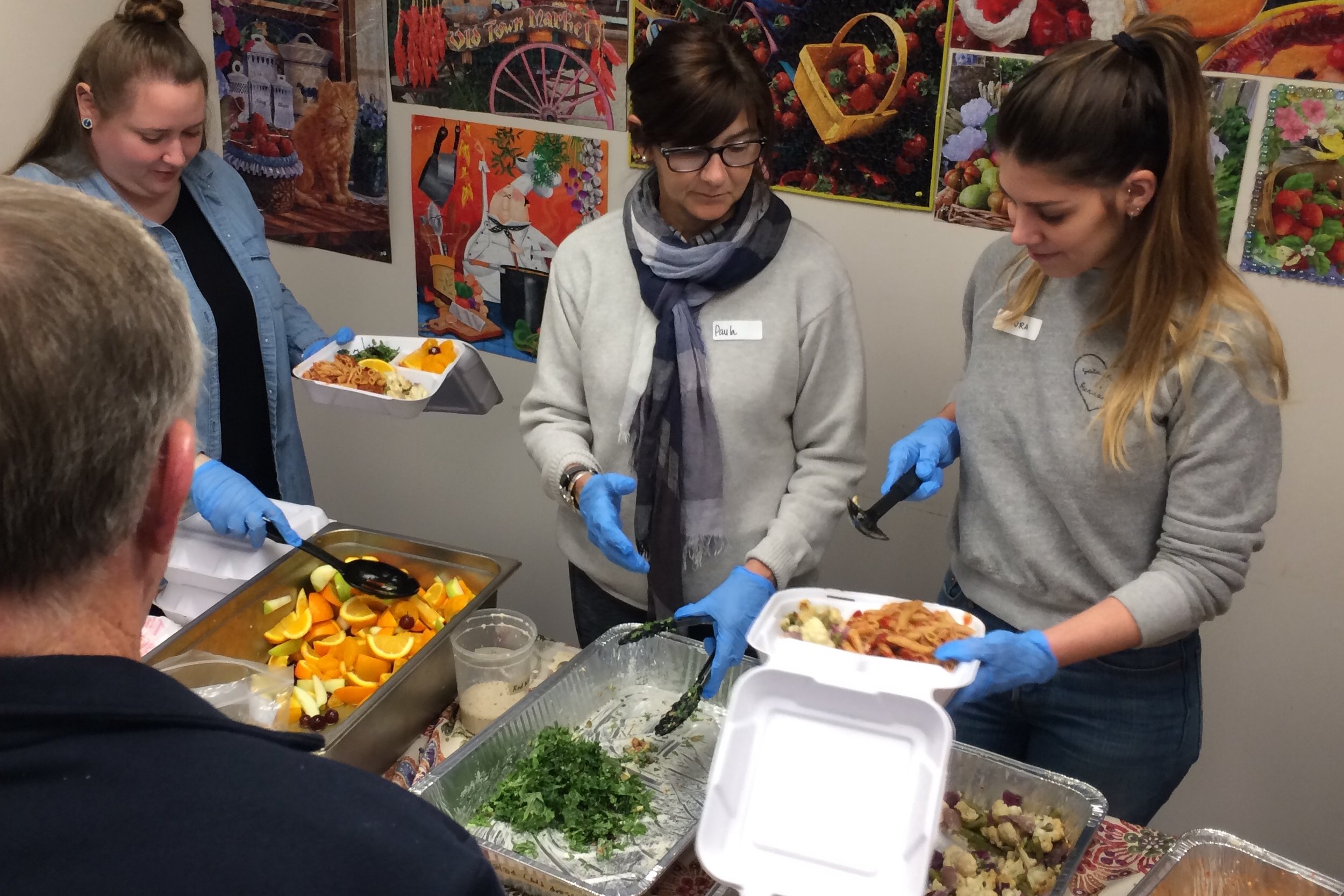
Paula (center) serving kale salad at John Glenn & Peggy Ann Residential Housing.
When it comes to sharing food, the purpose is not simply to serve a meal but rather to make connections, meet our neighbors, and find commonalities. Long time volunteer Paula and a group of new volunteers served the meal, complete with kale salad, at John Glenn & Peggy Ann Residential Housing. As a volunteer for over five years she has volunteered in almost every role at TNFP with her family. “I love the mission of bringing good food to people who need it. Food is a common denominator. I like to serve meals in my own home and bring a little bit of home to people who may not have it right now. It's rewarding to serve food.“

The last stop on our journey is in the hands, hearts, and bellies of the people with whom we share our meals. John L Glenn and Peggy Ann are residential centers in North Nashville run by National Church Residences, an agency that provides affordable housing for low-income seniors. TNFP serves 60 hot meals to residents here each week. Victoria at John Glenn and Peggy Ann Residential Housing says “The food has been really, really good and the [volunteer] servers are kind, generous and considerate. It’s a blessing and we look forward to it every week!” When we talked several residents were sitting around a table with their food chatting with each other, visiting with family, and talking to volunteers.
“Food is a common denominator.”
Something so small as a few bins of kale can truly make an impact on hundreds of people when communities are so tightly woven. Each person in Nashville is connected in a powerful way, and though it may not be a connection that is seen at all times, it's there. As Paula mentioned before “food is a common denominator.” And in this story the denominator was kale.
Supporting Academic Perseverance Through Food
Earlier this month we sat down with one of our meal partners, Preston Taylor Ministries, to learn more about their program and how they are using The Nashville Food Project's food to support their work to education and instill students with academic perseverance.
Earlier this month we sat down with one of our meal partners, Preston Taylor Ministries, to learn more about their program and how they are using The Nashville Food Project's food to support their work to education and instill students with academic perseverance.

Tell me a little about your organization and specifically the program that is supported with TNFP food.
Preston Taylor Ministries has been operating for 19 years. Next year will be our twentieth year. We have seven elementary and middle school sites that we partner with throughout the 37209 zip code. We own one of the buildings that we run programming from, but the majority are partnerships with other organizations. We really try to have a presence in the footprint that exists in the neighborhood.
We try to be that school-home-afterschool connection to close those gaps. Here at St. Luke’s Community House we are a K-8 program so we actually have two programs running simultaneously: a K-4 elementary school program and a 5-8 middle school program.
What’s the specific program that you run here at St. Luke’s Community House?
Our primary feeder school for elementary is Cockrill Elementary. We’ve worked out a transportation system with Metro Nashville, and they bus those students directly here, which is great. Of the 35 elementary school students that come, probably 25 of them are all Cockrill students. Other feeder schools are Charlotte Park Elementary, Eakin Elementary and Gower Elementary. For our middle school program, our primary feeder school is Nashville Prep. That’s a charter school that is a block away. Probably 28 of the 35 middle schoolers come from there, and they walk here.
We’re after-school from around 3:30 to 5:30, and our primary mission is “Joy-filled friendships, Christ-centered atmosphere, and a love for learning.”
We are in an air conditioned gym, and we take full advantage of that. Our program consists of physical education, academics, reading intervention and chapel time. We have a total of 70 students that rotate…
Wow! That’s a lot of kids.
Yeah, it doesn’t feel like it. When you get it down to everyone knowing where they’re supposed to be, it’s manageable. You’ve just got to trust me on that!
That’s such a great focus on filling the gaps to create a holistic experience. One of The Nashville Food Project’s primary goals is filling gaps for our partners, supporting their work that is breaking cycles of poverty. Education seems so important in that work. How are you all working in the education space?
Our goal when it comes to education and academics is really what we call “academic perseverance.” We know that in the 25 minutes we have for homework help in a two hour after-school program, it’s very difficult for us to increase a grade level. What we can do is use all of the two hours that we have with those students to build an atmosphere and a mindset of perseverance and follow-through, doing hard things and doing the next, right thing. That carries over into the academic pieces of our program. So that’s really our first approach - understanding that we’re creating a framework of perseverance in everything that we do.
Then, we have a reading intervention piece. We know that in K through third grade, students are learning to read. In grades fourth through eighth, students are reading to learn. In those latter years, we know that most of the information they intake academically will be through reading comprehension so that becomes our focus. As they become better readers, they become better learners. There are things that we have to do in that third rotation that revolve around giving that student a better chance at focus and concentration, breaking barriers of distraction. Food is a big part of that.

Why do you think that offering food alongside this program is important? How does it support the work?
When I say the word food, what I mean is healthy, nutritional snacking. We don’t want to give our students anything that then steals their energy, ability to focus and ability to concentrate. What we want to give them is food that’s going to support the next hard thing that they have to do.
We’re always looking for ways to introduce healthy snacks with the mindset that Cheetos are going to keep you from wanting to do your homework, but hummus and carrots are going to energize you and give you the brain power that you need to be able to do that next hard thing, which might be math. That’s the approach that we take, and that’s why The Nashville Food Project is such an important and integral partner to academic excellence here.
It sounds like you all are carrying out your program in a way that’s helping the students learn more about how to feed themselves and what the food that they eat does for their ability to learn and be active. What do you think the students are learning about and through this food?
We also partner with Second Harvest, and they have a lot of literature that we can use to educate the students in their native language. They give us those to help support the education piece. We use that alongside cooking lessons and other things. We have cooking rotations with our students where the approach is always to get kids to make their own healthy snacks. If there is a particular snack that we’re serving from The Nashville Food Project, we have a conversation with our volunteers about introducing those foods, talking about the colors of those foods and what the colors mean in terms of what that gives you - what orange food gives you, what red food gives you and what green food gives you. We’re always sending that message right through that window into our kitchen.
It also gives us the opportunity to have conversations around perseverance when it comes to trying new things and why it’s important to at least take a bite. You can’t explain to me what you’re saying “no” to until you try it. That’s been a huge part of getting students into the whole mindset of what perseverance means in every aspect of their life including how they feed themselves. That’s an emotional decision so the social and emotional learning part of that - of not shutting yourself down to trying new things - is a big piece of it as well.
It’s great to see you all thinking about food and its impact on your students in such a meaningful way.
Yeah! It’s a very holistic and integrative approach here, and everything that we do points to those goals.
Other than food, what do you think are the biggest factors outside of your control that are impacting the education and development of the students you work with?
Here at the St. Luke’s facility, 100% of our students are living below the poverty line, and 68% of our students are native Spanish speakers. They are the first English speakers in their families so for reading comprehension, they always have to go the long way around the barn.
Particularly in our fifth through eighth grade population, Nashville Prep is a college preparatory school teaching high order and critical thinking skills. Reading a paragraph and being able to extrapolate data, form a conclusion, find evidence to support a question - those sorts of things take a lot of concentration when English isn’t your native language so ELL and being able to work with that population in homework help is always a challenge.
The other problem is that for this population their support system is often not in the country. Having a caring adult, having high participation in our mentoring program where there’s a caring adult in their lives other than their mom has been a big part of our mission at PTM because their support system isn’t even here. Not down the street. Not in another neighborhood. In another country.

I know that one of the things that The Nashville Food Project has been doing here at PTM that’s different from some of our other after-school program partners is the Community Suppers you do. I’d love to hear about how that came about.
When I first came and sat down with The Nashville Food Project and talked about the programs that you offered, we decided that rather than having healthy snacks coming four days a week, we wanted a way to be able to share that experience in a family setting, bringing the community together around healthy food. So we negotiated that once a quarter we would have a Community Supper, and we could share that experience, where students could communicate to the parent about the food they were eating. I think we had 42 people here for the first Community Supper, but for the last one we had about 120!
It’s a huge huge part of what we do here! It gives us an opportunity, a way for us to increase our parent engagement and find out what’s going on in the home and just sit down and break bread together. Just share a meal together. It has turned into Community Supper/Dance Party. There’s a lot of dancing that goes on! Which is great.
During Community Suppers we always talk about The Nashville Food Project and go into depth about the people that gleaned the food, the people that prepared the food, the people that transported the food. The meal is always so beautiful and so colorful, and we go into what we’re eating and why it’s important. I stand there at that microphone, and that’s what we talk about. We always have the food portion of the evening, then some sort of enrichment where we’re highlighting something in the program to give them a little bit about what we do while their kids are here.
We have four Community Suppers a year. The one in May has become our graduation ceremony and volunteer appreciation dinner. The one in September is sort of our open house when we’re launching the program, getting to know the families, meeting some parents for the first time. The one in November/December becomes sort of a holiday meal. It has become an integral part of what we do, and I’m so glad that we’ve structured it this way.
You hear a lot about how much parent involvement can impact a student’s performance. Have you all seen a difference in your students after being able to get their families more involved in your program through these Community Suppers?
What’s great about it is that it helps us to close that loop in terms of what’s going on in the school and how that needs to be communicated to the home base. When that’s carried through a child, a lot gets lost in translation so we do get to be that unifying arm. We close that loop in terms of what’s happening in the school and after-school environment. That’s one piece of it.
Like I said, 68% of these students are learning in English instead of their native language, so it is so difficult for parents to be a help. That’s one area where we can bridge the gap. I just had a parent meeting a couple of weeks ago, and we instilled a new homework policy where we’re not only looking at homework, we’re correcting it, and we’re initialing off on it. This is a way for a parent to know, “Hey, there’s been a caring, educated adult that’s looked at this. I don’t have to feel shame or pressure to be the person who helps with this when I’m not an English reader.”
These are some of the ways in which having Community Suppers and having parents come alongside us builds rapport, credibility and trust.
Creating and Sustaining a Local Food Web
The Nashville Food Project has been proud to call ourselves a full circle organization in the past. We grow, cook and share food in a way where each of our programs nurture and sustain each other and our mission. However recent events have led us to wonder if we have limited ourselves in speaking this way and if actually what we are growing into is a vibrant and resilient food web…
by Christina Bentrup, Garden Director
The Nashville Food Project has been proud to call ourselves a full circle organization in the past. We grow, cook and share food in a way where each of our programs nurture and sustain each other and our mission. However recent events have led me to wonder if we have limited ourselves in speaking this way and if actually what we are growing into is a vibrant and resilient food web.

We all learned in biology class that food webs are made up of interdependent linkages. No part of a web is too small to not have an oversized effect on the whole web if disrupted or displaced. In the garden program at TNFP we grow thousands of pounds of fresh produce for our meals program, work with over 75 community and market gardeners and engage hundreds of volunteers each month in learning about urban agriculture through doing this work.

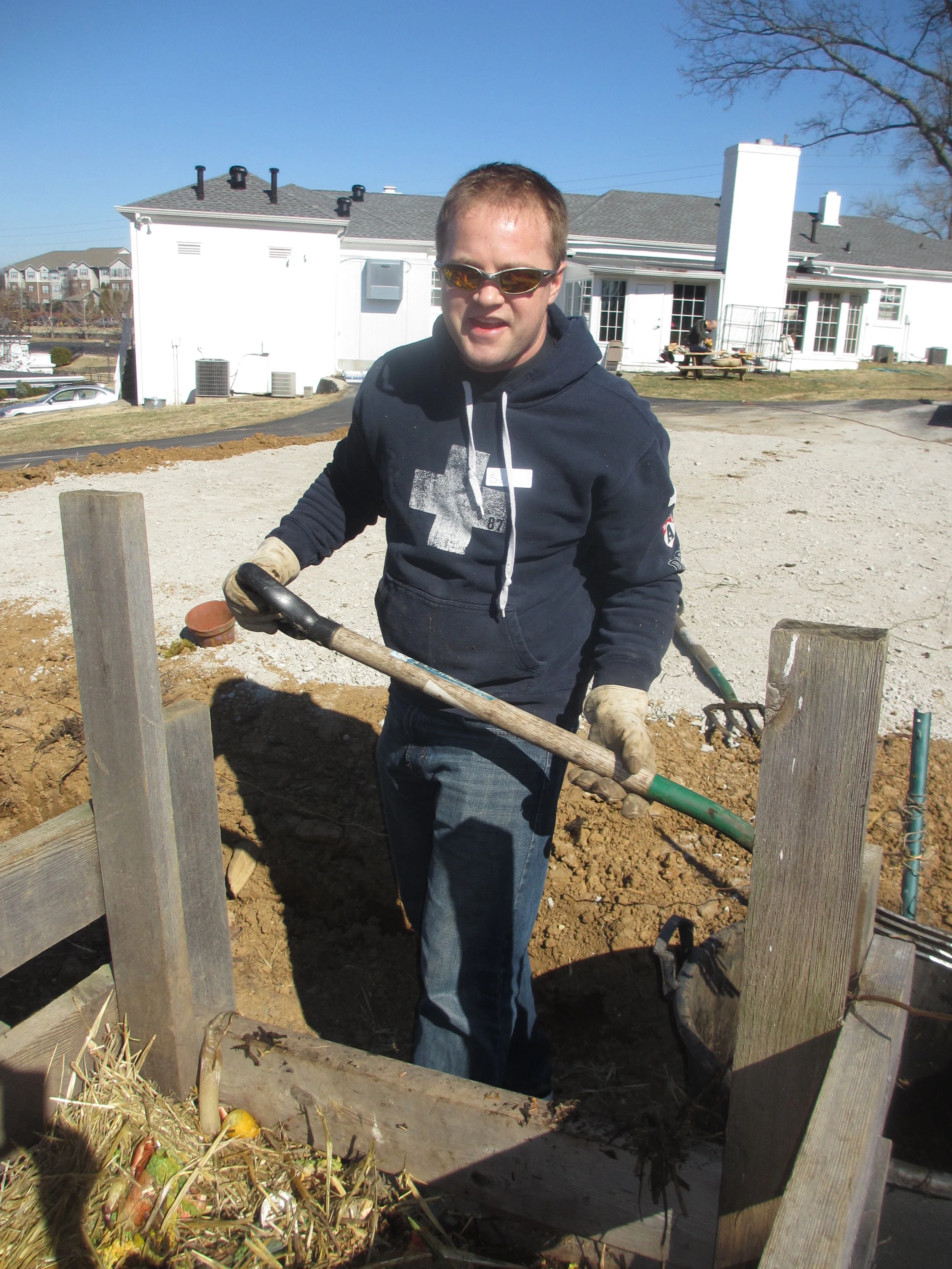
Daily, in and around our gardens we compost, raise chickens, provide homes for bees and other pollinators, collect rainwater, plant cover crops to protect and nurture the soil - the list goes on and on. We collectively refer to these aspects of our gardens as ecosystem components. In our controlled environment, our gardens could survive without many of these aspects. But they thrive because each of these parts contributes to a whole that supports and sustains a vibrant farm ecosystem.


I believe that what is happening in the gardens at TNFP is a microcosm of our larger work. Food webs depend upon producers, consumers and even decomposers - no component exists in isolation or can survive fragmentation. We believe the same is true for Nashville’s food system. The isolation and fragmentation of communities has led to people without enough food to eat and without the social connections to tap into community resources that can help.
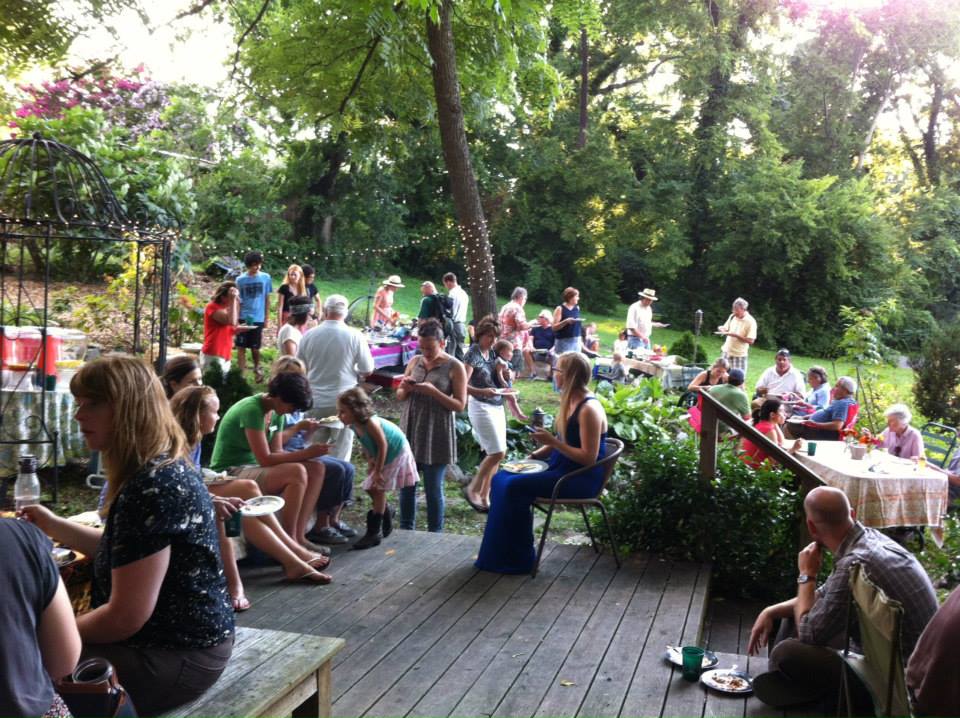
TNFP shares meals and gardens because we believe that food has an incredible ability to connect and unite people in deep ways. The non-profit partners we work with every day share our meals to build community in their programs. Our gardens provide places for connection to the land and to diverse community-building activities. Volunteers in all of our programs nurture and support this work and build community with us and each other every time they gather. We are creating and sustaining a vibrant food web that makes connections, supports people and carefully stewards our resources.
Someone told us recently that we needed to work more on connecting the dots in our programs. We have a difficult story to tell and a complex solution to the problems we’ve identified. We need to understand better the root causes of fragmentation and isolation in our communities. We need to find innovative ways to measure the impact of our work and to evaluate and to place value in the links in our food systems.
Decades of factory farming that has fragmented food supply chains and destroyed ecosystems have shown that linear efforts to simplify food production don’t work. In our gardens we strive for complexity and resiliency to support an ecosystem based on food production that is connected to our specific places and communities - as does The Nashville Food Project as a whole.


We strive to create and support connectivity, to build resiliency, and to do these things in a framework of justice and anti-racism. It’s a difficult and complex story to tell but that doesn’t mean we should simplify our efforts. Rather we need to continue to appreciate the thousands of small links joining together to make big change. We cannot do this work alone. We invite you to be a part of our food web, help us share our story, and make the connections that build community through fighting hunger.