
The Nashville Food Project’s Blog




Dispatch from the Community Gardens
In the community garden program, we're always looking for ways to evolve and learn from our work. And this year, we are already reflecting and learning from the adaptations we've had to make due to COVID-19.

by Lauren Bailey, Director of Garden Programs
In the community garden program, we're always looking for ways to evolve and learn from our work. And this year, we are already reflecting and learning from the adaptations we've had to make due to COVID-19. We’ve been focused on adapting the program with these priorities in mind: keeping everyone safe and ensuring that everyone has access to fresh produce.
I've been reflecting a lot lately on the bounty of harvest being shared and on the community of gardeners who were willing to try out a new garden model with us. Right now, we are all facing circumstances that the world has never seen. And more than ever, it feels like the right time to build community in the ways that we can, safely, at a distance. For the time being, instead of tending individual plots, we’re all working together to grow for the nourishment of everyone. Gardeners have been joining us in the garden to tend to our communal plots, and they've shared some of what they've been trying out at home.


Our gardens have always flourished from the wisdom, experiences and curiosities that gardeners bring to the space; this year is no different. The gardens are still a place of respite and inspiration. They still provide for us in these uncertain times. We've just had to be creative in how that has happened. Our staff has learned how to grow some crops that we've never grown before, like bitter gourd, bottle gourd and taro root. Gardeners have tried new vegetables like kohlrabi, fennel and kale. And though this year looks so different than past years, we're still a community of people who love the act of growing food, sharing recipes and eating good food.

Starting a Community Garden
Over the years, we’ve witnessed the benefits of community gardens firsthand. Participants tell us they experience improved physical and mental health as well as a stronger sense of belonging.
But in addition to participants in our own programs, we also hear from folks who want to start community gardens of their own. If you’re interested in assembling a group and inspiring change, as we are, then here are a few good places to start:
by Lauren Bailey, Director of Garden Programs
Over the years, we’ve witnessed the benefits of community gardens firsthand. Participants tell us they experience improved physical and mental health as well as a stronger sense of belonging. One of nearly 70 community garden participants in our programs last year told us this: “To know that I have the power to grow my own food if I want to is definitely life-changing.”
But in addition to participants in our own programs, we also hear from folks who want to start community gardens of their own. If you’re interested in assembling a group and inspiring change, as we are, then here are a few good places to start:
1) Get started by measuring interest and bringing people together. If you’re working to organize a new community garden, gathering folks together to understand common goals and motivations could be a great place to start. Much like gardening, there are different approaches and strategies that folks use. What has been helpful for our planning and implementation is to have an understanding of why we believe community gardens are important. After years of stewarding a few different community gardens, we’ve seen themes emerge as our “why”. Since the work involves stewardship of land and organizing people, we’ve found that in addition to knowing why you want to garden, having realistic expectations of what it takes to maintain the community garden is key to success.
2) Identifying land. Maybe you have your eye on a slice of land behind your church or school, or maybe you want to grow on government or private property? You’ll first want to assess the land and make sure it is suitable for growing (more about that later). Then you’ll want to learn the types of gardening allowed on the land by zoning codes. You can find more information about zoning in this guide: A Guide for Growing Food in Nashville- Nashvitality. This will determine whether (and what type of) permit is needed. If you don’t own the land, you’ll also want to draw up an agreement with the land owner that specifies what you’re allowed to do and for what duration. Examples of agreements can be found on this website: American Community Garden Association.
Having trouble identifying land for your garden? In Nashville, the Ag Extension is working closely with several other Metro Departments to help residents of Davidson County utilize some of the flood buy-back properties to start up community gardens, but know that gardening on these properties presents some challenges. Aside from the risk of flooding, there are restrictions on building structures on these properties. Contact the Ag Extension to learn more about what properties may be available.
3) Invest time up front in designing and planning your garden. While gardening can be as simple as starting a seed in the ground, the task can become more nuanced when you are sharing space, resources or have a collaborative effort to grow food.
Brene’ Brown says, “Clear is kind. Unclear is unkind.” Sometimes the planning process can be messy and ever-evolving. And the commitment to getting “clear” requires transparency and trust.

Here are some questions we encourage people to consider while planning a community garden:
Who will be involved? Who will lead?
Defining who is involved in this garden is key!
Who will be taking care of the garden? Do you have a committed individual or group of individuals who will take on the primary responsibility of gardening?
What tasks will be shared? Who will be responsible?
We recommend having a detailed list of responsibilities: watering, harvesting, and weeding being the main tasks involved.
How do you want to involve people in the work? What resources, events or education do you want to connect people to?
Do you want to have allotment style plots where folks grow on their own space? Or more of a communal effort where people contribute to one garden?
Where is the produce going?
We’d encourage you to create a plan for the produce. In our gardens, community gardeners take home the vegetables from their plots. At our McGruder Community Garden, we have a free stand where folks can share their excess produce.
How do you stay motivated?
We see a lot of excitement at the beginning of the season and then weeds and heat and pests happen. What is your plan to keep people excited? How do you stay motivated?
Determine how the garden will be funded. Will you apply for grants? Will it be underwritten by a company or individual? Will gardeners cover costs collectively, and if so, how will payment be collected?
4) Know your soil and land. Before even breaking ground, starting with an understanding of your soil and the health of it is important.
What is your land like? And who owns the land? Answering this ranges from the physical space that you have available to understanding the expectations for how the space needs to be kept.
Have you tested the soil? Make a plan for how to keep your soil healthy.
Do you want to do raised bed gardens or grow in the ground?
Do you have a water source available?
How much space do you want to start with?

5) Get Started! Sometimes the hardest part is getting started. Start small, rather than not starting at all. Maybe your vision or plan isn’t fully formed. Maybe you need more time to build raised beds or prepare the soil. If that’s the case, start with what you have where you have it. And keep up the momentum!
Here are some other resources and organizations that we’d recommend you check out:
American Community Garden Association is an invaluable resource!
The Denver Urban Gardens Club provides a Best Practices Handbook which can be downloaded here.
Nashville Foodscapes is an option if you are able to pay for the installation of beds designed to support edible landscaping and their team is seasoned at designing, installing, and maintaining edible plots.
For technical gardening education, you may be able to reach out to the Master Gardeners of Davidson County who maintain 5 demonstration gardens which may be a valuable learning tool!
A variety of seeds can be found through Nashville Public Library’s Seed Exchange and is accessible to any person with a library card!
Keep your eye out for local Seed and Plant Swaps. Richland Park Library is hosting a seed and plant swap on Saturday, April 18th, 10:30-11:30 am.
The Timber Press Guide to Vegetable Gardening in the Southeast by Ira Wallace

One of the best ways to learn about community gardens is to get your hands dirty. Sign up to volunteer in our gardens and learn first hand about growing in the community!
Reflections of a First Time Gardener
Jasmyn Alvarez, a Wedgewood Community Gardener, reflects on her first growing season in a community garden. She shares information about her goals, how she used the square foot garden method to achieve them, and the results of her efforts.
By Jasmyn Alvarez, a Wedgewood Community Gardener
Finding direction

When it comes to gardening it’s hard to know where to start. Aside from helping my grandmother weed in her flower beds as a kid, I don’t have much experience. I signed up for a community garden plot at Wedgewood Urban Garden this June feeling a little nervous but ready to try. I’m so grateful for Community Garden Manager, Kia Brown, for her advice and tips for starting and maintaining a garden no matter what time of the year. There is nothing like the magic of watching a seed grow into a beautiful plant, then seeing its fruits on my plate!
In the community gardens you’ll find that you have a lot of choices and ways to focus on your goals - it could be to try something new or get outside. One of my goals is to improve my health by eating whole foods and being active. I wanted to use all of my community plot space to grow as many fruits and vegetables as possible, so Kia introduced me to a method called 'Square Foot Gardening.' The idea is that you break up your plot into square feet and plant as many of one type of plant as you can fit in order to maximize the space.
A GUIDE TO SQUARE FOOT GARDENING
STEP 1
The first step was figuring out what vegetables I wanted to plant. I thought about the types of vegetables that I love to eat to make sure that nothing grown would go to waste. Here’s what made the cut:
- Lettuce
- Peppers
- Radishes
- Spinach
- Tomatoes
- Basil
- Beans
- Beets
- Butternut squash
- Cabbage
- Cucumbers
STEP 2
I started my garden plot in July so I needed to figure out what to grow during the heat of the summer and what would have to wait until the fall. Kia has a great guide - anything leafy grows and root vegetables grow when its cool (spring or fall) anything that flowers or produces fruit should grow in the summer. Herbs can be sprinkled in during any season as long as they have consistent water and nutrients. We divided everything up into those two categories.
Spring & Fall Crops
- Beets
- Cabbage
- Lettuce
- Radishes
- Spinach
Summer Crops
- Beans
- Butternut squash
- Cucumbers
- Peppers
- Tomatoes

STEP 3
The next step is to figure out how long it takes the plants to go from a seed to being harvested which is also known as “days to maturity.” You can find this number on the seed packets or online. Its best if you know the specific variety of the plants you want because that can change the time it takes to grow. Since I started my plot in June I only planned the days to maturity for summer crops.
Summer Crops (Days to Maturity)
- Beans (50-60 days)
- Butternut squash (85 days)
- Cucumbers (55-65 days)
- Peppers (70-90 days)
- Tomatoes (65-70 days)
STEP 4
Next I looked at if I planted them on that day when would all of the crops be ready to harvest. For plants that take a long time to mature like squash, peppers and tomatoes it may be helpful to purchase plants that have already started to grow and transplant them into the garden. In general they should all be ready to harvest between the end of July through August. That is a lot of produce to be harvested in just a few weeks so the next step is to plan out successions. Meaning I can plant half of my crops in the beginning and plant the rest of it two-three weeks later. This way I can eat these amazing vegetables for months instead of weeks.
STEP 5
The final portion of planning the garden is figuring out how many plants fit into each square foot. For example, I can fit 4 green bean plants in one square foot, one tomato plant into 4 square feet. I wrote out exactly where I wanted to put each plant on a piece of paper.
STEP 6
The last step in starting the garden is the most fun - planting my seeds and transplants!
How’d It Grow?
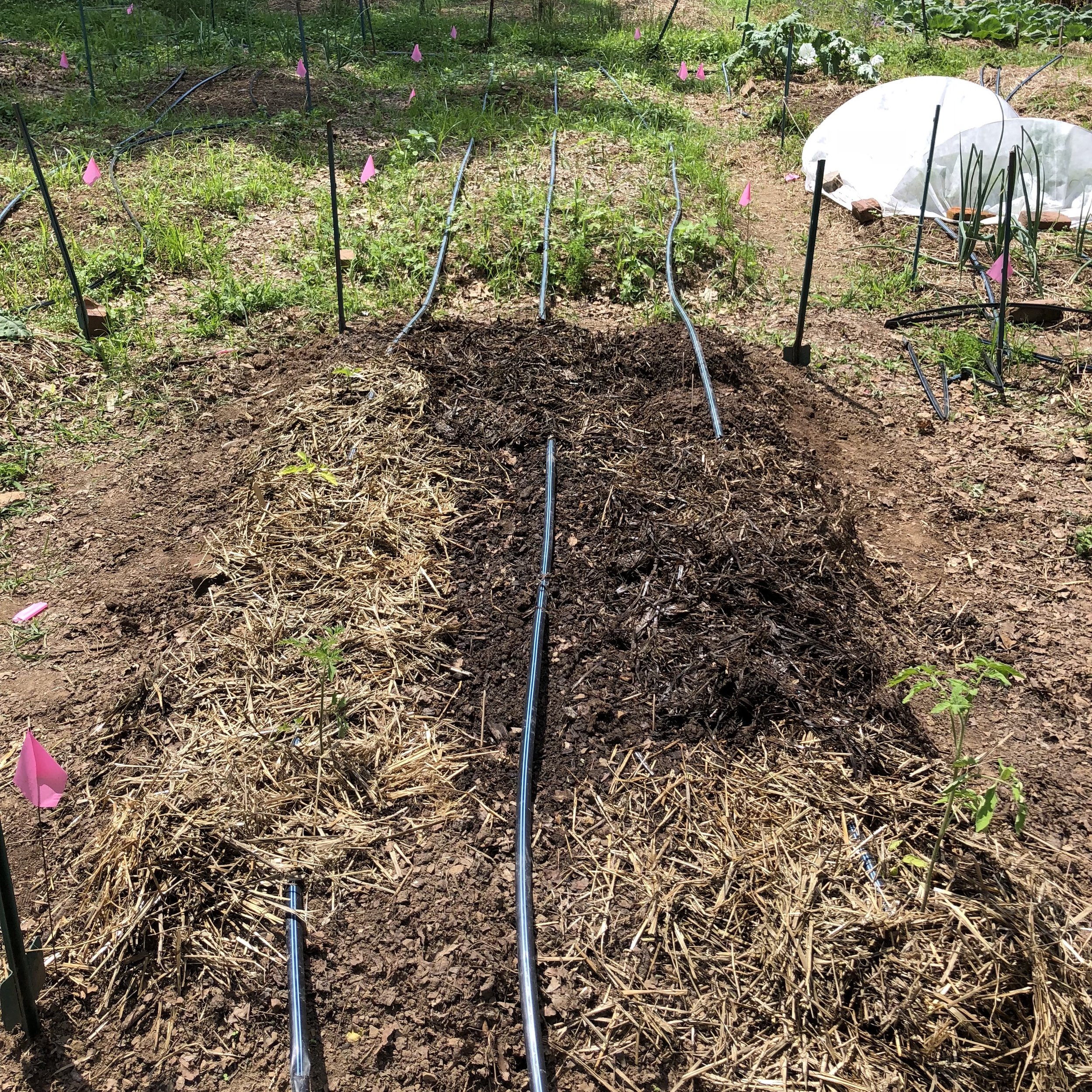
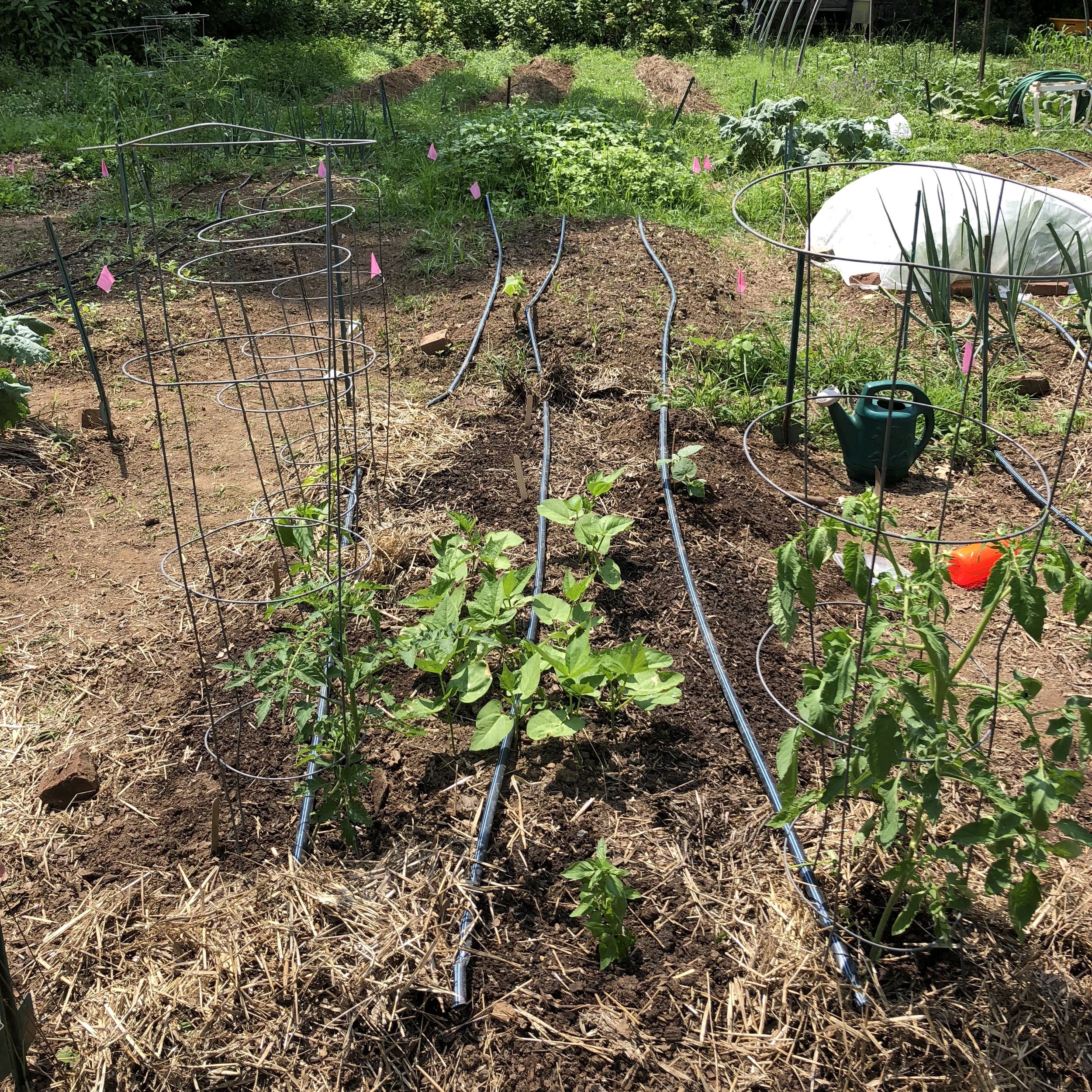
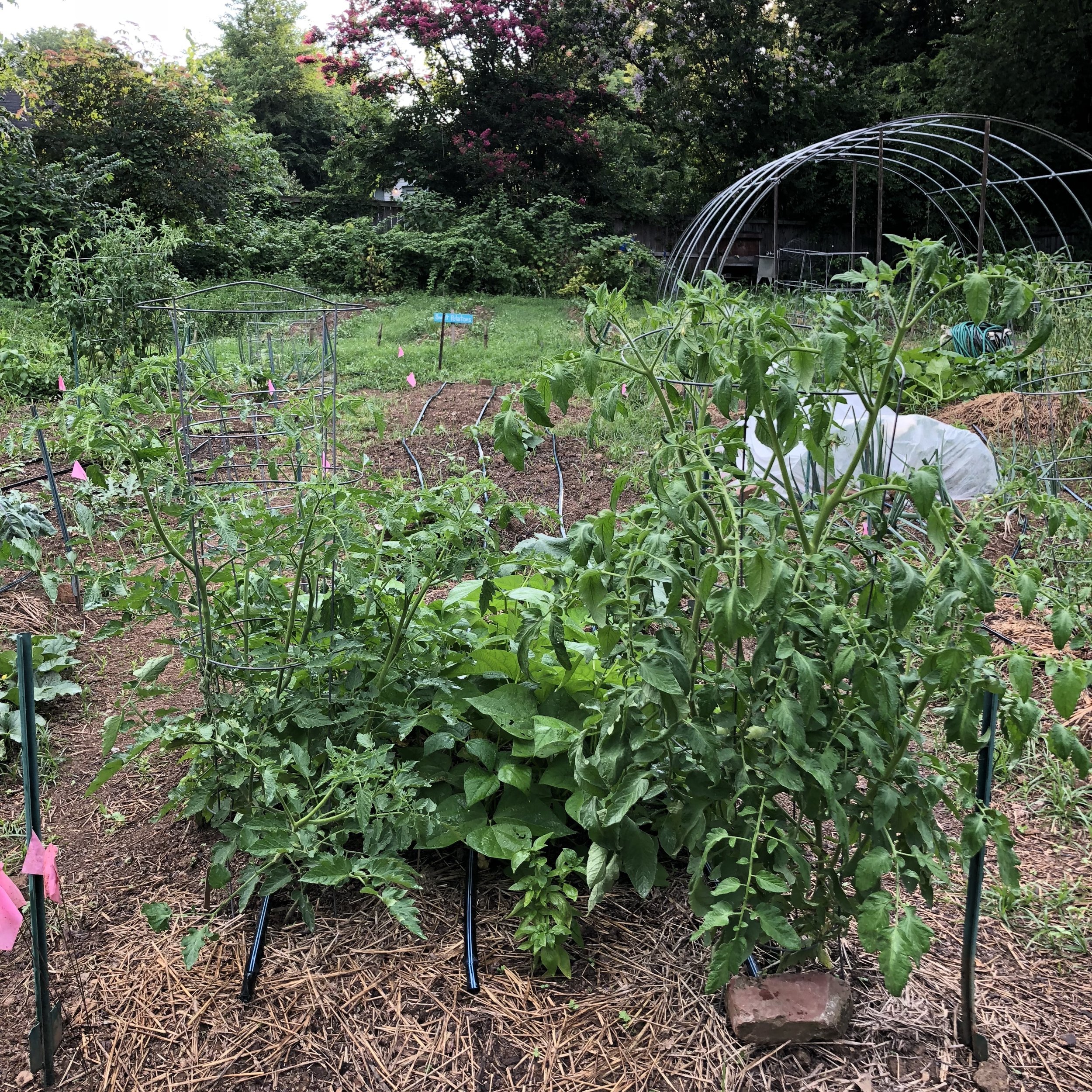
There were some parts of my plan that had to be reworked once I started planting my crops but overall I have a great idea of what produce I’ll have in the next few weeks. I’ve enjoyed spending more time outdoors and even getting some exercise by taking care of my garden plot. What I’ve learned the most from growing a garden is that food is amazing. The time and energy that goes into growing food makes you appreciate the flavors and nutrients you get when you eat it. I’ve already started planning out all the ways I’m going to eat my food so that none of it goes to waste. Although the experience has been new, thanks to Kia, I now feel I have the tools and resources to successfully start a garden. I’ve had a lot of help from my “Garden Brothers & Sisters” too!
The Nashville Food Project is currently enrolling gardeners for the Wedgewood Urban Garden near the fairgrounds. For more information and to find out if you are eligible for a plot, please visit www.thenashvillefoodproject.org/signup.
Learning as a Collaborative Community
Though the days are short and the winter air is cold, TNFP garden participants are busy planning and training for the season ahead. Regular garden trainings with our Community Garden and Growing Together programs provides space for learning and knowledge-sharing.

Though the days are short and the winter air is cold, gardeners are planning and training for the growing season ahead.
Wednesday morning we arrived at Hillcrest United Methodist Church and followed the signs to the room where Growing Together winter trainings take place. Esther was the first farmer to arrive -- true to her punctual nature. Esther and her husband Thomas have been in the program since its inception in 2013. Both arrived to the US as refugees from Burma and found a new home in Nashville. Thomas has a background in farming and agriculture from his roots in Burma. Over their time in Nashville he’s shared his knowledge with Esther and she too is now a highly skilled farmer and Growing Together veteran. As each farmer walks through the doors the room becomes a space for learning, sharing, and building.
We are At-Once Both Students and Teachers

At TNFP we believe that every person has wisdom to share and lessons to learn. We can learn from the experiences of others if given the opportunity to listen. This value is foundational to the design of both TNFP’s community garden program and market garden program, Growing Together. Beyond simply providing access to land, these programs facilitate space for knowledge-sharing through regular trainings. From the moment the gardens close in October, TNFP program staff are planning the trainings for Growing Together farmers and community gardeners. These trainings officially began in January for the Growing Together program and the New American community gardens.
Both programs work with community members who originally came to the US as refugees from Burma and Bhutan and who have agrarian backgrounds of varying degrees. For some, they began farming in childhood growing the vegetables that were used in family meals. For others, they grew crops in the hopes of selling them in the markets and to make a living.
Growing Together: Sharing Knowledge for Collective Success

The Nashville Food Project's agriculture training program Growing Together is designed to expand access and opportunity to people from agrarian backgrounds. Through our program, farmers gain access to land, inputs, seeds and training, and continue to build upon their farming skills and earn supplemental income though the sale of their produce.
You may be wondering -- if the farmers and gardeners have such a deep founded knowledge of farming, why do they need trainings? These trainings aren’t about one “expert” conveying knowledge to a group. Instead, these programs create a multi-generational space for community building and knowledge sharing. Our Growing Together Program Manager, Sally Rausch, shares, “This is a collective project, and part of the training is how people work collectively using the same resources. The trainings offer both opportunities and relationship building so they can be a successful collective.”

Through end-of-season interviews the farmers expressed that they wanted more marketing outlets and to improve their sales. This feedback has been heavily incorporated into this year’s trainings. The trainings will cover topics like marketing outlets, customer preferences, and planning crops so that they will be at peak harvest quality for customers looking for their unique crops. At the most recent training, farmers were asked to share what sold the best at the Richland Farmers’ Market and what items didn’t sell as well. Then they planned out what crops they wanted to sell through the farmers market, Nashville Grown, and through a new CSA program that the farmers are piloting this year. By working together and sharing feedback, farmers are learning how to best plan and sell their crops through individual outlets as well as through their collective outlets as a group.
During the training sessions, the lines of student and teacher are blurred. Each gardener and farmer has a plethora of knowledge to share. After three training sessions Sally mentions “Gosh... I’ve already learned so much from the farmers. It’s my goal to have the trainings be an interactive experiential classroom where we are all learning from each other. I want to get to know the farmers and learn about their perspective and experience because they know how to grow really high quality produce… I think about my job as, ‘How can we integrate that valuable experience into the trainings to go even deeper and support the farmers in being more successful?’”
Community Gardens: Building a Foundation through Past Experiences

TNFP's community garden program facilitates three community garden sites across Nashville, providing access to land, supplies, and ongoing training. There are two New American community gardens, with these spaces held for Bhutanese and Burmese community members of any skill level. These sites begin trainings in January with the growing season kicking off in March. There are two neighborhood community gardens in North Nashville and Wedgewood Houston. These sites start trainings during the growing season with plots open to neighbors.
The New American community garden training is more comprehensive covering topics that all gardeners should know to succeed like what crops grow best in Nashville and when they should be planted. The purpose of these trainings are to make sure everyone is on the same page.
Similarly to the Growing Together program the topics are chosen based on gardner feedback during end of season evaluations and challenges in the previous seasons. Our Community Garden Manager, Kia Brown, explains, “In the past there has been a difficulty in understanding the irrigation system that we use. This year as a planning stage we are going in depth on how the system works, how to fix it, and how to plan crops so that they work best with it.” In this scenario Kia observed that the gardeners’ traditional farming methods did not work with the irrigation system offered last year. To overcome a problem that so many struggled with she has planned an in-depth training on irrigation.

In all TNFP programs there is an opportunity for everyone involved to be both teachers and learners and create a flow of knowledge sharing. Kia shares that she wants to explore the three sisters planting method. In this method each plant has a purpose - corn is used as a trellis for pole beans and squash is planted at the base to reduce weeds. Kia says, “it uses a comprehensive system where everything grows and dies at the right time all while something else is taking place. It’s something I’ve learned from the gardeners and that I am still learning about.”
TNFP garden training programs allow gardeners to expand on the skills they already have and learn from the trial-and-error of others while also gaining the opportunity to be introduced to new farming methods and tools that may bring them success. Garden trainings are a space created for all involved to learn and grow from one another embodying our value of learning. For more information about our garden programs please visit our website.
Reconnecting with Family History Through Food
In honor of International Women’s Day, we are celebrating one of the incredible women we work with in our community gardens. Ifeoma Scott and her husband have been growing in our Wedgewood Neighbors Garden since last year after hearing about it from their friends Jay and former Meals Assistant Makisha, or Kiki as Ifeoma calls her, at Mt. Zion Church.
Today is International Women’s Day, a global day that celebrates the social, economic, cultural and political achievements of women. Beyond that, this year’s theme for this day is #BeBoldForChange, something we at The Nashville Food Project work towards every day using the power of good food.
In honor of International Women’s Day, we are celebrating one of the incredible women we work with in our community gardens. Ifeoma Scott and her husband have been growing in our Wedgewood Neighbors Garden since last year after hearing about it from their friends Jay and former Meals Assistant Makisha, or Kiki as Ifeoma calls her, at Mt. Zion Church.

Ifeoma and her husband
Ifeoma had long been a container gardener, but she wanted a chance to grow in the ground, directly in the dirt. Beyond that, she wanted to be active with other gardeners. “Because of where I live - it’s an urban area - I don’t have the chance to interact with many gardeners. This was my first time interacting with other gardeners besides my uncle who lives in Illinois. It was really important for me to get involved and to see how others grew their food.”
The comradery of growing food was extremely important to Ifeoma. For her, growing food is a family affair so personal connection and gardening go hand in hand. Her great grandfathers were farmers - in Mississippi and Arkansas, and her fraternal grandfather grew plots in his backyard in Illinois, practicing urban gardening before we even had the term.
“For me, it’s not only sustainability, but it’s part of my history. I wish I had [my grandfathers] to ask them questions…Farming is a hard job, but my great grandfather [who farmed in Mississippi] made it look so easy.”

Ifeoma has loved learning more about her family and herself in the garden. “I get to learn, see, be patient. I’ve never been a patient person until I started gardening, but I can’t just make something grow. I have to be patient.”
Since growing in the Wedgewood Neighbors Garden, Ifeoma has reignited a curiosity about all the small things that come together to grow food. “I get excited about seeing animals and things in the garden - insects and worms - and how that really helps the garden and how it functions,” she tells us. Always looking to learn, Ifeoma has become most interested in growing heirloom varieties, and she’s challenged herself to successfully grow lettuce for the first time this year.
She’s also learned about other cultures growing alongside refugee gardeners from Bhutan and Burma. In college, Ifeoma studied international business so she’s always been interested in other cultures, but in the garden she’s had the opportunity to see it all first-hand. “I just like seeing how different people garden and seeing the different plots. How they’re using natural structures to trellis. That type of thing excites me - seeing how people do it differently.”

Ifeoma has enjoyed creating a sustainable food source for herself, her husband and their friends. Now she’s learning to compost and hopes to take on canning next so she can continue to share her garden-grown food with her friends and family.
She says it’s important for people to understand where their food comes from. It can be easy to take for granted the time and effort that so many people put into producing our food.
“You don’t realize how important food is, and people who give their lives to do this. To farm. To give us the food we have on our tables. It means so much more than just putting things in the dirt. It’s the history of my family and what I’ll do for my children someday.”
Want to keep in touch with Ifeoma and what she's growing? Follow her on Twitter and Instagram @Yepshegrewit.