
The Nashville Food Project’s Blog





Wasted Food = Wasted Nutrition
We’ve all been there before - the broccoli stems left over after a dinner party, strawberries that you meant to eat but didn’t get to - all thrown out and wasted. 40-percent of all food produced is wasted while at the same time 1 in 7 children are struggling with hunger according to Feeding America. Believe it or not, there are some staggering nutritional benefits to lowering your food waste…

We’ve all been there before - the broccoli stems left over after a dinner party, strawberries that you meant to eat but didn’t get to, the apple peels left behind due to a picky toddler, browned bananas that are a little too sweet to eat - all tossed into the trash and wasted. 40-percent of all food produced is wasted while at the same time 1 in 7 children are struggling with hunger according to Feeding America.
Believe it or not, there are some staggering nutritional benefits to lowering your food waste. Every item of fresh produce that gets tossed is a lost opportunity to get vitamins and minerals from the foods we eat. A study published in the Journal of the Academy of Nutrition and Dietetics found that food thrown away each day could provide 1,217 calories to each person in the United States each day, and the equivalent to 19% of fiber, 43% of vitamin C, 48% of iron, 29% of calcium, and 18% of potassium recommended for daily nutrition.

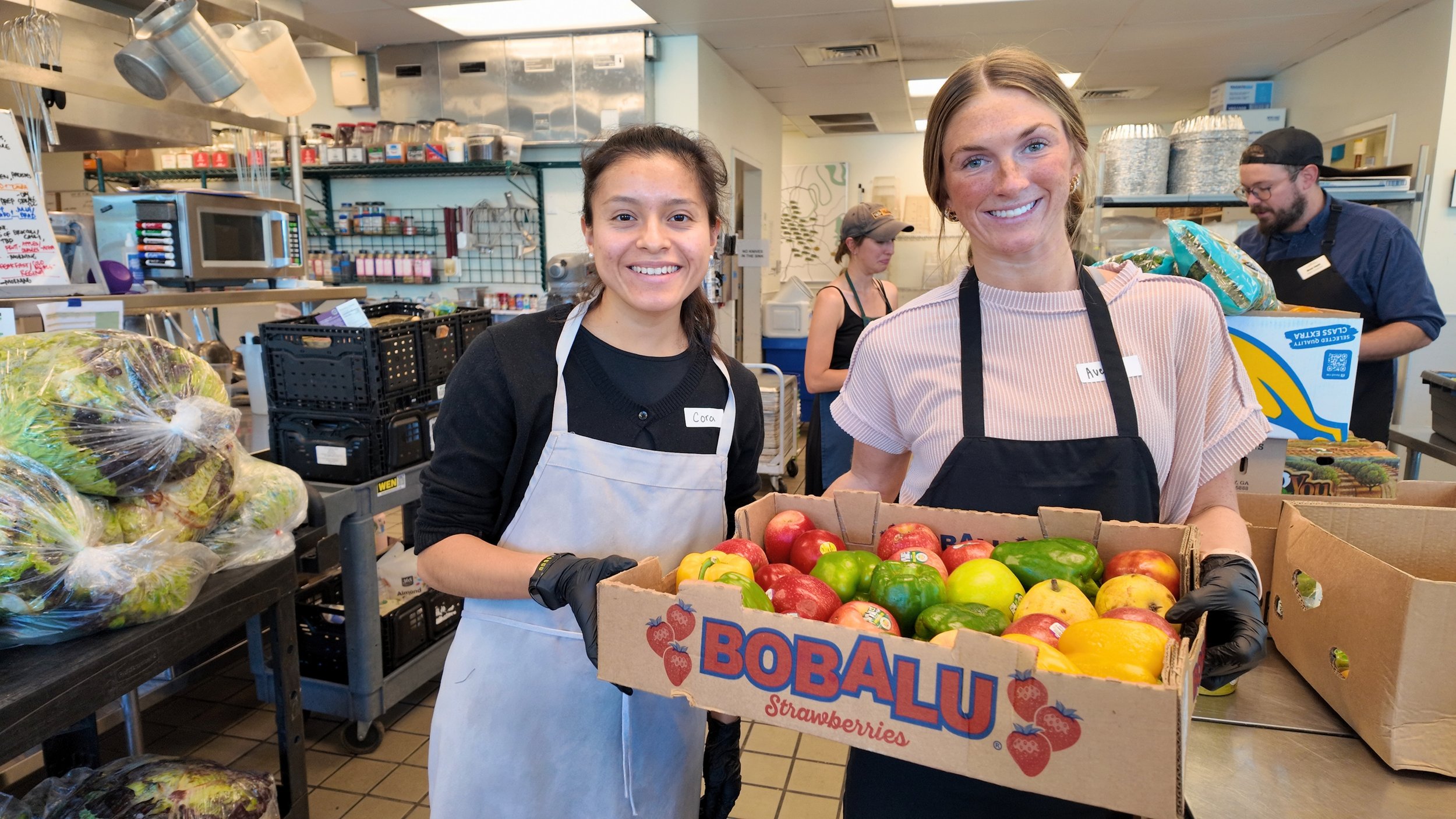
Here at The Nashville Food Project, we work every day to reduce the amount of edible food being wasted in Nashville and increase the nutrition available to our community. Already this year, TNFP has prevented over 42,000 pounds of food from going into the landfill. We’re always striving to be good stewards of all the food that comes through our doors, using every edible component of each item however we can. This means we have to get creative in the kitchen! Below are some fun tips and recipes to keep food and nutrients on our plates instead of in the trash.
The majority of the nutrients are lost by throwing away the peels on fruit and vegetables. The peel of an apple contains half of the apple’s fiber and four times more vitamin K than the flesh. Recipe: Baked Apple Peel Chips
Citrus peels contain twice as much vitamin C than what is inside. Citrus shavings can be grated to add natural flavor to salads, used to make salad dressings and cooked in soups and sauces. Recipe: Orange Vinaigrette Using Peel
Save the stock from your cooked meats and vegetables! Using stock instead of water to cook things like rice and pasta gives the food more flavor, and offers a variety of vitamins and minerals. For even more incredible flavor, throw in your Parmesan rind. Recipe: Vegetable Stock
Before you throw away those stems… broccoli stems contain more calcium, iron and vitamin C than the florets. Recipe: Broccoli Stem Noodles with Sesame Ginger-Dressing
For more insight, recipes, and tips on reducing food waste in your home, check out savethefood.com.
A No-Waste Cooking Class
Inspired by John T. Edge’s book The Potlikker Papers, our meals team has pulled together several southern-inspired menus for two classes on cooking to reduce food waste. Check out the menu and story behind our first class.
Reflection by TNFP's Meals Director, Christa Ross
If you’ve been following along with The Nashville Public Library (NPL)’s Nashville READS Program this year you’re likely well into The Potlikker Papers: A Food History of the Modern South by John T. Edge. He tells the stories of our history through food, with meals borrowing heavily from old Southern traditions, sorghum and soybeans. This book strums at my heartstrings as it walks through the many ways that food has touched the history of the South. He dives into difficult topics, discussing them as he circles around the pots of greens and pans of cornbread that fed the people fighting for change. As a native Nashvillian, these stories feel close to home. What I love best about this book, though, is it’s acknowledgement that the story of food is the story of people: a true history cannot exclude food. People and food are inextricably linked in the past, present, and future.
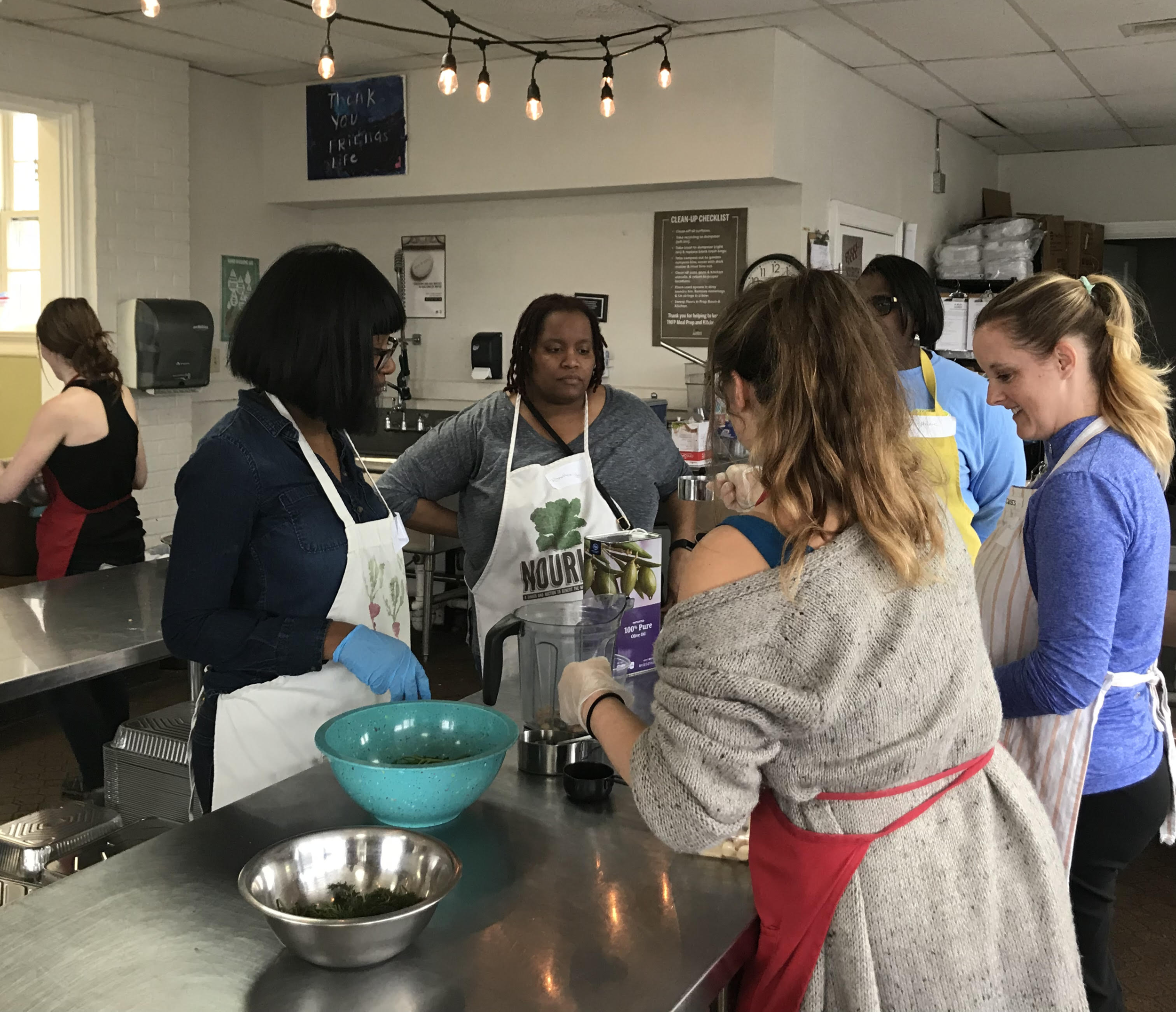
This year, as NPL showcases The Potlikker Papers, we have partnered with them to facilitate two cooking classes on how to decrease food waste in the kitchen, a topic that is near and dear to our hearts. These classes are centered around decreasing personal food waste in our homes, which for us means changing the way we think in the kitchen. As they meal prep, our volunteers watch the influx of thousands of pounds of donated food come into our kitchens. We never know what’s going to be donated next and in order to be the best stewards of the incredible abundance we receive daily, creativity is key.
Common examples of avoidable food waste that we focused on with our menu are “scraps” or parts of food usually thrown away, expired or nearly expired foods, and “ugly” foods. According to the NRDC, “American families throw out approximately 25 percent of the food and beverages they buy. The cost estimate for the average family of four is $1,365 to $2,275 annually.” With 40 percent of all food going to waste in the United States, these household numbers contribute a huge portion to the total amount of food wasted. So when we created the menus for these classes, we focused on food that might typically be wasted in a home kitchen.
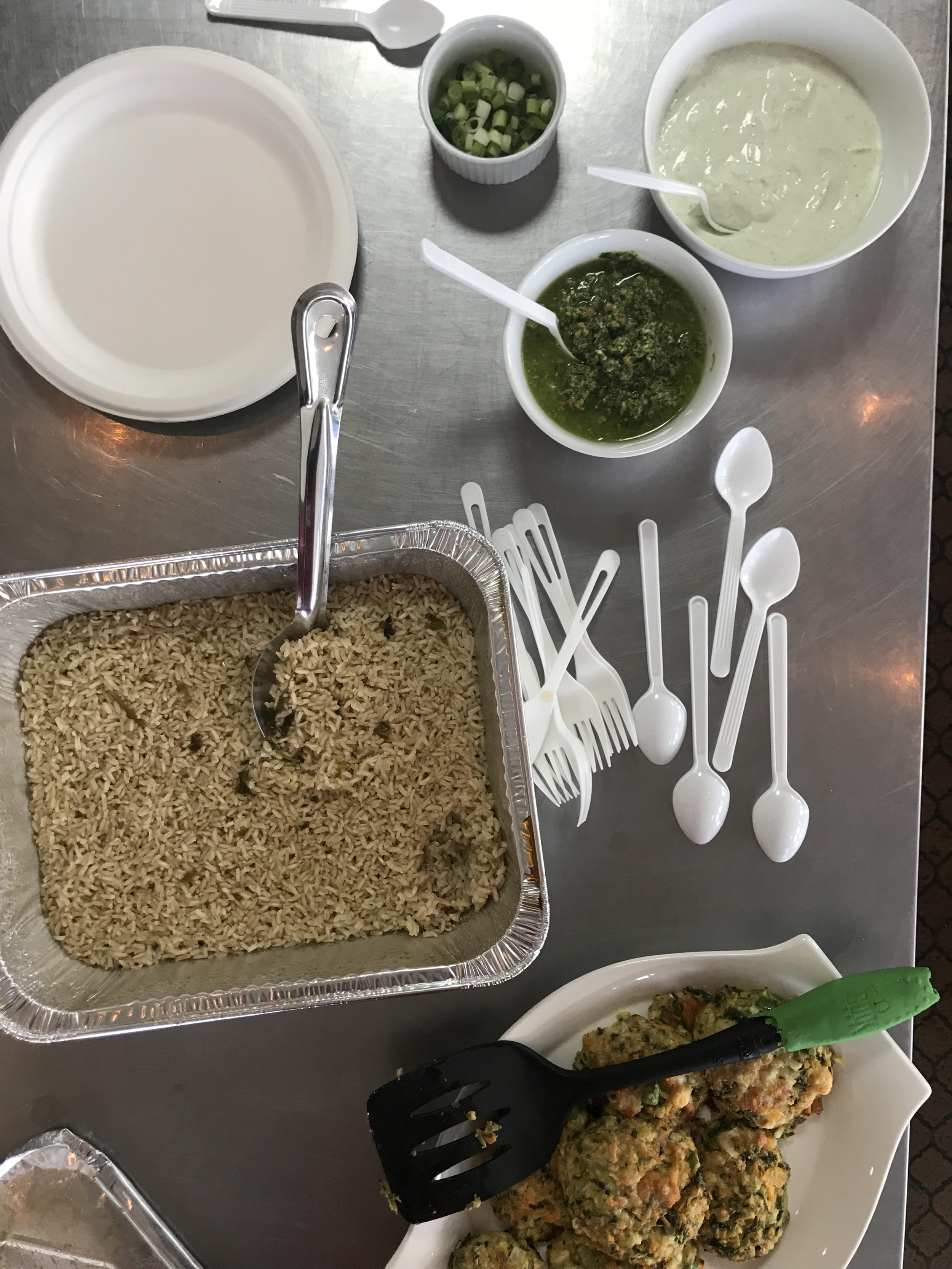
The feast:
- Vegetable scrap fritters (recipe here!)
- Yogurt sauce
- Rice cooked in veggie scraps & parmesan rind stock
- Carrot top pesto
- Apple peel tea
- Banana ice cream
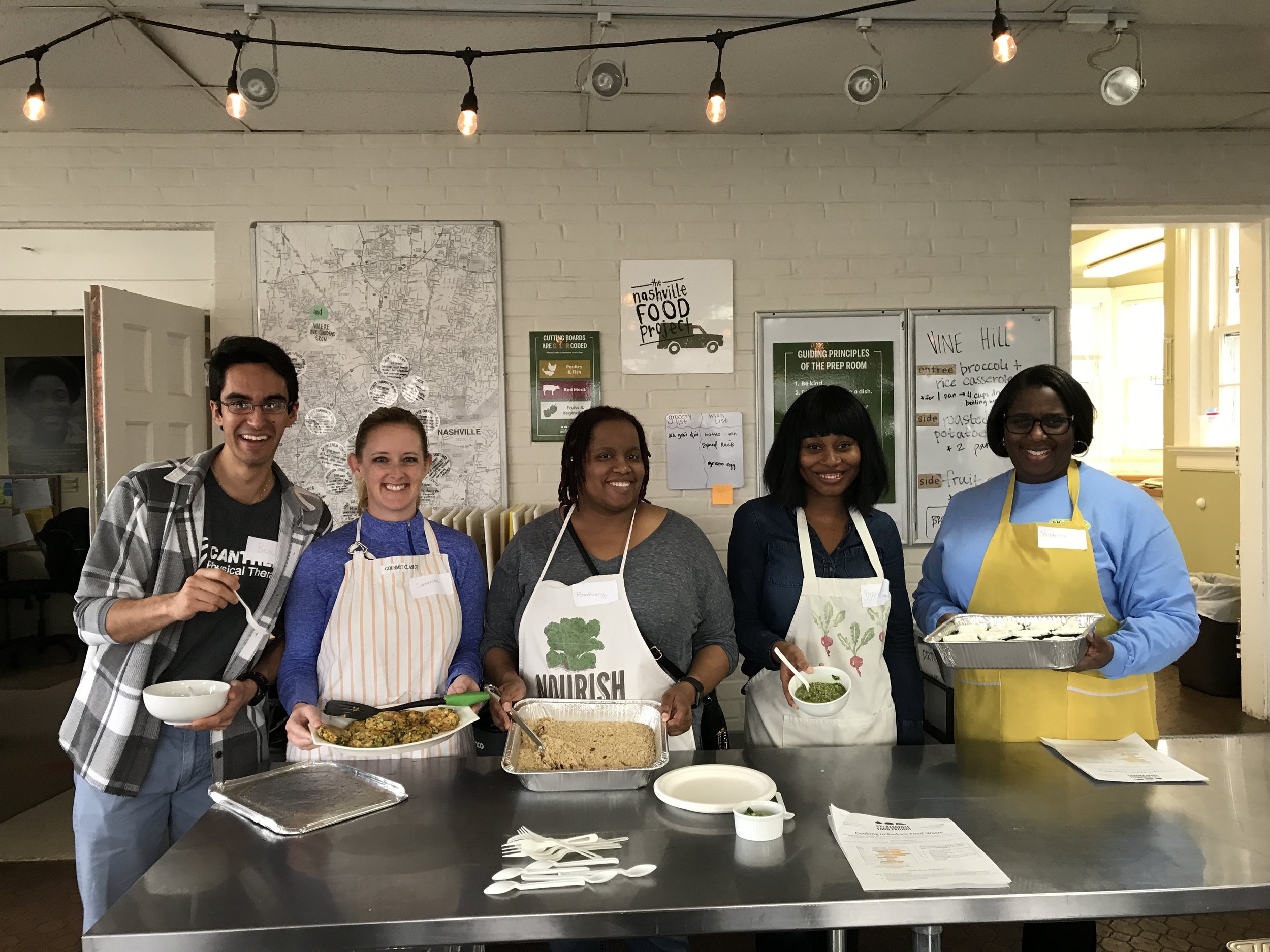
We made the vegetable friters using scraps saved throughout the week at TNFP (broccoli stems, carrot peelings, zucchini ribbons, etc). This went along with a yogurt sauce for dipping made from soon-to-be-expired yogurt, garlic, green onion tops, and salt.
One of our favorite tips for decreasing food waste is stock! For this class we added onions, carrots, turnips (my personal favorite addition for an extra flavorful stock), celery, and garlic. For the last 15 minutes of cooking we added some parsley stems and a parmesan rind from a recently finished block. Cooking rice or pasta in this flavorful stock adds incredible depth and flavor to the base of your meal as well as lots of nutritional value.

We topped the vegetable fritters with carrot top pesto, another of our favorite food waste tips. We like to make “pesto” with any combination of greens and nuts, often using up greens that are past their prime. Our no fail ratio for pesto is 1 cup chopped and packed greens, ¼ cup toasted nuts or seeds (favorites include almonds, walnuts, pepitas & pine nuts), 1 clove garlic, 1 T. lemon juice, ½ cup EVOO & salt to taste.
To drink we made apple peel tea, boiling the scraps with ginger and cinnamon, and is great hot or cold. Dessert was a decadent banana ice cream, one of our favorite ways to use bananas that have turned brown.
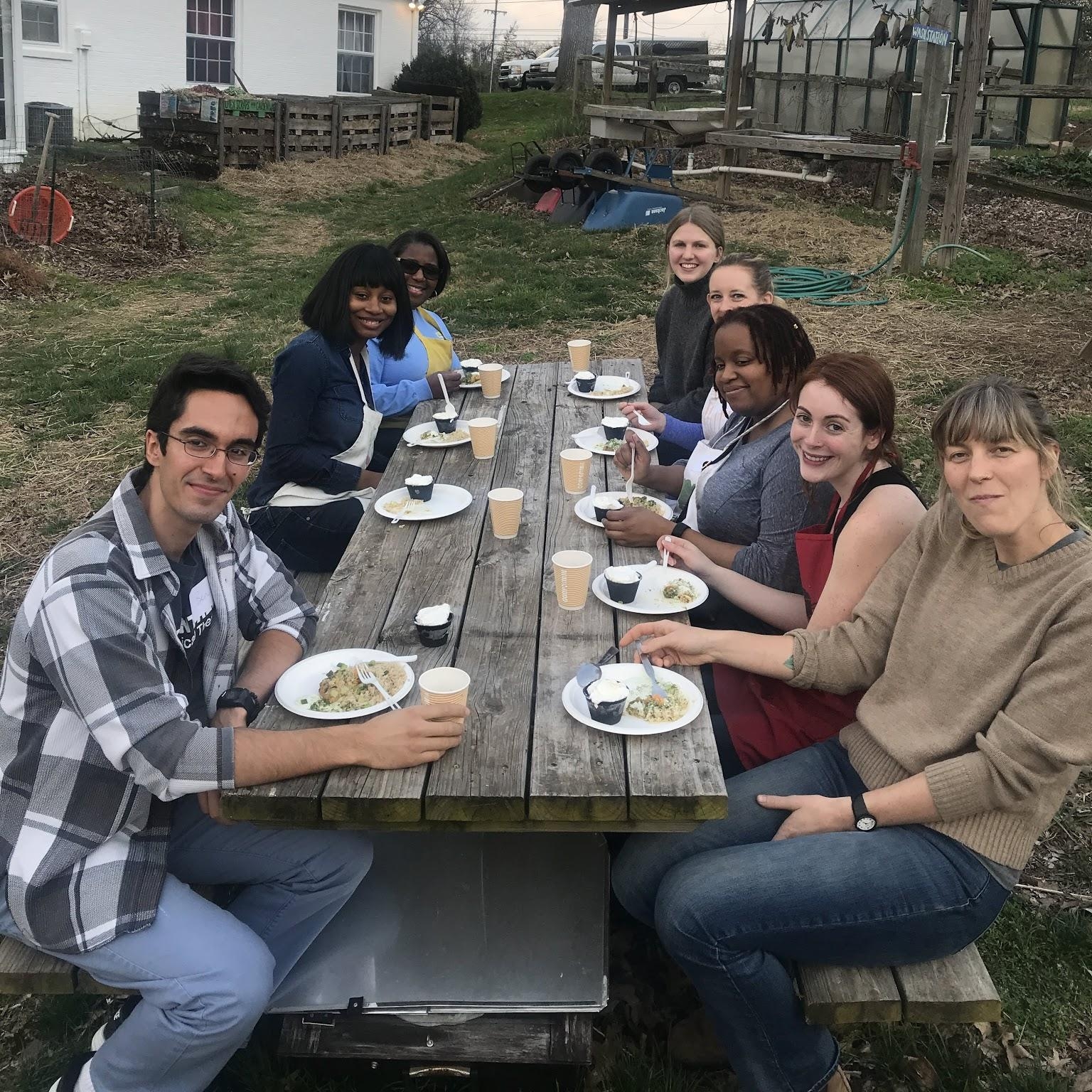
I can honestly say that being a part of this class was an incredible affirmation of our mission. Everyone in the class came together as strangers to learn. As we began to cook the class came alive; we laughed, discussed favorite foods and kitchen tricks.
At the end of the class, as we sat down together to enjoy the meal, I circled back to some of Edge’s final thoughts in The Potlikker Papers. “New peoples and new foods and new stories are making their marks on the region. What was once a region of black and white, locked in a struggle for power, has become a society of many hues and many hometowns…” Our meals tell many stories, of the farmer’s who grew the food, of the volunteers who spent hours chopping and cooking, of waste diverted, and hungry mouths fed. A new kind of southern food comes out of our kitchens, paying homage to the land & served to the people, all people, whose stories are written in its history. And after all, a shared experience makes a shared meal that much more meaningful!
We would love for you to join us for our second FREE class on April 18th at 5:30. To attend please email Malinda@thenashvillefoodproject.org to sign up and learn more!
Nothing Wasted: Summer Gardens
Every fall, when we start to feel that first nip in the air, it signals that it’s time to close our summer gardens. It’s a time we look forward to around here, a time when we get our creative juices flowing to come with new ways to save and use what’s left in our gardens.
Every fall, when we start to feel that first nip in the air, it signals that it’s time to close our summer gardens. While we’re still planting heartier winter crops during these colder months, we do have to harvest all those spring and summer crops still left at the end of the season. It’s a time we look forward to around here, a time when we get our creative juices flowing to come with new ways to save and use what’s left in our gardens.

This time of year, the most common things left in our gardens are herbs, peppers, eggplant and green tomatoes. For the peppers, we like to dry them with ristras, and use the dried peppers in all sorts of different recipes. To use up the other veggies, we love making eggplant parmesan, salsa verde and stuffed peppers. Most of these freeze well so you can enjoy them long into the winter.


The herbs, though, let us get really creative! We like to dry them in our dehydrator and use them in tons of handmade products that we sell around the holidays at our now annual event Scratch Made. We make a number of teas, herb-blended salts, simple syrups and more.
Here are some of our favorites and things you can expect to see at this year’s Scratch Made:

Herbal tea blends: We love a good tea around here! Some of our favorite tea-making herbs are stinging nettle, peppermint and lemon balm. At this year’s Scratch Made, you’ll find tea blends for women’s health, relaxation, general health and a yummy one just to brighten your day.

Herbed salt blends: These are always a crowd pleaser. This year, we’re bringing back favorites like dill salt, gomasio and our Italian blend with rosemary, parsley, thyme, tarragon and oregano. New this year, you can buy hand-made za’atar and a zesty lime salt.

Simple syrups: Flavor-infused imple syrups are great for adding to coffees and cocktails. This year we’ll offer ginger, rosemary, jalepeno, turmeric and lavender simple syrups.

Salve and lip balm: Don’t forget the bees! We always love making products that make use of beeswax from our bee hives. This year we’ll have the popular comfrey wound salve and an all-natural lip balm.
This year we’ve added a new product: fermented hot sauce. We used lots of hot peppers grown by the Growing Together farmers to make this delicious sauce that we’re excited to share with you. If you want to make your own, here’s our recipe:

Ingredients
1 cup hot peppers, washed and stemmed (about 6 medium-sized peppers), we used jalapeno, serrano and cayenne peppers
1-1/2 tsp salt
1-1/2 tsp sugar, optional
1 tbsp whey
Water
White vinegar to taste
Directions
Place hot pepper, whey, salt, sugar and enough water to cover in a jar, and seal. Place har in a warm place (around 70 degrees is optimal). Over the next 3-5 days, gently agitate the jar 1-2 times a day. You’ll notice the brine will become cloudy.
Blitz the peppers and seeds in a blender or food processor. Be careful not to splash. A well-ventilated area is best for this. Pour the puree into a jar. Add white vinegar to taste. Store in the refrigerator. This will keep for several months.
Making the Most of Every Resource
We know that 40% of all food produced in our country is thrown away, but we also know that it doesn’t have to be that way. Last year, we began working with the National Resources Defense Council (NRDC) to ramp up our food recovery efforts.
One things we like to say around here at The Nashville Food Project is that we believe that we live in a world of abundance. A world where there is enough to go around - enough farmable land to grow nourishing food for our city, enough hard-working hands to do incredible work and enough food to feed everyone in our community.
We know that 40% of all food produced in our country is thrown away, but we also know that it doesn’t have to be that way. Last year, we began working with the National Resources Defense Council (NRDC) to ramp up our food recovery efforts. They shared with us a food waste pyramid that has helped guide us in determining how best to use all of our food resources as we work towards a system of zero waste.
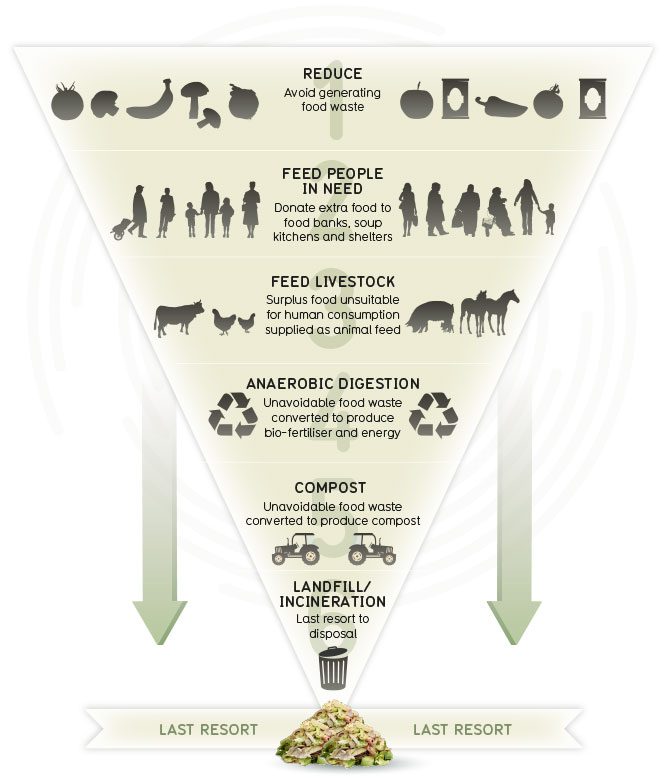
The first and most important step is to avoid generating food waste in general. With that in mind, we’ve gotten even more creative in how we use up every last bit of the food that we have. A great example of this is our partnership with our neighbors at Green Hills Grille. On their menu is a great salmon filet, but we all know that a side of salmon doesn’t come beautifully square shaped naturally. In order to get that pretty portion, the restaurant cuts off all of the trimmings, but instead of just throwing them away, they freeze them and bring us those trimmings each week. We cook them up and use them for meals like our delicious salmon patties. That ensures that all of that food goes to the NRDC’s second most recommended use of food - to feed people in need.


As we’ve increased our food recovery efforts, though, we’ve realized that we can’t always use all of our recovered food before it perishes, and some of it just doesn’t meet the needs of our meal guests. So we began building a network of partners who can take this excess food and use it in their own programs.
One such partner is Renewal House, a nonprofit that provides long-term, comprehensive treatment programs serving women affected by addiction and their children. Each week, we share healthy food with the women participating in Renewal House’s family residential program, stocking refrigerators so that the mothers have good food to prepare for their children. We now have 11 of these partners with whom we share our excess food, ensuring that none of it goes to waste.

Still there are times when we get food that is no longer appropriate for human consumption so we went back to the pyramid to determine the best and highest use for it. The next NRDC recommendation is to use food waste for animal feed. We raise chickens in our Wedgewood Urban Garden so naturally, much of our excess food has become chicken feed, and we must say that it has resulted in some very happy, healthy chickens!
What we can’t share in our meals, with our food sharing partners or with our chickens is then composted. That food contributes to creating wonderful potting soil that feeds our gardens, which, of course, produce even more healthy food. It’s an incredible cycle that we’ve loved seeing come together.

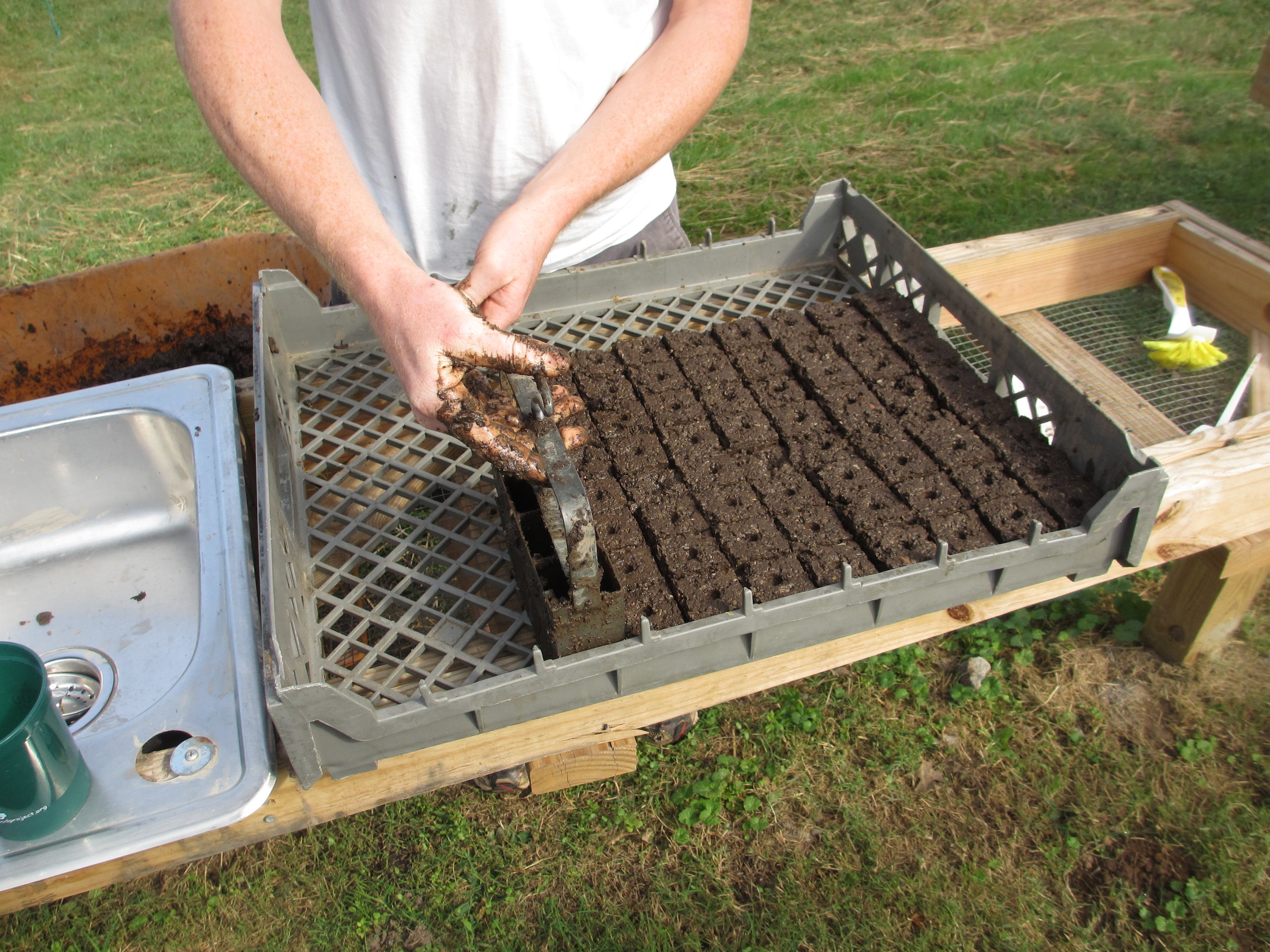
We are constantly exploring new ways to make the best and highest use of every bit of food that comes through our doors. Slowly but surely, we’re doing our best to reduce our own food waste and to help our city as it works to do the same. If you’re interested in learning how you can reduce your own family’s food waste, we urge you to visit savethefood.com to find great recipes and resources to get you started.
Best If Used: SAVE THE FOOD
Earlier this month, The Nashville Food Project was invited to participate in an exciting event with state and local partners, including the Nashville Farmers’ Market, the Tennessee Department of Environment and Conservation (TDEC) and Metro Nashville Public Works, among others.

Earlier this month, The Nashville Food Project was invited to participate in an exciting event with state and local partners, including the Nashville Farmers’ Market, the Tennessee Department of Environment and Conservation (TDEC) and Metro Nashville Public Works, among others.

The event, called “Save the Food,” included a screening of the 2014 documentary “Just Eat It,” a funny, entertaining look into food waste at various points in the food system, from farm, production, and retail, all the way to the home fridge. The film was accompanied by a delicious meal prepared by our innovative Meals Team. The dinner we served—a vegetarian chili with all the fixings—was made with rescued food, including an apple ginger tea, made by steeping apple peels and ginger in hot water.

The event was part of a larger effort to reduce food waste in Nashville, led by the Natural Resources Defense Council (NRDC). To learn more about how to reduce food waste in Nashville and across our country, please visit www.savethefood.com.
Holy Canola Oil!
If you haven't met loyal TNFP volunteer and board member Judy Wright, then you are missing out! Judy cooks regularly in our kitchen and she shares with us so many great recipes (Judy's Mom's Meatloaf, anyone?) and tips for the kitchen and garden. Judy regularly shares her impressive knowledge through her blog at JudysChickens.org, and periodically we'll be sharing some of those posts. Today we've got a great post on how canola oil is made, featuring one of TNFP's newest food donation partners Solio.
Last April, I wrote a story about the gorgeous yellow fields of canola that were growing along I-24 in Cadiz, Kentucky. You can read all about it and see the photos here.

This is Part 2 of that story. The part where after seeing a dramatic increase in the number of yellow fields from the year before, I called the plant manager at the AgStrong Canola and Sunflower Seed Processing Plant in Trenton, Kentucky and asked, What gives? Why are we suddenly seeing yellow everywhere? When he started to explain, I realized I had a lot to learn and asked if I could drive over to meet him and get a tour of the plant. An hour later Mark Dallas was giving my husband and me a tour. Not exactly the way I thought my day would turn out, but I do love a good backroads detour.
As background information, can-o-l-a oil, or “Canada-oil-low-acid,” is made from crushed canola seeds. These seeds are about the size of poppy seeds. Even having seen how canola oil is extracted from the seeds, I still shake my head in disbelief that anything that small could produce so much of something as useful as cooking oil.
A very short botany lesson about plant reproduction:
Flowers have one job, and one job only: to induce reproduction. To that end, flowers that are fertilized will make seeds. Those seeds will make new plants. That the plants grow and produce tasty fruits, vegetables, and kitchen staples like canola oil, is bonus. Those fruits of the plants are just ripened ovaries full of seeds. Their flesh is sweet so animals will eat them and disperse the seeds in their travels. Tree nuts work in the same way; Mother Nature is counting on squirrels to bury the nuts and thereby assure there will be more trees in the future.
Back to canola flowers and seeds. Like winter wheat, canola is planted in the fall, sprouts then go dormant in the winter and perk up again in early spring. It flowers in mid-April, and the seed pods are harvested in mid-June. Farmers like to grow winter wheat and canola because then they can double-crop their fields, meaning there is time left in the warm months to raise another crop, such as soybeans, in that same field. By comparison, in most northern climates, there’s only time to grow one crop like wheat or canola.
The photo on the left was taken from a stem of canola flowers on April 17th. The photo on the right was taken on June 12th, just a few days before the pods were harvested by the combines I wrote about in this article.


You may have seen similar seed pods develop in your own gardens if you ever let broccoli or bok choi plants flower and “go to seed.” If you look closely at the flowers below, you can see the early development of seed pods. They look like little spikes. Canola is in the same Brassica family as bok choi and broccoli.

The next photos are of fully mature canola seed pods that I dissected at home to release the seeds within. You can see how small these seeds are. It’s amazing to think cooking oil is extracted from them.


AgStrong contracts with local, family-owned, farms to plant nonGMO canola seeds in their fields. NonGMO means the seed’s genetic material has not been manipulated in a laboratory through genetic engineering to make it more disease or insect resistant. A few other tidbits I learned about growing canola: canola has a 5-6 inch tap route which acts as a natural tiller in the soil, and canola brings in $8.10/bushel compared to wheat’s $5.25/bushel.


Here is a photo of the canola oil processing plant in Trenton, KY.
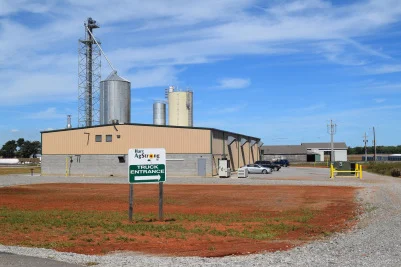
It takes a lot of seeds to make canola oil and these fifty-foot silos are full of them.

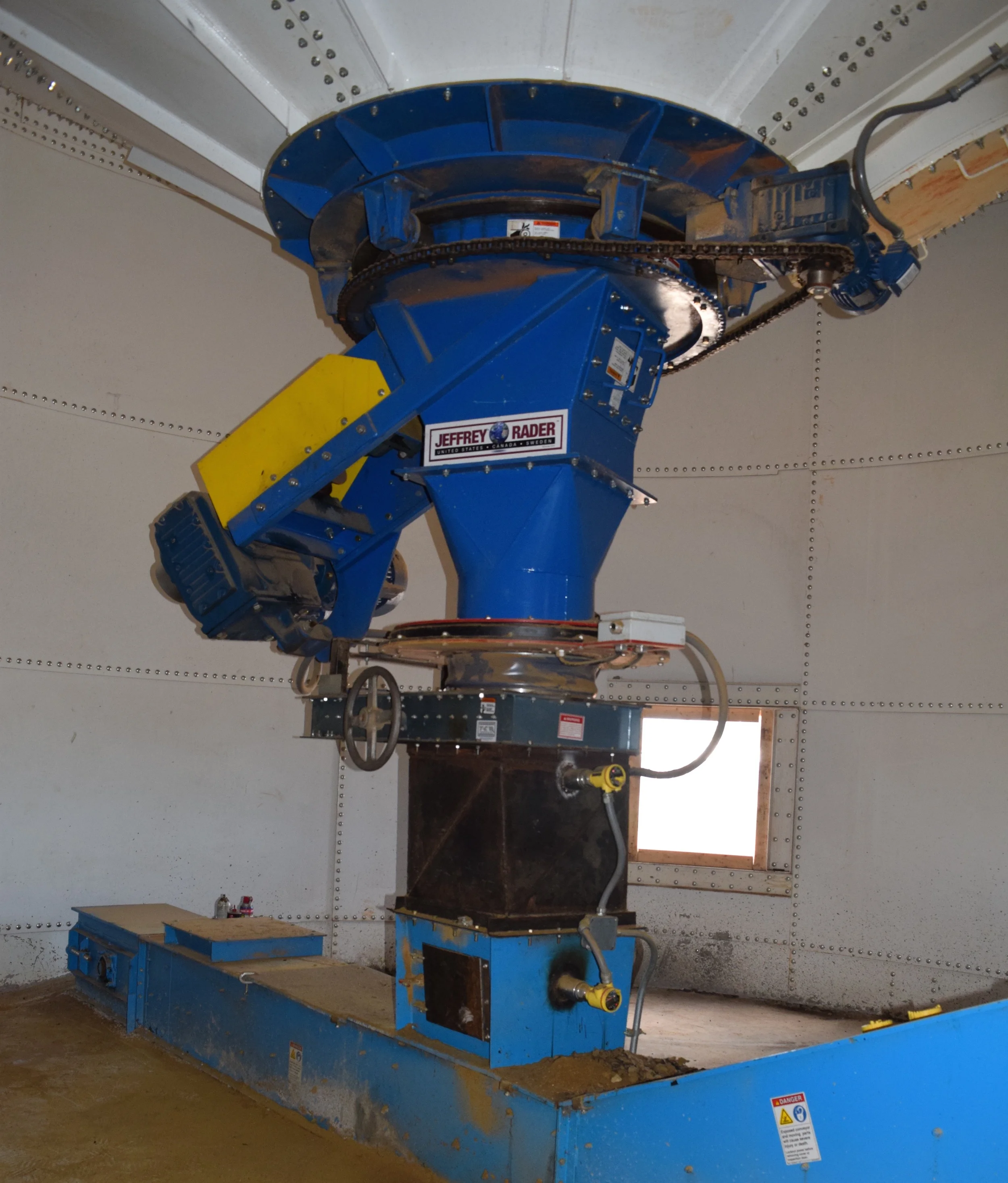
This is what the inside of one of those silos looks like.
The first stop on the tour was the long silver cylindrical oven used to warm the seeds to no more than 120º. Warming the seeds made them easier to press. The low oven temperature kept the process in the category of cold-pressed. The blue conveyor belt brought the warmed seeds to a machine that cracked the hard outer shells.

Next stop was the seed crusher. This was where the magic happened. This machine crushed the seeds and expelled the golden canola oil into the blue well. The oil will still need to go to an offsite refinery before it can be bottled.
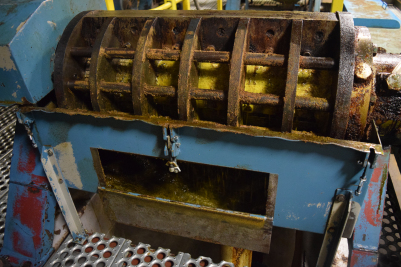
Here was the residual seed meal as it dropped onto a conveyor belt.

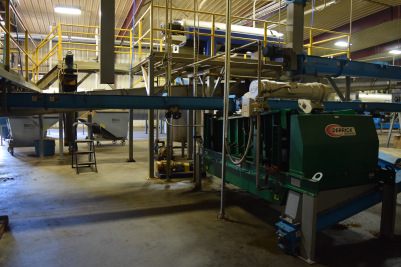
This meal was delivered to the green machine for a second pressing to remove the last traces of oil. At this plant, there are no chemical solvents, like hexane, used to extract these last drops of oil. That’s where the expression “all natural expeller press” comes from.
Here’s the residual meal as it came off the conveyor belt after the last of the oil had been pressed from it. The meal is used to feed livestock.

This is the transport room. It’s where the seeds, collected from farmers, are gathered and delivered to the silos for storage. And later, after pressing, where the extracted oil is weighed and distributed, via trucks, to be delivered to Georgia for the final refining process and …

bottling. You can find Agstrong’s Solio Canola Oil at Whole Foods stores.

But the story doesn’t end there. As a volunteer chef and Board member of The Nashville Food Project my antennae is always up for opportunities for food donation and food recovery. Canola and olive oil are two expensive staples we use in abundance at TNFP. I asked if Agstrong would consider partnering with us and donating their locally grown and manufactured Solio oil to TNFP, which they have graciously done. Here was the Plant Manger, Mark Dallas, donating a 35-pound container of oil to TNFP, on the spot.

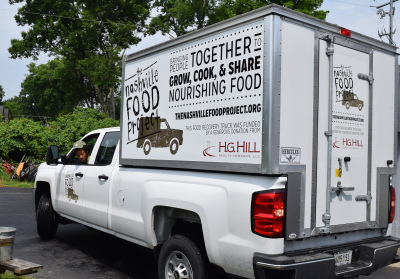
And that’s how this one little detour ended up providing cooking oil for TNFP whose mission is “Bringing people together to grow, cook, and share nourishing food with the goals of cultivating community and alleviating hunger in our city.”
The story, however, didn’t end there, either. I happened to “pull” a few young canola plants from the side of the road last April to plant in my vegetable garden, so I could watch and learn how these plants matured to the seed stage. Once the plants produced seed pods and dried out, I was pleasantly surprised to walk out to my garden one day and see my chickens poking their heads through the chicken wire and eating the canola seeds.


Looks like Agstrong’s byproduct of meal for livestock was a winner.
Thanks to Mark for the tour and to Mike McAdaragh, Agstrong’s Crop Development Specialist, for personally delivering canola oil to The Nashville Food Project.
A note to readers:
Thank you for reading my blog! Please consider subscribing by pushing the FOLLOW button. If you are reading this post on a laptop, the FOLLOW button can be found in the sidebar on the right side of the page. If you are following on a mobile device, you’ll need to scroll down a few posts to get to the FOLLOW button. If you do sign up, please be sure to complete the next step of checking your email for a confirmation letter that requires you to push one more button.
You can also follow me on Instagram: @JudysChickens
The best way to show any blogger you enjoy their posts is to write comments, share their posts and become a follower.
Thanks for following my blog! Judy
Reblogged from JudysChickens.org © 2016 Judy Wright. All rights reserved.
Meatopia is a Wrap!
Last week we had one of our largest gleaning opportunities of the year -- a meat conference at the Gaylord Opryland Convention Center -- an event we have fondly been referring to as “MEATOPIA”. We rescued a grand total of 11,000 lbs of meat from this event -- what will be used for many months to feed our community…
by Food Rescue Coordinator Christa Ross
I am generally amazed at the amount of time it takes to put out just one of our many meals. Of course there’s the prep time, the cook time, the drive time, and all of the logistics. All of these things, in themselves, take time, planning, and implementation.
But upwards and above all of these basic things that make up a meal, our mission incorporates the use of rescued and donated food as a central ingredient. Keeping down costs means more, high quality meals going out to our communities. It also means less food waste heading to the landfill. I love this idea -- in the midst of our societies abundance, as we are surrounded, out of sight, by the hungry and under represented, all food should play a part in feeding our community.
Last week we had one of our largest gleaning opportunities of the year -- a meat conference at the Gaylord Opryland Convention Center -- an event we have fondly been referring to as “MEATOPIA”. We rescued a grand total of 11,000 lbs of meat from this event -- what will be used for many months to feed our community. What an amazing gift.
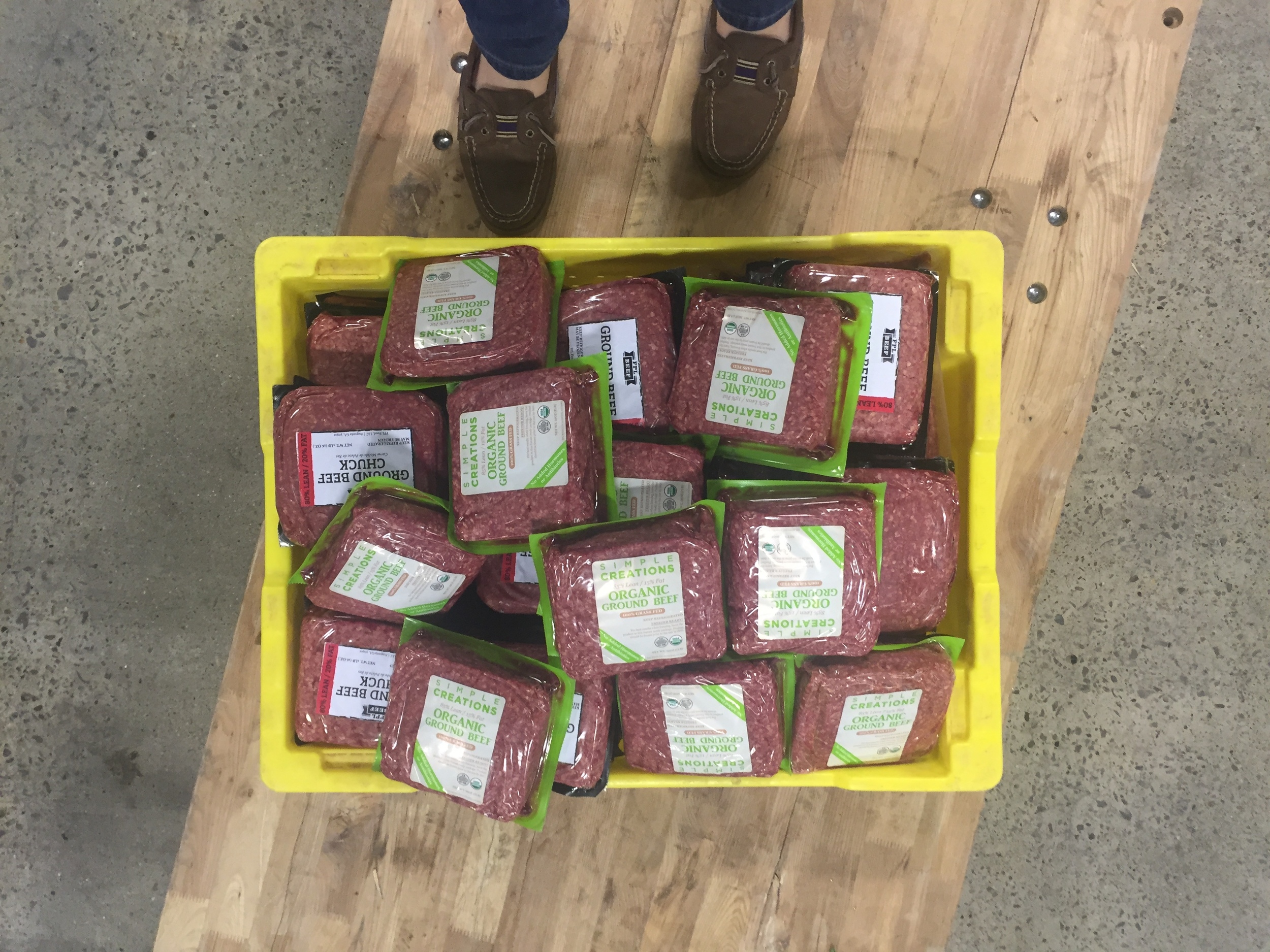
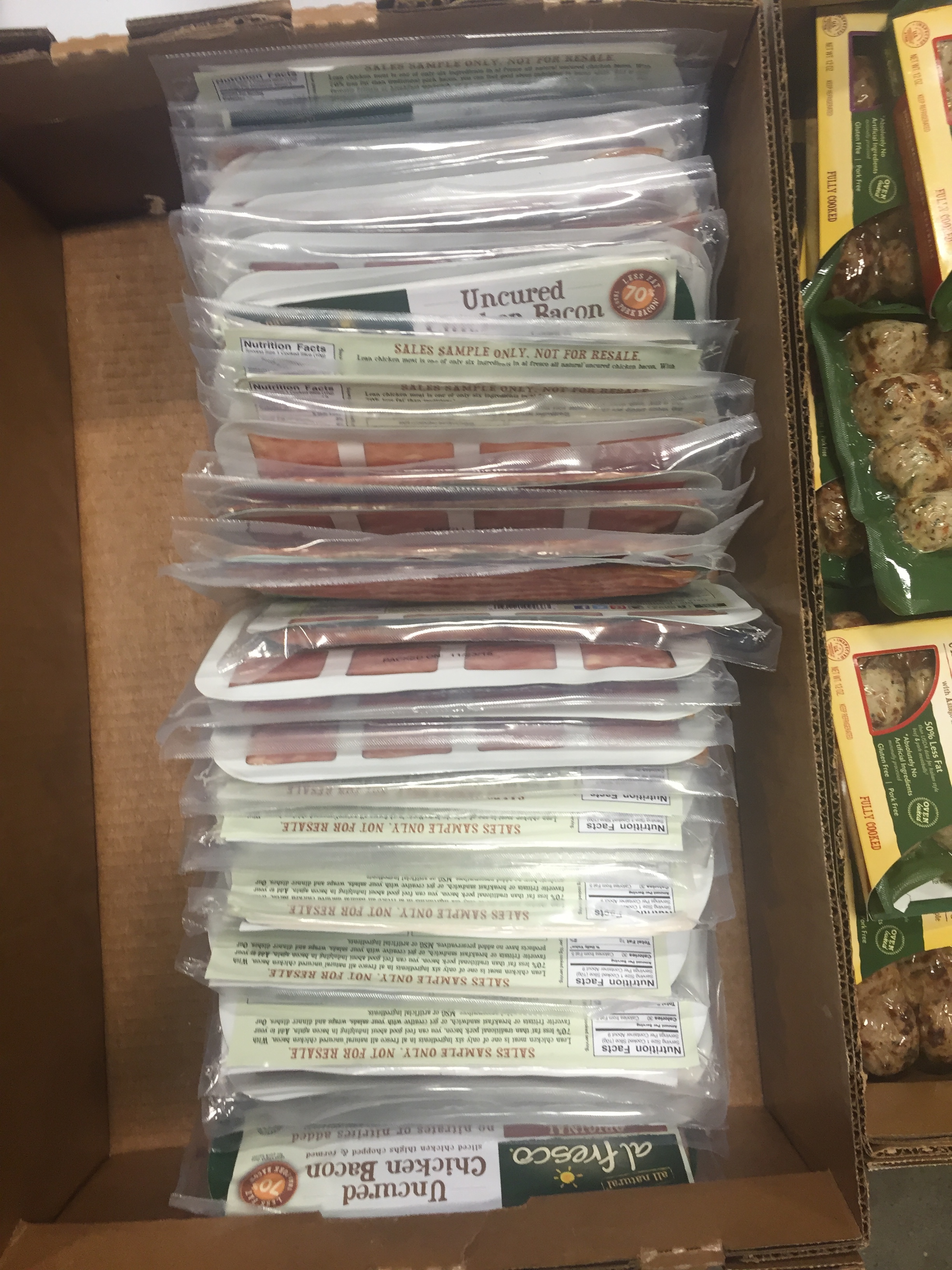
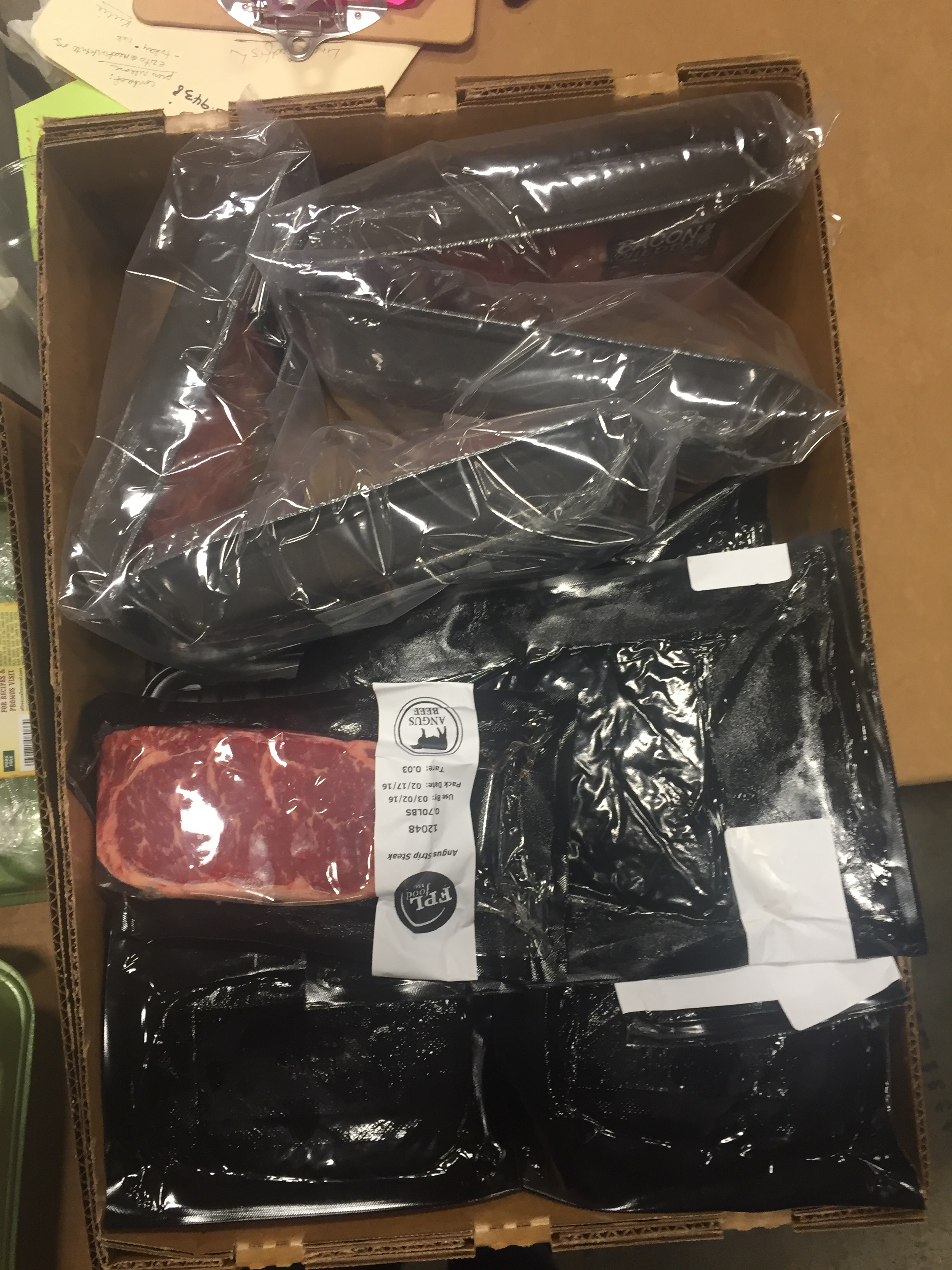
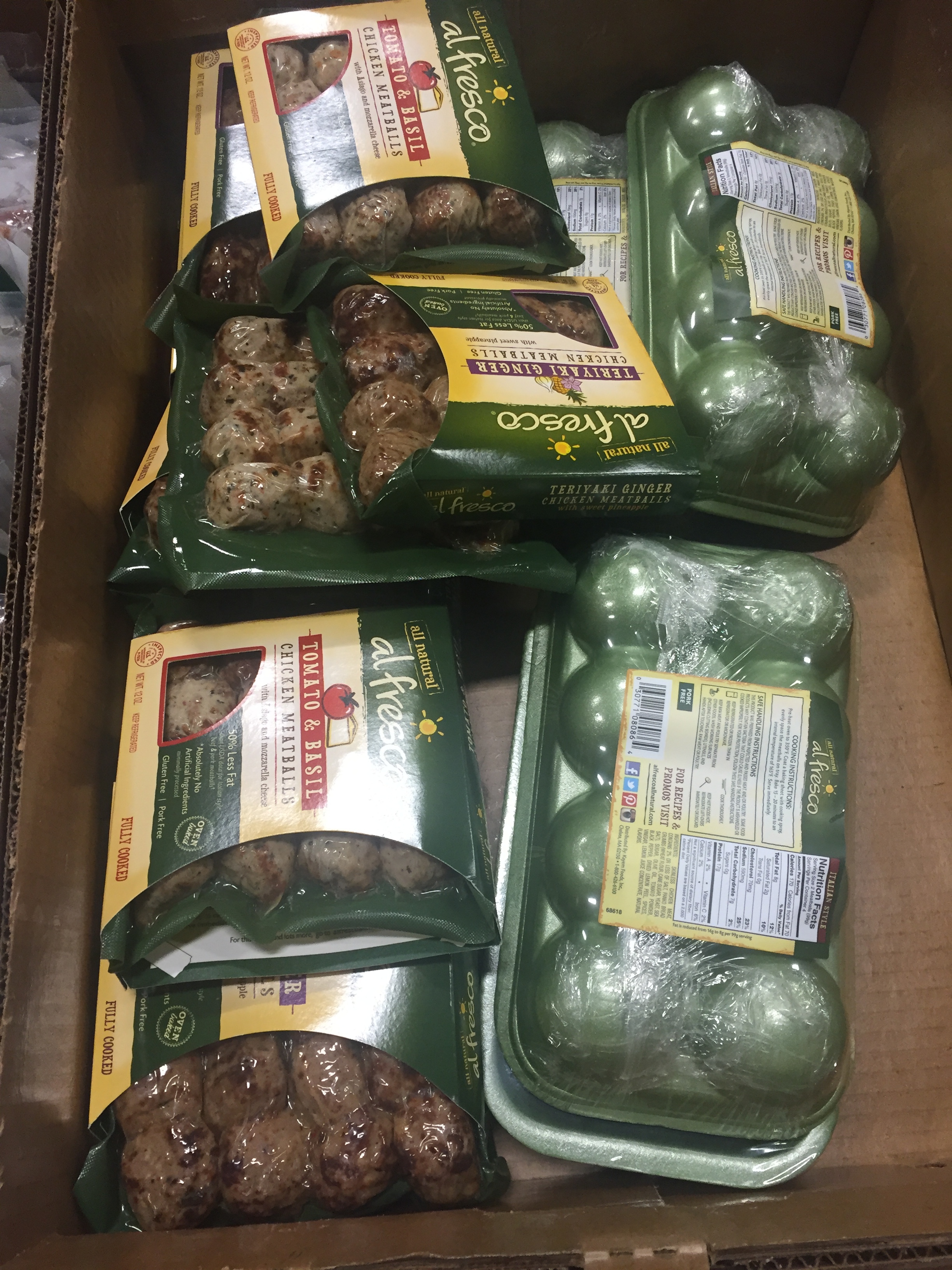
The planning for this event included many meetings and emails, volunteer wrangling, one of the most intricate colored duct-tape inventory systems I’ve ever seen, and a truck load of wax boxes. We also pulled together 5 trucks for hauling the meat and ended up filling two walk in freezers (stacks of boxes everywhere) and three pallets full stored in a warehouse freezer.

The evening starts with a massive room full of displays like this one. We send teams around the room collecting all of the meat and bringing it back to our staging area to be sorted and transported to our kitchen.

Here's where the duct-tape comes in. All of the meat gets sorted - chicken with chicken, beef with beef, bacon with bacon (and there's a LOT of bacon) - and then loaded up in our refrigerated truck and other volunteer vehicles to be taken back to our kitche.
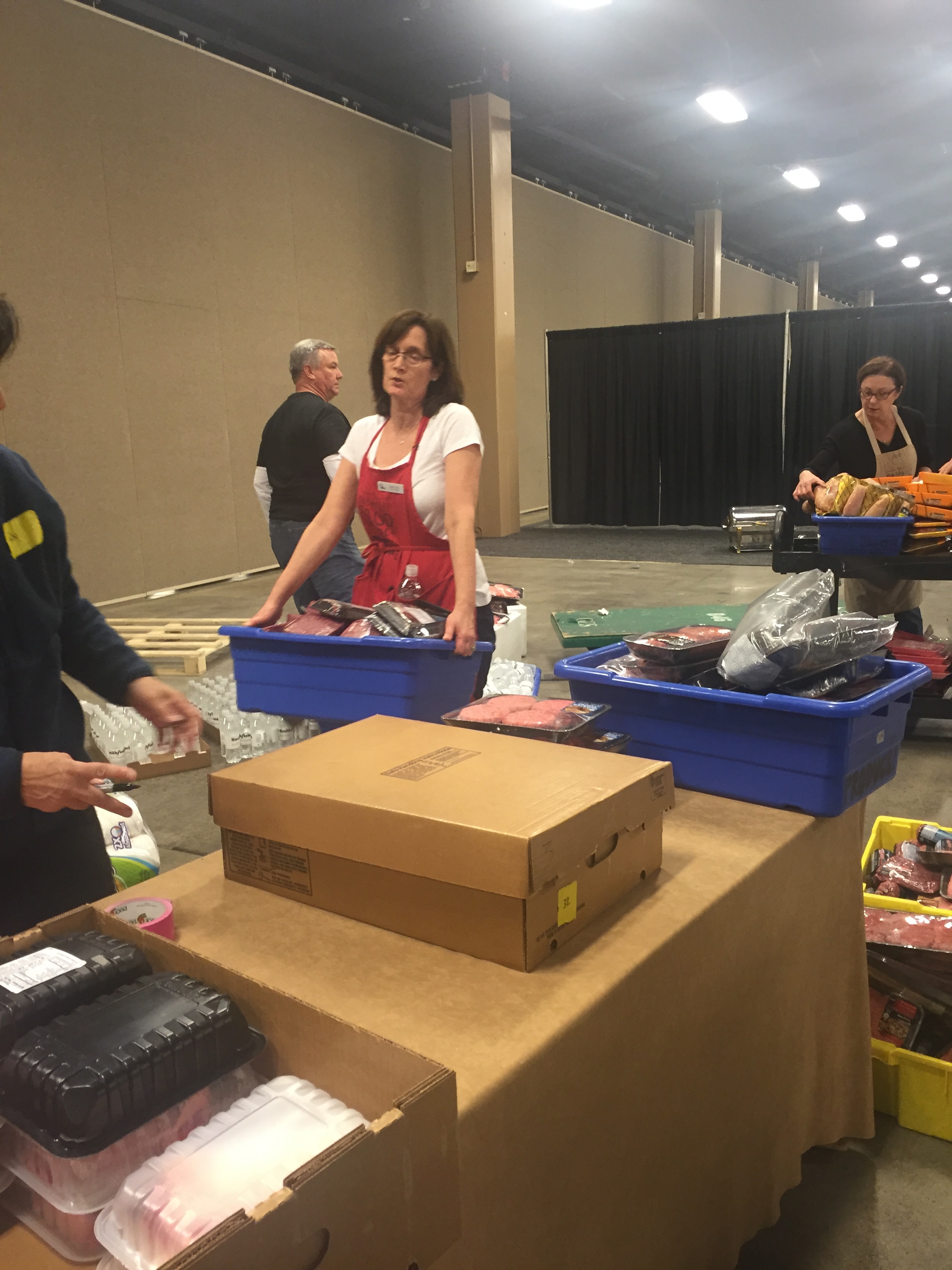
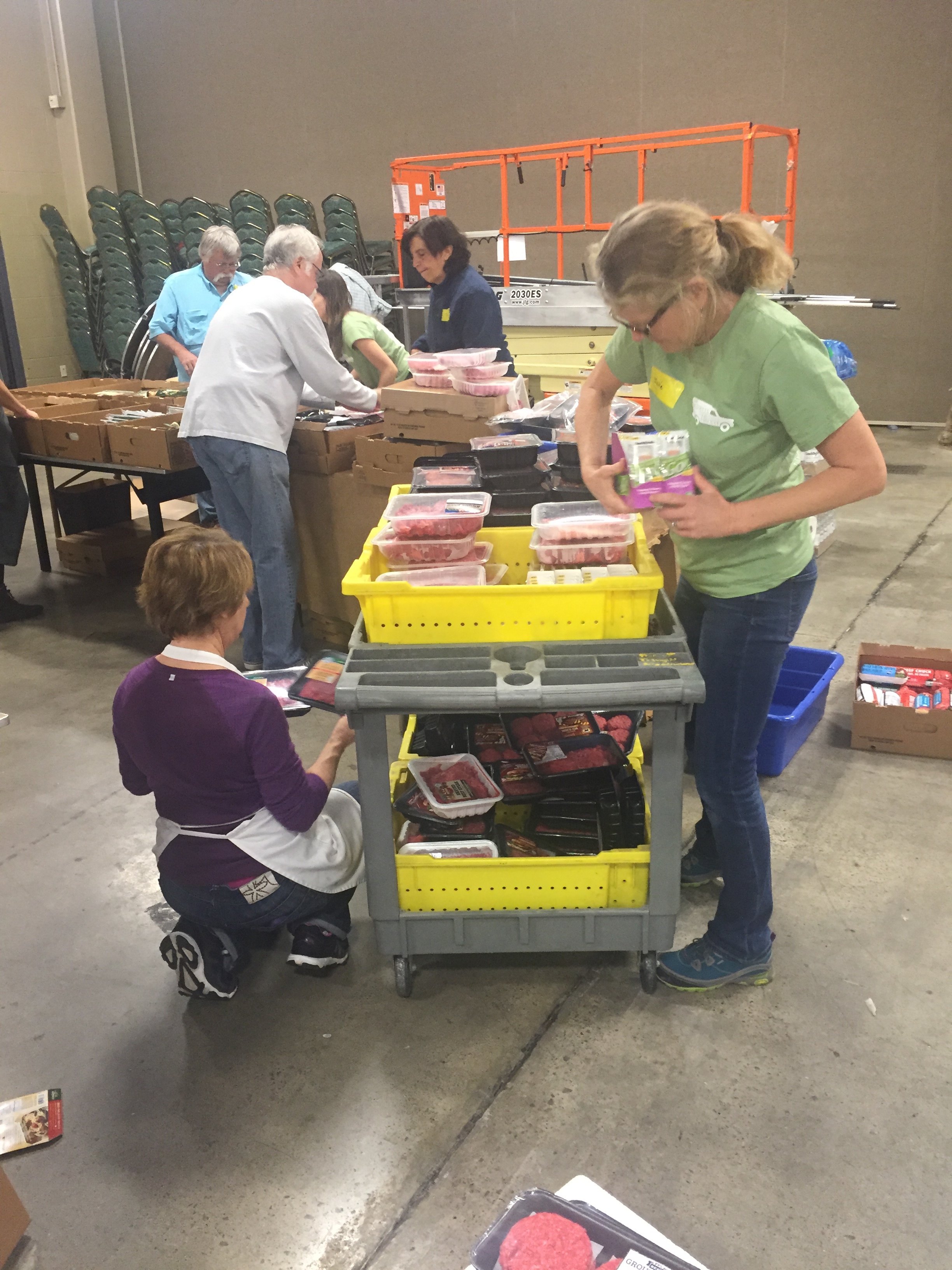
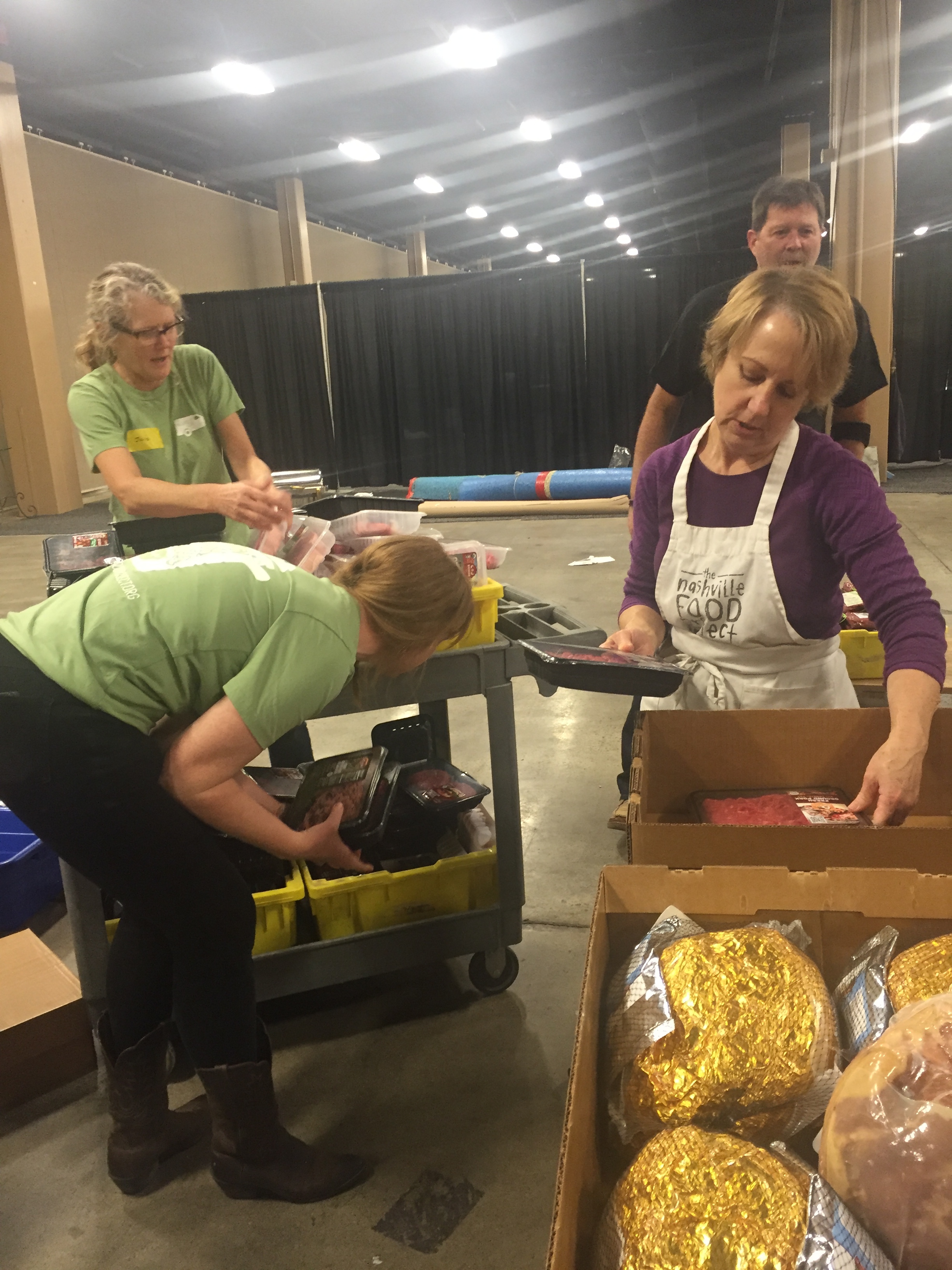
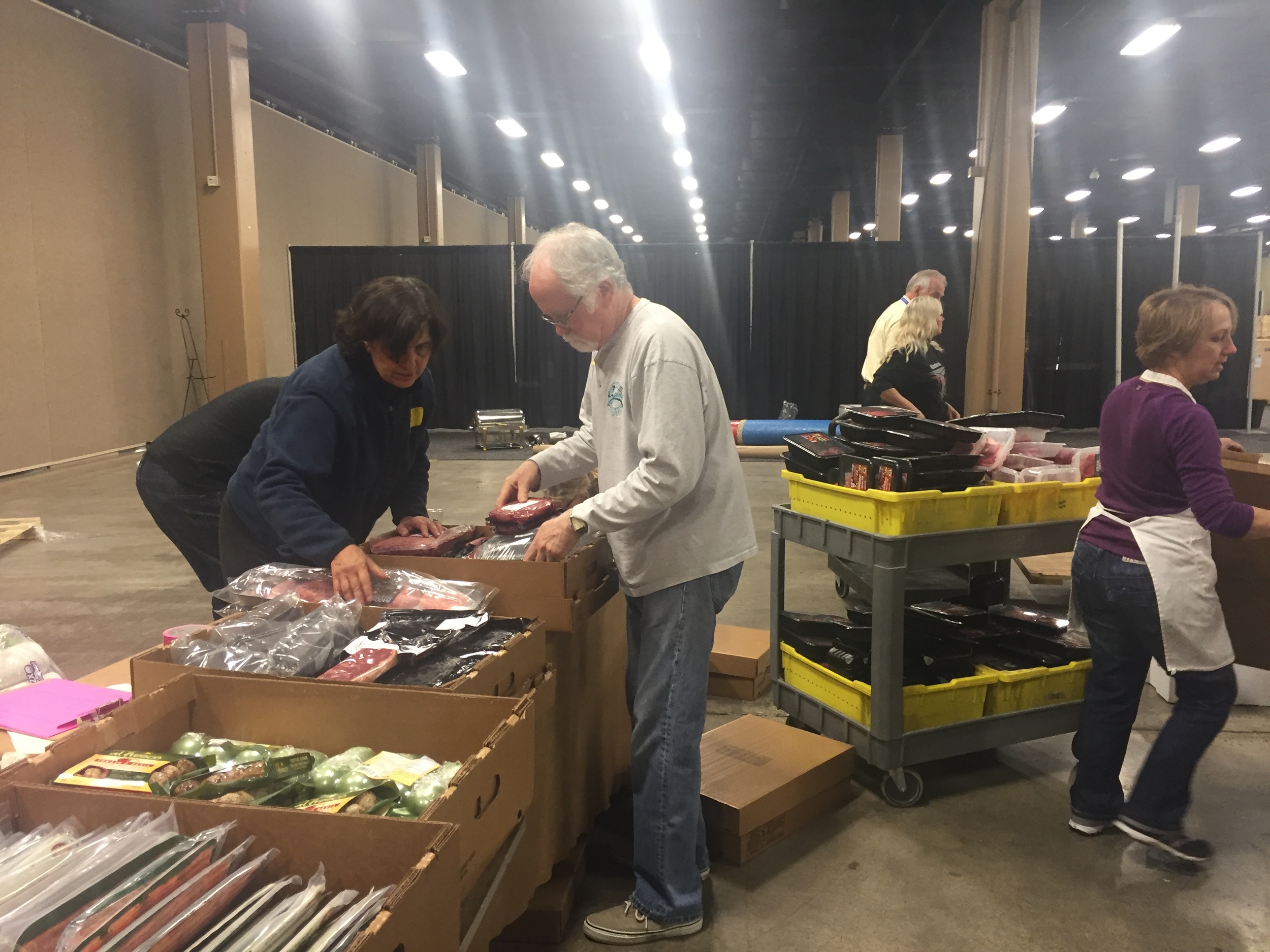
We are forever grateful to all of the donors at the convention, to Gaylord Opryland for letting us use their loading dock, to Nashville Grown for his wonderful refrigerated truck, and to Triumph and all other volunteers, without whom we could never have pulled it off. You all are amazing!

Just a few hours earlier, this room was full of meat. Thank you to the convention and Gaylord Opryland for allowing us to recover all of this great food for our meals!
Waste Not, Want Not
Putting a dent in those numbers could feel daunting, but it’s an issue that we hope to continue working on in 2016. In addition to gleaning from farms, restaurants and grocery stores each week for meals, we’ll be partnering with Zero Percent, a Chicago-based organization that has developed a mobile app and online platform to maximize our food recovery efforts…

Almond milk that could have headed for the dumpster after a food conference at Music City Center. But thankfully, a volunteer brought it to TNFP instead for including in bread puddings and other uses.
Earlier this month, The Tennessean included The Nashville Food Project in a story about food waste.
“Forty percent of the food produced in this country doesn’t make it from farm to mouth,” writes Jim Myers. That’s about $165 billion or $2,225 per family per year of wasted food.
Putting a dent in those numbers could feel daunting, but it’s an issue that we hope to continue working on in 2016. In addition to gleaning from farms, restaurants and grocery stores each week for meals, we’ll be partnering with Zero Percent, a Chicago-based organization that has developed a mobile app and online platform to maximize our food recovery efforts.
But what else can we do at home? Meals Manager Anne Sale shared some inspiration and hope for making small changes that add up. Here are three ways she helps reduce food waste at TNFP:
1) Dehydrating over ripe fruit – By using a dehydrator, she makes raspberry or banana powder to include as a flavoring in granola bars or truffles.
2) Using "day old" croissants and pastries as a base for bread puddings. Adding an egg and milk mixture to stale bread helps breathe new life into it.
3) Re-purposing day old fruit pies – Anne and volunteers often break pies into pieces and give them a fresh oatmeal streusel topping.
To read more tips on eliminating food waste at home, click here.
You can find the full Tennessean story here.
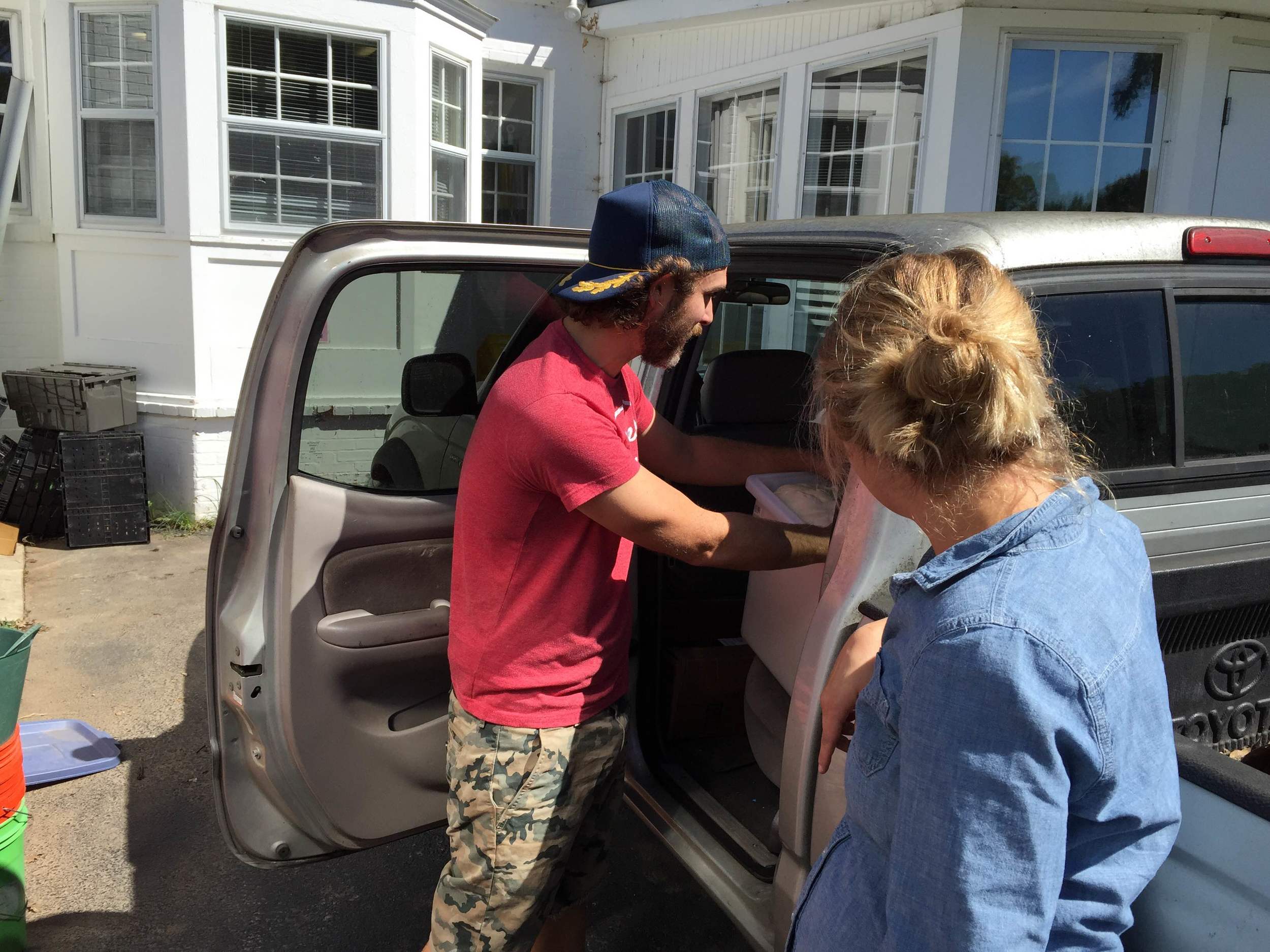
Rather than waste food, we're grateful that Tandy Wilson of City House brings leftover dough to The Nashville Food Project.

The Society of St. Andrew, a ministry that salvages food from local farms, makes a delivery of butternut squash to TNFP.