
The Nashville Food Project’s Blog




Anatomy of a Meal
Have you ever wondered what it takes to place a hot, nourishing meal in a neighbor’s hands? For us, a meal does not begin in the kitchen. It begins much earlier.
What follows is a careful, collective process shaped by stewardship, skill, and care. It is the work of turning surplus into nourishment, and nourishment into connection.
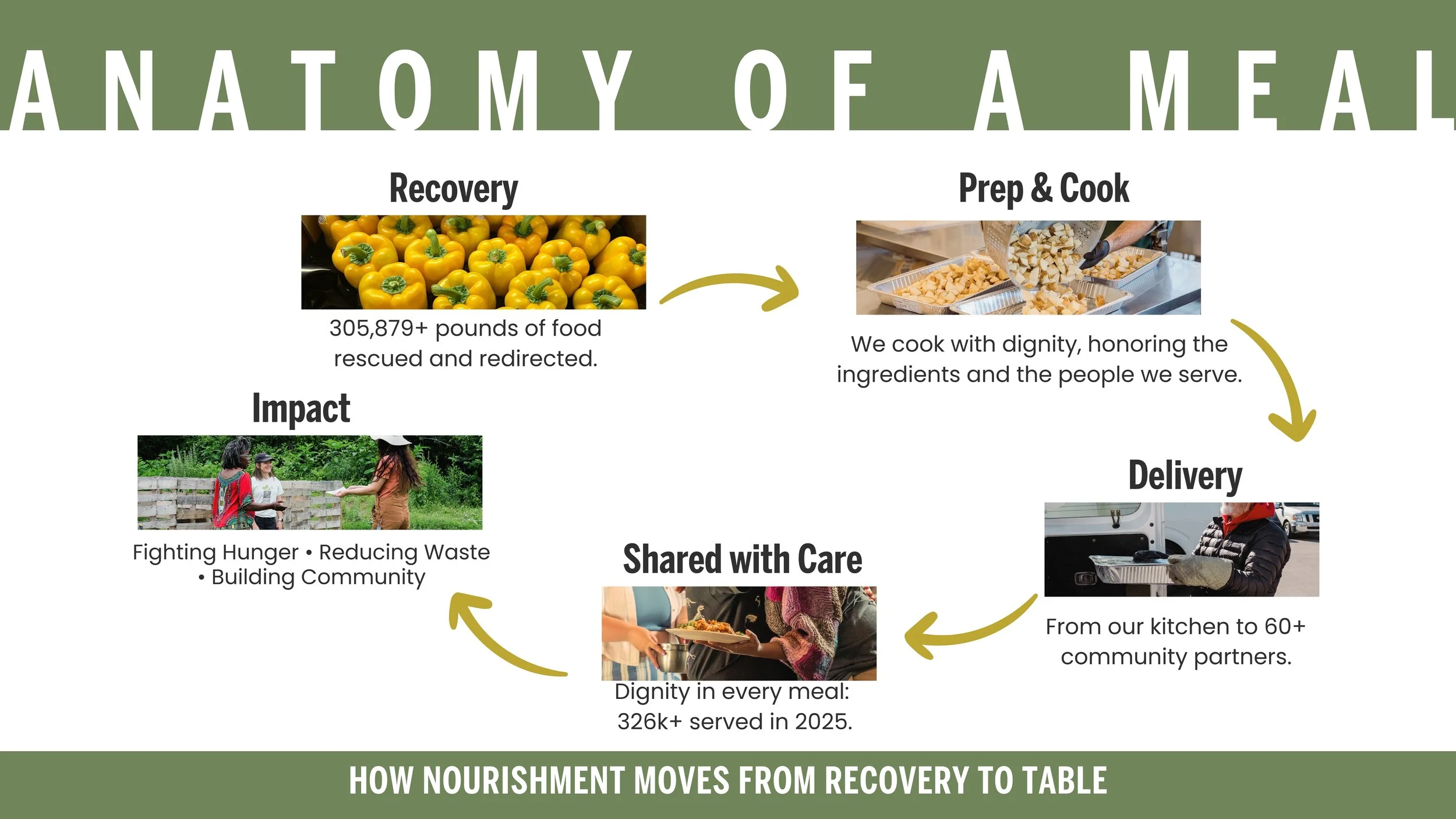
Recovery
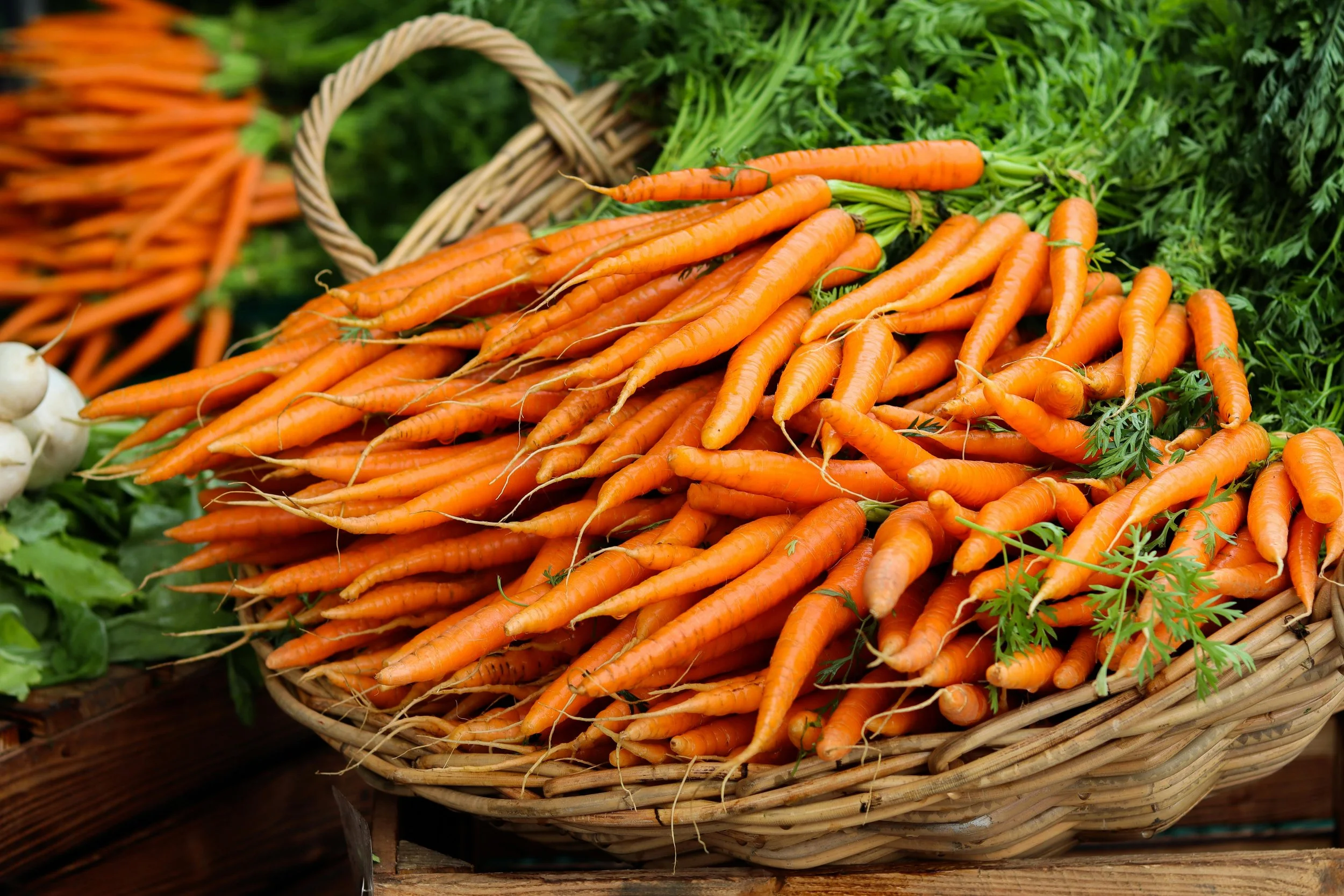
The first step is recovery. Across Nashville, food that is still fresh and abundant is often left without a destination. We work alongside grocers, farmers, markets, restaurants, and individuals to recover food that would otherwise go to waste. This is not about scraps or leftovers. It is about recognizing the value of food that has already been grown, harvested, and prepared with care.
Recovering food is an act of responsibility. It acknowledges that hunger and waste exist side by side, and that abundance can be redirected toward justice when we choose to act.
Prep and Cook
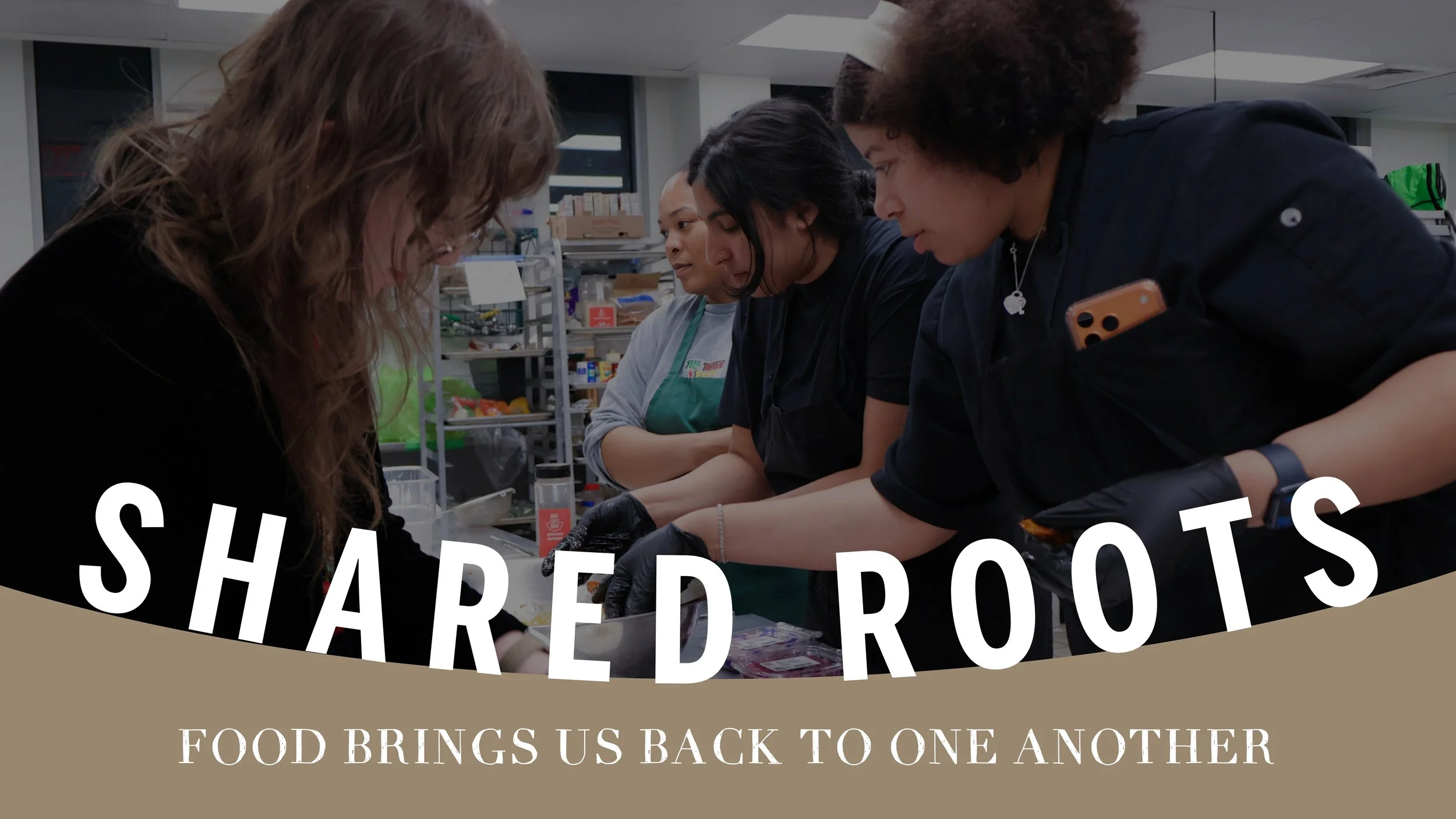
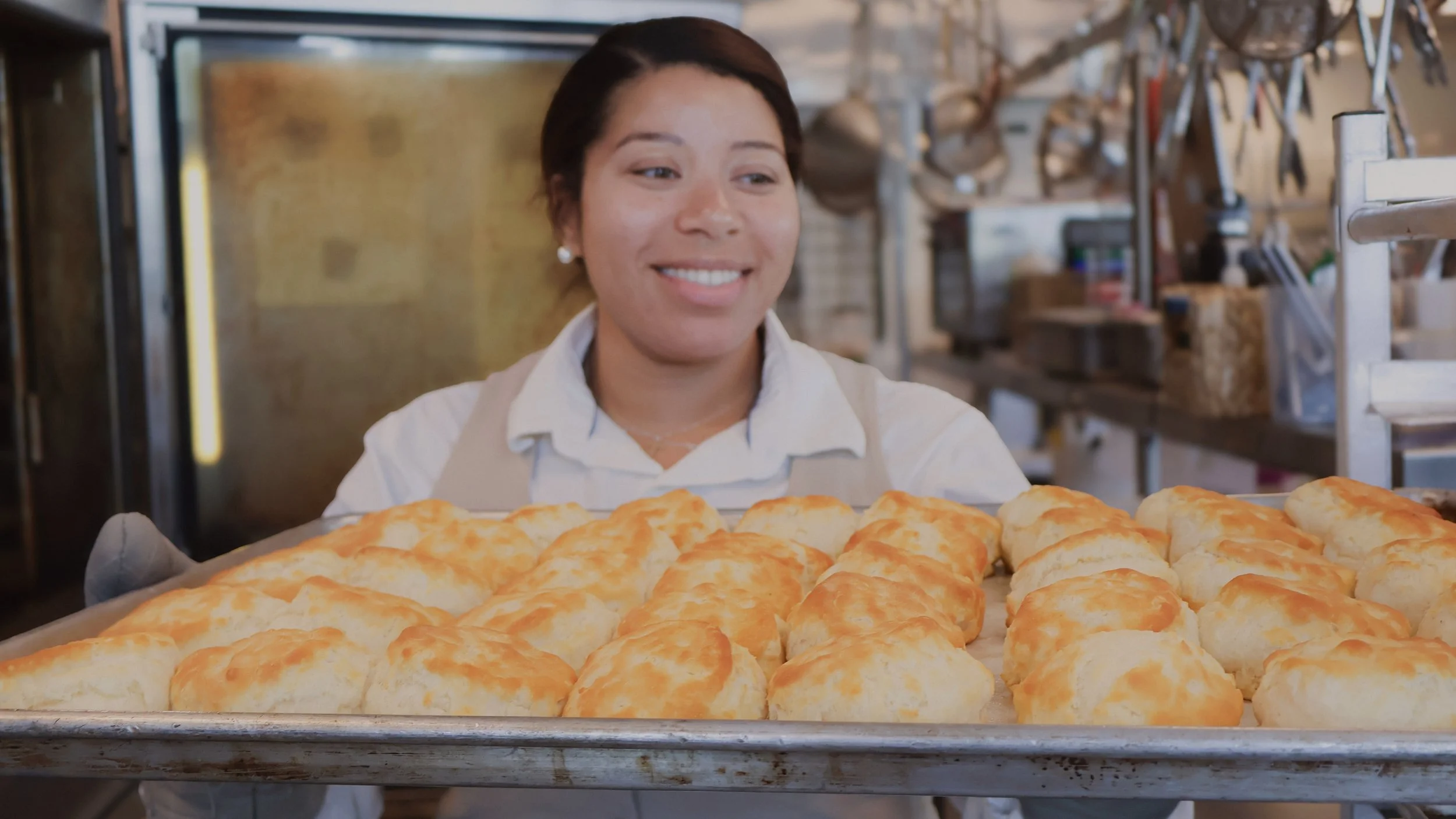
Once recovered, food moves into our kitchens. Here, volunteers, cooks, and staff prepare meals from scratch, guided by skill and intention. Vegetables are washed and chopped. Recipes are tested and refined. Meals are prepared with the understanding that the people who will receive them deserve food that is nourishing, thoughtful, and well made.
Cooking is where transformation becomes visible. Ingredients become meals. Surplus becomes sustenance. And strangers become neighbors through shared effort.
Delivery
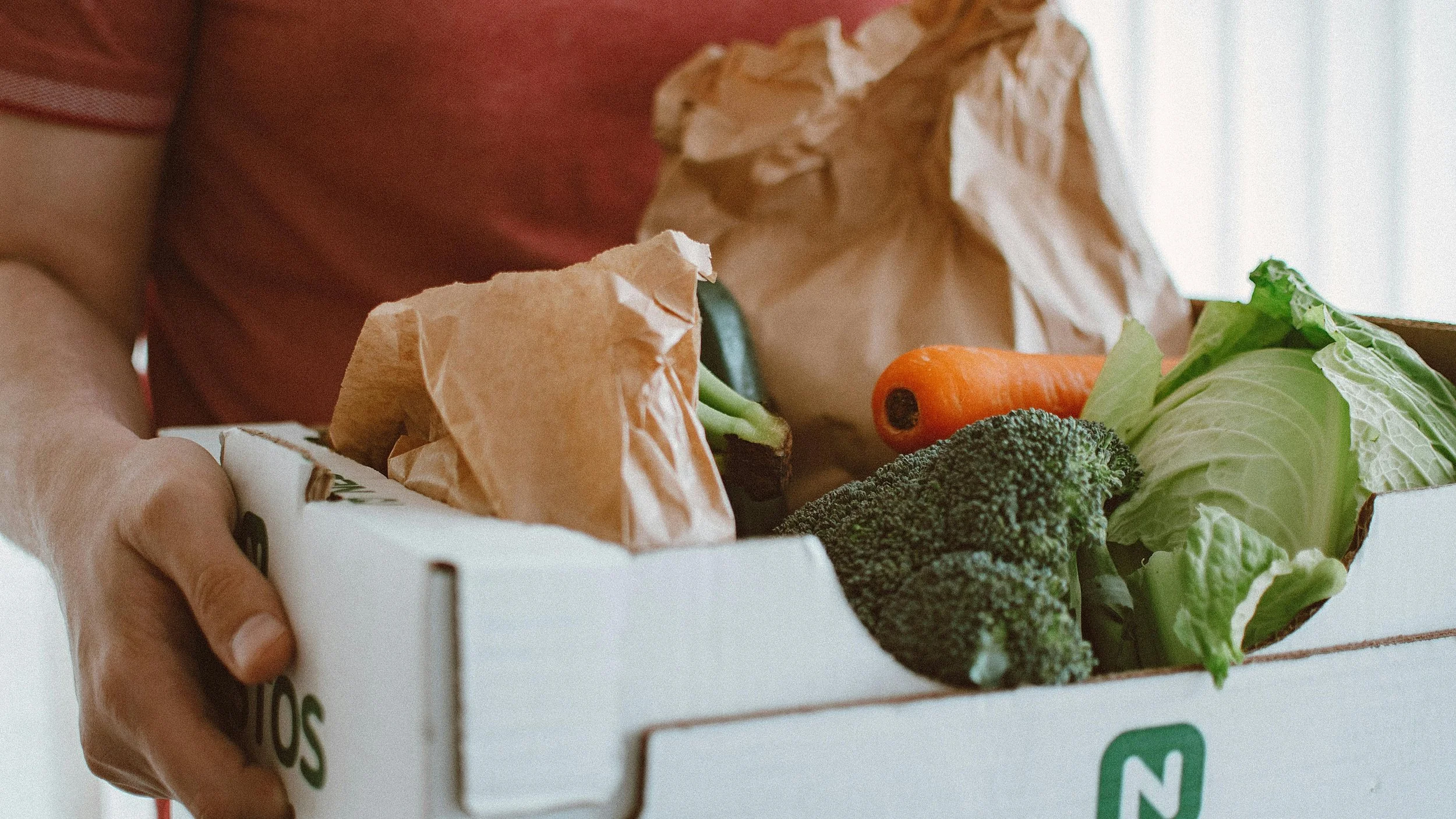
Meals do not remain in our kitchens. They travel outward, carried by partnerships and logistics that make access possible. Through coordination with nonprofit partners across the city, meals are delivered to places where they can be shared with care and dignity.
Delivery is not simply about transportation. It is about trust. It depends on relationships built over time and a shared commitment to meeting people where they are.
Shared with Care
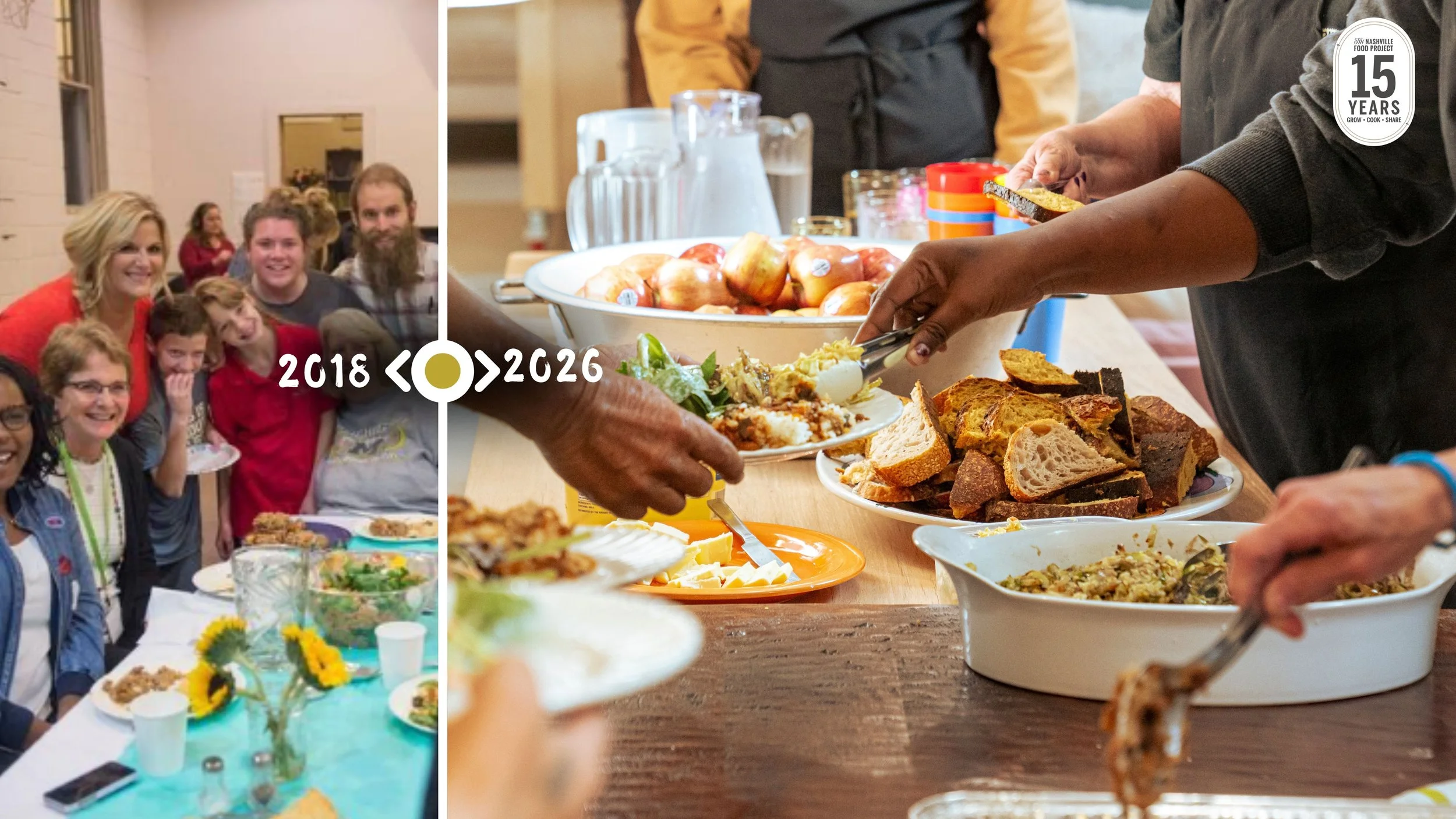
The final step happens around tables, in community spaces, and through organizations doing vital work across Nashville. Meals are served alongside programs that support children, seniors, immigrants, and unhoused neighbors. In these moments, food becomes more than nutrition. It becomes an expression of hospitality and belonging.
A meal shared with care communicates something essential. You matter. You are welcome. You are not alone.
Impact
Every meal tells a larger story. It is a story of hunger addressed and waste reduced. It is a story of volunteers showing up, partners collaborating, and systems working together in service of the common good.
This work fights hunger by increasing access to consistent nourishment. It reduces waste by honoring the value of food already grown. And it builds community by creating spaces where people come together around a shared table.
Be Part of the Journey
The anatomy of a meal is a collective effort. It relies on people who believe that good food should not be wasted and that neighbors deserve to be nourished with dignity.
If you want to be part of this transformation, there are many ways to get involved. Whether through volunteering, donating food, or offering financial support, your participation helps keep this cycle of care moving forward.
Together, we turn what might be thrown away into meals that strengthen our community, one plate at a time.
Tips from the Kitchen: Butternut Squash
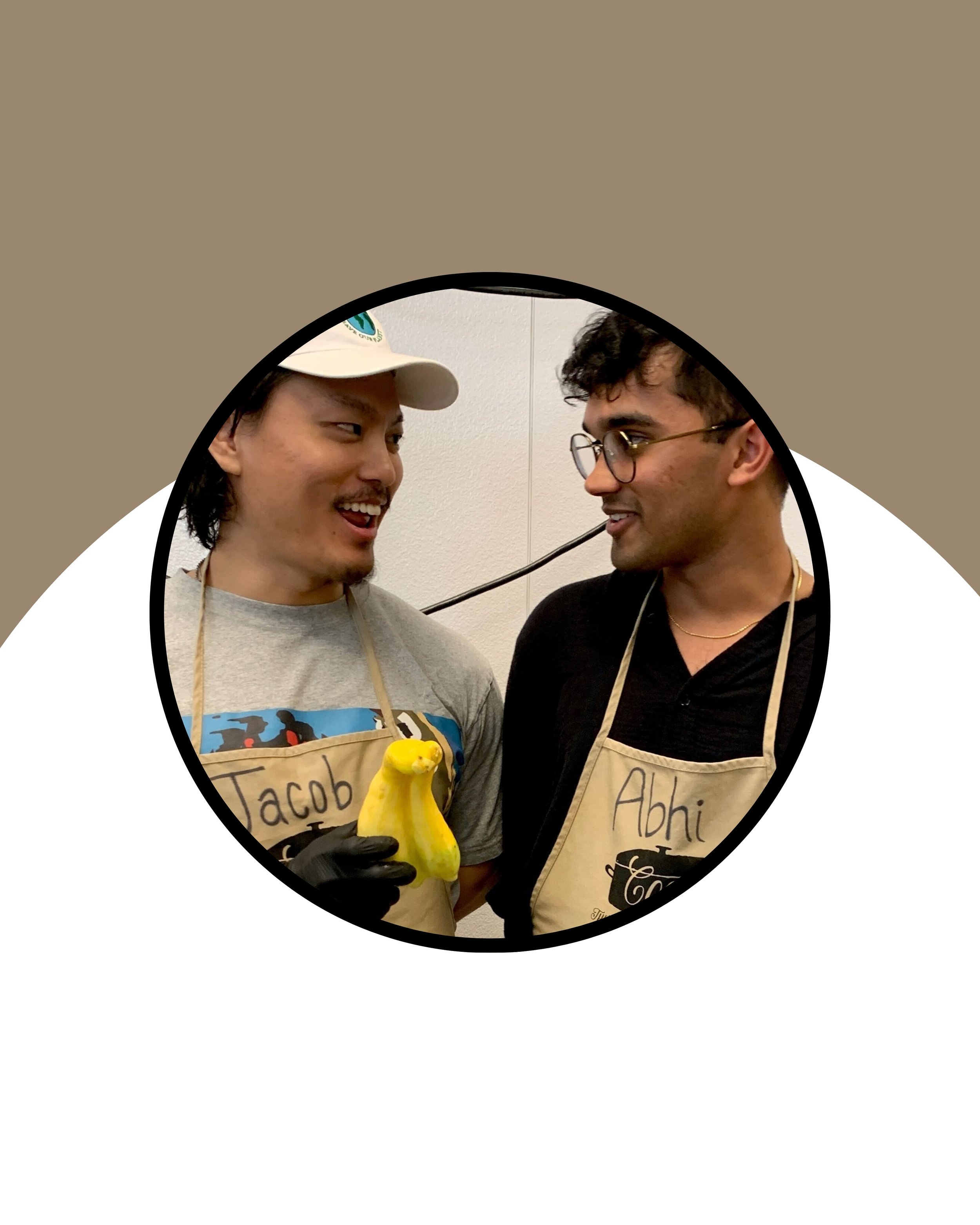
Meals Coordinator Sarah Farrell shares a quick and easy(ish) way to cut hardy, resilient butternut squash, and we include a few favorite recipes too!
It’s okay to admit a love-hate relationship with butternut squash. Yes, it can be hard to cut — but, wow, it also can be versatile and delicious! We love that this plentiful fall squash keeps so well in cold storage, and we are grateful to have generous sources who gift us butternut squash such as Cul2vate Farms and Bells Bend Farms.
Meals Coordinator Sarah Farrell shares a quick and easy(ish) way to cut these hardy, resilient vegetables below, and we include a few favorite recipes too!

Butternut squash in cold storage. Thank you, farmers!!
Meat of the Matter: A Visit with Trusted Protein Partners
Today on the blog, we visit with two of our trusted protein partners—Porter Road Butcher and Tennessee Grass Fed. The level of commitment and generosity from these folks with their sharing of high-quality goods is an extraordinary gift.

by Elizabeth Langgle-Martin, Community Engagement Manager
On a recent Monday afternoon, our Meals Coordinator, Sarah, poured steaming roasted vegetables with ground beef onto beds of rice in restaurant pans to be labeled and sent out the door on a schedule that runs like clockwork—or at least like a well-rehearsed dance. This dish, like those before it, headed for one of The Nashville Food Project’s 34 partners that serve our made-from-scratch meals alongside their programming from homeless outreach efforts to after school offerings and GED classes.
The ground beef that marries so well with the peppers, onions and tomatoes is part of Porter Road Butcher’s weekly investment of 100 pounds of locally sourced, ethically raised ground beef.
To learn more, we visited Porter Road Butcher’s shop on Gallatin Road recently. Team member April Caldwell said that PRB’s co-founders (Chris Carter and James Peisker), “believe everyone should have access to delicious, pasture-raised meats and are committed to organizations that are focusing on nourishing our community and the Nashville Food Project does just that.”
This level of commitment and generosity through the sharing of high-quality goods is an extraordinary gift from a generous industry. Indeed, farms and food producers throughout the Nashville area have consistently supported TNFP with their investments each year to the point that donated and recovered food makes up 19 percent of our organizational budget. Gifts of high-quality, high-value items like animal proteins are the meat (literally) of many of the offerings we are able to extend to our partners and we have the commitment of folks like those at Porter Road Butcher to thank for it.
So far this year, PRB has already donated 2,700 pounds of ground beef (valued at $8,100 dollars). During my visit, I tasted cheese laden with vegetable ash and took a peek the ivory containers of lard and tallow in coolers, evidence of PRB’s commitment to full animal processing that reduces the waste that happens in mainstream animal harvesting all while yielding versatile, flavorful ingredients for the home cook. April and I chatted next to the smoker behind the building, the rich thick smoke and stacked firewood juxtaposed with sounds of Gallatin Road traffic just steps away.


Similarly, this summer, Tennessee Grass Fed’s generous donation of over 1,000 pounds of all-beef hotdogs meant that we could offer a kid-approved favorite during the peak of summer programming that still met our standard for high-quality, nutrient-dense, flavorful offerings. This summer, TNFP partnered with youth-focused programming and provided over 19,300 meals in just a handful of weeks to meet the nutritional needs of the children our partners serve.
At Tennessee Grass Fed, Phil and Kathy Baggett transitioned family land that has been farmed since 1837 into a grass-fed farming operation in 2007. Located on 422 acres in the Clarksville area, the Baggett family is committed to the health of the land, their animals, and the products they pour into Middle Tennessee communities.
On a balmy summer morning, I sat in their 100-year-old dairy barn-turned-farm store, packing room, and offices around a residential dining table. Shelves nearby were stocked with sauces, seasonings, honey, and other staples and coolers were filled with rows of meat offerings, primarily their own grass-fed beef cuts but also chicken and pork offered through deep inter-farm connections that Phil and the Baggett family has cultivated with other producers. When Phil spoke about their web of providers, it reminded me of TNFP’s value of Interdependence. This includes items like the honey, sauces, and even eggs that they want to display in the farm store to make a convenient stop for customers where they can source a number of their core groceries. The network of local food providers with which the Baggett’s collaborate means that when Tennessee Grass Fed does well in business, a whole network of local farmers also do well, creating relationships built around mutual success and community.
Phil spoke enthusiastically about soil health, perennial ground cover, grass varieties, pasture rotation, and a team that cultivates and cares for the cattle with gentle and intentional respect. Other staff members in the packing room awaited customer orders purchased digitally, carefully packaging and labeling items for either home delivery or delivery to one of the farmers markets or freezer drop sites that makes their high-quality products easily accessible to consumers from East Nashville, to Clarksville, all the way to Mt. Juliet and Murfreesboro.

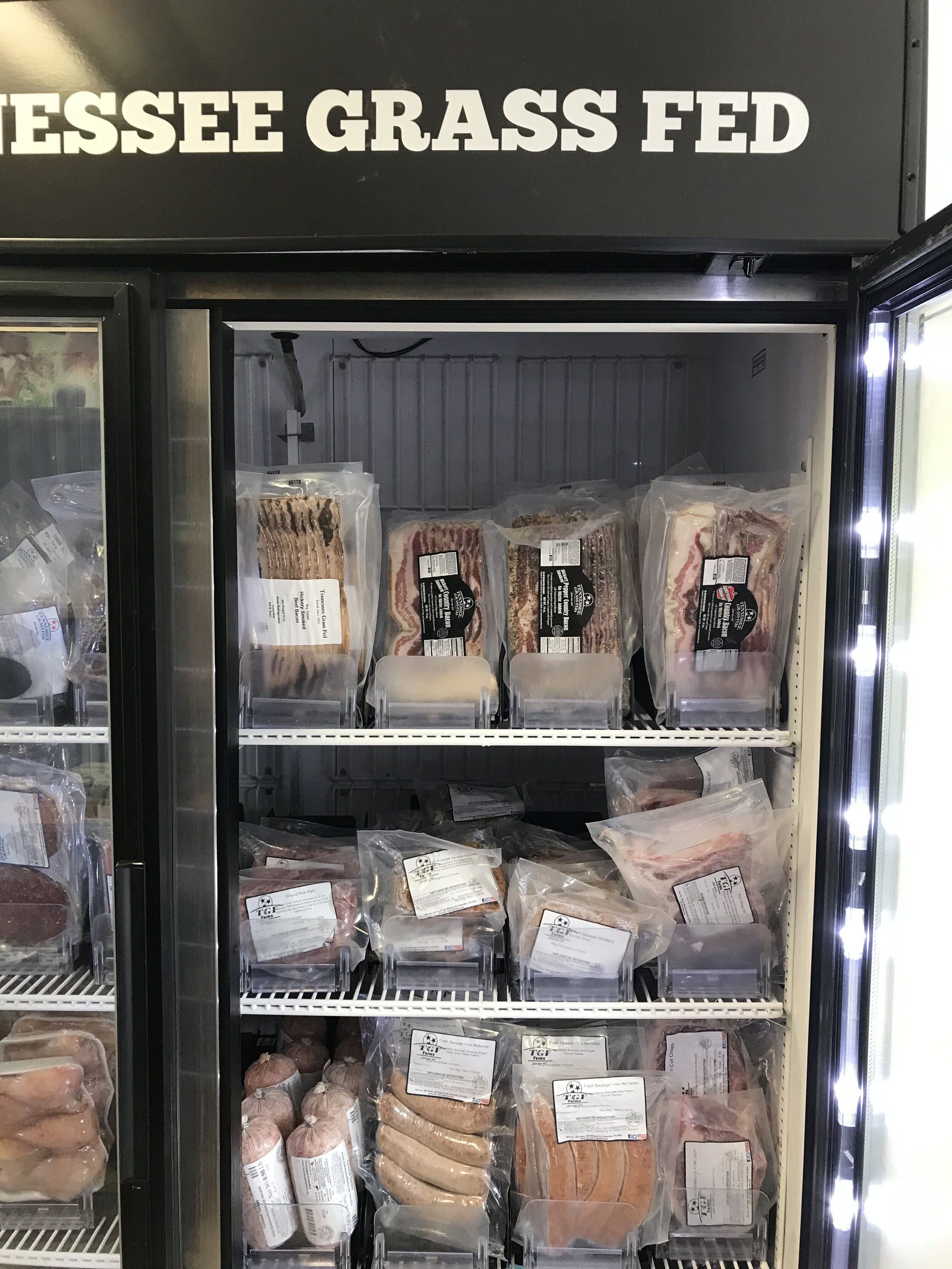

Immediately across from the farm store and packaging facility is a historic home—the one that Phil was born and raised in. He pointed out the four front-facing windows and talked about how it was originally log cabin construction. As our conversation came to a close he told me how to navigate a way out that winds through the property with huge grassy pastures, immaculately tended fencing and crisp black and silver barns. I passed a few cows taking advantage of the ample trees, each looking easily pleased in their own little cool hammocks of shade.
At The Nashville Food Project, we often dream about a just and sustainable food system, noting that this would require the collective work of many from the work of politicians to farmers to the ordering and recovery practices of restaurants, grocery stores and even to what is featured on individual kitchen tables. The work of PRB and TGF among others reminds us that we can cultivate foods, even animal proteins, in ways that have the potential to be good for the earth, the animals, the producer, and the health of the community.
Want to get your hands on some goodness?
Tennessee Grass Fed products can be ordered online and delivered to your home or convenient drop spot (think East Nashville Brew Works)! If you are up for a short drive (40 minutes from downtown Nashville) you can even visit the farm, book a tour, and snag products from their on-site farm store!
Porter Road Butcher is centrally located on Gallatin Pike and products can also be ordered online for nationwide delivery. Stop by the butcher shop and chat with their crew to get the insider info on the different cuts and their team’s personal favorites!
Kale Yeah!
A recent donation from Harpeth Moon Farms of 150 pounds of kale really had the meals team busy brainstorming all the ways to prepare and share these greens— stewarding a precious, nutritious gift to its highest best use. We share some uses for kale in this post along with a recipe.

Last week, we posted on social media about a glorious donation of 150 pounds of kale from Harpeth Moon Farm. That’s a mountain of greens!

But we always love the challenge in stewarding gifts like this by using every part of the vegetable to pack as much tasty nutrition into our meals as possible. It often includes brainstorming by the meals team to think of many ways to use a product—such as whirling greens into juices, folding them into stir-frys or pastas, roasting, braising, pickling, and making stocks with the stems.
For part of this batch, Contract Meals Coordinator Jake Martin had the idea to make a kale pesto, which could be used in several different applications. We spread it onto French bread for a pizza base, added it to cream sauce for pesto pasta, and transformed it into green goddess for drizzling over veggie grain bowls.
Jake came to The Nashville Food Project earlier this year after working with his father Chef Michael Martin of South Fork Catering Co. During the height of the pandemic, the Martin father-son duo supported our meals program by using their time and skills to help us process vegetables when we had no extra hands (a.k.a. volunteers) to help us and as South Fork had fewer events to cater. Creativity comes in many forms—finding smart ways to use vegetables and creative ways to work together too!

Kale Pesto
2 to 3 cloves garlic
3 cups packed kale (about 1 small bunch)
¾ cup toasted walnuts
2 tablespoons lemon juice (about 1 lemon)
¾ teaspoon kosher salt
¼ teaspoon ground pepper
Red pepper flakes, optional (if you want to add some kick)
¼ extra-virgin olive oil (more if desired)
⅓ cup grated Parmesan cheese
Combine all ingredients in a food processor and whirl until smooth!
Week Two: Earth Month Challenge!
For Week 2 of Earth Month Challenge, we’re taking a look at food waste.In the U.S. alone, food waste is estimated at between 30-40 percent of all food produced. Wasted food is the largest contributor of material placed in landfills, which produces approximately 15% of all methane emissions. The water, energy, and labor used to produce wasted food could have been directed for other purposes. Not to mention the nourishment that is wasted that could have gone to feed families in need.

by TNFP Sustainability Team
For Week 2 of Earth Month Challenge, we’re taking a look at food waste.
In the United States alone, food waste is estimated at between 30-40 percent of all food produced. Wasted food is the largest contributor of material placed in landfills, which produces approximately 15 percent of all methane emissions. The water, energy, and labor used to produce wasted food could have been directed for other purposes—not to mention the wasted nourishment that could have gone to feed families in need.

Day 8: Understand Your Food Labels
Confusion over date labeling accounts for an estimated 20 percent of consumer food waste. According to the USDA:
A ‘Best if Used By or Before’ date indicates when a product will be of best flavor or quality. It is not a purchase or safety date.
A ‘Sell-By’ date tells the store how long to display the product for sale for inventory management. It is not a safety date.
A ‘Use-By’ date is the last date recommended for the use of the product while at peak quality. It is not a safety date except for when used on infant formula.
A ‘Freeze-By’ date indicates when a product should be frozen to maintain peak quality. It is not a purchase or safety date.
Learn more about food labeling and how to determine if food is safe to eat by clicking HERE.

Day 9: Make a First Use Box for The Refrigerator
An easy way to prevent food going beyond its safety date is to create a designated space in your fridge for foods that you think will be going bad within a few days, and use those items first.

Day 10: Commit to Composting
Organic waste in landfills generates methane. Composting food waste scraps creates a product that can be used to help improve soils, grow the nutrient rich produce, and improve water quality. We don’t have to have a yard to commit to composting though. We can partner with a local curbside collection program like our friends Compost Nashville who collect residential and commercial food waste. If you are interested in starting your own compost system at home our colleagues at FoodPrint have a great composting 101 to follow HERE.

Day 11: Freeze Food Scraps for Stock
Instead of throwing away the tops, bottoms, skins, leaves, stems, or cobs of the vegetables, consider freezing your scraps first to use for a tasty vegetable stock.
Place your vegetables scraps into a gallon-sized freezer bag until it is full. Make sure to press all the air out of the bag before sealing it to avoid freezer burn. It can stay in your freezer for up to six months. When ready to make stock, dump the bag into a pot and fill it with water until the scraps start to float. Add herbs and seasoning to taste. Cover the pot and bring the water to a boil, then let it simmer uncovered for about an hour. Strain and keep or use the liquid. There you have it, delicious homemade stock. The remaining strained vegetable scraps can be composted. Enjoy your vegetable stock within four days of making it, or freeze it and use within three months.

Day 12: Cook Every Part: Stems, Greens, Seeds
The average amount of food wasted per person every year in the United States is 238 pounds. Another great way to reduce those numbers is by cooking every part of the ingredient. Here are some inspiring tips on how to use the stems, greens, peels, seeds, and fun tips on how to use non-edible parts like egg shells, avocado pits, and citrus seeds.

Day 13: Try a Food Scrap Recipe
Many food scrap recipes are not only tasty but super-easy to make such as Crispy Potato Peel Chips. The peels are often discarded on potatoes, which is a shame since the peels are the most nutritious part of the potato.
Crispy Potato Peel Chips
Ingredients:
Peelings from two potatoes
Two teaspoons olive oil
Pinch of salt and pepper, or have fun and add a shake on any of your favorite seasoning blends.Directions:
Preheat oven to 425 F. Line a rimmed baking sheet with parchment paper or foil.
Gently toss the peelings with the olive oil. Place in a single layer on the baking sheet, and season away.
Bake for about 15 to 20 minutes or so, watching carefully through the oven door to make sure they don’t get too brown. Remove when they are crispy and serve at once.

Day 14: Learn How To Increase the Life of Fruit and Veggies
If your veggies start to wilt, that does not mean they are ready for the compost pile. Perk them up by submerging them in cold water. Learn more ways to preserve life in your fruit and veggies from this in-depth guide from our colleagues with the ReduceReuse initiative in Seattle.
Goodbye (and Thank You), Winter: A Reflection on Finding Beauty Even in the Toughest Seasons
Winter holds space for all of us to deal with the hard truths of the year that has just passed. And through the sharp lens of winter’s harsh reality, it gives us something else too: the prospect of new beginnings, and with it, the arrival of spring.

by Julia Baynor, Meals Manager
Ah, the seasons.
Even in our pandemic year, summer at The Nashville Food Project still managed to show how we receive so much abundance, with piles and piles of vegetables coming through our doors.
Through donations and sourcing from local farms, we were up to our ears in tomatoes, cucumbers and summer squash. The Tennessee summers are long, and bountiful produce filled our walk-ins until what seemed like October. We look forward to that time again.

Then summer slipped away and a beautiful fall descended upon us until the constant flux of donations started to dwindle. I found myself calling over to our headquarters kitchen from my office a few blocks away at St. Luke’s Community House, looking to source extra produce for our meals. “We’ve got nothing,” became the common refrain. Winter had started to set in.
Fresh produce is one of the things I love most about my job at TNFP. I will never stop marveling at the natural rainbow housed in our bins: the crimson tipped lettuces, the blushing pinks of crunchy radishes, and the deep, dark violet of beets fill me with inspiration. Turning beautiful produce into delicious meals and sending them out to nourish our community is what I live for, but in the winter, things get a little harder. Produce becomes more scarce, and the items we do get aren’t always the easiest to work with. Butternut squash have tough skins and seeds that must be scraped out. Winter turnips come in with gnarled skin and stringy roots that must be peeled away. Working with winter produce can be arduous and slow, much like working through winter itself.

Around the same time the winter season descended upon us, I started contemplating winter myself. In the book “Wintering,” author Katherine May explores the many characteristics of physical winter but also recognizes the difficulties we as humans experience in our personal winters as well. As I read May’s perspectives about the cyclical nature of our lives and of the seasons, I found myself reflecting on the changes the previous year had wrought at The Nashville Food Project.
The meals team has been harboring a winter of its own. In addition to the psychic hardships and exhaustion of working on the front lines of a pandemic, many meals team members suffered the loss of loved ones over the course of the past year. This winter penetrated the fabric of our team as well as we saw several treasured veterans move on to other endeavors. As last days came and went, so did uncomfortable feelings about what to do next as a team. In a lot of ways it has felt like starting over, building our program from the ground up.
There were days that felt scary and discouraging. A meals team without several foundational members felt like staring into the darkness of winter. I kept going back to lines in “Wintering” which assured me, eventually, things would look up.
“Over and again, we find that winter offers us liminal spaces to inhabit. Yet we still refuse them. The work of the cold season is to learn to welcome them.”
I realized I had been looking at winter with the wrong perspective. With May’s musings on my mind, I felt my resistance to winter begin to thaw. We hired new team members who came with fresh energies like spring, and I began to feel hope again. With new people come new perspectives, and I look forward to the growth of our program that will come with their ideas.
I also began to welcome that hardy winter produce into the kitchen with less trepidation by focusing on the potential these scrappy vegetables held to become something delicious. This winter, we received upwards of 600 pounds of butternut squash from a local independent farmer, hundreds of pounds of root vegetables from Bells Bend farm, and, after a little winter storm made their delivery routes impossible, Imperfect Foods filled every shelf of our walk-in with boxes brimming with so-called “ugly” produce. In the darkness and cold of winter we were still able to make trays of colorful root vegetables, slowly roasted in our ovens until the peppery bite faded into sweetness. We made silky, garlicky turnip purees, creamy butternut squash pasta sauces, and peeled away the rough exteriors of “ugly” carrots to use in mirepoix for comforting winter soups. Winter vegetables are the perfect example of taking what is seemingly “nothing” and turning it into so much goodness.


On their way to becoming garlic-mashed turnips to serve alongside Meyer lemon-rosemary chicken.
Winter presents a set of circumstances none of us can control. But it also gives an opportunity to embrace the action of letting go. Winter holds space for all of us to deal with the hard truths of the year that has just passed. And through the sharp lens of winter’s harsh reality, it gives us something else too: the prospect of new beginnings, and with it, the arrival of spring.
As I sit outside with the sun on my face for the first time in what feels like months, I can feel it approaching.
“Life meanders like a path through the woods. We have seasons when we flourish and seasons when the leaves fall from us, revealing our bare bones. Given time, they grow again.” -Katherine May

Radish Tart in an Almond Flour Crust
Adapted from Martha Stewart and Dishing up the Dirt.
Yields 1 x 9 inch tart
Almond Flour Crust
2 cups almond flour
2 cloves garlic, minced
1 tsp dried parsley
1/2 tsp salt
pinch of ground black pepper
1/3 cup olive oil
1 Tbsp + 1 tsp water
Tart Filling
4 oz goat cheese, room temperature
8 oz cream cheese, room temperature
1 egg
1 tsp fresh thyme leaves
8 oz radishes (watermelon radishes are beautiful!), scrubbed, trimmed and thinly sliced.
2 tsp extra-virgin olive oil
Instructions:
1. Place a rack or sheet pan large enough to hold your tart pan in the center of the oven. Preheat the oven to 400F. Grease a 9 inch tart pan with oil. In a large bowl, whisk together the almond flour, garlic, parley, salt and pepper. Stir in the oil and water and mix until well combined. Press the dough into your greased tart pan, making sure the dough goes at least 1 1/4 inches up the sides. Bake until the crust is lightly golden and firm to the touch, about 18 minutes. Let the crust cool to room temp and reduce heat to 375F.
2. In a large bowl or the bowl of a food processor, whisk or blend together the goat cheese, cream cheese, thyme and egg.
3. Using a a spatula, spread the filling evenly over the crust.
4. Toss the thinly sliced radishes with salt, pepper and olive oil until evenly coated, then layer them over the filling. Sprinkle with flaky sea salt and bake in the oven until the radishes begin to shrivel and the filling is bubbling around the edges, 35-40 minutes. If you notice the crust getting too brown, cover the edges with tin foil.
5. Let the tart cool for about 15 minutes before slicing and serving. Top with more fresh thyme, or even some balsamic glaze! Enjoy!
State of the Plate: A Meal Study for Better Nutrition and Less Waste
Vanderbilt University Medical Center researchers studied our meals for children this summer to help us learn more about how meals are consumed—and to help us maximize economically sustainable nutrition for better child health. While we always try to include as many fresh vegetables from our gardens and local farms as possible, researchers formally measured the nutritional value of our meals. Then they looked at the parts of the meals children wanted to eat, and which parts were left on the plate.

At The Nashville Food Project, we talk a lot about reducing food waste particularly in our food recovery program, which kept about 205,000 pounds of food from the landfill in 2020. We also talk about food waste in the kitchen, as we work hard to make good use of every part of the plant or to steward every gift and resource to its highest best use.
But what about food waste after it leaves our kitchens and lands on the plate? What parts of our meals end up in the trash?
Thanks to a grant by the Joe C. Davis Foundation, Vanderbilt University Medical Center researchers studied our meals for children over the summer of 2020 to help us learn more about how meals are consumed—and to help us maximize economically sustainable nutrition for better child health. While we always try to include as many fresh vegetables from our gardens and local farms as possible, researchers formally measured the nutritional value of our meals. Then they looked at the parts of the meals children wanted to eat and which parts were left on the plate.
The results have been fascinating, encouraging and inspiring. VUMC concluded that as compared to meals provided by other vendors in the project, TNFP meals were lower in calories, carbohydrates, added sugars, saturated fat and total fat, and therefore much more nutritious than alternative options, and far exceeding federal nutrition guidelines.
Today we share a favorite dish among research participants in hopes that you will enjoy it too.

Chimichurri Roasted Chicken Drummies
1 cup parsley
1/2 cup basil
1/2 cup green onions
3 garlic cloves
1/4 teaspoon crushed red pepper flakes
1 cup olive oil
1/2 cup red wine vinegar
Salt and pepper to taste
1 pound chicken drummies or wings
1) Preheat oven to 350 degrees and lightly grease a sheet pan.
2) Make the chimichurri sauce by combining and blending all ingredients except chicken in a food processor or blender. Then marinate the chicken in 2/3 of chimichurri sauce.
3) Bake chicken for 20 minutes or until the internal temperature reaches 165 degrees.
4) Toss baked wings in additional sauce. Serve with roasted potatoes or sweet potatoes!
Thank you to researchers—Dr. Shari Barkin, LauraBeth Adams, Alexandrea Manis—for helping us think about the meals we share in new ways!
Recommended Reads: Thanksgiving Edition
For the Thanksgiving weekend, we pulled together a few recent, thought-provoking articles, podcasts and threads, from how to reduce waste to the story of Thanksgiving from the Indigenous perspective as well as an immigrant story of the holiday, and a Twitter thread that lifts up farm workers who help bring us the dishes that grace our tables on this day.
For the Thanksgiving weekend, we pulled together a few recent, thought-provoking articles, podcasts and threads, from how to reduce waste to the story of Thanksgiving from the Indigenous perspective as well as an immigrant story of the holiday, and a Twitter thread that lifts up farm workers who bring us the food that graces our tables on this day. We hope these stories encourage reflection, and we wish you happiness and peace on this day. We are grateful for you!

How To Do Thanksgiving with Less Waste
“Gratitude and abundance are reciprocal things,” said Nikki Sanchez, an Indigenous scholar and documentary filmmaker. When we take from the land, she said, we should also give back — through growing, recycling, composting and replanting.”

Thanksgiving Lessons in Gratitude From My Grandmother
“For some of the [immigrant] families Lidia Marte studied [an assistant professor of sociology and anthropology at the University of Puerto Rico who has studied Dominican immigrants in New York City], the turkey was also a marker of food security. If they could afford a turkey, it meant ‘they could join the national holiday and cook what everybody else did,’ Marte said. The Thanksgiving meal could be a bridge, between who they were before they migrated, and their adaptation to a new society.”

14 Stories of Resiliency and Food Justice in Indigenous Communities
“This year, we deepened that reporting on the myriad solutions Native people are applying to food insecurity, seed preservation, and sustained food sovereignty. In recognition of this resiliency, here is a list of our recent stories on hope, reconciliation, and justice in Native communities.”
The Thanksgiving Myth Gets a Deeper Look This Year
“Thanksgiving, of course, is a time for listening, a welcome opportunity for prayer, reflection and looking back, and many Indigenous people celebrate it in their own way.”
“Dana Thompson, a co-owner of the Sioux Chef, an organization in the Twin Cities devoted to revitalizing Native American cuisine urges anyone who asks to focus on ‘the true Indigenous wisdom that is behind the philosophy of Thanksgiving — it’s about not taking, but about giving back.’”
“This episode talks with Wampanoag scholars Paula Peters and Linda Coombs, who tell us the real story of Thanksgiving, from an Indigenous Perspective.”

They Welcomed Dozens for Thanksgiving.Now What?
“Social scientists use the term collective effervescence to describe the heightened sense of belonging and well-being that comes with a shared ritual. It’s what makes going to a concert or a baseball game feel so good. The spirit of the group is bigger than what anyone could experience individually. It’s one of the building blocks of culture.”

This remarkable Twitter thread from United Farm Workers invites folks to name their favorite holiday dish. Then United Farm Workers provide footage and information about the labor and people who help bring food to the table. “Tell us your favorite Thanksgiving dish, and we’ll share some of what we know about the work behind the ingredients. #WeFeedYou #ThankAFarmworker””
A Food Waste Challenge Friendsgiving
For November’s Simmer series dinner, the fabulous Chef Maneet Chauhan had the idea to host a Friendsgiving in our Community Dining Room. But rather than bring in the typical Thanksgiving turkey and sides, she wanted to see what she could whip up with just the ingredients we had on hand in our kitchen — a special Food Waste Challenge Friendsgiving to celebrate abundance.
For November’s Simmer series dinner, the fabulous Chef Maneet Chauhan had the idea to host a Friendsgiving in our Community Dining Room. But rather than bring in the typical Thanksgiving turkey and sides, she wanted to see what she could whip up with just the ingredients we had on hand in our kitchen — a special Food Waste Challenge Friendsgiving to celebrate abundance.

Maneet enlisted the help of our team — chiefly Chef Director Bianca Morton who plans thousands of meals for TNFP partners each week based on the donated food we receive and vegetables we grow along with our farm partners. Then for dessert, we pulled in the talents of Sam Tucker, the fantastic baker behind Village Bakery & Provisions.

As the date approached, we provided Maneet with a list of possible ingredients: butternut squash, cabbage, onions, potatoes, canned coconut milk, tomatoes, bags of rice and beans. We figured Maneet might choose one or two items for her menu. But instead, she managed to work every item on the list into a meat-and-three-style feast. Every item!

Pork Vindaloo Kemma made a rich stew of meat donated from Whole Foods. Cabbage Butternut Squash Subji brought together vegetables gleaned from local farms by the Society of St. Andrew and from farm partners, S.E. Daugherty & Sons. Black Bean Lentil Daal, Vegetable Rice Palal and Yogurt Raita served alongside Papadum and Naan also included donations of black beans, lentils and rice from One Generation Away.

Papadum made with tapioca.
Our own Bianca Morton kicked off the meal with spiced meatballs made with a Whole Foods donation in a butternut and coconut sauce as well as a Spiced Lentil and Sweet Potato “Meat” Ball and Autumn Salad that tossed together lettuces with apple, almond, raisin and blue cheese.

The meal was bookended with a celebration of the organic apples we receive by the bushel from Joe Hodgson (“Apple Joe” as we call him). Joe followed his love of heirloom apples to plant his own orchard, and every few weeks he drops off a batch that we can toss into fruit salads or serve as a healthy snack for our after-school meal partners. For the welcome cocktail, we garnished an Apple Cider Mule (thanks to a donation by Pickers Vodka) with Joe’s apple slices .
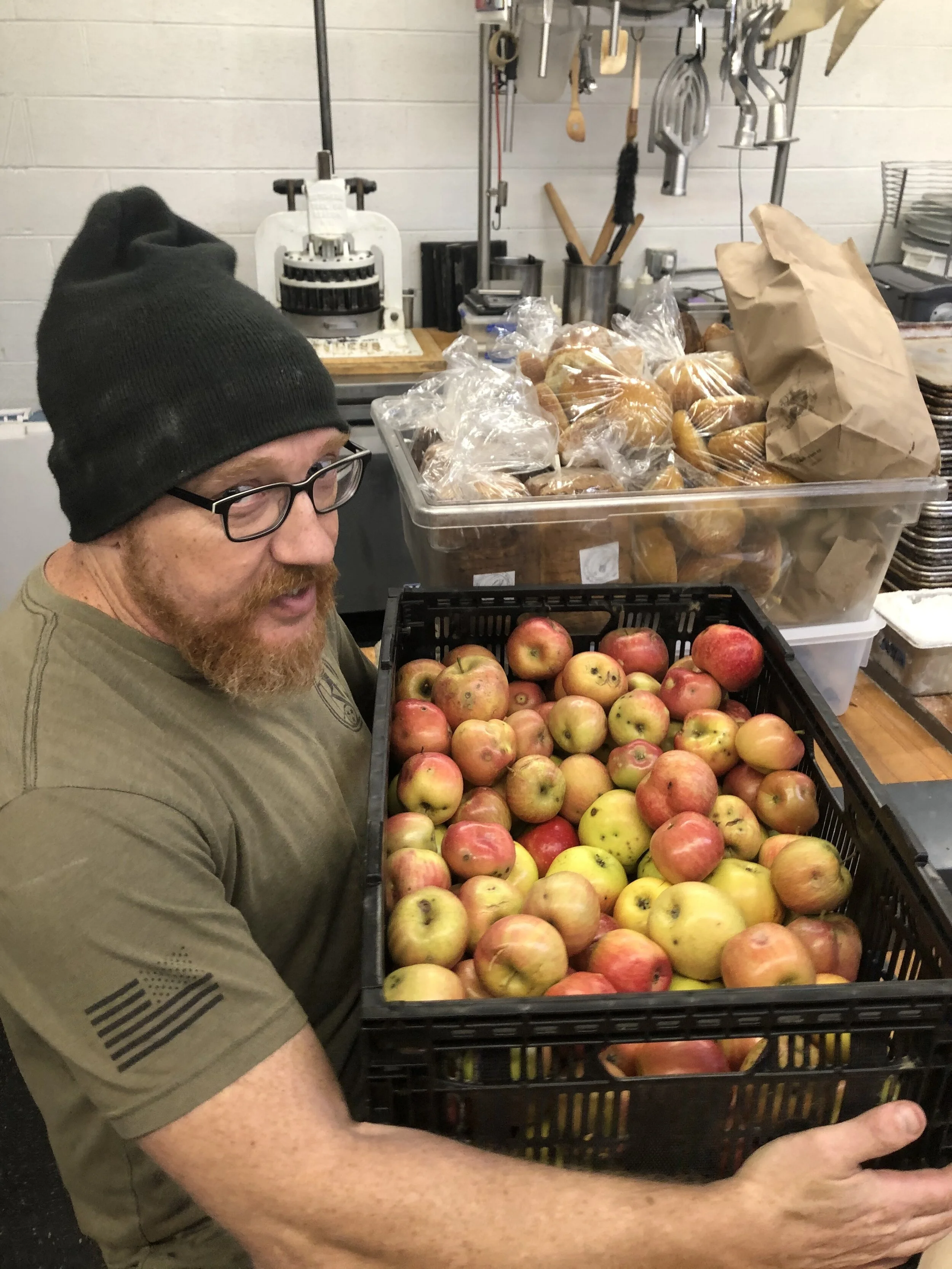
Baker Sam ready to make dessert.
Then for the big finish, Sam Tucker created an Apple Walnut Cake with Joe’s apples and served it with cool dollops of Calvados Zabaglione and a warm Apple Compote. Maneet added her flair and pop of color with edible orchid.

Chef Maneet ended the dinner by talking with guests about her experiences on Food Network’s Chopped and family memories of making the most of every ingredient.
“Growing up in India, there was no waste,” she said. She recalled her parents buying milk, pasteurizing it and then using the cream that settled at the top to make butter on weekends.
“Sunday morning was the most amazing time to get up,” she said, remembering the sounds of her family making butter. Fresh butter would then become ghee and the milk solids would be turned into dessert.
She also spoke about what draws her to the work of The Nashville Food Project.
“Food, to me, is about connection. It’s about making sure people are nourished. When you are connected both with your soul and your stomach,” she said. And she recalled learning how TNFP makes that happen on her first visit to our previous headquarters. “Every aspect of food was so carefully talked through — such as making sauces and repurposing them. There are a lot of organizations that do great work, but The Nashville Food Project does it at a grassroots level and that gets everybody excited and the community involved.”

On a day when we hosted a Friendsgiving, Maneet says the richest people on earth are those with the most friends. We’re sure grateful to be friends with Sam and Joe and Maneet — and all our partners and all of you.
We have just one more Simmer dinner to close out the series for the year — a Sunday brunch on Dec. 8 with Chef Levon Wallace featuring Mexican home cooking influenced by his time growing up in Los Angeles. Tickets can be purchased here and all proceeds support our work. Join us!

Extending Hospitality: From Restaurant Tables To Our Neighbors
So many Nashville restaurants have offered vital support to our work over the years, extending hospitality through generous donations of food, purchasing from Growing Together farmers, and more. As Nashville continues to change and grow, we’ve sadly seen some beloved restaurants make the decision -- for various reasons -- to close…
By Jennifer Justus, Culinary Community Liaison
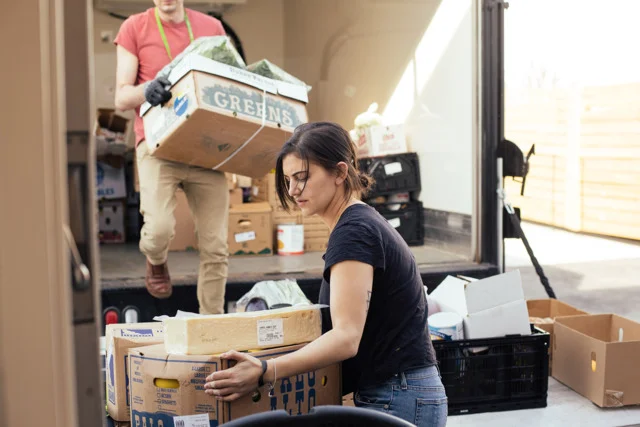
Photo by Daniel Meigs
So many Nashville restaurants have offered vital support to our work over the years, extending hospitality through generous donations of food, purchasing from Growing Together farmers, and more. As Nashville continues to change and grow, we’ve sadly seen some beloved restaurants make the decision -- for various reasons -- to close.
But here at TNFP we’ve found ourselves in the position of trying to find a sliver of positivity in the wake of those changes.
For example, when the 26-year institution Tin Angel closed after Rick and Vicki Bolsom’s decision to retire, they graciously gifted us their leftover produce, spices and other dry goods -- more than 1,000 pounds of food -- that we could use in making meals shared in partnership with poverty-disrupting and community building nonprofits in Nashville. Writer Margaret Littman with the Nashville Scene wrote about the Bolsom’s gift while including it in this larger story about our efforts and others in Nashville to minimize food waste as a whole.

More recently, we accepted a donation from Flyte World Dining & Wine when it closed after more than a decade serving Nashville.
The Flyte donation included citrus fruits, mixed greens, wild rices, high-end oils and vinegars, canned tomatoes, flour, maple syrup and vanilla extract. We’ll continue to work through those products for our meals program for months to come, but most immediately we added Flyte mushrooms and potatoes to a stir-fry that went to seniors at FiftyForward and Vine Hill Towers. The stir-fry also helped provide healthy meals for Sweet Peas, our new summer meals program for kids.
We consider it an honor to be a part of extending the hospitality of these restaurants. From their tables to our neighbors, we do our best to make the most of what’s given to us for providing high-quality, nourishing meals.
Orange, Mushroom, Potato and Bell Pepper Stir-Fry
A lot of times we need to move fast at TNFP -- especially this summer as we’ve ramped up from 5,500 to 7,500 meals a week. Stir-fries offer a great way to make meals quickly while also packing in lots of nutritious vegetables coming out of the gardens at peak season.
Ingredients
1/4 cup canola oil, divided
2 cups potatoes, diced
1 tablespoon cornstarch
1/2 cup fresh orange juice
2 cups mushrooms
1 cup thinly sliced yellow onion
1 cup sliced green bell pepper
1 cup sliced red bell pepper
1 tablespoon thinly sliced garlic
1/2 teaspoon grated orange rind
1/2 teaspoon crushed red pepper
3 tablespoons reduced-sodium soy sauce
1 tablespoon unseasoned rice vinegar
1 teaspoon light brown sugar
1/2 teaspoon kosher salt
2 (8.8-oz) pkg. precooked brown rice (such as Uncle Ben's)
2 tablespoons chopped fresh cilantro
Directions
Heat 3 tablespoons oil in a large nonstick skillet over medium-high. Add potatoes to pan; cook 8 minutes or until golden. Remove from pan.
Combine 1 tablespoon cornstarch and orange juice in a small bowl. Heat remaining 1 tablespoon oil in pan over medium-high. Add mushrooms, onion and bell peppers; cook 5 minutes. Add garlic, orange rind, and crushed red pepper; cook 1 minute. Add juice mixture, soy sauce, vinegar, sugar, and salt; bring to a boil. Stir in potatoes. Place 1/2 cup rice on each of 4 plates; top each serving with 3/4 cup of vegetable mixture. Sprinkle evenly with cilantro.
Recipes adapted from Cooking Light.
Making Gold: Composting In Nashville
Did you know 28% of all waste in Nashville is compostable material? Here at TNFP, the idea and act of composting is a value: taking our forgotten bits, our discarded carrot ends, broken eggshells and spent coffee grounds and diverting them to be used as rich inputs for the earth which we've too often abused and abandoned. Learn how YOU can make gold out of your own leftovers, including FREE compost drop-off at select Metro convenience centers.
By TNFP’s Community Engagement Manager, Elizabeth Langgle-Martin
“The world gives you so much pain and here you are making gold out of it, there is nothing purer than that.”
This quote from Rupi Kaur is one of my favorites. This idea, this value, of creating worth out of something that can be seen as the garbage of life (literally or figuratively), is inspiring and challenging.
I’m fairly certain the Rupi Kaur wasn’t talking about compost, but the idea of taking our forgotten bits, our discarded carrot ends, broken eggshells and spent coffee grounds and diverting them to be used as rich inputs for the earth which we have abused and abandoned for so long feels almost holy.

This ritual, this practice, of carefully collecting the skins of onions, the stubby bottoms of asparagus and the spinach that has developed an acute layer slime, speaks to a level of restoration that is life giving to me.
In both of our TNFP kitchens, you’ll see volunteers and staff alike hoarding apple cores and potato peels and transporting them to our compost bins to be turned lovingly into invaluable nutrients that are sown back into our gardens to grow countless more serving of organic fruits and vegetables for individuals facing food insecurity in the Nashville area.
Not all of us operate commercial kitchens or spend our days tending production and community gardens. However, there is space for each of us to create rhythms of intentionality in reducing the waste we contribute to the landfill and leveraging every smidge of our resources for the benefit of our world.

So how can you make gold out of the forgotten bits of tonight’s dinner or tomorrow’s lunch?
We often have folks reach out and ask this exact question. Individuals living in apartments or families who may not have the time, space, or desire to facilitate their own composting process but who are acutely aware of the need for a change in the way we view and handle our kitchen waste.
Many Nashville neighbors aren’t aware that Metro Nashville provides drop off for compostable materials at 4 of its convenience centers scattered throughout Davidson county. These sites allow residents who are interested in the practice of composting a feasible way to make a shift in the way they view and revere scraps and other materials. Their website notes that 28% of all waste in Nashville is actually compostable materials.
Metro provides simple guidelines for those wishing to participate:
Ensure that all the items you are collecting are truly compostable. See their whole list HERE. Unlike many home compost systems, Metro Convenience Centers can even accept meat, fat and bone scraps. Double check that your contribution is free of materials deemed off limits: Plastic, expanded foam, metal, aluminum foil, animal or human waste and dryer sheets.
Collect items in a compostable bag or cardboard container. Alternatively, you can transport your items in a re-usable container and dump the contents directly in the compost container at the convenience site.
Deliver to one of the four designated Convenience Center Sites free of charge.
And the options don’t end there! If you’re interested in paying to have your compost picked up from your home or business, The Compost Company and Compost Nashville are two great local resources.
The practice of compost exists at the intersection of our TNFP values of Interdependence and Stewardship. We are committed to seeing these values realized in our spaces as an organization, but feel truly effective when we see them spill over into the homes of our friends, our teams, our volunteers and families.
We invite you to participate as we strive to honor both those around us and our world more fully each day, with our words, our actions, and yes… even our moldy strawberries.
Wasted Food = Wasted Nutrition
We’ve all been there before - the broccoli stems left over after a dinner party, strawberries that you meant to eat but didn’t get to - all thrown out and wasted. 40-percent of all food produced is wasted while at the same time 1 in 7 children are struggling with hunger according to Feeding America. Believe it or not, there are some staggering nutritional benefits to lowering your food waste…

We’ve all been there before - the broccoli stems left over after a dinner party, strawberries that you meant to eat but didn’t get to, the apple peels left behind due to a picky toddler, browned bananas that are a little too sweet to eat - all tossed into the trash and wasted. 40-percent of all food produced is wasted while at the same time 1 in 7 children are struggling with hunger according to Feeding America.
Believe it or not, there are some staggering nutritional benefits to lowering your food waste. Every item of fresh produce that gets tossed is a lost opportunity to get vitamins and minerals from the foods we eat. A study published in the Journal of the Academy of Nutrition and Dietetics found that food thrown away each day could provide 1,217 calories to each person in the United States each day, and the equivalent to 19% of fiber, 43% of vitamin C, 48% of iron, 29% of calcium, and 18% of potassium recommended for daily nutrition.

Here at The Nashville Food Project, we work every day to reduce the amount of edible food being wasted in Nashville and increase the nutrition available to our community. Already this year, TNFP has prevented over 42,000 pounds of food from going into the landfill. We’re always striving to be good stewards of all the food that comes through our doors, using every edible component of each item however we can. This means we have to get creative in the kitchen! Below are some fun tips and recipes to keep food and nutrients on our plates instead of in the trash.
The majority of the nutrients are lost by throwing away the peels on fruit and vegetables. The peel of an apple contains half of the apple’s fiber and four times more vitamin K than the flesh. Recipe: Baked Apple Peel Chips
Citrus peels contain twice as much vitamin C than what is inside. Citrus shavings can be grated to add natural flavor to salads, used to make salad dressings and cooked in soups and sauces. Recipe: Orange Vinaigrette Using Peel
Save the stock from your cooked meats and vegetables! Using stock instead of water to cook things like rice and pasta gives the food more flavor, and offers a variety of vitamins and minerals. For even more incredible flavor, throw in your Parmesan rind. Recipe: Vegetable Stock
Before you throw away those stems… broccoli stems contain more calcium, iron and vitamin C than the florets. Recipe: Broccoli Stem Noodles with Sesame Ginger-Dressing
For more insight, recipes, and tips on reducing food waste in your home, check out savethefood.com.
A No-Waste Cooking Class
Inspired by John T. Edge’s book The Potlikker Papers, our meals team has pulled together several southern-inspired menus for two classes on cooking to reduce food waste. Check out the menu and story behind our first class.
Reflection by TNFP's Meals Director, Christa Ross
If you’ve been following along with The Nashville Public Library (NPL)’s Nashville READS Program this year you’re likely well into The Potlikker Papers: A Food History of the Modern South by John T. Edge. He tells the stories of our history through food, with meals borrowing heavily from old Southern traditions, sorghum and soybeans. This book strums at my heartstrings as it walks through the many ways that food has touched the history of the South. He dives into difficult topics, discussing them as he circles around the pots of greens and pans of cornbread that fed the people fighting for change. As a native Nashvillian, these stories feel close to home. What I love best about this book, though, is it’s acknowledgement that the story of food is the story of people: a true history cannot exclude food. People and food are inextricably linked in the past, present, and future.
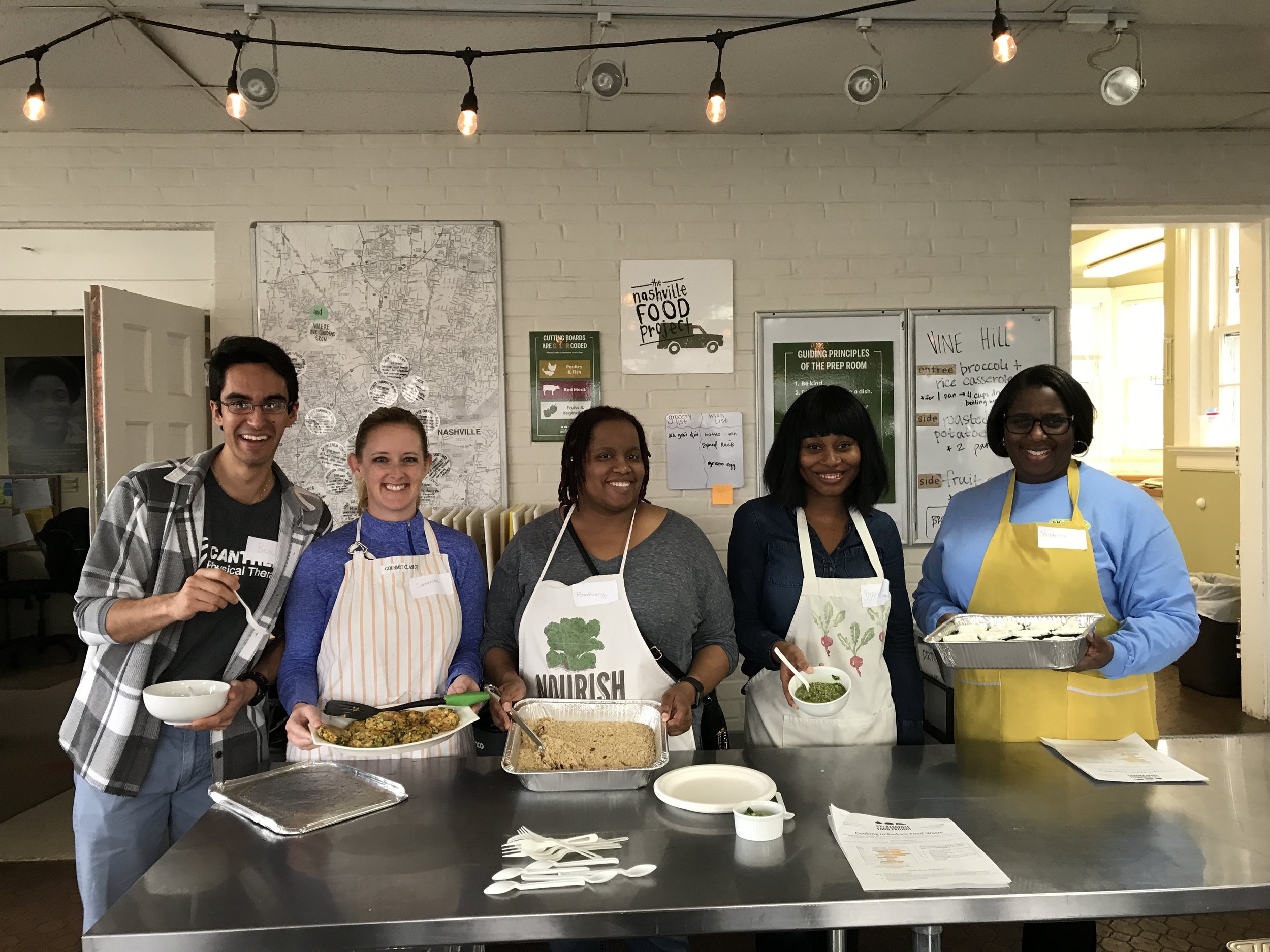
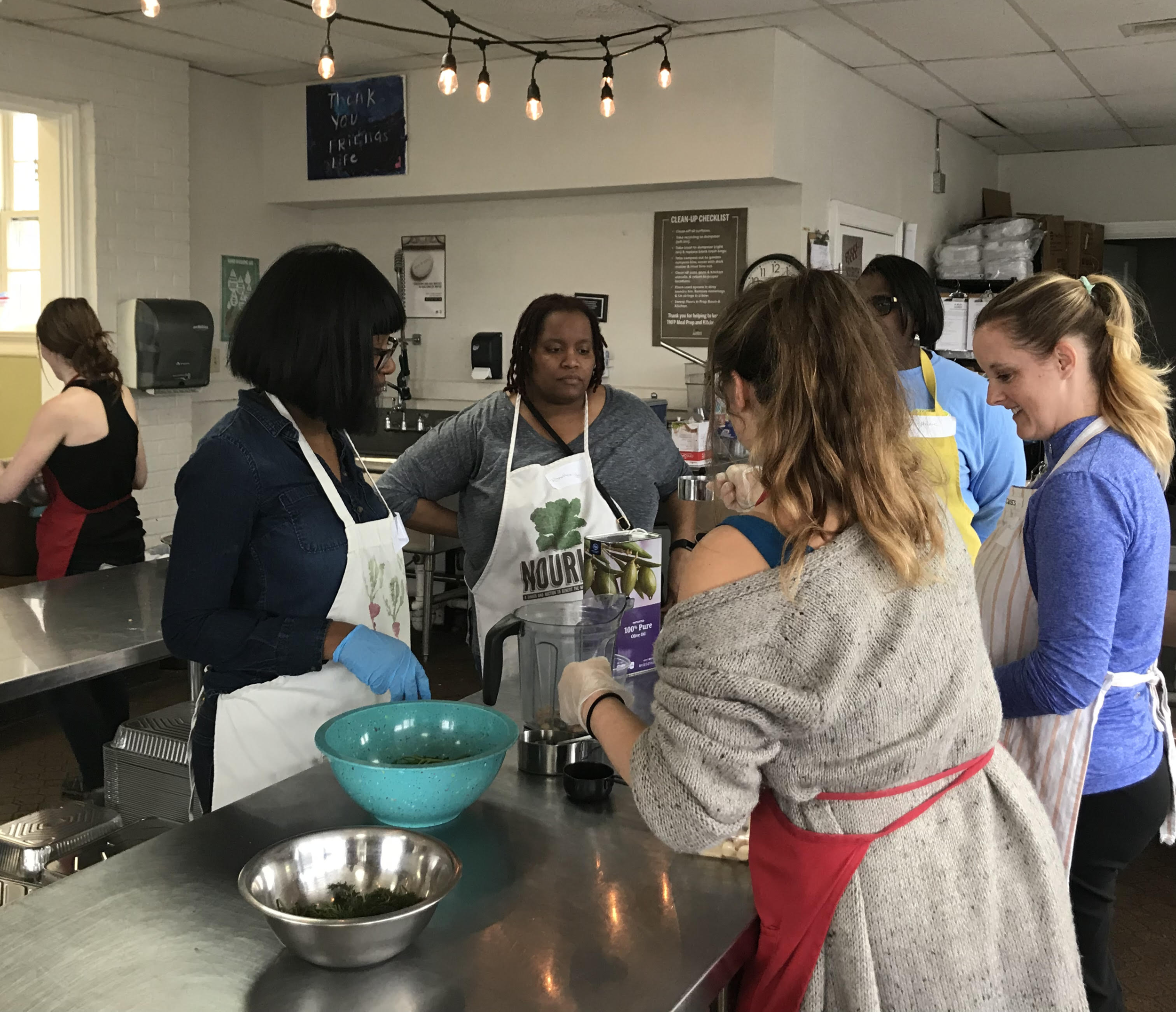
This year, as NPL showcases The Potlikker Papers, we have partnered with them to facilitate two cooking classes on how to decrease food waste in the kitchen, a topic that is near and dear to our hearts. These classes are centered around decreasing personal food waste in our homes, which for us means changing the way we think in the kitchen. As they meal prep, our volunteers watch the influx of thousands of pounds of donated food come into our kitchens. We never know what’s going to be donated next and in order to be the best stewards of the incredible abundance we receive daily, creativity is key.
Common examples of avoidable food waste that we focused on with our menu are “scraps” or parts of food usually thrown away, expired or nearly expired foods, and “ugly” foods. According to the NRDC, “American families throw out approximately 25 percent of the food and beverages they buy. The cost estimate for the average family of four is $1,365 to $2,275 annually.” With 40 percent of all food going to waste in the United States, these household numbers contribute a huge portion to the total amount of food wasted. So when we created the menus for these classes, we focused on food that might typically be wasted in a home kitchen.
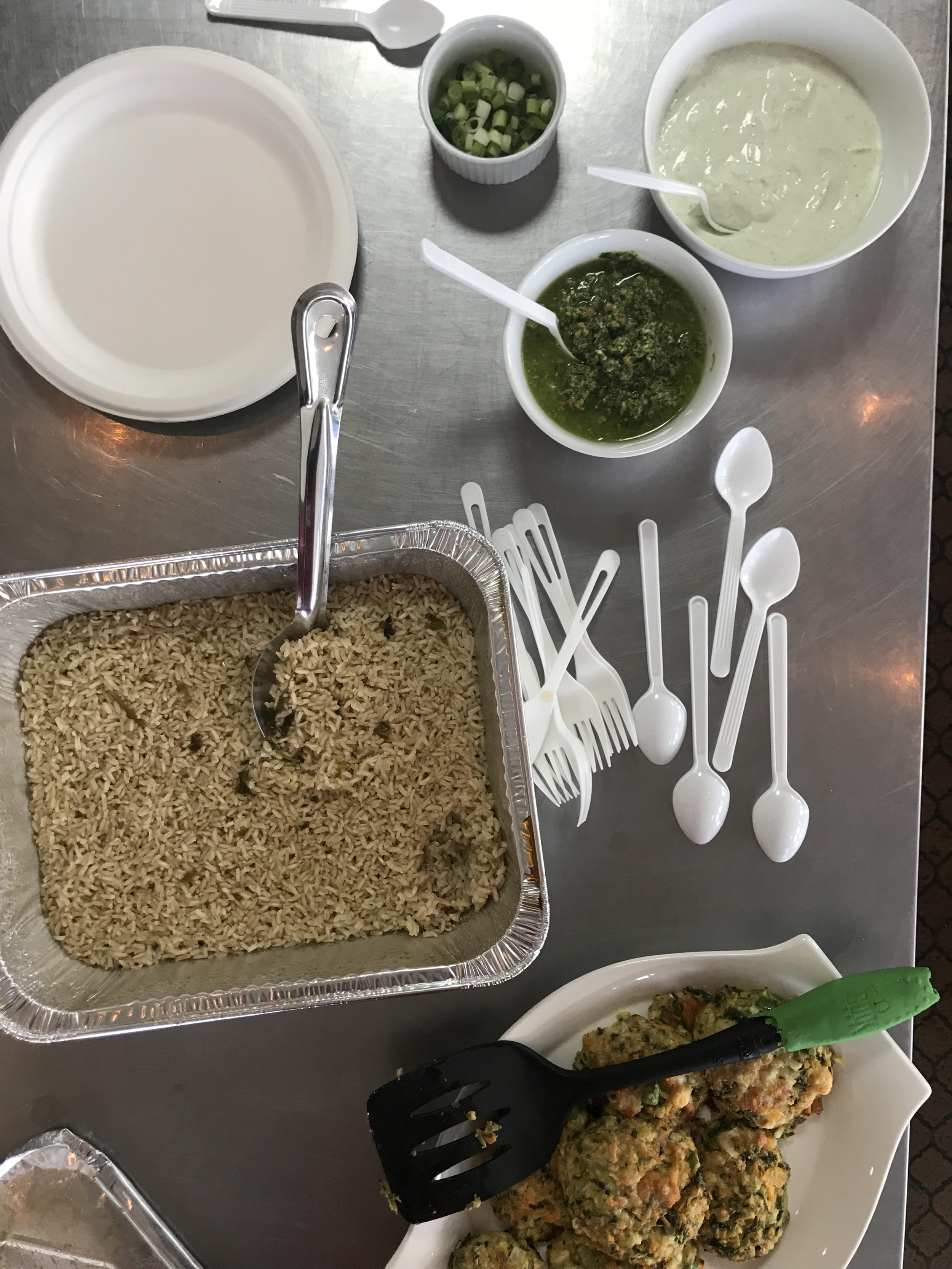
The feast:
- Vegetable scrap fritters (recipe here!)
- Yogurt sauce
- Rice cooked in veggie scraps & parmesan rind stock
- Carrot top pesto
- Apple peel tea
- Banana ice cream
We made the vegetable friters using scraps saved throughout the week at TNFP (broccoli stems, carrot peelings, zucchini ribbons, etc). This went along with a yogurt sauce for dipping made from soon-to-be-expired yogurt, garlic, green onion tops, and salt.
One of our favorite tips for decreasing food waste is stock! For this class we added onions, carrots, turnips (my personal favorite addition for an extra flavorful stock), celery, and garlic. For the last 15 minutes of cooking we added some parsley stems and a parmesan rind from a recently finished block. Cooking rice or pasta in this flavorful stock adds incredible depth and flavor to the base of your meal as well as lots of nutritional value.

We topped the vegetable fritters with carrot top pesto, another of our favorite food waste tips. We like to make “pesto” with any combination of greens and nuts, often using up greens that are past their prime. Our no fail ratio for pesto is 1 cup chopped and packed greens, ¼ cup toasted nuts or seeds (favorites include almonds, walnuts, pepitas & pine nuts), 1 clove garlic, 1 T. lemon juice, ½ cup EVOO & salt to taste.
To drink we made apple peel tea, boiling the scraps with ginger and cinnamon, and is great hot or cold. Dessert was a decadent banana ice cream, one of our favorite ways to use bananas that have turned brown.
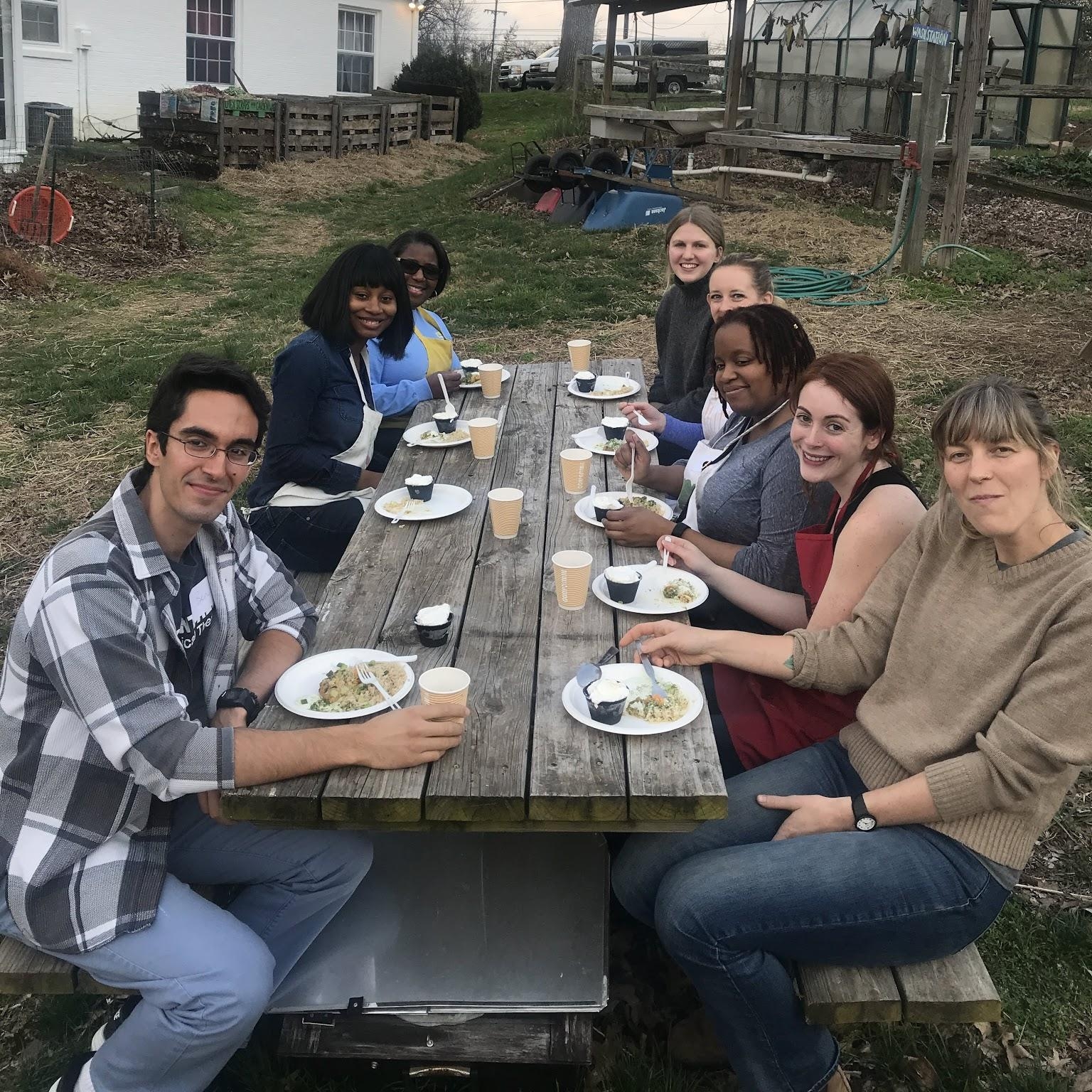
I can honestly say that being a part of this class was an incredible affirmation of our mission. Everyone in the class came together as strangers to learn. As we began to cook the class came alive; we laughed, discussed favorite foods and kitchen tricks.
At the end of the class, as we sat down together to enjoy the meal, I circled back to some of Edge’s final thoughts in The Potlikker Papers. “New peoples and new foods and new stories are making their marks on the region. What was once a region of black and white, locked in a struggle for power, has become a society of many hues and many hometowns…” Our meals tell many stories, of the farmer’s who grew the food, of the volunteers who spent hours chopping and cooking, of waste diverted, and hungry mouths fed. A new kind of southern food comes out of our kitchens, paying homage to the land & served to the people, all people, whose stories are written in its history. And after all, a shared experience makes a shared meal that much more meaningful!
We would love for you to join us for our second FREE class on April 18th at 5:30. To attend please email Malinda@thenashvillefoodproject.org to sign up and learn more!
Making the Most of Every Resource
We know that 40% of all food produced in our country is thrown away, but we also know that it doesn’t have to be that way. Last year, we began working with the National Resources Defense Council (NRDC) to ramp up our food recovery efforts.
One things we like to say around here at The Nashville Food Project is that we believe that we live in a world of abundance. A world where there is enough to go around - enough farmable land to grow nourishing food for our city, enough hard-working hands to do incredible work and enough food to feed everyone in our community.
We know that 40% of all food produced in our country is thrown away, but we also know that it doesn’t have to be that way. Last year, we began working with the National Resources Defense Council (NRDC) to ramp up our food recovery efforts. They shared with us a food waste pyramid that has helped guide us in determining how best to use all of our food resources as we work towards a system of zero waste.
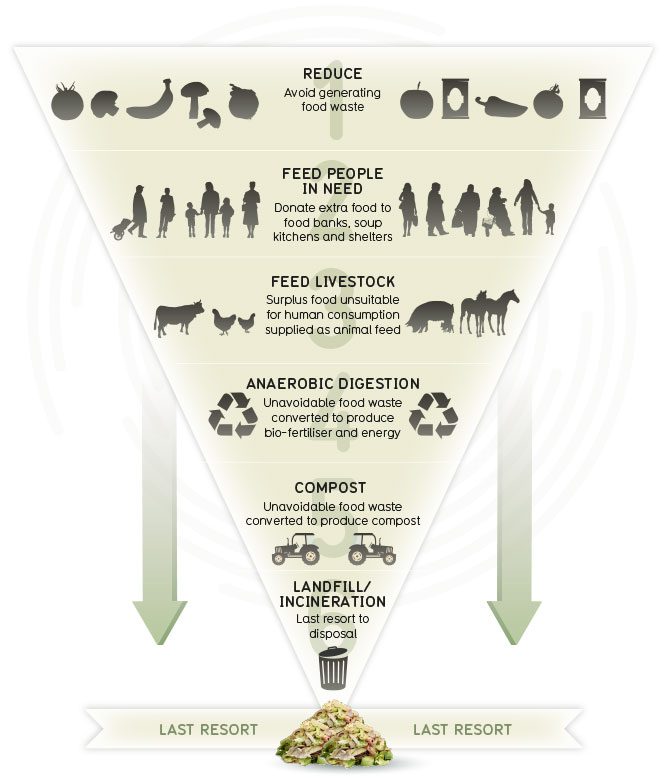
The first and most important step is to avoid generating food waste in general. With that in mind, we’ve gotten even more creative in how we use up every last bit of the food that we have. A great example of this is our partnership with our neighbors at Green Hills Grille. On their menu is a great salmon filet, but we all know that a side of salmon doesn’t come beautifully square shaped naturally. In order to get that pretty portion, the restaurant cuts off all of the trimmings, but instead of just throwing them away, they freeze them and bring us those trimmings each week. We cook them up and use them for meals like our delicious salmon patties. That ensures that all of that food goes to the NRDC’s second most recommended use of food - to feed people in need.


As we’ve increased our food recovery efforts, though, we’ve realized that we can’t always use all of our recovered food before it perishes, and some of it just doesn’t meet the needs of our meal guests. So we began building a network of partners who can take this excess food and use it in their own programs.
One such partner is Renewal House, a nonprofit that provides long-term, comprehensive treatment programs serving women affected by addiction and their children. Each week, we share healthy food with the women participating in Renewal House’s family residential program, stocking refrigerators so that the mothers have good food to prepare for their children. We now have 11 of these partners with whom we share our excess food, ensuring that none of it goes to waste.

Still there are times when we get food that is no longer appropriate for human consumption so we went back to the pyramid to determine the best and highest use for it. The next NRDC recommendation is to use food waste for animal feed. We raise chickens in our Wedgewood Urban Garden so naturally, much of our excess food has become chicken feed, and we must say that it has resulted in some very happy, healthy chickens!
What we can’t share in our meals, with our food sharing partners or with our chickens is then composted. That food contributes to creating wonderful potting soil that feeds our gardens, which, of course, produce even more healthy food. It’s an incredible cycle that we’ve loved seeing come together.

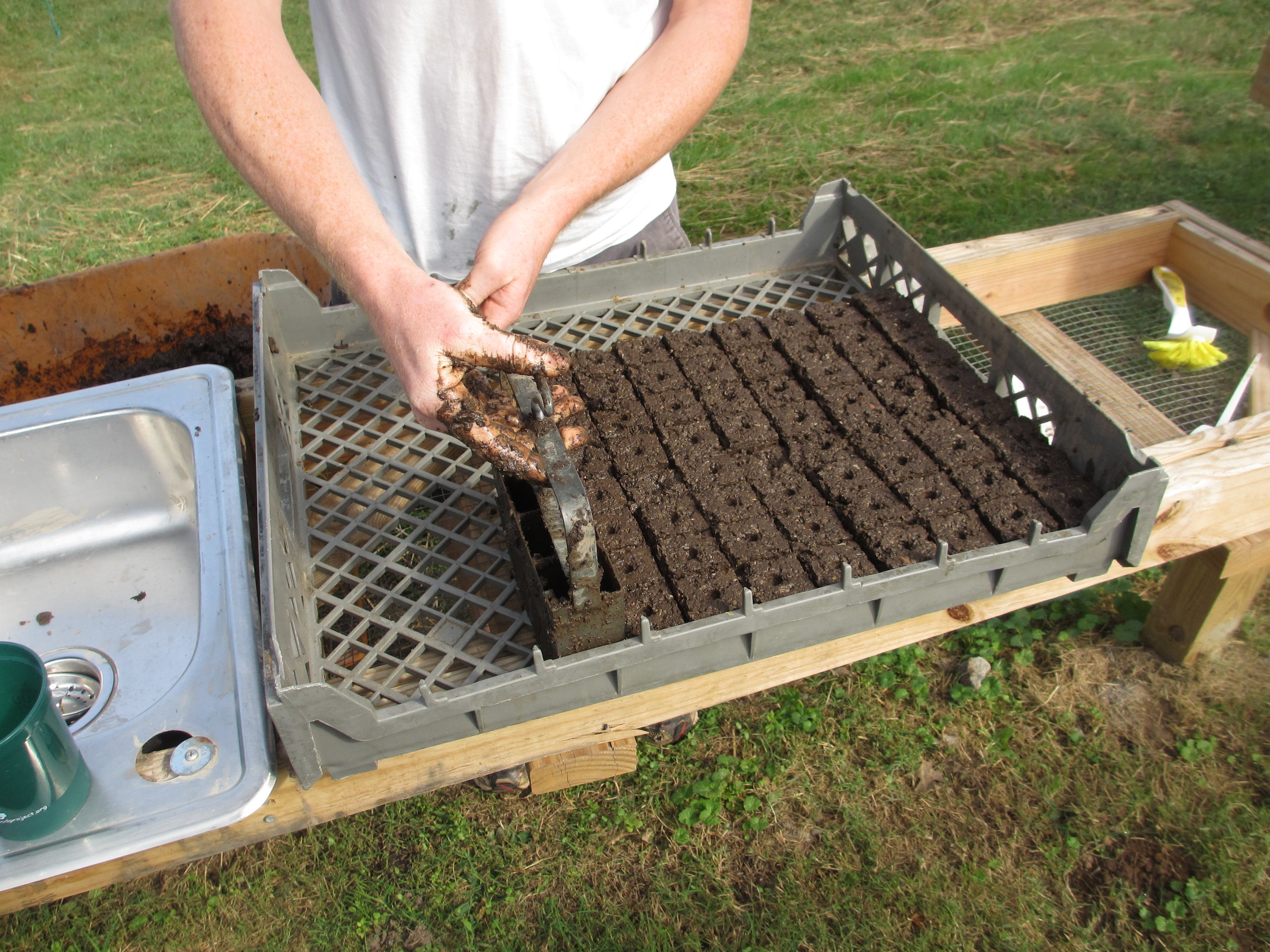
We are constantly exploring new ways to make the best and highest use of every bit of food that comes through our doors. Slowly but surely, we’re doing our best to reduce our own food waste and to help our city as it works to do the same. If you’re interested in learning how you can reduce your own family’s food waste, we urge you to visit savethefood.com to find great recipes and resources to get you started.
Best If Used: SAVE THE FOOD
Earlier this month, The Nashville Food Project was invited to participate in an exciting event with state and local partners, including the Nashville Farmers’ Market, the Tennessee Department of Environment and Conservation (TDEC) and Metro Nashville Public Works, among others.

Earlier this month, The Nashville Food Project was invited to participate in an exciting event with state and local partners, including the Nashville Farmers’ Market, the Tennessee Department of Environment and Conservation (TDEC) and Metro Nashville Public Works, among others.

The event, called “Save the Food,” included a screening of the 2014 documentary “Just Eat It,” a funny, entertaining look into food waste at various points in the food system, from farm, production, and retail, all the way to the home fridge. The film was accompanied by a delicious meal prepared by our innovative Meals Team. The dinner we served—a vegetarian chili with all the fixings—was made with rescued food, including an apple ginger tea, made by steeping apple peels and ginger in hot water.

The event was part of a larger effort to reduce food waste in Nashville, led by the Natural Resources Defense Council (NRDC). To learn more about how to reduce food waste in Nashville and across our country, please visit www.savethefood.com.
Sharing the Abundance of Our City
Did you know that 40% of all the food in our city gets thrown away? For the average Nashville family, that’s 20 pounds of food waste per month and $1,500 of food thrown away each year…
Did you know that 40% of all the food in our city gets thrown away? For the average Nashville family, that’s 20 pounds of food waste per month and $1,500 of food thrown away each year.

But The Nashville Food Project is working to change that. Earlier this year, we became a lead agency partner in the National Resources Defense Council’s Nashville Food Waste Initiative. As part of this initiative to greatly reduce Nashville’s food waste, we’ve ramped up efforts to recover healthy surplus food from local farms, grocers and restaurants. This food is used in our meals to feed our city’s most vulnerable communities while greatly reducing the amount of food that enters our city’s waste stream. Already this year, we’ve recovered more than 20,000 pounds of food!
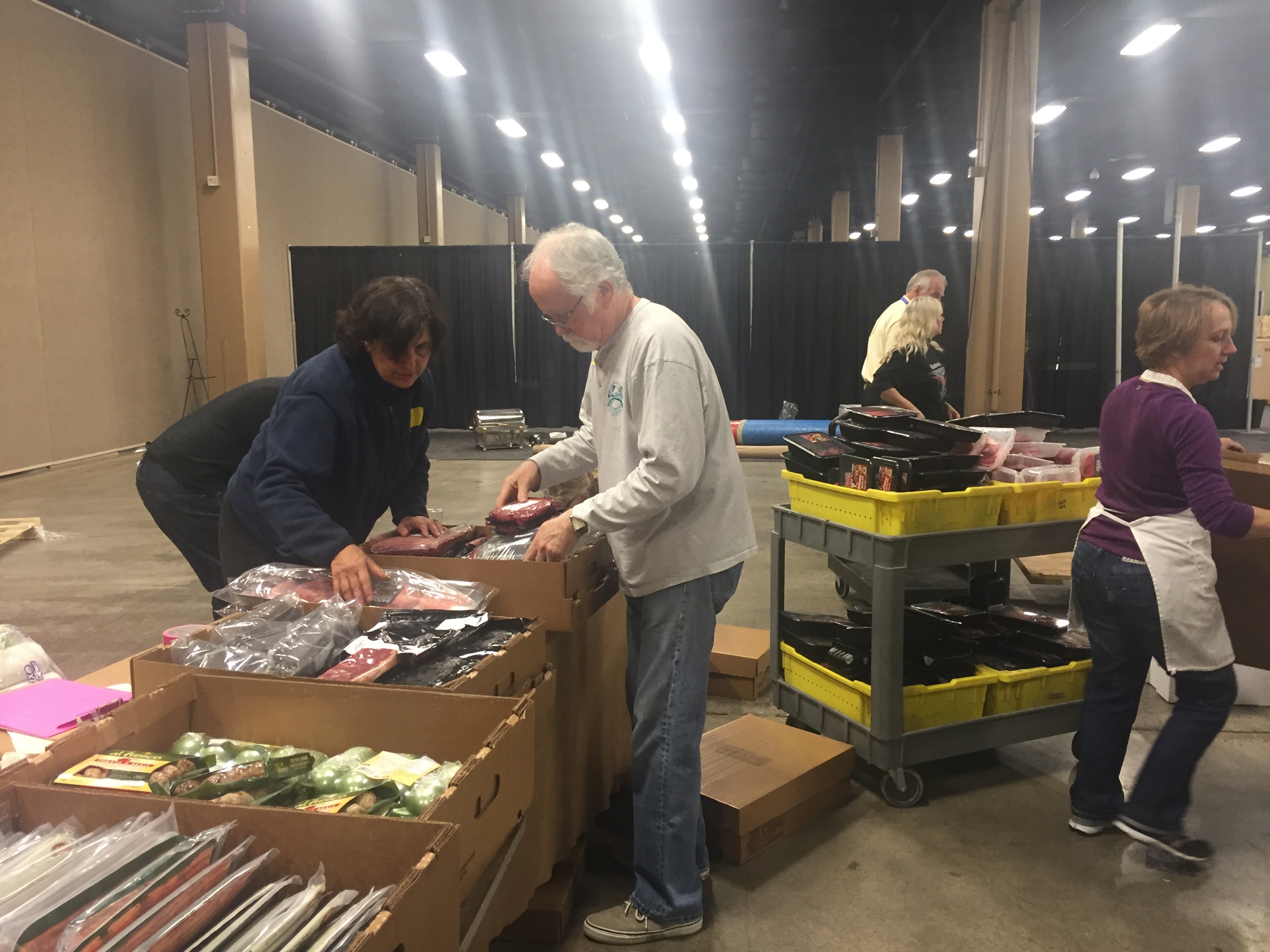
Our largest food donation this year - 11,000 pounds of meat recovered from a meat conference at Gaylord Opryland
This increase in donated food has allowed our staff and volunteers to work more creatively to produce our meals. As the amount of food coming in has skyrocketed, we’ve learned to really think on the fly, adapting menus for the food we’ve received and supplementing with gleaned food whenever possible. Here are a few examples of the fun menus we’ve put together recently using donated food:
- Southwest Chicken Salad sandwiches using chicken gleaned from Chipotle
- Hummus and veggie wraps using ingredients entirely gleaned from Whole Foods in Green Hills
- Chocolate bars topped with cream cheese frosting and strawberries using gleaned chess pie, gleaned cream cheese and sour cream from Iron Fork, Strawberries gleaned from Creation Gardens
- Breakfast Potato Fritatas using potatoes gleaned from Mitchell's Deli
- French Toast Sticks using items gleaned from Sinema
- Beef Stroganoff using Prime Rib gleaned from The Green Hills Grill
Increasing our food rescue efforts has also strengthened our community partnerships. We’ve added many new food donors and increased our work with several existing donors including Whole Foods Market, with whom we now glean three times each week at their Green Hills and Franklin locations. We’ve also strengthened our nonprofit partnerships as any food that we can’t use in our meals is shared with a nonprofit partner, ensuring all food goes to someone who is hungry rather than into a dumpster.
The great increase we’ve seen in donated food, has had a big impact on our meals program - decreasing food costs and increasing the amount of food we can share. Already this year, we’ve more than doubled our weekly meals production. To make this all happen, we’ve increased our meals team by two:

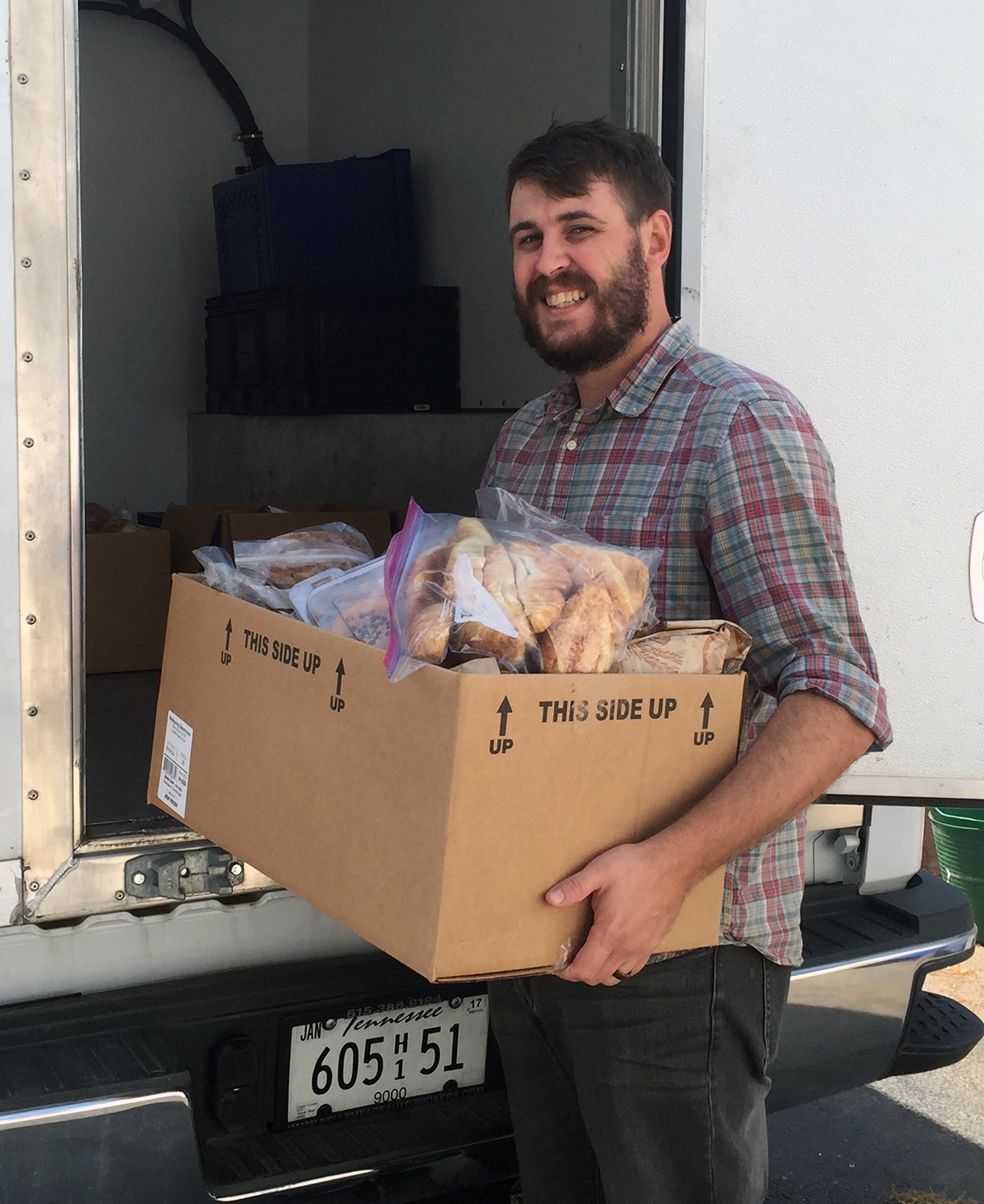
Booth Jewett
Food Donations Coordinator
Booth moved to Nashville in 2012 to attend Trevecca Nazarene University, where he earned a degree in Social Justice. He also received his Permaculture Design Certification (PDC) from the University of Vermont in 2015. He is a committed and passionate worker in the local food movement with experience in sustainable farming, community engagement, and speaking and teaching on food justice issues. Booth was born in Atlanta,GA and is an avid fan of all Atlanta sports teams. He and his wife Brittany live in South Nashville.
Christa Ross
Meals Manager - South Hall
A Nashville native, Christa received a degree in environmental policy from the University of Tennessee, Knoxville. She headed west after school and spent five years in Oregon and Northern California working on several organic farms and in catering -- developing a deep seeded love for food. After moving back to Nashville, Christa joined the staff of TNFP as Food Rescue Coordinator before moving into her current role of Meals Manager - South Hall. Outside of work, Christa spends as much time as possible outside, hiking, kayaking and growing good food!
For more information or to donate food, please contact Food Donations Coordinator Booth Jewett at booth@thenashvillefoodproject.org.
Meatopia is a Wrap!
Last week we had one of our largest gleaning opportunities of the year -- a meat conference at the Gaylord Opryland Convention Center -- an event we have fondly been referring to as “MEATOPIA”. We rescued a grand total of 11,000 lbs of meat from this event -- what will be used for many months to feed our community…
by Food Rescue Coordinator Christa Ross
I am generally amazed at the amount of time it takes to put out just one of our many meals. Of course there’s the prep time, the cook time, the drive time, and all of the logistics. All of these things, in themselves, take time, planning, and implementation.
But upwards and above all of these basic things that make up a meal, our mission incorporates the use of rescued and donated food as a central ingredient. Keeping down costs means more, high quality meals going out to our communities. It also means less food waste heading to the landfill. I love this idea -- in the midst of our societies abundance, as we are surrounded, out of sight, by the hungry and under represented, all food should play a part in feeding our community.
Last week we had one of our largest gleaning opportunities of the year -- a meat conference at the Gaylord Opryland Convention Center -- an event we have fondly been referring to as “MEATOPIA”. We rescued a grand total of 11,000 lbs of meat from this event -- what will be used for many months to feed our community. What an amazing gift.
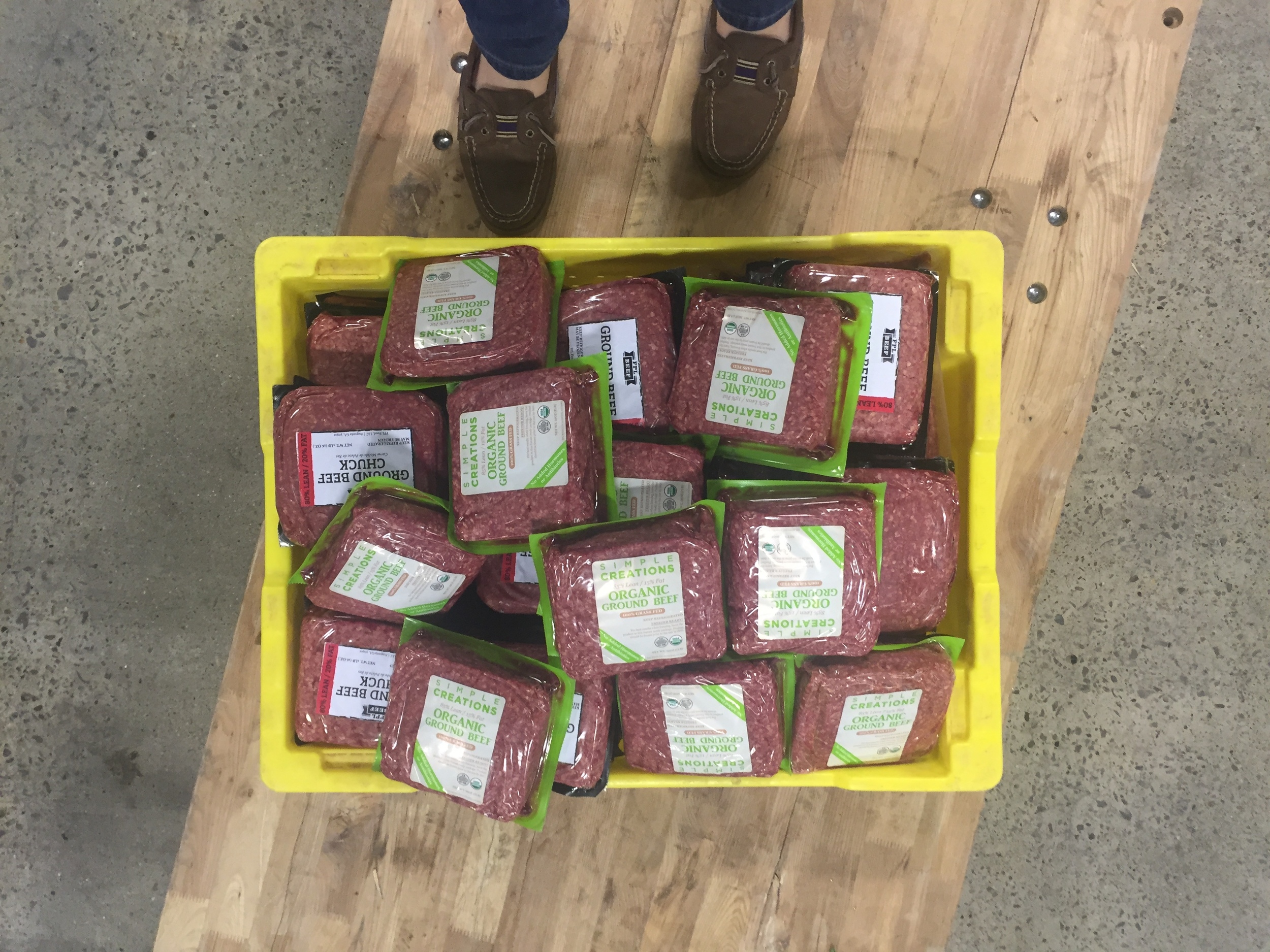
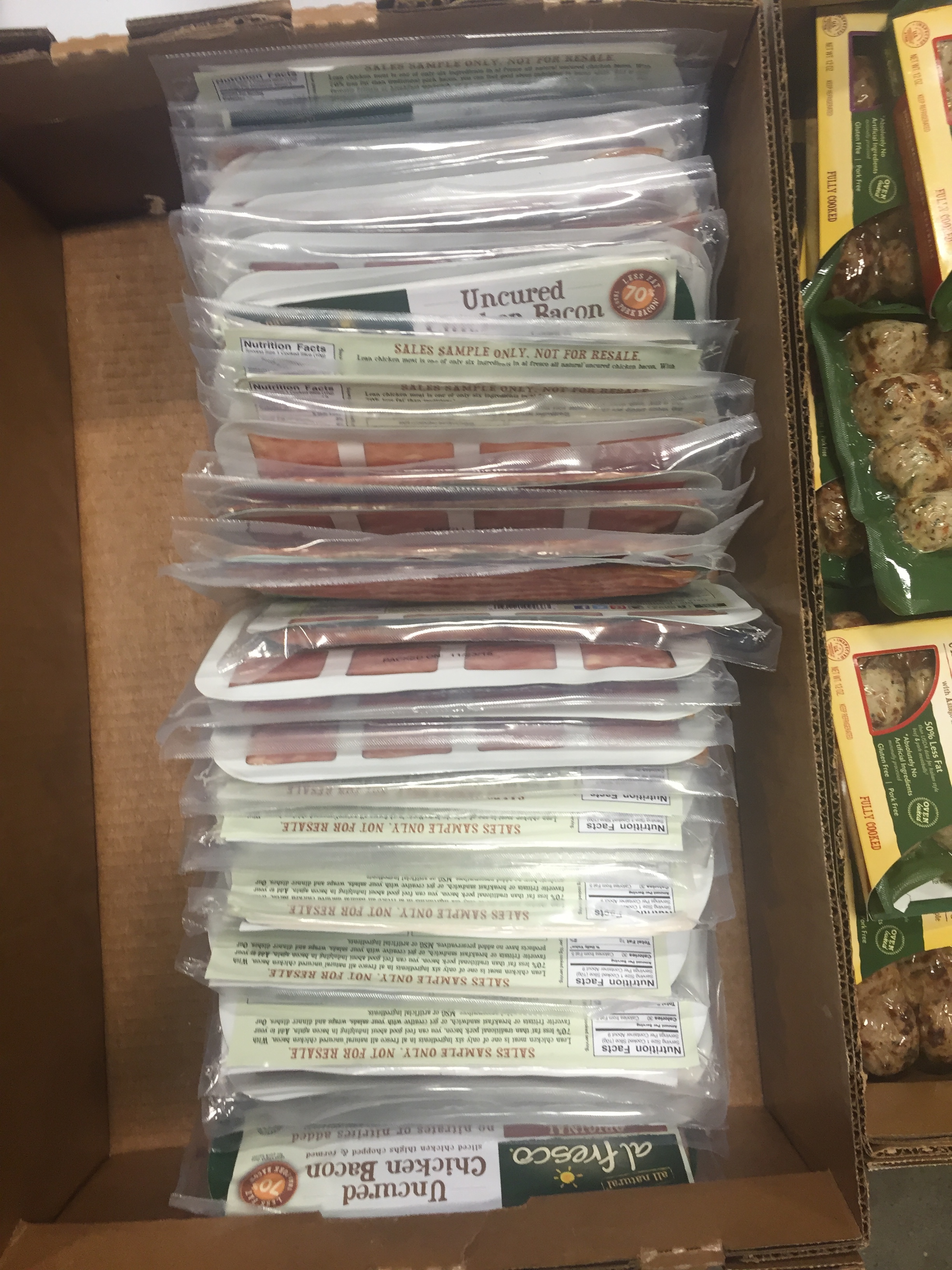
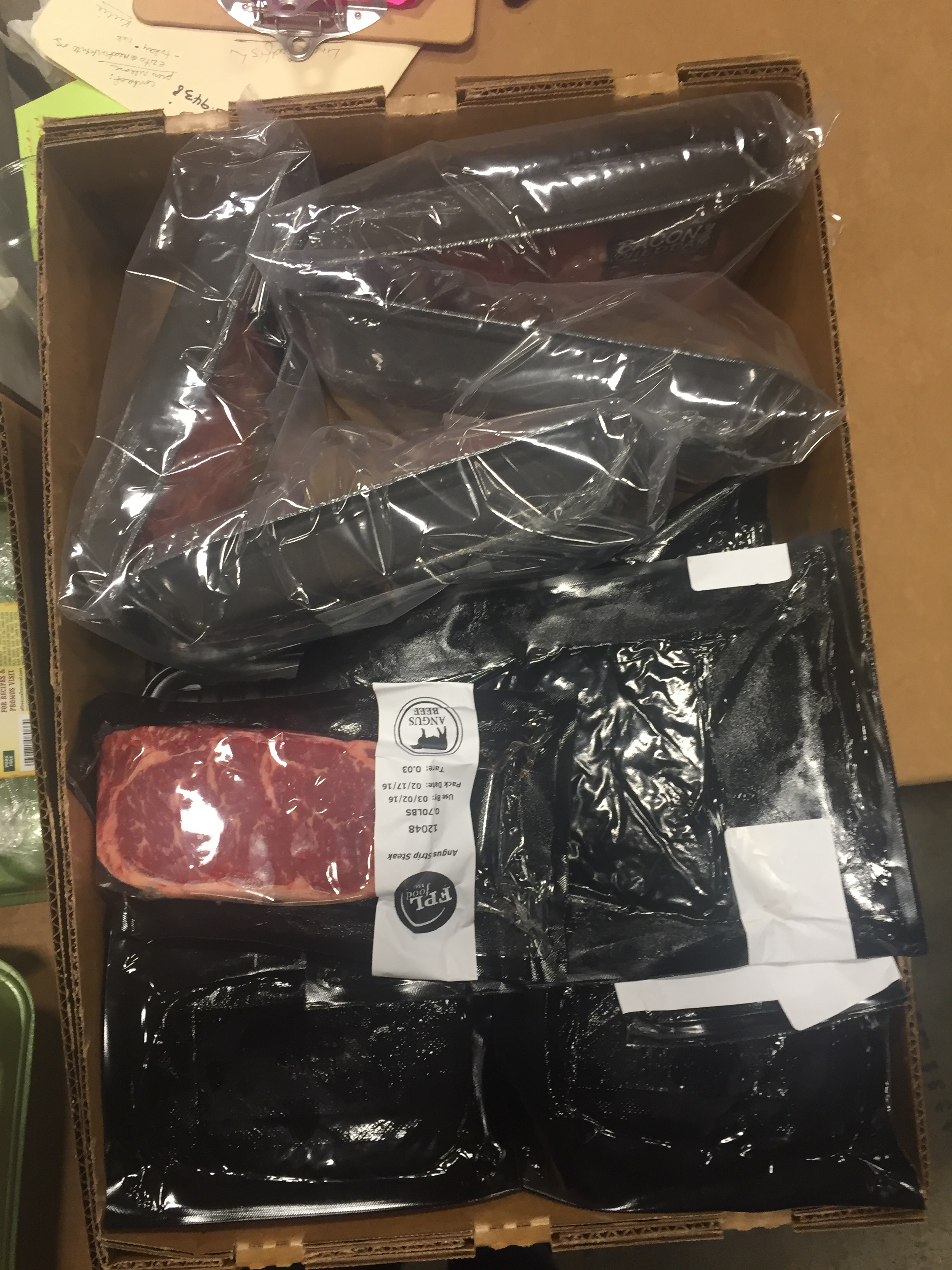
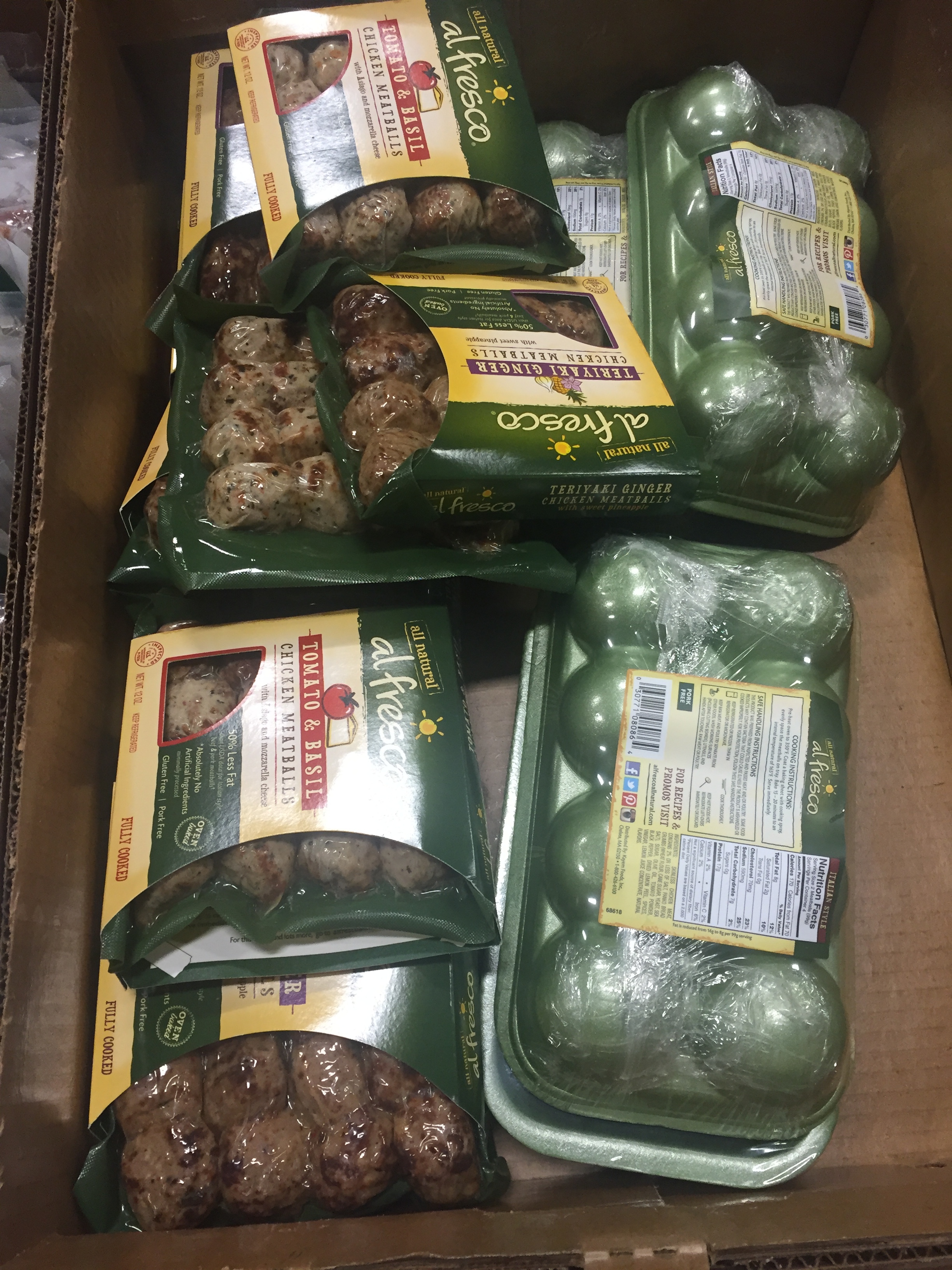
The planning for this event included many meetings and emails, volunteer wrangling, one of the most intricate colored duct-tape inventory systems I’ve ever seen, and a truck load of wax boxes. We also pulled together 5 trucks for hauling the meat and ended up filling two walk in freezers (stacks of boxes everywhere) and three pallets full stored in a warehouse freezer.

The evening starts with a massive room full of displays like this one. We send teams around the room collecting all of the meat and bringing it back to our staging area to be sorted and transported to our kitchen.

Here's where the duct-tape comes in. All of the meat gets sorted - chicken with chicken, beef with beef, bacon with bacon (and there's a LOT of bacon) - and then loaded up in our refrigerated truck and other volunteer vehicles to be taken back to our kitche.
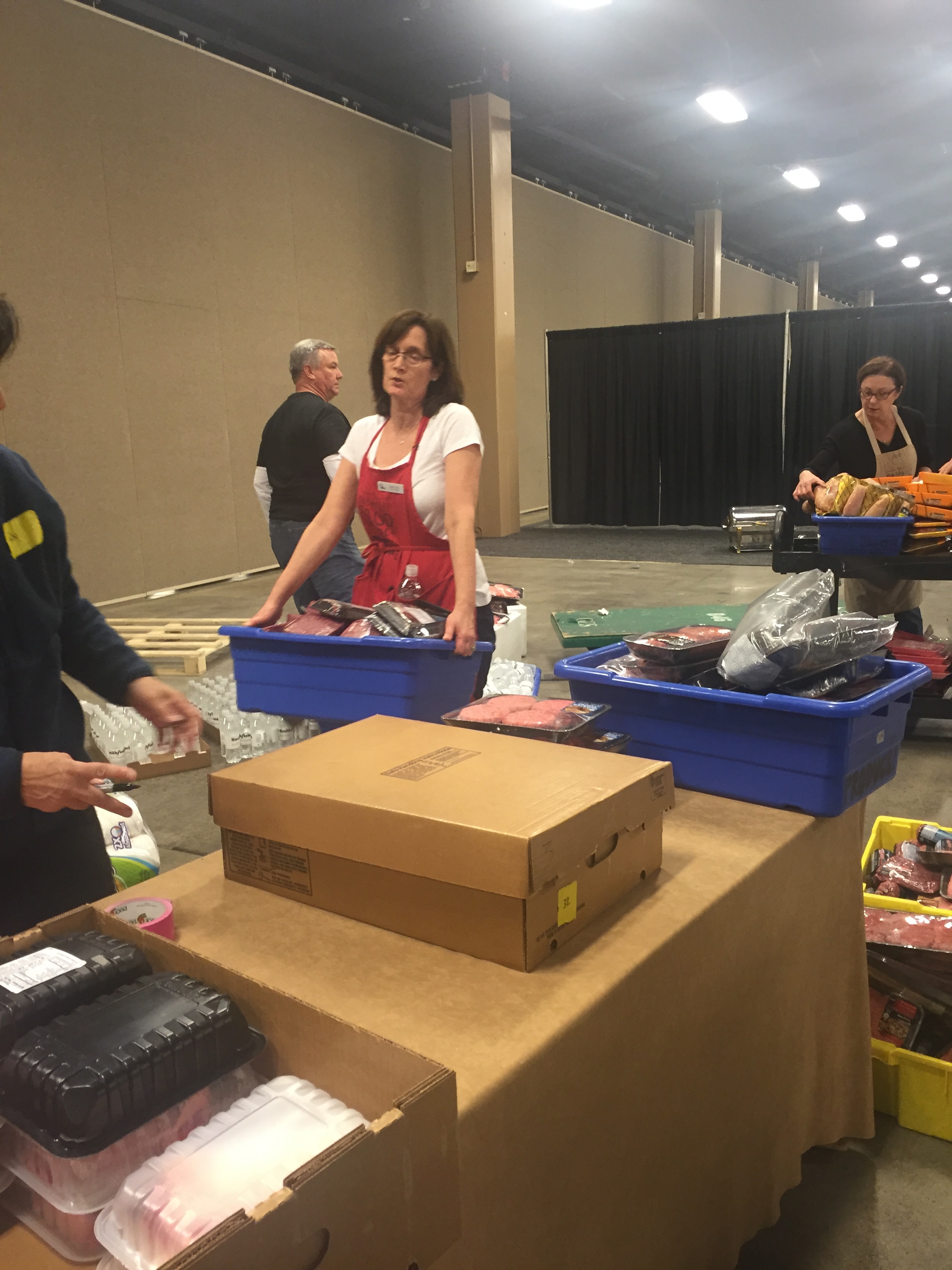
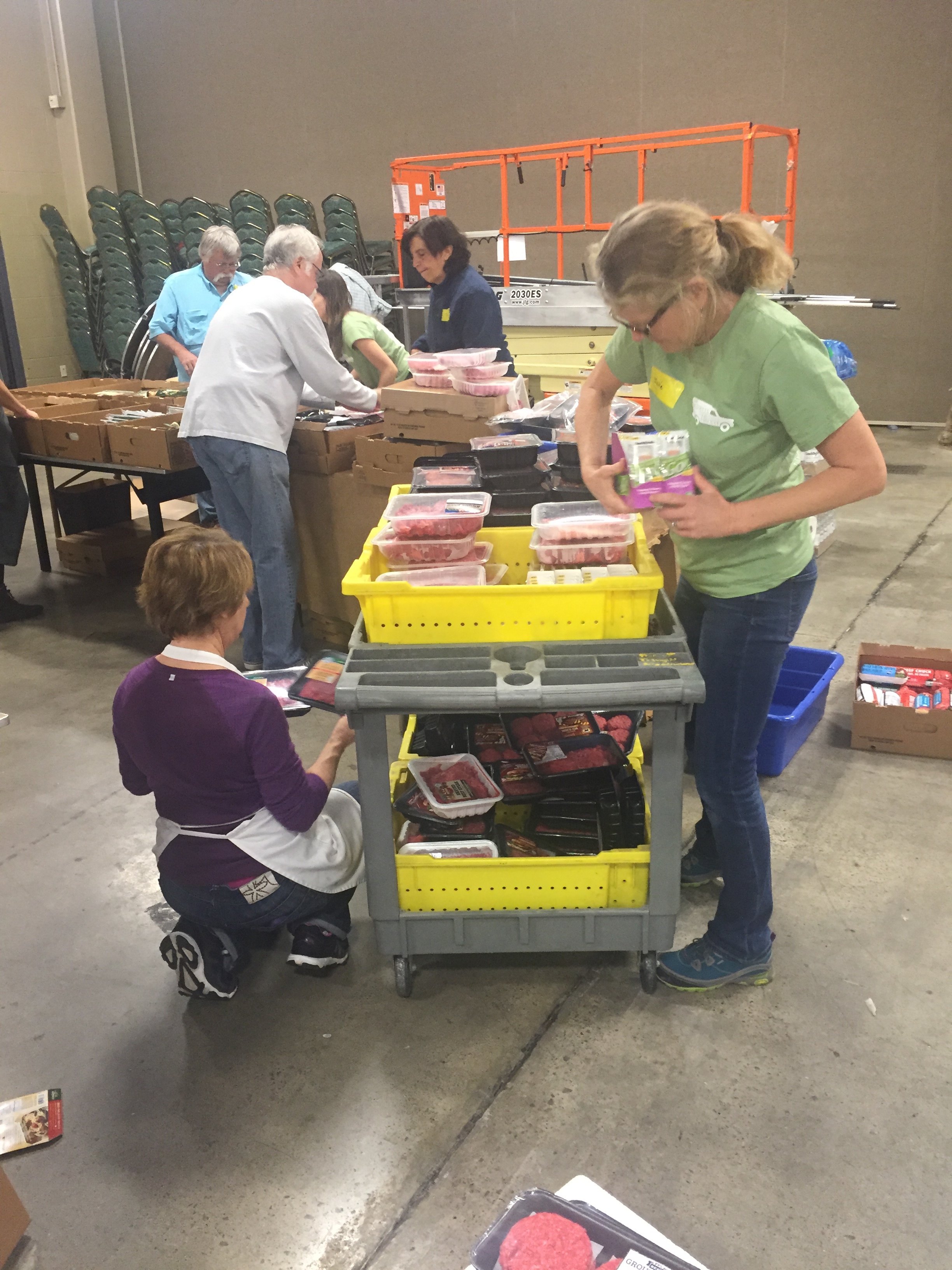
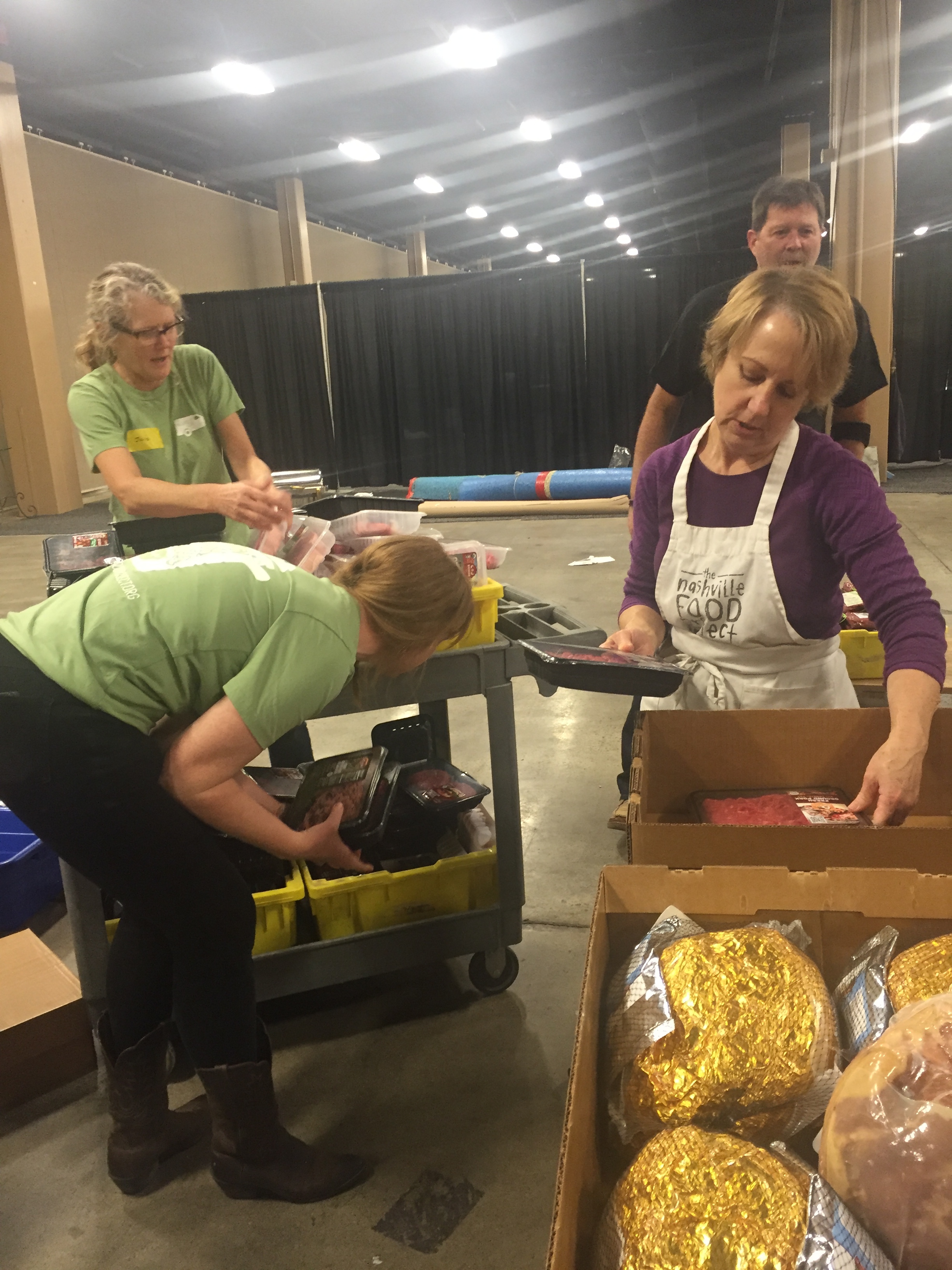
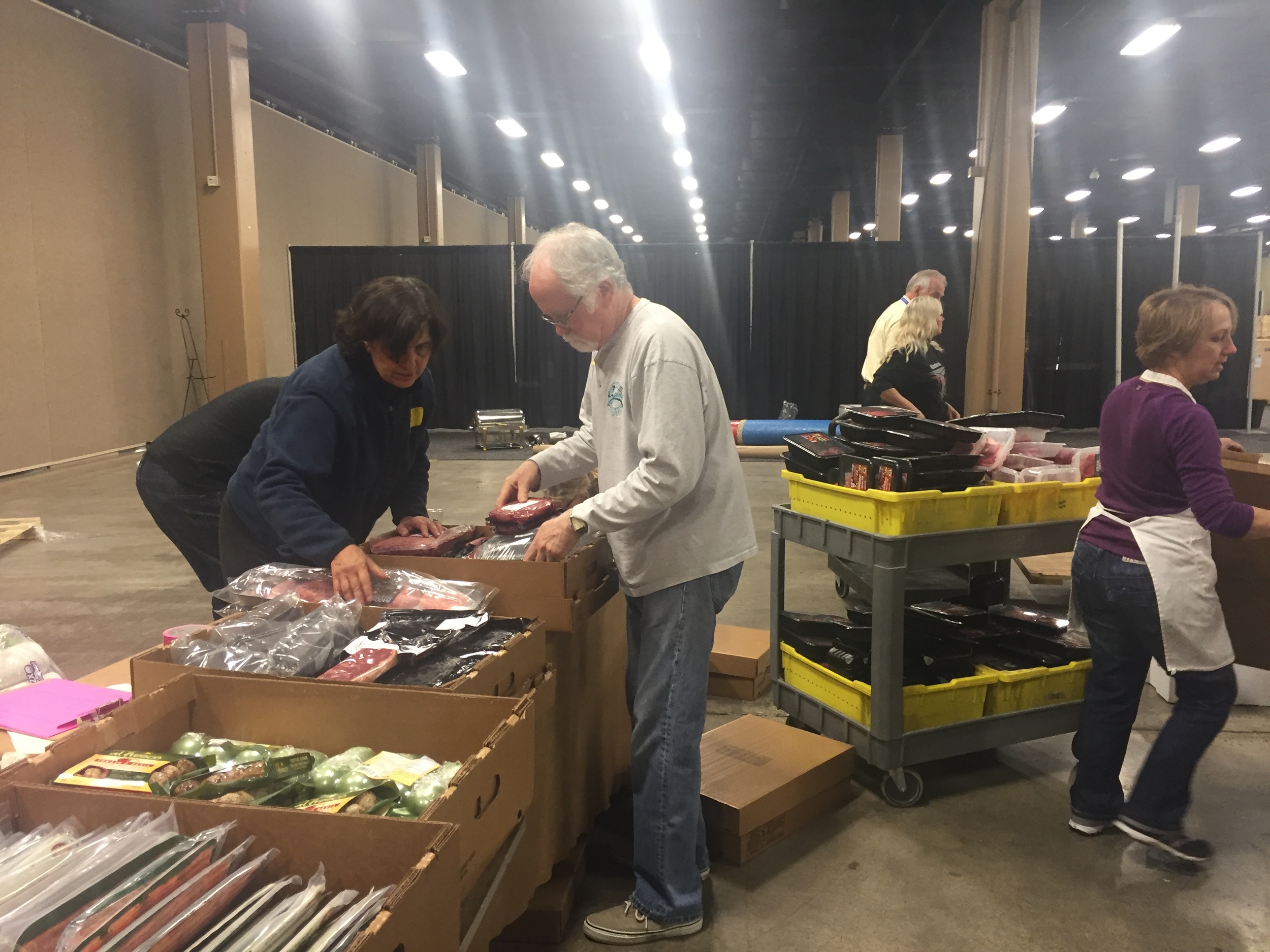
We are forever grateful to all of the donors at the convention, to Gaylord Opryland for letting us use their loading dock, to Nashville Grown for his wonderful refrigerated truck, and to Triumph and all other volunteers, without whom we could never have pulled it off. You all are amazing!

Just a few hours earlier, this room was full of meat. Thank you to the convention and Gaylord Opryland for allowing us to recover all of this great food for our meals!
Waste Not, Want Not
Putting a dent in those numbers could feel daunting, but it’s an issue that we hope to continue working on in 2016. In addition to gleaning from farms, restaurants and grocery stores each week for meals, we’ll be partnering with Zero Percent, a Chicago-based organization that has developed a mobile app and online platform to maximize our food recovery efforts…

Almond milk that could have headed for the dumpster after a food conference at Music City Center. But thankfully, a volunteer brought it to TNFP instead for including in bread puddings and other uses.
Earlier this month, The Tennessean included The Nashville Food Project in a story about food waste.
“Forty percent of the food produced in this country doesn’t make it from farm to mouth,” writes Jim Myers. That’s about $165 billion or $2,225 per family per year of wasted food.
Putting a dent in those numbers could feel daunting, but it’s an issue that we hope to continue working on in 2016. In addition to gleaning from farms, restaurants and grocery stores each week for meals, we’ll be partnering with Zero Percent, a Chicago-based organization that has developed a mobile app and online platform to maximize our food recovery efforts.
But what else can we do at home? Meals Manager Anne Sale shared some inspiration and hope for making small changes that add up. Here are three ways she helps reduce food waste at TNFP:
1) Dehydrating over ripe fruit – By using a dehydrator, she makes raspberry or banana powder to include as a flavoring in granola bars or truffles.
2) Using "day old" croissants and pastries as a base for bread puddings. Adding an egg and milk mixture to stale bread helps breathe new life into it.
3) Re-purposing day old fruit pies – Anne and volunteers often break pies into pieces and give them a fresh oatmeal streusel topping.
To read more tips on eliminating food waste at home, click here.
You can find the full Tennessean story here.
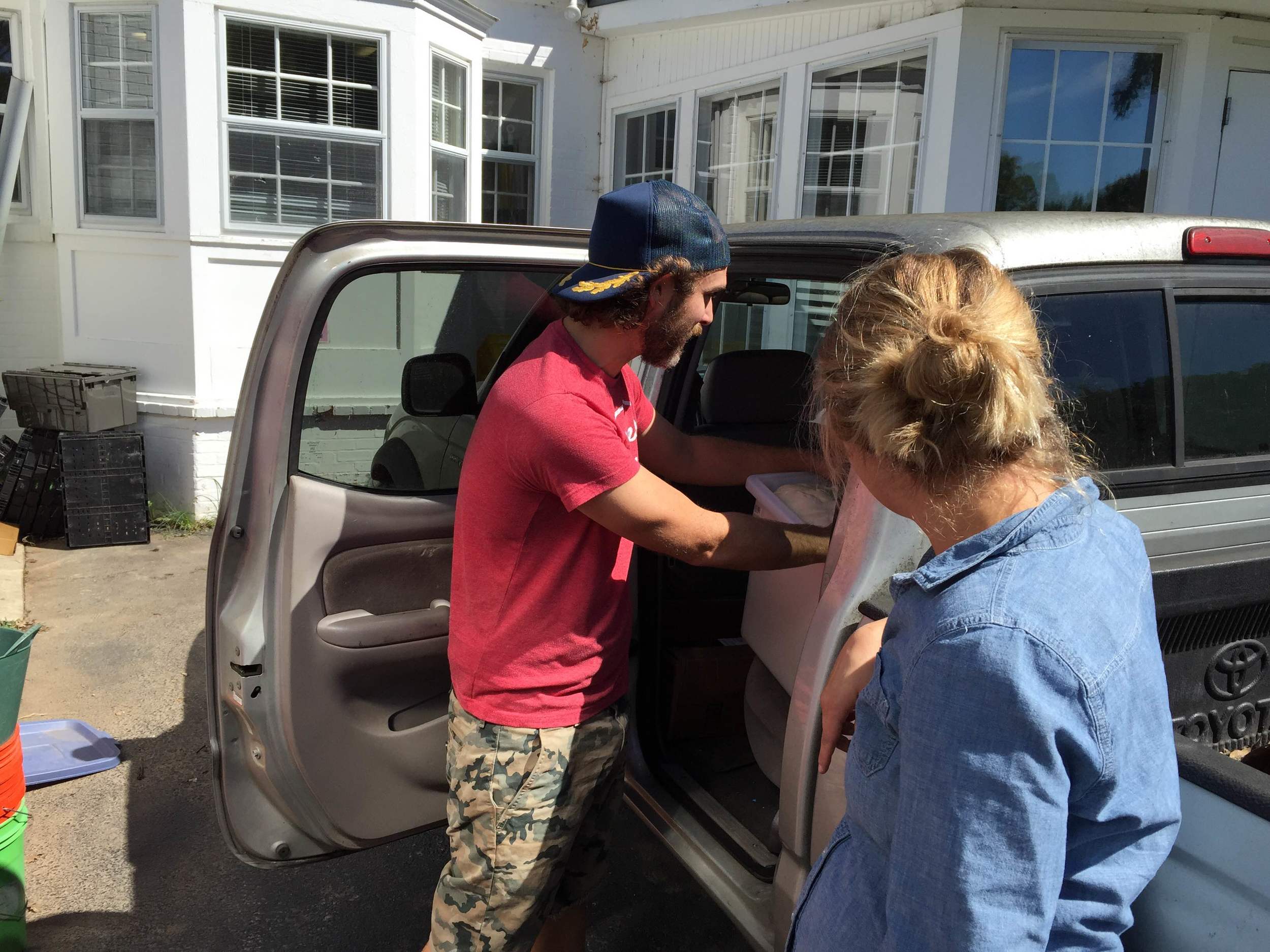
Rather than waste food, we're grateful that Tandy Wilson of City House brings leftover dough to The Nashville Food Project.

The Society of St. Andrew, a ministry that salvages food from local farms, makes a delivery of butternut squash to TNFP.