
The Nashville Food Project’s Blog




Learning Together
We often say that food has the power to transform lives, and we see this so clearly in our Growing Together program. Growing Together is The Nashville Food Project’s agricultural micro-enterprise training program. Through it, we work to expand farming access and opportunity to a group of growers who are originally from Burma and Bhutan.
We often say that food has the power to transform lives, and we see this so clearly in our Growing Together program. Growing Together is The Nashville Food Project’s agricultural micro-enterprise training program. Through it, we work to expand farming access and opportunity to a group of growers who are originally from Burma and Bhutan. Through the program, farmers gain access to land, seeds, training and collective sales outlets, supporting them as they grow food to sell and earn supplemental income for their families.

While food is the tool of Growing Together, education and transformation are the results of the program, for both The Nashville Food Project and the participating farmers. Not only do the farmers learn important skills from our staff, but they learn from each other, and we learn from them! We recently sat down with one of these farmers, Chandra Paudel, to talk about what he has learned and what he has shared with others by participating in this program.
Chandra, like the other Growing Together participants, worked as a farmer in his native country of Bhutan. While he began the program with vast farming knowledge, he tells us that he has enjoyed building upon that knowledge.

“This year I learned about how to look for pests and control them,” he says, adding that he has also “Continued to build on the bed preparation skills.”
Growing Together Program Manager Lauren Bailey can attest to that. “Chandra’s plot is meticulous; the time and care that he devotes to tending his plot is unmistakable.”

Chandra says that in addition to honing his farming skills, he has also learned more about budgeting, record keeping and crop production planning. On one Saturday each month you can see him at the Growing Together booth at the Richland Park Farmers’ Market. There Chandra is able to interact directly with his customers, showing them new types of produce not often grown in Middle Tennessee, while gaining the skills and knowledge necessary to grow for and sell at market.
Lauren tells us that Chandra manages his household and his plot, while also working as a paid leader of the Growing Together community, giving him added responsibility of upkeep of the common areas on the farm.

“Chandra shares so much with the community of growers and the staff,” she tells us. Lauren explains that Chandra truly is a leader in his Growing Together community. “He embodies this leadership in his willingness to take on new techniques and apply information that staff share in trainings and meetings. I think of him as an “idea champion”. If staff suggests a certain pest control practice or harvesting tip, he is often the first to positively respond with an eager nod.”
Growing Together is strengthened by Chandra and farmers like him, who enrich the practice by sharing of themselves. The reality of community-shared farmland can often be messy and unpredictable, but this incredible community makes it work with their willingness to learn with us and one another.

Building a Resilient Community
On an unseasonably hot and sunny day in April, I stand in the aisle between two newly shaped beds of a Growing Together farmer. We’ve been spending the last two weeks attempting to till the soil, but have been successfully thwarted by erratic weather that left the earth too wet to till…
On an unseasonably hot and sunny day in April, I stand in the aisle between two newly shaped beds of a Growing Together farmer. We’ve been spending the last two weeks attempting to till the soil, but have been successfully thwarted by erratic weather that left the earth too wet to till. On this day, we are met with a window of opportunity to finish turning the soil on the remaining beds of farmers. Thomas, a grower originally from Burma, appears in a dress shirt, slacks, and loafers. He hasn’t had time to till his plot as he was balancing a recent acceptance to attend school to learn to become an electrician, along with supporting his family. He explains his circumstance, then rolls up his sleeves and begins to use the tractor to finish tilling his plot, no time to be wasted getting changed.

I watch as he turns over the soil in the hot sun, and think of the other circumstances of the growers in our market garden, considering the complicated decisions and challenges these Growing Together farmers face. For some, this challenge may manifest in the difficulty of acquiring health insurance in an inaccessible system. For others, it may come in the form of taking a citizenship test. No matter the challenge, it always adds to the already great responsibility of being a farmer.

Thomas, working his plots (this time not in dress clothes)
Farming is an art that inherently requires resilience. One must not only learn to be flexible, but also prepared, ready to consider factors ranging from seasonality to weather. However, the farmers of the Growing Together program demonstrate an unbelievable amount of resilience. Not only must they go through the complicated process of resettlement into a new country (a process that is continuous and ongoing), but they must also strike a delicate balance between their work and family life all the while maintaining a commitment to growing food in a new climate with differing conditions for farming.
The resiliency of the farmers in the Growing Together program has been made readily apparent in the three seasons of the program’s life.Three of the eight growers have been with the program since the beginning, but all of the farmers, regardless of the length of their participation, have shared their personal growth and important life events with the program. We have watched growers celebrate new accomplishments, acquire new jobs, have children, and mourn the passing of a close family member. In my time with the Growing Together program, I’ve learned that while there is a commitment to growing greens or chilies or market skills, there is a greater commitment to growing a community, one that is filled with strength, support, and the perseverance to foster growth. Even when it requires tilling in loafers.
Get to know Thomas and the other Growing Together farmers here.
Food Crosses Cultural Boundaries
It’s a warm day in early October at the Nashville Farmer’s Market, I’m sitting at our table, assisting customers and rearranging the produce as the hours pass. The crowd has just picked up, and I observe some curious onlookers eye the assortment of unique vegetables on our table: from spikey bitter gourds to long, curling beans…

It’s a warm day in early October at the Nashville Farmer’s Market, I’m sitting at our table, assisting customers and rearranging the produce as the hours pass. The crowd has just picked up, and I observe some curious onlookers eye the assortment of unique vegetables on our table: from spikey bitter gourds to long, curling beans.
It’s just Thomas Piang and me; Thomas is a farmer originally from Myanmar working in the Growing Together program. We’ve so far spent our time talking about Burma/Myanmar in between helping customers. I curiously ask him about spiritual practices and the environment of his home country, he tells me briefly about the unrest in Burma/Myanmar, touching on military rule and government dysfunction.

We break in conversation as an enthusiastic regular customer approaches our table. Smiling, he shakes Thomas’ hand and looks at our selection before deciding on a bunch of red yardlong beans and bag of arugula. He turns back to Thomas, “So, you’re from Burma, right?” he pauses and looks down, “Ah, I’m so sorry! I meant Myanmar.” Thomas smiles and nods and the two engage in a short conversation. A few minutes later, the customer gathers his things and says goodbye to Thomas, “Well, so glad to see you. Again, thanks for everything”.
Thomas’ story of coming to America, although personally unique, reflects circumstances similar to those of our other farmers. As a program, we predominately work with individuals originally from Bhutan, Burma/Myanmar, and the Democratic Republic of the Congo, countries with histories of civil unrest and ethnic or religious persecution. Although all of the farmers we work with represent unique ethnic and cultural communities, they all share an agrarian background and passion for growing food. However, access to land and resources in an urban area with many neighborhoods relegated as “food deserts” can prove be difficult.

This is where Growing Together comes into the picture. It is our goal to not only provide technical assistance by offering land and tools for the families we work with, but also to help foster community and ultimately promote food sovereignty in those communities.
Food is culturally universal, and the ability to grow one’s food, and have access to items that are culturally relevant is of incredible importance. Having access to familiar produce can not only help to maintain the strength of cultural communities, especially to those engaged in the ongoing process of resettling in a new country, but it also invites others to learn more about people or cuisine they deem unfamiliar.


I realize now that the interaction between Thomas and the customer at the market was more than just a conversation. Rather, it was a metaphor for what we hope is born out of the Growing Together program: the building of community both within and outside of cultural boundaries. Food is more often than not the catalyst for these interactions, and, in my opinion, nothing breaks the ice better than discussing how to cook komatsuna.
This article was written by Krysten Cherkaski. Krysten has been with the Nashville Food Project since August 2016 supporting the Growing Together Program. She comes to us from Fresno, California and is currently a Belle H. Bennett fellow with the Scarritt Bennett Center.
How We Grew in 2016
In 2016, our garden program grew from three garden sites to five, and we became more intentional about the way we use these sites to grow both nourishing food and community.
In 2016, our garden program grew from three garden sites to five, and we became more intentional about the way we use these sites to grow both nourishing food and community.

In the spring, we partnered with the Center for Refugees and Immigrants of Tennessee to launch the Growing Together market garden program, supporting nine refugee farmers in growing and selling produce through a booth at the Nashville Farmers’ Market, wholesale sales to restaurants and through an online food hub. In the fall, we fully integrated this program and the Refugee Agriculture Partnership Program’s two community gardens into our existing operations.
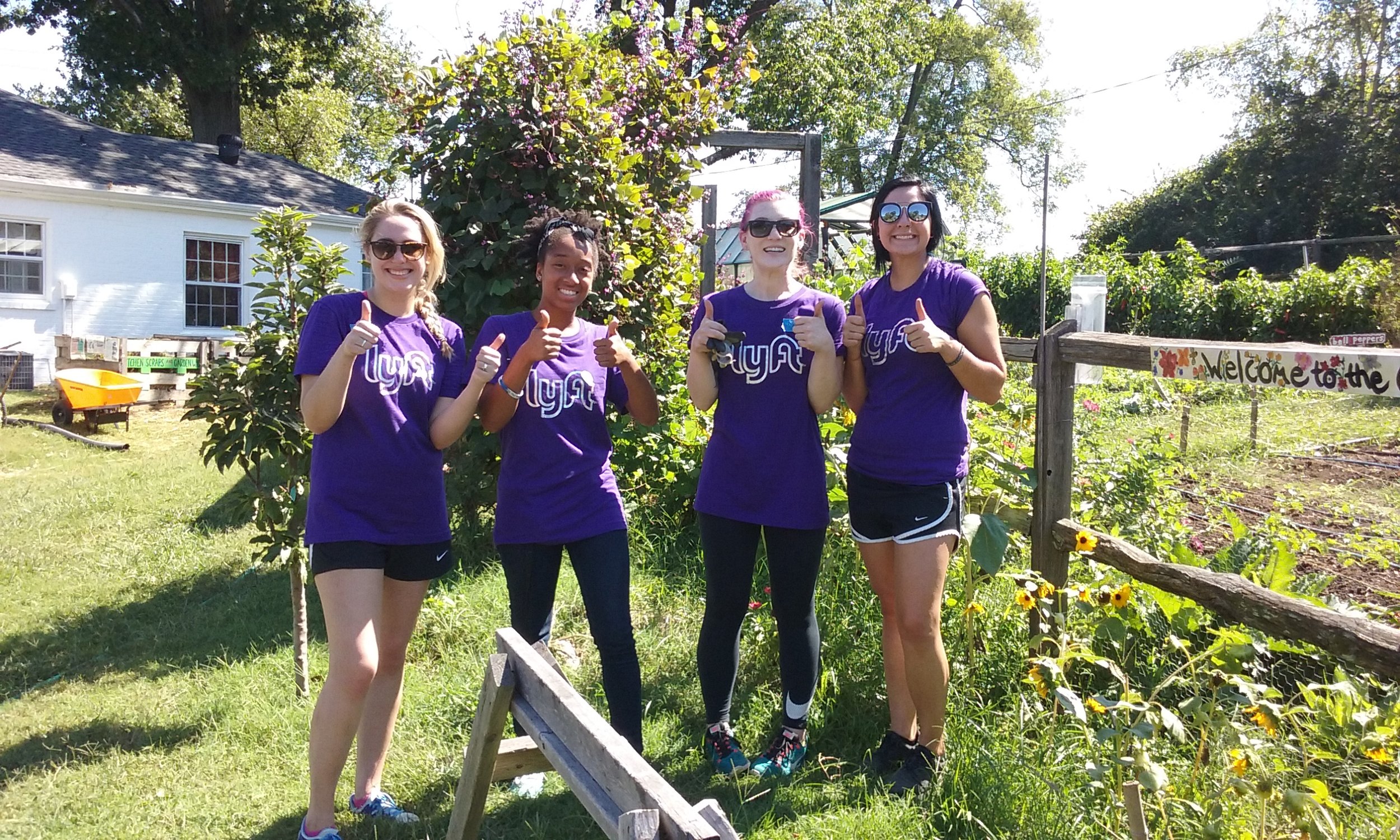
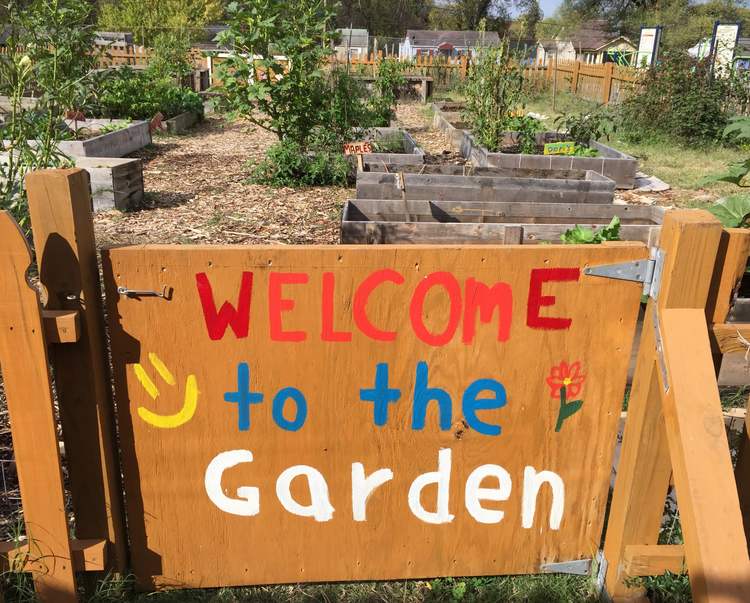
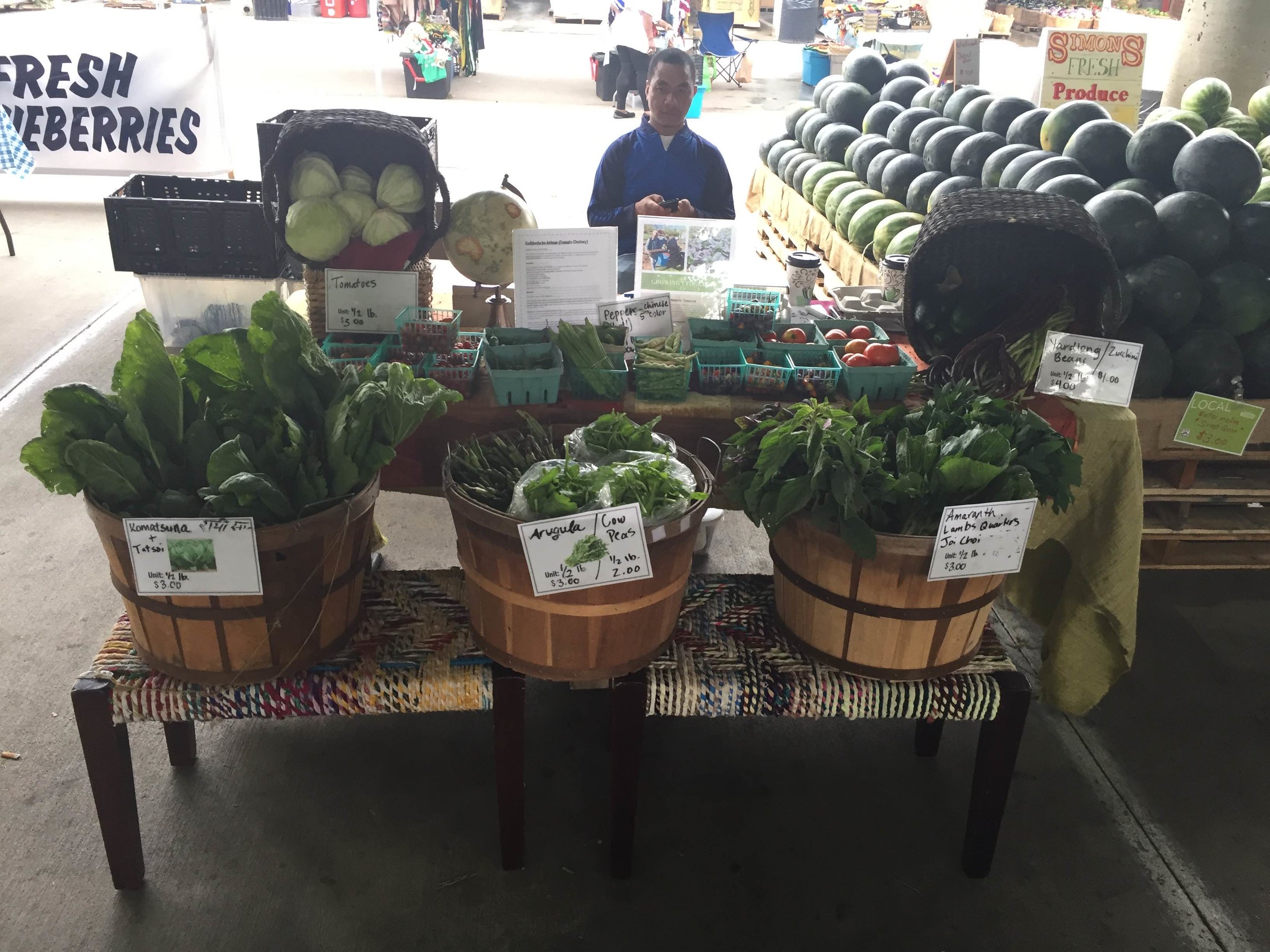
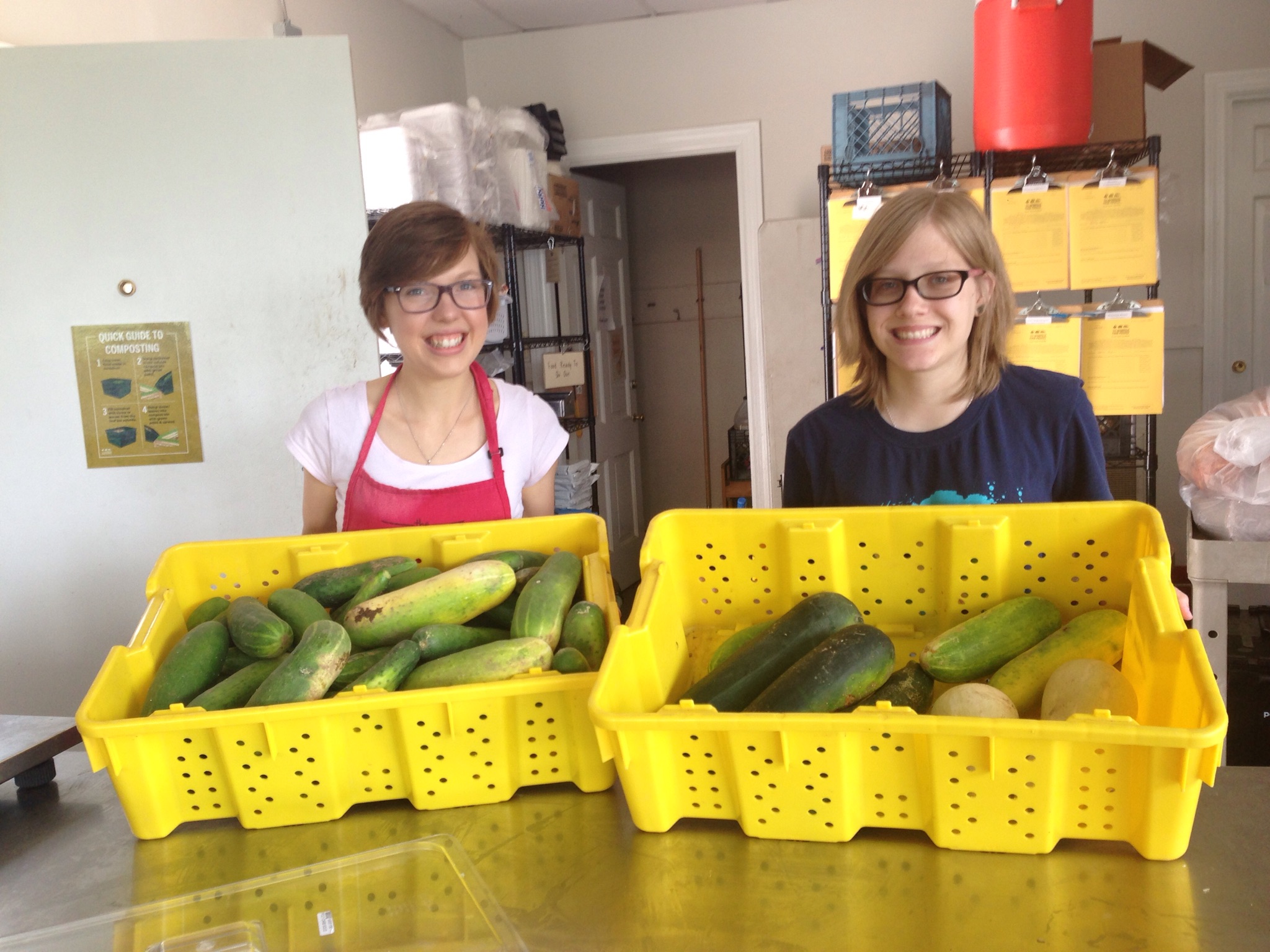
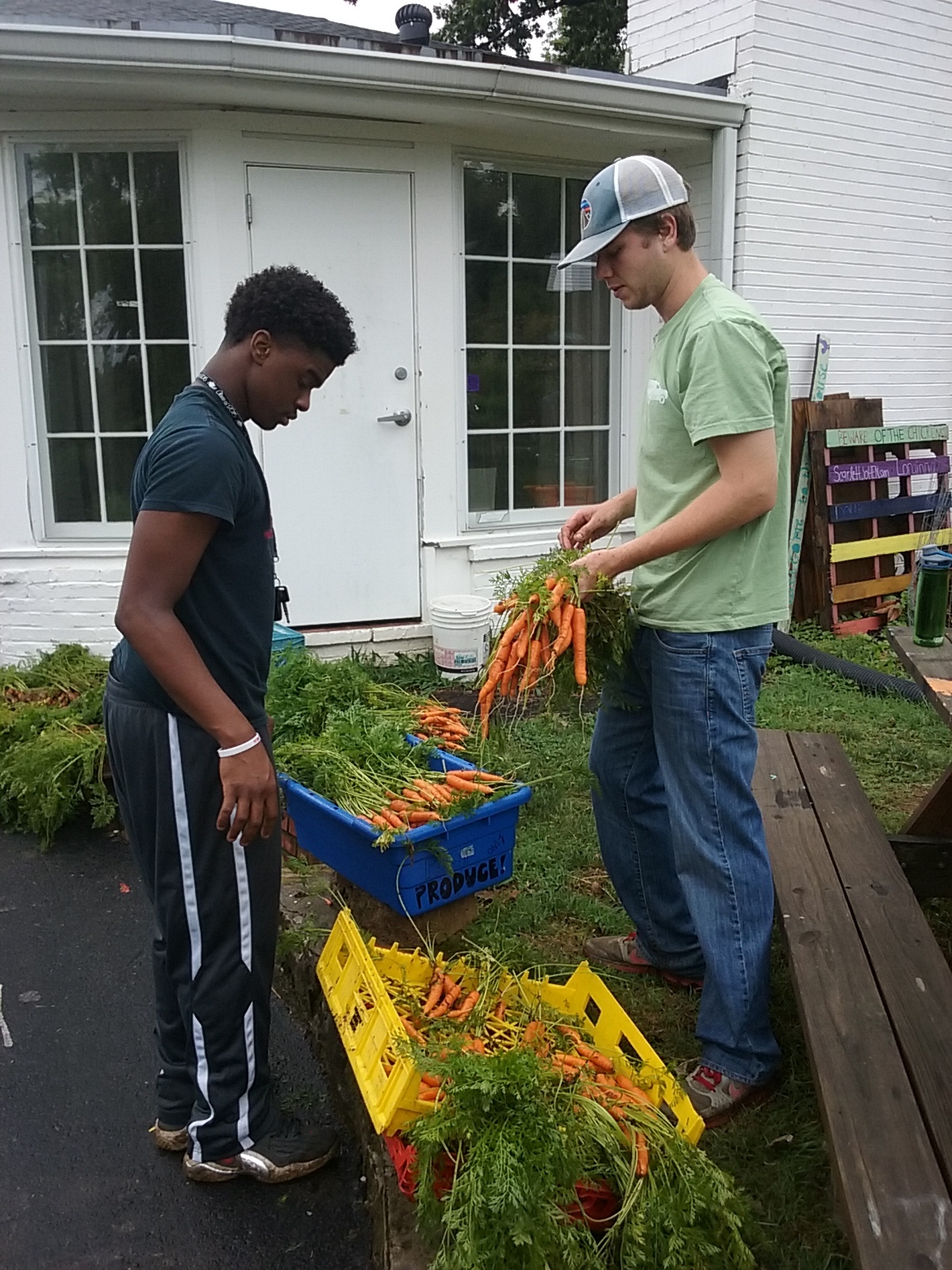
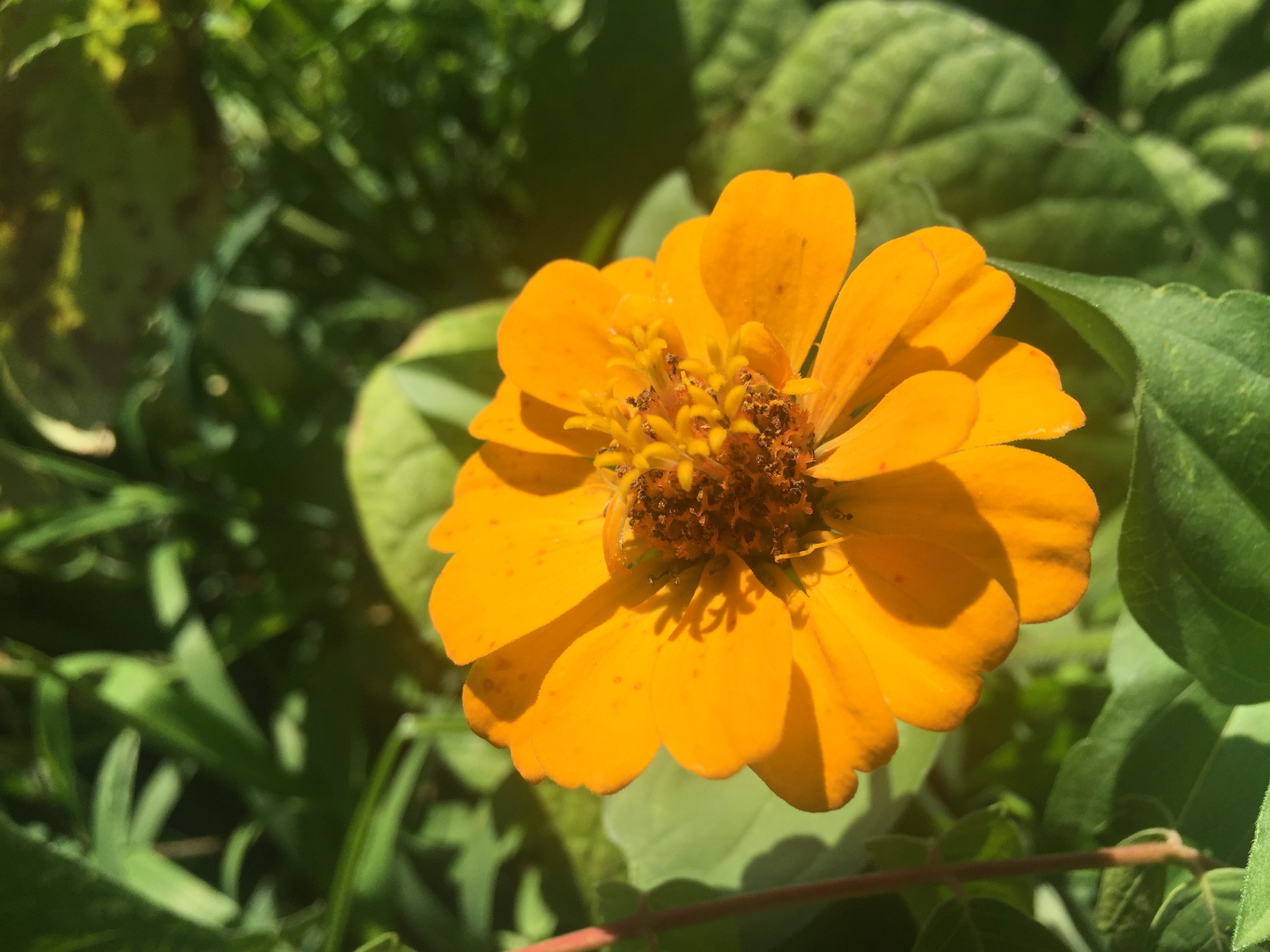
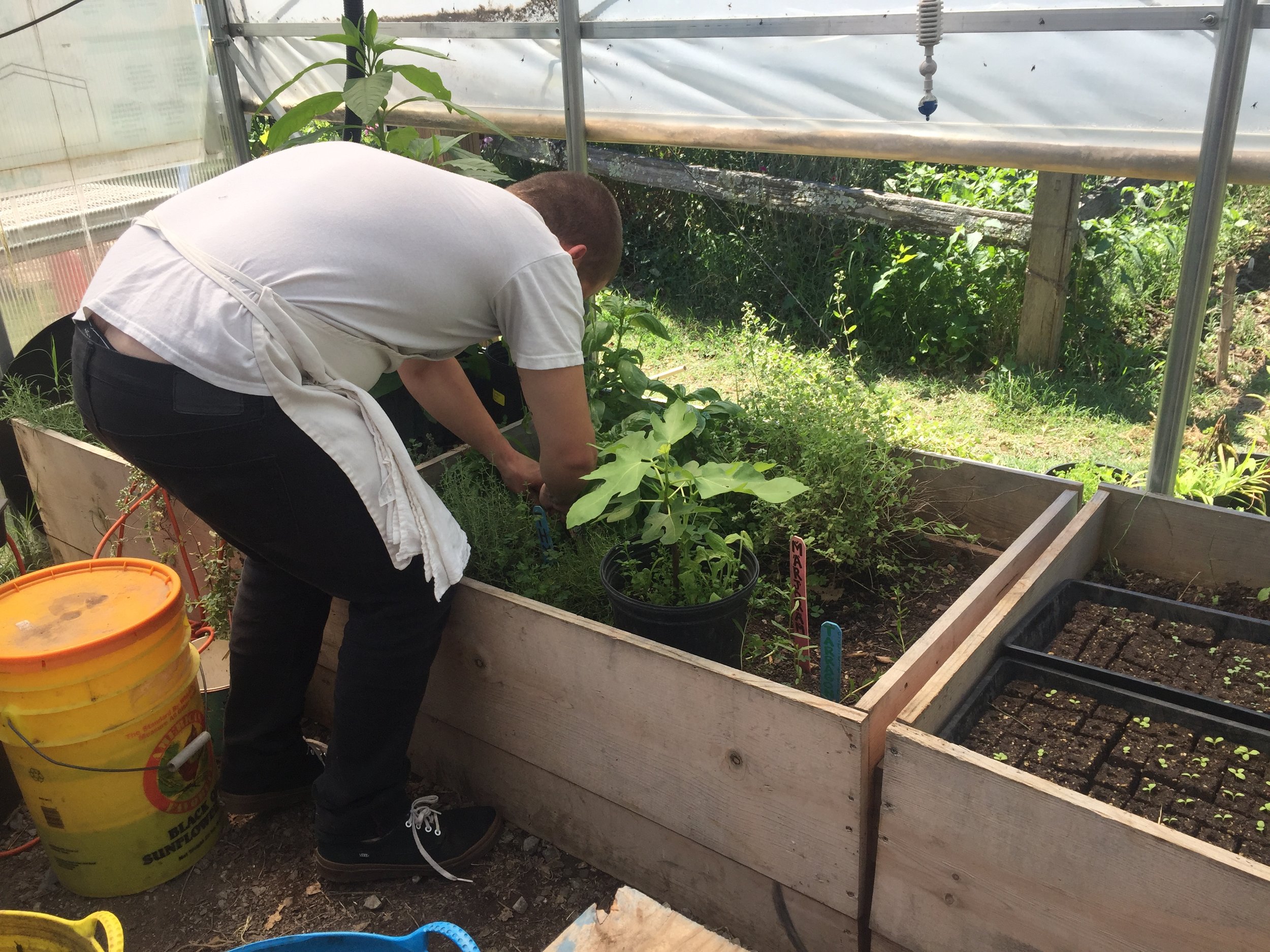
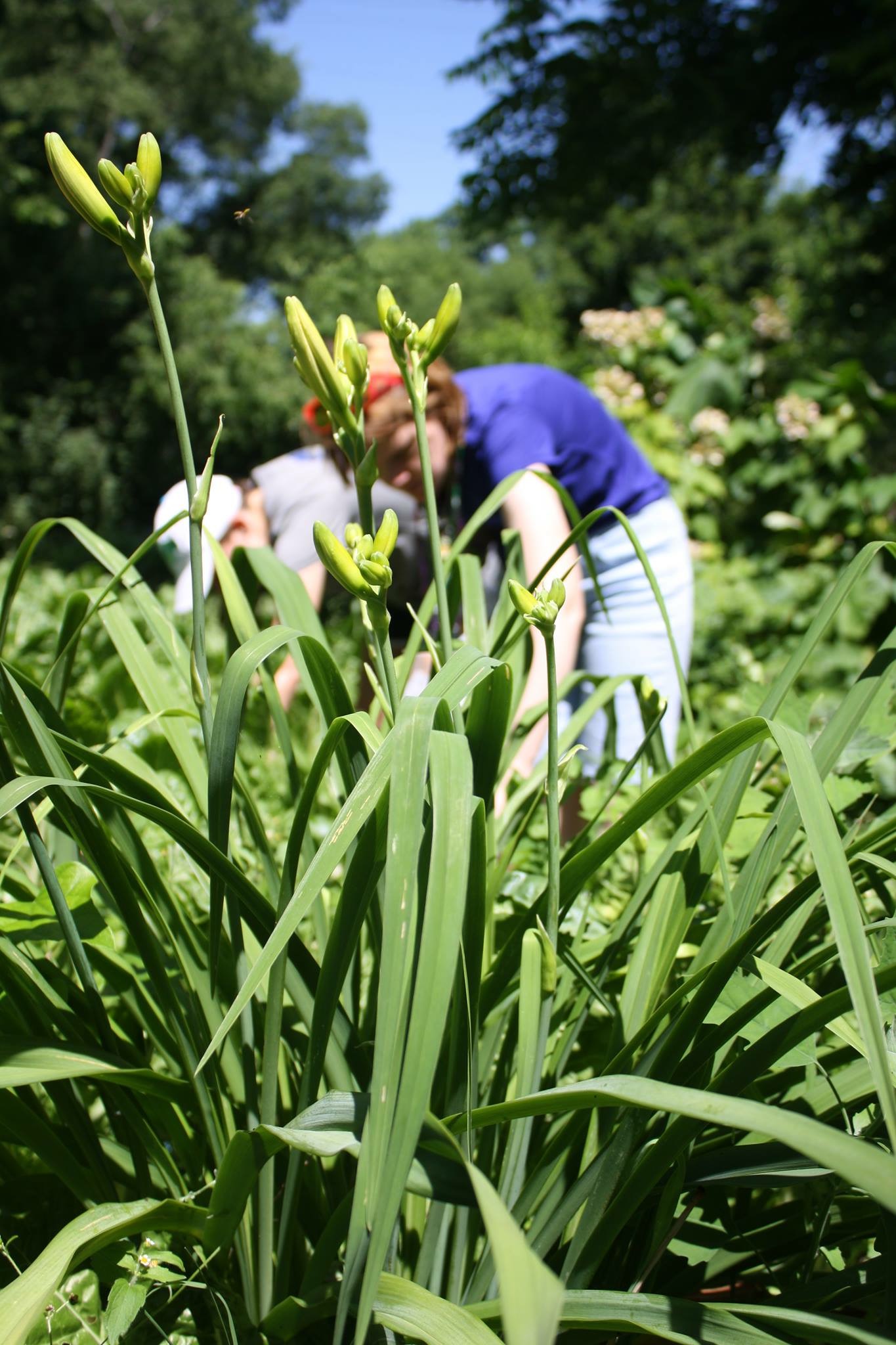
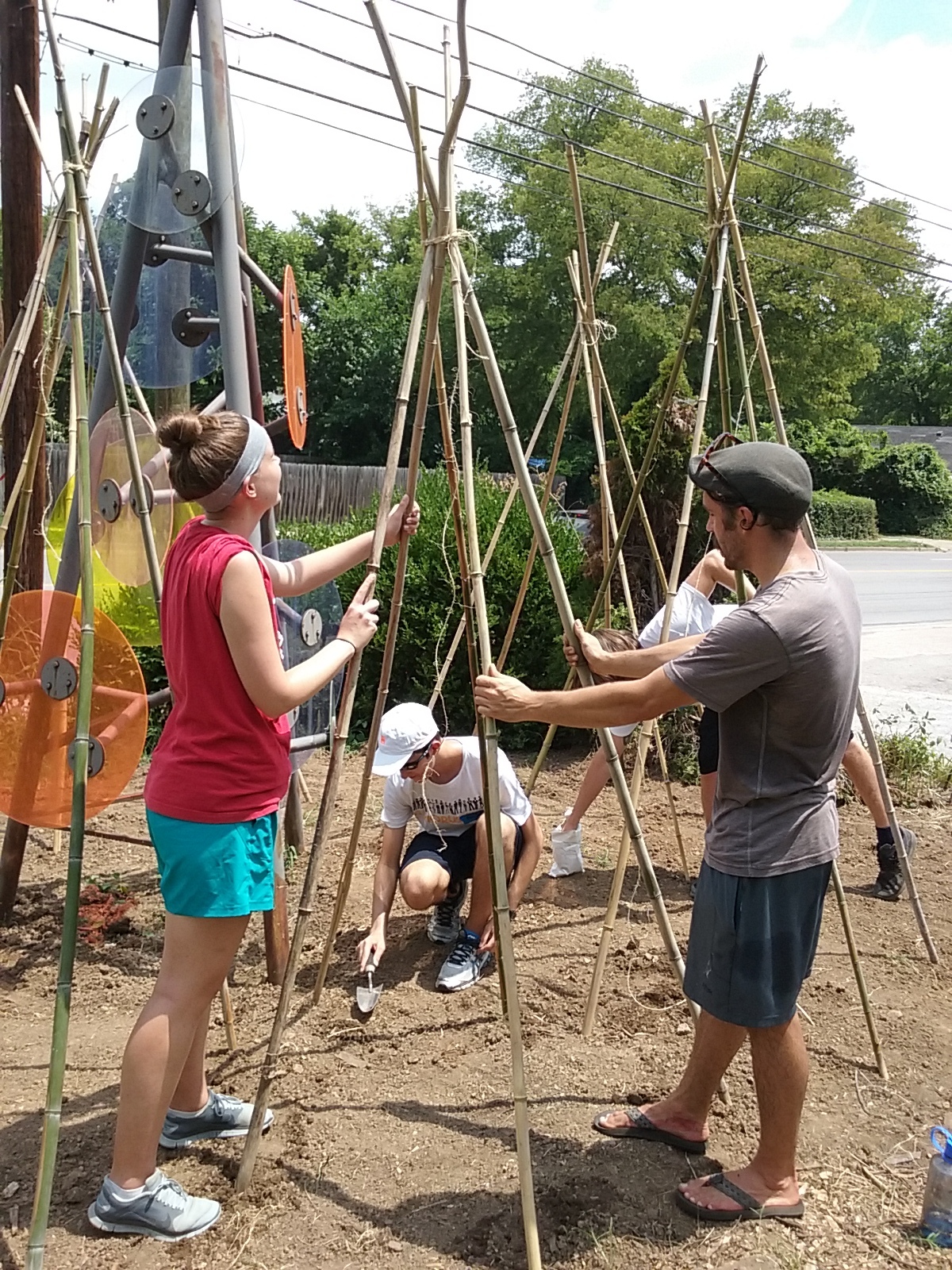
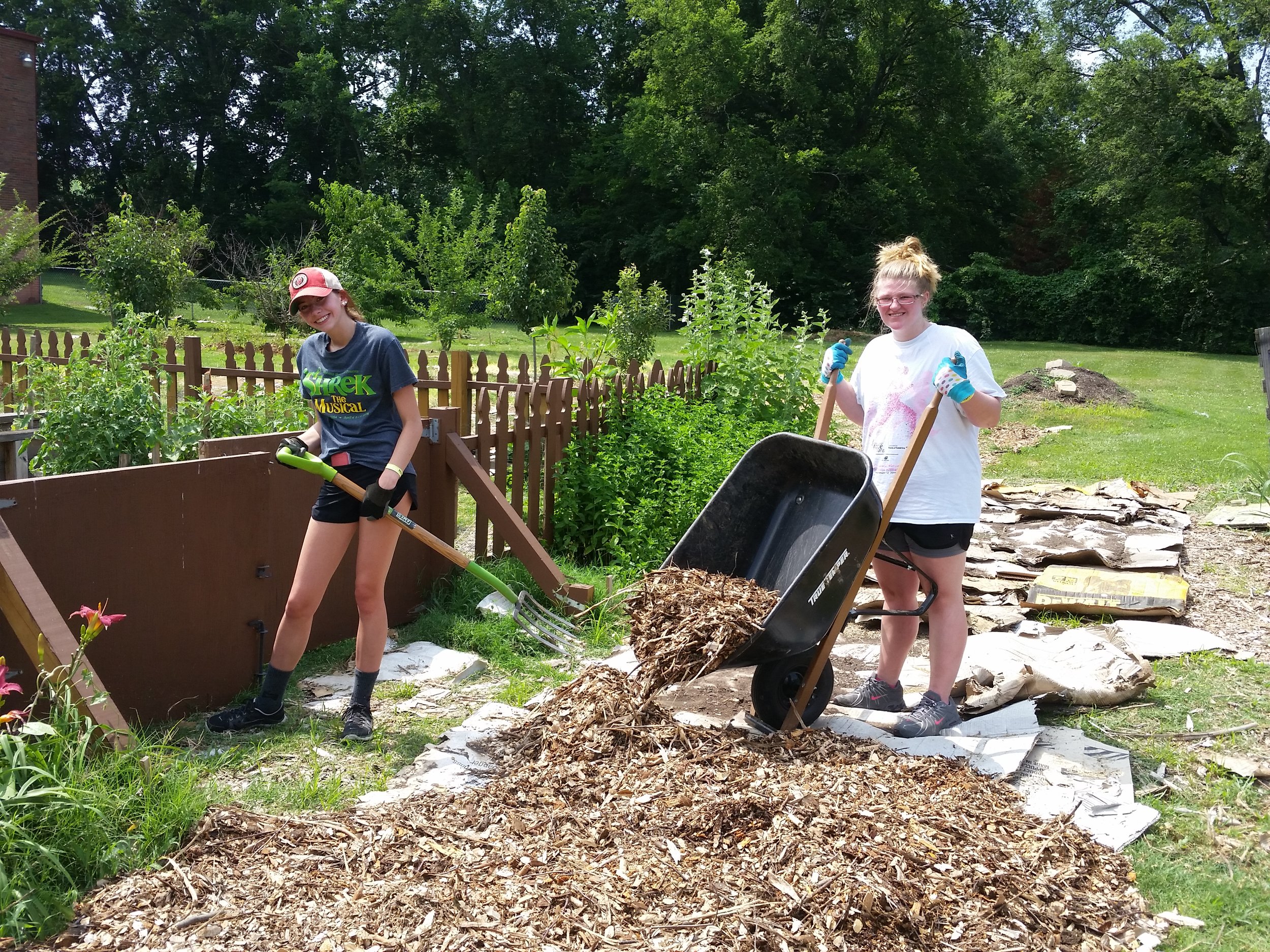
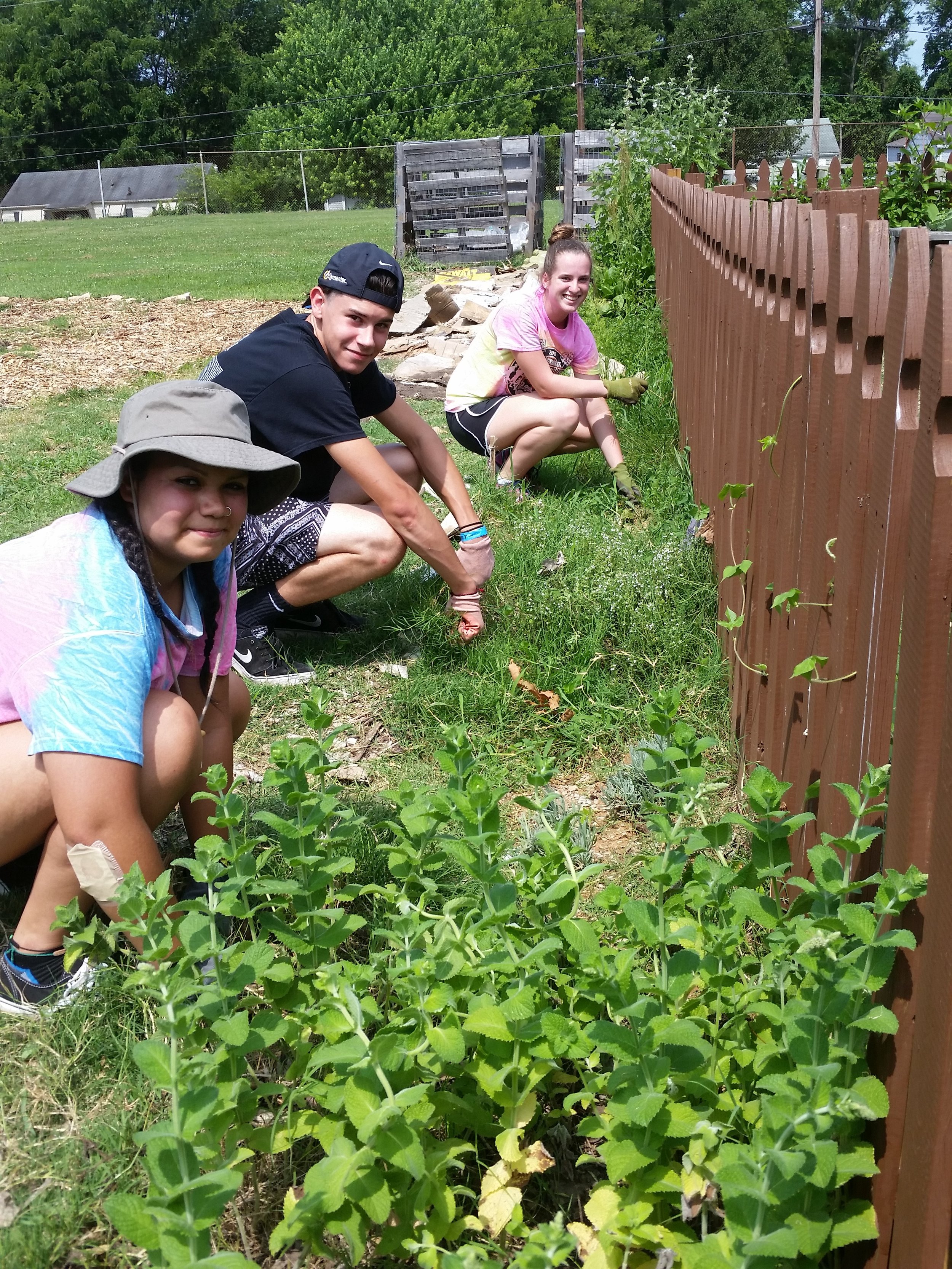
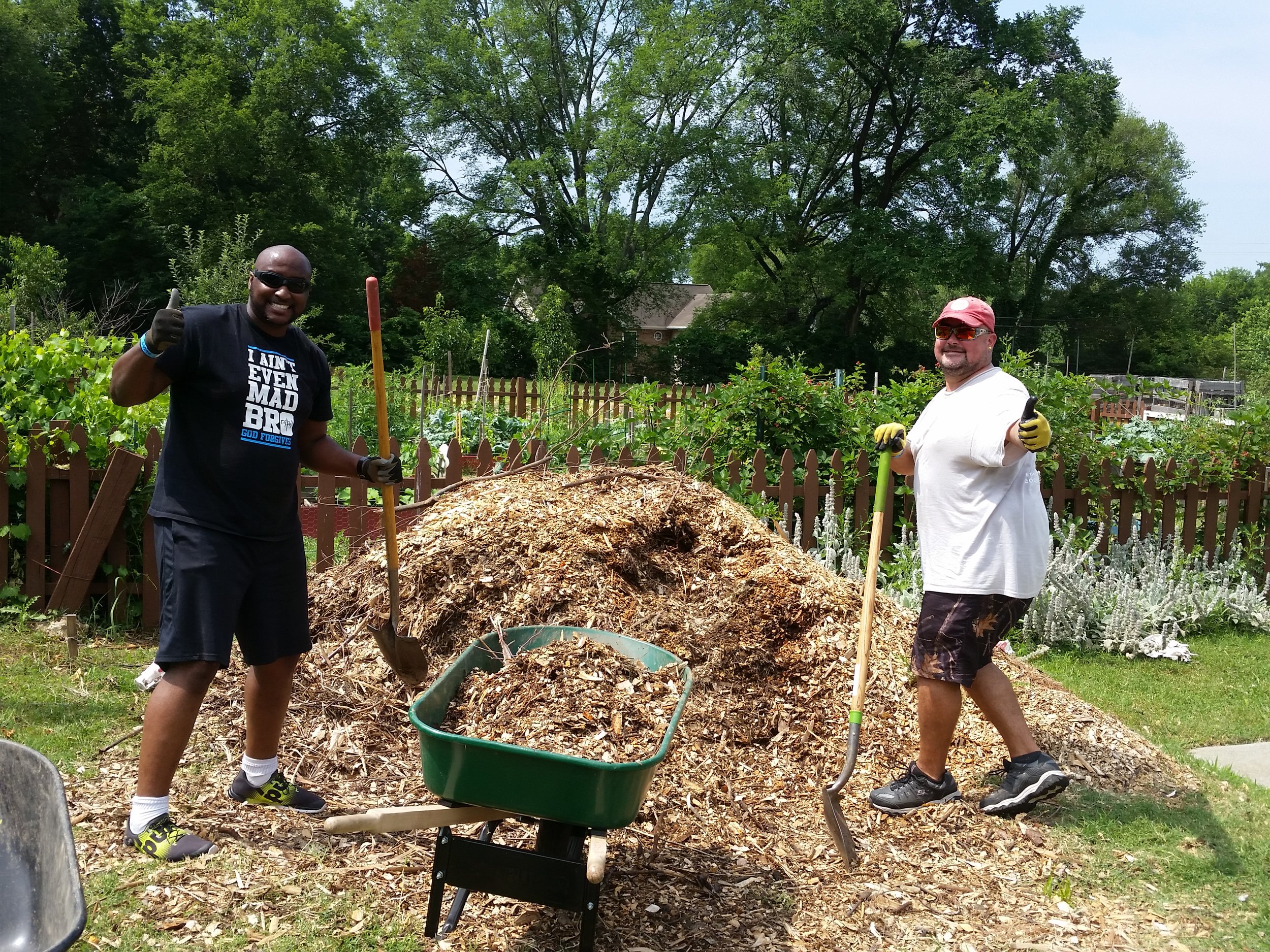
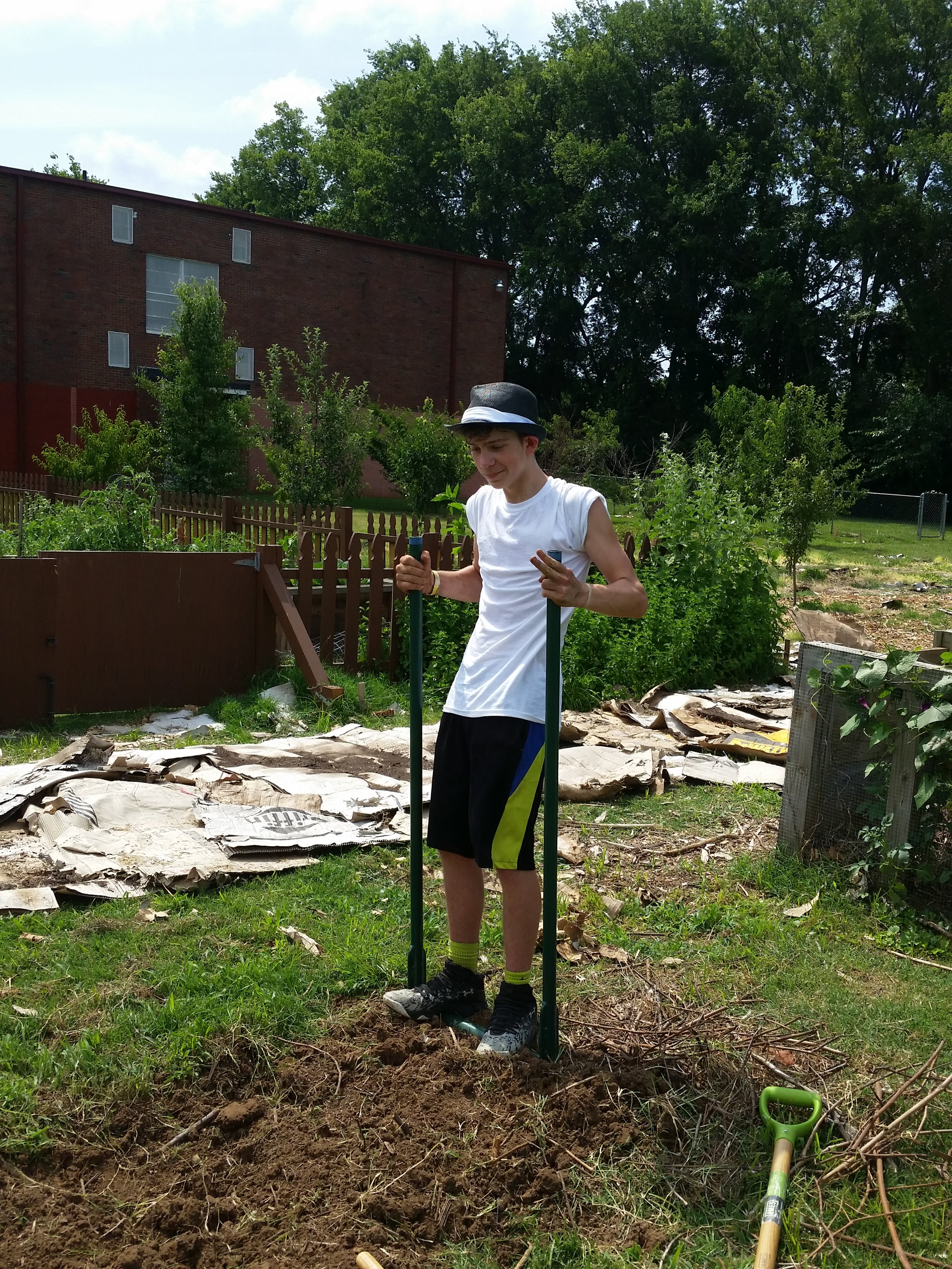
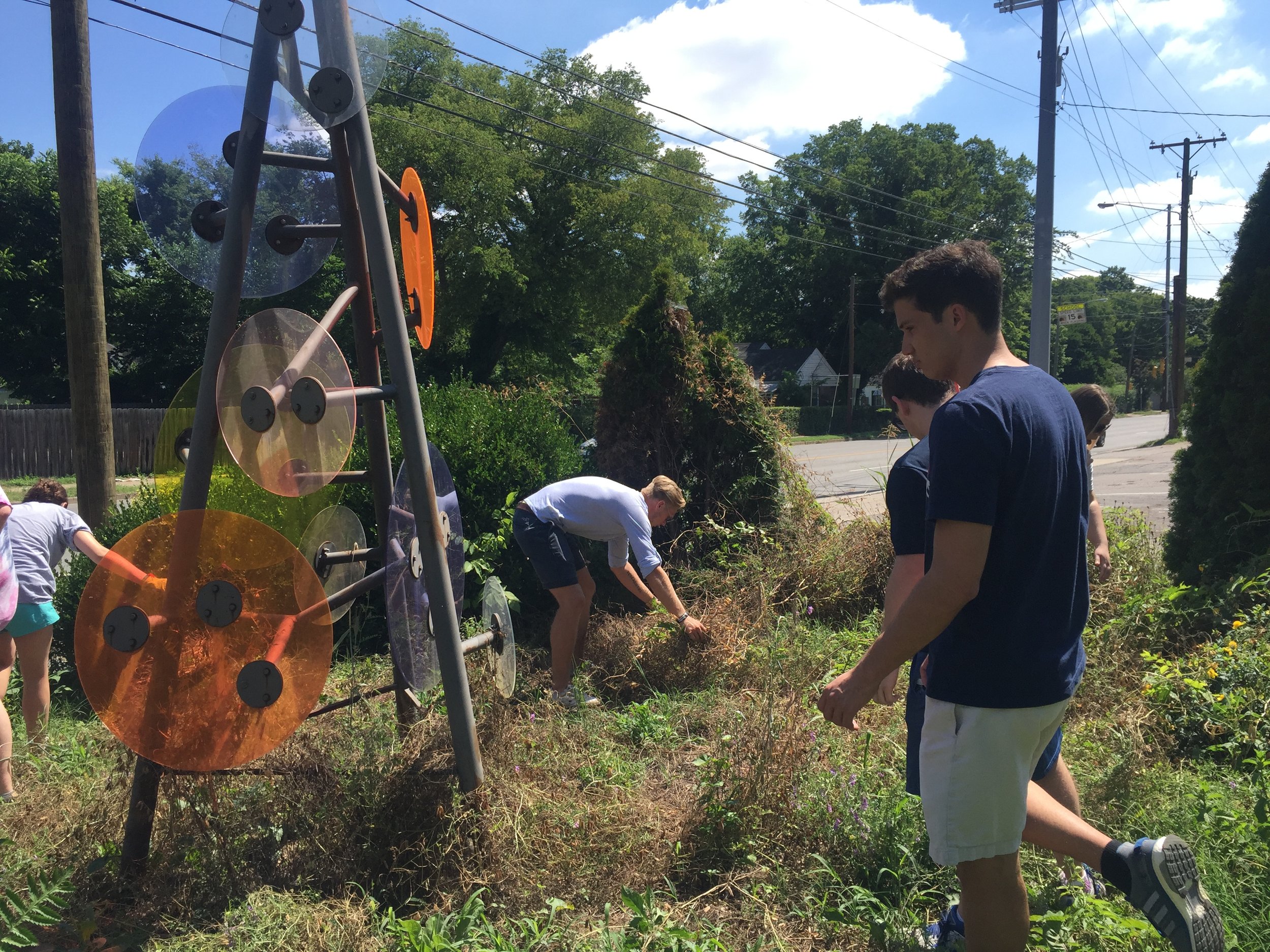
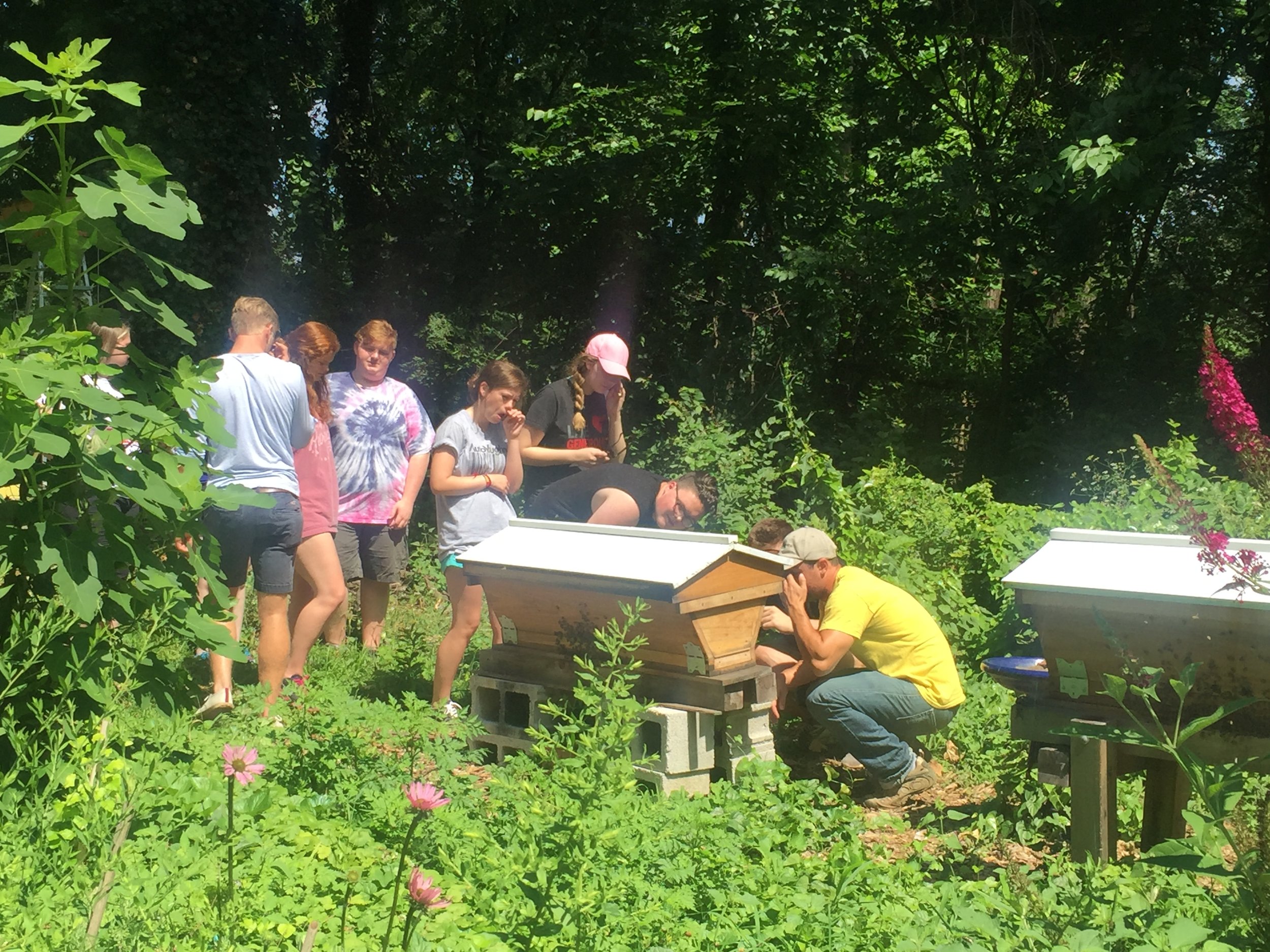
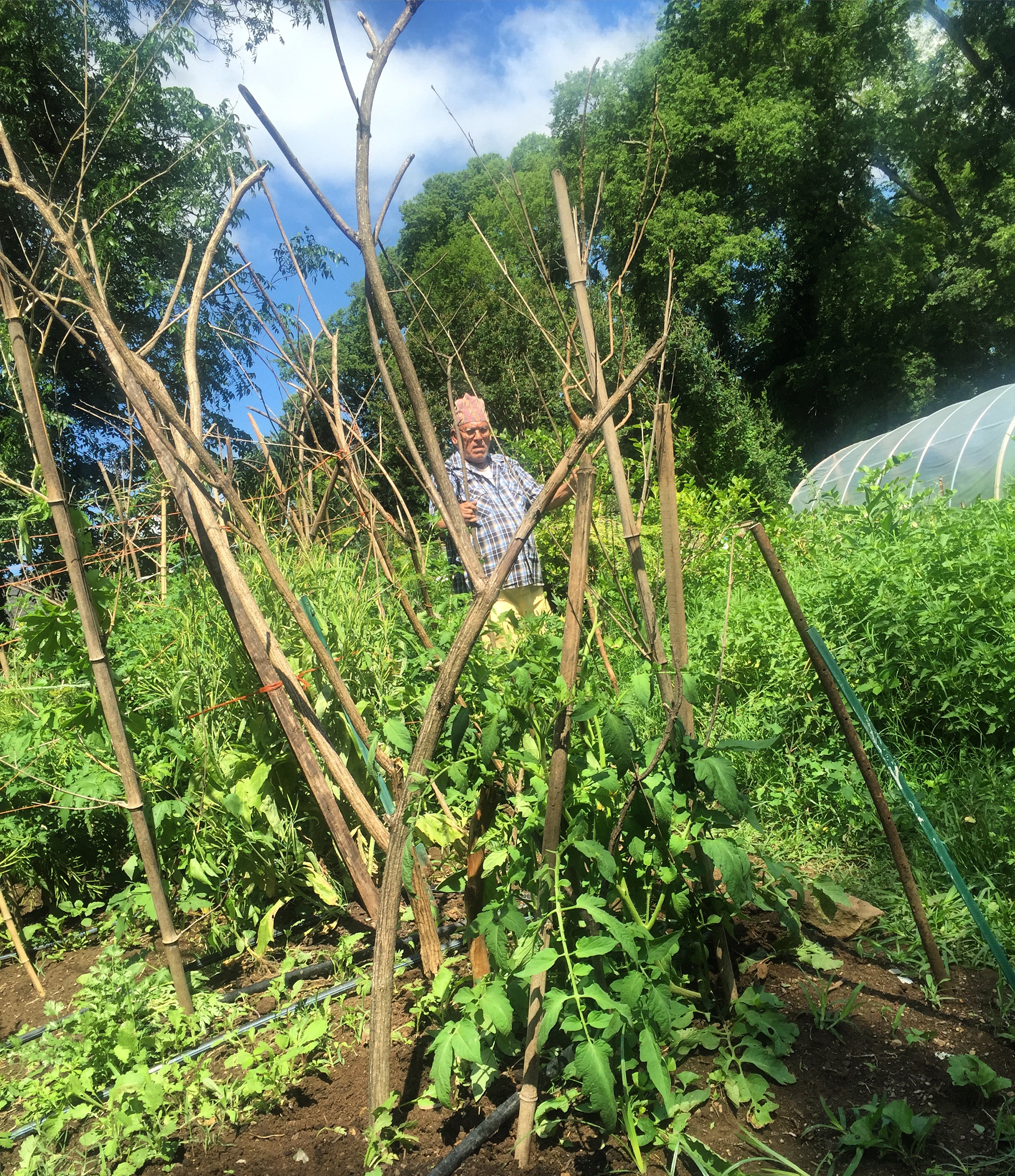
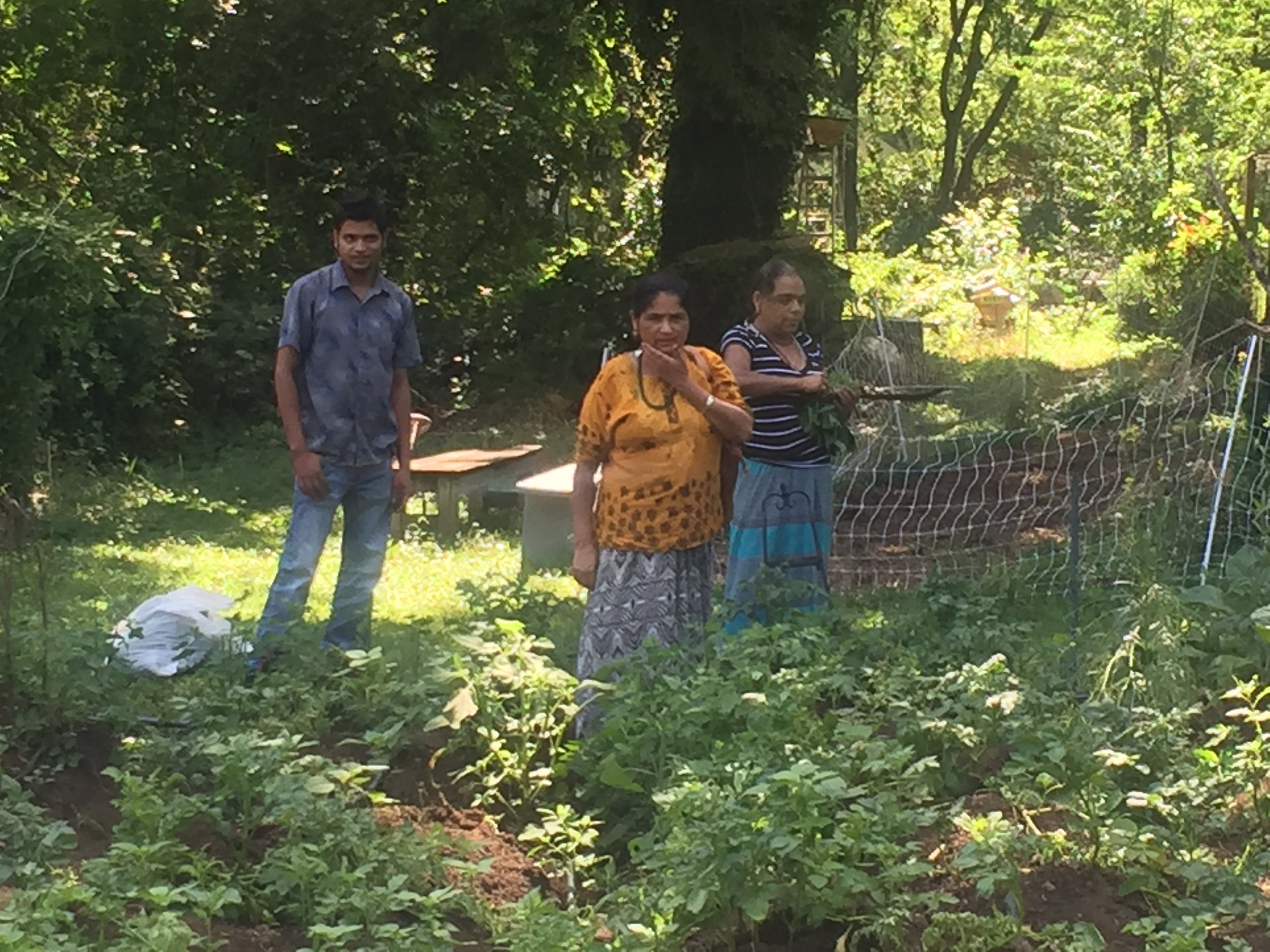
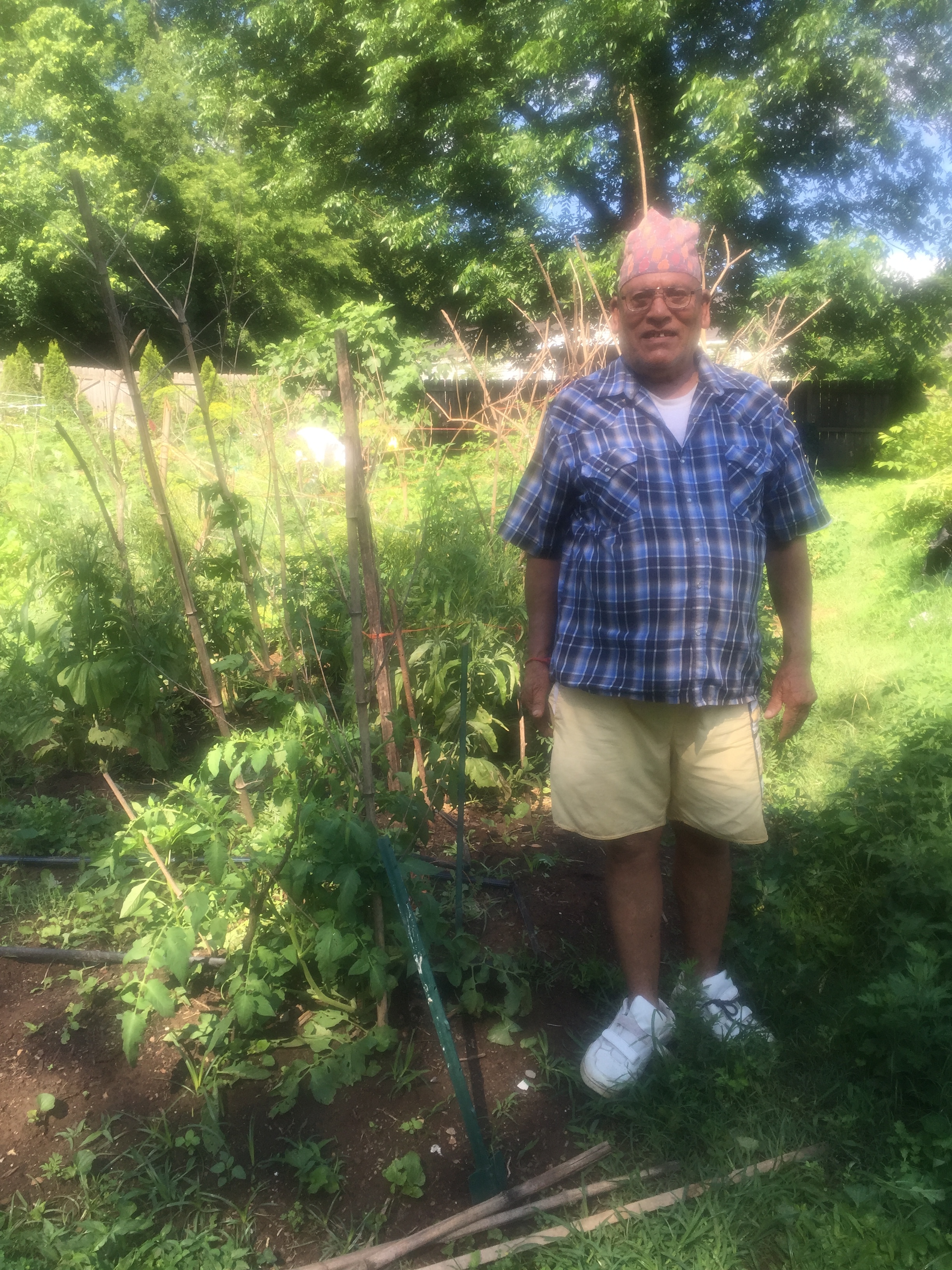
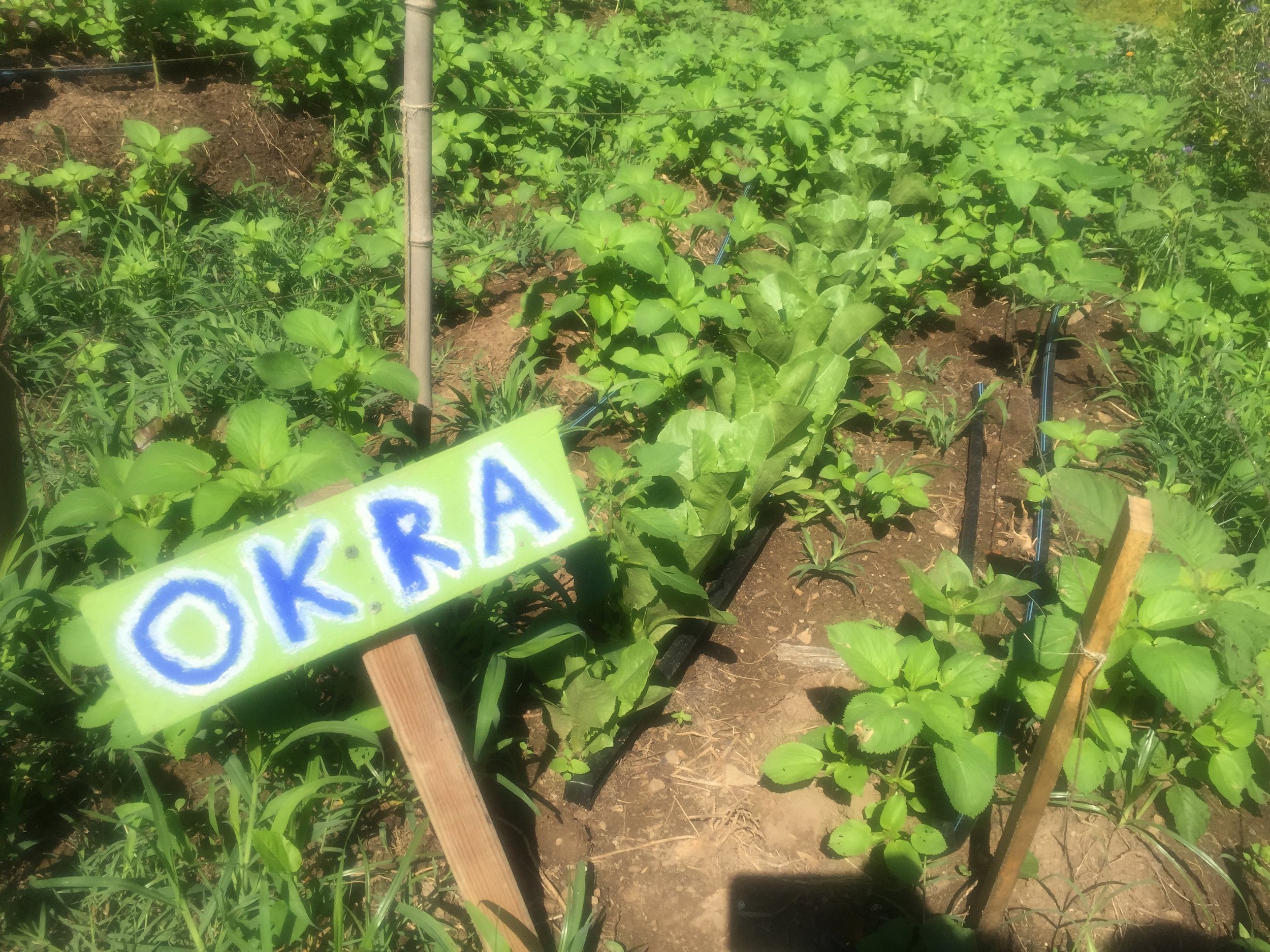
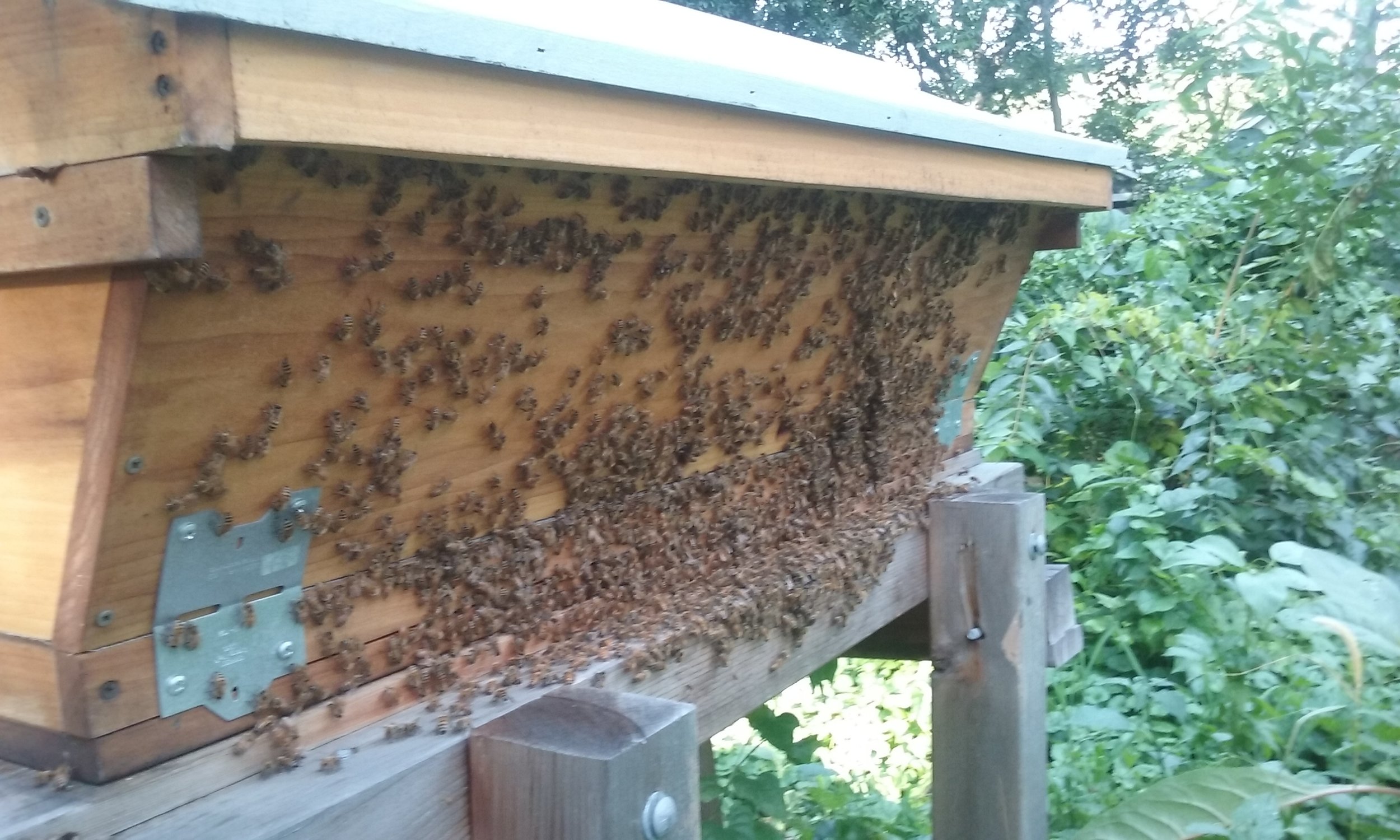
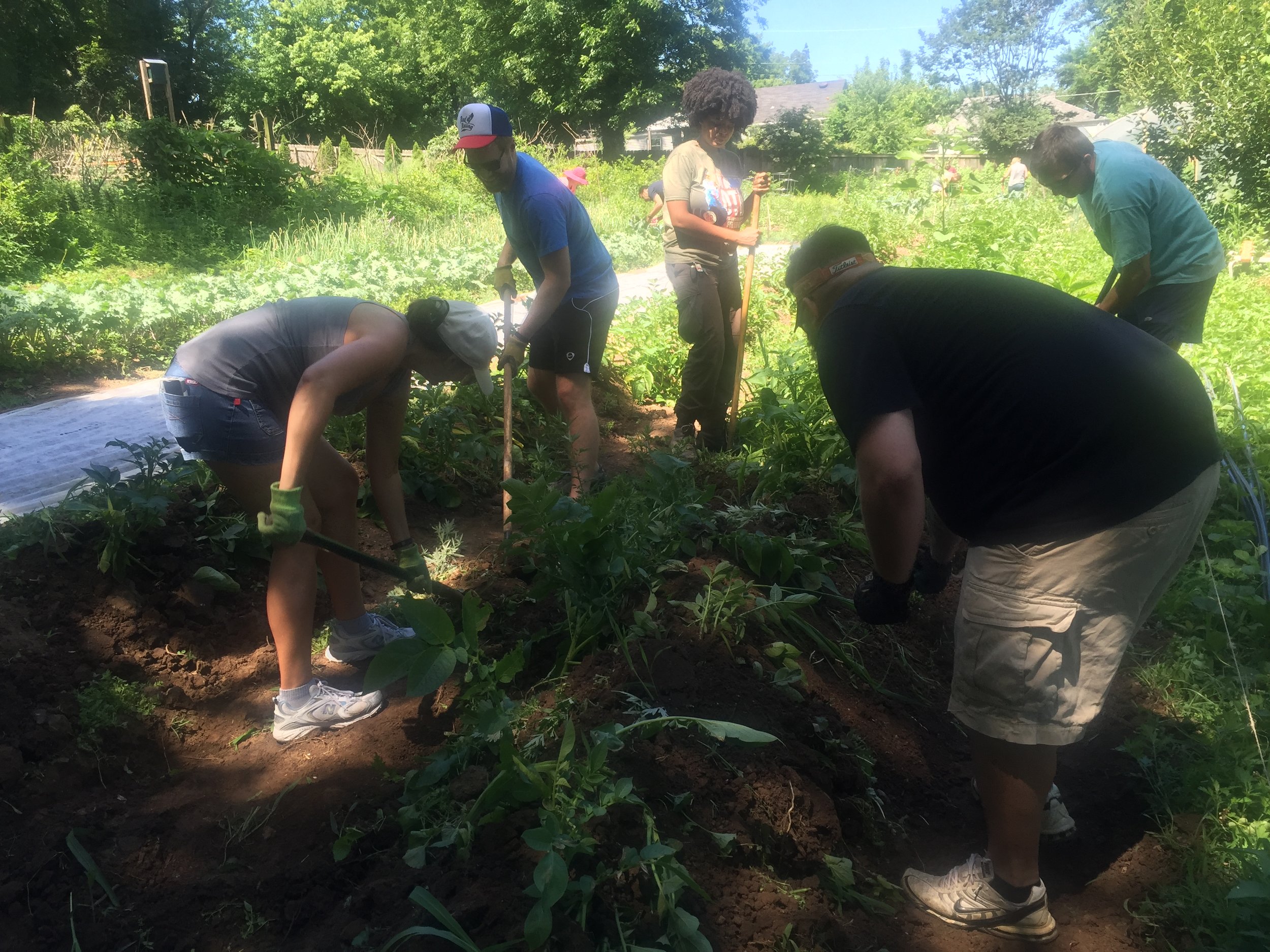
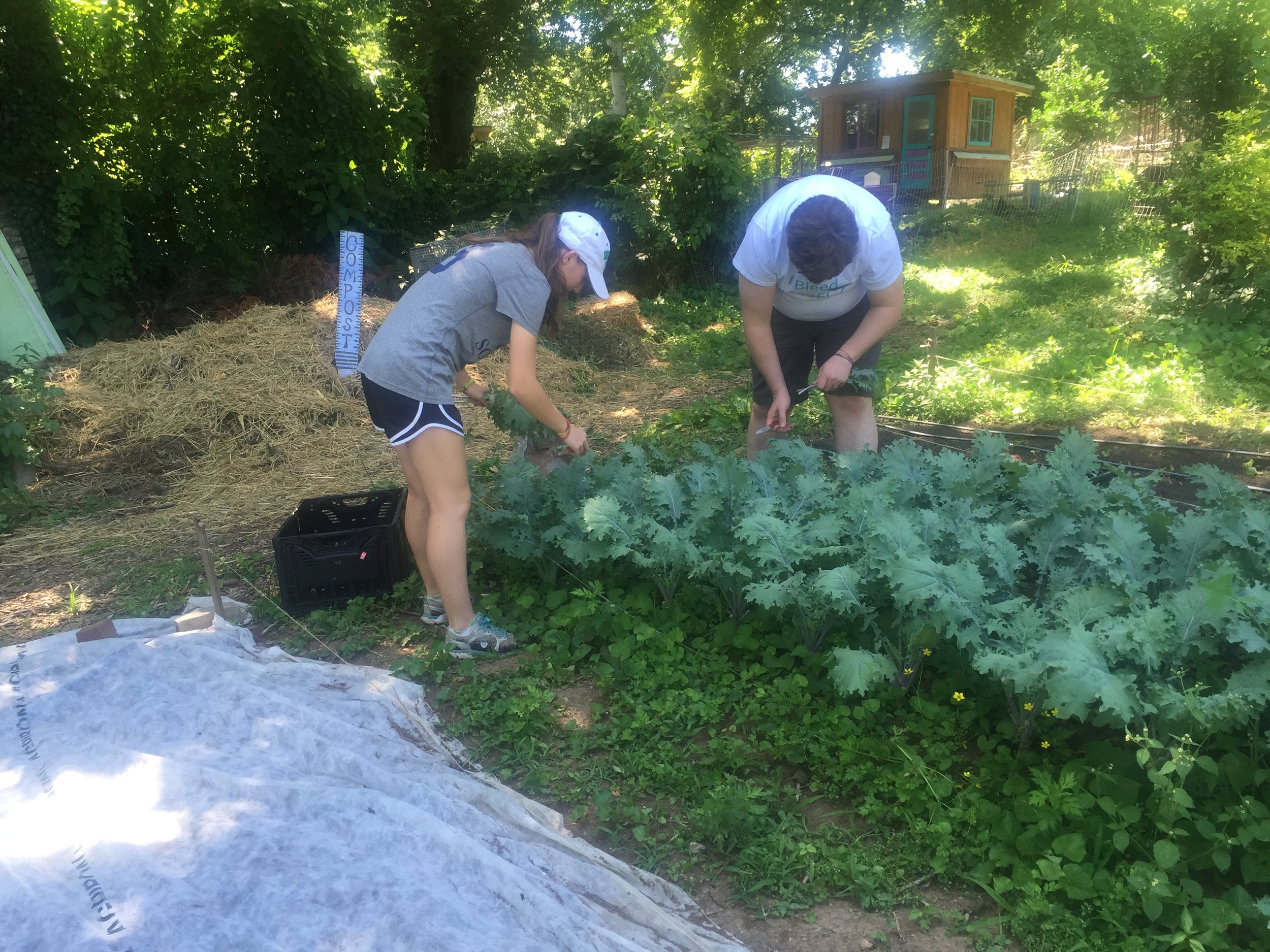
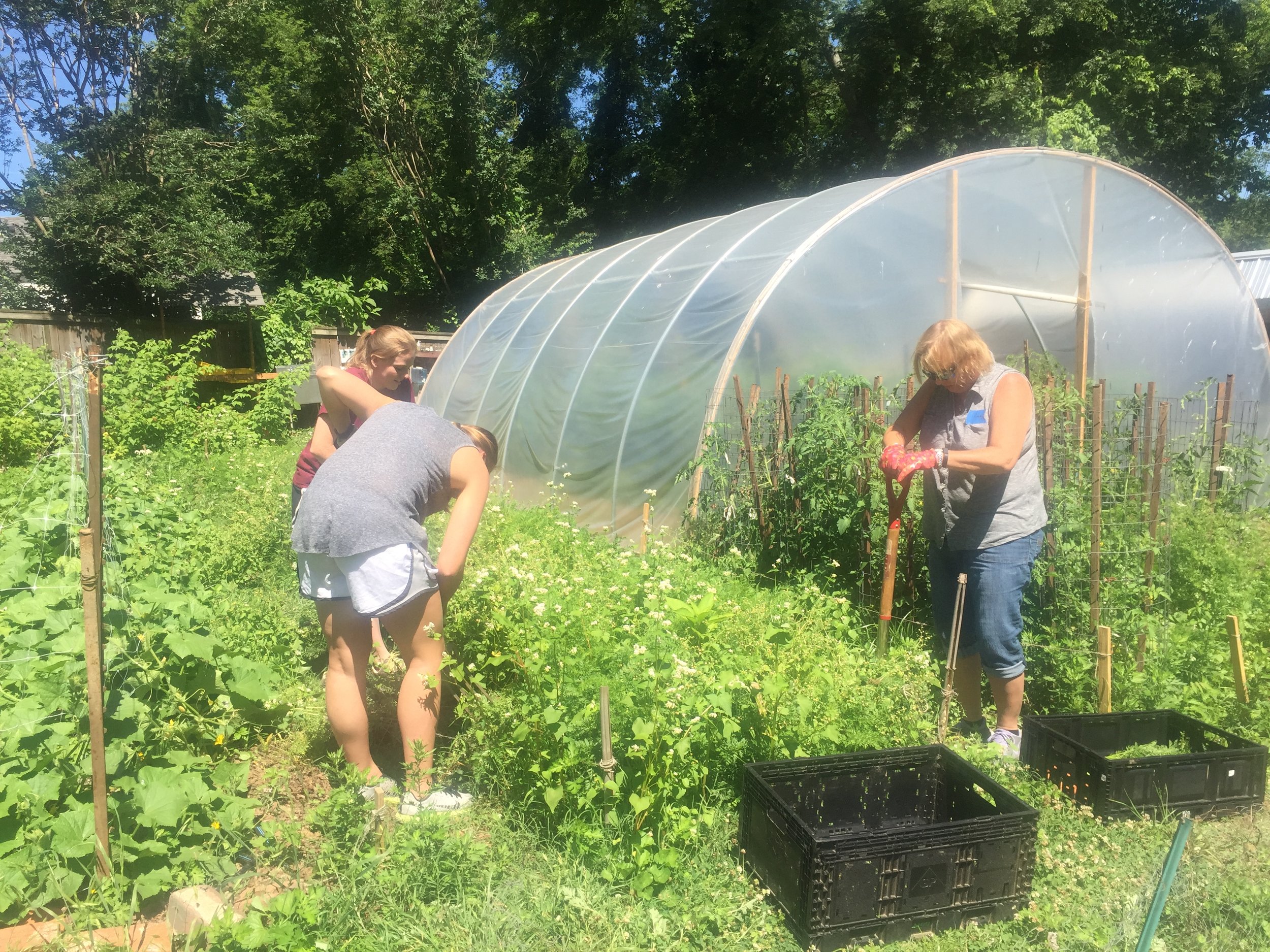
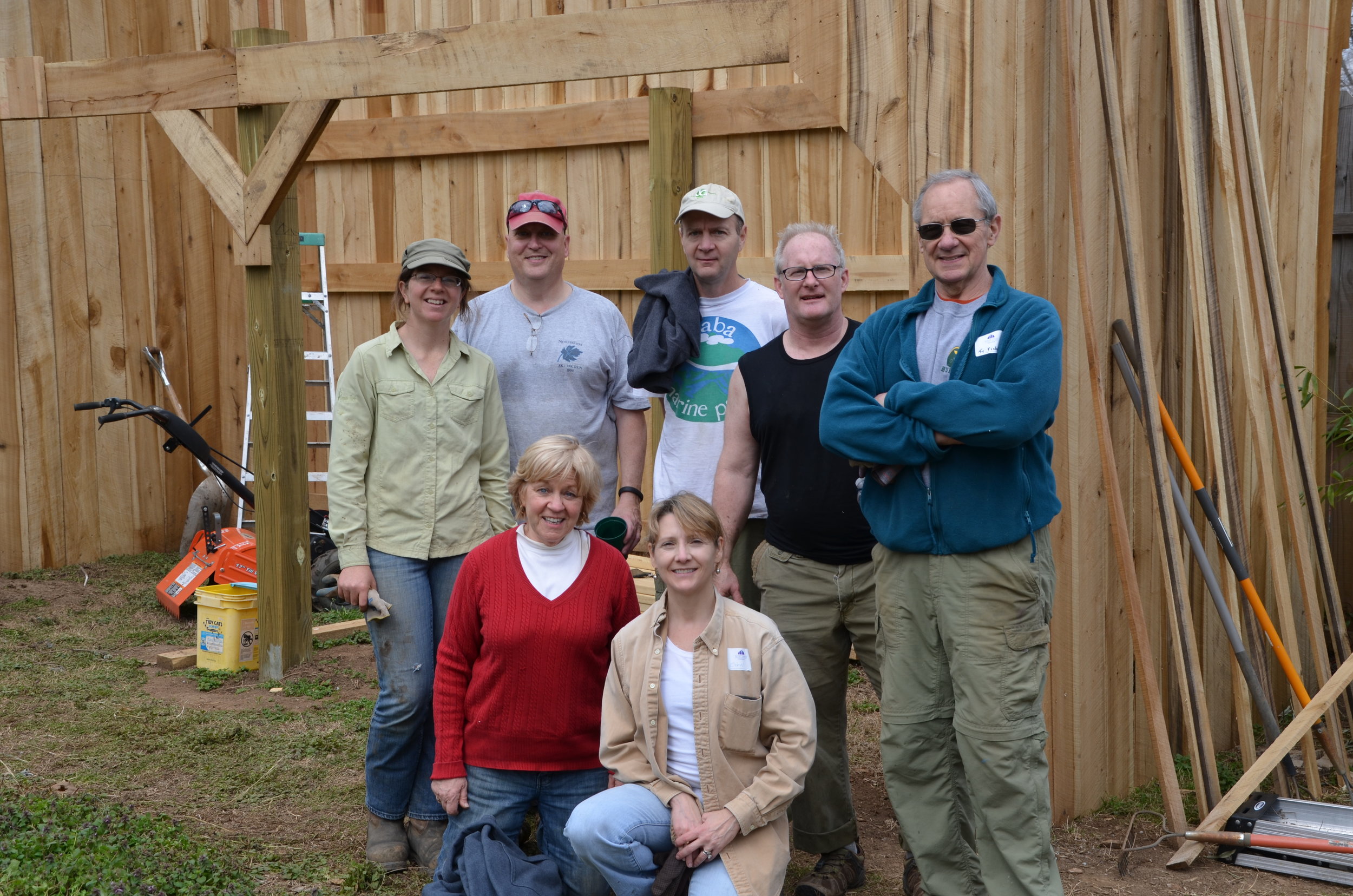
Through this expansion, we’ve also grown our garden-based adult education program, offering weekly and monthly training opportunities to diverse groups of adults who participate in community and market gardens.
We began thinking about the program as an urban agriculture program with three distinct types of gardens: production gardens, community gardens and a market garden.
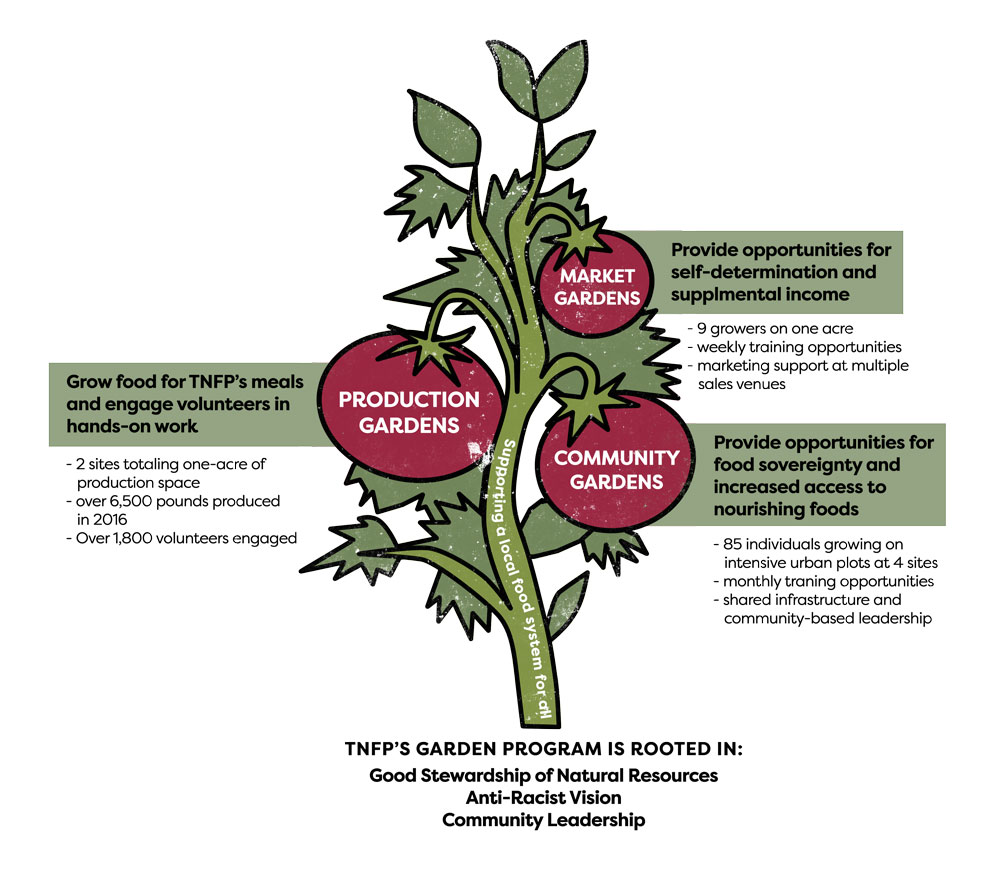
Our staffing reflected growing program needs in 2016. We welcomed Lauren Bailey, previously Director of Agriculture Program at CRIT, as Growing Together (market garden) Manager. Former Garden Coordinator Kia Brown has transitioned into the role of Community Garden Manager to support TNFP’s four community garden sites. Former Garden Manager Christina Bentrup has transitioned to Garden Director to provide long-term leadership of the program. We are currently hiring a Production Garden Manager to provide technical assistance to all gardens and care for ecosystem components.
Achaar - A Taste of Asia
Wwhen we asked the farmers of Growing Together what to do with tomatoes for sampling at the Nashville Farmers’ Market, they suggested achaar — a tomato-based chutney popular in Bhutanese and Nepali cuisine…
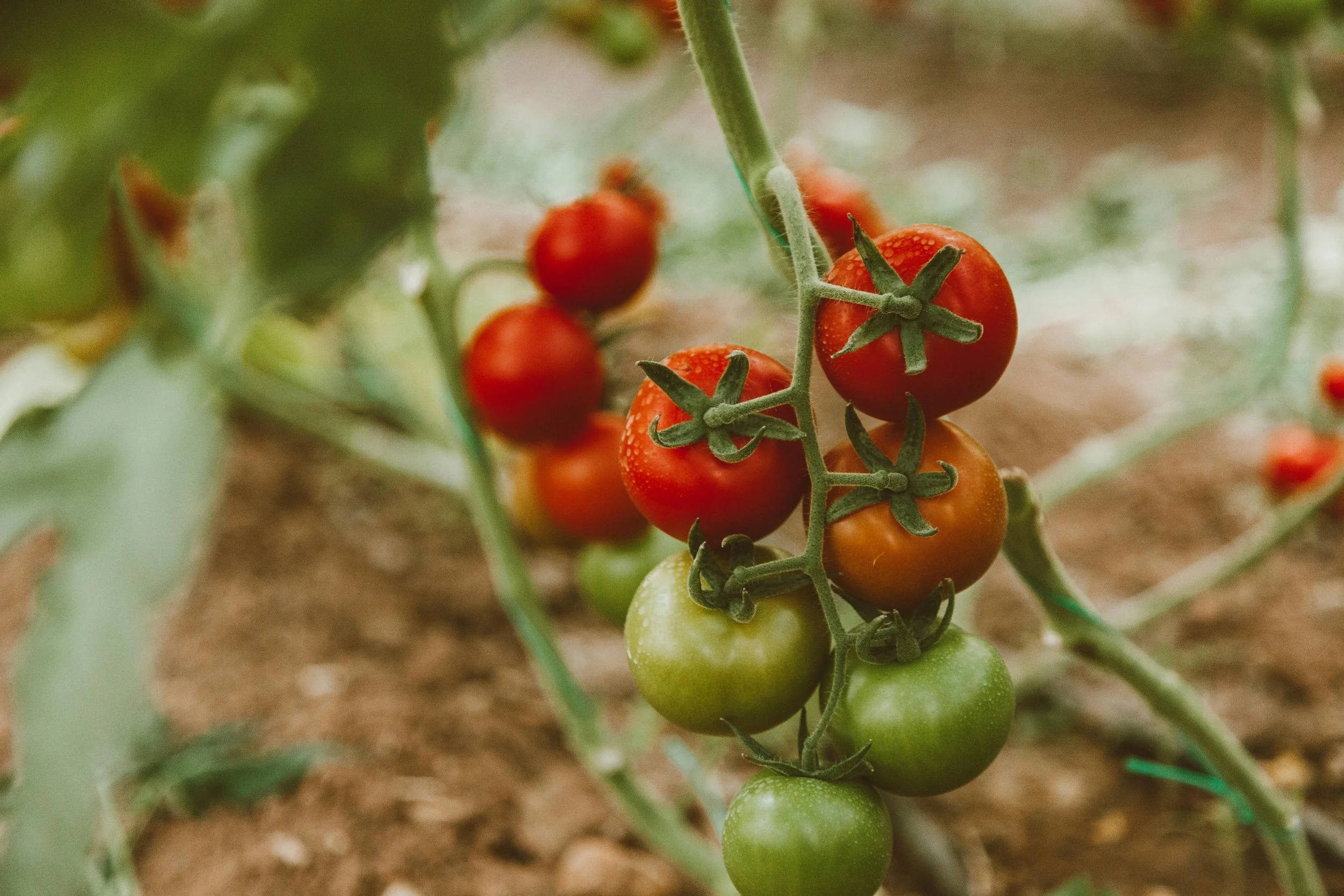
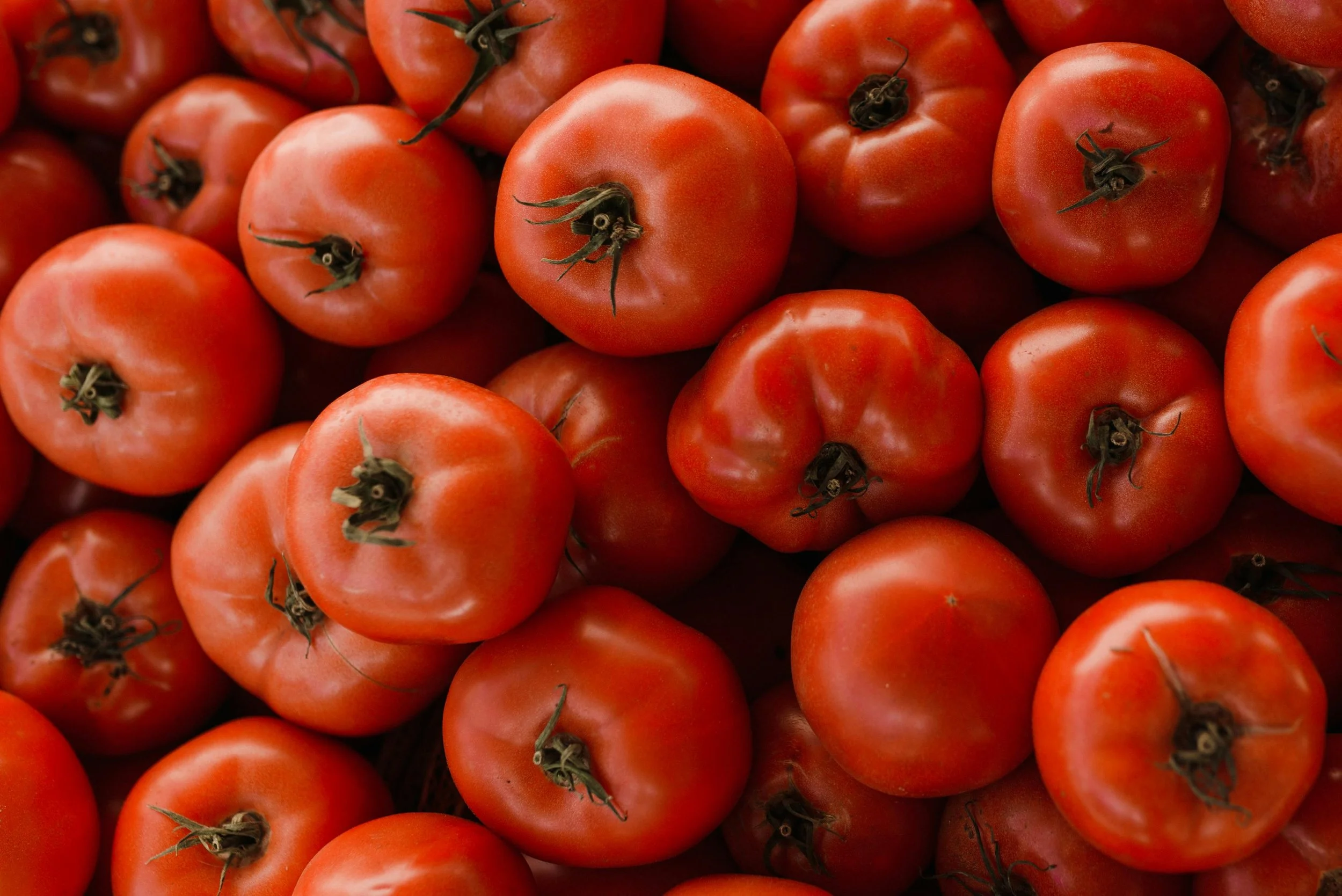
We’ve reached that glorious time in Tennessee summers when tomatoes hang heavy from the vine, begging to be plucked and sliced or tossed into the mouth like candy when cherry-sized.
It’s a time for BLTs and marinara sauces, tomato pies and fresh salsas.
But when we asked the farmers of Growing Together what to do with tomatoes for sampling at the Nashville Farmers’ Market, they suggested achaar.
Achaar, a tomato-based chutney popular in Bhutanese and Nepali cuisine, can be made in a variety of combinations that might include cilantro or mint, peppers and tomatoes. It’s often served alongside lentils and basmati rice, adding zap and zing to the meal.
Since the Growing Together farmers also happen to grow arugula, we included the spicy green leaves with this version called Golbheda ko Achaar. Roasting the tomatoes deepens the entire dish with rich flavor.
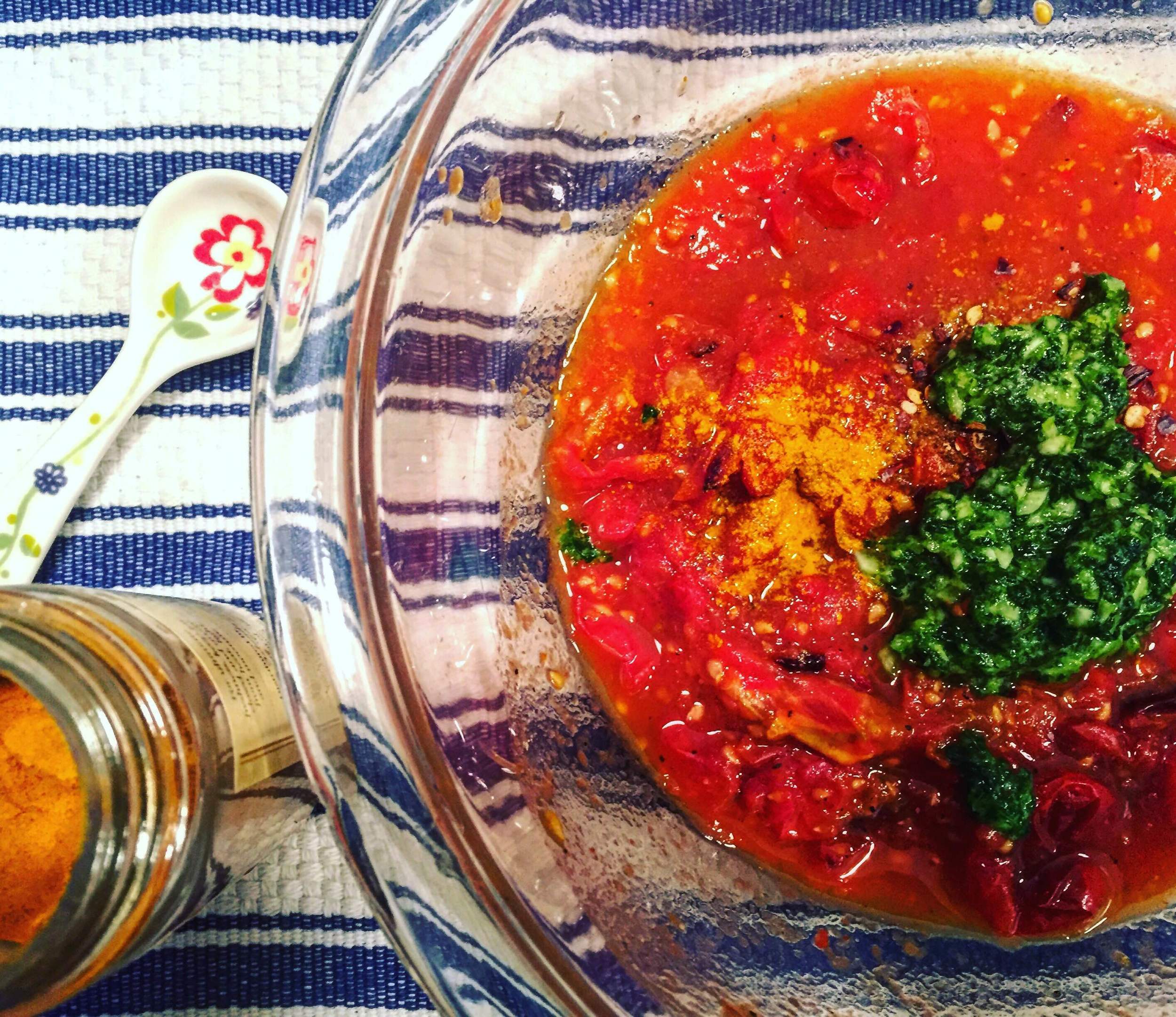
We paired samples of achaar with slices of baguette from Village Bakery & Provisions, a fantastic shop inside the Market House. And we’re happy to report that the little cups of spicy tomato flew off our table at the market.
We hope you’ll visit the Growing Together farmers at their Nashville Farmers’ Market booth on Saturday, August 20 from 8am to 2:30pm. We’ll send you home with a taste of achaar while supplies last—or at least some tomatoes and the recipe to make it at home!

Golbheda ko Achaar (Tomato Chutney)
This dish is a favorite in Bhutanese and Nepali cultures, and it has many variations with mint or cilantro instead of arugula, for example. It’s generally served as an accompaniment to lentils and rice or bread.
Makes about 4 servings
Ingredients:
Four medium-sized tomatoes or a couple handfuls of cherry tomatoes
Olive oil for baking dish and tomatoes
Salt and pepper to season plus 1 teaspoon for the arugula paste
A handful of arugula
2 cloves garlic, minced
1/4 teaspoon red chile flake
1/4 teaspoon of coriander
1/4 teaspoon cumin
Pinch of turmeric
Squeeze of fresh lime juice
Directions:
Preheat oven to 350 degrees.
Oil a baking dish. Wash and half the larger tomatoes and lightly coat them in oil as well. Arrange the tomatoes in the baking dish in a single layer with their cut sides up and sprinkle lightly with salt. Roast the tomatoes until their skins are wrinkled and browning in places about 1 hour.
While the tomatoes roast, combine 1 teaspoon salt with arugula in a mortar and pestle. Crush the two ingredients together until a paste forms. (If you don’t have a mortar and pestle, you can use the bottom of a clean jelly jar or coffee mug to grind ingredients on a cutting board.)
Gently peel the skins from the tomatoes and combine the tomatoes with the arugula mixture and remaining spices. Taste and add a squeeze of lime juice or so to your liking. Adjust seasoning, if needed, and serve alongside lentils or curry dishes as a small side dish or flavorful condiment.
Adapted recipe from thegundruk.com
Growing Together at the Nashville Farmers' Market

The Nashville Farmers Market hosted record-breaking crowds this month to kick off the warm season, and we’ve been thrilled to be a part of it as "Growing Together," the new name for the Refugee Agricultural Partnership Program, a partnership between The Nashville Food Project and the Center for Refugees and Immigrants of Tennessee.
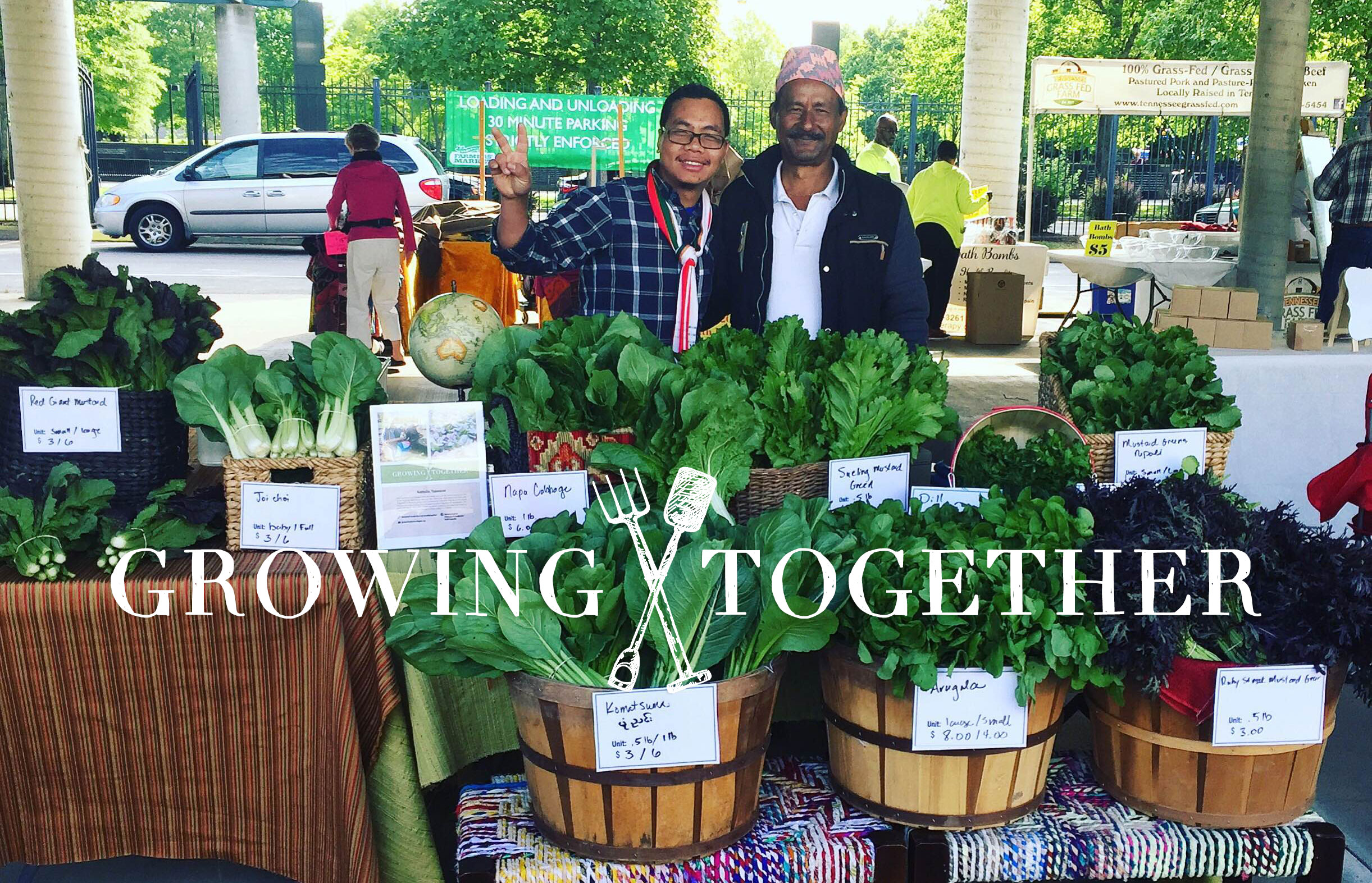
For the first time, the farmers of Growing Together harvested produce they’ve been growing since early March to sell at the market. Baskets have been overflowing with vibrant komatsuma, a Japanese mustard spinach, and several additional varieties of mustard greens such as sueling and giant red leaf. The farmers also harvested crops like joi choi (a type of bok choy), arugula, cilantro, dill, hakurei turnips and daikon radish.

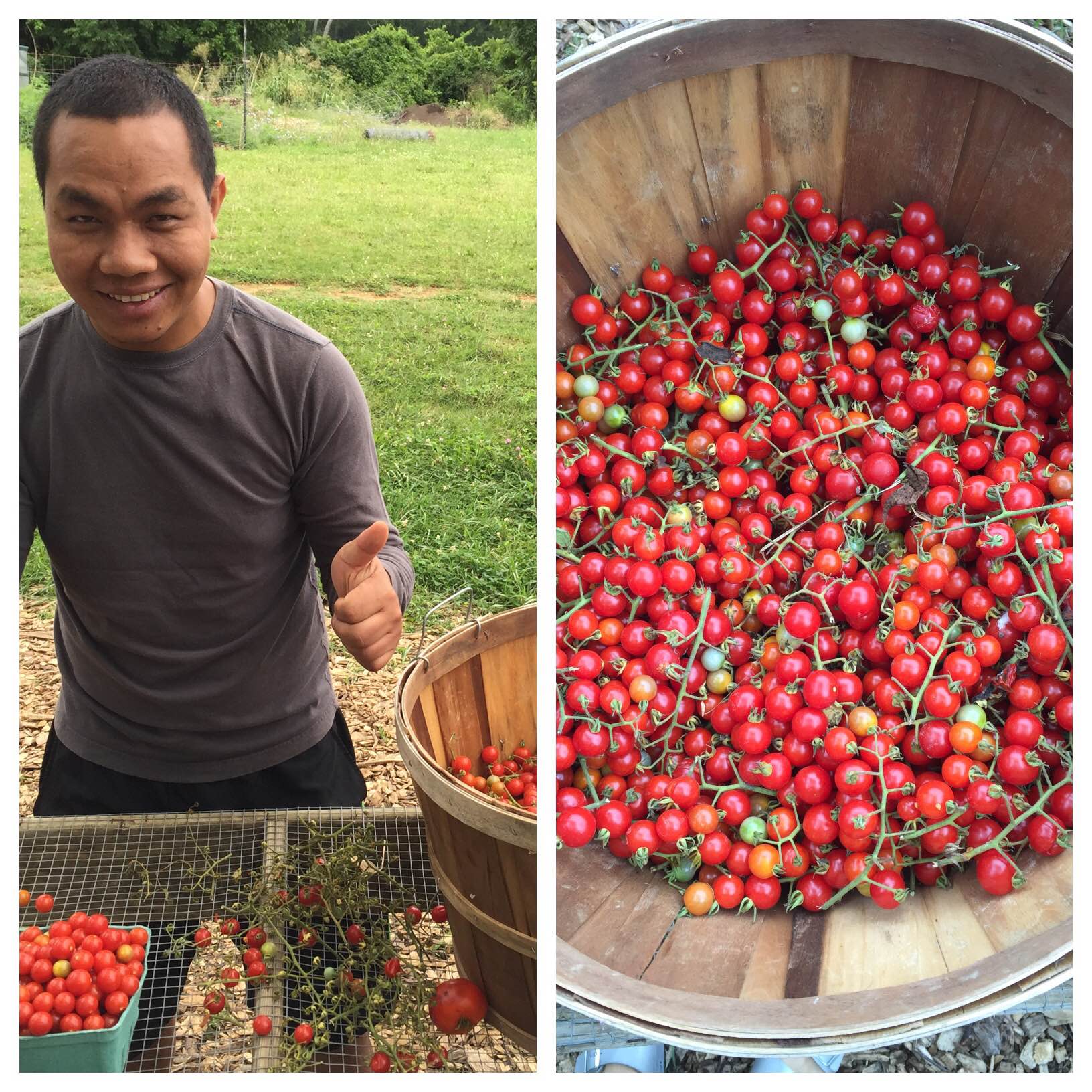
Each week, two farmers in the collective attend the market to represent the group such as Thomas Piang of Burma and Chandra Paudel of Bhutan, pictured above. We’ve been providing profiles of the farmers along with recipes for featured produce.
Thank you to all the customers who have visited with us so far such as Chef Sam Tucker of Village Bakery & Provisions inside the Market House. He picked up an armful of joi choi during our first market.

Chef Sam with our farm shed neighbor Victoria of Lucy Bird Kitchen.
We were delighted to see it in subsequent weeks on his menu sauteed with brown butter, chili and lemon.

Come see us this season at the market. We’ll be there every Saturday through September. We look forward to showing you this gorgeous produce!
Refugee Growers Prepare for Nashville Farmers Market Season
We're so excited to continue our support of the Center for Refugees and Immigrants of Tennessee's Refugee Agricultural Program this growing season! This year, we have an exciting new aspect of the program, which will support a number of growers as they work to sell some of the produce that they grow. Below is a post from our partner CRIT on the progress thus far.
The farmers of the Refugee Agricultural Program of Middle Tennessee arrived early Monday morning at the Nashville Farmers’ Market to imagine their new space under the Farm Sheds.
Beginning in May, they’ll be selling the produce they have been working hard to grow off Haywood Lane in South Nashville to the thousands of customers who browse the downtown market on Saturdays.

“This is the first time this has ever happened at the Nashville Farmers’ Market,” said Tasha Kennard, the executive director of the market who spoke with the group. “You can inspire the community and teach the community that you want to be a part of it and inspire others to do what you’re doing.”

Many in the group have grown food or worked farmers markets in their native countries of Bhutan, Nepal and Burma. Here, they’ll join a group of about 150 merchants at the market from Tennessee and nearby states like Kentucky and Alabama.
Tasha offered tips to the group through translator Siddi Rimal about how to successfully sell at the market, but she also congratulated the group on opening doors and showing community members how to provide food, create jobs and support families.

“We are here to support you,” she said, “and our fellow farmers are here to support you and help you have a good time.”
We hope you’ll visit our farmers’ market booth on Saturdays from May through September. The Nashville Farmers’ Market is located at 900 Rosa L Parks Blvd.
Growing Together: The Refugee Ag Program
In January, Tennessee gardens tend to offer more frozen patches than green, but growth in the TNFP gardens continues in the cooler months in different ways—with preparation, trainings and relationship building…

In January, Tennessee gardens tend to offer more frozen patches than green, but growth in the TNFP gardens continues in the cooler months in different ways—with preparation, trainings and relationship building.
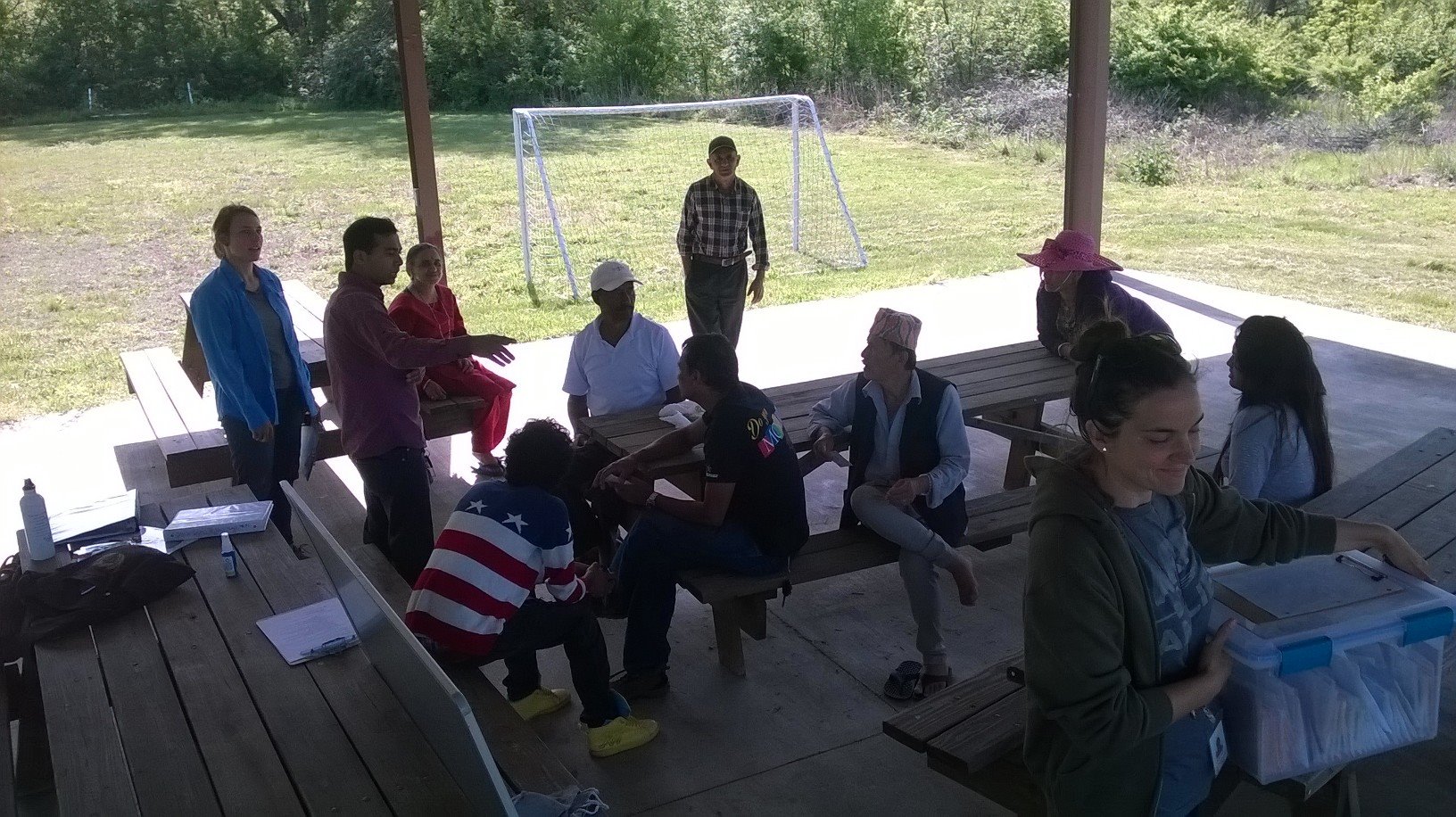
At Hillcrest United Methodist Church on a recent Monday, the Nashville Food Project’s Garden Manager Christina Bentrup stood before a group of refugee growers from Bhutan and Nepal to talk about opportunities to sell crops at farmers’ markets and restaurants through the Refugee Agriculture Partnership Program (RAPP).
Speaking through translator Siddi Rimal, two farmers named Chhabi and Chandra shared their successes selling popular mustard greens at a negotiated price within their community. But beyond learning ways to market and work together—and hearing how the growing seasons differ in Tennessee than their home countries—the trainings help make deeper connections.
“Participants build stronger relationships with each other, with the physical land, with neighbors and members of their community and with other communities through selling their food,” Christina says.
Lauren Bailey, the Agricultural Programs Director at the Center for Refugees and Immigrants of Tennessee, the agency partner on the RAPP program, also participates in the trainings where lessons go beyond the soil.
“Sometimes farmers come to us with other issues that they are facing in life, such as the complicated nature of obtaining citizenship,” she says. “In these moments, we're faced with the opportunity to listen and to find ways to connect and advocate with our farmers. As our relationships grow, our understanding of our farmers' lives grows.”
A few days later at the Woodmont garden at The Nashville Food Project, a group of volunteers sifted compost to make potting soil for starting crops in the greenhouse.

“See how pretty that is?” said volunteer Linda Bodfish. “It started off as melons and rotten tomatoes.”

They worked together over a hands-on process that couldn’t be rushed. Among discussion about the compost, they shared stories about family pets, jobs and hometowns.

“Growing food, even if you and your family are the only ones eating it, is a communal activity,” Christina says. “It brings us into contact with the earth we all share, with the traditions of agriculture that have kept our species alive, and spirit of abundance that pervades all well-cared for gardens.”
Linda, a long-time volunteer in TNFP gardens, says she’s learned over the years about irrigation and overwatering and companion planting: “I feel like I get out of it more than I give."
Lauren, too, said preparing for the trainings reminds her of the power that garden programming has to build community and foster existing community leaders.
“People seem really happy at the field trainings, both in the RAPP program and in our neighborhood-based community gardens," Christina says. "I am privileged to be a witness to the joy and pride people seem to feel when working in their gardens. This joy reminds me that isolation is one of the biggest cofactors of hunger. When we work in a garden, even if we happen to be by ourselves, we become deeply rooted to a place. This connection alone can bring people from isolation to integration.”