
Poverty & Food Insecurity

Anatomy of a Meal

Have you ever wondered what it takes to place a hot, nourishing meal in a neighbor’s hands? For us, a meal does not begin in the kitchen. It begins much earlier.

What follows is a careful, collective process shaped by stewardship, skill, and care. It is the work of turning surplus into nourishment, and nourishment into connection.
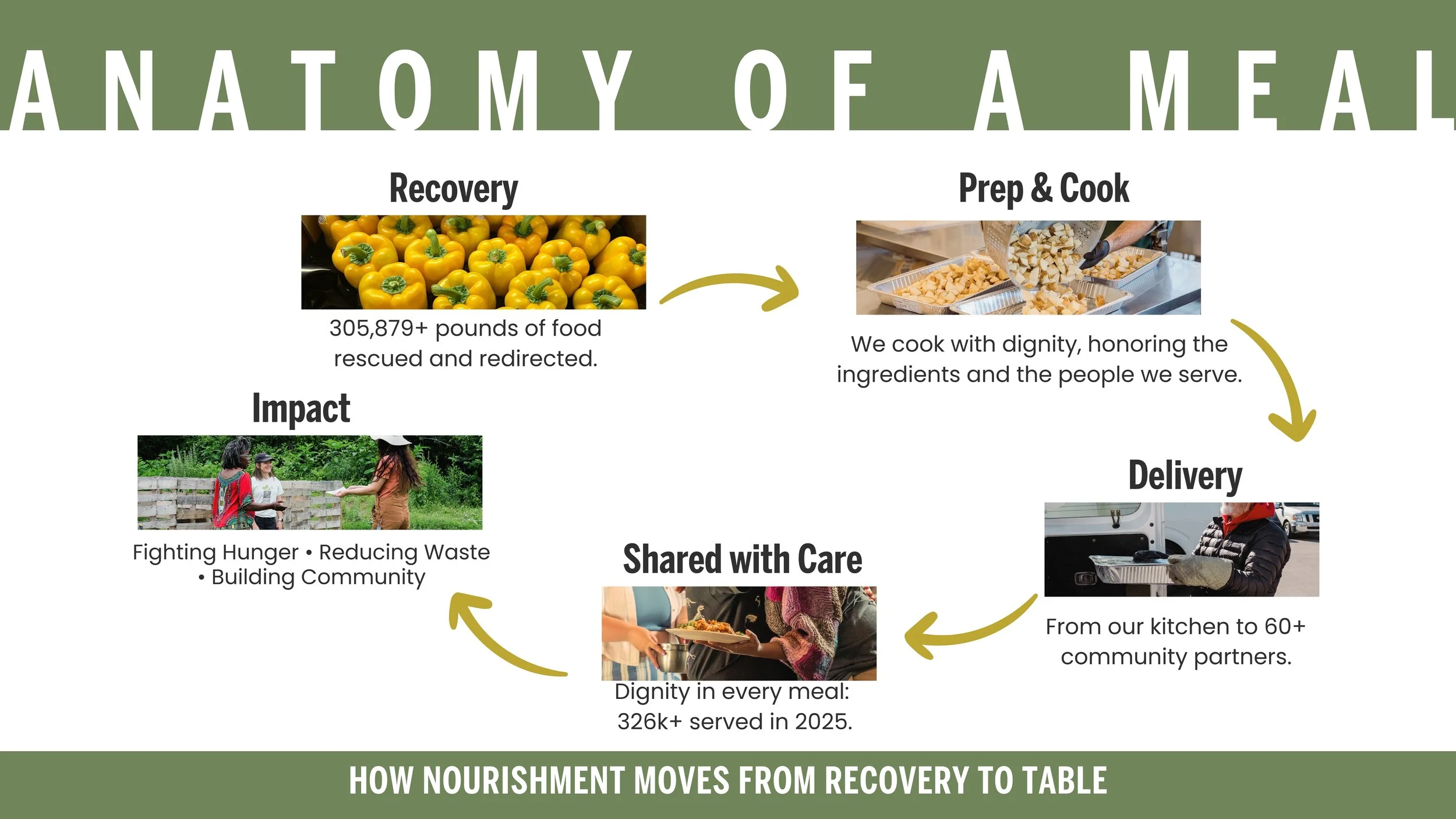
Recovery

The first step is recovery. Across Nashville, food that is still fresh and abundant is often left without a destination. We work alongside grocers, farmers, markets, restaurants, and individuals to recover food that would otherwise go to waste. This is not about scraps or leftovers. It is about recognizing the value of food that has already been grown, harvested, and prepared with care.

Recovering food is an act of responsibility. It acknowledges that hunger and waste exist side by side, and that abundance can be redirected toward justice when we choose to act.

Prep and Cook

Once recovered, food moves into our kitchens. Here, volunteers, cooks, and staff prepare meals from scratch, guided by skill and intention. Vegetables are washed and chopped. Recipes are tested and refined. Meals are prepared with the understanding that the people who will receive them deserve food that is nourishing, thoughtful, and well made.

Cooking is where transformation becomes visible. Ingredients become meals. Surplus becomes sustenance. And strangers become neighbors through shared effort.

Delivery

Meals do not remain in our kitchens. They travel outward, carried by partnerships and logistics that make access possible. Through coordination with nonprofit partners across the city, meals are delivered to places where they can be shared with care and dignity.

Delivery is not simply about transportation. It is about trust. It depends on relationships built over time and a shared commitment to meeting people where they are.

Shared with Care

The final step happens around tables, in community spaces, and through organizations doing vital work across Nashville. Meals are served alongside programs that support children, seniors, immigrants, and unhoused neighbors. In these moments, food becomes more than nutrition. It becomes an expression of hospitality and belonging.

A meal shared with care communicates something essential. You matter. You are welcome. You are not alone.

Impact

Every meal tells a larger story. It is a story of hunger addressed and waste reduced. It is a story of volunteers showing up, partners collaborating, and systems working together in service of the common good.

This work fights hunger by increasing access to consistent nourishment. It reduces waste by honoring the value of food already grown. And it builds community by creating spaces where people come together around a shared table.

Be Part of the Journey

The anatomy of a meal is a collective effort. It relies on people who believe that good food should not be wasted and that neighbors deserve to be nourished with dignity.

If you want to be part of this transformation, there are many ways to get involved. Whether through volunteering, donating food, or offering financial support, your participation helps keep this cycle of care moving forward.

Together, we turn what might be thrown away into meals that strengthen our community, one plate at a time.

Volunteer
Give food
DONATE

Fueling Potential: How Summer Meals Support Youth at the Boys & Girls Club

Fueling Potential: How Summer Meals Support Youth at the Boys & Girls Club

At the Andrew Jackson Clubhouse of the Boys & Girls Clubs of Middle Tennessee, kids are spending the summer learning, growing—and thanks to The Nashville Food Project’s made-from-scratch meals—staying nourished, too.

Through the Sweet Peas Summer Eats for Kids program, sponsored by Jackson®, hundreds of healthy meals are delivered each week to support youth during a time when access to regular food can drop off.

This partnership is part of The Nashville Food Project’s Community Meals program, which brings nutritious food directly to organizations already creating safe, supportive spaces for young people.

Now in its sixth year, the collaboration with Jackson is helping serve over 100,000 meals this summer—fueling not just plates, but potential across the city.

Hunger vs. Food Insecurity: Why the Difference Matters for Food Justice in Nashville

If we think only in terms of hunger, our response will be emergency food. This is important, but it’s reactive. If we frame the problem as food insecurity, we begin to think bigger. We move from charity to justice. In other words, you can end someone's hunger for a day. But ending food insecurity means making sure they don't face that hunger tomorrow, next week, or next year.

The Role Of Public Transportation In Food Accessibility: Part Two

In part two of her blog series on public transit's impact on food availability, Director of Food Access Tera Ashley evaluates the affordability, variety, and quality of produce typically available in low-income, low-access areas. While many might draw conclusions that there is not demand for as much produce in these areas, anecdotal evidence indicates otherwise.

The Role of Public Transportation in Food Accessibility: Part One

To combat food insecurity among low-income, low-access households without vehicle ownership, the availability of public transportation is paramount. The increased mobility that often comes with efficient, reliable public transportation may affect the accessibility of fresh fruits and vegetables in three ways: increased affordability, increased variety, and elevated quality. Director of Food Access Tera Ashley explores how food access and transportation are related in the first installment of this three-part series.

Addressing Child Poverty Beyond the Pandemic

Development Manager Johnisha Levi wrote an article for Yes! Media on the American Rescue Plan’s potential to reduce child poverty in the United States. The plan seeks to uplift American families suffering from the economic impacts of COVID-19 with a series of cash transfers and expansion of benefits. While the focus of the bill is specifically COVID-19 relief, it has potential to have lasting impacts on childhood poverty and hunger in our country.

A Spirit of Service

"What I love about these programs as we think about the spirit of service is these programs are built on the strengths of those who participate and not their deficits." - our founder Tallu Schuyler Quinn delivering her acceptance speech for the 2020 Alumna Spirit of Service Award at Harpeth Hall School. You can watch the full speech here, where we also offer our gratitude to Harpeth Hall for their recent donations helping us stock our pantry and provide nourishing meals in the community.

Fighting for Tennessee’s Food Security Safety Net: Pandemic EBT and Food Assistance in the Age of Coronavirus

We know how important free and reduced-price meals are for Tennessee families—over 663,000 Tennessee kids rely on free lunch and breakfast during a typical school year. As the pandemic shutters businesses and causes unprecedented layoffs, families are more vulnerable to food insecurity than ever before. While support from incredible locally-run organizations like The Nashville Food Project, this does not replace the need for food assistance legislation from state governments—especially in times of crisis.

What it Means to Nourish Community

Nourishment, after all, is about so much more than feeding and eating. To nourish another centers on the emotional tie—the care, regard, and concern—you have for another. It is about maintaining a relationship by prioritizing and cherishing another, not imposing what you think you know, but rather about listening. And it is this relationship that informs what makes another person or a community healthy and strong.

Sowing Seeds of Justice

It is past time to sow seeds that yield justice and a more equitable future. The profound impact of racism on life and death demands a full response from every single part of American society. At The Nashville Food Project we know we do not have all the answers, but we believe we can be part of the solution. We have learned and continue to learn that anti-racism work cannot be treated as side work, but it is the work of community food justice.

Food as a Lens

On a recent Thursday, more than 45 people filed into The Nashville Food Project’s community dining room, shaking umbrellas and shedding coats to join us for a hot cup of scratch-made sweet potato chili, a panel, and community conversation on the complexities of food injustice and how hunger intersects with other systemic inequities.

Sweet Peas: Summer Eats for Kids

Over the last few years, we have been learning about the incredible need for summer meals for youth in Nashville and wishing we could do more. Every school year, Metro Nashville Public Schools serves 8.4 million lunches and 4 million breakfasts. During the summer months, without these daily meals, many children and youth are at risk of hunger. According to Feeding America, this could be as many as 1 in 5 children under the age of 18. These numbers are staggering, and we are finally in a position to do something about it. We are thrilled to announce a new initiative for our meals program: Sweet Peas, summer eats for kids