
The Nashville Food Project’s Blog

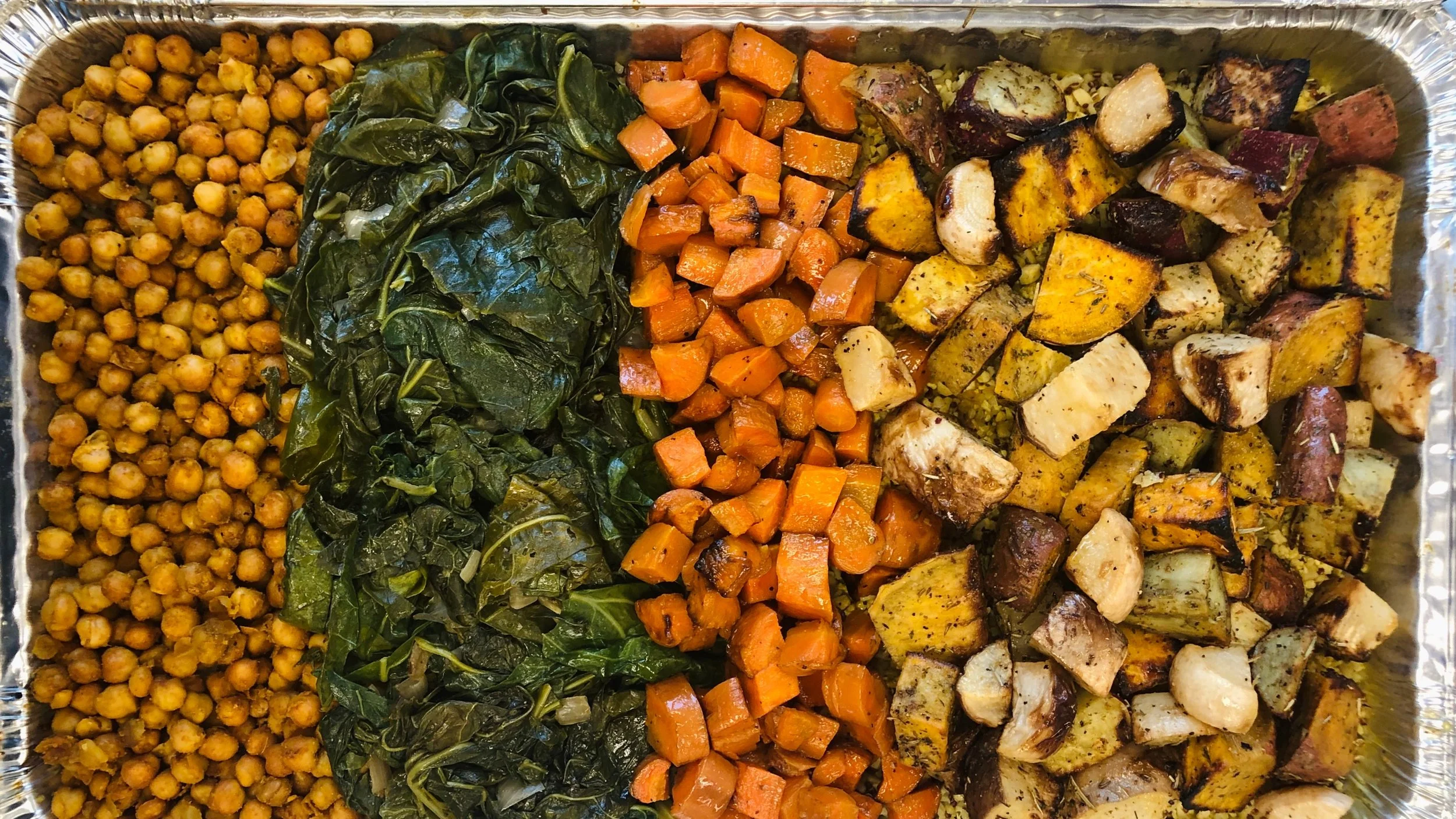


Thanksgiving Favorites from the Kitchen
We’re in the mood for some holiday cheer (and are always looking to get excited about the next big meal), so we asked some of our meals team about their favorite Thanksgiving dish. Hopefully, the answers get you excited about your own gathering — which we would love to be a part of in some small way!

We’re in the mood for some holiday cheer (and are always looking to get excited about the next big meal), so we asked some of our meals team about their favorite Thanksgiving dish. Hopefully, the answers get you excited about your own gathering — which we would love to be a part of in some small way!

Stuart: “One year instead of turkey, I made a 12-pound rib roast. The beef came from Carnivore, the butcher shop I used to work at in Franklin, and it was an incredible holiday gift that I got to share with my family. I broiled the beef for a few minutes, roasted the whole thing on high for an hour, and then let it sit and marinate. It was perfect.”
Chef Bianca: “My cousin’s wife makes a squash casserole and as much as I try to duplicate it, I’ve never been able to, so I always ask her to bring it to our gathering. A few years ago, we had to cancel our dinner because a few people were sick, and that squash casserole made it into every individually packaged meal that got dropped off to each separate household. But wait…I can’t forget my granddaddy’s rolls. Been trying to perfect those for years.”


Charlie: “Hands-down, hash brown casserole. I make it with cream of mushroom soup, sour cream, shredded cheese, and butter. It’s not good unless it’s super crispy, and it’s a fine line not to burn it. Occasionally I’ll add garlic and onions, but it’s honestly great as-is.”
Toni: “We do a five-cheese, twice-baked macaroni at my house. It’s my mom and my granny’s recipe, but I’ve made it too. There are so many steps to it — the mac alone is 7-10 steps, because we boil it in broth and then season it with sour cream, mustard, worcestershire sauce, a bunch of stuff you wouldn’t expect. I don’t want to say too much more…gotta keep those family recipes close.”

Julia: “My mom makes the best sweet potato casserole, and it’s my favorite thing every single year. It’s standard and southern with a streusel candied nut topping — none of that marshmallow fluff business.”
Bilal: “Chicken and dressing! You shred up a bunch of chicken and put it in the dressing — and never call it stuffing. It’s dressing. Baked with real bread and gimlet gravy on top. And it’s either this or turkey, never both. I think it’s a Southern dish, but that’s how we do it in Detroit.”


Josh: “I love cherry pie. My mom makes it.”
Let us fill your thanksgiving table!
We’ve made some of our own Thanksgiving traditions at the Food Project, too. This year, we’re bringing back our beloved Thanksgiving sides sale, with lots of the same crowd-pleasers as years past: decadent butternut mac and cheese, melt-in-your-mouth sweet potato and carrot puree, flavorful orzo salad. Orders are open until November 18 — let us be part of your gathering and contribute to community food security along the way!

Come Be A Part Of Our Joy
In the midst of our annual Volunteer Celebration Lunch, an event to show gratitude to all of the many hands and hearts that help sustain our collective work toward community food security, Maggie Atchley reflects on her first couple of months working as the Volunteer Engagement Manager for The Nashville Food Project.

By Maggie Atchley, Volunteer Engagement Manager
This past Friday, volunteers from our kitchens, gardens, and everything in between gathered for our annual Volunteer Celebration Lunch, an event to show gratitude to all of the many hands and hearts that help sustain our collective work toward community food security. In the wake of this event, I have been reflecting on my first couple of months working as the Volunteer Engagement Manager for The Nashville Food Project and all of the love and welcoming I have received from our volunteer family during this time.

When I started with The Nashville Food Project, I was struck by the passion and dedication of our volunteers. Immediately, I recognized something special about these individuals, who always showed up and were so deeply involved and invested in our mission. The energy around The Nashville Food Project was unlike anything I had experienced before and while I struggled to put words to it at first, I found that our late founder Tallu Schulyer Quinn captured this energy perfectly in her book What We Wish Were True:
“My experience is that this work has always been heavy and unglamorous, but it has been joyful. Working with one’s hands… has a wonderful way of flossing out the mind. Hauling this stuff to and from for the last decade and making something meaningful has been messy and strenuous and yet somehow joyous. Our slogan internally at The Food Project evolved to become ‘come be part of our joy.’ And anyone who’s hung out at The Nashville Food Project for any amount of time knows that there is a constant, vibrant chaos that’s in passionate, hopeful pursuit of what we think is possible for Nashville, and what we believe Nashvillians are capable of doing together to wail against the symptoms of poverty. Wendell Berry says, ‘good work is a source of pleasure,’ and that is what comes to my mind when I remember our stories.”
On my first day at the Food Project, I dove in with our incredible Monday afternoon volunteers at St. Luke’s to witness this “vibrant chaos” firsthand. I watched a whirlwind of energy as Beth, Scott, Leslie, Amy and Denise turned a random assortment of food donations into almost 100 individual meals to be shared with homebound seniors, unable to cook for themselves. My amazement was admittedly coupled with some concern, as I watched a high-speed episode of Chopped unfold before me and made mental notes to study up on the show when I got home. But even in my confusion and worry that I wasn’t up to the task, I felt the joy bubbling inside that kitchen, as we laughed over Denise’s Steel Magnolias impressions and helped one another craft colorful, nutritional meals for the seniors we were serving.


What I’ve discovered since then is that this joy wasn’t unique to that one afternoon; it’s woven into the fabric of our daily work. Whether it’s learning how to shape challah rolls with Rob and his team from West End Synagogue, indulging in fresh tomatoes straight from the vine with Stephen and Maddie at Mill Ridge, or receiving a delicious homemade apple pie from Cheri after a casual mention of my fondness for apple desserts, I’ve heard the phrase “come be a part of our joy” repeated time and again in the actions of our volunteers.
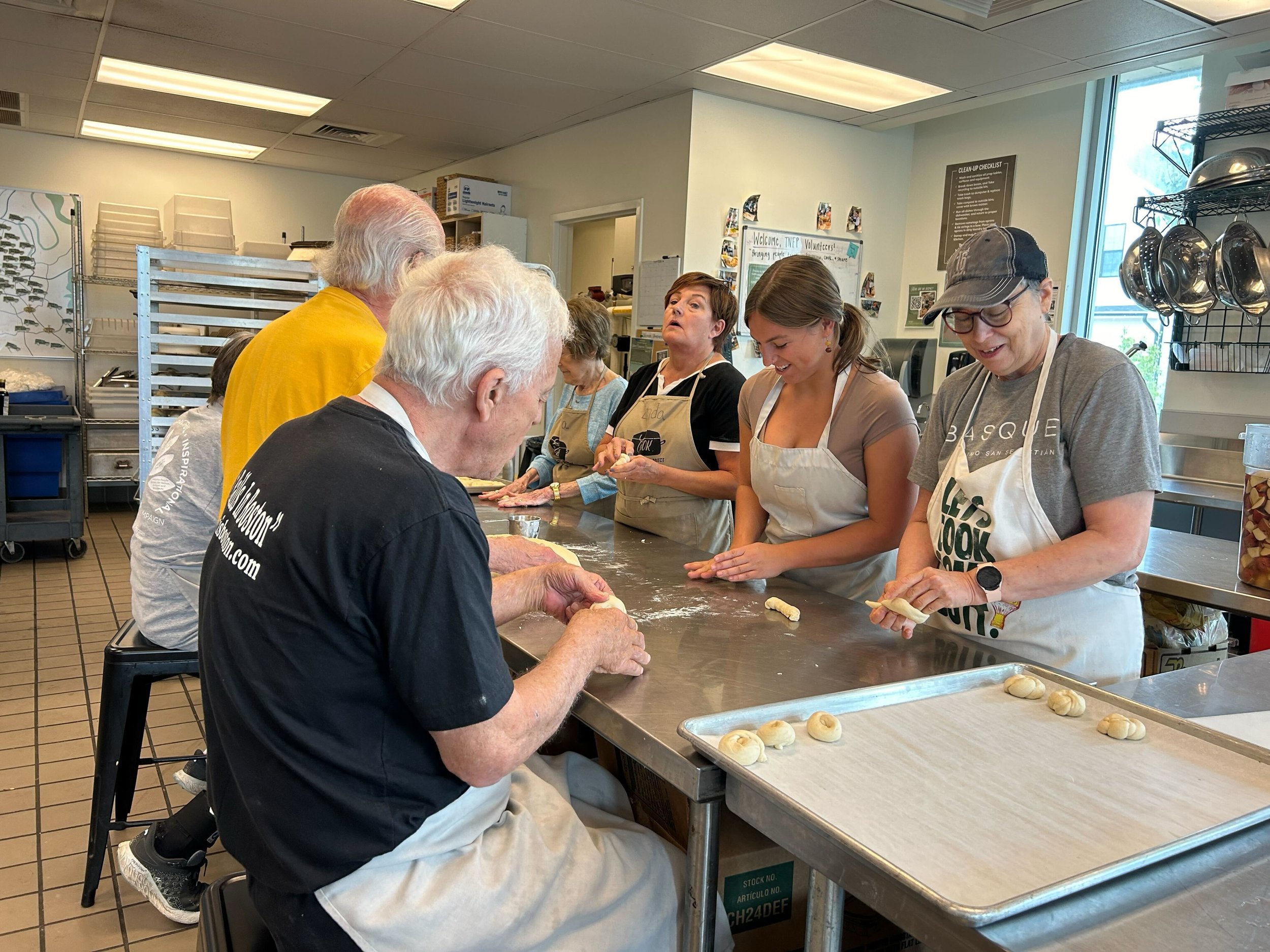

This community has welcomed me with open arms, teaching me the importance of connection, collaboration, and the sheer joy of creating something meaningful together. Your generosity of time, spirit, and knowledge has made my transition into this role an absolute delight.
As I reflect on last week’s Volunteer Celebration Lunch and my past few months as part of this community, I’m filled with gratitude for each of you. Thank you for embodying that joy and for allowing me to be a part of this vibrant journey. With every weed pulled and apple chopped, we are together not just alleviating hunger; we are cultivating a community rooted in hope and shared purpose.

Overflowing With Apples!
When Joe Hodgson decided it was time to retire, he knew he would have to find something to keep him busy. And it seemed like at every turn, an apple orchard would show up. He and his wife, Penny, interpreted it as a kind of sign — and with his background as a landscape architect, tending trees didn’t feel too unfamiliar. They bought several acres in McMinnville and got to planting.
When Joe Hodgson decided it was time to retire, he knew he would have to find something to keep him busy. And it seemed like at every turn, an apple orchard would show up. He and his wife, Penny, interpreted it as a kind of sign — and with his background as a landscape architect, tending trees didn’t feel too unfamiliar. They bought several acres in McMinnville and got to planting.

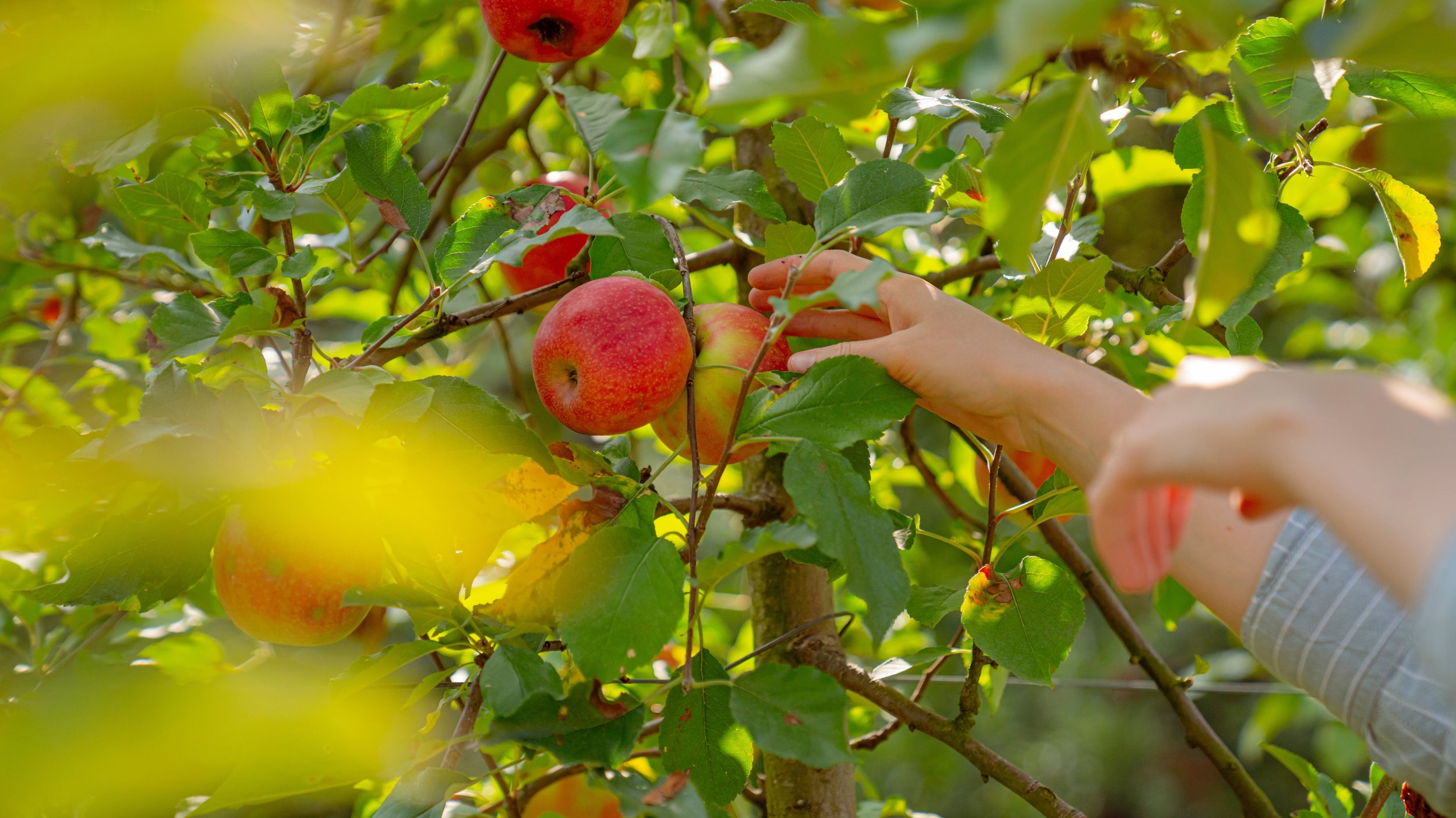
Today, the Hodgsons’ orchard is about eight years old and includes around 575 trees, which produce anywhere from 25,000-40,000 apples per year, depending on the season. His apples range from varieties that will be familiar to grocery store shoppers, like Pink Ladies and Galas, and lesser-known varieties like Arkansas Blacks and Jonagolds. Each has a unique flavor profile, and when planning the orchard, he chose varieties that would be ready at different points in the season so that he could harvest all autumn long.
Joe regularly invites volunteers out to pick apples alongside him and Penny, and a group from the Food Project typically goes a few times each year to participate in the timeless fall tradition.


For us, though, the fun doesn’t end in the orchard. Joe generously donates a large majority of his harvest to our kitchens, meaning that August through October each year, we work almost daily with apples. Our meals team is always coming up with new ways to use them, and whether we’re sharing them as whole fruit, baking them into cobblers or blending them into applesauce, they never get less delicious.
Here’s a truckload full of Fujis and Yellow Delicious heading to the headquarters kitchen!

Our meals coordinator Toni took hundreds of these apples, led a volunteer group in chopping them up, and then cooked them down with cinnamon and blended them with strawberries into a delicious, zero-waste fruit sauce for partners like Fifty Forward and Boys & Girls Club of Middle TN. See how she did it below!


Toni’s No-Waste Applesauce
Makes 8 servings
8 Fuji or Yellow Delicious apples, cored and chopped in bite-size pieces
1 cup strawberries, stems included
1/2 teaspoon ground cinnamon (more to taste)
2 teaspoon lemon juice (for preserving and keeping fresh longer)
In a medium saucepan combine apples, strawberries and cinnamon with a little bit of water. Cover and cook over medium heat until it simmers, then reduce heat to low, medium-low and continue cooking until the apples are tender and very slightly caramelized — about 15-20 minutes, stirring occasionally.
Once cooked, add lemon juice and stir. Then use an immersion blender or the back of your spoon to mash into a loose sauce.
Serve fresh (warm or cooled) as a healthy side or spoon over ice cream, pancakes, yogurt or granola. Store leftovers, cooled, in the refrigerator up to 4-5 days, or in the freezer up to 1 month.
Save the cores to make apple cider vinegar, add to vegetable stock, or apple jelly!
Expanding McGruder Community Garden
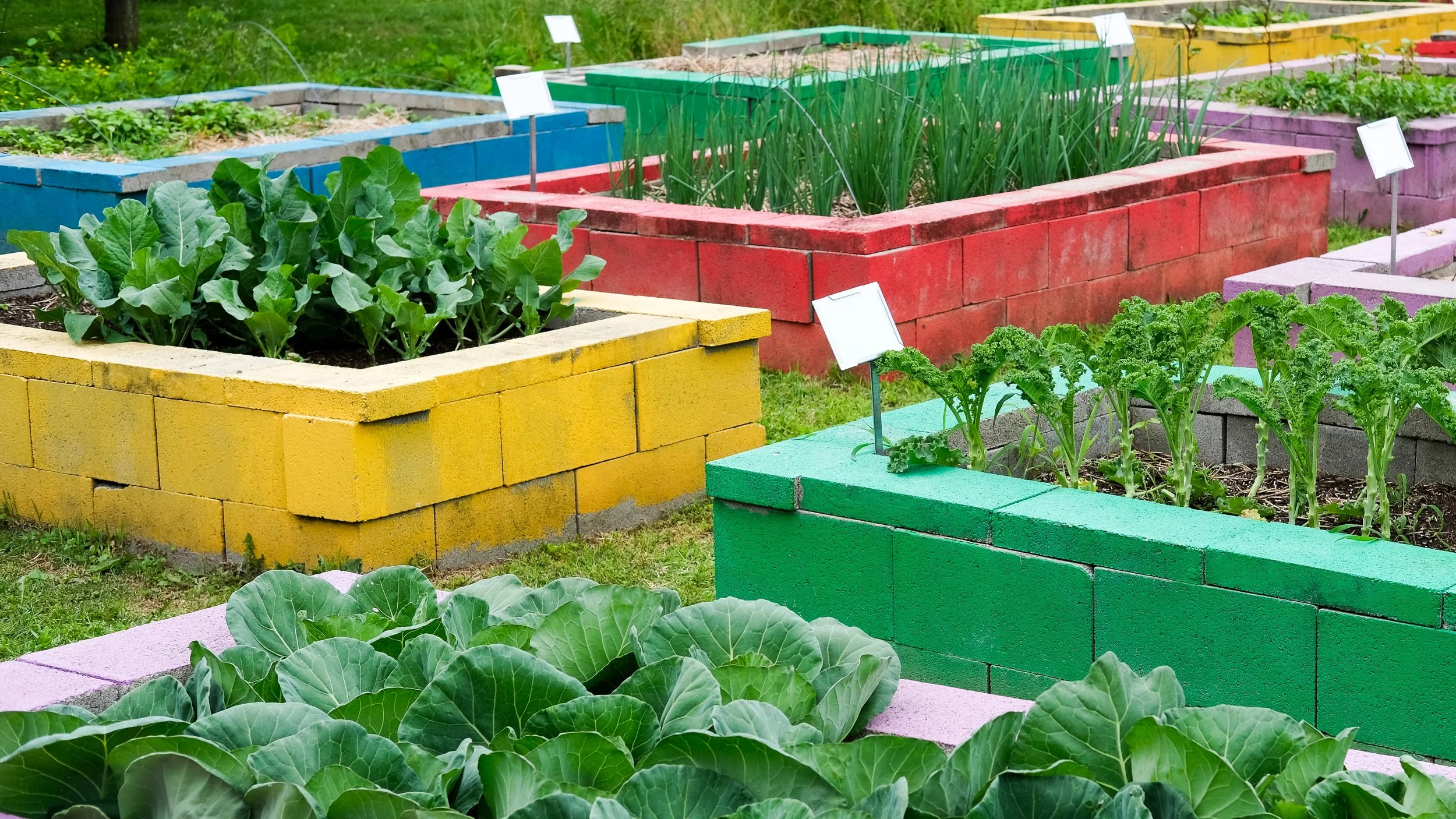
Now in its fifteenth growing season, McGruder Community Garden is a space where people from all walks of life gather to find connection, learn from one another, and grow food for themselves and their communities. The garden includes several colorful raised garden beds, a pollinator garden full of fresh flowers, and a small orchard of fruit trees, and is lovingly tended by community members in partnership with The Nashville Food Project. Recently, a team helped us install 12 more raised beds, expanding our production capacity by 50 percent.

In 2003, an abandoned elementary school in North Nashville became the C.E. McGruder Family Resource Center, named for a civil rights activist committed to building a different world for her friends and family. A few years later in 2009, an advisory board formed to determine the future of the space, and the community proposed planting a garden. In addition to the garden being a gathering place for community and a sacred green space in a fast-growing city, it also offered a solution to the neighborhood’s lack of access to fresh food — there was no grocery store in North Nashville.
Now in its fifteenth growing season, McGruder Community Garden is a space where people from all walks of life gather to find connection, learn from one another, and grow food for themselves and their communities. The garden includes several colorful raised garden beds, a pollinator garden full of fresh flowers, and a small orchard of fruit trees, and is lovingly tended by community members in partnership with The Nashville Food Project.

While the garden sits on a small plot of land behind the resource center, we’ve long dreamed of expanding our growing space, in turn expanding our community. On a rainy September Saturday morning, that dream became a reality thanks to a group of volunteers with Give To Get, a social impact company that helps other organizations engage their consumers and employees in the causes that they care about. In this case, the group was brought together by none other than country music star Eric Church.

Through his foundation Chief Cares, Church worked with Give To Get to provide a subset of his top SiriusXM fans the opportunity to receive tickets to an intimate show at his downtown Nashville bar. All they had to do? Attend a dedicated volunteer shift at one of the local organizations Church had chosen, all of which share a commitment to alleviating hunger in Nashville. Fans could sign up to help out at Second Harvest Food Bank, The Store, Society of St. Andrew, or The Nashville Food Project.
It was drizzling as a team of about 25 volunteers arrived at McGruder ready to get their hands dirty. Director of Community Agriculture Patricia Tarquino introduced them to the space and the project: the group would be building 12 new raised beds, including four ADA-compliant beds along a concrete path for improved accessibility. The project would increase the production capacity of the garden by 50% and allow us to welcome gardeners of all abilities and skill levels.

“With the installation of these beds, we have the opportunity to offer community members the chance to steward individual plots next season in addition to the communal-style growing we’ve been practicing at McGruder for years,” said Hanes Motsinger, chief program officer of The Nashville Food Project. “To support individuals who will be maintaining their own plots, we plan to offer a series of educational workshops.”

The group set out to work as the rain cleared and the sun came out. As they assembled the metal beds, cleared the land around to install them, and shoveled compost to fill them, happy chatter indicated that strangers were becoming friends. Even when faced with challenges — a tricky-to-use sod cutter required some creative ways to clear space for the beds, or a bed assembly kit was missing a needed part — the team worked incredibly hard to finish the project in the three-hour time slot, and had fun while doing it.


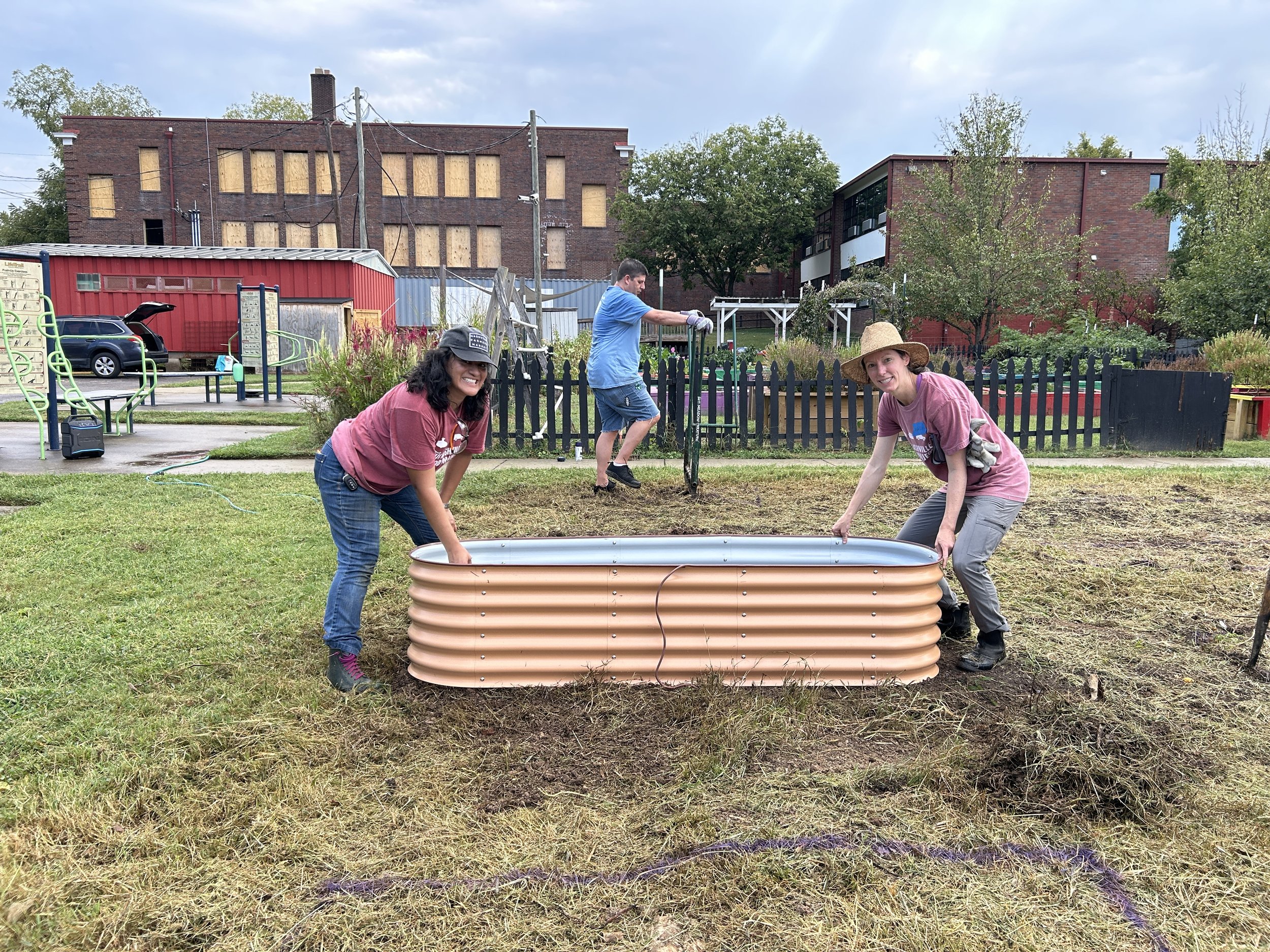

“We’re trying to get people not only to volunteer for a day, but to understand the work that the organization is doing so that they continue to stay engaged after the incentive is gone,” said Toby Garrett, co-founder and president of Give To Get, who gave his time alongside the volunteer group, even wielding a broadfork to loosen the earth where the beds would go. And his vision came full circle. As volunteers packed up, many said with a smile that they would be back in the spring to help plant veggies in the beds they built.

New plot sign-ups will open in early 2025. Check back to join us at McGruder Community Garden next growing season!
The Role of Public Transportation in Food Accessibility: Part Three
In part three of this series, Director of Food Access Tera Ashley evaluates how public transit systems may or may not meet the needs of its city's residents, and explores improvements to these systems that could also improve food accessibility for low-income, low-access residents.
By Tera Ashley, Director of Food Access
In parts one and two of this blog series, we looked at the meaning of the term “food desert” and explored how limited availability, variety and affordability of food in low-income, low-access communities creates misconceptions about the demand for fresh, quality produce. Catch up here.

In part two of this series, a study was referenced in which it was found that survey respondents without vehicles were only 40% as likely to consume fresh fruits and vegetables as car-owning respondents. While one could assume that the respondents who did not use their own cars to purchase fresh fruits and vegetables perhaps lived in rural areas without a public transportation system in place, it may be just as likely that they lived in an urban area in which the public transportation system simply did not meet their needs.
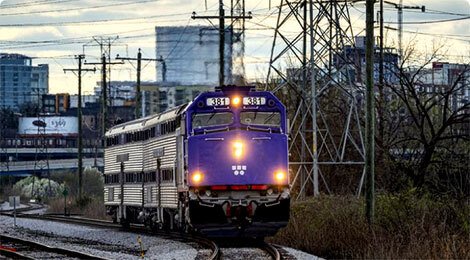
D. Weatherspoon’s 2014 article, “Fresh vegetable demand behavior in an urban food desert,” sheds light on Detroit’s public transit conundrum: “Detroit’s inadequate public transportation system exacerbates its food access problems — a light rail train covers only the immediate downtown area, and a limited number of bus routes link the centre to the more affluent suburban food oases. Each shopping trip provides an inconvenience to the consumer, as it requires walking to and from a bus stop, transferring, and carrying bags.”

Missed opportunities to increase food accessibility within a public transportation system are not just confined to Detroit, as seen in “Barriers to Food Security and Community Stress in an Urban Food Desert,” an assessment by Jessica Crowe and her colleagues of a South Dallas food desert. Crowe found that bus routes – which served as the dominant available public transportation — were “either local and did not go to a large grocery store or led to a transit center in which one had to make several transfers to arrive at a large grocery store or supermarket.” Residents in this South Dallas community who rode the bus to visit larger grocery stores had a travel time of between two and three hours one way, despite some grocery stores averaging twenty minutes away by car. To combat long bus rides to the supermarket, residents who are able often turn to family members or friends with cars, or expensive ride-sharing services, such as Uber or Lyft.
A focus on efficiency and reliability is key when considering improvements to a public bus system. Efficiency in the form of direct routes (without transfers) may not only decrease a consumer’s travel time to a supermarket, but may also allow them the freedom to purchase refrigerated items. Additional buses can ensure more frequent run times, thus increasing reliability if one bus is late or encounters difficulties, as well as potentially decreasing a rider’s wait time at a stop. An increased number of buses can correlate positively with food accessibility, as seen in Deokrye Baek’s study entitled, “The Effect of Public Transportation Accessibility on Food Insecurity,” which found that “one additional bus-equivalent vehicle per 10,000 people decreases the probability of food insecurity of households by 1.6 percentage points.” So if public transportation improvements such as direct routes and additional buses would lead to improved food accessibility, why are cities not implementing these measures?

For decades, it would seem, cities have focused their efforts on increasing public transportation ridership by targeting wealthier individuals – such as commuters – in attempts to decrease congestion and/or improve the environment, rather than meeting the needs of LILA residents, as echoed in Elnaz Yousefzadeh Barri’s article entitled, “Can transit investments in low-income neighbourhoods increase transit use? Exploring the nexus of income, car-ownership, and transit accessibility in Toronto.”
““Many socioeconomically disadvantaged communities, home to transit-dependent populations, were largely overlooked during the transit planning process of the post-war era. The rationale being that investing in low-income neighborhoods, where transit ridership is already very high, would be less likely to result in mode-shifting, congestion relief, and environmental benefits.””
However, not centering public transportation on meeting the needs of the residents who would most utilize the service can create an inefficient system that results in both decreased ridership and increased food inaccessibility. This can perpetuate an already complicated problem: cities may confuse decreased ridership with decreased need and, with less income generated from ticket sales, may be wary of spending money to improve a public service that is already losing funds.
Public transportation improvements – such as direct bus routes to supermarkets – have the ability to increase ridership, and not just among those without vehicles. According to a Toronto study, improvements to public transportation not only resulted in increased ridership amongst those without cars, but also amongst low-income households with one or more cars per adult. In fact, the most elastic relationship with public transportation use seems to not rest with wealthy individuals, but instead with low-income car owners. When a city focuses on the food accessibility needs of its most vulnerable residents when designing public transportation, its ridership increases, resulting in greater economic benefit through increased ridership as well as a higher chance that its environmental and congestion goals will be achieved.

Recap: A Special Vegan Simmer with Season and Radical Rabbit
Simmer, our chef pop-up dinner series, is meant to bring people together over good food and good conversation. With the generous support of our community, on Friday night, local vegan chefs Ryan Toll, chef-owner of Season and formerly of the beloved vegetarian restaurant The Wild Cow, and Mariah Ragland, chef-owner of Radical Rabbit, did just that.

Left to right: Chefs Julia Baynor, Ryan Toll, and Mariah Ragland.
Simmer, our chef pop-up dinner series, is meant to bring people together over good food and good conversation. With the generous support of our community, on Friday night, local vegan chefs Ryan Toll, chef-owner of Season and formerly of the beloved vegetarian restaurant The Wild Cow, and Mariah Ragland, chef-owner of Radical Rabbit, did just that.
It’s rare, but possible, to find vegan-only digs here in Nashville, and Season and Radical Rabbit both have a unique focus on providing options for Nashvillians to enjoy vegan food at home. It’s a different and special experience altogether, though, to get multiple vegan chefs in the same kitchen and watch the magic happen as they share stories, trade tips and tricks, and work together to bring a magical, plant-based dinner to life.

Chefs Ryan and Mariah work together to plate the salad course.

The “Tropical Charlie”
The night began with a cocktail hour that included both non-alcoholic options and a specialty cocktail that paired cold-pressed pineapple, pear, strawberry and lime juices with Tito’s Vodka, topped with a splash of Walker Brothers kombucha. We lovingly named it the “Tropical Charlie” after our newest meals coordinator, who designed the beverage with his love for tiki drinks top of mind.
As cocktail hour wound down, the food started flowing. Chef Mariah kicked us off with a taste of her signature vegan soul food — a roasted yam base layered with black eyed peas, pesto blended from seasonal turnip and collard greens, a generous scoop of tofu ricotta, and pieces of pickled watermelon, plated atop a drizzle of watermelon barbecue sauce to tie it all together. The flavors were divine, and she created a special moment as guests were receiving her course when she emerged from the kitchen to share the story behind the dish, revealing that she had actually served as the volunteer coordinator at the Food Project from 2016-2018.

Appetizer: yam toast with black eyed peas, pesto, ricotta, and pickled watermelon.
“I fell in love with fresh foods while I worked at The Nashville Food Project … there, I saw how plants were steamed, sauteed and rubbed in oils to create beautiful Buddha bowls, I saw nettles dried to create tea straight from the garden, potatoes pinched to make gnocchi, and flour rolled to make fresh bread, and then taken into communities to feed and nourish people.”
“Today’s meal was inspired by those times growing, cooking and sharing, and also by my ancestors — I take them into the kitchen any time I’m working. The food on your dish represents foods that sustained them.”

Mariah and her appetizer.
Next up came colorful farmhouse salads decorated with seasonal veggies like radishes, cucumbers, carrots and cherry tomatoes, tempeh gorgonzola, crunchy chickpeas, and house-made vegan ranch. Chef Ryan helped serve when it was time for the course to come out and gave guests the rundown on each fresh, seasonal component as they took their first bites. He shared about the sustainability of plant-based food and the creativity he gets to exercise while preparing it.

Salad course

Main course
Ryan also put together the main course of the evening: creamy polenta with garlic confit cherry tomatoes, a dollop of sunflower goat cheese, and sage-roasted mushrooms, which were a highlight of the evening. The mushrooms were a blend of blue oysters, shiitakes, pioppinos, and king trumpets, generously donated from Hedgehog Foods. Kevin and Harrison, members of the Hedgehog team, were there at the event and shared with fellow guests about why mushrooms are so important to them and how even mushrooms can be a way to expand food access and build community.

Harrison and Kevin of Hedgehog Foods give a brief overview to guests.
As Harrison told guests, Hedgehog Foods uses innovative techniques to grow mushrooms at a large scale closer to how they’re found in nature. These growing methods, coupled with their sustainable approach to packaging, means that they often have large quantities that can appear seemingly overnight which need to be used quickly. Enter: The Nashville Food Project.
Since February of this year, Hedgehog has donated 30-40 pounds of specialty mushrooms per week to our community meals program. Our chef team has had a blast coming up with creative ways to cook with them, and their mushrooms have been stewed into stroganoff, roasted in veggie medleys, baked into pastas and chopped into salads. More importantly, though, we’re grateful for the opportunity to partner with a values-aligned business focused on sustainability.

Meals Coordinator Bilal made a mushroom chicken alfredo earlier this year using Hedgehog mushrooms.
We wrapped things up with a vegan baked alaska, from the mind of our very own director of meals and pastry chef extraordinaire, Julia Baynor. This dessert was essentially an embodiment of the Food Project’s values of sustainability and interdependence: each ingredient told a story and was gleaned with waste reduction and local sourcing in mind. As Julia told guests, the mangoes in the sorbet were leftovers from a mango-banana smoothie served to partner sites earlier in the week; the vegan carrot cake base included leftover veggie scraps; the Swiss meringue was crafted from a whipped aquafaba, saved from cans of chickpeas used in a white bean chili the day before; the cardamom glaze utilized peaches donated by a local farmer.

Director of Meals, Julia, and her vegan baked alaska.
“At the Food Project, it’s our job to be good stewards of what we receive and to do that, we have to be creative,” explained Julia. “We have saved hundreds of thousands of pounds of produce through our procurement program, and even the things we can’t use are being composted — which means that 30,000 pounds of food scraps per year are being turned into a nutrient-rich soil amendment for use in our garden programming.”
“It’s all about going full circle, and by being here tonight, you help us to continue our work,” she praised the guests. “By supporting Mariah, Ryan and Harrison, you are making a commitment to living a more sustainable way. I wanted to thank you again for making our work possible.”
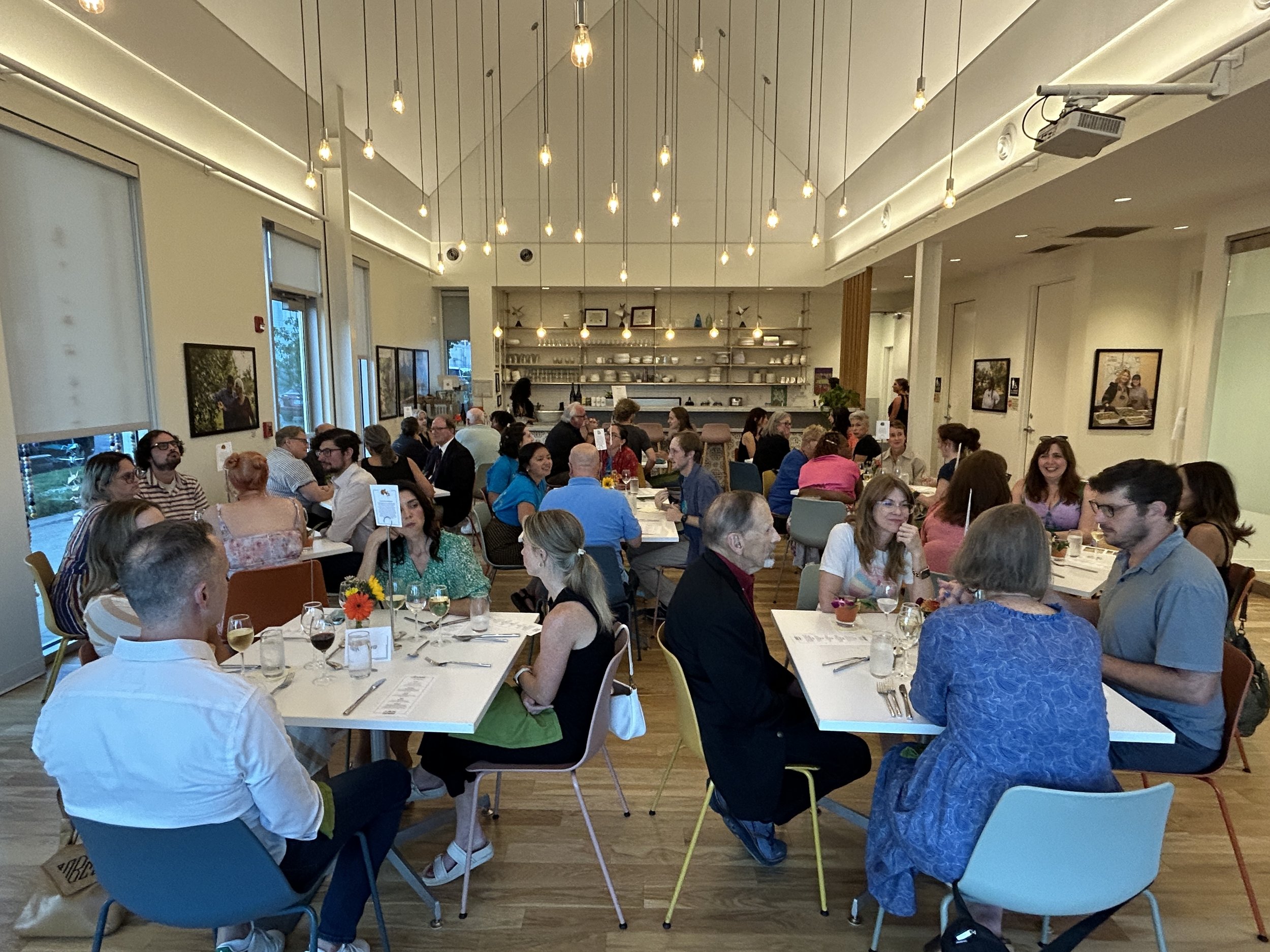
There will be one more Simmer this year. Stay tuned for details and to snag your seat!
Building 30-Year Food Systems with the Giving Grove
The Giving Grove, a Kansas City-based nonprofit serving communities experiencing a lack of access to fresh food, recently announced that it will expand to Nashville, TN, through a partnership with The Nashville Food Project. The Nashville Food Project will help community members plant new orchards and also inventory and support existing community orchard sites.

Image courtesy of Giving Grove
Giving Grove orchards provide free fruits, nuts and berries for neighborhoods facing food insecurity.
The Giving Grove, a Kansas City-based nonprofit serving communities experiencing a lack of access to fresh food, recently announced that it will expand to Nashville, TN, through a partnership with The Nashville Food Project. The Nashville Food Project will help community members plant new orchards and also inventory and support existing community orchard sites. “We are thrilled to welcome The Nashville Food Project into our national network! Much consideration and thought went into the development of this partnership, which will surely result in a successful and sustainable program for the Nashville community,” says Giving Grove Co-Executive Director Ashley Williamson. “We are ready to support their team as they become another hub for little orchards that benefit people and the planet.”
Founded in Kansas City in 2013, The Giving Grove began expanding nationally in 2017 and now supports urban orchard programs across the U.S. in collaboration with a robust network of local partners. Through this network, more than 1,000 volunteers serve as urban orchard stewards, caring for the orchards that nourish their local communities for decades. At full implementation, Giving Grove orchards will reach 15% of Americans experiencing food insecurity. The typical Giving Grove orchard will produce more than 7,544 servings of organically grown, free, fresh foods worth more than $6,337 annually. With a 30- to 50-year life expectancy, these orchards are building blocks of perennial food systems, sustaining the communities that steward them year after year.

“This partnership with the Giving Grove will allow us to expand our current model of community agriculture to include orchards grown in collaboration with partner organizations across the city, ultimately ensuring that nourishing food reaches all Nashvillians,” says C.J. Sentell, CEO of The Nashville Food Project.
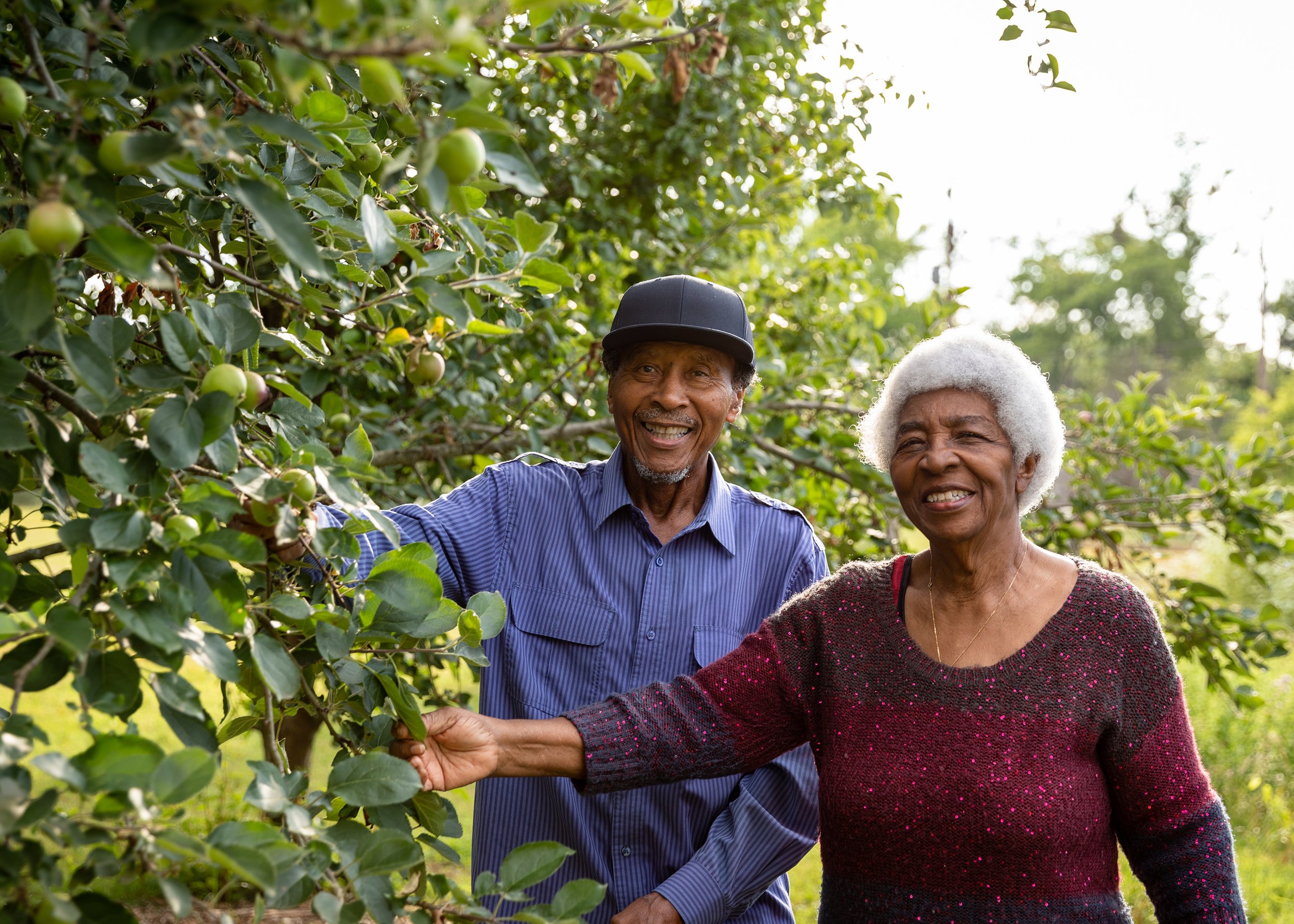
The founders of McGruder Community Garden, Reverend and Mrs. Beach, tend an existing orchard stewarded in part by The Nashville Food Project.
The Nashville Food Project’s first step in this project, beginning in early 2025, will be extensive community outreach and partnership development to ensure this project has community support and collaboration and is successful in the short- and long-term. The organization hopes to begin planting community orchards and training community orchardists in late 2025, with first orchards likely appearing at the Food Project’s current network of community gardens and urban farms in North and South Nashville.

The Giving Grove programs equip neighborhood volunteers to plant and care for fruit trees, nut trees, and berry brambles that improve the urban environment, increase tree canopy, and provide a sustainable source of free, organically grown food for neighborhoods facing high rates of food insecurity. In addition to a robust community agriculture program, The Nashville Food Project also employs a unique food recovery model to glean ingredients for scratch-made meals shared with poverty-disrupting partner organizations across the city. Together, the two organizations aim to connect quality food with underserved communities.
Currently, over 600 Giving Grove urban orchards serve 14 cities nationwide, from Atlanta to Seattle. The typical orchard sequesters 29 tons of carbon and removes more than 195 pounds of pollution from the air and intercepts more than 240,000 gallons of rainfall, helping to stabilize urban soil and reduce risks of urban flooding.

Image courtesy of the Giving Grove
#####
Giving Grove’s vision is thousands of little orchards in food-insecure urban neighborhoods nationwide, creating a local food production system that feeds people for decades. Learn more at www.givinggrove.org.
Born from the idea that everyone should have access to the food they want and need, The Nashville Food Project brings people together to grow, cook, and share nourishing food. This year alone, we will share over 300,000 scratch-made meals and 40,000 pounds of fresh produce to sustain after-school programs, immigrant communities, homeless outreach organizations and many others in Nashville. Learn more at www.thenashvillefoodproject.org.
The Role Of Public Transportation In Food Accessibility: Part Two
In part two of her blog series on public transit's impact on food availability, Director of Food Access Tera Ashley evaluates the affordability, variety, and quality of produce typically available in low-income, low-access areas. While many might draw conclusions that there is not demand for as much produce in these areas, anecdotal evidence indicates otherwise.
By Tera Ashley, Director of Food Access
If you missed part one of this blog series, you can catch up here.

““The poor may be disadvantaged in at least three ways as a result of limited mobility. First, the poor may be captive consumers of goods, services, or medical care. Retail establishments may be able to charge higher prices when consumers are limited to local neighborhood stores; social, recreational, and medical opportunities may be limited. Studies have demonstrated the scarcity of major supermarkets and banks in inner-city areas and have shown that inner-city and minority residents pay more for groceries because of the absence of major chains.” ”
In her eloquent assessment of U.S. poverty, Genevieve Giuliano sheds light on an often unseen disadvantage that non-driving and/or vehicle-less residents in food deserts and swamps face: the inability to shop around for lower prices. It is a prevalent belief that residents of LILA (low-income, low-access) areas do not purchase healthy foods because they simply lack the money to do so. While fresh fruit and vegetables may, indeed, be more difficult for low-income residents to afford than higher-income residents, the LILA environment itself may exacerbate this struggle. In an analysis of the small, independent grocery stores located within two urban food deserts in Minnesota, a significant number of food items were found to be significantly more expensive than the Thrifty Food Plan’s “market basket price” — the USDA’s national standard for low-cost, nutritious foods. An assessment of a food desert in South Dallas revealed a similar pattern: the majority of the focus group participants chose to shop outside of the community to avoid the higher prices of the small, independent stores nearby. Though the higher costs of groceries found in food deserts and food swamps may be due largely to the inability of smaller grocers to achieve the same discounts that large-scale chain grocers can negotiate with suppliers, higher costs can unfortunately lead to distrust between residents and local stores. Efficient, reliable public transportation may increase the choices of grocery stores available to a resident in a LILA area, which may lead to a wider range of prices – perhaps some more affordable – from which to choose.

The price of fresh fruits and vegetables is not the only concern facing residents of LILA areas. A lack of variety of fresh fruits and vegetables persists, and when these items are offered, residents sometimes complain of poor quality. Consider quotes taken from residents of a Nashville food desert when interviewed for a study on food accessibility in 2013:
““The quality is not as good as you would find in an actual grocery store. This can cause people to feel like they have to use a lot of canned or frozen goods.”
”When they do have fruits and vegetables, they are too often of such poor quality that we wouldn’t even want to buy them.”
”Companies vary their quality from store to store in different areas: low-income areas equal worse quality equal higher prices.””

Produce offered in a Nashville store.
The poor quality of fruits and vegetables found in the small, local stores located in LILA areas may be due to the quantity that store owners must order at one time, paired with the inability to absorb spoilage costs and replenish the fresh vegetables and fruit at the same rate as chain supermarkets. If this theory is correct, this situation perpetuates a conundrum: due to the low quality and low variety of fresh fruits and vegetables found in the small, independent neighborhood markets, residents in LILA areas make few purchases of fruit and vegetables from these stores. However, due to the residents making so few purchases of fruit and vegetables, the store owners may infer that residents do not want to purchase these items and allow the produce supply to dwindle or spoil before ordering more, which, in turn, affirms the residents’ perception of their neighborhood markets as having both low quality and low variety of fresh fruits and vegetables.

Despite evidence to support the cycle described above, there remains the popular notion — though unfounded — that residents of LILA areas simply do not prefer to eat healthy foods, particularly fruit and vegetables. To test this assumption, researchers in Detroit, MI devised a study in conjunction with the opening of a non-profit green grocer in a food desert to test the consumption behavior of the residents. Their findings revealed that neither the amounts nor the types of fruits and vegetables purchased by the residents significantly varied from that of the U.S. consumer average, thus demonstrating that the consumption of fresh fruits and vegetables is dependent on the accessibility of a wide variety of high quality, affordable produce.
In part three of this series, we will explore how a public transportation system that prioritizes residents’ accessibility to fresh fruits and vegetables can also help a city reach its environmental goals.
Tender Summer at The Nashville Food Project
In the world of communications, knowing your organization inside out is crucial to telling its story. As a communications intern for The Nashville Food Project I have enjoyed telling our stories, but more importantly, I enjoyed having the privilege to learn by experiencing them myself. The Nashville Food Project’s mission is to bring people together to grow, cook, and share nourishing food, with goals of cultivating community and alleviating hunger in our city.

By Armani Dill, Communications Intern
In the world of communications, knowing your organization inside out is crucial to telling its story. As a communications intern for The Nashville Food Project I have enjoyed telling our stories, but more importantly, I enjoyed having the privilege to learn by experiencing them myself. The Nashville Food Project’s mission is to bring people together to grow, cook, and share nourishing food, with goals of cultivating community and alleviating hunger in our city. While the mission is centered around food, it is facilitated by and for people. The dual-pronged focus is clear and tangible in every branch of our organization, and whether you’re here for a couple hours or a couple months, the love and dedication to the mission and our community is palpable and contagious.

From the moment she gave me the tour my wonderful supervisor, and The Nashville Food Project’s Communications Manager, Mary Kate wanted me to share in every part of what makes The Nashville Food Project different from most food-centered organizations. Rather than tackle food insecurity on an individual level like a food bank, The Nashville Food Project uses a business-to-business model where we share food and spaces within the community so that everyone can participate and partake in the fruits of their labor, including myself this summer. During my time here I have seen the growth of fruits and vegetables I didn’t even know existed, and watched our staff, volunteers and community members grow them to eat right off the vine, share with family or mass produce them to fill community needs. I have helped prepare and cook strawberry applesauce made from scratch and witnessed the joy and curiosity of local kids volunteering, learning how it was made with pounds of recovered fruits and how they can conserve food to make their own unique recipes at home. I even had the opportunity to shadow one of our drivers on a distribution run where we shared our contributions (hearty, home-cooked meals) to their community-building and poverty-disrupting causes. The one thing that stood out no matter where I worked within the Food Project was that the people we have on board don’t just treat the organization as a job. Almost everyone who I spoke with came for the mission and stayed for the community, and it’s safe to say that I will be doing the same.

Working at the Food Project has taught me a little something about everything. As someone interested in pursuing a career in the nonprofit sector, one of my most valuable takeaways was seeing how connected and varied the nonprofit network is in Nashville. There are so many parts of the web with different functions and specialized missions. It was so insightful to see how each one impacts the greater health of the city in some way, whether it’s physical, social, or economic. Every part of the web is valuable and at some level everyone needs to eat, which is the humanizing common factor we shape our mission around.


Sharing in the growth and development of this organization and this city has been eye-opening to me and also provided another lens for understanding how communities can interact with each other. I’ve always looked at the nonprofit sector as a service sector where businesses and organizations use their resources and support to help those who can not always do for themselves. While service is beautiful in volunteering, giving blood or donating clothes, through my time at The Nashville Food Project I’ve seen that they have a different approach to community organizing: partnership. In true partnership with the community, we don’t assume the needs of others — instead we get curious and ask questions, always looking to learn more about who we are working with, because we aren’t just giving to them, we are benefiting from them as well. We see our work as a shared endeavor with our community so that their input and their voices are heard, especially when it comes to the processes being put in place to help them. The Nashville Food Project has shown me the value of autonomy and mutual respect not just in the nonprofit sector but in every aspect of how we interact with each other.
All in all, I have deeply enjoyed all the time I have spent during this internship. I have had the opportunity to make so many great friends, hone and sharpen my writing skills, and take part in unique experiences that I would never have done otherwise. One piece of advice I would give to anyone in Nashville or in any community would be to get involved. See what’s around you and don’t be afraid to try something new, The Nashville Food Project is a great place to start! Thank you so much to The Nashville Food Project, thank you to all the friends I made along the way, and special thanks to Mary Kate for choosing to hire me (you slay). I’ll be back soon to volunteer!
Looking Back at Nourish 2024
Earlier this month we hosted our 14th annual Nourish, presented by Kroger. We are humbled and so incredibly proud to announce that this was our most successful Nourish to date, raising over $260,000! However, beyond a fundraiser, this night is one we always look forward to as a special time to share connection over a beautiful meal with so many friends, volunteers, and supporters.

Earlier this month we hosted our 14th annual Nourish, presented by Kroger. We are humbled and so incredibly proud to announce that this was our most successful Nourish to date, raising over $260,000! We are floored by this outpouring of support for our mission to bring people together to grow, cook and share nourishing food, cultivating community and alleviating hunger here in Nashville. However, beyond a fundraiser, this night is one we always look forward to as a special time to share connection over a beautiful meal with so many friends, volunteers, and supporters. This year, as always, the table was a conduit for community among our 350 guests.
The Chefs

Nourish 2024 included a lineup of chefs from Nashville’s most beloved restaurants. Each chef brought a piece of themselves to this dinner, resulting in an incredibly special meal that weaved together distinct cultures, styles, techniques, and a singular love for food. While each chef planned and prepared their own signature course, a highlight of the evening was the sense of community between the chefs as they worked together to bring one another’s dishes to life.

Colby Rasavong, executive chef of Bad Idea Restaurant and Wine Bar in East Nashville, kicked us off at the cocktail hour with an impressive spread of hors d’oeuvres, including nam khao croquettes, vegetable laab on rice crackers, and pâté en croûte with a homemade red-eye aioli.

Tiffani Ortiz and Andy Doubrava, the chef team behind nomadic restaurant series Slow Burn and upcoming, sixth-iteration chefs at The Catbird Seat, prepared a pork and herb terrine with a marigold glaze, showcasing their signature take on food preservation in the first course.

Leina Horii and Brian Lea, whose restaurant Kisser was recently nominated for a James Beard award, dressed up a beloved menu item to serve a hokkaido scallop with sake-marinated Japanese eggplant, garnished to the nines and served in a chilled broth, for the second course.

Vivek Surti, chef-owner of Tailor, stepped outside of the box to prepare an innovative salad course: a crunchy corn bhel using local kernels, sweet and hot peppers, and a variety of Indian-inspired garnishes like tamarind, milt, and sev and served it over poha, a traditional flattened rice.

Julio Hernandez, whose brick-and-mortar iteration of popular taco truck Maiz de la Vida is slated to open later this summer, prepared the main course by cooking chicken over charcoal and then serving it in a mole amarillo with ejotes, or Mexican green beans, and escabeche potatoes.

Levon and Kim Wallace, who own FatBelly Pretzel Bakery & Deli, brought their baking skills to the table for the dessert course. They served a roasted corn cake with Tennessee peaches, buttermilk pudding, vanilla bean whip and a crunchy pretzel topping.
The same sense of community the chefs demonstrated at Nourish is central to how each of these chefs understands their role in Nashville’s food system. Ahead of Nourish, we got the special opportunity to hear about what inspires and motivates these talented and passionate individuals — and for all of them, it’s the power of food to bring people together. Together, we’re creating a transformed food future where everyone in Nashville has access to the food they want and need.
The Mission
The Nashville Food Project brings people together to grow, cook and share nourishing food, with the goals of cultivating community and alleviating hunger in our city. In partnership with our vibrant community, we grow food in three gardens strategically located in Nashville food deserts, recover would-be-wasted food from grocery and farm partners, and share hundreds of thousands of meals each year with over fifty poverty-disrupting partner organizations across the city.
“Tonight fills me with hope: hope for a community where everyone has reliable access to nourishing food and where no one feels alone. Hope for a future where hospitality and generosity thrive in every corner of our city. Your presence here and your support of The Nashville Food Project embodies that hope and inspires us to reach higher.”
Thomas Williams Golden Skillet Award

The Thomas Williams Golden Skillet Award, established in 2017, recognizes a volunteer who has shown deep dedication to the work of The Nashville Food Project. Its namesake Thomas Williams is the founder of Nourish, and this year, we had the tremendous honor of presenting it with his help to a longtime champion, volunteer and board member of The Nashville Food Project: Ann Fundis.
We have volunteer hours recorded for Ann as early as 2012, but she was probably here even before that. In fact, we often refer to her as a “mother of the Food Project.” She leads a regular cook team, which is our most trusted type of volunteer group in the kitchen. Over the years, she has assembled an incredible group of women who come to the kitchen at least twice a month to blend smoothies, build lasagnas, make salads and take care of just about anything else — first at the Woodmont Christian Church kitchen, affectionately known as South Hall, then at the St. Luke’s Community House kitchen, and eventually migrating to the commercial kitchen we built at our headquarters in 2018.
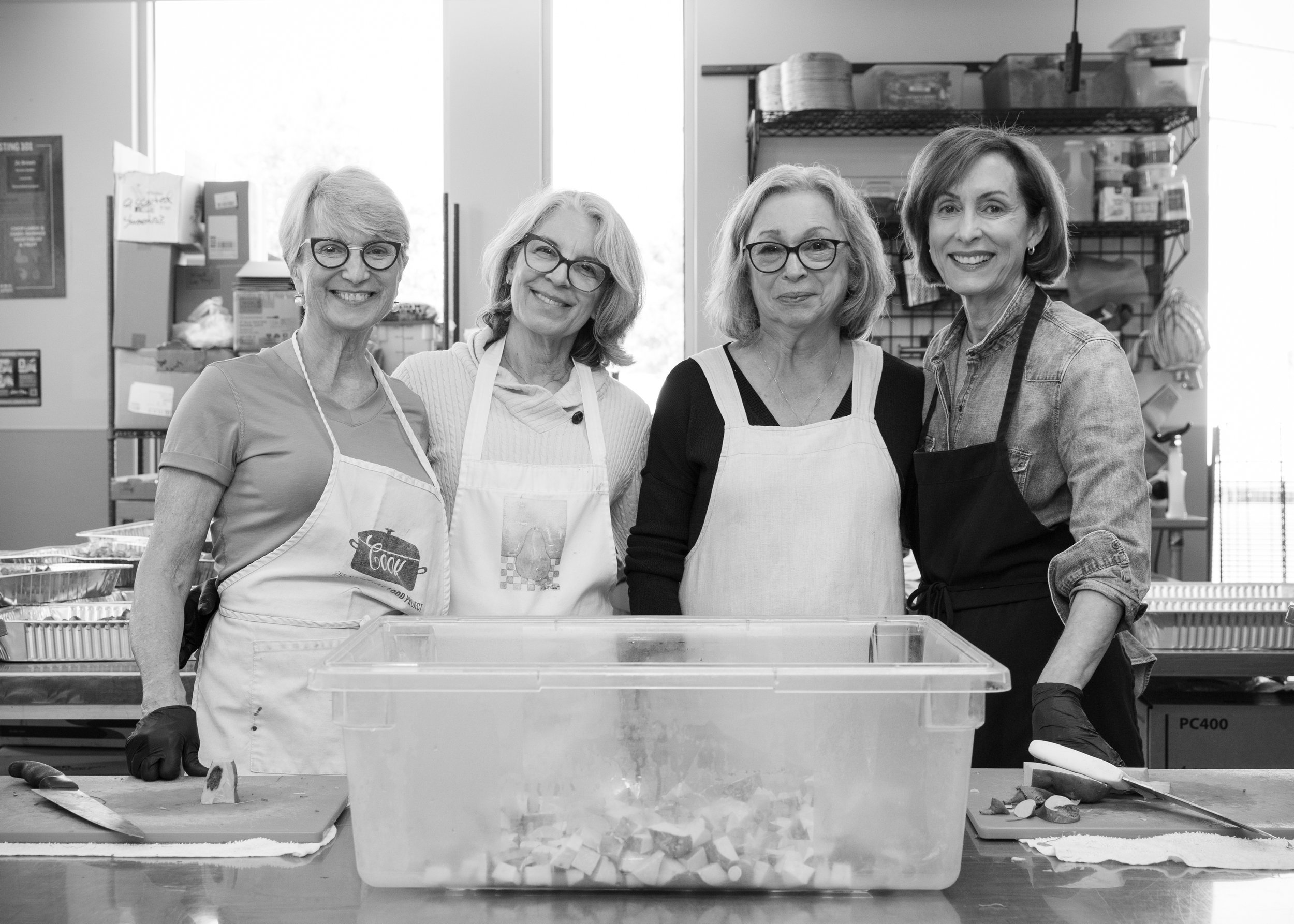
Ann’s volunteer team consistently brings lots of chatter, energy, and laughter. They’re extremely self-sufficient, and it often feels like they are an extension of our staff — they just see what needs to be done and do it. Ann arrives early for each session to make sure she knows what the day’s tasks involve and can lead her team with the quiet confidence that we love her for. She thrives when it comes to recognizing the strengths of others and setting them up for success.
In addition to serving multiple terms on our board, Ann has also served on the boards of other poverty-disrupting nonprofits in Nashville, helping us make connections and establish partnerships with like-minded organizations across the city. She’s been with us every step of the way in taking The Nashville Food Project to the next level. She is a leader, a visionary, a fierce advocate, a trusted confidant and a champion who has helped steer the direction of this organization.
Thank you, Ann, for sharing your time and treasure with us and with the entire Nashville community!
Our Sponsors
More companies pitched in to help underwrite the cost of Nourish in 2024 than ever before. This event would not be possible without them! We’d like to thank:
Presenting Sponsor

Grow Sponsors


Cook Sponsors



In-Kind Sponsors


Lake Days, Tomatoes, and Fueling Fun with Jackson®
Our food access partner Water Walkers has a mission of tearing down the boundaries between urban youth and outdoor adventure — and in the summer, that mission takes them straight to the lake. But what’s a boat day without a picnic? Thanks to Sweet Peas Summer Eats for Kids, sponsored by Jackson National Life Insurance Company (Jackson®), Water Walkers can count on daily deliveries of made-from-scratch meals that keep these young bodies nourished and able to learn, grow and play while on the water.
For many of us, thoughts of summer take us straight to the water. The unrelenting Tennessee heat begs for long afternoons on the lake, wakesurfing behind a boat or swimming with friends. Water Walkers, a local organization focused on empowering young people through outdoor adventure, creates equitable opportunities for many youth in Nashville to enjoy these formative summer experiences.

Founded in 2016, Water Walkers was born from the idea that there should be no boundaries between under-resourced urban communities and the transformative power of outdoor adventure. Their programming runs year-round to offer adventures like hiking, biking, rock climbing, zip lining and more, but during the summer, they spend every day they can on their double-decker pontoon boat, enjoying water activities.

But what’s a boat day without a picnic? Thanks to Sweet Peas Summer Eats for Kids, sponsored by Jackson National Life Insurance Company (Jackson®), Water Walkers can count on daily deliveries of made-from-scratch meals that keep these young bodies nourished and able to learn, grow and play while on the water. This summer, we’re sharing about 200 meals each week with this innovative organization — and they are just one of many stops that connect youth with nutritious food on our morning distribution routes.

This summer, organizations geared toward daytime programming for children comprise about a quarter of our food access partnerships. Earlier this year, a Vanderbilt Child Health poll reported that of Tennessee families with children, over 40% report food insecurity — with that number climbing even higher for families of color. While Metro Nashville Public Schools provides free lunches to students during the school year, Jackson’s sponsorship helps us fill a major gap in food access for many children during the summer months. By the end of this summer, we will have shared about 100,000 summer meals and snacks with children through Sweet Peas thanks to support from Jackson over the last six consecutive years.
It’s a priority to us to ensure that these youth are eating the best of what summer has to offer, too. Thanks to local farms who consistently share their excess with us, meals this summer have been chock-full of seasonal produce like tomatoes, peppers, summer squash and greens. Food access challenges in urban areas mean that what’s readily available and affordable often are not the healthiest choices. For these active kids, it’s important that their diets are providing nutrients that keep them energized. This summer, we’ve been sneaking fresh veggies into approachable lunch options like chicken tacos and pizza bagels to hit all the food groups, and — just as importantly — to serve meals that kids are actually excited to eat.

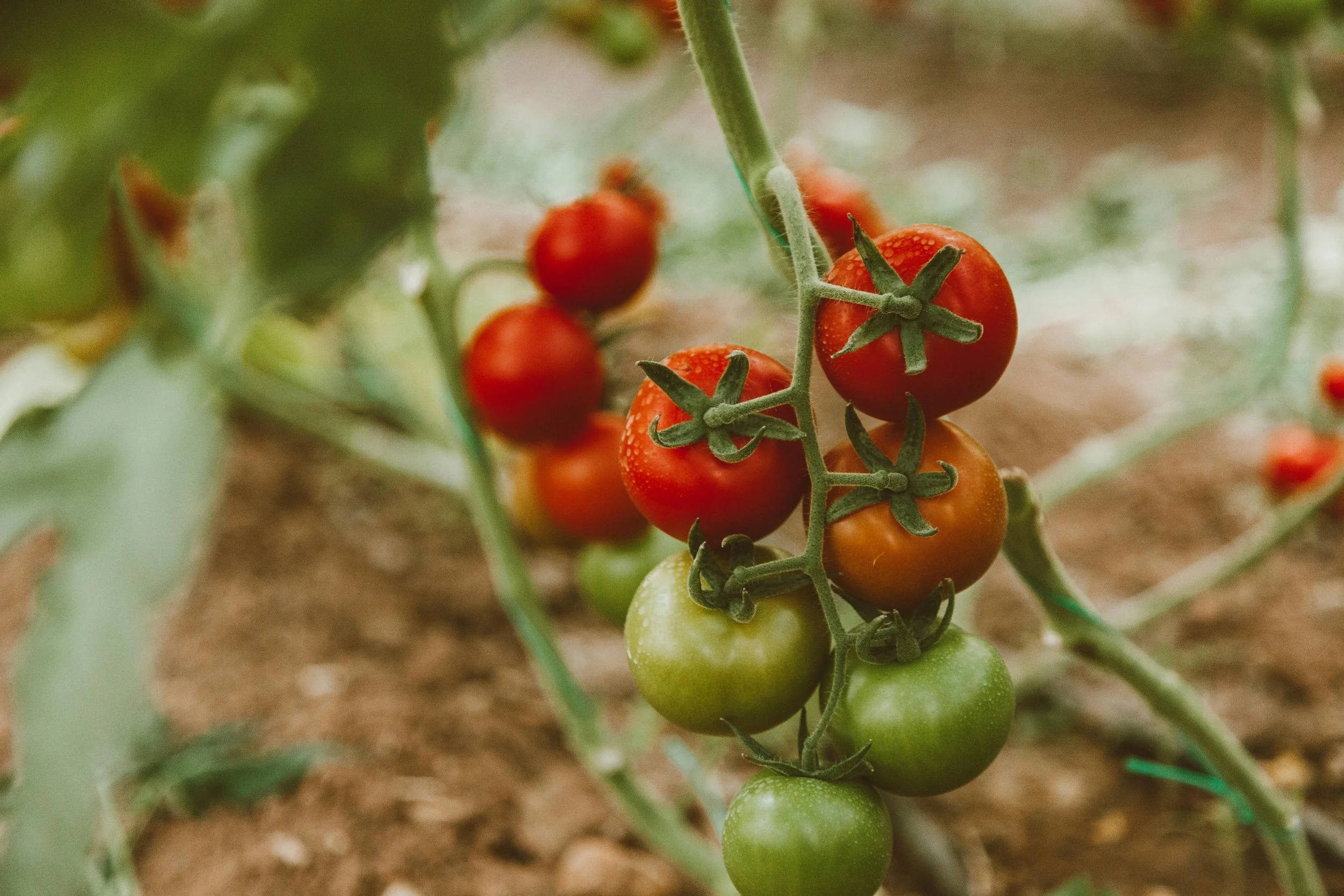
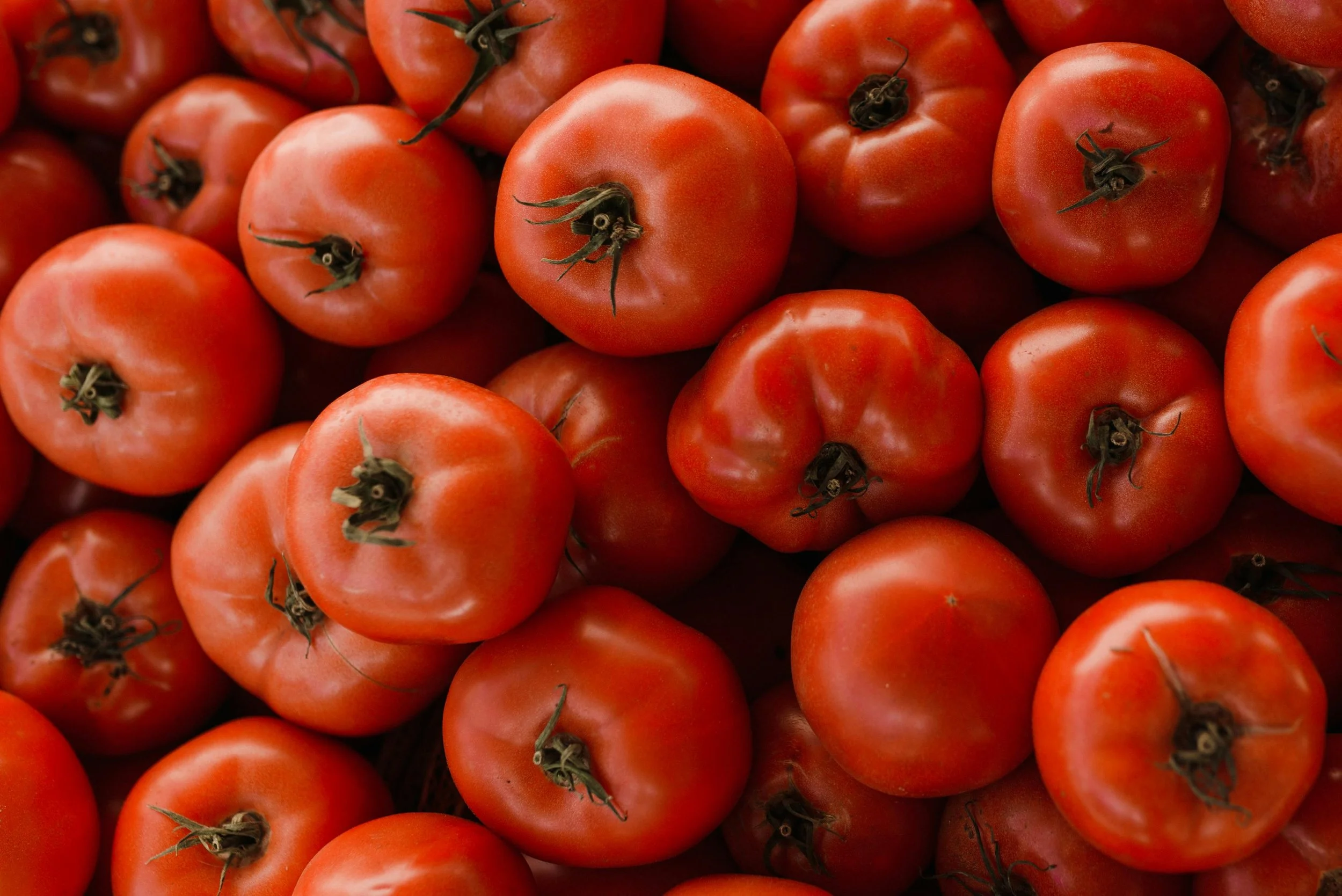
We have been fielding a plethora of tomatoes since summer started, coming in from all sides; beautiful cherry tomatoes, slicers and sauce tomatoes from farms like Sweeter Days and Maypop Farmstead, and tons donated from our grocery store partnerships as well.
The kitchens have been putting them to good use! We have made tomato curries, cucumber tomato salads, red enchilada sauce, and of course, marinara.
Check out our from-scratch recipe below, featured on this summer’s pizza bagels!

TNFP Marinara
Ingredients:
6-10 whole tomatoes, dependent on size, cored and halved.
Garlic cloves, crushed
Tomato paste, couple tablespoons
Bell pepper, onion, carrots and celery; cup of each, diced
Water or vegetable stock
Italian seasoning, salt and pepper; to taste
Fresh basil, to taste
Red wine vinegar or lemon juice, to taste
Method:
Sauté, in butter or oil (or both!) the onion, bell pepper, carrots and celery until they begin to soften. Toss in the crushed garlic cloves, sauté for a few more minutes.
Add in the tomato paste, season with salt and pepper. Add in the tomatoes, cooking until they begin to release their water. Top off with water or vegetable stock, season with more salt and pepper (we always season as we go!).
Bring to a boil and then cut down, simmering until the sauce thickens. Throw in Italian seasoning and basil. Immersion blend, then let simmer for 10 more minutes.
Taste for salt and pepper; if it needs some brightness, add a little vinegar or lemon juice to taste!
FeedBack Nashville: Community Listening
FeedBack Nashville (FBN) spent the month of June hosting a series of Community Listening Sessions to understand how people are experiencing food in Nashville and get feedback on the findings of the FeedBack Nashville food system survey: a city-wide survey that received more than 600 responses. FBN partnered with Network for Sustainable Solutions to meet with community members throughout Nashville to share the initial themes from our city-wide survey, and receive community members’ feedback and suggestions on preliminary findings.

FeedBack Nashville (FBN) spent the month of June hosting a series of Community Listening Sessions to understand how people are experiencing food in Nashville and get feedback on the findings of the FeedBack Nashville food system survey: a city-wide survey that received more than 600 responses.
FBN partnered with Network for Sustainable Solutions to meet with community members throughout Nashville to share the initial themes from our city-wide survey, and receive community members’ feedback and suggestions on preliminary findings. In addition to multiple virtual sessions, several FeedBack Nashville Steering Committee members’ hosted in person events at their organizations, including the Tennessee Justice Center, Urban Housing Solutions, and Healing Minds and Souls. These events enabled FBN to tap into the community knowledge present throughout these networks.

At each community listening session, community members were asked to share their perspectives and responses to two key stories and themes that emerged from synthesizing survey responses. One story, “The Story of Two Nashvilles,” highlights stark differences between two different Nashvilles. In one Nashville, people have access to plentiful, fresh, local, and delicious food. In this Nashville people own cars and can drive to grocery stores, farmers’ markets, and diverse restaurants that are abundant near their homes. In the other Nashville, almost everything about food is hard. There aren't many places close to people’s homes to buy food, especially if they don’t have a car. To get food in these parts of the city, community members often have to drive far, walk, or take public transportation, which is limited. In this Nashville, people also sometimes go hungry, and they are less likely to easily find and afford foods that match with their culture and background.
The second story, “Community Powered Food,” showcases our community’s vision for a better food future for our city, one that is defined by community agriculture, abundant and accessible local produce, limited food waste, and food accessibility and affordability for all. The story posits that this future is made possible by the 2024 Nashville residents, residents who banded together, determined to take action now to work towards a better future. The work did not happen overnight or through some perfect process; it happened through people building affordable housing that prioritized community gardens and proximity to farmers’ markets, through health care systems recognizing the importance of food as medicine and helping people access culturally relevant foods, and through everyday conversations with friends and neighbors. Understanding both what separates and what connects these two Nashvilles and how we move forward together towards our community’s vision of “community powered food” is a vital part of working together as a community to bring forth a better food future for all Nashville residents.
These sessions were filled with delicious refreshments, fruitful conversations, and poignant insights on how FeedBack Nashville’s work should move forward. Community members shared that the story of “two Nashvilles” feels accurate to them, but they also want to highlight that this division was built intentionally, that there has been a systemic prioritization of some communities and interests at the expense of others. They also shared that, because of Nashville’s explosive growth, economic and climate related volatility, and a growing number of motivated community members, the time to take substantive action towards a better food future is now.


The feedback gained at these listening sessions is now being used to identify and design a series of transformational actions our community can take in the coming years to build the future we're envisioning together.
The Role of Public Transportation in Food Accessibility: Part One
To combat food insecurity among low-income, low-access households without vehicle ownership, the availability of public transportation is paramount. The increased mobility that often comes with efficient, reliable public transportation may affect the accessibility of fresh fruits and vegetables in three ways: increased affordability, increased variety, and elevated quality. Director of Food Access Tera Ashley explores how food access and transportation are related in the first installment of this three-part series.
By Tera Ashley, Director of Food Access

The USDA’s published report “Low-Income and Low-Supermarket-Access Census Tracts,” revealed in 2017 that nearly 39.5 million U.S. residents lived in areas defined as both low-income and having low supermarket access. These regions can be referred to as LILA (low-income, low-access) areas, but they are most commonly known as “food deserts,” a term coined in the 1990s to define locations in the United Kingdom with low supermarket access. Though the definition of the term has varied since its conception, the most widely used one comes from the USDA: “An area with limited access to affordable and nutritious food, particularly such an area composed of predominantly lower income neighborhoods and communities.”
The USDA uses even more specific parameters to define food deserts in urban settings: “low-income census tracts (tracts with a poverty rate of 20% or greater) where a significant number of people (at least 500) or share of the population (at least 33%) live greater than one mile from the nearest supermarket, super center, or large grocery store.” It is important to note that, in measuring food accessibility of vehicle-less urban households, the distance indicator lowers from 1 mile to 0.5 mile from a supermarket.

In more recent years, the term “food swamp” was invented to describe areas in which options for unhealthy food abound (such as convenience stores or fast food purveyors), all the while healthy food options continue to have restricted access. As time progresses, the term food swamp may come to be more commonplace than its predecessor. Jonatan Fielding and Paul Simon hint at this in their article, Food Deserts or Food Swamps?, “In many disadvantaged communities, the food environment is more swamp than desert, with a plethora of fast food; convenience stores selling calorie-dense packaged foods, super-sized sodas, and other sugar-loaded beverages; and other non-food retail venues selling junk food as a side activity.” It should come as no surprise, then, that in addition to the typical hurdles that a low-income resident may face, studies have linked residing in food deserts and food swamps with disproportionately high rates of obesity and diet-related chronic diseases. It is important to note here that “healthy food” can, at times, be subjective. To avoid confusion, studies often measure the availability of fresh fruit and vegetables to gauge food security in LILA areas.
It may be tempting to search for a silver bullet of sorts to solve the issue of low access to fresh fruit and vegetables in food deserts and food swamps, such as building a new grocery store in a LILA area. However, a “solution” of that nature would require there to exist only a single cause to an area having low access — proximity — when, in fact, there are several interconnected contributing factors to low access. Indeed, factors of proximity, food quality, food affordability, systemic racism, and access to efficient, reliable public transportation all converge to create food deserts and food swamps. It is the latter, access to efficient, reliable public transportation, that will serve as the focal point of this three-part series.
The Importance of Public Transportation

Although it is estimated that over 89 percent of U.S. households own vehicles, households with lower incomes are more likely to not own a vehicle. Financial challenges, including the cost of the car itself, along with maintenance and repairs, insurance premiums, and fluctuating fuel costs can be prohibitive for low-income households. Other factors, such as mental or physical disabilities, and even drivers’ license exams not offered in a resident’s native language could also contribute to a lack of a household vehicle or the inability to drive. Whatever the contributing factor(s) for not owning a vehicle, the number of low-income tracts with a significant number of households that do not own a vehicle and live more than 0.5 mile from a supermarket experienced a four percent increase between 2010 and 2015.
Not having access to a vehicle can have a negative impact on a LILA resident’s ability to access fresh fruits and vegetables. As found in Stuart Strome’s study, Elements of Access: The Effects of Food Outlet Proximity, Transportation, and Realized Access on Fresh Fruit and Vegetable Consumption in Food Deserts, “respondents who did not use their own car to buy fresh fruits and vegetables and were from food insecure households were only about 40% as likely to consume fresh fruits and vegetables as other respondents.” To combat food insecurity among LILA households without vehicle ownership, the availability of public transportation is paramount. The increased mobility that often comes with efficient, reliable public transportation may affect the accessibility of fresh fruits and vegetables in three ways: increased affordability, increased variety, and elevated quality. We will explore all of these ways in part two of this series.
Food For The Heart — And Soul — In North Nashville
We already know the vital role that food plays in health. But how does that affect communities where the most easily accessible foods are processed and plastic-wrapped items in corner stores? For patients at Matthew Walker Comprehensive Health Center in North Nashville, which has historically been a food desert, uncontrolled hypertension is a direct consequence of this issue.

We already know the vital role that food plays in health. But how does that affect communities where the most easily accessible foods are processed and plastic-wrapped items in corner stores? For patients at Matthew Walker Comprehensive Health Center in North Nashville, which has historically been a food desert, uncontrolled hypertension is a direct consequence of this issue.
Hypertension, or high blood pressure, affects a significant portion of Nashville’s population that is especially concentrated in North Nashville. Left unmanaged, it can lead to serious health complications such as heart disease, stroke, and kidney failure. For many in underserved communities, access to healthy food isn’t the only factor to this condition presenting or worsening — transportation, healthcare, and other socio-economic barriers make this population more at-risk for developing hypertension and more challenging to treat.

In response, the Nashville Wellness Collaborative launched Heart of Nashville, a two-year pilot program designed to improve health outcomes in North Nashville, this February. The large swath of organizations that make up the Collaborative — from policymakers to healthcare professionals to higher ed institutions to community-building nonprofits — has been working ever since to pair clinical care with wellness support services that help North Nashville residents overcome systemic obstacles.
“By uniting our resources and expertise … we’re increasing our capacity to combat systemic health disparities and we’re closer to a future where every Nashville resident, regardless of zip code, has equitable access to quality health care,” said Mayor Freddie O’Connell at the launch.
In tandem with medical interventions, the Heart of Nashville initiative recognizes the pivotal role of nutrition in managing hypertension. That’s where The Nashville Food Project comes in. We play a crucial part by providing nutritious, heart-healthy meals to complement medical treatments. Through our commitment to nourishing meals and community well-being, we’re working not only to provide nourishing meals alongside wraparound care, but also to educate individuals on making sustainable, health-conscious food choices.
“With this particular partner, we have rebranded our heart-healthy meals into heart-healthy soul food. We’re trying to show them some easier, low-fat and low-salt versions of the foods they grew up eating, foods that bring them comfort,” said Bianca Morton, Chief Culinary Officer at The Nashville Food Project. We’ve found that these patients are much more receptive to taking a meal after a clinic day when it’s something that they recognize.”

In recent months, meals included shrimp and sausage gumbo, a sweet potato-carrot puree, and a healthier breaded alternative to fried chicken.

Education is also an important component for making sure these lifestyle changes stick. Recently, Matthew Walker hosted a Diabetic Dial Down to provide education for diabetes patients. Bianca presented at the event to a group of 15 women, many of whom are hypertension patients, who signed up to learn how to make healthier choices in their food preparation, including a food demonstration where they got to taste the food. This touchpoint made these patients excited, not hesitant, to take two or three meals home with them as part of their clinical treatment plan.

By integrating these meals into the initiative, participants gain not only access to wholesome food but also the knowledge and skills needed to maintain a heart-healthy diet, ultimately enhancing their overall health outcomes. This holistic approach underscores the transformative power of food as medicine and reinforces the collaborative spirit of the Heart of Nashville initiative in creating a healthier, more vibrant community.
The Heart of Nashville Initiative
At the heart of this collaboration lies a shared dedication to improving health equity. Together, we aim to:
Increase Awareness: Educating residents about hypertension, its risks, and the importance of regular screenings.
Expand Access: Bringing healthcare services directly into communities through mobile clinics and outreach programs.
Empower Patients: Providing resources and support to help individuals manage their hypertension effectively, including lifestyle changes and medication adherence.
Through their concerted efforts, the Heart of Nashville initiative has already begun to show promising results. By empowering individuals with knowledge and access to wraparound care, more patients are on the road to better heart health for themselves and their families.
Matthew Walker Comprehensive Health Center, a cornerstone of community healthcare in Nashville for over 50 years, brings its expertise and commitment to serving diverse populations. Through its clinics and outreach programs, Matthew Walker provides accessible healthcare services, including screenings and treatment for hypertension, ensuring that individuals receive the care they need close to home.
NashvilleHealth, the city’s leading public health initiative, partners with local organizations to address health disparities and promote well-being across all neighborhoods. By focusing on preventive care and community engagement, NashvilleHealth works to create a healthier city where every resident has the opportunity to thrive.
The Nashville Wellness Collaborative includes:
NashvilleHealth
Matthew Walker Comprehensive Health Center
The Nashville Food Project
Belmont Data Collaborative
Meharry Medical College
Sycamore Institute
Urban League of Middle Tennessee
Center for Nonprofit Management
Transit Alliance of Middle Tennessee
Juice Analytics
STARS
American Heart Association
Senior Ride Nashville
AgeWell Middle Tennessee
Raphah Institute
Metro Parks Nashville
The Housing Fund
Metro Public Health Department
Second Harvest Food Bank
Cafe Collaboration with The City Juicery
Last December, Kayla Hall wandered into The Nashville Food Project at the same time as over a hundred other Nashvillians to celebrate the launch of FeedBack Nashville, a citywide initiative to evaluate and reimagine the local food system. It was her first time in the building, and although the main room was packed to the brim, she had a vision for what the space could be. So she asked to see the kitchen.

Last December, Kayla Hall wandered into The Nashville Food Project at the same time as over a hundred other Nashvillians to celebrate the launch of FeedBack Nashville, a citywide initiative to evaluate and reimagine the local food system. It was her first time in the building, and although the main room was packed to the brim, she had a vision for what the space could be. So she asked to see the kitchen.
For the last four years, Kayla has been making her own cold-pressed juices. Her journey with juicing began as a solution to a personal health problem — the vitamins, minerals, antioxidants and electrolytes in ginger shots and green juices restored her energy, improved her sleep, and made her feel all-around better than any other health remedies she had tried. Once the habit stuck, it changed her life. And as she shared the healing she had found in juicing with friends and family, she realized it could change the lives of others, too. That’s how The City Juicery, Kayla’s cold-pressed juice business, was born.


Kayla rented prep space at Citizen Kitchens, a local food business incubator, and began selling her juice at local farmers markets. “We were hustling,” she remembers. “Sometimes we were selling at six markets a week, or even a couple of markets in a day.” She was doing it with intentionality, though — it was important to her to show up in every corner of the city. “I wanted to ensure that the juices were easily accessible in the community, so I made a point to go to where the people were,” she explains.
At its core, The City Juicery bridges the gap between nutritious choices and accessibility: a goal shared by The Nashville Food Project. That’s why when Bianca Morton, Chief Culinary Officer of the Food Project, and C.J. Sentell, CEO, met Kayla on that day in December, everyone’s gears started turning. They showed her around the space and learned about her business, and a few weeks later, they were sitting at a table with the leadership of Preston Taylor Ministries, who wanted to arrange a summer work readiness partnership for the high school students in their program. Together, they started dreaming.

When The Nashville Food Project’s headquarters was first built in 2018, it was always a part of the conversation that the building’s beautiful entry space, known affectionately as the Community Dining Room, might eventually function as a cafe. For years, it has served as home to pop-up restaurants (including Tailor), community dinners and celebrations, public conversation panels, and even baby and wedding showers. The goal was always the same: for the space to become a living, breathing example of our mission to bring people together.
So what if it could? The group drew up a pilot plan that leveraged Kayla’s hospitality expertise and product, the Food Project’s facility and catering chops, and Preston Taylor’s workforce development model. The students would work in the cafe under Kayla’s training to make and sell juices, which The Nashville Food Project would supplement with healthy snacks and light lunches. Even better, The City Juicery would have access to the Food Project’s daily donation and procurement drops, which regularly include ready-to-use fruits and vegetables, for their juice production. It was a win-win for everyone.
This June, the vision came to life as a team of students began a few weeks of training before the cafe’s grand opening. Having taught in MNPS for ten years before opening her business, Kayla was well-equipped to show these students the ropes — but she knew that any successful business had to begin with building relationships.

Students with a mentor from Preston Taylor Ministries on the cafe’s opening day.
“The most important thing to me right off the bat was getting to know the kids,” she explains. “I knew that if I was able to understand their learning goals beyond The City Juicery, we could build on those goals to make their work here feel more meaningful.”
Next, Kayla began an intensive training on fruits and vegetables with the students. “Nobody thinks they need it, but then I start with asking them whether a tomato is a fruit or a vegetable,” she laughs. “That got all of them.”
Tomatoes were just the beginning. Kayla is intimately familiar with the ways that specific foods can solve different health challenges, and in her eyes, that was the most important knowledge to share. She wanted the students to be able to make recommendations to customers who came in with questions about anything from cramping to gut health. She also taught them about how produce changes depending on how you work with it — for example, how bananas become sweeter as they brown or how you should turn pineapples upside down two days before you juice them to extract more liquid. All of these factors affect the flavors of smoothies and juices.

The students were fast learners, and now, they make City Juicery specialties like smoothies and lemonades by themselves. They also open and close the shop, do all the prep work, and sort through the produce — 40% of which is sourced from the Food Project’s excess. When opening day came around, on June 14, the cafe had over 100 guests!

Learning and growing with Kayla and her team of students has been a blast so far — not to mention their smoothies and juices are delicious! It feels great to have our community space full of life. Our hope is that this cafe creates even more opportunities for us to bring people together around tables, over food, and have this space transformed into one that offers hospitality, connection and nourishment.
The City Juicery is open Monday through Friday from 7 a.m. to 6 p.m. inside The Nashville Food Project’s headquarters in the Nations, located at 5904 California Avenue. We have a variety of juices, smoothies, hot and cold sandwiches, salads, fruits, and more available. Come say hi while the Preston Taylor students are here until July 19!
Bringing Fresh Produce to Cosecha, Woodbine's Hyper-Local Market
Every Wednesday during the summer months, a local grassroots organization gathers neighbors together on the front lawn of Woodbine United Methodist Church, which faces the neighborhood’s busy Nolensville Pike corridor. Cosecha Community Development's market thrives as a vibrant hub of community and commerce in South Nashville, hosting a small but mighty range of businesses and nonprofits as diverse as the Woodbine neighborhood’s own dynamic cultural landscape.

Every other Wednesday during the summer months, a local grassroots organization gathers neighbors together on the front lawn of Woodbine United Methodist Church, which faces the neighborhood’s busy Nolensville Pike corridor. Cosecha Community Development's market thrives as a vibrant hub of community and commerce in South Nashville, hosting a small but mighty range of businesses and nonprofits as diverse as the Woodbine neighborhood’s own dynamic cultural landscape.
At Cosecha's market, visitors are greeted by a patchwork of sights, sounds, and aromas that reflect the city's blend of cultural traditions. The savory scent of Guatemalan potatoes, or papas Guatemaltecas, wafts through the market as the vendors cook them made-to-order right in the tent. Patrons browse racks of brightly colored clothing and vibrant displays of handmade soaps. On a makeshift stage on the steps of the church, a pair of young musicians performs cover songs in English and Spanish.

From locally grown produce to handcrafted goods, each vendor contributes to a marketplace that celebrates authenticity and connection. There’s a familial energy in the air as curious neighborhood visitors mingle with growers, artists, and makers, building relationships that go beyond transactions. Children run across the lawn as people sit and eat together, and it truly feels like a gathering of old friends.

For the first time this summer, the market also includes a selection of fresh produce from Growing Together, an urban farm tucked on an acre of land just a few miles down the road from Cosecha. Growing Together is stewarded by The Nashville Food Project and provides marketing support, resources, and land for new American farmers who face barriers to access, as well as training for beginning farmers. The four farming families who hold plots there grew over 35,000 pounds of produce last year, moving their vegetables to tables across Nashville through an annual Community Supported Agriculture (CSA) program, regular sales to restaurant partners, and a community sharing model.
The Growing Together farmers each came to Nashville as immigrants or refugees, and many live in the Woodbine neighborhood. They have deep farming roots and, while they still produce familiar veggies like carrots, lettuces, tomatoes and potatoes, they also grow crops you won’t find in a chain grocery store, from long beans to bitter gourd to kohlrabi. Many of the crops they grow are reflective of their own cooking traditions, which stem from their Burmese and Bhutanese heritages.

For all of these farmers, barriers like language and transportation make selling at market very challenging, despite their agricultural knowledge and quality produce. This year, a pilot partnership is allowing the farmers to sell wholesale directly to Cosecha Community Development, who resells their produce at the market in an effort to mitigate those barriers. For this organization, which celebrates, connects and uplifts immigrant communities, this partnership is just another touchpoint for community-building. This season, The Nashville Food Project’s stand is the only place at the market to get fresh produce, providing an important source of local food to the neighborhood.


Beyond its role as a marketplace, Cosecha Community Development has woven itself into the fabric of Nashville's community by providing support and resources to budding entrepreneurs and underrepresented groups. Through workshops, mentorship programs, a language school and community gardens, Cosecha fosters community to build a healthier, more connected neighborhood where gathering together is a priority.
With a commitment to inclusivity and sustainability, Cosecha Community Development's market in Nashville exemplifies how grassroots efforts can uplift the unique identities that define a city. Cosecha's market beckons as a place where community, creativity, and commerce come together, and vendors share a piece of themselves.

Miss out on a CSA this year? Come get some Growing Together produce and see this great market for yourself every other Wednesday from 4 - 7 p.m. at 2621 Nolensville Pike!
Reggie's Urban Ag Day & Resilient Community
On May 11, we celebrated the second annual Reggie’s Urban Ag Day, hosted at the Community Farm at Mill Ridge. The event’s organizer and namesake, Reggie Marshall, convened a variety of peers, professionals, lenders, and local vendors including Pathway Lending, SUDA, NRCS, Farm Service Agency, Farm Credit, Zysis Garden, Reggie’s Veggies and his nonprofit venture, Reggie’s Helping Hands. The goal? To provide resources for aspirational farmers hoping to get their start in urban agriculture.

On May 11, we celebrated the second annual Reggie’s Urban Ag Day, hosted at the Community Farm at Mill Ridge. The event’s organizer and namesake, Reggie Marshall, convened a variety of peers, professionals, lenders, and local vendors including Pathway Lending, SUDA, NRCS, Farm Service Agency, Farm Credit, Zysis Garden, Reggie’s Veggies and his nonprofit venture, Reggie’s Helping Hands. The goal? To provide resources for aspirational farmers hoping to get their start in urban agriculture.

An expert in regenerative and sustainable agriculture, Reggie Marshall originally came from a farming family in West Tennessee and has been growing food for the majority of his life. His formal training was as a nurse, and eventually, he merged the two and Reggie’s Veggies set up shop at the Nashville Farmers Market as well as Ascension St. Thomas Midtown, where he piloted a “food as medicine” program. Patricia Tarquino, director of community agriculture at The Nashville Food Project, happened upon him there for the first time while she was pregnant and in the market for some some herbs. Some friendly conversation quickly revealed that his farm was in her neighborhood — and she stayed connected ever since.
With a dream of bringing healthy and nutritious foods to his community, Reggie launched Reggie’s Veggies in 2015 after graduating from TSU’s New Farmer Academy. He started out growing food in his container garden on a small amount of land in Antioch with a mission to practice sustainable agriculture and community stewardship.
Several years later, Patricia was a part of Whitsitt Elementary School’s PTO when they received a random donation of 600 5-gallon buckets. When she reached out to see if Reggie had a use for them, Reggie explained that he had, over the years, developed the soil on his property and was able to farm in-ground at that point, but offered to teach families at Whitsitt how to utilize the buckets to container garden. For him, it was an opportunity for another community touchpoint — something he valued deeply. By teaching others how to grow with the resources they had, he was building resilient community.
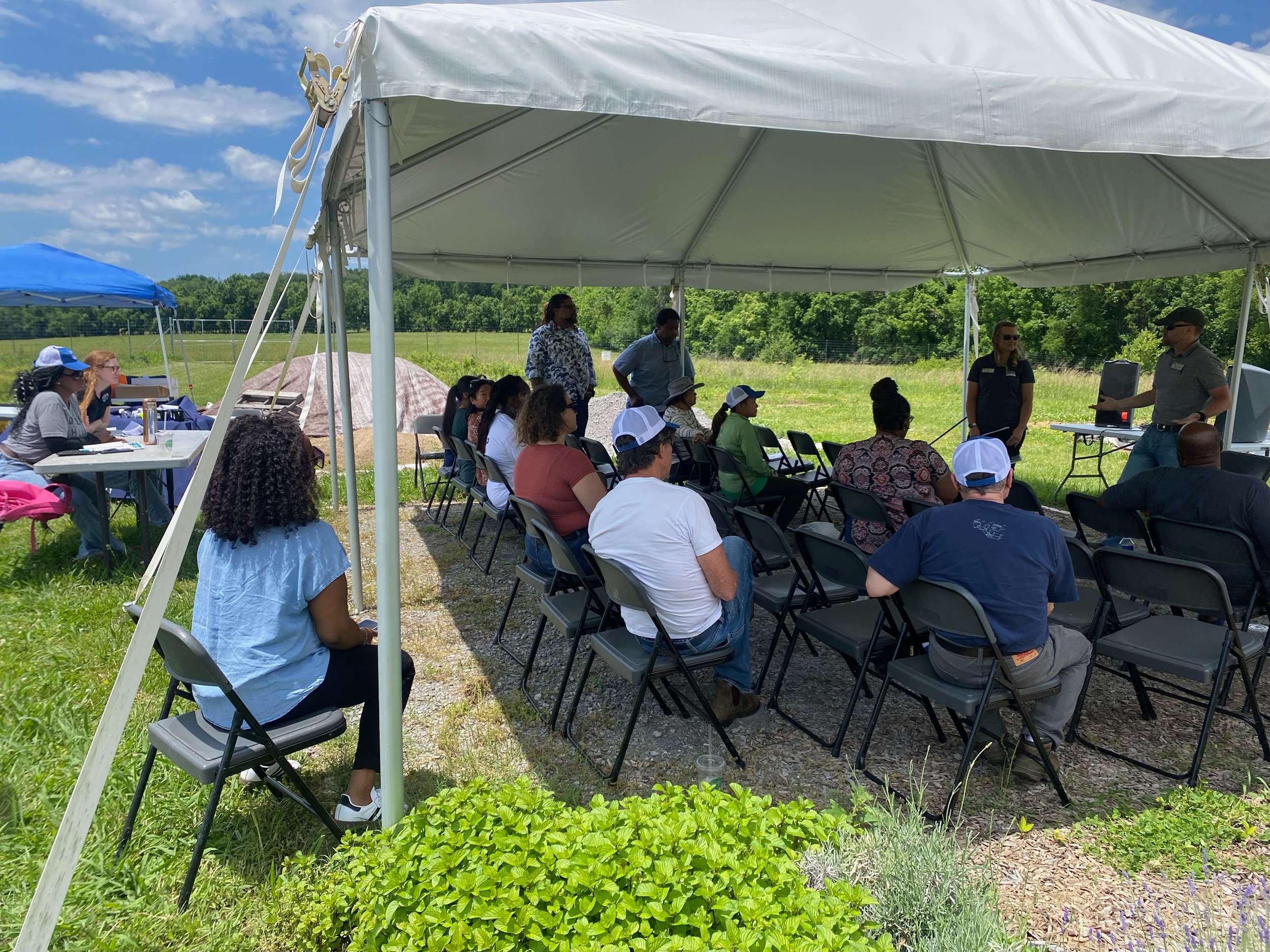
That’s what Reggie’s Urban Ag Day is all about, too. Reggie sits on multiple committees related to agriculture and food at both the state and national levels and is passionate about bringing people together to share knowledge and resources. Over the years, he has found that people of color specifically in urban areas lack access to land, resources that the government offers, etc. to get started farming on their own. Reggie’s Urban Ag Day sets out to change that, bringing together all parts of the bureaucratic system and a place where folks in Antioch, a majority BIPOC neighborhood, can have access to space to grow.
Culinary Training Rooted in Partnership
We all know the old adage: practice makes perfect. And when it comes to culinary education, there really is no better place to learn than the kitchen. A group of culinary training students experienced this first-hand recently during an 8-week pilot course co-facilitated by The Nashville Food Project, Catholic Charities, and GT Service, the workforce development arm of Slim & Husky’s.

We all know the old adage: practice makes perfect. And when it comes to culinary education, there really is no better place to learn than the kitchen.
A group of students experienced this first-hand recently during an 8-week pilot course co-facilitated by The Nashville Food Project, Catholic Charities, and GT Service, the workforce development arm of Slim & Husky’s. During these eight weeks, the cohort of 15 students received a comprehensive introduction to the culinary and hospitality world in fully operational, commercial kitchens at both Slim & Husky’s and The Nashville Food Project.

Under the guidance of our own Chef Bianca, students developed on-the-job skills, learning about cooking techniques like sauteing and marinating, knife handling and dexterity, and even recognizing commonly used herbs and spices and understanding how they influence the flavors of certain dishes. On classroom days, instructors from Catholic Charities taught soft skills and professional development. And as part of the program, each student earned a ServSafe certification: a gold standard in the world of food service.

On kitchen days at The Nashville Food Project, students spent afternoons chopping veggies, mixing sauces, and baking bread — much of which was served to nonprofits across the city through the Food Project’s food access partnerships. Students often helped our catering manager Josh prepare and plate individually served heart-healthy meals for our partnership with the Joe Beretta Foundation.
“I like that we are hands-on and able to work in the kitchen and cook,” reflected one student. “This experience helps me to have better safety and sanitation in the kitchen and better my cooking skills. I like how we can help make food for people who just had heart surgery — that made me happy and want to be here even more.”
The headquarters kitchen experience — which, if you’ve ever volunteered with us, you know is a unique one! — gave students a chance to see the impact of their work in action and connect with the Food Project’s revolving door of staff, volunteers, partners, farmers, and more. By interacting with a wide range of players in the food system, students were able to better understand the many steps it takes for food to end up on a plate.


This group of students came from a wide variety of backgrounds, enrolling through both Catholic Charities’ Culinary Training Academy and GT Service’s SNAP-EBT program. The diverse missions of these organizations were able to support students through other obstacles, like transportation and housing, while they were enrolled in the program. Program leaders also made sure that of all the barriers students faced, finances weren’t one of them: the course, which ended up being fully subsidized, also offered a weekly stipend to recognize the time commitment the students made to the program.
“This partnership has been truly transformational, allowing the students to have someone to support them through a number of barriers,” said Chef Bianca. “It was designed to address the systemic racism in food-insecure and underserved communities. This program was not just about teaching them hospitality — it was about giving them dignity, confidence, and a safe place to learn.”

The program culminated in a capstone lunch that students prepared and served to guests at The Nashville Food Project, and each of them received a brand new white chef’s coat for the occasion. As they placed colorful salads with from-scratch vinaigrettes on tables and filled glasses with homemade fruit tea, it was clear that they were excited to see it all come together. Staff from each of the involved organizations attended, sharing stories and explaining how the partnership had enriched their unique missions. But the highlight by far was a chance to hear from the students themselves after they had finished serving heaping plates of barbecue chicken, blanched green beans, and Boursin mac and cheese.

“If you liked the green beans, it was me who made them!” exclaimed one student as she watched everyone dig in to their plates.
One by one, students volunteered to share what they had enjoyed about the program and what they hoped to do next. While just a handful listed culinary school as their next step, many said that they had learned essential skills that they could apply to almost anything they wanted to do, and everyone said that they would be excited in the future to cook meals for their loved ones.

Here’s what students said about the program:
“I’ve been receiving employment, financial support, rides to work and more. This program is the only reason I’m not homeless.”
“The classroom and hands-on experience will help me to work in a commercial kitchen, and give me a heads up on what is expected of me on the job.”
“It’s special to mix different ingredients to form one unique dish and watch a person’s face light up as they taste a variety of sweet, salty, tangy or whatever dish you created, giving them the satisfaction of a full stomach and a taste bud makeover.”
“To be in this class not only means I get to better my culinary skills, but I’m being given the opportunity to learn a new form of art.”
“Being in this program gives me more career options and necessary life skills. The people in this program have been extremely supportive.”
“This culinary and apprenticeship class has supported me with a job at a restaurant called Slim & Husky’s. I love it there and plan to take what I can out of it. It has also put bread in my pocket, so I can pay bills on time and raise my credit.”

Partner Spotlight: Begin Anew
Begin Anew has been a fixture of the community for over 20 years, with a mission to empower individuals to overcome the obstacles caused by poverty through education, mentoring, and resources. They offer cost-free courses for adults who are learning English, pursuing their high school equivalency diploma, or seeking computer and job skills. Significantly, their campuses across Middle Tennessee — in Franklin, Madison, Woodbine and downtown Nashville — are tailored to the specific needs of the communities they are embedded in.
When you walk into the Church at Woodbine on a Tuesday night in May, you may open the door for a little girl smiling up at you, talking happily with her mother in Arabic. A step into the echoey church hallway and you’ll be greeted by more voices and a nervous excitement as people move in and out of rooms, chatting and holding clamshells full of food. The people in this building have come to take their final exams of the semester, and for a handful, a cap-and-gown graduation ceremony is right around the corner. As the adult learners shuffle into their classes, children run down the hallway together, excited by the promise of a craft night.
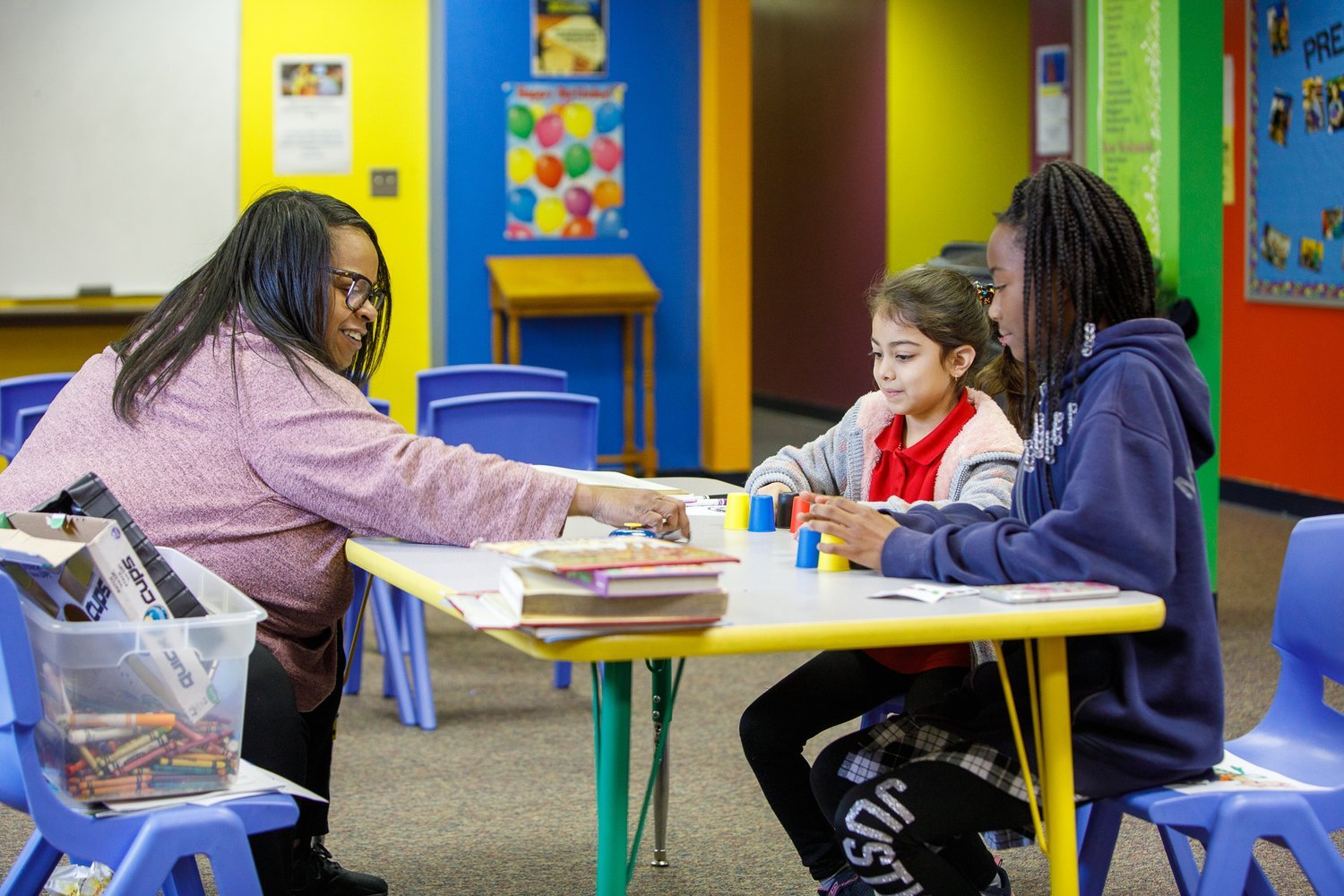
Begin Anew has been a fixture of the community for over 20 years, with a mission to empower individuals to overcome the obstacles caused by poverty through education, mentoring, and resources. They offer cost-free courses for adults who are learning English, pursuing their high school equivalency diploma, or seeking computer and job skills. Significantly, their campuses across Middle Tennessee — in Franklin, Madison, Woodbine and downtown Nashville — are tailored to the specific needs of the communities they are embedded in.
“When we assessed the Woodbine community, the greatest need was English language learning, so that’s by far the majority of our students at Woodbine,” explains Teresa Watts, who serves as Begin Anew’s program director. “But at the downtown campus, English is not the barrier — that population is trying to get their education and get a job. So we adapt to what the community needs.”
Their courses, which are entirely volunteer-taught, offer needs-based curriculums too: all incoming students take assessment exams that determine where their learning journeys should begin. In the high school equivalency (HSE) program, that assessment is called the GAIN, or general assessment of instructional needs. Based on how students score on the GAIN, they are placed into a corresponding grade-level curriculum. Some students aren’t ready to move into the standard HSE curriculum right away, and that’s okay — Begin Anew staff and volunteers work closely with students to provide the additional preparation they need.

Check out a video about a graduate of this program.
Similarly, the Woodbine campus, located off of Nolensville Road, sees a number of students whose native languages don’t share an alphabet with English. Begin Anew’s tiered ELL curriculum didn’t originally accommodate learners with virtually no English knowledge, but to meet this need, they plan to offer a basic class that offers prerequisites for ELL I, including letters, numbers, and simple words this fall.
At most campuses, courses are offered in the evenings to accommodate work schedules. However, at the Franklin campus, Begin Anew offers daytime classes to accommodate the needs of the adult learners who live there. In other words: Begin Anew is exceptionally good at meeting people where they’re at. “We’re always trying to eliminate barriers for our students,” explains Teresa.

Begin Anew is committed to staying with students for the long haul. Completing the coursework for each of these tracks — be it receiving a diploma or mastering a language — can sometimes take years, and Begin Anew is prepared to support families through that journey. For that reason, when students enter the program, they take a self-sufficiency exam measuring everything from whether or not they have basic identification to how they rank in food and housing security. Based on that assessment, Begin Anew can support families with personalized resources, sometimes connecting them with other organizations. While Begin Anew offers bus passes, meals, and childcare to all families during class time, they know that to meet the multi-faceted needs of their students, it takes a community.
“We want to do what we do well, and then we want to link arms with people like The Nashville Food Project who do what you do well so that we can give students the best opportunity for long-term success.”
Since 2019, Begin Anew’s Woodbine campus has received about 50 meals each week, meaning that they are able to offer food to their students during Monday and Thursday class times. They also receive weekly meals at the downtown campus, which has been a food access partner since 2015.

Most importantly, though, Begin Anew is committed to meeting a need for community among their students. Because their coursework tracks are geared toward long-term learning, many of these students are learning in the same small groups for months or even years at a time. An hour each week, Begin Anew hosts optional community groups, focused solely on addressing social and spiritual needs. Their faith-based teachings, Teresa explains, are aimed at helping students understand their value, and the groups provide a unique setting for people to share about their personal lives, opening the door for folks to receive more personalized support.

“They need each other, and we all have so much to learn from each other,” says Teresa.
Begin Anew’s ceremony for spring 2024 graduates will take place on Saturday morning, June 8, at Woodmont Baptist Church. Learn more about their work or volunteer as an instructor.
Future of Food Conversation Series Recap: Thinking Ahead While Honoring Our Past

By Allison Thayer, Director of Community Engagement at The Nashville Food Project
On May 2, the Nashville Food Project co-hosted the kickoff event for a community conversation series exploring “The Future of Food” in Nashville. The series, part of a collaboration with the FeedBack Nashville initiative and TN Local Food, is exploring how we can work together as a community to build a more equitable, just, and sustainable food future for everyone in our city.


Each event features a moderated panel with audience Q&A, and the kickoff event brought an all-star lineup: Kia Jarmon, visionary leader and consultant, and founder of the Nonprofit Equity Collaborative; Amanda Little, Vanderbilt professor of journalism and author of The Fate of Food: What We’ll Eat in a Bigger, Hotter, Smarter World; and Samantha Veide, the Managing Director for Americas and Transformation at Forum for the Future (the organization providing convenient support for the FeedBack Nashville Initiative). Maris Masellis, of the Tennessee Environmental Council and the Critical Root Zone podcast, moderated the discussion.

Panelist Kia Jarmon chooses a word to represent her hopes for the future of the food system.
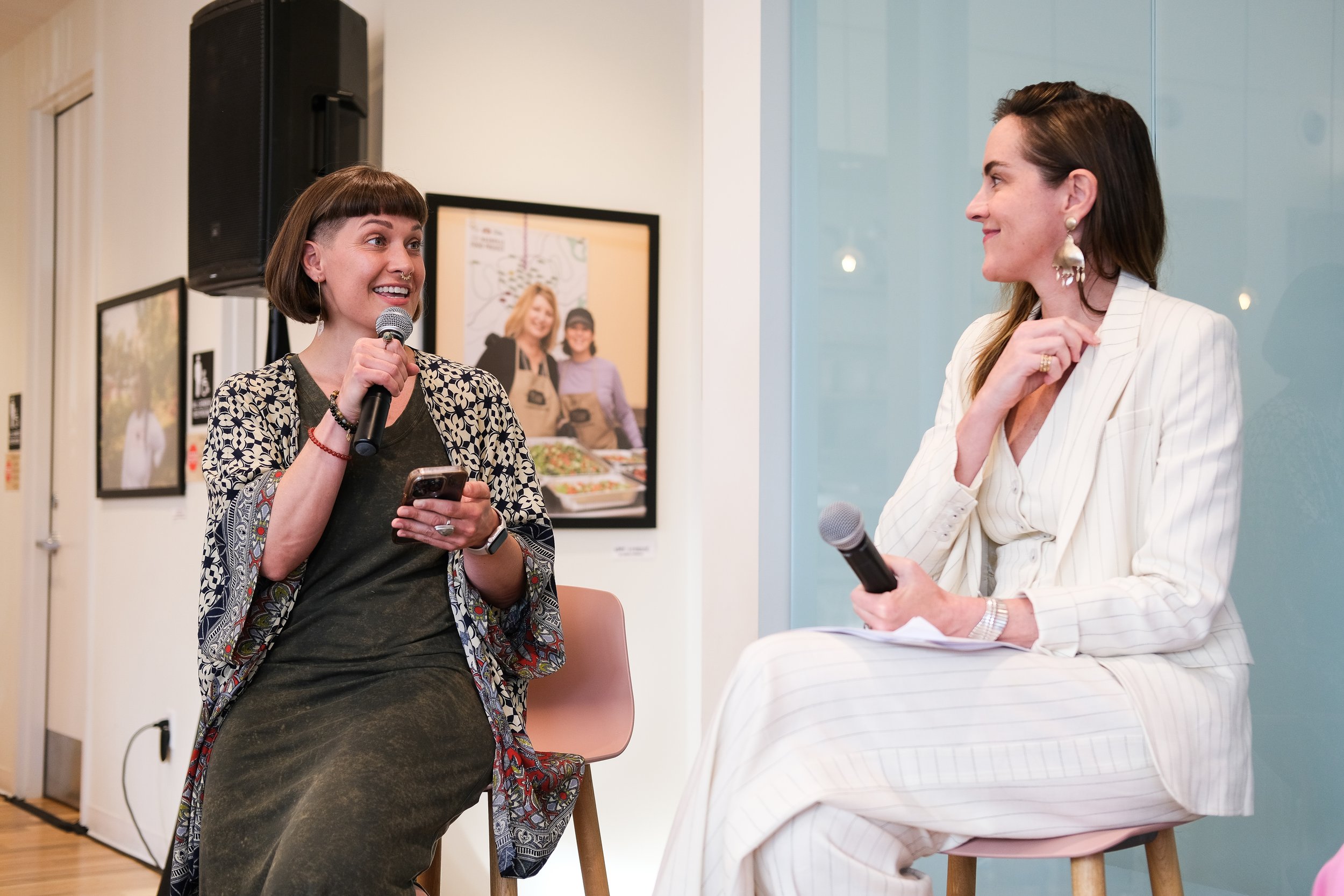
Maris Masellis and Amanda Little

Maris Masellis and Samantha Veide
The kickoff was a discussion titled Futurist Mindsets and the Pursuit of a Just & Regenerative Food Future. The panelists discussed how fostering system-oriented, forward-thinking mindsets — and honoring lessons from our past — are both critical to building momentum for positive change in our local food system. They discussed the potential role and risks of technology in creating more equitable access to affordable, nutritious food. But, they also discussed the need for a patient, human-centric process to drive lasting positive change. Audience members asked, among other things, what actions they could take to generate positive change in our food system, and the community shared their hopes for what Nashville’s food future might look like.

The next event in the series will be on Thursday, May 30 from 6:00-7:30pm at our HQ. It will feature panelists Rev. Jen Bailey of the Faith Matters Network and People’s Supper, Rasheedat Fetuga of Gideon’s Army, and Patricia Tarquino of Cosecha Community Development. The panel, and will be moderated by NPT’s Jerome Moore of Explore Social Change. You can read more about the conversation and RSVP to attend here.