
The Nashville Food Project’s Blog





Meet the 2022 Growing Together Farmers
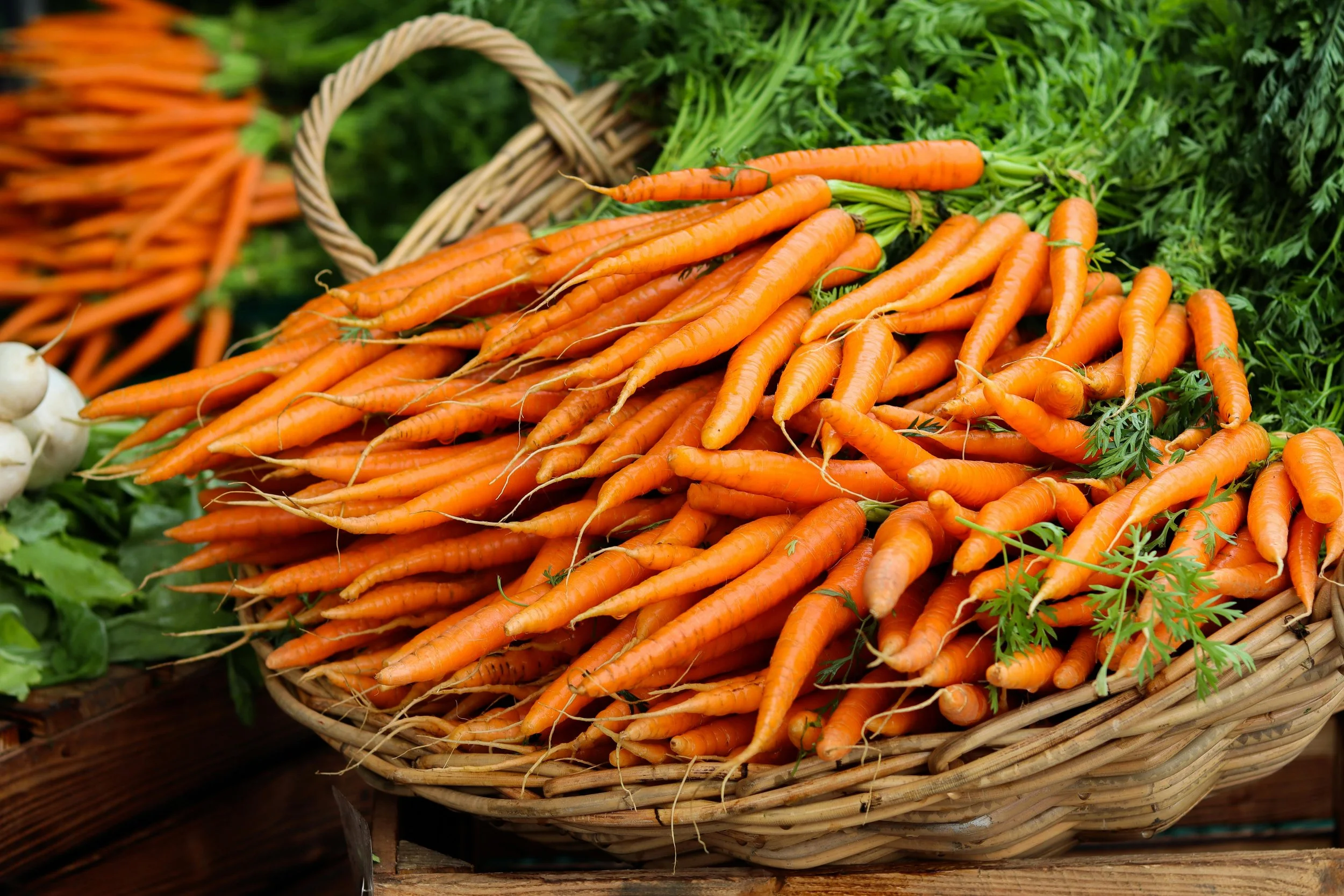
The 2022 Growing Together harvest season is kicking off! With CSAs and produce shares about to begin, it is important for our community to know the farmers who grow their food. Lal Subba, Chandra and Tonka Poudel, Sumitra and Pabitra Guragai, Nar and Tek Guragai, and La Sa Roi all steward plots at our Growing Together farm, and their personalities are each as vibrant as their veggies.
By Tallahassee May, Director of Growing Together
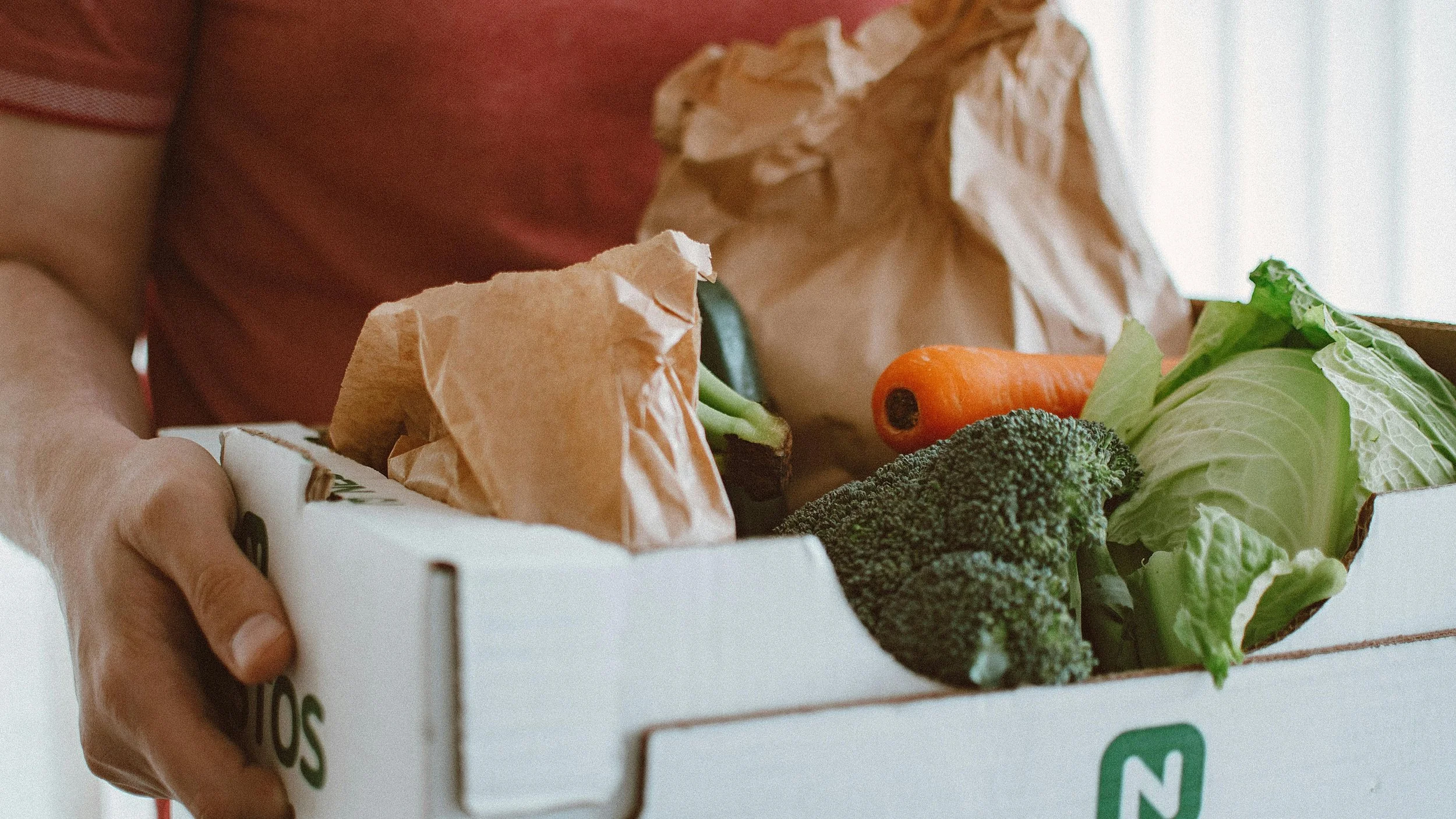
The Growing Together community farm is gearing up for a busy season ahead! The farmers have expertly nurtured the soil, raised the transplants, sown the seed, and coaxed their crops through the roller coaster spring weather. Next week we begin our Veggie Box Community Supported Agriculture (CSA) program as well as start our produce share deliveries to community partners new and returning. To say the Growing Together farmers are ready is an understatement, as they have worked tirelessly to have our now bountiful field of produce ready for our customers.
As the market-farming program of The Nashville Food Project, the work of growing food and increasing food access is a primary goal. The participating farmers came to this country as either refugees or recent immigrants and face significant barriers due to language, literacy, and transportation. With land access, skills training, market connections, and a space free from the pressure of cultural assimilation, the Growing Together farmers significantly increase food security through their contribution to our local food system.
But the Growing Together farm, while a busy and productive place, is also about cultivating community and connection through meaningful work. It is a place for the farmers to experience belonging and purpose, and each of them brings unique skills and incredible heart to their work every day.


Long-time community farm participants Chandra and Tonka Poudel, Lal Subba, and Nar and Tek Guragai have been with the Growing Together program since the beginning and form the cornerstones of our production. Because of their excellent skills and commitment, we are able to hold more produce sharing opportunities than ever before, ensuring as many local, organically grown vegetables as possible are feeding our communities. As elders in their communities, they offer much wisdom, experience, humor and insight. These farmers carry with them traditional agricultural and cultural knowledge, and the time we spend together working, learning, laughing, problem-solving, and sharing food together in the garden helps to keep this knowledge alive for younger generations.

The sister team of Sumitra and Pabitra Guragai are also a large part of the farm. Having worked alongside their parents for years, they are amazing growers themselves and pursue new and diverse crops, such as cut flowers and medicinal herbs, with the energy of true entrepreneurs. Sumitra and Pabitra are the youngest farmers and also juggle full time work commitments, GED courses and citizenship classes. Although they are busy, their time on the farm is marked by their shared laughter and song as it drifts over our acreage.
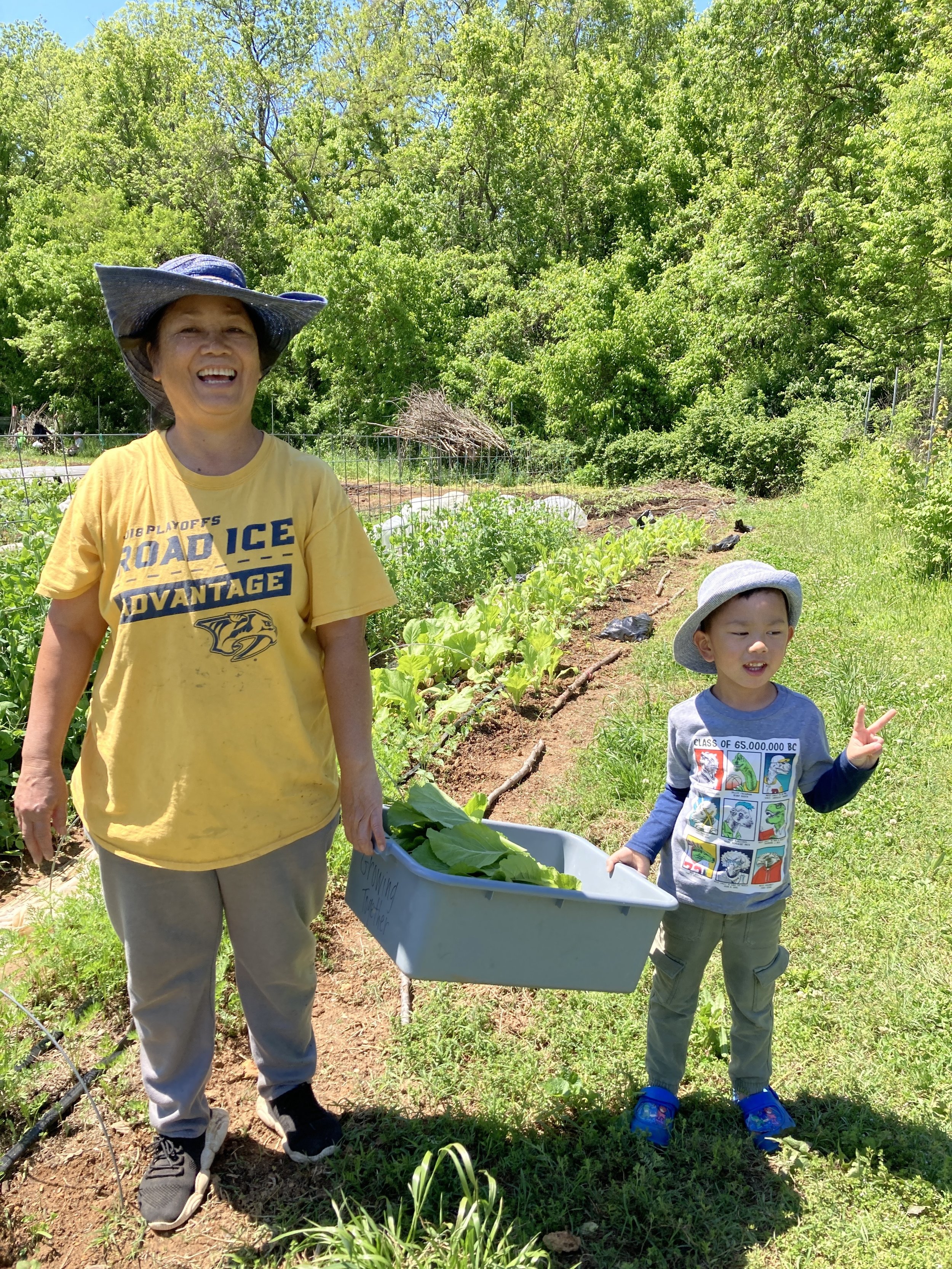
The newest farmer is La Sa Roi, who arrived in the United States 3 years ago from Myanmar. She has taken to full-time farming with great joy and passion, and has now expanded into a 3,500 square foot growing area. Roi and her daughter-in-law, interpreter Lulu Nkum, help organize and distribute 175 pounds of produce a week to their Burmese community members who lack access to fresh, culturally relevant produce. Roi loves to grow all vegetables, but mostly water spinach, long beans, and heirloom hot chili peppers—coveted crops by her community.
We are excited to have our first Growing Together community farm apprentice, Lu Ja! Our program aims to continue to offer this farm opportunity to new arrivals in the Burmese and Bhutanese communities. However, the program does require a very large commitment and has a steep learning curve. The apprenticeship allows someone who is interested in farming to work with other Growing Together farmers and participate in training, but without the full-time responsibilities. Instead of growing vegetables to sell, they learn alongside experienced farmers and provide supplemental support. The Nashville Food Project is gratefully paying the apprentice an hourly wage for their time for the season with the goal that next year, they will participate in the program as a full time farmer.
These Growing Together farmers love what they do everyday: growing food for our community. The Nashville Food Project provides access to support that otherwise would not be available to them. But, the farmers bring so much of themselves every day to the work — dedication, joy, gratitude, knowledge, perspective, and humor — that they are truly the heart of the program.

Stay connected with the Growing Together farmers on our website or via Instagram, @growingtogethernashville. You can also enjoy their produce at our favorite local restaurants, City House and TKO!
Growing Together: Highlights of 2021
The Growing Together program is small, but its impact is deep. This year, there were six families farming our one acre of land. More than 20,000 pounds of vegetables were harvested from this green and compact corner of our city. More than 5,000 pounds of that were purchased by The Nashville Food Project from the farmers and then shared with partners and community members who helped distribute to those who otherwise lack access to fresh produce. We are also grateful for the customers who participated in our community supported agriculture (CSA) program. In this post, we share a few favorite moments of the year.

by Tallahassee May, Director of Growing Together
On a sunny Sunday afternoon in November, the Growing Together farmers hosted a potluck to celebrate the conclusion of the season. Colorful bowls and trays of vegetable curries, Nepali dumplings called momos, roti, and rice pilau, filled the tables and welcomed guests to the garden.
As a part of The Nashville Food Project’s garden program, Growing Together supports those who came here as refugees and immigrants from Bhutan and Myanmar in their desire to farm. A big part of this work is the facilitation of access to land, resources, training, and markets that otherwise would not be available because of language and cultural barriers. Now in its seventh year, the Growing Together garden is a vibrant community space that provides a safe and beautiful sanctuary for its participants as well as their families and friends. It is always a very special occasion to open the garden to visitors and to commemorate the harvest together.

The Growing Together program is small, but its impact is deep. This year, there were six families farming our one acre of land. More than 20,000 pounds of vegetables were harvested from this green and compact corner of our city. More than 5,000 pounds of that were purchased by The Nashville Food Project from the farmers and then shared with partners and community members who helped distribute to those who otherwise lack access to fresh produce. We are also grateful for the customers who participated in our community supported agriculture (CSA) program. The Growing Together CSA fed 65 households, supplying weekly boxes of familiar Tennessee vegetables as well as the farmers’ cultural foods such as bitter gourd, long beans, and heirloom Nepali mustard.
Here are just a few of our favorite moments from the year:
Welcoming volunteers back to the garden! Volunteers play such an important role in our infrastructure and maintenance at the garden site, and it was wonderful to work together again tackling projects.

Harvesting shiitake mushrooms! Thanks to a seed money grant from Slow Food Middle Tennessee, we were able to purchase logs and start our shiitake mushroom enterprise this year. Our hope is to have enough in the coming years to offer them in our Veggie Boxes to our CSA customers. This year was a fun learning adventure, and we picked enough to make some delicious shiitake mushroom salt to share with our guests at the year-end potluck.
New Partnerships! This year we worked closely with other organizations and community members who helped facilitate the distribution of fresh produce bags. We have so much admiration for the work of Nashville Immigrant Center for Empowerment (NICE), Tennessee Immigrant and Refugee Rights Coalition (TIRRC), Trap Gardens, Highlands Apartments, and organizers from the Burmese Community, and we appreciate the opportunity to collaborate with them in sharing organically grown and culturally appropriate vegetables to those in need.

A new onsite walk-in cooler! This was a game-changer for our program, making our vegetable harvesting much more efficient and improving the quality of our produce.

Donating vegetables to the Burmese community for their fundraiser. The crisis in Myanmar left many civilians in that country powerless and desperate for resources. The local Burmese community banded together to raise funds for family members there by using Growing Together vegetables to make and sell kimchi.
This Nashville Scene cover story on our work along with the the work of The Nashville Food Project!
As Farmer Nar says: “The garden is a memory of home. I am glad I can work and make money here, but most important to me is how it makes me feel. I can be true to who I am when I am in the garden.”
Thank you to everyone who supported Growing Together this year!
Partner Spotlight: Growing Together + Tennessee Immigrant & Refugee Rights Coalition
Growing Together Manager Tallahassee May writes about the farmers’ produce-sharing partnership with Tennessee Immigrant and Refugee Rights Coalition.
“In growing food for local sales and distribution, [the farmers] have the autonomy to grow food that is both culturally meaningful to them as well as crops that support relationship-building with different cultures.”
by Tallahassee May, Growing Together Manager
It is morning at the Growing Together garden on Haywood Lane. The forecast looks to be a very hot one, and already the air is heavy with humidity. The farmers harvest for produce deliveries, working a bit faster than usual to beat the midday heat.

This year the Growing Together program of The Nashville Food Project has expanded its produce outlets to include new partnerships in the city. As part of the Food Project mission to cultivate community and alleviate hunger, the Growing Together farmers now work to grow food that is specific for distribution to communities that otherwise may not have access to fresh, culturally appropriate produce.
On Thursdays we deliver produce to the Tennessee Immigrant and Refugee Rights Coalition (TIRRC), a statewide, immigrant and refugee-led collaboration whose mission is to empower immigrants and refugees throughout Tennessee to develop a unified voice, defend their rights, and create an atmosphere in which they are recognized as positive contributors to the state. Our friends at TIRRC provide many services and community engagement opportunities, including legal services, voter registration, naturalization and paths to citizenship, English language classes, as well as an assistance line, a community garden, and events such as the upcoming InterNASHional Food Series. This is all happens with the vision of lifting up fundamental American freedoms and human rights and building a strong, welcoming, and inclusive Tennessee.

As a part of their programming, TIRRC now offers free bags of Growing Together produce to its members who are participating in their services and events. “We love this opportunity,” says Arturo Salomon Reyes, Operations Coordinator at TIRRC. “I personally have noticed how helpful this has been with everybody that comes to get their free veggies. I've talked to most of the families that come every week. They tell me how helpful this is for them, especially how some of them sometimes don't have enough money to pay rent and buy food for the week.”
At The Nashville Food Project we emphasize relationship-building with other nonprofits, communities and organizations who partner with us to share nourishing food. This happens through our meals, but we also have the opportunity with Growing Together farmers to share fresh produce as well. We are grateful to these partners supporting the work of expanding food access, such as TIRRC and also others including Trap Gardens, Legacy Mission Village, and HIghlands Apartments.
In so many ways, this symbiosis between TIRRC and the Growing Together program encapsulates the many layers of food justice work that The Nashville Food Project supports. With the Growing Together program, participants who arrived to the United States as refugees are supported with land and resources that they would otherwise not have access to. In growing food for local sales and distribution, they have meaningful work for a supplemental income that allows them to contribute in significant ways to their family. In the garden, the farmers have the autonomy to grow food that is both culturally meaningful to them as well as crops that support relationship building with different cultures. This work makes a deep impact across many parts of the community, and encourages and supports marginalized peoples’ participation in the food system.

As Chandra and Tonka wash their freshly dug potatoes, and Lal weighs his cucumbers, we also gather bags of tender green beans, and pints of colorful and juicy cherry tomatoes. Crunchy green bell peppers are added to the bags as we pack. “Coming from a Hispanic family I know how important and how useful vegetables are in our everyday life, “ Arturo tells us later. “I see this same benefit for the families who come every week to get their produce. They always tell me how much we are helping them, so I always make sure to tell them that this wouldn't be possible without The Nashville Food Project and the people who work hard at the farm.”
We are grateful for your partnership, TIRRC!

Growing Together Manager Tallahassee May and Growing Together Coordinator Chris Burke talk with folks at TIRRC’s Welcome Home event.

A Spirit of Service
"What I love about these programs as we think about the spirit of service is these programs are built on the strengths of those who participate and not their deficits." - our founder Tallu Schuyler Quinn delivering her acceptance speech for the 2020 Alumna Spirit of Service Award at Harpeth Hall School. You can watch the full speech here, where we also offer our gratitude to Harpeth Hall for their recent donations helping us stock our pantry and provide nourishing meals in the community.

Our founder Tallu Schuyler Quinn took the stage recently at Harpeth Hall School to accept the 2020 Alumna Spirit of Service Award. She shared about her journey and our work at The Nashville Food Project including programs like Growing Together.
“What I love about these programs as we think about the spirit of service is that they are built on the strengths of those who participate and not their deficits. I think that's an important and extraordinary way for us to think about poor people. Those of us who haven’t grown up in poverty can often think about poor people as just what they lack. Many of these program participants, while they lack much in life because of an unjust economic system, have incredible strengths, knowledge and experience that contributes something really meaningful in our community. To me that’s such a core tenant in the spirit of service.”
It was a particularly special time, too, as the school’s students and parents also worked that week to raise funds and gather pantry supplies to help keep our kitchens stocked and our community fed. A spirit of service showing up in multiple ways!

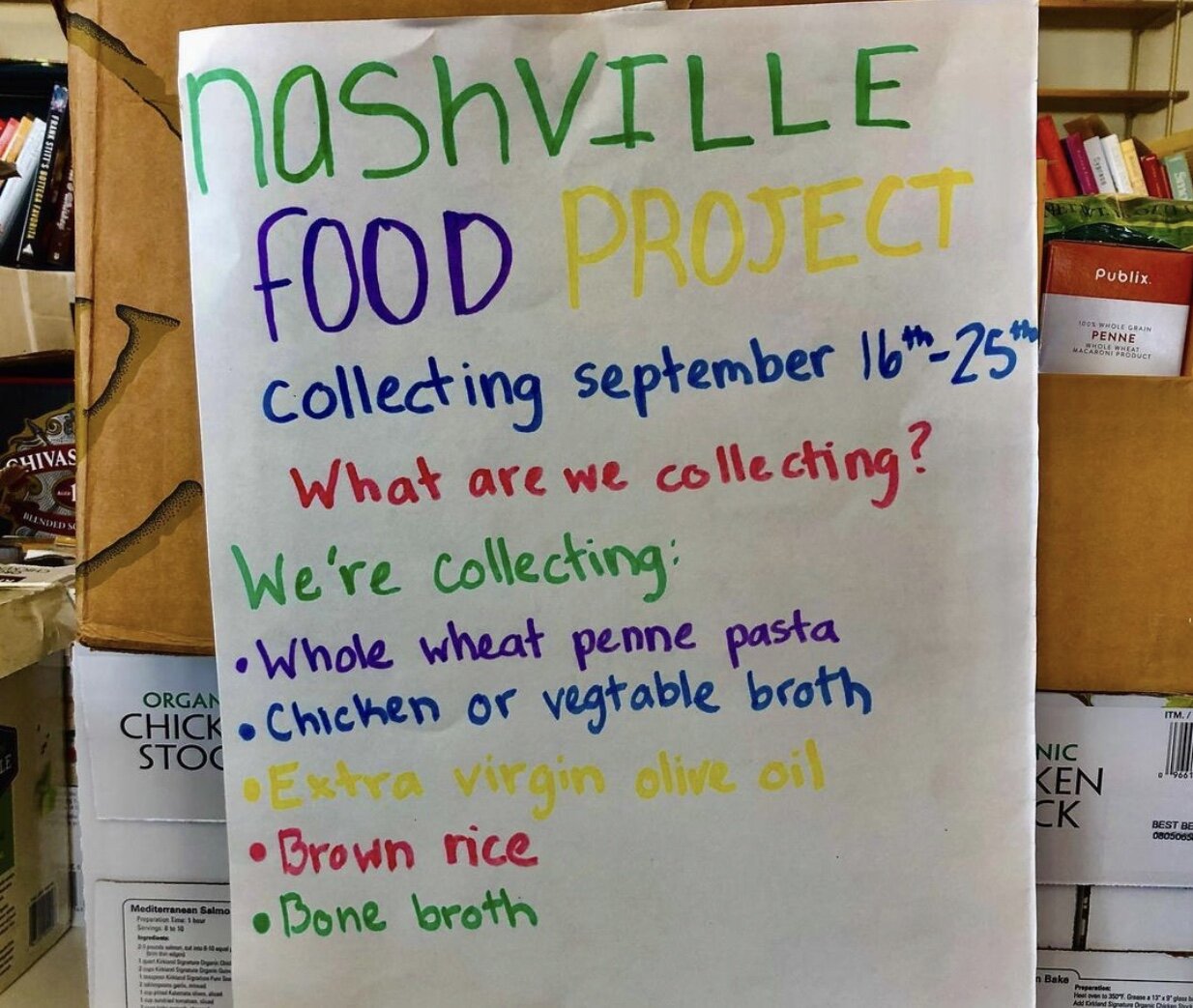
During the drive—as well as one Harpeth Hall hosted in 2020—the Harpeth Hall community pulled together an incredible 2,300 pounds of often-used ingredients including cooking oils, stocks, beans, rice and other highly adaptable and fundamental building blocks to our meals.
“These ingredients can be used to add substance and nutrition to such a wide variety of dishes and really help take the edge off of our budget,” says Procurement Manager David Frease. “This frees the kitchen up to spend their resources on more fresh, high-quality produce and protein, adding more diversity to the meals they create.”

David finds some peace after sorting donations at The Nashville Food Project headquarters.
The latest drive also happened toward the end of the cooler months, a particularly lean time for us when the majority of our local farm partners go into hibernation and there aren't as many donations coming into the kitchen.
“The idea of the students rallying behind our cause in such great numbers is really incredible,” David says.

You can hear Tallu’s full speech from Harpeth Hall at the video below.
Offering a Place of Hope and Joy
The Nashville Food Project garden spaces have long been witness to the wisdom, hope and joy of growers who came to the United States from Southeast Asia. We also have been witness to their added hardships and concerns this past year including anti-Asian violence here. and abroad.

Growing Together farmers with their new cooler, a game-changer for their vegetable harvesting.
The Nashville Food Project garden spaces have long been witness to the wisdom, hope and joy of growers who came to the United States from Southeast Asia. In the community gardens and at the Growing Together garden, we have watched Nepali mustard sprout from the soil and tasted a rainbow of heirloom hot peppers lighting up the rows. At community potlucks, we have been treated to gundrek soup and potato paneer curry lovingly made with the fruits of labor on shared garden land.


But this year amidst the everyday fears and economic losses of a pandemic, we also have been witness to the added hardships of our friends who already endured so much by coming to the United States as refugees from countries like Bhutan and Burma (now known as Myanmar). Family members in farming communities have faced COVID diagnoses after working jobs at hotspots such as meat processing facilities. In February, we learned of the military coup and violence erupting in Myanmar, the home country to many garden program participants. (Growing Together farmer Roi, for example, has been sending her Growing Together earnings to a school for the blind in that country terrorized by the coup.) And on American soil, we are seeing racism and violence directed at Asian communities too. Following the Atlanta shooting, Growing Together Manager Tallahasee May posted these words on the Growing Together instagram account:
“Violence against Asian Americans and BIPOC is not new. During this past year, however, as the Covid 19 pandemic surged and fear mongering and false rhetoric spread through local and federal leadership, we heard that the immigrant, Asian, and Asian American community felt the rise in tension and persecution. Many participants in the Growing Together program told how they feel threatened and vulnerable as they move through their day, and have continued to live in fear. Unfortunately - again- this is not new. But it should not and can not continue. It is very much time to call out this racism, to support the work for civil rights, prevention of hate crimes, and for restorative justice initiatives in communities, and for all to speak up against dangerous rhetoric against Asian Americans and descendants. The Growing Together program and @thenashvillefoodproject celebrate and are grateful for the Asian American community and for all the work and support they generously contribute on this path towards food and social justice.”
It is no doubt a heavy time. And yet, we continue to intentionally strive for our garden spaces to provide a safe place of hope and joy—where farmers can feel connected to this soil and to the community around them. We are proud to offer programs where we do not focus on scarcity or lack but rather abundance in harvest and also the abundance these growers bring in their strengths, community connection and deep knowledge.
We thank you for your support of the growers.
Today we also offer a few additional ways to show support to the local API community.
Follow API Middle Tennessee, which offers links to:
Sign up for future workshops to help advocate for a safe and just Tennessee for Asian and Pacific Islanders.
Support the families of Atlanta victims.
As well as report any harm happening in our community.
Consider training on the positive impacts of bystander intervention.
Support local immigrant and refugee advocacy groups such as Tennessee Immigrant and Refugee Rights Coalition, Nation’s Ministry, Nashville International Center for Empowerment and Catholic Charities of Tennessee.
Support Asian-owned restaurants. Just a few of our staff favorites include Ate’s Filipino Kitchen, East Side Banh Mi, Thai Esane, Thai Ni Yom and Laovin’ It.
Finding Dignity and Power in Food
Director of Garden Programs Lauren Bailey writes about the countless and often unseen hands in our food system. She challenges us to consider the larger web we exist in by acknowledging and learning from food workers as we work toward a better food system.


by Lauren Bailey, Director of Garden Programs
This year, we have all considered the essential worker like never before — the nurse, the grocery clerk, the bus driver. At The Nashville Food Project, we're beyond grateful for the many food chain workers—all those people growing, processing, packing, cooking, delivering food— within our agency and beyond it. COVID-19 has, in some ways, highlighted professions that can often receive little to no recognition.
This lack of acknowledgement became clear for me, recently, as I was talking with a gardener who works in a meat-packing facility. He talked at length about the stresses of work and the burden of being in a leadership position while being short-staffed and concerned about COVID-19. Then he said something that has stuck with me. He felt like his situation, his struggle was invisible to others. And it’s true, isn’t it? The countless hands that go into making our food system are often unseen.
As food writer Alicia Kennedy reminded readers recently, we must continue to "write about the realities of the food system and those who labor in it….People will ignore or forget that which is unsettling or upsetting. The stories must be told relentlessly." So, I’d like to propose a challenge for us. Can you join me in acknowledging and learning about the many hands that are a part of this work and working for a better system?
To the farmers who showed us what it takes to make our favorite Thanksgiving dishes happen and who continue to get food to our tables (United Farm Workers)
And those fighting for fair wages (Coalition of Immokalee Workers’ Fair Food Program)
To the BIPOC farmers like Soul Fire Farm and Sylvanaqua Farms and many others who sharpen our analysis of what it takes to manifest a sustainable and just food system
To the Indigenous people of the US fighting for food sovereignty
To those working in meat-packing and other processing facilities that have faced unsafe conditions before and during COVID-19
To the countless line cooks, service staff, chefs, dishwashers, drivers and grocery store clerks
We know this is not a comprehensive list. Who is missing?
We share our gratitude and acknowledge you, your labor and your fighting for a better system.
I have recently come to understand just how important it is to point to the larger system we exist in. We, at TNFP, cannot untangle ourselves from this. And at the same time, we are trying to build, in our corner of the universe, spaces and practices that value people, their experiences and their knowledge.
This summer, I was harvesting Thai chilis with a few other staff and gardeners for our communal garden produce bags. We all knew this task would take the longest as the small chilis made a tedious task. We could take this on at a slow pace, and this was something that made me curious about the pace of larger commercial operation as many farmworkers are still paid by units harvested versus by the hour.

When I asked if anyone had any experience harvesting chilis in bulk, a gardener who grew up in Burma/Myanmar said that in his community all the grandmas would come together to harvest chilis so they could talk and laugh and sing together. And that’s an image I’ve seen often in our community gardens, at the Growing Together farm and of our staff working together. It’s an image of dignity. Dignity that comes in cultivating relationships with each other and the Earth, and the dignity and power of growing your own food.

It is time that we complicate the narrative of our food system. Food chain workers and Indigenous land stewards deserve dignity and justice. There are a myriad of solutions and a collective of folks building those out—whether they are fighting for fair wages and safe working conditions, the rematriation and sovereignty of Indigenous lands or shifting power and access to land as is proposed through the Justice for Black Farmers Act.
I’m on this journey of learning and action, connecting our work with the broader food system. What solutions are you seeing? Whose work would you like to uplift? Will you join me?
Partner Spotlight: Trap Garden
We love collaborating with and supporting the vibrant, creative work of community building-organizations in our city. And this fall, we have been especially pleased to work with Trap Garden. Farmers from the Growing Together program have been providing vegetables through Trap Garden and Preston Taylor Ministries.
We love collaborating with and supporting the vibrant, creative work of community building-organizations in our city.
And this fall, we have been especially pleased to work with Trap Garden.

A Friday morning Trap Garden team getting ready to deliver vegetables from the Johnson Alternative Learning Center garden location.
Urban Farmer and Community Health Activist Rob Horton founded Trap Garden in 2014 inspired by his experiences growing up in a St. Louis, Missouri neighborhood with few fresh, healthy food options. After relocating to Nashville to attend Tennessee State University, he became frustrated again with the distance he needed to drive for grocery stores that supplied quality fresh produce. That’s when he took matters into his own hands by growing his own vegetables and herbs. He also wanted to provide assistance to others who needed better access to fresh and healthy foods.
Nowadays his Trap colleague Kanita Hutchinson says this: “Our community garden is like our grocery store without it being a grocery store.”


Trap Garden currently stewards two plots of land—one at Johnson Alternative Learning Center in South Nashville and Bordeaux Elementary School in North Nashville—spaces for growing vegetables, education and community gathering. When the pandemic hit, the folks at Trap wanted to continue to have a way to support families through distribution of vegetables. TNFP was connect to Trap by Marie Holzer, a Masters of Social Work intern with our organization. Marie obtained a grant from Slow Food’s Resilient Fund so that Trap and The Nashville Food Project could compensate Growing Together farmers for produce to distribute in the community. Beginning in September, Growing Together and TNFP's Production Gardens supplied produce for 25 families a week, which will continue for nine weeks.

A Growing Together farmer harvests “toori,” a type of mustard green beloved by the farmers who came to the United States from Bhutan.

Growing Together farmers washing and packing their harvest.
To identify families in need of vegetables, Trap partnered with Preston Taylor Ministries, and Trap organized distribution of the food—entirely through a team of community volunteer support.
Along with the bags of produce, organizers include an instructional guide to help community members learn how to grow the fresh produce they receive and prepare quick and easy meals from recipes.
And, the Growing Together farmers have been sending videos from the garden, so that those receiving the produce can feel connected to the farmers
Partner Spotlight: Legacy Mission Village
As a people of fierce hope that believe in intersectionality and interdependence, we’ve also seen generous creativity implemented to help neighbors care for each other. We found this type of resistant and persistent care in the work and community fostered by Legacy Mission Village.
by Elizabeth Langgle-Martin, Community Engagement Manager
The introduction of COVID-19 to our world and our city has created devastation for so many. And while COVID-19 did not break our systems, it has exposed and deepened our country’s existing inequalities, gaps in care, and further alienated some of our most vulnerable members.
As a people of fierce hope who believe in intersectionality and interdependence, we’ve also seen generous creativity implemented to help neighbors care for each other. We found this type of resistant and persistent care in the work and community fostered by Legacy Mission Village.
Legacy Mission Village (LMV), as explained by their Director of Operations, Tim Mwizerwa, “was founded by refugees to serve refugees in Middle Tennessee.”
“Traditionally, we are an educational organization that works towards workforce stability and economic stability for families,” he says. LMV typically provides English learning, financial literacy, digital literacy, citizenship test preparation, and children’s education support. Tim notes that their goal is to support every member of the family “from cradle to grave.” He explains that seemingly standard programming, such as after-school support for teens, can be drastically different for refugee families. Often a teen or child may be the only person fluent in English within a household, leaving them to navigate complex situations like insurance claims, tax documents, and other elements that lead LMV’s team to provide intensive support that spans beyond traditional homework help.
With the risk of COVID-19 continually looming, LMV’s community is unable to meet in any kind of classroom setting so their team has been challenged to imagine how to support the families they serve in relevant ways that span beyond their core programming.
Earlier in the summer, LMV began to purchase pantry goods in bulk to help their participants experiencing food access struggles. Staff soon wondered how they could offer their clients a more balanced COVID-19 relief box beyond the non-perishable items they had secured.

The Nashville Food Project was able to support LMV’s existing efforts by sourcing local, fresh foods to enhance the dry food items that LMV was offering the families they serve. Each week TNFP was able to leverage our resources and relationships to source locally raised proteins from TN Grassfed, eggs through KLD Farms, milk from Hatcher Family Dairy, and robust quantities of fresh produce from our Growing Together farmers, Sweeter Days Farm, West Glow Farms, Green Door Gourmet, and others. Throughout the summer approximately 80 families had access to fresh, local, high-quality food through this vibrant collaboration. In addition, through TNFP’s relationship with Henley Nashville, which acted as a satellite TNFP kitchen during the early days of COVID-19 shutdowns, LMV was able to receive culturally appropriate family-sized, scratch-made meals. Over the course of a month and a half, through Henley, TNFP, and LMV, a total of 1,360 servings of from-scratch goodness was shared with families alongside the bulk groceries provided.


As we move into fall, LMV is pivoting once again, to support the families they work with as they navigate the complexities of online learning. While making this shift they’ve heard from about 40 families that fresh food support is still a critical need for their households. This opened an opportunity for TNFP to continue to provide support in a new, specialized way. TNFP will provide weekly produce boxes of culturally-appropriate produce, grown by and purchased from the farmers in our Growing Together program. Many of the families that LMV works with share a Burmese heritage with several of the Growing Together farmers. We love that the vibrant, organically-grown produce that Growing Together yields can be leveraged to nourish the needs of that same community.

During a recent conversation, Tim shared that the silver lining through current struggles is that this time has allowed for the fostering of new community partnerships. For LMV, he says that has allowed them to step up and provide new types of care for the families and continue to adapt and serve in more substantial ways. Our relationship with LMV has allowed us to leverage our resources to share high-quality food in new ways that are meeting expressed community needs while simultaneously allowing us to invest in Growing Together farmers and other local farms who have long been generous and supportive of our work.
Tim shared some notes that the Legacy Mission Village crew has received in response to the food assistance they have been able to provide:
“We are good. You take care [of] our family.”
“I'm good and my family too, thank you for everything you helped me and my family [with].”
For the millionth time, we are reminded that we belong to each other, and we are grateful to be a small part of the collaborative work happening in Nashville. In a time when we are socially distant, this type of connection feels more delicious than ever.
An Update from the Growing Together Farmers: "Believing in Tomorrow"
So many doors, businesses, and communities are closed and we are all feeling the impact and the collective suffering. And yet. We at the Nashville Food Project and within the Growing Together community have no choice but to use this as an opportunity to imagine, envision, and create new doors, new opportunities, and new pathways forward. We will continue on with our vision of community food security, where everyone has access to the food they want and need.

by Sally Rausch, Growing Together Market Manager
This is a scary and challenging time for so many in our community. The global pandemic is showing us the reality of things—that while we are much more connected and interdependent than we could have ever thought, the brokenness of our global systems is amplified in times of crises and therefore the impact is widespread. What is affecting us here in Nashville is affecting communities across the country and around the world. We are seeing this in our healthcare system and our economy, and it is and will continue to disproportionately exclude and exploit the most vulnerable among us, especially communities of color.
Still, it is spring, and the farmers in The Nashville Food Project’s Growing Together program are charting a path forward. These farmers, like so many farmers in our community and beyond, are continuing to plant seeds and transplants, tending the land with hope for what’s to come. These farmers are not exempt from the fallout of these times. Many of the farmers are elders in their communities and rely on support from their adult children—whose jobs are on hold or terminated altogether. Many have expressed concern and fear around the possibility of targeted racial violence—such as has been reported here and here. And, as many of us can relate, the farmers have loved ones who are more susceptible to the virus or are vulnerable themselves.
One of our values at The Nashville Food Project is interdependence, and we talk frequently about how healing happens in relationship. We know the path of healing from the impacts of this pandemic will be a long one, but we are committed as ever to working towards healing through relationship-building and connection, even if this looks different than ever before.

There are so many ways to rally around and support one another in this time—one way you can make a tangible impact within our community is by supporting local farmers like those in the Growing Together community. These farmers are facing income loss due to the closure of restaurants and farmers markets, but there are many ways to support Growing Together in this time. The first is by making an account on Growing Together’s newly updated online marketplace! Each week, Growing Together will send you an email with the fresh produce available that week. You can place an order based on exactly what items you and your family want and then pickup your order Saturday mornings from 9am – 12pm at The Nashville Food Project. You don’t have to worry about anything being out of stock or braving the grocery store, and everything will be bagged and ready for an easy pickup on Saturday morning. And of course, purchasing local produce means that it has traveled fewer miles and passed through fewer people, making it healthier for the planet and for your family.
Another way you can support Growing Together is by purchasing a Growing Together CSA (Community Supported Agriculture) share. While the Spring CSA is sold out, we still have several Fall season CSA shares available! CSA customers invest in a farmer by purchasing a “share” in their farm production at the beginning of the season and then receive a weekly share of vegetables throughout the CSA season. This model guarantees income for the farmers, provides an infusion of cash upfront, ensures a market for their produce, and cultivates relationships between customers and the local farmer. During this time of social distancing and isolation, the CSA model is a safe way to access high quality, locally grown vegetables every week. Even if you decide the Growing Together CSA isn’t the right fit for you, we urge you to consider checking out this list of CSAs available from our farmer friends in the Middle Tennessee area.
So many doors, businesses, and communities are closed and we are all feeling the impact and the collective suffering. And yet. We at the Nashville Food Project and within the Growing Together community have no choice but to use this as an opportunity to imagine, envision, and create new opportunities and new pathways forward. We will press on towards our vision of community food security, where everyone has access to the food they want and need. We are so grateful for your support.
To sign up for Growing Together’s online marketplace, click here.

Growing Together’s New Fall CSA
Just as a garden feels constantly in motion, so too is the Growing Together program itself evolving and growing. This year our program has exciting news to share -- the Growing Together farmers will be growing for a Community Supported Agriculture (CSA) program for the first time!
By TNFP's Growing Together Program Manager, Sally Rausch

Purchase your Growing Together CSA share today!
While this year’s cold and rainy winter seemed unending, these sunny days and quickly rising temperatures are striking evidence that the growing season is among us! At The Nashville Food Project’s market garden, home to our Growing Together program, we’re seeing new growth all around. The cover crop is tall and flowering ready to be cut down and used as mulch or incorporated into the soil, leafy greens are getting bigger by the day, radishes are poking the tops of their heads out of the soil, and summer transplants are in the ground reminding us that tomato season is quickly approaching.
Every day I walk through the garden I see something new or changing. And just as the garden feels constantly in motion, so too is the Growing Together program itself evolving and growing. This year our program has exciting news to share -- the Growing Together farmers will be growing for a Community Supported Agriculture (CSA) program for the first time!
Currently, seven farmers participate in the Growing Together program, growing produce to sell through various markets around Nashville. All of these farmers came to Nashville as refugees from Burma and Bhutan and bring with them collective decades of agricultural experience and knowledge. This program is an opportunity for these farmers to practice their livelihood and their trade in a city with rapidly rising land costs, barriers to farming for so many who want to grow food, and in a state with some of the most historically anti-immigrant and refugee policies in the nation.
As this program has grown, the market outlets available in the program have as well. Two years ago, farmers primarily sold their produce at a weekly farmer’s market. Last year, farmers had more opportunities to sell through the online food hub Nashville Grown, a platform that connects local restaurants with local farmers. This additional market outlet allowed the farmers’ collective sales to nearly double from the previous year!

As Growing Together continues to evolve as a program, we look for ways the program can grow that will offer opportunities for farmers to gain increased control over their growing and marketing processes. This year, the farmers are selling their produce at the Richland Park Farmer’s Market every Saturday, weekly to restaurants such as Thistle Farms and Two Ten Jack, regularly to a variety of restaurants each week through Nashville Grown, and (for the first time this year) through an 8-week fall CSA!
You may be asking... why a CSA?
CSAs are quickly becoming more widespread around the country, as the local food movement becomes more popular. A CSA model connects customers with local farmers by offering customers the opportunity to purchase a “share” or investment in a farmer. Typically, a farmer will offer a certain number of “shares” to the public - a weekly box or bag of produce from their farm. Interested customers purchase a membership in the farm at the beginning of the season and then receive a share of produce each week during the CSA time frame. Many farmers like this model as it allows for deeper connection with customers throughout the season who have chosen to support a farmer despite the possibility of crop failure, weather, or other uncontrollable circumstances. This decreases the farmer’s risk, and farmers work hard to ensure that their “shareholders” are getting a variety of delicious vegetables each week with the comfort of knowing they have a reliable and steady market for them.
Further, in the CSA model, the Growing Together farmers have the opportunity to gain even more control over what they are growing to sell and what goes into the CSA share each week. This way, a farmer can grow the food they also want to eat and use these varieties to fill their CSA box, with leftovers going home to be cooked into delicious meals for the farmer and their family rather than going to waste.
While Growing Together is a collective of seven farmers, the CSA will provide an opportunity for each customer to be connected with one farmer throughout the season. Each week, the customer will receive a bag of vegetables grown and harvested by that farmer, creating the opportunity for the customer to get to know the farmer as well as learn more about vegetables that may be new to them.

Just as our gardens require time and attention to see these momentous changes throughout the season, so too does our work at The Nashville Food Project require evaluation and evolution to ensure that what we do is on the pathway towards building greater community food security – the Growing Together Fall CSA is just one stone in this path.
And… If 8 weeks of local, naturally grown produce excites you, we invite you to purchase a share! Customers are encouraged to sign up and pay for shares no later than June 15th, an up-front investment in the farmers’ success. The CSA will run from September 1 through October 20, with pick-up of shares each Saturday at the Richland Park Farmer’s Market between 9:30 am and 12:30 pm. Learn more and sign up here.
Nothing Wasted: Summer Gardens
Every fall, when we start to feel that first nip in the air, it signals that it’s time to close our summer gardens. It’s a time we look forward to around here, a time when we get our creative juices flowing to come with new ways to save and use what’s left in our gardens.
Every fall, when we start to feel that first nip in the air, it signals that it’s time to close our summer gardens. While we’re still planting heartier winter crops during these colder months, we do have to harvest all those spring and summer crops still left at the end of the season. It’s a time we look forward to around here, a time when we get our creative juices flowing to come with new ways to save and use what’s left in our gardens.

This time of year, the most common things left in our gardens are herbs, peppers, eggplant and green tomatoes. For the peppers, we like to dry them with ristras, and use the dried peppers in all sorts of different recipes. To use up the other veggies, we love making eggplant parmesan, salsa verde and stuffed peppers. Most of these freeze well so you can enjoy them long into the winter.


The herbs, though, let us get really creative! We like to dry them in our dehydrator and use them in tons of handmade products that we sell around the holidays at our now annual event Scratch Made. We make a number of teas, herb-blended salts, simple syrups and more.
Here are some of our favorites and things you can expect to see at this year’s Scratch Made:

Herbal tea blends: We love a good tea around here! Some of our favorite tea-making herbs are stinging nettle, peppermint and lemon balm. At this year’s Scratch Made, you’ll find tea blends for women’s health, relaxation, general health and a yummy one just to brighten your day.

Herbed salt blends: These are always a crowd pleaser. This year, we’re bringing back favorites like dill salt, gomasio and our Italian blend with rosemary, parsley, thyme, tarragon and oregano. New this year, you can buy hand-made za’atar and a zesty lime salt.

Simple syrups: Flavor-infused imple syrups are great for adding to coffees and cocktails. This year we’ll offer ginger, rosemary, jalepeno, turmeric and lavender simple syrups.

Salve and lip balm: Don’t forget the bees! We always love making products that make use of beeswax from our bee hives. This year we’ll have the popular comfrey wound salve and an all-natural lip balm.
This year we’ve added a new product: fermented hot sauce. We used lots of hot peppers grown by the Growing Together farmers to make this delicious sauce that we’re excited to share with you. If you want to make your own, here’s our recipe:

Ingredients
1 cup hot peppers, washed and stemmed (about 6 medium-sized peppers), we used jalapeno, serrano and cayenne peppers
1-1/2 tsp salt
1-1/2 tsp sugar, optional
1 tbsp whey
Water
White vinegar to taste
Directions
Place hot pepper, whey, salt, sugar and enough water to cover in a jar, and seal. Place har in a warm place (around 70 degrees is optimal). Over the next 3-5 days, gently agitate the jar 1-2 times a day. You’ll notice the brine will become cloudy.
Blitz the peppers and seeds in a blender or food processor. Be careful not to splash. A well-ventilated area is best for this. Pour the puree into a jar. Add white vinegar to taste. Store in the refrigerator. This will keep for several months.
Learning Together
We often say that food has the power to transform lives, and we see this so clearly in our Growing Together program. Growing Together is The Nashville Food Project’s agricultural micro-enterprise training program. Through it, we work to expand farming access and opportunity to a group of growers who are originally from Burma and Bhutan.
We often say that food has the power to transform lives, and we see this so clearly in our Growing Together program. Growing Together is The Nashville Food Project’s agricultural micro-enterprise training program. Through it, we work to expand farming access and opportunity to a group of growers who are originally from Burma and Bhutan. Through the program, farmers gain access to land, seeds, training and collective sales outlets, supporting them as they grow food to sell and earn supplemental income for their families.

While food is the tool of Growing Together, education and transformation are the results of the program, for both The Nashville Food Project and the participating farmers. Not only do the farmers learn important skills from our staff, but they learn from each other, and we learn from them! We recently sat down with one of these farmers, Chandra Paudel, to talk about what he has learned and what he has shared with others by participating in this program.
Chandra, like the other Growing Together participants, worked as a farmer in his native country of Bhutan. While he began the program with vast farming knowledge, he tells us that he has enjoyed building upon that knowledge.

“This year I learned about how to look for pests and control them,” he says, adding that he has also “Continued to build on the bed preparation skills.”
Growing Together Program Manager Lauren Bailey can attest to that. “Chandra’s plot is meticulous; the time and care that he devotes to tending his plot is unmistakable.”

Chandra says that in addition to honing his farming skills, he has also learned more about budgeting, record keeping and crop production planning. On one Saturday each month you can see him at the Growing Together booth at the Richland Park Farmers’ Market. There Chandra is able to interact directly with his customers, showing them new types of produce not often grown in Middle Tennessee, while gaining the skills and knowledge necessary to grow for and sell at market.
Lauren tells us that Chandra manages his household and his plot, while also working as a paid leader of the Growing Together community, giving him added responsibility of upkeep of the common areas on the farm.

“Chandra shares so much with the community of growers and the staff,” she tells us. Lauren explains that Chandra truly is a leader in his Growing Together community. “He embodies this leadership in his willingness to take on new techniques and apply information that staff share in trainings and meetings. I think of him as an “idea champion”. If staff suggests a certain pest control practice or harvesting tip, he is often the first to positively respond with an eager nod.”
Growing Together is strengthened by Chandra and farmers like him, who enrich the practice by sharing of themselves. The reality of community-shared farmland can often be messy and unpredictable, but this incredible community makes it work with their willingness to learn with us and one another.

Building a Resilient Community
On an unseasonably hot and sunny day in April, I stand in the aisle between two newly shaped beds of a Growing Together farmer. We’ve been spending the last two weeks attempting to till the soil, but have been successfully thwarted by erratic weather that left the earth too wet to till…
On an unseasonably hot and sunny day in April, I stand in the aisle between two newly shaped beds of a Growing Together farmer. We’ve been spending the last two weeks attempting to till the soil, but have been successfully thwarted by erratic weather that left the earth too wet to till. On this day, we are met with a window of opportunity to finish turning the soil on the remaining beds of farmers. Thomas, a grower originally from Burma, appears in a dress shirt, slacks, and loafers. He hasn’t had time to till his plot as he was balancing a recent acceptance to attend school to learn to become an electrician, along with supporting his family. He explains his circumstance, then rolls up his sleeves and begins to use the tractor to finish tilling his plot, no time to be wasted getting changed.

I watch as he turns over the soil in the hot sun, and think of the other circumstances of the growers in our market garden, considering the complicated decisions and challenges these Growing Together farmers face. For some, this challenge may manifest in the difficulty of acquiring health insurance in an inaccessible system. For others, it may come in the form of taking a citizenship test. No matter the challenge, it always adds to the already great responsibility of being a farmer.

Thomas, working his plots (this time not in dress clothes)
Farming is an art that inherently requires resilience. One must not only learn to be flexible, but also prepared, ready to consider factors ranging from seasonality to weather. However, the farmers of the Growing Together program demonstrate an unbelievable amount of resilience. Not only must they go through the complicated process of resettlement into a new country (a process that is continuous and ongoing), but they must also strike a delicate balance between their work and family life all the while maintaining a commitment to growing food in a new climate with differing conditions for farming.
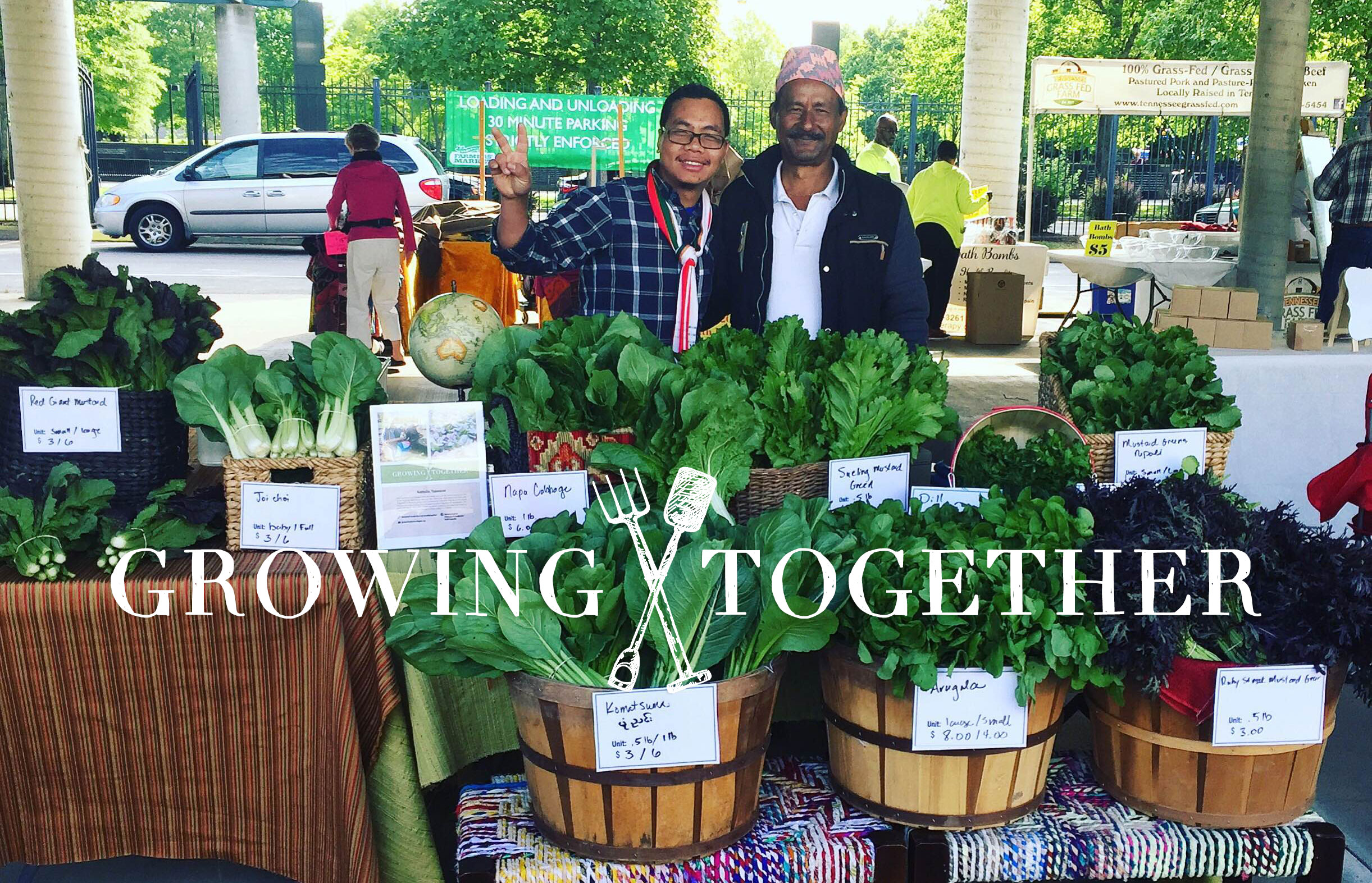
The resiliency of the farmers in the Growing Together program has been made readily apparent in the three seasons of the program’s life.Three of the eight growers have been with the program since the beginning, but all of the farmers, regardless of the length of their participation, have shared their personal growth and important life events with the program. We have watched growers celebrate new accomplishments, acquire new jobs, have children, and mourn the passing of a close family member. In my time with the Growing Together program, I’ve learned that while there is a commitment to growing greens or chilies or market skills, there is a greater commitment to growing a community, one that is filled with strength, support, and the perseverance to foster growth. Even when it requires tilling in loafers.
Get to know Thomas and the other Growing Together farmers here.
Food Crosses Cultural Boundaries
It’s a warm day in early October at the Nashville Farmer’s Market, I’m sitting at our table, assisting customers and rearranging the produce as the hours pass. The crowd has just picked up, and I observe some curious onlookers eye the assortment of unique vegetables on our table: from spikey bitter gourds to long, curling beans…

It’s a warm day in early October at the Nashville Farmer’s Market, I’m sitting at our table, assisting customers and rearranging the produce as the hours pass. The crowd has just picked up, and I observe some curious onlookers eye the assortment of unique vegetables on our table: from spikey bitter gourds to long, curling beans.
It’s just Thomas Piang and me; Thomas is a farmer originally from Myanmar working in the Growing Together program. We’ve so far spent our time talking about Burma/Myanmar in between helping customers. I curiously ask him about spiritual practices and the environment of his home country, he tells me briefly about the unrest in Burma/Myanmar, touching on military rule and government dysfunction.

We break in conversation as an enthusiastic regular customer approaches our table. Smiling, he shakes Thomas’ hand and looks at our selection before deciding on a bunch of red yardlong beans and bag of arugula. He turns back to Thomas, “So, you’re from Burma, right?” he pauses and looks down, “Ah, I’m so sorry! I meant Myanmar.” Thomas smiles and nods and the two engage in a short conversation. A few minutes later, the customer gathers his things and says goodbye to Thomas, “Well, so glad to see you. Again, thanks for everything”.
Thomas’ story of coming to America, although personally unique, reflects circumstances similar to those of our other farmers. As a program, we predominately work with individuals originally from Bhutan, Burma/Myanmar, and the Democratic Republic of the Congo, countries with histories of civil unrest and ethnic or religious persecution. Although all of the farmers we work with represent unique ethnic and cultural communities, they all share an agrarian background and passion for growing food. However, access to land and resources in an urban area with many neighborhoods relegated as “food deserts” can prove be difficult.

This is where Growing Together comes into the picture. It is our goal to not only provide technical assistance by offering land and tools for the families we work with, but also to help foster community and ultimately promote food sovereignty in those communities.
Food is culturally universal, and the ability to grow one’s food, and have access to items that are culturally relevant is of incredible importance. Having access to familiar produce can not only help to maintain the strength of cultural communities, especially to those engaged in the ongoing process of resettling in a new country, but it also invites others to learn more about people or cuisine they deem unfamiliar.


I realize now that the interaction between Thomas and the customer at the market was more than just a conversation. Rather, it was a metaphor for what we hope is born out of the Growing Together program: the building of community both within and outside of cultural boundaries. Food is more often than not the catalyst for these interactions, and, in my opinion, nothing breaks the ice better than discussing how to cook komatsuna.
This article was written by Krysten Cherkaski. Krysten has been with the Nashville Food Project since August 2016 supporting the Growing Together Program. She comes to us from Fresno, California and is currently a Belle H. Bennett fellow with the Scarritt Bennett Center.