
The Nashville Food Project’s Blog




A Book and a Garden
TNFP garden intern, Sarah Tolbert, reflects on how a book and a garden, though seemingly unbridgeable, altered the course of her thinking and life.
By TNFP garden intern, Sarah Tolbert

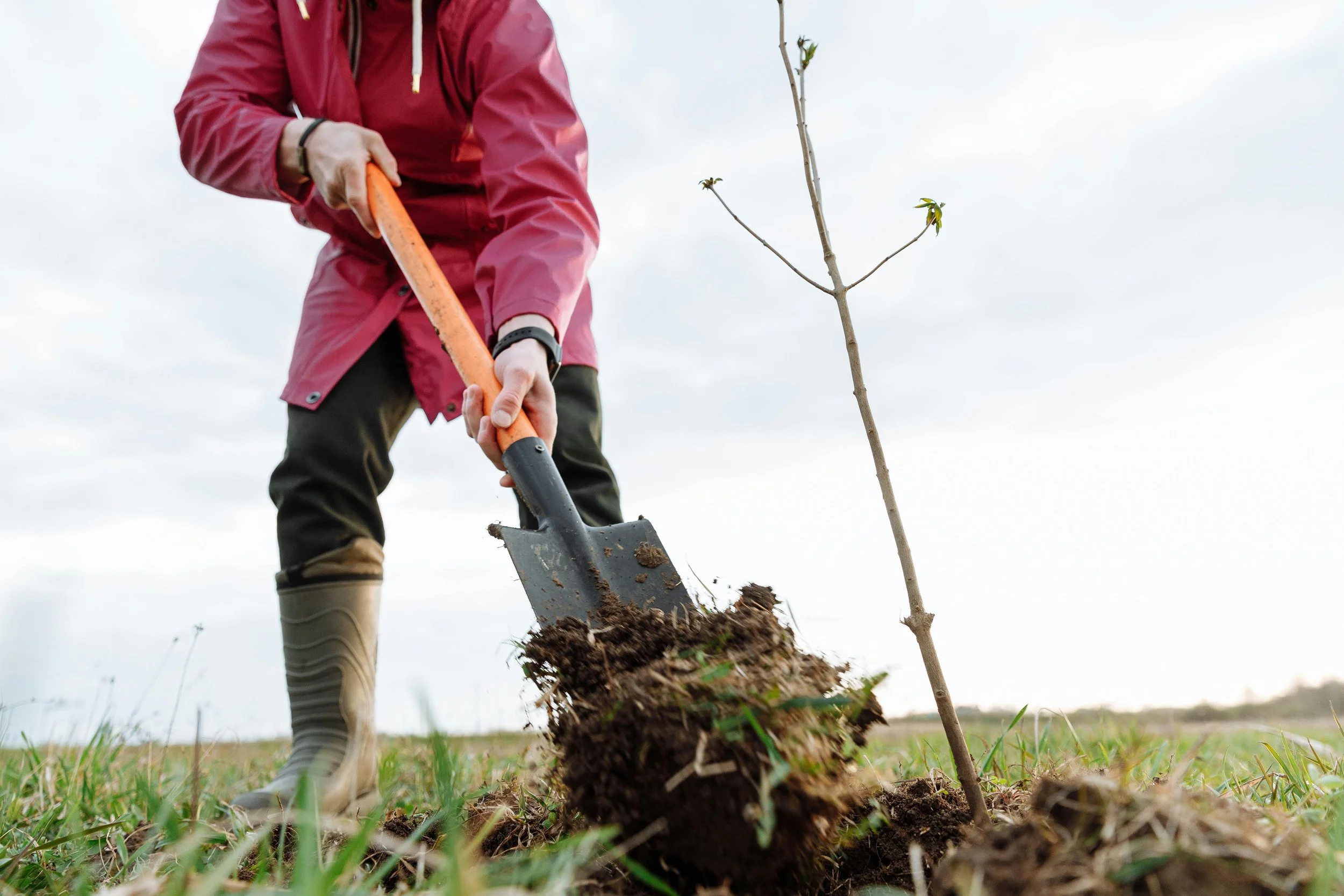
Sarah at TNFP’s Wedgewood Urban Gardens
A book and a garden, though seemingly unbridgeable, altered the course of my thinking and life.
In my junior year, an independent project led me to James Baldwin’s The Fire Next Time and marked the beginning of an insatiable desire to pursue a more just and equitable society; I am certain this book changed my life. As I sat in my room devouring Baldwin’s words, his eloquence in discussing racial disparities perplexed me, and I was moved to tears. From his words, I grew aware of the deliberate distance history facilitated between whites and blacks. Deeply rooted fears and insecurities bred methods of segregation, violence, and discrimination, thus a habit of isolation has permeated deeply into American society. I remember Baldwin saying that you are formed by what you have seen, and I remember feeling lost upon realizing that my childhood had sheltered me from seeing the disparities and hatred of which he so vividly speaks. Frankly, my failure to notice bothered me.
The urgency of Baldwin’s words galvanized me into doing a summer internship with a nonprofit called The Nashville Food Project, combining social justice with my passion for gardening. The mission of the Food Project is to grow, cook, and share nourishing foods with the goals of cultivating community and alleviating hunger in Nashville. TNFP develops sustainable garden practices and community garden spaces in areas vulnerable to marginalization. During my internship, I witnessed Baldwin’s words coming to life. I began to realize that these things for which I care-- gardening, confronting climate change, and food-- have become exclusive in and of themselves in my own community. I learned that nourishing foods tend to be reserved for communities of wealth and privilege, and that marginalized communities are the ones most impacted by the effects of climate change. I began to understand that the reason why I passed a Whole Foods in my neighborhood and a discount supermarket on the way to work was a result of the disparities Baldwin described. And from this, one of the darkest realizations haunted me: this history of violence, hatred, and marginalization has permeated so deeply as to even reach the gardens in which we grow our food.
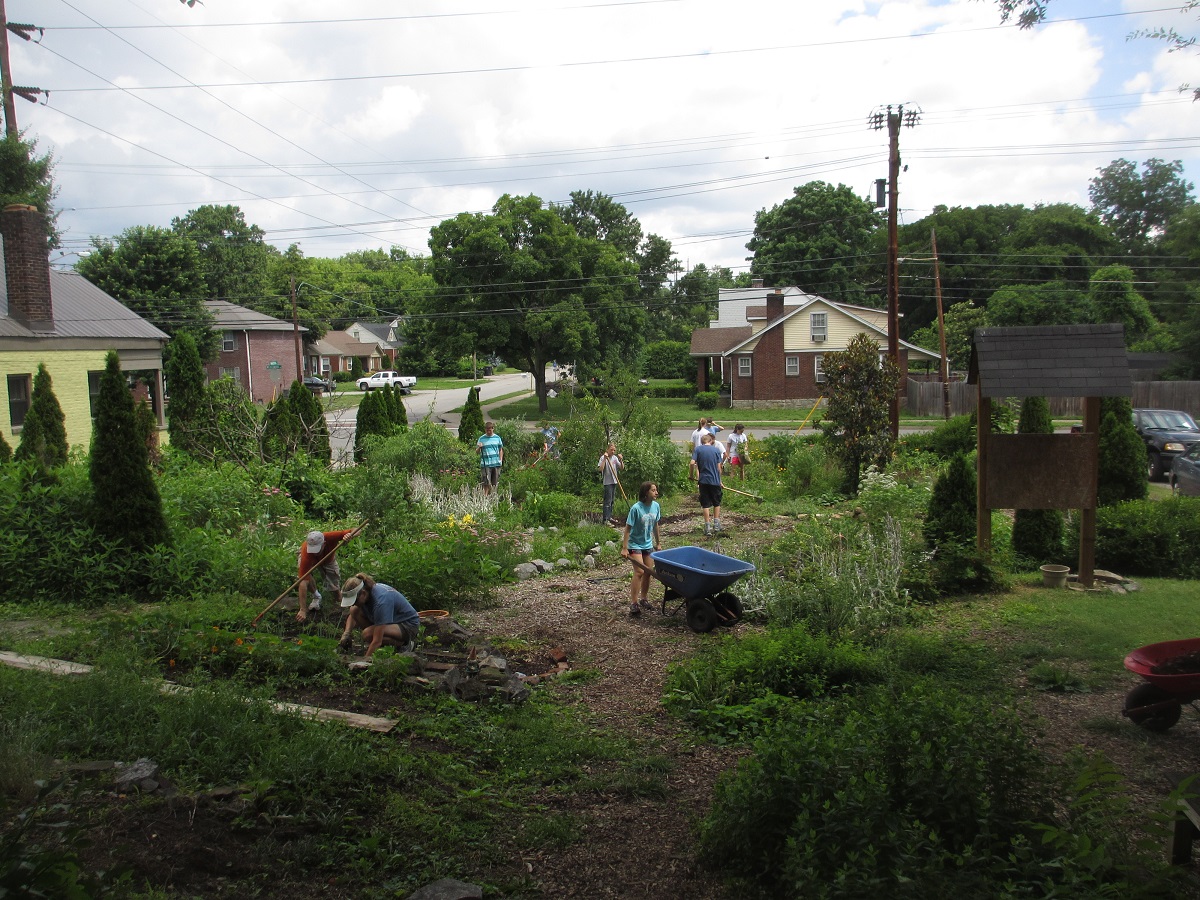
Still, some of Baldwin’s words offered hope. He spoke of the deep need humans have for each other to become a nation, to achieve our identity and maturity, and to become better as individuals. These words solidified for me the direction of my life. Processing and witnessing his words, I began to see my place in this narrative using the garden as a catalyst for social change. I understood that my place in this world is to use my love of gardening to correct disparities, because I learned that the garden is a beautiful place to cultivate community: the garden is a start. When working with my hands in the soil, I not only feel a physical connection to the earth, but a deeper connection with the community around me. I see the power that sharing food has in bringing people together, and in turn the power that growing food has in building community.
Gardening has not only reconnected me to my community, but also to my identity. Coming from a line of Tennessee farmers and gardeners, I have been able to identify with this part of my heritage and honor their legacy by learning how to grow food. The greatest honor I have given my family, though, has been in expanding their craft to include a broader audience. Farming in my family started as a self-sustaining pursuit. Today, I am transforming the implications of farming in my family to a cause greater than ourselves: to grow not only a meal, but to create a gathering around a table, a human connection, a stronger community. Ultimately, I hope to use these connections to improve the disparities of my community and the world around me.

Ordinary
Recently I was preparing for a public talk about Growing Together—the market farm The Nashville Food Project supports. I was making a quick mental list of all the benefits for the farmer participants who farm in Growing Together…
Interested in hearing Tallu share a comprehensive overview of our work? She was interviewed on a recent episode of WXNA's All About Nashville radio show by by Laurel Creech, assistant director of sustainability within Metro. The interview starts at about minute 18 - click here to listen.
By TNFP’s Executive Director, Tallu Schuyler Quinn

Recently I was preparing for a public talk about Growing Together—the market farm The Nashville Food Project supports. I was making a quick mental list of all the benefits for the farmer participants who farm in Growing Together—they get outdoors, reconnect to land, make their own plans and goals, meet one another, learn from one another, grow food to sell, connect to a wider Nashville, earn personal income and money for their families, but primary among all these benefits (and more), a co-worker reminded me, is that Growing Together farmers grow the food they want to eat—an outcome of this project that is both simple and profound.
Many of you know I come to this work of grow, cook, and share from years of public ministry. Even though The Nashville Food Project is not faith based, it is impossible to shake my theological lens. Both food and community are such central themes throughout Judeo-Christian history—not just conceptual themes, but Jews and Christians are constantly working out how to share actual food and how to live in actual community. A while back, I heard Jesuit priest Father Greg Boyle of Homeboy Industries in Los Angeles speak about the Christian sacrament of communion—he said something like “Jesus is not concerned that we’ll forget the cup is sacred, but that it’s ordinary.” Yes, ordinary. What I love so much about our work at The Nashville Food Project is that our work to bring people together to grow, cook and share is ordinary—it's some of the oldest work of the world.
Somewhere along the way in my theological formation, I think I was taught that spiritual life is something still, something stopped in time, something carved away from the ordinary world or rhythm of a regular day. But as I get older, I see examples of prayer all around me that look more like chores. They are varied and endless and they are ordinary: cooking a meal, setting a table, planting trees, taking someone’s temperature, turning compost, feeding animals, packing a child’s lunch, weeding garden beds, mowing the lawn, raising children. All of these, when practiced mindfully, can clear the head, open the heart, reconnect us to something hopeful, create space in the day to praise the living world.
The Jewish, feminist writer Marge Piercy penned a poem called “To Be of Use.” In the poem she reminds us that “the work of the world is common as mud,” and “Hopi vases that held corn are put in museums, but you know they were made to be used. The pitcher cries for water to carry and a person for work that is real.” I reflect on this with deepest gratitude for a wide Nashville community who continues to step up in every extraordinary way to support this ordinary work—thank you.

Triple Your Impact: A Crowdfunding Guide
Each October, we celebrate our volunteers and the contribution that they make to The Nashville Food Project. In the past six months alone, volunteers have shared over 6,000 hours in our programs, a value of $154,560…

Each October, we celebrate our volunteers and the contribution that they make to The Nashville Food Project. In the past six months alone, volunteers have shared over 6,000 hours in our programs, a value of $154,560. This has made huge impact on our work to nourish our neighbors, and we've got some big news. A generous donor is ready to TRIPLE the value of these volunteer hours with a match of up to $154,560 for donations received in the month of October to our A Longer Table capital campaign!
To reach this goal, we’re asking our volunteers to consider setting up a crowdfunding campaign to ask their friends, family, and community to match their volunteer time with financial gifts. This support will help secure our future for years to come, and will honor the incredible impact YOU have made on The Nashville Food Project and our community.
Ready to start your own fundraiser?
It's really easy! Click the button and use the directions below to start your fundraiser.
1. Click "Join Campaign."
2. Click "Create Your Own Team."
3. Create a CrowdRise account
4. Set up your team.
Now it's time to set up your team! Give your team a name, and set your fundraising goal. There will already be photos and language to get you started, but we encourage you personalize it -- tell your loved ones why this campaign matters to YOU, and add a photo of yourself volunteering!
5. Share your fundraiser.
Here's the important part - share your fundraiser! Sharing your fundraiser through social media and email can help you raise THREE TIMES more for the campaign so share, share, share!
Now that your fundraiser is created and shared, you can visit your dashboard to see your fundraising progress and share updates with your friends and family.
You can also help us meet the match goal by donating today!
This month of fundraising will culminate in our annual Volunteer Appreciation Celebration
on Wednesday, October 24th from 12:00pm - 1:30pm at The Nashville Food Project. We hope you can join us as we celebrate YOU!

Bottle Gourd Curry
One of the things we love most about the connection between our gardens and our kitchens is the fun challenge of incorporating local, seasonal foods you don’t often find at area grocery stores. For example? All summer long, a vine has been working its way up, over and all around the trellis entryway to the Woodmont garden behind TNFP’s office...

One of the things we love most about the connection between our gardens and our kitchens is the fun challenge of incorporating local, seasonal foods you don’t often find at area grocery stores.
For example? All summer long, a vine has been working its way up, over and all around the trellis entryway to the Woodmont garden behind TNFP’s office. Through the window of our kitchen, cooks and meal prep volunteers have been watching this slow progress for months — and finally, last week, walked the 20 feet from the back door of the kitchen to harvest the huge, rounded fruits: bottle gourd!

Tomato & masking tape for size reference!
Bottle gourd — also known as calabash, white-flowered gourd, New Guinea bean, Tasmania bean and long melon — comes in lots of different shapes and sizes, but generally can be either harvested young to be eaten as a vegetable or harvested mature to be dried and used as a container. This is a great example of a plant that can provide a lot of health benefits. Not only does it have a cooling effect in the body, but it’s also said to help maintain a healthy heart and blood pressure and even helps reduce sleeping disorders.
So… what do you cook with bottle gourd? While there are lots of options, we decide to feature it in a curry dish on menus at different meal sites throughout last week. We also grated it to use as a replacement for zucchini in zucchini bread.
Try it out our version of a bottle gourd curry with the recipe below!

Bottle Gourd Curry
Makes 4-6 servings
Ingredients
3 tbsp olive oil or vegetable oil, and as needed
1 tbsp ginger garlic paste
1/2 cup chopped onion
1/2 cup chopped tomato
2 cups cubed bottle gourd
1 tbsp red chili paste
2 tbsp garam masala
2 tsp cumin
2 tsp turmeric
Salt to taste
1 can of coconut milk
Coriander to taste
2 tsp brown sugar
Rice (optional to serve)
Directions
Wash bottle gourd under running water. Peel the skin and chop to bite-sized pieces (we found this article helpful for more detail on cleaning and preparing bottle gourd).
Pour oil to a wide, heavy-bottomed pan. Then add ginger-garlic paste, and saute chopped onion. Once soft, add tomato, then bottle gourd and spices (red chili paste, garam masala, cumin, turmeric and salt). If you have other seasonal vegetables on hand, you could add those as well.
Fry on medium to high flame for 3 to 5 minutes; keep stirring to avoid burning. If the gourd is not tender or less juicy, cover the pan and cook until the gourd is fully cooked. If tender, continue to fry without covering until it is fully cooked. Careful not to overcook!
Add coconut milk and stir well to mix. Last, add coriander and brown sugar. Serve curry over cooked rice.
Based on recipe from Indian Healthy Recipes and notes from TNFP volunteer cooks Mary Dionne and Meera Sardessai.
Guest and Host
As a group of people passionate about the work of growing, cooking, and sharing nourishing food, one our values here at The Nashville Food Project is that every person has the capacity to act as both guest and host…
By TNFP’s Office Manager, Elizabeth Langgle-Martin
As a group of people passionate about the work of growing, cooking, and sharing nourishing food, one our values here at The Nashville Food Project is that every person has the capacity to act as both guest and host. These roles can exist simultaneously or vary from moment to moment, opportunity by opportunity.
As I let this idea marinate, rolling around in my mind and seeping into my heart, I think of the friends that I’ve seen express great feats of hospitality and generosity while battling poverty and instability themselves.
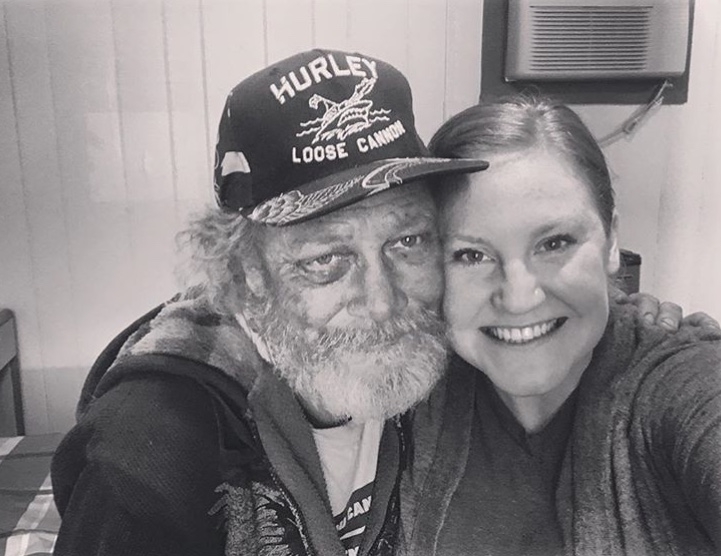
My dear friend Bud moved into his own apartment after an extended time of living on the street, battling rising housing costs and underemployment. With only a few months of housing under his belt and little to no disposable income, Bud worked for several days to purchase, prep and cook a full homemade lasagna dinner for 20 guests at a resource shelter for folks who were still in the midst of experiencing homelessness. His willingness to meet a need that he himself had experienced only weeks before was a reminder of the capacity of his heart, his resilience, and his understanding of solidarity and interdependence that so many of us still struggle to grasp.

During our Friday hot meal delivery to Vine Hill, a subsidized apartment building in the Wedgewood area for adults who are elderly or have a disability, residents line up eagerly to enjoy a freshly prepared meal served by dedicated volunteers from The Nashville Food Project. They arrive as guests, but often request meals to deliver to neighbors and family members who are homebound and unable to secure a meal for themselves. Within the same moments, these dear residents act as both a guest to the meal that TNFP has prepared and then take those meals to serve as host to their friends and family who are limited in their access to nourishing food.
On a particular evening, I was struggling to prepare a large batch of pulled pork bbq in my limited crock pot space for an overnight shelter and reached out to my friends, Lou and Ron. Lou and Ron are best friends who I met during their time sleeping behind a local church and slowly journeyed with through stacks of paperwork, secured personal documentation, disappointments, and finally the receipt of house keys to their own apartments, side by side! Lou and Ron quickly offered up the donated crockpots that stood in their newly acquired kitchens and carried them to my car on that Friday in eager excitement to contribute to feeding folks on the street who were still struggling through the long process towards permanent housing.

This concept, this value, of recognizing the capacity for guest and host in each person, regardless of their situation and current needs, changes the way we approach implementing our mission to bring people together through the growing, cooking, and sharing of food in the Nashville area, with the goals of cultivating community and alleviating hunger in our city. This important shift reminds me of Lilla Watson’s famed words “If you have come here to help me you are wasting your time, but if you have come because your liberation is bound up with mine, then let us work together.” When we recognize our own need and ability to be both guest and host, we are reminded that our liberation is bound up with those to whom we are hospitable and to those who extend hospitality towards us.
I’ve been offered a comfortable seat and a cold drink in a rural encampment boasting a threadbare tarp as a roof. Friends with no home of their own to return to have spent endless time and energy on freezing nights helping me seek out other vulnerable folks stuck outside to provide emergency aid, life-saving supplies, and transportation. A dear friend spent the last of his food stamps to gift me a vegetarian wrap for lunch during a busy day.
I’ve experienced the most vibrant generosity from those who I may have assumed had little to give and I’m reminded once again of people’s infinite ability to be grace to each other. For that I am thankful and by that I am humbled, challenged, and inspired.
At The Nashville Food Project, we think about the ways in which we are hosts and guests at the table. We make space for both.
How do you create space to be both a guest and host in your daily life? How do you remain open to be a guest to the hospitality of others?
Volunteer Spotlight: Linda
Bee Queen and Volunteer Extraordinaire are names that you may have heard people use in regards to Linda Bodfish. Linda started volunteering with The Nashville Food Project in 2012 and has been an integral part of TNFP's garden program over the years.
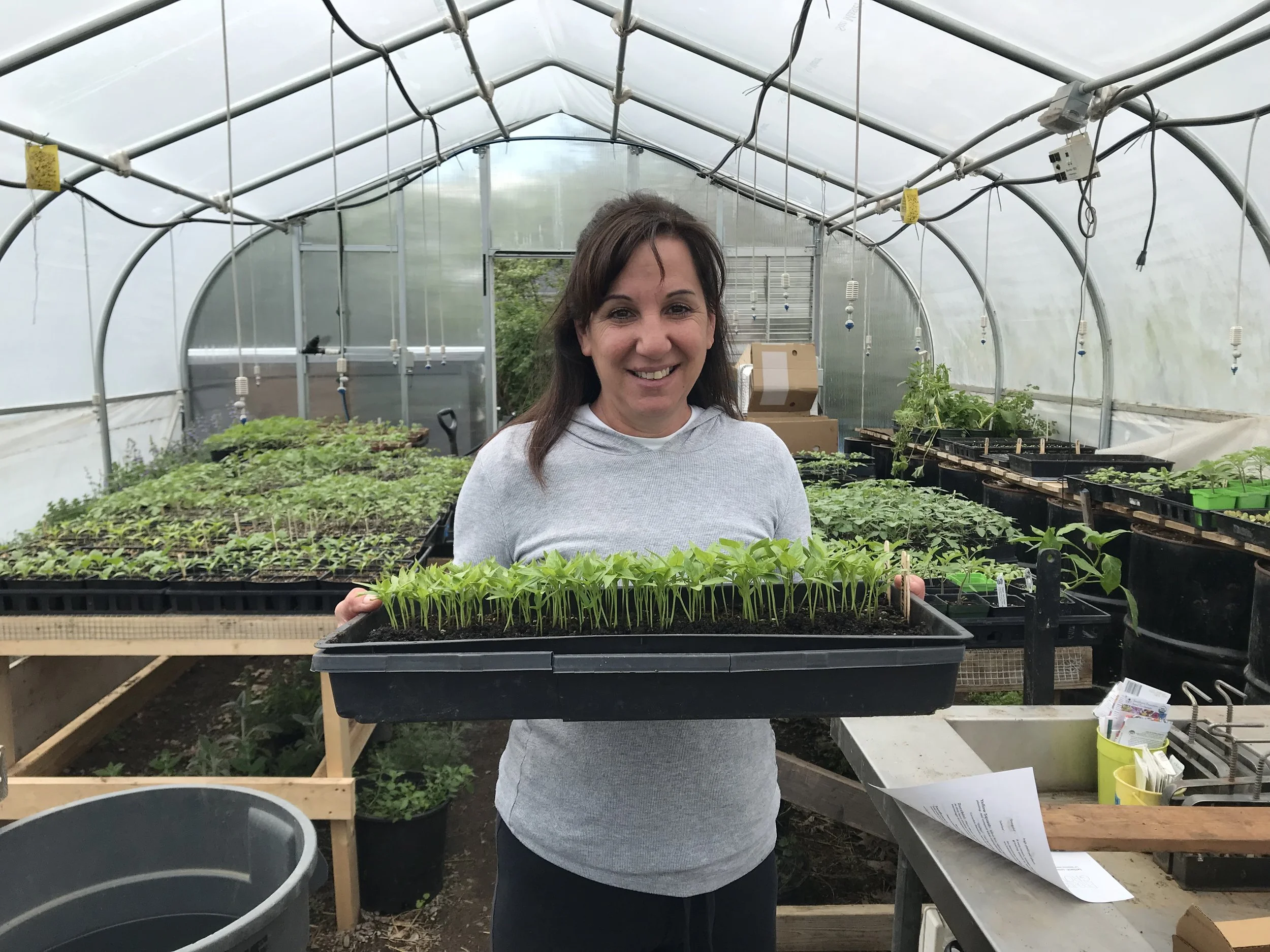
Bee Queen and Volunteer Extraordinaire are names that you may have heard people use in regards to Linda Bodfish. Linda started volunteering with The Nashville Food Project in 2012 and has been an integral part of TNFP's garden program over the years.
She says it all started six years ago when she had moved to Nashville. Working 70 hours a week was not conducive to building friendships and relationships in a new town so Linda started volunteering in the gardens. She had no garden knowledge aside from planting a few bushes and trees in her yard. Suddenly she became immersed into the community that is The Nashville Food Project. Working alongside Former Garden Director, Christina Bentrup, Linda developed a passion for gardening and growing food and learned many skills along the way. Linda is the beekeeper of the hives in the TNFP gardens. She helped bring bees into the gardens several years ago when she learned of the impact of bees in garden ecosystems and the decline in pollinator bee populations. She attended a training with Christina and they started two bee hives. Today there are five beehives and Linda has four at home. From these hives we collect honey and a healthy bounty of veggies.
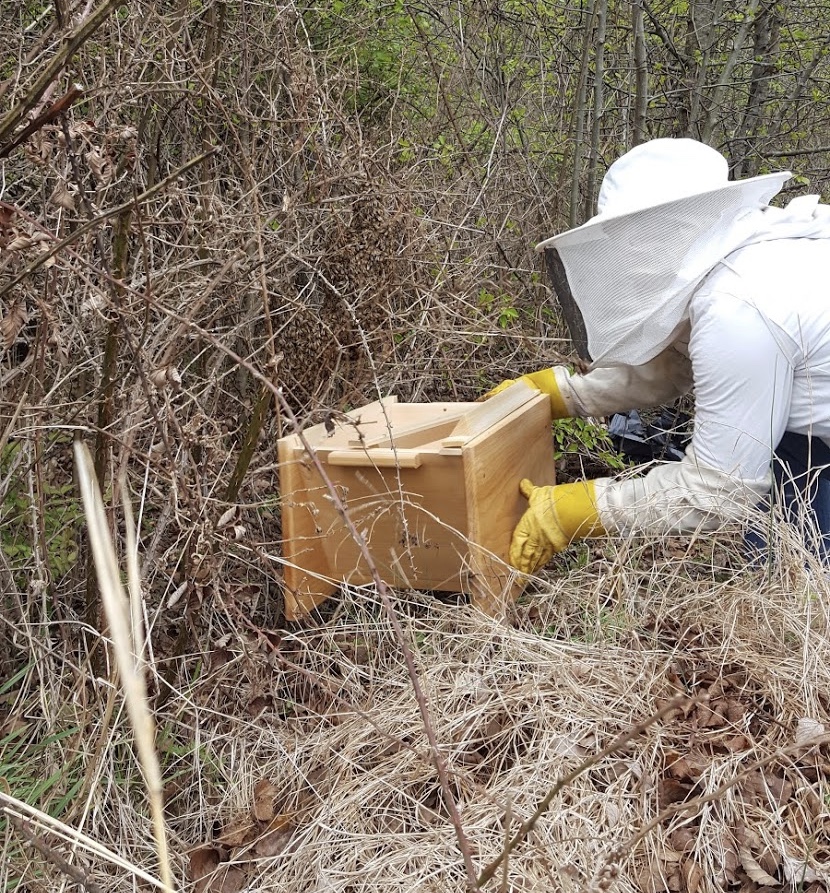
Linda catching a bee swarm.
Linda does much more than keep the bees happy. She works with the little busy bees at Fall Hamilton Elementary School’s Friday Enrichment class called Sharpen the Saw. During this time she teaches first through fourth graders about nutrition, healthy eating, and gardening. When I asked Linda if she had a background in nutrition or agriculture she laughed. She explained that her background was in business and marketing. “I implement the stuff learned in the garden and kitchen to come up with the curriculum...I’m often educating myself as I’m coming up with the curriculum.”
Linda’s experience volunteering at The Nashville Food Project goes through the full cycle. She serves a meal monthly at Vine Hill Towers, an affordable housing community in Wedgewood-Houston. “I’m at the beginning of the food and the end of the food and then take it to little people and show them how important the food cycle is.” Now the students have a small garden that they grow vegetables in. Watching veggies start from a seed to a transplant and growing into food they can eat is life changing for our youngest community members. It helps connect the dots between the lessons they learn and the food they see on the table. It also shows children how interdependent people are with each other and the natural resources around us.

Linda serving a Friday lunch at Vine Hill Towers, right around the corner from the Wedgewood Urban Gardens.
I asked Linda what aspect of volunteering had the biggest impact on her and she replied “Getting to meet new people. I love talking to people!” She explained that volunteering has given her a chance to build relationships. Time spent in the garden gives people an opportunity to dig deeper and learn about each other. Linda explained that by volunteering she met Christina who introduced her to beekeeping, then Julia who lived 4 streets away. She’s watched interns graduate and become professionals and start families. She’s even had two volunteers meet in her garden project and later get married.
Linda brings her passion for the garden, food and people and uses it in order to bring community members together, share knowledge about the food cycle, and inspire the newest generation of community members to understand the world they live in. We are so thankful for Linda and hope that you get a chance to volunteer with her, too.
New HQ Preview Party - A Recap
Last Thursday, we celebrated the construction of our new headquarters and officially launched our capital campaign - A Longer Table - with a community-wide preview party of the site! Slated to officially open in December, the building will include a large, open concept space for TNFP’s food prep, meal support, food recovery and garden programs.

Last Thursday, we celebrated the construction of our new headquarters and officially launched our capital campaign - A Longer Table - with a community-wide preview party of the site! Slated to officially open in December, the building will include a large, open concept space for TNFP’s food prep, meal support, food recovery and garden programs.
As many of you know this is an enormous turning of the page for our organization. The work that would become The Nashville Food Project began more than ten years ago, and each year of our work has seen growth and change. Our initial operation of preparing sack lunch meals in a humble kitchen and sharing them to men and women living on the streets has deepened and evolved into community food work which now includes:
Growing organic produce in production gardens to support a meals partnership program that’s turning out 4,500 high quality made from scratch meals each week
A food recovery program that rescues hundreds of thousands of pounds of edible food each year
Maintaining 4 community gardens across the city, where Nashvillians with barriers to food access can grow their own vegetables and get to know their neighbors
Running two kickass kitchens in which our staff and volunteers get creative in prepping and cooking delicious, nutritious food
A successful social enterprise, launched one block away in partnership with SLCH, that allows us to earn revenue by supplying our partners the nutritious meals they need to run their programs
Running a market garden that supports farmers who came to the U.S. as refugees. They are growing vegetables to sell, earning supplemental income for their families and creating connections to the wider Nashville community.

With all this program growth, our space and facilities needs have shifted and changed, and in this next chapter for The Nashville Food Project, bolstered by the new building and location this new headquarters will offer us, we will:
Increase the number of meals we can prepare and share, the amount of food we can rescue, and the number of volunteers we can engage
Sustain our work to nourish our community with opportunities to grow and cook and share food
Increase connections to healthy food and to one another
We purchased this property in January 2017 and got to work committing our dreams and visions to paper. The cast of supporting characters involved in this incredible project include: our architect team from Gresham Smith & Partners, our kitchen designer Frank Flowers of Inman Foodservices Group, our general contractor Walker Mathews Jr. of RC Mathews, our bankers providing construction lending for the project, Teona Chapman and David Jones of First Tennessee Bank, and our building committee co-chairs our board members Ryan Rohe and David Cripe.
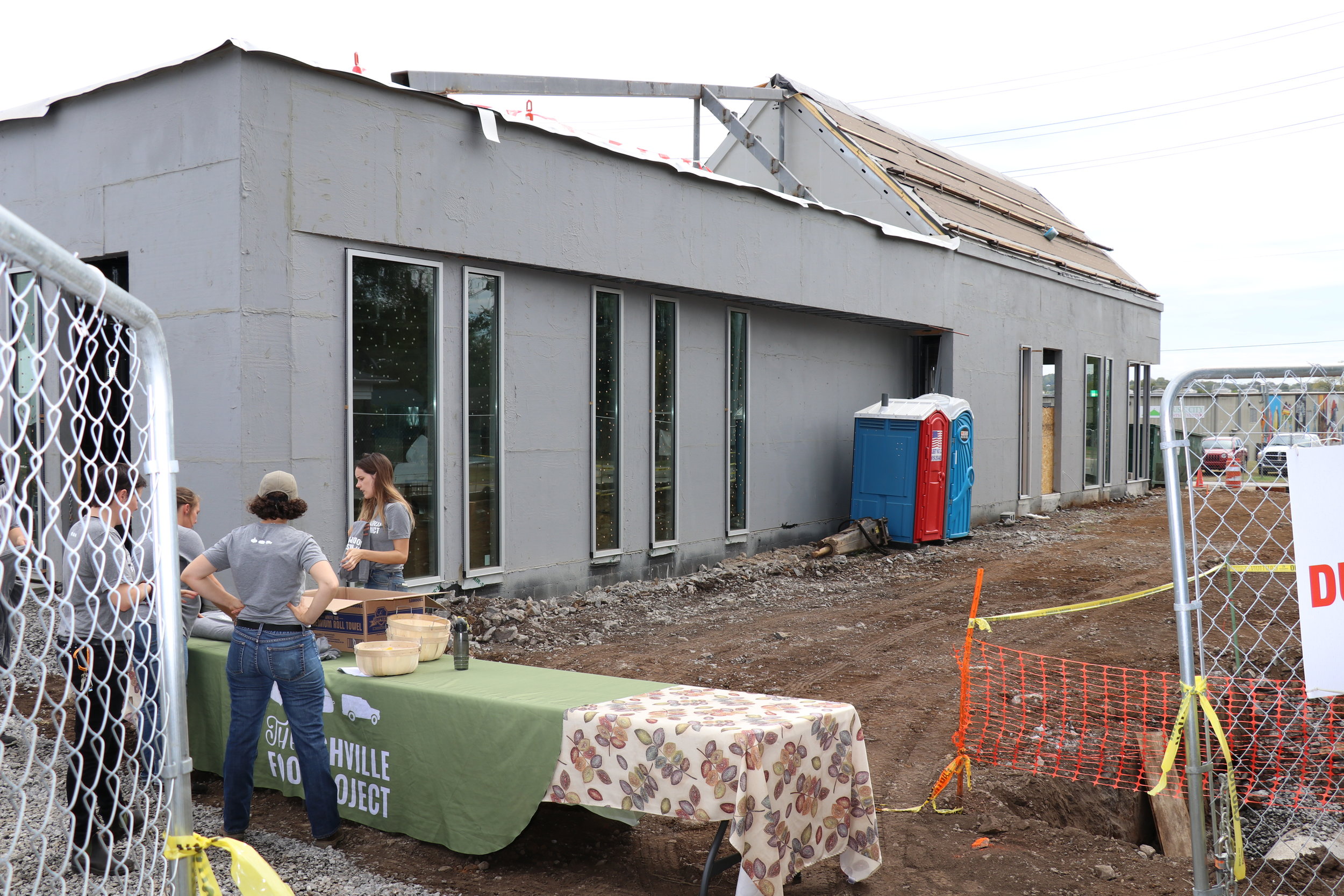


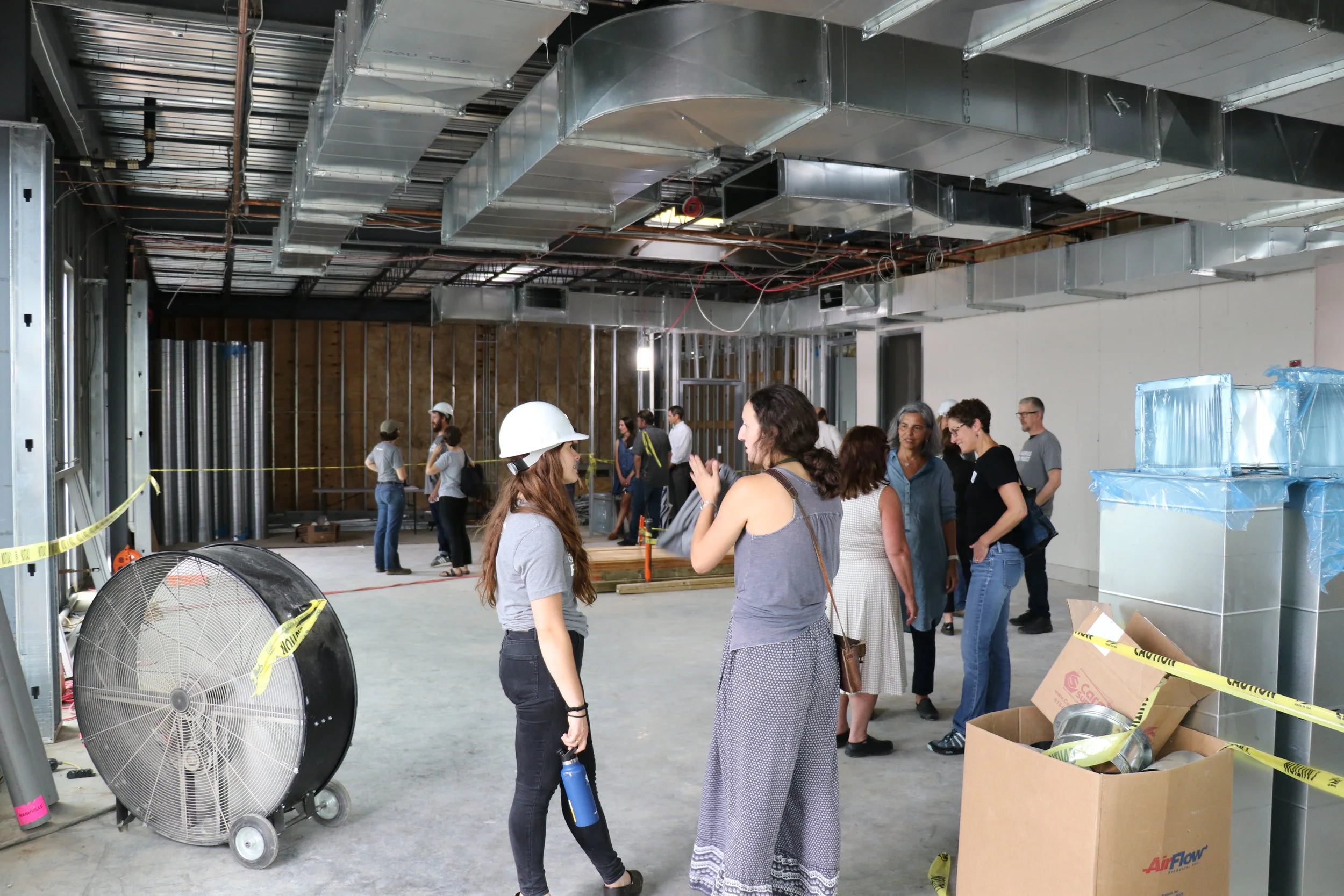

Our board of directors set an ambitious capital campaign goal of $5M to support this expansion. That amount covers the cost of purchasing this land, designing and building the new structure, furnishing it, and equipping the large commercial kitchen. So a year ago we launched a leadership phase of our first ever capital campaign to support all of this. We are deeply grateful to report we’ve had tremendous momentum in this quiet phase, with already $3.65M dollars committed. Our incredible capital campaign co-chairs Melinda Balser and Lady Bird have been completely instrumental in getting us this far, this quickly.
We are deeply grateful for the generosity of the lead corporate and foundation donors who have pledged significant funds to this project. Their early gifts of leadership, friendship, trust, advice, and money have paved the way to more gifts of support in this campaign. They are:
The Cal Turner Family Foundation
The Ansley Fund of The Frist Foundation
Trisha Yearwood
Bank of America Charitable Trust
The Kharis Foundation
Ingram Industries Charities
W. L. Lyons Brown Foundation
TN Dept. of Environmental Conservation
HCA Foundation

At the preview party, we also announced the first named portion of our new headquarters - The Lady Bird Board Room - honoring longtime board member and local philanthropist Lady Bird and her husband Billy.
Lady has held esteemed positions in politics, government and both the for profit and nonprofit sectors. She has years of experience as a deeply-respected Nashville leader, having served on more than 30 nonprofit boards, and has a base of personal power that is unspeakable. She also has a tenacious concern and deep compassion for the most vulnerable members of our community.
Lady Bird has done everything for TNFP from asking for million dollar gifts to scrubbing meat juices off the refrigerator floor. For the last 8 years, she and her incredible husband Billy have been faithfully driving a food truck two times a month to Operation Stand Down to share lunch with the veterans participating in their programs. She has built up our board of directors with generous, strategic leaders. We’re thrilled to name our very first board room in honor of Lady’s years of extraordinary service to The Nashville Food Project, with the hopes that her wisdom and guidance will stay in the room for years to come.
Learn more about our new headquarters and the campaign at alongertablenashville.org
A Place To Explore
Summer in the garden is one of my favorite times of the year. So many elements in the garden space are in constant motion and work together like a symphony creating the natural rhythms and harmonies of the season.
By Kia Brown, TNFP's Community Garden Manager
photo courtesy of Keepsake Portraits by Lisa

Summer in the garden is one of my favorite times of the year. So many elements in the garden space are in constant motion and work together like a symphony creating the natural rhythms and harmonies of the season. The buzzing of the bees as they visit the summer blossoms, the swish of the cucumber leaves hanging from their trellises as they are caught by the breeze, and on certain days the whispered gasps and exalted exclamations of children can be heard letting me know that summer has arrived.
This summer I was delighted to share my love for summer with children and youth from two partner organizations, Cottage Cove and Youth Life Learning Center. Grade by grade -- kindergarten through 4th grade -- each group began their introduction with tours at the Wedgewood and McGruder gardens.
While walking through the garden we smell and taste various herbs, fruits, and vegetables, and try to identify familiar crops grown in ways that are unfamiliar to them. Seeing growing carrots for the first time, many students mistook the root vegetable for an herb, but it wasn’t until I brushed away the dirt did they see the beginning of the familiar orange root. At Wedgewood, the tour must include petting the chickens and braving the bees. At McGruder, we spend time trying to guess the fruits growing in the orchard. Each tour is a sensory experience. After the initial introduction the subsequent garden lessons range from reviewing the categories of crops we eat (fruit, root, and leaves) and in which seasons they grow, discussing flower parts and ending the lesson by planting flowers in take home pots, and creating bird feeders while talking about seed dispersal. My goal for each lesson is to cover all the planned information while still providing time for questions, discussions, and the inevitable tangents that occur when working with children.

Working with youth I am always amazed by the connections their minds make. Once when I was leading the lesson on crop categories, I had asked the students to name a few root vegetables, but they had gotten stalled after naming potatoes and carrots. As a hint, I asked the group “What vegetable makes you cry if you slice it?” Thinking I was going to immediately hear onions, I called on the first hand I saw, but the answer that came out instead, loud and proud, was “sushi”. After about 5 minutes of laughter we collected ourselves enough to resume the lesson, but I was still chewing on that answer trying to puzzle it out as we said our goodbyes for the day. Was this just one of those random answers you get from kids or was there a connection I was missing. I thought about it. One of the main things people put on sushi is green wasabi paste, which comes from the root of the wasabi plant, and if you eat too much it will definitely make you cry, among other things. So, based on his experience the student was correct. Now, to be honest I don’t know if it was my own mind trying to force a connection between sushi and root vegetables or if, for the student, that association was instantaneous. I like to think the latter.
I describe leading kids through the garden as organized chaos at best, but there are a couple of rules each student knows to follow when they step in the garden. The first occurs during the lesson. If there is something that I am passing out to be eaten it must be tasted. Many kids tell me they are “allergic” to the color green and will immediately say no thanks. I even get a skeptical look from some when I pass out cherry tomatoes, but as soon as they take a bite their eyes pop and most ask for more. So we have an agreement that anything passed out must be tried because they will never know if they like something, if they don’t try it first.

The second rule comes at the end of each lesson. We gather around the sorrel plants (or 'sour leaf plant', as the kids call it), to review what they learned that day. Each student says something about the day’s lesson without repeating something previously stated, and they are rewarded with a leaf that tastes like the skin of a green apple. By using this method of reflection I have learned that chickens will always be a popular subject while, for the children, the joys and intricacies of compost aren’t nearly as interesting. If a student is struggling to come up with a fact for the day, they are allowed to ask a friend for help and I try to provide a better hint than the one I used for onions. That way each student can walk away knowing two things: That the garden is a place where people and the earth work together harmoniously, each needing each other to thrive, and that the garden also provides tasty treats if you know where to find them.
Stepping Into Community
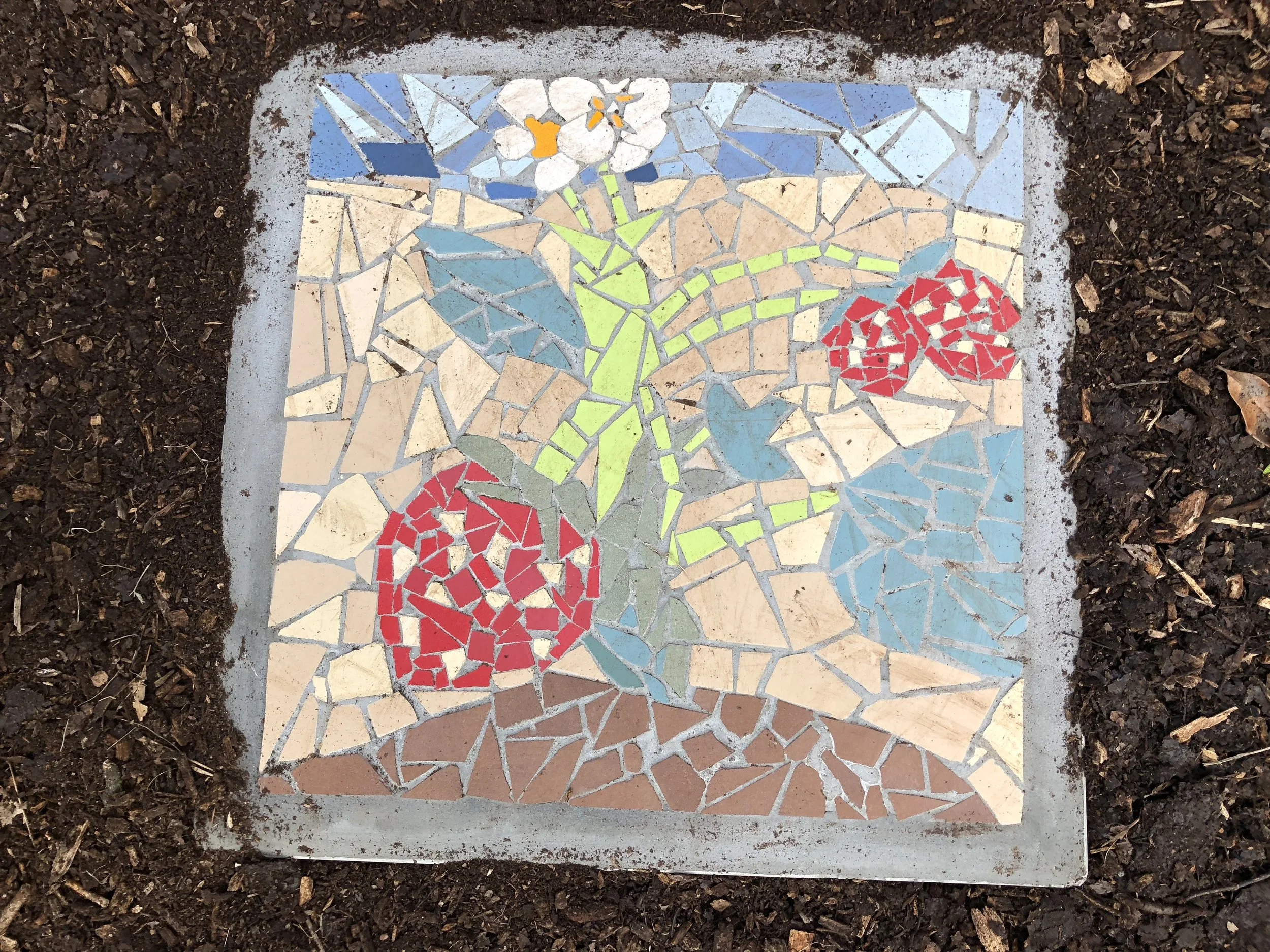
Walking into the Wedgewood Urban Garden feels a little magical. Surrounded by herbs, flowers, tomato plants and art created by local artists. It is a space where volunteers gather, where gardeners celebrate, and where people and plants grow. Recently a new feature has been added to the lower herb garden -- thirteen meticulously made, porcelain mosaic stepping stones.

Walking into the Wedgewood Urban Garden feels a little magical. Surrounded by herbs, flowers, tomato plants and art created by local artists. It is a space where volunteers gather, where gardeners celebrate, and where people and plants grow. Recently a new feature has been added to the lower herb garden -- thirteen meticulously made, porcelain mosaic stepping stones.
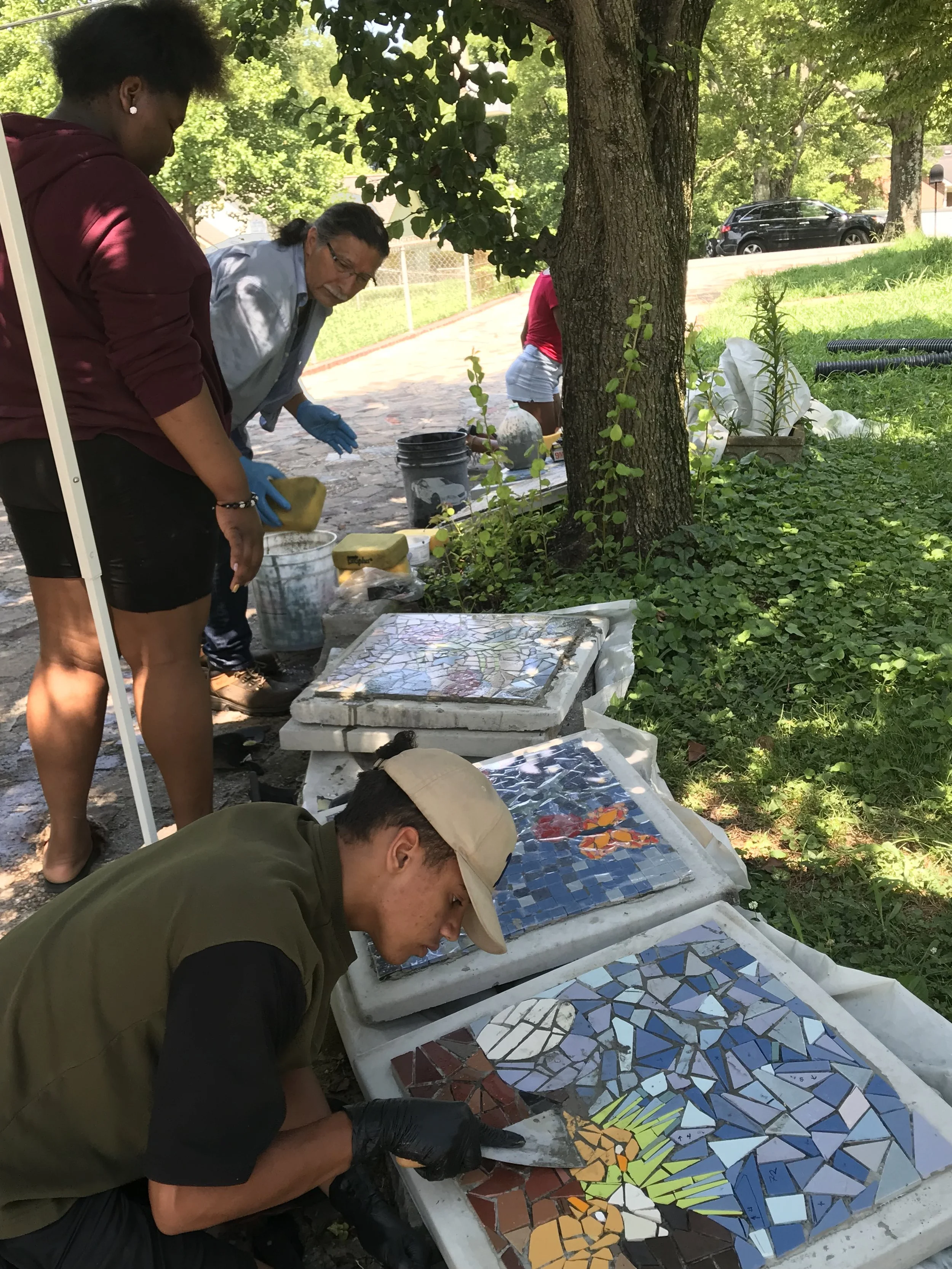
Ten local artists labored hard and creatively over the summer to create the mosaics that each represent a cycle that we see in the gardens every day. An egg hatching and growing into a rooster. Bees leaving their hives to pollinate tomato plants and returning to their hive to make honey. Seeds being sowed in the ground then growing steadily into a strawberry plant. And finally tomatoes being whisked away in a pick-up truck to be enjoyed in a salad ultimately representing the farm to table process.
Who are the artists behind such intricate and thought provoking pieces? 14 and 15 year olds in a summer apprenticeship offered by Metro Nashville Arts Commission through the Opportunity NOW program. Led by local artists Jairo and Susan Prado, as well as a college-aged Near Peer Coach, the kids learned about what it looks like to pursue a career in art. Along the way, students were introduced to guest speakers who shared how their jobs connect to the arts and were shown many types of artwork.
One of the most impactful lessons that students learned was about community based and public art. On a field trip the teens were exposed to public art and had the realization that their own communities had many pieces of public art work. They learned that community art is a way for them to communicate experiences, history, and ideas to people the artist may never meet.
Metro Nashville Arts Commission connected the Prado Studio with The Nashville Food Project, and the Wedgewood Urban Garden became the site of the installation because it is a community space where the pieces could be enjoyed by volunteers and community members. Community Garden Manager, Kia Brown, spoke with the teenagers about the various cycles that occur in the garden. Then each artist chose which part of the cycle they wanted to create on their tile. First, they sketched out the image. Then they transferred the sketches into line drawings that became the template of the stones. In the process they learned how to use the tile cutter, power tools, and the basics of creating a mosaic.
There were challenges in the process. The students realized that creating art is very involved and requires a lot of dedication to take a work from start to finish. Susan said that “at the end of the summer students were able to say ‘I did it’ and have a sense of completion.”
The final installation was officially revealed to the public at a summer potluck hosted by the Wedgewood community gardeners. You can learn more information about Opportunity NOW here. For more information on how to become a community gardener please visit our website.
The Finished Pieces
Plant Cycle


Egg to chicken cycle


farm to table cycle


Pollination Cycle


What We're Reading - Summer 2018
Looking for some good reading on gardening, cooking, and justice? Here are some of our staff's latest recommended reads!

Looking for some good reading on gardening, cooking, and justice? Here are some of our staff's latest recommended reads!

The Food Lab
by J Kenji López-Alt
“Though one could see this book as more of a technical manual for executing perfect specific dishes, I read it more as a culinary education/science self help book. Don’t go setting this book down on a flimsy coffee table! It will crush it into a thousand pieces. Inside you will find tons of science and food experiments that put old myths to rest and in the meantime learn how to make a boiled egg that you can peel easily and not want to throw against a wall. You know, practical science stuff. Enjoy.”
Woman-Powered Farm
by Audrey Levatino
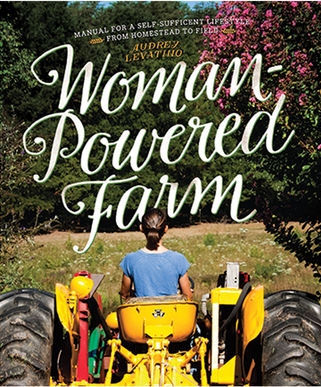
“I really have enjoyed the book Woman-Powered Farm by Audrey Levatino. It’s a compilation of practical how-to advice for things from utilizing a chainsaw effectively to marketing products at a farmer’s market, but also has a rich introduction that describes how women have long had a formative role in agriculture and food production. It also highlights the need for inter-dependency and community. I specifically enjoyed how so many of the skills and explanations are valuable for people at all levels of self-sufficiency, not just those who farm or produce food on a large scale. ”

Unearthing Seeds of Fire: The Idea of Highlander
by Frank Adams
“I am reading an incredible book right now called Unearthing Seeds of Fire about Myles Horton and the beginnings of the Highlander Folk School, a Southern hub for so many activists engaged in economic, environmental, equitable justice movements. It chronicles a lot of labor history across Tennessee, especially coal mining, union strikes, and the conditions for low-wage laborers throughout Appalachia. Myles Horton was educated at my seminary Union Theological Seminary in NYC where his ideas for leadership development and popular education—people teaching other people from their own lived experience—led to an organized, active local community. It’s really wonderful to read how he struggled to balance his own ideas for change against the ideas that collectively sprang up from the communities he was working in. ”

Animal, Vegetable, Miracle
by Barbara Kingsolver
“Although this book was published in 2007, it’s message is loud and clear and always been one of my favorites! This is Kingsolver’s story of her family’s journey of deliberately eating food produced from the same place where they worked. They vow to buy only food raised in their own neighborhood, grown themselves or learn to live without it. The story begins as they’re packing their bags, leaving their home in Arizona and beginning a new life in rural Appalachia.”

Sistah Vegan
by A. Breeze Harper Sistah Vegan
“Sistah vegan is a voice of anti-oppression, food justice, and veganism. It’s amazing to read black female voices discuss the black community’s health crisis along with racism, classism, and sexism and how black liberation relates to dietary beliefs and practice. I love how the activist in this book talks about real problems and ways we as a community can grow ourselves out of the current system of oppression. I relate to this personally as a black vegan activist, but I believe it would be overall enlightening for anyone that the book chooses.
”

Braiding sweetgrass
by Robin Wall Kimmerer
“In her book, Robin Wall Kimmerer, weaves a web of stories through a complex and profound set of perspectives. Trained formally as a botanist and ‘informally’ through the teachings of the animate world as a member of the CItizen Potawatomi Nation, Kimmerer’s book has offered me a new way to experience the world. She shares that ‘science polishes the gift of seeing, indigenous traditions work with gifts of listening and language,’ and in each chapter, she focuses on a plant or specific story to exemplify this wholesome way to experience the natural world. I am finding her perspective and her sharing of what she’s learned from the animate world as both a galvanizing tool and words of palpable hope in a time when it is in desperate need! ”
What have you been reading this summer? Let us know in the comments.
Community Success Starts with Community Leaders
At The Nashville Food Project we believe that learning and teaching have less to do with curriculum and everything to do with leadership, belonging, and understanding needs. We believe that leadership must come from within the community to make a difference and help grow connection. For that reason each community garden has selected one or two leaders to represent their communities needs in the garden.
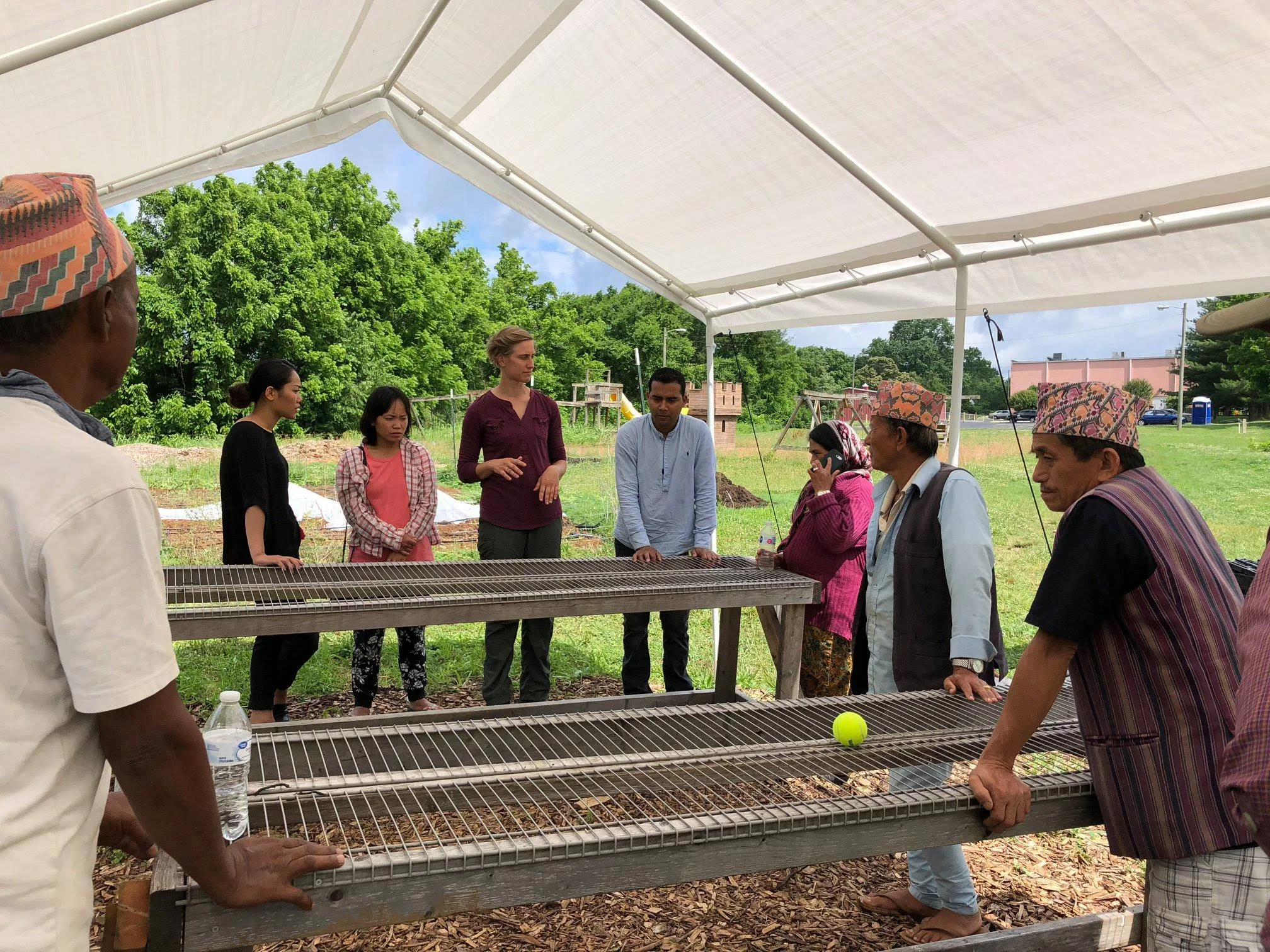
The Nashville Food Project has five community gardens across the city that hold space for community members living in the neighborhood and provide garden space for local families who are originally from Burma, Bhutan, and Western and Central African countries. To learn more about the community gardens visit thenashvillefoodproject.org/community-gardens.
It’s been said time and time again that we all learn differently. Some people like to see visuals, others need to hear new information, others need to do before they fully understand. Now imagine your favorite teacher. How did they make you feel? Did they look like you, talk like you and make you feel like you belonged in that space and in that community?
At The Nashville Food Project we believe that learning and teaching have less to do with curriculum and everything to do with leadership, belonging, and understanding needs. We believe that leadership must come from within the community to make a difference and help grow connection. For that reason each community garden has selected one or two leaders to represent their communities needs in the garden. Garden leaders are responsible for communicating with gardeners at their site, maintaining the garden space, teaching garden lessons (site dependent), and representing each participant’s concerns and interests to The Nashville Food Project Garden Staff. We also have two Community Navigators who provide cultural and language based guidance in our Growing Together and New American Community Garden sites.

Providing leadership opportunities to people within their own communities just makes sense. Each community navigator and garden leader has the best understanding of what their community needs and ways to the best approach to satisfy those needs. The Nashville Food Project does have a role here and it is to provide garden leaders and participants with the opportunities to lead, the resources to be successful, and the space to meet with others in similar positions.
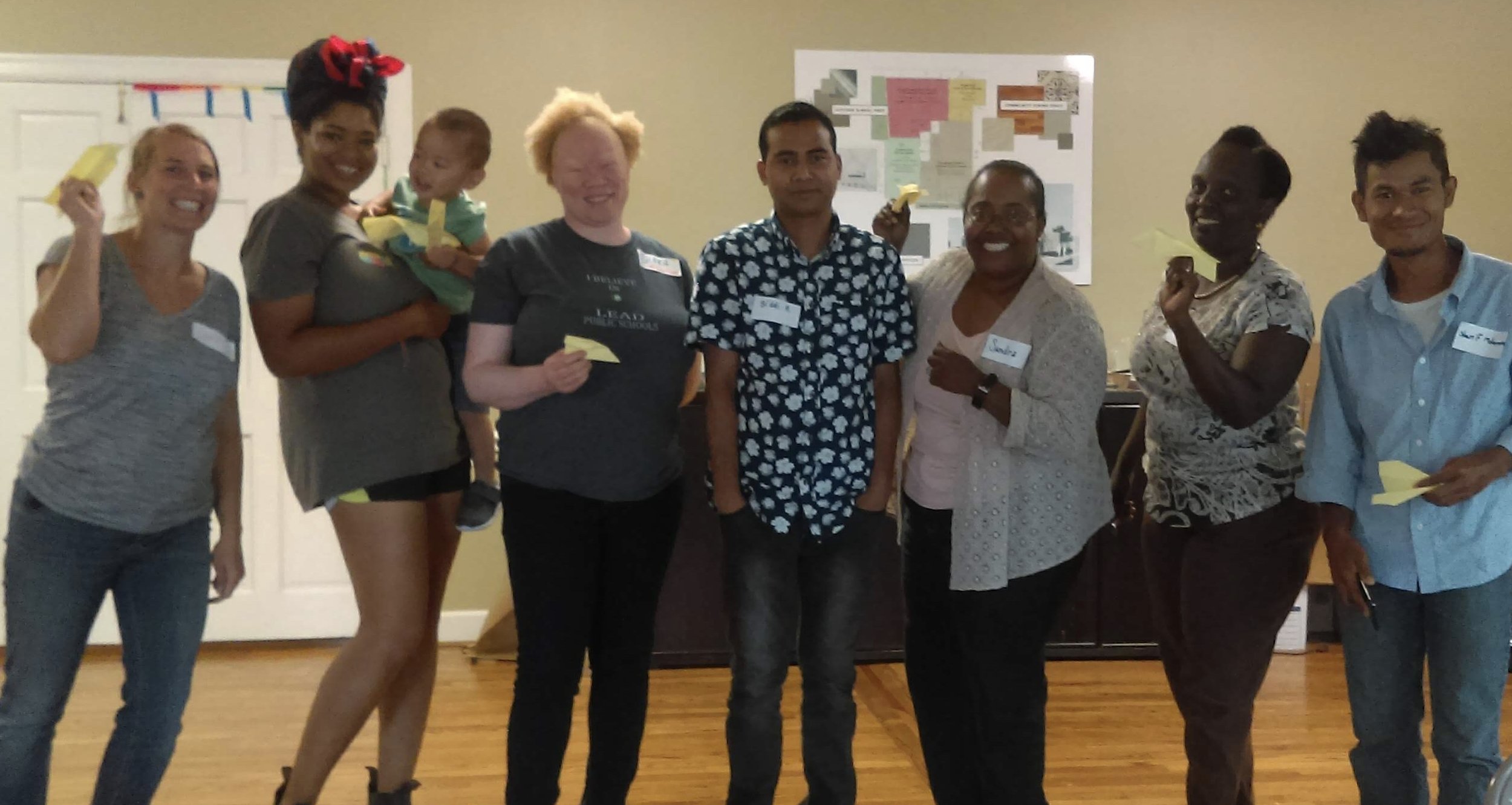
Recently Community Garden Manager, Kia Brown and Garden Director, Lauren Bailey met with six garden leaders to host a leadership training on how to teach people for understanding. There was a space for garden leaders to share stories about their favorite teachers and why their methods of teaching made a big impact. With over several cultures being represented in the meeting it gave a chance to learn new approaches to learning and understanding that may not have been considered before. At the same time garden leaders found affirmation in their practices in which peers also found success. By combining cross-cultural experiences and perspectives it gives community leaders support and strength to meet their communities needs in a way that working alone never can, within and outside of the garden.
It's possible that today the training will only help garden leaders teach the best ways to prevent pests. But tomorrow it can help garden leaders meet a greater need in their families, neighborhoods, and communities by creating a safe space to learn, grow, and change together.
The Gift of Food: Our Top 4 Needs
We're often asked about our food donation needs in our kitchens, so we've come up with a list of our top four. Whether you're an individual, a congregation, a farmer, or a restaurant... all of these gifts, both big and small, work together to make our work possible.
Here at The Nashville Food Project, we strive to share the freshest, most nutritious meals possible with our community. We wouldn't be able to do this without the incredible support of so many friends, volunteers, neighbors, and partners who first share with us - in so many creative ways!
We're often asked about our food donation needs in our kitchens, so we've come up with a list of our top four. Whether you're an individual, a congregation, a farmer, or a restaurant... all of these gifts, both big and small, work together to make our work possible.
1. Healthy Pantry Staples
Shop Our Amazon Wish List

We're keeping a running list of healthy pantry staples often used in our meal preparation, along with items needed for our garden program, on our Amazon Wish List. You can shop online and have it mailed to our address (3605 Hillboro Pike, Nashville, 37215) - or if you see any of these items at the store and think of us, feel free to pick those out and drop them off with us in person. Gift cards to grocery stores are also welcome and appreciated!
2. Extra Virgin Olive Oil
Host A Drive

Yes, olive oil is a pantry staple... but it's so important to our kitchens it gets its own shout-out! Volunteer-organized food drives regularly help fill our pantry. Lately, we've been encouraging groups interested in hosting a food drive with friends, co-workers or faith communities to collect extra virgin olive oil. If you're interested in hosting an olive oil drive, contact Booth Jewett at booth@thenashvillefoodproject.org to let us know and to confirm details.
3. Fresh Produce
Share Your Harvest

Fresh fruits and vegetables are VITAL to our meals. Whether your harvest is large or small, from a home garden or a farm... we're excited! Call our office at 615.460.0172 to let us know you'd like to donate and confirm a good time to drop off. If schedules allow, we can pick up produce donations of at least 75 pounds within 15 miles of our office in Green Hills.
This year, we're also beginning to purchase 'seconds' from local farms! If you're interested in learning more, contact our Food Donations Coordinator, Booth at booth@thenashvillefoodproject.org.
4. Meat
Become a WASTEless Partner

Meat is one of our most costly food budget items, and we rarely have it donated. This year, we're seeking out partners interested in donating proteins on a regular basis. In particular, we're piloting providing food preservation equipment to a small number of Nashville-area restaurants, or "WASTEless partners", to facilitate regular donation of meat trimmings. Are you, or do you have a connection to, a restaurant or organization that could become a regular meat donor? We'd love to talk! Email booth@thenashvillefoodproject.org.
Nourish 2018 - A Recap
Last week we were honored to host our 8th annual fundraiser, Nourish. It is a time looked forward to by many as we have the opportunity to share joy and connection over a meticulously planned and prepared meal. Nourish is not just a fundraiser but a time to celebrate our accomplishments with our friends, volunteers, community members and biggest supporters…

Last week we were honored to host our 8th annual fundraiser, Nourish. It is a time looked forward to by many as we have the opportunity to share joy and connection over a meticulously planned and prepared meal. Nourish is not just a fundraiser but a time to celebrate our accomplishments with our friends, volunteers, community members and biggest supporters. Additionally, Nourish, like each of the meals we create and share from our kitchen is a chance to build relationships with those across the table and build a community of compassion, solidarity, and belonging. As Tallu Schuyler said that evening in her speech “I’ve been told that who we eat with is who we humanize. And this is how food can break down barriers between us and plant seeds of belonging in their place.”
Nourish 2018 Chefs

Roasted Vegetable Chaat
We are incredibly thankful for the beautiful meals prepared by the events very talented chefs. The meal was comprised of 5 courses, each carefully crafted by a different local chef.
Maneet Chauhan
Chauhan Ale & Masala House
First Course - Roasted Vegetable Chaat

Bhutanese-Style Ema Datshi with Shrimp
Rahaf Amer
Former Chef at Salt and Vine
Second Course - Bhutanese-Style Ema Datshi with Shrimp
Hrant Arakelian
Lyra
Third Course - Beef Kibbeh Meatballs with Date Butter & Red Pepper Shatta Sauce

Beef Kibbeh Meatballs with Date Butter & Red Pepper Shatta Sauce
Norma Paz
Las Paletas
Palate Cleansers - Cucumber with Chili Paleta and Raspberry-Lime Paleta
Dessert - Clementine organge with Basil Paleta, Mexican Caramel Paleta, Corn Paleta
Karla Ruiz
Karla's Catering & The Women's Club of Nashville
Hors D'Oeurves - Empanadas with Noble Springs Goat Cheese & Chorizo or Spinach, BLT Crostini with Chipotle Aioli & Local Basil Pesto
The People Behind It All - Nourish 2018 Committee
Jennifer Justus, a long time friend to The Nashville Food Project, was the 2018 Chair of Nourish. Jennifer poured herself into this year’s event, assembling our lineup of chefs, securing auction items, and leveraging her relationships to bolster our ability to raise funds to support our mission.
In addition to Jennifer, we had a small but mighty Nourish committee of three--beloved board members—Charmion Gustke Hearn, Courtney Keenan, and Jennifer Anthony Waller—who solicited auction items and helped with overall planning.
Thomas Williams Golden Skillet Award Winner
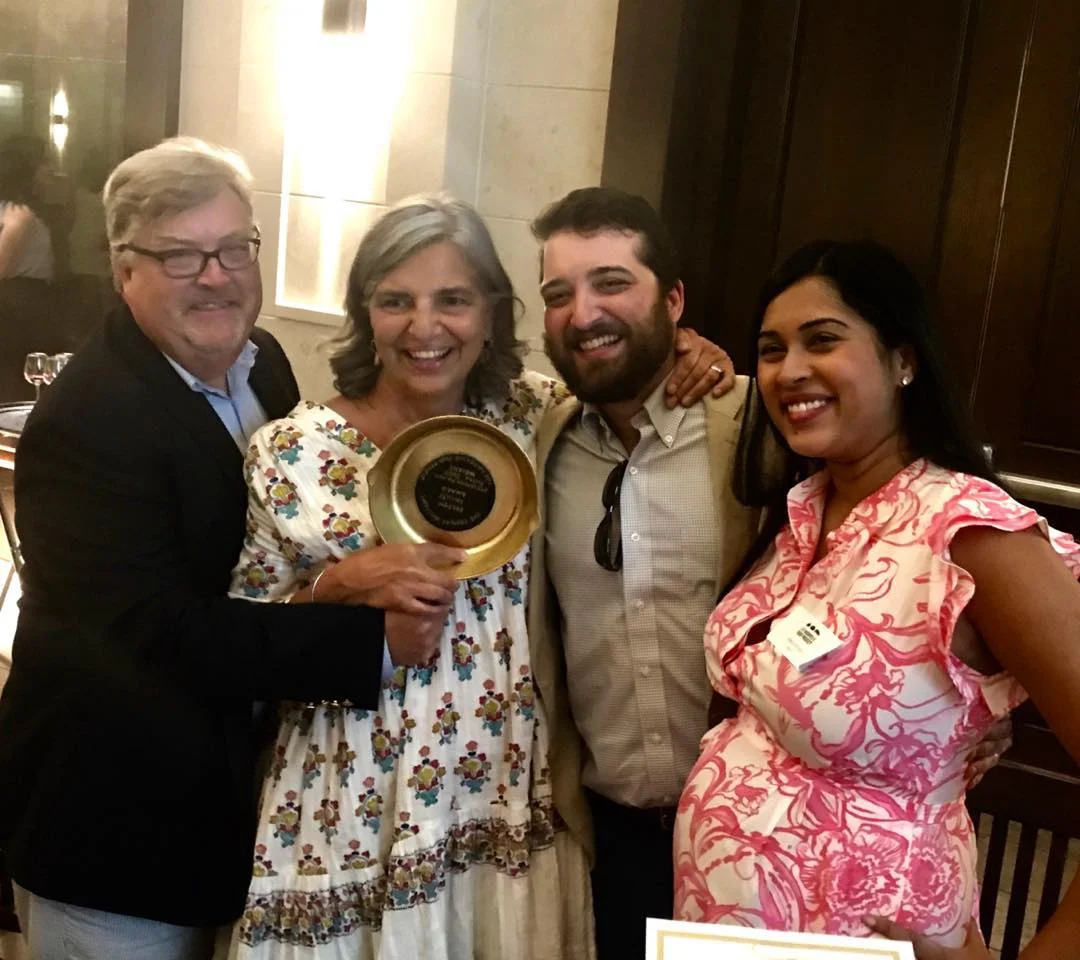
Photo Courtesy of Judy Wright
Congratulations to Judy Wright, this year's Thomas Williams Golden Skill Award Winner.
Last year we unveiled an award established in honor of one of our founding board members who created this yearly celebration we call Nourish – Thomas Williams. He has been a board member for more than seven years and in that time he has introduced us to so many friends and supporters. Last year, in his honor, we established the Thomas Williams Golden Skillet Award to annually acknowledge someone who has boundlessly, beautifully supported The Nashville Food Project, beyond measure.
This year’s award recipient, Judy Wright, has done more than we can even name to advance our mission and solidify a base from which we do our work. She has been a champion of ours since the 2010 flood. She has involved her beloved Christ Church Cathedral in meaningful ways over the years, and secured enormous financial gifts of support on our behalf at different times of organizational growth. She has brought numerous friends into our kitchens to cook, her friends who quickly became ours too.Her passion for gardens, children, cooking education, and public health is contagious. She keeps an extraordinary blog and we readers are captivated by the way she draws us into her love and limitless curiosity for the living world. She’s constantly promoting our mission on social media, championing every new activity, discovery, celebration.
Thank you, Judy, for all that you do for The Nashville Food Project and the Nashville community!
Our Sponsors
Nourish would not be possible without sponsors and donors. We would like to thank the sponsors that supported Nourish this year.

This year we have three amazing Gold Level Sponsors:
Jackson National
First TN Foundation
Vanderbilt University Medical Center
Thank you to our Supporting Sponsor:
Publix Supermarkets Charities
And finally a huge thank you to our two incredible In-Kind Sponsors:
Lipman Brothers (Beverage Donations)
Creation Gardens (Food Donations)
We are so grateful for the compassion and support that all of our sponsors have offered The Nashville Food Project.
We are so thankful to the wonderful community that supports us daily through volunteering, food donations, and financial contributions. To learn more about ways to donate visit thenashvillefoodproject.org.
Reflections of a First Time Gardener
Jasmyn Alvarez, a Wedgewood Community Gardener, reflects on her first growing season in a community garden. She shares information about her goals, how she used the square foot garden method to achieve them, and the results of her efforts.
By Jasmyn Alvarez, a Wedgewood Community Gardener
Finding direction

When it comes to gardening it’s hard to know where to start. Aside from helping my grandmother weed in her flower beds as a kid, I don’t have much experience. I signed up for a community garden plot at Wedgewood Urban Garden this June feeling a little nervous but ready to try. I’m so grateful for Community Garden Manager, Kia Brown, for her advice and tips for starting and maintaining a garden no matter what time of the year. There is nothing like the magic of watching a seed grow into a beautiful plant, then seeing its fruits on my plate!
In the community gardens you’ll find that you have a lot of choices and ways to focus on your goals - it could be to try something new or get outside. One of my goals is to improve my health by eating whole foods and being active. I wanted to use all of my community plot space to grow as many fruits and vegetables as possible, so Kia introduced me to a method called 'Square Foot Gardening.' The idea is that you break up your plot into square feet and plant as many of one type of plant as you can fit in order to maximize the space.
A GUIDE TO SQUARE FOOT GARDENING
STEP 1
The first step was figuring out what vegetables I wanted to plant. I thought about the types of vegetables that I love to eat to make sure that nothing grown would go to waste. Here’s what made the cut:
- Lettuce
- Peppers
- Radishes
- Spinach
- Tomatoes
- Basil
- Beans
- Beets
- Butternut squash
- Cabbage
- Cucumbers
STEP 2
I started my garden plot in July so I needed to figure out what to grow during the heat of the summer and what would have to wait until the fall. Kia has a great guide - anything leafy grows and root vegetables grow when its cool (spring or fall) anything that flowers or produces fruit should grow in the summer. Herbs can be sprinkled in during any season as long as they have consistent water and nutrients. We divided everything up into those two categories.
Spring & Fall Crops
- Beets
- Cabbage
- Lettuce
- Radishes
- Spinach
Summer Crops
- Beans
- Butternut squash
- Cucumbers
- Peppers
- Tomatoes

STEP 3
The next step is to figure out how long it takes the plants to go from a seed to being harvested which is also known as “days to maturity.” You can find this number on the seed packets or online. Its best if you know the specific variety of the plants you want because that can change the time it takes to grow. Since I started my plot in June I only planned the days to maturity for summer crops.
Summer Crops (Days to Maturity)
- Beans (50-60 days)
- Butternut squash (85 days)
- Cucumbers (55-65 days)
- Peppers (70-90 days)
- Tomatoes (65-70 days)
STEP 4
Next I looked at if I planted them on that day when would all of the crops be ready to harvest. For plants that take a long time to mature like squash, peppers and tomatoes it may be helpful to purchase plants that have already started to grow and transplant them into the garden. In general they should all be ready to harvest between the end of July through August. That is a lot of produce to be harvested in just a few weeks so the next step is to plan out successions. Meaning I can plant half of my crops in the beginning and plant the rest of it two-three weeks later. This way I can eat these amazing vegetables for months instead of weeks.
STEP 5
The final portion of planning the garden is figuring out how many plants fit into each square foot. For example, I can fit 4 green bean plants in one square foot, one tomato plant into 4 square feet. I wrote out exactly where I wanted to put each plant on a piece of paper.
STEP 6
The last step in starting the garden is the most fun - planting my seeds and transplants!
How’d It Grow?
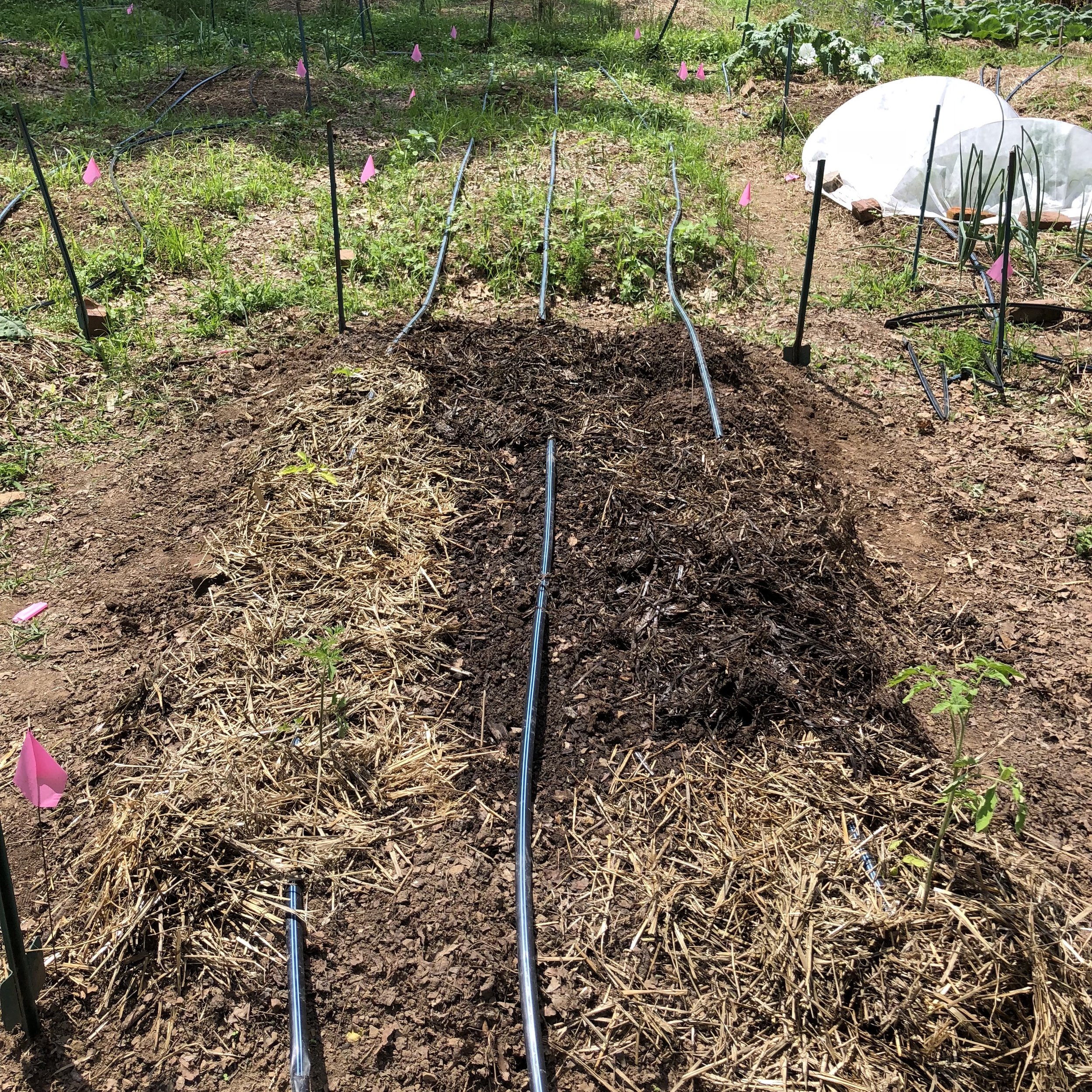
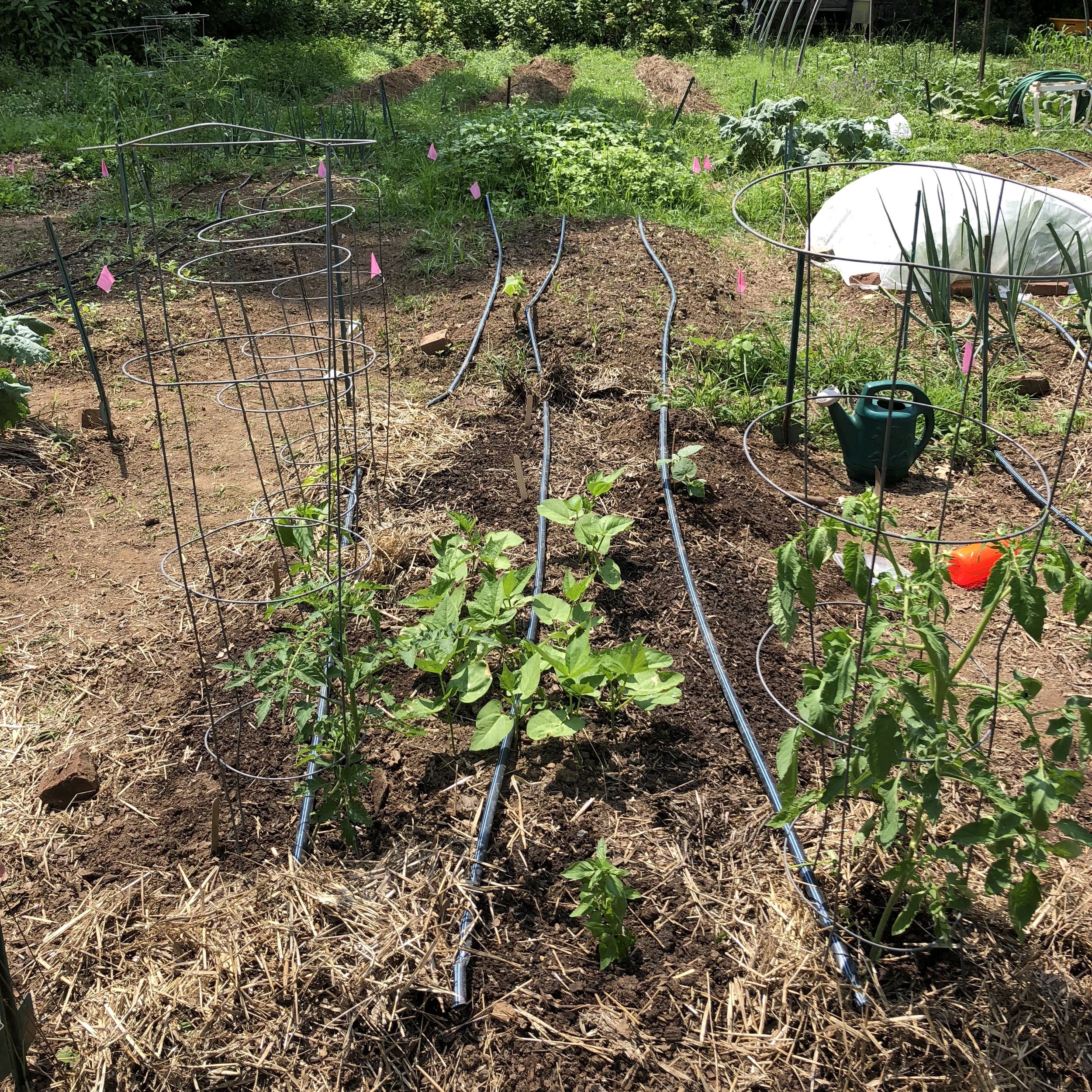
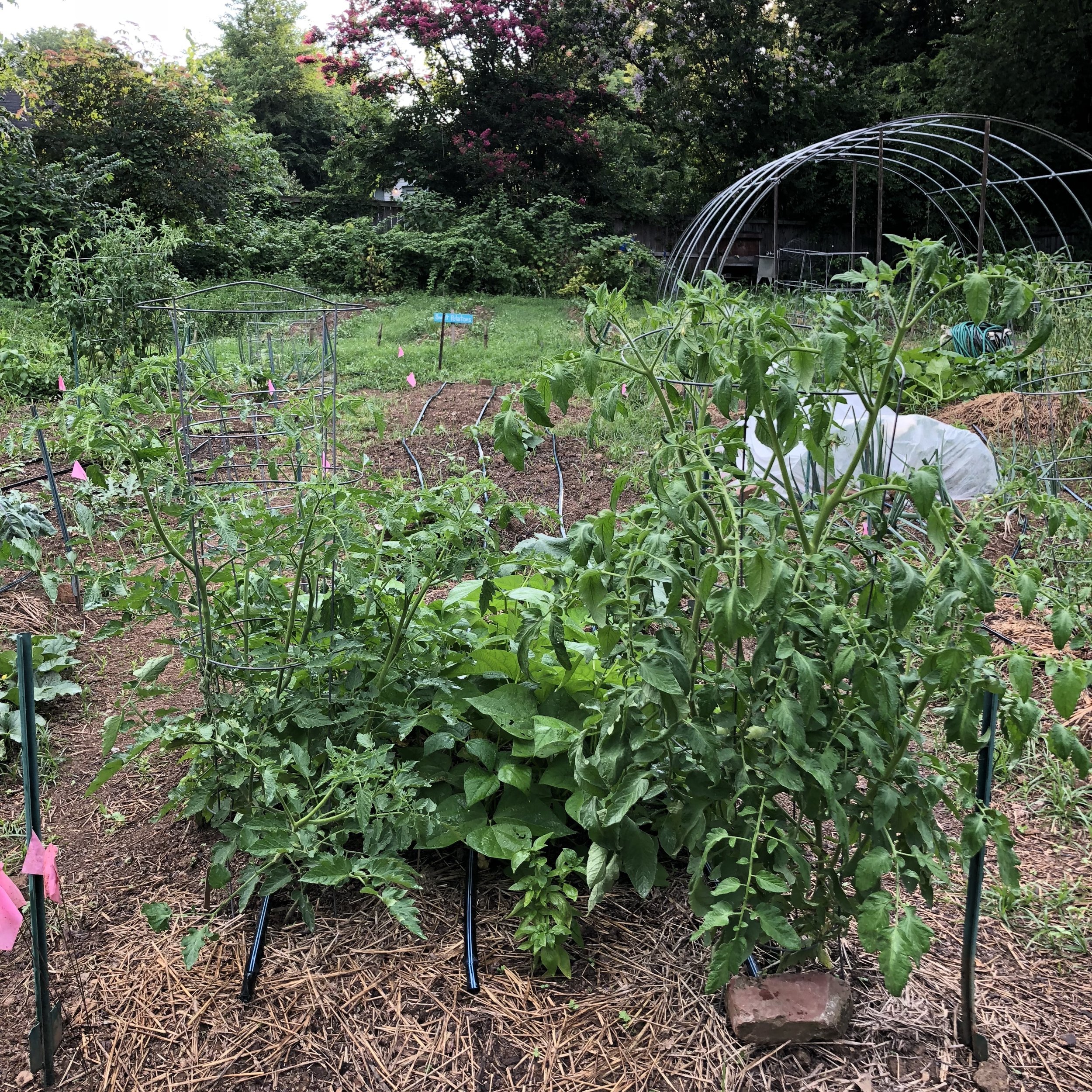
There were some parts of my plan that had to be reworked once I started planting my crops but overall I have a great idea of what produce I’ll have in the next few weeks. I’ve enjoyed spending more time outdoors and even getting some exercise by taking care of my garden plot. What I’ve learned the most from growing a garden is that food is amazing. The time and energy that goes into growing food makes you appreciate the flavors and nutrients you get when you eat it. I’ve already started planning out all the ways I’m going to eat my food so that none of it goes to waste. Although the experience has been new, thanks to Kia, I now feel I have the tools and resources to successfully start a garden. I’ve had a lot of help from my “Garden Brothers & Sisters” too!
The Nashville Food Project is currently enrolling gardeners for the Wedgewood Urban Garden near the fairgrounds. For more information and to find out if you are eligible for a plot, please visit www.thenashvillefoodproject.org/signup.
Health As Healing
At TNFP, we are always seeking creative ways to use the food in our care to better support our community. The result? Over 30 unique partnerships, each formed to match the needs of that unique community, from a fresh market set-up at a retirement community, to stocking comfort food for children waiting for placement in a foster or kinship home…
By TNFP's Food Donations Coordinator, Booth Jewett
Since I started as the Food Donations Coordinator at The Nashville Food Project (TNFP), healthy living has been at the forefront of my mind. Our garden programs bring people from all walks of life into the fields together to grow local, organic produce for people in our community. Our meals program thrives on the gifts, generosity, and creativity of individuals every day to make nourishing meals that are shared all around Nashville. As we’ve grown our food donation and recovery efforts, it is always with these same values and our mission in mind!
Booth picking up a produce donation from Currey Ingram Academy's garden.
Since 2016, TNFP’s food recovery efforts have brought in about 120,000 lbs of food each year, including fresh produce, proteins, and pantry items. We use as much of this recovered food as possible in our own meals. Any food that is unsalvageable but compostable goes to our compost system to be broken down and put back into the gardens to grow more food!
Ultimately, we are always seeking creative ways to share the food in our care in ways that best fit the needs of our partners, supporting shared efforts to build community and disrupt poverty in our community. In the past year, this has meant expanding our meals partnership model beyond our own meals and snacks. Now we include fresh produce and other ingredients as potential opportunities for food support to our partners.
One of these partners is Trevecca Towers, a retirement community that is committed to serving seniors and persons with disabilities with a caring living environment that promotes dignity and relevance. Every Wednesday morning the Towers open their chapel and fill it with donated food for residents to “shop”. After a few months of this, Nick Polk, the Director of the Service Coordinator Department, noticed a trend in the food they were receiving. “We had food co-ops delivering almost exclusively bread, sweets, and processed foods. While these items can be helpful, I started getting more residents asking if we might be able to receive more fruits and veggies. This request resulted in us reaching out to The Nashville Food Project and becoming a sharing partner.” The Nashville Food Project has been sharing extra produce from local farms and pre-packaged produce from Whole Foods with Trevecca Towers each week for the last year. “The reality is that it’s way easier to get ahold of sweets and processed foods than it is organic food and fresh produce, and The Nashville Food Project has made strides in changing that reality for our residents”, says Nick.

Contrast Trevecca Towers with another sharing partner, Safe Room. Safe Room is a Tennessee Department of Children’s Services program that provides designated spaces for children waiting for placement in a foster or kinship home. When Safe Room reached out to The Nashville Food Project, it wasn’t for fresh produce but instead for what they called “comfort foods”. Dana Eskridge, a Volunteer Service Coordinator with Safe Room, explained that “Since the kids that come through here are in transition, we try to keep foods stocked in our fridges that can act as a comfort while they are with us.” In response to this request, we have been able to share Whole Foods donated prepared food items ranging from soups, salads, and sandwiches to frozen pizzas, pastries, and desserts with Safe Room twice a week.
I used to think that being healthy was exclusively tied to eating nutritional food and living an active lifestyle. But after being apart of The Nashville Food Project’s work the last couple of years and seeing so many nuanced expressions of our mission in action, I am starting to realize that being healthy is also about meeting each others needs and having balance and connection in our lives. At The Nashville Food Project, we strive to embrace the complications and conflicts that exist not only in our current food system, but in our collected response to that system. I really love that about this place.
Salmon Cakes
Much of our food recovery efforts are through ongoing Food Donation Partnerships with local grocers, farmers, markets and restaurants. Every day, we’re astounded by the generosity and creativity of these partners…
Much of our food recovery efforts are through ongoing Food Donation Partnerships with local grocers, farmers, markets and restaurants. Every day, we’re astounded by the generosity and creativity of these partners in support of our mission to alleviate hunger and cultivate community.
A great example is our partnership with our neighbors at Green Hills Grille. On their menu is an incredible salmon filet served as a square portion. The restaurant cuts off all of the trimmings, but instead of just throwing them away, they freeze them and drop them off with us each week. We cook them up and use them for meals like our delicious salmon patties, an all-around favorite at our meal sites! Try it out for yourself with the recipe below.

TNFP Salmon Cakes
Makes 50-60 cakes
Ingredients
12 lbs poached salmon
Olive oil
3 c mixed color bell peppers, very small dice
2 c celery, very small dice
1 c chopped parsley
5 T capers
1 T hot sauce
2 T worcestershire sauce
1/4 c Old Bay
10 c bread crumbs
4 c mayo
3 T dijon
6 eggs
Directions
Preheat oven to 375 degrees. Saute diced vegetables until soft. Allow to cool. Add to gently flaked salmon. Mix remaining ingredients and add to salmon mixture. Season with salt and pepper to taste.
Portion in 3-4 oz servings about the size of a deck of cards. Shape and place on lightly oiled baking sheet, spray tops lightly with additional oil. Bake for 10-15 minutes until firm and lightly colored. Alternatively, pan fry in olive oil for 2-3 minutes on each side until golden and crusty.
Wasted Food = Wasted Nutrition
We’ve all been there before - the broccoli stems left over after a dinner party, strawberries that you meant to eat but didn’t get to - all thrown out and wasted. 40-percent of all food produced is wasted while at the same time 1 in 7 children are struggling with hunger according to Feeding America. Believe it or not, there are some staggering nutritional benefits to lowering your food waste…

We’ve all been there before - the broccoli stems left over after a dinner party, strawberries that you meant to eat but didn’t get to, the apple peels left behind due to a picky toddler, browned bananas that are a little too sweet to eat - all tossed into the trash and wasted. 40-percent of all food produced is wasted while at the same time 1 in 7 children are struggling with hunger according to Feeding America.
Believe it or not, there are some staggering nutritional benefits to lowering your food waste. Every item of fresh produce that gets tossed is a lost opportunity to get vitamins and minerals from the foods we eat. A study published in the Journal of the Academy of Nutrition and Dietetics found that food thrown away each day could provide 1,217 calories to each person in the United States each day, and the equivalent to 19% of fiber, 43% of vitamin C, 48% of iron, 29% of calcium, and 18% of potassium recommended for daily nutrition.

Here at The Nashville Food Project, we work every day to reduce the amount of edible food being wasted in Nashville and increase the nutrition available to our community. Already this year, TNFP has prevented over 42,000 pounds of food from going into the landfill. We’re always striving to be good stewards of all the food that comes through our doors, using every edible component of each item however we can. This means we have to get creative in the kitchen! Below are some fun tips and recipes to keep food and nutrients on our plates instead of in the trash.
The majority of the nutrients are lost by throwing away the peels on fruit and vegetables. The peel of an apple contains half of the apple’s fiber and four times more vitamin K than the flesh. Recipe: Baked Apple Peel Chips
Citrus peels contain twice as much vitamin C than what is inside. Citrus shavings can be grated to add natural flavor to salads, used to make salad dressings and cooked in soups and sauces. Recipe: Orange Vinaigrette Using Peel
Save the stock from your cooked meats and vegetables! Using stock instead of water to cook things like rice and pasta gives the food more flavor, and offers a variety of vitamins and minerals. For even more incredible flavor, throw in your Parmesan rind. Recipe: Vegetable Stock
Before you throw away those stems… broccoli stems contain more calcium, iron and vitamin C than the florets. Recipe: Broccoli Stem Noodles with Sesame Ginger-Dressing
For more insight, recipes, and tips on reducing food waste in your home, check out savethefood.com.
Painting a Future Together
How do you create a community? It’s a big question with a complex answer. At The Nashville Food Project we believe it happens one meal and one relationship at a time. St. Luke’s Community House and TNFP are teaming up to paint a future filled with connection and meals for even more Nashvillians by sharing a space at St. Luke's called the Mural Room.
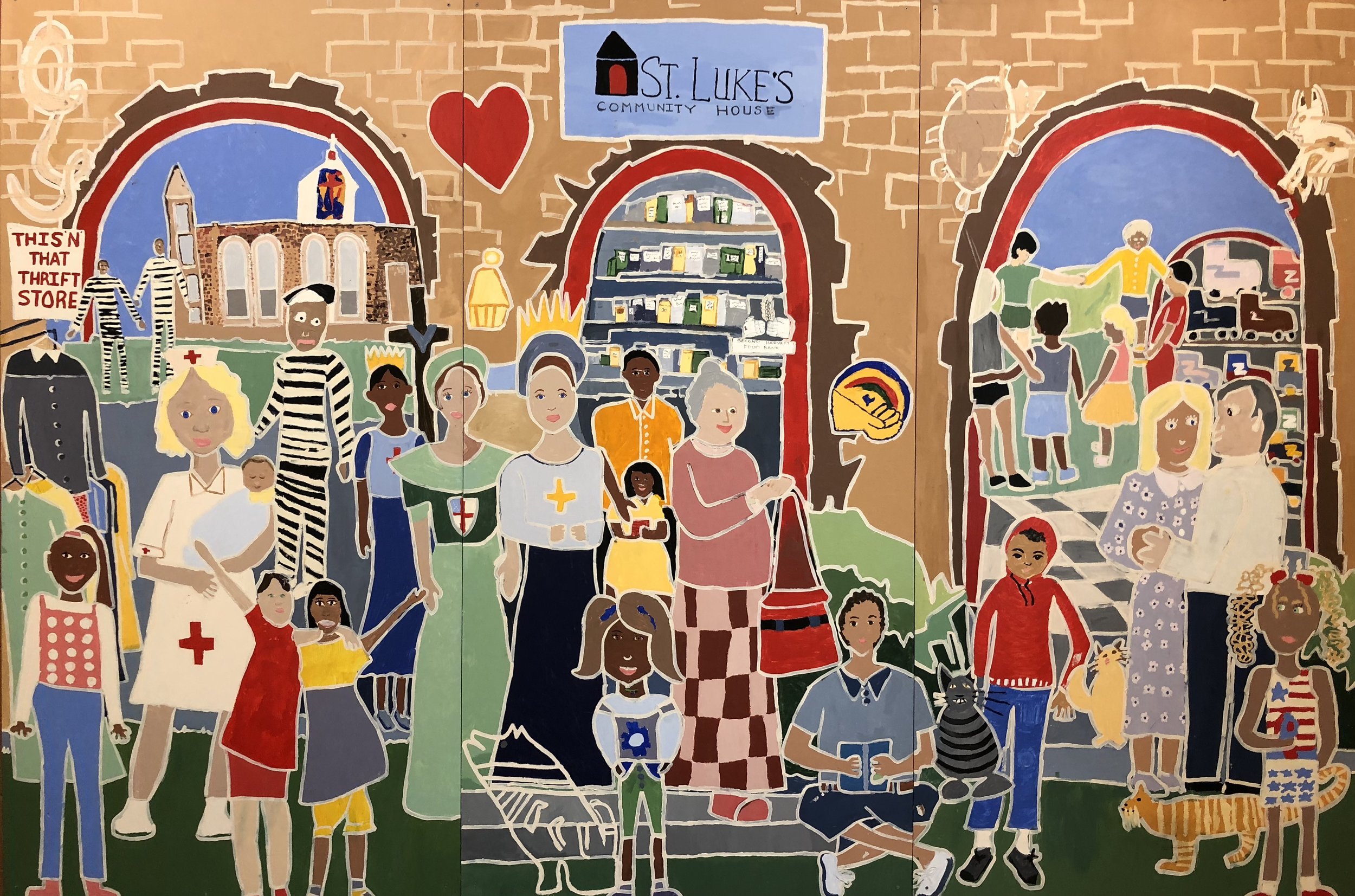
How do you create a community? It’s a big question with a complex answer. At The Nashville Food Project we believe it happens one meal and one relationship at a time. St. Luke’s Community House and TNFP are teaming up to paint a future filled with connection and meals for even more Nashvillians by sharing a space at St. Luke's called the Mural Room.
In May, the doors to the Mural Room were opened to the The Nashville Food Project to use as a meal prep space. Since 2004, the mural room has been used as a conference, meeting and program space which could be divided into two rooms. Its name comes from the inspiring and reflective mural showcased on its back wall featuring the old Tennessee State Penitentiary, This N’ That Thrift Store, and the community members in between. The mural was a collaboration project between St. Luke’s and the Frist Museum. An artist worked with children to complete a three part mural depicting the history of St. Luke’s and its community partners. Now, 14 years later, The Nashville Food Project is a collaborator and symbiotic partner sharing half of the namesake room.

What difference does a half of a room make? Kelli Johnson, TNFP St. Luke’s Kitchen Manager says “It’s really been a game changer in the amount we can do. We’ve doubled our number of volunteers. And we’ve hired another staff member to oversee volunteers. We’ll also be making 650 meals a day.” To give you perspective, two years ago TNFP was preparing 150 meals each day in the St. Luke’s kitchen. The bump in capacity has allowed us to take on four new sites this summer - 2 YMCA Summer Camps, an open Picnic at McGruder Family Resource Center (next to our garden), and the Margaret Maddox YMCA. Having access to the mural room has allowed us to touch each of these sites and provide healthy meals to children who may not have consistent meals now that school is out.
St. Luke’s and TNFP have a supportive relationship. TNFP is able to reside and access the St. Luke’s Kitchen for any project supporting our mission. In exchange we make sure that St. Luke’s program participants are getting nourishing food in their preschool and senior mobile meal programs. The impact is easy to see.
“When you walk through the preschool at lunchtime, you won’t see microwaved corn dogs, syrupy canned peaches or honey buns anymore. You will see homemade turkey pot pie with fresh fruit salad and a homemade oatmeal cookie. It’s amazing to see what kids can do when they are nourished – mind, body and soul!
”
We are so grateful and excited to be a part of the Nations community and for our second home at St. Luke’s Community House. Every year we both support each other to ensure the health and vitality of the neighborhoods that we serve. What’s the next step? Another mural in the mural room with our ever continuing story of sharing nourishing food and building community relationships.
For more information about St. Luke’s Community House visit their website at www.stlch.org. To volunteer at the TNFP’s St. Luke’s Kitchen sign up here.
Dead Nettle, Henbit, Chickweed, Bedstraw
This spring, staff from local garden care company, The Weeding Woman, led TNFP's garden staff in a workshop on... you guessed it... weeds! Our Production Garden Assistant, Jacob Siegler, reflects on the experience.
This spring, staff from local garden care company, The Weeding Woman, led TNFP's garden staff in a workshop on... you guessed it... weeds! Our Production Garden Assistant, Jacob Siegler, reflects on the experience.

On a rainy Saturday, a group of gardeners sat around a picnic table at Wedgewood Urban Garden and munched on Violet flowers. A few minutes into the workshop, one of The Weeding Woman staff reminded us that a weed is just something you don’t want to be there. In other words, in a bed of eggplant, a tomato is considered a weed. We all mucked through the brisk morning, learning the names of all the weeds in our garden.
In a garden space filled with vegetables, herbs, and flowers grown purposefully, I wasn’t used to spending time getting to know all the plants that we didn’t want to be there. I wonder if other gardeners resonate with that. We spend a lot of time getting to know the plants we want, but often neglect not only the names of our weeds, but also the fact that they have been, and will continue to be, coming up in our gardens.

The Weeding Woman was founded by Jennifer Johnson in 2005. Laid off from a job in the film/ television industry, she started thinking about her love for gardening. When she ran into a couple she knew at the Cheekwood Native Plant Sale and told them she had pulled all the weeds in her garden, they hired her to do the same in theirs. That was the first seed. She realized there was a demand in Nashville for knowledgeable, dedicated gardeners who could come in and hand-weed residential gardens. After getting a few early gigs, the organization took off. Now, with a team of nine and growing (they are looking to hire!), The Weeding Woman works in yards across the city, as well as a project at the Hermitage. Their work allows homeowners to avoid spraying chemicals in their gardens, and provides thorough and informed weeding, planting, and garden design.
Later in the workshop, we received a lesson on the medicinal properties of our weeds. Chickweed can be used for stomach problems. Henbit is high in iron and can be used in salads. Dead nettle is anti-inflammatory. Violet flowers can be eaten, candied, and used for tea, and have historically been used as a treatment for cancer. There is a whole world of benefits in the plants I, for years, have mindlessly ripped out and thrown away.

After the workshop, I didn’t all of the sudden start saving all our chickweed, or drinking violet tea in the morning. But, putting a name to a plant and understanding its value to humans cannot be overlooked. It allowed me and continues to allow me to build relationship with a space, in getting to know its species and their differences.
As gardening and agriculture become increasingly mechanized, the value of real hands performing precise, careful work cannot be understated. The intention required to ‘get to know’ your weeds has a value that, in my opinion, extends beyond the garden. When we explore something deeply, we understand it on a level that allows us to communicate it to others. Learning from The Weeding Woman in our garden was this glorious deliverance of information. They showed us how to explore more deeply in a space we thought we knew. They reminded us that there is always more to explore.
Learn more about The Weeding Woman and request a free home garden consultation on their website, or get some experience with weeds first-hand by volunteering in a TNFP garden!
Hummingbird Cake
There may not be a more beloved dessert here at TNFP than hummingbird cake. This is one of those recipes that just keeps following us through the years, with different hand-written versions tucked away in kitchen drawers…

A hummingbird cake prepared by truck volunteer, Doug, for long-time Vine Hill Towers resident, Milton.
There may not be a more beloved dessert here at TNFP than hummingbird cake. This is one of those recipes that just keeps following us through the years, with different hand-written versions tucked away in kitchen drawers -- it has been an undisputed crowd favorite.
It's especially popular at a Friday lunch at Vine Hill Towers, where the note "Please send hummingbird cake!" is relayed to the kitchen almost weekly, a request from the same long-time resident, Milton. Last month, long-time Vine Hill truck volunteer Doug decided to answer by personally preparing and sharing a hummingbird cake for Milton (pictured above) -- just because he knew it was his favorite.
We say a lot that food has the power to bring people together in powerful ways. But sometimes these stories happen in small, ordinary ways that we don't see or hear about. Like this hummingbird cake, shared between friends.

TNFP Hummingbird Cake
Cake Ingredients
- 4 eggs
- 2 cups sugar
- 3 cups all-purpose flour
- 1 tsp. baking soda
- 1 tsp. ground cinnamon
- 3/4 cup vegetable oil
- 1 cup pineapple puree
- 1 tsp. vanilla extract
- 1 cup fresh pineapple, small diced
- 1/2 cup pecans, chopped
Frosting Ingredients
- 8 oz cream cheese, room temp
- 1 cup powdered sugar
- 4 oz butter, softened
- 1 tbsp vanilla
Directions
Preheat oven to 325 degrees. In a bowl, cream together eggs and sugar until pale and fluffy. Sift all dry ingredients together and add to egg and sugar mixture. Mix until just incorporated. Combine all wet ingredients and add to mixture until fully incorporated. Fold in pineapples and pecans, then pour into a paper-lined full sheet tray. Bake for 15 minutes. Flip, then bake for another 15 minutes.
To prepare frosting, cream together cream cheese and butter. Add powdered sugar and vanilla. When cake is baked and cooled, build layers with icing.

A pick-up version of the recipe we love to use for events! Same premise, just cut small circles out of the sheet cake before layering.