
The Nashville Food Project’s Blog




New Seasons, New Phases: An Update Regarding Volunteers
Interim Co-CEO and Chief Programs Officer Christa Bentley shares a transparent look at the phased plan we've been following to help us make countless hard decisions during the pandemic, keeping our programming open—and hopefully very soon— bringing volunteers back to our spaces!

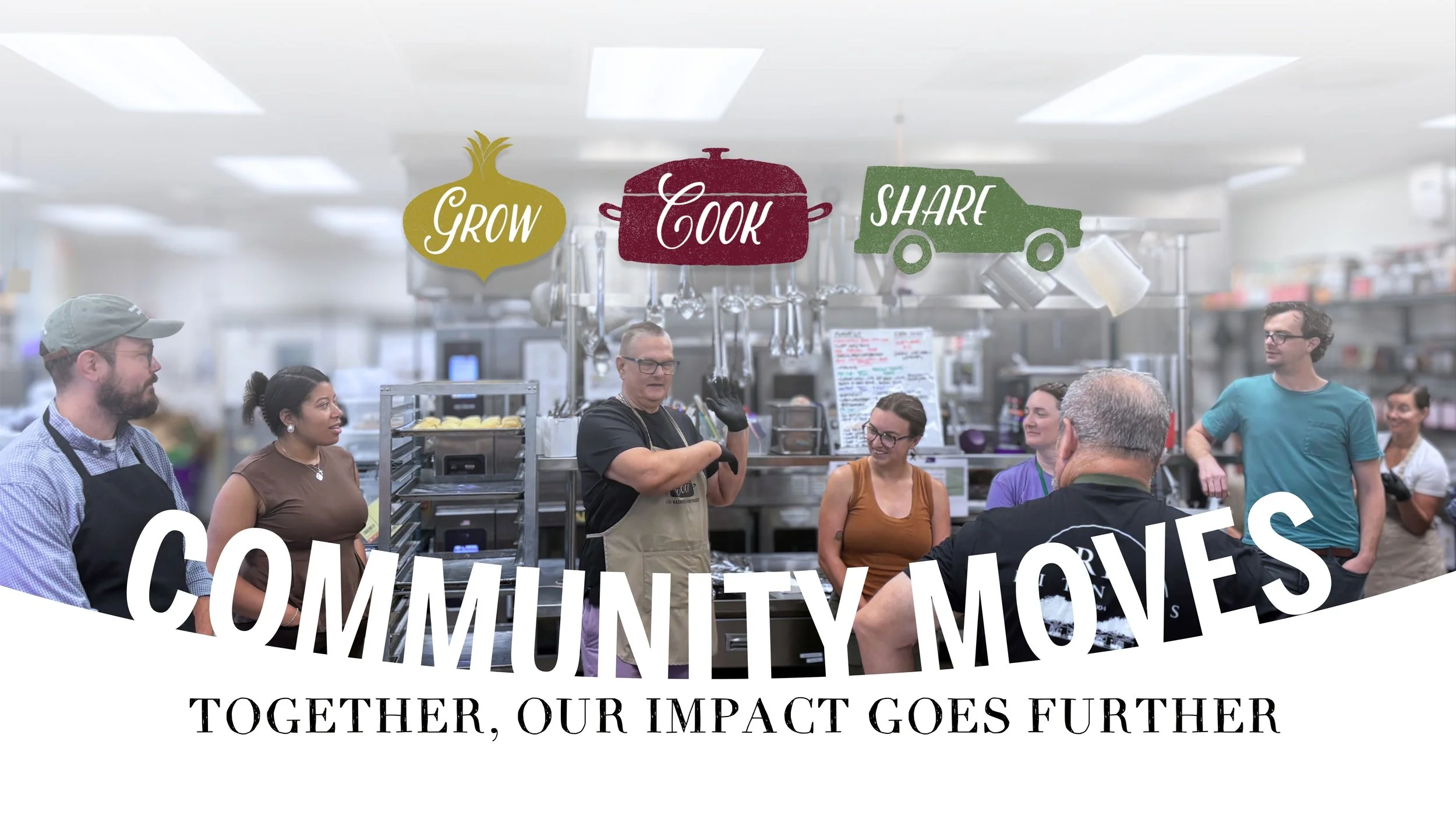
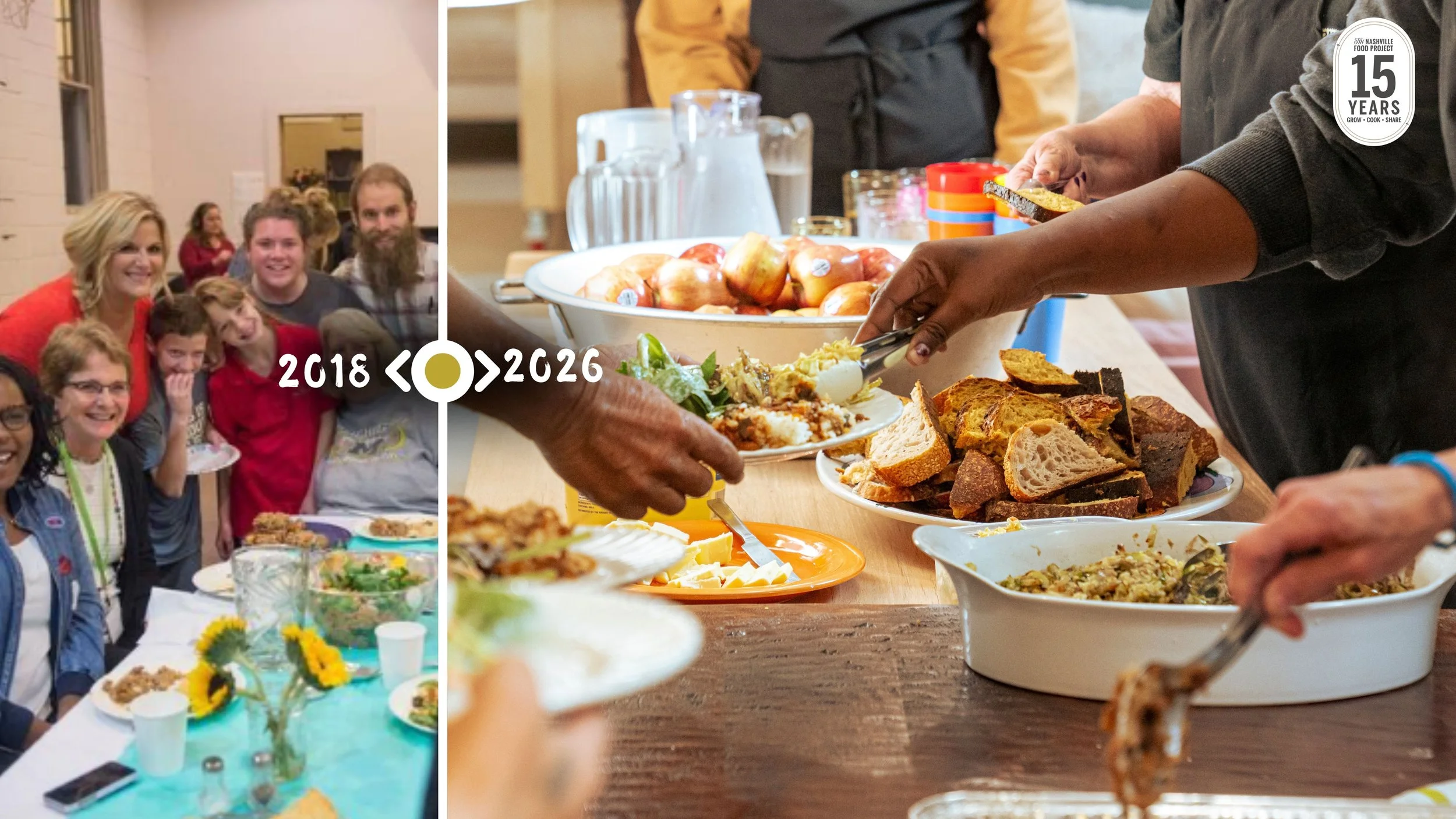
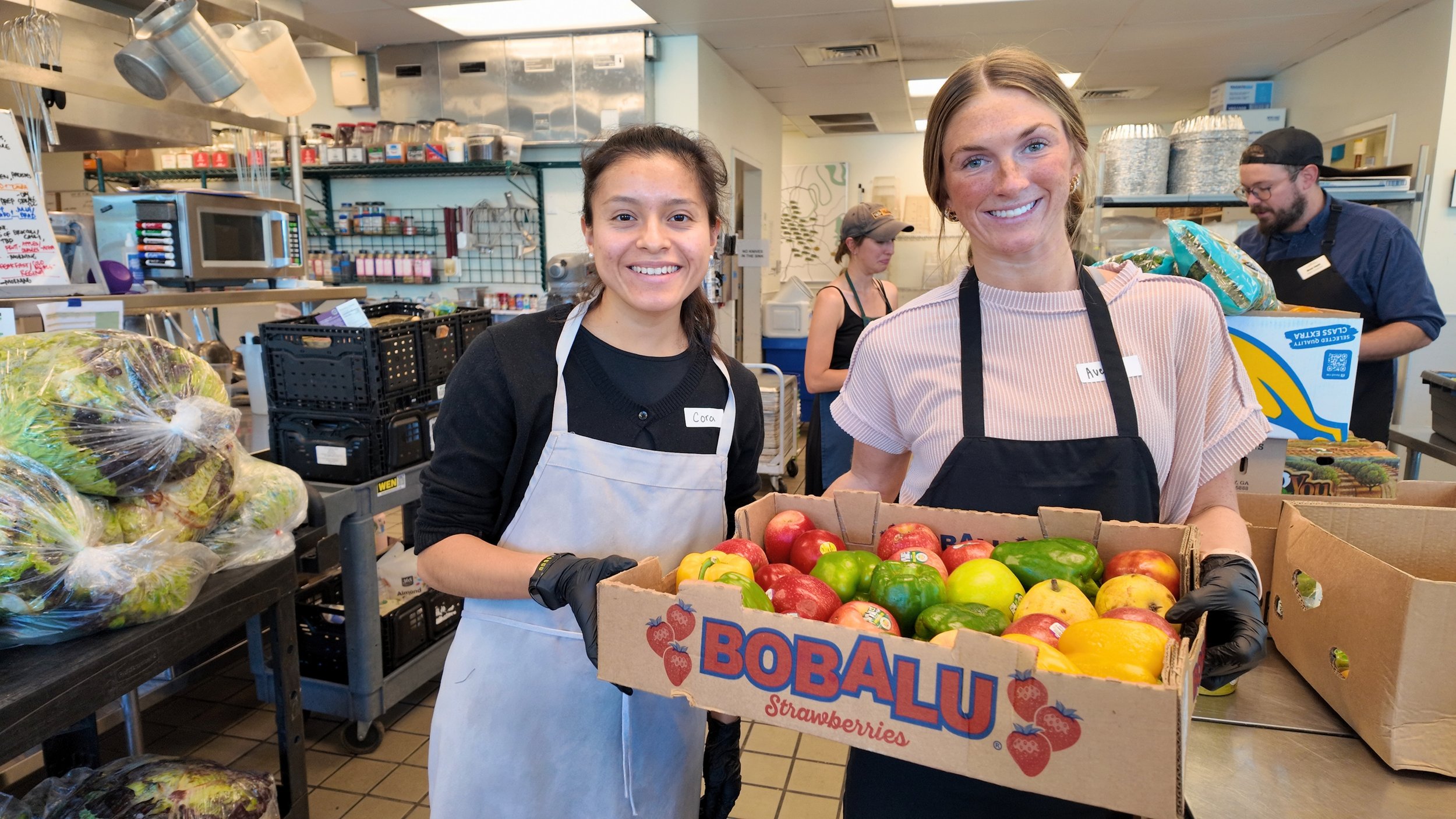
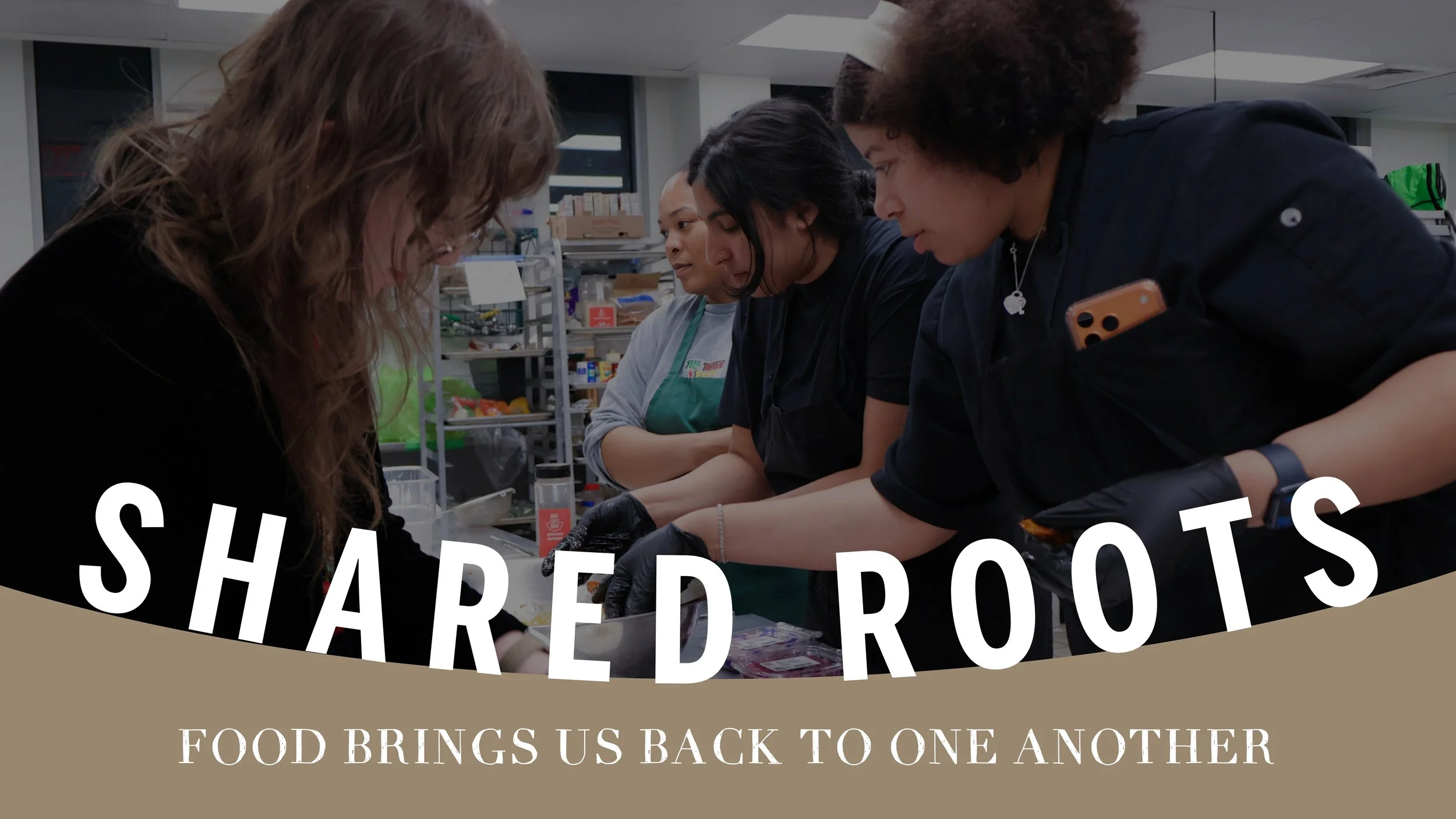
Volunteers with staff in our kitchen pre-pandemic. Photo by Abigail Bobo.
by Christa Bentley,
Interim Co-CEO, Chief Programs Officer
A little over a year ago I was having my first day back after a leisurely maternity leave, mid-February 2020. I remember I spent my first two weeks back working virtually because I wasn’t ready yet to leave my sweet babe, and it was such a challenge. I hated not being in the room with everyone I was working with. Two weeks later, the day after my first scheduled day back at the office, I woke up to news reports of a devastating tornado in Nashville. Two weeks after that we shut down our volunteer program to stop the spread of COVID-19 and here I’ve been at my home office (let’s be honest, it’s my dining room) ever since.
Today I want to share an open look with all of you at where we are right now with our volunteer program. It is wild to even think that we are coming up on almost a year of very few volunteers in our kitchens, gardens, and food trucks. TNFP’s Volunteer Program has been the backbone of our organization since our inception, spurred on by the support we felt from so many during the 2010 Nashville flood. It’s how our community has responded to nearly every significant crisis, by filling our spaces with helping hands to amplify our work. But COVID-19 has been an entirely new crisis for our city and for The Nashville Food Project. We have had to make so many changes to the way we work to nourish our community. And the loss of volunteers has proved one of the biggest differences, requiring a lot more time in the trenches for our small but mighty team: chopping, weeding, and cooking more than we ever have had to do on our own.
A few months into the pandemic we created a tool we’ve been calling our “phased plan” (the linked plan shows some of the details we’ve included) to help us make decisions about all aspects of our programming, including how many people and volunteers we welcome back into our spaces and when. The plan is broken down into 4 phases (A,B,C,D), and each details a lot of the things our staff were wondering about: work from home, space capacity, in-person meetings, output capacity, on-site protocols, you name it. Our move from each phase is dictated by 4 weeks of consistently decreasing trends in the COVID diagnosis rates in Davidson County (we’re tracking this data available from Mayor Cooper’s office).
This is a conservative approach. We know this, but we also stand behind it. It has helped us make countless hard decisions and most importantly has kept our programming open. Because our kitchens are tight quarters, it has been vital that we keep exposure down. One positive test in our kitchens might mean an enormous scramble for our meals team and an inability to continue serving meals to our partner organizations, something we are desperately trying not to do with the need for access to food higher than it has ever been.
While the garden spaces do feel safer, our site capacities mean that we have to work through what is essential for our programming in our decision making, especially as many of the communities that participate in our garden programs have been disproportionately affected by this pandemic. We are constantly asking ourselves “does this keep people (staff and participants) that have to be on site safe” and “does this provide access to healthy food”? We are incredibly lucky to have had very few incidents of exposure in our spaces over the past year and we credit that to procedures that are truly working and staff that are willing to follow protocols even when it often means making their jobs harder.

I am sharing all of this now as we’ve got a little hope in our hearts for the chance to share this work with volunteers once again. As of Monday March 1st, we have moved into Phase B of our plan after many weeks of decreasing case rates. Additionally, we are starting to get some of our onsite team vaccinated, which has been one of our biggest concerns around introducing additional people into our spaces (especially as uncertainty still remains around the ability to spread the virus even after vaccination). This positive news means that we’re dreaming and working on engaging in this work with all of you once again. While these details will take a little time, I hope this message gives you hope that it is coming.
This year has given us a lot of time to think about our volunteer programs. Much of our timing in the past was built out of long ago necessity. As we are thinking about the future here are a few of the things that we have been talking about.
1. We would like volunteers to play an integral role in ensuring that we are using as much donated food as possible, decreasing the amount of food that ends up in the landfill and increasing our ability to batch cook and put things away when there is an abundance.
2. We would like volunteers to help us grow and maintain our garden sites, working on specific projects at our sites and engaging with the land and history of the land in meaningful ways.
3. We would like to increase accessibility to our volunteer times, expanding our hours into nights and weekends and diversifying the people who support this crucial work.
4. We would like to reintegrate volunteers into our work safely while also always providing an enjoyable, engaging experience for both volunteers and our dedicated staff.
We know that the coming months will come with more learning, just as the past year has. We want to thank you all for supporting us through it all, and for helping us learn and evolve. I have always treasured how seriously The Nashville Food Project takes the beginning of our mission statement, “Bringing people together…,” and I can’t wait to bring you all back into this work once again!
Finding Dignity and Power in Food
Director of Garden Programs Lauren Bailey writes about the countless and often unseen hands in our food system. She challenges us to consider the larger web we exist in by acknowledging and learning from food workers as we work toward a better food system.


by Lauren Bailey, Director of Garden Programs
This year, we have all considered the essential worker like never before — the nurse, the grocery clerk, the bus driver. At The Nashville Food Project, we're beyond grateful for the many food chain workers—all those people growing, processing, packing, cooking, delivering food— within our agency and beyond it. COVID-19 has, in some ways, highlighted professions that can often receive little to no recognition.
This lack of acknowledgement became clear for me, recently, as I was talking with a gardener who works in a meat-packing facility. He talked at length about the stresses of work and the burden of being in a leadership position while being short-staffed and concerned about COVID-19. Then he said something that has stuck with me. He felt like his situation, his struggle was invisible to others. And it’s true, isn’t it? The countless hands that go into making our food system are often unseen.
As food writer Alicia Kennedy reminded readers recently, we must continue to "write about the realities of the food system and those who labor in it….People will ignore or forget that which is unsettling or upsetting. The stories must be told relentlessly." So, I’d like to propose a challenge for us. Can you join me in acknowledging and learning about the many hands that are a part of this work and working for a better system?
To the farmers who showed us what it takes to make our favorite Thanksgiving dishes happen and who continue to get food to our tables (United Farm Workers)
And those fighting for fair wages (Coalition of Immokalee Workers’ Fair Food Program)
To the BIPOC farmers like Soul Fire Farm and Sylvanaqua Farms and many others who sharpen our analysis of what it takes to manifest a sustainable and just food system
To the Indigenous people of the US fighting for food sovereignty
To those working in meat-packing and other processing facilities that have faced unsafe conditions before and during COVID-19
To the countless line cooks, service staff, chefs, dishwashers, drivers and grocery store clerks
We know this is not a comprehensive list. Who is missing?
We share our gratitude and acknowledge you, your labor and your fighting for a better system.
I have recently come to understand just how important it is to point to the larger system we exist in. We, at TNFP, cannot untangle ourselves from this. And at the same time, we are trying to build, in our corner of the universe, spaces and practices that value people, their experiences and their knowledge.
This summer, I was harvesting Thai chilis with a few other staff and gardeners for our communal garden produce bags. We all knew this task would take the longest as the small chilis made a tedious task. We could take this on at a slow pace, and this was something that made me curious about the pace of larger commercial operation as many farmworkers are still paid by units harvested versus by the hour.

When I asked if anyone had any experience harvesting chilis in bulk, a gardener who grew up in Burma/Myanmar said that in his community all the grandmas would come together to harvest chilis so they could talk and laugh and sing together. And that’s an image I’ve seen often in our community gardens, at the Growing Together farm and of our staff working together. It’s an image of dignity. Dignity that comes in cultivating relationships with each other and the Earth, and the dignity and power of growing your own food.

It is time that we complicate the narrative of our food system. Food chain workers and Indigenous land stewards deserve dignity and justice. There are a myriad of solutions and a collective of folks building those out—whether they are fighting for fair wages and safe working conditions, the rematriation and sovereignty of Indigenous lands or shifting power and access to land as is proposed through the Justice for Black Farmers Act.
I’m on this journey of learning and action, connecting our work with the broader food system. What solutions are you seeing? Whose work would you like to uplift? Will you join me?
Recommended Reads: Thanksgiving Edition
For the Thanksgiving weekend, we pulled together a few recent, thought-provoking articles, podcasts and threads, from how to reduce waste to the story of Thanksgiving from the Indigenous perspective as well as an immigrant story of the holiday, and a Twitter thread that lifts up farm workers who help bring us the dishes that grace our tables on this day.
For the Thanksgiving weekend, we pulled together a few recent, thought-provoking articles, podcasts and threads, from how to reduce waste to the story of Thanksgiving from the Indigenous perspective as well as an immigrant story of the holiday, and a Twitter thread that lifts up farm workers who bring us the food that graces our tables on this day. We hope these stories encourage reflection, and we wish you happiness and peace on this day. We are grateful for you!

How To Do Thanksgiving with Less Waste
“Gratitude and abundance are reciprocal things,” said Nikki Sanchez, an Indigenous scholar and documentary filmmaker. When we take from the land, she said, we should also give back — through growing, recycling, composting and replanting.”

Thanksgiving Lessons in Gratitude From My Grandmother
“For some of the [immigrant] families Lidia Marte studied [an assistant professor of sociology and anthropology at the University of Puerto Rico who has studied Dominican immigrants in New York City], the turkey was also a marker of food security. If they could afford a turkey, it meant ‘they could join the national holiday and cook what everybody else did,’ Marte said. The Thanksgiving meal could be a bridge, between who they were before they migrated, and their adaptation to a new society.”
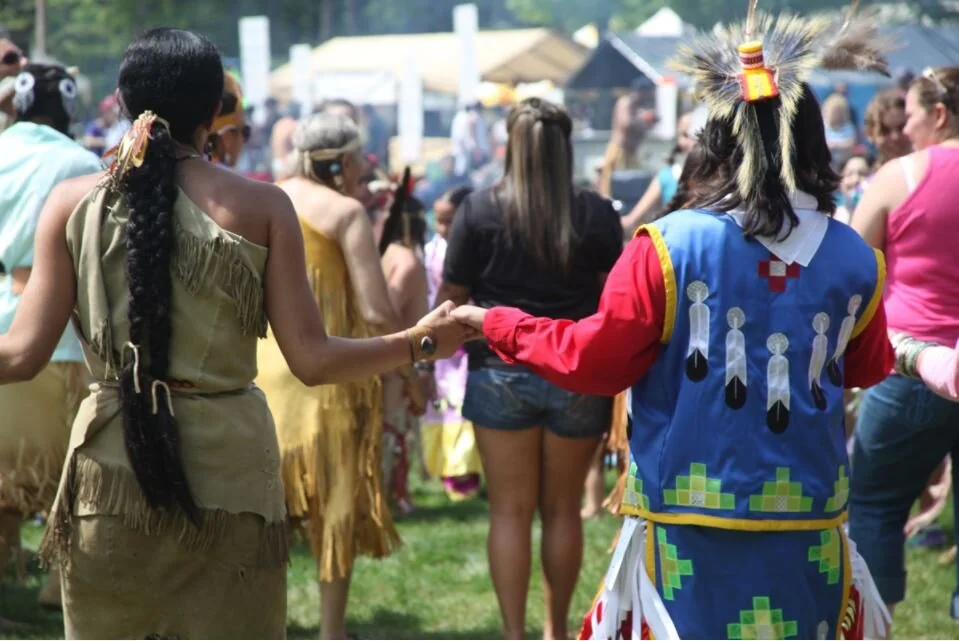
14 Stories of Resiliency and Food Justice in Indigenous Communities
“This year, we deepened that reporting on the myriad solutions Native people are applying to food insecurity, seed preservation, and sustained food sovereignty. In recognition of this resiliency, here is a list of our recent stories on hope, reconciliation, and justice in Native communities.”
The Thanksgiving Myth Gets a Deeper Look This Year
“Thanksgiving, of course, is a time for listening, a welcome opportunity for prayer, reflection and looking back, and many Indigenous people celebrate it in their own way.”
“Dana Thompson, a co-owner of the Sioux Chef, an organization in the Twin Cities devoted to revitalizing Native American cuisine urges anyone who asks to focus on ‘the true Indigenous wisdom that is behind the philosophy of Thanksgiving — it’s about not taking, but about giving back.’”
“This episode talks with Wampanoag scholars Paula Peters and Linda Coombs, who tell us the real story of Thanksgiving, from an Indigenous Perspective.”

They Welcomed Dozens for Thanksgiving.Now What?
“Social scientists use the term collective effervescence to describe the heightened sense of belonging and well-being that comes with a shared ritual. It’s what makes going to a concert or a baseball game feel so good. The spirit of the group is bigger than what anyone could experience individually. It’s one of the building blocks of culture.”

This remarkable Twitter thread from United Farm Workers invites folks to name their favorite holiday dish. Then United Farm Workers provide footage and information about the labor and people who help bring food to the table. “Tell us your favorite Thanksgiving dish, and we’ll share some of what we know about the work behind the ingredients. #WeFeedYou #ThankAFarmworker””
We are only just beginning
On November 3, many of us across the nation donned our masks—or sealed our envelopes—and submitted our votes with a deep conviction about which candidates will best set us up to move the needle in the direction of our values…However, countless unknowns, rising COVID numbers, and the brokenness of centuries of injustice continue to gnaw at us. The same convictions that surround the way we voted in this presidential election have shallow roots if they end when a POTUS is announced.

Photo of illustration as part of the book Peaceful Fights for Human Rights by Rob Sanders and Illustrated by Jared Andrew Schorr.
by Elizabeth Langgle-Martin, Community Engagement Manager
On November 3, many of us across the nation donned our masks—or sealed our envelopes—and submitted our votes with a deep conviction about which candidates will best set us up to move the needle in the direction of our values. After several tumultuous days (and if we are honest, the remainder of the Halloween candy), we now have a better picture of how our nation’s next season will look. However, countless unknowns, rising COVID numbers, and the brokenness of centuries of injustice continue to gnaw at us. The same convictions that surround the way we voted in this presidential election have shallow roots if they end when a POTUS is announced.
As I anxiously worked and waited for election day to come to a close, sourdough loaves resting on the counter and a mason jar filled with fresh water as my chosen methods of self-care, I listed the things I know to be true regardless of the outcome of this election. A couple weeks later, I offer those here.
1. Our systems were not designed to protect and value Black and brown bodies, much less the hearts, minds, joys, sorrows, wealth, and health of Black and brown people. My work and the work of other white folks is to continue dismantling oppressive systems (even those we may benefit from) and center the voices of leaders within Black and brown communities.
2. For those of us who are able to vote, local elections equal local power. When those of us who are able to vote choose not to vote in district, city, and state elections, we are giving away that power. In addition, we have access to city council meetings, oversight board committee gatherings, and so many more levels of local decision making that impact the care of our neighbors. If this election inspired you into new levels of action, there are spaces for you to move that work into a deep, localized, impactful presence.
3. We are all wrong. At some point, we have all been taught, internalized, and acted out of misinformation about ourselves and about others. It is our life’s work to identify, root out, and mitigate the harm we have caused because of that misinformation. When our intersections are clear of election signs and our junk mail returns to credit card offers, this is still the work for which we are responsible.
4. For every moment of injustice throughout history, there have been movements of resistance. How many names have I not known, how many faces of inspiration have I missed out on because they aren’t part of a standardized narrative, omitted from glossy grade-school textbooks? I’ll keep learning about those who used their bodies, minds, resources, and lives. This is the legacy I want to root myself in, the standard I want to hold myself to.
5. All systems of power must have checks and balances. Even those we cast a vote for. A healthy democracy means holding leaders accountable for the work they do (or don’t do) and the harm or good done by policies that are implemented under their leadership. May we be loyal to justice, equity, the dismantling of white supremacy, the health of our communities, and the care of all people above a single person or party.
6. “With fiercest hope, we believe that people and situations can change”. Part of The Nashville Food Project’s core values, I must admit that on certain days this statement feels more aspirational to me than something I know to be true. And yet, when torn between embracing fierce hope or paralyzing despair, I look at my tiny, vibrant daughter, think about good bones, and know that only hope will challenge me to be a part of creating a world I so deeply desire.
Fill up your water glass, get a moment in the sunshine, listen to this song, light a candle, and dig in. This work is far from over. There is still so much good trouble to be had. We are only just beginning.
P.S. Speaking of voting, did you know that The Nashville Food Project collaborated with Conexion Americas, the Margaret Maddox YMCA in East Nashville and the Southeast Nashville polling site to provide snacks during a few peak early voting times?

Waiting in line is a little sweeter with one of Joe Hodgson’s Pink Lady Apples or from-scratch pumpkin-banana bread! Whip up a little fall goodness with the recipe below:
Banana Pumpkin Bread
For the batter:
1 can pumpkin
2 cups mashed banana (about 5 bananas)
4 eggs
1 cup oil
1/2 cup sour cream
4 cups flour
1 1/4 tablespoon baking soda
1/2 to 1 tablespoon cinnamon
1/2 to 1 tablespoon nutmeg
2 1/2 cup sugar
1 1/4 cup brown sugar
1 tablespoon vanilla
1/2 tablespoon salt
For the topping:
1/3 cup oats
1/3 cup flour
2/3 cup sugar
Preheat the oven to 350 degrees.
In a large bowl, combine batter ingredients and pour into a shallow baking dish. In a separate bowl, combine topping ingredients and sprinkle over batter. Bake for about 20-25 minutes.
Community Cupboard: a weekly grocery share
As part of our emergency response, we introduced a new initiative called Community Cupboard: a weekly grocery share. Through this program, we offer weekly grocery shares at no cost to those who have lost jobs and income as a result of COVID-19.
The Nashville Food Project believes that everyone deserves access to the food they want and need, but in the wake of the COVID-19 pandemic and recent tornadoes that devastated our community, so many are lacking that access right now. We have been hard at work shaping an effective community food response in this emergency time.
As part of that work, we introduced a new initiative in April called Community Cupboard: a weekly grocery share. Through this program, we offer weekly grocery shares at no cost to those who have lost jobs and income as a result of COVID-19.

With thanks to Fat Bottom Brewing, our on-the-ground partner in this endeavor, a good portion of those weekly shares will be distributed to out-of-work hospitality industry workers—a part of our community that has supported The Nashville Food Project in extraordinary ways over the years.

The grocery shares include a week’s worth of quality pantry staples, local vegetables, and fresh fruit, as well as local meats, dairy and eggs. With funding from sponsors and donors, we are able to focus on nourishing produce from local farms and producers, keeping dollars in our local economy. Just a few regional food businesses filling these bags include Noble Springs Dairy, Biscuit Love, KLD Farm, Bare Bones Butcher, Kenny’s Farmhouse Cheese, Just Love, Frothy Monkey, Charpier’s Bakery, and produce from our friends at Rally House Farms, HydroHouse Farms, Sweeter Days Farm, and our own Community Farm at Mill Ridge.

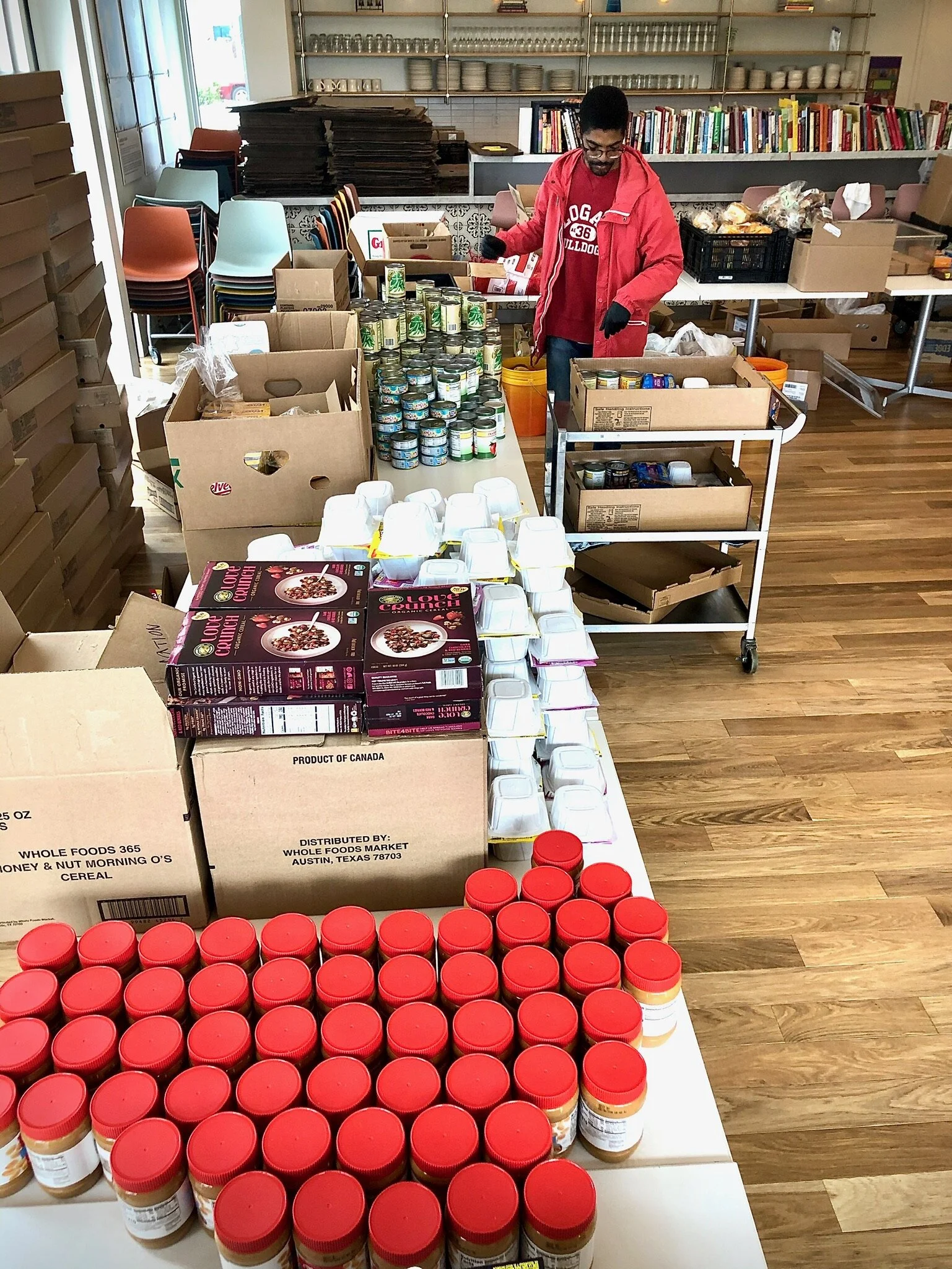

Grocery shares include microwavable, scratch-made meals from The Nashville Food Project kitchens too!

Many thanks to partners at Fat Bottom Brewery, Nashville SC and the sponsors who have made this possible, including Renasant Bank, 506 Lofts, the Russell, Captain Morgan and Piedmont Natural Gas.
The Nashville Food Project Care Package: Part 2
We collected our inspirations, recommendations, motivations—all salve for the loneliness and fears this virus and social distancing can produce. These recommendations aren’t necessarily heavy or directly related to the pandemic or our work. Rather it's a collection intended to nourish and accompany our community as we all stay home together.
Cultivating community lies at the heart of our mission at The Nashville Food Project, but at this time of social distancing, we’re learning how community means much more than physical proximity.
We’re seeing inspiration for community everywhere — from living room concerts and “cloud clubbing” (for the ravers among us) to movie discussion groups and online home cooking forums. In David Byrne’s magazine “Reason to be Cheerful,” Nick Green, creator of the Social Distancing Festival, says this:.
“As long as we are sharing a space in which we can be present, provoke, inspire, promote kindness and compassion, and share ideas, then we are all together in one space, even if it’s in different places at different times.”
Along those lines, we recently found encouragement from On Being’s Care Package for Uncertain Times, a collection of interviews and poetry on topics ranging from grief to hope. It inspired us to make our own version for our friends and for each other. We collected our inspirations, recommendations, motivations—all salve for the loneliness and fears this virus and social distancing can produce. These recommendations aren’t necessarily heavy or directly related to the pandemic or our work. Rather it's a collection intended to nourish and accompany our community as we all stay home together.
This is Part 2 in a series. Find Part 1 HERE.
Lauren Bailey, Director of Garden Programs

Books: We've been reading Sweetest Kulu by Cellina Kalluk to our daughter Trudy before bed. I recommend checking it out, even if you don't have kids because it is a beautiful book with grounding poetry that speaks of our connectedness to other living beings in the world.
Podcast: Snap Judgement with Glen Washington

Article: I found this writing to be thought-provoking -- Social Justice in the Time of Social Distancing.
Music: Sharon Van Etten / Alzheimer’s Association Music Moments Project
Other inspirations or ways of coping through COVID-19:
This was a direct quote from a recent email I received from the organization Race Forward, "In the words of racial justice advocate and philosopher Grace Lee Boggs, 'the only way to survive is by taking care of one another.'"
Johnisha Levi, Development Manager

Book: Call me American: A Memoir by Abdi Nor Iftin. Achingly beautiful writing that somehow manages to capture the painful experiences of a Somali immigrant without losing a sense of wonder, humor, and hope.

Movie: The Last Black Man in San Francisco. A look at gentrification and the creativity it sometimes takes to reclaim your heritage and keep a firm hold on legacy.
TV: Unorthodox. I keep thinking about the haunting performances, and the way that the central character perseveres and finds a new and accepting community that supports her in literally discovering her own (singing) voice. It is triumphant!
Music: If anyone needs a beautiful soundtrack to listen to If Beale Street Could Talk (particularly the piece called Agape) makes you feel like something can go right again in the world.
Also, Roberta Flack, First Take, the whole.dang.thing!

Jeff Buckley, Live in Chicago, because he's got what someone said of Donny Hathaway, "a stained glass voice."
Sufjan Stevens, because he is built for troubled times.
David Frease, Procurement & Sustainability Manager

Music: Polaroid Piano by Akira Kosemura // When I was younger, I couldn't stand instrumental or ambient music of any kind. It always seemed so boring, and I didn't understand why an artist wouldn't want to more fully express their vision through the addition of vocals and lyrics. Now that more time has passed, I completely get the appeal and tend to gravitate towards it more and more each passing year.
With the endless amounts of distractions we're all bombarded with on a daily basis, there's something very meditative about instrumentals. You can let them hang out in the background of whatever you're doing or you can choose to engage more fully, discovering new layers and details with each listen.
The genre doesn't jump up and demand your attention like most other types of music but personally, I've often found it to be even more rewarding in many ways. The older I get, the more I find that the really important mysteries in life can't be expressed in words. One gets much closer with a perfectly timed photograph, an abstract painting or the right musician making magic with their instrument.
My favorite find of the past few months is the album "Polaroid Piano" by a Japanese artist named Akira Kosemura. Mainly known for his soundtrack work, most of his pieces are pristine recordings of solo piano pieces with the occasional orchestral flourish but the reason I love this album so much is because it's the opposite of that. It's completely unpolished and raw in the best way. You can hear every press of the piano pedals, his bench creaking, the sounds of the keys brushing against each other as he plays. Certain tracks are accompanied by birds outside his window chirping or children playing down the street. It's so sparse and intimate that it almost comes off as someone recording their neighbor practicing in the apartment next door without their knowing. It's not until you've listened to it a dozen times that you even notice the guitar gently being strummed in certain tracks, or the toy xylophone sneaking in from time to time. As one review of the album said, "It feels impossible to get tired of, circumscribed and boundless at once." On my off days, I'll often throw it on repeat, allowing it to become the soundtrack to my day. The pieces melt into each other in such a way...if it played forever, that would be ok with me.
Movie: Jojo Rabbit // My wife and I finally watched Jojo Rabbit, and it was just as moving as everyone said it would be. Taika Waititi somehow found a way to make the most tragic and disturbing event in history heart-warming, funny and cathartic. He touched the third rail and lived to tell about it.
Book: Autumn Light by Pico Iyer // I've been reading a lot of Pico Iyer lately for the same reasons I've been listening to more instrumental/ambient music. There's something very grounding about his work and travel writing in general is great for transporting me to another, less chaotic place.

Podcast: Behind the Bastards // I listen to a lot of podcasts in the truck but this is probably the one I look forward to the most. The host, Robert Evans, is incredibly well-researched, knowledgeable and hilarious. It always leaves me laughing and shaking my head in disbelief at the worst humans to ever live.
TV: Every season of Travel Man on Hulu // It's the hilarious and sarcastic travel show I never knew I needed. The perfect antidote to talking about coronavirus all day.
The Nashville Food Project Care Package for Uncertain Times (Part 1)
We collected our inspirations, recommendations, motivations—all salve for the loneliness and fears this virus and social distancing can produce. These recommendations aren’t necessarily heavy or directly related to the pandemic or our work. Rather it's a collection intended to nourish and accompany our community as we all stay home together.
Cultivating community lies at the heart of our mission at The Nashville Food Project, but at this time of social distancing, we’re learning how community means much more than physical proximity.
We’re seeing inspiration for community everywhere — from living room concerts and “cloud clubbing” (for the ravers among us) to movie discussion groups and online home cooking forums. In David Byrne’s magazine “Reason to be Cheerful,” Nick Green, creator of the Social Distancing Festival, says this:.
“As long as we are sharing a space in which we can be present, provoke, inspire, promote kindness and compassion, and share ideas, then we are all together in one space, even if it’s in different places at different times.”
Along those lines, we recently found encouragement from On Being’s Care Package for Uncertain Times, a collection of interviews and poetry on topics ranging from grief to hope. It inspired us to make our own version for our friends and for each other. We collected our inspirations, recommendations, motivations—all salve for the loneliness and fears this virus and social distancing can produce. These recommendations aren’t necessarily heavy or directly related to the pandemic or our work. Rather it's a collection intended to nourish and accompany our community as we all stay home together.
We’ll be sharing our care package in small digestible bites—five staffer reflections at a time. Please find Part 1 below with Part 2 coming soon!
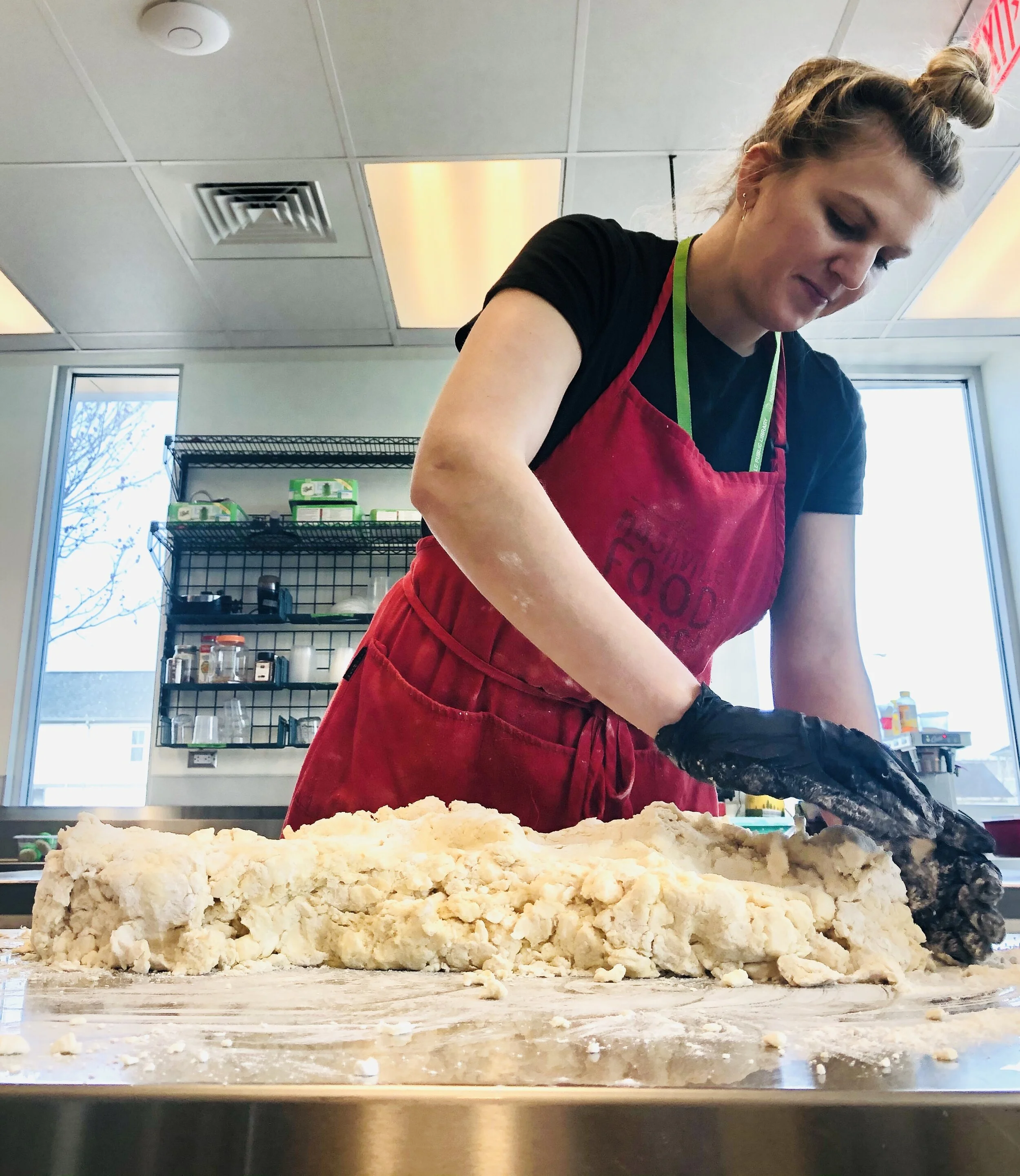
Meg Schmalandt, Sous Coordinator - California Kitchen
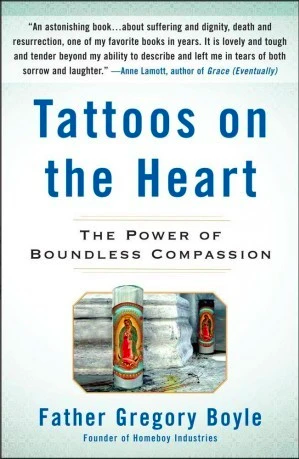
Book: Tattoos on the Heart by Fr. Greg Boyle. It’s kind of related to our work but also very related to being a human, trauma, healing, and spirituality.
Podcast: Dolly Parton's America. I'm. Obsessed. With. Her
Movie: JoJo Rabbit. It'll make you laugh and make you cry. A lot about what it means to grow up and joy as a state of being.
Article: TIME magazine’s 100 Women of the Year
TV: Honestly, Cheer on Netflix was so good.
Ways I'm Coping with COVID-19: Dance parties with my roommates, funny movies, going on walks, working out, and cooking soups + stews. Dreaming about the spring. Planning my wedding flowers :)

Sally Rausch, Growing Together Market Manager
Podcast: This American Life's episode called The Show of Delights made me chuckle out loud so many times, exactly what I've needed the past few weeks-to be reminded that we can find delight in the simplest things and also that someone else sharing their delight can in and of itself be delightful!

Book: Part of that podcast episode highlights poet Ross Gay and his recent book of "essayettes" about finding delight. It's called The Book of Delights: Essays. I've been trying to read one or two before bed instead of scrolling. He is so real and talks about real issues—racism, being black in America, grief—not escapist but about finding delight in our lives as they are. I'm finding it nourishing in the most grounded way.

Bianca Morton, Chef Director
Music: 90’s R&B. It takes me back to a simpler time—high school years when the biggest problem was schoolwork, graduation and fitting in. On Tuesday I let loose some steam and danced to Whitney Houston's Greatest Hits. I danced, sang and cooked. And just for a moment didn't have a care in the world. Just joy!

Tallahassee May, Growing Together Education Manager
Books: I am currently re-reading Gabriel Garcia Marquez's 100 Years of Solitude and Love in the Time of Cholera. Both seem so fitting and are perfect escape-reads in the age of quarantine.
Audio Book: Anne Patchett's The Dutch House. First, you are supporting a local author and small business heroine. And second, you’re supporting a coronavirus survivor, Tom Hanks, who reads it on audio and does an amazing job.

Podcast: Poetry Unbound, an offshoot of On Being with short poetry readings by Padraig O' Tuama.
Music: Nothing beats Beyonce's Homecoming, Live at Coachella! Amazing live music, festival vibe (for when you need to remember what it was like to share intimate space with thousands of people) complete with the best HBCU Marching Band! And when you are feeling quiet and introspective (and alone), Keith Jarrett's solo piano concert masterpiece The Kohl Concert.
Movie: The new movie adaption of Emma was recently released and since its time in theaters was cut short, it is now available for streaming! It’s a fun, gorgeous adaptation. The director, Autumn DeWilde, and I were hippy kids together on The Farm commune in L.A. in the early 70s, and I have loved watching her career blossom and evolve over the years.

Teri Sloan, Development Director
Podcast: I'm a big fan of the Armchair Expert Podcast with actor Dax Shepard and his friend Monica Padman. They do at least two episodes each week having long, deep-dive conversations with different folks from the entertainment industry as well as "experts" like writers, scientists, psychologists, etc. No matter who is being interviewed it always turns out some interesting conversations that make you laugh and make you think about something a little differently.
Article: Not that there's anyone in our city who hasn't read it yet, but Margaret Renkl's "What it Means to be #NashvilleStrong" article moved me to tears recently.

TV: I've been eagerly anticipating the release of Little Fires Everywhere on Hulu. It's Reese Witherspoon's and Kerry Washington's television adaptation of Celeste Ng's popular book of the same name. The first three episodes dropped last week, and I'm already hooked. I've also been taking the time at home to start binging some of the TV shows everyone else has been talking about over the years that I never watched: Schitt's Creek, The Wire, etc.
Other ways of coping through COVID-19: I've been cooking, and I've got a batch of homemade limoncello steeping in the cabinet. My next big idea is teaching myself the longtime TNFP pastime of knitting. Anyone got any good YouTube videos to check out?