
The Nashville Food Project’s Blog

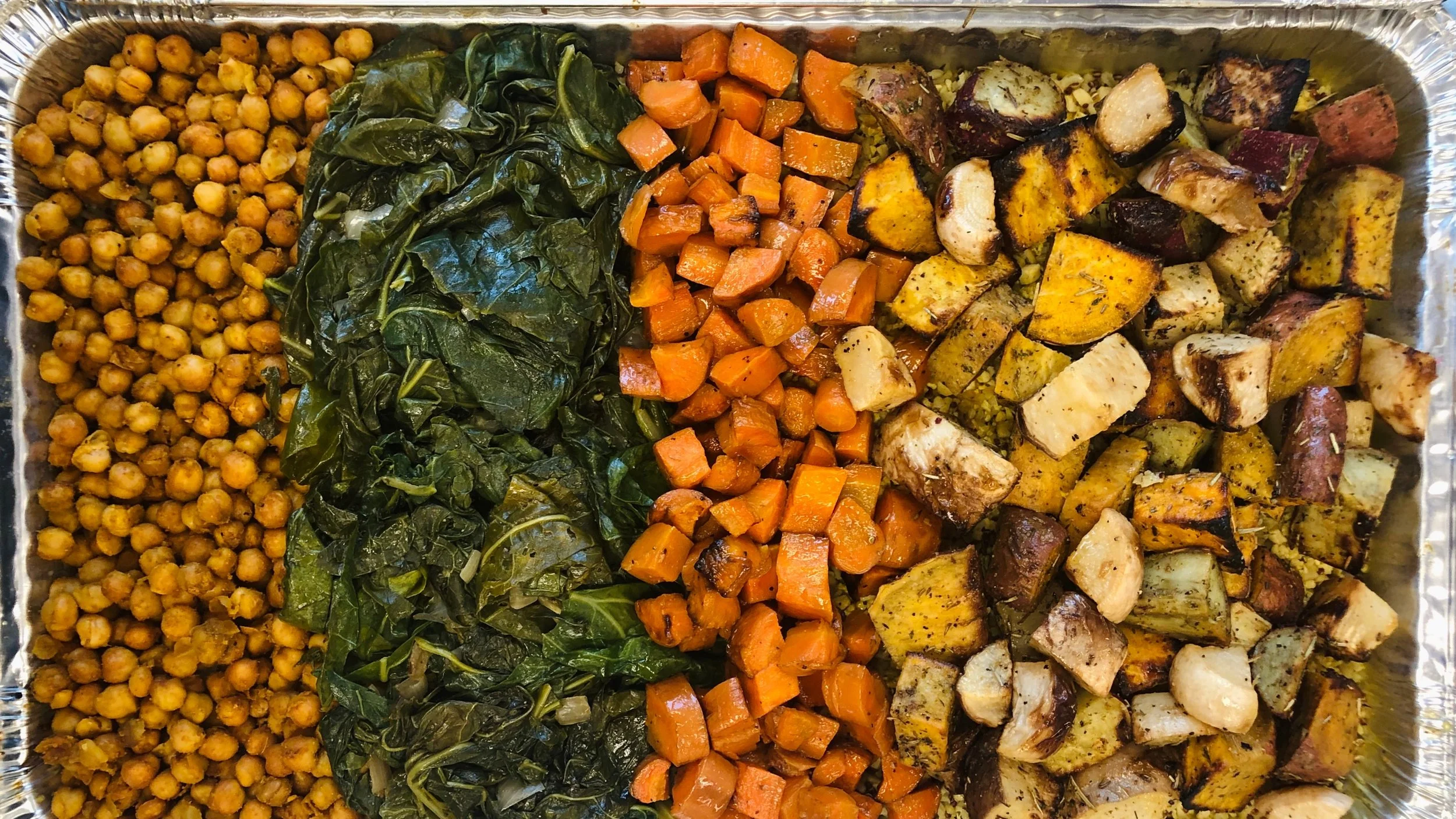


"Dirty Pages" Community Potluck
“I tell my daughters that when I go, they’ll know the good recipes by the dirty pages.” —Kim McKinney
That’s the quote that launched Dirty Pages, a recipe storytelling project celebrating our most well-loved recipes with their splatters and stains. We know they make good dishes, because they’ve been handed down to family and friends. But they also act as maps -- their scribbles in the margins helping connect us and tell our stories.
“I tell my daughters that when I go, they’ll know the good recipes by the dirty pages. —Kim McKinney”
That’s the quote that launched Dirty Pages, a recipe storytelling project celebrating our well-loved recipes with their splatters and stains. We know they make good dishes, because they’ve been handed down to family and friends. But they also act as maps, their scribbles in the margins helping connect us and tell our stories.
The Dirty Pages project has produced three exhibits. The first exhibit (featured in The New York Times) lives in the permanent collection at the Southern Food & Beverage Museum in New Orleans. The second exhibit, Dirty Pages: 10 Roads to Nashville, was featured at Casa Azafran. Now the third and most recent exhibit hangs at The Nashville Food Project.
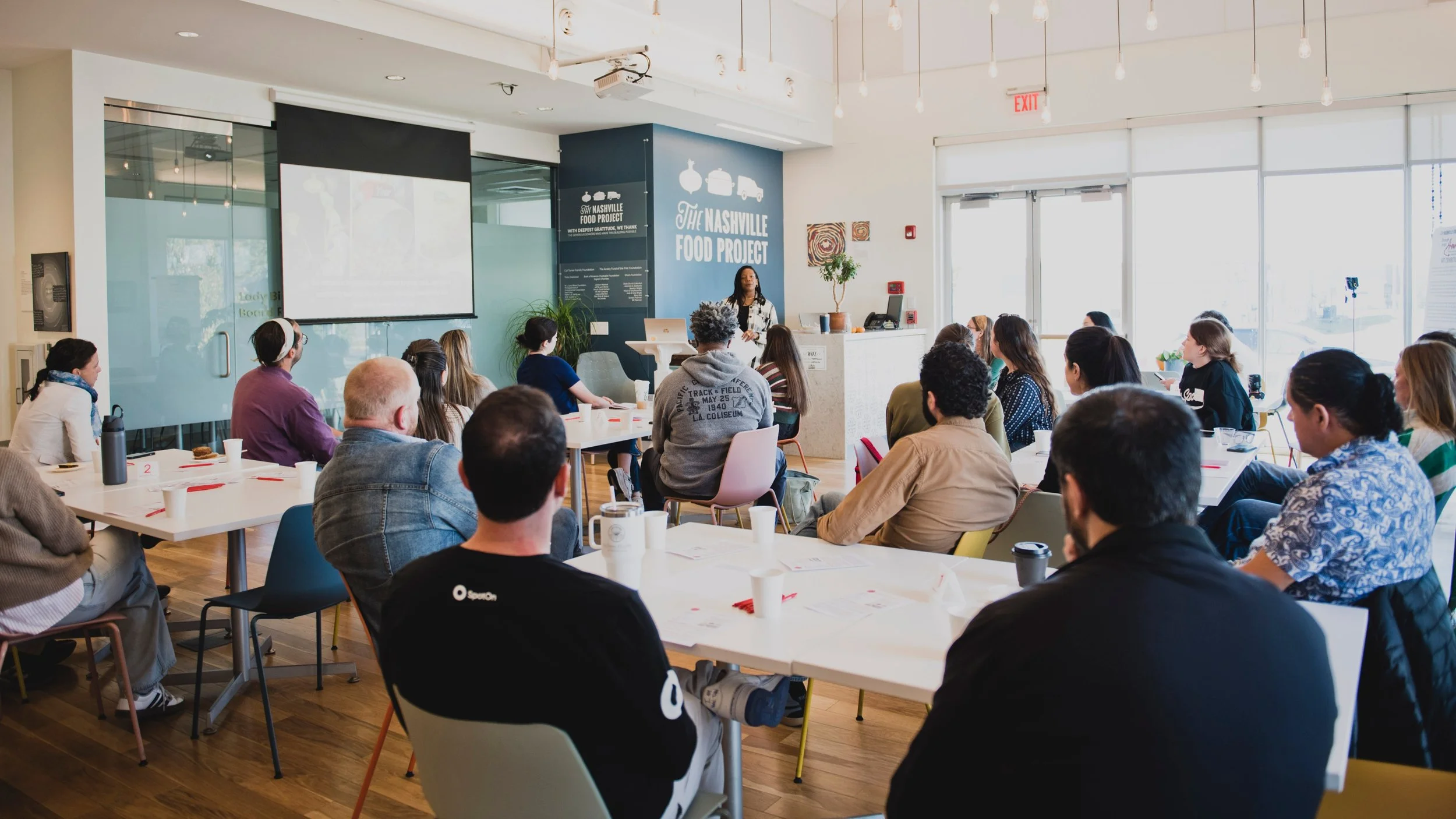
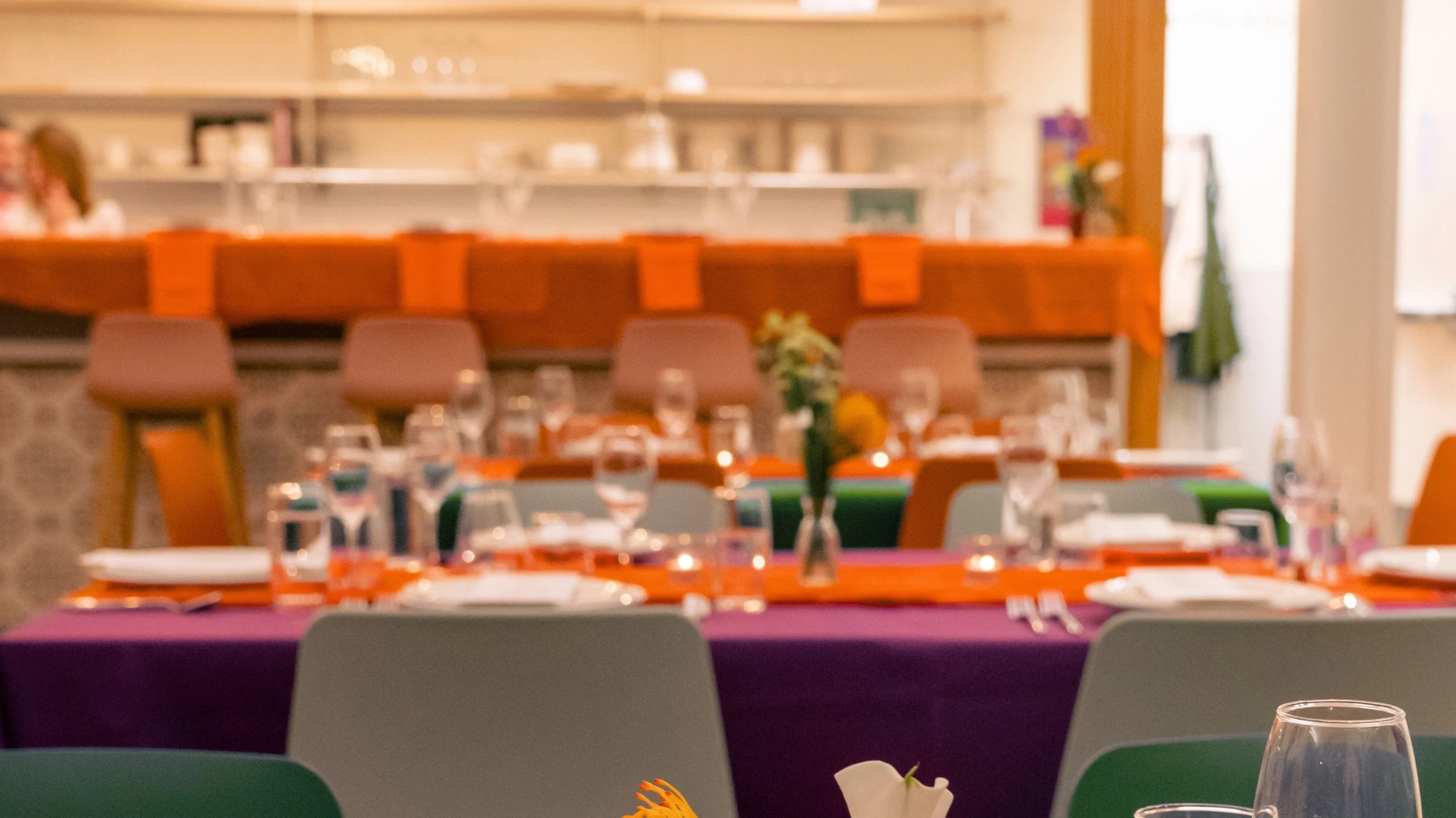
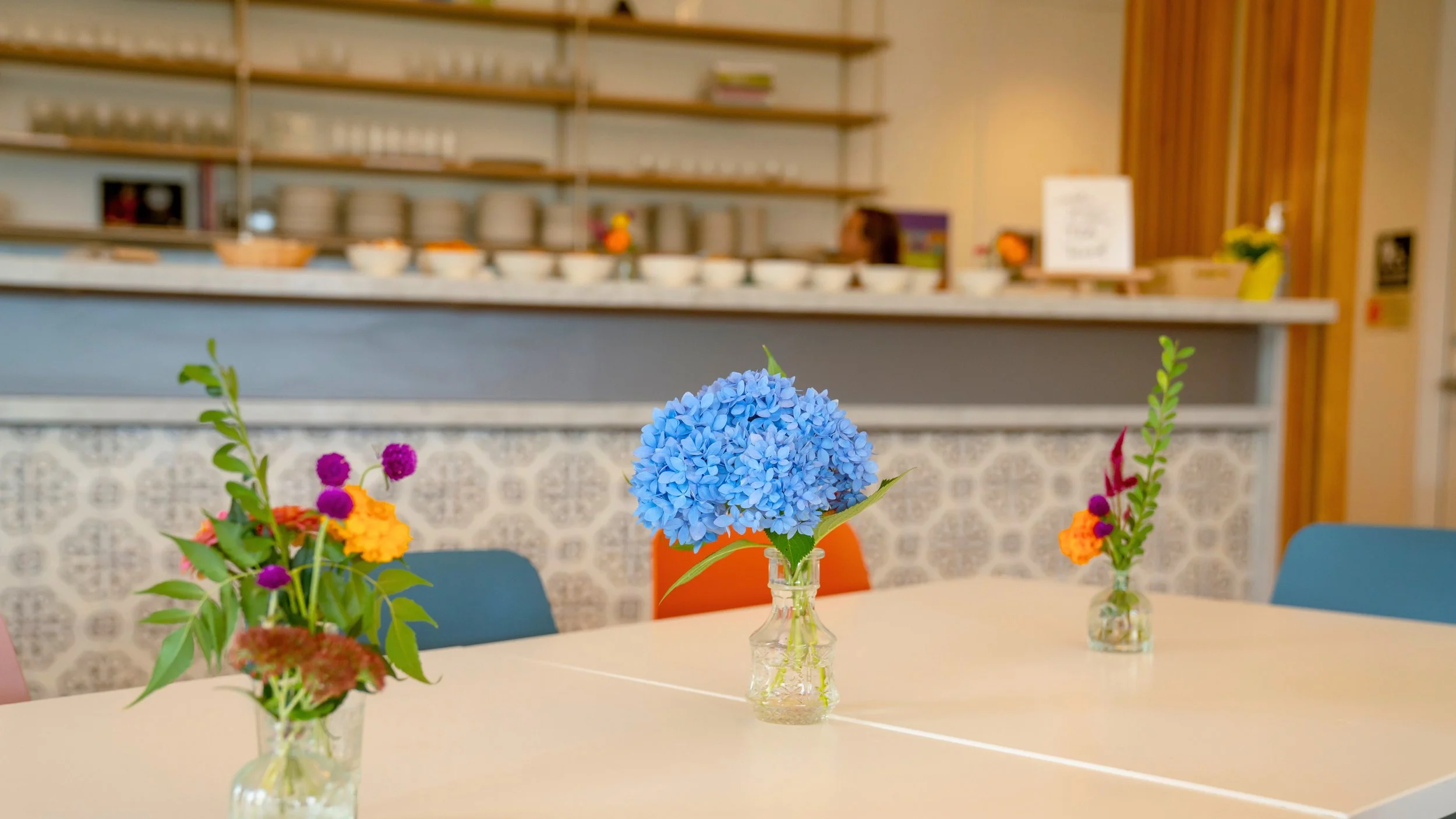
To celebrate it, we’re hosting a “Dirty Pages” Community Potluck this Sunday, Feb. 16 at 1 p.m. If you’d like to join us, please bring a dish to share that serves about 8-10 people. We’ll have lunch and conversation and a bit of show-and-tell time for those who would like to talk about their recipe.
The event isn’t ticketed, and it’s open to all. Space, though, is limited, so please RSVP here. We hope to see you Sunday!
Also, please stay tuned for an exciting Dirty Pages-themed Simmer dinner next month!
In the meantime, TNFP staff shared their Dirty Pages in a team building meeting recently. Here are a few excerpts:

Julia Reynolds Thompson, Director of Garden Operation
Recipe: The Reynolds Family Eggnog
I chose the Reynolds Eggnog, which is a recipe my family makes every year. My great-grandfather, Edward Reynolds, had grown up in Pembroke, Kentucky, which is just on the other side of the state line. He grew up on a tobacco farm, but he and his brother hated tobacco farming, so they decided to leave Kentucky and go to Dallas. They lived in the YMCA there while they looked for work. They ended up in the clothing business and eventually they owned their own men’s clothing store, which was also passed through the family. I remember growing up playing inside the racks of clothes.
I like this recipe because I feel like it is a thread that connects all the way back to my great-grandfather and his journey from Kentucky to Texas. My family, growing up, felt very Texan. Everyone is from Texas and has been there a long time. But now that I live in Tennessee I like having that trace of story all the way back.
It’s a really simple recipe. It has four ingredients: a dozen eggs, 12 tablespoons of sugar, a pint of bourbon and a quart of whipping cream. We still make it every Christmas.

Bianca Morton, Chef Director
Recipes: My Grandfather’s Yeast Rolls
My grandfather baked something every meal—yeast rolls, fresh-baked breads, cakes, fried pies. I did not inherit that skill.
Every holiday he always brought fresh-baked, melt-in-your-mouth yeast rolls. He brought some for dinner and packaged some in gallon-sized Ziplock bags for each family to take home. We fought over them.
My first Christmas after graduating culinary school, I cooked a big, fancy dinner, my first one trying to impress everybody. Watching him eat, he was so happy and excited, and you could tell he was proud. Here’s the tear-jerker: He had a massive stroke that night. That was the last time I saw him smile. I spent the next two weeks caring for him in the hospital. He couldn’t communicate, but he looked at me and squeezed my hand, and it made me feel invincible, all his love. I’ve been chasing that, and every holiday I’ve been trying to make these rolls. This last Christmas, 18 years since he passed away, my family was like, “I think you got it.”

Tallu Schuyler Quinn, CEO
Recipe: Mama’s Marinara Sauce from Dom DeLuise’s “Eat This...It’ll Make You Feel Better” cookbook
My dad bought me this cookbook by Dom DeLuise. When I was young, maybe 8 or 9, I thought Dom was a chef, but I understand now he was just an actor and maybe not even a good one.
My parents wouldn’t let my brother and me buy a lot of stuff when we were kids, but they would pretty much always say yes if it was a book.
I remember making this marinara sauce with my dad and what a mess we made. When I was growing up, I loved food shows like The Frugal Gourmet, Julia Child and any other food show on the television. I vividly remember an episode of Mister Rogers’ Neighborhood when he visited a Pittsburgh bakery and learned how to make sourdough pretzels. Later on in life, I loved Food Network shows like Molto Mario, Nigella Lawson and Barefoot Contessa. I am now a mother to children who love watching Mind of a Chef, America’s Test Kitchen, and The Great British Baking Show.
My 7-year-old daughter is strong-willed, capable in the kitchen, and wildly creative. She makes grocery lists every week, begs me to “mise en place,” wants an internship at The Nashville Food Project’s kitchen, and recently made flyers for a pop-up bake shop at our house called “Lulah’s Larder.” In other words, every page is a dirty page in Lulah’s world. The scope of her big ideas overwhelms me, and now I know that’s how my own mom must have felt as she figured out how to give me the space I needed to be me. Maybe still does. I obviously know that Lulah is not me, and she is not mine, but the congruence and similarity of the kitchen obsessions settle over me, and that where I go when I reflect on this dirty page from my past—it connects me to the mystery of my own life; I’m so grateful for that.

Grace Biggs, Director of Food Access
Recipe: Chicken Noodle Soup
This is my mom’s chicken noodle soup and her mom’s, and it’s one of my favorite early memories. The noodles are the main event of this recipe. My mom made the dough from scratch, rolled it out, and cut the noodles dumpling-style. They would be laid out taking up the whole kitchen table, which was most of our kitchen, for hours. My sister and I would sneak dough off the table, and she told me she added the note later to “double the recipe” because of “sneaky fingers.” My grandmother would make it when we were sick and bring it over in Mason jars. I’ve adapted my own version of the original recipe over the years by adding veggies and sometimes even curry, but anytime I make it I feel connected with them.

Elizabeth Langgle-Martin, Community Engagement Manager
Recipe: Wassail
Wassail is something that my family drank every holiday season, and I always remember that we had enough of it to share with other people—that it could be a gift at a time that could be stressful. It was fun for our family to share. We would fill up big Mason jars and give it to teachers and neighbors. And I have funny memories of lugging big, hot sloshing posts of wassail to family gatherings—inching down the road and hoping that it’s not spilling out in the back.
It’s a twist on apple cider, and it’s something a lot of my friends know as our family holiday beverage. My siblings and I still make it in our own spaces.
Food as a Lens
On a recent Thursday, more than 45 people filed into The Nashville Food Project’s community dining room, shaking umbrellas and shedding coats to join us for a hot cup of scratch-made sweet potato chili, a panel, and community conversation on the complexities of food injustice and how hunger intersects with other systemic inequities.
By Elizabeth Langgle-Martin, Community Engagement Manager

On a recent Thursday, more than 45 people filed into The Nashville Food Project’s community dining room. Guests entered shaking umbrellas and shedding coats to join us for a hot cup of scratch-made sweet potato chili, a panel, and community conversation on the complexities of food injustice and how hunger intersects with other systemic inequities.
Panelists (featured below) sat perched on tall, colorful stools as moderator and the Nashville Food Project’s CEO, Tallu Schuyler Quinn, set intentions for the evening.
The conversation, like the reality of food inequity, was messy. Mentions of racial tensions, top-down versus bottom-up change, the stigma that inhibits folks from accessing lifesaving safety-nets, and institutions that have long held up inequity speckled across panelist contributions. Through our Q and A time, it was evident that guests were also struggling with how to reconcile the picture of what a just food system could look like with the reality of the amount of brokenness we see splintering across so many people’s access to elements that should be basic human rights. It’s an uncomfortable and necessary conversation. It’s a discussion that requires both fierce hope and space to feel the deep brokenness of our existing system.
Here are some snapshots of the many contributions from each of the folks who leveraged their time to discuss how food can be a lens for other pressing justice issues.

“ We have a federal government actively working to dismantle SNAP… One of the changes that recently came out was a proposal on time limits. Individuals between the age of 18-49 are only allowed to be on SNAP for three months unless you meet certain requirements or are working… If you are struggling to find a job, why is taking food away going to help you find a job? There is no research that exists that shows that that is the case. Another one that happened this past Friday, is a proposal that is attacking the school system and the nutrition standard. So, when you have a government that is going through not normal channels to dismantle these programs, that’s going to impact all of our communities.”
“We need shared ownership and shared equity… We need grocery stores that are cooperatives… For-profit entities where people actually get to own and buy from the same place… We need to figure out neighborhood connectivity. I’m thinking of neighborhood ownership, farmlands, grocery stores. I’m thinking large scale so that way we could actually sustain a city.”

“People’s access to housing affects where people live. Where people live affects the schools their children go to and where they can get food… these issues are so interconnected. In Nashville for instance, our housing costs have almost doubled in the last 10 years, from around $700 or 750 to around $1400... that’s double. When our housing costs go up people have less money spent on healthy food and have to start cutting corners. In the United States, we have dug a very deep hole… We have divested from the lives of poor, indigenous, black, and brown folks. That hole has been dug by slavery, redlining, not having a living wage, not supporting the rights of workers who need to organize… we have the gutting of the federal funding of housing... same thing with cutting food stamps. This hole is man-made, women-made, made by the people in power, and this hole is deep.”

“ Many [older people] have never been at a place in their lives [until now] where they need help accessing food. When you become older, you can be invisible and you can look like you are okay… But I’ve seen people who were emaciated from malnutrition. I see hunger manifested through isolation. It is hard for [aging adults] emotionally to be at a place in their lives where they have to seek food [assistance].”

“When we talk about equality, we are talking about sameness. When we talk about equity, that is when we move into the realm of justice and fairness. That is where we need to be in a systematic approach in everything that we do in our country and in our city. Nashville operates in a silo tendency. We look at everything in its own specialized department. We want to talk about housing today, so let’s open the housing drawer. We want to open about transportation, let’s open the transportation door and close this [housing] drawer. All of this is a systematic, circular framework that we need to put equity at the top. ”
Tallu closed by paraphrasing a past professor who noted that we have to absorb enough of the world’s brokenness not to paralyze but to galvanize us, moving us to action.
Signe noted “People often feel intimidated by being advocates but it can be as simple as saying ‘This is what I believe and this is what I see and I think others should see this.’ Find stories, share stories, learn more…”
Inspired to act? Here are a few ideas!
Click here to find council person by your home address.
To receive nutrition policy updates, click here to follow Tennessee Justice Center and sign up for email updates.
To learn more about OTN’s work around homelessness, and to join them in advocacy and action, visit their website.
To volunteer for Fifty Forwards Meals on Wheels Program, contact: sloik@fiftyforward.org
To learn about My Brother’s Keepers Network visit their Facebook.
Missed the conversation? Click here to check out our recording of Food as a Lens.
Beloved Community
Imagine a global community of caring where poverty, hunger and injustice are no more. Hard to picture, right? On this Martin Luther King, Jr. Day of Service, we celebrate the life of Dr. King and reflect on his dream for a “beloved community” - the ultimate goal of nonviolent activism for peace and justice…

Kicking off the day with reflections on Dr. King’s life and message at the Food Project’s headquarters.
Imagine a global community of caring where poverty, hunger and injustice are no more. Hard to picture, right? On this Martin Luther King, Jr. Day of Service, we celebrate the life of Dr. King and reflect on his dream for a “beloved community” - the ultimate goal of nonviolent activism for peace and justice.
While this vision of a beloved community may seem far from reality, at the Food Project we truly believe that…
“If you can’t fly then run, if you can’t run then walk, if you can’t walk then crawl, but whatever you do you have to keep moving forward.”
As a ‘move forward’ on this Martin Luther King, Jr. Day, we’re grateful to have the support of a grant by the Corporation for National and Community Service! This year, several chapters of The Arc and partner organizations are working together to promote inclusive volunteering, bringing together people with and without disabilities to serve their communities.
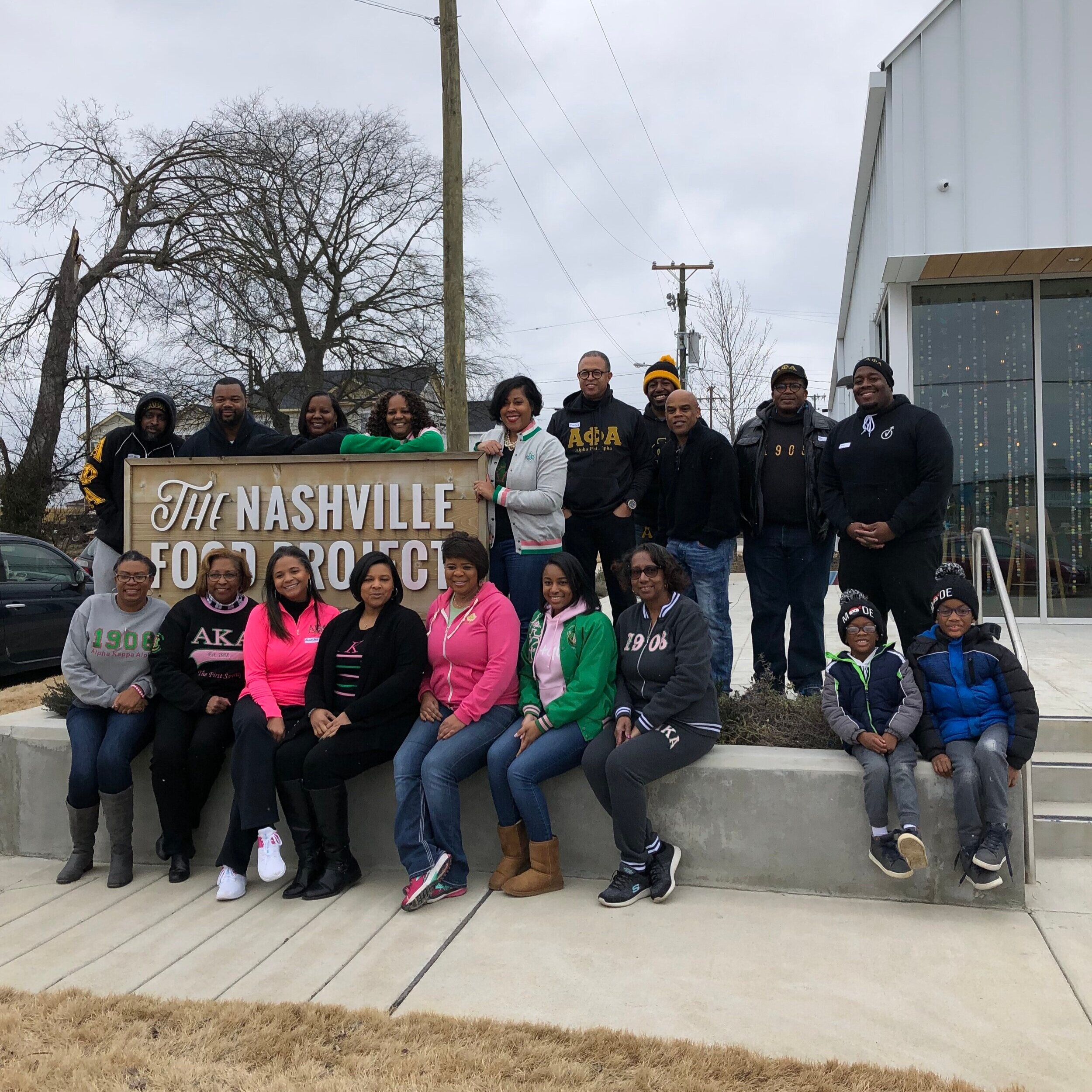
For this Day of Service, we partnered with volunteers from the alumni associations of Alpha Phi Alpha Fraternity, Inc and Alpha Kappa Alpha Sorority, Inc, and Park Center’s Emerging Adults Services to provide vital food support in the Nashville community.
Volunteers gathered together in the morning for a kick-off meeting, spending time reflecting on the life and message of Dr. King. The Nashville Food Project’s CEO, Tallu Quinn, opened the morning by sharing some thoughts on Dr. King’s vision of a beloved community.

Simba The Poet
We were also honored to welcome Simba Alik Woodard -- also known as Simba The Poet -- a Black, Queer, Trans activist and spoken word artist from Nashville. He has been leading writing workshops and working with youth organizations around the city to contribute to the movement of healing young people through the arts. Simba shared a poem from his recently released book, The Gun That Killed Devin.
At the Food Project, we know that good food alone is not a solution to hunger, poor health, poverty and isolation. That’s why we make sure our nutritious meals and snacks are supporting the vibrant, creative work of anti-poverty and community-building organizations in our city!
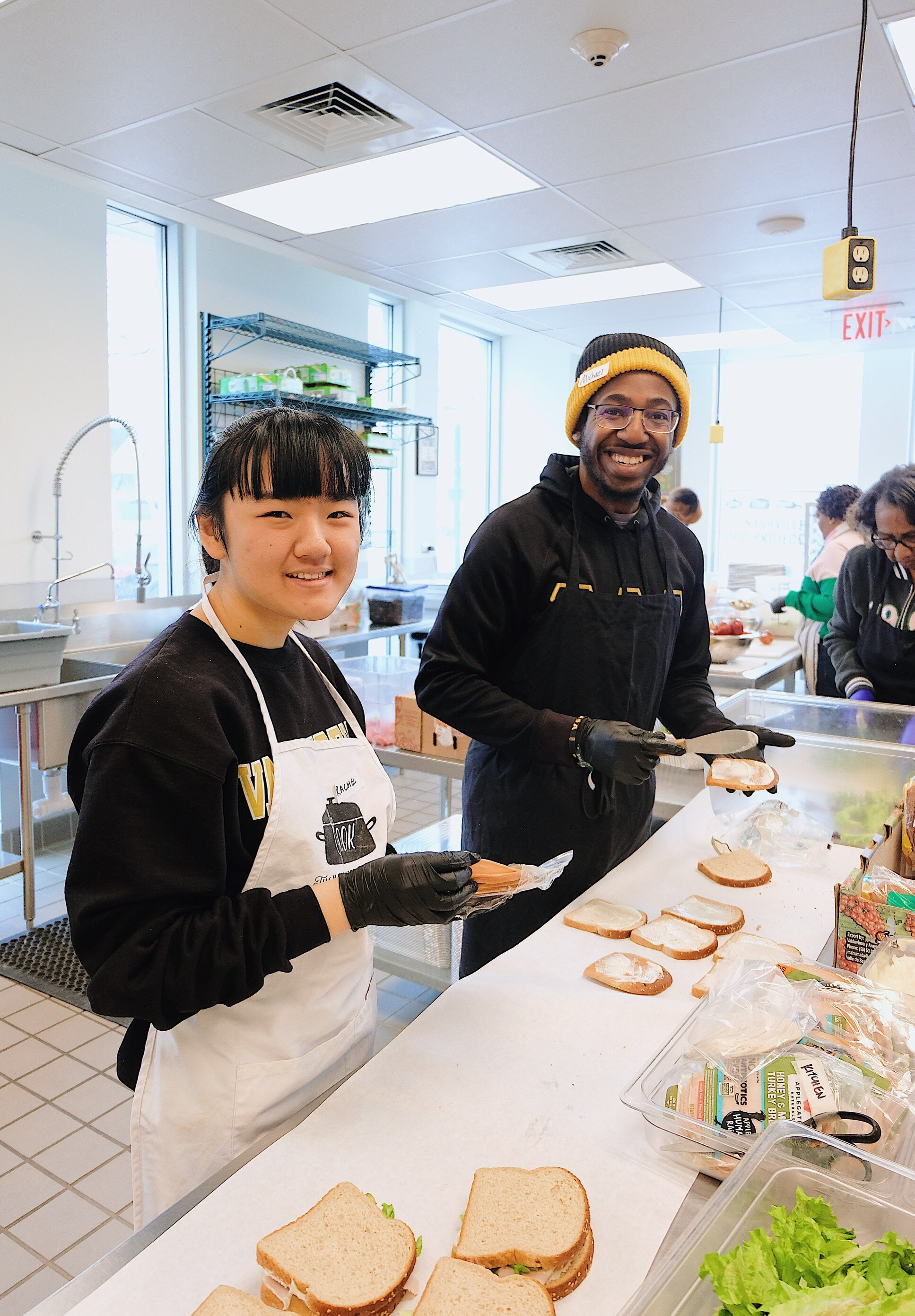
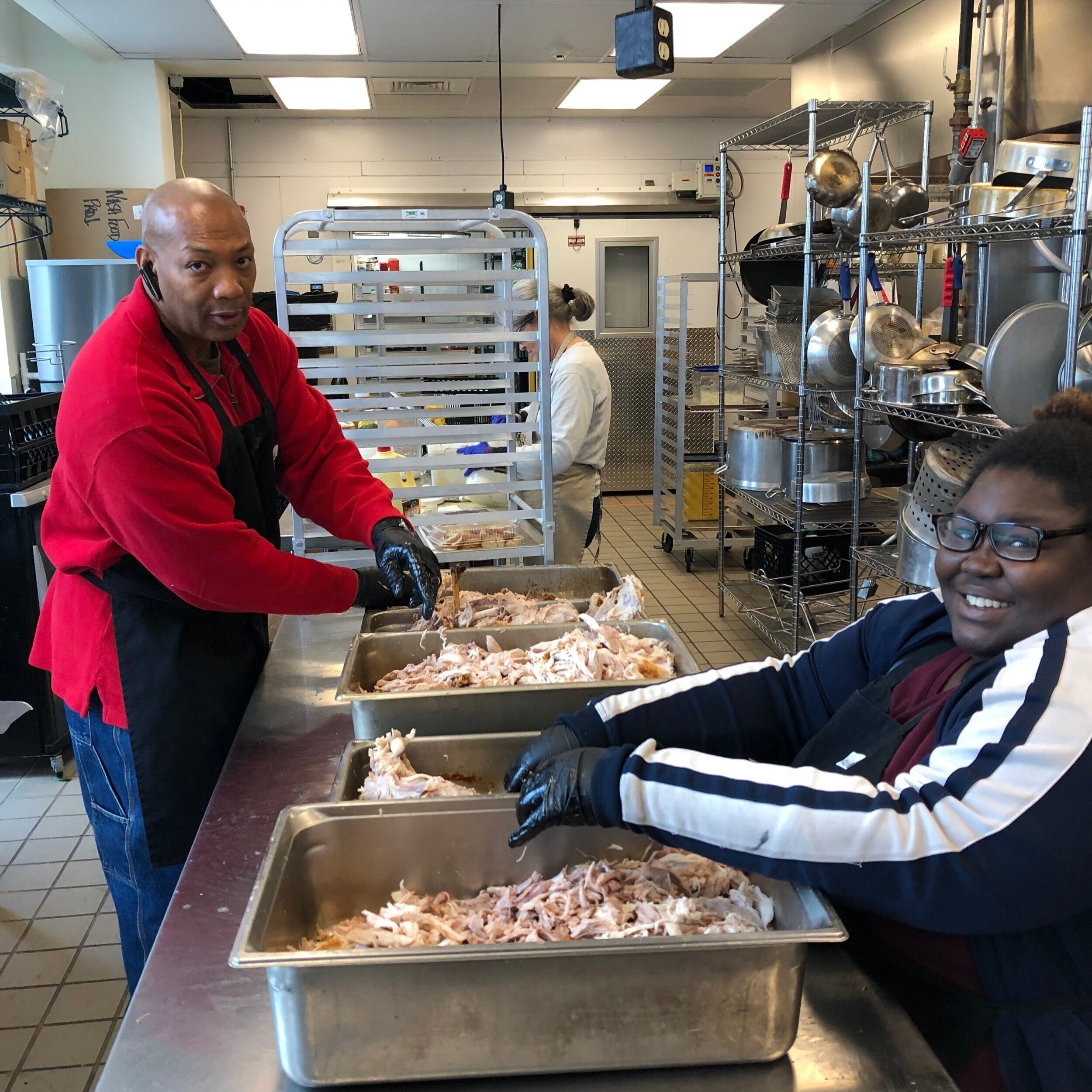
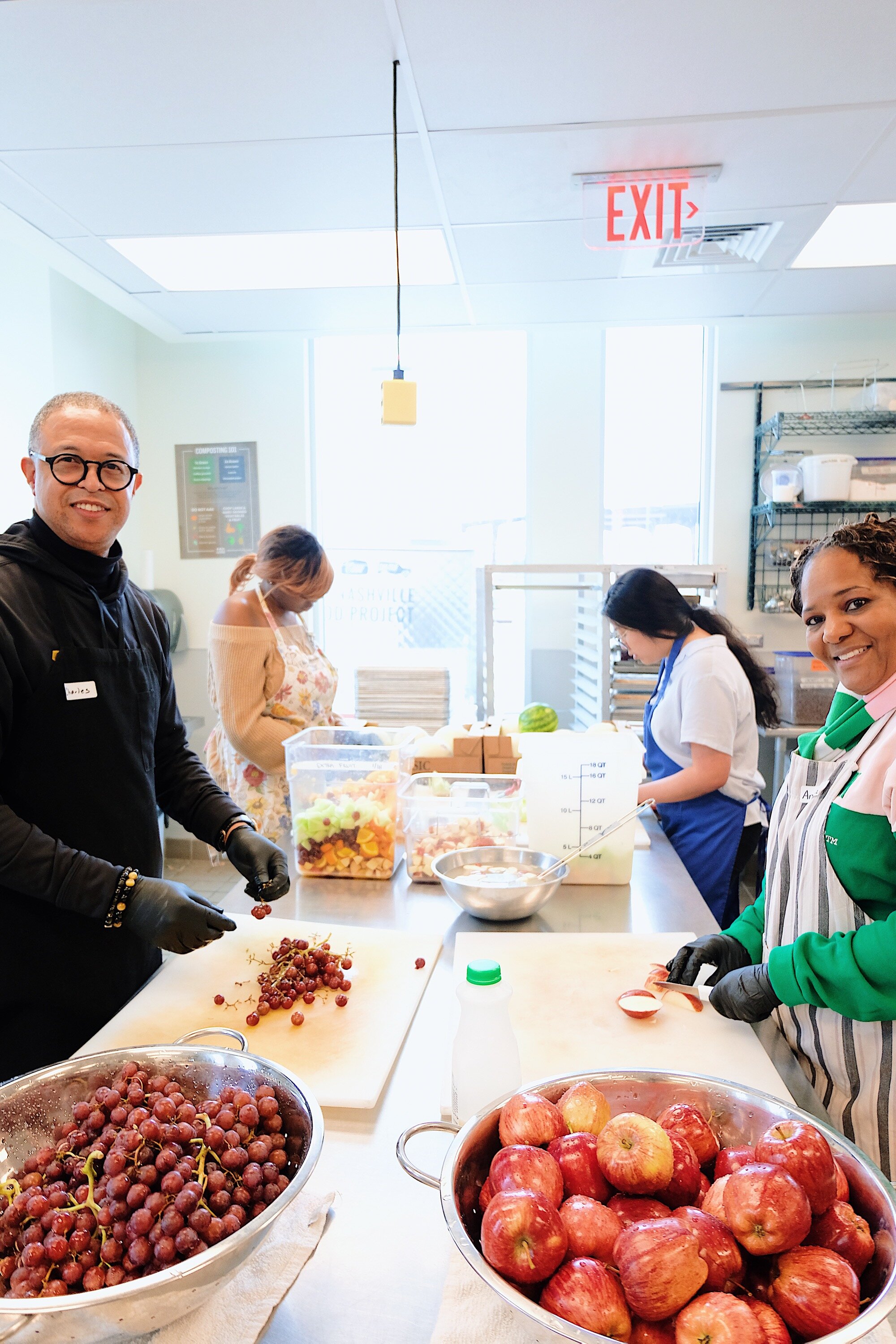
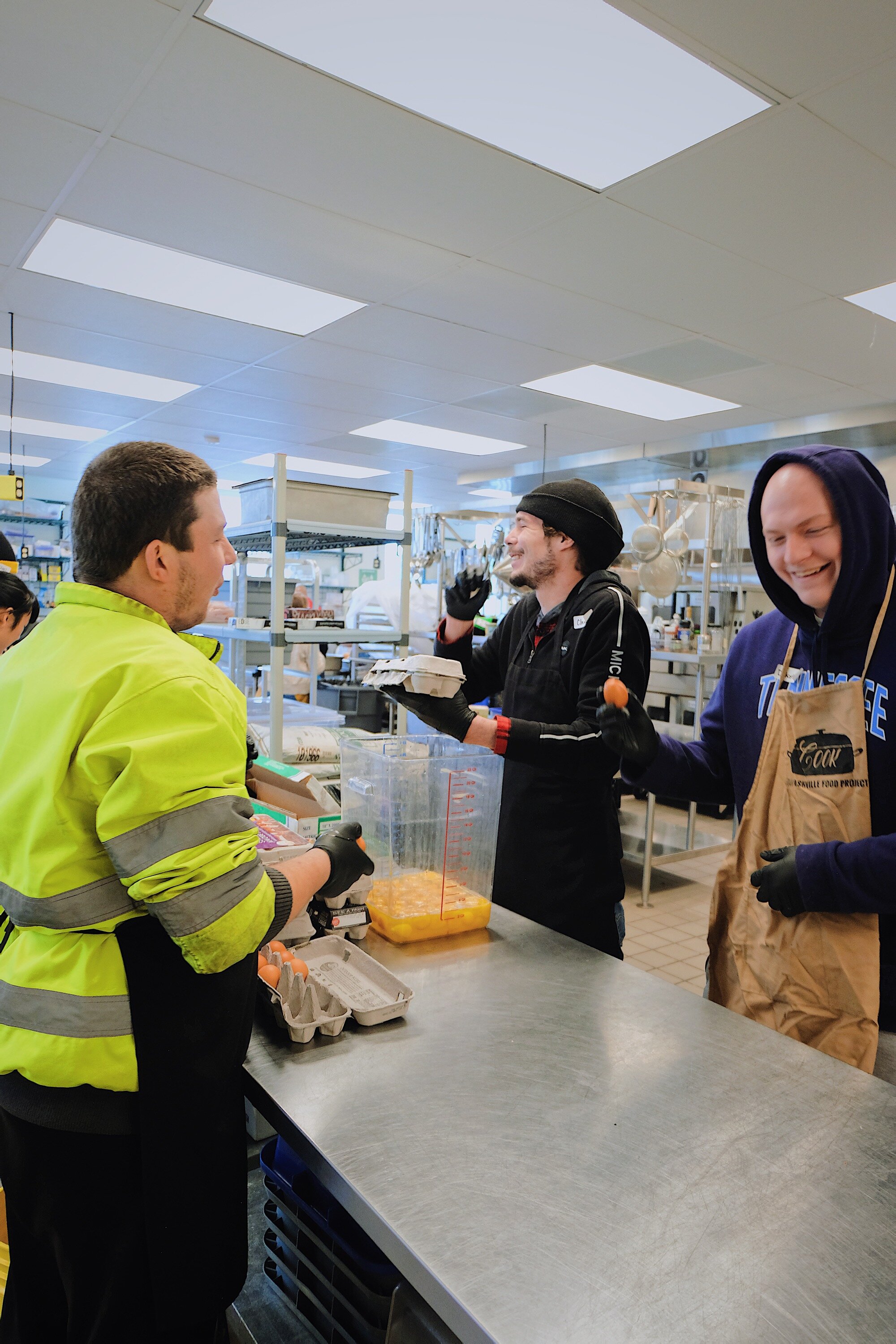
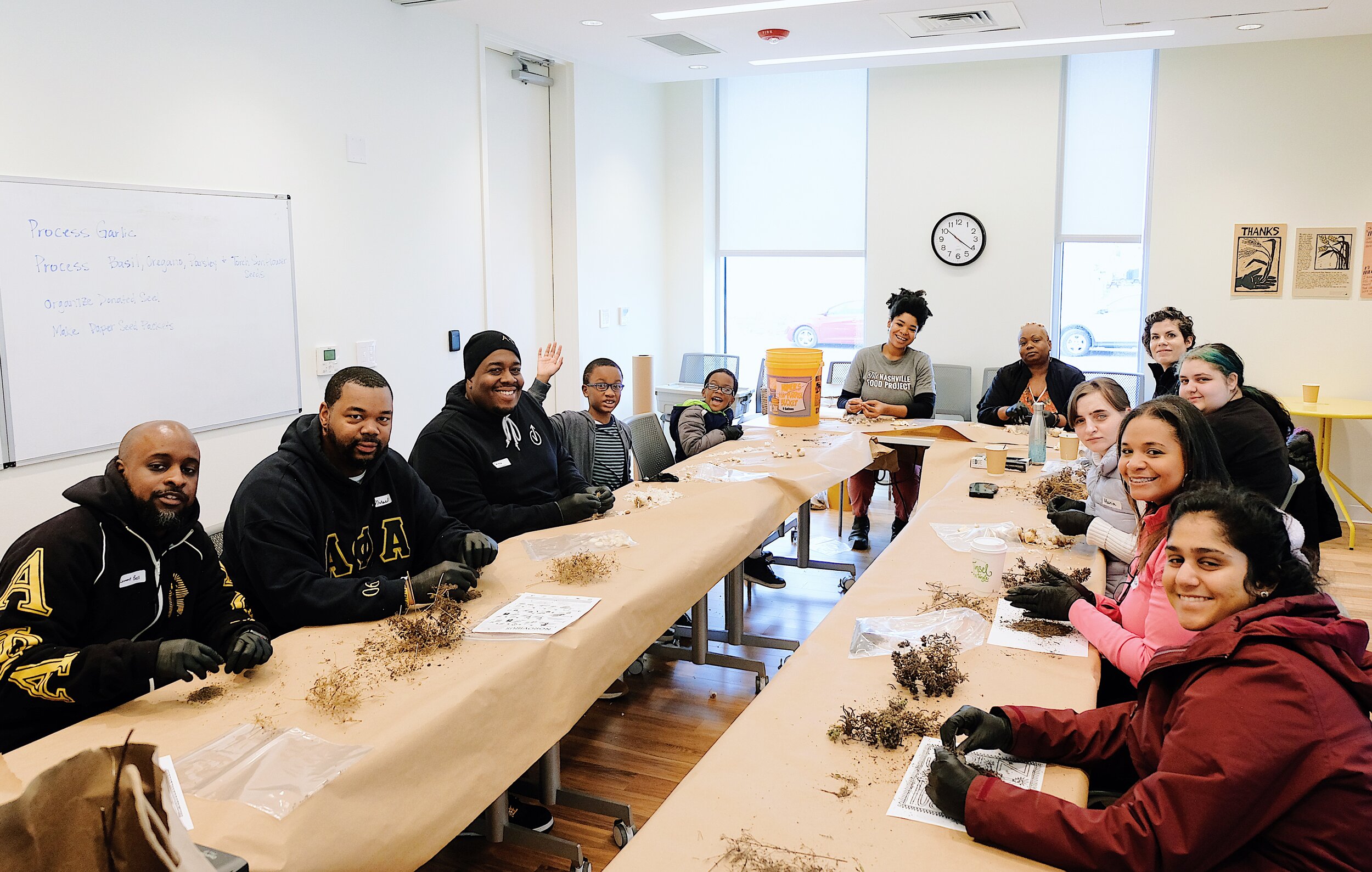
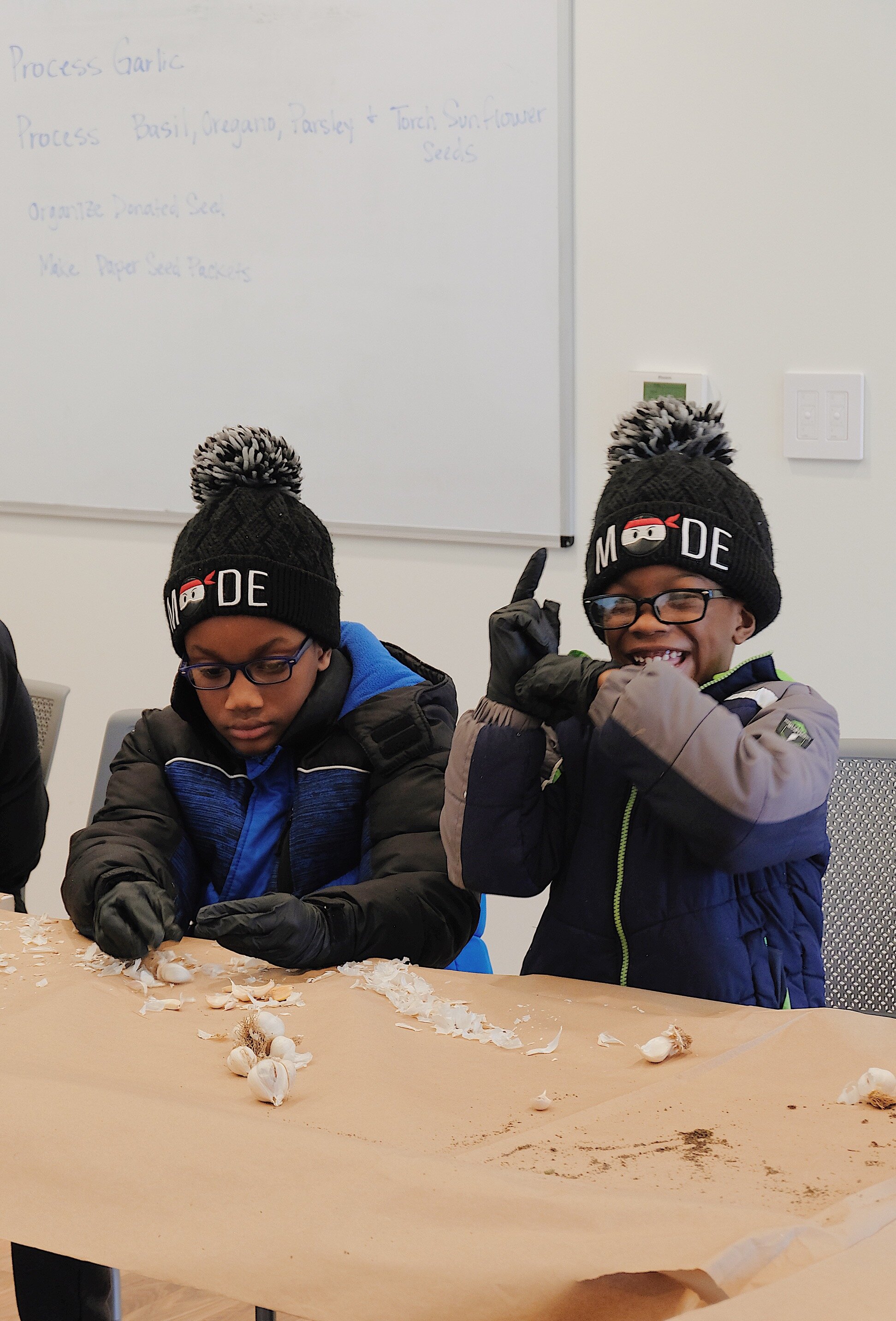
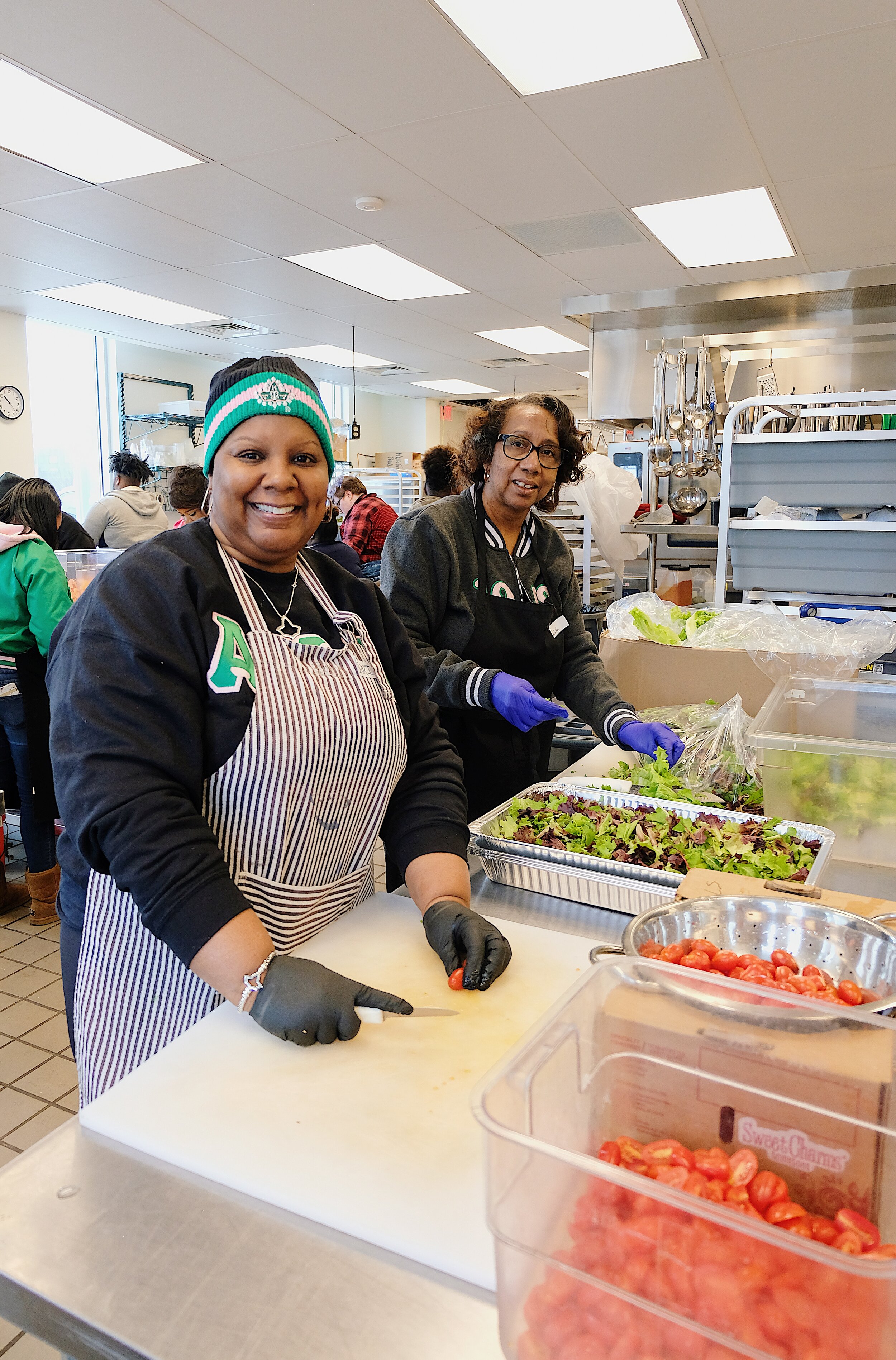
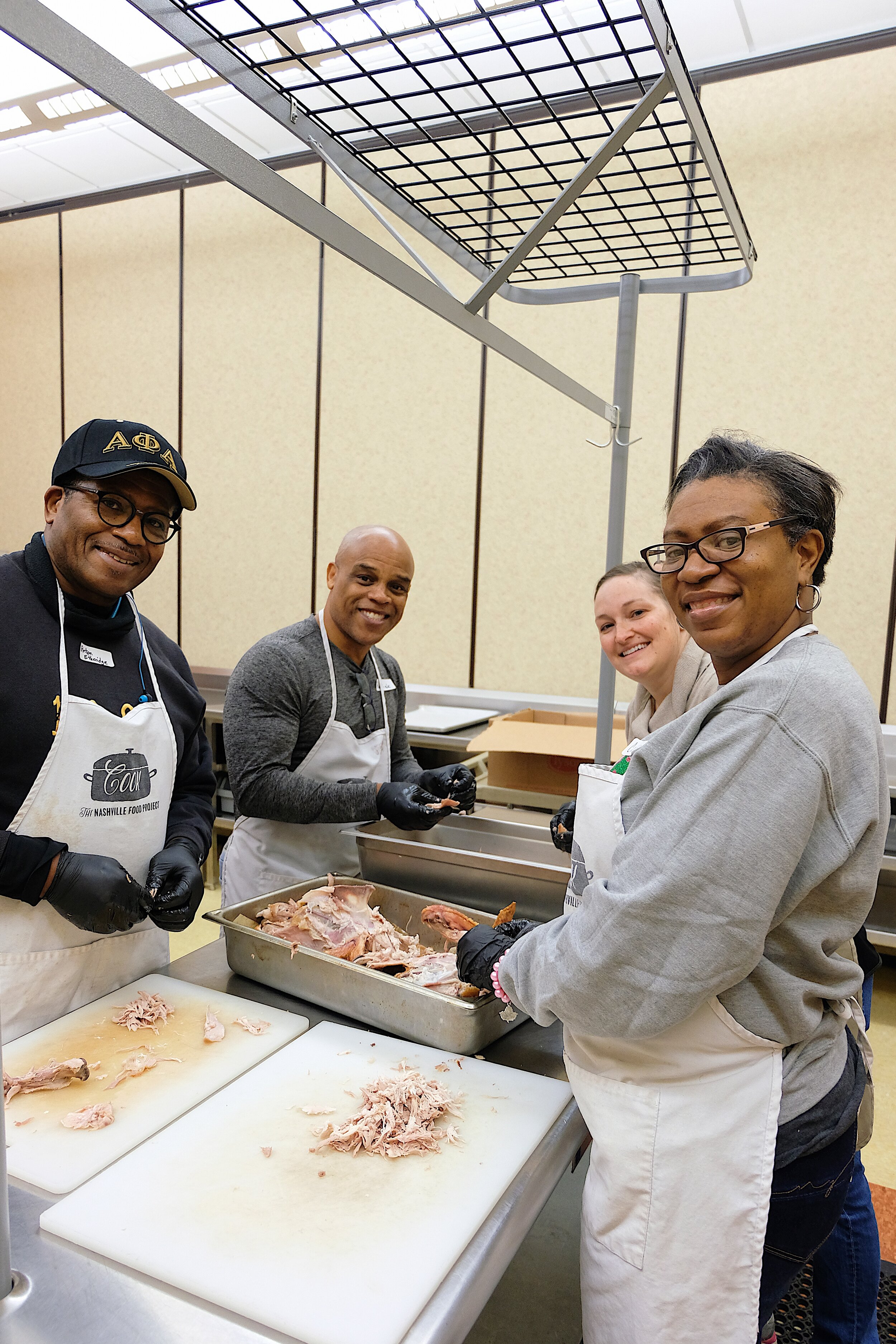
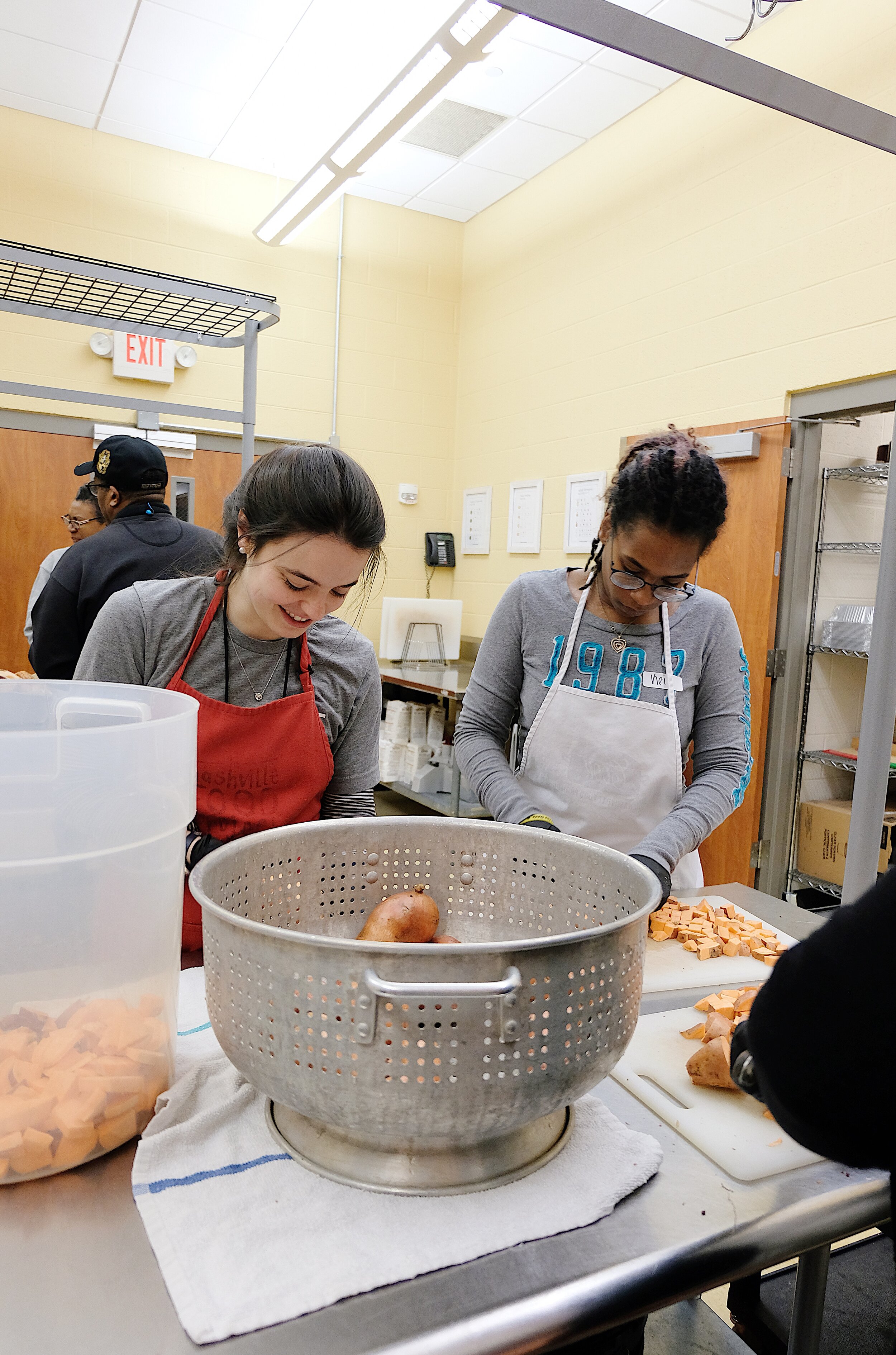
MLK day volunteers working at our two commercial kitchens prepped food for 1,299 meals, which TNFP staff will deliver to 22 partner nonprofit program sites across Nashville. Volunteers also assisted with preparing seeds for our production and community gardens, where TNFP grows food for our kitchens and facilitates access to land and garden training for Nashvillians to grow food for themselves and their families.

Chef Bianca
To close the project, volunteers returned to the Food Project’s headquarters to reflect on the day while sharing a meal cooked by our Chef Director, Bianca, inspired by Dr. King’s favorite foods with a Food Project twist: oven baked “fried” chicken, mac & cheese, and salad.

In addition to our event on January 20th, our headquarters kitchen also hosted 15 college-age students from the following schools: Belmont, Fisk, Lipscomb, Meharry, Nashville State, Tennessee State University, Trevecca and Vanderbilt University on Saturday, the 18th. Their time prepping fresh ingredients for our meals program was part of a MLK Joint Day of Service, helping connect over 400 students to special projects in the Nashville area with intention around food access, community beautification and other community needs.
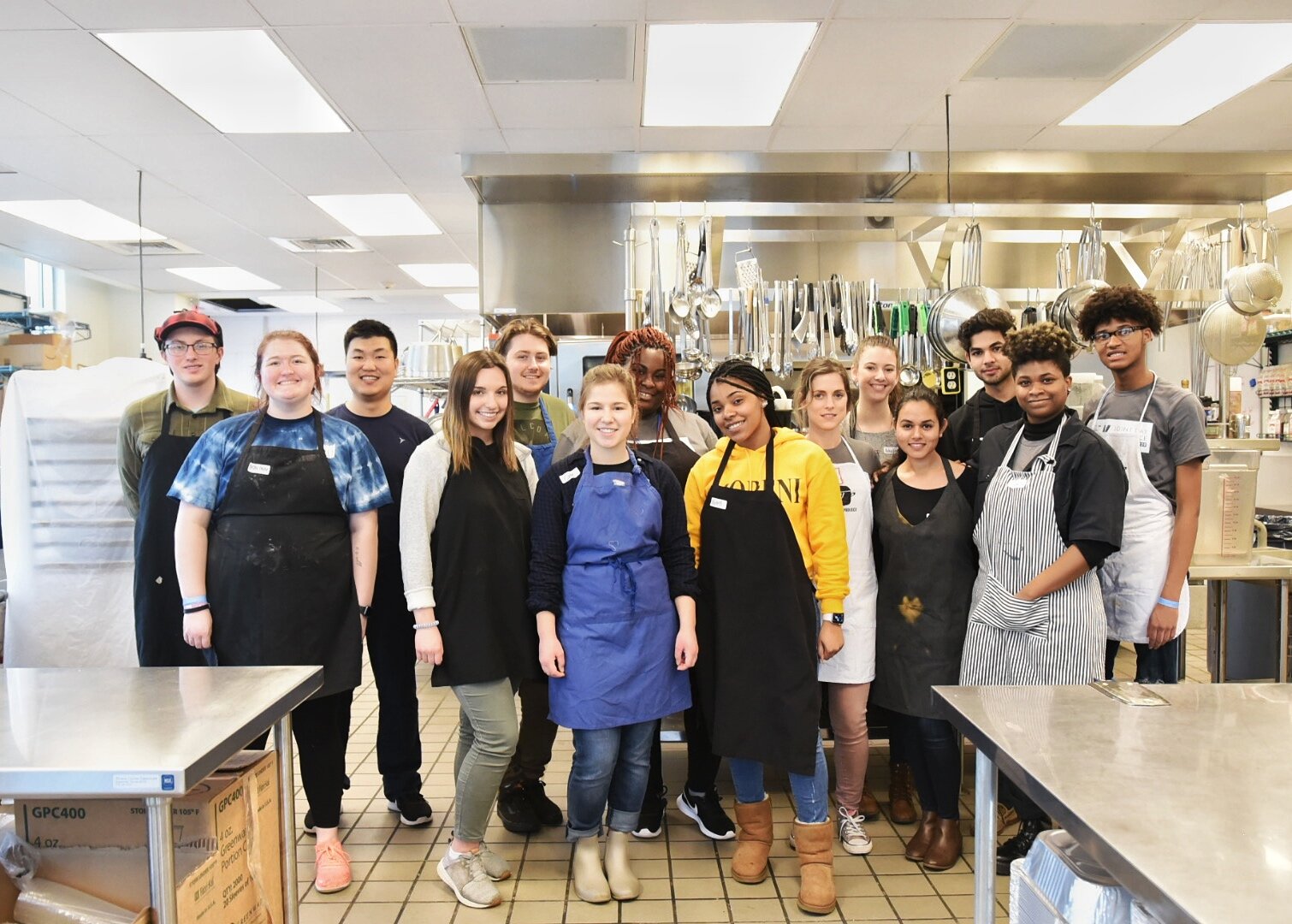
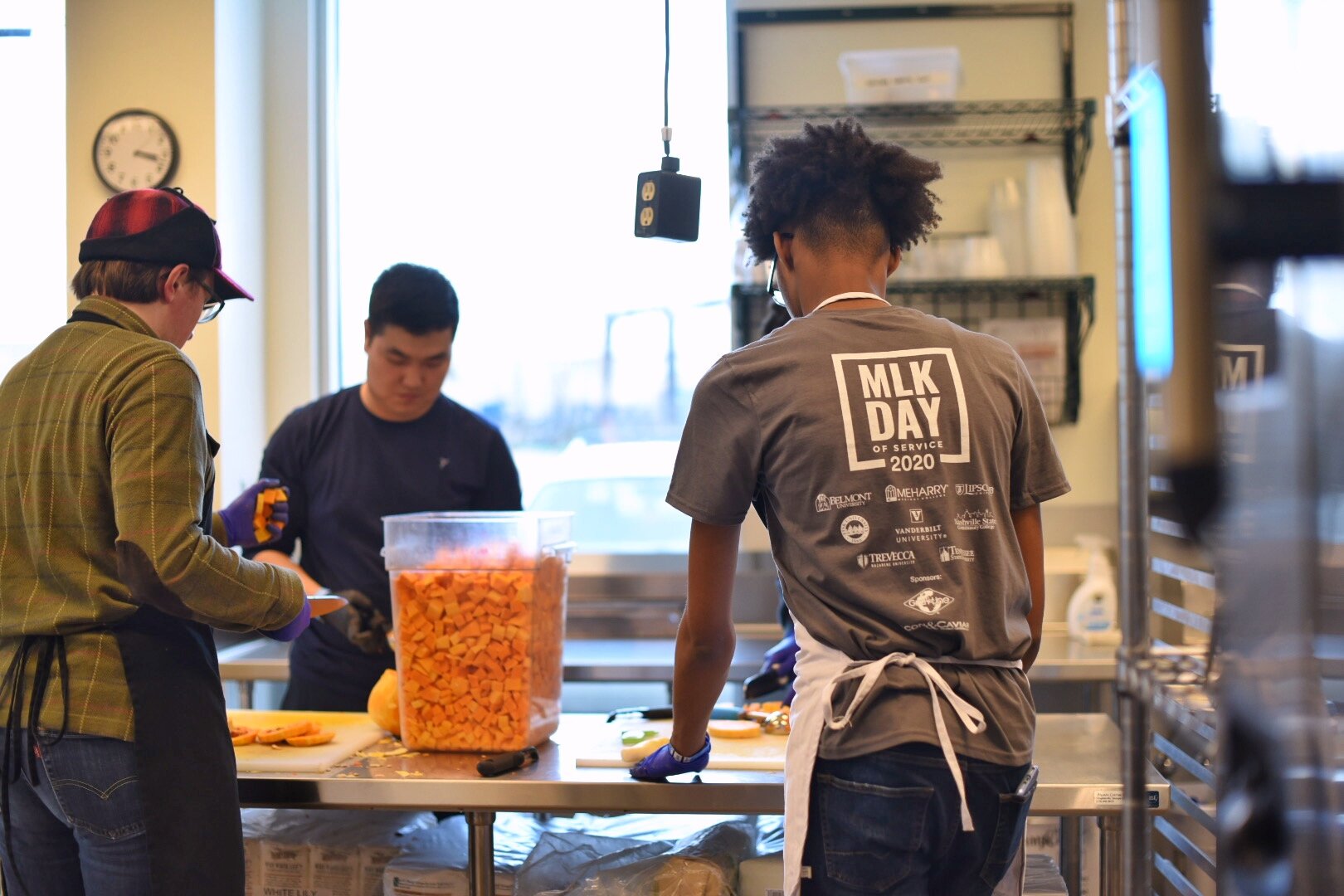
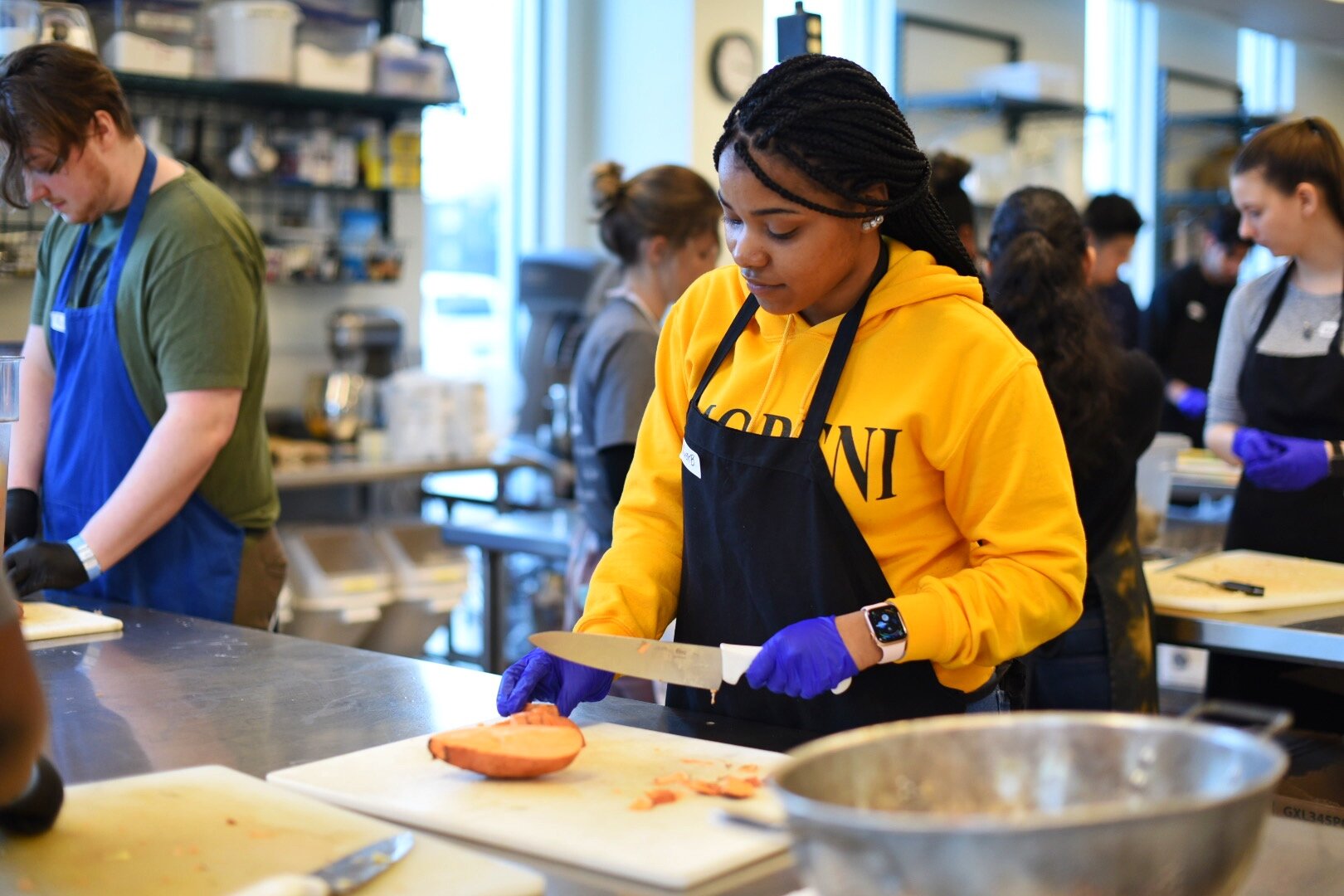
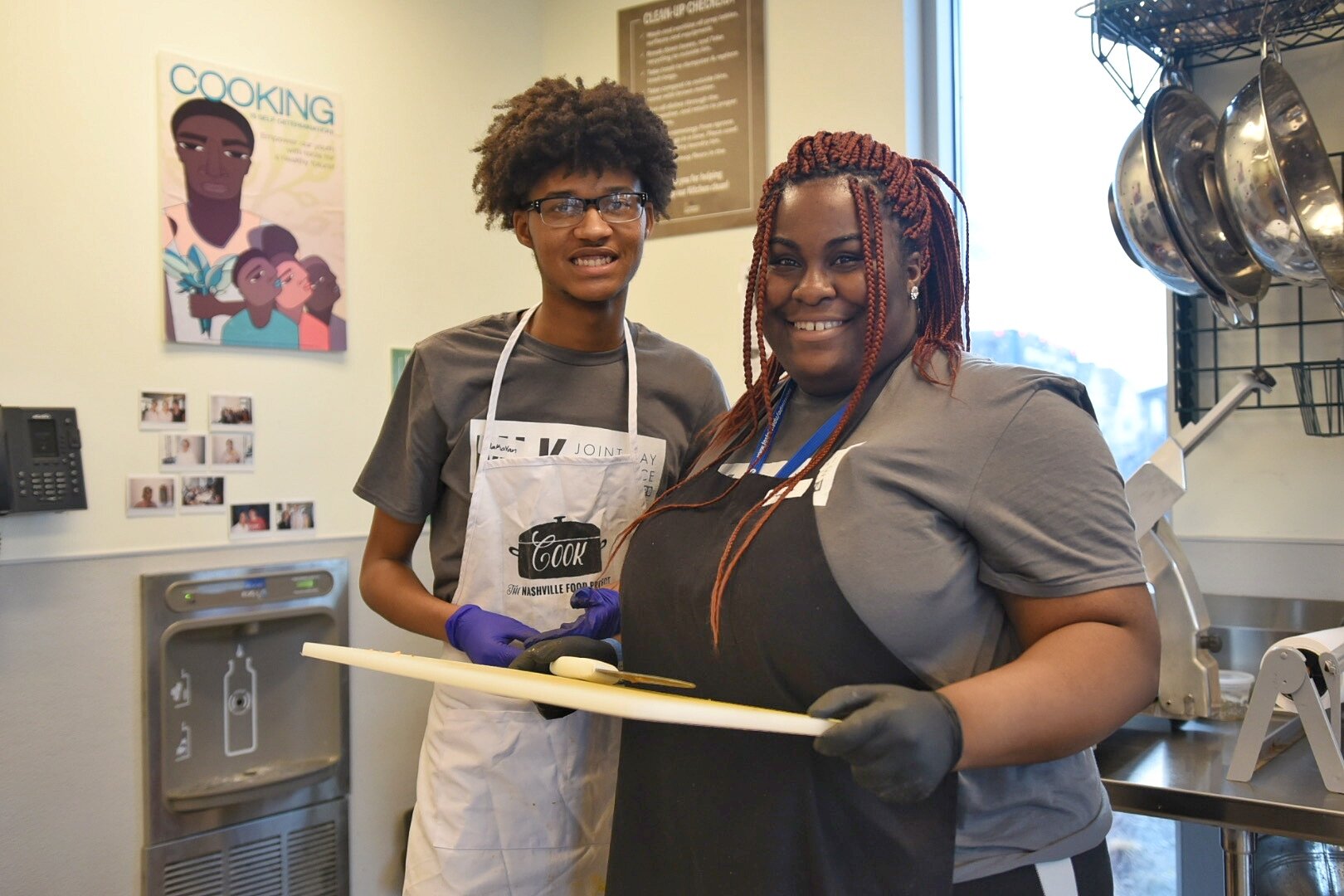
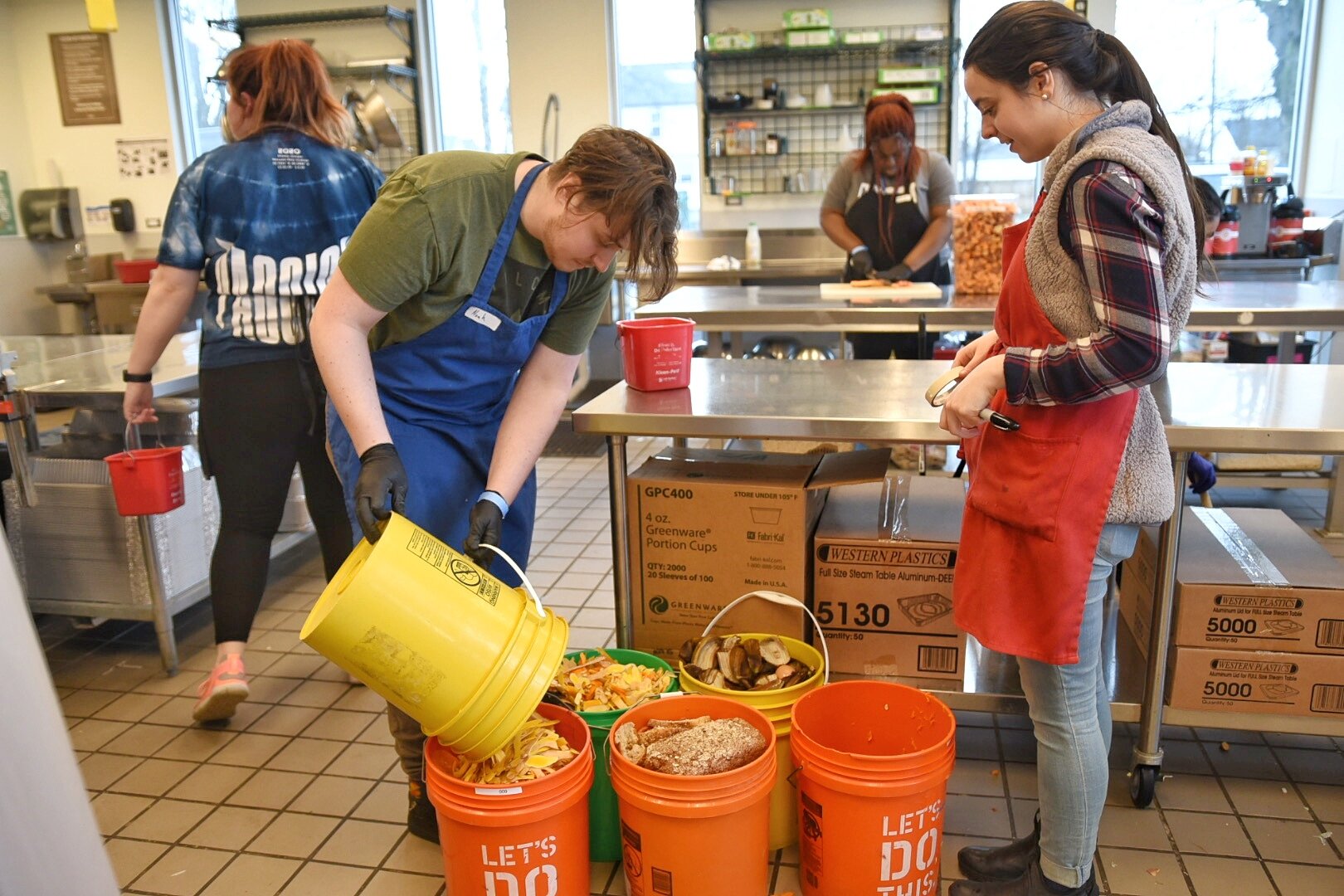
In the true spirit of Dr. King, MLK Day of Service shines a light on what all people can do to love, uplift, and support their neighbors. Feeling inspired to get involved? Click here to learn more about how you can volunteer in The Nashville Food Project’s gardens and kitchens!

The Messy Work Of Giving Thanks On Stolen Land
We are currently approaching the Thanksgiving holiday, a season I’ve looked forward to for many years. This year, however, feels different. Not because the holiday changed, but because gradually I have. I am now actively practicing recognizing tensions and calling out the complex implications of things that were once glazed and made glowing by sentiment and tradition…
By Elizabeth Langgle-Martin, Community Engagement Manager

Map of Native American tribes designed by Aaron Carapella, a self-taught mapmaker in Warner, Okla., showing their locations before first contact with Europeans.
We are currently approaching the Thanksgiving holiday, a season I’ve looked forward to for many years. If you grew up in the U.S. school system, there is a good chance that your kindergarten experience mirrored my own, with construction paper headdresses and pilgrim attire, stories of shared abundance and friendship between Native peoples and new European settlers. Even as a young adult, November brought apple pie, time with long-distance family, warm beverages, and pumpkins galore without the overwhelming consumerism that December often lends to. This year, however, feels different. Not because the holiday changed, but because gradually I have. I am now actively practicing recognizing tensions and calling out the complex implications of things that were once glazed and made glowing by sentiment and tradition. I have recognized that things that hold great personal warmth and nostalgia for me (a white, now middle-class, cis-woman) may still be traditions that are deeply problematic in nature and may be devastatingly painful for other groups of people whose voices I haven’t considered because I haven’t sought them out.
As a member of The Nashville Food Project team, I am very aware of how our organization benefits from the positive implications of the Thanksgiving holiday, as many non-profits and food organizations do with increased (desperately needed) donations and an uptick in volunteers. However, this is an incomplete picture without a way to easily acknowledge that our celebrations of thanks and prosperity take place on stolen, bloodstained land. The gifts and comfort that many of us know have not come without a devastating historical cost and one that has resulted in generations of destruction to the Native peoples of this now-colonized space. It is a truth that is so hard to swallow, but impossible to ignore if we truly desire to be a justice-seeking community.

Jennie Augusta Brownscombe (1850–1936), "The First Thanksgiving at Plymouth," 1914.
If you are like me and grew up with a singular narrative of Thanksgiving that celebrated U.S abundance and refused to acknowledge the genocide of this soil’s first stewards, I encourage you to use today as a step forward. I’ll be here doing the same. Glennon Doyle Melton says, “Be messy and complicated and afraid and show up anyways”. This is my messy attempt at being a better ancestor. Here are a few tools I am using to push back against my own white-washed understanding of the Thanksgiving narrative and more importantly, tools I have found to inspire and challenge my understanding of the current injustices that remaining tribes of Native people face.
1. Understand that this is no single “First Thanksgiving” narrative.
I’ve spent hours researching and the story depends a lot on who is telling it. There are many unknowns that popular culture has taken advantage of filling to paint a picture worthy of elementary school celebrations everywhere. The more I’ve learned, the more questions I have. I’m practicing sitting with this discomfort and uncertainty. And maybe the history of that actual day is less important than the nature of the relationship between settlers and indigenous peoples that followed.
2. Seek out indigenous voices.
Understand that indigenous people are still very much present. Their story did not begin with the arrival of European settlers and it did not end with the systematic desolation of over 90% of their people at the hands of colonizers. Read diverse thoughts of indigenous people on our modern Thanksgiving holiday HERE and HERE and learn about indigenous-led resistance movements and Native leadership HERE. This is just a starting point.
3. Discover who were the original stewards of the space you call home with this tool.
For most of us, we currently occupy land that was acquired through colonization. My little spot of the world where I am raising my baby, loving my partner, tending chickens and figuring out this life is part of what was once Cherokee Country . Members of this tribe still reside in Cherokee, North Carolina after losing the majority of their territory as the result of forced removal and relocation through the Trail of Tears. This new (to me) knowledge is helping me shift the way I see my responsibility to this space and to learn more about the injustices that its original occupants still face. It has me thinking about the other people who have raised babies, laughed, planted, hoped, cried and mourned on the soil where I now live. It reminds me of those who will do so when I am dust and has me asking what can I do now to create the kind of world I want for each of them.
There is much to be thankful for. But may our celebrations of thanks not be a tool to revel in our own distorted narratives. May they be an invitation to build a future that is truly worth celebrating.
A Food Waste Challenge Friendsgiving
For November’s Simmer series dinner, the fabulous Chef Maneet Chauhan had the idea to host a Friendsgiving in our Community Dining Room. But rather than bring in the typical Thanksgiving turkey and sides, she wanted to see what she could whip up with just the ingredients we had on hand in our kitchen — a special Food Waste Challenge Friendsgiving to celebrate abundance.
For November’s Simmer series dinner, the fabulous Chef Maneet Chauhan had the idea to host a Friendsgiving in our Community Dining Room. But rather than bring in the typical Thanksgiving turkey and sides, she wanted to see what she could whip up with just the ingredients we had on hand in our kitchen — a special Food Waste Challenge Friendsgiving to celebrate abundance.

Maneet enlisted the help of our team — chiefly Chef Director Bianca Morton who plans thousands of meals for TNFP partners each week based on the donated food we receive and vegetables we grow along with our farm partners. Then for dessert, we pulled in the talents of Sam Tucker, the fantastic baker behind Village Bakery & Provisions.

As the date approached, we provided Maneet with a list of possible ingredients: butternut squash, cabbage, onions, potatoes, canned coconut milk, tomatoes, bags of rice and beans. We figured Maneet might choose one or two items for her menu. But instead, she managed to work every item on the list into a meat-and-three-style feast. Every item!

Pork Vindaloo Kemma made a rich stew of meat donated from Whole Foods. Cabbage Butternut Squash Subji brought together vegetables gleaned from local farms by the Society of St. Andrew and from farm partners, S.E. Daugherty & Sons. Black Bean Lentil Daal, Vegetable Rice Palal and Yogurt Raita served alongside Papadum and Naan also included donations of black beans, lentils and rice from One Generation Away.

Papadum made with tapioca.
Our own Bianca Morton kicked off the meal with spiced meatballs made with a Whole Foods donation in a butternut and coconut sauce as well as a Spiced Lentil and Sweet Potato “Meat” Ball and Autumn Salad that tossed together lettuces with apple, almond, raisin and blue cheese.

The meal was bookended with a celebration of the organic apples we receive by the bushel from Joe Hodgson (“Apple Joe” as we call him). Joe followed his love of heirloom apples to plant his own orchard, and every few weeks he drops off a batch that we can toss into fruit salads or serve as a healthy snack for our after-school meal partners. For the welcome cocktail, we garnished an Apple Cider Mule (thanks to a donation by Pickers Vodka) with Joe’s apple slices .
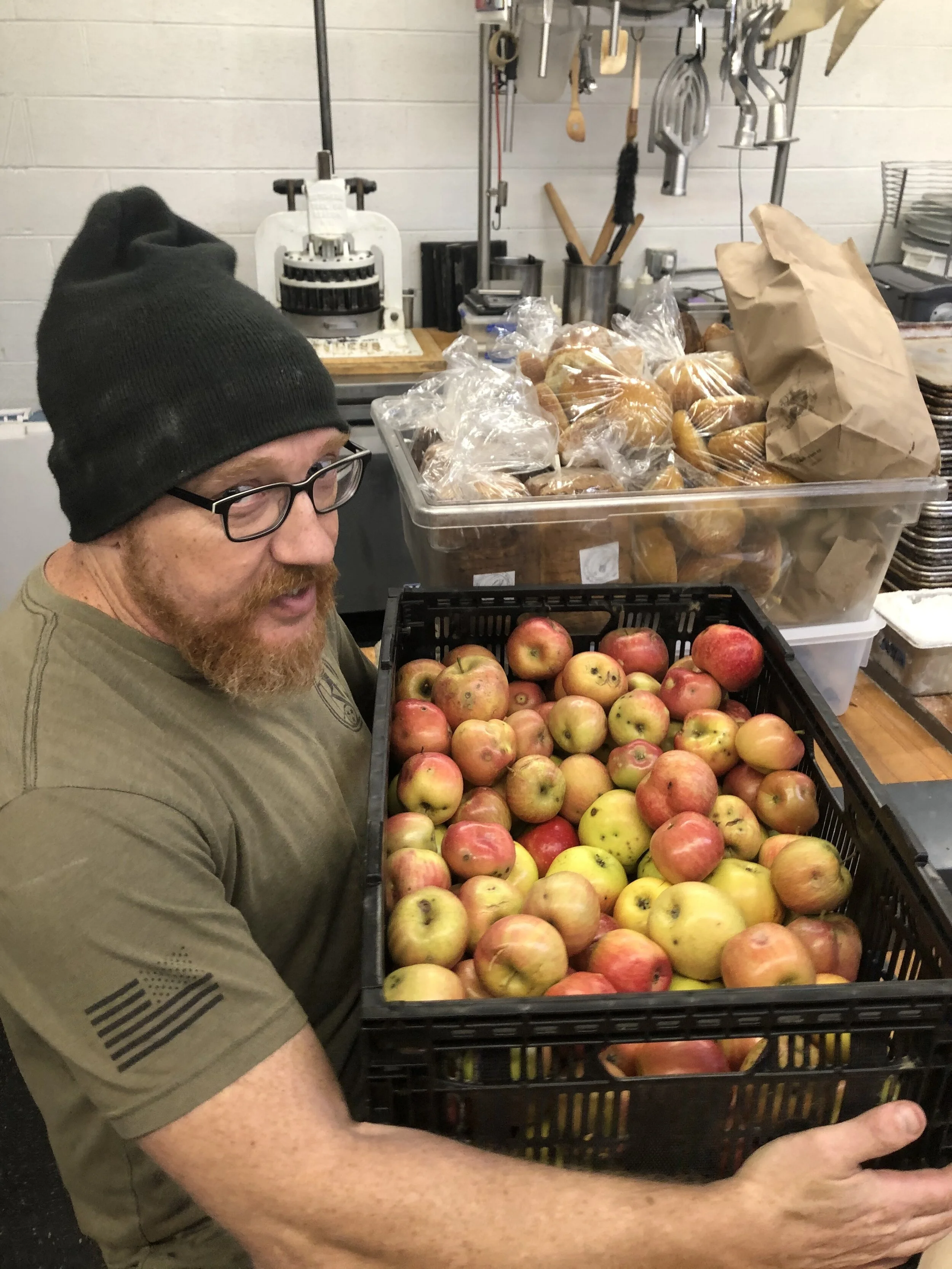
Baker Sam ready to make dessert.
Then for the big finish, Sam Tucker created an Apple Walnut Cake with Joe’s apples and served it with cool dollops of Calvados Zabaglione and a warm Apple Compote. Maneet added her flair and pop of color with edible orchid.

Chef Maneet ended the dinner by talking with guests about her experiences on Food Network’s Chopped and family memories of making the most of every ingredient.
“Growing up in India, there was no waste,” she said. She recalled her parents buying milk, pasteurizing it and then using the cream that settled at the top to make butter on weekends.
“Sunday morning was the most amazing time to get up,” she said, remembering the sounds of her family making butter. Fresh butter would then become ghee and the milk solids would be turned into dessert.
She also spoke about what draws her to the work of The Nashville Food Project.
“Food, to me, is about connection. It’s about making sure people are nourished. When you are connected both with your soul and your stomach,” she said. And she recalled learning how TNFP makes that happen on her first visit to our previous headquarters. “Every aspect of food was so carefully talked through — such as making sauces and repurposing them. There are a lot of organizations that do great work, but The Nashville Food Project does it at a grassroots level and that gets everybody excited and the community involved.”

On a day when we hosted a Friendsgiving, Maneet says the richest people on earth are those with the most friends. We’re sure grateful to be friends with Sam and Joe and Maneet — and all our partners and all of you.
We have just one more Simmer dinner to close out the series for the year — a Sunday brunch on Dec. 8 with Chef Levon Wallace featuring Mexican home cooking influenced by his time growing up in Los Angeles. Tickets can be purchased here and all proceeds support our work. Join us!

Farewell to Wedgewood Urban Gardens
After a decade of cultivating nourishing food and community in this space, we will be relocating our Wedgewood Urban Garden. We have known that this transition would come as our programming and needs have grown and evolved, and we leave the space with so much gratitude for what it is and what it has become.
By Lauren Bailey, TNFP’s Director of Garden Programs

If you’ve ever been to the Wedgewood Urban Garden, you know that it is a magical space- one that immediately draws you in. As you climb up the steps and pass the trees that greet you, you come upon the urban oasis that it is.
After a decade of cultivating nourishing food and community in this space, we will be relocating our Wedgewood Urban Garden. We have known that this transition would come as our programming and needs have grown and evolved, and we leave the space with so much gratitude for what it is and what it has become. The vibrant community food work that has grown out of that space has been beyond our wildest dreams.
As our staff reflects together on the past 10 years, so many memories arise!

“Volunteering at the Wedgewood Urban Garden space was my introduction the The Nashville Food Project. This garden has been a space for me to both learn life and veggie lessons, and I have been blessed to be able to pass that knowledge and joy onto others. I have grown and stretched as a person in this garden. It was where I was first introduced to the magic of big questions coming from little mouths, and the journey that spark of curiosity could take. Relationships have been built and nurtured in this garden beyond age and language. There are so many freeze framed moments captured in my mind that I am grateful for. The beginning of spring when on a sunny day your eyes are bombarded by the lush growth and the hues of green life. Butterflies and honey bees dancing in the buckwheat. The excited chatter of children as they make their way to the garden. The background noise of conversations that trickle like a creek through the community garden space. These memories and more come to mind when I think back on my experience at WUG.
There is a language one learns while tending and caring for a piece of land. This language is intuitively known by everyone but at times needs to be rediscovered. This rediscovery begins a journey that can teach us many things like how to grow amazing vegetables, but it also enables us to understand the connections that all living things have to one another. I have learned and am still learning this ancient Earth language but am forever grateful to the Wedgewood garden and its tenders for showing and walking with me on this path. ”

“When I read the lines ‘keep tangling and interweaving and taking more in, a thicket and bramble wilderness to the outside but to us interconnected with rabbit runs and burrows and lairs’ in Marge Piercy’s poem ‘The Seven of Pentacles’, I see the Wedgewood Garden. Certainly from the outside there is some wildness to the space; it’s a bit of a secret garden. From Wedgewood Avenue, you see an arbor built by youth at the Oasis Center. It announces an entrance into this green space. A sign reads ‘We are here to awaken from our illusion of separation. -Thich Nhat Hanh.’ Grass paths beckon into the perennial garden where insects buzz on elderberry, tansy and oregano flowers. Perennial sunflowers wave in the background. Bermuda grass creeps from the walkways into the beds and wild morning glory attempts to outgrow and overrun everything at least once a summer.
Walk up the stone stairs past a picnic area and into the heart of the garden. The trees in the garden are large, old, misshapen & beautiful. They nestle the garden between them in the middle of this busy neighborhood. It makes for a still, quiet place. Here community gardeners have battled the weeds every summer, bringing forth bounty from rich soil overflowing with tomato, melon, radish, henbit, chickweed. It may look like a thicket and bramble wilderness to the outside but look a little longer and you’ll see people reconnecting with their neighbors, healing as they work the soil, putting down roots in a new community. Under the surface of the soil, season after season this garden has been interconnection for people and plants. ”

Three years ago I landed at The Nashville Food Project as the organization took stewardship of what we now call the New American gardens. In the years prior to this transition, I was working with the Center for Refugees and Immigrants of Tennessee and worked closely with TNFP staff to establish these garden programs. I have been thinking a lot about what those first years looked like-- the many hands that carried the work to where it is now, the ways the gardens and programming evolved as we “dug” in a little deeper. I’ll always remember the first time I visited the Wedgewood Urban Gardens and how inspired I felt upon leaving. Now, as I think of all of the many people who tended this land in the years since, my thoughts drift from gardener to gardener and the life and growth that each person brought to this small piece of paradise in the middle of the city. As we move from this piece of land, I’m grateful for the many ways that it has provided nourishment for the people that tended it and what it taught me about growing community and food, together.
To celebrate this land and what it has gifted us with over the years, we will be hosting a small gathering at the garden (613 Wedgewood Avenue, 37203) Friday, November 15th, from 10:30-12:30 pm. We hope you can join us!

The Seven Of Pentacles by Marge Piercy
Under a sky the color of pea soup
she is looking at her work growing away there
actively, thickly like grapevines or pole beans
as things grow in the real world, slowly enough.
If you tend them properly, if you mulch, if you water,
if you provide birds that eat insects a home and winter food,
if the sun shines and you pick off caterpillars,
if the praying mantis comes and the ladybugs and the bees,
then the plants flourish, but at their own internal clock.
Connections are made slowly, sometimes they grow underground.
You cannot tell always by looking what is happening.
More than half the tree is spread out in the soil under your feet.
Penetrate quietly as the earthworm that blows no trumpet.
Fight persistently as the creeper that brings down the tree.
Spread like the squash plant that overruns the garden.
Gnaw in the dark and use the sun to make sugar.
Weave real connections, create real nodes, build real houses.
Live a life you can endure: Make love that is loving.
Keep tangling and interweaving and taking more in,
a thicket and bramble wilderness to the outside but to us
interconnected with rabbit runs and burrows and lairs.
Live as if you liked yourself, and it may happen:
reach out, keep reaching out, keep bringing in.
This is how we are going to live for a long time: not always,
for every gardener knows that after the digging, after
the planting,
after the long season of tending and growth, the harvest comes.
Creating Seeds
As I sit down to write this post, I keep thinking about the cycles that come with gardening. The ebb and flow of planning, planting, tending and harvesting. And just like planting a garden, our work is cyclical…
By Kia Brown, Community Garden Manager

As I sit down to write this post, I keep thinking about the cycles that come with gardening. The ebb and flow of planning, planting, tending and harvesting. And just like planting a garden, our work is cyclical- with a constant desire to make next season a better season, to reflect on all that we’ve learned and put that into motion for the next year.

It’s hard to believe that we’ve once again come upon the conclusion of another community garden season. Gardeners and staff have spent the last 6-8 months laughing, learning, and growing together, and now we come to a period of rest and reflection. How did the year how turn out and were expectations met? Exceeded? Was something new tried? What would we try again or change?
In the spirit of reflection, we invited community gardeners to share their thoughts about the year.

“It has been an incredible year gardening with the Nashville Food Project’s Wedgewood urban garden. This is a place where magic happens: delicious food is grown and community is built! I learned so much through digging my hands in the dirt and with the help of guidance from Kia and other veteran gardeners, I was able to successfully grow my own food: tomatoes, radishes, peppers, eggplants, spinach, lettuce, and so much more! I’ve cherished my time spent in this urban oasis and look forward to continuing learning and growing with the skills I’ve gained here. Thank you for providing the ideal environment for our plants and selves to grow!”

“I’m glad that I joined a community garden. I’m glad because I’ve learned so much about gardening and myself since becoming a member. Three years ago I thought that if I planted seeds, then watered and seeded, that my garden would grow. On a basic level that is exactly what happened. When I decided to become invested in the garden (helping other gardeners, trying my best to combat the heat, humidity and garden pests, etc.), I realized that time, care and patience are the real elements to growing a garden and maybe growing up a little.”
We’ve been saving seed this year -- mostly flowers and herbs. There’s so much that goes into making a seed, so much that goes into creating that potential for future life. And as a plant prepares for the end of its journey and carries with it hope for the future, we too are cultivating the seeds of our future and growth.

An Apron With My Name
I want an apron with my name on it. I stopped working full time in January. I can’t quite bring myself to call it “retired.” But that’s really what it is. One of the nice things about it (there are tons of nice things about it) is I can choose where I want to spend my time and one of my favorite places has become The Nashville Food Project…
By Catherine Mayhew, a regular volunteer in The Nashville Food Project’s kitchens, originally published on her blog The South In My Mouth.
I want an apron with my name on it.
I stopped working full time in January. I can’t quite bring myself to call it “retired.” But that’s really what it is. One of the nice things about it (there are tons of nice things about it) is I can choose where I want to spend my time and one of my favorite places has become The Nashville Food Project. It satisfies my need to do something involving food and my passion for social justice, particularly these days.
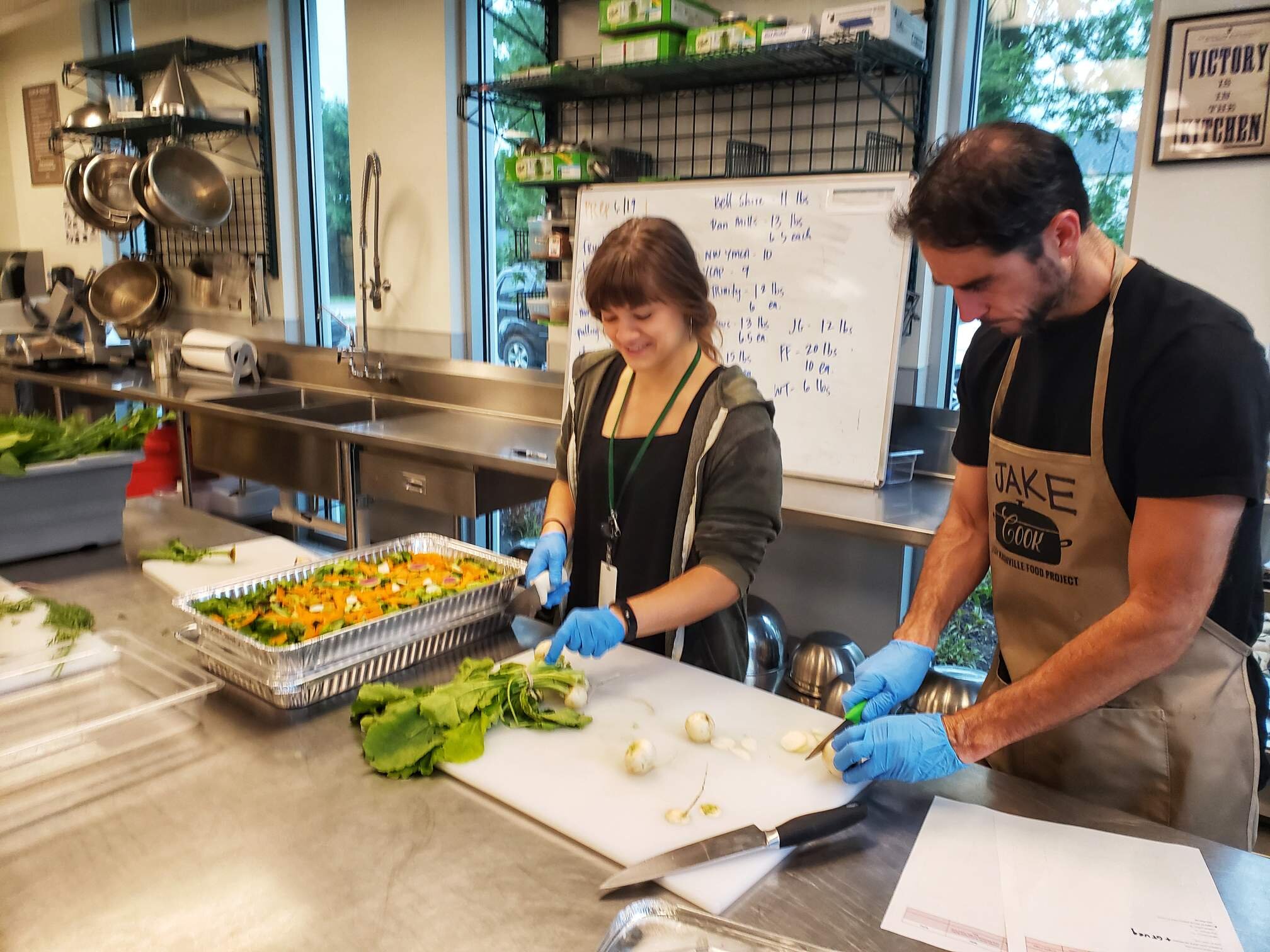
Katie, the catering manager, and a volunteer, Jake. Please note that Jake has his name on his apron.
The Food Project provides healthy nutritious meals for anyone who needs them. It has a beautiful commercial kitchen that receives bounteous donations from a healthy number of food donors plus uses the produce it grows in its own gardens (more like mini-farms). They have an army of volunteers directed by their small, amazingly cheerful and endlessly patient staff.
I started in the “make 20 gallons of fruit salad” station. The fruit salad is part of almost every meal The Project serves. It involves whatever donated fruit is around on any particular day — strawberries, blueberries, pineapple, apples and melons. So many melons. After washing up and donning plastic gloves, I got a knife, a cutting board and commenced to spend two hours cutting fruit. Oh, so much cutting. It got me to wondering would anyone consume all this fruit salad?
As it happens, it’s the number one most requested item. If you are a person of privilege, you regard fresh fruit as the tired but necessary road to a virtuous diet. If you are not and you might get a can of peaches every once in awhile, a fresh fruit salad is a damn miracle.

This is the kind of beautiful produce The Food project works with every day.
After a few weeks of chopping fruit, I noticed a group of volunteers at another station making something more decidedly sophisticated than fruit salad. I wandered over to watch them stuff couscous salad into endive leaves. “What are ya’ll doing?” I said. “We volunteer for the catering program,” they said entirely in unison. I’m lying. But that was the gist of it.
Catering? I would like to be an unpaid caterer. Truly I would. So I just kind of wedged myself in there and haven’t let go since.
The catering arm of The Food Project is just genius. They take donated food, make it fancy and charge other nonprofits a modest fee for their luncheons, banquets and such. It totally goes against all the catering norms where the food is consistent and predictable. For the Food Project, every catering job is different because there’s no telling what kind of product they’ll have around on any given day. There are no standardized recipes. It’s a what the hell, swing for the fences affair every time. So much fun.
Which brings me to the apron. I hadn’t been volunteering very long before I noticed that some of the aprons volunteers were wearing had names on them. Mine didn’t. I always got the anonymous apron. What’s up with that? Turns out when you volunteer a certain number of hours within a certain time period you get you’re own apron and you can take a Sharpie and write your name on it.
In the world of food I used to think I wanted expensive ingredients, fancy equipment and perfection in the kitchen. Turns out all I wanted all along was an apron with my name on it.

The Nashville Food Project’s catering program is a social enterprise which earns revenue in support of TNFP programming. Learn more about having TNFP cater an event for your organization!
For this Thanksgiving, we’re also offering healthy sides, salads and desserts for purchase to serve alongside your turkey, such as honey balsamic brussels sprouts and mashed butternut squash. All Thanksgiving sales will be done by pre-order online through Sunday, November 17th. Dishes will be ready and available for pick-up at The Nashville Food Project’s headquarters on Tuesday, November 26th or Wednesday, November 27th. You will select your desired pick-up day during check-out.
Click here to check out our Thanksgiving offerings and place your order!
Winter Is Coming
Now that the summer season is winding down, The Nashville Food Project is officially moving into its “slow” time of the year in terms of food donations. We have been so incredibly lucky this past spring and summer to have amazing produce flooding in on a weekly basis…
By David Frease, Procurement and Sustainability Manager

Now that the summer season is winding down, The Nashville Food Project is officially moving into its “slow” time of the year in terms of food donations. We have been so incredibly lucky this past spring and summer to have amazing produce flooding in on a weekly basis. The local farm community has really rallied behind our cause this year, gifting us with an abundance of incredible items that our kitchens have turned into made-from-scratch meals to send back out into the community.
However, the growing season will soon be coming to an end and that is where we begin to depend on the thoughtful donations made by supporters like you. We oftentimes get approached by people wanting to organize holiday food drives for us and as it’s been a while since we mentioned our greatest needs, we thought it was time to provide an updated list of things our kitchens find most helpful.
Pantry Staples

Are you interested in holding a food drive for pantry staples? It’s easier than you think! I usually advise people to make them a week or two in length, so you don't have to store a bunch of items in your home/workplace/office over too long a period. Let your coworkers know that you're doing a food drive with the intention of donating to The Nashville Food Project upon completion. People seem to have a lot of success printing out this list of food items, posting it on a wall in their break room or other high traffic area (with your employer’s permission, of course), and arranging to have a large cardboard box for collection underneath it. That way, your coworkers can drop things off as they please! Whenever your drive is over, get in touch to arrange a drop-off or pickup by emailing davidf@thenashvillefoodproject.org
Extra Virgin Olive Oil
Canola Oil
Canned Diced Tomatoes
Unseasoned Canned Beans of Any Kind
Unsweetened Applesauce
Peanut/Almond/Cashew Butter
Honey
Jelly
Dried Fruit of Any Kind (Especially Raisins & Cranberries)
Rolled Oats
Canned Pumpkin
Graham Crackers
Nuts/Seeds of Any Kind (Especially Walnuts, Pecans, Cashews, Almonds & Pumpkin Seeds)
Chocolate Chips
Cheerios
Healthy Snack/Granola Bars
Fresh Fruit & Vegetables

Looking for other ways to help on a more individual basis? We can always make use of donations of fresh fruits and vegetables on our menus! One of our many favorite donors is Joe Hodgson, or as we call him, “The Apple Guy.” Every few weeks, Joe brings us 8 bushels of beautiful organic apples that we use in our fruit salads or as a healthy snack for our after-school meals partners. Joe has kept it simple and chosen one item to make “his thing” and it is beyond helpful to know we can count on him and his apples to round out our meals. What could you make “your thing?”
Protein
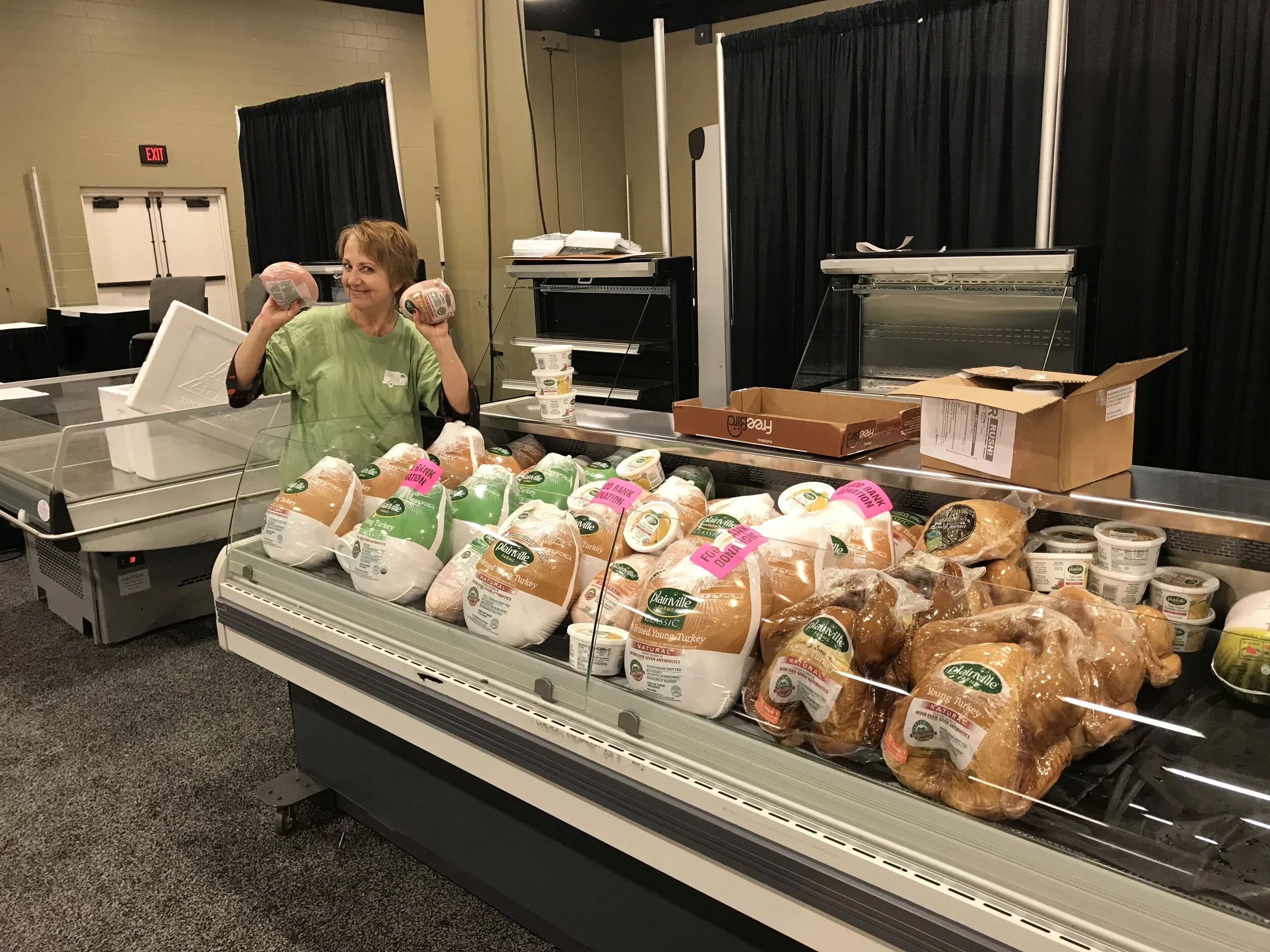
Meat is one of our most costly food budget items, and we rarely have it donated. We are always in need of fresh and frozen protein, especially in the fall and winter months. Ground beef, chicken breasts, breakfast sausage, nitrate free sliced turkey… all of these go a long way towards helping us reduce our budget and keep our menus packed with protein.
Hopefully this has given you plenty of food for thought! If you have any other questions or would like to brainstorm some more outside-of-the-box donation ideas, please feel free to reach out to David Frease at davidf@thenashvillefoodproject.org
Senior Meals Make A Big Impact
The barriers our community face can seem overwhelming. Today's seniors are more likely to have chronic diseases such as diabetes, high cholesterol and obesity than ever before, leading to increasing healthcare costs which further burden seniors living on a fixed income…
By Grace Biggs, TNFP’s Impact Manager

Photo courtesy of St. Luke’s Community House
The barriers our community face can seem overwhelming. Today's seniors are more likely to have chronic diseases such as diabetes, high cholesterol and obesity than ever before, leading to increasing healthcare costs which further burden seniors living on a fixed income.
More and more, research is showing the importance of nutrition to good health among older adults. According to this report on Tennessee seniors, about 1 in 6 older adults in our state is food insecure. This report also found that for every 100 seniors with independent living difficulty in Tennessee only 3.6 home-delivered meals are available: the lowest percentage available among all other US states.
At The Nashville Food Project, we understand health as a state of complete physical, mental and social well-being -- not merely the absence of disease. And we know that good food alone is not a solution to these complex problems. That’s why we make sure our nutritious meals and snacks are supporting the vibrant, creative work of other anti-poverty and community-building organizations in our city.

TNFP volunteer plating mobile meals at St. Luke’s Community House
Meals On Wheels and Mobile Meals programs are an essential service, supporting not only nutrition but also regular social contact and ‘safety checks’ for homebound seniors. Or as one mobile meal participant put it, “All the carriers make me feel that a friend dropped by.”
TNFP is on track to cook and share over 51,000 senior meals this year, thanks to deep partnerships with incredible local senior-serving partner organizations and significant support from West End Home Foundation, National Benevolent Association and Dandridge Trust.
Here’s a look at the many ways a few of TNFP’s senior-serving meal partners are supporting seniors in our community with home-delivered meals and community-building programs:
The Ark
The Ark, a senior-serving TNFP meals partner added in 2018, was founded to address severe gaps in social services and community resources in South Cheatham County, including Pegram and Kingston Springs. TNFP provides made-from-scratch meals for The Ark’s Meals On Wheels program 3 days a week, as well as a weekly community meal shared in their Resource Center.
“Our motto is very simple,” says Anne Carty, Program Director with the Ark. “We want to help people stay afloat when they have a time of need. Rather than leading the food prep and the decision-making of menus, we’re able to pick up the food from The Nashville Food Project, repackage it to send out for Meals On Wheels or serve it at our Wednesday lunch. Then we can really concentrate on the other services, especially for homebound seniors, like home repair and utility assistance.”
These meals wouldn’t be served without the hard work of committed Ark staff and volunteers. Butch Rogers and Melanie Smiley, who both work with Ark’s Meals On Wheels program, pick up the food from TNFP’s California Avenue kitchen 3 times a week. The following mornings, Melanie arrives at Pegram United Methodist Church to package the meals to be ready for volunteers to make the home deliveries. On Wednesdays, she also heats up the food for seniors coming to the resource center for a weekly community meal.

Photo courtesy of the Ark
“They love the companionship,” says Melanie. “They get to see each other each week and catch up on things that are going on. And there’s also a hot game of bingo after the meal. And nobody interferes with that hot game of bingo, let me tell you!”
“I think the food plays a big part of it, because they’re talking to people they haven’t talked to before, and they’re talking about the food -- ‘I haven’t had this before, I haven’t tried this before.’ You have to sell it because it’s not food they’re used to. I’m a big seller. Then they come back and say, ‘Oh Melanie, you were right, it was so good!’ And they’re cleaning their plates. That makes me feel really good when they clean their plates.”
Visit the Ark’s website to learn more about their work and what you can do to support.
Fifty Forward

FiftyForward has been in existence since 1956, and their home-delivered meals started in 1969. So for about 50 years, they prepared their own meals in-house with their own cook and an assistant cook. “The meals were what people would typically think of as a home-delivered meal,” shared Gretchen, Associate Executive Director at FiftyForward. “We did a great job, but then we looked up and saw their were community partners like The Nashville Food Project available. TNFP brings all that expertise of fresh, locally sourced food. And we can bring the senior service piece. So it’s been just beautiful.”
When FiftyForward first began considering a partnership with TNFP, Gretchen shared that some were unsure about the change and whether the older adults would be interested in the menus. “It’s a different variety of food than we’d had,” explained Gretchen. “So we did a two week pilot, and every day we had a nutrition student ask participants ask what they thought about the lunches. And on the very last day, I’m walking through the adult day service area one of our participants called me over, saying ‘Ms. Gretchen, Ms. Gretchen, come see what we’re eating!’ It was this beautiful, very fresh potato salad, and fresh green salad, and a barbeque sandwich. Then she said, ‘This is the best meal.’ And there you go! Right from the mouth of the person that we’re aiming to serve. From there, we expanded our partnership to cover all of our meals beginning in 2018, and it’s just been a wonderful partnership where we can share our expertise and really serve seniors well.”

Photo courtesy of Fifty Forward
The Nashville Food Project currently supports FiftyForward’s home delivered meal program, FiftyForward Fresh Meals On Wheels, and a daily lunch for their adult day service program for older adults who can’t remain home safely alone during the day -- a total of about 550 weekly meals. This summer we were also able to prepare extra meals for a senior’s summer singing program at FiftyForward’s KNOWLES center.
“We understand now that nutrition is so important to older adults as they age,” says Gretchen. “We used to work with older adults who thought, ‘I’m 85, I can eat Hershey’s Kisses, and that’s my daily food.’ And we’ve really worked with them to understand you could eat that now, but you’re going to feel a certain way if you do. Whereas nutrient dense food like the Food Project’s will give you the energy to live your best life at 85 and beyond.”
FiftyForward operates a network of seven centers and offers a wealth of resources for adults 50+ in Middle Tennessee. You can learn more on their website, including volunteer opportunities in support of their work.
St. Luke’s Community House
St. Luke's Community House, a United Way Family Resource Center, has been meeting the needs of families in The Nations community for more than 100 years through programs and services for children, youth, adults, seniors, and families as a whole. In 2016 we formed a unique partnership with St. Luke's Community House in West Nashville, operating a portion of our meals programming from their commercial kitchen and serving 1,330 meals each week for the St. Luke's preschool and mobile meals programs.
St. Luke’s senior services support seniors aged 60 and over and adults with disabilities who live in specific West Nashville areas. Mobile meals are delivered to each participant’s door by trusted and trained St. Luke’s volunteers. And their Friend Senior Club offers weekly social and recreational opportunities for West Nashville seniors of all ages, such as bingo parties, crafts, group fitness classes and more.
Each weekday morning, TNFP volunteers help with plating St. Luke’s mobile meals lunches as part of morning meal prep. Most days, the lunch is shared with both the seniors receiving mobile meals and the preschoolers. At about 10:15 AM, St. Luke's mobile meals volunteers arrive to pack up the lunches and begin deliveries to seniors and adults with disabilities throughout the West Nashville community.

Photo courtesy of St. Luke’s Community House
Running the kitchen on site means we hear more stories of the impact of the meals shared in partnership with St. Luke’s firsthand. As one St. Luke’s mobile meals participant shared, “Before I wasn't eating, I was forgetting to eat. Now I'm eating more regularly. It's helping my health. I had a stroke about 3 and a half years ago, and the healing process is taking a lot of my energy. This is a convenience for me, because it's brought right to my door. And a lot of the time it has brain food. I don't have to cook a meal when I'm about to conk out. You have no idea how much of a help it is. It's just beautiful.”
St. Luke’s Community House offers lots of ways you can get involved in their mission to create a community where children, families, and seniors from different backgrounds can easily access the resources needed to live fulfilling lives.
Siddi Rimal: Gardener, Interpreter, Advocate
Siddi Rimal has tended a community garden plot and worked as a Nepali-to-English translator with The Nashville Food Project’s urban agriculture program for five years. Like many of the community gardeners and all the farmers in Growing Together, he came to the United States as a refugee…
By Jennifer Justus, Culinary Community Liason

Siddi Rimal: photo by Danielle Atkins
The farmers of Growing Together gathered under a pavillion near their farm plots and snipped the dried scapes off garlic bulbs and trimmed the roots they had planted the previous fall. They talked amongst themselves in their native Nepali as cicadas sang from the trees. And occasionally, a jet from the nearby Nashville airport buzzed their acre teeming with Nepali mustard greens, tomatoes, zinnias and dancing with butterflies and bees.
There’s always work to do as farmers, so cleaning garlic had to happen during their weekly meeting. But when the group starts communicating—especially from Nepali to English and back again—that’s when Siddi Rimal’s job begins.
Siddi has worked as an interpreter between the Growing Together farmers and community gardeners who speak Nepali and the English-speaking staff of The Nashville Food Project for five years. He’s crucial to the programs' successes. His support to the programs came at the perfect time and he has remained committed though he’s not professionally trained as an interpreter and he has another job (like many of the farmers) as a technician on the paint line at Nissan.
And it’s not that the Bhutanese and Burmese farmers in the program need help in knowing how to grow things. They’ve got that part down. Many of them came here with decades of experience and fill their plots to the edges with crops and trellises for hanging gourd and long beans. But they do need help navigating the red tape of American systems and sales outlets.
For example, in their meeting they discussed harvesting schedules and plans for packing CSA boxes. Tallahassee May, Education Manager for Growing Together, also talked with the farmers about wholesale orders for restaurants and plans for the Saturday booth at the Richland Park Farmers’ Market.
Siddi must listen carefully and then accurately convey what’s being said even if there’s not a direct translation. It requires concentration and patience because every conversation takes four times as long -- Tally to Siddi, Siddi to farmers, farmers to Siddi and Siddi back to Tally.

Siddi with Growing Together farmers and TNFP staff at the Haywood Lane garden.
But for Siddi, a man who spent half his life in a refugee camp, time is relative.
All the farmers in Growing Together came to the United States as refugees. In Siddi’s case, his family was evicted from Bhutan in 1992 during ethnic cleansing and complicated tangle of factors including religious, political, socioeconomic and geographical reasons (read a brief history of the Bhutanese refugee crisis here).
“Many people were killed and many people lost their homes, lost their property, land, cattle and all,” he says. “When we left, we had to leave our land, our home, cattle— everything. We had to run at nighttime.”
Siddi was 5 years old when his family fled.
“It was a violent moment,” he says. “As far as I know from history and people being a witness, we’re told that armies raped the women and killed some of the social activists. They sent some of them to prison and some were sent for no reasons and tortured there. Some people they kill —put in the sack and throw in the river. Lot of torture and things.”
At the refugee camp in Nepal, they received basic needs from organizations like the United Nations and Red Cross.
“But even though they help us, we had to spend a miserable life,” Siddi says. “We lived in a small hut, made of bamboo and like straw or plastic roof.”
The Nepali camps, which eventually swelled to about 100,000 people, had problems with malnourishment, illnesses, overcrowding.
“In the hut when the weather was very hot like this, it was very hard to live in there,” Siddi says. If there was heavy rainfall and storms, most of the rain goes into the house and floods. It was very hard to tell this story. Because we were in a very difficult situation. And not for a couple of years, it was 22 years.”
The refugees in Nepal often found jobs outside the camp with locals by working in their fields or cutting rice patties. Siddi, who was educated in the camp, worked as a trainer in camp where he met his wife. The couple started the process of applying to come to the United States when they were in their early 20s. It took them three years — repeated interviews, medical tests and background checks — before they were cleared.
“I came to Vegas the first time—Sept 25, 2012,” he says of his first placement in the United States at 26 years old. “There were a lot of people, and it was crowded. I was a little bit nervous there. I never had any experience with the airport, you know? We had to go to the train, so that was like...my mind was blown.”
After two days in Las Vegas, he made his way to Nashville where his wife’s family had already been resettled a couple years prior. Siddi’s father-in-law also later introduced him to The Nashville Food Project’s Wedegewood Urban Gardens, where Siddi began maintaining a plot as a community gardener. Then when the Growing Together program began for growers who take their produce to market, Siddi took on the role as interpreter.

Siddi translating introductions at a community garden potluck.
“Obviously it is very helpful,” he says of the Growing Together program. “Every time I meet with people, even at the grocery store, I always talk about the program.”
Farmers share that it helps provide fresh food for their families in addition to supplemental income. They’re able to grow crops traditional to their backgrounds like komatsuna, bitter gourd, long beans and hot peppers. It’s also a way for farmers to feel more rooted here. And even though the elders might struggle to pick up the language or feel as useful here compared to their younger family members, farming gives them the opportunity to pass along the life-giving skill of tending to the earth and coaxing nourishing treasure from it—all in the company of their community. As one farmer told TNFP, “It helps me feel less alone.”
Granted, there are still challenges. For many of the farmers and gardeners, transportation often arises as a hurdle since many don’t have a driver’s license or access to a vehicle. Language barriers for some, especially when Siddi isn’t around, also pose problems.
But just as TNFP’s Tally and Sally Rausch have picked up Nepali words, the farmers too have learned English words like the names for vegetables— “onion,” “tomato.” They know “gift,” which they use while pressing a potato into the palm of a friend. They issue lots of “good mornings.”
As the meeting at the Growing Together farm neared its end, one of the farmers, Nar, finished working through her stack of garlic, so she threw her arms up in a “V.” She flashed a smile and shouted a word in Nepali. The others laughed. And then she pressed her palms together at her heart.
Some things, it turns out, don’t need translating after all.
Bianca's Skillet Cornbread
Bianca Morton is up to her elbows in tomatoes. A few yellow bins sit brimming with red and orange orbs perfuming The Nashville Food Project kitchen with their clean, acidic scent and mingling with the earthy tones of pasta roiling in a giant kettle…
By Jennifer Justus, Culinary Community Liason

Bianca Morton, Chef Director at TNFP’s California Avenue kitchen.
Bianca Morton is up to her elbows in tomatoes. A few yellow bins sit brimming with red and orange orbs perfuming The Nashville Food Project kitchen with their clean, acidic scent and mingling with the earthy tones of pasta roiling in a giant kettle.
The pasta will get tossed in tomato sauce, of course. That’s because Bianca has been working quickly to have all the summer tomatoes processed—chopped for green salads, dehydrated for later, or whirled up in enchilada sauces and marinas for layering into lasagnas.
She has to think smart and fast every day about how to use thousands of pounds of food that generously come through our doors from farms and markets. And then she works with volunteers and TNFP co-workers to turn ingredients into scratch-made meals for those who need it.
And it’s not just tomatoes. As Bianca sorted donated chicken from Cracker Barrel recently —determining its next iteration as chicken salad, chicken pot pie or roasted with balsamic and rosemary—a volunteer team filled pans with roasted peppers from our production gardens with hunks of bread that will become strata.
“Do you have any spinach?” one of the volunteers asked.
Bianca disappeared to the walk-in, one of her kitchen domains, and returned a few moments later carrying containers from Whole Foods.
“How about baby kale?”
“Perfect,” the volunteer said.
While the stratas will go to the YWCA and veterans through Operation Stand Down and workers’ dignity workshops on wage theft, Bianca is already thinking about meals for seniors at Wedgewood Towers and Fifty Forward.

Breakfast stratas being prepared for meal partner sites.
The truth is Bianca has been sharing food long before her days at the food project.
During middle and high school, she baked her step-grandmother’s pound cake every time someone had a birthday. “I would bring it in a cake container. Cut slices all day long and share with everybody,” she says.
She had turned to cooking as a way to help cope with a clinical depression diagnosis as a teenager. “I cooked when I was happy. I cooked when I was sad. I cooked when I was angry,” she says. “When I was angry, I would go in there and bang the hell out of pots everywhere. You were liable to get two meats for dinner that night.”
She cooked for the family at least four days a week. But she always brought her lunch the next day sharing the leftovers. “This is funny now that I’m thinking about it and here (at TNFP)… I would bring enough to feed four or five people,” she says. “Everyone would eat off my lunch.”
Bianca’s curiosity about food came early, but she skipped a few steps on the typical path. When her mother bought her an Easy Bake Oven at age 10, Bianca left it in the box. But when her mom went out to choir practice or Bible study on Wednesday nights, Bianca snuck into the kitchen for the real thing. “I knew I had a three-hour window. I would take her Betty Crocker cookbook, and I would flip through that and figure out what I was gonna make.”
That usually meant cakes since they often had pantry staples on hand.
“As soon as she would leave… I was on it. I would fix my cake batter up and bake my cake. I would cool my cake and put it in a Zip-lock bag with a butter knife. I had cakes hidden in the piano bench, in my toy box, where I could go any time and cut me a little slice of cake off.”
The night her mother caught her, though, Bianca had fallen asleep with a cake in the oven. She woke up to find it, burnt and black, outside her door with a note. Her mother instructed her to change clothes after school and be ready to go. “I was like ‘she is gonna drop me off somewhere,’” she recalled. “She is literally abandoning me.”
But her mother took her to the grocery store instead.
“We were walking down the aisles and she said pick out stuff you want to learn how to make. So, I was like grabbing meats and everything. She would cook that for dinner and have me watch. I was like, ‘I love this.’”
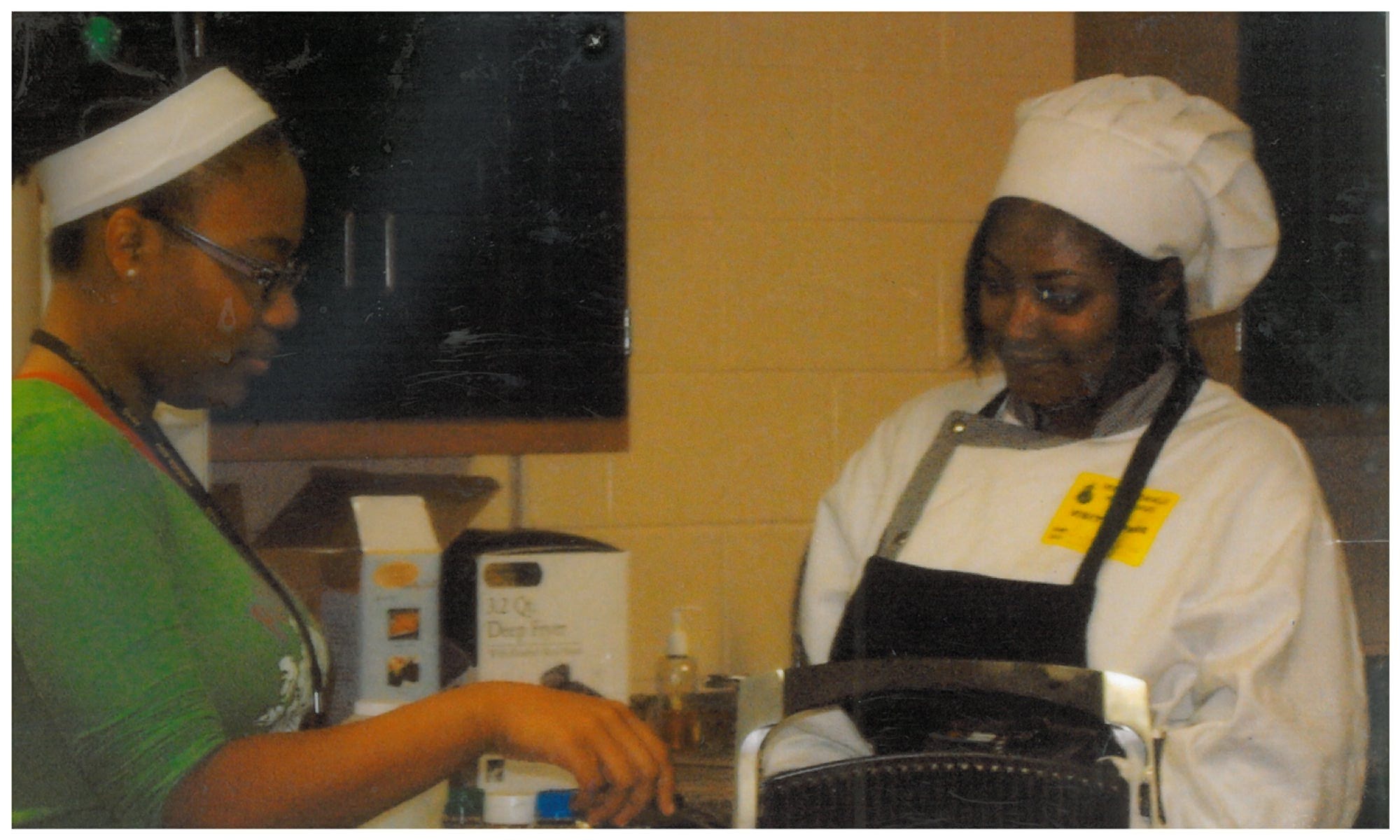
Bianca (right) at culinary school in Atlanta.
After high school, Bianca went to culinary school in Atlanta. She took double the course load and graduated early while also working full-time as dining coordinator in a retirement center. Then she moved back to Nashville and took jobs at convention centers and downtown hotels.
Those jobs warranted a tough exterior with their anxiety-inducing pace and high volume in a male-dominated and often unhealthy industry. But she also learned lessons that stick with her today. Like the time an unexpected snowstorm hit Nashville turning a 20 percent occupancy hotel to 100 percent within minutes as a line formed out the door. Bianca slept (or more like napped occasionally) at the hotel for three days and learned that staying ahead—even chopping onions and peppers when there’s an extra few minutes— is essential.
Now at The Nashville Food Project, Bianca says the intensity of turning out thousands of meals each week takes on a new meaning. “In that instance, it was like ‘okay we gotta get the job done.’ But now, it’s rewarding. It makes me feel lighter, like I have an effect on other people — that I’m actually working in my gift. That I have a purpose… I care about the impact that I have on the next person whether it’s direct or indirect. So I’m constantly thinking, how I can make it better? Or, how can I make best use of my skills to be a blessing to someone else in any kind of capacity?”
That doesn’t mean she’s lost all her hardcore kitchen vibes. You’ll find her some days cruising through the kitchen on a mission — cell phone tethered to one ear via ear bud and a Venti Starbucks nearby with more pumps than she probably ought to admit. Working in a nonprofit kitchen, after all, has taken some getting used to.

An incoming donation from the Bells Bend Conservation Corridor this summer.
When she first started at TNFP, a truck full of donations would arrive – all needing to be sorted, sized up and put away quickly – and Bianca viewed it as time and work. But Katie Duivan, catering and events manager would “turn flips,” Bianca says. “She would be like, ‘Oh my god look at this. This is beautiful.’”
“Where I come from you couldn’t show that,” she says. “I had to be hard. I couldn’t be friendly. Then they’d be like, ‘Oh, you’re a woman and that’s a weakness.’ I had to run with the big dogs.”
But being here makes it easier to be genuine, she says. “I can smile. And the days I don’t smile, and I’m gruff, it’s fine. They accept me for who I am. Here they celebrate our differences and what makes us uniquely us.”
Plus, she says Katie, her other co-workers and the environment of a kitchen filled with the purpose of stewardship and service, might have rubbed off on her bringing her back to those days when she shared lunch at the cafeteria table with nothing to gain or prove.
“It’s kind of like somebody is throwing happy glitter,” she says. “You’re going to get some happy glitter on you, and you’re not gonna be able to get it off.”
Lodge Cast Iron recently donated several skillets to The Nashville Food Project. We asked Bianca to share her favorite skillet recipe for cornbread. In her family, they like it sweet, almost like cake, she says. “I was raised that if you didn’t eat sweet cornbread, you were making dressing.”
She bakes this version for her family every other week and considers it a staple at Sunday dinner. Tag us on social media in a photo of your favorite cast-iron recipe, and we’ll enter you into a drawing for a new Lodge skillet.

Bianca’s Skillet Cornbread
Ingredients
1/2 cup self-rising cornmeal
1 1/2 cup self-rising flour
2/3 cup sugar
1/3 cup oil plus 3 tbsp oil
2 eggs beaten
1 1/4 cup milk
2 teaspoons honey
3 tablespoons melted butter
Directions
Preheat oven to 350 degrees.
In a medium bowl, combine cornmeal, flour and sugar. Mix in 1/3 cup of the oil, eggs and milk.
Heat remaining 3 tablespoons oil in the cast-iron skillet. Pour hot oil into mixed batter. Bake for 30 minutes or until golden brown.
Top with the melted butter and honey before serving.
Introducing Tastes of Burma and Bhutan
With market season well underway, the Growing Together farmers are busy harvesting, washing and packing their crops for restaurants and markets, as well as preparing for their fall CSA and a new September partnership with MEEL, a local online marketplace and farmstand…
By Grace Biggs, Impact Manager

With market season well underway, the Growing Together garden is a busy, vibrant place, full of life and movement. Farmers gather to harvest, wash, and pack their crops from their individual plots three times a week, often with the support of their families. Each farmer is autonomous, planting the crops they want, working according to their own schedule, and setting their own financial goals for the food they sell. But there’s also a lot that the farmers share.
“Being on a shared space has so many benefits,” explains Sally, the Growing Together Market Manager. “There’s the immense learning opportunity of seeing what other farmers are doing and learning from your peers. And there’s also a benefit in having shared market outlets.”

Marketing and selling to new customers is a huge challenge for any farmer. This season, the Growing Together program is connecting farmers with a wide variety of market outlets: the Richland Park Farmer’s Market on Saturdays, wholesale listings on Nashville Grown and Locally Grown, direct sales to area restaurants, a 20-customer fall CSA, and (new this year) weekly farm stands at TNFP’s headquarters on Wednesday evenings.
“The Growing Together farmers offer something unique,” says Sally. As a customer, you can expect to see many vegetables you are familiar with here in the South, like tomatoes and salad greens. You can also expect to taste traditional crops from farmers' home countries of Burma and Bhutan, such as bitter gourd, daikon radishes, and mustard greens.

I see this firsthand while sitting with Sally at the farm stand in the Nations on a Wednesday night, as a return customer walks up to the booth, bags in hand. They chat about their weeks, and Sally begins to point out what’s for sale. “Here’s arugula, and this is a leafy chinese cabbage. It’s great raw, similar to lettuce, but you can also cook it.” Customers come and go throughout the evening, taking their pick of veggies ranging from yellow squash to shisoto peppers, often leaving with at least one food they hadn’t heard of before that day.
““The familiar veggies and flower bouquets make the booth accessible, then we get to introduce other new foods. It’s such as long process to change people’s preferences. Luckily, we have an amazing base of customers who are interested in trying something new!””
This willingness to try something new has also been true of many of our chef friends, including City House, TKO, Two Ten Jack and Green Pheasant. In addition to ordering what they know they need for their menus, they’ve been excited to incorporate whatever the farmers have available, including the farmers’ traditional foods.

As summer winds down, farmers are gearing up for their fall CSA. “There’s going to be such a huge difference in the CSA this year. The transition from summer to fall can be a hard time in the season to have produce ready to harvest, especially if you’re trying to offer a diversity, but after learning so much in the first year, farmers are coming in more prepared, especially for the first few weeks of the CSA.” The 2019 Fall CSA is sold out, but you can sign up for the Growing Together email newsletter to stay in the loop on next year’s CSA here.
Ready to try some tastes of Burma and Bhutan for yourself?
For the month of September, Growing Together produce will be featured by MEEL, a local online marketplace and farm stand, including a special menu of Dinner Kits inspired by traditional Bhutanese and Burmese dishes such as Komatsuna with Creamy Heirloom Polenta and Ema Datshi with Bhutanese Red Rice and Suja.
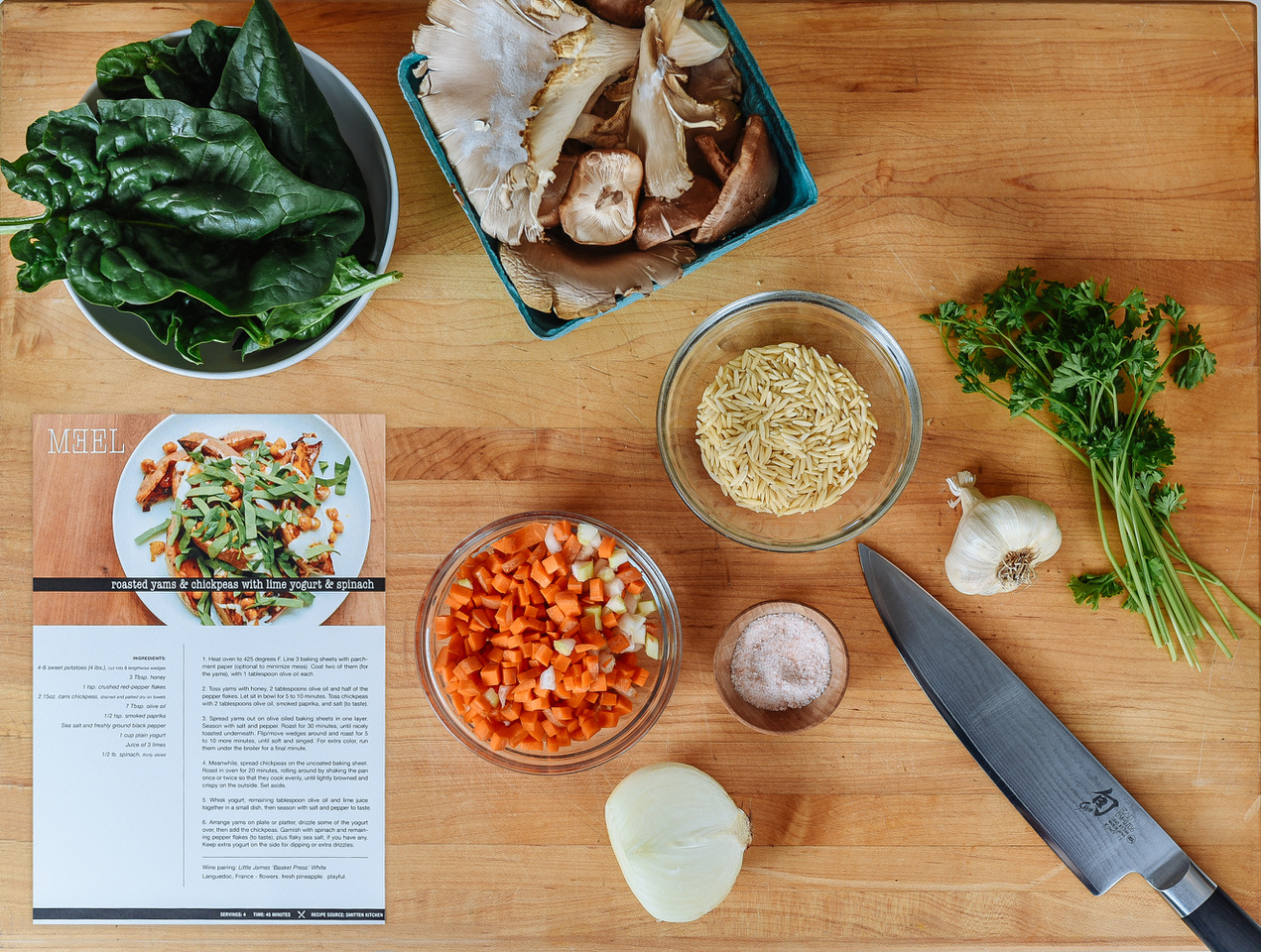
These Growing Together MEEL Kits and a Growing Together Farmstand Box will go “live” on Monday, August 26th, available for delivery beginning September 3rd. Menus will be available at this link. Use the promo code “GROW” and they’ll donate 10% of your purchase to The Nashville Food Project!
Also, through the end of October, you can visit the Growing Together farmers at the Richland Park Farmers’ Market every Saturday 9 am to 12:30 pm, and at our headquarters in the Nations (5904 California Avenue) every Wednesday 5 pm to 7 pm.
Sweet Peas Recap & Bean Burrito Bowl Recipe
Throughout the summer The Nashville Food Project dramatically increased the meals we shared through partner non-profits to an all time high of 7,500 meals weekly to support the summer nutrition needs of children’s programming in addition to our ongoing partnerships…
By Elizabeth Langgle-Martin, Community Engagement Manager

ONE side dish for one day’s summer meal deliveries ready to be loaded at our California Avenue kitchen.
Throughout this summer The Nashville Food Project dramatically increased the meals we shared through partner non-profits to an all time high of 7,500 meals weekly to support the summer nutrition needs of children’s programming in addition to our ongoing partnerships.
Carefully curated meals were prepared and delivered daily using gifted produce, recovered food, and the efforts of countless volunteers and their culinary creativity. Hefty servings of gumbo, chicken carbonara, veggie wraps, fruit and garden salads were delivered in gleaming pans.

Insulated food carriers used to deliver meals. All of these (plus more!) were cram-packed with freshly made, nutritious meals cooked in our two kitchens by TNFP staff, interns and volunteers.
Our partners are always serving to a range of palates. Naturally, some children are more adventurous while others try new dishes with a little more caution. We were thrilled when we received the following feedback from one of our summer programming partners:
““The kids really loved the burrito bowls. That was a major hit. Actually, all the meals this week went over really well.””
Burrito bowls are perhaps the perfect food as they allow the incorporation of so many fresh ingredients while permitting a wide range of people to customize tastes and textures that hit the spot. Here is our Chef Director Bianca’s bean burrito bowl recipe that was all the rage this summer!

Bianca’s Bean Burrito Bowls
Serves 4-6
Ingredients
2 tbsp olive oil
1 red onion diced
1 bell pepper diced
1 tbsp ground cumin
1 tsp salt and pepper
3 cloves of garlic chopped (or 3 tbsp garlic powder)
1 lb cooked beans (or 4 cans) - Black, Pinto or Kidney are our favorites!
1/2 c cilantro
1/4 cup of your favorite salsa
3 cups brown rice (cooked)
1 to 3 cup of cheese
Plus any additional sautéed seasonal veggies if desired!
Directions
In the olive oil, sauté onions, peppers, spices and garlic until tender. Add cooked beans and cilantro. Mix in salsa. Scoop cooked rice in bowl. Top rice with the bean mixture and shredded cheese.
Feeling fancy? Garnish with salsa, avocado, cilantro, sour cream or green onions!
Do you make burrito bowls at home? What are your favorite flavor combinations?
Bonnaroo Service Project Leads to Meaningful Meal Sharing
Bonnaroo teamed up with a group of varied nonprofits this year — including The Nashville Food Project — to host the festival’s first-ever, onsite service project making meal kits of beans and rice for more than 1,400 people. For our first food sharing opportunity with the kits, we brought more than 200 meal kits and produce to a housing community in North Nashville.

On the final day of Bonnaroo Music & Arts Festival — with bass thumping across the grounds and temperatures in the upper 80’s — a group of strangers gathered under a wide tent and exchanged introductions. It’s the sort of thing that happens throughout the festival weekend — a young man from Alabama making new friends with a couple from Michigan. But in this instance it wasn’t the music entirely that brought about 30 festival-goers together, it was an opportunity to give back.
Bonnaroo teamed up with a group of varied nonprofits this year — including The Nashville Food Project — to host the festival’s first-ever, onsite service project making meal kits of beans and rice for more than 1,400 people. Oxfam and Eat for Equity shared the use of their space for the project in Bonnaroo’s Planet Roo; Kim Warnick of Calling All Crows spearheaded logistics and pulled in The Outreach Program, a company that packs and ships dry goods meal kits. Bonnaroo handled spreading the word about the volunteer opportunity to festival attendees who showed up to form assembly lines across long tables. Each time a team filled a box of 36 meals, a volunteer clanged a bell and the group cheered.
Members of The Nashville Food Project team helped package the meals and then transported them back to Nashville where TNFP also will be in charge of distribution. Each meal kit comes with a sticker offering tips on adding fresh vegetables to the kits.

For our first food sharing opportunity with the kits, we took more than 200 meal kits to a housing community in North Nashville. We had learned that a large number of young people live in the apartments and were lacking regular access to school food. Community organizer Otis Carter of The 200 Man Stand offered support and then he helped spread the word. Residents of all ages came out.
To supplement the meal kits, we took several bins of produce purchased and donated by the Bells Bend Conservation Corridor from area farms — tomatoes, corn, peppers, eggplant, potatoes and summer squash. Our meals team also pulled together snack bags for kids to eat right away including healthy trail mix and orange wedges. Bags of biscuits mix went quickly too.
We believe sharing food is sharing nourishment — as much for spirit and soul as for the body. Procurement and Sustainability Manager David Frease has plans to deliver meals across many of our partner sites. In the meantime, we’re grateful in thinking of all the people and hands who came together to make these meals and help nourish more than 1,400 of our Nashville neighbors.

Nourish 2019: A Recap
Last week we were honored to host our 9th annual fundraising dinner — Nourish, presented by Kroger Zero Hunger Zero Waste — sharing joy and connection over a beautiful, meticulously planned and prepared meal. Beyond raising money to support our mission, this is a special time to celebrate this shared work with so many friends, volunteers, community members, and supporters…

Last week we were honored to host our 9th annual fundraising dinner — Nourish, presented by Kroger Zero Hunger Zero Waste — raising over $160,000 to support our mission! Beyond raising funds, this is a special time to share joy and connection over a beautiful meal and celebrate this shared work with so many friends, volunteers, community members, and supporters. And, like each of the meals we create and share from our kitchen, Nourish is a chance to build relationships with those across the table and build a community of compassion, solidarity, and belonging.
The Meal

We are incredibly thankful for the beautiful dishes prepared by this year’s inspiring lineup of chefs! Our lead chef team was Sarah and Karl Worley, chef-owners of the popular Biscuit Love restaurants, and forthcoming ‘Za - a pizza joint in Hillsboro Village. The Worleys have long inspired us not only for the quality of the food they turn out, but for how they run their businesses and support their employees. In fact, Food and Wine magazine named the Worleys and Biscuit Love as a national example of how to do radical care and compassion in the restaurant industry — an industry known for grueling physical work, long hours, abuse and low pay. They’ve supported us in so many ways, and having them at the helm of Nourish 2019 was yet another testament to how deeply they care about our work and our Nashville community.
To complete the meal, Karl and Sarah invited the chefs who inspire them:

Cold Fusilli Pasta Salad, by Charlie Hilly and Sarah Hadzor
Charlie hosted a pop-up called Namaste Y’all at age 13 and continues to inspire through his dedication to his own learning and development of his own craft.

Fennel Salad, by David Dawson and Karl Worley
A mentor for Karl in culinary school at Johnson & Wales, Chef David Dawson worked with Thomas Keller as executive sous chef and led the opening culinary team at Euro Disney.

Red Beans and Rice with Cornbread, by Pableaux Johnson
New Orleans-based writer, photographer and author models hospitality and community as host of "Red Beans Roadshow."

Green Masala Trout with Warm Heirloom Tomato Salad, by Asha Gomez
This Atlanta-based chef and author works passionately with the United Nations and the James Beard Foundation to reduce global food insecurity.

“Ice Cream Cake,” by Lisa Marie White
Marsh House and L.A. Jackson’s Lisa Marie White inspires with her top-notch pastries and the passion and joy with which she brings to new experiences.
The Why
The Nashville Food Project’s mission is bringing people together to grow, cook, and share nutritious food, with the twin goals of cultivating community and alleviating hunger in our city. It was a mission cooked up from scratch, trying in our earnest ways, to chart new territory and bring about, at least locally, a community food system in which every Nashvillian has the food they want and need. Not a band aid for this social wound. Not another charity. But community food work that is nourishing, culturally appropriate, rooted in justice, aligned in partnerships where the power is shared, with meaningful inclusion of those most in need of the social change we are after.
On the night of Nourish, we shared this video update:
The Thomas Williams Golden Skillet Award Winner

Congratulations to Billy Bird, this year's Thomas Williams Golden Skillet Award Winner!
In 2017, we unveiled an award established in honor of one of our founding board members. Thomas Williams, who created this yearly celebration we call Nourish. The annual award in his name acknowledge someone who has boundlessly, beautifully supported The Nashville Food Project, in ways that are beyond measure.
This year’s award recipient, Billy Bird, has been driving the streets of Nashville in food project vehicles since 2009. For a full ten years he has arrived willingly, generously, open-heartedly to share scratch-cooked meals with Nashville residents and the clients of our partners during lunch time. His spirit is contagious. His laugh is big and his heart is bigger. He engages with everyone around him, no matter who they are or what they’ve been through. He has a way of setting others at ease with his welcoming personality. When we make decisions he doesn’t like, he tells us. When the meal hits the spot, he reports back. In all these ways, he is the best kind of volunteer. Reliable, devoted, cheerful, willing, and generous.
This summer he’s increased his long-standing two-times a month volunteer commitment by coming in to cook in our kitchen at St. Luke’s Community House. If he is half as competent in the kitchen as he is engaging with people in our community, then we are in good hands. His presence and generosity have been enormous blessings in the life and rapid growth of our organization. And ten years in he’s still so genuinely interested and invested in the work we do, and he shares his excitement for it in the way he lives and loves other people.
Thank you, Billy, for all that you do for The Nashville Food Project and the Nashville community!
The Sponsors
Nourish would not be possible without sponsors to underwrite the cost of this event. We would like to thank…
Presenting Sponsor
Kroger Zero Hunger Zero Waste
Longtime Nourish Sponsors
First TN Foundation
Jackson National
Vanderbilt University Medical Center
Dorothy Cate and Thomas Frist Foundation
in-kind sponsors
Lipman Brothers
Creation Gardens
Lodge Cast Iron
We are so grateful for the compassion and support that all of our sponsors have offered The Nashville Food Project!
The People Behind It All
We want to give our sincere thanks to this year’s event co-chairs for helping us pull together an incredible lineup of chefs, the loaded down silent auction, and a really special live auction — Mara Papatheodoro, Natasha Powell, and Cindy Wall — along with Director of Marketing and Development Teri Sloan and Culinary Community Liason Jennifer Justus.
The Nashville Food Project has been blessed from the beginning with thoughtful, compassionate leadership from our Board of Directors. Thanks to our Board for their generosity, time, wisdom, insight, relationships, guidance!

This life-giving work is made possible by the wonderful community that supports us daily through volunteering, food donations, and financial contributions. To learn more about ways to get involved and support, visit thenashvillefoodproject.org.
4 Tips to Growing When the Going Gets Hot
July in Tennessee can be a tough time to stay motivated to get outside and face what seems like an endless wave of weeds, bugs, and humidity. But season after season, you may find yourself being drawn back in. How do you stay motivated to keep gardening? We asked our staff to share their tips and advice on staying inspired and active in their own gardens.

Gardens are pretty magic, especially in the spring. Soil is freshly turned, the air is cool, seeds are planted, and everything seems possible. Then the weeks roll on, and slowly but surely, summer arrives. As your harvest starts to come in, the days are getting hotter, the pests are getting bigger, and the weeds are getting higher.
Sound familiar? You’re not alone! July in Tennessee can be a tough time to stay motivated to get outside and face what seems like an endless wave of weeds, bugs, and humidity. But season after season, you may find yourself being drawn back in.
How do you stay motivated to keep gardening? We asked our staff to share their tips and advice on staying inspired and active in their own gardens.
Do a Little Every Day
“Do a little bit every day, preferably in the morning or evening when it’s cool and you can stay out of the sun. If there’s an area with loads of weeds, use the summer sun’s power to kill them by mulching the area with black plastic for awhile. Another tactic could be putting down a thin layer of cardboard covered with compost for weed killing.
”
2. Don’t Just Work, Enjoy!
“My favorite thing to do to stay motivated in the garden is to not just go out to the space to work, especially when it’s hot! I like to reserve some time early in the morning or as the sun is setting to just spend some time in the garden enjoying the abundance and beauty of the space. To pick a few flowers or fruits just for myself to enjoy and to sit and watch and listen as birds and bees move happily around me. It’s a grounding time and reminds me why we work so hard to grow our own!
Also... Buy a nice stirrup hoe. They are the best.”
3. It’s Better Together
“Ask a friend to help you! I’m not the best at asking for help - and honestly not the best at acting out this advice - but the times I’ve asked or had a friend offer to work with me not only helps knock out some weeds, it’s also been a great way to spend time together and share some veggies. The best times have been when we can cook a meal together afterward.”
4. Remember why You Work
“I’m motivated by thinking about how growing food is an act of resilience! The more that I practice and share in the practice with others, the more knowledge and experience I can hold and share with future generations.
For me, getting in my garden after I work is a way to decompress and to be present and engaged with my surroundings. It’s something that makes me feel alive. So, that’s pretty motivating, too!”
Why do you garden? What keeps you motivated? Let us know in the comments!
If you don’t have a garden of your own and feel inspired to dig your hands into the dirt, we welcome you to volunteer with us! Click here to learn more about volunteering in our garden as either an individual or a group.
Extending Hospitality: From Restaurant Tables To Our Neighbors
So many Nashville restaurants have offered vital support to our work over the years, extending hospitality through generous donations of food, purchasing from Growing Together farmers, and more. As Nashville continues to change and grow, we’ve sadly seen some beloved restaurants make the decision -- for various reasons -- to close…
By Jennifer Justus, Culinary Community Liaison
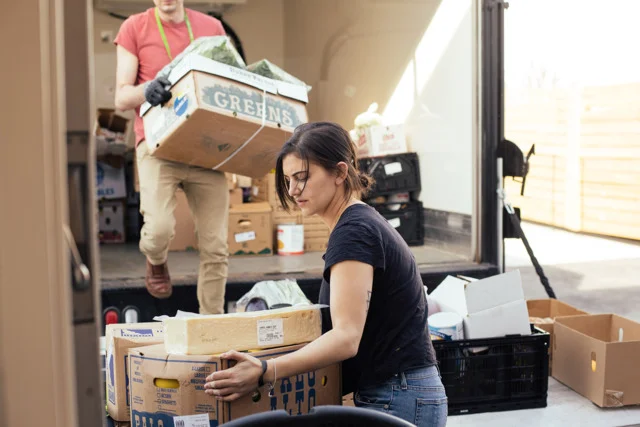
Photo by Daniel Meigs
So many Nashville restaurants have offered vital support to our work over the years, extending hospitality through generous donations of food, purchasing from Growing Together farmers, and more. As Nashville continues to change and grow, we’ve sadly seen some beloved restaurants make the decision -- for various reasons -- to close.
But here at TNFP we’ve found ourselves in the position of trying to find a sliver of positivity in the wake of those changes.
For example, when the 26-year institution Tin Angel closed after Rick and Vicki Bolsom’s decision to retire, they graciously gifted us their leftover produce, spices and other dry goods -- more than 1,000 pounds of food -- that we could use in making meals shared in partnership with poverty-disrupting and community building nonprofits in Nashville. Writer Margaret Littman with the Nashville Scene wrote about the Bolsom’s gift while including it in this larger story about our efforts and others in Nashville to minimize food waste as a whole.

More recently, we accepted a donation from Flyte World Dining & Wine when it closed after more than a decade serving Nashville.
The Flyte donation included citrus fruits, mixed greens, wild rices, high-end oils and vinegars, canned tomatoes, flour, maple syrup and vanilla extract. We’ll continue to work through those products for our meals program for months to come, but most immediately we added Flyte mushrooms and potatoes to a stir-fry that went to seniors at FiftyForward and Vine Hill Towers. The stir-fry also helped provide healthy meals for Sweet Peas, our new summer meals program for kids.
We consider it an honor to be a part of extending the hospitality of these restaurants. From their tables to our neighbors, we do our best to make the most of what’s given to us for providing high-quality, nourishing meals.
Orange, Mushroom, Potato and Bell Pepper Stir-Fry
A lot of times we need to move fast at TNFP -- especially this summer as we’ve ramped up from 5,500 to 7,500 meals a week. Stir-fries offer a great way to make meals quickly while also packing in lots of nutritious vegetables coming out of the gardens at peak season.
Ingredients
1/4 cup canola oil, divided
2 cups potatoes, diced
1 tablespoon cornstarch
1/2 cup fresh orange juice
2 cups mushrooms
1 cup thinly sliced yellow onion
1 cup sliced green bell pepper
1 cup sliced red bell pepper
1 tablespoon thinly sliced garlic
1/2 teaspoon grated orange rind
1/2 teaspoon crushed red pepper
3 tablespoons reduced-sodium soy sauce
1 tablespoon unseasoned rice vinegar
1 teaspoon light brown sugar
1/2 teaspoon kosher salt
2 (8.8-oz) pkg. precooked brown rice (such as Uncle Ben's)
2 tablespoons chopped fresh cilantro
Directions
Heat 3 tablespoons oil in a large nonstick skillet over medium-high. Add potatoes to pan; cook 8 minutes or until golden. Remove from pan.
Combine 1 tablespoon cornstarch and orange juice in a small bowl. Heat remaining 1 tablespoon oil in pan over medium-high. Add mushrooms, onion and bell peppers; cook 5 minutes. Add garlic, orange rind, and crushed red pepper; cook 1 minute. Add juice mixture, soy sauce, vinegar, sugar, and salt; bring to a boil. Stir in potatoes. Place 1/2 cup rice on each of 4 plates; top each serving with 3/4 cup of vegetable mixture. Sprinkle evenly with cilantro.
Recipes adapted from Cooking Light.
Crossroads Campus
When Katie Kuhl of Crossroads Campus approached The Nashville Food Project about providing a meal to be served alongside their Wednesday afternoon self-development and skills training activities, we knew that we wanted to leverage our efforts to support the work the Crossroads team is doing with young people and with animals in our city.
“We don’t derive strength from our rugged individualism, but rather our collective ability to plan, communicate, and work together.”
By Elizabeth Langgle-Martin, Community Engagement Manager
At The Nashville Food Project, we are passionate about many things: a freshly pulled carrot making its way from our gardens to our kitchen, an especially generous produce or protein donation from a local farm, watching young volunteers make popcorn on the stove top for the first time, and seeing neatly stacked pans of incredible food being loaded into our vehicle, ready to make a trip to its final destination. But perhaps most of all, we are passionate about our meals being served in partnership with diverse, essential non-profits doing poverty interrupting work in our community.

When Katie Kuhl of Crossroads Campus approached The Nashville Food Project about providing a meal to be served alongside their Wednesday afternoon self-development and skills training activities, we knew that we wanted to leverage our efforts to support the work the Crossroads team is doing with young people and with animals in our city. Crossroads Campus is nestled in the center of Nashville on the edge of Germantown towards North Nashville. It boasts a multi-use space which includes a retail store for pet supplies, a full service grooming facility, kennels for small adoptable dogs and a cat room brimming with soft kittens ready for a place of their own. Four apartments also are wrapped into their expansive space, offering respite for young people who have experienced barriers to stable housing. Crossroads retail store, grooming services, humane education efforts, dog treat social enterprise and adoption mission all provide a job training environment for additional young Nashvillians termed interns who need both a soft place to land and a launching place from which to prepare for their next steps. These young folks, age 17 to early 20s, engage in paid internship experiences and become proficient in retail, pet grooming skills, and animal care with extra attention to humane education. Interns have access to weekly case management support and Wednesday afternoons are reserved for special activities which range from yoga and learning about taxes to button making and conflict resolution. TNFP recently began providing meals to accompany these essential times, from jerk chicken and island rice to chicken parmesan, always with hefty portions of fruit and seasonal salad.

The Nashville Food Project holds tight to this idea of interdependence, one of our key values. TNFP sees its work of growing, cooking, and sharing nourishing food in order to cultivate community food security as only possible and only valuable when we do it in relationship with others. When we see our food served alongside the deeply invested work of groups like Crossroad Campus, we see our mission realized in new and vibrant ways and are encouraged by organizations that see our meals as a resource to enhance the unique community that our partners foster.
To see our list of other non-profit partners, check out our website.
Interested in exploring meal partnership? We will be opening up space for new inquiries at the beginning of July! Add your email here to receive a notice when we start to explore fall partnerships.
What We Have Right Before Us
On any morning during the spring and summer, the Growing Together garden is a bustling place. The greens sparkle in the dampness and gentle, early light. The farmers, moving back and forth from their plots to the central washing station, are usually harvesting their crops…
By Tallahassee May, Growing Together Education Manager

On any morning during the spring and summer, the Growing Together garden is a bustling place. The greens sparkle in the dampness and gentle, early light. The farmers, moving back and forth from their plots to the central washing station, are usually harvesting their crops to fill vegetable orders from restaurants around the city. Discreetly tucked behind a church parking lot, nestled in between Nolensville Rd. and interstate 40, the one acre garden is an urban oasis as well as a model for small scale agricultural productivity.
One of my favorite parts of my job as Education Manager of the Growing Together Program at TNFP is getting to walk through the garden in the morning with fresh eyes. Inevitably, while I spent time at the office for the afternoon or was home for the weekend, the farmers have added something new to their plots. This usually takes the form of a farming technique or innovation that may not previously fit with my experience.

Any farmer or gardener is familiar with the practice of trellising a vining crop, mulching, or seed-saving. And while most of us would run to the nearest Lowe’s or Home Depot for supplies, the New American farmers of the Growing Together program often make other choices. Foraging branches from the surrounding scrubby woods, they build support structures out of the salvaged material, sharpening with their knives the ends of the sticks until they are pointy enough to sink deep in the ground. The material is held together with strips of fabric or even the heavy duty plastic from fertilizer bags, tied securely at the joints. The towering structures remind me of fantastical childhood forts. The affect is incredibly artistic and lends a beautiful aesthetic to the space. It may not be fitting for larger scale production, but is perfectly suited for the amount of crops being grown by each farmer, the resources that are readily available, and the financial investment that is desired.

Entering through the gate of the garden, any visitor is welcomed by the crazy quilt-like visual of all the work taking place. The one-acre field is divided up into 7 plots; the newer farmers having a smaller growing space than the more experienced ones. Each farmer is autonomous, planting the crops they want and working according to their own schedule. All the farmers share practicing certain techniques. The yellow flowers of the blooming mustard greens are left on the plant to eventually mature into dried seedpods. Sometimes these long stalks are tied into neat bundles as they dry, and sometimes they are left to sway in the wind. The seed saved in many cases is of certain crops that are hard for the New American farmers to source here in the States, such as a Nepali variety of mustard green, or a particularly hot pepper variety.

If you can look more closely, past the long stems of seed -ripening vegetables, you will notice a lack of bare dirt. Every little bit of space in the garden is well used, as larger crops are interspersed with smaller crops, slow growing crops mixed in with fast. Although sometimes a more Westernized practice of straight rows is used, more often the entire 3 foot wide bed is filled with various crops at various stages. Again, this doesn’t necessarily fit well in a larger scale agricultural situation, especially one that uses tractors for cultivating. But maximizing space through the technique of intercropping is perfectly appropriate technique for a farmer in a small space that wants to maximize the food they produce.
This time of year, as we transition from spring to summer crops, the farmers are replacing cool weather vegetables with heat loving ones. New seedings and transplants are carefully mulched using the pulled up leaves and plants from the previous crop. The large, flat leaves of old cabbage plants are gently laid over new rows of carrots, keeping the soil moist and cool as the seeds germinate. Old stalks of kale are pulled up and now form tents over tender squash transplants, nursing them until they are well established in their new home. Eventually the re-purposed mulch returns to the dirt as compost, feeding the soil biology and keeping the circle intact.

The narrative of these times is one of rapidly disappearing farmland and the demise of the family farm. Driving through Nashville’s surrounding rural areas and counties, it is obvious how quickly the farmscape and green space is being transformed into subdivisions and parking lots. The Growing Together market farming program is inspiring in so many different ways, and has the capacity to mean various things and include a broad reach of people. One of the most inspiring components for me is that the garden space, and the farmers that work it, demonstrates that large acreage or big equipment are not required for a healthy agricultural system that produces a bounty of food. The Nashville Food Project believes that the equitable sharing of food and resources nurtures a vibrant community. The Growing Together program extends that mission to include land access and market inclusion to people who otherwise may not have such needed resources.
This acre of green space that is the Growing Together garden is a wonder. The beauty of it is not only found in the vegetables and flowers that the farmers cultivate and in the generous bounty they produce for the Nashville community, but also in the care and devotion the farmers and their families give back to their small bit of earth. The garden is a small part of all that The Nashville Food Project works to achieve, but the Growing Together market farming program shows that meaningful work can begin with what we have available right before us.

Between May and October, you can visit the Growing Together farmers at the Richland Park Farmers’ Market every Saturday 9 am to 12:30 pm, and at The Nashville Food Project in the Nations every Wednesday 5 pm to 7 pm.
Learn more about this work and how you can support the Growing Together farmers here, including where to find Growing Together produce.