
The Nashville Food Project’s Blog

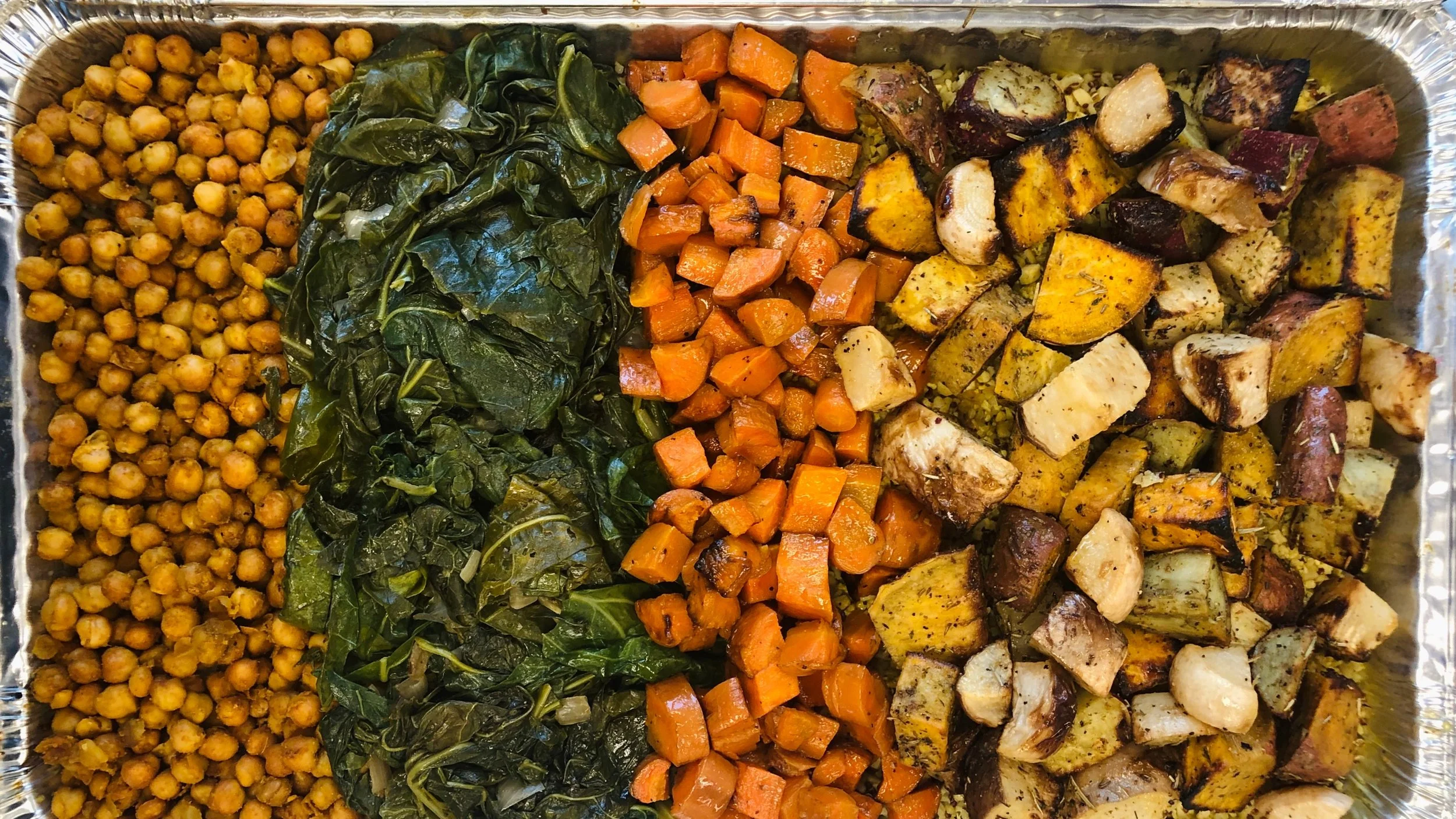


Flood Relief: A Few Ways to Help
It’s hard to believe we have faced yet another set of tragic circumstances in Nashville after a brutal year of a tornado, COVID, a bombing and now floods, which recently took the lives of seven Nashvillians. We are doing our small part by sending out meals alongside Metro Social Services, Open Table Nashville and People Loving People. These organizations have all been tirelessly caring for and advocating for our neighbors without housing who have shouldered the brunt of this latest trauma. Additional ways to help partners and friends listed here.

It’s hard to believe we have faced yet another set of tragic circumstances in Nashville after a brutal year of a tornado, COVID, a bombing and now floods, which recently took the lives of at least seven people.
The latest of these disasters has us thinking to the early days of The Nashville Food Project’s formation in the aftermath of the 2010 flood. In the midst of it all, the words of Betsy Philips in the Nashville Scene yesterday have us digging deep :
This is, I think, the way forward through yet another tragedy. Do the ritual. Even if we’re burned out and pissed, and even if we feel betrayed by a lot of our neighbors, even if we feel like chumps for helping, help anyway. Help not because you’re feeling it, but because this is what we do in times like this. Help because one of the most important things about Nashville is that we help, and even with everything else that’s changed in the city, we don’t have to be changed into the kinds of people who don’t help.
We can preserve what’s good about Nashville by being good, even when we’re not feeling it.
Today we’re doing our small part by sending out meals alongside Metro Social Services, Open Table Nashville and People Loving People. These organizations have all been tirelessly caring for and advocating for our neighbors without housing who have shouldered the brunt of this latest trauma.

How else can we help those affected by the recent floods? We have collected various calls to action from partners and friends here:
Hands On Nashville is working closely with Nashville's Office of Emergency Management to deploy volunteers in safe ways to areas in need of help.
Community Resource Center has been updating their list of needs on their social media and website such as tarps, rakes, and outdoor trash cans.
Open Table Nashville has been keeping their social media updated with needs for those experiencing homelessness including a current need for Kroger and Walmart gift cards.
Room in the Inn also has listed a need for items like socks, sleeping bags, sleeping mats and more.
Shower the People Nashville will be holding a flood debris clean-up on Thursday, April 1.
People Loving People also serving the unhoused community in Nashville has been updating their social media with needs.
Follow and support our friends at Cul2vate Farms as they work to determine the damage on their property.
Please let us know if you hear of other needs, and we will keep this list updated.
Offering a Place of Hope and Joy
The Nashville Food Project garden spaces have long been witness to the wisdom, hope and joy of growers who came to the United States from Southeast Asia. We also have been witness to their added hardships and concerns this past year including anti-Asian violence here. and abroad.

Growing Together farmers with their new cooler, a game-changer for their vegetable harvesting.
The Nashville Food Project garden spaces have long been witness to the wisdom, hope and joy of growers who came to the United States from Southeast Asia. In the community gardens and at the Growing Together garden, we have watched Nepali mustard sprout from the soil and tasted a rainbow of heirloom hot peppers lighting up the rows. At community potlucks, we have been treated to gundrek soup and potato paneer curry lovingly made with the fruits of labor on shared garden land.


But this year amidst the everyday fears and economic losses of a pandemic, we also have been witness to the added hardships of our friends who already endured so much by coming to the United States as refugees from countries like Bhutan and Burma (now known as Myanmar). Family members in farming communities have faced COVID diagnoses after working jobs at hotspots such as meat processing facilities. In February, we learned of the military coup and violence erupting in Myanmar, the home country to many garden program participants. (Growing Together farmer Roi, for example, has been sending her Growing Together earnings to a school for the blind in that country terrorized by the coup.) And on American soil, we are seeing racism and violence directed at Asian communities too. Following the Atlanta shooting, Growing Together Manager Tallahasee May posted these words on the Growing Together instagram account:
“Violence against Asian Americans and BIPOC is not new. During this past year, however, as the Covid 19 pandemic surged and fear mongering and false rhetoric spread through local and federal leadership, we heard that the immigrant, Asian, and Asian American community felt the rise in tension and persecution. Many participants in the Growing Together program told how they feel threatened and vulnerable as they move through their day, and have continued to live in fear. Unfortunately - again- this is not new. But it should not and can not continue. It is very much time to call out this racism, to support the work for civil rights, prevention of hate crimes, and for restorative justice initiatives in communities, and for all to speak up against dangerous rhetoric against Asian Americans and descendants. The Growing Together program and @thenashvillefoodproject celebrate and are grateful for the Asian American community and for all the work and support they generously contribute on this path towards food and social justice.”
It is no doubt a heavy time. And yet, we continue to intentionally strive for our garden spaces to provide a safe place of hope and joy—where farmers can feel connected to this soil and to the community around them. We are proud to offer programs where we do not focus on scarcity or lack but rather abundance in harvest and also the abundance these growers bring in their strengths, community connection and deep knowledge.
We thank you for your support of the growers.
Today we also offer a few additional ways to show support to the local API community.
Follow API Middle Tennessee, which offers links to:
Sign up for future workshops to help advocate for a safe and just Tennessee for Asian and Pacific Islanders.
Support the families of Atlanta victims.
As well as report any harm happening in our community.
Consider training on the positive impacts of bystander intervention.
Support local immigrant and refugee advocacy groups such as Tennessee Immigrant and Refugee Rights Coalition, Nation’s Ministry, Nashville International Center for Empowerment and Catholic Charities of Tennessee.
Support Asian-owned restaurants. Just a few of our staff favorites include Ate’s Filipino Kitchen, East Side Banh Mi, Thai Esane, Thai Ni Yom and Laovin’ It.
Goodbye (and Thank You), Winter: A Reflection on Finding Beauty Even in the Toughest Seasons
Winter holds space for all of us to deal with the hard truths of the year that has just passed. And through the sharp lens of winter’s harsh reality, it gives us something else too: the prospect of new beginnings, and with it, the arrival of spring.

by Julia Baynor, Meals Manager
Ah, the seasons.
Even in our pandemic year, summer at The Nashville Food Project still managed to show how we receive so much abundance, with piles and piles of vegetables coming through our doors.
Through donations and sourcing from local farms, we were up to our ears in tomatoes, cucumbers and summer squash. The Tennessee summers are long, and bountiful produce filled our walk-ins until what seemed like October. We look forward to that time again.

Then summer slipped away and a beautiful fall descended upon us until the constant flux of donations started to dwindle. I found myself calling over to our headquarters kitchen from my office a few blocks away at St. Luke’s Community House, looking to source extra produce for our meals. “We’ve got nothing,” became the common refrain. Winter had started to set in.
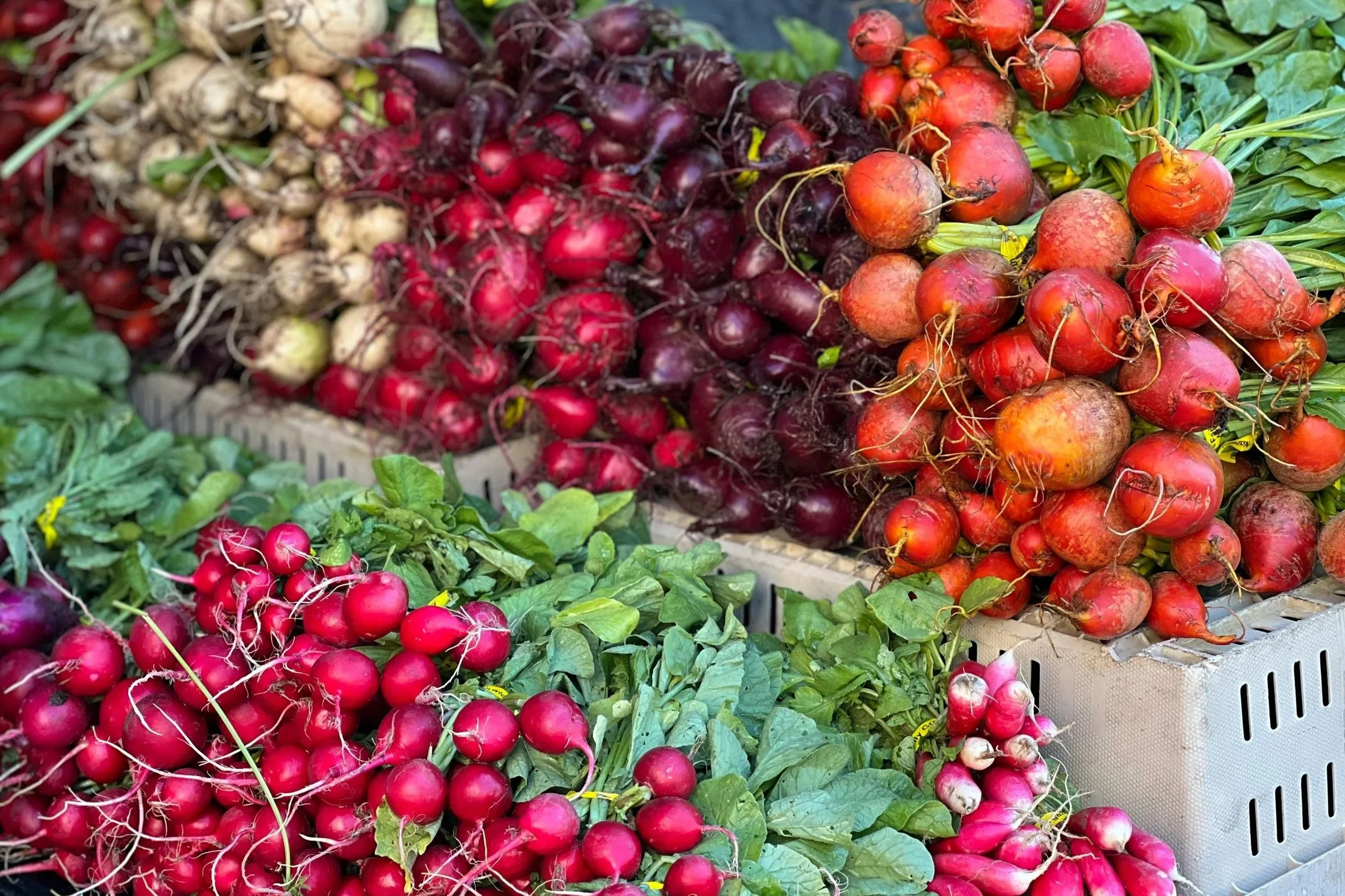
Fresh produce is one of the things I love most about my job at TNFP. I will never stop marveling at the natural rainbow housed in our bins: the crimson tipped lettuces, the blushing pinks of crunchy radishes, and the deep, dark violet of beets fill me with inspiration. Turning beautiful produce into delicious meals and sending them out to nourish our community is what I live for, but in the winter, things get a little harder. Produce becomes more scarce, and the items we do get aren’t always the easiest to work with. Butternut squash have tough skins and seeds that must be scraped out. Winter turnips come in with gnarled skin and stringy roots that must be peeled away. Working with winter produce can be arduous and slow, much like working through winter itself.

Around the same time the winter season descended upon us, I started contemplating winter myself. In the book “Wintering,” author Katherine May explores the many characteristics of physical winter but also recognizes the difficulties we as humans experience in our personal winters as well. As I read May’s perspectives about the cyclical nature of our lives and of the seasons, I found myself reflecting on the changes the previous year had wrought at The Nashville Food Project.
The meals team has been harboring a winter of its own. In addition to the psychic hardships and exhaustion of working on the front lines of a pandemic, many meals team members suffered the loss of loved ones over the course of the past year. This winter penetrated the fabric of our team as well as we saw several treasured veterans move on to other endeavors. As last days came and went, so did uncomfortable feelings about what to do next as a team. In a lot of ways it has felt like starting over, building our program from the ground up.
There were days that felt scary and discouraging. A meals team without several foundational members felt like staring into the darkness of winter. I kept going back to lines in “Wintering” which assured me, eventually, things would look up.
“Over and again, we find that winter offers us liminal spaces to inhabit. Yet we still refuse them. The work of the cold season is to learn to welcome them.”
I realized I had been looking at winter with the wrong perspective. With May’s musings on my mind, I felt my resistance to winter begin to thaw. We hired new team members who came with fresh energies like spring, and I began to feel hope again. With new people come new perspectives, and I look forward to the growth of our program that will come with their ideas.
I also began to welcome that hardy winter produce into the kitchen with less trepidation by focusing on the potential these scrappy vegetables held to become something delicious. This winter, we received upwards of 600 pounds of butternut squash from a local independent farmer, hundreds of pounds of root vegetables from Bells Bend farm, and, after a little winter storm made their delivery routes impossible, Imperfect Foods filled every shelf of our walk-in with boxes brimming with so-called “ugly” produce. In the darkness and cold of winter we were still able to make trays of colorful root vegetables, slowly roasted in our ovens until the peppery bite faded into sweetness. We made silky, garlicky turnip purees, creamy butternut squash pasta sauces, and peeled away the rough exteriors of “ugly” carrots to use in mirepoix for comforting winter soups. Winter vegetables are the perfect example of taking what is seemingly “nothing” and turning it into so much goodness.


On their way to becoming garlic-mashed turnips to serve alongside Meyer lemon-rosemary chicken.
Winter presents a set of circumstances none of us can control. But it also gives an opportunity to embrace the action of letting go. Winter holds space for all of us to deal with the hard truths of the year that has just passed. And through the sharp lens of winter’s harsh reality, it gives us something else too: the prospect of new beginnings, and with it, the arrival of spring.
As I sit outside with the sun on my face for the first time in what feels like months, I can feel it approaching.
“Life meanders like a path through the woods. We have seasons when we flourish and seasons when the leaves fall from us, revealing our bare bones. Given time, they grow again.” -Katherine May

Radish Tart in an Almond Flour Crust
Adapted from Martha Stewart and Dishing up the Dirt.
Yields 1 x 9 inch tart
Almond Flour Crust
2 cups almond flour
2 cloves garlic, minced
1 tsp dried parsley
1/2 tsp salt
pinch of ground black pepper
1/3 cup olive oil
1 Tbsp + 1 tsp water
Tart Filling
4 oz goat cheese, room temperature
8 oz cream cheese, room temperature
1 egg
1 tsp fresh thyme leaves
8 oz radishes (watermelon radishes are beautiful!), scrubbed, trimmed and thinly sliced.
2 tsp extra-virgin olive oil
Instructions:
1. Place a rack or sheet pan large enough to hold your tart pan in the center of the oven. Preheat the oven to 400F. Grease a 9 inch tart pan with oil. In a large bowl, whisk together the almond flour, garlic, parley, salt and pepper. Stir in the oil and water and mix until well combined. Press the dough into your greased tart pan, making sure the dough goes at least 1 1/4 inches up the sides. Bake until the crust is lightly golden and firm to the touch, about 18 minutes. Let the crust cool to room temp and reduce heat to 375F.
2. In a large bowl or the bowl of a food processor, whisk or blend together the goat cheese, cream cheese, thyme and egg.
3. Using a a spatula, spread the filling evenly over the crust.
4. Toss the thinly sliced radishes with salt, pepper and olive oil until evenly coated, then layer them over the filling. Sprinkle with flaky sea salt and bake in the oven until the radishes begin to shrivel and the filling is bubbling around the edges, 35-40 minutes. If you notice the crust getting too brown, cover the edges with tin foil.
5. Let the tart cool for about 15 minutes before slicing and serving. Top with more fresh thyme, or even some balsamic glaze! Enjoy!
New Seasons, New Phases: An Update Regarding Volunteers
Interim Co-CEO and Chief Programs Officer Christa Bentley shares a transparent look at the phased plan we've been following to help us make countless hard decisions during the pandemic, keeping our programming open—and hopefully very soon— bringing volunteers back to our spaces!

Volunteers with staff in our kitchen pre-pandemic. Photo by Abigail Bobo.
by Christa Bentley,
Interim Co-CEO, Chief Programs Officer
A little over a year ago I was having my first day back after a leisurely maternity leave, mid-February 2020. I remember I spent my first two weeks back working virtually because I wasn’t ready yet to leave my sweet babe, and it was such a challenge. I hated not being in the room with everyone I was working with. Two weeks later, the day after my first scheduled day back at the office, I woke up to news reports of a devastating tornado in Nashville. Two weeks after that we shut down our volunteer program to stop the spread of COVID-19 and here I’ve been at my home office (let’s be honest, it’s my dining room) ever since.
Today I want to share an open look with all of you at where we are right now with our volunteer program. It is wild to even think that we are coming up on almost a year of very few volunteers in our kitchens, gardens, and food trucks. TNFP’s Volunteer Program has been the backbone of our organization since our inception, spurred on by the support we felt from so many during the 2010 Nashville flood. It’s how our community has responded to nearly every significant crisis, by filling our spaces with helping hands to amplify our work. But COVID-19 has been an entirely new crisis for our city and for The Nashville Food Project. We have had to make so many changes to the way we work to nourish our community. And the loss of volunteers has proved one of the biggest differences, requiring a lot more time in the trenches for our small but mighty team: chopping, weeding, and cooking more than we ever have had to do on our own.
A few months into the pandemic we created a tool we’ve been calling our “phased plan” (the linked plan shows some of the details we’ve included) to help us make decisions about all aspects of our programming, including how many people and volunteers we welcome back into our spaces and when. The plan is broken down into 4 phases (A,B,C,D), and each details a lot of the things our staff were wondering about: work from home, space capacity, in-person meetings, output capacity, on-site protocols, you name it. Our move from each phase is dictated by 4 weeks of consistently decreasing trends in the COVID diagnosis rates in Davidson County (we’re tracking this data available from Mayor Cooper’s office).
This is a conservative approach. We know this, but we also stand behind it. It has helped us make countless hard decisions and most importantly has kept our programming open. Because our kitchens are tight quarters, it has been vital that we keep exposure down. One positive test in our kitchens might mean an enormous scramble for our meals team and an inability to continue serving meals to our partner organizations, something we are desperately trying not to do with the need for access to food higher than it has ever been.
While the garden spaces do feel safer, our site capacities mean that we have to work through what is essential for our programming in our decision making, especially as many of the communities that participate in our garden programs have been disproportionately affected by this pandemic. We are constantly asking ourselves “does this keep people (staff and participants) that have to be on site safe” and “does this provide access to healthy food”? We are incredibly lucky to have had very few incidents of exposure in our spaces over the past year and we credit that to procedures that are truly working and staff that are willing to follow protocols even when it often means making their jobs harder.

I am sharing all of this now as we’ve got a little hope in our hearts for the chance to share this work with volunteers once again. As of Monday March 1st, we have moved into Phase B of our plan after many weeks of decreasing case rates. Additionally, we are starting to get some of our onsite team vaccinated, which has been one of our biggest concerns around introducing additional people into our spaces (especially as uncertainty still remains around the ability to spread the virus even after vaccination). This positive news means that we’re dreaming and working on engaging in this work with all of you once again. While these details will take a little time, I hope this message gives you hope that it is coming.
This year has given us a lot of time to think about our volunteer programs. Much of our timing in the past was built out of long ago necessity. As we are thinking about the future here are a few of the things that we have been talking about.
1. We would like volunteers to play an integral role in ensuring that we are using as much donated food as possible, decreasing the amount of food that ends up in the landfill and increasing our ability to batch cook and put things away when there is an abundance.
2. We would like volunteers to help us grow and maintain our garden sites, working on specific projects at our sites and engaging with the land and history of the land in meaningful ways.
3. We would like to increase accessibility to our volunteer times, expanding our hours into nights and weekends and diversifying the people who support this crucial work.
4. We would like to reintegrate volunteers into our work safely while also always providing an enjoyable, engaging experience for both volunteers and our dedicated staff.
We know that the coming months will come with more learning, just as the past year has. We want to thank you all for supporting us through it all, and for helping us learn and evolve. I have always treasured how seriously The Nashville Food Project takes the beginning of our mission statement, “Bringing people together…,” and I can’t wait to bring you all back into this work once again!
A Collective Look at the Food Heroes Series (So Far)
Last summer, we launched a food heroes series on our social media to celebrate and lift up the vast contributions of Black Americans in food from agriculture, innovation, activism to cooking. We have barely scratched the surface. This month, we take a collective look back at the series.
Last summer, we launched a food heroes series on our social media to celebrate and lift up the vast contributions of Black Americans in food from agriculture, innovation, activism to cooking. We have barely scratched the surface. This month, we take a collective look back at the series so far.
We also recommend the recently published collection of stories via Eater in collaboration with the Museum of Food and Drink's upcoming exhibit, African/American: Making the Nation's Table.
Fannie Lou Hamer, farmer and activist

"When you've got 400 quarts of greens and gumbo soup canned for the winter, nobody can push you around or tell you what to say or do." Read more about Fannie Lou Hamer’s farming as activism in an excerpt from the book Freedom Farmers: Agricultural Resistance and the Black Freedom Movement by Dr. Monica M. White in Life & Thyme magazine.
Georgia Gilmore, cook and activist

Georgia Gilmore is a cook, midwife and activist whose secret kitchen fed the civil rights movement. She organized a group of black women who sold “pound cakes and sweet potato pies, fried fish and stewed greens, pork chops and rice at beauty salons, cab stands and churches.” Funds raised helped pay for fuel, insurance and repairs for the alternative transportation system that sprang up in Montgomery, Alabama, during the bus boycott. The group was called "The Club from Nowhere" because when money arrived to fund the movement, it needed to stay secret—or from "nowhere." Read more here.
There's also a great children's book that tells the story of this American hero called "Pies From Nowhere" for any parents who want to share this history of activism with their kids.
Vertamae Smart-Grosvenor, a culinary anthropologist, griot, commentator, author

Vertamae Smart-Grosvenor is a culinary anthropologist, griot, commentator on NPR, and author of the classic book, “VIBRATION COOKING: The Travel Notes of a Geechee Girl.” Smart-Grosvenor, born and raised in South Carolina, moved to Paris to pursue a career in acting, before finally settling in New York City. She performed many roles in the Black Arts Movement as a dancer, costume designer, backup singer (and often a cook) for Sun Ra’s avant-garde music collective, the Solar-Myth Arkestra.
As a culinary foremother, she “detailed in various ways a feminist consciousness of community building, cultural work, and personal identity,” writes Psyche Williams-Forson, author of “Building Houses out of Chicken Legs: Black Women, Food, and Power.”
“Smart-Grosvenor kept one eye on her community, always. She used to cook for the Free Breakfast Program for the Black Panther Party. The desire to nourish those around her was an extension of a more overarching philosophy: Think globally, but have a local address," writes @mayukh.sen.
In Smart-Grosvenor's own words from Vibration Cooking, 1970:
“This is the richest country in the world,” she wrote. “Any citizen should be given at birth the guarantee of a life free from hunger.” In the same passage, she lamented many other things—plastic flowers, instant coffee, gossip, working nine to five, the jet set and the boldness of New York City mice. She recalled the time she persuaded a visiting friend…“a revolutionary” to get rid of a mouse. “It took thirty minutes to convince him, but he did it. Just goes to show you everybody talking revolution ain’t making it.” And then she shared a recipe for their dinner, Chicken Stew and Dumplings.
Read more about the remarkable Vertamae Smart-Grosvenor here. (Note: Marie Dutton Brown, literary agent and grandmother to TNFP Community Garden Manager, Kia Brown also makes an important cameo!)
Edna Lewis, chef, teacher, author, and all around culinary inspiration

“The Taste of Country Cooking,’ published in 1976, is revered for the way it shows the simple beauty of food honestly made in the rhythm of the seasons — the now common but at the time nearly forgotten ethos of eating farm-to-table — and for the way it gave a view of Southern food that was refined and nuanced...”
Read more on “Edna Lewis and the Black Roots of American Cooking,” by @francis_lam at this link. And parents of school-age children, check out the extraordinary picture book about Chef Lewis’ childhood in Freetown, Virginia called “Bring Me Some Apples and I’ll Make You a Pie.”
Diane Nash, civil rights leader

“‘Mayor,’ she asked in a famous exchange following a 1960 march to the courthouse, ‘do you recommend that the lunch counters be desegregated?’ To the surprise of supporters and opponents of the movement, (Mayor) West said yes. A few weeks later, Nashville became the first Southern city where blacks and whites sat together for lunch.” Read more about Diane Nash at this link.
BJ Dennis, Gullah Geechee chef

Chef Dennis grew up in Charleston, South Carolina, and his grandparents helped keep him in touch with the old ways of the Sea Islands by cooking him a traditional seafood-based diet as well as other classic dishes like gumbo and purloo. Essential to his role as a chef is preserving the cuisine of his ancestors, documenting its linkage to other African diaspora cuisines, and farming and using traditional crops like okra, red peas, benne seed, and callaloo in an intentional way. When speaking of Dennis, culinary historian Michael Twitty says, "He is it. But the thing about it is, he’s not trying to be it. He’s trying to raise a whole generation of people to pick this mantle up. We don’t want to be icons; we want to be griots.”
Shirley Sherrod, agriculture advocate

When Sherrod's father was the victim of a racially motivated murder, she vowed to remain in the South and work for systemic change. In the 1960s, she and her husband worked for the Student Nonviolent Coordinating Committee (SNCC) and founded a farming collective, New Communities. At 6,000 acres, New Communities was the largest tract of black-owned land AND the first Community Land Trusts (designed to provide an equitable and sustainable model of affordable housing and community development) in the United States. The project was sabotaged due to racial bias in the loan process among other issues and resulted in a successful class action lawsuit against the USDA. Sherrod was also the first black Georgia State Director of USDA Rural Development. Since departing the USDA, Sherrod has continued to serve as Executive Director of the Southwest Georgia Project for Community Education, which seeks to "empower communities through grassroots organizing and technical assistance," centering on "the intersection of food, farms, and human rights." Read more about Shirley Sherrod here.
Devita Davison, executive director of FoodLab Detroit

“Many Black communities lack access to fresh, healthy, affordable food as the result of the structural inequalities. I'm talking about deliberate public and private policies and resources that have been misappropriated and extracted from, and not allocated to Black and brown neighborhoods. I'm talking about policy decisions that exclude the word 'healthy' from our community. That kind of inequality cannot be described as anything except food apartheid. When folks call our neighborhoods “food deserts,” it’s inappropriate and disrespectful because Detroiters boast about the fact that because of the Great Migration, not only did African Americans flee the rural South and come to the North, they brought skills with them including their ability to grow food, their ability to cultivate the land.”
Detroit is an epicenter of urban agriculture with more than 1600 community, school, and family farms and gardens. Davison says @foodlabdetroit creates a narrative that speaks to the richness of community, an important guide for moving the story away from a narrative of scarcity.
Hear more from Devita Davison in her conversation with @KatKinsman for @FoodandWine’s Communal Table and “How I Got Radicalized Around Food.”
The people of Soul Fire Farm

This past fall, The Nashville Food Project staff and board participated in this farm's "Uprooting Racism in the Food System" training, which we highly recommend.
"When the horizon looks bleak, I call to mind my ancestral grandmothers, who hid away their seeds of okra, cowpea, millet, and black rice in their braids before being forced onto transatlantic slave ships. Their deep yearning was to have the means to feed their own children. If they, in those unimaginable circumstances, had the audacious hope to set aside some seeds for me, who am I to give up on my own descendants? How could I not plant these seeds for all of our children?" - Leah Penniman of Soul Fire Farm
Malinda Russell, author of the first known cookbook published by a Black woman in the United States “A Domestic Cook Book: Containing a Careful Selection of Useful Receipts for the Kitchen”

A working mother, cook, and former pastry shop owner in East Tennessee (where she was born and raised), Russell self-published her ground-breaking book in 1866 as a fundraising project.
“‘Southern poverty cooking was mistakenly established as the single and universal African-American cuisine,' said Leni Sorensen, a researcher at Monticello outside Charlottesville, Va., specializing in African-American history. “And then the volume by Malinda Russell surfaced."
George Washington Carver, a scientist, innovator and educator who thought holistically about the environment long before it reached mainstream.

George Washington Carver cared about helping what he called “the furthest man down,” by championing crop rotation, sustainability and the interconnectedness between the health of the land and health of the people who lived on it. Born into slavery, he lives on today as an American icon of agriculture and ingenuity.
Read more at “In Search of George Washington Carver’s True Legacy: The famed agriculturalist deserves to be known for much more than peanuts.”
Zephyr Wright. personal chef

Born and raised in Texas, Zephyr Wright began working for the Johnsons (President Lyndon B. Johnson & Lady Bird Johnson) as a maid and cook to help pay her way through college. While Johnson was in Congress, his home and table where politicians gathered became known for good food because of Wright’s dishes like chile con queso and peach cobbler. She ended up staying with the family through Johnson’s presidency.
Wright also shared her experiences with discrimination, which is thought to have influenced work on civil rights reform. When Johnson signed the Civil Rights Act of 1964, Wright was there. He handed her the pen he used and said, “You deserve this more than anybody else.”
Sarah Estell, culinary entrepreneur

Have you seen this historical marker on 5th Avenue in downtown Nashville? This week’s food history is local — Sarah Estell, the free Black woman and culinary entrepreneur who ran an ice cream parlour, catering service and boarding house downtown during the 1840s to the 1860s.
Cleo Johns, catering pioneer of Cleo’s La Cuisine

Johns worked for most of her career in Maplewood, New Jersey, for many clients in New York City. “I sometimes do seven parties a day, including luncheons and dinners serving 30 to 4,000 people,“ she told The New York Times in 1973.
Therese Nelson, a Black culinary historian, food writer and caterer told Huffington Post: “Catering was the culinary battle ground for Black agency and authority in American gastronomy. And as a caterer, I’m always on the lookout for those names because they give us the receipts of culinary excellence that assert our legacy in this industry before it was respectable, lucrative and revered work.” of Cleo’s La Cuisine who worked for most of her career in Maplewood, New Jersey, for many clients in New York City. “I sometimes do seven parties a day, including luncheons and dinners serving 30 to 4,000 people,“ she told The New York Times in 1973.
Karen Washington, community activist and farmer

Washington has been called “urban farming’s de facto godmother.” As a community gardener and board member of the New York Botanical Gardens, she worked with Bronx neighborhoods to turn empty lots into growing spaces. She launched or has led many other initiatives including Black Urban Growers (BUGS), City Farms Market and New York City Community Garden Coalition. She received the James Beard Foundation Leadership Award and has been named to Ebony magazine’s “Power 100.”
“To grow your own food gives you power and dignity. You know exactly what you’re eating because you grew it. It’s good, it’s nourishing and you did this for yourself, your family and your community.” - Karen Washington
Read more at “How Urban Agriculture Can Fight Racism in the Food System.”
Ben Burkett, advocate and farmer

Burkett is a long-time advocate for Black farmers who grows food in Petal, Mississippi on land that has been in his family since 1889. He has been an activist for more than 30 years, speaking, writing, and organizing for the rights of independent family farmers.
Learn more at “In the Fields with Ben Burkett.”
Mary Eliza Church Terrell, activist

Mary Eliza Church Terrell was “a well-known African American activist who championed racial equality and women’s suffrage in the late 19th and early 20th century. Later in 1950, at age 86, she challenged segregation in public places by protesting the John R. Thompson Restaurant in Washington, DC. She was victorious when, in 1953, the Supreme Court ruled that segregated eating facilities were unconstitutional, a major breakthrough in the civil rights movement. The daughter of former slaves, Terrell was born in Memphis.” Read more at this link.
Dr. Booker T. Whatley, a founding father of Community Supported Agriculture.

"Beginning in the early 1970s, an Alabama horticulturist and Tuskegee University professor named Booker T. Whatley started promoting direct marketing as a tool for small farmers. This took the form of what he called 'clientele membership clubs,' as well as pick-your-own farms. Whatley traveled widely, giving as many as 50 seminars a year, and produced a small-farms newsletter with 20,000-some subscribers." - Grist magazine
Dr. Charles Henry Turner, many accomplishments including the discovery that bees could see color and recognize patterns and shapes

Shared via @40acresproject by Adrian Lipscombe—a chef, restaurant owner, city planner, mother (and food hero in her own right)—working to preserve the history and stories of Black culture in food and farming.
Repost via @40acresproject:
Our scientists don’t get enough praise, and one of them is Dr. Charles Henry Turner. Dr. Turner was born in Ohio in 1867 to parents who encouraged him to read, and supported him in his scientific career. He was the first African-American to receive a Ph.D. in Zoology from the University of Chicago. Despite publishing 30 papers upon receiving his doctorate, he was denied an academic appointment at the University of Chicago because of his race. He applied to teach at The Tuskegee Institute, but Booker T. Washington had George Washington Carver on staff and couldn’t afford to pay both salaries. Dr. Turner spent his early academic years teaching at several high schools before settling at Sumner High School in St. Louis, MO.
While teaching high school, Dr. Turner continued his research, publishing an average of two papers a year, more than his contemporaries working at colleges and universities. His research was considered extraordinary considering the organisms he chose to study, including: ants, bees, cockroaches, crustaceans, moths, pigeons, spiders, and wasps.
Keep in mind that he did all his experiments with little or no access to formal laboratory facilities and access to research libraries —where he wasn’t permitted.
Dr. Turner’s most accomplished research, which is still studied in science books today, was to show that insects can learn and alter their behavior from their experiences. He also discovered that bees could see color and recognize patterns and shapes. This was used to maneuver and avoid obstacles. (More at @40acresproject.)
Klancy Miller, editor in chief, For the Culture magazine

“I hope people take away the richness of experiences of Black women and femmes in food and wine, and I hope they take away some really interesting stories,” she says. Read more about Klancy Miller and "For the Culture,” at this link.
Mary McLeod Bethune, founder, National Council of Negro Women

The following post comes from award-winning author Toni Tipton Martin from her excellent #BlackHistoryMonth cookbook series.
Repost from @tonitiptonmartin:
Cooking and cookbook writing are quiet forms of disruption that Black activist cooks and authors have used to stabilize their communities. In the late 1950s, they promoted democracy, celebrated cultural and culinary achievement, and expressed their humanitarian spirits using whatever resources and special ingredients they had at their disposal. Sometimes that meant teaching food safety and preservation as county extension agents in rural areas. Urban cooks made sandwiches in off-the-grid outlets and toted pans of fried chicken, macaroni and cheese, greens, and cornbread to clandestine meetings of tired civil rights leaders planning a resistance movement in church basements and private homes all across the South.
Mary McLeod Bethune founded the National Council of Negro Women in 1935 “to educate, encourage and effect the participation of Negro women in civic, political, economic, and educational activities and institutions” and to “emphasize the important role of African-American women in the creation of a better society.” In 1958, the NCNW joined the parade of Negro Women’s Clubs publishing cookbooks with The Historical Cookbook of the American Negro, a unique recipe collection and history book that honored black achievement and promoted “diversity and democracy.” NCNW members representing seven regional councils contributed their favorite dishes and gathered biographical sketches of world figures, accounts of cultural heritage, photographs of historic places, and important dates in order to tell a broader African American history.
Bottom line: Bethune’s community-minded culinary spirit, captured in words written above a college chalkboard, instilled dignity and confidence in culinary students. Those powerful words quietly inspirited my social media profile photo for years: “Cease to be a drudge, seek to be an artist.”
The Jemima Code: Two Centuries of African American Cookbooks
Do you have a food hero you would like to see profiled? Please tell us about it!
An Update on the Leadership of The Nashville Food Project
This is a consequential year for The Nashville Food Project — one in which we will commemorate the organization’s tenth anniversary. I am honored to lead our board through this milestone as 2021-2022 Board Chair for The Nashville Food Project. It’s also a year in which we’re making deliberate, strategic, and thoughtful steps regarding leadership of The Nashville Food Project. And in so many ways, this is our most vital work of 2021.
This is a consequential year for The Nashville Food Project — one in which we will commemorate the organization’s tenth anniversary. I am honored to lead our board through this milestone as 2021-2022 Board Chair for The Nashville Food Project. It’s also a year in which we’re making deliberate, strategic, and thoughtful steps regarding leadership of The Nashville Food Project. And in so many ways, this is our most vital work of 2021.
Last August, after The Nashville Food Project’s founder and longtime CEO Tallu Quinn was diagnosed with glioblastoma, the Board of Directors and I went to work to ensure that our important programs and services would continue and grow as strong as ever in service to this city and our community. We created a new role of Founder for Tallu to both recognize and continue to include her in essential organizational vision and strategy while relieving her of day-to-day management responsibilities so that she could focus on her health. We are happy to report that Tallu is doing well and receiving expert medical care from her team at Vanderbilt University Medical Center. She is chronicling her experience online here.
In this time of transitional leadership, Christa Bentley and Teri Sloan were named Interim Co-CEOs while both continued their respective roles as Chief Programs Officer and Chief Operations Officer. Christa and Teri have provided exceptionally strong leadership during this time of significant transition, and the entire staff has worked tirelessly to continue our vital programs and services. The team’s effort is abundantly evident in The Nashville’s Food Project’s 2020 Community Impact Report.
Although this interim structure has worked well, the Board recognizes the need for more permanent leadership to guide this incredible organization into its next decade. To that end, we will soon launch an official search for The Nashville Food Project’s next CEO. We have chosen Koya Partners, a leading executive search firm, to direct this effort — based on the firm’s successful placement of nonprofit leaders in Nashville and beyond. Koya’s commitment to diversity, equity and inclusion aligns with The Nashville Food Project’s core values and made them a natural fit for this search. The firm’s principals have been actively meeting with The Nashville Food Project’s staff and board members to refine the needs of the role, and we anticipate releasing a job description in the coming weeks. Candidate inquiries and requests for information on the search can be directed to our team at Koya:
Christy Farrell
Vice President, Executive Search
cfarrell@koyapartners.com
Christopher Wilson
Coordinator, Executive Search
cwilson@koyapartners.com
While the past year has challenged everyone at The Nashville Food Project — both personally and professionally — we have been reminded again and again of the important mission of this organization and the vital needs we serve in our community The entire Nashville community should look forward with confidence to seeing how The Nashville Food Project’s evolution continues to lead, impact and innovate work on issues of food security, food justice and food access.
Jeff Warne
Board Chair
The Nashville Food Project


Finding Dignity and Power in Food
Director of Garden Programs Lauren Bailey writes about the countless and often unseen hands in our food system. She challenges us to consider the larger web we exist in by acknowledging and learning from food workers as we work toward a better food system.


by Lauren Bailey, Director of Garden Programs
This year, we have all considered the essential worker like never before — the nurse, the grocery clerk, the bus driver. At The Nashville Food Project, we're beyond grateful for the many food chain workers—all those people growing, processing, packing, cooking, delivering food— within our agency and beyond it. COVID-19 has, in some ways, highlighted professions that can often receive little to no recognition.
This lack of acknowledgement became clear for me, recently, as I was talking with a gardener who works in a meat-packing facility. He talked at length about the stresses of work and the burden of being in a leadership position while being short-staffed and concerned about COVID-19. Then he said something that has stuck with me. He felt like his situation, his struggle was invisible to others. And it’s true, isn’t it? The countless hands that go into making our food system are often unseen.
As food writer Alicia Kennedy reminded readers recently, we must continue to "write about the realities of the food system and those who labor in it….People will ignore or forget that which is unsettling or upsetting. The stories must be told relentlessly." So, I’d like to propose a challenge for us. Can you join me in acknowledging and learning about the many hands that are a part of this work and working for a better system?
To the farmers who showed us what it takes to make our favorite Thanksgiving dishes happen and who continue to get food to our tables (United Farm Workers)
And those fighting for fair wages (Coalition of Immokalee Workers’ Fair Food Program)
To the BIPOC farmers like Soul Fire Farm and Sylvanaqua Farms and many others who sharpen our analysis of what it takes to manifest a sustainable and just food system
To the Indigenous people of the US fighting for food sovereignty
To those working in meat-packing and other processing facilities that have faced unsafe conditions before and during COVID-19
To the countless line cooks, service staff, chefs, dishwashers, drivers and grocery store clerks
We know this is not a comprehensive list. Who is missing?
We share our gratitude and acknowledge you, your labor and your fighting for a better system.
I have recently come to understand just how important it is to point to the larger system we exist in. We, at TNFP, cannot untangle ourselves from this. And at the same time, we are trying to build, in our corner of the universe, spaces and practices that value people, their experiences and their knowledge.
This summer, I was harvesting Thai chilis with a few other staff and gardeners for our communal garden produce bags. We all knew this task would take the longest as the small chilis made a tedious task. We could take this on at a slow pace, and this was something that made me curious about the pace of larger commercial operation as many farmworkers are still paid by units harvested versus by the hour.

When I asked if anyone had any experience harvesting chilis in bulk, a gardener who grew up in Burma/Myanmar said that in his community all the grandmas would come together to harvest chilis so they could talk and laugh and sing together. And that’s an image I’ve seen often in our community gardens, at the Growing Together farm and of our staff working together. It’s an image of dignity. Dignity that comes in cultivating relationships with each other and the Earth, and the dignity and power of growing your own food.

It is time that we complicate the narrative of our food system. Food chain workers and Indigenous land stewards deserve dignity and justice. There are a myriad of solutions and a collective of folks building those out—whether they are fighting for fair wages and safe working conditions, the rematriation and sovereignty of Indigenous lands or shifting power and access to land as is proposed through the Justice for Black Farmers Act.
I’m on this journey of learning and action, connecting our work with the broader food system. What solutions are you seeing? Whose work would you like to uplift? Will you join me?
Partner Spotlight: Community Care Fellowship
We currently share 80 meals each week with Community Care Fellowship for their lunch program, pre-school, and temporarily hotel housing program during COVID-19 for folks who have previously lived in encampments. Learn more about this new partner's long history at link.

The Nashville Food Project currently shares 80 meals a day with Community Care Fellowship — a new meal partner in 2020 — for the nonprofit’s lunch program, pre-school, and a program that temporarily provides hotel housing during COVID-19 to folks who have previously lived in encampments.
Community Care Fellowship has a long history in Nashville, and we are thrilled to be in partnership with these folks! We caught up with Executive Director Ryan LaSuer recently to hear more about their mission.
What particular challenges have you faced with COVID-19?
“The thing I love about Community Care Fellowship is we are so family-oriented and very relationship-oriented. Obviously in the South, hugs as greetings aren’t being done at the same click as prior to COVID,” he said, noting that the numbers of folks they’re able to have in the building has been reduced. While some meals are served indoors alongside other stabilizing services such as hygiene, laundry, mail services -- others are served as grab-and-go out the front door or at temporary hotel housing.
“There are a lot more logistics,” he said. “We’ve had to figure out how to have relationships in a different way and be sure we’re still hearing people and their stories.”
Many people know of Community Care Fellowship as Ken & Carol’s. Can you tell me a little more about that?
“If you ask anybody who’s in an encampment or on the streets about Community Care Fellowship, they will call it Ken and Carol’s, because Ken and Carol Powers were some of the original founders and because of the way they built relationships with our guests.”
Ryan says it was the hospitality of Ken and Carol that started the culture living on at Community Care Fellowship today.
“We originated downtown at McKendree United Methodist Church. It was in the early 80s, the beginning of individuals experiencing homelessness in Nashville. They used to serve lunch for the working class downtown. It goes back to food, right? Slowly but surely folks came in who couldn’t pay and community members would pay for individuals behind them. It wasn’t the church, it was the community—a neat point about how the community can problem-solve and be part of that solution.”

Image from Community Care Fellowship website.
By the late 80s, Community Care Fellowship had expanded services and moved to East Nashville. While stabilizing services were an early offering of the nonprofit, it also led to developmental services, which helps create pathways through employment and enterprises such as Unlocked, which encourage creativity and teaches women how to manufacture jewelry. CCF also offers pathways to permanent housing through our master lease with Urban Housing Solutions. .
“Toxic Charity is one of the most impactful books I’ve ever read. The main point of the book is what does it look like to empower versus enable?” he continued. “Our stabilizing services go back to Matthew 25: ‘I was naked and you clothed me, I was sick and you visited me…’ That became the starting point of our stabilizing serves. But then we need to create pathways out. That’s the empower part.”
Learn more about Community Care Fellowship here.
State of the Plate: A Meal Study for Better Nutrition and Less Waste
Vanderbilt University Medical Center researchers studied our meals for children this summer to help us learn more about how meals are consumed—and to help us maximize economically sustainable nutrition for better child health. While we always try to include as many fresh vegetables from our gardens and local farms as possible, researchers formally measured the nutritional value of our meals. Then they looked at the parts of the meals children wanted to eat, and which parts were left on the plate.

At The Nashville Food Project, we talk a lot about reducing food waste particularly in our food recovery program, which kept about 205,000 pounds of food from the landfill in 2020. We also talk about food waste in the kitchen, as we work hard to make good use of every part of the plant or to steward every gift and resource to its highest best use.
But what about food waste after it leaves our kitchens and lands on the plate? What parts of our meals end up in the trash?
Thanks to a grant by the Joe C. Davis Foundation, Vanderbilt University Medical Center researchers studied our meals for children over the summer of 2020 to help us learn more about how meals are consumed—and to help us maximize economically sustainable nutrition for better child health. While we always try to include as many fresh vegetables from our gardens and local farms as possible, researchers formally measured the nutritional value of our meals. Then they looked at the parts of the meals children wanted to eat and which parts were left on the plate.
The results have been fascinating, encouraging and inspiring. VUMC concluded that as compared to meals provided by other vendors in the project, TNFP meals were lower in calories, carbohydrates, added sugars, saturated fat and total fat, and therefore much more nutritious than alternative options, and far exceeding federal nutrition guidelines.
Today we share a favorite dish among research participants in hopes that you will enjoy it too.

Chimichurri Roasted Chicken Drummies
1 cup parsley
1/2 cup basil
1/2 cup green onions
3 garlic cloves
1/4 teaspoon crushed red pepper flakes
1 cup olive oil
1/2 cup red wine vinegar
Salt and pepper to taste
1 pound chicken drummies or wings
1) Preheat oven to 350 degrees and lightly grease a sheet pan.
2) Make the chimichurri sauce by combining and blending all ingredients except chicken in a food processor or blender. Then marinate the chicken in 2/3 of chimichurri sauce.
3) Bake chicken for 20 minutes or until the internal temperature reaches 165 degrees.
4) Toss baked wings in additional sauce. Serve with roasted potatoes or sweet potatoes!
Thank you to researchers—Dr. Shari Barkin, LauraBeth Adams, Alexandrea Manis—for helping us think about the meals we share in new ways!
Recommended Reads: Thanksgiving Edition
For the Thanksgiving weekend, we pulled together a few recent, thought-provoking articles, podcasts and threads, from how to reduce waste to the story of Thanksgiving from the Indigenous perspective as well as an immigrant story of the holiday, and a Twitter thread that lifts up farm workers who help bring us the dishes that grace our tables on this day.
For the Thanksgiving weekend, we pulled together a few recent, thought-provoking articles, podcasts and threads, from how to reduce waste to the story of Thanksgiving from the Indigenous perspective as well as an immigrant story of the holiday, and a Twitter thread that lifts up farm workers who bring us the food that graces our tables on this day. We hope these stories encourage reflection, and we wish you happiness and peace on this day. We are grateful for you!

How To Do Thanksgiving with Less Waste
“Gratitude and abundance are reciprocal things,” said Nikki Sanchez, an Indigenous scholar and documentary filmmaker. When we take from the land, she said, we should also give back — through growing, recycling, composting and replanting.”

Thanksgiving Lessons in Gratitude From My Grandmother
“For some of the [immigrant] families Lidia Marte studied [an assistant professor of sociology and anthropology at the University of Puerto Rico who has studied Dominican immigrants in New York City], the turkey was also a marker of food security. If they could afford a turkey, it meant ‘they could join the national holiday and cook what everybody else did,’ Marte said. The Thanksgiving meal could be a bridge, between who they were before they migrated, and their adaptation to a new society.”
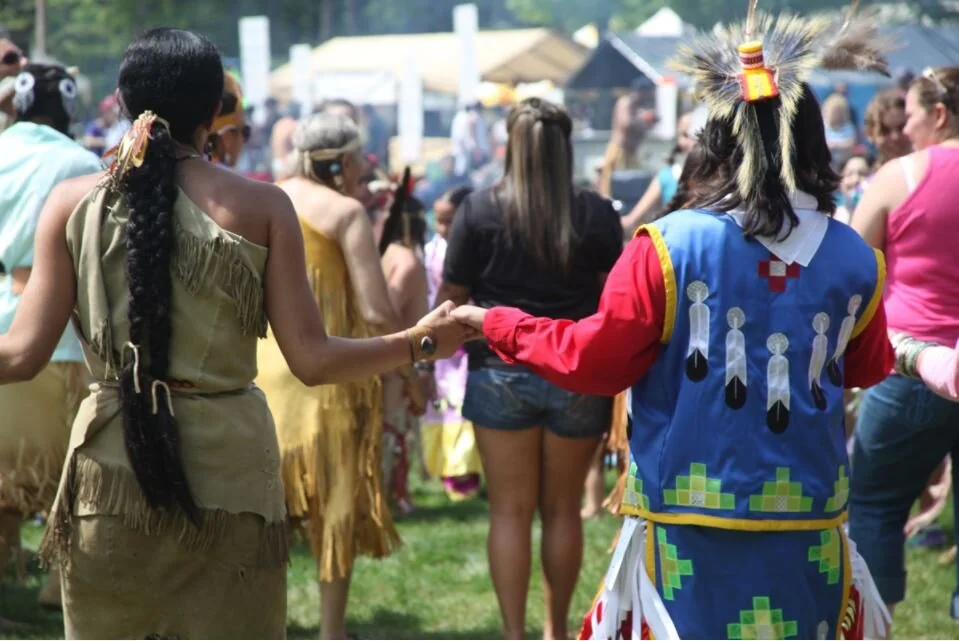
14 Stories of Resiliency and Food Justice in Indigenous Communities
“This year, we deepened that reporting on the myriad solutions Native people are applying to food insecurity, seed preservation, and sustained food sovereignty. In recognition of this resiliency, here is a list of our recent stories on hope, reconciliation, and justice in Native communities.”
The Thanksgiving Myth Gets a Deeper Look This Year
“Thanksgiving, of course, is a time for listening, a welcome opportunity for prayer, reflection and looking back, and many Indigenous people celebrate it in their own way.”
“Dana Thompson, a co-owner of the Sioux Chef, an organization in the Twin Cities devoted to revitalizing Native American cuisine urges anyone who asks to focus on ‘the true Indigenous wisdom that is behind the philosophy of Thanksgiving — it’s about not taking, but about giving back.’”
“This episode talks with Wampanoag scholars Paula Peters and Linda Coombs, who tell us the real story of Thanksgiving, from an Indigenous Perspective.”

They Welcomed Dozens for Thanksgiving.Now What?
“Social scientists use the term collective effervescence to describe the heightened sense of belonging and well-being that comes with a shared ritual. It’s what makes going to a concert or a baseball game feel so good. The spirit of the group is bigger than what anyone could experience individually. It’s one of the building blocks of culture.”

This remarkable Twitter thread from United Farm Workers invites folks to name their favorite holiday dish. Then United Farm Workers provide footage and information about the labor and people who help bring food to the table. “Tell us your favorite Thanksgiving dish, and we’ll share some of what we know about the work behind the ingredients. #WeFeedYou #ThankAFarmworker””
We are only just beginning
On November 3, many of us across the nation donned our masks—or sealed our envelopes—and submitted our votes with a deep conviction about which candidates will best set us up to move the needle in the direction of our values…However, countless unknowns, rising COVID numbers, and the brokenness of centuries of injustice continue to gnaw at us. The same convictions that surround the way we voted in this presidential election have shallow roots if they end when a POTUS is announced.

Photo of illustration as part of the book Peaceful Fights for Human Rights by Rob Sanders and Illustrated by Jared Andrew Schorr.
by Elizabeth Langgle-Martin, Community Engagement Manager
On November 3, many of us across the nation donned our masks—or sealed our envelopes—and submitted our votes with a deep conviction about which candidates will best set us up to move the needle in the direction of our values. After several tumultuous days (and if we are honest, the remainder of the Halloween candy), we now have a better picture of how our nation’s next season will look. However, countless unknowns, rising COVID numbers, and the brokenness of centuries of injustice continue to gnaw at us. The same convictions that surround the way we voted in this presidential election have shallow roots if they end when a POTUS is announced.
As I anxiously worked and waited for election day to come to a close, sourdough loaves resting on the counter and a mason jar filled with fresh water as my chosen methods of self-care, I listed the things I know to be true regardless of the outcome of this election. A couple weeks later, I offer those here.
1. Our systems were not designed to protect and value Black and brown bodies, much less the hearts, minds, joys, sorrows, wealth, and health of Black and brown people. My work and the work of other white folks is to continue dismantling oppressive systems (even those we may benefit from) and center the voices of leaders within Black and brown communities.
2. For those of us who are able to vote, local elections equal local power. When those of us who are able to vote choose not to vote in district, city, and state elections, we are giving away that power. In addition, we have access to city council meetings, oversight board committee gatherings, and so many more levels of local decision making that impact the care of our neighbors. If this election inspired you into new levels of action, there are spaces for you to move that work into a deep, localized, impactful presence.
3. We are all wrong. At some point, we have all been taught, internalized, and acted out of misinformation about ourselves and about others. It is our life’s work to identify, root out, and mitigate the harm we have caused because of that misinformation. When our intersections are clear of election signs and our junk mail returns to credit card offers, this is still the work for which we are responsible.
4. For every moment of injustice throughout history, there have been movements of resistance. How many names have I not known, how many faces of inspiration have I missed out on because they aren’t part of a standardized narrative, omitted from glossy grade-school textbooks? I’ll keep learning about those who used their bodies, minds, resources, and lives. This is the legacy I want to root myself in, the standard I want to hold myself to.
5. All systems of power must have checks and balances. Even those we cast a vote for. A healthy democracy means holding leaders accountable for the work they do (or don’t do) and the harm or good done by policies that are implemented under their leadership. May we be loyal to justice, equity, the dismantling of white supremacy, the health of our communities, and the care of all people above a single person or party.
6. “With fiercest hope, we believe that people and situations can change”. Part of The Nashville Food Project’s core values, I must admit that on certain days this statement feels more aspirational to me than something I know to be true. And yet, when torn between embracing fierce hope or paralyzing despair, I look at my tiny, vibrant daughter, think about good bones, and know that only hope will challenge me to be a part of creating a world I so deeply desire.
Fill up your water glass, get a moment in the sunshine, listen to this song, light a candle, and dig in. This work is far from over. There is still so much good trouble to be had. We are only just beginning.
P.S. Speaking of voting, did you know that The Nashville Food Project collaborated with Conexion Americas, the Margaret Maddox YMCA in East Nashville and the Southeast Nashville polling site to provide snacks during a few peak early voting times?

Waiting in line is a little sweeter with one of Joe Hodgson’s Pink Lady Apples or from-scratch pumpkin-banana bread! Whip up a little fall goodness with the recipe below:
Banana Pumpkin Bread
For the batter:
1 can pumpkin
2 cups mashed banana (about 5 bananas)
4 eggs
1 cup oil
1/2 cup sour cream
4 cups flour
1 1/4 tablespoon baking soda
1/2 to 1 tablespoon cinnamon
1/2 to 1 tablespoon nutmeg
2 1/2 cup sugar
1 1/4 cup brown sugar
1 tablespoon vanilla
1/2 tablespoon salt
For the topping:
1/3 cup oats
1/3 cup flour
2/3 cup sugar
Preheat the oven to 350 degrees.
In a large bowl, combine batter ingredients and pour into a shallow baking dish. In a separate bowl, combine topping ingredients and sprinkle over batter. Bake for about 20-25 minutes.
Partner Spotlight: Trap Garden
We love collaborating with and supporting the vibrant, creative work of community building-organizations in our city. And this fall, we have been especially pleased to work with Trap Garden. Farmers from the Growing Together program have been providing vegetables through Trap Garden and Preston Taylor Ministries.
We love collaborating with and supporting the vibrant, creative work of community building-organizations in our city.
And this fall, we have been especially pleased to work with Trap Garden.

A Friday morning Trap Garden team getting ready to deliver vegetables from the Johnson Alternative Learning Center garden location.
Urban Farmer and Community Health Activist Rob Horton founded Trap Garden in 2014 inspired by his experiences growing up in a St. Louis, Missouri neighborhood with few fresh, healthy food options. After relocating to Nashville to attend Tennessee State University, he became frustrated again with the distance he needed to drive for grocery stores that supplied quality fresh produce. That’s when he took matters into his own hands by growing his own vegetables and herbs. He also wanted to provide assistance to others who needed better access to fresh and healthy foods.
Nowadays his Trap colleague Kanita Hutchinson says this: “Our community garden is like our grocery store without it being a grocery store.”


Trap Garden currently stewards two plots of land—one at Johnson Alternative Learning Center in South Nashville and Bordeaux Elementary School in North Nashville—spaces for growing vegetables, education and community gathering. When the pandemic hit, the folks at Trap wanted to continue to have a way to support families through distribution of vegetables. TNFP was connect to Trap by Marie Holzer, a Masters of Social Work intern with our organization. Marie obtained a grant from Slow Food’s Resilient Fund so that Trap and The Nashville Food Project could compensate Growing Together farmers for produce to distribute in the community. Beginning in September, Growing Together and TNFP's Production Gardens supplied produce for 25 families a week, which will continue for nine weeks.

A Growing Together farmer harvests “toori,” a type of mustard green beloved by the farmers who came to the United States from Bhutan.

Growing Together farmers washing and packing their harvest.
To identify families in need of vegetables, Trap partnered with Preston Taylor Ministries, and Trap organized distribution of the food—entirely through a team of community volunteer support.
Along with the bags of produce, organizers include an instructional guide to help community members learn how to grow the fresh produce they receive and prepare quick and easy meals from recipes.
And, the Growing Together farmers have been sending videos from the garden, so that those receiving the produce can feel connected to the farmers
Apple Season Keeps Kitchen Buzzing
Even imperfect apples get put to the highest, best use in our kitchen. The meals team often makes apple sauce— sometimes tossing in other fruits such as berries from the weekly Whole Foods donations or pears from a recent food drive. Fruits like plums even give it a pink hue. We try to make our applesauce as low in sugar as possible (or no sugar when using the sweetest varieties like Fuji). See recipe here.

“If you wish to make an apple pie from scratch, you must first invent the universe.” - Carl Sagan
We love apple season. And we’re especially blessed to have a source who keeps us in apples throughout the fall.
As some of you know, Joe “Apple Joe” Hodgson started planting apples four years ago. He now has about 575 trees. “When I retired, we thought growing apples would be a good second occupation,” he said.
Mostly, though, he gives the apples away to us for our meals program, and we are so grateful!
Here are 3,200 Gala apples headed for our kitchens!

Other times, we happily receive Yellow Delicious, Pink Lady or Fujis.

We share many of Joe’s apples with meals as whole fruit, which means Joe often picks and culls them by asking himself this question: “If I were a 4th grader, would I want to bite into this apple?”

But even the imperfect ones get put to the highest, best use. The kitchen team often makes apple sauce— sometimes tossing in other fruits such as berries from the weekly Whole Foods donations or pears from a recent food drive. Fruits like plums even give it a pink hue.
We try to make our applesauce as low sugar as possible (or no sugar when using the sweetest varieties like Fuji). See recipe below.
Other times, though, apples give us reason for little something extra— like a cobbler for our friends at The Ark, apple cider or caramel apples.


Thank you for sharing your harvest with us, Joe!

Easy, Adaptable Applesauce (No Sugar Added)
Makes 8 servings
4 medium Fuji or Honeycrisp apples, peeled, cored, and chopped in bite-size pieces (or a mix of apples with other fruits such as berries, peaches, plums or pears)
1/2 teaspoon ground cinnamon (more to taste)
2 teaspoon lemon juice (for preserving and keeping fresh longer)
In a medium saucepan combine apples and cinnamon. Cover and cook over medium heat until it simmers, then reduce heat to low, medium-low and continue cooking until the apples are tender and very slightly caramelized — about 15-20 minutes, stirring occasionally.
Once cooked, add lemon juice and stir. Then use an immersion blender or the back of your spoon or a potato masher to mash into a loose sauce.
Serve fresh (warm or cooled) as a healthy side or spoon over ice cream, pancakes, yogurt or granola. Store leftovers, cooled, in the refrigerator up to 4-5 days, or in the freezer up to 1 month.
Recipe adapted from minimalistbaker.com.
Hard things and simmering soups
Garden volunteer extraordinaire, Linda Bodfish once said that when the needs change, we change with them. And as we’ve been in the fields, passing bags along (metaphorically and for some staff, quite literally), there have been moments of clarity when we see the opportunity of these moments of crisis. We are challenged to recenter our work around TNFP’s core values and move in a common rhythm to meet the ever-changing needs of our neighbors.

Photo by Abigail Bobo, abigailbobo.com.
Post by Elizabeth Langgle-Martin, Community Engagement Manager
“I want to be with people who submerge
in the task, who go into the fields to harvest
and work in a row and pass the bags along,
who are not parlor generals and field deserters
but move in a common rhythm
when the food must come in or the fire be put out.”
-Marge Piercy from “To Be of Use”
As the weather cools and we enter into this new season, I am thinking back on the “fires” our community has faced over these last six months and the storms that we are still navigating. There are many. Devastating local tornados, the uncharted imposition globally of COVID-19, nationwide police brutality highlighting deep-seated systemic racism, our beloved Tallu’s glioblastoma diagnosis… the list is long and daunting.
However, when I think of this TNFP family, I think of Bianca creating beautiful meals from recovered ingredients other chefs would turn away. I remember Julia last year calmly explaining that cows broke into Mill Ridge’s fields and destroyed crops that represented months of hard work. Without missing a beat, she began to implement a plan to move forward. I think of Tallu writing powerful words of comfort and reflection hours after taxing cancer treatments. I think of Elke and Jake squeegeeing inches of water out of the flooded kitchen in the wee hours of the morning to make sure the meals team could stay on schedule. I think of countless hands that showed up the evening of March 3rd to recover thousands of pounds of meat even while much of the city was still without power. I think of the endless, faithful donations that keep the lights on, the trucks running, the walk-in full, and our team cared for.
I think of a group of people who knows how to do hard things.
Garden volunteer extraordinaire, Linda Bodfish once said that when the needs change, we change with them. And as we’ve been in the fields, passing bags along (metaphorically and for some staff, quite literally), there have been moments of clarity when we see the opportunity of these moments of crisis. We are challenged to recenter our work around TNFP’s core values and move in a common rhythm to meet the ever-changing needs of our neighbors.
We are grateful for those of you who have loved and joined us “in the fields” in so many different seasons. You’ve shown up to unload food donations, broadfork unbroken ground, and stuff envelopes. You’ve organized pantries, chopped onions, hauled compost, and shared stories.
As we are stretched in new ways to meet new needs and root more deeply to who we have chosen to be, we feel comfort in the steadfast support of this vibrant community.
As we slowly prepare to reintroduce volunteers into TNFP spaces as part of our phased plan, this season is calling for shift to a smaller and more intentional volunteer presence, a rebirth of our dedication to the best use of donated and recovered food, and a continued, steadfast commitment to supporting increasing the accessibility of agricultural space and high-quality food. Towards the end of October, we will be entering into a trial period to workshop new volunteer roles and systems with a handful of long-term volunteers. We’ll keep you all in the loop as we decide how and when our spaces will be accessible for more hands!
What’s simmering… from our home kitchens to yours!
If the TNFP crew is passionate about one thing in the home kitchen during the fall, it’s probably soups. Here are some of our faves that are easily adaptable to your own tastes!

Alice Water’s Fall Minestrone (Christa’s Go-To… can you imagine this with veggies right from the fields of Sweeter Days?)
Flavors of Morocco-Inspired Vegetable and Chickpea Stew (David Frease says this is his first soup of the season every year)
Skinny Taste’s No Beans Sweet Potato Chili (a favorite of Meg and myself—though we make it vegetarian by subbing black beans for the ground turkey, so you do you)
Green Soup with Ginger (JJ’s pick for times when you may be feeling under the weather and need a kick)
Carrot Soup with Chermoula (Elke’s been loving this one recently!)
Recipes Carry the Stories and Lessons of Our Volunteers
Even with a smaller crew of staff these days in a quieter kitchen working to make meals for our partners, we feel the presence of volunteers all the time.
“They’re still here through the recipes,” says Julia Baynor, Prep Coordinator at the California Avenue kitchen.
It’s hard to believe that five months have passed since we could welcome volunteers into our kitchen. We long for those bustling days when cutting boards covered every inch of stainless work surface and folks from varied walks of life stood elbow to elbow as they chopped bell peppers or portioned banana bread into squares. Laughing and talking to kitchen tunes along with the rhythmic thud of knives and hiss of vegetables hitting hot tilt skillets.
Those were the days.
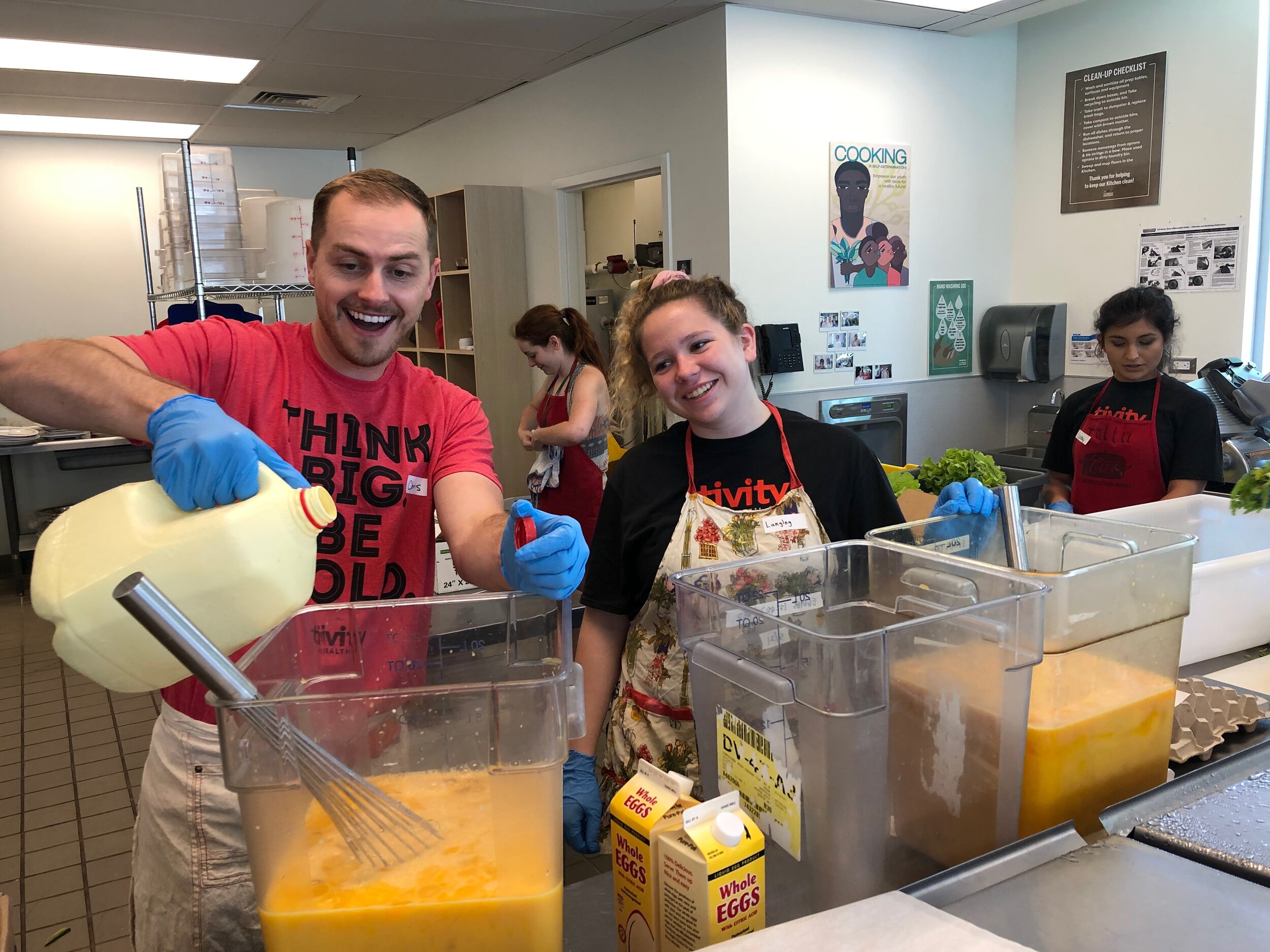

But even with a smaller crew of staff these days in a quieter kitchen working to make meals for our partners, we feel the presence of volunteers all the time.
“They’re still here through the recipes,” says Julia Baynor, Prep Coordinator at the California Avenue kitchen.
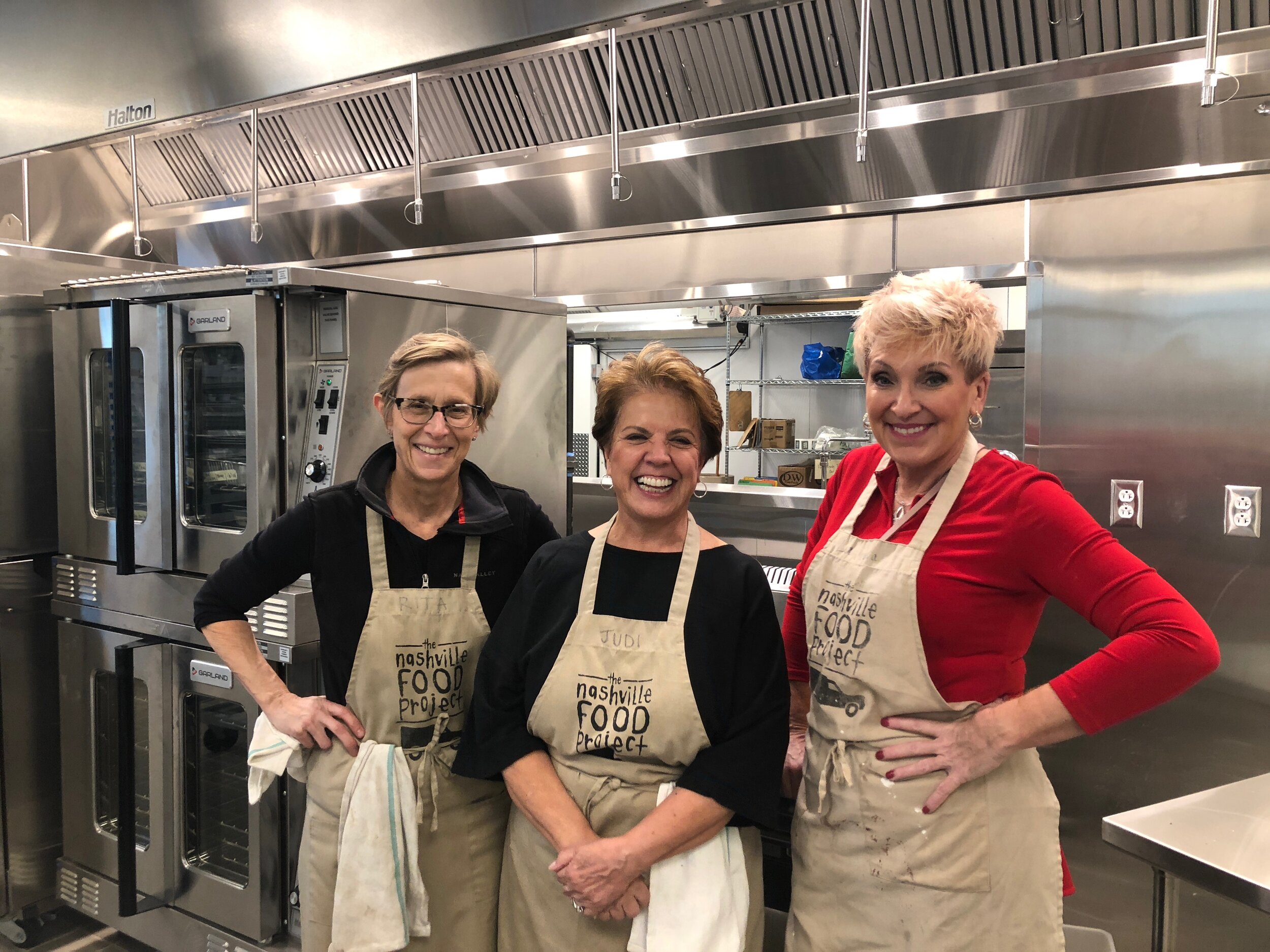
For example, the Meal Teams recently made chicken satay with sauteed summer vegetables and rice. The sauce for the dish is legendary around here—a staple in our repertoire for partner meals as well as catering jobs (in the days of such). It comes from longtime, trusted volunteer Judi Hardy.
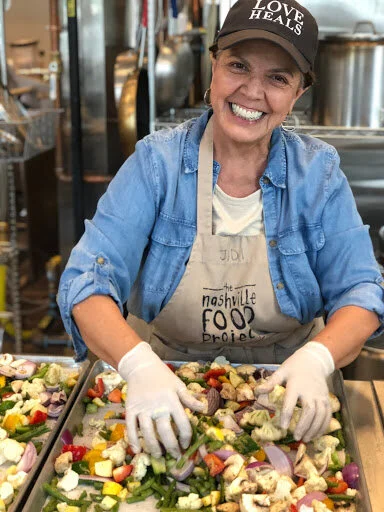
During a recent kitchen chat, Meg recalled the first time Judi introduced it to her about three years ago. “It was one of my first days at the Food Project, and I had never had satay sauce before,” Meg said.

These moments remind us of our value of Learning: “We are at-once students and teachers...We make time to listen to each other learning from the wealth of life experience and skills others bring to this work.”
We are thankful for the exchange of ideas, learning and creativity that happen in these spaces, and we look forward to the day we can be physically close again. Until then, the memories, lessons and recipes carry us through.
Spicy Szechwan Peanut Sauce
Makes 1 ½ cups
10 cloves garlic, minced (should equal about 2 tablespoons)
about 2/3 bunch of cilantro leaves and upper stems, minced (should equal about 3 tablespoons)
1/2 cup peanut butter (natural or unseasoned is best)
1/2 cup plus 1 tablespoon soy sauce
1/2 cup sugar
1 tablespoon rice vinegar
1–2 tablespoons hot chili oil
In a food processor fitted with a steel blade, pulse together the garlic and cilantro. Then add remaining ingredients and process for about a minute until ingredients are combined.
We most often serve this sauce with chicken skewers.
Note: Sauce can be stored, covered, in the refrigerator for several days.
This recipe shared with us by Judi Hardy is adapted from The Modern Art of Chinese Cooking by Barbara Tropp.
Partner Spotlight: Legacy Mission Village
As a people of fierce hope that believe in intersectionality and interdependence, we’ve also seen generous creativity implemented to help neighbors care for each other. We found this type of resistant and persistent care in the work and community fostered by Legacy Mission Village.
by Elizabeth Langgle-Martin, Community Engagement Manager
The introduction of COVID-19 to our world and our city has created devastation for so many. And while COVID-19 did not break our systems, it has exposed and deepened our country’s existing inequalities, gaps in care, and further alienated some of our most vulnerable members.
As a people of fierce hope who believe in intersectionality and interdependence, we’ve also seen generous creativity implemented to help neighbors care for each other. We found this type of resistant and persistent care in the work and community fostered by Legacy Mission Village.
Legacy Mission Village (LMV), as explained by their Director of Operations, Tim Mwizerwa, “was founded by refugees to serve refugees in Middle Tennessee.”
“Traditionally, we are an educational organization that works towards workforce stability and economic stability for families,” he says. LMV typically provides English learning, financial literacy, digital literacy, citizenship test preparation, and children’s education support. Tim notes that their goal is to support every member of the family “from cradle to grave.” He explains that seemingly standard programming, such as after-school support for teens, can be drastically different for refugee families. Often a teen or child may be the only person fluent in English within a household, leaving them to navigate complex situations like insurance claims, tax documents, and other elements that lead LMV’s team to provide intensive support that spans beyond traditional homework help.
With the risk of COVID-19 continually looming, LMV’s community is unable to meet in any kind of classroom setting so their team has been challenged to imagine how to support the families they serve in relevant ways that span beyond their core programming.
Earlier in the summer, LMV began to purchase pantry goods in bulk to help their participants experiencing food access struggles. Staff soon wondered how they could offer their clients a more balanced COVID-19 relief box beyond the non-perishable items they had secured.

The Nashville Food Project was able to support LMV’s existing efforts by sourcing local, fresh foods to enhance the dry food items that LMV was offering the families they serve. Each week TNFP was able to leverage our resources and relationships to source locally raised proteins from TN Grassfed, eggs through KLD Farms, milk from Hatcher Family Dairy, and robust quantities of fresh produce from our Growing Together farmers, Sweeter Days Farm, West Glow Farms, Green Door Gourmet, and others. Throughout the summer approximately 80 families had access to fresh, local, high-quality food through this vibrant collaboration. In addition, through TNFP’s relationship with Henley Nashville, which acted as a satellite TNFP kitchen during the early days of COVID-19 shutdowns, LMV was able to receive culturally appropriate family-sized, scratch-made meals. Over the course of a month and a half, through Henley, TNFP, and LMV, a total of 1,360 servings of from-scratch goodness was shared with families alongside the bulk groceries provided.


As we move into fall, LMV is pivoting once again, to support the families they work with as they navigate the complexities of online learning. While making this shift they’ve heard from about 40 families that fresh food support is still a critical need for their households. This opened an opportunity for TNFP to continue to provide support in a new, specialized way. TNFP will provide weekly produce boxes of culturally-appropriate produce, grown by and purchased from the farmers in our Growing Together program. Many of the families that LMV works with share a Burmese heritage with several of the Growing Together farmers. We love that the vibrant, organically-grown produce that Growing Together yields can be leveraged to nourish the needs of that same community.

During a recent conversation, Tim shared that the silver lining through current struggles is that this time has allowed for the fostering of new community partnerships. For LMV, he says that has allowed them to step up and provide new types of care for the families and continue to adapt and serve in more substantial ways. Our relationship with LMV has allowed us to leverage our resources to share high-quality food in new ways that are meeting expressed community needs while simultaneously allowing us to invest in Growing Together farmers and other local farms who have long been generous and supportive of our work.
Tim shared some notes that the Legacy Mission Village crew has received in response to the food assistance they have been able to provide:
“We are good. You take care [of] our family.”
“I'm good and my family too, thank you for everything you helped me and my family [with].”
For the millionth time, we are reminded that we belong to each other, and we are grateful to be a small part of the collaborative work happening in Nashville. In a time when we are socially distant, this type of connection feels more delicious than ever.
Fighting for Tennessee’s Food Security Safety Net: Pandemic EBT and Food Assistance in the Age of Coronavirus
We know how important free and reduced-price meals are for Tennessee families—over 663,000 Tennessee kids rely on free lunch and breakfast during a typical school year. As the pandemic shutters businesses and causes unprecedented layoffs, families are more vulnerable to food insecurity than ever before. While support from incredible locally-run organizations like The Nashville Food Project, this does not replace the need for food assistance legislation from state governments—especially in times of crisis.

Image from @tnjustice
guest post by Lauryn Cravens
Passionate about nutrition, food policy, and food justice, I have had the incredible privilege this summer of splitting my time working between The Nashville Food Project and the Tennessee Justice Center’s Nutrition Team. This has afforded me the opportunity to work with this concept of “food” with my hands in the Food Project’s Growing Together garden, and at the federal policy level with the Justice Center, all as the coronavirus pandemic has put a greater strain on our food system than ever before.
No one on the Tennessee Justice Center’s Nutrition Team expected our summer to be consumed by Pandemic EBT, but it has. What is Pandemic EBT? Pandemic EBT provides financial benefits for families of children in grades K-12 who receive free or reduced-price school meals or attend a Community Eligibility Provision school (a school where meals are free for all students) to help families that missed school meals during March, April, and May when children were not in school due to COVID-19. The only requirement is a child must be eligible for free or reduced-price school meals; P-EBT is for all students regardless of citizenship or immigration status.
The state of Tennessee boarded the P-EBT boat later than other states and was not approved for the program until mid-May. Since approval, Tennessee has failed to implement the program quickly, and several obstacles remain in place, making it hard for too many families to access food. Due to significant administrative barriers, a lack of sufficient marketing and outreach to inform the public of the expanded benefits and a short application window for families, thousands of Tennessee families are still without their desperately needed benefits.
We know how important free and reduced-price meals are for Tennessee families—over 663,000 Tennessee kids rely on free lunch and breakfast during a typical school year. As the pandemic shutters businesses and causes unprecedented layoffs, families are more vulnerable to food insecurity than ever before. While support from incredible locally-run organizations like The Nashville Food Project, this does not replace the need for food assistance legislation from state governments—especially in times of crisis.
For example, one way to help keep Tennessee students and their families afloat would be eliminating the P-EBT application altogether, allowing every family who qualifies to automatically participate. And although the state is responsible for publicizing P-EBT, everyday Tennesseans can also do their part to spread the word and advocate for this food assistance program, whether that be via word of mouth, social media, or by contacting local representatives.
Furthermore, as those who work with The Nashville Food Project and the Growing Together program know all too well, not all Tennessee families are fluent in English. Translation of the P-EBT application into Spanish, Kurdish and other languages would make the program more accessible for the many immigrants and refugees who call this state home. These actions and more can help ensure that all eligible Tennessee families receive the benefits they need and deserve during this critical time.
Stay updated with Tennessee Justice Center’s nutrition advocacy efforts, and see what you can do to help here: https://www.tnjustice.org/child-nutrition.

Image from @tnjustice
A Statement From Susannah Berry, Chair of The Nashville Food Project Board of Directors
A STATEMENT FROM SUSANNAH BERRY, CHAIR OF THE NASHVILLE FOOD PROJECT BOARD OF DIRECTORS
As Tallu Schuyler Quinn, The Nashville Food Project’s founder and CEO, undergoes medical treatment for a recently-diagnosed brain tumor, the Board of Directors has focused on how to ensure the organization continues its essential work in our community and our city — while providing Tallu the flexibility necessary to care for herself during this time.
To do so, the Board has offered the positions of Interim Co-CEOs to Christa Bentley, Interim Chief Programs Officer and Teri Sloan, Development Director. Together, these two dedicated and experienced colleagues will guide The Nashville Food Project’s day-to-day operations.
In considering strategies for interim leadership, the board also wanted to ensure that Tallu’s wisdom and guidance continues as a meaningful, essential part of The Nashville Food Project. Hence, the board offered — and Tallu has accepted — a new position, in the role of Founder. In that role, she’ll work with the board on vision and strategy, among other duties. We are so pleased and gratified that in this role, Tallu will stay core to the work of The Nashville Food Project.
On behalf of the Board of Directors and the staff, thank you for supporting The Nashville Food Project and its mission. And thank you for keeping Tallu and her family in your thoughts and prayers.
Sweet Peas 2020 with Gratitude for Good Neighbors
As for nutritious meals and snacks, we’re proud to partner with Project Transformation at three of their sites this summer. We know one in six children do not have access to the food they want and need. Lack of access can be even greater during the summer with the absence of school meals. Given this alarming information we launched a program last year called Sweet Peas: summer eats for kids. Now in its second year—amidst the current crisis—we know the need for nourishing meals is even greater.

Like so many of us in 2020, Sarah McCormick, Senior Director of Operations & Impact at one of our partner organizations Project Transformation, has had a challenging year. And yet, she also has had the opportunity to see folks, as she beautifully puts it, “rediscover what it means to be a neighbor.”
As planning began for Project Transformation’s summer camps for children, she and her colleagues knew would need to look different in the time of COVID-19. Through that planning, they heard two overwhelming needs from parents: Something for the kids to do and something for them to eat.
Meanwhile, they also knew they wanted to stay committed to their core goals of literary development and social-emotional development—even at safe distances. Volunteers and partners jumped in with open hearts and minds to make necessary shifts launching grab-and-go locations for meals and “summer camp in a bag,” which included a new book each week for building young home libraries as well as activities for inside and outdoors.
As for nutritious meals and snacks, we’re proud to partner with Project Transformation at three of their sites this summer. We know one in six children do not have access to the food they want and need. Lack of access can be even greater during the summer with the absence of school meals. Given this alarming information we launched a program last year called Sweet Peas: summer eats for kids. Now in its second year—amidst the current crisis—we know the need for nourishing meals is even greater.

Nashville Food Project meals ready for pick-up at a Project Transformation site.
We also understand, though, that food can’t solve all inequities and that’s why we love to work in community with partners like Project Transformation. As author Francis Moore Lappe says: “People go hungry not from a lack of food but from a lack of power...with a wider lens we can see that hunger is not caused by scarcity of food but scarcity of democracy.” Literacy is power. Emotional intelligence is power. We believe the work of partners like Project Transformation helps break down inequitable systems. And by providing meals alongside their work, we’re building stronger communities together.
McCormick says research shows that children in communities experiencing marginalization often lack access to tools and enrichment activities over the summer especially. “We want to make sure kids aren’t regressing,” she says. “For us there’s a wider gap potentially (during pandemic) because kids are out of school longer. It’s even more important to get books into the homes and let them know they are supported.”
Just as Project Transformation worked through COVID-19 challenges with the help of supporters, likewise, our Sweet Peas program got a big leg up from this year’s sponsor, Jackson National Life Insurance Company. Our volunteer program has been suspended since March leaving the kitchen staff with 380 fewer sets of hands to help prepare meals each month. Yet we still needed to increase summer output and share about 12,500 meals with kids. So in addition to helping fund the program, Jackson rolled up their sleeves to help cook.
With the Jackson offices mostly closed to staff, Jackson converted their dining services facility into a satellite kitchen preparing nearly 4,500 nutritious meals for Sweet Peas. The Jackson dining services team stayed busy while helping us expand our reach to partners. Over an eight week period, the Jackson team served 140 kids, four days a week to two Project Transformation summer camps.

Meal prep at Jackson’s headquarters for Project Transformation sites.
“It feels good obviously,” says Wess Victory, Food Services Director at Jackson. “I think it’s helped morale around here to know we’re doing some good.”
While Victory and team offer healthy options for Jackson employees on a regular basis, they worked even harder to pack summer lunches for kids with vegetables and whole grains. But when neighbors work together, we like to believe lunches come packed with power for a better future too.

Jackson’s kitchen serving as a satellite kitchen for The Nashville Food Project.

Jackson meals headed for Project Transformation sites.
A Statement from Susannah Berry, Board Chair of The Nashville Food Project
The Nashville Food Project is a close-knit community of staff, volunteers and community partners, and we want to share some important recent news about our founder, CEO and friend, Tallu Schuyler Quinn.
A STATEMENT FROM SUSANNAH BERRY, BOARD CHAIR OF THE NASHVILLE FOOD PROJECT
The Nashville Food Project is a close-knit community of staff, volunteers and community partners, and we want to share some important recent news about our founder, CEO and friend, Tallu Schuyler Quinn.
Tallu is currently undergoing medical treatment for a brain tumor. It is still early in her treatment. In the meantime, the board is working closely with the dedicated staff to ensure that all of The Nashville Food Project’s vital programs and operations continue without interruption. We are committed to the organization’s core mission to bring people together to grow, cook and share nourishing food, with the goals of cultivating community and alleviating hunger in our city. And in this pandemic, that mission remains more urgent than ever.
All of us connected to The Nashville Food Project are keeping Tallu and her family in our thoughts and prayers — and know that, throughout our community, so many others are doing the same. As we’re able to share further updates about Tallu’s well-being, we will. Thank you for your support, your kindness and your understanding.