The Nashville Food Project’s Blog





Recipes That Tell Our Stories: Meg's Overnight French Toast
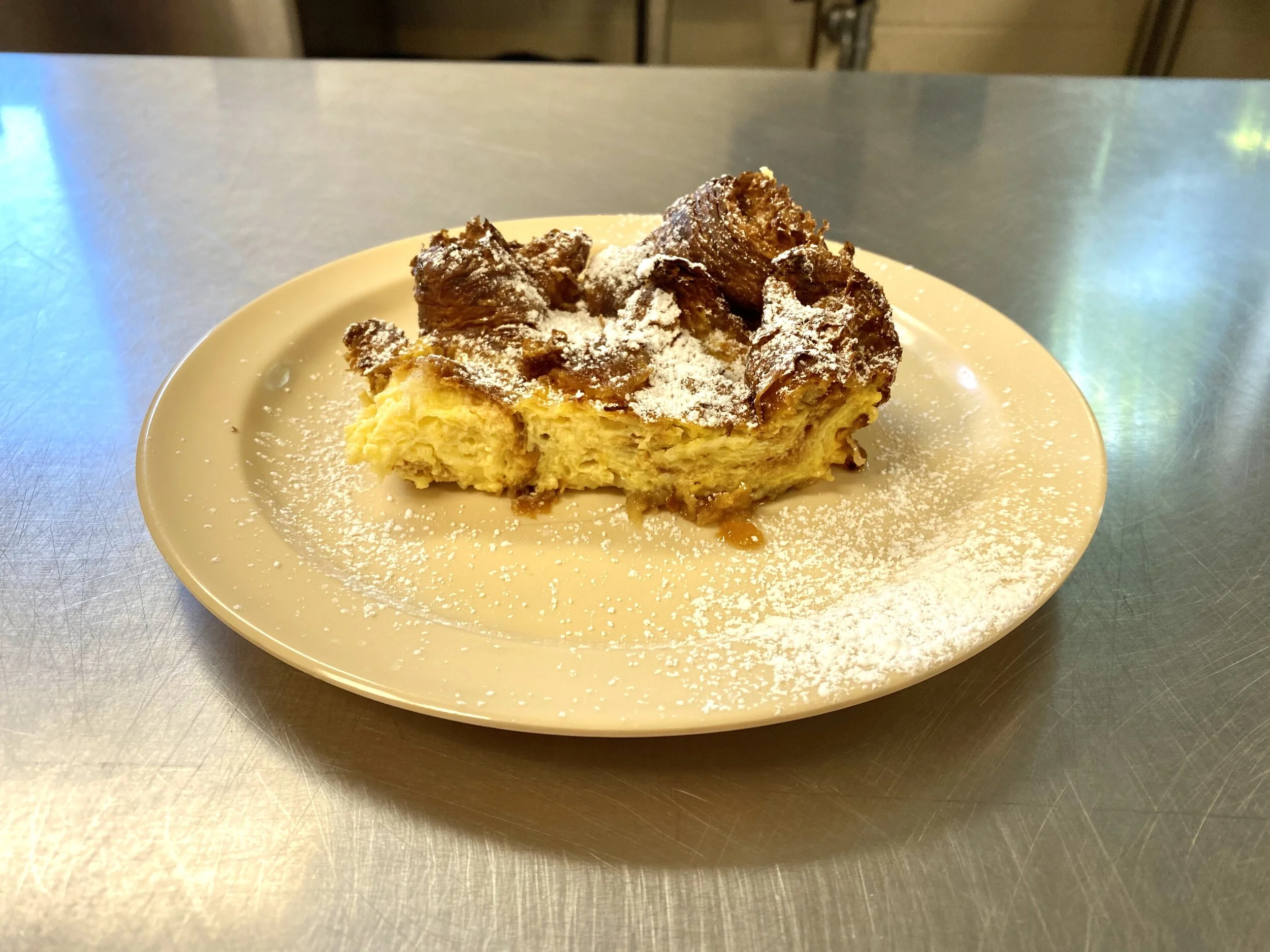
Senior Meals Coordinator Meg Doster cooked up a special treat for the St. Luke’s Community House Pre-K children recently — her family’s favorite French Toast Bake. She shares the recipe and a bit about its backstory with us.
Senior Meals Coordinator Meg Doster cooked up a special treat for the St. Luke’s Community House Pre-K children recently — her family’s favorite French Toast Bake. Today on the blog, she shares the recipe and a bit about its backstory with us. It’s another example of how food tells our stories like the Dirty Pages recipe storytelling exhibit that hangs on the walls in our Community Dining at The Nashville Food Project headquarters.

My mom has a million cookbooks. The beautiful cacophony of books and loose-leaf paper are jam-packed like sardines in a skinny cabinet in my parents’ kitchen. She has recipes saved from her mother and her great-aunts scribbled on notecards; recipes printed from Pinterest from women in her bible study; recipes saved from my father’s mother as her memory wanes. The ones that we love have food stains and notes in the margins. Each one represents moments in her life and the people that have shaped and held her, like she shapes and holds our growing family.


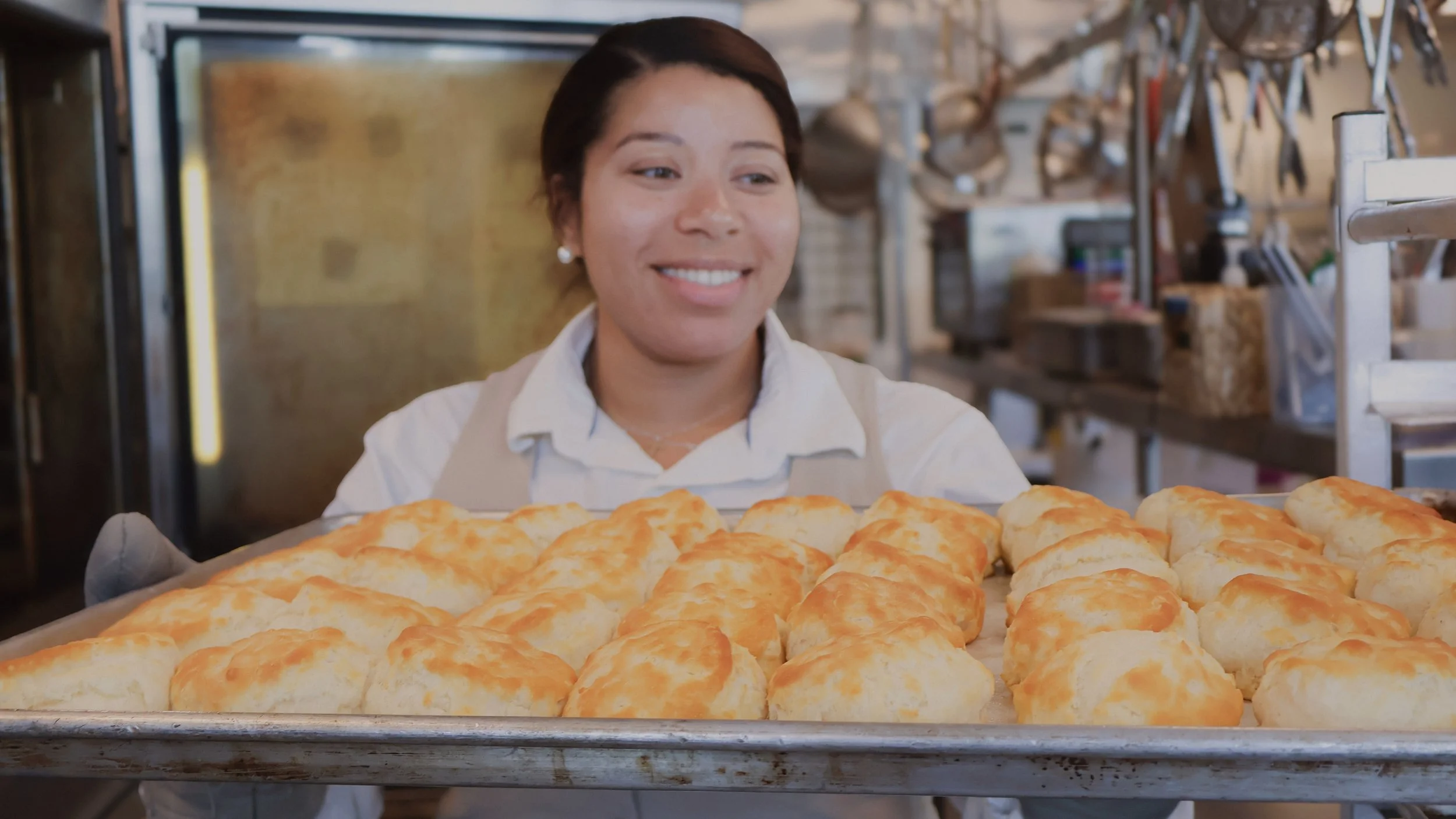
In “The Pot Thickens: Solving Mysteries in the Kitchen,” compiled in the mid-1980s by my hometown junior women's league, you will find our Overnight French Toast. My mom has taken this recipe and elevated it over the years. It is one of those special dishes that we only serve once a year, and it never tastes the same way as when she makes it (I have tried! I don’t have the touch!). She often makes it after our Christmas Eve festivities, which don’t end until well past midnight. I don’t know why we never make it before our Christmas Eve party, but it’s not helpful to ask these questions to your mother when it is 1am and you just hosted 30 people. Nonetheless, this dish is perfect. Years of tweaking to the recipe has yielded one of the principal dishes in our family’s holiday repertoire. It does not feel like Christmas without our ritual of pulling the blender down from the cabinet (probably the only time out of the year we use the blender), cracking the eggs, and doctoring up a maple syrup on the stove. It consists of typical french toast ingredients (eggs, milk, bread, etc.) with the added twist of letting the french toast sit overnight to absorb the liquid. After it bakes, I recommend dusting it with powdered sugar for serving. It also makes for a lovely leftover, warmed in the microwave or eaten cold out of the tupperware.