
The Nashville Food Project’s Blog




Belonging to Others

I’m thinking about what it felt like to sit at the kitchen table of my childhood home.
When we were young, my brother Roy invented a game that became so beloved in our family. Thinking on it now, I find myself in a fit of nostalgia; it’s the kind of happy memory I love to go back to. At dinnertime, my mom, dad, brother and I would be eating dinner at the kitchen table and at some point during the meal, Roy would announce he needed to use the bathroom and leave the table. But instead of going to the bathroom, he would quietly crawl back into the kitchen on the floor, slide under the table and kiss each one of us on the knee. And our mom would say, “Oh! It’s the kissing bug!” with a joy in her voice I can still hear. “He’s come to visit us again!”
Sitting above the table and making eyes with my parents, I loved to be part of this world with my whole family. It invoked feelings of fullness that as an adult, I now associate with what it feels like to belong to a place or to a person or to a group of people. After the kissing bug made his last round of kisses, my brother would slide out in secret and walk back into the kitchen a moment later as if he’d just washed his hands in the bathroom sink. “Roy, you always miss the Kissing Bug!” our dad would say. “He seems to come every time you’re gone!” And Roy would climb into his chair at the kitchen table and try not to smile…
To make a place for this kind of loving pretending—what a gift this was to us children! As a parent of two young children now, I am reminded constantly of how important it is to climb into their world. In his essay “Health is Membership,” Wendell Berry wrote:
“If we were lucky enough as children to be surrounded by grown-ups who loved us, then our sense of wholeness is not just the sense of completeness in ourselves, but also is the sense of belonging to others and to our place; it is an unconscious awareness of community, of having in common.”
A sense of belonging to others… I’d count it as one of our most basic human needs. I was recently talking with Anne, our Meals Manager, after she attended the graduation at G.A.N.G., a gang-prevention program in North Nashville at Mt. Carmel Baptist Church—one of our cherished Meal Distribution Partners. Anne told me a little of the keynote speaker’s story – a former gang member whose mother and father had both been murdered on separate occasions, and with no one to call home, he found a life of dealing in drugs by the time he was in fifth grade, and he found his sense of belonging in a gang. By the grace of God and because of the devotion of a few key people in his life, he made it through violence and into the safe arms of a loving community.
Who among us is not longing to belong? As we say often at The Nashville Food Project, poverty isolates people and disintegrates relationships. And when we talk about one of poverty's chief symptoms, hunger—we know it’s not enough to grow, cook and share healthy food—we have to do all these things in ways that create, cultivate, protect and strengthen communities, because being with the people to whom we belong is the foundation of a whole and healthy life.
The Nashville Food Project’s meals, garden, and volunteer programs have all been designed to be places of belonging. And to the ever-widening circle of friends that is The Nashville Food Project, I am grateful to belong. We already know that the table is a wonderful place to greet others, offer hospitality, give attention, share life, show love. As we enter into this holiday season, let’s promise each other to do the best we can to make a place for someone else at our kitchen tables and in our lives, spending some time getting to know others, spending some time letting ourselves be known.
Grace and peace,

Cookbook Shares Burmese Family Recipes
When Garden Intern Kate Patterson learned she would need to complete an oral history project for her Foodways class at Belmont University, she decided to compile a cookbook of traditional family recipes from Burmese immigrants growing food in the refugee agriculture program…

When Garden Intern Kate Patterson learned she would need to complete an oral history project for her Foodways class at Belmont University, she decided to compile a cookbook of traditional family recipes from Burmese immigrants growing food in the refugee agriculture program.
Over the past several months, she interviewed six women and two men with the help of an interpreter to learn about Burmese family dishes.
“They grow a lot of the things in the garden. Then they use it in the recipe,” she says. “So that was a cool aspect to tie into their stories.”
The recipes include a fish curry, soups and noodle dishes as well as sweet sticky rice wrapped in bamboo.
Unlike in American culture where recipes might be pulled from a book or a recipe box, Kate said all of the dishes shared were learned by watching and doing in the kitchen.
"A lot of the participants had trouble writing them, because they never had written them before,” she says. “It was neat that they still survived through generations."
But despite the differences in learning and sometimes unfamiliar ingredients involved, Kate said it was interesting to take note in the similarities across cultures as well.
“Their parents teach them to cook, and they cook with siblings. Even though it’s different dishes, it’s still the same concept that these recipes are passed down over generations. It is unifying."
As a junior at Belmont, Kate is considering a career that explores community development and the role that farming can play in creating solutions. She grew up with gardens in the backyard, and her father grew up on a farm.

Kate working in the Wedgewood Urban Garden.
If she had to choose a recipe from her life for a cookbook, she said she would choose one that has family significance, too.
“We always make this cookie at Christmastime that’s been passed down. Spritz cookies. It’s almond flavored cookies that we make with a cookie press. My dad grew up making them, and it’s a traditional Swedish thing to do.”
Kate gave us a sneak peek of her Burmese cookbook project by sharing the recipe and story below from Hpong, pictured here:
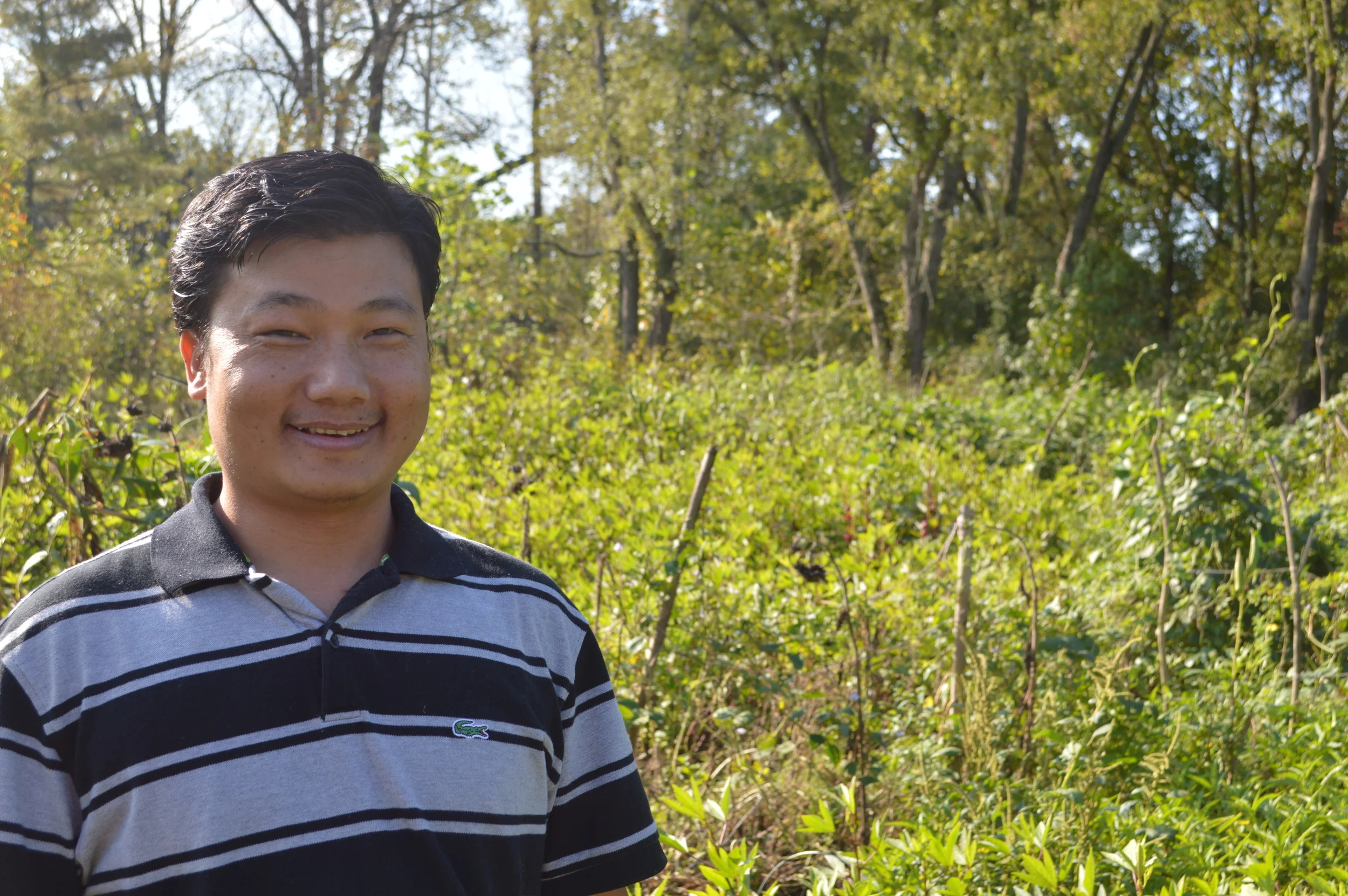
Hpong is from the Kachin state in Myanmar and he moved to the United States with his wife and two kids a year ago. He enjoys cooking a variety of dishes and he has many memories associated with this traditional Kachin recipe.
Hpong enjoys cooking the traditional Kachin recipe, Kachin Chet. He said that most Kachin people know how to make this dish and they make and eat it almost every day. He learned to make this dish by watching his parents and siblings cook it, and by cooking it with them. He said that the recipe was never written. It was passed down from generation to generation by showing others how to make it. This recipe is important to him because it has good flavor and is delicious and healthy.
The ingredients in this recipe are natural, meaning many come from the garden. Some items from this recipe that are grown in the garden are: chilies, garlic, and lemongrass. There are other ingredients that he has not been able to find in the United States so he has had to either modify the recipe or buy the ingredients elsewhere. He mentioned that he had to buy the light amber from Malaysia. Also, he was unable to find another ingredient that had a sour leaf, so he has had to replace that ingredient with a Roselle leaf, bamboo shoot, or lemongrass.
Hpong’s favorite meat to use in this dish is fish. When asked if he thinks pork is as good to use he said, “not as (good as) chicken, beef or fish, that’s good.” You can use any kind of fish-- small or big. He typically only uses river fish, but he says that you can also use fish from the sea.
When he lived in Myanmar, everyone in the village would have their own chicken, beef, and river fish and would cook them in their houses. They would then share them with each other. Sometimes they would buy the ingredients that they needed from the market. Now, living in the U.S., he buys the fish from the grocery store.
Hpong speaks of how the dish is also healthy for you, saying, “It’s kind of like medicine. It can prevent the stomach ache.” He said that the water he drank in Myanmar came directly from the ground and was dirty and that there was a lot of bacteria in each cup of water. He also mentioned how some foods are like a medicine, protecting you from getting sick, such as some beef and fruit. One ingredient in this recipe that has medicinal qualities is the cooked fish.
Hpong says that this dish is easy to make and that he will never forget how to make it. He enjoys serving it for guests when they come over for dinner. He still eats this dish just as often as he did when he lived in Myanmar.
Kachin Chet
This recipe has been passed down from generations by word of mouth and because of that there are not specific measurements for the ingredients.
- Meat: Fish, Pork, Beef, or Chicken.
- Sour leaf -- can use Roselle leaf or bamboo shoot
- Garlic flower
- Pepper
- Chili pepper
- Salt
- Sesame powder
- Water- 150ml
1. Place all ingredients in a large pot.
2. Place pot on stovetop over medium heat until all water is gone.
3. Serve hot.
Trinity Meal Brings Community Together
With a personality even bigger than his beard, Nate Paulk leaves just about everyone he meets with a big smile and an “I love you.” Employed by the United Methodist Church two and half years ago to help bring life into a church with a dwindling congregation, he works to connect people of the community to one another and to the space…
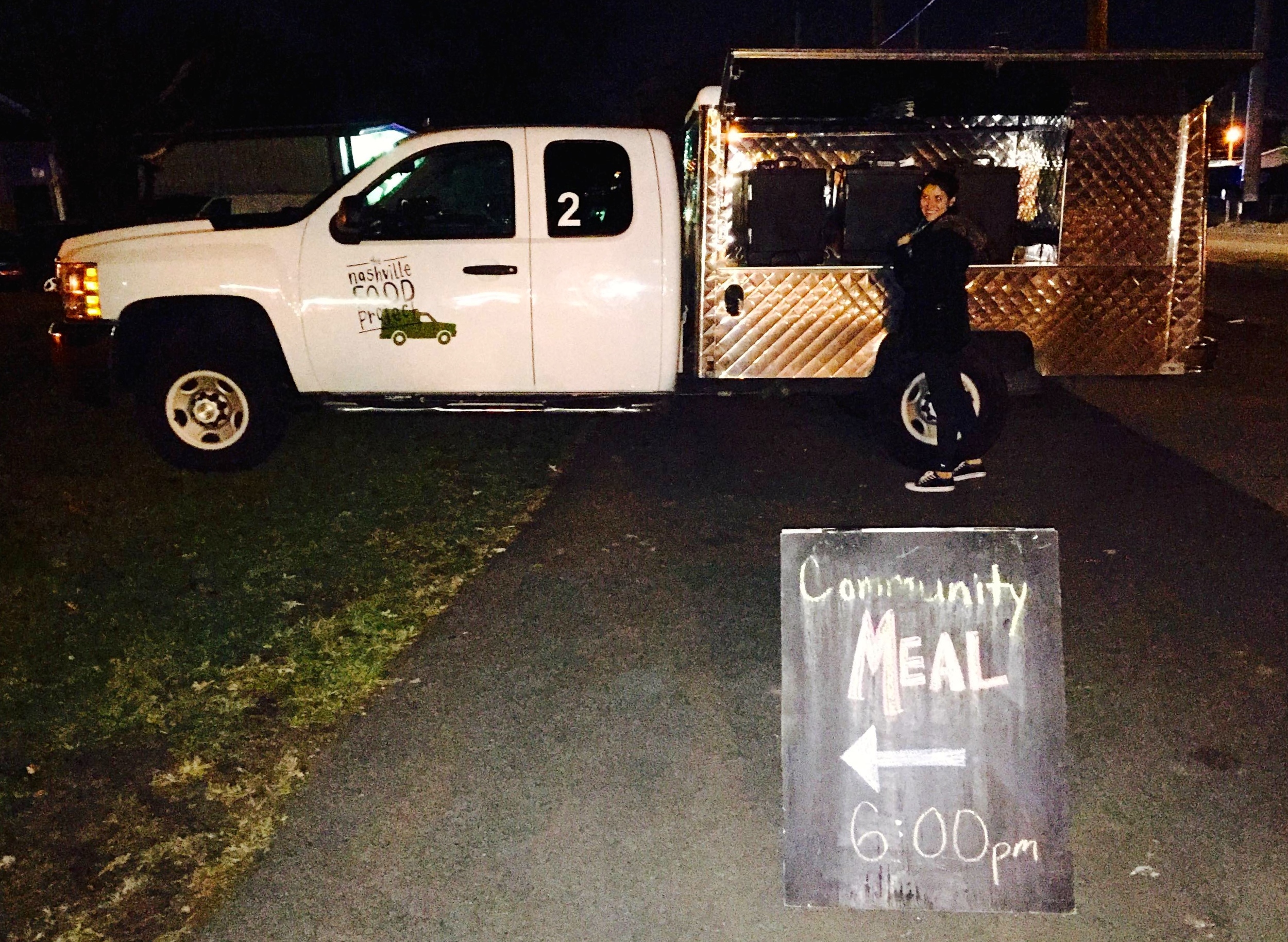
Outreach intern Noelle Browne arrives at the Trinity United Methodist Community Meal.
With a personality even bigger than his beard, Nate Paulk leaves just about everyone he meets with a big smile and an “I love you.”

Employed by the United Methodist Church two and half years ago to help bring life into a church with a dwindling congregation, he works to connect people of the community to one another and to the space. He’s helping turn the church back to the people who live in the community through programming -- and food.
Nate and Trinity United Methodist partnered with The Nashville Food Project two years ago for a community meal every Tuesday. Rather than serving food from The Nashville Food Project trucks, though, this meal goes on tables family-style giving guests an opportunity to slow down and connect.
“There’s so much beauty in the ordinariness of getting together for dinner,” he says.
On a recent Tuesday, TNFP outreach intern Noelle Browne unloaded pans of chicken stir-fry with rice, green salad for our gardens and a berry crisp. Volunteers and community members pitched in to help put food on platters for passing at the table.


The dinner draws anywhere from 30 to 75 people each week. Most attendees are non-church members at Trinity but live nearby in an area that’s considered a food desert. Nate hopes to gather the group with staff from The Nashville Food Project and Community Food Advocates for a special meal on Tuesday, Dec. 15 to discuss ways to improve fresh food access in the area.
“I try to listen to people,” he says.

Leftover food is boxed up for those who pass through after dinner.
Guest Chef Series: Lauren Moskovitz and Alex Grainger
Lauren Moskovitz of Miel and Alex Grainger of Silo work in kitchens across town from one another. Lauren specializes in baking as owner of her side business Little Mosko’s Bake Shop while Alex works more on the savory side as an executive chef…

Lauren Moskovitz of Miel and Alex Grainger of Silo work in kitchens across town from one another. Lauren specializes in baking as owner of her side business Little Mosko’s Bake Shop while Alex works more on the savory side as an executive chef. Alex moves swiftly and firmly while Lauren’s style feels a little more laid back. But despite their differences -- and maybe because of them -- they fit together in the kitchen like a cup of coffee and slice of pie.
“He usually starts something, and I finish it,” Lauren said. But Alex teased that it works another way: “She bosses me out of the kitchen.”
He paused to kiss her on the head as she whirled together herbs, vinegar, onion, garlic and mustards for a salad dressing. Though made from simple ingredients, the dressing also has special meaning to the couple. They created it together as part of their first meal cooking for Lauren’s family.

“We spent five hours making dinner for us four,” Alex said. “I love cooking for them. I love cooking for anyone.”
As guest chefs at The Nashville Food Project, the meal they would prepare had been chosen for them based on the produce and donations available for the week. But coincidentally, it closely matched one they had cooked together for the first time for family. A tomato sauce with chicken sausage over pasta followed the salad with a fruit crisp for dessert. “This is basically what we were doing,” Alex said. “It’s my favorite thing to cook.”
Of course the chefs would have much less time and fewer ingredients at the TNFP session -- two hours to cook dinner for 75. But these pros took no less care or pride in their work.
“We put a lot of love into our cooking,” he said.

Alex is originally from the Naples area of Florida, while Lauren grew up in Nashville. The daughter of Cindy and Scott Moskovitz, she spent her youth at the legendary Mosko’s and the Muncheonette formerly on Elliston Place.
Lauren and Alex met at a bar in New York City. Alex had moved to Manhattan to work as a chef. They had no mutual friends at the time. “I had come back from traveling and was in New York for a visit,” Lauren said. “He was having an after-work beer before going home.”
After that first meeting, they didn't see each other for three months, but they talked every day long-distance until their first proper date.
Alex relocated to Nashville about four months ago and took the job at Silo. A month later, Lauren, who has been diagnosed with celiac disease, launched her Little Mosko’s Bake Shop, which specializes in high-quality, gluten-free treats.
“He’s my number one taste-tester,” she said.
They support each other in a hectic, hard-working industry and still take time to help others through their cooking. On the day they visited, Alex slipped away from Silo while Lauren had been up baking for events until 2 a.m.
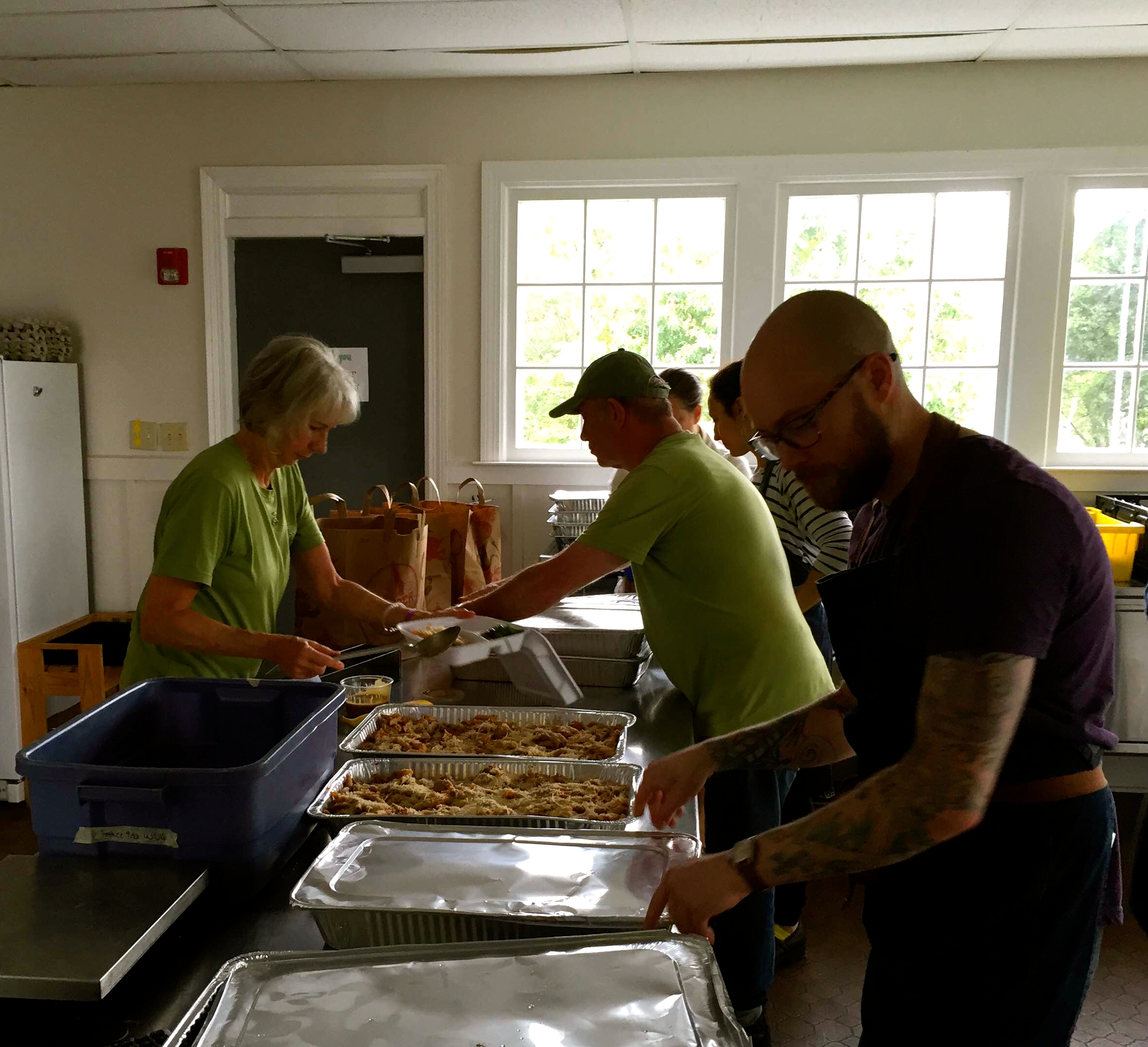
As they handed over their meal to the truck team, Marilyn Lane, one of the volunteers who delivers to John Glenn residential center each week, pulled the couple aside. She knows the cooks often work behind-the-scenes, and she wanted them to know how much the residents appreciate the meal.
“We get the hugs and thank yous,” she said.
Which prompted Lauren to boss Alex in the best possible way.
“Hug her,” she said, nudging him toward Marilyn. “Transfer the love.”


Healing is Impossible in Loneliness

TNFP's most outstanding volunteers at this year's Volunteer Appreciation Celebration
One of the things I love about The Nashville Food Project is that it’s a place people want to be. And in the true spirit of “project,” our work is active and evolving and involves many people. I am so grateful to you, our volunteers for participating this grand experiment—holding each other accountable on your trucks teams, leading your groups in the gardens, and making creative decisions during regular volunteering in the kitchen. Through all of this, we are learning to share life.
So many times over the last six and a half years, I’ve heard from our volunteers that they get more out of this work than the "people we serve.” And this is where the waters become muddied about The Nashville Food Project – who do we serve? We are for all people. And while we are serving one another, we understand not only more about the other, but more about ourselves as well.
In a commencement address called “Thoughts of a Free Thinker,” Kurt Vonnegut offered these words about community and sharing life:
“What should young people do with their lives today? Many things, obviously. But the most daring thing is to create stable communities in which the terrible disease of loneliness can be cured.”
Yes. This world is too damn big for people to be lonely. And the undercurrents of pain and heartache we all carry with us disintegrate the relationships on which our entire lives are built. We received a Facebook comment this week, acknowledging The Nashville Food Project as an organization involved in “lifting up the human spirit, one person at a time.” Our hope is that the work we engage in together lifts lives, builds community, transforms pain, and heals the body, mind and spirit of everyone who chooses to be involved.
The Kentucky poet Wendell Berry reminds us in his essay "The Body and the Earth" that “healing is impossible in loneliness; it is the opposite of loneliness….” Being with you and doing the work of The Nashville Food Project has cured many lonely days over my last six plus years of being involved. And so for you and for this work, I am ever grateful.
Grace and peace,

PS: For those in a listening mood! Our staff enjoyed this interview with john a. powell on On Being with Krista Tippett. Powell is a faculty member at University of California at Berkeley and the author of Racing to Justice: Transforming our Concepts of Self and Other to Build an Inclusive Society. Powell reminds us in this interview, “The human condition is one about belonging. We simply cannot thrive unless we are in relationship… If you’re isolated, the negative health condition is worse than smoking, obesity, high blood pressure – just being isolated. So we need to be in relationship.” Hope you’ll have a listen!
Thank You, Volunteers!
At our annual Volunteer Celebration in October, we recognized some of the individuals who show up regularly to chop potatoes, weed the garden, cook and deliver food on our trucks. But as Executive Director Tallu Schuyler Quinn reminded us, the work is far from a singular effort…
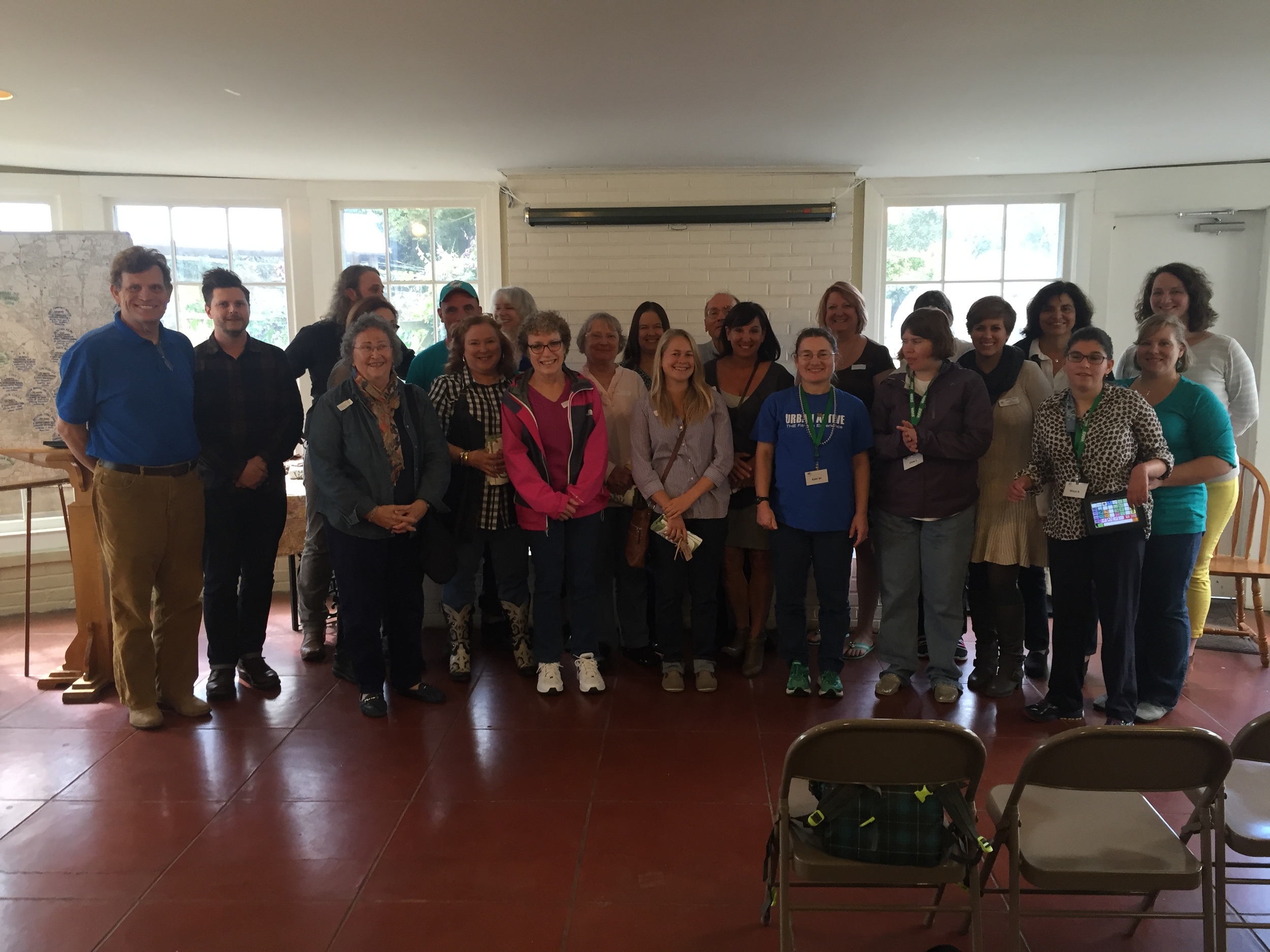
A few of the many volunteers we celebrate posed for a photo at the Volunteer Celebration.
At our annual Volunteer Celebration in October, we recognized some of the individuals who show up regularly to chop potatoes, weed the garden, cook and deliver food on our trucks. But as Executive Director Tallu Schuyler Quinn reminded us, the work is far from a singular effort. We’re all in this together as a connected team to help make the mission happen.
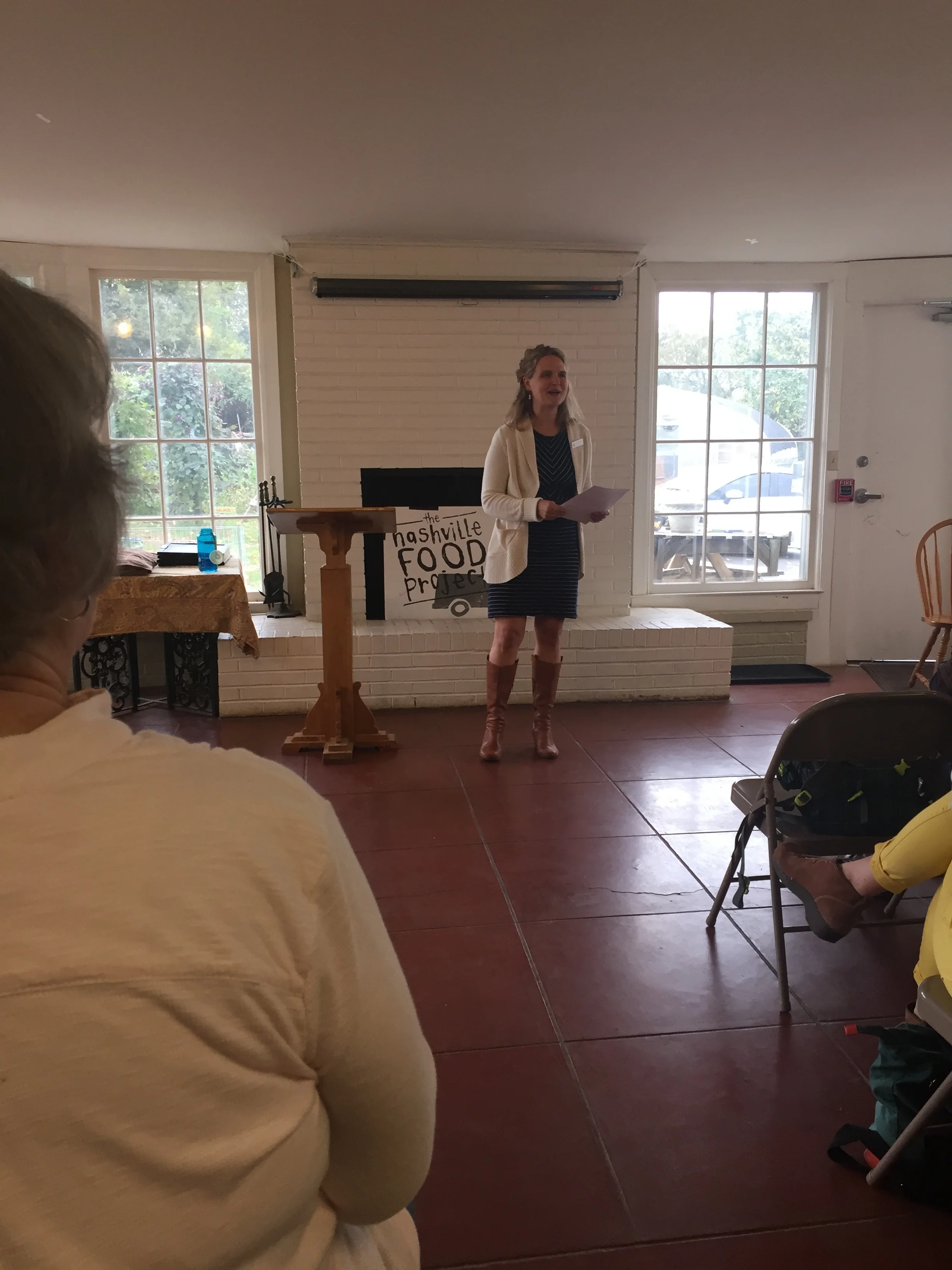

At TNFP, results translate into people being fed through the thousands of meals served each month as well as the camaraderie and sharing that comes back to those who give.
“I want to give for sure,” says Marirae Mathis, a volunteer recognized for her dedication to the kitchen. “But I feel like I’m getting so much more out of it than what I’m giving.”

Marirae Mathis accepting her award from Associate Director Malinda Hersh.
The exchange of giving and receiving was a common theme among those recognizable faces that come to TNFP. Marirae started as a truck volunteer but knew as a trained chef, her strengths would lead her to the kitchen. She makes a meal every Friday with Joyce Jones.
Meanwhile, volunteer Doug Tommie, has kept the truck rolling. Having been a volunteer for eight years, he has seen TNFP evolve to serve higher quality, hot meals at less expense. He acknowledges that the line between those being served and serving remains blurred.
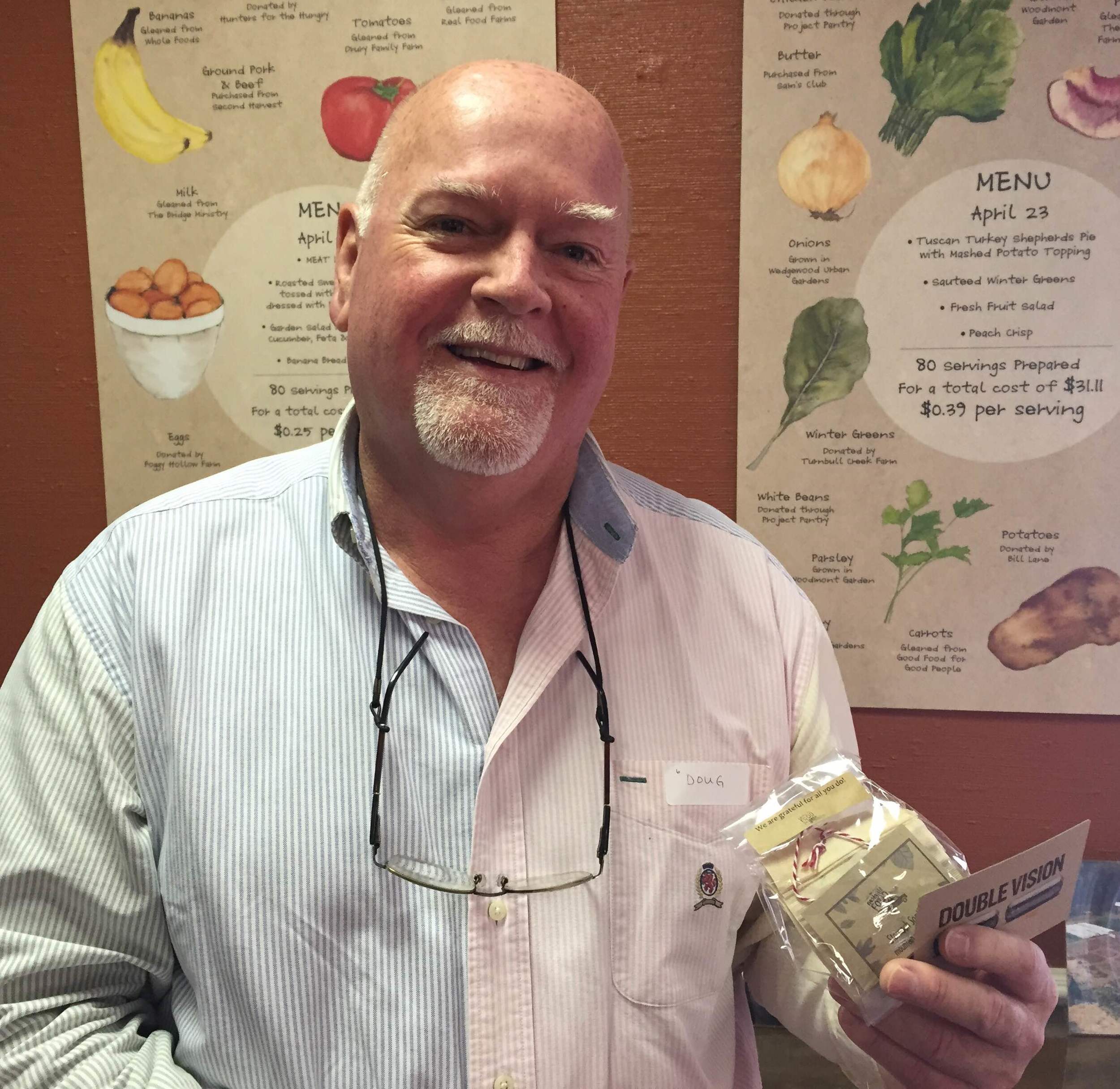
Doug holds up the parting gifts for all volunteers: Chipotle gift cards and herbal teas made by staff.
“They get a meal that sustains them for a night. But I get something here,” he said patting his heart, “that lasts longer.”
Guests mingled during lunch provided by TNFP corporate partner, Chipotle.
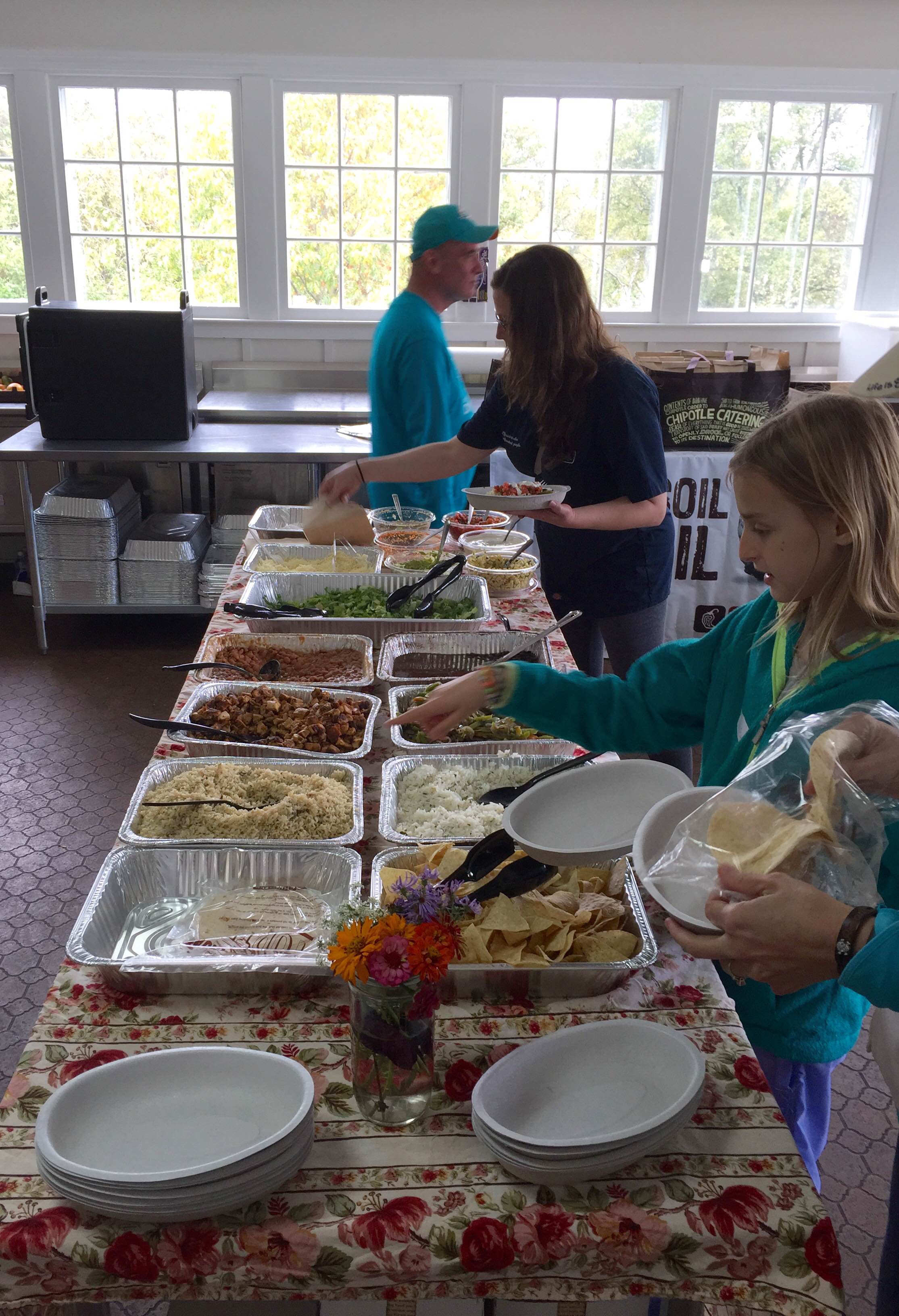
Then during the awards ceremony that followed, several groups, too, were recognized such as Friends Life. The nonprofit dedicated to serving the needs of adults with developmental and intellectual disabilities has been a regular participate at the Wedgewood Urban Garden. The group's energy charged the room with enthusiasm.

“It was so exciting for the Friends to learn just how appreciated they are and remember how fortunate they are. It was also a good opportunity for us to show the Friends just how much effort goes into making sure people have the nourishment they need to make it through the day,” says Jennifer Rosenberg, program specialist for Friends Life.
Other groups recognized for their work included Media Star as well as board member Judy Wright's cook team for their loyal participation and creativity. Over the years, they've added popular dishes to TNFP repertoire such as Judy's Mother's Meatloaf and Chicken Pot Pie.

Judy Wright accepts her team's award from Tallu Schuyler Quinn.
“I grew up in a house where we had 10 for dinner at a minimum,” Judy said.
But she still appreciates that those in her group continue to learn from their experiences at The Nashville Food Project while also enjoying the camaraderie and resourcefulness of the work
“I love thinking about the people who are going to eat the food,” she says. “And everybody coming to the table.”
Here is a full list of volunteers recognized at this year's celebration.
Top Ten volunteers based on Sept 2014 through Sept 2015:
Volunteering at least 100 hours: Linda Bodfish, Jackie Jones, Marirae Mathias, Joyce Jones and Julie Blackwell
Volunteering at least 200 hours: Mary Dionne, Ann Fundis and Warren White
Volunteering at least 300 hours: Chester Higgins and Marilyn Lane
The 10 people listed above gave a combined total of 2,186 hours. When all volunteer hours in all programs were calculated for the first eight months of 2015, we have 4,401 volunteers generating 10,749 hours.
Also recognized:
Outstanding Cook Team - Judy Wright and Friends
Outstanding Community Partner - Woodmont Christian Church
Outstanding Garden Group - Friends Life
Outstanding Intern - Abbie Tourbe-Tolon
Behind-the-Scenes Volunteer - Karen Rolen
Individuals who have served with us 5 years or longer:
Stacy Andrick
Margot Baeder
Barbara Ball
Rob Barrick
Albert Bart
Billy Bird
Lady Bird
George Burke
Brenda Ellis
Hope Hodnett
Berry Holt
Elizabeth James
Joyce Jones
Butch Lewis
Viki Matson
Sara Martin-Michels
Nealya Parish
Bill Peerman
Gordon Peerman
Lisa Peerman
Ann Pla
Toni Rodgers
Thom Schuyler
Michael Sheridan
Doug Tommie
Judy Wright
Garden Spotlight: McGruder Community Garden
When Garden Coordinator Kia Brown arrived at the McGruder Community Garden on a recent morning, it didn’t take long for her to spot a couple new raspberries hanging from a vine near the garden’s front gate…
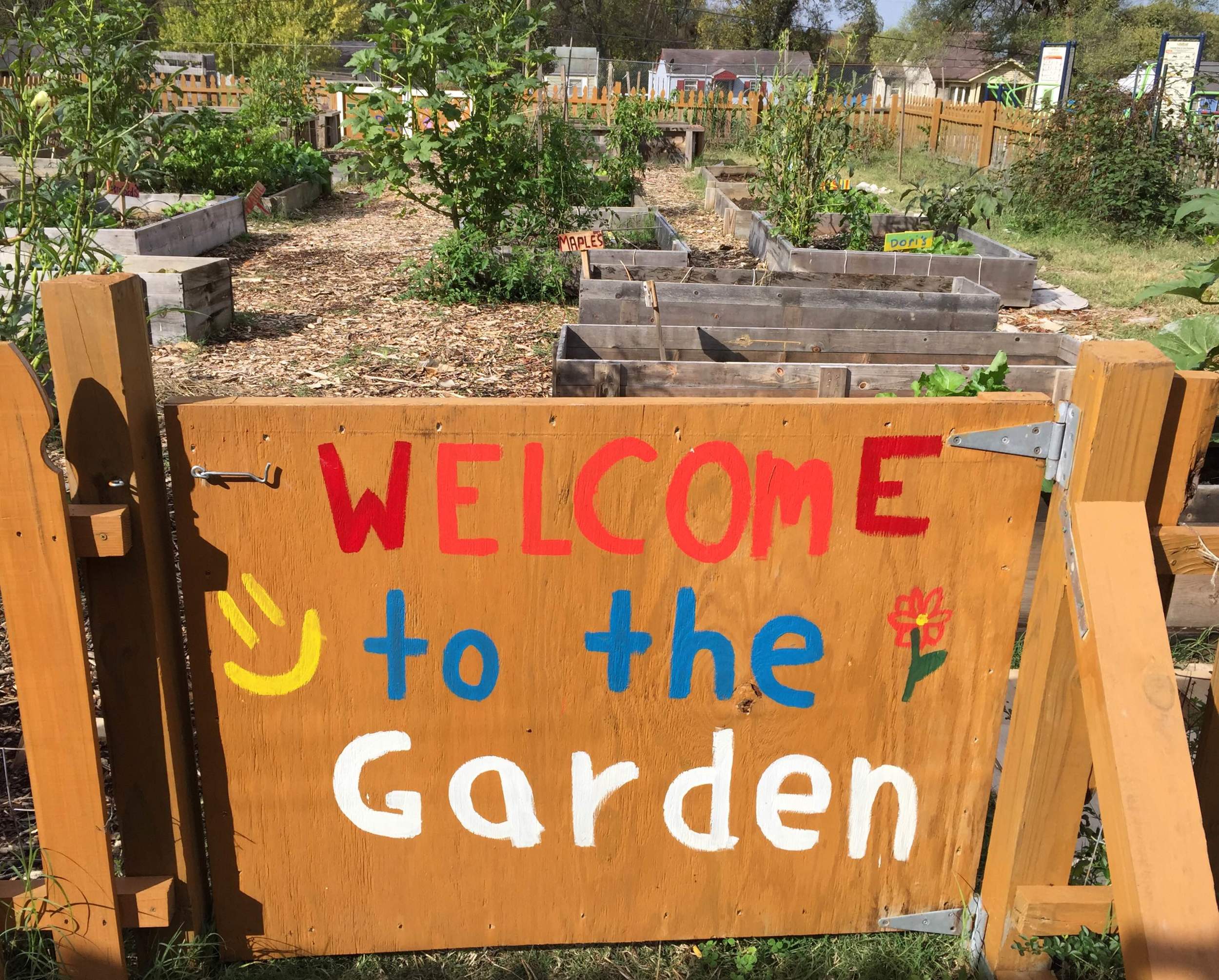
When Garden Coordinator Kia Brown arrived at the McGruder Community Garden on a recent morning, it didn’t take long for her to spot a couple new raspberries hanging from a vine near the garden’s front gate.
“That’s so exciting,” she said, taking a closer look. “I come in here and learn something new every day.”

Kia has been overseeing the McGruder garden located in North Nashville since June. She checks on the 24 plots for individuals and groups and holds monthly garden trainings to teach growers about proper harvesting, planting for the time of year and soil care.
“I need to let Ms. Gloria know,” she said, pointing out another new development -- a green pepper that would soon need to be picked.
While McGruder Garden doesn’t act as a production garden for The Nashville Food Project, it certainly fits with TNFP mission to bring people together to grow and share nourishing food. The garden helps cultivate community and provides access to healthy produce.
In addition to trainings, Kia hosts garden work days and helps an after school program through the 14th Avenue Missionary Baptist Church care for a community raised beds planted for any passersby who have a need for fresh produce.

Next year she plans to implement a recruiting effort that will go to neighborhood churches and community centers to bring in new plot holders. She’s helping maintain an orchard of pear and nectarine trees next to the garden plots, and she looks after the community herb garden (which is flowering this time as year) as well as compost and leaf collection bins.


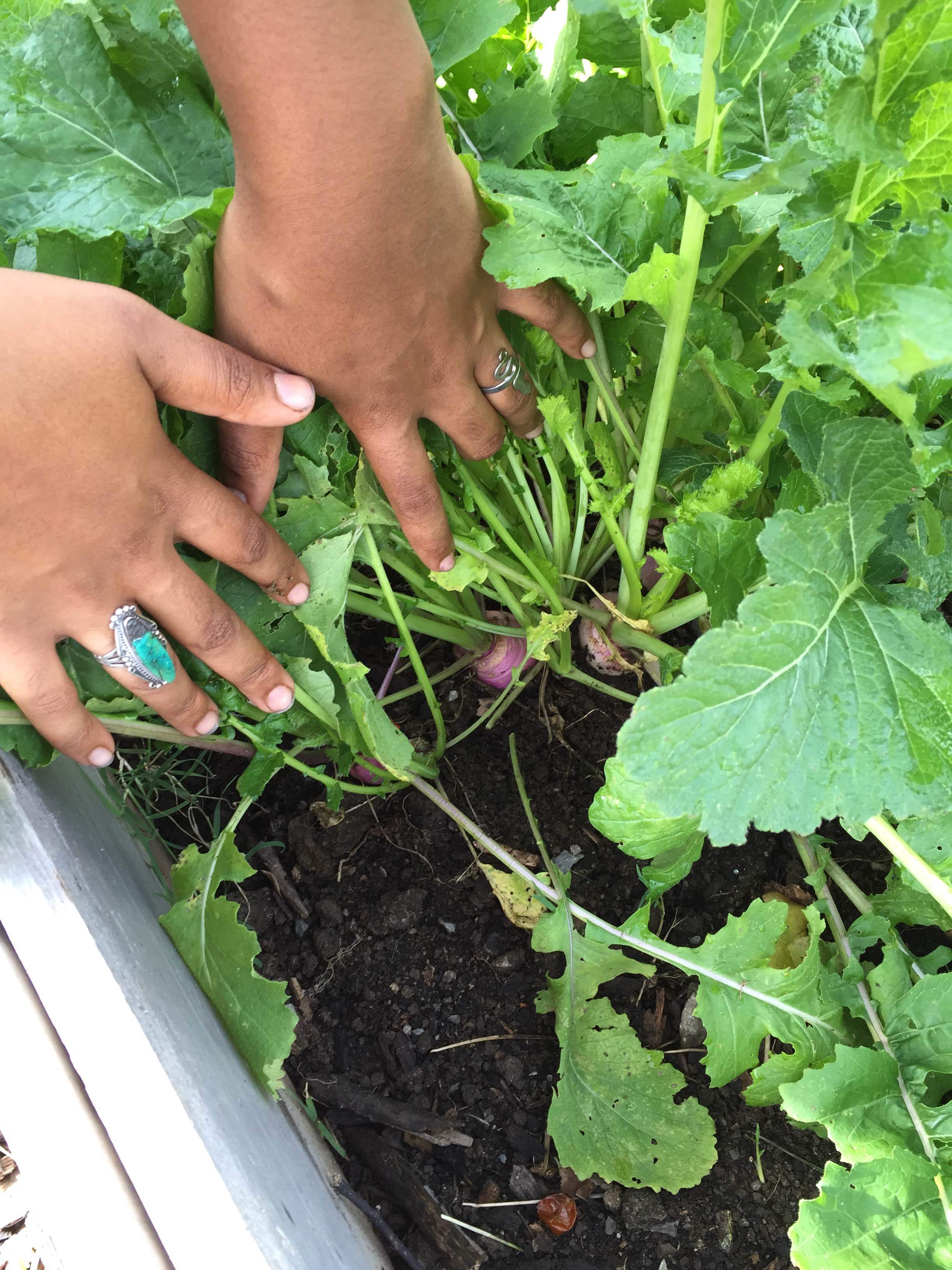
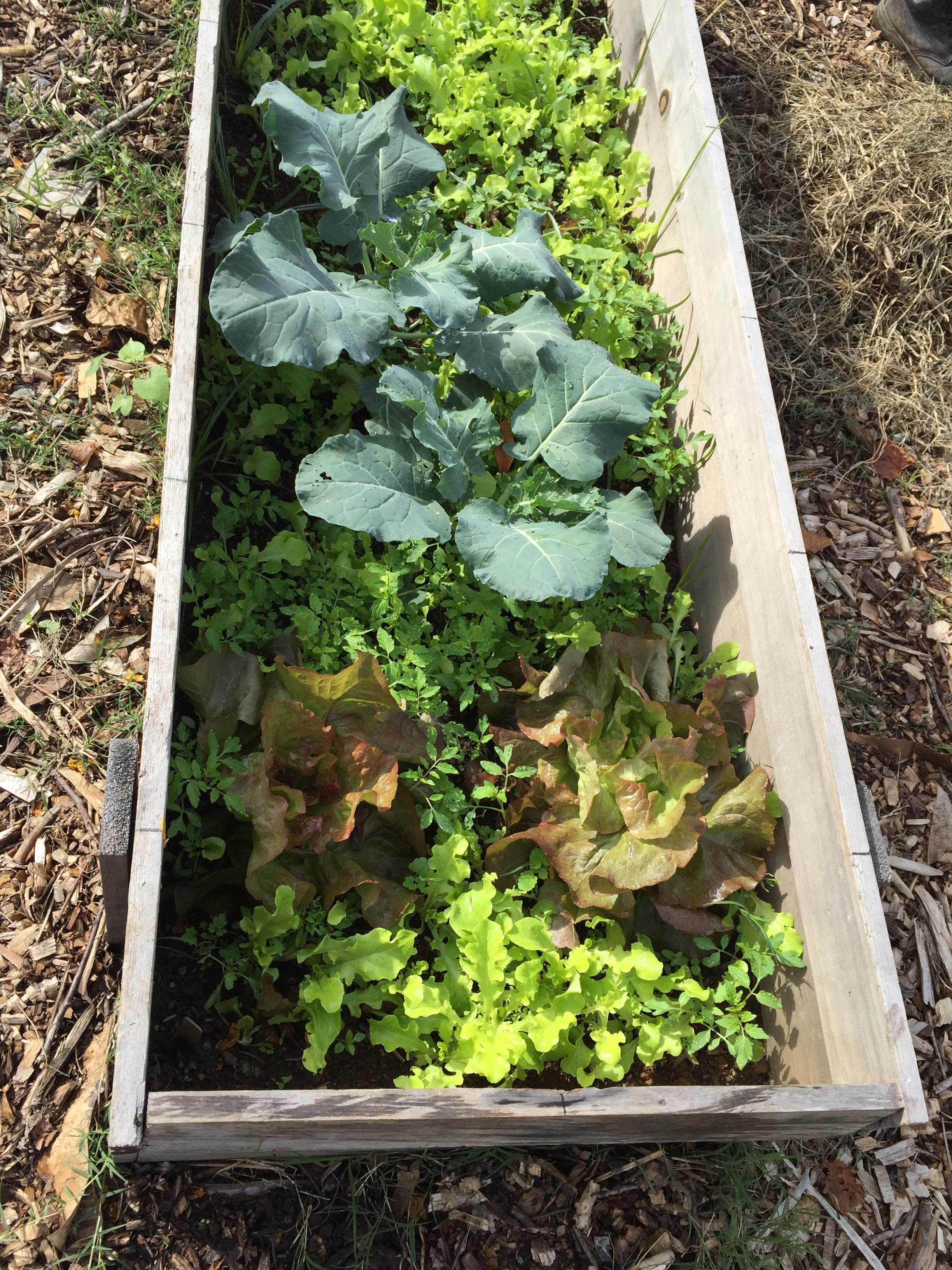
Plot holders have been collecting the last of their cherry tomatoes and peppers. Next up they will have lettuces and roots such as turnips, carrots, kale, radishes and collards.

Kia helps maintain the garden through a grant from United Way, and she says her main focus is to help prepare those who grow here to work these plots independently.
"We want to share," she says, "as much information and knowledge about growing food as possible."
Guest Chef Series: Vivek Surti
Vivek Surti might not have a formal culinary education, but he’s no doubt a fixture on the Nashville food scene. He made a name for himself hosting inventive pop-up dinners through his VEA Supper Club, and he can always drop some helpful knowledge about the newest restaurants in town…

Vivek Surti might not have a formal culinary education, but he’s no doubt a fixture on the Nashville food scene. He made a name for himself hosting inventive pop-up dinners through his VEA Supper Club, and he can always drop some helpful knowledge about the newest restaurants in town. Beyond food, he’s often the nicest guy in the kitchen or dining room.
So when we asked if he would visit our kitchen as a guest chef, of course he showed up ready to work with his love of fresh ingredients and spice.
Vivek’s parents came to the United States from India, rooting Vivek’s cooking style in that lineage. “Indian techniques and flavors are the ones that I know and am comfortable with,” he says. “So obviously, I reach for spices when I cook.”
When presented with a pan of purple-streaked dragon beans from our garden at TNFP, he tossed them with onions and tomatoes to braise. He added a few handfuls of fresh basil and several shakes of fennel seed.
We also needed to stretch a sausage scramble dish to feed a few extra meal recipients, so with a quick "tap, tap" on the cutting board, he added vegetables for more nourishing flavor.
Vivek regularly collects fresh produce from his parents’ garden in Brentwood where they grow fresh tuvar beans, black-eyed peas, okra and tomatoes.
“I would say what's different about my cooking from traditional Indian cooking is I focus much more on lighter food,” he says. “A lot of Indian food is very rich, slow-cooked and hearty.”
While a traditional dish of chaat might be made with potatoes and chickpeas, Vivek goes for puffed grained, radishes, chiles and loads of fresh herbs. He often likes to have one cooked element of the meal paired with a raw, crunchy and acidic component. “It gives you the same experience of the dish,” he says, “but in a lighter, more refreshing way. As you're eating it, you feel good."
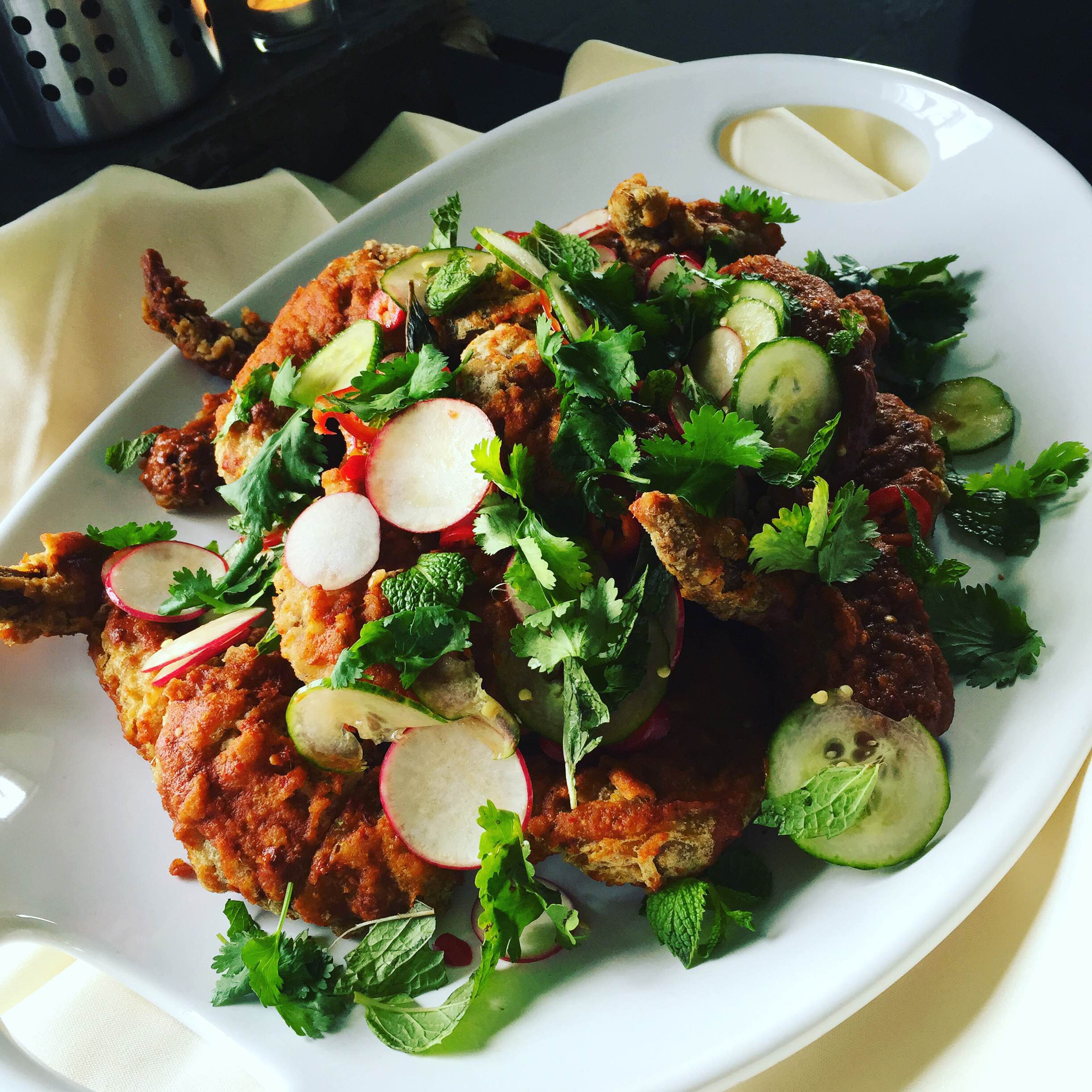
At a recent pop-up brunch, for example, he prepared Indian-style fried chicken with a spicy and sweet tamarind paste and then piled on top a salad of crunchy radish, cucumber and fresh cilantro.

But even with his Indian influences, Vivek didn’t learn to cook at his mother’s elbow. He learned as an adult by watching Food TV.
“I came home from college for Christmas break,” he says. “Everybody in the family had been traveling all day, and I was on college time. I didn’t go to sleep until 3 a.m. I was just watching TV, scrolling through a bunch of channels, and Emeril Live was on.”
Vivek wanted to replicate Emeril’s tomato soup and grilled cheese with mascarpone, chives and cream cheese. He asked his mother the following morning if she could add it to their menu.
“My mom during Christmas, she’s very methodical. Thursday breakfast, Thursday lunch, Thursday snack, Thursday dinner…” he said. “So this was kind of messing up her schedule a little bit. She said ‘You can do that. Don’t make a mess in the kitchen.’”
Vivek and three of his cousins went to Kroger and spent the next several hours making the dish. “Now it’s one thing we make every Christmas,” he says.
As marketing director for the Nashville Wine Auction, Vivek has a soft spot for nonprofits. The organization raises approximately $1.2 million a year for cancer research, mostly through its signature event L’Ete du Vin. But at 30, Vivek also has been helping promote trips and events like Pairings that are more accessible to a younger crowd. The role also ties back to food, of course, as it has helped him broaden his palate during his two and half years with the organization.
He will continue with the pop-up dinners, too, offering his Indian-style fried chicken at Hattie B’s this weekend. (Details and full menu at here.)
At The Nashville Food Project kitchen, he finished his work before heading back to his full-time job with a dressing for lettuces from the garden. The room swelled with the aromas of fresh and earthy spice.
“What is that?” an employee asked, breezing through the kitchen.
A sausage scramble, side of dragon beans and salad, he said, "with a few Vivek touches."

Our Friend Elizabeth
Elizabeth Royster James
October, 9, 2015
It’s been just over a week since we lost one of our own, unexpectedly. We grieve the death of an incredible woman and long-time Nashville Food Project volunteer, Elizabeth Royster James. Elizabeth served on a monthly food truck with four friends from her beloved St. Augustine’s Chapel. She chopped vegetables in our prep room and enthusiastically supported our annual fundraising event, Nourish.
Rev. Becca Stevens spoke eloquently at Elizabeth’s funeral about her penchant for lavishly celebrating even the least of these—preparing beef tenderloin for Room in the Inn guests on Christmas Eve, wrapping up high-quality stationary and colorful pens for a Magdalene pen pal program for women in prison, and here at the food project, adorning every table with flowers and a table cloth for meals shared with homeless and indigent residents of Mercury Court on Murfreesboro Road.
Elizabeth literally shined. She was the warmest, most generous friend. She loved people and showed her love in extraordinary ways. She sent gifts through snail mail for no special occasion but the occasion of life. She liked her meat well-done and recorded her appointments in pencil in a gorgeous leather-bound date book. She was always praying for others and doing for others with kindness and joy. She was hilarious and lit up any room she walked into. She was an angel on this earth, and we will miss her terribly.
It will take a long time for those of us deeply grieving Elizabeth’s death to process this enormous loss in our lives and community. But I understand grief is a passage and not a place to stay. As we grieve and carry on, we at The Nashville Food Project will do many wonderful things in Elizabeth’s memory, guided by the indelible marks of her enormous love, contagious laughter and devoted life.

A Day in a Dozen: Harvest Hands
"Day in a Dozen" tells the story of a day at TNFP through 12 photos. Today, we’re highlighting Harvest Hands, one of our partners.

Today's "Day in a Dozen" highlights Harvest Hands, one of our partners.
Harvest Hands works alongside neighbors in the Wedgewood-Houston area to further healthy living, education, spiritual formation and economic development. Young people from Harvest Hands visit our Wedgewood Urban Gardens, and we deliver to the group's community meal once a week.
It all begins with prep teams like this one. Jackson National Life sponsors a day for employees who ready garden and gleaned ingredients for the cook teams.
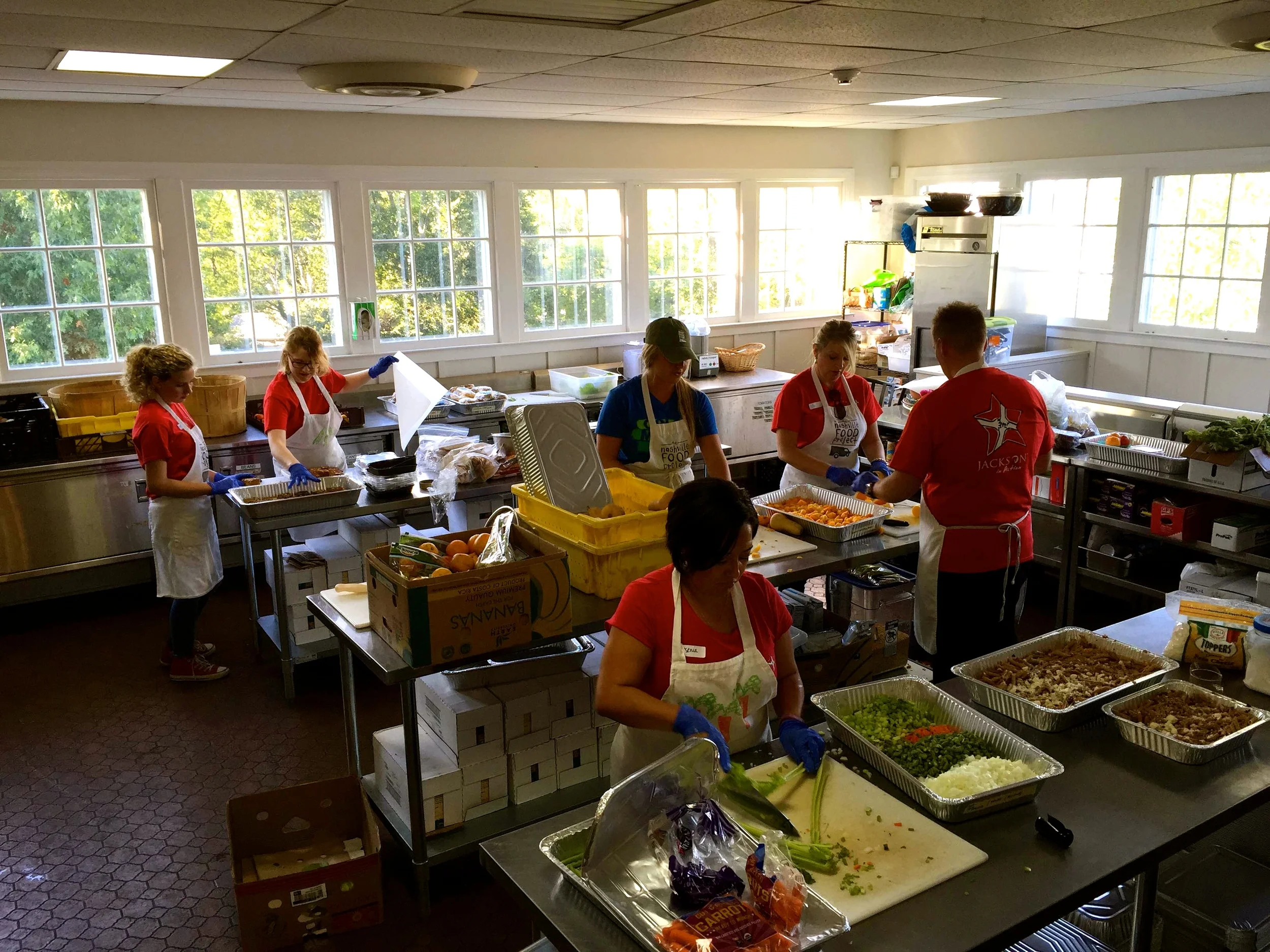
Yesenia from Jackson National Life chops vegetables for the following day's chicken pot pies...

...while Amanda and Susannah slice honey cake gleaned from Whole Foods for dessert.

The cook team prepares the chicken pot pies and hands them off to the truck team.

Meanwhile, children from Harvest Hands walk over from Vine Hill Community Center where the group meets to our Wedgewood Urban Gardens to learn. Here they are carrying Las Paletas compost bins to the compost pile and then covering it with hay.


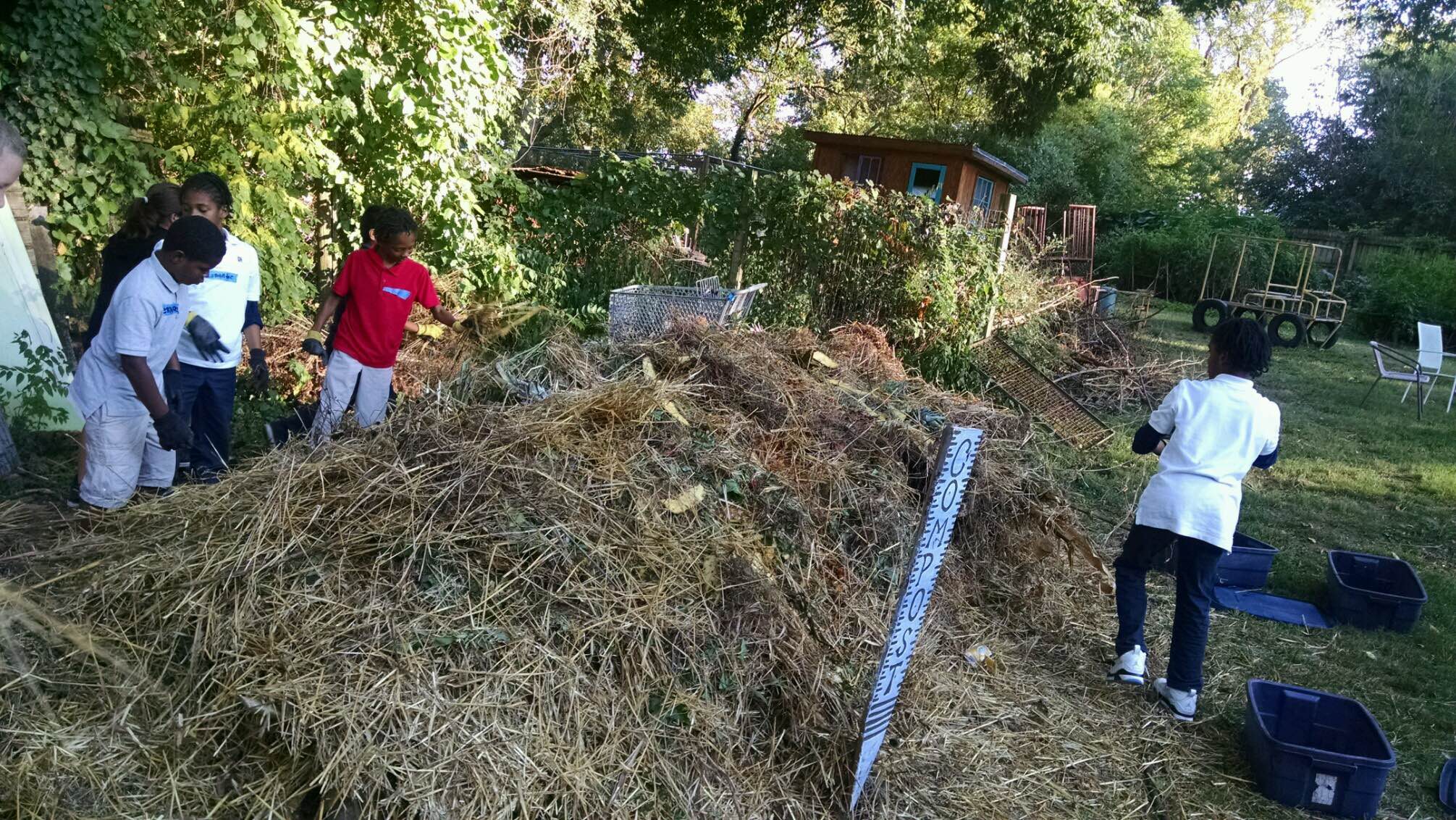
The children walk back to Vine Hill for dinner and a program...

...and when they arrive, the pot pies are warm and ready. Dinner is served!

TNFP Welcomes Teri Sloan as Development Director

Teri is a born-and-raised Middle Tennessean from Shelbyville. She earned a B.S. in Advertising from Middle Tennessee State University and a M.Ed. in Nonprofit Leadership from Belmont University. Teri has spent most of her career working with Greek fraternal organizations. She began as a consultant for Alpha Omicron Pi Women’s Fraternity, a job that took her to Morgantown, WV, and Kennesaw, GA, before returning home to Tennessee. She followed that with five years working with Chi Psi Fraternity, assisting the fraternity and its educational foundation with all marketing and development efforts. For The Nashville Food Project, she will direct fundraising efforts, donor relations, marketing and the annual Nourish event. Teri and her husband Adam live in East Nashville with their dog Audrey. In her spare time, she enjoys cooking, traveling and spending time with friends and family.
Volunteer Corner with Rich Sanderson
Longtime volunteer Rich Sanderson provided an account of his experiences delivering meals to the Green Street Church of Christ…

Volunteer Rich Sanderson with a friend at Green Street Church of Christ.
Longtime volunteer Rich Sanderson provided an account of his experiences delivering meals to the Green Street Church of Christ. The church has a history of helping the poor. Since 2012, people experiencing homelessness have been allowed to camp on the property, and it recently became the site for the first micro home project for homeless in Nashville. This is one of the few remaining transitional spaces in the city for people who have not been able to access other shelter.
It’s the forth Saturday of the month and our Nashville Food Project Truck #2 is carrying a hot, healthy meal. Pulling up to the front of Green Street Sanctuary, we honk the horn several times, serving as the “dinner bell” and announcing we have arrived.
We have been coming to “the Sanctuary” as TNFP’s ambassadors for three or more years now. Faces have changed many times. But the tents, the big gray sea container with extra living supplies, the pile of wood in the corner, have pretty much stayed the same. An added privacy fence, the food and cook tent we donated as well as mulch by the tents have helped make the place a little bit more like home for those who stay here.
I recall so many familiar faces such as Becky, who left a couple years ago. She took a job cleaning out crawl spaces under houses, and it has helped her afford rent on a small apartment. She stops by now and then.
Kenny, full of energy and often wearing a Vietnam veteran hat, had just been released after 15 years in an Indiana prison when we met him. He came to Nashville to start over. Kenny wasn’t at the Sanctuary long. I hope he feels cleared of his guilt and shame and is making a new life for himself.
Denise’s family had lived in buses and cars, motel rooms, shelters her whole life. But she told me one time she wasn’t really homeless. She had a tent. She had a community family. This was the life she was used to. This lifestyle had been physically tough on her, though. I really worry about her health. Lately she has not been around. Others have said she disappeared a couple of months ago. I pray she has a bus or a tent or a shelter of some kind to live in.
Robert was at the original tent city along the Cumberland River when it was washed to oblivion during the big Nashville flood. He always entertained us with his impression of Donald Duck. It was perfect and hilarious. Over the months, Robert lost all kinds of weight. One Saturday I pulled him aside: “Are you alright, brother?” He said he had been to the clinic. They took X-rays, and it looked like he had lung cancer. A few months later, Robert was able to get a good corner selling The Contributor. He moved to an apartment. Others tell us he’s alive and hanging in there.
As we finished serving our meals for the day out of the truck, we counted 12 residents that had dined with us. We took the leftovers to the food tent for those uptown selling the paper or for those just passing through. I counted 21 tents. Only 3 spots were left before the Sanctuary’s “no vacancy” sign would go up.
On our ride back, we were thankful for our own graces, thankful for being able to serve and have some fellowship with those that have so little, thankful for Nashville Food Project, and thankful God had decided to work through us providing for some of his children.
Rich Sanderson
Meet Katie Duiven, TNFP Meals Assistant
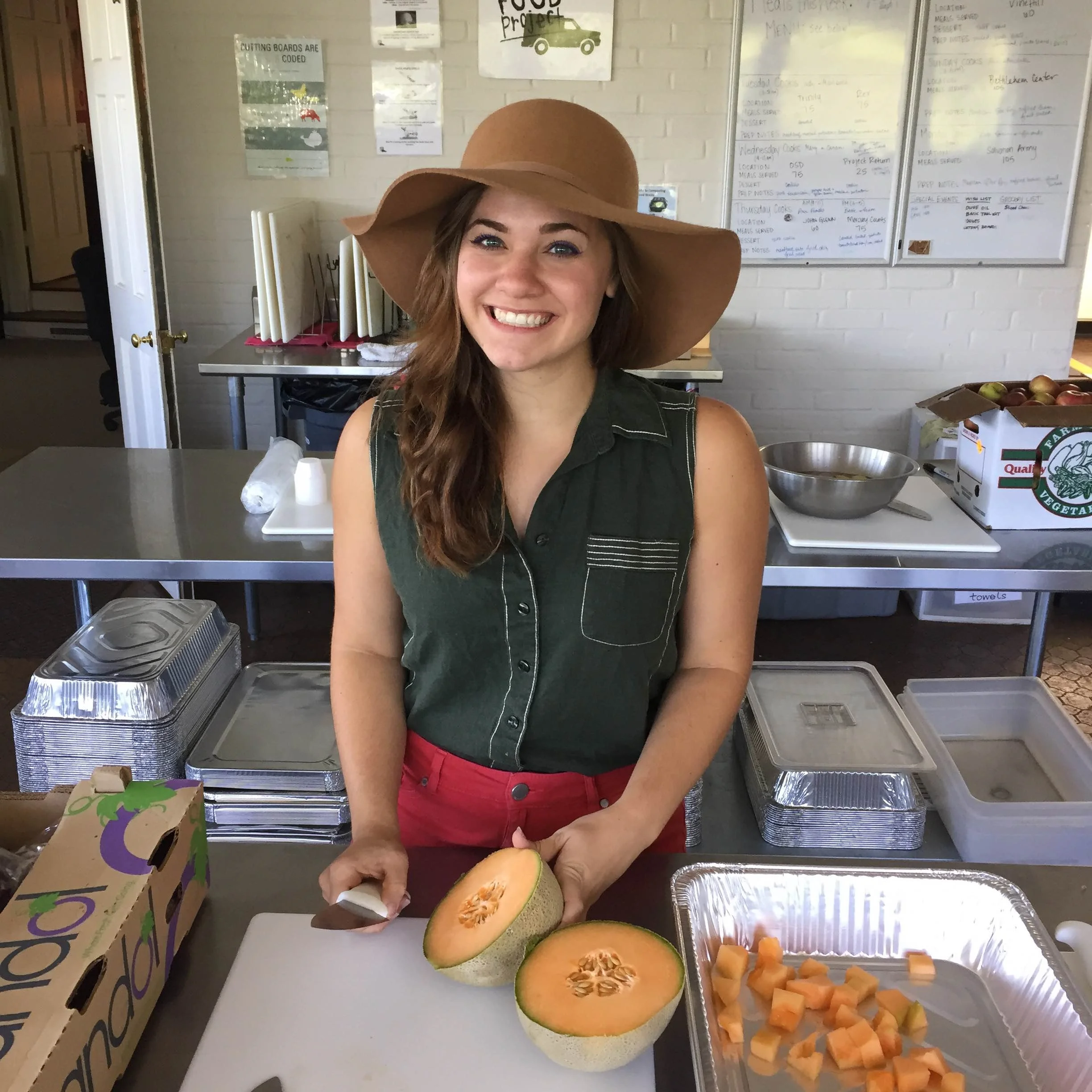
Katie Duiven accepted an internship with The Nashville Food Project in June 2015, and within a couple months, her can-do personality, organizational skills and talents for making hundreds of granola bars helped promote her to Meals Assistant. Katie moved to Nashville from Grand Rapids, Michigan, to attend Belmont University where she plans to graduate in Spring 2016 with a major in Social Entrepreneurship and minor in Nutrition. Given her studies, Katie calls working with The Nashville Food Project a dream that strikes a balance between having fun, building community and providing nourishing food for people in our city who need it most. When she's not in the prep room or kitchen, Katie enjoys spending time with friends, being outdoors, babysitting and singing backup in her best friend's band.
Biscuit Love Chefs Visit TNFP Kitchen

When Chef Karl Worley of Biscuit Love arrived at The Nashville Food Project’s kitchen, he scanned the recipe that had been handed to him. Then he reached into the fridge with the authority of a man who has reached into a lot of fridges and pulled out a hunk of butter. He dropped it into a giant pot, covered it with sliced potatoes, and dinner was underway in a sizzle.
Karl and Biscuit Love manager Heather Savey agreed to help in the kitchen to prepare a meal for the Thursday food truck run to Mercury Courts, a weekly rate complex that houses low-income Nashvillians sometimes in transition from the streets. But Karl has manned a food truck in downtown Nashville during many a music festival. He opened a restaurant with his wife Sarah based on their truck's concept, and lines of diners now wrap around the building waiting to get in on weekends. Bon Appetit magazine recently named it one of the top 50 best new restaurants in America (and the East Nasty as the best sandwich in the country). So even though he can cook a meal for 75 people with one hand behind his back, it’s still a marvel that he would come here after working all day to work more for those in need.
“I love it,” he said. “Everybody’s into the mission and seeing the mission through.”

The kitchen visit isn’t the first time Karl has helped TNFP. He participated in the annual Nourish dinner for the past three years with a star roster of chefs such as Tandy Wilson of City House, Sean Brock of Husk, Levon Wallace of Cochon Butcher, Rob Newtown of Nightingale 9 and Wilma Jean in Brooklyn and Scott Witherow of Olive & Sinclair. Though the food is top shelf, the barn at Green Door Gourmet where the event took place this year, swelled with a down-home love in knowing that even being there helps further our mission of bringing people together to cook, grow and share nourishing food, with the goals of cultivating community and alleviating hunger in Nashville.
As the Nourish dinner began this year, Karl and the other chefs worked together to plate one another’s dishes. It’s the type of pitch-in collaboration found in our kitchen or in the gardens where diverse groups come together to volunteer.
“Food is a universal love language,” Green Door's Sylvia Ganier said the night of the dinner. “It’s a language that The Nashville Food Project speaks fluently.”
Inspired by that work, the chefs tucked bits of their own story into their dishes at Nourish. Tandy Wilson used mint from his father’s garden in a plate of squash, pea farinata and buttermilk cottage cheese, for example, and Karl prepared a sophisticated yet homey take on cassoulet with Southern ingredients of sausage, duck confit and black-eyed peas.
After servers delivered his course, Karl stepped to the stage and announced he would donate brunch at home to the top bidder for 25 people. It sold for $4,000.
“I never would have dreamed that people would pay that much for breakfast in bed,” he said.

Poverty and the issues surrounding it hit close to home for Karl.
“I grew up really poor,” he said. “We were never hungry, but we had months of brown beans and cornbread. Like, every night.”
Karl’s mother worked at a diner, where he often kept busy as a kid while waiting on her shifts to end. His grandfather had owned restaurants, too. But Karl left his hometown of Bristol at 19 on the first train out, literally. He took a job as a railroad conductor out of Cleveland, Ohio.
“I had been to Florida for like two days. Otherwise, I had never been out of East Tennessee,” he said. His first time through the drive-thru of a Cleveland Burger King, he was nearly laughed out of the line for ordering biscuits, gravy and sweet tea, menu items you couldn't find on the breakfast menu there. But it was also the place where he connected to home when he craved the beans and cornbread his mother made. “I hated it growing up,” he said. “Now it’s my go-to comfort food.”
After a move to Atlanta and then Nashville and jobs that included selling used cars and working for a builder, Karl dabbled in culinary school at Nashville State before dropping out. Then when he met Sarah, the woman who would become his wife, she warned him that things couldn’t get serious because she was headed to Johnson & Wales culinary school in Denver. “What if I go to culinary school, too?” he asked her. And this time, the plan stuck.

At The Nashville Food Project kitchen, Karl took an off-recipe approach to seasoning their cabbage and sausage stew with a few shakes of hot sauce, garam masala and curry powder they found in the kitchen cabinets. As with most meals at TNFP, the ingredients came from various sources – tomato jewels from Tallahassee May’s Turnbull Creek Farm, cabbage from Delvin Farms, carrots and cabbage from The Nashville Food Project’s gardens and sausage from a large donation from Gaylord Opryland Hotels. Tracing the food back to its origin is a big part of why Karl likes to support the cause.
“We forget where the food comes from,” he said, “and how it’s cooked.”
Heather pulled cornbread from the oven, and they tasted their stew a final time. They would soon send their work from the kitchen into the community as another set of volunteers arrived to take the meal to Mercury Courts.
“Man, that smells good,” said Toni Rogers, walking into the kitchen. She’s been delivering food to Mercury Courts on the same night of the week each month for several years. Over time, she’s made friends and learned the names of residents. Food, she said, served as the entry point to get those conversations going. Just as Karl and Heather compared family notes on how they prepared meals, Toni would do the same with Mercury residents.
“Once everyone is together and with food, there’s that ‘meal community’ kind-of thing,” she said. “Even if you’re not in a house, it’s the same spirit.”
Click here to see the cabbage and sausage recipe that provided the basis for Karl and Heather's dish.
If you are a chef interested in visiting TNFP kitchen, or if you know a chef you’d like to recommend, please email jenniferjustus8@gmail.com. Thank you!
A Day in a Dozen: From Harvest To Plate
12 photos tell the story of one day at TNFP!
The marketing team from Whole Foods in Franklin joined us on a gorgeous morning at the Wedgewood Urban Garden.

Whole Foods has long been generous with our organization, so it was nice to welcome this group to the garden for the first time.
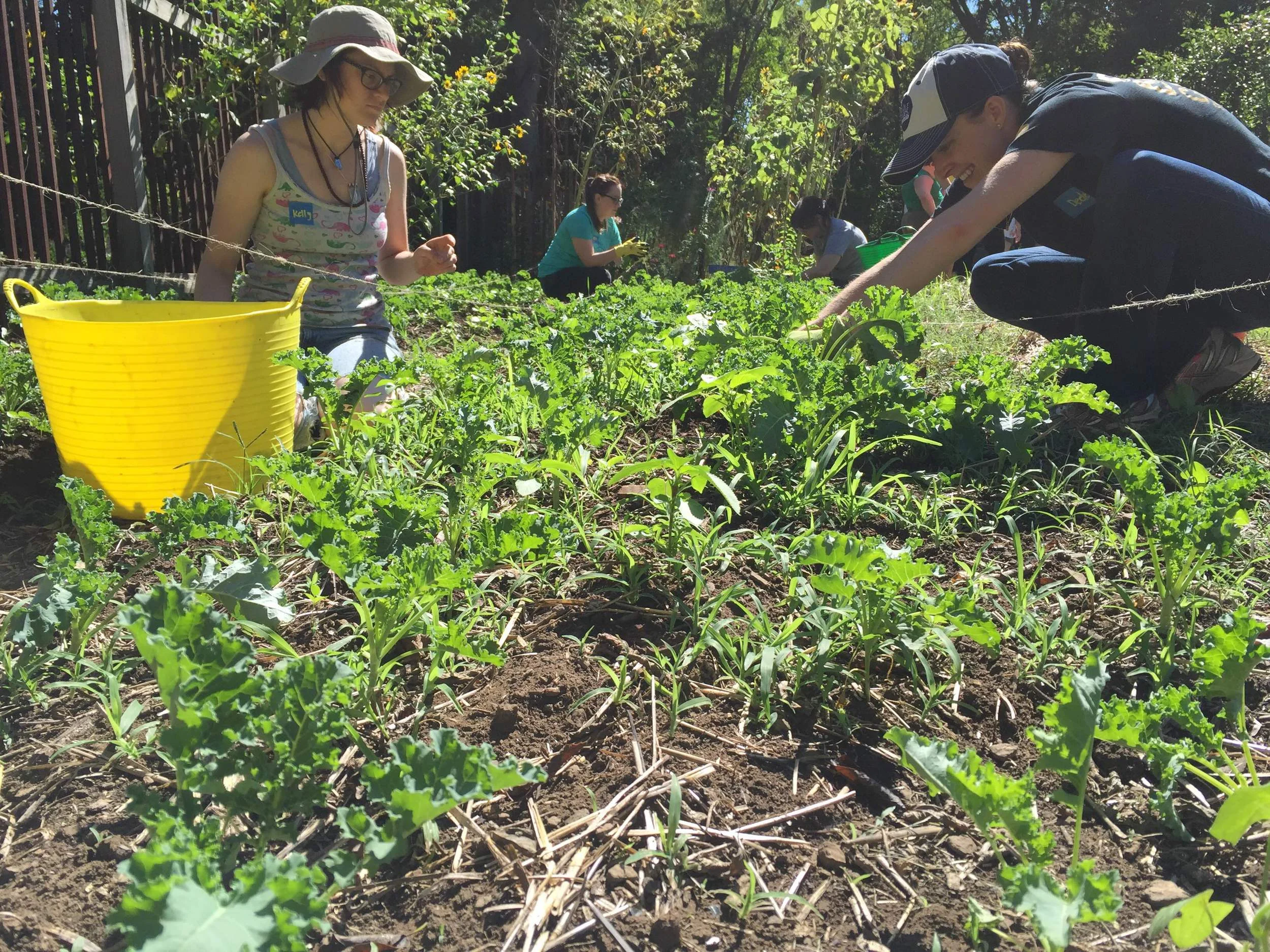
Meanwhile at TNFP headquarters, the morning crew arrived to prep food for a delivery to John Glenn, a retirement community. Volunteers Mary (left) and Cheri (right) got to know one another over the makings of a fruit salad. Mary visits every Monday and Tuesday to prep plus three times per month to cook. Cheri was visiting for the second time.

Meals Assistant Katie picked up a generous donation of corn and tomatoes from Green Door Gourmet and later organized a donation from Whole Foods including brioche and muffins.

After their time in the garden, the Whole Food team visited the kitchen and prep room where Meals Manager Anne explained the “giant puzzle” of putting together more than 1,000 meals each week with the variety of donations and harvested food from our gardens.

The Whole Foods group had harvested approximately 50 pounds of kale. When team member Michael Martin arrived that morning, he didn't know he was dressing particularly well for the occasion.

The greens will be prepped the following day, but meanwhile, Tamara and Brittney rolled enchiladas with donated ingredients from Chipotle. Their prep work will be finished off by a cook team for delivery the next day.

Just outside the kitchen by the Green Hills garden, Tom cleaned potatoes...

…which had been donated by Long Hungry Creek Farm. They will be sliced, baked or mashed for future meals.

In the midst of it all, we welcomed new intern Mary Blythe and put her right to work making cookies for dessert throughout the week.
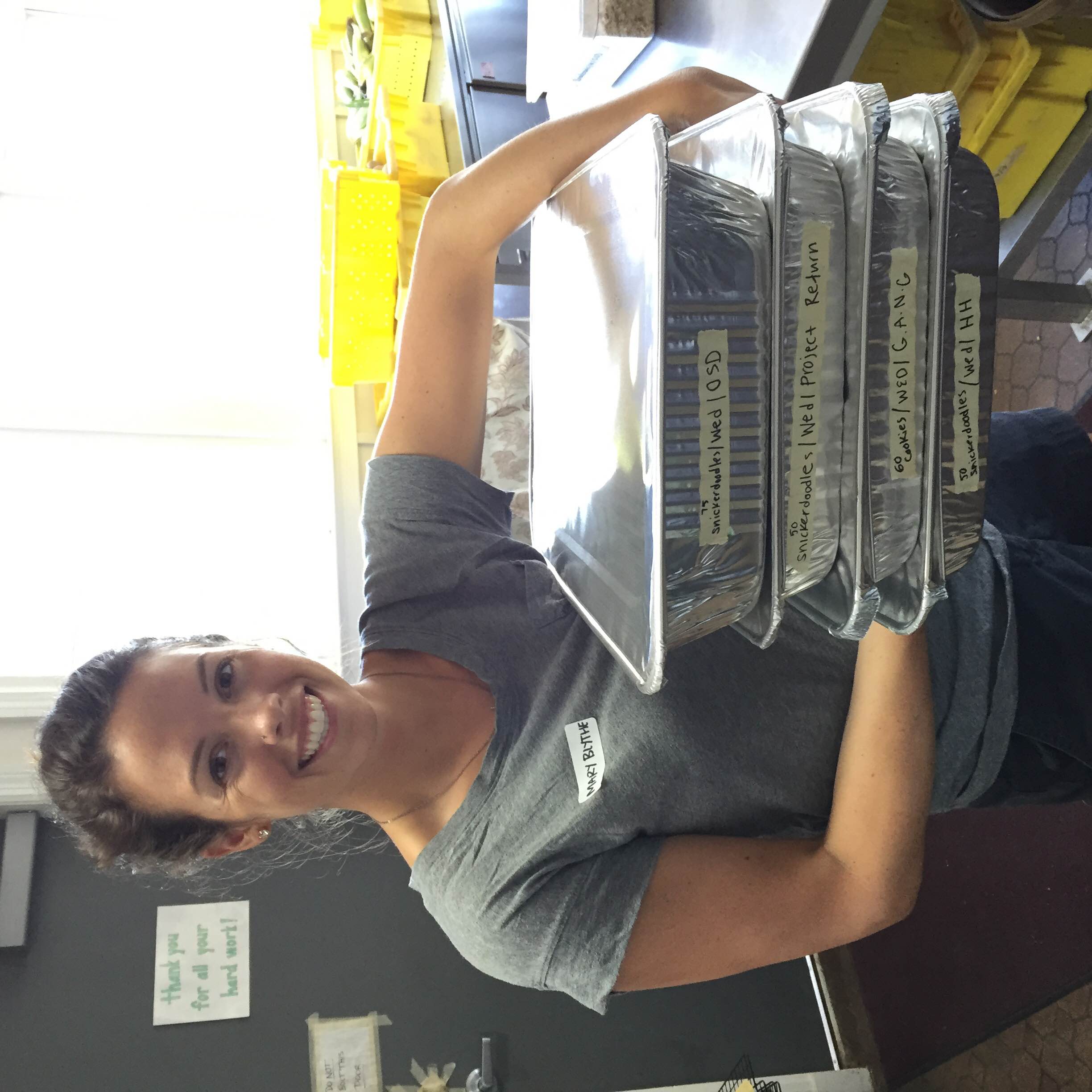
Then the final cook team for the day arrived at 3pm to make meatloaf for 5pm deliveries to Rex Courts, an Urban Housing Solutions property off Murfreesboro Road, and Trinity Community Meal at Trinity United Methodist Church in East Nashville.

The group cooked from Judy Wright's mother’s meatloaf recipe (which she shared in a lovely tribute on her blog, Judy’s Chickens).
The meal made with many loving hands and hearts arrived at Trinity for dinner just as neighbors began to gather.

"I feel good from my head tomatoes"

This weekend, the Tomato Art Festival will happen in East Nashville. But we’ve been having an unofficial tomato festival of our own at The Nashville Food Project.
Thanks in part to a donation of Juliet tomatoes from Tallahassee May at Turnbull Creek Farm…

…we’ve had enough to make enchilada sauce and marinara.

We’ve dehydrated tomatoes…

…and roasted them before sealing them up for later.

Yesterday, we added enchilada sauce to quinoa, red beans and beef from Chipotle and stuffed it into green peppers. Anna shows how it’s done.

Then we topped the peppers with cheese and slid them into the oven to warm.

The marquee outside Rosepepper Cantina in East Nashville.
"Spaghetti is love." -Mario Batali
We served more than 2,000 meatballs over the last week mixing meat with grated carrot, herbs from the garden, garlic, onion and breadcrumbs. They're nestled here in a marinara sauce that makes good use of 700 pounds of donated tomatoes from the generous folks at Delvin Farms.
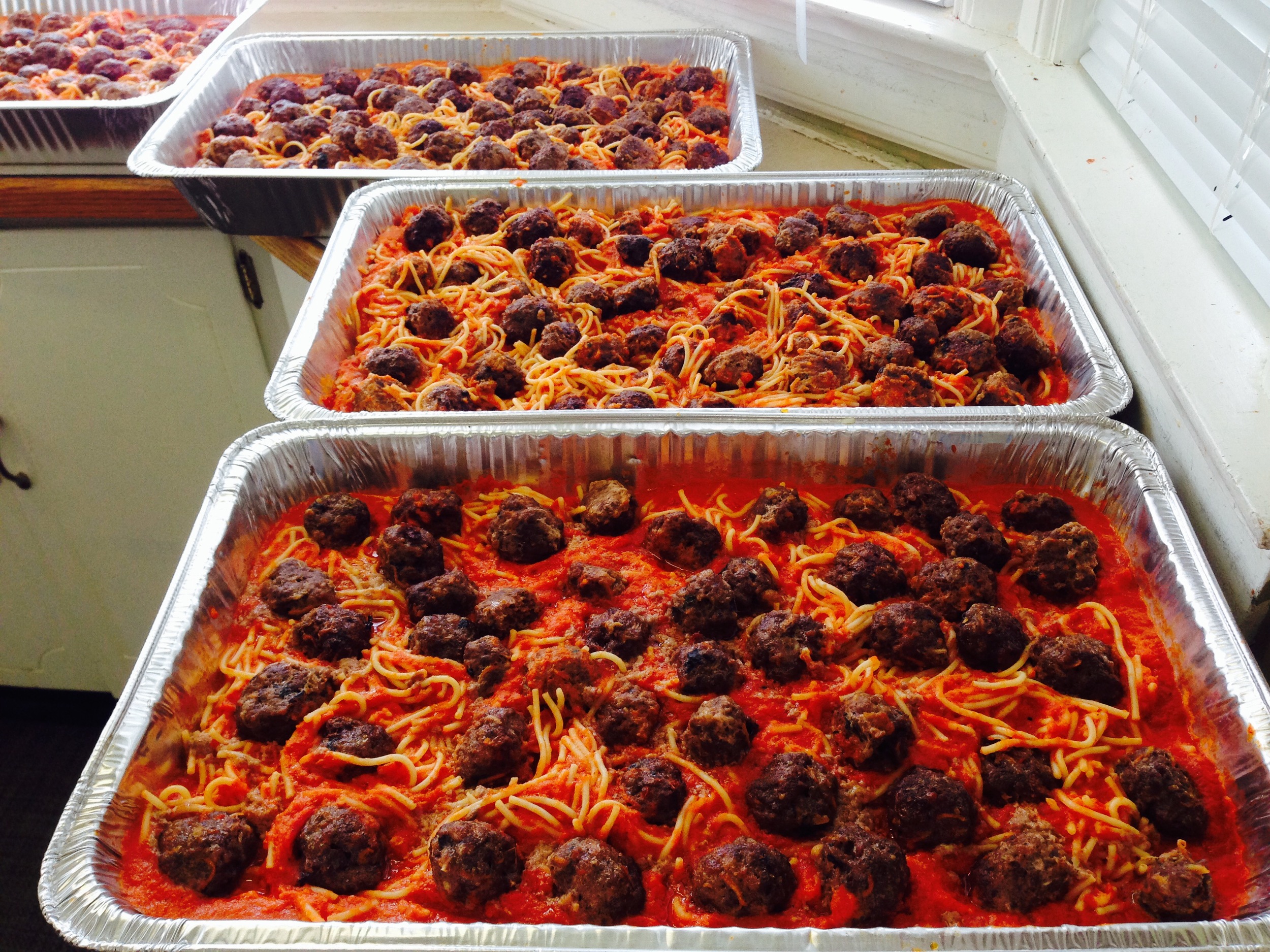
We served more than 2,000 meatballs over the last week mixing meat with grated carrot, herbs from the garden, garlic, onion and breadcrumbs.
They're nestled here in a marinara sauce that makes good use of 700 pounds of donated tomatoes from the generous folks at Delvin Farms.
The marinara recipe we followed is below (though we omitted wine and made a few other adjustments based on quantities and availability).
Fresh Tomato Marinara Sauce
Makes about six cups
- 1/4 cup extra virgin olive oil
- 1 yellow onion, chopped
- 4 cloves garlic, peeled and thinly sliced
- 1/4 cup red wine
- 8 cups tomato chunks
- 1 teaspoon dried oregano
- pinch of red pepper flakes
- small bunch of fresh basil
- sea salt and pepper to taste
Directions
1. In a large saucepan, saute onion in olive oil over medium heat until softened, about 7 minutes. Add garlic and saute 1 minute longer. Add wine and simmer until liquid has evaporated, making sure garlic doesn't burn. Stir in tomatoes and pinch of salt.
2. Add oregano and red pepper flakes. Reduce heat to low and cover for 15 minutes. Covering will help the tomatoes to "sweat" and break down more quickly. Uncover and cook over low heat, stirring occasionally for about an hour.
3. Use an immersion blender to carefully puree the sauce. Add basil and blend it in with the blender or leave whole.
4. Continue to simmer another 30 minutes. Season to taste with salt and pepper.
(Recipe from this source.)
Teamwork Helps a Garden Grow
On any given day, the groups coming together in the gardens are often as varied as the crops harvested. A recent week at the Wedgewood Urban Garden welcomed Friends Life, a nonprofit serving the needs of adults with intellectual and development disabilities…

On any given day, the groups coming together in the gardens are often as varied as the crops harvested.
A recent week at the Wedgewood Urban Garden welcomed Friends Life, a nonprofit serving the needs of adults with intellectual and development disabilities.
After harvesting squash...

...the group gathered flowers for their loved ones.

"We have always prioritized service learning for our Friends through volunteer work, because we know how much they have to give to the community," said Waverly Harris-Christoper, Friends Life Community Director of Programs.
Meanwhile, students from CRIT's RISE (Refugee and Immigrant Students Empowered) program learned about the work of bees.

The following day, a workforce development team from Room in the Inn helped agitate the soil where kale had just been harvested.

Ryan with Room in the Inn said he volunteered to help because TNFP had delivered meals to the church where he stays. "I thought it would be nice to give something back to the people who have given to me," he said.
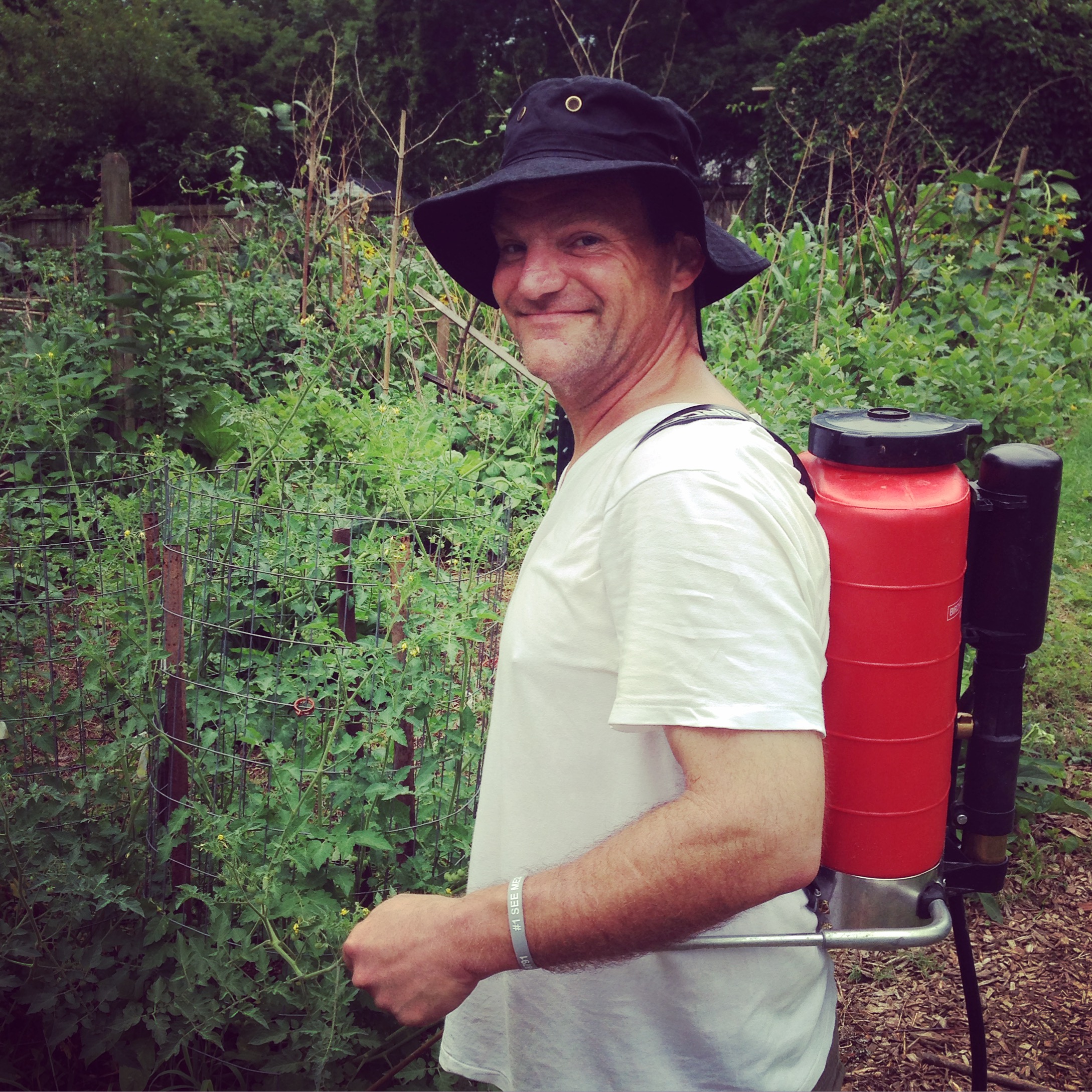
He sprayed tomato plants with an organic fertilizer made from comfrey (the broad left plant below), which grows well with stinging nettle and blueberry plants.

Also at the garden, Deanna Kendall, a teacher at St. Cecilia Academy, brought a group from the school’s service camp. Each day the women visit a different organization.

“They get some pretty diverse experience," she said, "and hopefully they find a place to plug in.”
World Refugee Day Celebrate with Art and a Potluck
Potlucks make the best parties for their diversity of flavors. They give us an opportunity to share a bit about ourselves while learning about others through food. A few weeks ago, a collaboration and art project for World Refugee Day included such a meal…
Potlucks make the best parties for their diversity of flavors. They give us an opportunity to share a bit about ourselves while learning about others through food.
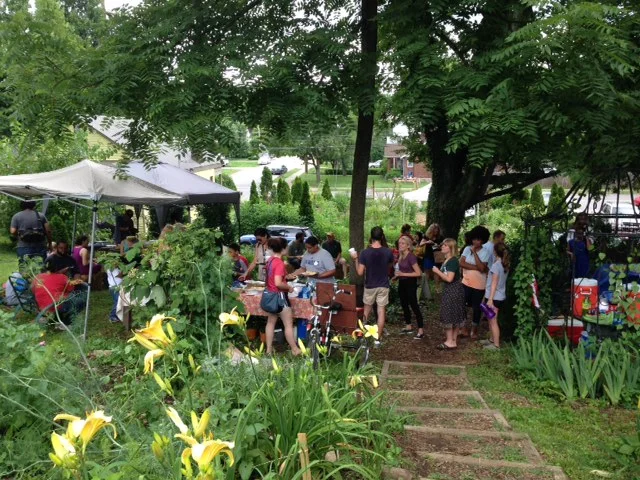
A few weeks ago, a collaboration and art project for World Refugee Day included such a meal. The Nashville Food Project joined friends from the Frist Center for the Visual Arts, the Center for Refugees and Immigrants of Tennessee, Oasis Center and members of their International Teen Outreach Program, Bhutanese gardeners and neighborhood gardeners at the Wedgewood Urban Garden.
"I just loved sharing a meal with all these people who came together around growing food, volunteerism, making art and celebrating World Refugee Day," said TNFP Garden Manager Christina Bentrup. " There were people and foods from both around the world and from different neighborhoods around Nashville, It was a multi-ethnic, multi-lingual, multi-generational group of folks celebrating community and diversity. It doesn't get much better than that."
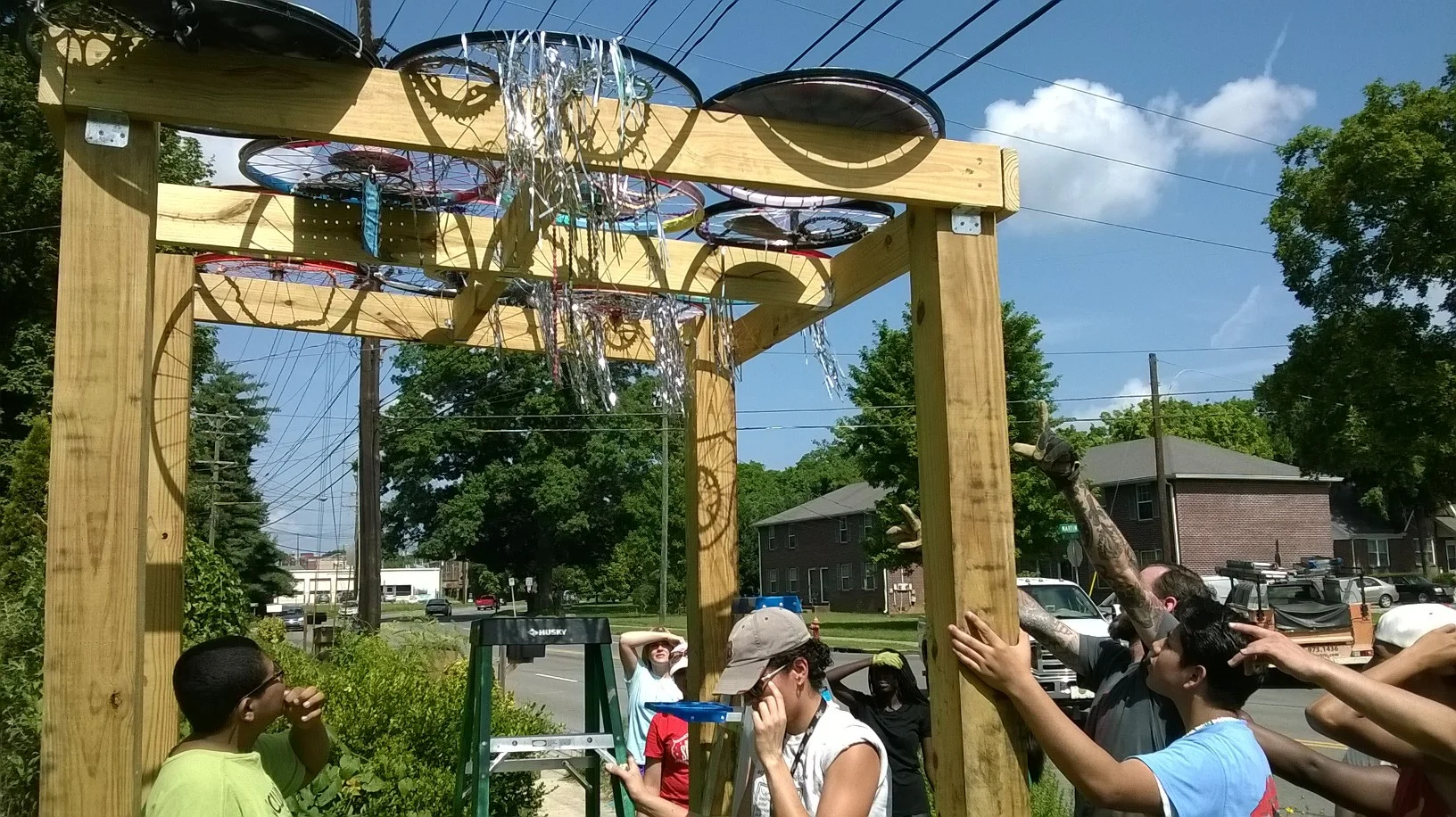
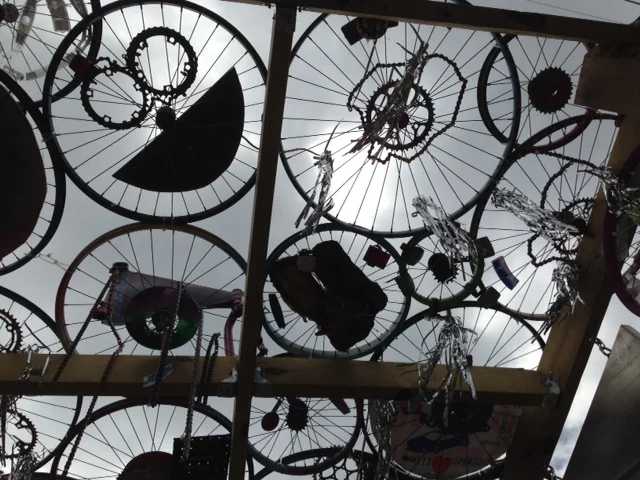
The group also turned recycled bicycle parts into art for the garden.
Squash Casserole
Meals Manager Anne Sale shared this recipe from the potluck making good use of summer squash. Recipe by Robyn Stone of Add a Pinch
Makes 12 servings
- 2 tablespoons butter
- 4 cups sliced yellow squash
- 1 medium onion, chopped
- 2 eggs
- 1 cup grated cheddar cheese
- 1 cup milk
- 2 tablespoons butter
- ¼ teaspoon cayenne pepper (optional)
- ½ teaspoon salt
- ½ teaspoon ground black pepper
- 1 sleeve Ritz crackers
Directions
- Preheat oven to 350º F.
- Melt 2 tablespoons butter in medium skillet or saute pan over medium-low heat. Add squash and onions and cook until tender.
- To a large bowl, add eggs and lightly whisk. Add cheese and milk and whisk into egg until well-combined. Add cooked squash and onions to egg mixture and stir well to combined. Melt remaining 2 tablespoons butter in skillet used to cook squash and onions. Add to squash casserole mixture. Add cayenne pepper, if using, along with salt and pepper. Stir well to combine.
- Spray a 9x13 casserole dish with cooking spray and pour squash casserole mixture into the baking dish. Top evenly with crushed Ritz crackers. Place in preheated oven and bake 45 minutes, or until top has lightly browned and casserole does not "jiggle" when the dish is moved.
- Allow to sit for about 3 minutes before serving.
Also! Be sure to check out the Frist Center's video documenting World Refugee Day and the art project:
TNFP Welcomes Darrius Hall as Meals Assistant
Nashville native Darrius Hall is an entrepreneur who doesn't mind getting his hands dirty. Joining The Nashville Food Project as Meals Assistant, he gleans food on local farms and works in the kitchen to keep track of donations and meal prep for delivery.
Darrius also put his business degree to good use by founding his company Creative Curren$y. He works to provide essential living needs and empowerment to those in his community near the McGruder garden.
"I have dedicated my time, business, and it's resources, to nurturing melanin-based communities and those similar to it," he said. "When I do find time to myself, I like to indulge in books, painting, music and gardening."