
The Nashville Food Project’s Blog




Food Crosses Cultural Boundaries
It’s a warm day in early October at the Nashville Farmer’s Market, I’m sitting at our table, assisting customers and rearranging the produce as the hours pass. The crowd has just picked up, and I observe some curious onlookers eye the assortment of unique vegetables on our table: from spikey bitter gourds to long, curling beans…

It’s a warm day in early October at the Nashville Farmer’s Market, I’m sitting at our table, assisting customers and rearranging the produce as the hours pass. The crowd has just picked up, and I observe some curious onlookers eye the assortment of unique vegetables on our table: from spikey bitter gourds to long, curling beans.
It’s just Thomas Piang and me; Thomas is a farmer originally from Myanmar working in the Growing Together program. We’ve so far spent our time talking about Burma/Myanmar in between helping customers. I curiously ask him about spiritual practices and the environment of his home country, he tells me briefly about the unrest in Burma/Myanmar, touching on military rule and government dysfunction.

We break in conversation as an enthusiastic regular customer approaches our table. Smiling, he shakes Thomas’ hand and looks at our selection before deciding on a bunch of red yardlong beans and bag of arugula. He turns back to Thomas, “So, you’re from Burma, right?” he pauses and looks down, “Ah, I’m so sorry! I meant Myanmar.” Thomas smiles and nods and the two engage in a short conversation. A few minutes later, the customer gathers his things and says goodbye to Thomas, “Well, so glad to see you. Again, thanks for everything”.
Thomas’ story of coming to America, although personally unique, reflects circumstances similar to those of our other farmers. As a program, we predominately work with individuals originally from Bhutan, Burma/Myanmar, and the Democratic Republic of the Congo, countries with histories of civil unrest and ethnic or religious persecution. Although all of the farmers we work with represent unique ethnic and cultural communities, they all share an agrarian background and passion for growing food. However, access to land and resources in an urban area with many neighborhoods relegated as “food deserts” can prove be difficult.

This is where Growing Together comes into the picture. It is our goal to not only provide technical assistance by offering land and tools for the families we work with, but also to help foster community and ultimately promote food sovereignty in those communities.
Food is culturally universal, and the ability to grow one’s food, and have access to items that are culturally relevant is of incredible importance. Having access to familiar produce can not only help to maintain the strength of cultural communities, especially to those engaged in the ongoing process of resettling in a new country, but it also invites others to learn more about people or cuisine they deem unfamiliar.


I realize now that the interaction between Thomas and the customer at the market was more than just a conversation. Rather, it was a metaphor for what we hope is born out of the Growing Together program: the building of community both within and outside of cultural boundaries. Food is more often than not the catalyst for these interactions, and, in my opinion, nothing breaks the ice better than discussing how to cook komatsuna.
This article was written by Krysten Cherkaski. Krysten has been with the Nashville Food Project since August 2016 supporting the Growing Together Program. She comes to us from Fresno, California and is currently a Belle H. Bennett fellow with the Scarritt Bennett Center.
Best If Used: SAVE THE FOOD
Earlier this month, The Nashville Food Project was invited to participate in an exciting event with state and local partners, including the Nashville Farmers’ Market, the Tennessee Department of Environment and Conservation (TDEC) and Metro Nashville Public Works, among others.

Earlier this month, The Nashville Food Project was invited to participate in an exciting event with state and local partners, including the Nashville Farmers’ Market, the Tennessee Department of Environment and Conservation (TDEC) and Metro Nashville Public Works, among others.

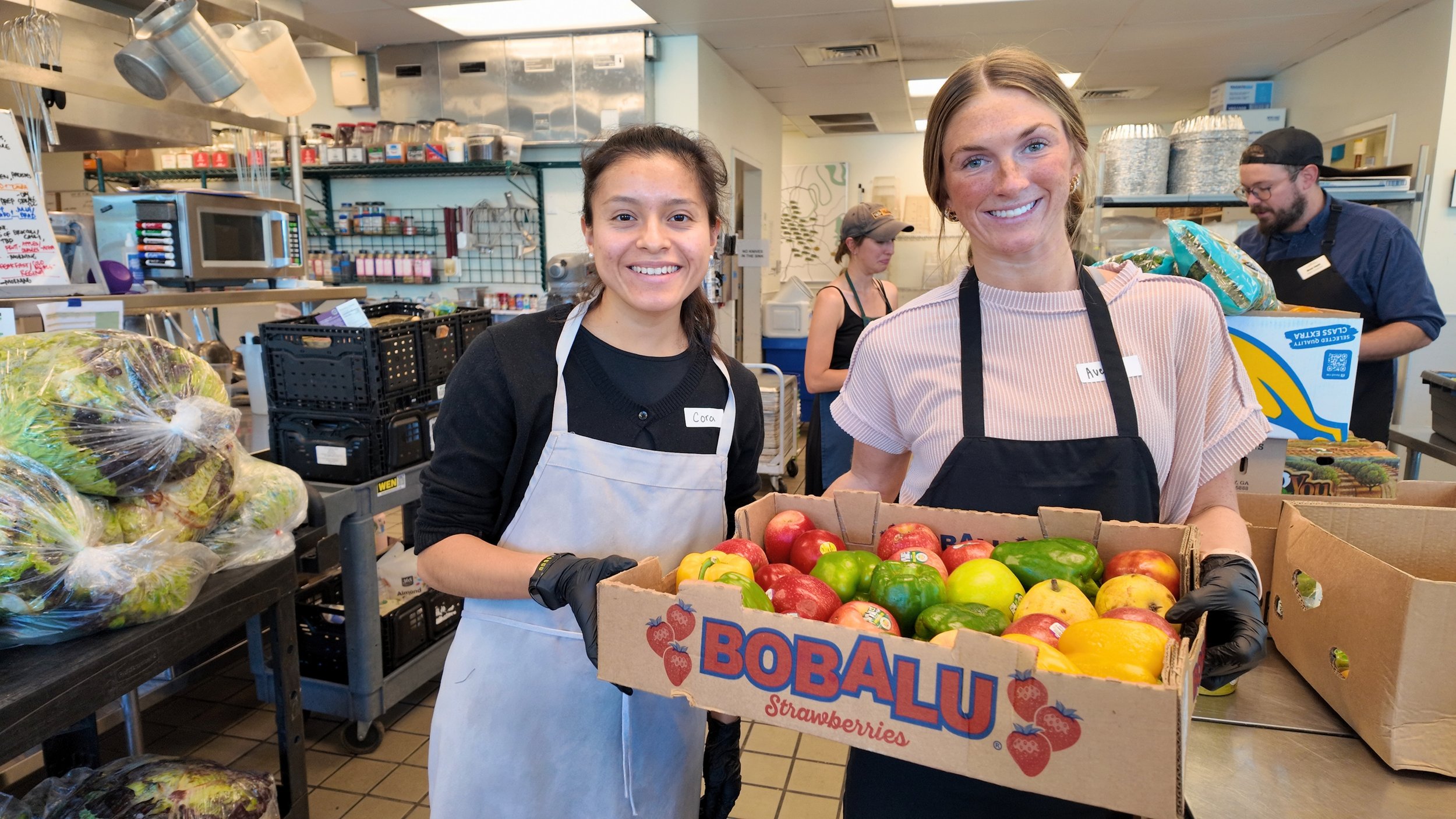
The event, called “Save the Food,” included a screening of the 2014 documentary “Just Eat It,” a funny, entertaining look into food waste at various points in the food system, from farm, production, and retail, all the way to the home fridge. The film was accompanied by a delicious meal prepared by our innovative Meals Team. The dinner we served—a vegetarian chili with all the fixings—was made with rescued food, including an apple ginger tea, made by steeping apple peels and ginger in hot water.

The event was part of a larger effort to reduce food waste in Nashville, led by the Natural Resources Defense Council (NRDC). To learn more about how to reduce food waste in Nashville and across our country, please visit www.savethefood.com.