
The Nashville Food Project’s Blog




Lake Days, Tomatoes, and Fueling Fun with Jackson®
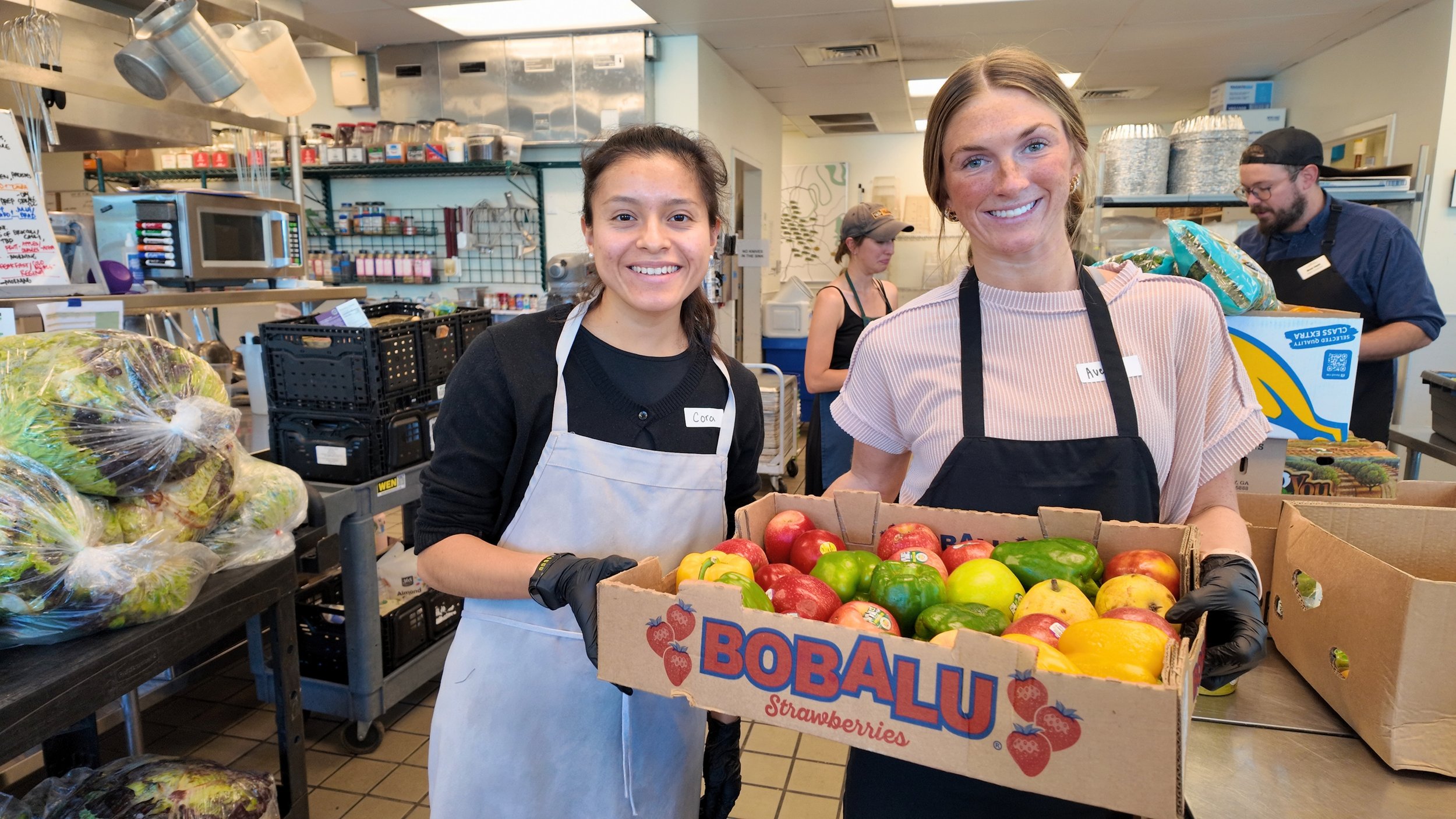
Our food access partner Water Walkers has a mission of tearing down the boundaries between urban youth and outdoor adventure — and in the summer, that mission takes them straight to the lake. But what’s a boat day without a picnic? Thanks to Sweet Peas Summer Eats for Kids, sponsored by Jackson National Life Insurance Company (Jackson®), Water Walkers can count on daily deliveries of made-from-scratch meals that keep these young bodies nourished and able to learn, grow and play while on the water.
For many of us, thoughts of summer take us straight to the water. The unrelenting Tennessee heat begs for long afternoons on the lake, wakesurfing behind a boat or swimming with friends. Water Walkers, a local organization focused on empowering young people through outdoor adventure, creates equitable opportunities for many youth in Nashville to enjoy these formative summer experiences.

Founded in 2016, Water Walkers was born from the idea that there should be no boundaries between under-resourced urban communities and the transformative power of outdoor adventure. Their programming runs year-round to offer adventures like hiking, biking, rock climbing, zip lining and more, but during the summer, they spend every day they can on their double-decker pontoon boat, enjoying water activities.

But what’s a boat day without a picnic? Thanks to Sweet Peas Summer Eats for Kids, sponsored by Jackson National Life Insurance Company (Jackson®), Water Walkers can count on daily deliveries of made-from-scratch meals that keep these young bodies nourished and able to learn, grow and play while on the water. This summer, we’re sharing about 200 meals each week with this innovative organization — and they are just one of many stops that connect youth with nutritious food on our morning distribution routes.

This summer, organizations geared toward daytime programming for children comprise about a quarter of our food access partnerships. Earlier this year, a Vanderbilt Child Health poll reported that of Tennessee families with children, over 40% report food insecurity — with that number climbing even higher for families of color. While Metro Nashville Public Schools provides free lunches to students during the school year, Jackson’s sponsorship helps us fill a major gap in food access for many children during the summer months. By the end of this summer, we will have shared about 100,000 summer meals and snacks with children through Sweet Peas thanks to support from Jackson over the last six consecutive years.
It’s a priority to us to ensure that these youth are eating the best of what summer has to offer, too. Thanks to local farms who consistently share their excess with us, meals this summer have been chock-full of seasonal produce like tomatoes, peppers, summer squash and greens. Food access challenges in urban areas mean that what’s readily available and affordable often are not the healthiest choices. For these active kids, it’s important that their diets are providing nutrients that keep them energized. This summer, we’ve been sneaking fresh veggies into approachable lunch options like chicken tacos and pizza bagels to hit all the food groups, and — just as importantly — to serve meals that kids are actually excited to eat.

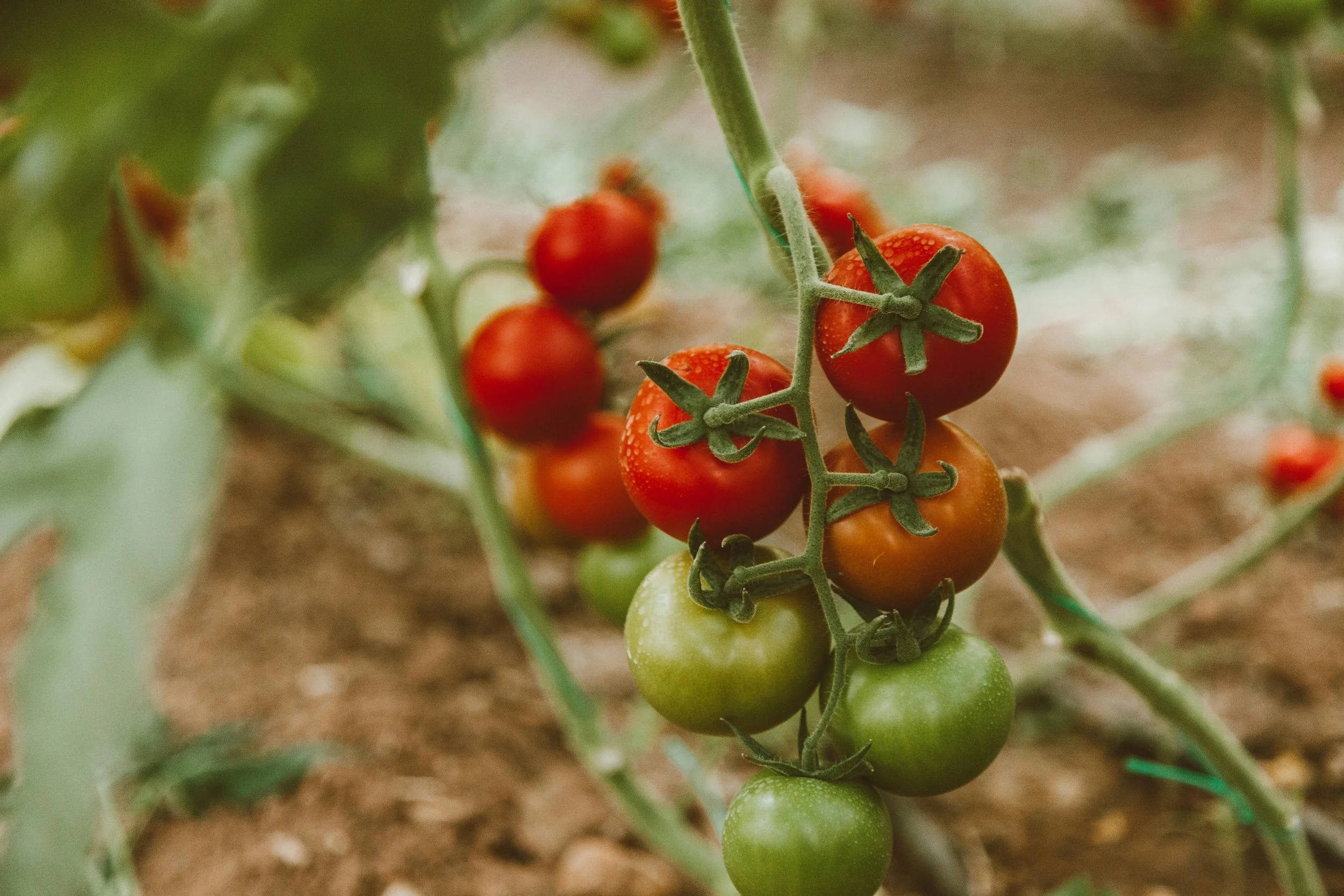
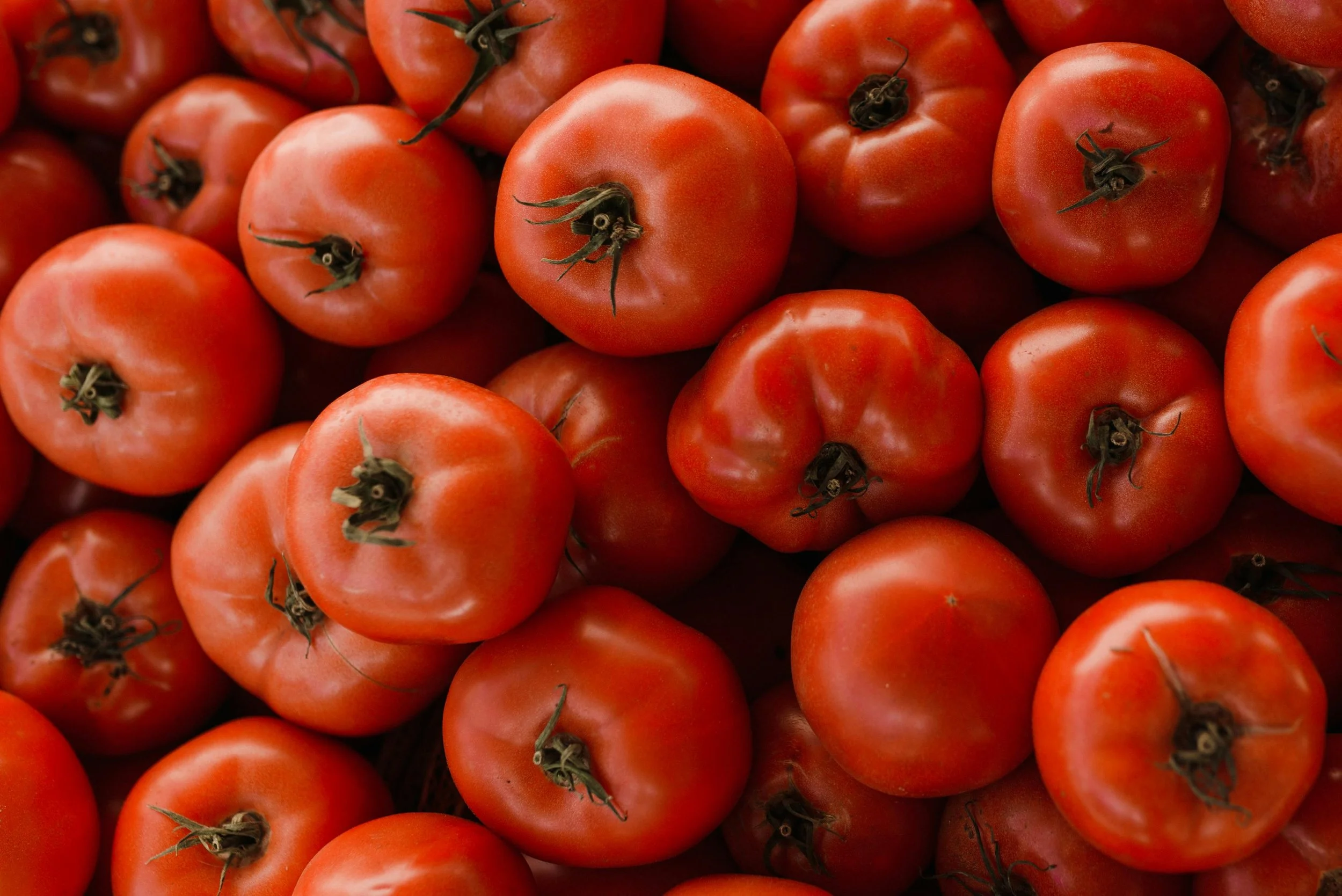
We have been fielding a plethora of tomatoes since summer started, coming in from all sides; beautiful cherry tomatoes, slicers and sauce tomatoes from farms like Sweeter Days and Maypop Farmstead, and tons donated from our grocery store partnerships as well.
The kitchens have been putting them to good use! We have made tomato curries, cucumber tomato salads, red enchilada sauce, and of course, marinara.
Check out our from-scratch recipe below, featured on this summer’s pizza bagels!

TNFP Marinara
Ingredients:
6-10 whole tomatoes, dependent on size, cored and halved.
Garlic cloves, crushed
Tomato paste, couple tablespoons
Bell pepper, onion, carrots and celery; cup of each, diced
Water or vegetable stock
Italian seasoning, salt and pepper; to taste
Fresh basil, to taste
Red wine vinegar or lemon juice, to taste
Method:
Sauté, in butter or oil (or both!) the onion, bell pepper, carrots and celery until they begin to soften. Toss in the crushed garlic cloves, sauté for a few more minutes.
Add in the tomato paste, season with salt and pepper. Add in the tomatoes, cooking until they begin to release their water. Top off with water or vegetable stock, season with more salt and pepper (we always season as we go!).
Bring to a boil and then cut down, simmering until the sauce thickens. Throw in Italian seasoning and basil. Immersion blend, then let simmer for 10 more minutes.
Taste for salt and pepper; if it needs some brightness, add a little vinegar or lemon juice to taste!
FeedBack Nashville: Community Listening
FeedBack Nashville (FBN) spent the month of June hosting a series of Community Listening Sessions to understand how people are experiencing food in Nashville and get feedback on the findings of the FeedBack Nashville food system survey: a city-wide survey that received more than 600 responses. FBN partnered with Network for Sustainable Solutions to meet with community members throughout Nashville to share the initial themes from our city-wide survey, and receive community members’ feedback and suggestions on preliminary findings.

FeedBack Nashville (FBN) spent the month of June hosting a series of Community Listening Sessions to understand how people are experiencing food in Nashville and get feedback on the findings of the FeedBack Nashville food system survey: a city-wide survey that received more than 600 responses.
FBN partnered with Network for Sustainable Solutions to meet with community members throughout Nashville to share the initial themes from our city-wide survey, and receive community members’ feedback and suggestions on preliminary findings. In addition to multiple virtual sessions, several FeedBack Nashville Steering Committee members’ hosted in person events at their organizations, including the Tennessee Justice Center, Urban Housing Solutions, and Healing Minds and Souls. These events enabled FBN to tap into the community knowledge present throughout these networks.

At each community listening session, community members were asked to share their perspectives and responses to two key stories and themes that emerged from synthesizing survey responses. One story, “The Story of Two Nashvilles,” highlights stark differences between two different Nashvilles. In one Nashville, people have access to plentiful, fresh, local, and delicious food. In this Nashville people own cars and can drive to grocery stores, farmers’ markets, and diverse restaurants that are abundant near their homes. In the other Nashville, almost everything about food is hard. There aren't many places close to people’s homes to buy food, especially if they don’t have a car. To get food in these parts of the city, community members often have to drive far, walk, or take public transportation, which is limited. In this Nashville, people also sometimes go hungry, and they are less likely to easily find and afford foods that match with their culture and background.
The second story, “Community Powered Food,” showcases our community’s vision for a better food future for our city, one that is defined by community agriculture, abundant and accessible local produce, limited food waste, and food accessibility and affordability for all. The story posits that this future is made possible by the 2024 Nashville residents, residents who banded together, determined to take action now to work towards a better future. The work did not happen overnight or through some perfect process; it happened through people building affordable housing that prioritized community gardens and proximity to farmers’ markets, through health care systems recognizing the importance of food as medicine and helping people access culturally relevant foods, and through everyday conversations with friends and neighbors. Understanding both what separates and what connects these two Nashvilles and how we move forward together towards our community’s vision of “community powered food” is a vital part of working together as a community to bring forth a better food future for all Nashville residents.
These sessions were filled with delicious refreshments, fruitful conversations, and poignant insights on how FeedBack Nashville’s work should move forward. Community members shared that the story of “two Nashvilles” feels accurate to them, but they also want to highlight that this division was built intentionally, that there has been a systemic prioritization of some communities and interests at the expense of others. They also shared that, because of Nashville’s explosive growth, economic and climate related volatility, and a growing number of motivated community members, the time to take substantive action towards a better food future is now.


The feedback gained at these listening sessions is now being used to identify and design a series of transformational actions our community can take in the coming years to build the future we're envisioning together.
The Role of Public Transportation in Food Accessibility: Part One
To combat food insecurity among low-income, low-access households without vehicle ownership, the availability of public transportation is paramount. The increased mobility that often comes with efficient, reliable public transportation may affect the accessibility of fresh fruits and vegetables in three ways: increased affordability, increased variety, and elevated quality. Director of Food Access Tera Ashley explores how food access and transportation are related in the first installment of this three-part series.
By Tera Ashley, Director of Food Access

The USDA’s published report “Low-Income and Low-Supermarket-Access Census Tracts,” revealed in 2017 that nearly 39.5 million U.S. residents lived in areas defined as both low-income and having low supermarket access. These regions can be referred to as LILA (low-income, low-access) areas, but they are most commonly known as “food deserts,” a term coined in the 1990s to define locations in the United Kingdom with low supermarket access. Though the definition of the term has varied since its conception, the most widely used one comes from the USDA: “An area with limited access to affordable and nutritious food, particularly such an area composed of predominantly lower income neighborhoods and communities.”
The USDA uses even more specific parameters to define food deserts in urban settings: “low-income census tracts (tracts with a poverty rate of 20% or greater) where a significant number of people (at least 500) or share of the population (at least 33%) live greater than one mile from the nearest supermarket, super center, or large grocery store.” It is important to note that, in measuring food accessibility of vehicle-less urban households, the distance indicator lowers from 1 mile to 0.5 mile from a supermarket.

In more recent years, the term “food swamp” was invented to describe areas in which options for unhealthy food abound (such as convenience stores or fast food purveyors), all the while healthy food options continue to have restricted access. As time progresses, the term food swamp may come to be more commonplace than its predecessor. Jonatan Fielding and Paul Simon hint at this in their article, Food Deserts or Food Swamps?, “In many disadvantaged communities, the food environment is more swamp than desert, with a plethora of fast food; convenience stores selling calorie-dense packaged foods, super-sized sodas, and other sugar-loaded beverages; and other non-food retail venues selling junk food as a side activity.” It should come as no surprise, then, that in addition to the typical hurdles that a low-income resident may face, studies have linked residing in food deserts and food swamps with disproportionately high rates of obesity and diet-related chronic diseases. It is important to note here that “healthy food” can, at times, be subjective. To avoid confusion, studies often measure the availability of fresh fruit and vegetables to gauge food security in LILA areas.
It may be tempting to search for a silver bullet of sorts to solve the issue of low access to fresh fruit and vegetables in food deserts and food swamps, such as building a new grocery store in a LILA area. However, a “solution” of that nature would require there to exist only a single cause to an area having low access — proximity — when, in fact, there are several interconnected contributing factors to low access. Indeed, factors of proximity, food quality, food affordability, systemic racism, and access to efficient, reliable public transportation all converge to create food deserts and food swamps. It is the latter, access to efficient, reliable public transportation, that will serve as the focal point of this three-part series.
The Importance of Public Transportation

Although it is estimated that over 89 percent of U.S. households own vehicles, households with lower incomes are more likely to not own a vehicle. Financial challenges, including the cost of the car itself, along with maintenance and repairs, insurance premiums, and fluctuating fuel costs can be prohibitive for low-income households. Other factors, such as mental or physical disabilities, and even drivers’ license exams not offered in a resident’s native language could also contribute to a lack of a household vehicle or the inability to drive. Whatever the contributing factor(s) for not owning a vehicle, the number of low-income tracts with a significant number of households that do not own a vehicle and live more than 0.5 mile from a supermarket experienced a four percent increase between 2010 and 2015.
Not having access to a vehicle can have a negative impact on a LILA resident’s ability to access fresh fruits and vegetables. As found in Stuart Strome’s study, Elements of Access: The Effects of Food Outlet Proximity, Transportation, and Realized Access on Fresh Fruit and Vegetable Consumption in Food Deserts, “respondents who did not use their own car to buy fresh fruits and vegetables and were from food insecure households were only about 40% as likely to consume fresh fruits and vegetables as other respondents.” To combat food insecurity among LILA households without vehicle ownership, the availability of public transportation is paramount. The increased mobility that often comes with efficient, reliable public transportation may affect the accessibility of fresh fruits and vegetables in three ways: increased affordability, increased variety, and elevated quality. We will explore all of these ways in part two of this series.
Food For The Heart — And Soul — In North Nashville
We already know the vital role that food plays in health. But how does that affect communities where the most easily accessible foods are processed and plastic-wrapped items in corner stores? For patients at Matthew Walker Comprehensive Health Center in North Nashville, which has historically been a food desert, uncontrolled hypertension is a direct consequence of this issue.

We already know the vital role that food plays in health. But how does that affect communities where the most easily accessible foods are processed and plastic-wrapped items in corner stores? For patients at Matthew Walker Comprehensive Health Center in North Nashville, which has historically been a food desert, uncontrolled hypertension is a direct consequence of this issue.
Hypertension, or high blood pressure, affects a significant portion of Nashville’s population that is especially concentrated in North Nashville. Left unmanaged, it can lead to serious health complications such as heart disease, stroke, and kidney failure. For many in underserved communities, access to healthy food isn’t the only factor to this condition presenting or worsening — transportation, healthcare, and other socio-economic barriers make this population more at-risk for developing hypertension and more challenging to treat.

In response, the Nashville Wellness Collaborative launched Heart of Nashville, a two-year pilot program designed to improve health outcomes in North Nashville, this February. The large swath of organizations that make up the Collaborative — from policymakers to healthcare professionals to higher ed institutions to community-building nonprofits — has been working ever since to pair clinical care with wellness support services that help North Nashville residents overcome systemic obstacles.
“By uniting our resources and expertise … we’re increasing our capacity to combat systemic health disparities and we’re closer to a future where every Nashville resident, regardless of zip code, has equitable access to quality health care,” said Mayor Freddie O’Connell at the launch.
In tandem with medical interventions, the Heart of Nashville initiative recognizes the pivotal role of nutrition in managing hypertension. That’s where The Nashville Food Project comes in. We play a crucial part by providing nutritious, heart-healthy meals to complement medical treatments. Through our commitment to nourishing meals and community well-being, we’re working not only to provide nourishing meals alongside wraparound care, but also to educate individuals on making sustainable, health-conscious food choices.
“With this particular partner, we have rebranded our heart-healthy meals into heart-healthy soul food. We’re trying to show them some easier, low-fat and low-salt versions of the foods they grew up eating, foods that bring them comfort,” said Bianca Morton, Chief Culinary Officer at The Nashville Food Project. We’ve found that these patients are much more receptive to taking a meal after a clinic day when it’s something that they recognize.”

In recent months, meals included shrimp and sausage gumbo, a sweet potato-carrot puree, and a healthier breaded alternative to fried chicken.

Education is also an important component for making sure these lifestyle changes stick. Recently, Matthew Walker hosted a Diabetic Dial Down to provide education for diabetes patients. Bianca presented at the event to a group of 15 women, many of whom are hypertension patients, who signed up to learn how to make healthier choices in their food preparation, including a food demonstration where they got to taste the food. This touchpoint made these patients excited, not hesitant, to take two or three meals home with them as part of their clinical treatment plan.

By integrating these meals into the initiative, participants gain not only access to wholesome food but also the knowledge and skills needed to maintain a heart-healthy diet, ultimately enhancing their overall health outcomes. This holistic approach underscores the transformative power of food as medicine and reinforces the collaborative spirit of the Heart of Nashville initiative in creating a healthier, more vibrant community.
The Heart of Nashville Initiative
At the heart of this collaboration lies a shared dedication to improving health equity. Together, we aim to:
Increase Awareness: Educating residents about hypertension, its risks, and the importance of regular screenings.
Expand Access: Bringing healthcare services directly into communities through mobile clinics and outreach programs.
Empower Patients: Providing resources and support to help individuals manage their hypertension effectively, including lifestyle changes and medication adherence.
Through their concerted efforts, the Heart of Nashville initiative has already begun to show promising results. By empowering individuals with knowledge and access to wraparound care, more patients are on the road to better heart health for themselves and their families.
Matthew Walker Comprehensive Health Center, a cornerstone of community healthcare in Nashville for over 50 years, brings its expertise and commitment to serving diverse populations. Through its clinics and outreach programs, Matthew Walker provides accessible healthcare services, including screenings and treatment for hypertension, ensuring that individuals receive the care they need close to home.
NashvilleHealth, the city’s leading public health initiative, partners with local organizations to address health disparities and promote well-being across all neighborhoods. By focusing on preventive care and community engagement, NashvilleHealth works to create a healthier city where every resident has the opportunity to thrive.
The Nashville Wellness Collaborative includes:
NashvilleHealth
Matthew Walker Comprehensive Health Center
The Nashville Food Project
Belmont Data Collaborative
Meharry Medical College
Sycamore Institute
Urban League of Middle Tennessee
Center for Nonprofit Management
Transit Alliance of Middle Tennessee
Juice Analytics
STARS
American Heart Association
Senior Ride Nashville
AgeWell Middle Tennessee
Raphah Institute
Metro Parks Nashville
The Housing Fund
Metro Public Health Department
Second Harvest Food Bank
Cafe Collaboration with The City Juicery
Last December, Kayla Hall wandered into The Nashville Food Project at the same time as over a hundred other Nashvillians to celebrate the launch of FeedBack Nashville, a citywide initiative to evaluate and reimagine the local food system. It was her first time in the building, and although the main room was packed to the brim, she had a vision for what the space could be. So she asked to see the kitchen.

Last December, Kayla Hall wandered into The Nashville Food Project at the same time as over a hundred other Nashvillians to celebrate the launch of FeedBack Nashville, a citywide initiative to evaluate and reimagine the local food system. It was her first time in the building, and although the main room was packed to the brim, she had a vision for what the space could be. So she asked to see the kitchen.
For the last four years, Kayla has been making her own cold-pressed juices. Her journey with juicing began as a solution to a personal health problem — the vitamins, minerals, antioxidants and electrolytes in ginger shots and green juices restored her energy, improved her sleep, and made her feel all-around better than any other health remedies she had tried. Once the habit stuck, it changed her life. And as she shared the healing she had found in juicing with friends and family, she realized it could change the lives of others, too. That’s how The City Juicery, Kayla’s cold-pressed juice business, was born.


Kayla rented prep space at Citizen Kitchens, a local food business incubator, and began selling her juice at local farmers markets. “We were hustling,” she remembers. “Sometimes we were selling at six markets a week, or even a couple of markets in a day.” She was doing it with intentionality, though — it was important to her to show up in every corner of the city. “I wanted to ensure that the juices were easily accessible in the community, so I made a point to go to where the people were,” she explains.
At its core, The City Juicery bridges the gap between nutritious choices and accessibility: a goal shared by The Nashville Food Project. That’s why when Bianca Morton, Chief Culinary Officer of the Food Project, and C.J. Sentell, CEO, met Kayla on that day in December, everyone’s gears started turning. They showed her around the space and learned about her business, and a few weeks later, they were sitting at a table with the leadership of Preston Taylor Ministries, who wanted to arrange a summer work readiness partnership for the high school students in their program. Together, they started dreaming.

When The Nashville Food Project’s headquarters was first built in 2018, it was always a part of the conversation that the building’s beautiful entry space, known affectionately as the Community Dining Room, might eventually function as a cafe. For years, it has served as home to pop-up restaurants (including Tailor), community dinners and celebrations, public conversation panels, and even baby and wedding showers. The goal was always the same: for the space to become a living, breathing example of our mission to bring people together.
So what if it could? The group drew up a pilot plan that leveraged Kayla’s hospitality expertise and product, the Food Project’s facility and catering chops, and Preston Taylor’s workforce development model. The students would work in the cafe under Kayla’s training to make and sell juices, which The Nashville Food Project would supplement with healthy snacks and light lunches. Even better, The City Juicery would have access to the Food Project’s daily donation and procurement drops, which regularly include ready-to-use fruits and vegetables, for their juice production. It was a win-win for everyone.
This June, the vision came to life as a team of students began a few weeks of training before the cafe’s grand opening. Having taught in MNPS for ten years before opening her business, Kayla was well-equipped to show these students the ropes — but she knew that any successful business had to begin with building relationships.

Students with a mentor from Preston Taylor Ministries on the cafe’s opening day.
“The most important thing to me right off the bat was getting to know the kids,” she explains. “I knew that if I was able to understand their learning goals beyond The City Juicery, we could build on those goals to make their work here feel more meaningful.”
Next, Kayla began an intensive training on fruits and vegetables with the students. “Nobody thinks they need it, but then I start with asking them whether a tomato is a fruit or a vegetable,” she laughs. “That got all of them.”
Tomatoes were just the beginning. Kayla is intimately familiar with the ways that specific foods can solve different health challenges, and in her eyes, that was the most important knowledge to share. She wanted the students to be able to make recommendations to customers who came in with questions about anything from cramping to gut health. She also taught them about how produce changes depending on how you work with it — for example, how bananas become sweeter as they brown or how you should turn pineapples upside down two days before you juice them to extract more liquid. All of these factors affect the flavors of smoothies and juices.

The students were fast learners, and now, they make City Juicery specialties like smoothies and lemonades by themselves. They also open and close the shop, do all the prep work, and sort through the produce — 40% of which is sourced from the Food Project’s excess. When opening day came around, on June 14, the cafe had over 100 guests!

Learning and growing with Kayla and her team of students has been a blast so far — not to mention their smoothies and juices are delicious! It feels great to have our community space full of life. Our hope is that this cafe creates even more opportunities for us to bring people together around tables, over food, and have this space transformed into one that offers hospitality, connection and nourishment.
The City Juicery is open Monday through Friday from 7 a.m. to 6 p.m. inside The Nashville Food Project’s headquarters in the Nations, located at 5904 California Avenue. We have a variety of juices, smoothies, hot and cold sandwiches, salads, fruits, and more available. Come say hi while the Preston Taylor students are here until July 19!
Bringing Fresh Produce to Cosecha, Woodbine's Hyper-Local Market
Every Wednesday during the summer months, a local grassroots organization gathers neighbors together on the front lawn of Woodbine United Methodist Church, which faces the neighborhood’s busy Nolensville Pike corridor. Cosecha Community Development's market thrives as a vibrant hub of community and commerce in South Nashville, hosting a small but mighty range of businesses and nonprofits as diverse as the Woodbine neighborhood’s own dynamic cultural landscape.

Every other Wednesday during the summer months, a local grassroots organization gathers neighbors together on the front lawn of Woodbine United Methodist Church, which faces the neighborhood’s busy Nolensville Pike corridor. Cosecha Community Development's market thrives as a vibrant hub of community and commerce in South Nashville, hosting a small but mighty range of businesses and nonprofits as diverse as the Woodbine neighborhood’s own dynamic cultural landscape.
At Cosecha's market, visitors are greeted by a patchwork of sights, sounds, and aromas that reflect the city's blend of cultural traditions. The savory scent of Guatemalan potatoes, or papas Guatemaltecas, wafts through the market as the vendors cook them made-to-order right in the tent. Patrons browse racks of brightly colored clothing and vibrant displays of handmade soaps. On a makeshift stage on the steps of the church, a pair of young musicians performs cover songs in English and Spanish.

From locally grown produce to handcrafted goods, each vendor contributes to a marketplace that celebrates authenticity and connection. There’s a familial energy in the air as curious neighborhood visitors mingle with growers, artists, and makers, building relationships that go beyond transactions. Children run across the lawn as people sit and eat together, and it truly feels like a gathering of old friends.

For the first time this summer, the market also includes a selection of fresh produce from Growing Together, an urban farm tucked on an acre of land just a few miles down the road from Cosecha. Growing Together is stewarded by The Nashville Food Project and provides marketing support, resources, and land for new American farmers who face barriers to access, as well as training for beginning farmers. The four farming families who hold plots there grew over 35,000 pounds of produce last year, moving their vegetables to tables across Nashville through an annual Community Supported Agriculture (CSA) program, regular sales to restaurant partners, and a community sharing model.
The Growing Together farmers each came to Nashville as immigrants or refugees, and many live in the Woodbine neighborhood. They have deep farming roots and, while they still produce familiar veggies like carrots, lettuces, tomatoes and potatoes, they also grow crops you won’t find in a chain grocery store, from long beans to bitter gourd to kohlrabi. Many of the crops they grow are reflective of their own cooking traditions, which stem from their Burmese and Bhutanese heritages.

For all of these farmers, barriers like language and transportation make selling at market very challenging, despite their agricultural knowledge and quality produce. This year, a pilot partnership is allowing the farmers to sell wholesale directly to Cosecha Community Development, who resells their produce at the market in an effort to mitigate those barriers. For this organization, which celebrates, connects and uplifts immigrant communities, this partnership is just another touchpoint for community-building. This season, The Nashville Food Project’s stand is the only place at the market to get fresh produce, providing an important source of local food to the neighborhood.


Beyond its role as a marketplace, Cosecha Community Development has woven itself into the fabric of Nashville's community by providing support and resources to budding entrepreneurs and underrepresented groups. Through workshops, mentorship programs, a language school and community gardens, Cosecha fosters community to build a healthier, more connected neighborhood where gathering together is a priority.
With a commitment to inclusivity and sustainability, Cosecha Community Development's market in Nashville exemplifies how grassroots efforts can uplift the unique identities that define a city. Cosecha's market beckons as a place where community, creativity, and commerce come together, and vendors share a piece of themselves.

Miss out on a CSA this year? Come get some Growing Together produce and see this great market for yourself every other Wednesday from 4 - 7 p.m. at 2621 Nolensville Pike!
Reggie's Urban Ag Day & Resilient Community
On May 11, we celebrated the second annual Reggie’s Urban Ag Day, hosted at the Community Farm at Mill Ridge. The event’s organizer and namesake, Reggie Marshall, convened a variety of peers, professionals, lenders, and local vendors including Pathway Lending, SUDA, NRCS, Farm Service Agency, Farm Credit, Zysis Garden, Reggie’s Veggies and his nonprofit venture, Reggie’s Helping Hands. The goal? To provide resources for aspirational farmers hoping to get their start in urban agriculture.

On May 11, we celebrated the second annual Reggie’s Urban Ag Day, hosted at the Community Farm at Mill Ridge. The event’s organizer and namesake, Reggie Marshall, convened a variety of peers, professionals, lenders, and local vendors including Pathway Lending, SUDA, NRCS, Farm Service Agency, Farm Credit, Zysis Garden, Reggie’s Veggies and his nonprofit venture, Reggie’s Helping Hands. The goal? To provide resources for aspirational farmers hoping to get their start in urban agriculture.

An expert in regenerative and sustainable agriculture, Reggie Marshall originally came from a farming family in West Tennessee and has been growing food for the majority of his life. His formal training was as a nurse, and eventually, he merged the two and Reggie’s Veggies set up shop at the Nashville Farmers Market as well as Ascension St. Thomas Midtown, where he piloted a “food as medicine” program. Patricia Tarquino, director of community agriculture at The Nashville Food Project, happened upon him there for the first time while she was pregnant and in the market for some some herbs. Some friendly conversation quickly revealed that his farm was in her neighborhood — and she stayed connected ever since.
With a dream of bringing healthy and nutritious foods to his community, Reggie launched Reggie’s Veggies in 2015 after graduating from TSU’s New Farmer Academy. He started out growing food in his container garden on a small amount of land in Antioch with a mission to practice sustainable agriculture and community stewardship.
Several years later, Patricia was a part of Whitsitt Elementary School’s PTO when they received a random donation of 600 5-gallon buckets. When she reached out to see if Reggie had a use for them, Reggie explained that he had, over the years, developed the soil on his property and was able to farm in-ground at that point, but offered to teach families at Whitsitt how to utilize the buckets to container garden. For him, it was an opportunity for another community touchpoint — something he valued deeply. By teaching others how to grow with the resources they had, he was building resilient community.
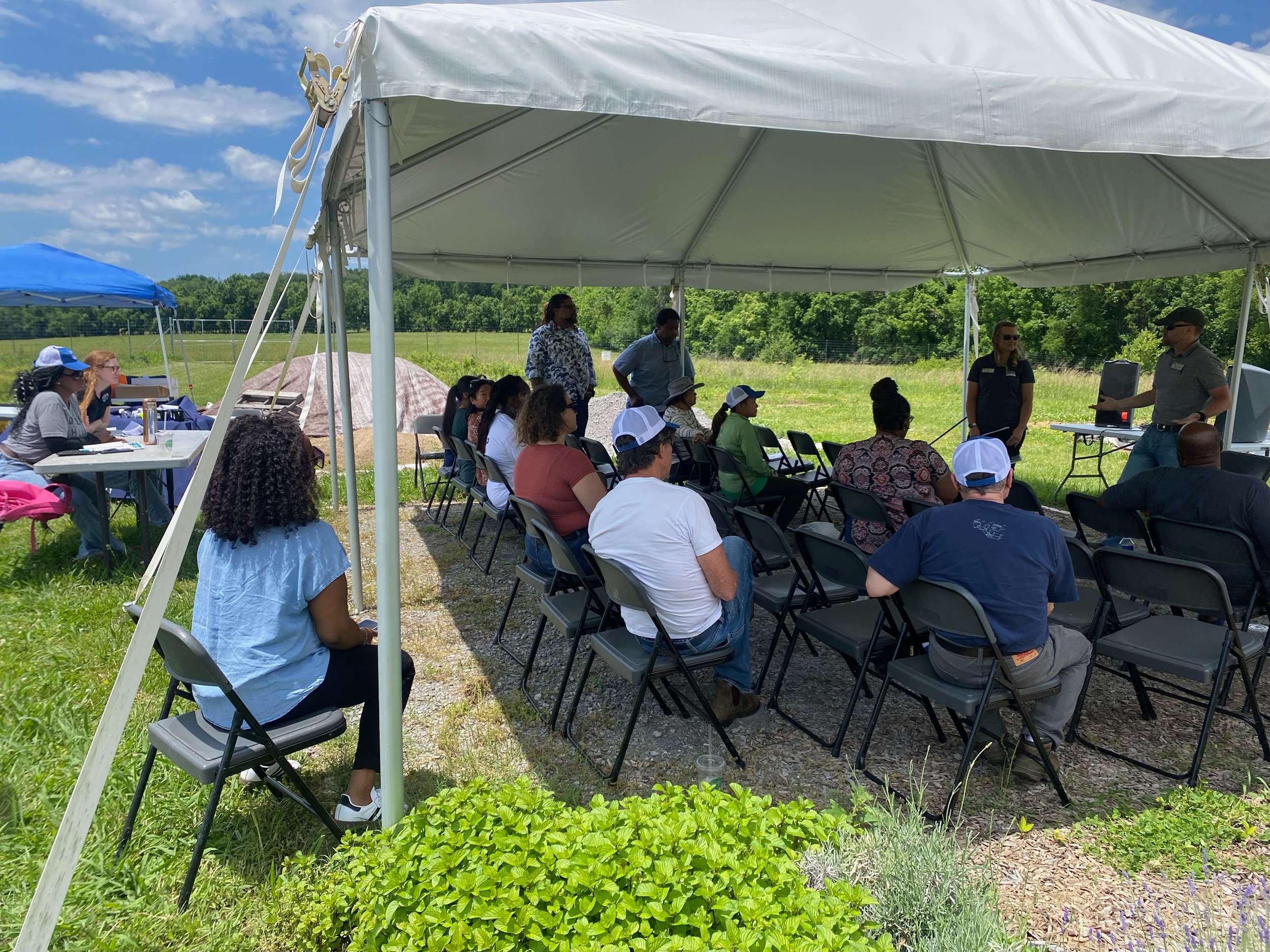
That’s what Reggie’s Urban Ag Day is all about, too. Reggie sits on multiple committees related to agriculture and food at both the state and national levels and is passionate about bringing people together to share knowledge and resources. Over the years, he has found that people of color specifically in urban areas lack access to land, resources that the government offers, etc. to get started farming on their own. Reggie’s Urban Ag Day sets out to change that, bringing together all parts of the bureaucratic system and a place where folks in Antioch, a majority BIPOC neighborhood, can have access to space to grow.
Culinary Training Rooted in Partnership
We all know the old adage: practice makes perfect. And when it comes to culinary education, there really is no better place to learn than the kitchen. A group of culinary training students experienced this first-hand recently during an 8-week pilot course co-facilitated by The Nashville Food Project, Catholic Charities, and GT Service, the workforce development arm of Slim & Husky’s.

We all know the old adage: practice makes perfect. And when it comes to culinary education, there really is no better place to learn than the kitchen.
A group of students experienced this first-hand recently during an 8-week pilot course co-facilitated by The Nashville Food Project, Catholic Charities, and GT Service, the workforce development arm of Slim & Husky’s. During these eight weeks, the cohort of 15 students received a comprehensive introduction to the culinary and hospitality world in fully operational, commercial kitchens at both Slim & Husky’s and The Nashville Food Project.

Under the guidance of our own Chef Bianca, students developed on-the-job skills, learning about cooking techniques like sauteing and marinating, knife handling and dexterity, and even recognizing commonly used herbs and spices and understanding how they influence the flavors of certain dishes. On classroom days, instructors from Catholic Charities taught soft skills and professional development. And as part of the program, each student earned a ServSafe certification: a gold standard in the world of food service.

On kitchen days at The Nashville Food Project, students spent afternoons chopping veggies, mixing sauces, and baking bread — much of which was served to nonprofits across the city through the Food Project’s food access partnerships. Students often helped our catering manager Josh prepare and plate individually served heart-healthy meals for our partnership with the Joe Beretta Foundation.
“I like that we are hands-on and able to work in the kitchen and cook,” reflected one student. “This experience helps me to have better safety and sanitation in the kitchen and better my cooking skills. I like how we can help make food for people who just had heart surgery — that made me happy and want to be here even more.”
The headquarters kitchen experience — which, if you’ve ever volunteered with us, you know is a unique one! — gave students a chance to see the impact of their work in action and connect with the Food Project’s revolving door of staff, volunteers, partners, farmers, and more. By interacting with a wide range of players in the food system, students were able to better understand the many steps it takes for food to end up on a plate.


This group of students came from a wide variety of backgrounds, enrolling through both Catholic Charities’ Culinary Training Academy and GT Service’s SNAP-EBT program. The diverse missions of these organizations were able to support students through other obstacles, like transportation and housing, while they were enrolled in the program. Program leaders also made sure that of all the barriers students faced, finances weren’t one of them: the course, which ended up being fully subsidized, also offered a weekly stipend to recognize the time commitment the students made to the program.
“This partnership has been truly transformational, allowing the students to have someone to support them through a number of barriers,” said Chef Bianca. “It was designed to address the systemic racism in food-insecure and underserved communities. This program was not just about teaching them hospitality — it was about giving them dignity, confidence, and a safe place to learn.”

The program culminated in a capstone lunch that students prepared and served to guests at The Nashville Food Project, and each of them received a brand new white chef’s coat for the occasion. As they placed colorful salads with from-scratch vinaigrettes on tables and filled glasses with homemade fruit tea, it was clear that they were excited to see it all come together. Staff from each of the involved organizations attended, sharing stories and explaining how the partnership had enriched their unique missions. But the highlight by far was a chance to hear from the students themselves after they had finished serving heaping plates of barbecue chicken, blanched green beans, and Boursin mac and cheese.

“If you liked the green beans, it was me who made them!” exclaimed one student as she watched everyone dig in to their plates.
One by one, students volunteered to share what they had enjoyed about the program and what they hoped to do next. While just a handful listed culinary school as their next step, many said that they had learned essential skills that they could apply to almost anything they wanted to do, and everyone said that they would be excited in the future to cook meals for their loved ones.

Here’s what students said about the program:
“I’ve been receiving employment, financial support, rides to work and more. This program is the only reason I’m not homeless.”
“The classroom and hands-on experience will help me to work in a commercial kitchen, and give me a heads up on what is expected of me on the job.”
“It’s special to mix different ingredients to form one unique dish and watch a person’s face light up as they taste a variety of sweet, salty, tangy or whatever dish you created, giving them the satisfaction of a full stomach and a taste bud makeover.”
“To be in this class not only means I get to better my culinary skills, but I’m being given the opportunity to learn a new form of art.”
“Being in this program gives me more career options and necessary life skills. The people in this program have been extremely supportive.”
“This culinary and apprenticeship class has supported me with a job at a restaurant called Slim & Husky’s. I love it there and plan to take what I can out of it. It has also put bread in my pocket, so I can pay bills on time and raise my credit.”

Partner Spotlight: Begin Anew
Begin Anew has been a fixture of the community for over 20 years, with a mission to empower individuals to overcome the obstacles caused by poverty through education, mentoring, and resources. They offer cost-free courses for adults who are learning English, pursuing their high school equivalency diploma, or seeking computer and job skills. Significantly, their campuses across Middle Tennessee — in Franklin, Madison, Woodbine and downtown Nashville — are tailored to the specific needs of the communities they are embedded in.
When you walk into the Church at Woodbine on a Tuesday night in May, you may open the door for a little girl smiling up at you, talking happily with her mother in Arabic. A step into the echoey church hallway and you’ll be greeted by more voices and a nervous excitement as people move in and out of rooms, chatting and holding clamshells full of food. The people in this building have come to take their final exams of the semester, and for a handful, a cap-and-gown graduation ceremony is right around the corner. As the adult learners shuffle into their classes, children run down the hallway together, excited by the promise of a craft night.
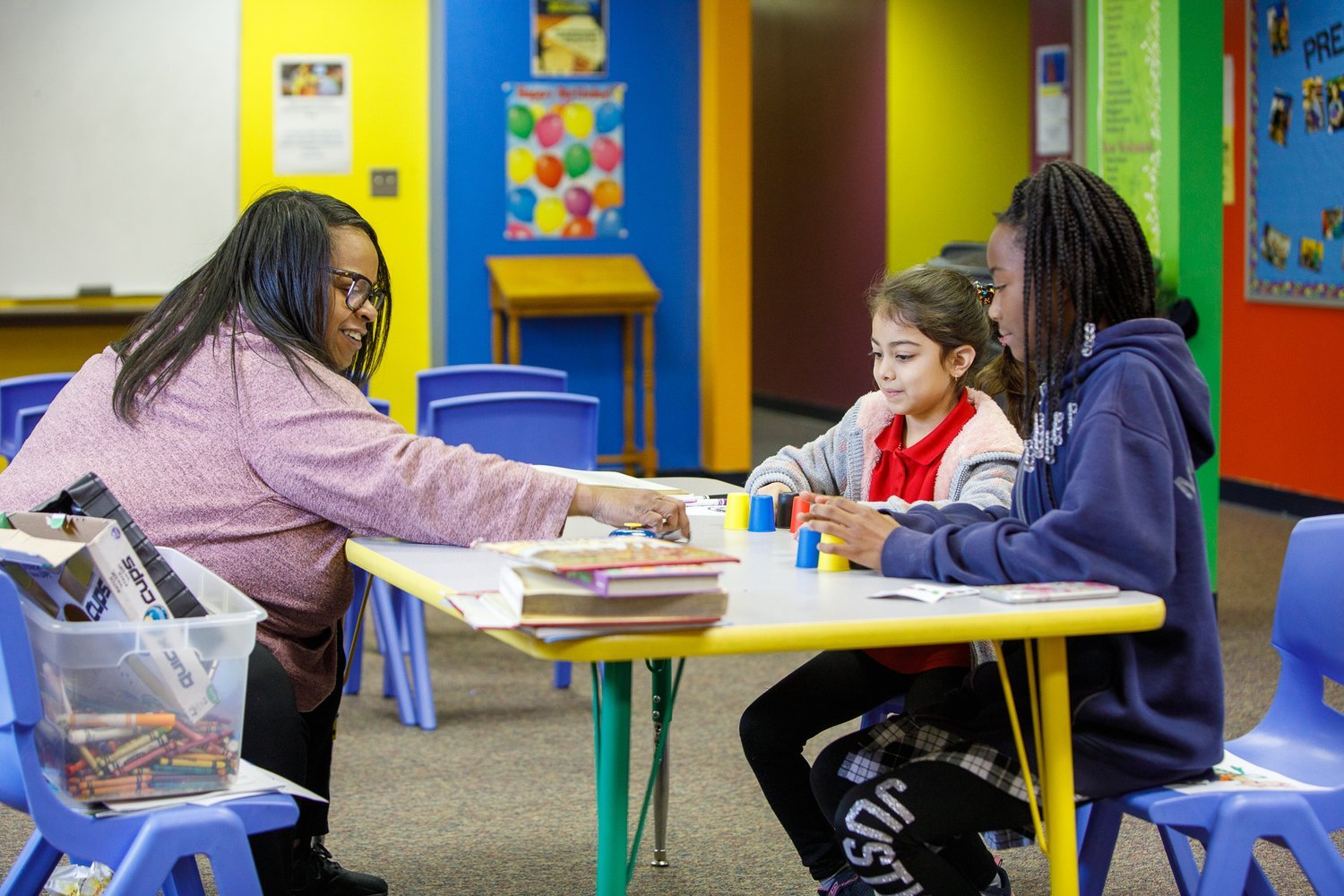
Begin Anew has been a fixture of the community for over 20 years, with a mission to empower individuals to overcome the obstacles caused by poverty through education, mentoring, and resources. They offer cost-free courses for adults who are learning English, pursuing their high school equivalency diploma, or seeking computer and job skills. Significantly, their campuses across Middle Tennessee — in Franklin, Madison, Woodbine and downtown Nashville — are tailored to the specific needs of the communities they are embedded in.
“When we assessed the Woodbine community, the greatest need was English language learning, so that’s by far the majority of our students at Woodbine,” explains Teresa Watts, who serves as Begin Anew’s program director. “But at the downtown campus, English is not the barrier — that population is trying to get their education and get a job. So we adapt to what the community needs.”
Their courses, which are entirely volunteer-taught, offer needs-based curriculums too: all incoming students take assessment exams that determine where their learning journeys should begin. In the high school equivalency (HSE) program, that assessment is called the GAIN, or general assessment of instructional needs. Based on how students score on the GAIN, they are placed into a corresponding grade-level curriculum. Some students aren’t ready to move into the standard HSE curriculum right away, and that’s okay — Begin Anew staff and volunteers work closely with students to provide the additional preparation they need.

Check out a video about a graduate of this program.
Similarly, the Woodbine campus, located off of Nolensville Road, sees a number of students whose native languages don’t share an alphabet with English. Begin Anew’s tiered ELL curriculum didn’t originally accommodate learners with virtually no English knowledge, but to meet this need, they plan to offer a basic class that offers prerequisites for ELL I, including letters, numbers, and simple words this fall.
At most campuses, courses are offered in the evenings to accommodate work schedules. However, at the Franklin campus, Begin Anew offers daytime classes to accommodate the needs of the adult learners who live there. In other words: Begin Anew is exceptionally good at meeting people where they’re at. “We’re always trying to eliminate barriers for our students,” explains Teresa.

Begin Anew is committed to staying with students for the long haul. Completing the coursework for each of these tracks — be it receiving a diploma or mastering a language — can sometimes take years, and Begin Anew is prepared to support families through that journey. For that reason, when students enter the program, they take a self-sufficiency exam measuring everything from whether or not they have basic identification to how they rank in food and housing security. Based on that assessment, Begin Anew can support families with personalized resources, sometimes connecting them with other organizations. While Begin Anew offers bus passes, meals, and childcare to all families during class time, they know that to meet the multi-faceted needs of their students, it takes a community.
“We want to do what we do well, and then we want to link arms with people like The Nashville Food Project who do what you do well so that we can give students the best opportunity for long-term success.”
Since 2019, Begin Anew’s Woodbine campus has received about 50 meals each week, meaning that they are able to offer food to their students during Monday and Thursday class times. They also receive weekly meals at the downtown campus, which has been a food access partner since 2015.

Most importantly, though, Begin Anew is committed to meeting a need for community among their students. Because their coursework tracks are geared toward long-term learning, many of these students are learning in the same small groups for months or even years at a time. An hour each week, Begin Anew hosts optional community groups, focused solely on addressing social and spiritual needs. Their faith-based teachings, Teresa explains, are aimed at helping students understand their value, and the groups provide a unique setting for people to share about their personal lives, opening the door for folks to receive more personalized support.

“They need each other, and we all have so much to learn from each other,” says Teresa.
Begin Anew’s ceremony for spring 2024 graduates will take place on Saturday morning, June 8, at Woodmont Baptist Church. Learn more about their work or volunteer as an instructor.
Future of Food Conversation Series Recap: Thinking Ahead While Honoring Our Past

By Allison Thayer, Director of Community Engagement at The Nashville Food Project
On May 2, the Nashville Food Project co-hosted the kickoff event for a community conversation series exploring “The Future of Food” in Nashville. The series, part of a collaboration with the FeedBack Nashville initiative and TN Local Food, is exploring how we can work together as a community to build a more equitable, just, and sustainable food future for everyone in our city.


Each event features a moderated panel with audience Q&A, and the kickoff event brought an all-star lineup: Kia Jarmon, visionary leader and consultant, and founder of the Nonprofit Equity Collaborative; Amanda Little, Vanderbilt professor of journalism and author of The Fate of Food: What We’ll Eat in a Bigger, Hotter, Smarter World; and Samantha Veide, the Managing Director for Americas and Transformation at Forum for the Future (the organization providing convenient support for the FeedBack Nashville Initiative). Maris Masellis, of the Tennessee Environmental Council and the Critical Root Zone podcast, moderated the discussion.

Panelist Kia Jarmon chooses a word to represent her hopes for the future of the food system.
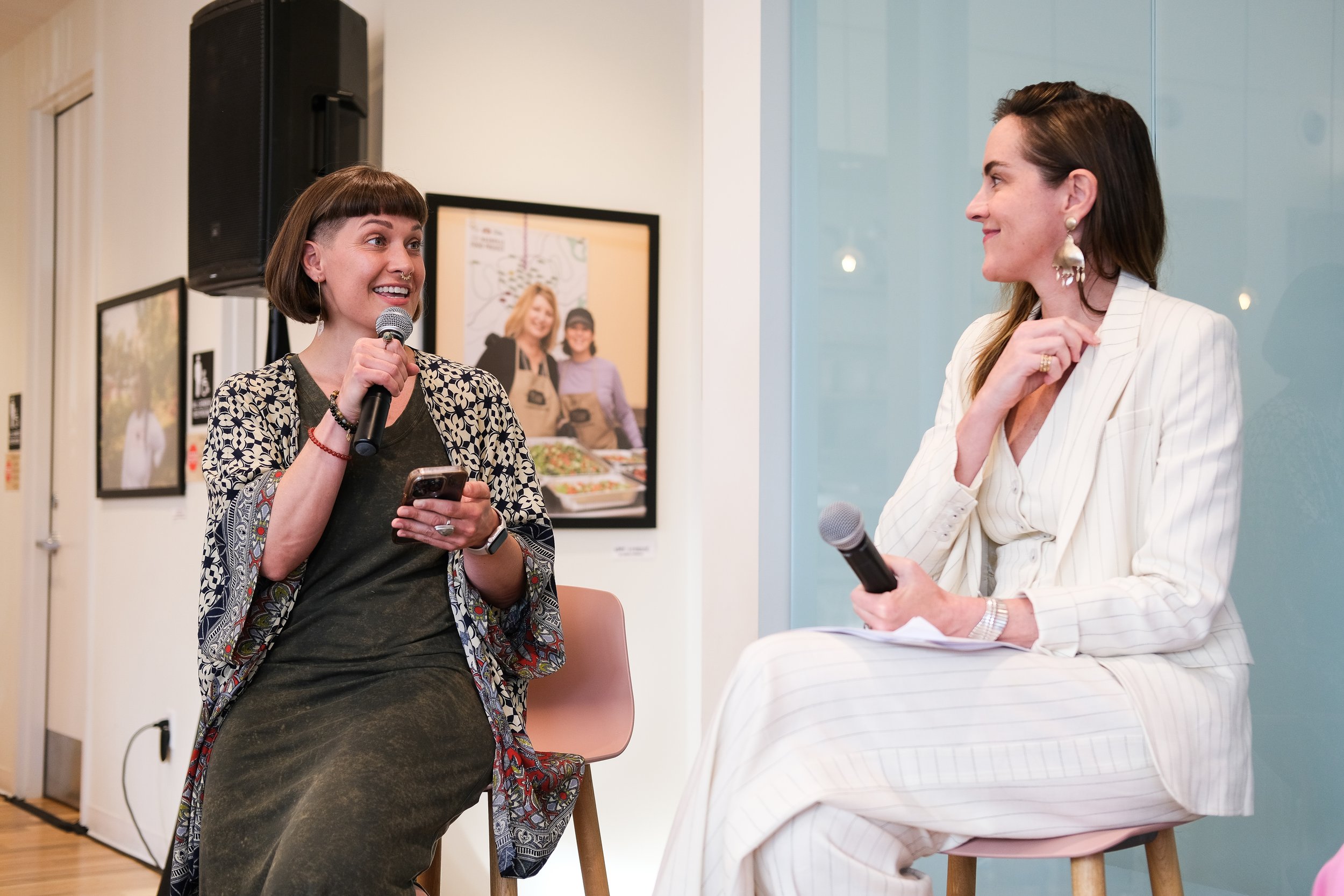
Maris Masellis and Amanda Little

Maris Masellis and Samantha Veide
The kickoff was a discussion titled Futurist Mindsets and the Pursuit of a Just & Regenerative Food Future. The panelists discussed how fostering system-oriented, forward-thinking mindsets — and honoring lessons from our past — are both critical to building momentum for positive change in our local food system. They discussed the potential role and risks of technology in creating more equitable access to affordable, nutritious food. But, they also discussed the need for a patient, human-centric process to drive lasting positive change. Audience members asked, among other things, what actions they could take to generate positive change in our food system, and the community shared their hopes for what Nashville’s food future might look like.

The next event in the series will be on Thursday, May 30 from 6:00-7:30pm at our HQ. It will feature panelists Rev. Jen Bailey of the Faith Matters Network and People’s Supper, Rasheedat Fetuga of Gideon’s Army, and Patricia Tarquino of Cosecha Community Development. The panel, and will be moderated by NPT’s Jerome Moore of Explore Social Change. You can read more about the conversation and RSVP to attend here.
Partner Spotlight: Nashville Launch Pad
Nashville Launch Pad operates out of spaces across town to create a network of temporary, safer, street-free sleeping shelters for unhoused young adults which are open and affirming to LGBTQ+ individuals and their allies. They currently do this in three ways: through an emergency shelter program, a mobile housing navigation center, and an independent-supported living program.

It’s a warm afternoon at Nashville Launch Pad, and a team of volunteers is working to prepare a brand new community garden behind their Mobile Housing Navigation Center, where a group of unhoused young adults currently live. “This volunteer team is a cool one,” says Corrine Elise, Launch Pad’s Associate Director of Engagement and Administration. “Today we have a staff member, board member, Community Ambassador, AmeriCorps volunteer, community member, and former shelter guest working together.” It’s a perfect illustration of the diverse community that Launch Pad nurtures with the young adults who find shelter, solace, and a sense of belonging there.

Volunteers work together to weed Nashville Launch Pad’s new community garden beds.
Nashville Launch Pad operates out of spaces across town to create a network of temporary, safer, street-free sleeping shelters for unhoused young adults which are open and affirming to LGBTQ+ individuals and their allies. They currently do this in three ways: through an Emergency Shelter program, a Mobile Housing Navigation Center, and an Independent-Supported Living Program.
Their Emergency Shelter runs nightly from November 1 through April 1 and is designed to meet an immediate need for young adults, offering a bed, a shower, and a hot meal. This program is supported by a network of church hosts, with the only requirements to host being that the space must affirm LGBTQ+ individuals, be on a bus route, and include access to a kitchen and showers. All staff and volunteers are trained in trauma-informed care and all work to create a welcoming, secure, and healing environment for guests.

Volunteers serving meals during Emergency Shelter.
“During shelter season, volunteers and guests eat meals together, building community with one another before settling in for the night,” explains Corrine. “We encourage emergency shelter volunteers to not only spend time organizing resources behind the scenes, but to make intentional time to enjoy dinner with guests who come in.”
Nashville Launch Pad is also a Mobile Housing Navigation Center, a federally funded initiative developed by Community Care Fellowship and the Metro Council. Currently, six sites across the city operate as Mobile Housing Navigation Centers, providing up to 20 people each with "immediate stabilization and intensive support services" to help individuals work toward the ultimate goal of obtaining housing.

Volunteers help paint the Mobile Housing Navigation Center last fall to prepare for guests.
Launch Pad’s Mobile Housing Navigation Center has space for 15 young adults to stay for free of charge for 90-120 days while they obtain identification, secure employment, and in some cases, find permanent housing solutions. The program just launched in December, but so far has provided an important temporary solution for folks who have previously utilized Launch Pad’s Emergency Shelter. They also prioritize providing homemade, nourishing meals for their guests. Currently, they are supported not only by The Nashville Food Project — we share between 20-30 meals each week, depending on their need — but also Arnold Myint of International Market.

Arnold Myint of International Market.
“General pressures on any young adult to succeed in society is stressful enough, and I feel that food should not be a daily burden when considering the tools we need to ‘make it in the world,’” says Arnold, who has prepared weekly meals for Launch Pad for several years. “The way I see it, by dedicating a weekly meal for Nashville Launch Pad, the organization can shift their allocation of funds to other fundamental needs so individuals can focus on opportunities to better enrich their lives. Food is my love language and by sharing a meal, I hope the LGBTQ+ youth in this program know that, from a distance, we are cheering them on.”
Some of the guests that Nashville Launch Pad hosts are ready to transition into longer-term housing, living independently in community with other young adults. Launch Pad’s Independent-Supported Living Program, or ISLP, provides the setting for this. The program offers apartment-style accommodations where formerly unhoused young adults can take up to six months to focus on employment, education goals, permanent housing solutions, and more. Guests live among a small group of other adults ranging from ages 18-26, selecting residents based on an interview process when spots become available. This setup is intended to foster community and provide an environment where everyone feels safe and affirmed.

Nashville Launch Pad’s Independent-Supported Living Program provides apartment-style housing.
Nashville Launch Pad supports the young LGBTQ+ population in the city on purpose. Young adults who are part of this demographic are 120% more likely to experience homelessness than their heterosexual, cisgender peers. While this is a staggering statistic, Nashville Launch Pad is ensuring that homeless LGBTQ+ youth have an affirming space to sleep now and pathways to stable, long-term housing when they’re ready for it. The difference that makes is immeasurable, and the fact that former shelter guests are spending their Wednesday afternoons volunteering at Launch Pad is certainly a testament to the rich community they cultivate.
“Our work is all about building trust,” says Corrine. “If this can be a place where our guests can find peace, then we’re doing something right.”

There are lots of ways to get involved with Nashville Launch Pad! You can support their Amazon Wishlist, sponsor a “Welcome Home Kit” for guests graduating out of the program and into permanent housing, or volunteer with their new community garden initiative. In addition, Nashville Launch Pad’s annual breakfast, Biscuits for Beds, is coming up on June 1 — right in time to kick off Pride! You can grab tickets here.
Volunteer Appreciation Week: Community in the Kitchen
It’s National Volunteer Appreciation Week, and we’re celebrating the incredible folks who show up daily to chop veggies, shovel compost, mix dressings, and even sharpen knives! These simple, sometimes un-glamorous tasks are the backbone of the Food Project — but the community members that lend their hands to this work each day are the heart.
It’s National Volunteer Appreciation Week, and we’re celebrating the incredible folks who show up daily to chop veggies, shovel compost, mix dressings, and even sharpen knives! These simple, sometimes un-glamorous tasks are the backbone of the Food Project — but the community members that lend their hands to this work each day are the heart.


In the kitchen, volunteers keep us afloat. The hundreds of unique volunteer hours given each month make it possible for our team to produce 6,500 meals each week — in fact, every single meal that comes out of our kitchen includes some contribution from volunteers, be it colorful assembled salads, diced roasted potatoes, or a chicken pasta bake that volunteers took the time to shred.
The best thing about our volunteers, though, is the community they cultivate by bringing their generosity, creativity, and positivity to our space. If you walk through the headquarters kitchen during a prep session, you’ll see strangers becoming friends as they blend smoothies, or a corporate volunteer group dancing along to the music as they work through a container of strawberries at their cutting boards.

Our friend Madison is an incredible example of community during the time she frequently gives us at evening prep sessions, which she brings energy and life to despite having worked a full day at her job. She’s been volunteering with us since 2021 and we feel lucky to count her among our regulars!
“Madison is exactly who you want to be partnered with when volunteering in the kitchen,” explains Hannah, a former staff member who still shows up often to volunteer. “She's so funny and fun to talk to, she's fast and efficient at any prep task, and she knows how to find anything you need in the kitchen. We're so grateful to Madison for her dedication to The Nashville Food Project over the years and the energy she brings to any prep!”

Hannah and Madison volunteering at Meat Conference earlier this year, where The Nashville Food Project recovered over 16,000 pounds of food for our meals program.
Check out this Q&A with Madison:
How do you see your role in this work of building a just and sustainable food system?
I see my role as a TNFP volunteer as a critical piece of TNFP's offering to the community. The TNFP kitchen staff is an amazing team that is enabled by TNFP volunteers to serve even more meals to the community.
It might be hard to see the impact of a 2 hour shift when you're surrounded by stacks of veggies to chop, but at the end of a volunteer shift, when everything is prepped and ready to be used, you can really see the magnitude of the team’s work.
I also see TNFP as a learning experience for myself as I have become more aware of food waste and up-cycling at home and in my personal grocery shopping.
What excites you about the vision of a world with a just and sustainable food system?
I've learned a lot about TNFP's vision in my time volunteering here. Some of which, I had not thought about much before — i.e., the need for nutritious meals in food insecure communities beyond just providing a meal. Most importantly, I've experienced the power of community and sharing goals, tasks, and meals together as such. I've learned the most from the sheer magnitude of the meals we prepare and have gained a lot of perspective through the simple tasks of chopping and portioning.
What about this work brings you hope?
I am motivated by the teamwork and community that TNFP creates. From the staff to the other volunteers, I have met so many people across different backgrounds, all while preparing meals for different groups across the city. It's very common for me to get stuck in my friend group or within my work industry, so meeting people outside of that really has shown me the power of community, and there's something really exciting to me about preparing meals as a community that are going out to even more communities across our city.

Partner Spotlight: FiftyForward
FiftyForward is a nonprofit organization dedicated to supporting adults aged 50 and older in Middle Tennessee through a variety of programs and services aimed at promoting health, well-being, and community engagement. Their programming is extensive, but is ultimately focused on developing community and purpose. Currently, The Nashville Food Project delivers about 560 meals each week to support this focus.
It’s a rainy morning at FiftyForward’s Knowles Center, but that doesn’t seem to be slowing anyone down — there’s a buzzing energy at the organization’s main facility. Older adults who are members of FiftyForward Friends, a day program for seniors, arrive for a day full of activities ranging from exercise classes to bingo. Volunteers pick up meals to deliver via FiftyForward Fresh, the organization’s mobile meals program, laughing and chatting with one another as they wait in line for their bags. Members of their community center pop by to enjoy a hot lunch. And at some point, The Nashville Food Project pulls up to deliver pans of beef stroganoff and roasted veggies.

FiftyForward is a nonprofit organization dedicated to supporting adults aged 50 and older in Middle Tennessee through a variety of programs and services aimed at promoting health, well-being, and community engagement. Their programming is extensive, but is ultimately focused on developing community and purpose. Currently, The Nashville Food Project delivers about 560 meals each week to support this focus.
On this particular day, the FiftyForward Friends program participants are doing chair yoga. The room looks relaxed, the lights dimmed as the instructor guides them through stretching and meditation. In the next room over, staff members Rebecca and Heather are heating and portioning plates of creamy chicken casserole, broccoli, and oranges. “About a quarter of the meals shared by The Nashville Food Project are served here, while the rest are delivered as mobile meals,” explains Rebecca. “Everybody looks forward to lunch.”


Around the round tables at lunchtime, conversation comes easily. Steve and Zura, who both come five days a week and eat lunch together every day, joke incessantly with one another, making anyone in their orbit feel right at home. Marilyn embroiders between bites, explaining that it’s good for her hands and makes her happy. Janet talks about her Pennsylvania roots and her life there as an art teacher; she now lives in town with her daughter and still enjoys art and music. When we play music trivia after lunch, she knows every song.


Every day, program participants come to FiftyForward to experience connection in this vibrant community where friendships are forged, talents are celebrated, and laughter echoes through the halls. For a demographic that commonly struggles with isolation, the environment that FiftyForward provides is enriching and life-giving.
FiftyForward also builds essential community through their mobile meals program, where staff, volunteers, and, thanks to a recent partnership, DoorDash drivers, make deliveries to housebound seniors. Volunteers drive the same routes — hitting, on average, eight stops per route — over and over, so they become a familiar face to many of the meals recipients. Over time, they form relationships and are often the first to know if those folks need attention or something is wrong. Most volunteers are happy to jump in and educate seniors on how to reheat meals or advise on the shelf-life of canned goods. The easy-to-reach-for meals they deliver provide necessary nourishment, but it’s the regular check-ins that have the greatest impact on the lives of these seniors.


To support the partnership with FiftyForward, The Nashville Food Project relies on daily volunteer teams who prepare ingredients and cook the meals that are distributed. A large portion of these volunteers are also older adults, and they often tell us that our kitchen is a place they come to experience community and purpose.
“I started volunteering in the kitchen twelve years ago,” Mary Dionne, a longtime senior volunteer, recently told us. “I enjoy it a lot — it's good for me, and I feel like I'm doing something to help people. I come back because it's a way to give back, and it's great to be around people who are trying to make a difference in other people's lives through food, through community, and bringing people together.”
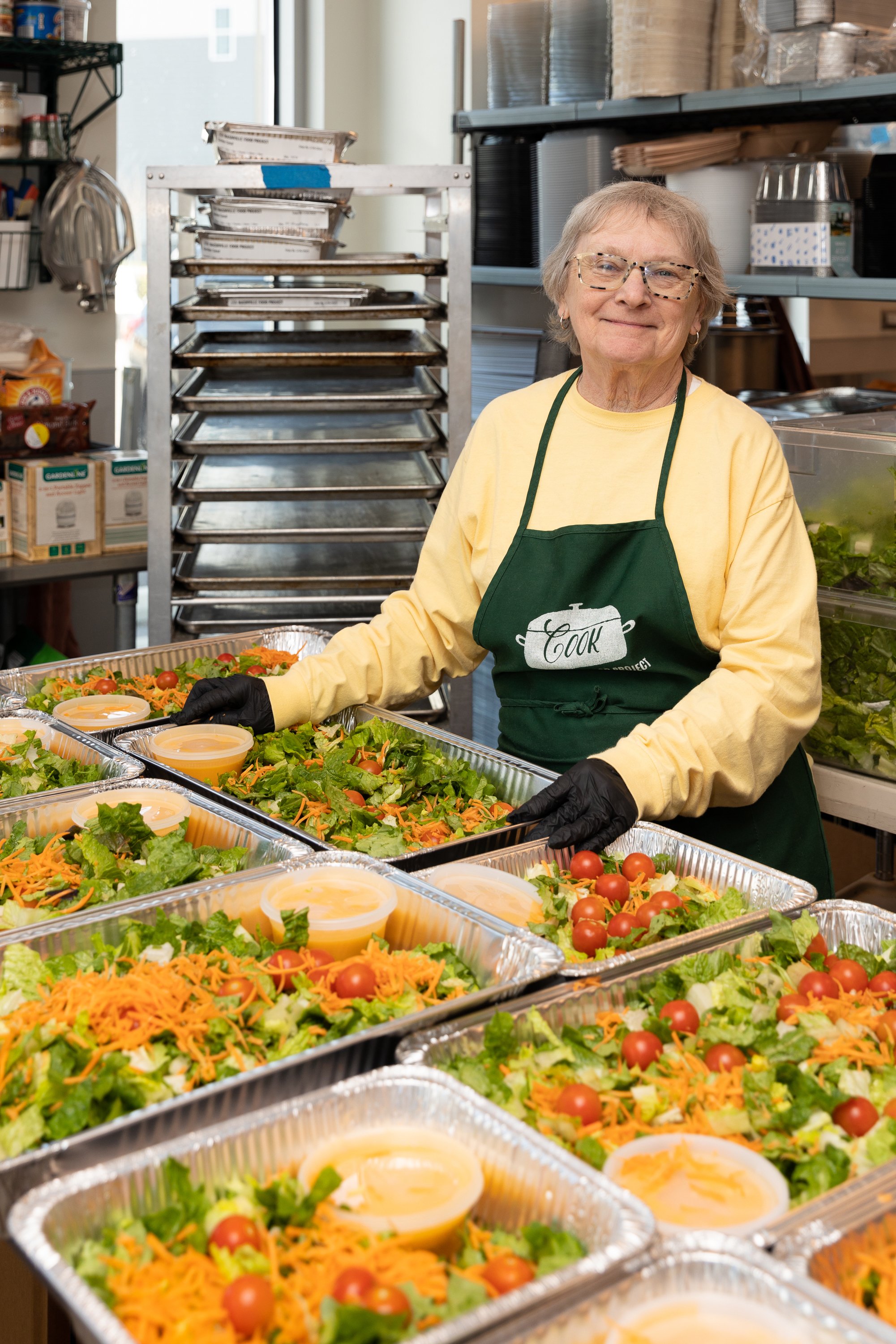
The food these senior volunteers make is often delivered directly to other older adults. We’re so grateful for how many aspects of our partnership with FiftyForward prevent isolation for older adults by bringing people together over a scratch-made meal.
Starting New Seeds at Growing Together
Thanks to our friends at Tito’s Vodka, we now have a greenhouse on the Growing Together farm! Before the project last October, Growing Together was near its production capacity due to limitations in the site’s agricultural infrastructure. Farmers weren’t getting much exposure to starting plants from seed in a greenhouse — the greenhouse available to them was a shared space over 10 miles away from the farm.
Thanks to our friends at Tito’s Vodka, we now have a greenhouse on the Growing Together farm!

Love, Tito’s, the philanthropic heart of Tito’s Handmade Vodka, supported this project as part of their Block to Block initiative. The program seeks to provide fresh and healthy food to communities by working alongside local nonprofit organizations to create green spaces, including community gardens and farms, that nurture neighborhoods and make fresh food more accessible and bring the community together, one block at a time.

At the Growing Together farm, a community of Nepalese and Burmese farmers grow over 30,000 pounds of produce annually on about an acre of land. The Food Project then works with the farmers to sell and distribute that produce to Nashville residents, restaurants, and other market outlets. The majority of the produce is distributed through our Community Supported Agriculture program, which pairs customers with a farmer who grows their vegetables for an entire 20-week season. The weekly boxes include local favorites, like tomatoes and squash, alongside veggies native to the farmers’ home countries, like long beans and daikon radish.


Before the project last October, Growing Together was near its production capacity due to limitations in the site’s agricultural infrastructure. Farmers weren’t getting much exposure to starting plants from seed — the greenhouse available to them was a shared space over 10 miles away from the farm. So when Tito’s reached out about an impact project, we immediately identified the installation of an on-site greenhouse as a way they could make a tangible difference on the farm for years to come.
The Love, Tito’s Block to Block program prioritizes volunteerism, making time for Tito’s staff to spend a day at the site they are supporting. On a sunny day last October, a group of about 50 volunteers helped us clear the installation site, which was overgrown with brush and weeds, to prepare for the greenhouse’s construction in January. The group also worked to upgrade the farm's washing and packing station, move compost, remove weeds and invasive plants, clean up fence lines, and plant pollinator plants and berry bushes. They even painted colorful murals on the farm’s new water catchment stations.
These hands, alongside so many others, have made the much-anticipated greenhouse installation possible over the last several months. In January, a team from Scenic Acres built the 20’ x 48’ greenhouse.

After spending February sorting out plumbing and electrical and building tables to go inside the structure, the farmers finally got into the greenhouse in early March. As you might imagine, they were so excited! They started with spring crops like broccoli, cabbage, kohlrabi, cauliflower, and kale.
The addition of a greenhouse to the farm is a major step for our farmers as it gives them agency over the growing process from seeding to harvest. Their plant starts look great so far — we already can’t wait to get them into the ground and learn more about the early stages of plant production together!


The greenhouse became operational just in time for our CSA, which begins May 14. It’s not too late to reserve your spot! Our model gives the Growing Together farmers the resources to grow food and generate income for their families while providing you with an incredibly diverse range of fresh, local produce. By becoming a customer, you’re truly investing in these farmers’ lives.

FeedBack Nashville: Food System Forum Recap
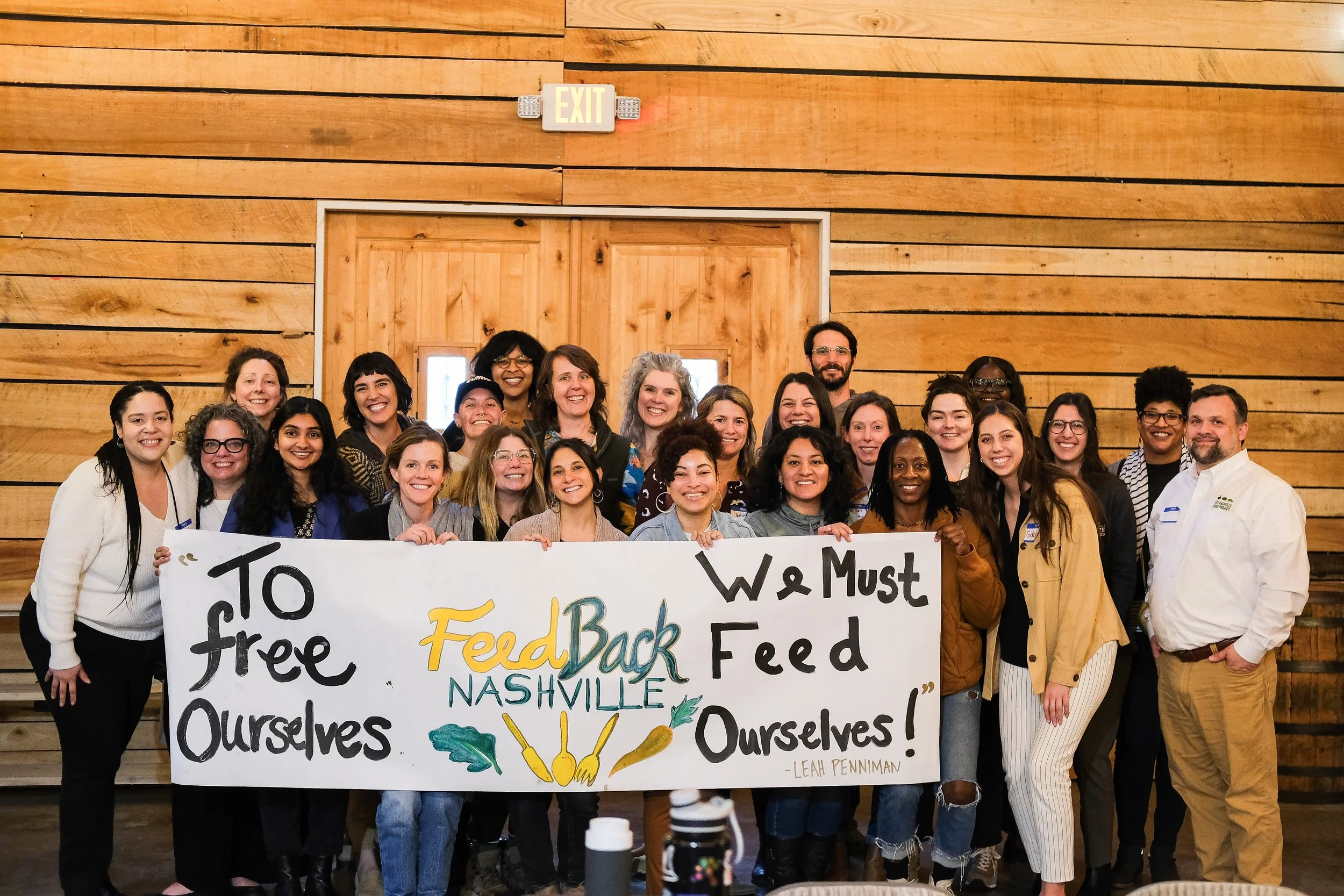
On February 22, FeedBack Nashville hosted a day-long Food System Forum at Green Door Gourmet, a 350-acre organic farm on the outskirts of Nashville. The event brought together 25 individuals working in our city’s food system.
On February 22, FeedBack Nashville hosted a day-long Food System Forum at Green Door Gourmet, a 350-acre organic farm on the outskirts of Nashville. The event brought together 25 individuals working in our city’s food system to build and strengthen connections between organizations; build a shared understanding of the current dynamics, limitations, and areas in need of change in Nashville’s current food system; and to identify opportunities to do things differently to build a more just and sustainable food future for our city.
The first phase of FeedBack Nashville involves analyzing Nashville’s current food system and diagnosing its issues. Once complete in summer 2024, this diagnosis will help us understand as a community how our food system works — and more specifically, how community connections and other social, economic and environmental factors influence food access, local agriculture, local food economies, food waste, and more.


The Food System Forum helped us gather our first round of community insights, which we will integrate into FeedBack Nashville’s food system diagnosis. These insights will guide us towards informed action and reveal areas ripe for change within our city’s food system.

Forum for the Future — an international non-governmental organization that builds the local capacity of communities to transform food, energy, and business sectors towards more just and regenerative futures — served as the convening facilitator for the event. Members of the FeedBack Nashville Steering Committee also joined to help facilitate breakout discussions. Generous donations from Radish Kitchen, Dozen Bakery, and the Well Coffeehouse nourished us throughout the event.
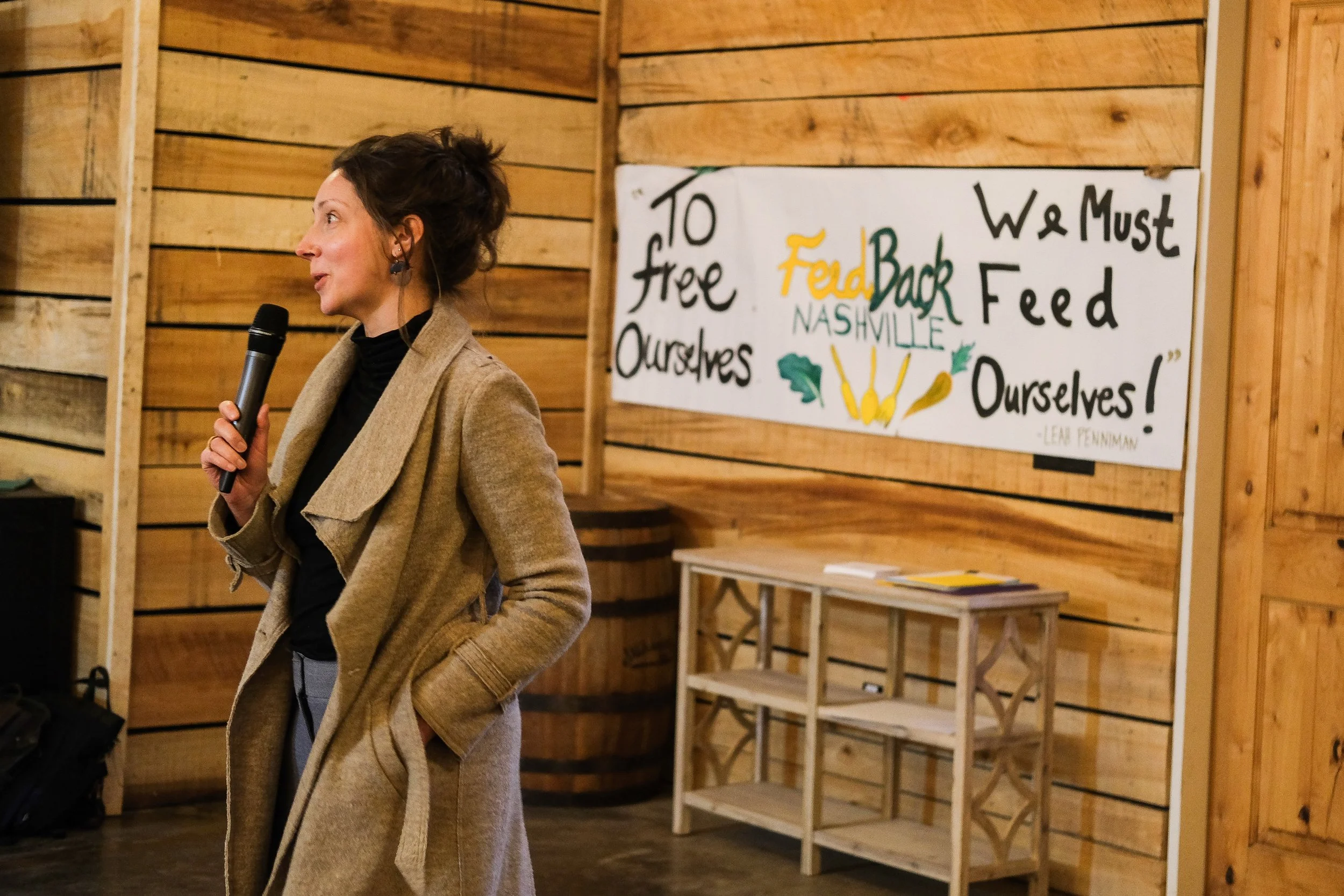
Want to support FeedBack Nashville’s food system diagnosis? Take the FeedBack Nashville Food System Survey! Your perspectives will be synthesized with those of many other community members to help us create shared visions, and the actions that will help us get there, for a better food future for our city.
The Nashville Food Project Receives $1 Million from the Yield Giving Open Call
This week, MacKenzie Scott’s Yield Giving announced The Nashville Food Project as one of its Open Call awardees working with people and in places experiencing the greatest need in the U.S.. The Nashville Food Project received $1 million.
This week, MacKenzie Scott’s Yield Giving announced The Nashville Food Project as one of its Open Call awardees working with people and in places experiencing the greatest need in the U.S.. The Nashville Food Project received $1 million.
In March 2023, Yield Giving launched an Open Call for community-led, community-focused organizations that enable individuals and families to achieve substantive improvement in their well-being through foundational resources. The Nashville Food Project was awarded based on its track record, team capacity, community leadership, and commitment to equity.
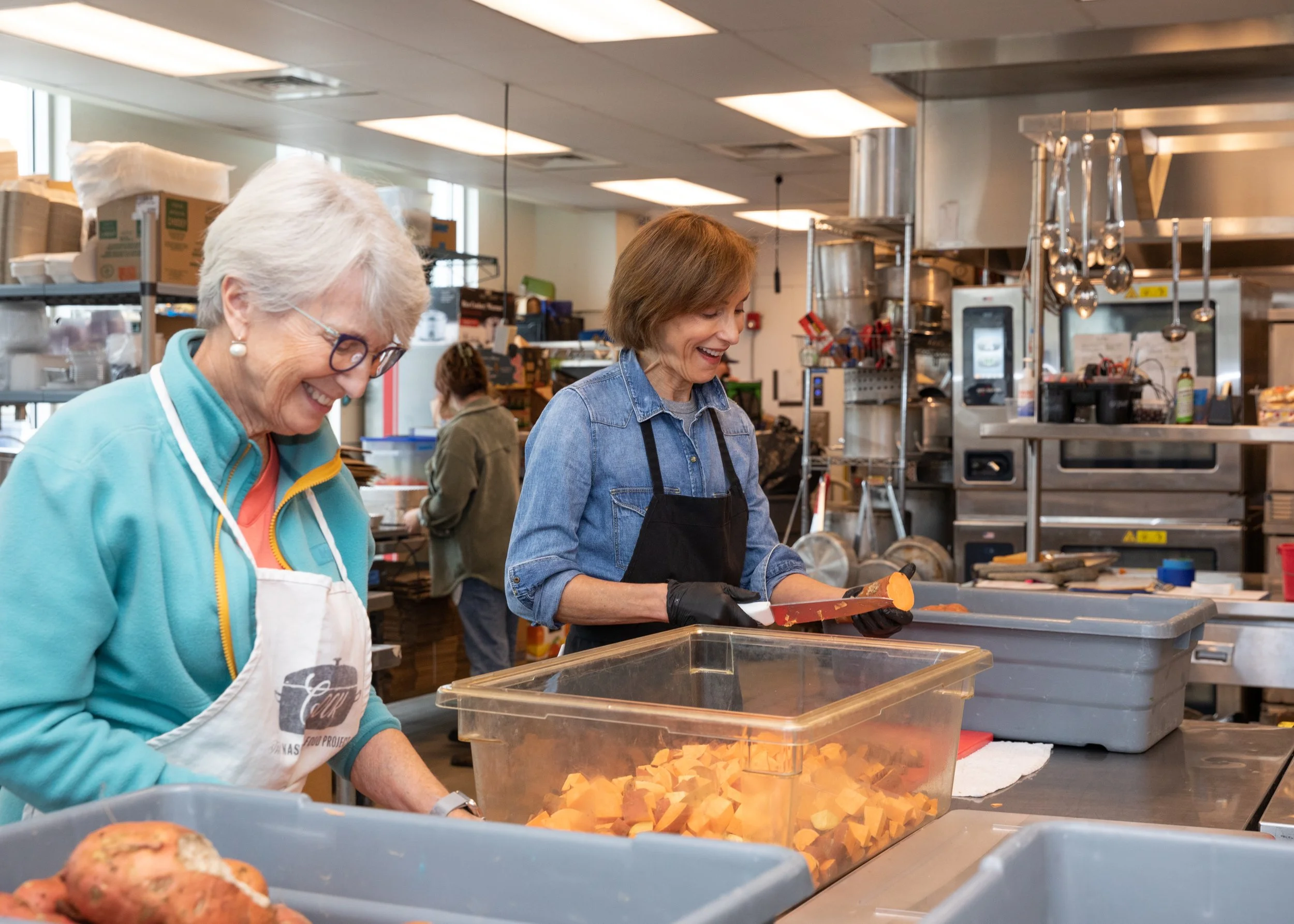
“We are humbled by this affirmation of our work from Yield Giving,” said CEO C.J. Sentell. “This is an exciting moment for The Nashville Food Project: We have a dynamic staff, an engaged board, and dedicated volunteers working every day to nourish their community through food. This award will help us take the next step to create lasting change in the local food system.”
“The Nashville Food Project is a critical partner in our efforts to address hunger and reduce food waste in our city, and this award is reflective of the considerable impact they are making in Nashville,” said Mayor Freddie O’Connell. “Support from Yield Giving will amplify The Nashville Food Project’s important work to engage the community around achieving a sustainable and just food system where less food goes to landfills and more food goes to people who need it.”
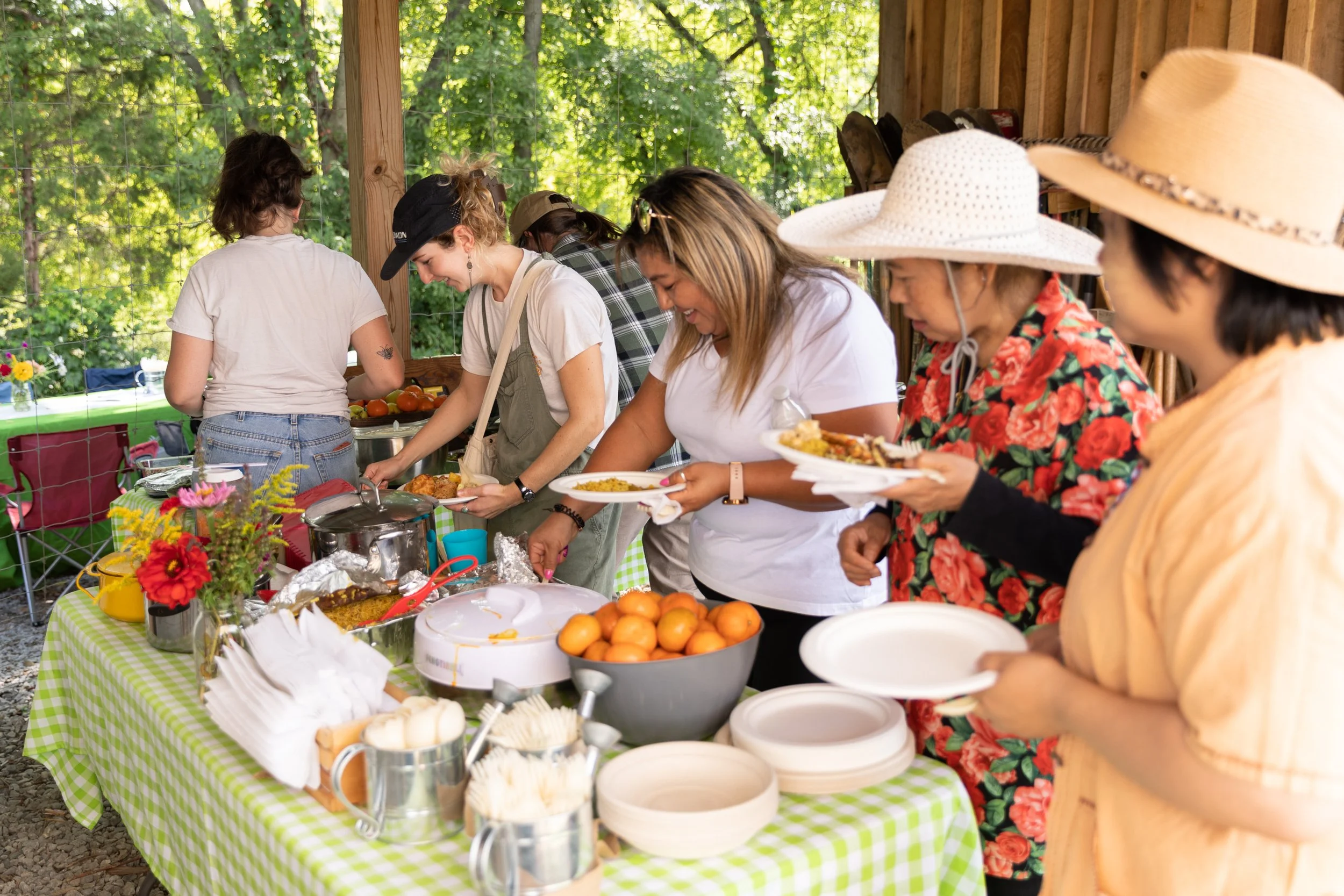
“Support from Yield Giving will amplify The Nashville Food Project’s important work to engage the community around achieving a sustainable and just food system where less food goes to landfills and more food goes to people who need it.”
“Food is key to nutrition but also to social connection and this is the best example I have ever heard of that goes from food grown to food made to lessening food waste in the system, along with feeding people in body and soul,” commented a reviewer on The Nashville Food Project’s application.
The Yield Giving Open Call received 6,353 applications for 250 awards of $1 million each. In the fall of 2023, organizations top-rated by their peers advanced to a second round of review by an external evaluation panel recruited for experience relevant to this cause. In light of the incredible work of these organizations, as judged by their peers and external panelists, the donor team decided to expand the awardee pool and the award amount.
More information on the Yield Giving Open Call can be found here.
The Nashville Food Project’s video submission for the Yield Giving Open Call.
Dive Deeper
The Nashville Food Project
The Nashville Food Project brings people together to grow, cook and share nourishing food, with the goals of alleviating hunger and cultivating community. In 2024, The Nashville Food Project will share 300,000 scratch-made meals and 40,000 pounds of garden-grown produce to sustain after-school programs, immigrant communities, homeless outreach organizations and many others. The Nashville Food Project embraces a vision of vibrant community food security in which everyone in Nashville has access to the food they want and need through a just and sustainable food system. To learn more, visit www.thenashvillefoodproject.org.
Yield Giving
Established by MacKenzie Scott to share a financial fortune created through the effort of countless people, Yield Giving is named after a belief in adding value by giving up control. To date, Yield’s network of staff and advisors has yielded over $16.5 billion to 1,900 nonprofit teams to use as they see fit for the benefit of others. To learn more, visit www.yieldgiving.com.
Lever for Change
Lever for Change connects donors with bold solutions to the world’s biggest problems — including issues like racial inequity, gender inequality, lack of access to economic opportunity, and climate change. Using an inclusive, equitable model and due diligence process, Lever for Change creates customized challenges and other tailored funding opportunities. Top-ranked teams and challenge finalists become members of the Bold Solutions Network — a growing global network that helps secure additional funding, amplify members’ impact, and accelerate social change. Founded in 2019 as a nonprofit affiliate of the John D. and Catherine T. MacArthur Foundation, Lever for Change has influenced over $1.7 billion in grants to date and provided support to more than 145 organizations. To learn more, visit www.leverforchange.org.
Goodbye, Winter: Slowing Down To Show Up With Intention

by Julia Baynor, Director of Meals
A few years ago, in the middle of the pandemic, I wrote a blog post about ‘Wintering,’ a concept author Katherine May describes as a season inside of us that warrants intentionally slowing down, reflecting, and taking stock of what’s going on around you. In the rush of the holiday season, it's hard to think about slowing down for a second. Even when you make plans to relax during that time, the flow of life has its own trajectory, and things don’t always go to plan.
With the holidays over, at the Food Project we gathered ourselves to set to do the work of another demanding year; but this is winter in the south, and eight inches of snow fell hard and fast on a Sunday night recently. Snow and ice have a way of putting a stop to things down here; this was the universe giving me a second to pause. At the end of the year I struggled to write new year's resolutions, just as I struggled to write this during our week trapped in our houses, surrounded by snow and ice. Many fuzzy beginnings of this post came as I stared out my window at the sparkling snow, watching fat snowflakes fall. In the very short moment I went outside, I slammed down into it and made a snow angel, feeling the cold on my face and breathing it in.
As a person whose personal resolutions mostly amount to what new things I want to learn to bake (I have a problem), this extra time to reflect came as a boon to me. I have been working at the Food Project for a long time now, and in the demands of the day to day, I don’t often make a lot of time to reflect on the ‘why’ because I am focused very intensely on the logistics of the ‘how.’ So I decided to spend some time sitting, reading, pondering and looking for the connections of the hows in the work that I do and the whys of a broader scope of this work. I worked my way backwards, thinking of recent events first.

The week before Christmas, we had a huge community ask to fill in and support the local tornado relief, and our teams mobilized to help get needs met the best we could. In a few short days, we had cooked and shared a few thousand extra meals. Everyone was tired and ready to go home for the holidays, but this work has a way of making you show up, and we quickly worked together to figure out how to do what we needed to do. We used food procured intentionally that would’ve gone to waste to make meals for those who needed that comfort. We had people navigating all the logistics and driving out on the weekend to deliver that food, and people who showed up to partner with others and serve it to the community. That’s what’s inspiring about the people I work with, and about people in general. When it comes down to it, they dive headfirst into the struggle. In this and so many ways, food is resistance. Sharing a meal is something that can bring people together through hard times and something that makes it easier for us to come together to figure out the hard questions.
We navigate change at every turn, recognizing that each of us are going through changes in our own lives. Some who work here have recently become parents for the first time, have come to the end of relationships, or have just been engaged to get married. Some people have lost loved ones this past year. Some people are new here and are navigating a new space, new coworkers and new job. Many cherished in this space who have done good work have left or are leaving. Some have left but have found their way back, through the path of personal sabbatical. Some are exploring new ways to find their voice in this work. Humans go through so much just being humans, and it raises so many questions: How do we stay engaged in such a difficult world? How can we stay motivated to fight when the world around us can so often feels like it’s crumbling? We continue to listen to those who struggle and to meet them where they are. We continue to sit in our discomfort as we recognize we don’t have all the answers or solutions but still have the hunger and drive to try to figure them out together. We commit to amplifying voices of people who don’t have the privilege or platform that we do.

I reflected more on the hows and the whys. The spirit of our work is constant action; but follow-through on any action requires the careful pre-work of intention setting. How does intentionality show up in the work I do every day, with the people I work alongside?
I see the intentions of our mission cultivated in the little ways community is built in our space every day.
I see it in the way Josh, our Catering Manager, sets aside time to make lunch for us; making sure anyone who wants something to eat, has something.
I see it in the way our Procurement Director David loads hundreds and hundreds of pounds of donations in and out of his truck every day, but still stops me if I try to pick up something too heavy because “that one’s really a back breaker!”
I see it when our Facilities Manager, Landon, comes through the kitchen and never fails to ask, “How can I help?” Even when he has 17 things he has to fix or address on his own roster.
I see it when Annie, who is in charge of managing and cultivating relationships with our Community Meals Partners, comes to tell me about a conversation she had at a partner site, or a joke she shared with a student on a site visit, and her face lights up as she tells the story.
I see it in the willingness of our volunteers to show up and do the most menial and tedious tasks, no questions asked; from Cheri staying after helping to lead “Best Use” prep sessions to wash ALL the dishes piled up in our dish room, to Theresa and Shelley coming in to make hundreds of sandwiches (AGAIN!) for our partners receiving cold meals. All of these interactions are things I see every day, and being a witness to them brings me back to the words of our values, “we belong to each other.”


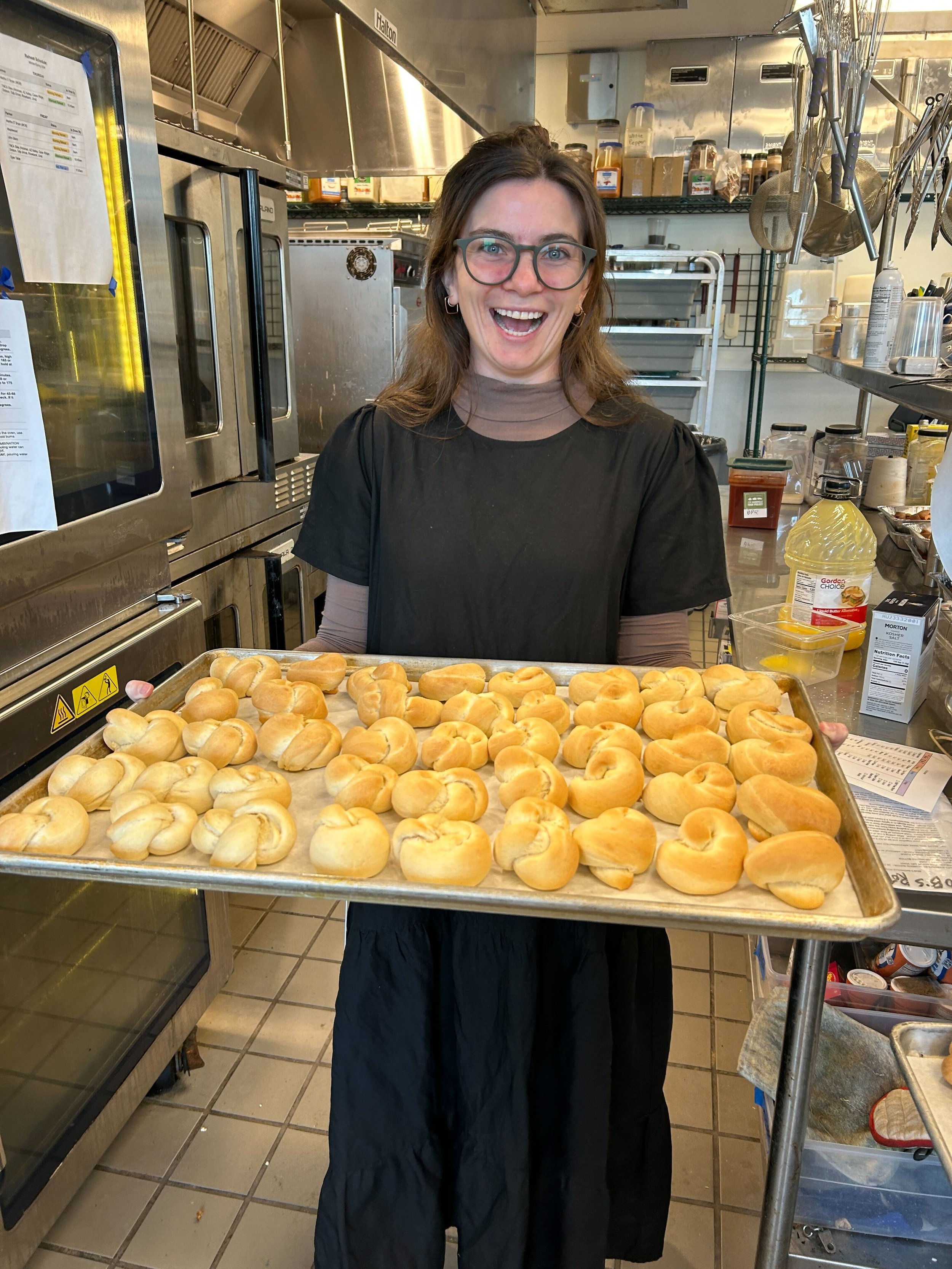
I talk about internal care and dwell on the care we show each other because not dwelling on those things can make the stark reality we navigate as humans living in this world that much harsher. So how do we stay engaged in such a difficult world? How can we stay motivated to fight when the world around us can so often feels like it’s crumbling? We continue to listen to those who struggle and to meet them where they are. We continue to sit in our discomfort as we recognize we don’t have all the answers or solutions but still have the hunger and drive to try to figure them out together. We commit to amplifying voices of people who don’t have the privilege or platform that we do.
At the end of the day, we are people, we are tired, we are not perfect, but we are trying to figure it out. We have to work through a lot of issues to make it sustainable for the people who are doing this work, so we can better serve and work in concert with others to try to build a sustainable food web in our community. The way we build community internally amongst one another and with our volunteers has a direct correlation with the way we are able to show up for others. As we move toward expanding the horizons of our work by mapping the reality of our food system, we work to deepen relationships with partners we have already cultivated through our programming over the years, and with them, set to working with the larger food justice community to navigate and draw up that map, to study it, and to chart our course forward.

At the conclusion of my series of ponderings, after a full week of ice and snow, there are always more questions. Why do people continue to do this work? Why does anyone choose to do something that is hard? At the close of my favorite essay by him, James Baldwin puts it this way:
“It is a mighty heritage, it is the human heritage, and it is all there is to trust. And I learned this through descending, as it were, into the eyes of my father and my mother. I wondered, when I was little, how they bore it-for I knew that they had much to bear. It had not yet occurred to me that I also would have much to bear; but they knew it, and the unimaginable rigors of their journey helped them to prepare me for mine. This is why one must say Yes to life and embrace it whenever it is found- and it is found in terrible places; nevertheless, there it is; and if the father can say, Yes, Lord, the child can learn that most difficult of words, Amen.
For nothing is fixed, forever and forever and forever, it is not fixed; the earth is always shifting, the light is always changing, the sea does not cease to grind down rock. Generations do not cease to be born, and we are responsible to them because we are the only witnesses they have.
The sea rises, the light fails, lovers cling to each other, and children cling to us. The moment we cease to hold each other, the moment we break faith with one another, the sea engulfs us and the light goes out.”
Butternut Mac from the Food Project Kitchen
Butternut squash mac and cheese has become something of a staple around here. This time of year especially, our kitchen is overflowing with squash donations from local farms, and this is one of our favorite ways to use it...

Butternut squash mac and cheese has become something of a staple around here. This time of year especially, our kitchen is overflowing with squash donations from local farms, and this is one of our favorite ways to use it! Whether we’re cooking 800 servings to provide a veggie-loaded, hearty main dish for community meal partners, or whipping up bite-sized portions to cater alongside other hors d’oeuvres, it’s in consistent rotation.


This mac and cheese is creamy, decadent, and sneakily nutrient-packed! Once the squash is diced and roasted, it comes together fairly quickly. Not sure how to tackle dicing butternut? Check out this easy method we shared a few years back.
Our catering manager, Josh, has perfected a recipe that can be scaled up or down to accommodate any number of hungry guests. If it wasn’t on your Thanksgiving sides order this year, try your hand at making it yourself!
Josh’s Butternut Mac
Ingredients

1 large butternut squash
1 chicken bouillon cube
24-32 ounces elbow or penne pasta (roughly 1 ½-2 boxes)
32 ounces (1 quart) heavy cream
2 ½ tbsp sage
1 tbsp butter
½ cup grated American cheese — we like Velveeta!
1 cup grated sharp Irish cheddar cheese
1 cup grated Gruyère cheese
2-3 cloves garlic
¼ cup grated parmesan cheese
¾ cup breadcrumbs
Instructions
Dice butternut and roast at 425°F with olive oil, salt and pepper until soft. Then, blend into purée with chicken bouillon and a little heavy cream, sage, and salt and pepper.
Boil your pasta and set aside.
Grate American, sharp Irish cheddar and Gruyère cheese, additional gouda optional.
Whisk together about a tablespoon of butter and flour in a saucepan to make a roux. Once mixed, begin slowly adding your heavy cream. Bring heavy cream to a light simmer, then turn heat to low and slowly start melting your cheese.
Add a pinch of white pepper, paprika, onion powder, and sage.
Mix in butternut purée to taste then mix sauce over your noodles in a oven-safe dish.
Mix minced garlic and sage with breadcrumbs and top pasta. Bake at 400°F for 10-15 minutes. Serve immediately.

Holiday Rosemary Gimlet
Ingredients
Simple Syrup:
1 ¼ cups sugar
1 cup water
3 sprigs rosemary
Single Serving of Cocktail:
1.5 ounces gin
¾ ounce lime juice
¾ ounce simple syrup
Instructions
Combine sugar and water in a sauce pan. Heat while stirring until sugar is dissolved but do not bring to a boil. Take off heat and add sprigs of whole rosemary (can chop some for more intense flavor). Allow to steep until cool and then strain.
For the cocktail: Combine your favorite gin (I prefer Grey Whale), the lime juice and the rosemary simple syrup. Shake with ice until chilled and then strain into cooled ice free glass. Garnish with dried lime slice or rosemary sprig.

FeedBack Nashville: Building the Steering Committee and Community Leadership
Changing our current food system into this better food future is not a simple task. It is a long-term, relational process that requires all of us—from nonprofits and corporations, to public offices and individuals—to share our experiences and perspectives with one another and work together to identify and co-create many different transformational actions.

Last month, we introduced you to FeedBack Nashville, a new citywide effort to build a better food future for Nashville. A better food future is one wherein all of our neighbors have equitable access to foods that support healthy, thriving livelihoods. It is also a future that nurtures biodiverse, abundant ecosystems and prosperous, local food economies.
Changing our current food system into this better food future is not a simple task. It is a long-term, relational process that requires all of us—from nonprofits and corporations, to public offices and individuals—to share our experiences and perspectives with one another and work together to identify and co-create many different transformational actions.
We often think that the most transformational of these actions happens at the governmental level when policies change. The founding organizations of FeedBack Nashville, including The Nashville Food Project, also believe that meaningful action happens at the grassroots, community, and individual levels, but that these actions are often overlooked. Because of that belief, FeedBack Nashville uses a community-based approach to bring diverse communities and community members together to create shared visions for Nashville’s food future and identify various opportunities to turn that vision into reality.

The FeedBack Nashville Steering Committee.
This effort to bring our community together in pursuit of a better food future is led by the FeedBack Nashville Steering Committee, a group of 16 individuals who have relationships with many of Nashville’s communities that are most affected by the shortcomings of our current food system. The steering committee was formed in July 2023 through a public application process and overseen by the Metro Human Relations Commission Executive Committee. Through the application, community members were invited to describe how their relationships with Nashville’s communities inform their understanding of local challenges like hunger and struggling small-scale farmers. The MHRC decided to accept everyone who applied, leading to the creation of a committee that is ripe with diversity, personal and professional experience, and community knowledge.

Steering Committee members gather at the kick-off retreat in September to participate in a hands-on systems change activity to experience how our actions and decisions impact other people’s actions and experiences.
The committee convened for the first time at a 1.5-day team-building retreat at Shelby Bottoms Nature Center in September. The retreat was facilitated by Forum for the Future, an international sustainability organization that excels in helping communities and organizations work together to create better food futures. At the retreat, steering committee members learned about systems change approaches to alleviating hunger, developed principles and values for working together and with community members, and created a charter to guide their actions.

Steering committee members work together at the kick-off retreat to share their understandings of food challenges in Nashville.

Committee members learn from one another and develop values and principles to guide their work together.
With this foundation established, the committee is now meeting monthly to develop FeedBack Nashville’s community engagement strategy. This strategy, which will be implemented beginning in January 2024, will include events—from potlucks and community conversations to one-on-one interviews—that bring community members together to envision Nashville’s better food future and the opportunities that exist to help us get there.
By centering community members as the leaders of the steering committee and then, centering Nashville’s communities at the forefront of the project’s community engagement strategy, FeedBack Nashville is laying the building blocks for a different way of solving some of our most complex, pressing challenges: a way that is grounded in relationship-building, collaboration, community wisdom, and the pursuit of lasting, meaningful change.
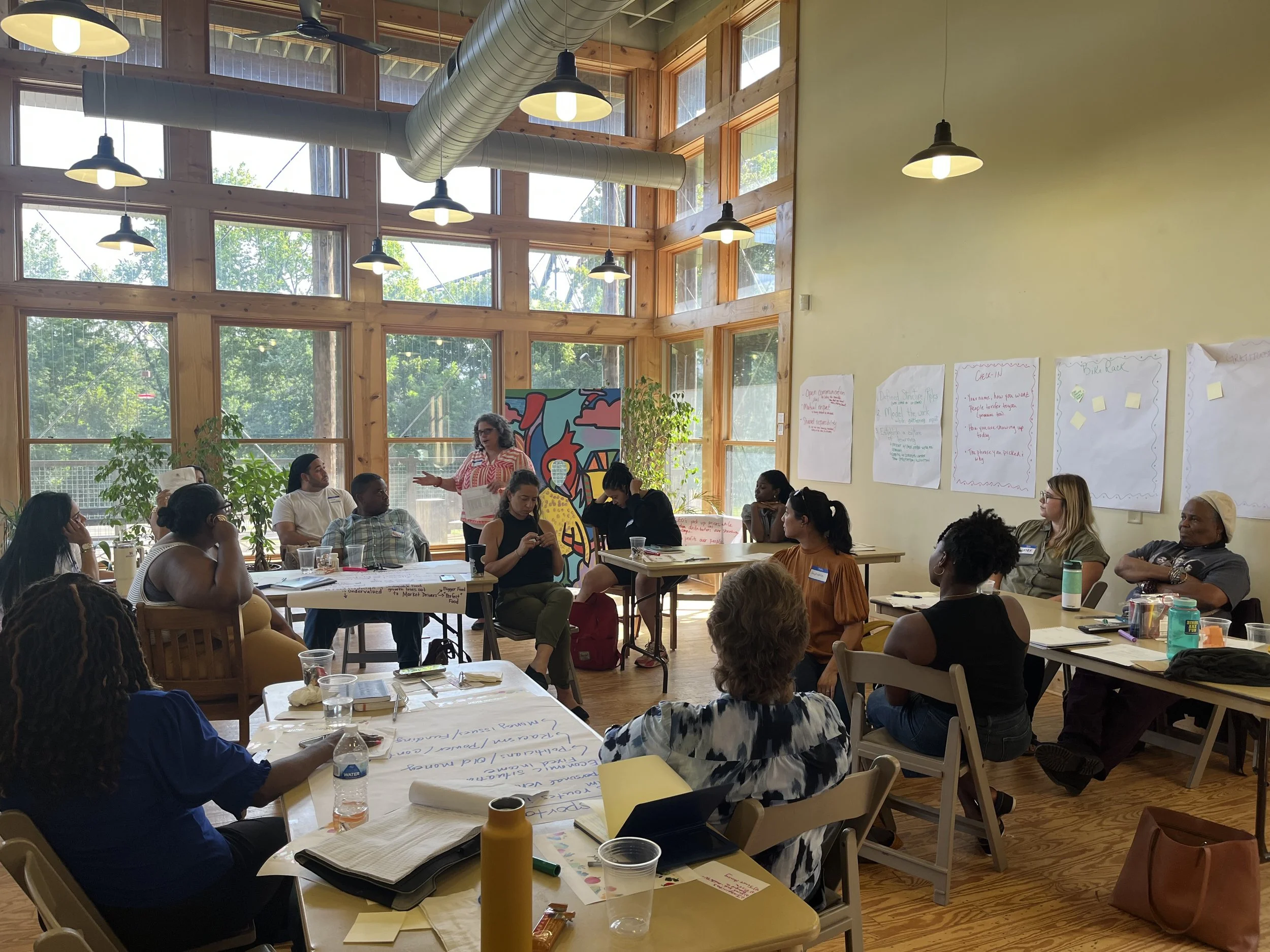
To learn more about FeedBack Nashville, we invite you to join us at our public launch event on December 5, 2023 at 10am. RSVP and more information here.
Apple Joe's Giving Trees
Anyone who has walked into the kitchen since August has probably noticed the crates and crates of apples stacked anywhere we can find room: under prep tables, along walls, on carts and racks. Anyone who has walked into the kitchen has probably touched one, too — whether it’s our meals team unloading them from a truck, staff juicing them for warm apple cider, volunteers blending them into applesauce or touring visitors indulging in a snack.

In fact, since the beginning of apple season, apples have been diluted into vinegar, chopped into salads, baked into muffins and pies, and served whole alongside a hearty lunch. The 5,000 pounds of apples we have stewarded this year are thanks to our dear friends Joe and Penny Hodgson, who tend a vibrant orchard and donate a large majority of their yield to our kitchens.

The Hodgsons’ orchard has about 575 trees of many different varieties, from classics like Fujis and Galas to lesser-known varieties like Jonagolds and Arkansas Blacks, that produce fruit from August to October each year. Tucked in the hills of McMinnville, the orchard is a haven that feeds plants, animals and people alike.
One of our favorite things about being connected with the Hodgsons is how they use their land to cultivate community. Picking 3,000 apples in a weekend is no small task, but when a group comes out to help, this laborious work transforms into time to build connections, share stories, and participate in a timeless fall tradition. This year, our team got to make two different visits to the orchard to join in the fun!


As the fall winds down and our team prepares for a season of rest, we cherish these memories from sunny days at the orchard with the Hodgsons. We’re already looking forward to next apple season!