
The Nashville Food Project’s Blog



Joining Forces for Free Community Health Days
In late 2021, thanks to generous funding from Welcoming America’s Resilient Rapid Response Fund, the TNFP team had the opportunity to lean into a new form of community health and care. We leveraged our resources and community connections to increase opportunities for New American communities to access COVID-19 vaccines and health information with intentional language support alongside access to fresh, local produce distribution and other essential services.
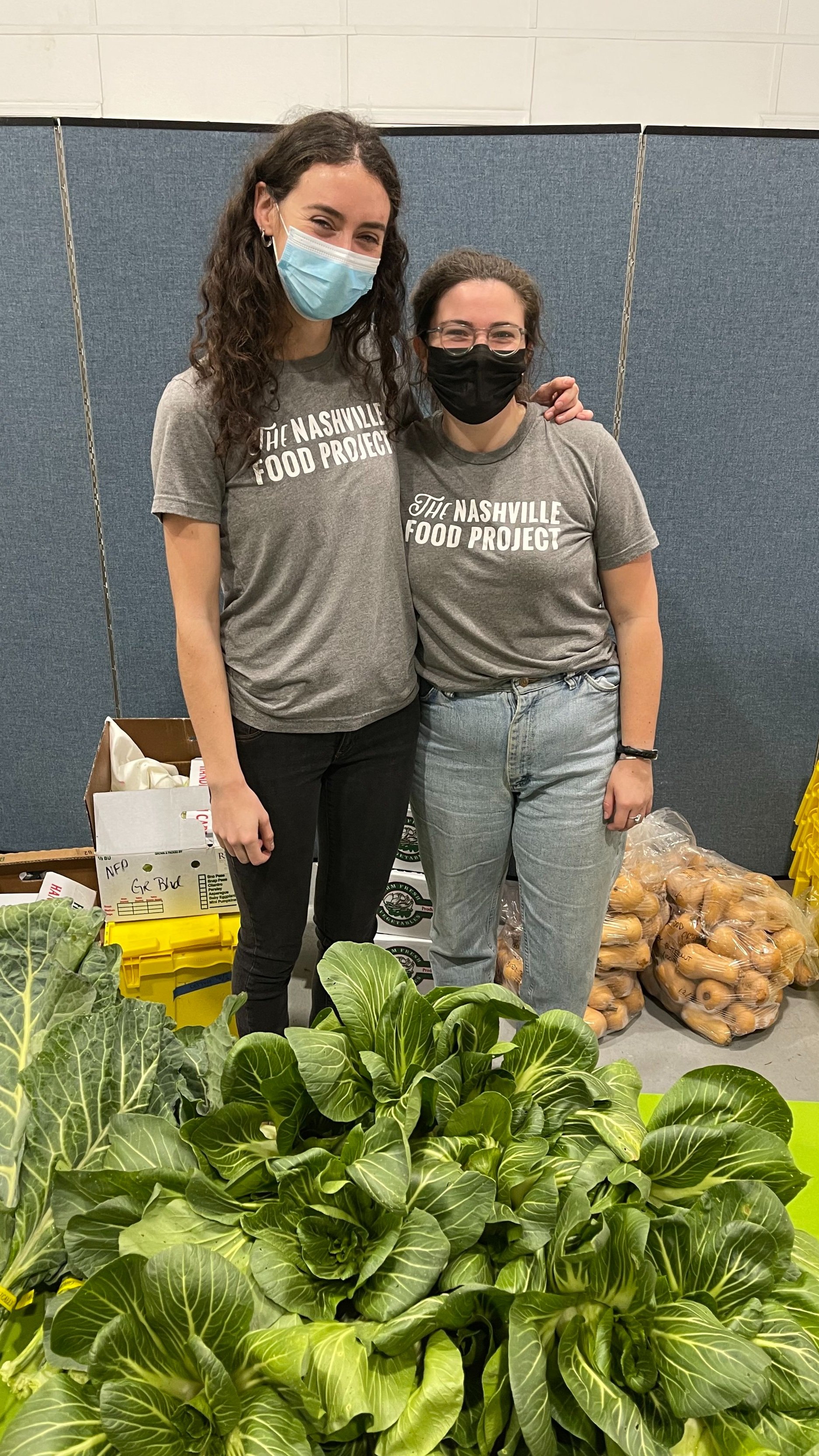
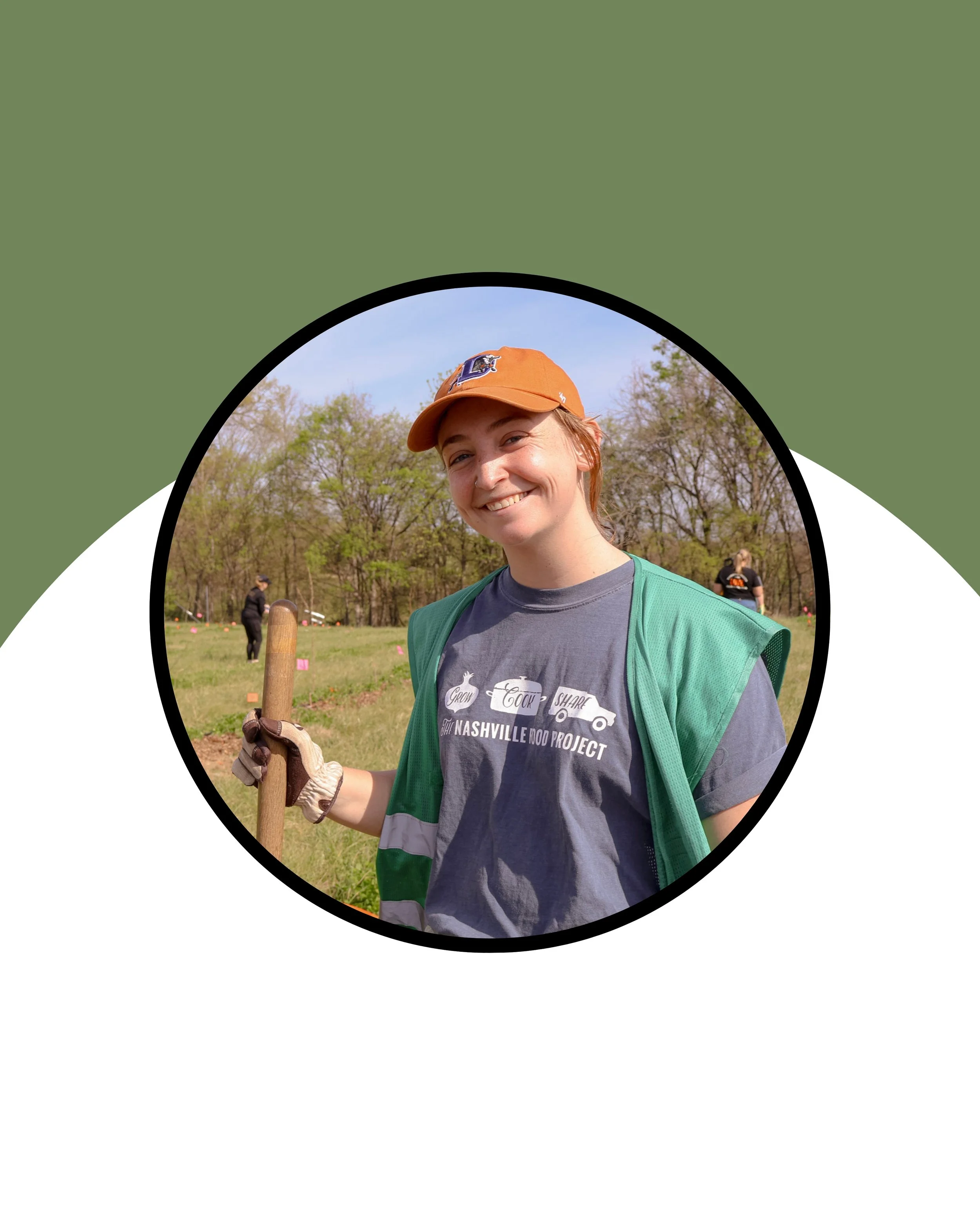
Lilah and Annie get ready to share some bok choy, collards and other produce.
by Elizabeth Langgle-Martin, Community Engagement Manager
The Nashville Food Project’s work has long been that of sharing high-quality, fresh food alongside powerful and essential programming in our city to enhance the poverty-interrupting work of nonprofit partners, community organizers, grassroots movements, and others.
In late 2021, thanks to generous funding from Welcoming America’s Resilient Rapid Response Fund, the TNFP team had the opportunity to lean into a new form of community health and care. We leveraged our resources and community connections to increase opportunities for New American communities to access COVID-19 vaccines and health information with intentional language support alongside access to fresh, local produce distribution and other essential services.
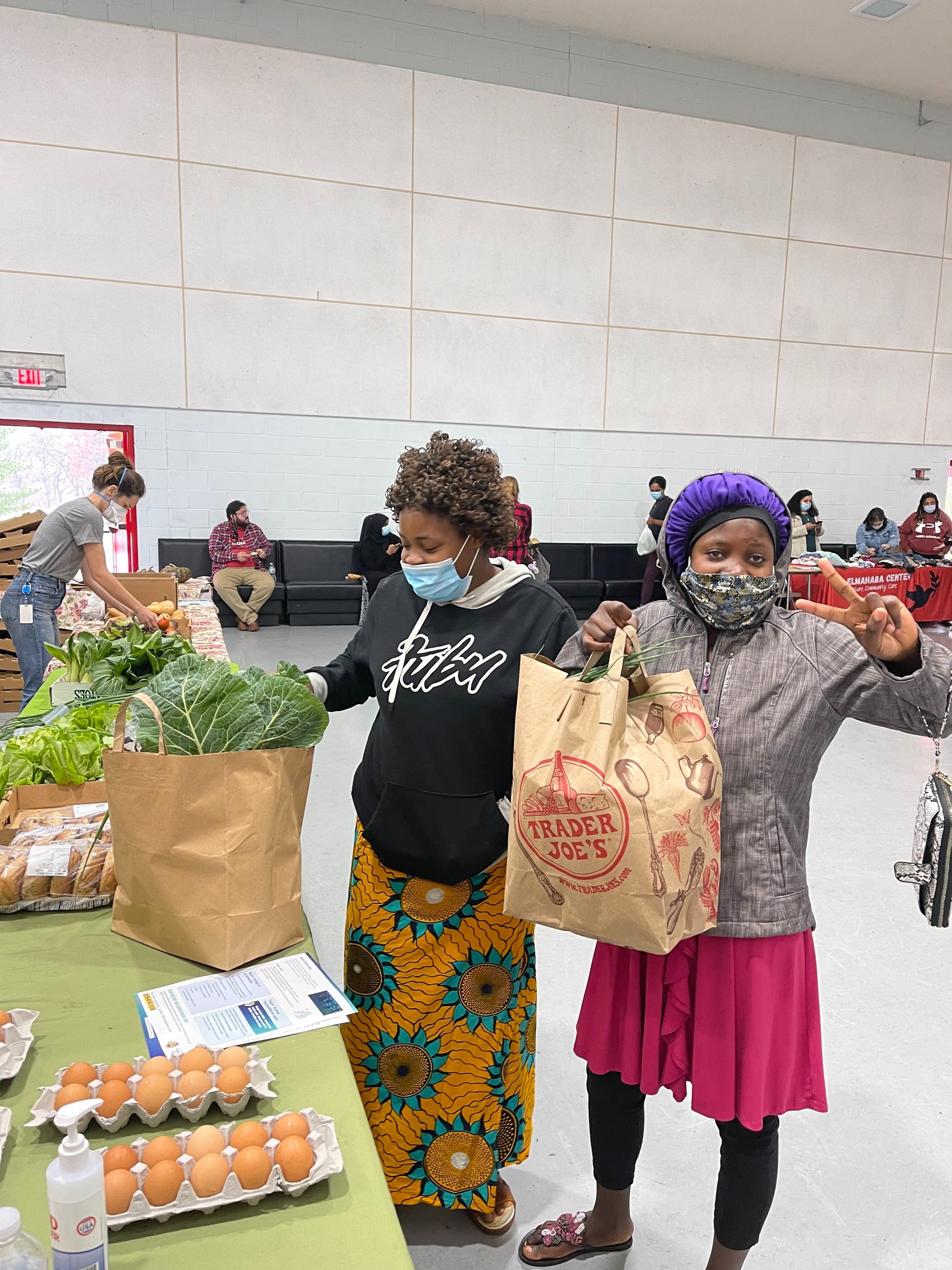
Event participants — shared with permission.
Inspired by our long time partnership with Christ Lutheran Church (the site of our Growing Together farm) and its sister congregations, alongside the vibrant community work of Elmahaba Center, we held three community health and COVID-19 vaccine events in South Nashville with deep support from a network of language workers and a number of other service providers. Metro Health’s COVID Vaccine Strike Teams, under the leadership of Tameika Evans and Ebony Harris, provided combinations of testing and vaccine services. Throughout the course of planning and feedback from the represented communities, offerings grew to include diaper support through Nashville Diaper Connection, paper goods through Community Resource Center, children’s items through Elmahaba, and resource and health information through Tennessee Justice Center, Siloam Health’s Community Health Workers, NICE’s Trusted Messengers and so many more.
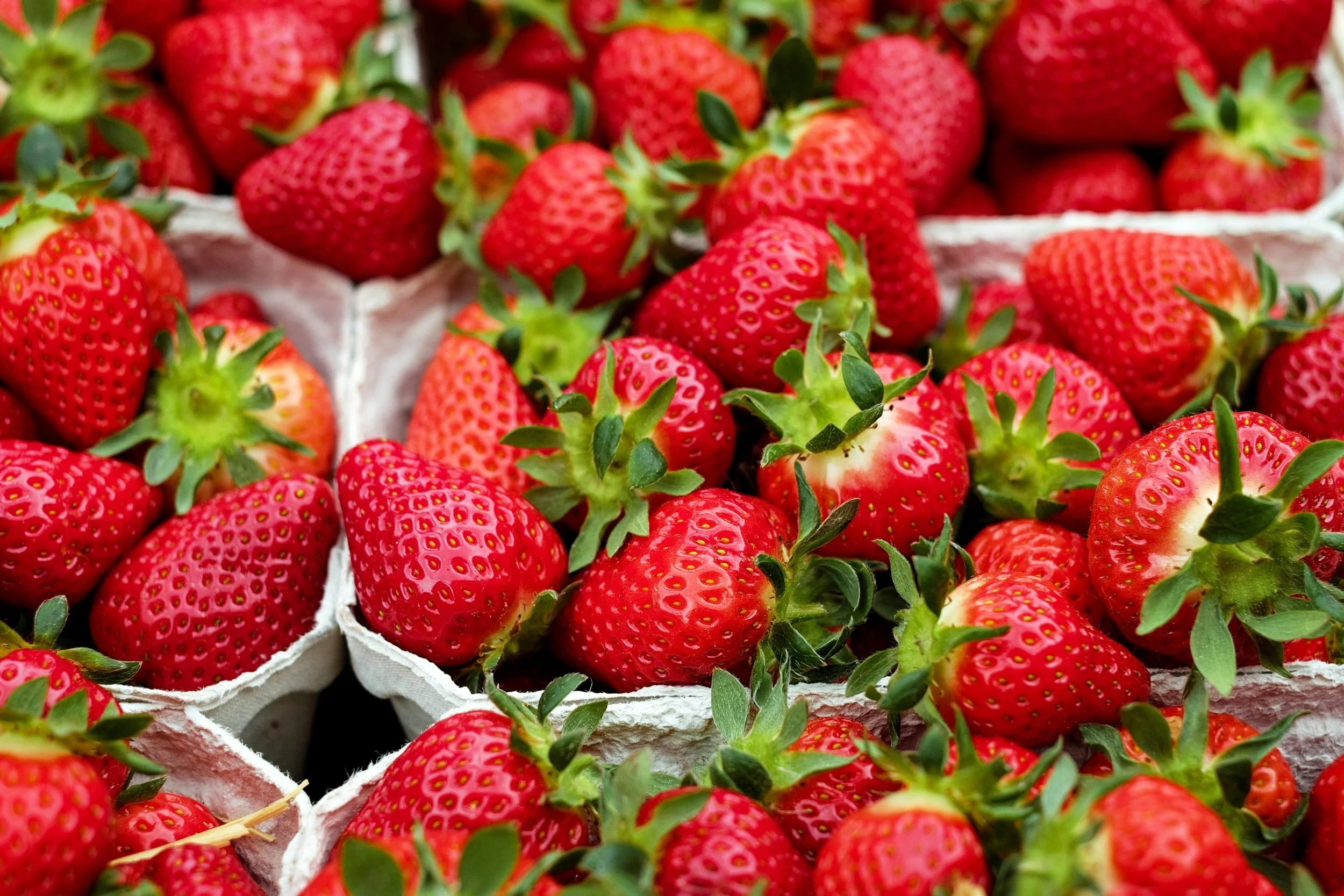
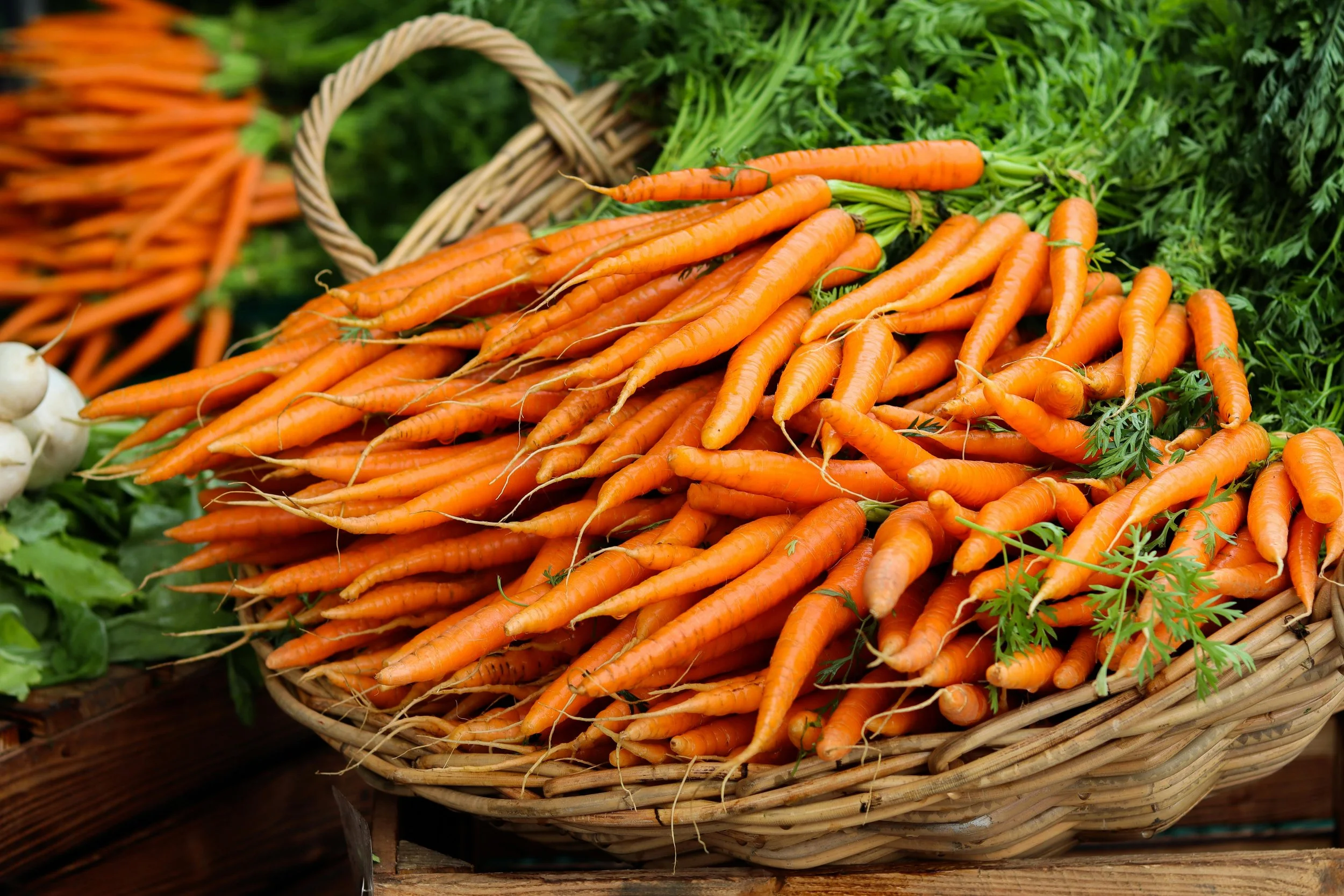
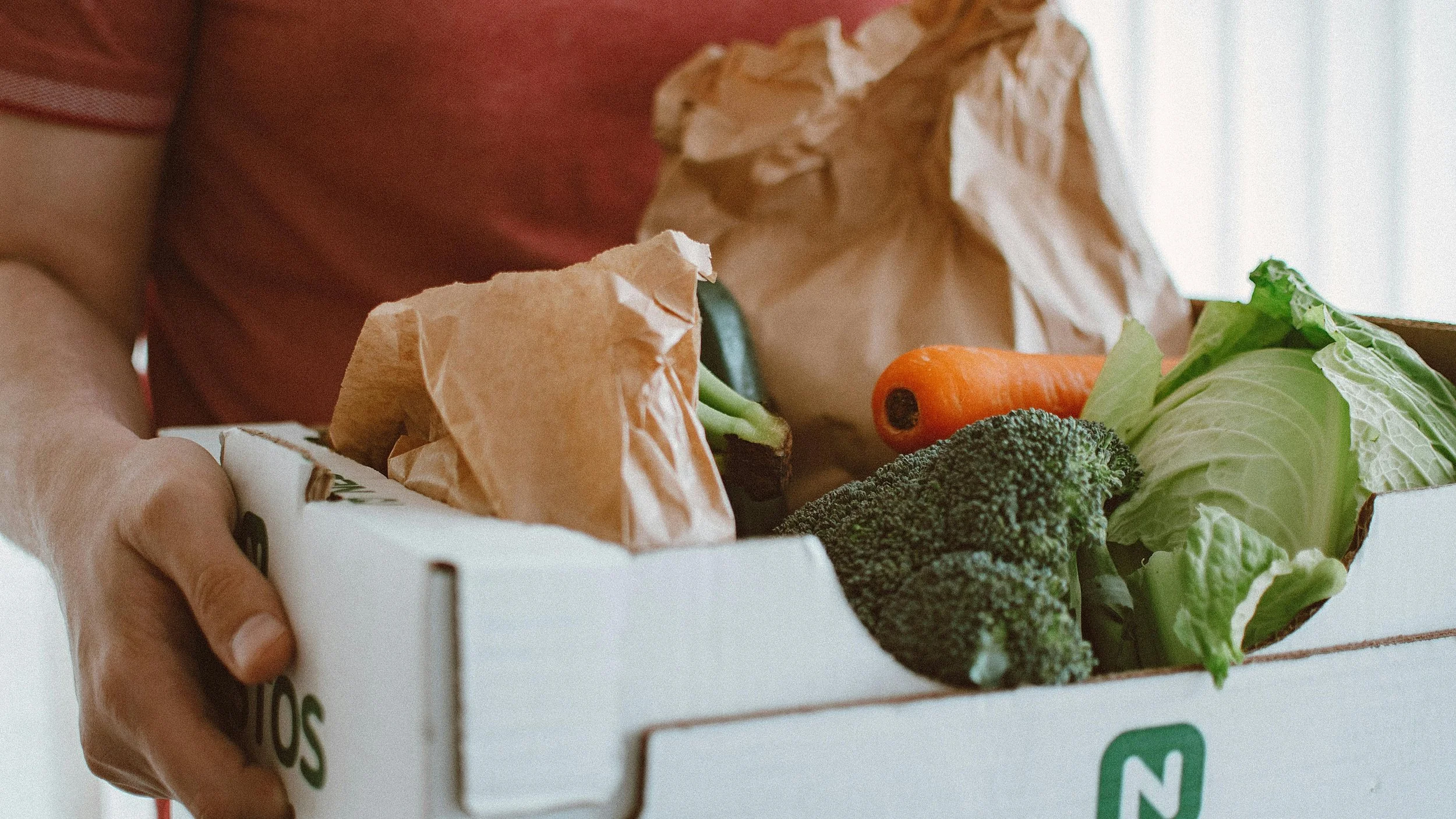
At the close of our early December event, our team celebrated the 96 vaccines administered throughout these three events. We also shared pounds and pounds of locally grown produce such as thick bundles of collard greens, carrots with leafy tops, a rainbow of peppers, potatoes and beets as well as other herbs and vegetables alongside flats of eggs. Guests to these events represented more than six language groups, with folks sharing greetings and information in Arabic, Swahili, Burmese, Nepali, Spanish, and English. Our favorite moments included neighbors sharing the varied uses of different produce heaped on folding tables and comparing preparation ideas or snagging extra eggs for a neighbor and herbs for their aunt. We also loved the cheers when someone received their first vaccine dose and watching small children race their matchbox cars from Elmahaba Center across the gymnasium floor.
We are excited to continue this work in the new year through an invitation to collaborate with Tennessee Immigrant & Refugee Rights Coalition (TIRRC), Conexion Americas, NICE, PENCIL, Hispanic Family Foundation, Metro Health and others for another rendition at the TIRRC headquarters on Jan. 8! Make sure to follow along with our partners in this vital and timely work!


Partners with the Tennessee Justice Center were on hand to help with questions about SNAP and TennCare.
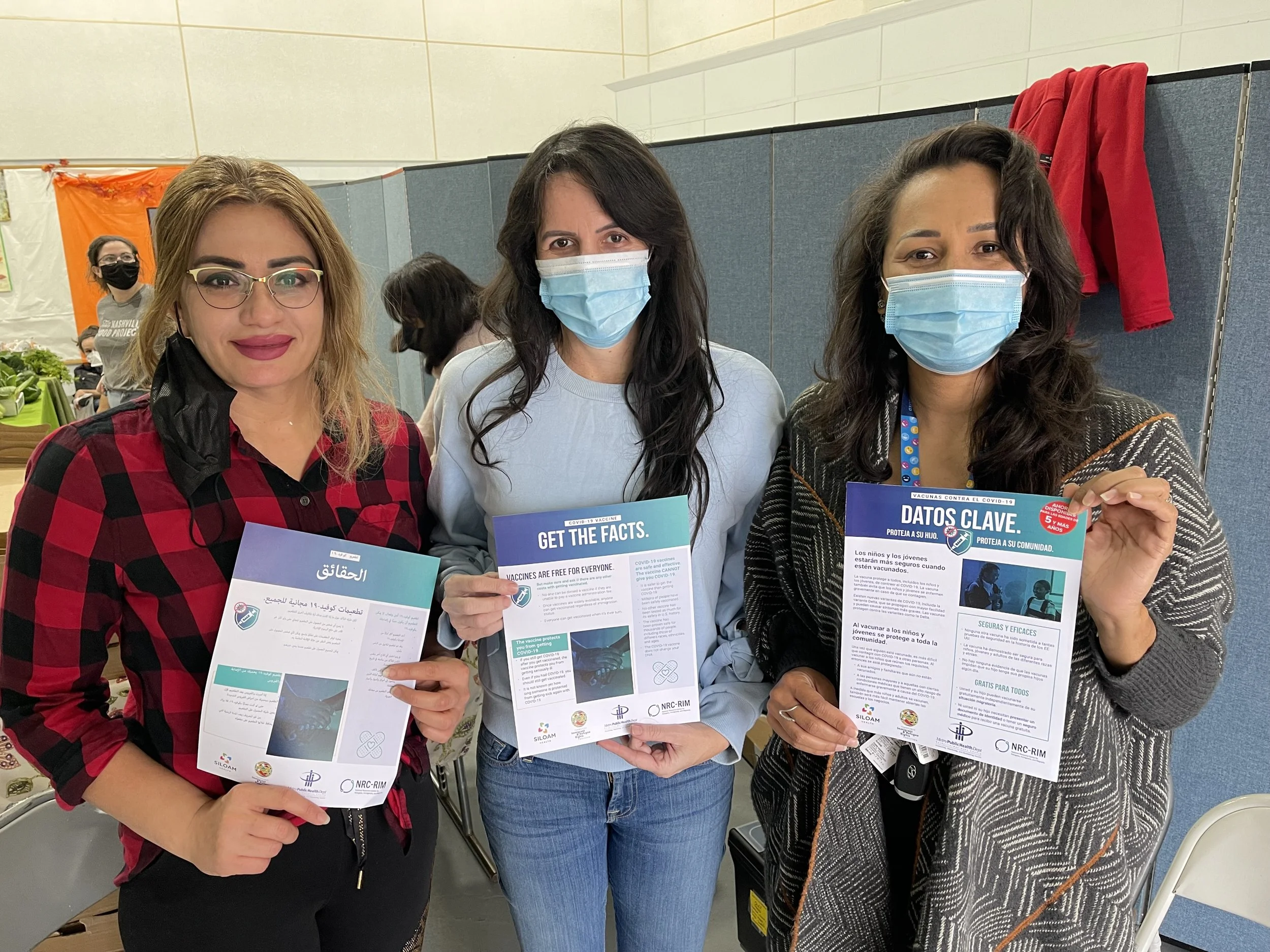
Partners with NICE and Siloam Health.

Two of our co-hosts at Christ Lutheran Church, Pastor Esther Godfrey and President of Church Council Mark Miller.
Partner Spotlight: Elmahaba Center
We spotlight Elmahaba Center, a nonprofit serving the Arabic-speaking community, as well Ashraf Azer, interpreter for the Arabic-speaking gardeners at the Community Farm at Mill Ridge. We are privileged to host seven Egyptian gardeners on the farm this season and have loved learning about a specific type of green used to make Molokhia, a beloved Egyptian soup.
When Ashraf Azer arrived in the United States from his native Egypt about 15 years ago, he took a job as a housekeeper at Gaylord Opryland Hotel. He cleaned rooms by day and spent three evenings a week for three years at McGavock High School taking English classes.
“I was the most annoying one,” he said of his persistence in learning. “I was always asking the teacher.”
These days, Ashraf works as operation manager in housekeeping at Opryland—and he serves as an interpreter for the Arabic-speaking community gardeners at The Community Farm at Mill Ridge.

While you can hear multiple languages in our gardens, this is the first year we’ve had the privilege of hosting Arabic-speaking folks, specifically seven gardeners who came to the United States from Egypt and live predominantly in South Nashville. For this new development, we thank Ashraf and the folks at Elmahaba Center, a nonprofit formed two years ago to serve the Arabic-speaking community. Ashraf, a leader in the community, acted as a founding Board member.
Ashraf says response to the community garden applications took off quickly in his community, which has an agriculturally rich culture of fertile land along the Nile River. “We are very passionate about farming. It’s our history,” he says.
But in this country few people have access to land for growing their own food. “Not everybody in the Arabic-speaking community owns a house. Most own an apartment. Even the houses don’t have a big backyard,” he says. “It’s something everybody maybe dreams about.”
Folks also were eager to know, for example, if they could grow culturally significant crops at Mill Ridge like specific greens for Molokhia, a soup many consider the national dish of Egypt with a name that means “vegetable for kings” and dates back to the time of the pharaohs.

“All this stuff is very, very important ingredients in our food,” he says. “The green soup. It’s a big deal.”
Lydia Yousief, founder and executive director of Elmahaba Center, adds that food sovereignty is crucial for healthy communities. “When there are limited people who are able to own land, that means that the food we are eating—mostly people of color—is given to us. You don’t have much agency when you don’t have land in what you’re putting into your body.” That also translates to less agency over health, mental capacity, community and culture.

“Having the power to cultivate the land is also mutual,” she says. “I can’t just grow anything in Tennessee. I have to listen to the land as well. Once you do that you become not temporary here.”
Beyond their own tables, Ashraf says growing food provides opportunities to be connected to a place in giving back. “Maybe they like to donate but don’t have the resources to donate,” he says. “But they can donate food.”
Helping people have access to gardens and interpretation is, of course, just one part of the work at Elmahaba Center, whose name means “unconditional love.” Lydia estimates that between 50,000 and 75,000 Arabic speakers live in Nashville but belong to various communities—Egyptian, Iraqi, Yeminis and Syrians—with different cultures and religions. “If our reaction is to further isolate, that’s not gonna save anybody,” she says. So the group holds cross-cultural Community Saturdays to provide goods like clothes or food. Elmahaba also posts educational videos on all manner of topics from COVID-19 to legal advice with hopes to expand more into ESL, citizenship and businesses classes for Arabic speakers.
In the meantime, The Nashville Food Project will be working to expand and create safe spaces where gardeners of all cultures can continue to grow different but culturally relevant food side by side. As Lydia says, “We are much stronger together than alone.”

To learn more and support Elmahaba Center, visit their website or follow their work on social media.