
The Nashville Food Project’s Blog




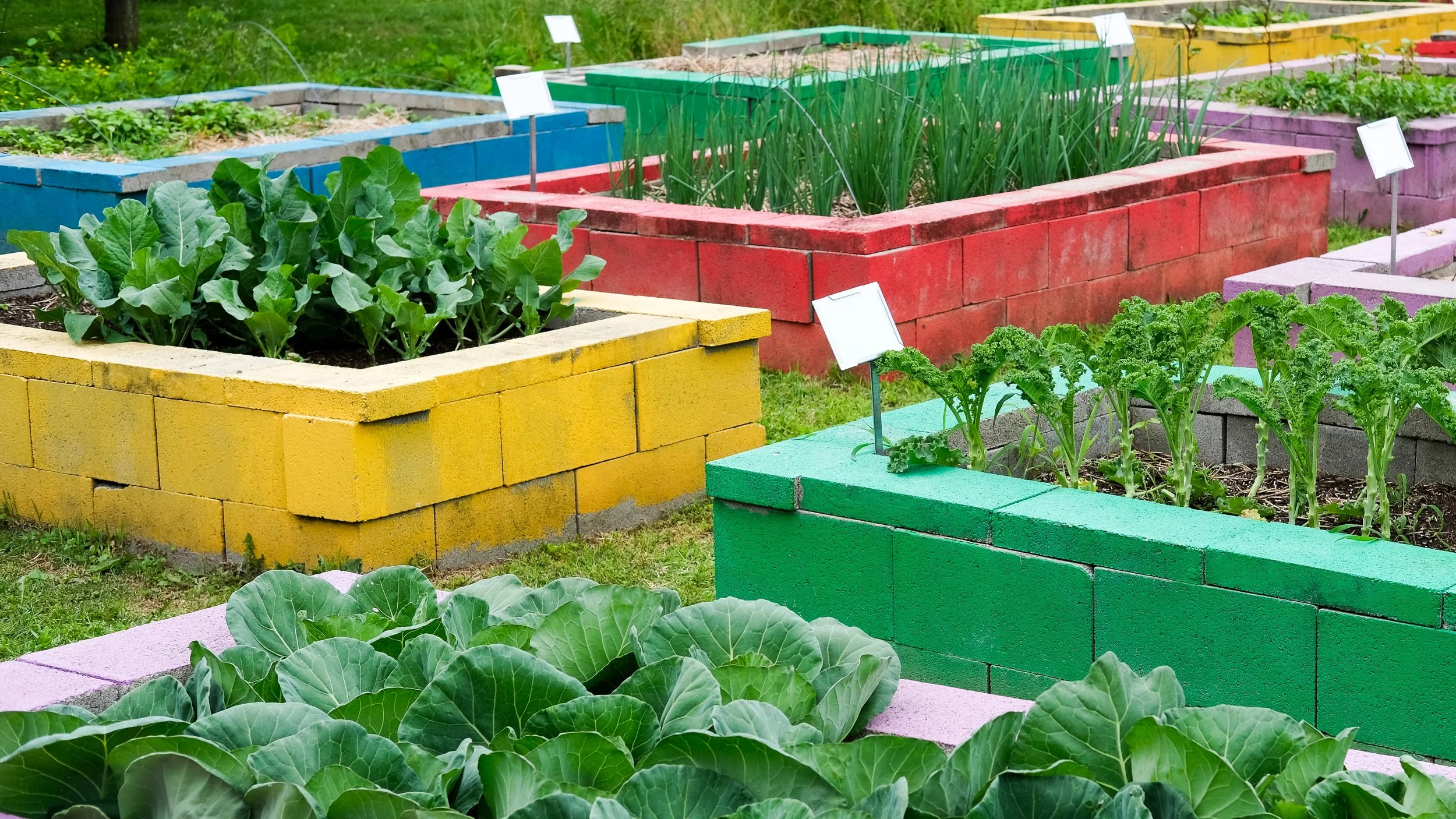
Tips from the Gardens: Starting Seeds
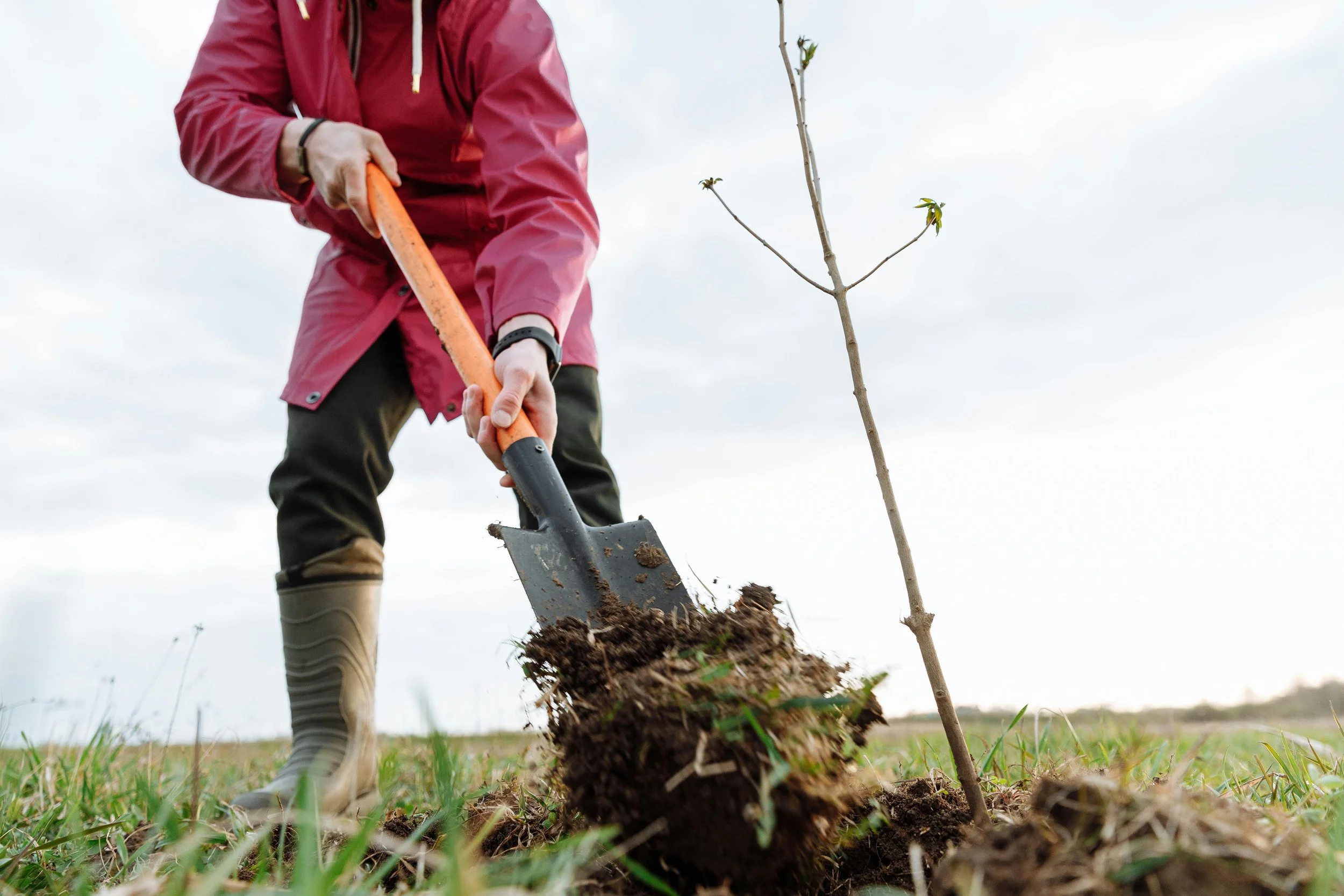
Whether you’re a novice gardener or seasoned farmer, we can always learn from each other — especially when it comes to starting plants from seeds. Community Farm Manager Nora McDonald shares some tips on how to start seeds at home.
By Nora McDonald, Community Farm Manager
Containers:
Choose sturdy containers with bottom holes for drainage. These can be plastic pots from your local garden center made specifically for seed-starting, or you can get creative and recycle clean plastic containers or even egg cartons you have saved — just make sure there are holes in the bottom for water to drain out.

Potting Soil:
Choose a potting soil to start your seeds in. It should hold moisture well but be loose enough for the seeds and sprouts to access oxygen. There are many options for potting soil made specifically for seed germination, and you can consult your local garden center for a recommendation.

Planting:
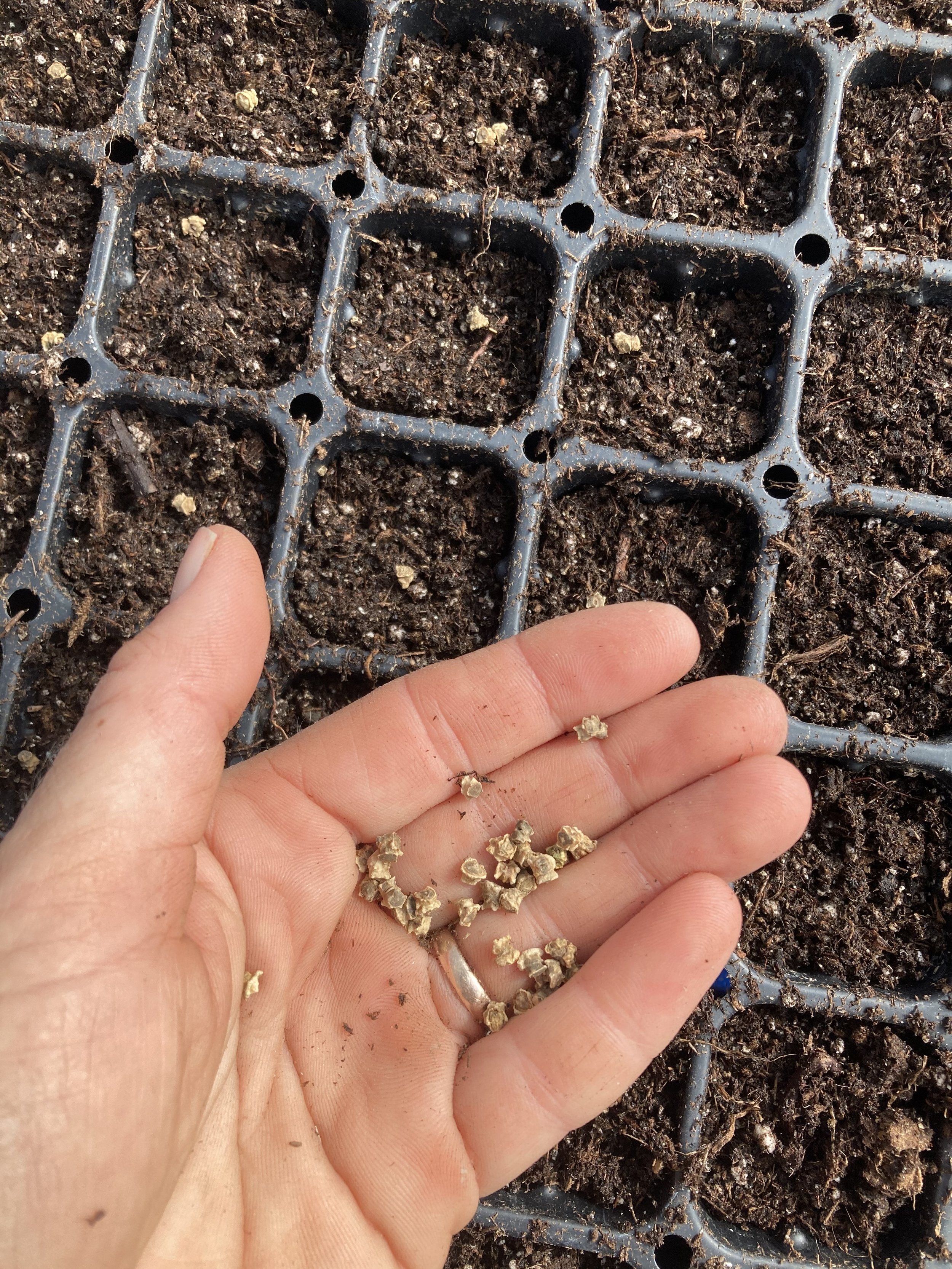
Plant your seeds according to the recommendations provided on the seed packet. Most seeds only need to be planted to a depth equal to the width of the seed itself. Planting too deep will cause the seeds to struggle. Once you have covered the seed with soil, gently press or pat the soil to ensure good seed-to-soil contact. This helps the seeds absorb moisture.

Water and Warmth:
Provide even moisture and warmth until seeds emerge. The soil should be kept moist, but not water-logged as too much moisture can cause seeds to rot. You can help retain moisture by covering your starting containers with a plastic dome or by using cling wrap. Remove these covers when sprouts emerge and place them in a sunny location such as a south-facing window.

Potting Up:
Especially if you have started your seeds in very small containers, you’ll want to pot them up into larger containers shortly after they have germinated and the first true leaves have appeared. A growing plant will outgrow a small container or germination tray quickly, and potting up prevents the plant’s roots from becoming overly restricted and keeps the plant healthy.

Fill your larger containers with fresh soil, preferably one with added nutrients to help feed the growing plants.
Using a clean wooden stick or small fork, gently scoop under and lift the tiny transplant out of its original container. Never grab a plant by its stem and pull it out of the soil. Lifting from underneath keeps roots intact and reduces stress on the plant.
Gently tuck the plant's roots and some of its stem into the new potting soil and press it into place. Some plants such as tomatoes and peppers like their stems buried a bit deeper, and some plants don’t like it at all, so a bit more research on your type of plant may be required.
Depending on how quickly your plants grow, you may need to pot them up into even bigger containers before it’s time to plant them outside in the garden. This can feel like a lot of work but it is well worth the effort to ensure healthy, vigorous plants. If you plan to keep your plants in containers for a patio garden, you will definitely want to pot them up into large enough containers for the plants to reach their full size and provide a good yield.
Happy Growing!
In an effort to cultivate community and alleviate hunger in our city, The Nashville Food Project brings people together to grow, cook and share nourishing food. Learn more about our programs and how you can get involved.

Partner Spotlight: The Ark
AmeriCorps member Lilah Abrams writes about The Ark, one of our meals partners. The Ark addresses gaps in social services and community resources for seniors in Cheatham County, Tennessee. The Nashville Food Project shares about 100 meals each week with their seniors.
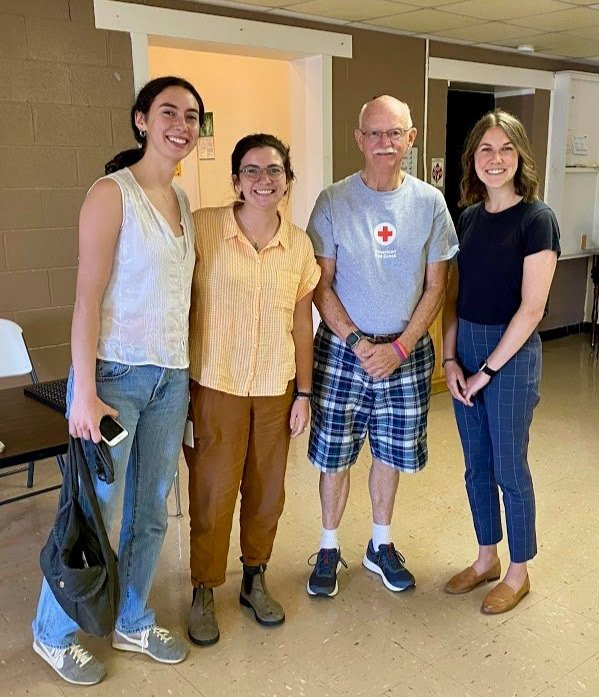
The Nashville Food Project staff and our new friend, Butch
By Lilah Abrams, AmeriCorps Member
Butch usually starts lunch with a joke — an evident ritual that manages to draw a number of giggles from individuals throughout the room. Since 2001, Butch, alongside his wife Marilyn, Melanie Smiley, and Anne Carty, has guided the Senior Lunch program at The Ark, creating a regular space to laugh, share, connect, learn and eat.
These weekly lunches seem to exemplify the core of the Ark’s work in their community: creating a web of care that is fundamentally personal.

While the organization was officially founded in 2001, their meals programming has roots reaching back to 1995 – led by two volunteers who remain active Meals on Wheels delivery drivers. Dedicated to the goal of “addressing severe gaps in social services and community resources for seniors in South Cheatham County,” The Ark’s programming takes many different forms: hosting weekly a “Senior Lunch” out of Pegram United Methodist Church providing utility assistance to seniors throughout the community, offering a robust food pantry, and subsidizing “back-to-school” shopping through their thrift store, Noah’s Ark, among other modes of community involvement.
However, their work of community building – through humor, generosity and hospitality – seems as foundational as much of their programming. The exuberance and warmth of The Ark’s organizing, around and with their meals, embodies much of what The Nashville Food Project holds as a value – “bringing people together” and “cultivating community through food.” In experiencing this, I was reminded of a sentiment I’ve heard repeated here at the Food Project, pulled from words first spoken by Tallu, that imagines a world in which people “have enough to eat and people to eat with.” Experiencing the Senior Lunch at The Ark and their thoughtful, yet incredibly natural ways of creating spaces to explore ‘being together, this sentiment felt brought to life.

This mother-daughter pair helps with Meals on Wheels deliveries and makes regular appearances at Wednesday Senior Lunch.
Sharing these values and goals, The Nashville Food Project has been partnering with The Ark since 2018, serving about 100 total meals each week for both the Meals on Wheels program and weekly Senior Lunches, cooked in our kitchens. Like the work we seek to do in our spaces, Melanie Smiley, a former director of meals for the local school district, often adds and alters based on what folks have been asking for (usually including some dessert options and homemade drinks gathered from donation), before serving inside the church’s community space or distributing among volunteer drivers.
It is over these cake slices, glasses of lemonade, and plates of homemade beef stroganoff that The Ark draws people in to gather – forging new connections and nurturing years-long friendships…eating and having people to eat with.


You can learn more about The Ark’s work to create community in Cheatham County on their website.
Sweet Peas 2022: Setting More Places at the Table
For many children, school is essential in providing both an enriching community and nourishing meals. Our summer meals partners work hard to ensure that when the school year ends, kids don’t lose access to either of these critical things. Thanks in part to Jackson®, our fourth year of Sweet Peas: Summer Eats for Kids kicks off this June!
This summer, you might see our trucks around town on routes to Conexión Américas, Project Transformation, Preston Taylor Ministries or Napier Kitchen Table. You may also catch us on our way to some elementary schools, despite the summer break — A Z Kelley in Antioch, or Hull Jackson in Buena Vista Heights. For all of these daily site visits, the trucks will be loaded up with fresh fruits, scratch-made meals chock-full of veggies and proteins, and cold milk for about 600 kids in Nashville. This is the work of our Sweet Peas: Summer Eats for Kids program, sponsored by Jackson® for the third consecutive year!

Every school year, Metro Nashville Public Schools serves 8.4 million lunches and 4 million breakfasts. But during the summer months, without these daily meals, many youth are at risk of hunger. Despite robust government programs in place to increase food access, Business Insider reported in 2019 that only 16% of children who depend on USDA-funded summer meals are actually able to access them.
That’s why, for the fourth year in a row, we have partnered with diverse summer programming sites across the city to ensure that children still receive the meals they depend on during the summer. Thanks to a long-standing partnership with Jackson®, we anticipate sharing 10,000 nutritious meals at 15 different sites this June and July. This is in addition to the ongoing local partnerships the Food Project maintains year-round.
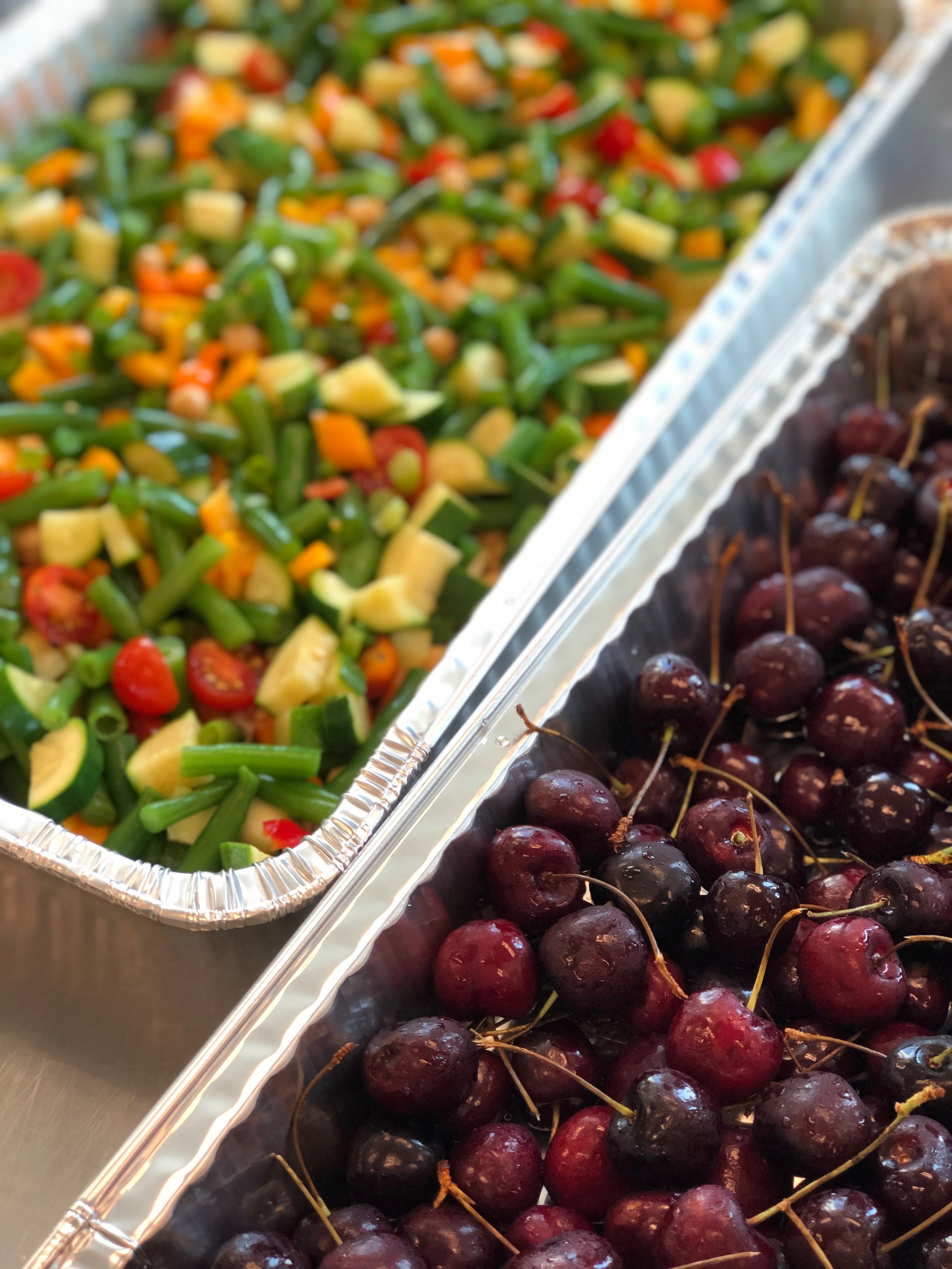
Since the program’s genesis in 2019, we have shared over 63,000 meals with kids during the summer months. But the work goes beyond that. School is a major social touchpoint for most children, and summer can be a challenging and lonely time for some. A good meal is often an entry-point for our partners to develop life-changing relationships with the kids who come through their doors: it fills a need, starts a conversation and creates a culture of trust and interdependence. As our partner Nations Ministry said last year,
“Because of the food The Nashville Food Project serves, we have been able to continue building trust with our students which has in turn allowed them to feel safer at our program and in our staff’s care.”
So of course, we hope that Sweet Peas cultivates a new crop of broccoli enthusiasts, strawberry lovers and adventurous eaters. But our greatest hope is that it cultivates deep community. We are so grateful for and impressed by the work our partners do to give kids safe and engaging places to connect when school is out. It’s an honor to be involved in this interconnected community by setting as many places as possible at an overflowing table.

We hope you’ll follow along with us on social media as we share updates from Sweet Peas this summer!
Click here to learn more about the 2022 SFSP meal sites sponsored by The Nashville Food Project.

Reflections on Simmer: What We Wish Were True
We were so grateful to gather together again at Simmer, the chef pop-up dinner we held in April! This was a special one as it honored our beloved founder, Tallu Schuyler Quinn, and brought together the minds of several local chefs and friends to celebrate the release of her memoir, What We Wish Were True.
““Seated around the table, give me real people who are ready to have real conversations and set aside all the pomp and circumstance of what is false, hollow, hateful, worldly, or avaricious. At the table, talk with me about your regrets, your peculiarities, your memories of your ancestors even if painful, the magic you have encountered, your great love, your fear, your shame, or your hope for the world.””

Photo by Elle Jackson Photography
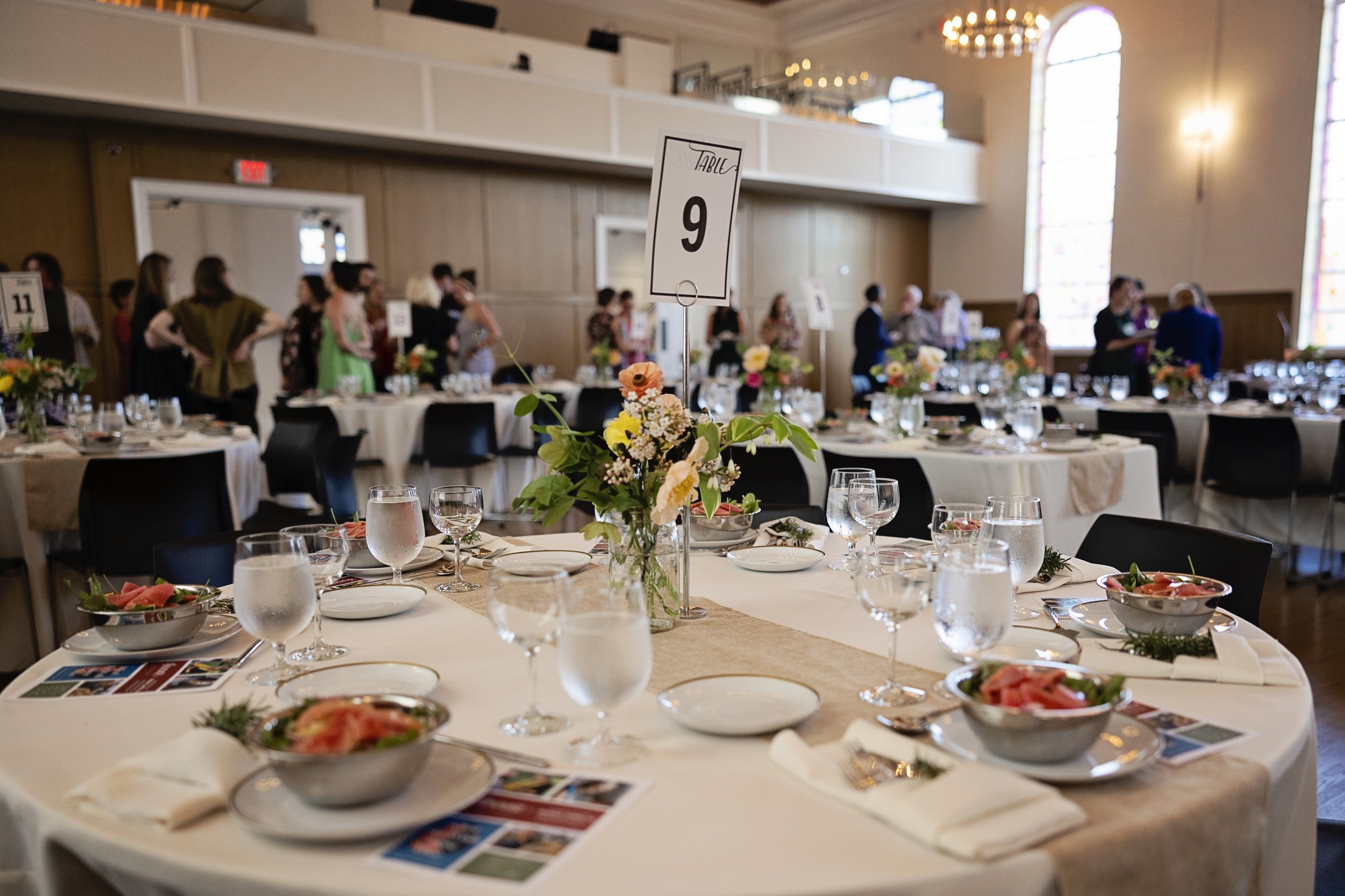
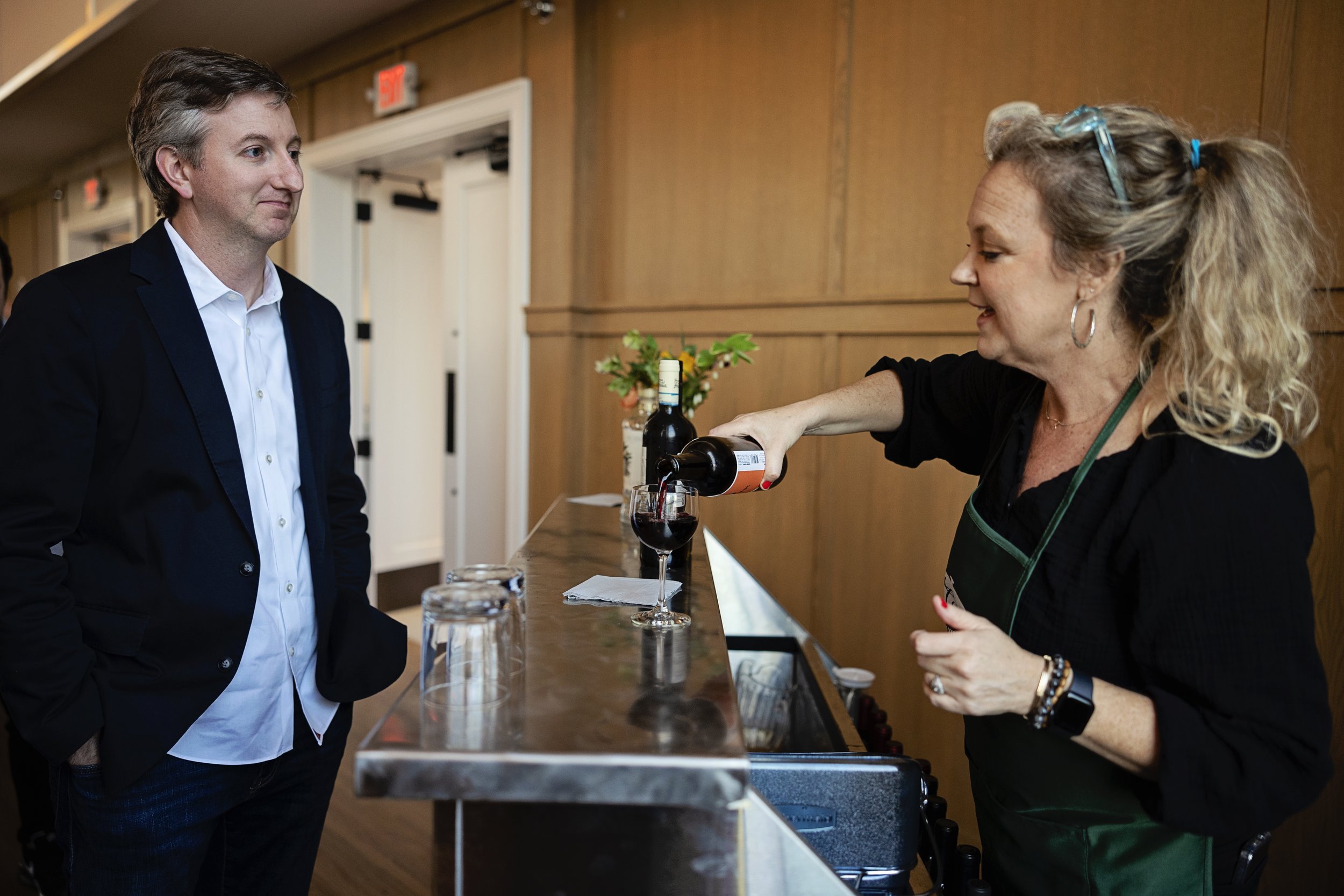
Our first Simmer since 2019 was a special one, honoring our late founder, Tallu Schuyler Quinn and celebrating the release of her beautiful memoir, What We Wish Were True: Reflections on Nurturing Life and Facing Death. Surrounded by the tall, stained-glass windows at Riverside Revival, we crowded around tables to share memories, swap anecdotes and tell our origin stories of the person who made The Nashville Food Project what it is today. We were grateful to host over 125 guests for this special night — our largest Simmer ever — and proud to tell you that funds raised from this night go directly back to our work.
To design the menu, we recruited the brilliant minds of our friends Ann Fundis and Anne Sale, as well as Chef Tandy Wilson of City House Nashville and Chef Margot McCormack of Margot Cafe & Bar. They worked with our very own Chef Bianca Morton to piece together morsels of Tallu’s life and create courses that honored her, a deeply meaningful process. As Chef Margot said, “the dinner gave me some closure on Tallu’s death: saying goodbye, but also feeling my heart open to so much.”
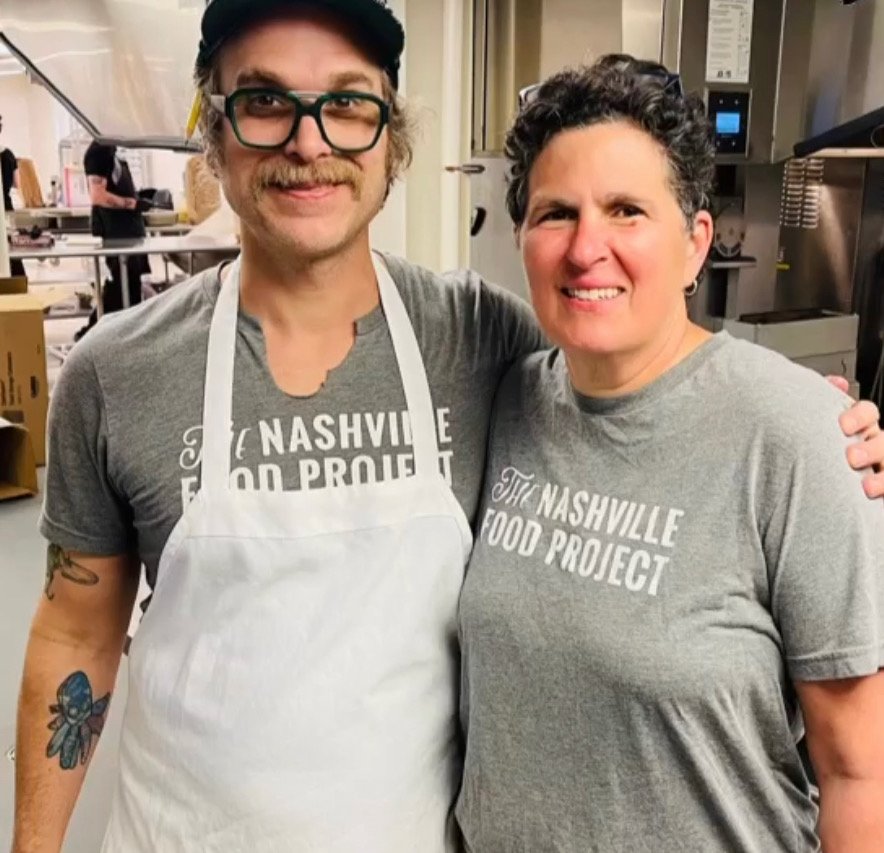
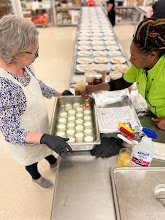
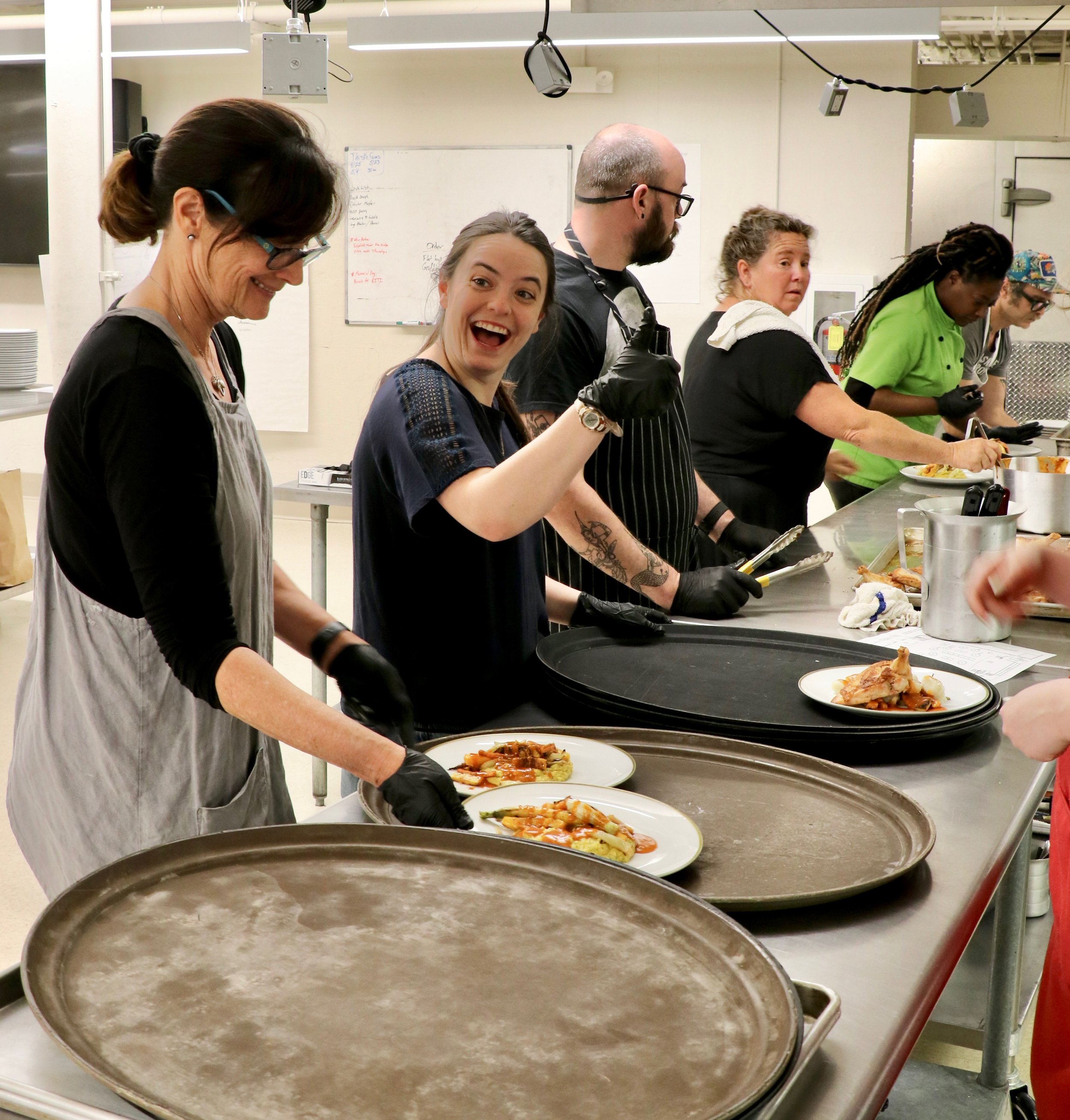
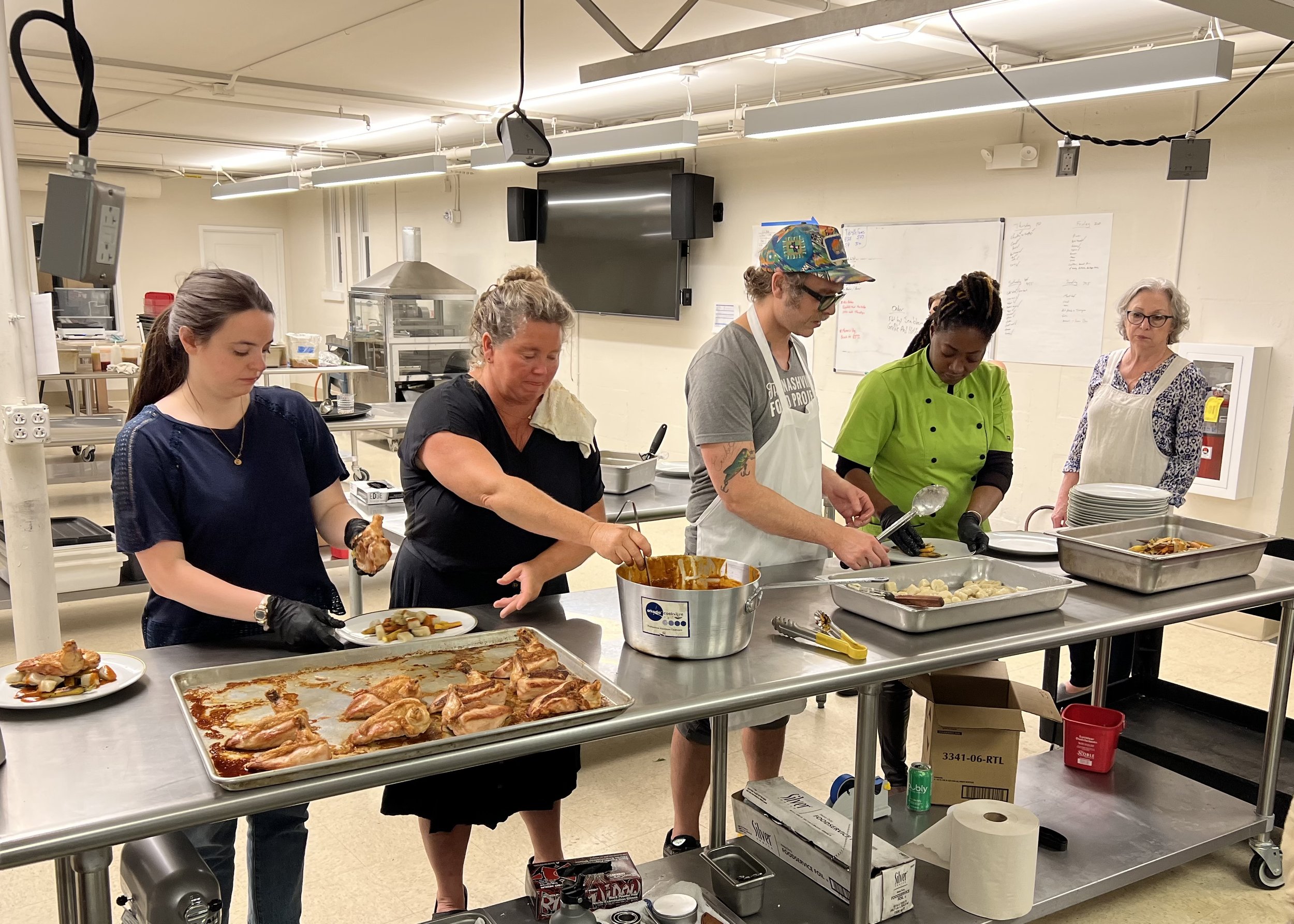
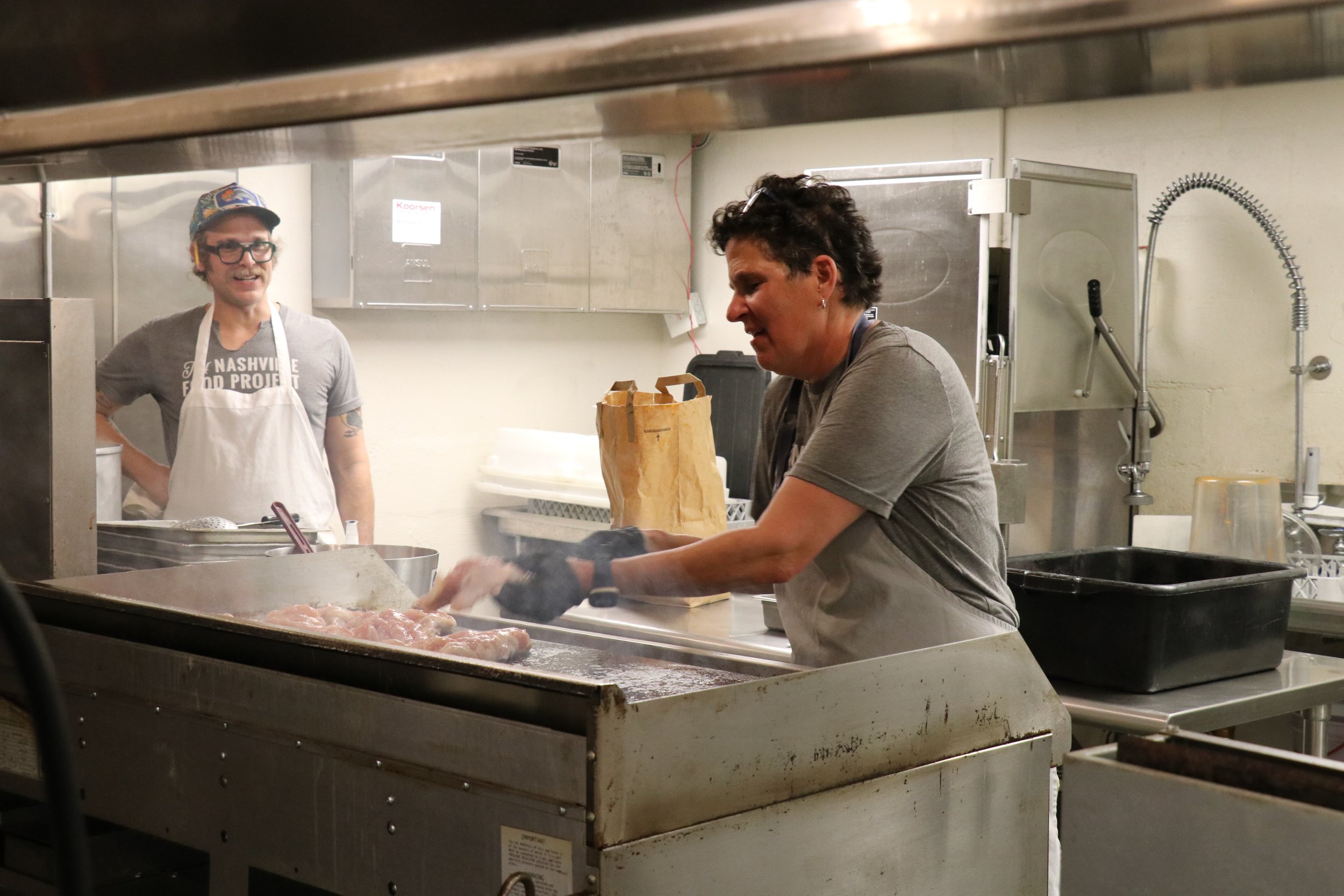
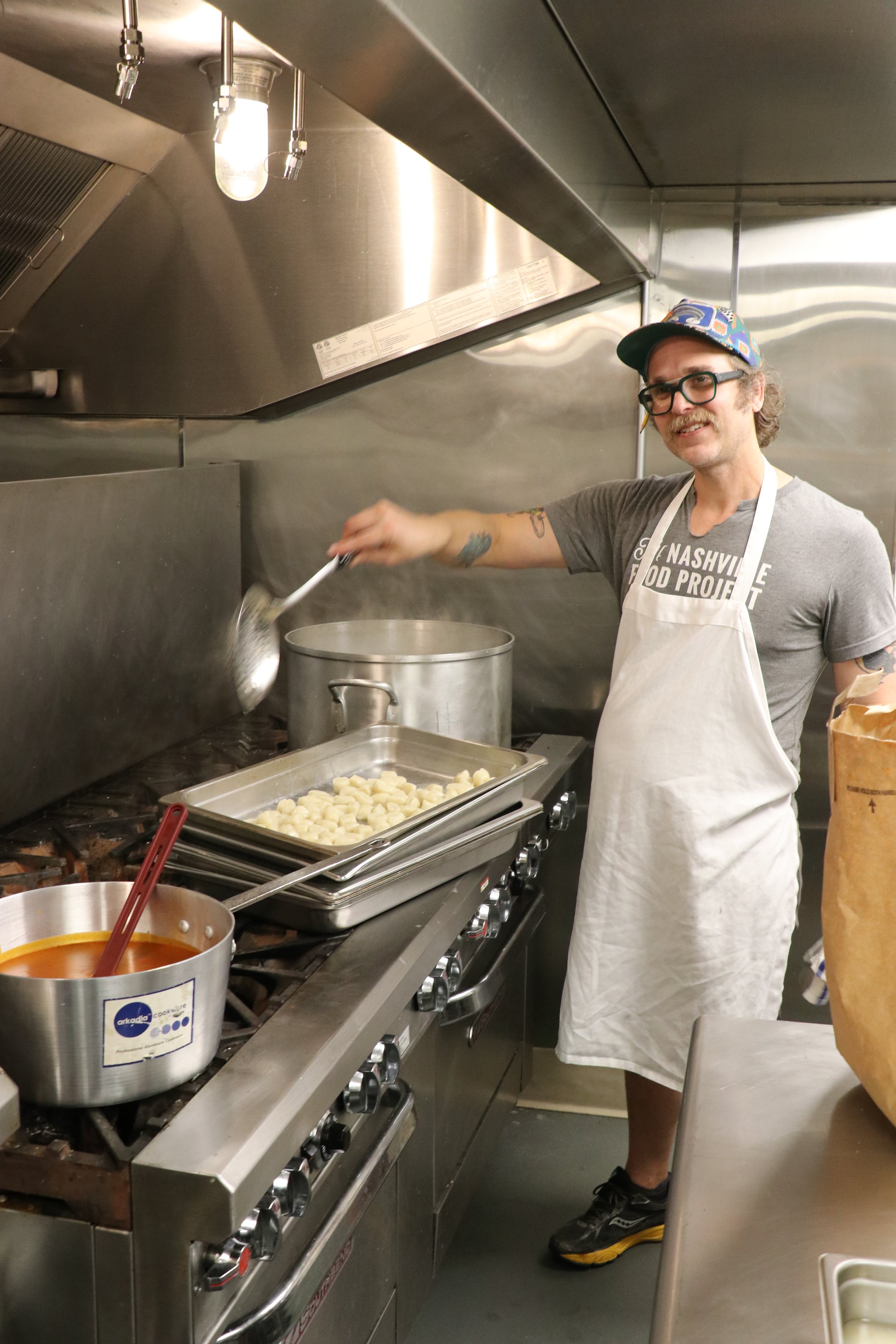
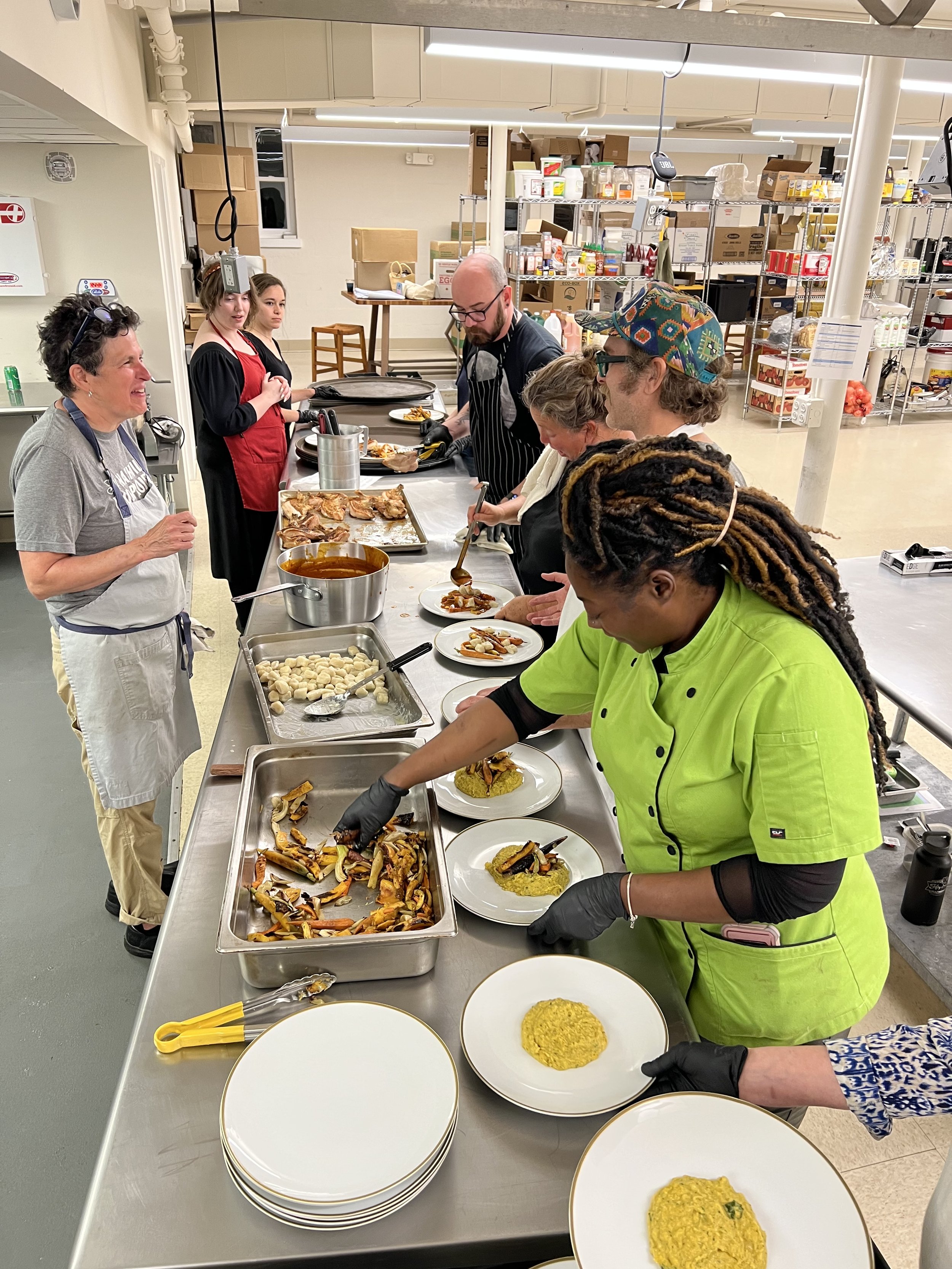
The careful process of choosing each ingredient began by emphasizing the foods that Tallu loved: homemade bread, pickled vegetables, butternut squash, Mexican flan. Then, the chefs worked together to bring their ideas, experience and expertise to the table. “Once the menu was narrowed down, we began collaborating on each other’s strengths and carving out who led what part of the menu,” explains Chef Bianca.
“ “Each of us offered our own interpretations that would elevate the dishes and honor our love of Tallu.””
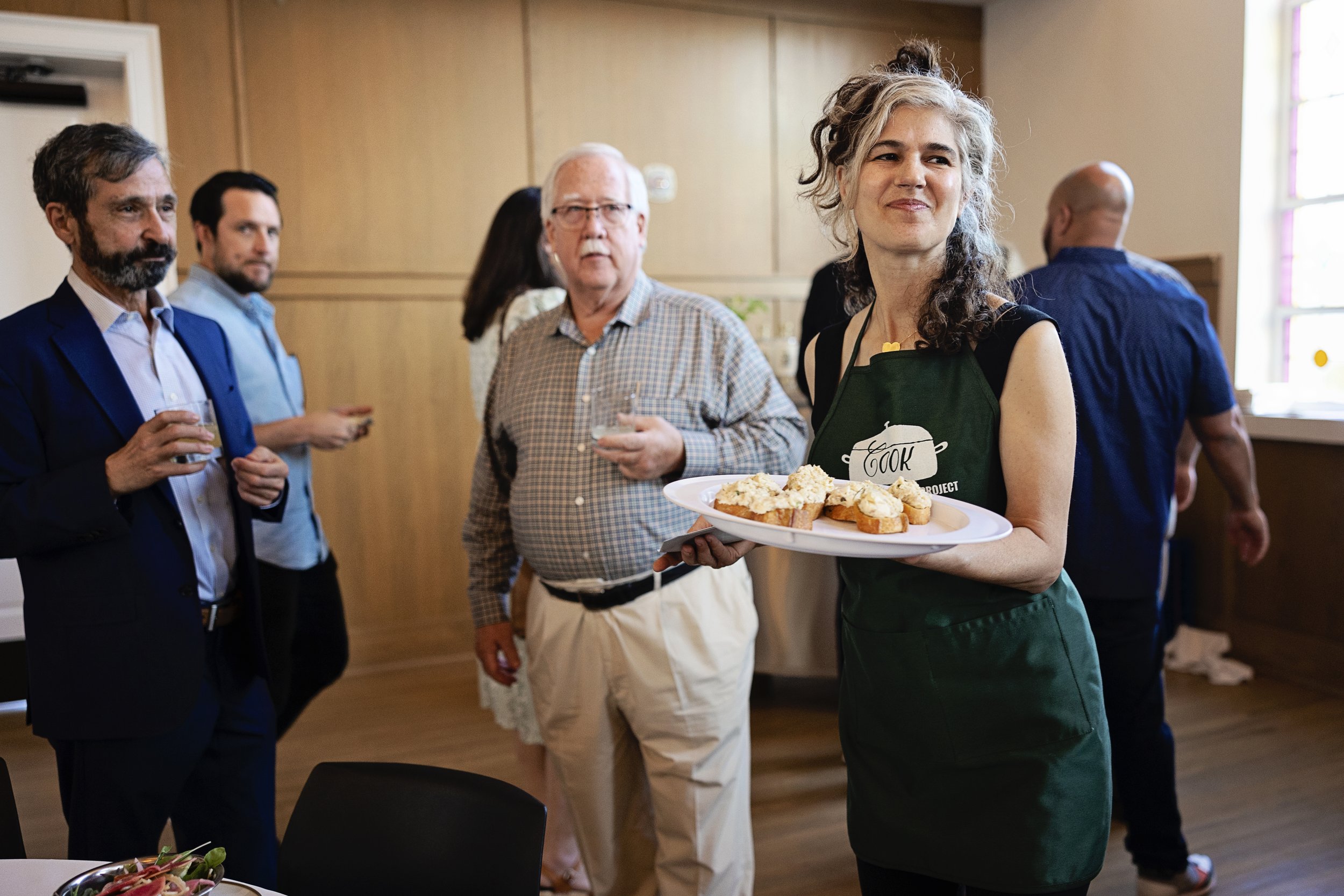
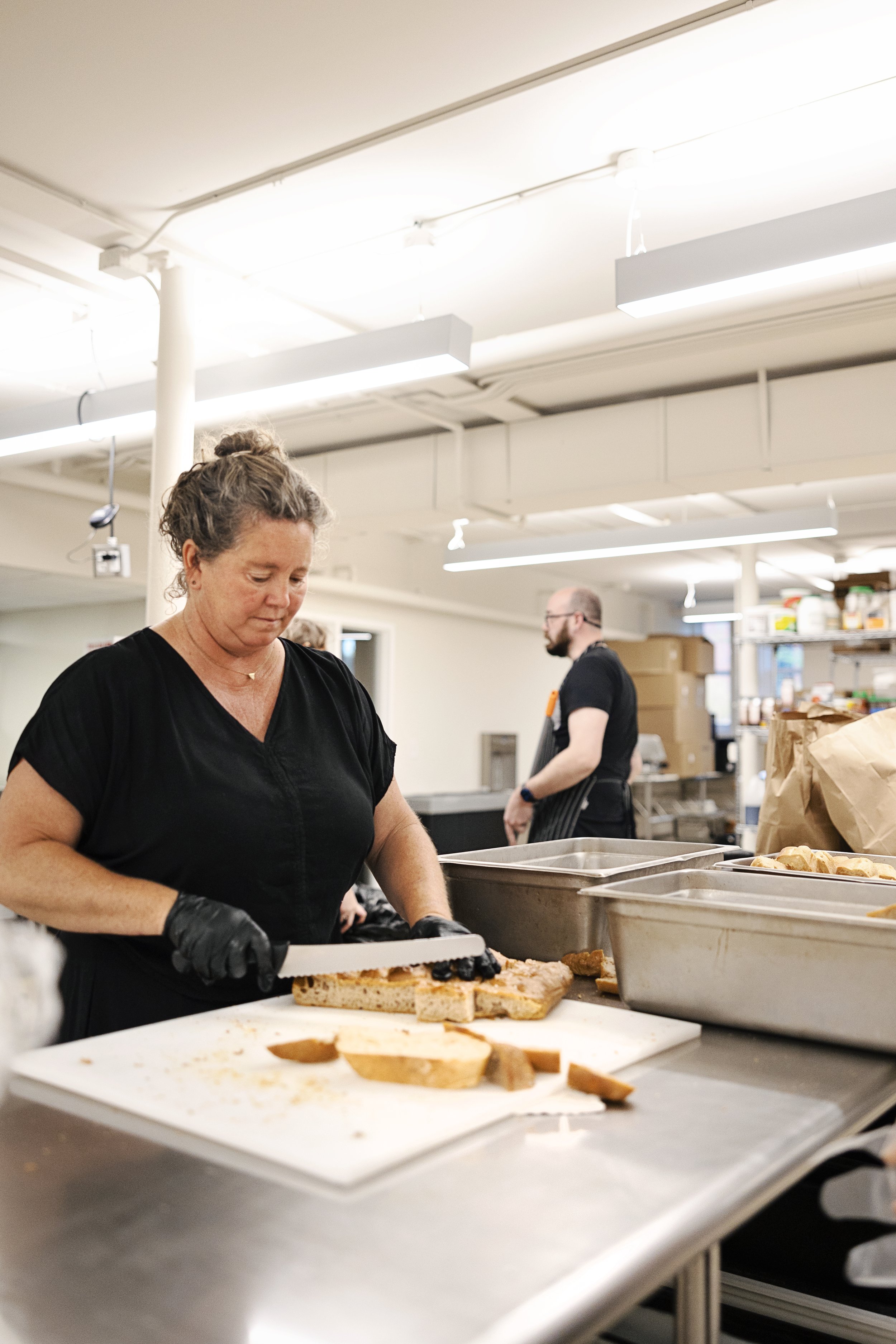
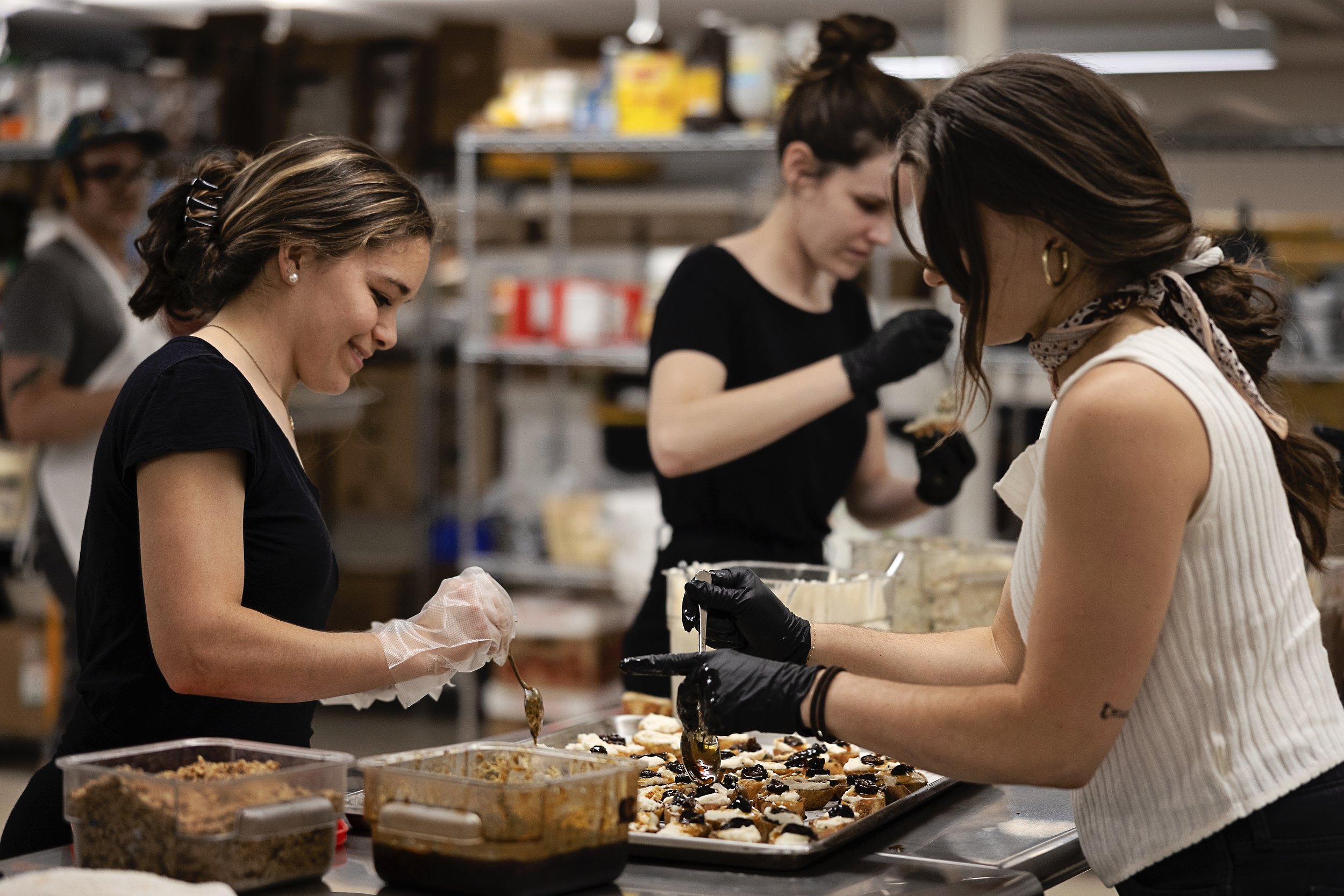
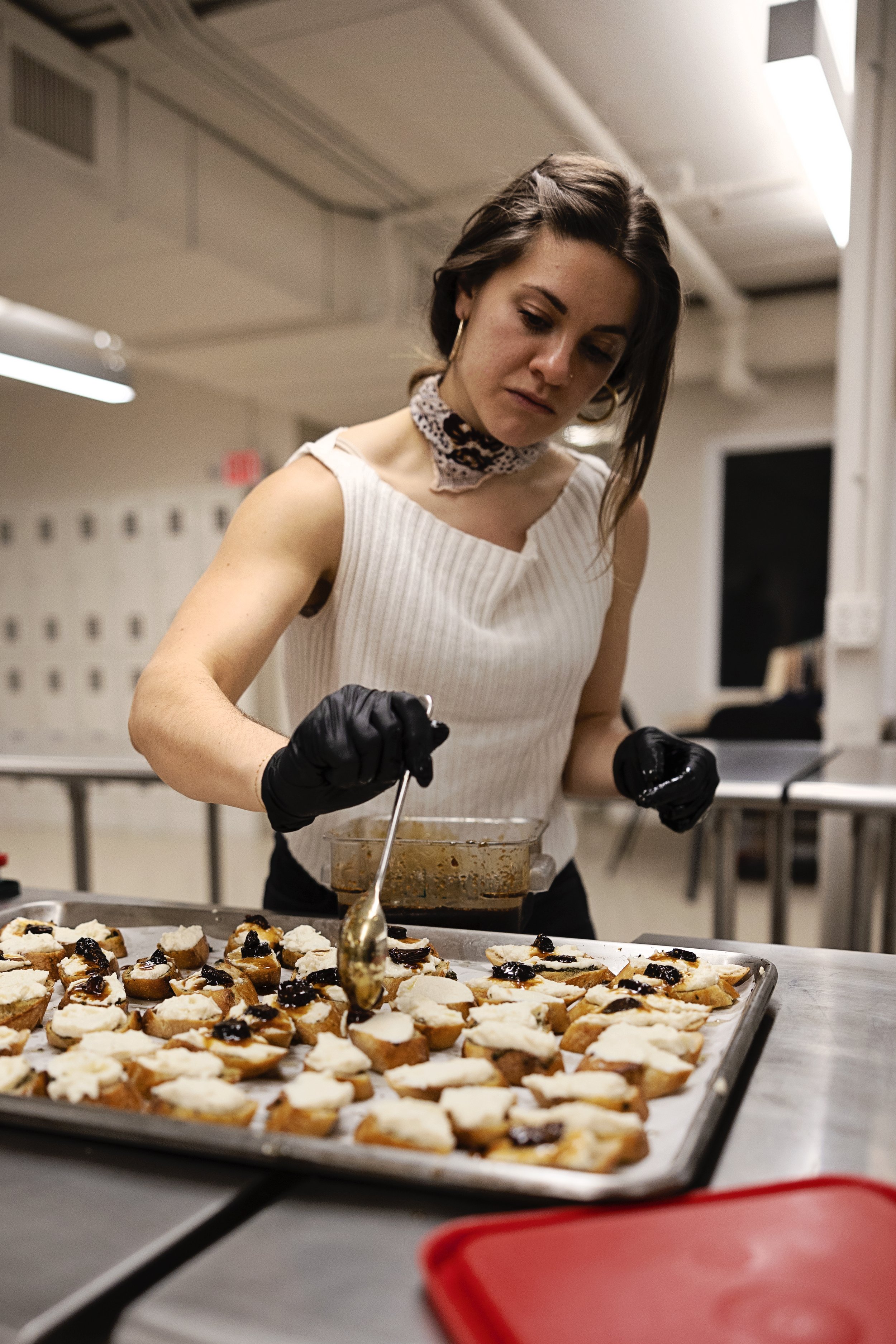
In true Tallu form, the night began with bread, generously donated from Dozen Bakery. In her book, she talks about the Latin and French origins of the word “accompany:” to come with bread, or to be a bread-friend. As we welcomed one another from near and far, some meeting for the first time and others embracing for the thousandth, we shared charred French baguettes topped with savory smoked fish mousse and sweet ricotta, figs and honey. We were grateful for the chance to forge so many bread-friendships!

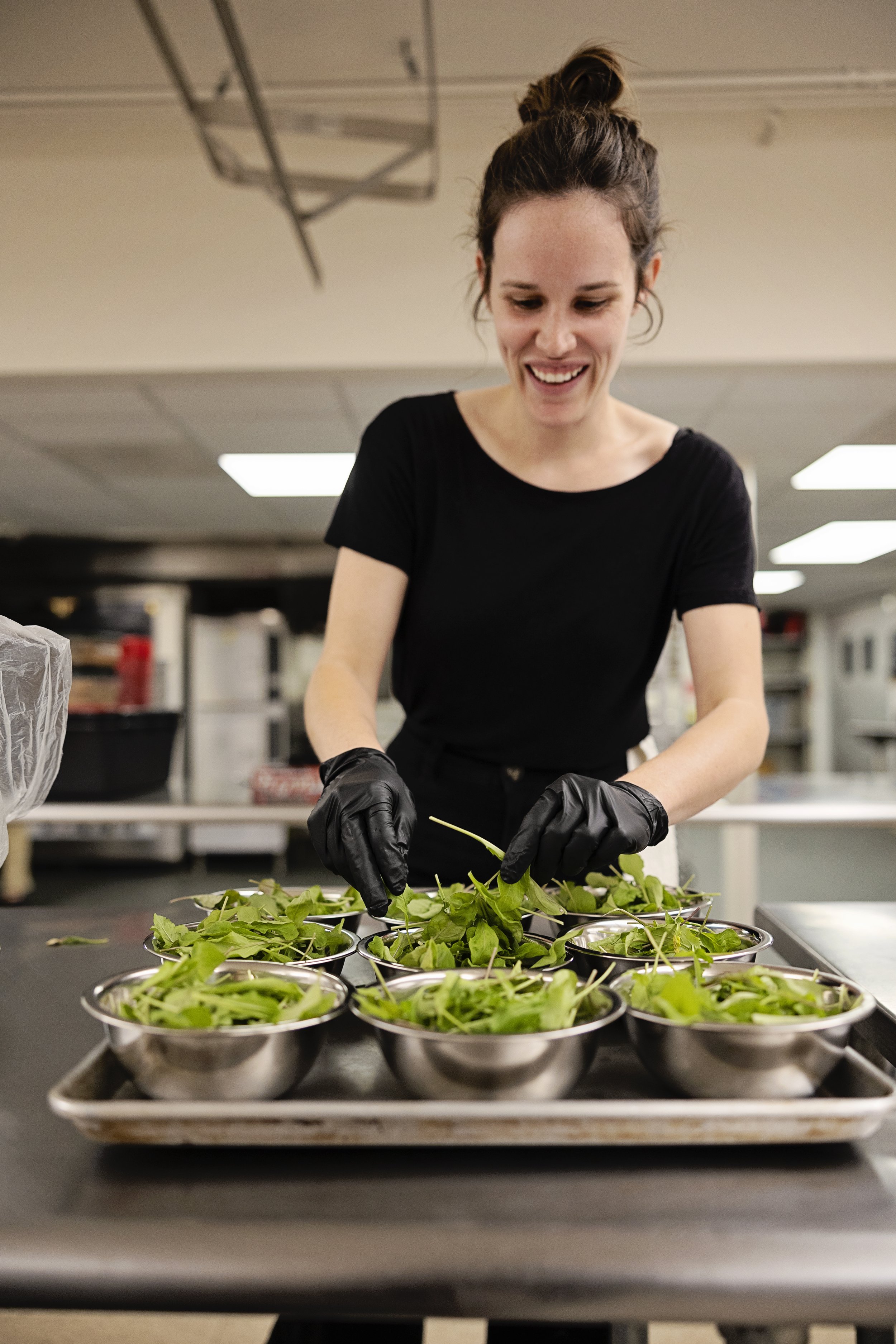
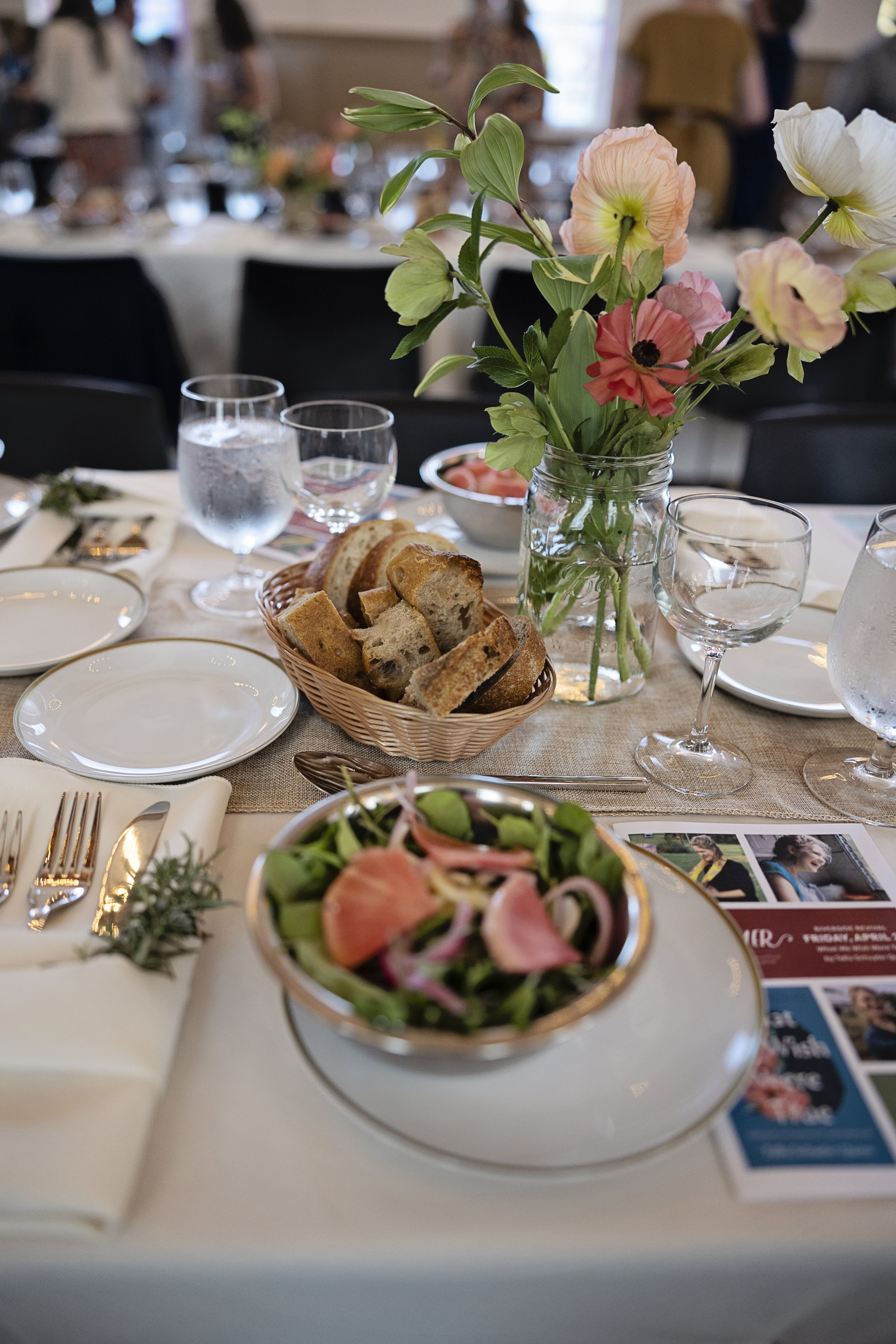
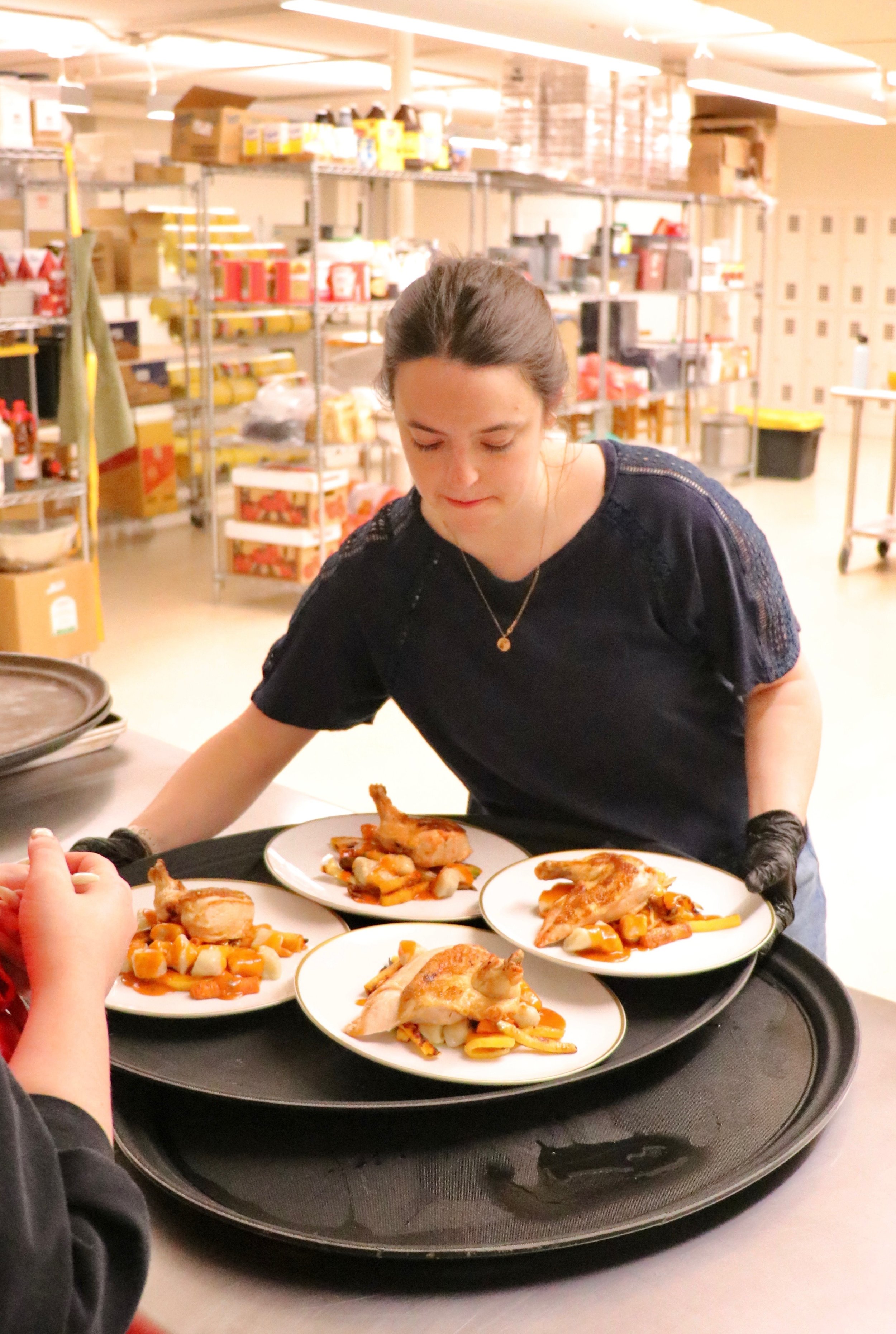
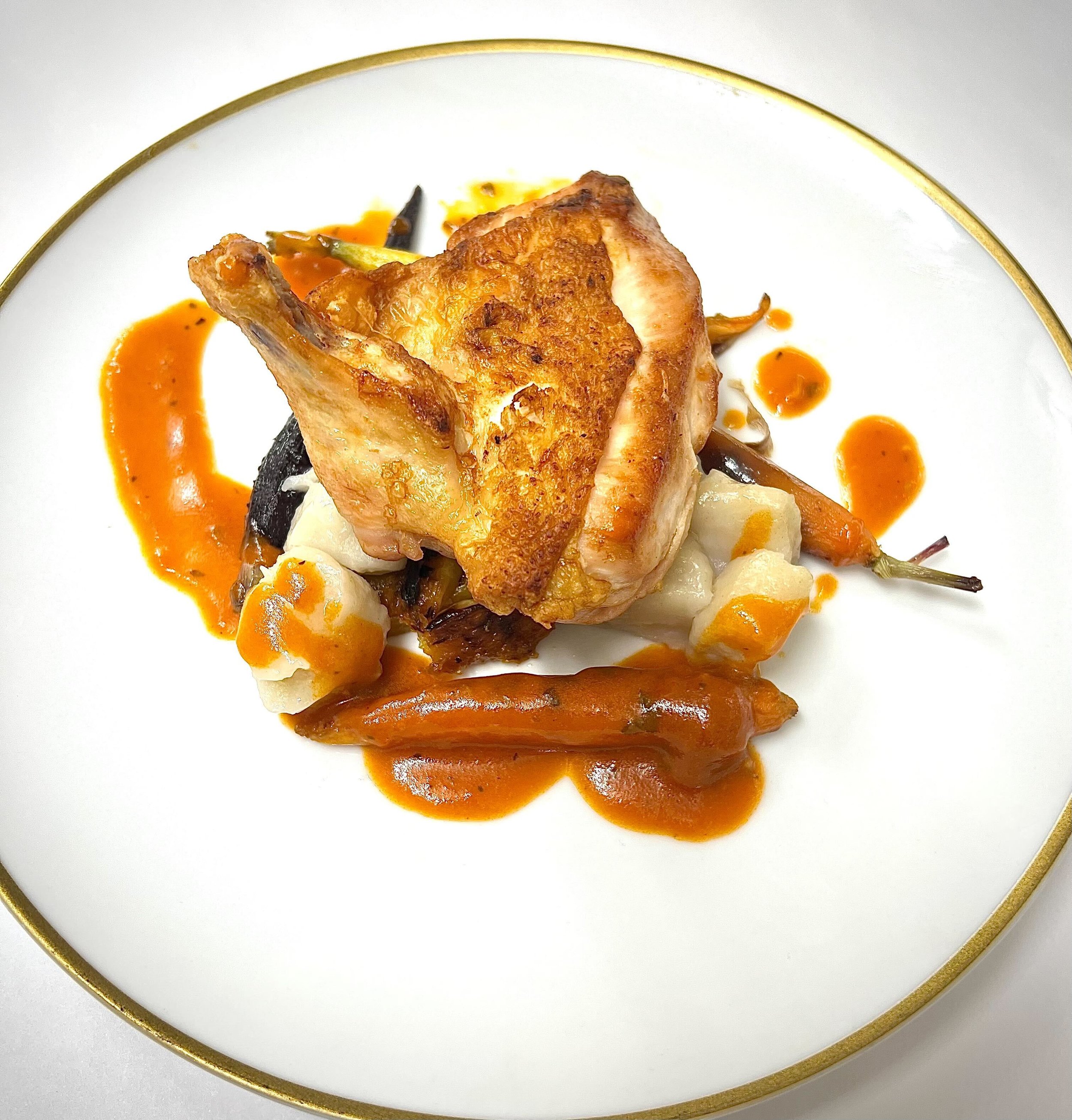
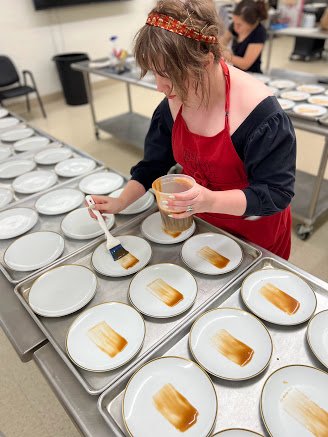
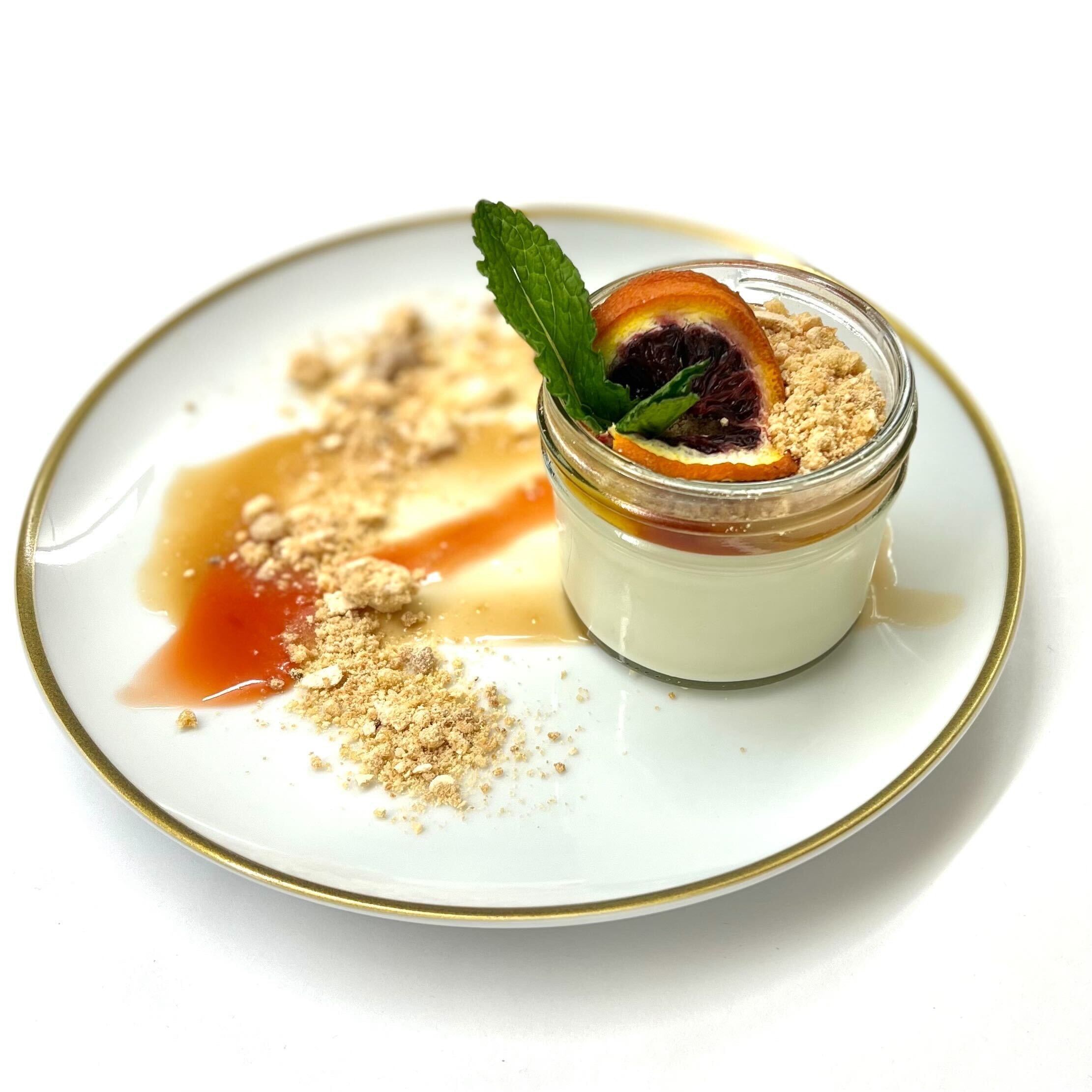
As dinner was served, the stories spilled over. Mixed greens in little silver mixing bowls recalled the big salads Tallu would prepare from farm-fresh ingredients and eat at work for lunch. Roasted chicken in a butternut squash red sauce paid tribute to an organic farmer who donated hundreds of pounds of squash that he couldn’t sell because his cows had taken little nibbles of the ends of them — Tallu recruited a small team to peel, cube and roast the squash and then puree it into a creamy, rich sauce to bake into lasagna and pour over pasta. And dessert, a beautiful panna cotta with caramel flan sauce, lemon curd, crumble and blood orange, conjured memories of her sweet voice singing a song with her father as guests at the Nourish Patrons’ Party enjoyed the very same dish several years back.
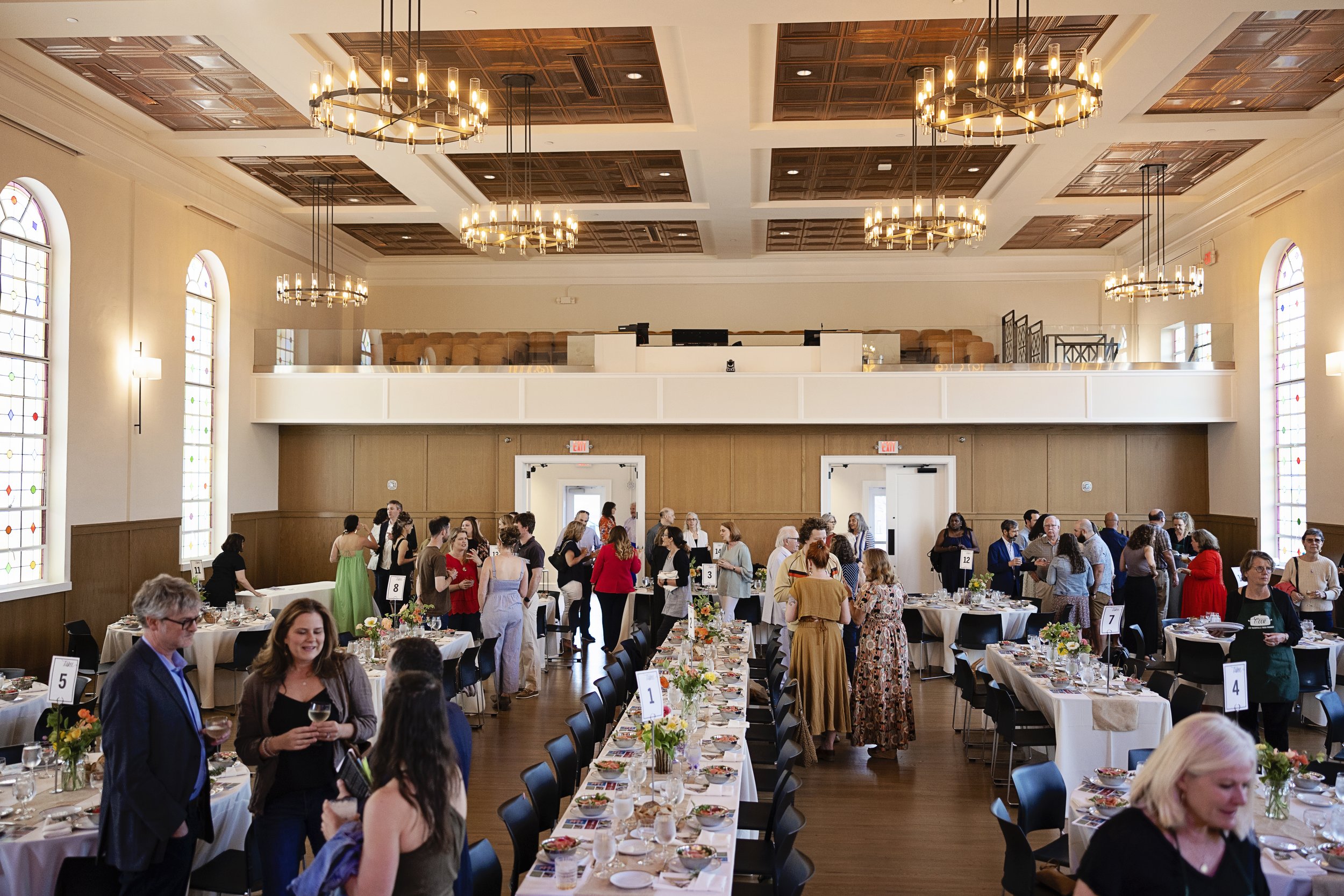
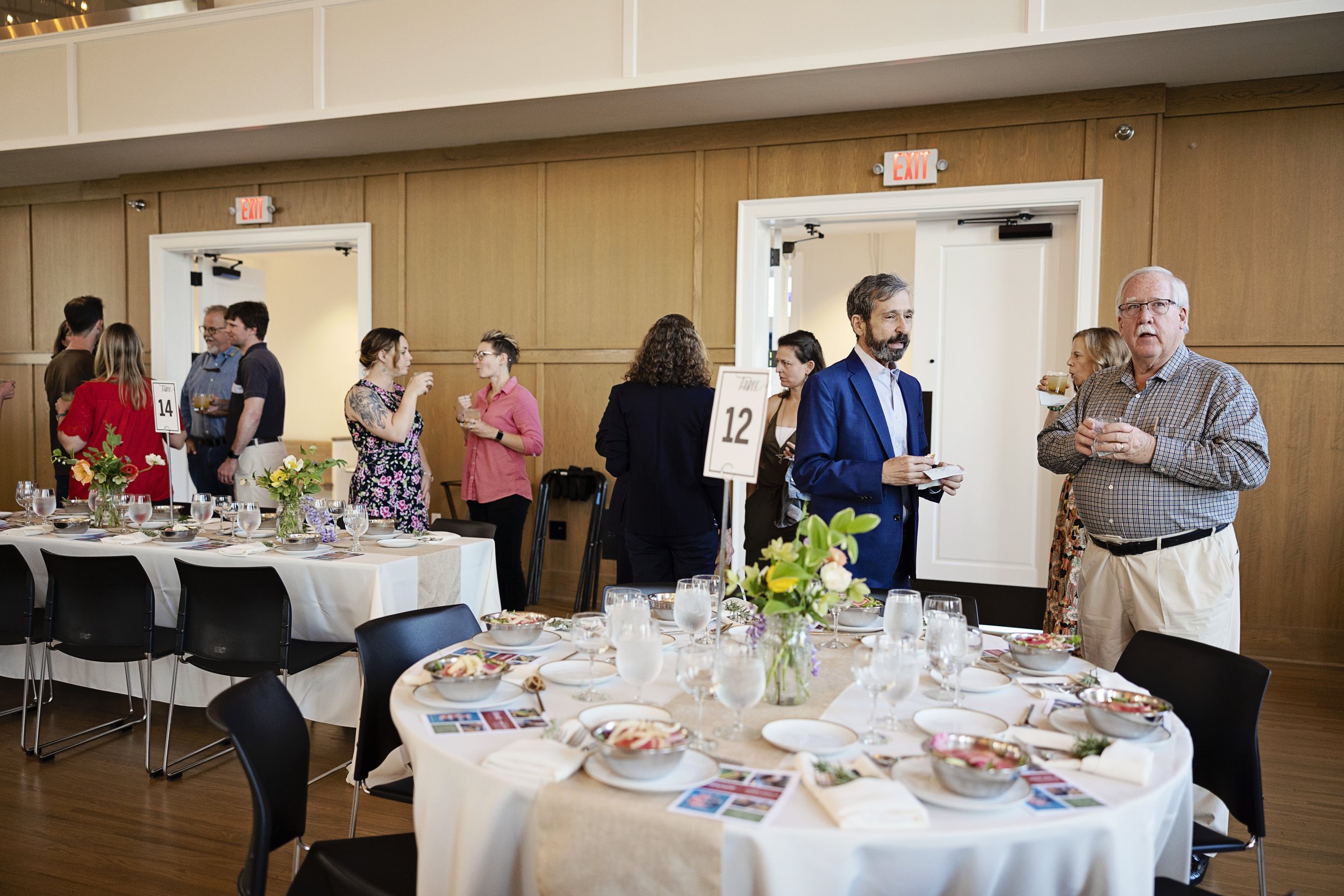
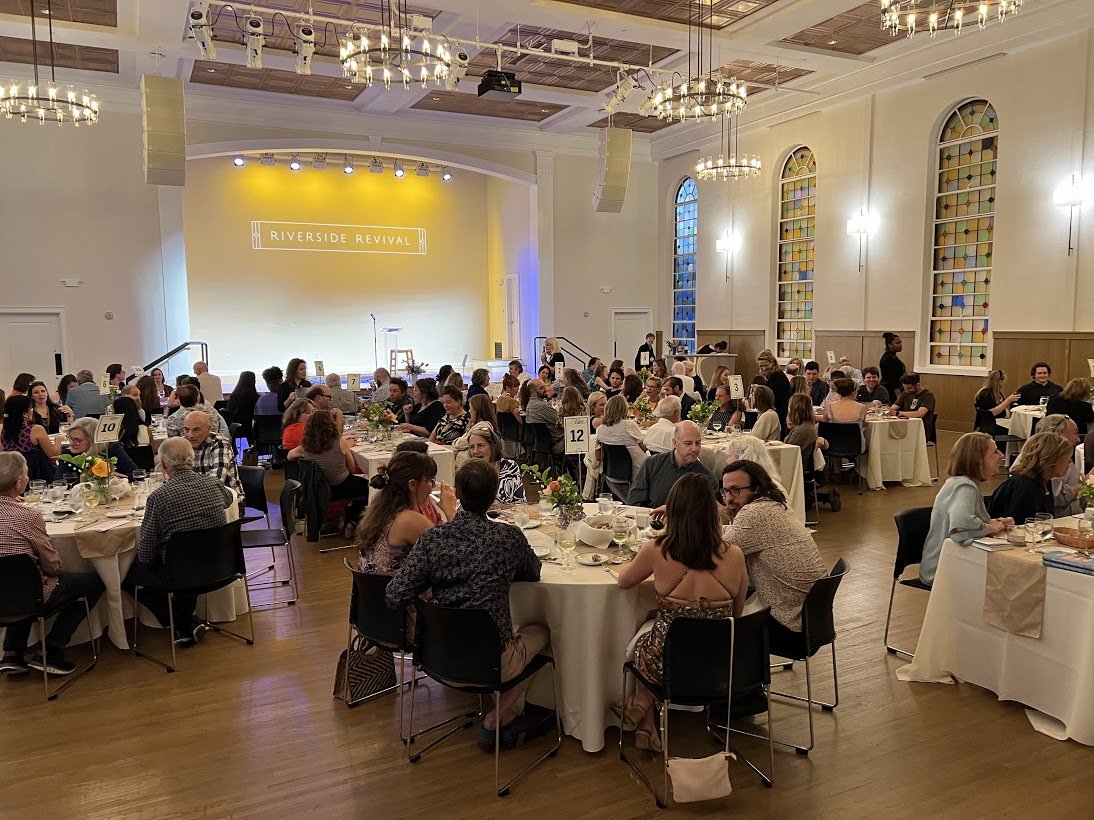
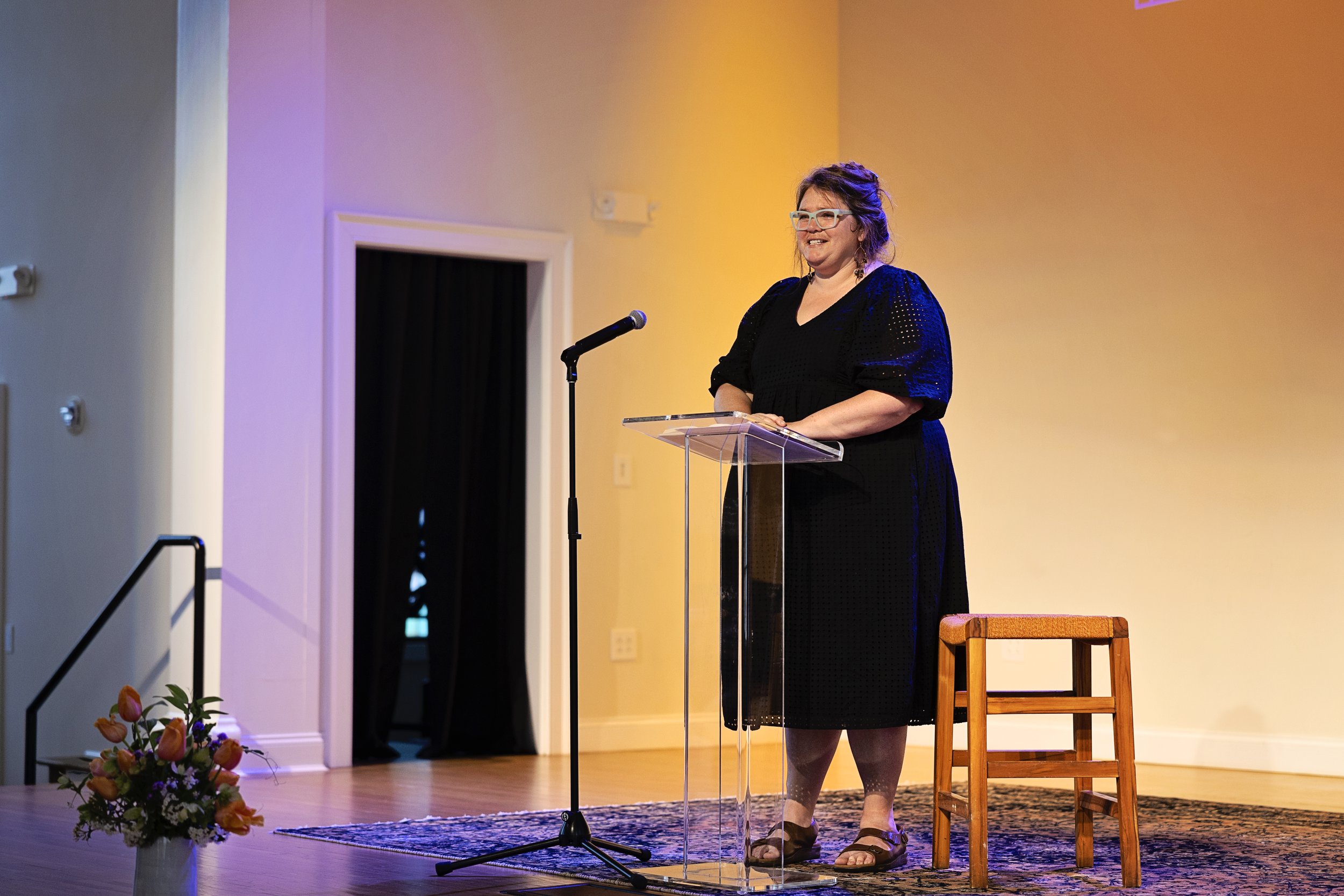
Over dinner, beloved friends shared the stage to read passages from What We Wish Were True. Each reading was a story of its own but prompted countless others, all describing poignant moments of laughter, hardship and hope.
We listened to Margo Cloniger revisit The Nashville Food Project’s humble beginnings under its old moniker, laughing as she recalled a bulk Mobile Loaves and Fishes t-shirt order that came in right before the organization officially changed its name. We were reminded of Tallu’s core belief that human value transcends what they do for work when Nate Paulk shared how she counseled him through a really difficult phase in his professional life. And we heard from Sally Rausch about the vulnerable process of helping Tallu write the book when her body began failing her, which could not have happened without the bonds of deep trust that Tallu shared with so many. With each story, the corners of the room folded in a little more to pull us closer together.
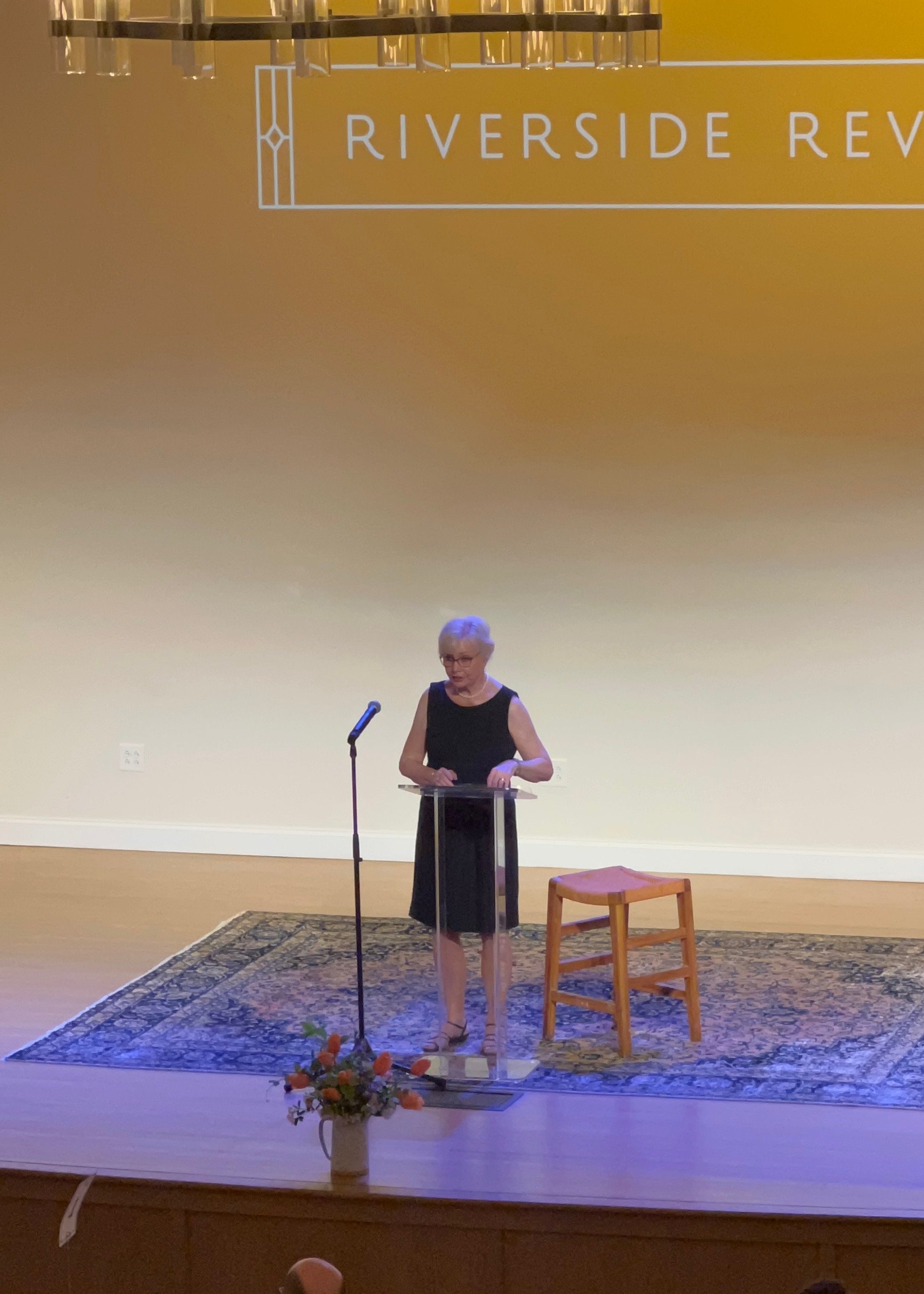
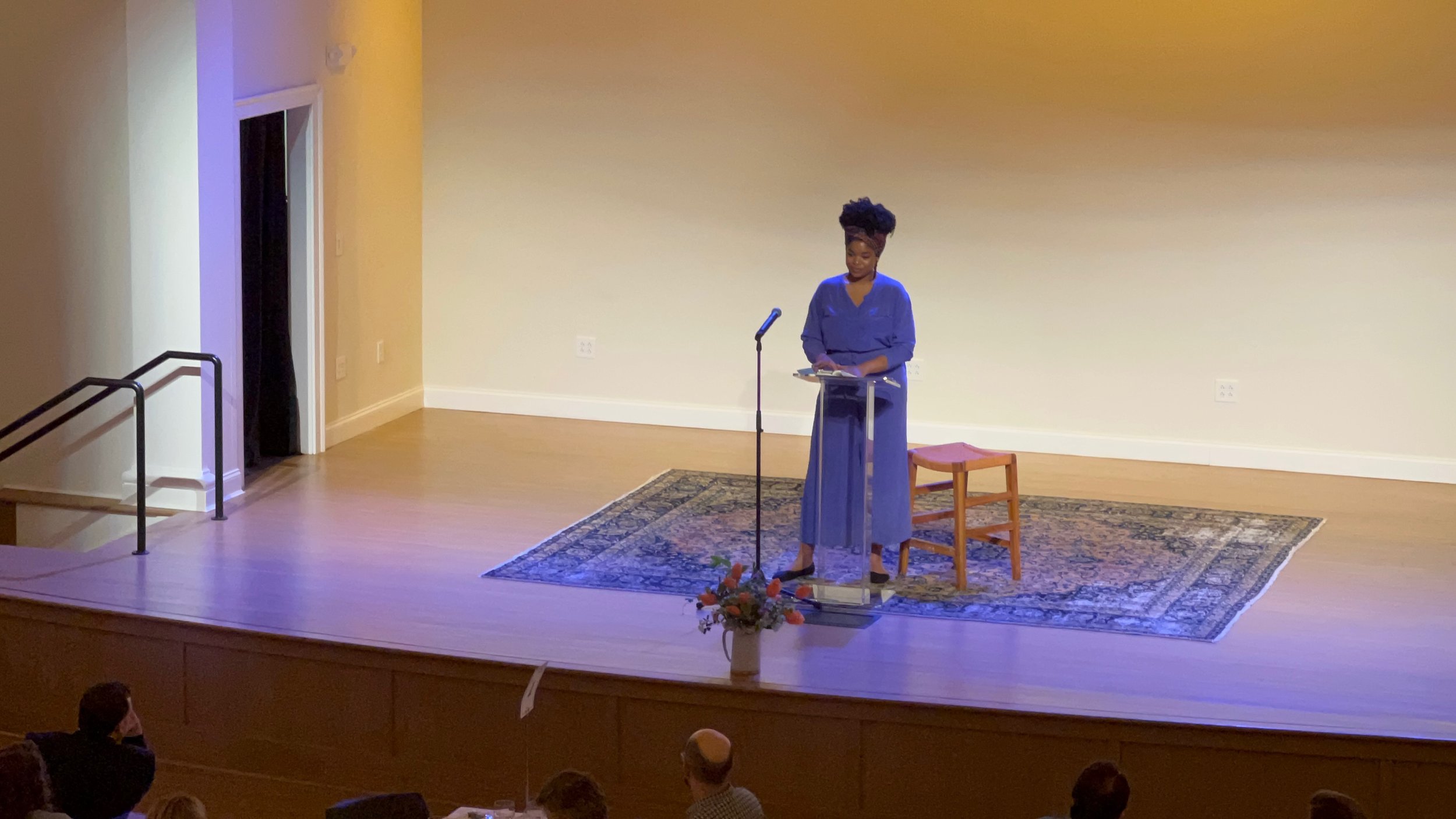
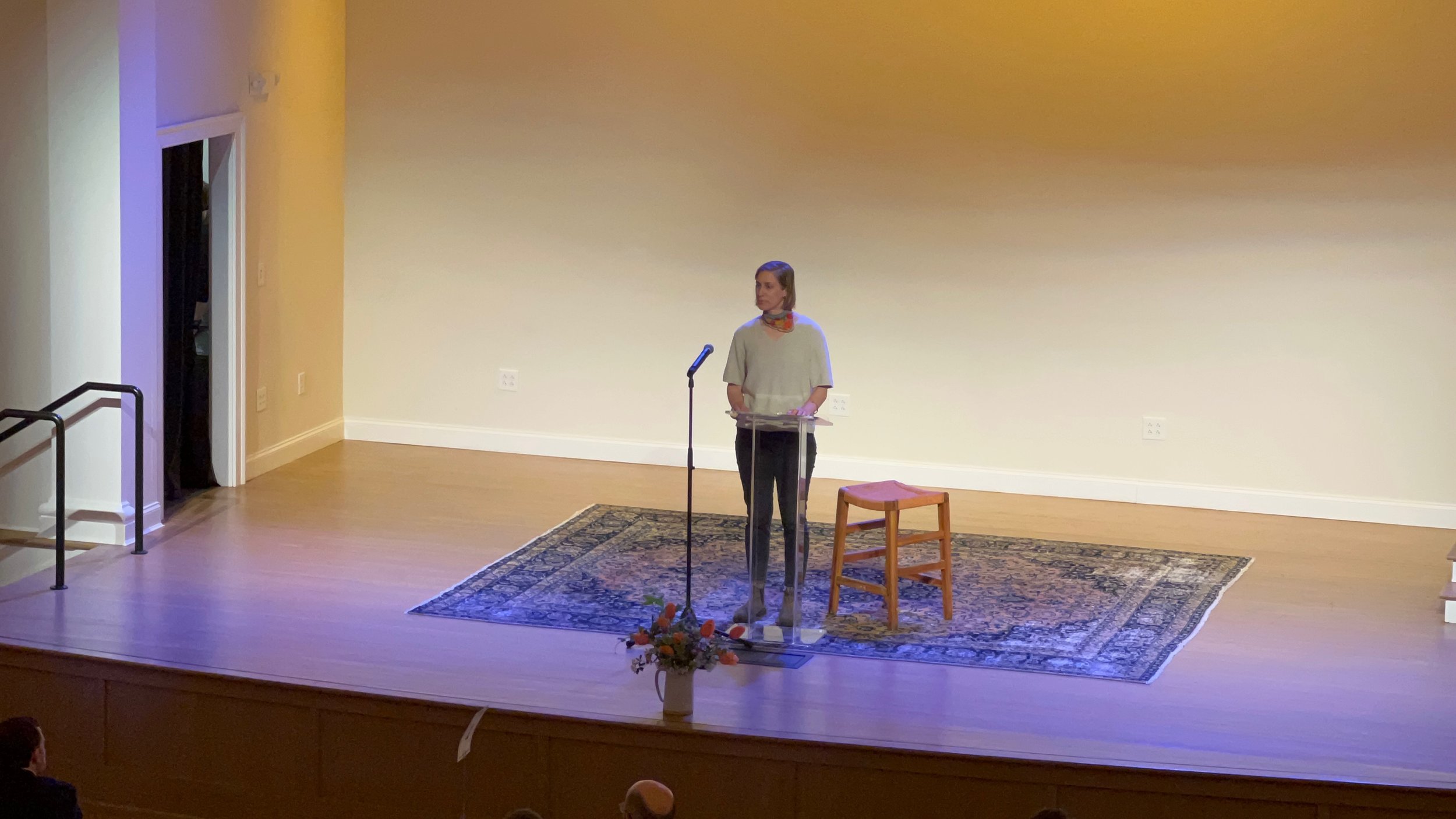
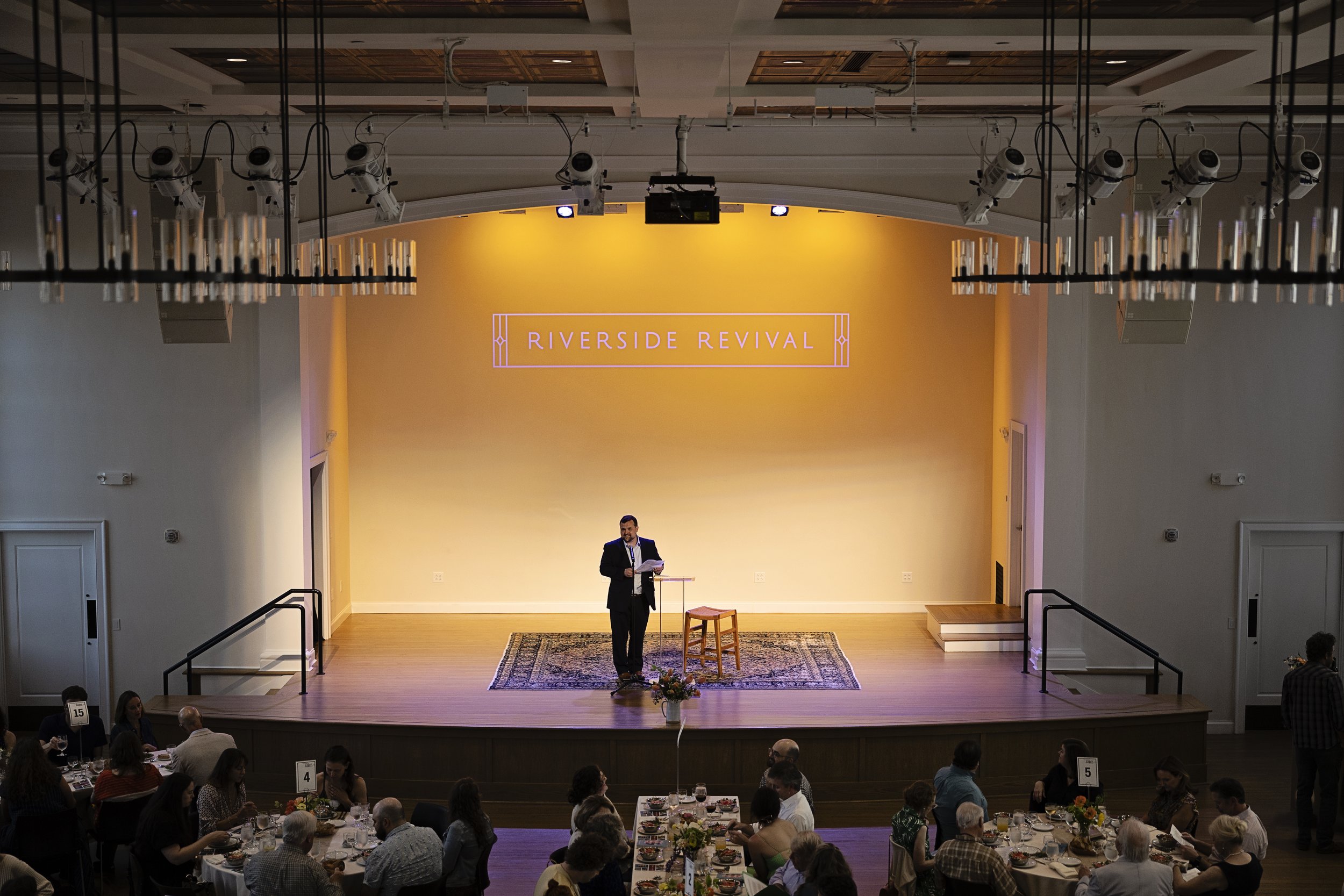
As the night wrapped up, C.J. Sentell, CEO of The Nashville Food Project, shared a final thought from the book:
“For years I was wrestling with God and with myself about my purpose and place and role, and here it was before me all the while—the mission we keep folding ourselves into, which I’ve come to understand as the perfect recipe: to grow, to cook, and most important, to share.”
An ever-growing community has been galvanized by Tallu’s radical vision of food security. The tables we continue to gather around invite us into this mission again and again. And the more meals we grow, cook and share, the nearer we draw to one another and to the world around us. We are so grateful to have you with us on this journey!
““The Nashville Food Project is not a church, but it is a community that saves people. It saved me.””
Thank You
A special thanks to all of our sponsors and donors for making this Simmer event possible:
City House and Chef Rebekah Turshen
This life-giving work can exist because of your generosity, in all its many forms. To learn more about ways to get involved and support, visit thenashvillefoodproject.org.
If you haven’t yet, purchase your copy of What We Wish Were True. A portion of the proceeds from each book sold at the link above supports our work.
Blood Orange Vinaigrette
Crafted by Josh Rickerman
Serves: 6

⅔ c olive oil
⅓ c fresh-squeezed blood orange juice
Zest of 2 blood oranges
1 tbsp red wine vinegar
2 tbsp herb oil
1 tsp Dijon mustard
2 tsp honey (sub. sugar or agave nectar)
Salt and pepper to taste

Meet the 2022 Growing Together Farmers
The 2022 Growing Together harvest season is kicking off! With CSAs and produce shares about to begin, it is important for our community to know the farmers who grow their food. Lal Subba, Chandra and Tonka Poudel, Sumitra and Pabitra Guragai, Nar and Tek Guragai, and La Sa Roi all steward plots at our Growing Together farm, and their personalities are each as vibrant as their veggies.
By Tallahassee May, Director of Growing Together
The Growing Together community farm is gearing up for a busy season ahead! The farmers have expertly nurtured the soil, raised the transplants, sown the seed, and coaxed their crops through the roller coaster spring weather. Next week we begin our Veggie Box Community Supported Agriculture (CSA) program as well as start our produce share deliveries to community partners new and returning. To say the Growing Together farmers are ready is an understatement, as they have worked tirelessly to have our now bountiful field of produce ready for our customers.
As the market-farming program of The Nashville Food Project, the work of growing food and increasing food access is a primary goal. The participating farmers came to this country as either refugees or recent immigrants and face significant barriers due to language, literacy, and transportation. With land access, skills training, market connections, and a space free from the pressure of cultural assimilation, the Growing Together farmers significantly increase food security through their contribution to our local food system.
But the Growing Together farm, while a busy and productive place, is also about cultivating community and connection through meaningful work. It is a place for the farmers to experience belonging and purpose, and each of them brings unique skills and incredible heart to their work every day.


Long-time community farm participants Chandra and Tonka Poudel, Lal Subba, and Nar and Tek Guragai have been with the Growing Together program since the beginning and form the cornerstones of our production. Because of their excellent skills and commitment, we are able to hold more produce sharing opportunities than ever before, ensuring as many local, organically grown vegetables as possible are feeding our communities. As elders in their communities, they offer much wisdom, experience, humor and insight. These farmers carry with them traditional agricultural and cultural knowledge, and the time we spend together working, learning, laughing, problem-solving, and sharing food together in the garden helps to keep this knowledge alive for younger generations.

The sister team of Sumitra and Pabitra Guragai are also a large part of the farm. Having worked alongside their parents for years, they are amazing growers themselves and pursue new and diverse crops, such as cut flowers and medicinal herbs, with the energy of true entrepreneurs. Sumitra and Pabitra are the youngest farmers and also juggle full time work commitments, GED courses and citizenship classes. Although they are busy, their time on the farm is marked by their shared laughter and song as it drifts over our acreage.
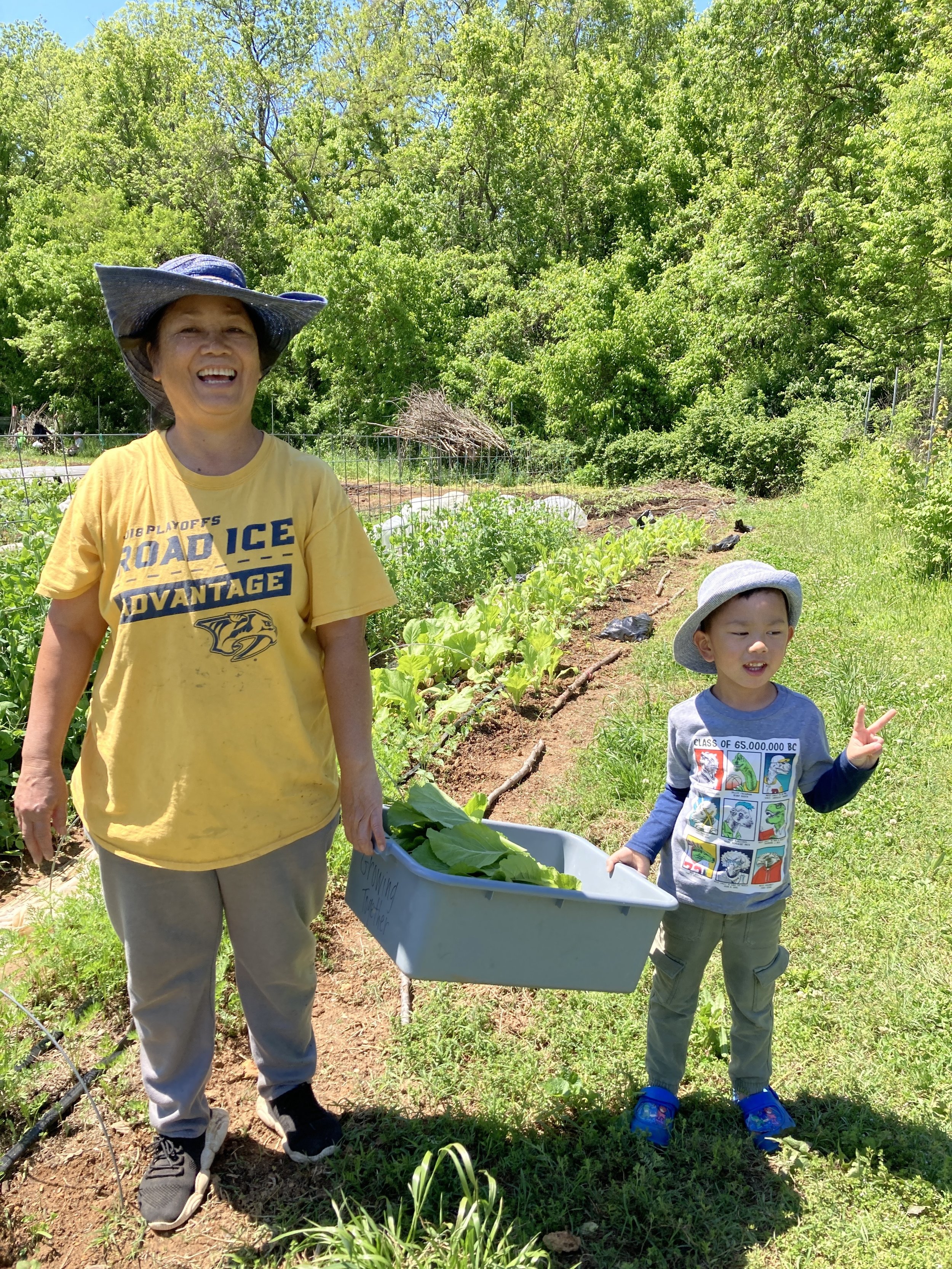
The newest farmer is La Sa Roi, who arrived in the United States 3 years ago from Myanmar. She has taken to full-time farming with great joy and passion, and has now expanded into a 3,500 square foot growing area. Roi and her daughter-in-law, interpreter Lulu Nkum, help organize and distribute 175 pounds of produce a week to their Burmese community members who lack access to fresh, culturally relevant produce. Roi loves to grow all vegetables, but mostly water spinach, long beans, and heirloom hot chili peppers—coveted crops by her community.
We are excited to have our first Growing Together community farm apprentice, Lu Ja! Our program aims to continue to offer this farm opportunity to new arrivals in the Burmese and Bhutanese communities. However, the program does require a very large commitment and has a steep learning curve. The apprenticeship allows someone who is interested in farming to work with other Growing Together farmers and participate in training, but without the full-time responsibilities. Instead of growing vegetables to sell, they learn alongside experienced farmers and provide supplemental support. The Nashville Food Project is gratefully paying the apprentice an hourly wage for their time for the season with the goal that next year, they will participate in the program as a full time farmer.
These Growing Together farmers love what they do everyday: growing food for our community. The Nashville Food Project provides access to support that otherwise would not be available to them. But, the farmers bring so much of themselves every day to the work — dedication, joy, gratitude, knowledge, perspective, and humor — that they are truly the heart of the program.

Stay connected with the Growing Together farmers on our website or via Instagram, @growingtogethernashville. You can also enjoy their produce at our favorite local restaurants, City House and TKO!
Why Pie?
A beautiful reflection by a long-time member of the TNFP family, Cheri.
This is a story I meant to share with my friend, Tallu, and a reminder that our time is short. I keep this Mary Oliver quote at the front of my journal, “Pay attention. Be astonished. Tell about it.” Tallu, I am telling about it.

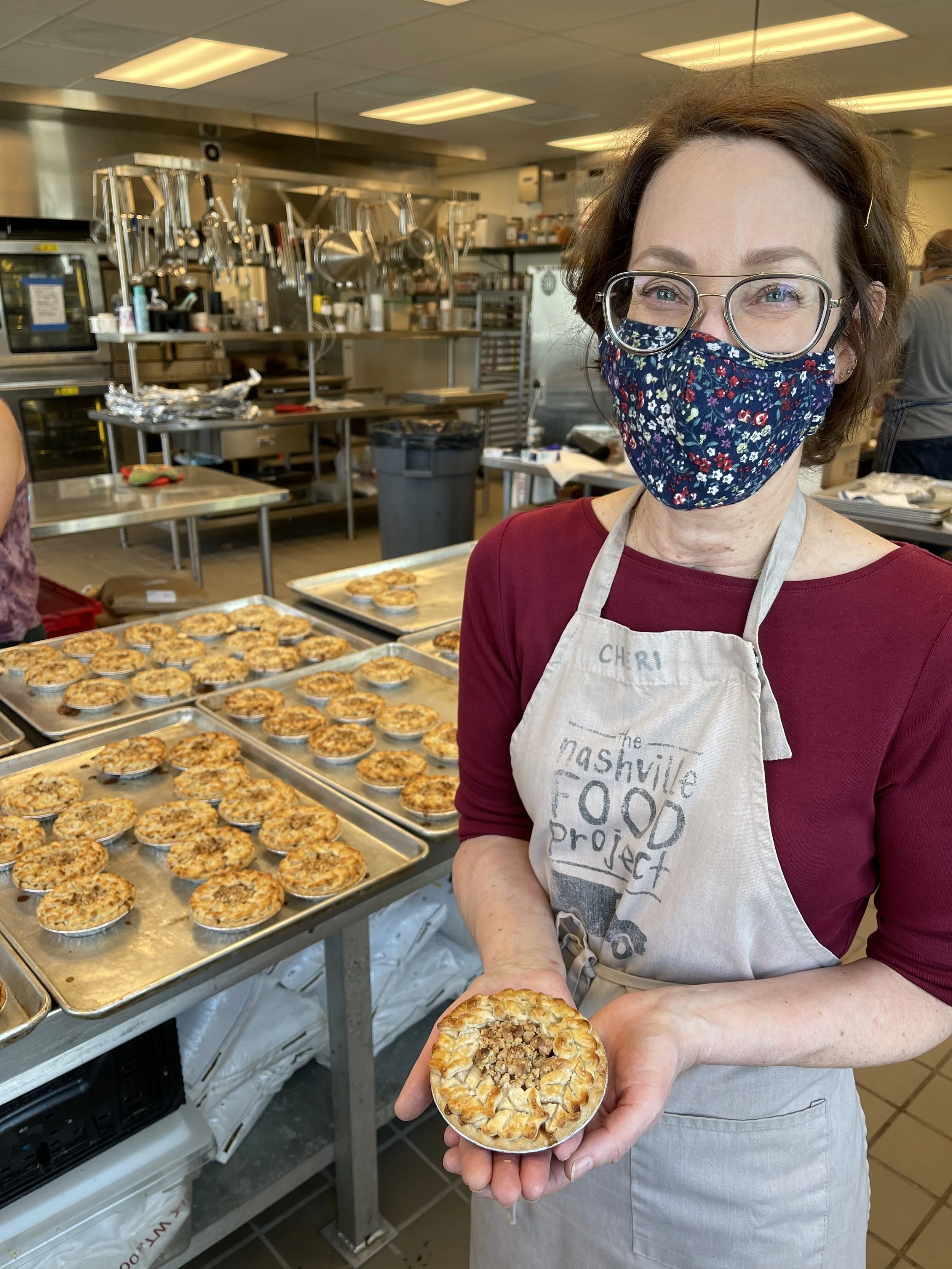
Cheri holding one of the 150 pies she led TNFP in crafting for a 2021 bake sale.
Once, many years ago, I made a French apple pie for an older couple in my neighborhood. I wasn’t really a pie maker then and I can’t even say if it was a scratch-made crust. When I handed the pie to Marlene, she remarked, “Why, honey, pie-making is a lost art.” This news startled me and marked the moment that became both an exploration of my past and my future special relationship with pie.
My grandparents, Armando and Franny, lived in a rural, former mining town in Fraser, Iowa on a large patch of land flanked by fruit and vegetable gardens, an apple orchard, a smattering of cornfields, and a sweet, circular pasture complete with exactly one cow. At the turn of the 20th century, Fraser was comprised mostly of Irish and Italian immigrants with a large percentage of them being my extended family. My grandparents’ home was a hub of the village and their door was always open to all those relatives, friends, and neighbors. I don’t remember a time when there wasn’t a freshly-baked pie in the center of the large yellow table in the farmhouse kitchen. It was understood that all were welcome to grab a plate from the cupboard, cut a sliver or a slice, pour a simple cup of coffee and join the others sitting outside on the worn, wide metal chairs under the giant cottonwood trees.
Sadly, I did not learn how to make pie from Grandma Franny. I was very young when she became ill, but adult reflection on my childhood memories taught me the power of pie. You see, in her own way, Grandma employed the “grow, cook, share” model. All the pies were made with garden-grown and foraged fruit and nothing was wasted. I have happy memories of trekking around with a little pail, battling mosquitoes and thorns, to collect perfectly-ripe red raspberries. The love and human touch is obvious in a well-crafted pie. It’s a gift for both the maker and the receiver. The very nature of pie is that it is generous and meant to be shared. Grandma created a gathering space and community around those pies. Her pies were an invitation to slow down, to linger, to fill your belly or your soul or both. Maybe those visitors came for a bit of fun, a laugh, some gossip or maybe they came because they were hungry, lonely, grieving. As a child, I only knew the pies were delicious but through my adult lens, I now see that sharing pie was Grandma’s gentle way of caring for the people in her patch of the world.
I have had wonderful pie experiences with TNFP, both as a giver, receiver (thank you, Christa!), and even as an occasional teacher. The 150 picnic basket apple pies, made with Apple Joe’s donated apples, were the perfect marriage of my passion for pie-making joined with my need to be of service. I have internalized Grandma’s pie lessons and I keep her good work and memory alive through every pie I make.
By sheer coincidence on the day of my birthday in the summer of 2021, I had what would be my last conversation with Tallu. I recall how she completely lit up when I mentioned that I was making a pie and I lit up in the telling. She wanted to know every detail. What a gift.
Celebrating the Life of our Founder Tallu Schuyler Quinn
It is with the heaviest of hearts that we have learned about the passing of our beloved founder, Tallu Schuyler Quinn. A Nashville native, Tallu founded The Nashville Food Project in 2011 at the age of 31. With fierce hope and an expansive vision, she shepherded the organization for a decade through an incredible evolution.

It is with the heaviest of hearts that we have learned about the passing of our beloved founder, Tallu Schuyler Quinn.
A Nashville native, Tallu founded The Nashville Food Project in 2011 at the age of 31. With fierce hope and an expansive vision, she shepherded the organization for a decade through an incredible evolution. What began from a modest church kitchen and a handful of volunteers delivering sandwiches to homeless camps morphed into multi-pronged, interrelated initiatives for food justice. Under Tallu’s guidance, hundreds of thousands of scratch-made, nourishing meals have been shared across the city. A robust food waste recovery program has diverted hundreds of thousands of pounds of food away from landfills to be stewarded instead for highest best use. And an agriculture program for farmers and community gardens sprang up in green spaces across the city empowering Nashvillians from a myriad of backgrounds to grow for themselves and their communities. Then in July 2020, Tallu was diagnosed with glioblastoma, an aggressive brain cancer. She died from the disease on February 17, 2022. Tallu was 42.
“As a very young woman, Ms. Quinn saw a desperate need in her city,” Margaret Renkl wrote in The New York Times in 2021. “Step by step, enlisting thousands of others in a shared mission, she found a vast array of ways to meet it.”
Indeed, community beats at the heart of the mission Tallu helmed at The Nashville Food Project – “bringing people together to grow, cook and share nourishing food with the goals of cultivating community and alleviating hunger in our city.” Her vision for community food security in which everyone in Nashville has access to the food they want and need, is both radical and achievable. But she’s also been known to say that the “bringing people together” aim of the mission is its most radical claim. She believed good food is more than a basic human need, it is a human right, and it can foster more than good health – it imbues a sense of belonging and purpose. She demonstrated in her life and work that community built through food can highlight our interdependence with one another and the Earth while piercing through the loneliness, isolation and feelings of scarcity so often associated with poverty.
Along with a boundless energy and open, accepting love for humanity, Tallu also embodied the values of the Food Project: hospitality, stewardship, justice, interdependence, learning and transformation. The latter she often spoke about with a “fiercest hope” that people and situations can change. An inspiring teacher, speaker, writer and leader, she could fire up a crowd to action, weed a raised bed or clean out a walk-in cooler with equal intensity. She championed and shared the joy, hope and love in difficult food justice work. But even as an uplifting visionary to all those around her, she wasn’t afraid to deliver a realistic picture too, ever empathetic and aiming to untangle the systemic problems that lead to the need for food justice work in the first place.
For example, in an August 2019 newsletter for the Food Project she does not sugar coat the struggle and “peril in America for those who are impoverished, non-white or born elsewhere,” she wrote also adding women, children and seniors to the list of most vulnerable.
But rather than fall paralyzed at a never-ending news cycle of “fires ablaze, a poisoned planet groaning beneath the weight of overpopulation, drought, displacement and centuries-old conflict and war,” she urged that “it's radical to stay active and believing that we as individuals or small communities can make a dent of a difference.”
“I recently heard someone speak about the difference between hope and optimism,” she continued. “Optimism is a feeling, a mood. But hope is a decision, a choice. Hope is something to practice, and to be enacted. And when the invitation comes to attend to the problem before us, we can lean on what we have learned from our practice.”
Tallu believed the work of the Food Project embodied that practice – local solutions to overwhelming global issues. “When you come here I believe you will find that the tangible work of chopping vegetables and digging in the dirt to the benefit of our wider community will ease your mind, connect you to others, engage your creativity, and offer a chance to give yourself again to that most important spiritual practice – hope.”
Tallu lives on in the organization she founded, but also in her many eloquent writings. In another letter she reflected on TNFP’s approach recalling a Wendell Berry quote: “if it can’t be weighed, measured, or counted it doesn’t exist.” And while she recognized this as a necessary part of funding the work – the counting of meals, volunteers, numbers of garden plots and the weighing of produce, she challenged us to think beyond a charity mindset and the emergency food system.
“But how do we measure the other stuff? How do we talk about the connections between us as what matters most? Starting your day with a purpose. What it feels like to be a member of a community who loves you. The mindful presence required when communicating with someone who speaks a language different from your own fluent tongue. The blessings before you when a meal begins. The excitement that rises up in you when you eat delicious food. The contentment you feel when well nourished.”
She believed in community work and the importance of the harder-to-measure impacts – the meals shared together that can make our city and world a better place.
After her cancer diagnosis, Tallu continued writing on her CaringBridge website even as her vision began to fail. While she continued to touch on the issues of her life’s work, she also delved even deeper into matters of love, family, grief, the body, death. She eloquently and honestly shared her thoughts in stories that are at once humorous and heartbreaking, clinging to life while also showing us how to let go. She taught those around her with her presence to the very end. At the one-year anniversary of her diagnosis, for example, she wrote a reflection that included this ending: “I understand that whatever pain our family is facing is only the flipped side of what holds us together in love.”
Tallu's extraordinary writing during this difficult time of her life led to her writing a book. Her memoir, “What We Wish Were True: Reflections on Nurturing Life and Facing Death,” will be published in April on Convergent Books, a division of Penguin Random House. “Life,” she wrote, “will dash and devastate, all while handing you a damn dream come true.” Of her writing, Renkl of The New York Times says this:
“She shares unvarnished accounts of the indignities of cancer, and cancer treatment, but invariably her essays are also deeply felt and beautifully rendered meditations on the gifts — yes, the gifts — of struggle. Of suffering. Of temporality itself. A spirit of generosity and flashes of wit shine through even her saddest words.
“Taken together, these essays of living a spiritually and emotionally rich life in a failing body are nothing less than a master class in how to be fully human. In recalling the events of her own life, and in plumbing those memories for meaning, Ms. Quinn prods readers to find meaning in their own struggles, to recall the too often overlooked beauty in their own lives.”
Tallu grew up in an artistic Nashville family with a songwriting father, Thom Schuyler, and artist mother, Sarah whose painting of Tallu’s brain inspired the cover of her book. Tallu attended Harpeth Hall School and later earned a B.F.A in Papermaking and Bookbinding from the Appalachian Center for Craft in Smithville, Tennessee. She loved working with her hands, its slow, focused meditative nature intersects with her quest for the divine. She received a Master’s of Divinity from Union Theological Seminary at Columbia University in New York, where she focused her studies on art, ritual and liberation theology. After seminary, Tallu moved to Nicaragua, where she lived and worked with poor farmers on food security projects using methods of agriculture that build communities and protect the land. But before seminary, her job in an urban grocery store in Boston opened her eyes to food injustices and food waste. Both profound experiences laid the groundwork for her vocation. After returning to Nashville, she helped run the local arm of Austin-based Mobile Loaves & Fishes. The Nashville Food Project grew out of those experiences.
Tallu is survived by her husband Robbie, and their children Lulah and Thomas Quinn. She is also survived by her parents Thom and Sarah Schuyler and brothers Roy and Luke Schuyler. She loved to cook for her family and loved ones. She loved creating, studying papermaking and bookbinding. And she loved music, specifically the Indigo Girls who she had seen live, remarkably, more than 40 times. Despite working in an incredibly difficult field, she made the time and space for these joys even as she called on us to consider our own joys and power to fight in many ways against despair.
“To be restored to wholeness, to stay hopeful that healing — whatever that means to us — is possible,” Tallu wrote. “I believe in these things. I believe in it for me, for you, and for all of humanity. And for this earth we have misused and abused…I think about how my purpose may be the same in death as it continues to be in life — surrendering to the hope that our weaknesses can be made strong, that what is broken can be made whole.”
The family will gather for a private, natural burial at Larkspur Conservation on Sunday. A public memorial service is planned for 11:00am on Tuesday, February 22 at Woodmont Christian Church.

Partner Spotlight: Nashville International Center for Empowerment (NICE)
Prior to this August, the Nashville International Center for Empowerment (NICE) helped in the resettlement and community-building processes for about 80 individuals per year. In the past four months, however, they’ve worked to welcome more than 180 new Nashville arrivals from Afghanistan–and they don’t expect to slow down for a few more months.
By: Lilah Adams, Americorps Member- Community Engagement Coordinator
Prior to this August, the Nashville International Center for Empowerment (NICE) helped in the resettlement and community-building processes for about 80 individuals per year. In the past four months, however, they’ve worked to welcome more than 180 new Nashville arrivals from Afghanistan–and they don’t expect to slow down for a few more months.
While the expansion has pushed the organization far past its historical limits, they fit within a network of organizations adjusting to new needs. The city expects to welcome about 500 Afghans by the end of the year–just a sliver of the group of more than 50,000 forced into the resettlement process around the U.S. in 2021.
The widespread evacuation of Afghanistan is a response to the Taliban takeover in the country late last year, resulting in the quick uprooting of thousands of Afghanistan residents. The speed and mechanisms of the departure pose new challenges, with the majority of Afghan nationals assigned a “humanitarian parole” designation, separate from the traditional “refugee” status typical to individuals working with resettlement agencies. Those working with NICE emphasize that this designation shifts traditional processes for benefit eligibility and the timeline of governmental support for these new arrivals.
The situation remains continuously evolving and is exacerbated by the challenges intrinsic to the continued spread of COVID-19 throughout the world, which has required incredible flexibility and adaptiveness from all involved.
NICE has responded to new needs by making a series of organizational adjustments, simultaneously teaching and learning as they navigate new organizational terrain.
Chris Linthicum, director of resettlement services, emphasizes that partnerships have become essential to their coordination efforts, sharing resources with other resettlement agencies in the city, such as Catholic Charities.
As such, part of this new organizing has taken the form of an expanded partnership between NICE and The Nashville Food Project, with TNFP supporting NICE’s efforts through 8 weeks of produce and dry goods/pantry-staples meal support, aiming to provide initial access to both nutritious and culturally-connective foods.

Snapshots of dry goods shares and fresh produce bags heading to Afghan families!
Volunteers and employees at NICE have coordinated delivery of this food support to help ease the often-disruptive transition. The partnership has extended beyond the weekly produce distribution as well, supporting the organization’s vaccination event efforts with produce distribution in coordination.
Founded by Dr. Gatluak in 2005 to help build community for refugees from Sudan in Nashville, NICE recognizes that “the challenges faced by the NICE target population are often exacerbated by ‘mainstream’ support systems that often do not account for the steep access problems facing non-native English speakers, the majority of whom are unfamiliar with American culture.”

CEO and founder, Dr. Gatluak (left), alongside NICE logo and messaging (right)
Since then, NICE’s programming has developed into four main categories of support–education (from early childhood through high school), resettlement (initial contacts and coordinating upon arrival in the U.S.), employment (largely through a match grant program), health (intensive case management services), and ultimately assistance with immigration navigation.
In emphasizing shared experiences as a new arrival in the United States himself, Dr. Gatluck projects the shared value of hospitality–celebrating investment in relationships and people’s ability to both serve as guest and host–a dynamic evidenced in NICE’s commitment to empowerment as central in resettlement.
As NICE continues to welcome new Nashvillians, the organization is also urging fellow individuals in the community to consider how to support the resettlement process, specifically as they seek temporary and long-term housing solutions for our new neighbors. To learn more about NICE’s essential work and how to offer your support, check out their website.
Growing Together: Highlights of 2021
The Growing Together program is small, but its impact is deep. This year, there were six families farming our one acre of land. More than 20,000 pounds of vegetables were harvested from this green and compact corner of our city. More than 5,000 pounds of that were purchased by The Nashville Food Project from the farmers and then shared with partners and community members who helped distribute to those who otherwise lack access to fresh produce. We are also grateful for the customers who participated in our community supported agriculture (CSA) program. In this post, we share a few favorite moments of the year.

by Tallahassee May, Director of Growing Together
On a sunny Sunday afternoon in November, the Growing Together farmers hosted a potluck to celebrate the conclusion of the season. Colorful bowls and trays of vegetable curries, Nepali dumplings called momos, roti, and rice pilau, filled the tables and welcomed guests to the garden.
As a part of The Nashville Food Project’s garden program, Growing Together supports those who came here as refugees and immigrants from Bhutan and Myanmar in their desire to farm. A big part of this work is the facilitation of access to land, resources, training, and markets that otherwise would not be available because of language and cultural barriers. Now in its seventh year, the Growing Together garden is a vibrant community space that provides a safe and beautiful sanctuary for its participants as well as their families and friends. It is always a very special occasion to open the garden to visitors and to commemorate the harvest together.

The Growing Together program is small, but its impact is deep. This year, there were six families farming our one acre of land. More than 20,000 pounds of vegetables were harvested from this green and compact corner of our city. More than 5,000 pounds of that were purchased by The Nashville Food Project from the farmers and then shared with partners and community members who helped distribute to those who otherwise lack access to fresh produce. We are also grateful for the customers who participated in our community supported agriculture (CSA) program. The Growing Together CSA fed 65 households, supplying weekly boxes of familiar Tennessee vegetables as well as the farmers’ cultural foods such as bitter gourd, long beans, and heirloom Nepali mustard.
Here are just a few of our favorite moments from the year:
Welcoming volunteers back to the garden! Volunteers play such an important role in our infrastructure and maintenance at the garden site, and it was wonderful to work together again tackling projects.

Harvesting shiitake mushrooms! Thanks to a seed money grant from Slow Food Middle Tennessee, we were able to purchase logs and start our shiitake mushroom enterprise this year. Our hope is to have enough in the coming years to offer them in our Veggie Boxes to our CSA customers. This year was a fun learning adventure, and we picked enough to make some delicious shiitake mushroom salt to share with our guests at the year-end potluck.
New Partnerships! This year we worked closely with other organizations and community members who helped facilitate the distribution of fresh produce bags. We have so much admiration for the work of Nashville Immigrant Center for Empowerment (NICE), Tennessee Immigrant and Refugee Rights Coalition (TIRRC), Trap Gardens, Highlands Apartments, and organizers from the Burmese Community, and we appreciate the opportunity to collaborate with them in sharing organically grown and culturally appropriate vegetables to those in need.

A new onsite walk-in cooler! This was a game-changer for our program, making our vegetable harvesting much more efficient and improving the quality of our produce.

Donating vegetables to the Burmese community for their fundraiser. The crisis in Myanmar left many civilians in that country powerless and desperate for resources. The local Burmese community banded together to raise funds for family members there by using Growing Together vegetables to make and sell kimchi.
This Nashville Scene cover story on our work along with the the work of The Nashville Food Project!
As Farmer Nar says: “The garden is a memory of home. I am glad I can work and make money here, but most important to me is how it makes me feel. I can be true to who I am when I am in the garden.”
Thank you to everyone who supported Growing Together this year!
Joining Forces for Free Community Health Days
In late 2021, thanks to generous funding from Welcoming America’s Resilient Rapid Response Fund, the TNFP team had the opportunity to lean into a new form of community health and care. We leveraged our resources and community connections to increase opportunities for New American communities to access COVID-19 vaccines and health information with intentional language support alongside access to fresh, local produce distribution and other essential services.
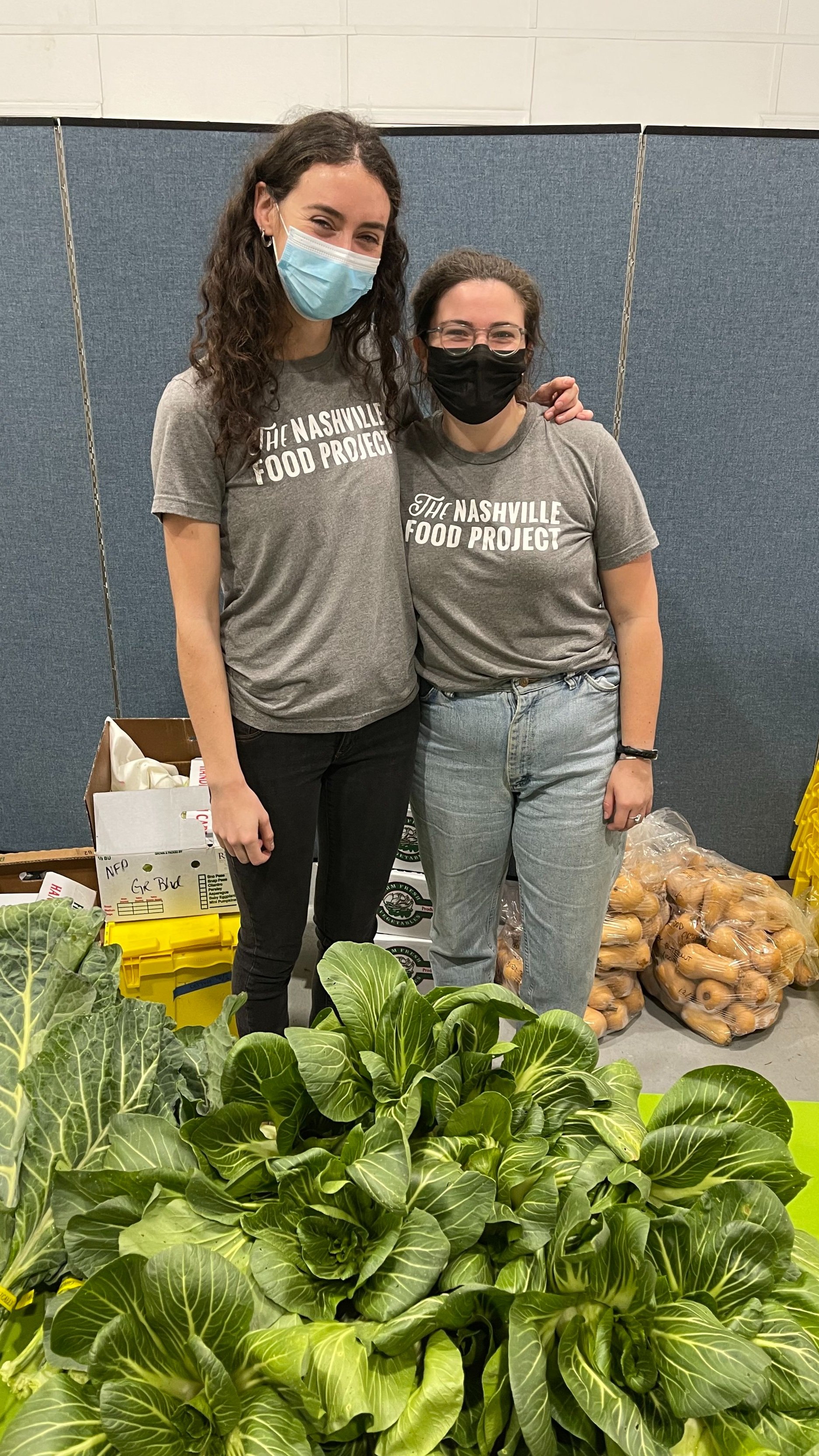
Lilah and Annie get ready to share some bok choy, collards and other produce.
by Elizabeth Langgle-Martin, Community Engagement Manager
The Nashville Food Project’s work has long been that of sharing high-quality, fresh food alongside powerful and essential programming in our city to enhance the poverty-interrupting work of nonprofit partners, community organizers, grassroots movements, and others.
In late 2021, thanks to generous funding from Welcoming America’s Resilient Rapid Response Fund, the TNFP team had the opportunity to lean into a new form of community health and care. We leveraged our resources and community connections to increase opportunities for New American communities to access COVID-19 vaccines and health information with intentional language support alongside access to fresh, local produce distribution and other essential services.
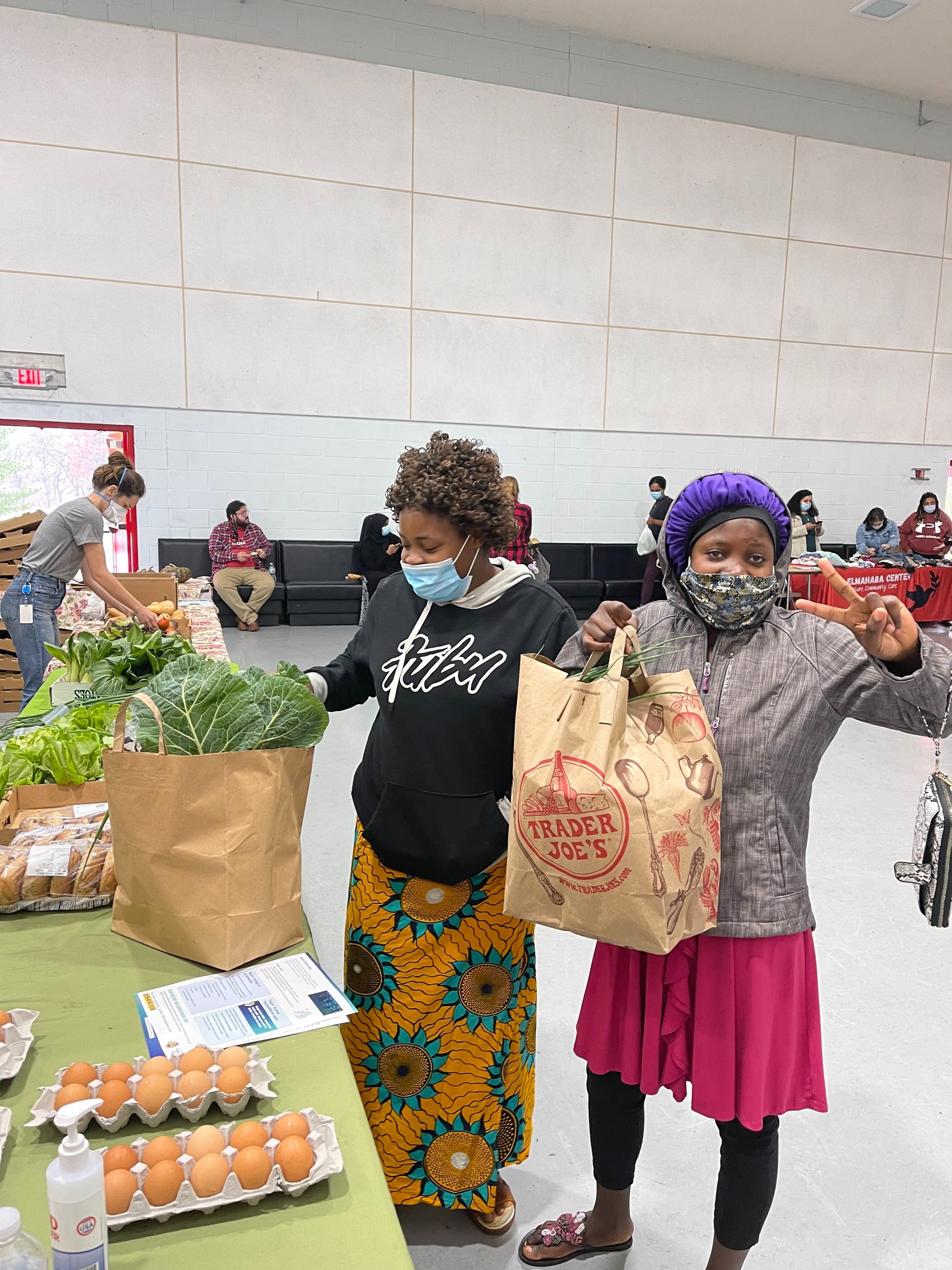
Event participants — shared with permission.
Inspired by our long time partnership with Christ Lutheran Church (the site of our Growing Together farm) and its sister congregations, alongside the vibrant community work of Elmahaba Center, we held three community health and COVID-19 vaccine events in South Nashville with deep support from a network of language workers and a number of other service providers. Metro Health’s COVID Vaccine Strike Teams, under the leadership of Tameika Evans and Ebony Harris, provided combinations of testing and vaccine services. Throughout the course of planning and feedback from the represented communities, offerings grew to include diaper support through Nashville Diaper Connection, paper goods through Community Resource Center, children’s items through Elmahaba, and resource and health information through Tennessee Justice Center, Siloam Health’s Community Health Workers, NICE’s Trusted Messengers and so many more.
At the close of our early December event, our team celebrated the 96 vaccines administered throughout these three events. We also shared pounds and pounds of locally grown produce such as thick bundles of collard greens, carrots with leafy tops, a rainbow of peppers, potatoes and beets as well as other herbs and vegetables alongside flats of eggs. Guests to these events represented more than six language groups, with folks sharing greetings and information in Arabic, Swahili, Burmese, Nepali, Spanish, and English. Our favorite moments included neighbors sharing the varied uses of different produce heaped on folding tables and comparing preparation ideas or snagging extra eggs for a neighbor and herbs for their aunt. We also loved the cheers when someone received their first vaccine dose and watching small children race their matchbox cars from Elmahaba Center across the gymnasium floor.
We are excited to continue this work in the new year through an invitation to collaborate with Tennessee Immigrant & Refugee Rights Coalition (TIRRC), Conexion Americas, NICE, PENCIL, Hispanic Family Foundation, Metro Health and others for another rendition at the TIRRC headquarters on Jan. 8! Make sure to follow along with our partners in this vital and timely work!


Partners with the Tennessee Justice Center were on hand to help with questions about SNAP and TennCare.
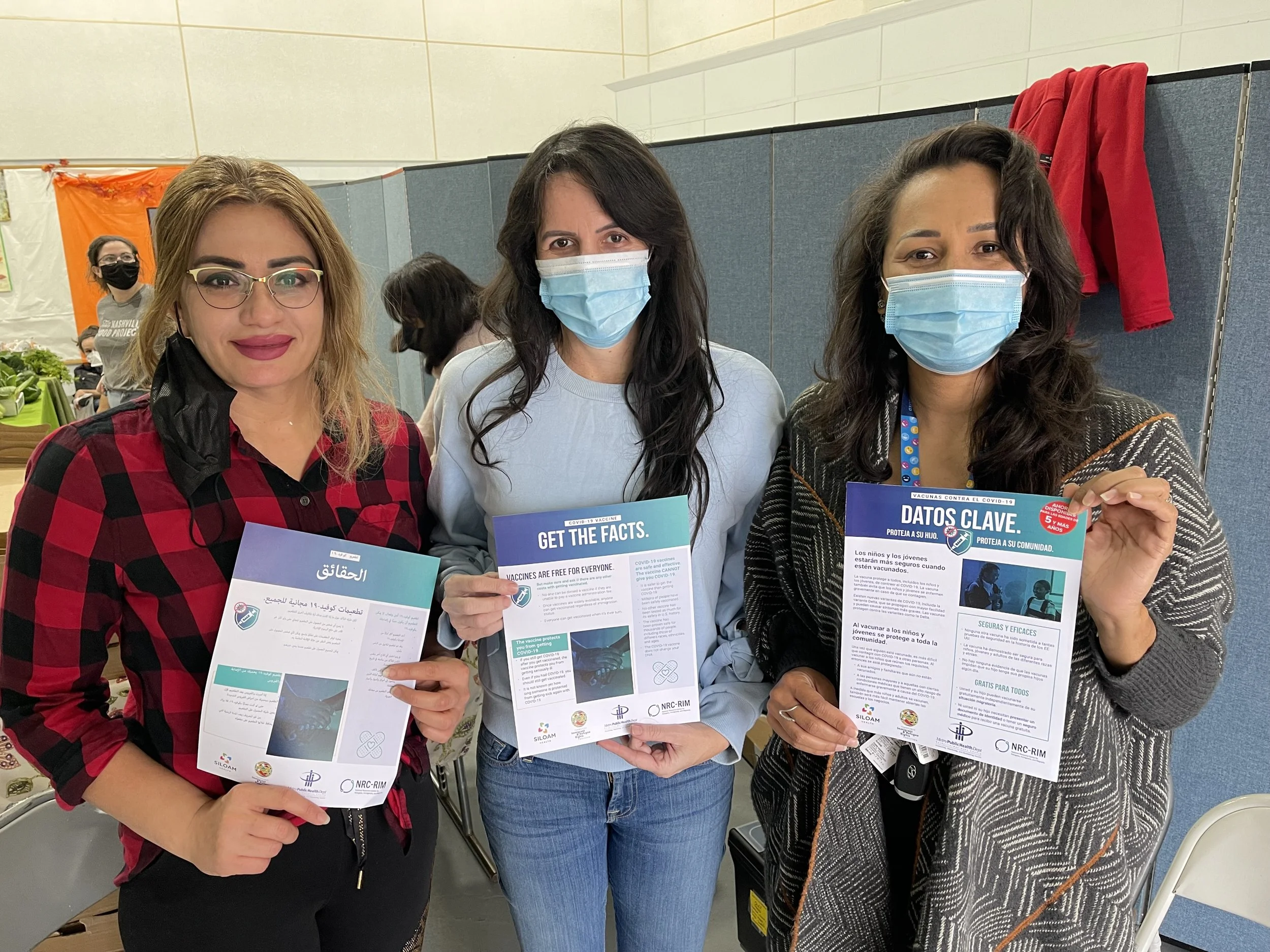
Partners with NICE and Siloam Health.

Two of our co-hosts at Christ Lutheran Church, Pastor Esther Godfrey and President of Church Council Mark Miller.
Tips from the Kitchen: Butternut Squash
Meals Coordinator Sarah Farrell shares a quick and easy(ish) way to cut hardy, resilient butternut squash, and we include a few favorite recipes too!
It’s okay to admit a love-hate relationship with butternut squash. Yes, it can be hard to cut — but, wow, it also can be versatile and delicious! We love that this plentiful fall squash keeps so well in cold storage, and we are grateful to have generous sources who gift us butternut squash such as Cul2vate Farms and Bells Bend Farms.
Meals Coordinator Sarah Farrell shares a quick and easy(ish) way to cut these hardy, resilient vegetables below, and we include a few favorite recipes too!

Butternut squash in cold storage. Thank you, farmers!!
Partner Spotlight: The Village at Glencliff
Food Access Coordinator Annie Slaughter writes about The Village at Glencliff, one of our meal partners. The Village at Glencliff is a medical respite community which aims to bring people experiencing homelessness dignified and quality medical care after they have been released from the hospital. The Nashville Food Project shares about 85 meals a week with the residents.

Photo by Cecelie Eiler
by Annie Slaughter, Food Access Coordinator
In Southeast Nashville twelve micro homes are making a big difference in both the housing and medical fields. The Village at Glencliff is a medical respite community which aims to bring people experiencing homelessness dignified and quality medical care after they have been released from the hospital. While the average stay is 90 days, residents can stay in their program until they are able to secure permanent housing. In addition to medical care, the Village at Glencliff offers their residents homemade, nourishing meals provided by The Nashville Food Project. We share about 85 meals a week with the residents.
The village, which is located at the Glencliff United Methodist Church, had their groundbreaking in July and hit the ground running in late summer. “We had a COVID program since folks were being put in the old jail. They were literally having to stay in jails because they were unhoused and they had COVID,” said Zoey Caldwell, the organization’s volunteer and program manager. “It was scary, initially, I will be honest. I was so glad not to be a worker on the front lines and then suddenly that is my job. But there was a need and we had to do what it takes a village to be and do and that was to step in where we were needed.”
The Village at Glencliff is the first medical respite community in the country that allows residents to bring a partner and have pets while offering three meals a day and guaranteed, individual housing until a permanent living situation is found. “We want to be the national and even international model of what that grace looks like,” says Caldwell.

Zoey Caldwell (left), Cecelie Eiler (right)
They also have a rain garden, raised beds, and various medicinal and edible plants around their campus. The gardens, which were designed and implemented with the help of Nashville Foodscapes, were the dream of Cecelie Eiler, the Village’s administrative and data manager. “One thing I realized with my research was that gardening and having access to more hands-on food production, localized food production, has a lot to do with our mental, spiritual and physical healing. Which are all large components of who we are as humans,” Eiler says.

Photo by Cecelie Eiler
If you would like to help The Village of Glencliff, they offer twice monthly volunteer garden work days as well as volunteer opportunities to provide companionship and skill classes to their residents. “We need people to come and be a friend. That was a big thing, we didn’t want people to come and feel isolated,” Caldwell said. “We want this to be a community.”
Sign up to volunteer here: https://www.villageatglencliff.org/volunteer.
Q&A with Justin Hiltner, featured musician for our 10th Anniversary Picnic Party
When banjoist, songwriter, journalist and activist Justin Hiltner recorded a set at our headquarters for the upcoming 10th Anniversary Picnic Party, he took a minute to introduce a new song about “anxiety and growing Old Tennessee melons, called Muskmelons.”
A whole song about growing melons? We were obviously smitten.
To say we have loved working with Justin for this event would be an understatement. Learn more about him below, and don’t miss the streamed show, which will air Sunday, September 26!

Left to right: Tristan Scroggins, Justin Hiltner, Vickie Vaughn, Brennen Leigh
When banjoist, songwriter, journalist and activist Justin Hiltner recorded a set at our headquarters for the upcoming 10th Anniversary Picnic Party, he took a minute to introduce a new song about “anxiety and growing Old Tennessee melons, called Muskmelons.”
A whole song about growing melons? We were obviously smitten.
To say we have loved working with Justin for this event would be an understatement. Learn more about him below, and don’t miss the streamed show, which will air Sunday, September 26! Reserve your tickets here!
How did you get into playing banjo and songwriting?
I first saw a banjo on TV when I was six years old and told my parents, "That's what I want to do!" Their response, quite reasonable, was, "If you still want to play banjo in a year, we'll get you a banjo." Now here we are, twenty-two years later, and the entire course of life has been altered by the whim of a six-year-old! I recently realized that that first instance of seeing a banjo was actually in "Cotton Patch Gospel" a Broadway musical that was a bluegrass and southern retelling of the gospel story. Quite a fitting origin story, I think!
I really began getting into songwriting in high school, when I was very much into writing and poetry and realized my own writing was lyrical to begin with—perhaps growing up a musician impacted that? haha – and it really blossomed as a primary vehicle for my art and self expression when I moved to Nashville in 2011 and began surrounding myself with other creators and musicmakers who saw songwriting not just as a craft or a livelihood, but as a modern form of literature and a folkway, too.
What has your journey in Nashville been like? We hear you have a new record coming in Fall 2021?
I love living in Nashville and in the South! I grew up in the country in rural central Ohio and Nashville and the surrounding hills really remind me of home—but with a lot more music everywhere you look. I don't know if I'll stay in Nashville forever, but I've found such a bright, diverse, fulfilling community here and I'm so grateful for the artistic and creative communities I've tapped into as well. One of my main goals when I first moved to town was to record and release a truly solo album, and I'm so excited that that debut project is coming before the end of this year. It might not be in the fall now, but very soon. The project is called 1992 and is just me, the banjo, and my sad, gay banjo songs!
We're so thrilled you're a part of this momentous occasion with us and loved hearing that you've been following our mission. Is food security a passion of yours?
Food security and food justice are two huge tentpoles of my personal mission in life and in music! Food security and food justice will be central strategies to responding to the climate crisis in a way that centers Black, Brown, Indigenous, disabled, and Queer communities. Community-based organizations like the Nashville Food Project have an important and vital role to play in those responses. I'm a hobby gardener and farmer and avid birdwatcher myself, so I've always believed so strongly that connecting ourselves and our human communities to our greater ecosystems is how we will right so many of the unjust problems of the modern world. I was so excited to be plugged in with y'all for the Picnic Party, not only because of how my mission in music aligns with the NFP's mission, but because I just truly love gardening, farming, and modern solutions for solving food insecurity and food injustices.
We hear you have a few songs about gardening and/or farming and other issues that sound quite aligned to our work! Can you tell us a bit more about those songs and your inspiration in writing them?
I truly have so many songs about nature, gardening, birds, fruits and vegetables, bumblebees, and just spending time grounded and connected to the natural world. The real problem was choosing which ones to showcase for this event! I love writing about the things I'm most passionate about, and whether I've sat down to expressly write about nature or I just happen to find that's what's pouring out of my pen, I find myself most fulfilled when I'm making art about the natural world and the sheer resplendent, awe-inspiring beauty in her every day, mundane things. I love poets like Mary Oliver and Theodore Rothke who connect such abstract and ethereal concepts and philosophies to concrete creatures and settings and feelings in nature. I try to do the same in my songwriting, whether I'm writing about migrant workers, or using birds as metaphors, or writing about anxiety and growing melons!
We also know you to be an activist and proponent of inclusion in roots music. Can you tell us more about that and the work you've been proud to be part of in that regard?
Being one of very few openly queer folks in bluegrass, I've always had an activist bent to my art and the community that surrounds my creative process. I believe so strongly that roots music and bluegrass are for everyone, regardless of who you are, your identity, background, or where you're from. Taking that central belief into every avenue of my career in bluegrass has been a North star for me while I've navigated the music industry over the past ten years. It's how I'm able to prioritize events and partnerships like this one, because I have a mission in music greater than just, "Make music cause I like to do it." I believe so strongly that we'll only solve all of the pressing injustices of modernity if we each realize we all individually and collectively have a stake in enacting that justice. That's why I keep my activism as present as possible in my music—there's much work to be done, but together we can get that work done!
Okay, Dolly Parton's America. We must know more. Can you tell us about being part of that?
Dolly Parton's America might just be the COOLEST thing I've ever gotten to do! I'm such a huge fan of Dolly, her music, her songwriting, and her artistic ethos, to get to be even a small part of the Peabody Award-winning podcast about her made by one of my all-time favorite podcast and radio hosts, Jad Abumrad – and his amazing co-producer, Shima Oliaee – was a dream come true. That at one point in the episode I appear in they cut directly from my voice to Dolly's saying, "God made everybody just the way they are" – I still get goosebumps and tears well up every time I hear it. DPA gave me the largest audience and microphone I've ever had to date, I appreciate it so much and I still connect with new folks and fans who found me via the podcast every day! So freakin' cool. Dolly if you're out there reading this, love ya.

Reflecting on Summer's Sweet Peas
Over the summer, our meals were prepared, packaged and delivered to 16 meal partners for Sweet Peas, a summer program sharing healthful meals with kids during the critical months when school is out. Also critical, Sweet Peas happens thanks to the generous financial support of sponsor Jackson®, which funded the program to help share more than 18,000 meals this summer!
Katie Scarboro remembers hearing from a parent who was shocked when her child requested fruit rather than chips at the grocery store. The child had tasted grapes or strawberries for the first time during YMCA Fun Company programming.
“The parent was just floored that the kid had that kind of response,” she says.
Truth be told though, Katie says she hears similar stories often as Anti-Hunger Initiatives Director at the YMCA of Middle Tennessee — especially when it comes to the fruit.
”They cannot get enough of it,” she says. “You’d have kids come back over and over for fruit salad. And when you have kids who have the world at their fingertips in terms of gummy bears and candy in general and prefer to eat fruit salad? That’s fantastic.”
While fruit might seem simple, it takes a lot of collaboration to get salads like this one — and other snacks and meals — to the table.

The Nashville Food Project often relies on donations of fruit from partners like Whole Foods Market, Costco, local farmers or generous suppliers such as The Peach Truck. The fruit salads go alongside snacks or meals such as barbecue chicken and roasted vegetables. They’re prepared, packaged and delivered to 16 meal partners (such as YMCA Fun Company) for Sweet Peas, a summer program sharing healthful meals with kids during the critical months when school is out. Also critical, Sweet Peas happens thanks to the generous financial support of sponsor Jackson®, which funded the program to help share more than 18,000 meals this summer!

“In the summer we know the need is so much greater,” Katie says. “We also know that kids get a break from school in the summer, but parents don’t get a break from work during the summer. They still have the same hardships of providing care and food for their kids for the summer as the entire school year. We want to try to bridge that gap as much as we possibly can.”
Fun Company provides all day care through their Summer Adventure Programming, beginning at 6 a.m. and ending at 6 p.m., which gives kids a safe place to be along with a meal or snacks. “It helps the parents not have to worry about rushing home to cook a hot meal or get fast food on the way back,” Katie says.
This year, the YMCA staff also helped facilitate the new Promising Scholars program, which helps kids catch up on the learning loss that happened during the pandemic and virtual learning. Even still, Katie noted the ongoing and new phase of pandemic life: “We know that things have improved for some and not improved for others— and have gotten drastically worse for other folks.”
In addition to YMCA Fun Company, Jackson® funding allowed Sweet Peas and TNFP to partner with 15 additional organizations such as Nations Ministry, Preston Taylor, NICE, Project Transformation, Nashville Freedom School and LETS Play.
In summer months, we thankfully have a range of fresh produce to inspire meals to provide “not just food but good, healthy and whole food,” Katie says.

“It’s really nice to have mixed greens,” she adds. “They start to wonder why there’s a little green stripe or red stripe in this leaf. It opens up a bigger conversation about the world of food.”
As the Sweet Peas program comes to a close, we reflect with gratitude for the many hands and hearts that funded, fueled and fed this work.
“We have parents or kids who will say, ‘We just really appreciate this existing and this being there in our community,’” Katie says. “We are really grateful that things like this exist and center around helping us meet the need as the need has been presented. It’s an integral part of the work we’re able to do.”

Partner Spotlight: Growing Together + Tennessee Immigrant & Refugee Rights Coalition
Growing Together Manager Tallahassee May writes about the farmers’ produce-sharing partnership with Tennessee Immigrant and Refugee Rights Coalition.
“In growing food for local sales and distribution, [the farmers] have the autonomy to grow food that is both culturally meaningful to them as well as crops that support relationship-building with different cultures.”
by Tallahassee May, Growing Together Manager
It is morning at the Growing Together garden on Haywood Lane. The forecast looks to be a very hot one, and already the air is heavy with humidity. The farmers harvest for produce deliveries, working a bit faster than usual to beat the midday heat.

This year the Growing Together program of The Nashville Food Project has expanded its produce outlets to include new partnerships in the city. As part of the Food Project mission to cultivate community and alleviate hunger, the Growing Together farmers now work to grow food that is specific for distribution to communities that otherwise may not have access to fresh, culturally appropriate produce.
On Thursdays we deliver produce to the Tennessee Immigrant and Refugee Rights Coalition (TIRRC), a statewide, immigrant and refugee-led collaboration whose mission is to empower immigrants and refugees throughout Tennessee to develop a unified voice, defend their rights, and create an atmosphere in which they are recognized as positive contributors to the state. Our friends at TIRRC provide many services and community engagement opportunities, including legal services, voter registration, naturalization and paths to citizenship, English language classes, as well as an assistance line, a community garden, and events such as the upcoming InterNASHional Food Series. This is all happens with the vision of lifting up fundamental American freedoms and human rights and building a strong, welcoming, and inclusive Tennessee.

As a part of their programming, TIRRC now offers free bags of Growing Together produce to its members who are participating in their services and events. “We love this opportunity,” says Arturo Salomon Reyes, Operations Coordinator at TIRRC. “I personally have noticed how helpful this has been with everybody that comes to get their free veggies. I've talked to most of the families that come every week. They tell me how helpful this is for them, especially how some of them sometimes don't have enough money to pay rent and buy food for the week.”
At The Nashville Food Project we emphasize relationship-building with other nonprofits, communities and organizations who partner with us to share nourishing food. This happens through our meals, but we also have the opportunity with Growing Together farmers to share fresh produce as well. We are grateful to these partners supporting the work of expanding food access, such as TIRRC and also others including Trap Gardens, Legacy Mission Village, and HIghlands Apartments.
In so many ways, this symbiosis between TIRRC and the Growing Together program encapsulates the many layers of food justice work that The Nashville Food Project supports. With the Growing Together program, participants who arrived to the United States as refugees are supported with land and resources that they would otherwise not have access to. In growing food for local sales and distribution, they have meaningful work for a supplemental income that allows them to contribute in significant ways to their family. In the garden, the farmers have the autonomy to grow food that is both culturally meaningful to them as well as crops that support relationship building with different cultures. This work makes a deep impact across many parts of the community, and encourages and supports marginalized peoples’ participation in the food system.

As Chandra and Tonka wash their freshly dug potatoes, and Lal weighs his cucumbers, we also gather bags of tender green beans, and pints of colorful and juicy cherry tomatoes. Crunchy green bell peppers are added to the bags as we pack. “Coming from a Hispanic family I know how important and how useful vegetables are in our everyday life, “ Arturo tells us later. “I see this same benefit for the families who come every week to get their produce. They always tell me how much we are helping them, so I always make sure to tell them that this wouldn't be possible without The Nashville Food Project and the people who work hard at the farm.”
We are grateful for your partnership, TIRRC!

Growing Together Manager Tallahassee May and Growing Together Coordinator Chris Burke talk with folks at TIRRC’s Welcome Home event.

Meat of the Matter: A Visit with Trusted Protein Partners
Today on the blog, we visit with two of our trusted protein partners—Porter Road Butcher and Tennessee Grass Fed. The level of commitment and generosity from these folks with their sharing of high-quality goods is an extraordinary gift.

by Elizabeth Langgle-Martin, Community Engagement Manager
On a recent Monday afternoon, our Meals Coordinator, Sarah, poured steaming roasted vegetables with ground beef onto beds of rice in restaurant pans to be labeled and sent out the door on a schedule that runs like clockwork—or at least like a well-rehearsed dance. This dish, like those before it, headed for one of The Nashville Food Project’s 34 partners that serve our made-from-scratch meals alongside their programming from homeless outreach efforts to after school offerings and GED classes.
The ground beef that marries so well with the peppers, onions and tomatoes is part of Porter Road Butcher’s weekly investment of 100 pounds of locally sourced, ethically raised ground beef.
To learn more, we visited Porter Road Butcher’s shop on Gallatin Road recently. Team member April Caldwell said that PRB’s co-founders (Chris Carter and James Peisker), “believe everyone should have access to delicious, pasture-raised meats and are committed to organizations that are focusing on nourishing our community and the Nashville Food Project does just that.”
This level of commitment and generosity through the sharing of high-quality goods is an extraordinary gift from a generous industry. Indeed, farms and food producers throughout the Nashville area have consistently supported TNFP with their investments each year to the point that donated and recovered food makes up 19 percent of our organizational budget. Gifts of high-quality, high-value items like animal proteins are the meat (literally) of many of the offerings we are able to extend to our partners and we have the commitment of folks like those at Porter Road Butcher to thank for it.
So far this year, PRB has already donated 2,700 pounds of ground beef (valued at $8,100 dollars). During my visit, I tasted cheese laden with vegetable ash and took a peek the ivory containers of lard and tallow in coolers, evidence of PRB’s commitment to full animal processing that reduces the waste that happens in mainstream animal harvesting all while yielding versatile, flavorful ingredients for the home cook. April and I chatted next to the smoker behind the building, the rich thick smoke and stacked firewood juxtaposed with sounds of Gallatin Road traffic just steps away.


Similarly, this summer, Tennessee Grass Fed’s generous donation of over 1,000 pounds of all-beef hotdogs meant that we could offer a kid-approved favorite during the peak of summer programming that still met our standard for high-quality, nutrient-dense, flavorful offerings. This summer, TNFP partnered with youth-focused programming and provided over 19,300 meals in just a handful of weeks to meet the nutritional needs of the children our partners serve.
At Tennessee Grass Fed, Phil and Kathy Baggett transitioned family land that has been farmed since 1837 into a grass-fed farming operation in 2007. Located on 422 acres in the Clarksville area, the Baggett family is committed to the health of the land, their animals, and the products they pour into Middle Tennessee communities.
On a balmy summer morning, I sat in their 100-year-old dairy barn-turned-farm store, packing room, and offices around a residential dining table. Shelves nearby were stocked with sauces, seasonings, honey, and other staples and coolers were filled with rows of meat offerings, primarily their own grass-fed beef cuts but also chicken and pork offered through deep inter-farm connections that Phil and the Baggett family has cultivated with other producers. When Phil spoke about their web of providers, it reminded me of TNFP’s value of Interdependence. This includes items like the honey, sauces, and even eggs that they want to display in the farm store to make a convenient stop for customers where they can source a number of their core groceries. The network of local food providers with which the Baggett’s collaborate means that when Tennessee Grass Fed does well in business, a whole network of local farmers also do well, creating relationships built around mutual success and community.
Phil spoke enthusiastically about soil health, perennial ground cover, grass varieties, pasture rotation, and a team that cultivates and cares for the cattle with gentle and intentional respect. Other staff members in the packing room awaited customer orders purchased digitally, carefully packaging and labeling items for either home delivery or delivery to one of the farmers markets or freezer drop sites that makes their high-quality products easily accessible to consumers from East Nashville, to Clarksville, all the way to Mt. Juliet and Murfreesboro.

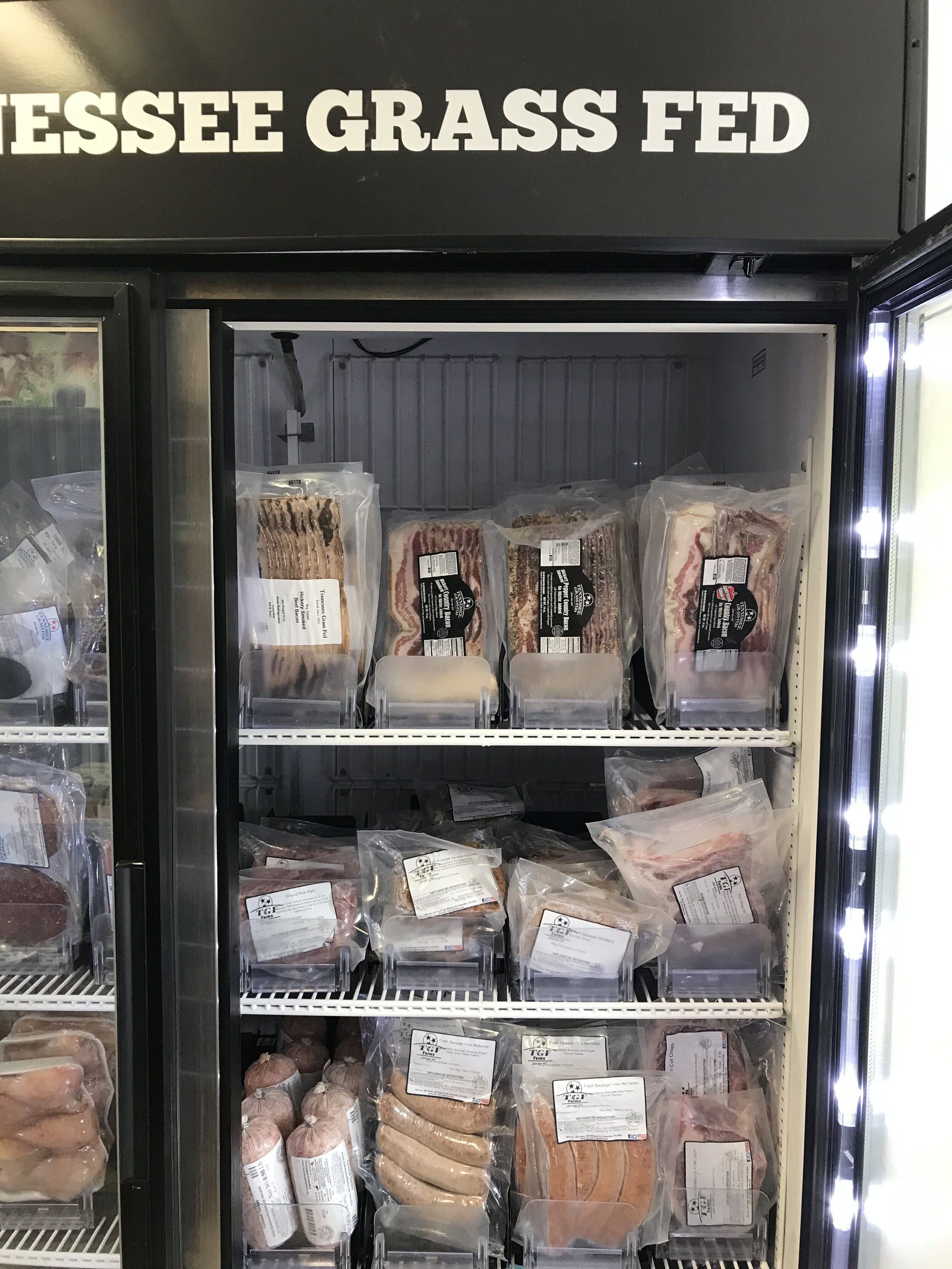

Immediately across from the farm store and packaging facility is a historic home—the one that Phil was born and raised in. He pointed out the four front-facing windows and talked about how it was originally log cabin construction. As our conversation came to a close he told me how to navigate a way out that winds through the property with huge grassy pastures, immaculately tended fencing and crisp black and silver barns. I passed a few cows taking advantage of the ample trees, each looking easily pleased in their own little cool hammocks of shade.
At The Nashville Food Project, we often dream about a just and sustainable food system, noting that this would require the collective work of many from the work of politicians to farmers to the ordering and recovery practices of restaurants, grocery stores and even to what is featured on individual kitchen tables. The work of PRB and TGF among others reminds us that we can cultivate foods, even animal proteins, in ways that have the potential to be good for the earth, the animals, the producer, and the health of the community.
Want to get your hands on some goodness?
Tennessee Grass Fed products can be ordered online and delivered to your home or convenient drop spot (think East Nashville Brew Works)! If you are up for a short drive (40 minutes from downtown Nashville) you can even visit the farm, book a tour, and snag products from their on-site farm store!
Porter Road Butcher is centrally located on Gallatin Pike and products can also be ordered online for nationwide delivery. Stop by the butcher shop and chat with their crew to get the insider info on the different cuts and their team’s personal favorites!
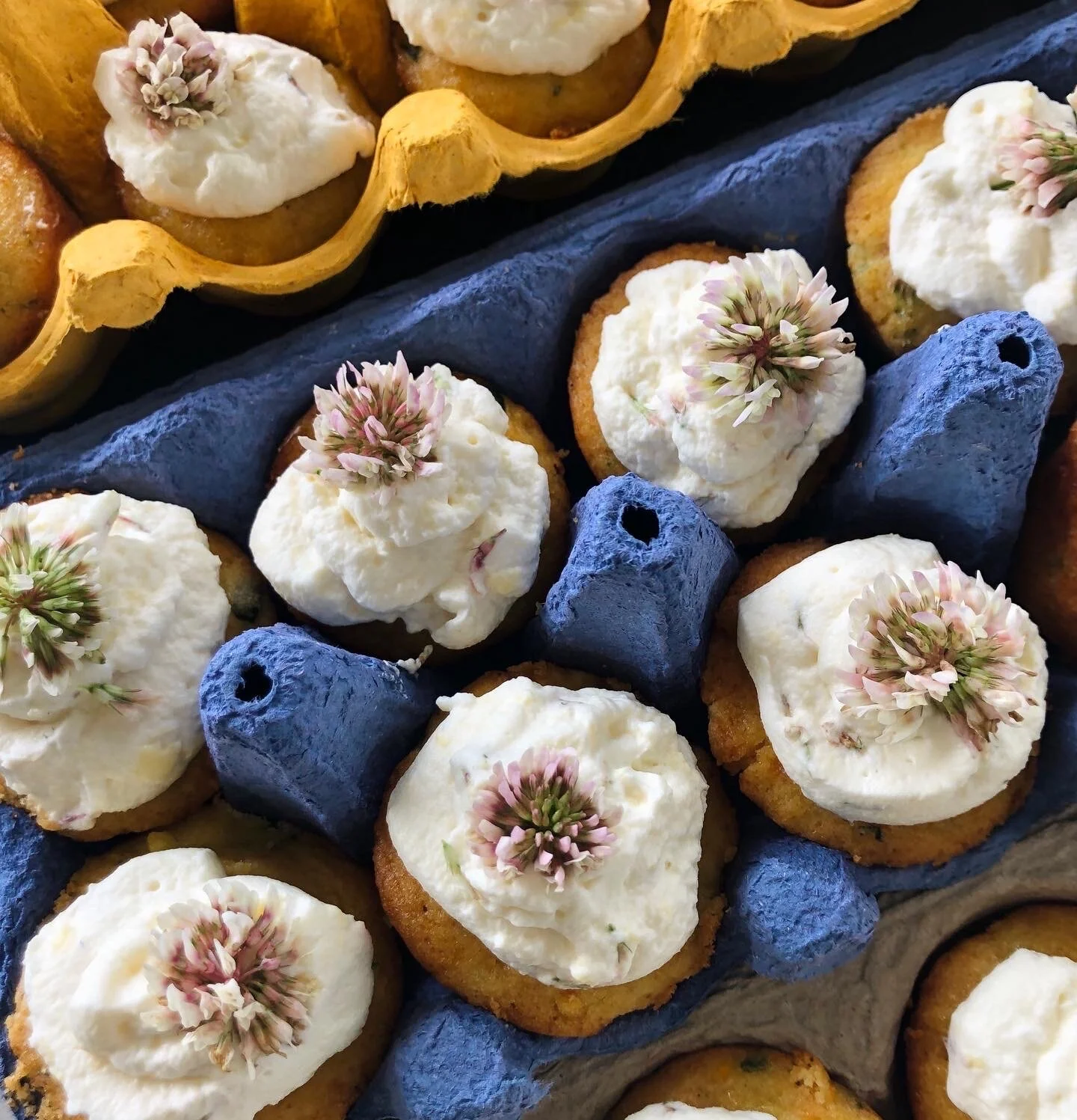
Red Clover & Carrot Cupcakes
The Nashville Food Project’s Sustainability Team invited the wise Leah Larabell of High Garden Tea to join our staff meeting and lead us in a session of ethical wildcrafting. Naturally, we served snacks too including these Red Clover and Carrot Cupcakes. We’re sharing the recipe (from Elke) with a bit of Leah’s advice too.

Earlier this summer, The Nashville Food Project’s Sustainability Team invited the wise Leah Larabell of High Garden Tea to join our staff meeting and lead us in a session of ethical wildcrafting. Naturally, we served snacks too including these Red Clover and Carrot Cupcakes made by Elke Hoffman, Operations and Sustainability Manager. We’re sharing her recipe below along with this bit of wisdom from Leah who reminded us that we’re not only in nature but of nature.
“We abuse land because we regard it as a commodity belonging to us. When we see land as a community to which we belong, we may begin to use it with love and respect.”
- Aldo Leopold

Red Clover and Carrot Cupcakes
Ingredients:
1 cup shredded carrots
2/3 cup coconut oil
1/4 cup sugar
4 tablespoons clover honey
3/4 red clover flowers (washed & segmented)
2 large eggs
3/4 cups self-raising flour
3/4 cups almond flour ( can just use all self rising flour, but the almond flour compliments to the clover well)
1 Heaped tsp baking powder.
For the icing:
2 cups heavy whipping cream
1/4 cup clover honey
1/2 cup red or white clover flowers (washed & segmented)
1/4 cup powdered sugar (not necessary, but can be added for a sweeter taste)
20 clover flowers washed and left whole to top cupcakes
What to do:
Preheat Oven 350 degrees.
Grease mini muffin tins (regular muffin tins can be used, but cook times may vary).
Wash and finely grate the carrots.
Measure the oil and sugar into a bowl, add the segmented clover heads and beat in the eggs.
Sift the flour and baking powder into the bowl and add the grated carrot. Fold the flour and carrot into the oil, sugar, clover and eggs.
Pour the mixture into the prepared tins and bake in the pre-heated oven for 11-13 minutes until the cupcakes are firm and well risen. Allow to cool for 5 minutes, and then turn onto a cooling rack.
Whip the heavy whipping cream on high, slowly adding the clover segments and honey while it whips. You want it to be pretty stiff but be careful not to over whip.
Pipe the clover icing on top of the cupcakes, and add clover flowers on top for additional color and flavor.
Recipe inspired by this version from Huffington Post.
Partner Spotlight: Elmahaba Center
We spotlight Elmahaba Center, a nonprofit serving the Arabic-speaking community, as well Ashraf Azer, interpreter for the Arabic-speaking gardeners at the Community Farm at Mill Ridge. We are privileged to host seven Egyptian gardeners on the farm this season and have loved learning about a specific type of green used to make Molokhia, a beloved Egyptian soup.
When Ashraf Azer arrived in the United States from his native Egypt about 15 years ago, he took a job as a housekeeper at Gaylord Opryland Hotel. He cleaned rooms by day and spent three evenings a week for three years at McGavock High School taking English classes.
“I was the most annoying one,” he said of his persistence in learning. “I was always asking the teacher.”
These days, Ashraf works as operation manager in housekeeping at Opryland—and he serves as an interpreter for the Arabic-speaking community gardeners at The Community Farm at Mill Ridge.

While you can hear multiple languages in our gardens, this is the first year we’ve had the privilege of hosting Arabic-speaking folks, specifically seven gardeners who came to the United States from Egypt and live predominantly in South Nashville. For this new development, we thank Ashraf and the folks at Elmahaba Center, a nonprofit formed two years ago to serve the Arabic-speaking community. Ashraf, a leader in the community, acted as a founding Board member.
Ashraf says response to the community garden applications took off quickly in his community, which has an agriculturally rich culture of fertile land along the Nile River. “We are very passionate about farming. It’s our history,” he says.
But in this country few people have access to land for growing their own food. “Not everybody in the Arabic-speaking community owns a house. Most own an apartment. Even the houses don’t have a big backyard,” he says. “It’s something everybody maybe dreams about.”
Folks also were eager to know, for example, if they could grow culturally significant crops at Mill Ridge like specific greens for Molokhia, a soup many consider the national dish of Egypt with a name that means “vegetable for kings” and dates back to the time of the pharaohs.

“All this stuff is very, very important ingredients in our food,” he says. “The green soup. It’s a big deal.”
Lydia Yousief, founder and executive director of Elmahaba Center, adds that food sovereignty is crucial for healthy communities. “When there are limited people who are able to own land, that means that the food we are eating—mostly people of color—is given to us. You don’t have much agency when you don’t have land in what you’re putting into your body.” That also translates to less agency over health, mental capacity, community and culture.

“Having the power to cultivate the land is also mutual,” she says. “I can’t just grow anything in Tennessee. I have to listen to the land as well. Once you do that you become not temporary here.”
Beyond their own tables, Ashraf says growing food provides opportunities to be connected to a place in giving back. “Maybe they like to donate but don’t have the resources to donate,” he says. “But they can donate food.”
Helping people have access to gardens and interpretation is, of course, just one part of the work at Elmahaba Center, whose name means “unconditional love.” Lydia estimates that between 50,000 and 75,000 Arabic speakers live in Nashville but belong to various communities—Egyptian, Iraqi, Yeminis and Syrians—with different cultures and religions. “If our reaction is to further isolate, that’s not gonna save anybody,” she says. So the group holds cross-cultural Community Saturdays to provide goods like clothes or food. Elmahaba also posts educational videos on all manner of topics from COVID-19 to legal advice with hopes to expand more into ESL, citizenship and businesses classes for Arabic speakers.
In the meantime, The Nashville Food Project will be working to expand and create safe spaces where gardeners of all cultures can continue to grow different but culturally relevant food side by side. As Lydia says, “We are much stronger together than alone.”

To learn more and support Elmahaba Center, visit their website or follow their work on social media.
An Update on the Leadership of The Nashville Food Project
As many of you know, we have been on a long journey under difficult circumstances to find a new CEO for The Nashville Food Project. While Tallu Schuyler Quinn will remain in the Founder role, it is crucial to establish strong leadership moving forward.
After intensive planning, interviews and the careful consideration of a Search Committee comprised of board and staff representatives, the Board of Directors has hired C.J. Sentell who will begin as CEO of the Food Project, starting July 6.
Statement from The Nashville Food Project Board Chair Jeff Warne:
As many of you know, we have been on a long journey under difficult circumstances to find a new CEO for The Nashville Food Project. While Tallu Schuyler Quinn will remain in the Founder role, it is crucial to establish strong leadership moving forward.
After intensive planning, interviews and the careful consideration of a Search Committee comprised of board and staff representatives, the Board of Directors has hired C.J. Sentell who will begin as CEO of the Food Project, starting July 6.

C.J. brings years of experience as a seasoned nonprofit leader and social entrepreneur. In addition, he has actively farmed for the last decade, informing a component of his doctoral dissertation which traced the relationships between freedom and food through the intersection of slavery and agriculture.
C.J.’s strategic vision impressed the Search Committee and Board, and he conveyed a deep understanding of the complex food systems in which The Nashville Food Project works. Furthermore, C.J. has a demonstrated ability to diversify boards and staff, and leveraged his own nonprofit’s resources to support BIPOC-led/focused nonprofits. For these reasons, and more, the Board looks forward to the meaningful work and passionate enthusiasm C.J. will bring to The Nashville Food Project.
This transition also comes as we commemorate the organization’s 10th anniversary. As an organization that began in a modest church kitchen, with a handful of volunteers and a truck delivering sandwiches and bottled water to homeless camps, The Nashville Food Project has evolved to encompass multi-faceted, interrelated initiatives—with a clear mission to grow, cook and share nourishing food with the goals of cultivating community and alleviating hunger in our city.
As we welcome our new CEO and reflect on a remarkable decade, we thank you for your continued support as The Nashville Food Project takes another big step towards furthering its essential mission and deepening its impact in our community.
Sincerely,
Jeff Warne
Chairman, Board of Directors
The Nashville Food Project
The Evolution of a Mural
Spend a moment studying our new mural painted along the west side of our building, and you will see our values in its colors. In this blog post, we share how the mural came to be.

Spend a moment studying our new mural painted along the west side of our building, and you will see our values in its colors. There’s the hospitality in welcoming folks and being both guest and host. You’ll see stewardship in believing there is enough for all. We see learning when we gather and share food as well as the interconnectedness of our wellbeing. Finally we celebrate the justice in a table where all belong as well as transformation — the fierce hope that people and situations can change.
The mural, completed earlier this year, enriches our space as we reflect on our 10-year anniversary and the many ways we have leaned on and believed in collaboration. With that spirit in mind, here’s how the mural came into existence.
In 2018 as we started to dream, plan and work toward building our headquarters, the artwork of Jen Bloomer of Radici Studios became an inspiration, particularly with this piece:

“There are different versions (of these words) out there, and I found it to be such a guiding light — a table of food and people of all different backgrounds,” Jen said. “ I was inspired about the ways we come to the table. How different foods are a part of our identities. It’s a message I really wanted to get out in the world and spread.”
Jen sells prints of the longer table image and offers free downloads of the artwork on her website, so that others can use it as a guiding principle too. “What do I have to offer,” she asks, “and how can we make everyone feel welcome?”
With this notion of hospitality and Jen’s artwork in mind, we named our efforts to raise funds for our new building A Longer Table campaign.

Meanwhile, as the vision for our headquarters morphed into architecture plans and hardhat tours turned into moving day, members of the Board of Directors contacted Jen to ask her to create a new design for a mural as a surprise gift to our founder Tallu Schuyler Quinn. Former Board Member Sara Finley presented Tallu with Jen’s design at the new building dedication in early 2019.

Jen made plans to fly to Nashville in April 2020 from her home base of San Francisco to paint the mural.
And then, the pandemic hit. Plans needed to evolve.
TNFP formed a working group of staff members to make tweaks to the design (such as adding peace cranes to the image, a nod to Tallu who folded many of the origami cranes hanging in our community dining room). The staff group also helped pull in local artist, Woke3, to collaborate with Jen and paint her design.

Photo by Keep3.

Photo by Keep3.
Woke has been painting murals around town for many years including his current project—and largest yet—on Jefferson Street honoring the legacy of folks in North Nashville.

For the Food Project mural, Woke incorporated his own style while also “sticking close” to Jen’s vision. The result reflects our values in a beautiful evolution and collaboration across food, communities and art.

“We’re all a part of this same table,” Woke said, “and sharing energy and resources.”